The blog, Carla-at-Home , features an interesting post on the progression of Regency fashion. The images were taken from John Peacock’s book: Costume 1066 – 1966, A Complete Guide to English Costume Design and History (copyrighted 1986). Mr. Peacock was the senior costume designer for BBC Television when the book was printed. Here is one of the images. Click on the link above to visit the site and see the rest of them. You can see that over time the hemlines raised to show the ankle and how increasingly intricate the hems became. Also, the English bosom tended to be covered up during the day, but at night even shy ladies showed their assets.

1800- 1811. Image @Carla-at-Home. Click on image to view a larger version.
Below are images of some dresses that were prevalent between 1800-1811. The gowns are classic and tend to be free of frills. The hems in the fashion plates below are longer than in the modern image above. Earlier in the century even the day gowns still sported trains. Hats were embellished with ribbons and feathers, but not with many fruits or flowers. In these fashion images, bosoms are covered during the day and exposed in the evening. The waist rises until it can go no higher, as in the 1806 image. In the 1810 image, you see that waists start to lower again. Gloves are often made of kid, but can also be fashioned from fabric.
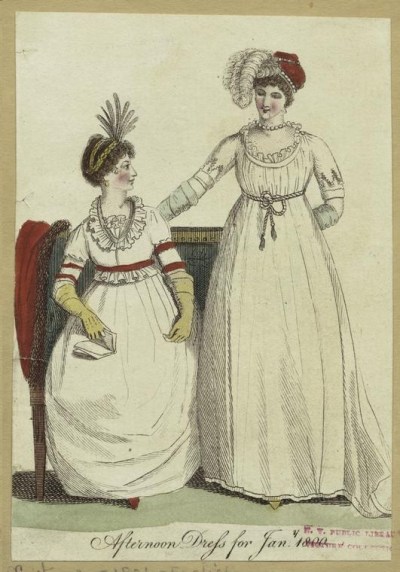
Ladies Monthly Museum, afternoon dress, 1800
The fashion plates of 1800 and 1801 show round gowns with skirts that are fuller than later fashions that sported a more columnar silhouette. (See 1804, 1805).
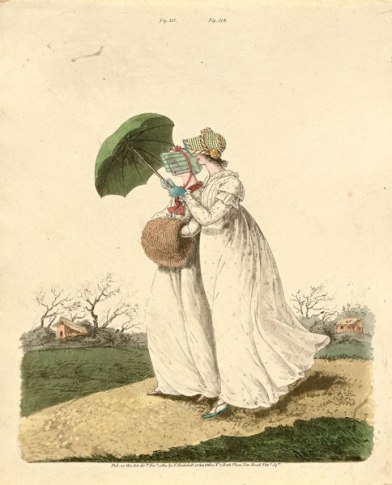
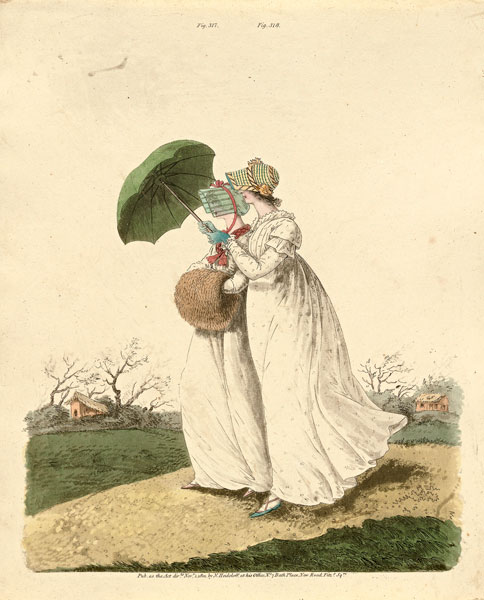
Nicholas Heidelof, morning gowns. 1801
The period between 1800 and 1811 was a time of turmoil for Jane Austen. She was 25 in 1800, perilously close to sitting on the shelf, and a confirmed spinster at 36 when her brother, Edward, gave the Chawton Cottage to his mother and sisters and their friend, Martha Lloyd, to live in, providing them with some stability and security. During these 11 years, Jane was to live in all the places she was ever to call home, except for the last one in Winchester, where she died in 1817. During her prime adulthood, she and her sister Cassandra would have worn fashions that were similar to (but remarkably plainer and less costly than) the fashions depicted in the fashion plates below. The Austen family lived in Steventon until 1801 and then moved to Sydney Place in Bath until 1804. In 1802, Harris Bigg-Wither proposed to Jane (then 27), who accepted him in the evening and rejected his suit the following morning.
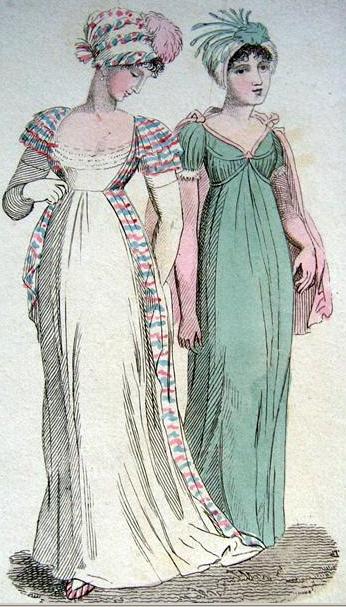
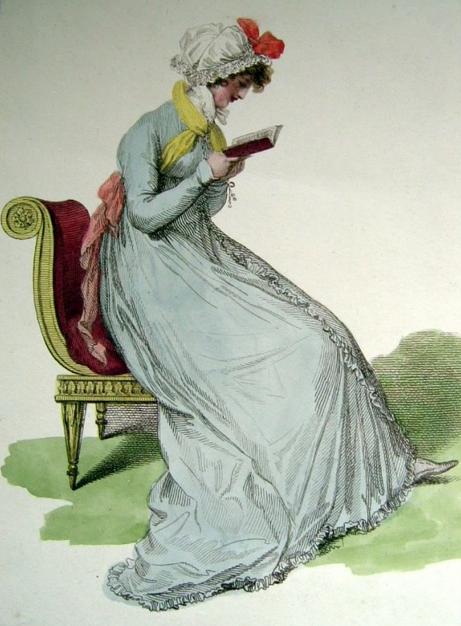
1802 Ladies Monthly Museum
1803 must have brought Jane some joy, for her novel, Susan, was sold to the publisher Crosby for £10. She was to be a published author. Sadly, the novel (to be renamed Northanger Abbey after Jane’s death) languished on Crosby’s shelves for 10 years.
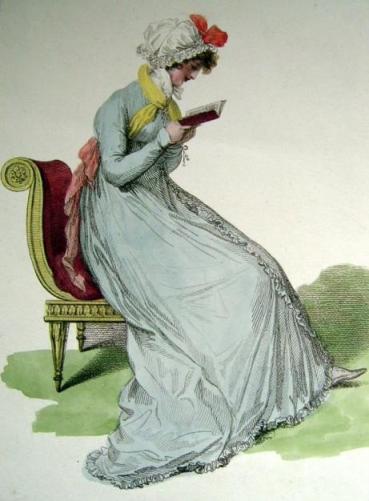
Mirroir de la Mode, morning gown, 1803
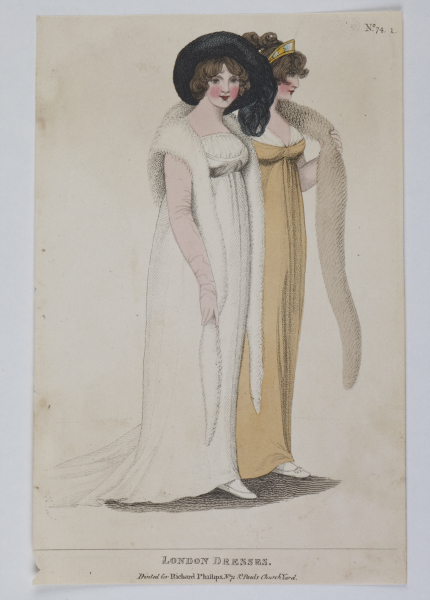
Fashions of London and Paris, 1804. @Museum of London
After the lease in Sydney Place ran out in 1804, the Austens moved to Green Park buildings. A few months later, Rev. George Austen died suddenly in January 1805.
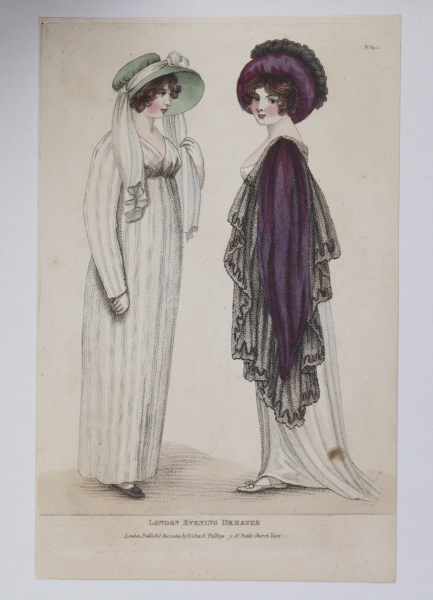
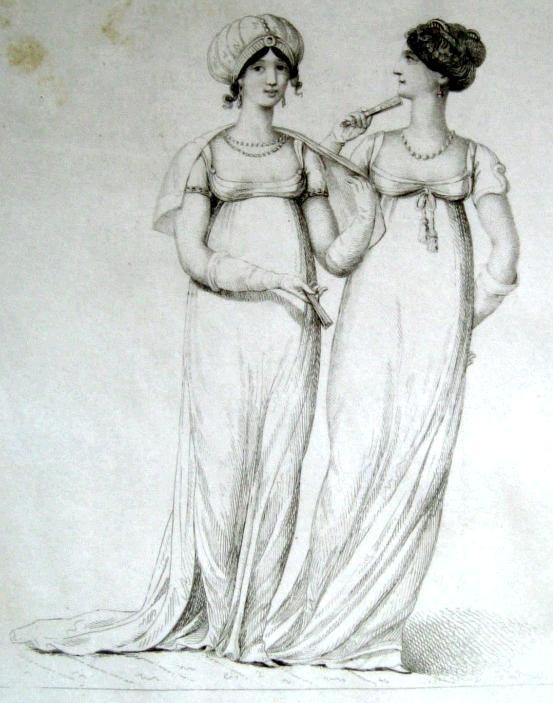
Fashions of London and Paris, evening dresses, 1805. @Museum of London
Their income severely reduced, the women found lodging in Gay Street, Bath from 1805 to 1806. The Jane Austen Centre is located at this building today. During this sad time, I can’t quite imagine Jane attending a ball in the Bath Assembly Rooms wearing an evening gown with an exposed bosom, such as the dresses worn by the women below.
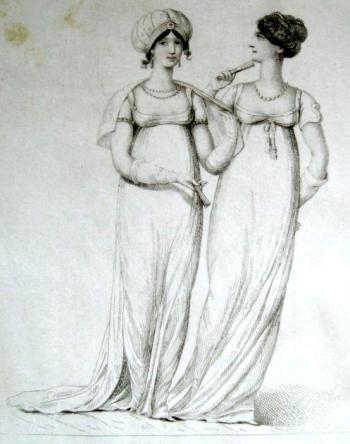
La Belle Assemblee, opera and drawing room gowns, 1806
In the first half of 1806, the Austen women lived for a short time in Trim Street, then lived a peripatetic life from 1806 through 1807, visiting friends and family, and always on the move.
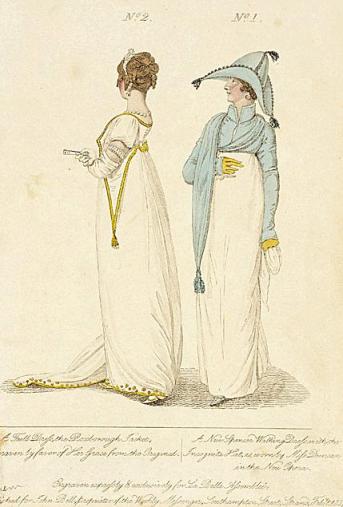
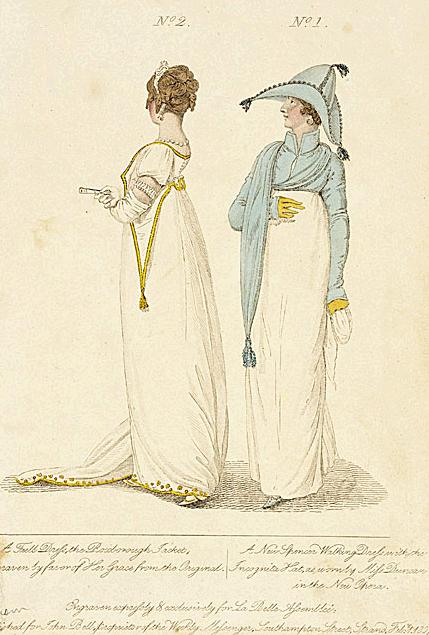
John Bell, full dress, roxborough jacket, 1807
They landed in Southampton in March of 1807 at the invitation of Frank Austen, who was newly married. Jane, Cassandra, their mother and friend Martha Lloyd, and new sister-in-law, Mary Austen (nee Gibson), lived there until July, 1809. With money in short supply, the womens’ gowns must have been simple and largely refashioned from older gowns that were still wearable and sturdy.
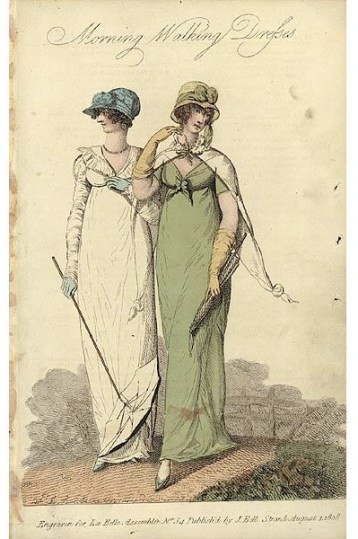
La Belle Assemblee, walking dresses, 1808
Fabric was quite expensive in an era before easy mass production, which is why clothes were recycled. There were occasions when the Austen women needed to purchase cloth for new clothes, but the quality wasn’t always guaranteed. In this letter to Cassandra, written while she lived in Southampton, Jane complains about a tradesman in that city:
As for Mr Floor, he is at present rather low in our estimation; how is your blue gown? – Mine is all to peices. – I think there must have been something wrong in the dye, for in places it divided with a Touch. – There is four shillings thrown away.”
Sadly, the Austen women were in no position to fritter away their money, and this poorly made cloth must have been a low blow for Jane’s finances.
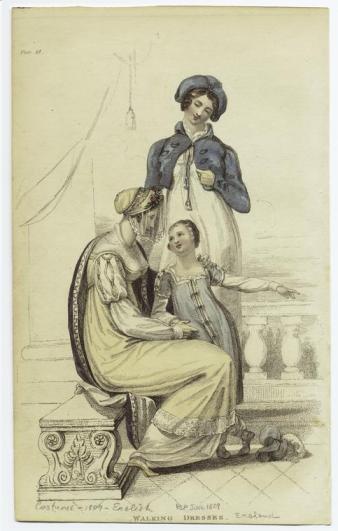
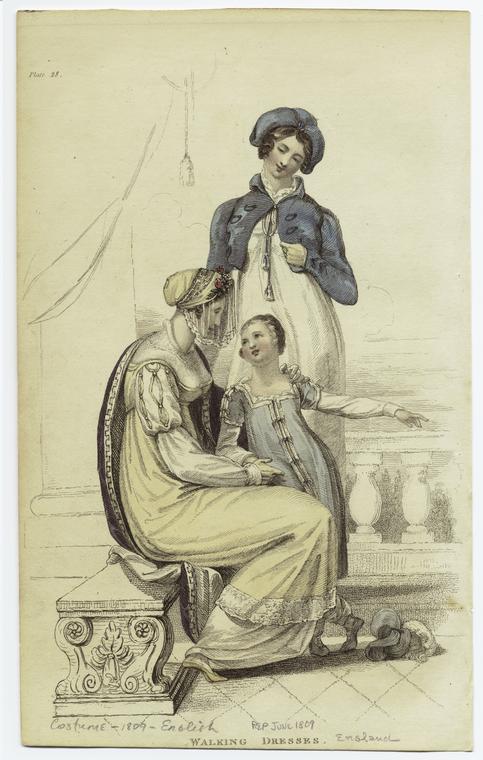
Ackermann, walking dresses, 1809. The overdress with lace edging at the hem is lovely.
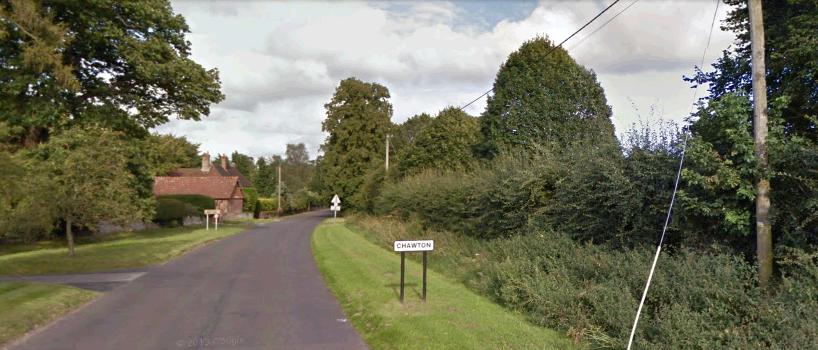
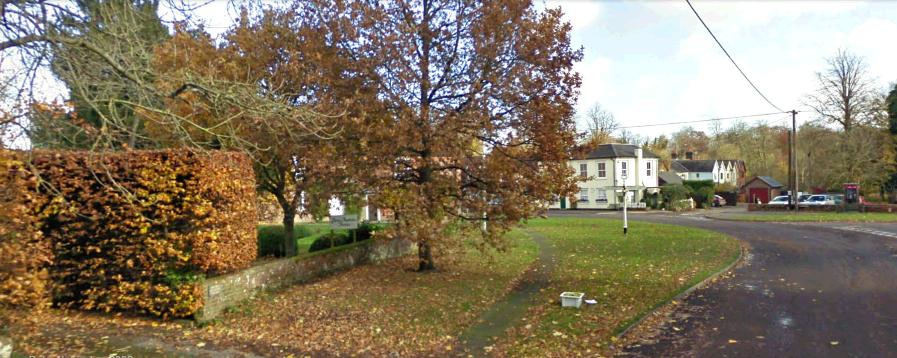
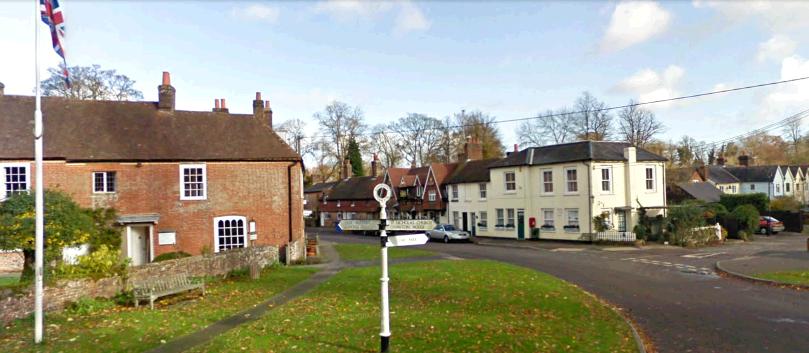
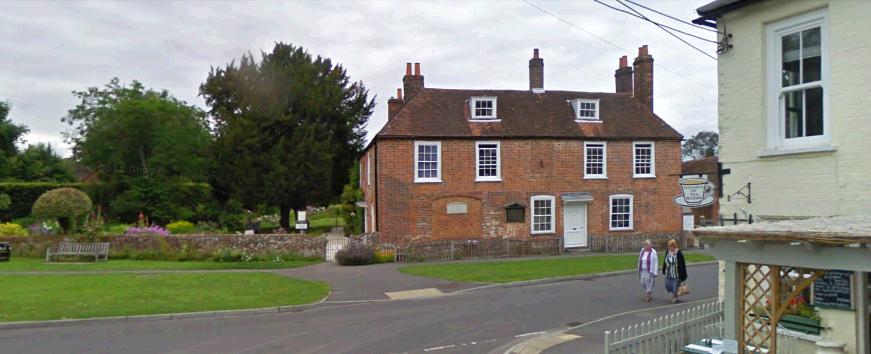
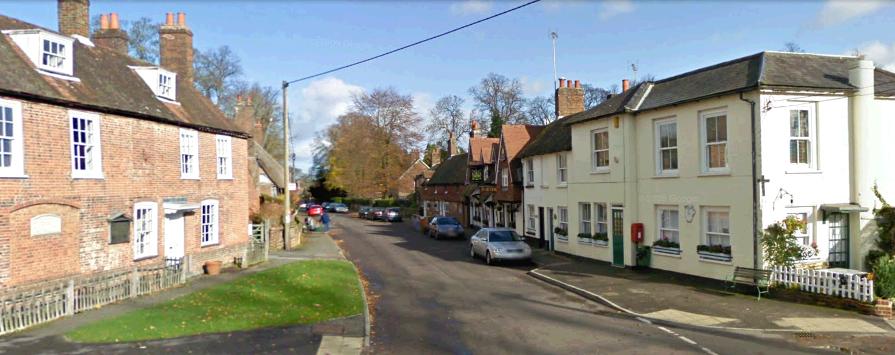
In 1809, Edward Austen invited his mother, sisters, and Martha to live in Chawton Cottage, which began an era of fruitful creativity for Jane and her writing.
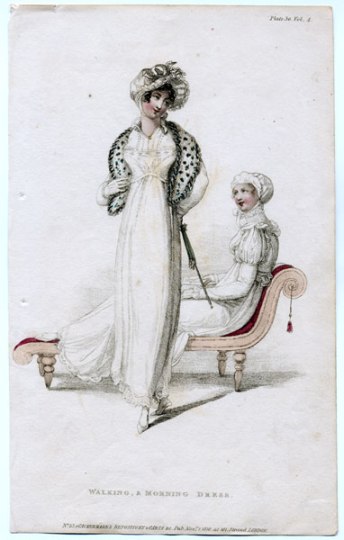
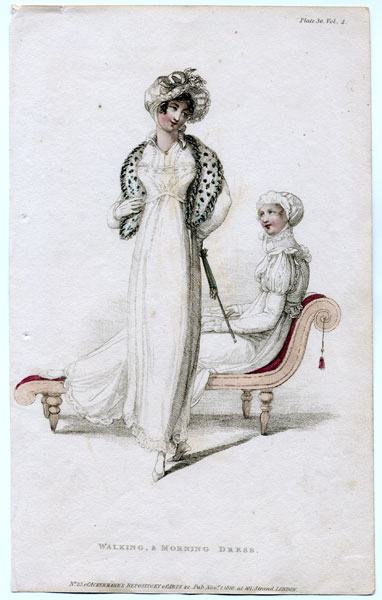
Ackermann, walking and morning dresses, 1810
As you can see, the classically simple fashions depicted in these fashion plates were popular during a time when Jane Austen’s life was in a state of constant uprooting and confusion. She did not regain her equilibrium as a writer until she was settled in Chawton Cottage. When Sense and Sensibility was published in 1811, Jane might well have worn a more simple version of the elegant gowns depicted in this last Ackermann plate.
Read Full Post »
 Jane Austen was born on a bitterly cold night on December 16, 1775.




















 Jane Austen's World