Feeds:
Posts
Comments

Archive for the ‘Jane Austen’s World’ Category

Morning Dress and Full Dress, 1807 La Belle Assemblee

When it first appeared in February 1806, La Belle Assemblée claimed to be ‘an entirely original and most interesting work, addressed to the ladies’. However, the new magazine entered a market that was already well established. Periodicals directed particularly at leisured women had existed since the late seventeenth century, and with the success of the Lady’s Magazine (1770–1837), the monthly magazine became an established form. The new magazine, however, had a distinctive flamboyance in its elegant combination of polite literature and illustrated accounts of the fashionable world. It was the production of John Bell (1745–1831), a printer and publisher of considerable reputation and style who was renowned for his puckishness and love of innovation, not least in introducing modern type-faces to British readers.- Science in the 19th Century Periodical

Not all fashion plates were created equal. La Belle Assemblée came out in two forms, one at half-a-crown with plain fashion-plate and one at three shillings and sixpence with the plates coloured by hand. * The difference in treatment can be seen in the fashion plates below.

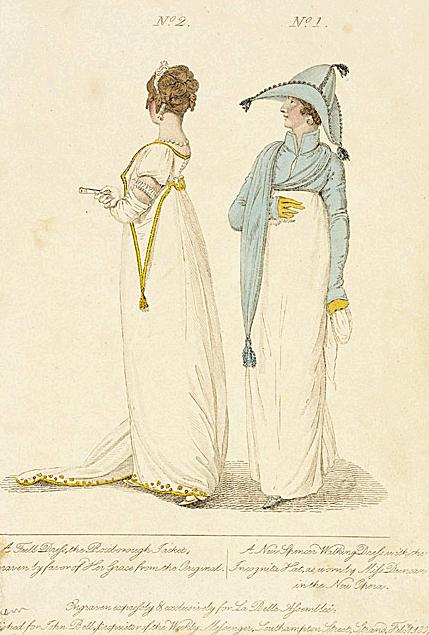
An engraved plate from ‘La Belle Assemblée,. This is an early black and white plate from February 1807, featuring the Roxborough jacket and the Incognita hat – both drawn from fashions worn by the Duchess of Roxborough and a Miss Duncan.   Plate 1: A new spencer walking dress with the incognito hat, Plate 2: A full dress, the Roxborough jacket.
At 76, ten years before his death, John Bell sold the magazine. La Belle Assemblée predated Ackermann’s Repository of Arts (begun 1809 – 1827) by three years.  Obituary of John Bell, 1831:

At Fulham aged 86. John Bell esq formerly of the Strand bookseller. Few men have contributed more by their industry and good taste to the improvement of the graphic and typographic arts, witness his beautiful editions of the British Poets and Shakspeare. He was one of the original proprietors of the Morning Post and projector of that well established Sunday newspaper Bell’s Weekly Messenger. Another of his successful projects was the elegant monthly publication La Belle Assemblée.The Gentleman’s magazine, Volume 101, Part 1 By John Nichols

La Belle Assemblee Morning and Afternoon Walking Dress, November 1807

More on the topic

*Hand coloured fashion plates, 1770 to 1899 By Vyvyan Beresford Holland

Colored Fashion Plate (The Roxborough Jacket – A New Spencer Walking Dress), February 1807 LACMA Collections Online
Read Full Post »

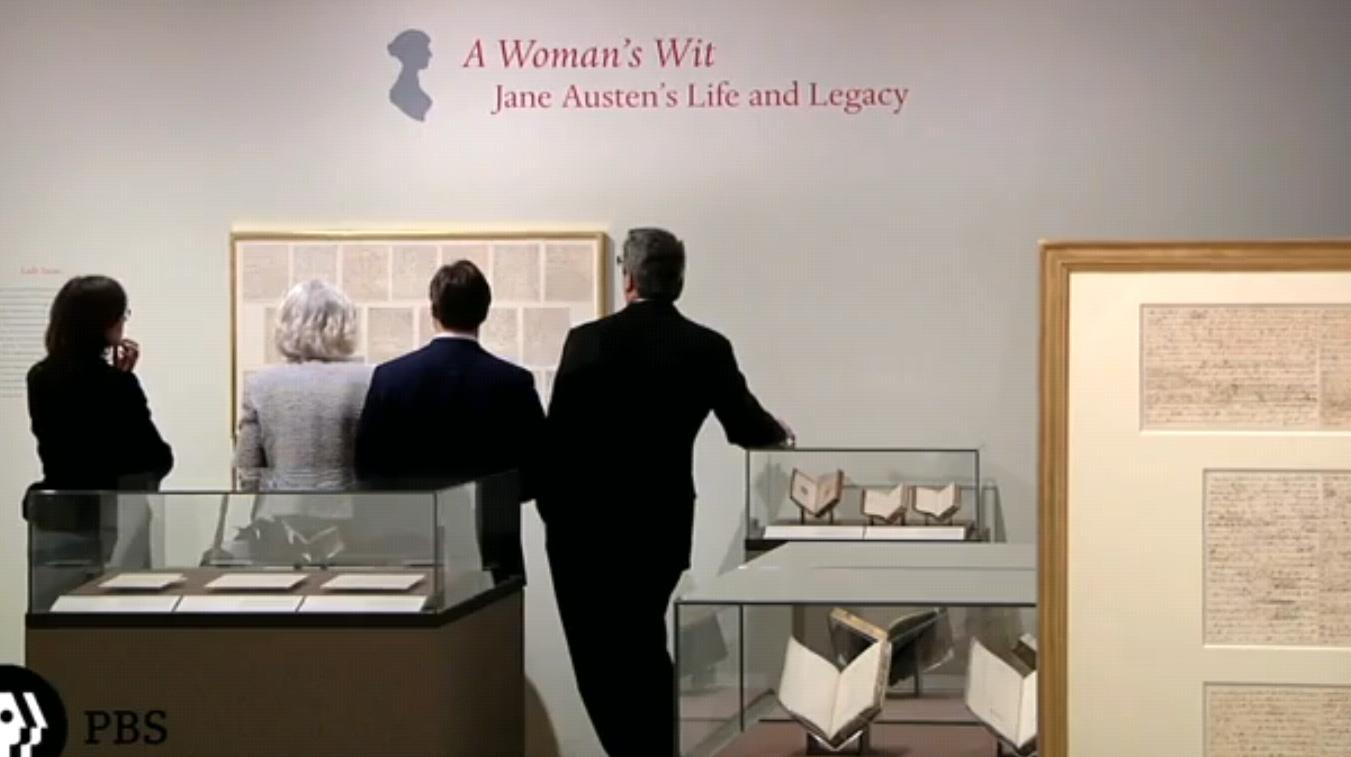
Last month I wrote about my trip to the Morgan Library in New York to view A Woman’s Wit:Jane Austen’s Life and Legacy, and of my impressions of the letters.

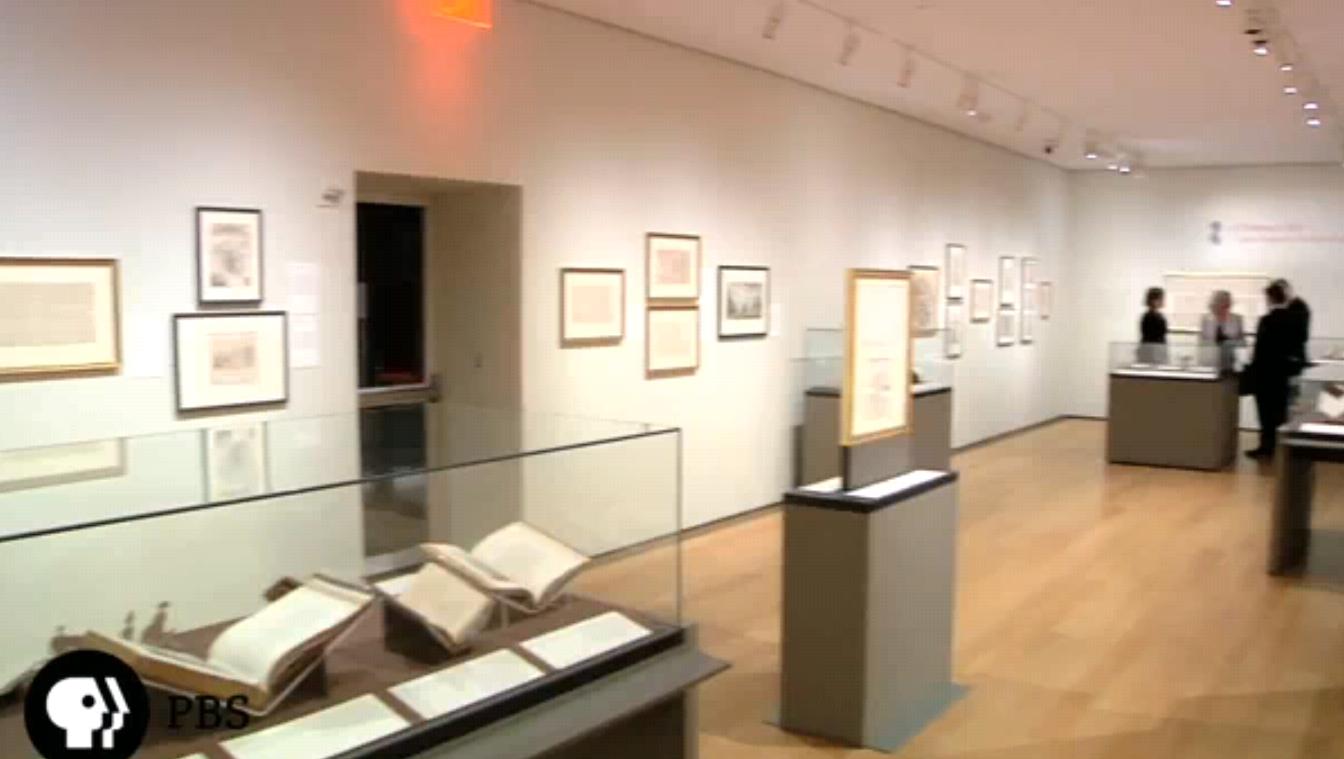
Exhibition room for Jane Austen's artifacts at the Morgan Library

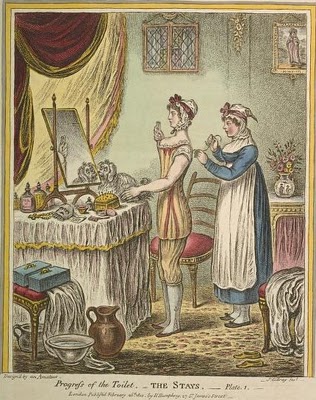
But I didn’t mention the many other interesting artifacts: the Gillray prints of a lady dressing and Rowlandson’s caricature of The Comforts of Bath,

Progress of the Toilet, The Stays, James Gillray

the books that Jane owned,

Jane Austen's personal books, including The Spectator and Poems by William Cowper

a lovely steel engraved oval image of her,

Steel engraved image of Jane Austen and Lady Susan

an original copy of the Memoir of Jane Austen, fair copies of the first 7 letters of Lady Susan,

Viewing the Lady Susan letters on the far wall of the exhibit room

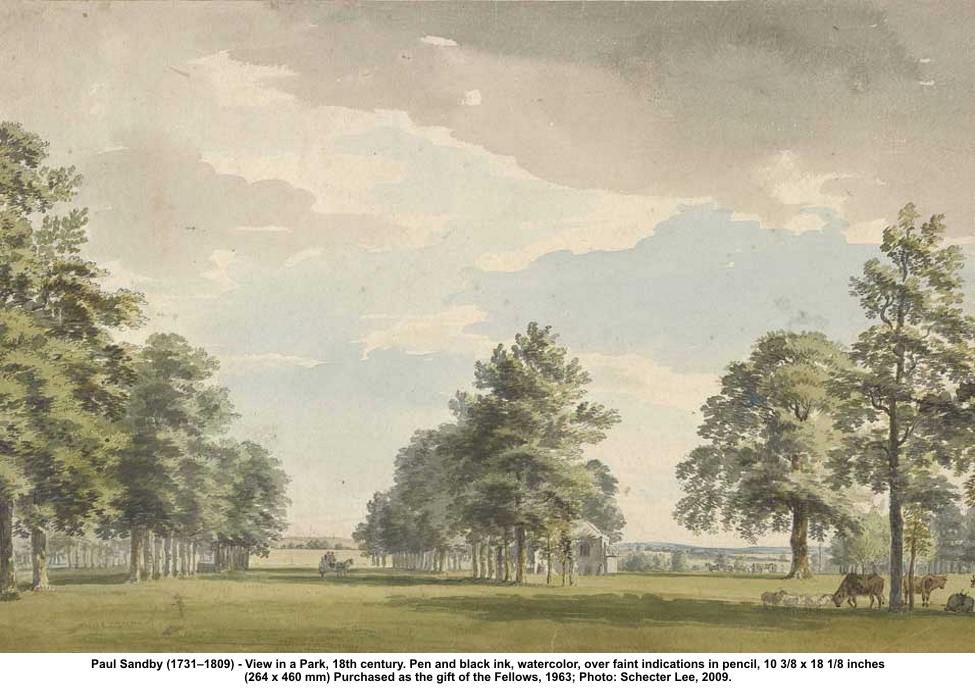
a rough 12-page fragment of The Watsons, a watercolor by Paul Sandby,

Paul Sandby's View in a Park

and a well-known image from An Analysis of Country Dances by Wilson, 1811.

Five positions from An Analysis of Country Dancing by Wilson, 1811

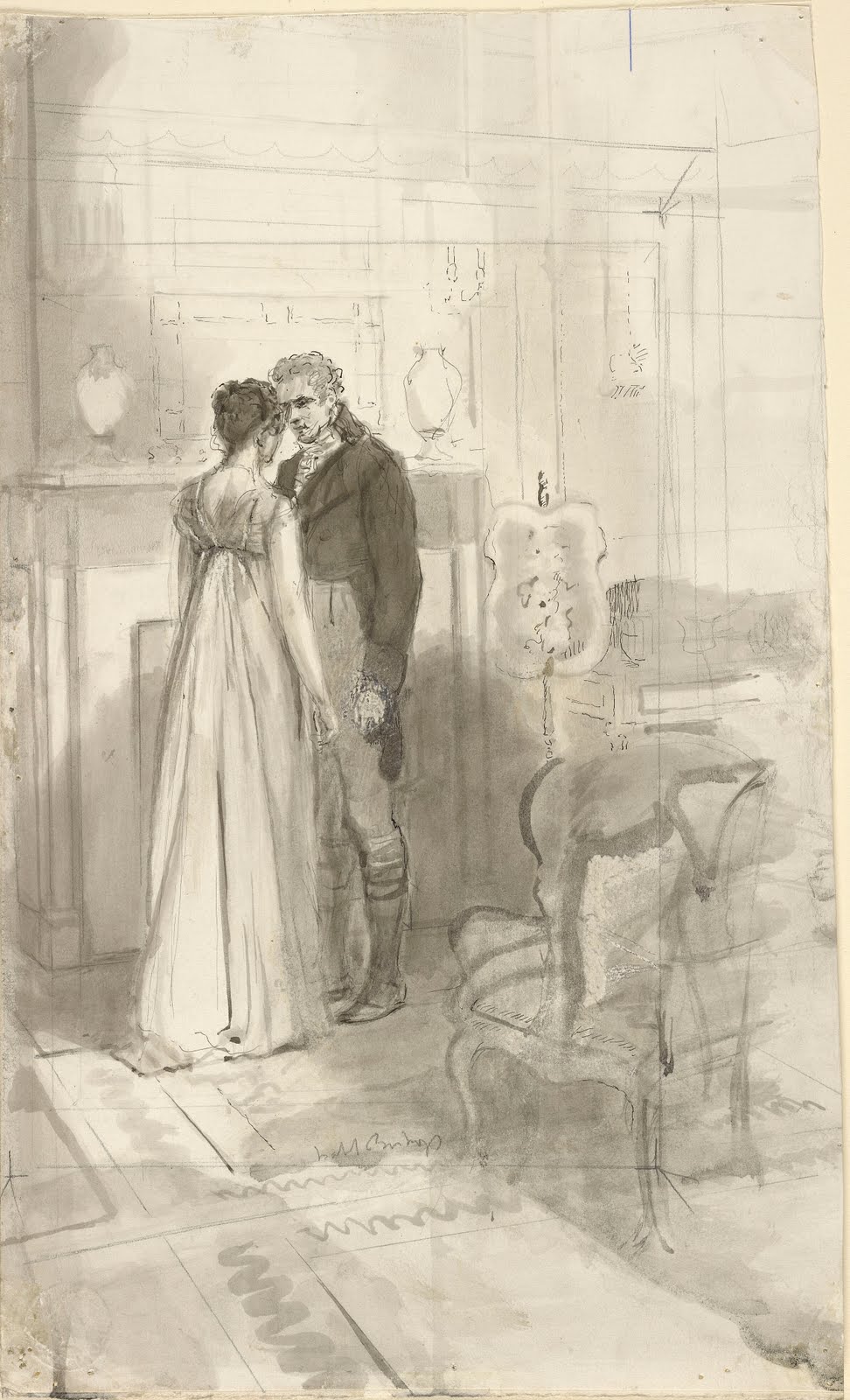
An account of Jane’s personal purchases of a little over 42 pounds for the year (1807), Isabel Bishop’s images for Pride and Prejudice,

Isabel Bishop's image of Jane and Bingley standing together

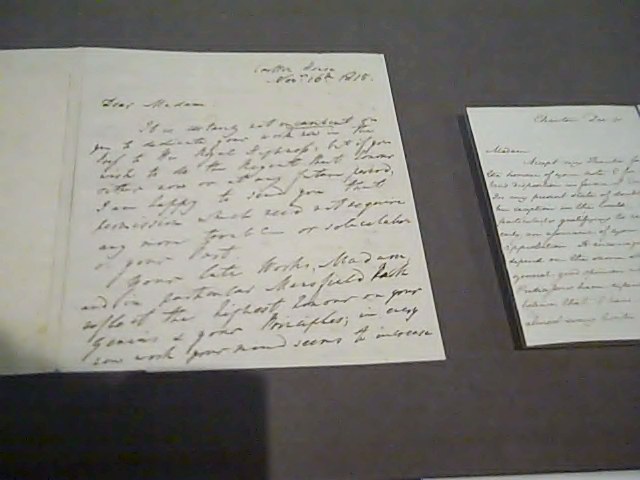
and the correspondence between Jane and Cassandra, her letter to Francis Talbot, the Countess of Morley and a letter from the Prince Regent’s librarian, James Clarke add to our knowledge of her world.

James Clarke's letter to Jane Austen, on the left

There were artifacts from Byron and Fanny Burney and Sir Walter Scott, and more images than I can recall so many weeks later.

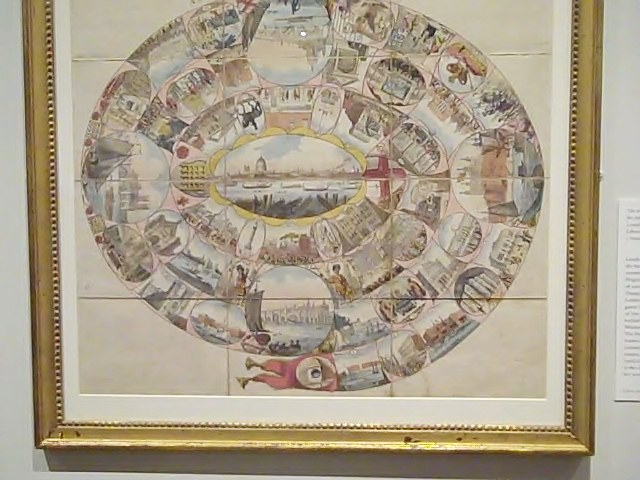
The Panorama of London

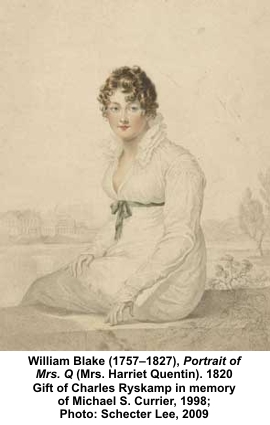
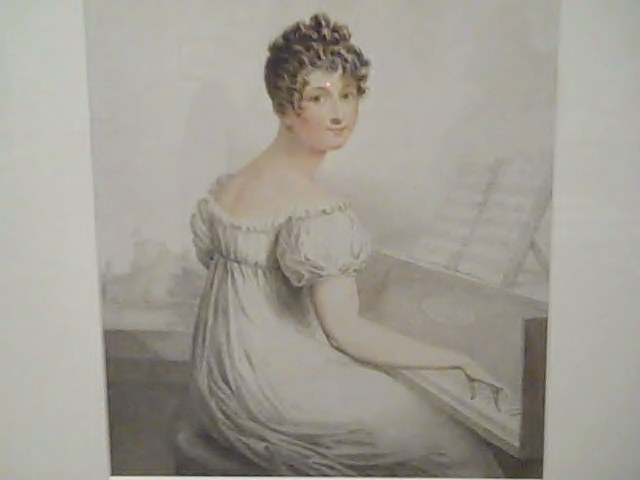
William Blake and Georges Mail drew two portraits that forcibly reminded me of my internal images of Jane and Elizabeth Bennet

Georges Maile (fl. 1818–1841) Marchioness of Huntley.

Which brings me to my only (and major) disappointment with this exhibit: no catalogue. Thankfully, I can reconstruct my memory of the visit from my notes, images I have gleaned online or taken myself, and from a list provided by the Morgan Library (see the link below.) For anyone who lives within striking distance of the Morgan Library, you have until March 14th to travel to New York. The exhibition room might be small, but it is filled with treasures and is well worth the effort.

More links:

View PBS’s video of the Jane Austen exhibit at the Morgan Library on YouTube.

Read Full Post »

Jane Austen had a few ideas about what would happen to some of her characters in the future. Emma’s Mr. Woodhouse would live for two more years after his daughter’s marriage to Mr. Knightley, and the letters from Frank Churchill that Jane Fairfax placed before her contained the word “pardon.” These little tidbits of information help to make the books and movie adaptations so much more enjoyable to read and watch.

In my previous observations of the film adaptation of Emma 2009, I mentioned several times that I disliked Romola Garai’s interpretation of the role, but I have now seen the film four times AND rewatched other Emma films, including Clueless, which remains my favorite. I have also been listening to the full book version of Emma on my iPod. My mama sagely told me, “you CAN teach an old dog new tricks”, and after the second episode of Emma aired on PBS last week and after viewing the Kate Beckinsale version of Emma (1996) with a friend, this crotchety old dog has come to the rather astonishing realization that she likes Romola as Emma after all.

Romola’s quick moving, restless Emma captures her immaturity and boredom. Highbury is a town that is much too confining for such a talented, rich and lively young lady, and with so little to do, this self-indulgent and coddled girl can’t help but create mischief. If only Emma could apply herself long enough to become proficient at something, she might have been able to keep her nose out of other peoples’ lives. But she keeps making lists, with every intention of reading the books. As Mr. Knightley observed to Mrs Weston:

Emma reads two pages of Milton

Emma has been meaning to read more ever since she was twelve years old. I have seen a great many lists of her drawing up at various times of books that she meant to read regularly through—and very good lists they were—very well chosen, and very neatly arranged—sometimes alphabetically, and sometimes by some other rule. The list she drew up when only fourteen—I remember thinking it did her judgment so much credit, that I preserved it some time; and I dare say she may have made out a very good list now. But I have done with expecting any course of steady reading from Emma. She will never submit to any thing requiring industry and patience, and a subjection of the fancy to the understanding.

Emma also paints, but, as her portfolio (and pale painting of Harriet Smith) demonstrates, she is hard pressed to finish these projects.

Emma's very pale painting of Harriet Smith

Emma wished to go to work directly, and therefore produced the portfolio containing her various attempts at portraits, for not one of them had ever been finished, that they might decide together on the best size for Harriet. Her many beginnings were displayed. Miniatures, half-lengths, whole-lengths, pencil, crayon, and water-colours had been all tried in turn. She had always wanted to do everything, and had made more progress both in drawing and music than many might have done with so little labour as she would ever submit to.”

Emma can play the pianoforte prettily enough, but not as well as Jane Fairfax, which bothers her:

Emma is invited to play first at the Coles' party

She did unfeignedly and unequivocally regret the inferiority of her own playing and singing. She did most heartily grieve over the idleness of her childhood–and sat down and practised vigorously an hour and a half.

She was then interrupted by Harriet’s coming in; and if Harriet’s praise could have satisfied her, she might soon have been comforted.

“Oh! if I could but play as well as you and Miss Fairfax!”

“Don’t class us together, Harriet. My playing is no more like her’s, than a lamp is like sunshine.” – Emma, Volume 2, Chapter 9

Sandy Welch, scriptwriter of this Emma adaptation, observed that Cher, the Emma character in Clueless, was bossy but sweet and well-meaning. In her script, Ms. Welch wanted to show that the coddled young Emma had an attitude of “well-meaning snobbishness” and that in all her meddling, she sincerely thought:  “doesn’t everyone think like this?”


And so in my fourth viewing of Romola’s performance as Jane Austen’s wealthiest and most entitled heroine, I have finally come to admire this heroine. My change of heart was especially helped when I reviewed previous Emma adaptations during the last snow storm, and realized just how thoroughly this new production fit in with our modern sensibilities.  I (and a few of my Janeite friends) still think that Romola’s  facial grimaces and wide eyed interpretation of a very young Emma in the first half of the series were overly exaggerated, but she toned down her performance as Emma matured and grew in understanding.

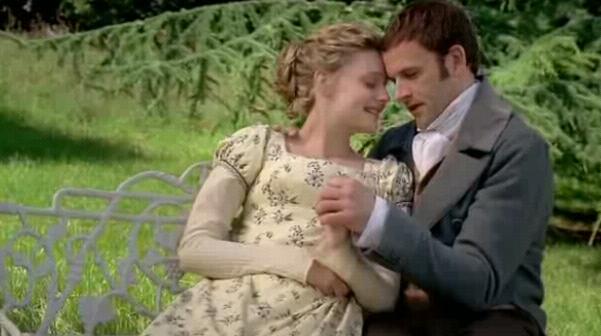
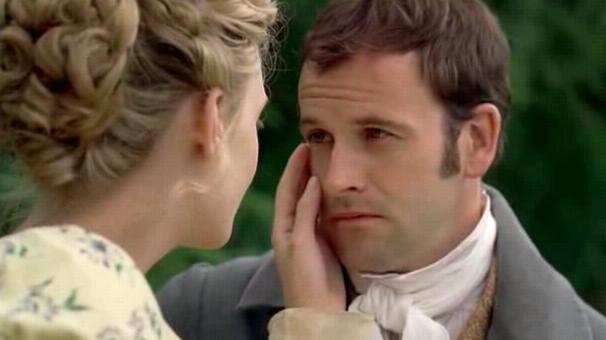
Her scenes with Jonny Lee Miller during his proposal were tender and touching and gave a fitting ending to the series. I shall miss these Sunday evenings watching Emma. Thankfully, PBS will be showing reruns of Persuasion and Northanger Abbey, which were originally shown during Jane Austen Season two years ago. Jane Austen fans can take heart that our time with the bonnet series is not yet over.

Now that you have seen all the episodes of Emma, what did you think?

More Links:

Read Full Post »

Four recently released books about Jane Austen or the Regency period are in my review queue. The weather man forecasts snow, so I can’t think of a better way of spending the weekend than to curl up in front of a cheery fire and read these new additions to my library shelves:

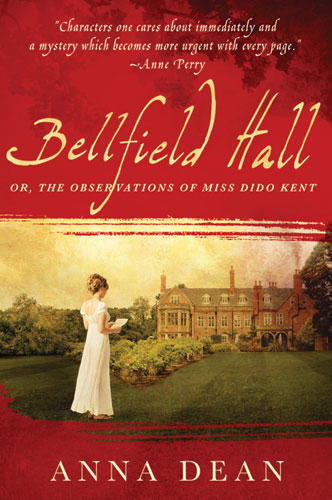
Bellfield Hall: A Dido Kent Mystery by Anna Dean ( released on February 2nd).

It is 1805, and Miss Kent is summoned to her niece’s country manor to comfort her afte her fiance, Richard Montague, disappears.  Worse, the body of an unnown young woman is found on the grounds. As Dido works to resolve the mystery, she falls in love. With observations like these, who cannot like Dido Kent or look forward to reading the book?:

Mr. William Lomax …has a very fine profile. He has also the very great recommendation of being a widower. And, all in all, I am rather sorry that I gave up the business of falling in love some years ago.

The Misses Harris are too much engaged in being accomplished to take a great deal of exercise and their mother must save all her breath to gossip with.

About the author: Anna Dean set about crafting stories at the age of five under the impression that everyone was taught to write in order to pen books. By the time she discovered her mistake, the habit was too deeply ingrained to give up. She resides in the Lake District of England.

You may order the book directly from the publisher. For the time being I am boycotting Amazon.com, and I highly recommend that you also eschew this bombastic pricing bully.

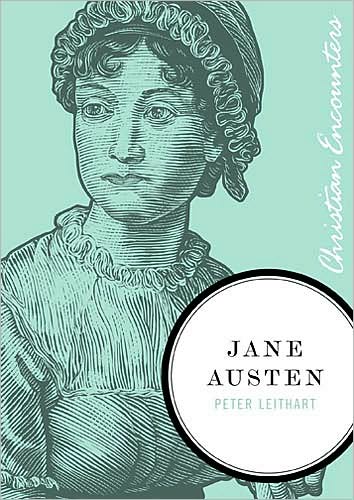
Jane Austen: Christian Encounters by Peter Leithart (to be released on March 2nd, 2010).

Some may know Jane Austen simply as the English novelist whose books are required reading in high school and college. Perhaps it wasn’t until the BBC’s extremely successful TV miniseries of Pride and Prejudice or Emma Thompson’s film Sense and Sensibility that many became entranced. Now younger readers are flocking to Austen with a unique twist in the bestselling Pride and Prejudice and Zombies: The Classic Regency Romance, by Seth Grahame-Smith. In this Christian Encounters biography, fans of Jane Austen will discover the Christian faith that was in the weft and weave of her character and how it influenced her writing and her life.

Order the book from the publisher, Thomas Nelson.

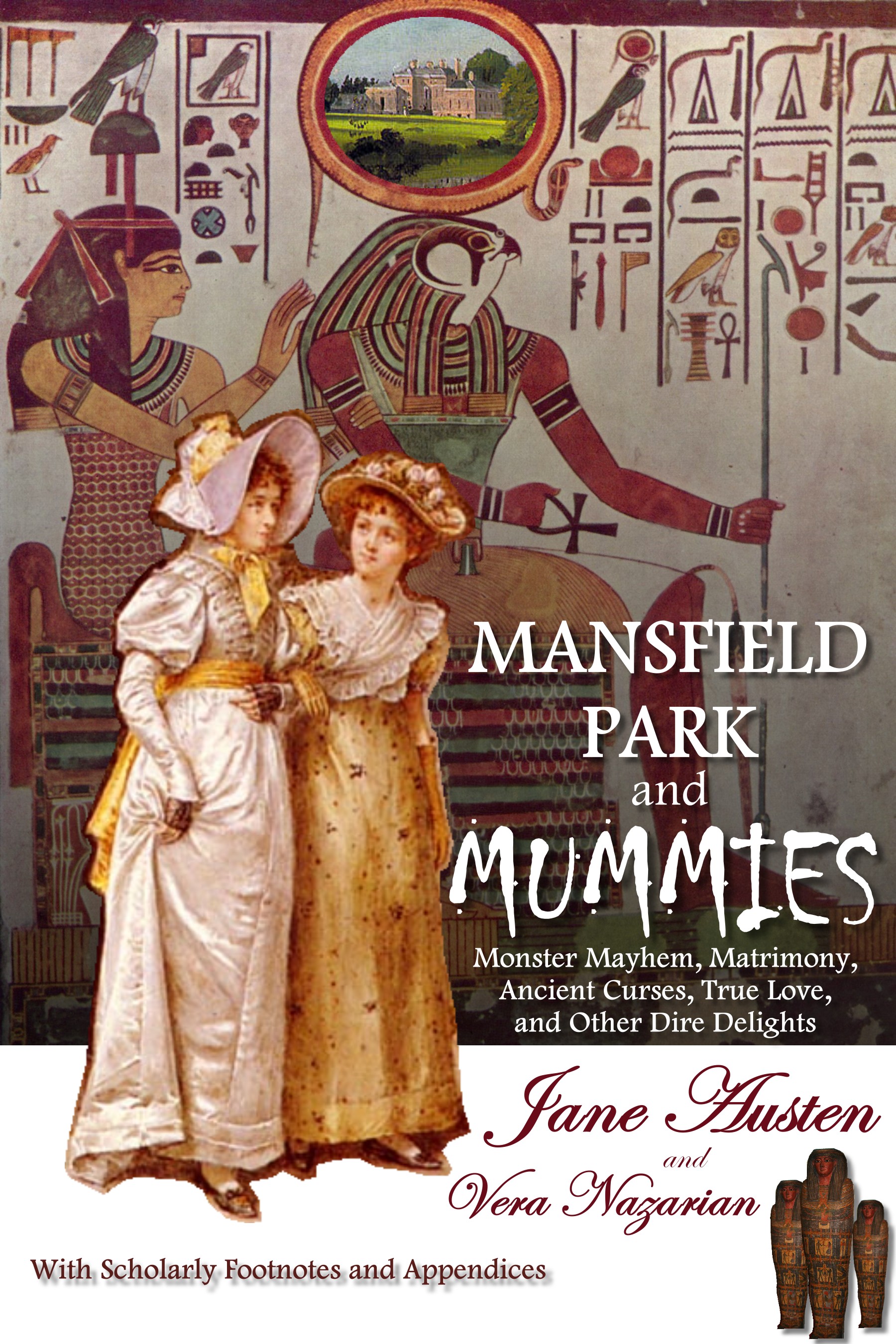
Mansfield Park and Mummies by Jane Austen and Vera Nazarian

Oh, yes, another Jane Austen mashup. But with writing like this, how can one resist a look-see?:

In the morning the ball was over, the mummies nowhere in sight, and much of the cleanup still to come And the breakfast was soon over too. All throughout, everyone ate in due solemnity, Sir Thomas decidedly troubled and deep in thought. Mr. Crawford impeccable, Edmund grim and absentminded, and only William darting quick happy looks at Fanny and whispering repeatedly, “Best ….ball….ever!”

The website for this book says it all: Spinsterhood or Mummification!
Ancient Egypt infiltrates Regency England in this elegant, hilarious, witty, insane, and unexpectedly romantic monster parody of Jane Austen’s classic novel.

Our gentle yet indomitable heroine Fanny Price must hold steadfast not only against the seductive charms of Henry Crawford but also an Ancient Egyptian Pharaoh!

Meanwhile, the indubitably handsome and kind hero Edmund attempts Exorcisms… Miss Crawford vamps out… Aunt Norris channels her inner werewolf… The Mummy-mesmerized Lady Bertram collects Egyptian artifacts…

Order the book from the publisher, Norilana Books

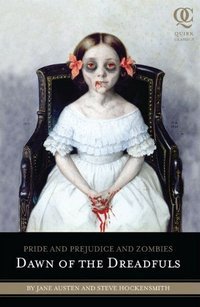
Last but not least is the prequel to Pride and Prejudice and Zombies published by Quirk Books. Dawn of the Dreadfuls by Steve Hockensmith ( coming out in March!)

The story opens with the Bennets attending a funeral for a local shopkeeper, who — before the burial — suddenly sits up in his coffin. Everyone in the crowd is shocked except Mr. Bennet, who has some knowledge of zombie incursions in other parts of England. Realizing that the scourge has come to their village, he decides to protect his daughters by having them schooled in the martial arts — nunchuks, katana swords, and the like…

Look for a special promotion of the book on March 3.

Order the book from the publisher, Quirk Books

More reviews on this blog:

Read Full Post »

Romola Garai as Emma

Once again PBS will host a Twitter Party during the second installment of Emma 2009. Come join me and Laurel Ann from Austenprose for a chat from 9-11 PM EST. PBS has also arranged for a Twitter Fest for those who live on the west coast. That Twitter Chat will begin at 9 PM PT and last until 11 PM. Click here for the details. Don’t forget to use the hash tag #emma_pbs! See you there.

Read Full Post »

« Newer Posts - Older Posts »