Feeds:
Posts
Comments

Archive for the ‘Jane Austen’s World’ Category

Gentle Reader: This is Christine Stewart’s fourth post for this blog. Christine has embarked on a year-long journey on a Sense and Sensibility inspired project that she chronicles on Embarking on a Course of Study. During the recent snow storm on the East Coast, she made good use of her time by completing 100 pages of The Mysteries of Udolpho.

Okay, here’s my clever (I hope) new idea for the new year: dating a la Jane Austen via match.com.

What better way to test out the preferred behavior, character, and values of our favorite heroines (for me: Lizzy, Elinor, and Anne) that captivated their men? And what better arena than one of (or the) largest dating site on the Internet – arguably the biggest ballroom in the world?!

Let’s look at the necessary criteria:

  • I’m single and available – check.
  • I’m armed with an arsenal of advice Jane Austen style (see book list on my site) – check.
  • I’ve got a healthy sense of humor – check.
  • I’m willing to make a fool of myself – check.
  • I’m willing to learn something – check, check, check!

That’s what this blog is all about!

Though I consider myself a great catch, I’m an interesting (odd?) mix of come hither and cautious, which makes for some contradiction. I can flirt, but at heart I want someone grounded, centered, not necessarily old-fashioned, but someone with integrity and good manners to go along with his rockin’ sense of humor, his smarts, creativity, good heart, and sex appeal. I’ve really misjudged men in the past and accepted less than I deserved, sometimes ignoring my intuition, which was yelling Run! in favor of being with someone rather than being alone. Settling for Mr. Right Now instead of Mr. Right Always. Good grief – who hasn’t, right? It’s all part of growing up.
But still – ouch.

I took a break for a few years – focused on career and writing, friends, buying a house, and now this blog, but this is too good of an opportunity to pass up.
If you’d like to hear more and see the books I’m using (and take this challenge along with me), go to my site, Embarking on a Course of Study.

In a previous post a week or so ago, you can find a  link to listen to and/or download the entire ‘The Mysteries of Udolpho.’ Some readers of the sections are better than others. But it’s a delicious treat regardless.

I’m still doing my regular course of reading per Marianne Dashwood’s possible list. It’s sometimes slow going as there’s so much (!), but worth it.

Happy New Year!


Chris Stewart
http://www.embarkingonacourseofstudy.com
(A Sense and Sensibility inspired project)
http://www.pw.org/content/christine_stewart

Christine’s other posts for this blog:

Read Full Post »


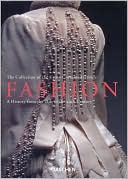
Laurel Ann, my blogging partner at Jane Austen Today, gave me a copy of Fashion: The Collection of the Kyoto Costume Institute a thick, breathtaking book with color photographs of the institute’s extensive western fashion collection.

The Kyoto Costume Institute (KCI), founded in 1978, is the only institution in Japan to study Western fashion. Its collections include primarily Western costume and accessories, dating from the 18th Century to the present. Its website provides information about the KCI, its gallery and exhibition catalogues. The digital archive contains images of 200 objects from the collection, arranged chronologically. The site is available in both English and Japanese parallel versions. – Intute

This book holds a special place on my shelf. Its arrival tells me that Laurel Ann knows me very well! View some of the lovely images contained in the book at this site: Digital archive of the Kyoto Costume Institute

Read Full Post »

Happy Christmas from Jane Austen’s World


Heap on more wood! — the wind is chill;
But let it whistle as it will,
We’ll keep our Christmas merry still.
Each age has deemed the new born year
The fittest time for festal cheer.
And well our Christian sires of old.
Loved when the year its course had rolled,
And brought blithe Christmas back again,
With all his hospitable train.
Domestic and religious rite
Gave honour to the holy night:
On Christmas eve the bells were rung;
On Christmas eve the mass was sung;
That only night, in all the year,
Saw the stoled priest the chalice rear.
The damsel donned her kirtle sheen;
The hail was dressed with holly green;
Forth to the wood did merry men go,
To gather in the mistletoe,
Then opened wide the baron’s hail
To vassal, tenant, serf, and all;
Power laid his rod of rule aside,
And ceremony doff’d his pride.
The heir, with roses in his shoes,
That night might village partner choose.
The lord, underogating, share
The vulgar game of “post and pair!”
All hailed with uncontroll’d delight
And general voice, the happy night
That to the cottage, as the crown,
Brought tidings of salvation down.
The fire with well dried logs supplied,
Went roaring up the chimney wide;
The huge hail table’s oaken face,
Scrubb’d till it shone, the day to grace,
Bore then upon: its massive board
No mark to part the squire and lord.
Then was brought in the lusty brawn,
By old, blue-coated serving-man;
Then the grim boar’s head frowned on high,
Crested with bays and rosemary.
Well can the green-garbed ranger tell,
How, when, and where, the monster fell;
What dogs before his death he tore,
And all the baiting of the boar.
The wassail round in good brown bowls,
Garnished with ribbon, blithely trowls.
There the huge sirloin reeked: hard by
Plum-porridge stood, and Christmas pie;
Nor failed old Scotland to produce
At such high tide her savoury goose.
Then came the merry masquers in,
And carols roar’d with blithesome din;
If unmelodious was the song,
It was a hearty note, and strong.
Who lists may in their mumming see
Traces of ancient mystery;
White shirts supplied the masquerade,
And smutted cheeks the visor made
But oh! what masquers, richly dight,
Can boast of bosoms half so light!
England was merry England when
Old Christmas brought his sports again.
’Twas Christmas broached the mightiest ale,
’Twas Christmas told the merriest tale;
A Christmas gambol oft would cheer
A poor man’s heart through half the year.

Sir Walter Scott, 1808, from Marmion

Read Full Post »

My Dear Charlotte is a recent novel written in epistolary form by British mystery writer Hazel Holt, who uses Jane Austen’s letters to her sister Cassandra for her inspiration. The main character of the book and the writer of the letters is Elinor Cowper (pronounced Cooper), who lives in Lyme Regis with her parents. She writes faithfully to her older sister Charlotte in Bath. In the letters Ms. Holt includes all the minutia of daily life that Jane wrote down, such as purchasing cloth, refurbishing bonnets, exchanging recipes, and attending balls and assemblies. Jan Ferfus, Professor of English Emerita, Lehigh University writes in the introduction:

“Of course, you don’t have to love Austen to love this book. If you enjoy detective novels, you will find here a completely satisfying murder mystery, coupled with a romance (or more than one, in fact). My Dear Charlotte gives you, in addition to mystery and romance, a portrait of the world of the English gentry at around 1815, immediately after the defeat of Napoleon–its manners and its moral certainty. As in Austen, Napoleon is not directly mentioned, but his shadow is there: one brother of the heroine is a sailor and the other a junior diplomat at the Congress of Vienna. It’s the social world at home that is central, however, with its balls, visits, courtships, gossip, and of course murder, underlining the tensions and rifts within that apparently civilized society.

The book is based on the premise that Jane’s letters make for interesting reading. As the publisher says, “While the story is new, the details having to do with balls, dinners, and other social events are given in the words of Jane Austen herself.”  This excerpt describes events just after Mrs. Woodstock’s murder:

Of course it cannot be denied that Mr Woodstock himself will lead a happier life without his formidable spouse, though I do not believe that he could have summoned up the courage to dispose of her!

Mr Rivers will be glad to be rid of one who would have put obstacles in the way of his plans for the Barbados estate, but I do not think that may be considered a sufficient reason for an honourable man to take a life.

Mrs West, however, seems to me to lack such scruples if they stood in the way of her daughter’s advancement. I do not at present see how she could have brought about Mrs Woodstock’s demise, but no doubt, if I give my mind to it, I may presently think of something.

Poor John coachman also had reason to wish his mistress dead, since his whole happiness (and that of Sarah) depended upon keeping his position at Holcombe and if he had been turned away without a character his case would have been miserable indeed.

So you see, there are a number of people who will be happy at Mrs Woodstock’s death. Perhaps I should add myself to the list for the sake of those hours of tedium and the many irritations she has subjected me to!

Author Hazel Holt

The above passage represents the book at its most exciting because it concentrates on the plot.  As far as I am concerned, Jane Austen’s letters are not all that interesting when taken out of context. The letters to Cassandra are important because they reveal something (anything) about Jane’s life and thoughts. Those that I read from the Brabourne edition seem like watered down pap when compared to the tart and satiric observations of her novels. There were times when I stopped reading My Dear Charlotte, for the book was bogged down by the minutia of daily life instead of clues about the murder. The details were meant to give authenticity, but they should have been used more sparingly. I found the epistolary format also problematic, for it allowed for too much exposition and very little dialogue, and I felt that I was receiving my information third-hand. Instead of getting into Elinor’s head, I was reading about her recipes! In fact, Elinor reveals as little of her thoughts, ideas, and hopes in her letters to Charlotte as Jane did to Cassandra. I would have preferred that Ms. Holt had used the rich dialogue and language in Jane’s books for inspiration, rather than her uneventful life.

Hazel Holt would most likely disagree with my assessment of Jane’s letters. She describes the process of writing My Dear Charlotte in a recent interview, in which she revealed that she found Jane’s letters delightfully chatty:

I thought – holding my breath – that since they are such wonderfully informal, chatty letters, I might just manage to create a sort of facsimile of her world if I wrote my novel in the form of letters, inserting extracts of Austen’s where they would fit in with the story – the perfect, authentic background.

Ms. Holt DOES capture Jane’s ascerbic wit on a few occasions by directly quoting her and weaving these gems into the plot:

“Mrs Holder’s niece, Miss Porter, is recently come into the neighborhood but is not much admired; the good-natured world, as usual, extolled her beauty so highly, that all of Lyme have had the pleasure of being disappointed.”

“I do not remember if I told you that Mrs Heathcote wrote to tell us that Miss Blackford is married, but I have never seen it in the papers, and one may as well be single if the wedding is not in print.”

Perhaps I was expecting too much from the start and didn’t give this book the chance it deserved. As a successful mystery writer, I expected Ms. Holt to wow me from page one. To be fair, as the book progressed and as the characters were introduced and more fully formed, I found myself becoming more involved in the plot. Ms. Holt knows how to write a mystery, though I took a stab in the dark and guessed the murderer early on. Searching the Internet for reviews and comments about My Dear Charlotte, I discovered that many people liked it immensely and gave it rave reviews. As for me, I rate this book two out of three regency fans.

My Dear Charlotte: With the assistance of Jane Austens letters (Paperback), Hazel Holt. ISBN #’s
Standard: 978-1-60381-040-1
Large Print Books: 978-1-60381-041-8
sBook: 978-1-60381-042-5

More on the Topic

Read Full Post »

Inquiring readers: This is the third guest post by Christine Stewart, who has embarked on the year-long Sense and Sensibility inspired project on her blog, Embarking of a Course of Study.  Read her biography on Poets and Writers. Enjoy!

Let’s just say how much I am enjoying rereading Northanger Abbey. The first few times I read it, I think it was right after reading P&P or S&S and I was still steeped in all the (I was going to say romance, but Austen doesn’t really do romance) push and pull, hopes and dreams, of the characters’ road to marriage (let’s go with that), so I was frustrated with the satire and play and narrator’s voice in the book at times – because I wanted it to be another P&P or S&S or Persuasion.

Well, it’s a rollicking good time now and I can appreciate it for all its charms and cleverness. It’s the one book where Jane’s voice speaks to you directly and it’s a fun dialogue. Her wit is beyond compare! She really goes full force, no holds barred. Awesome.

It’s gotten me thinking how much of her characters’ character, and whether they take the high road or low and end up where they want to go, is tied to books. Books have power – whether read or written (women created some measure of independence – money – through writing) – and they make or break the character and her future. The wrong ones give you the wrong ideas and make you the wrong fit (and wrong-headed) for the partner who could have been right otherwise. I’ve mentioned this before, but I’ll say it again. The heroines who do well are the ones with self-command, self-awareness, and the power of self-examination. The ones that follow (to the greater degree) the rules of propriety, and who have a handle on their emotions, go the furthest.

This is something many women may not be taught today, as young girls. Yes, as children, we knew about behaving at the dinner table and in malls, etc., but I’m pretty sure my friends and I never heard word one about dealing with/managing our emotions (fears, worries, even joys), so they didn’t rule us. And self-examination? What??? Who heard of that as a teenager or young adult, when you needed it most?

With all the silly (ok – STUPID) magazines we read – Tiger Beat, Seventeen, Mademoiselle, Cosmo – that were all about dressing and making oneself up for a man and making him feel important, forgetting about what was inside us and making ourselves feel good first, we didn’t stand a chance. And then it became all about career – women ‘having it all.’ Always looking outside, not inside for ways to manage our lives. Media in general was not (and still isn’t) responsible in how it communicates with young women. And most of our parents didn’t know how to help themselves let alone us.

There’s been a big resurgence of self-help books, classes, and videos geared towards teaching women how to relate to men, how to get what they want from men, how to meet the right one and marry him. Think Bridget Jones’ Diary. But it’s even larger now. Being 43 and single, I get targeted for these kinds of ads/info on the Internet. There’s a huge industry with audio, video, books, teleconferences, soulmate kits, vedic astrology readings, and more. Who knew?

It’s really boomed since The Secret came out and the masses learned about The Law of Attraction on Oprah. It’s a new (and very commercial – because that’s what we Americans do best) version of the ‘how tos’ that Austen’s characters (the sensible ones) demonstrate for us.

And guess what? It’s all about self-examination, self-awareness, and self-command. That’s the good news. It’s still about reading the right books, which is still a minefield experience. That’s the bad.

Let me ‘share’ that about 13 years ago I had an anxiety disorder that lasted for several years (panic attacks and everything, good times), and that taught me those three skills. It forced me, more like, but I hadn’t known or seen their necessity in my life to that point, so that’s what it took for me to wake up, apparently! I’m grateful that it happened as it was a major turning point in my life and a constant reminder to keep up those practices. It’s not an experience you forget. Still, would have been easier to have had good examples in life and books instead….

So what do you think? How were you raised? Who were your examples/models of womanhood? Do you regularly take stock of your feelings and behavior and adjust where needed? Do you put yourself first (not thinking selfish here, there’s a difference), take care of yourself? Make hard choices/decisions? I’d love to hear.

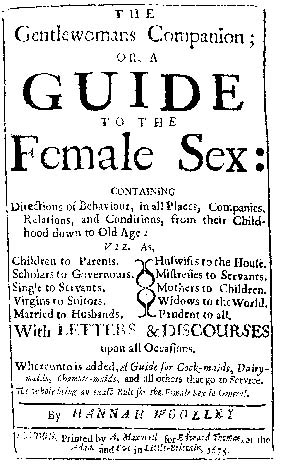
Stop by the website and comment, and check out a video of Jane Austen’s House (12/11 post), and a link to The Gentlewoman’s Companion, or A Guide to the Female Sex (11/30 post). Let’s read along together!

Enjoy Jane’s birthday!

Read Full Post »

« Newer Posts - Older Posts »