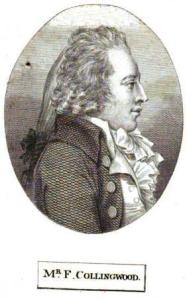
By the end of the eighteenth century, fashionable gentlemen began to dine with regularity in large taverns. As tavern food gained in popularity, the chefs who cooked the fare began to publish their own cookbooks. These new culinary stars claim not to have learned their trade in a private household, but through methodical study as an apprentice.* The Universal Cook: And City and Country Housekeeper (1792) was written by John Francis Collingwood and John Woollams, the two principal cooks at The Crown and Anchor Tavern in the Strand. In their cookbook, which had the distinction of also being printed in French*, the two chefs discuss the meats, produce, and fruits that were in season. The foods listed below were common for the month of December:

MEATS
Beef, Mutton, Veal, Pork, House-Lamb, and Doe Venison.
POULTRY
Geese, Chickens, Wild Ducks, Turkeys, Pullets, Pigeons, Capons, Fowls, Hares, Rabbits. Woodcocks, Snipes, Larks, Teals, Widgeons, Dottrels, Partridges, and Pheasants.
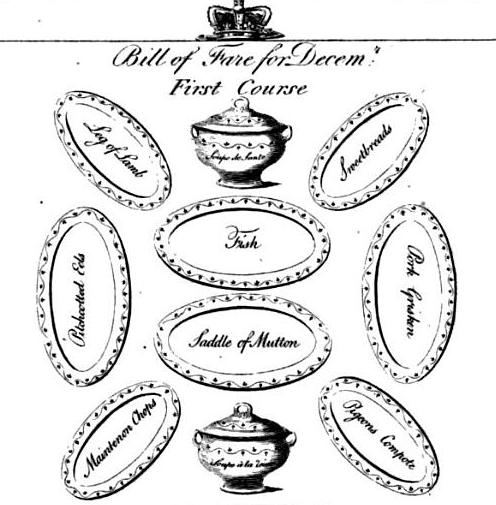
First course
FISH
Turbot, Gurnets, Smelts, Cod, Gudgeon, Eels, Sturgeon, Dorees, Codlings, Soles, Cockles, Mussels, Holobets, Bearbet, Carp, and Oysters.
VEGETABLES
Cabbages, Savoys, Potatoes, Skirrets, Garlick, Rocombole, Brocoli, purple and white; Scorzonera, Salfifie, Celery, Endive, Carrots, Leeks, Beets, Parsnips, Turnips, Lettuces, Cresses, All sorts of small Sallad, Onions, Shalots, Cardoons, Forced Asparagus, Spinach, Parsley, Thyme, and All sorts of Pot Herbs.
FRUIT
Apples, Pears, Medlars, Services, Chesnuts, Hazle Nuts, Grapes, and Walnuts. The Universal Cook And City and Country Housekeeper By Francis Collingwood, John Woollams

Second course
Preparing the kitchen garden in December
Collingwood and Woollams also devoted a chapter of their cookbook to the kitchen garden. In December there were few plants that continued to grow, so much of their advice is spent on digging the soil in trenches and preparing it for spring sowing; as well as saving cauliflower, broccoli, and artichokes from hard frost.

DUNGING and digging the ground is the principal business to be done in the kitchen garden this month and laying it in ridges to enrich for sowing and planting after Christmas with some principal and early crops for the ensuing spring and summer Dress your artichoke beds by first cutting down any remaining Items …Pay diligent attention to your asparagus hotbeds to keep up the heat of the beds by linings of hot dung and to admit air in mild days… Take up your red rooted beet on a dry day and let them be placed in sand and under cover for use in case of hard frosts… In all moderate weather give air to your cauliflowers in frames The Universal Cook And City and Country Housekeeper By Francis Collingwood, John Woollams
The Universal Cook’s Bill of Fare for December describes a two-course meal consisting of 16 dishes and two soups. I’ve listed two recipes from the Second Course that use methods and ingredients that are still common:
 Ragout of Celery (From the Universal Cook)
To ragoo Celery, CUT the white part of the celery into lengths and boil it till it is tender. Then fry and drain it, flour it and put to it some rich gravy, a very little red wine, salt, pepper, nutmeg and catchup. Give it a boil and then send it up to table. The Universal Cook And City and Country Housekeeper By Francis Collingwood, John Woollams
- Lemon Jelly, a recipe like grandma used to make (from Australia/New Zealand). Click here for instructions.
*All Manners of Food, Stephen Mennell, p. 99
Other posts about Regency food on this blog:


 Fact: Queen Charlotte introduced the Christmas tree to England. Recently I read in Yahoo answers.com that the Christmas tree was introduced to England by Prince Albert, Queen Victoria’s consort. The majority of the readers had “voted” that this must be so. Wrong. While he and Queen Victoria popularized the custom, they did not start the tradition.








 Jane Austen's World