Feeds:
Posts
Comments

Archive for the ‘Jane Austen’s World’ Category

“It was too pathetic for the feelings of Sophia and myself—We fainted alternately on a sofa.”–Love and Freindship, Letter the 8th, Jane Austen’s Juvenilia.

Frederic & Elfrida, one of Jane Austen’s hilarious juvenile stories, published by Juvenilia Press

Since I have a background in linguistics, I was intrigued when I was invited to present at a conference in Spain on “Linguistic Approaches to Jane Austen’s Childhood.”*

This conference, which took place in early May, focused on the language of Austen’s early letters and her Juvenilia, the stories she wrote in her teens for her own family and friends’ enjoyment. She wrote them up in three volumes, as if for publication, though they were not published until long after her death. Why is the language of these works important, or even interesting?

Austen’s Language

A fascinating article on “Jane Austen’s Subtly Subversive Linguistics,” by linguist Chi Luu,  claims that the best thing about reading Austen is her language. “Austen’s subtly subversive ironic language allows readers to receive her work in a layered way—romance, comedy, mystery.” We lose much of this linguistic brilliance in the movies, which tend to magnify the romance and ignore the intricacies of Austen’s language.

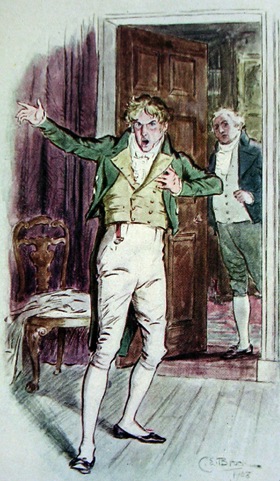
Luu says, “As [Austen’s] writing matured, her comedy became less overt and more nuanced.” We can enjoy the overt comedy of Austen’s Juvenilia, ranging from “The Beautifull Cassandra” whose “father was of noble Birth, being the near relation of the Dutchess of —-’s Butler,” to “Love and Freindship,” whose moral is “Run mad as often as you chuse; but do not faint.”

“The Beautifull Cassandra”  is one of Austen’s teenage stories. In twelve chapters of one to four sentences each, Cassandra has outrageous adventures.

Jane Austen Practicing

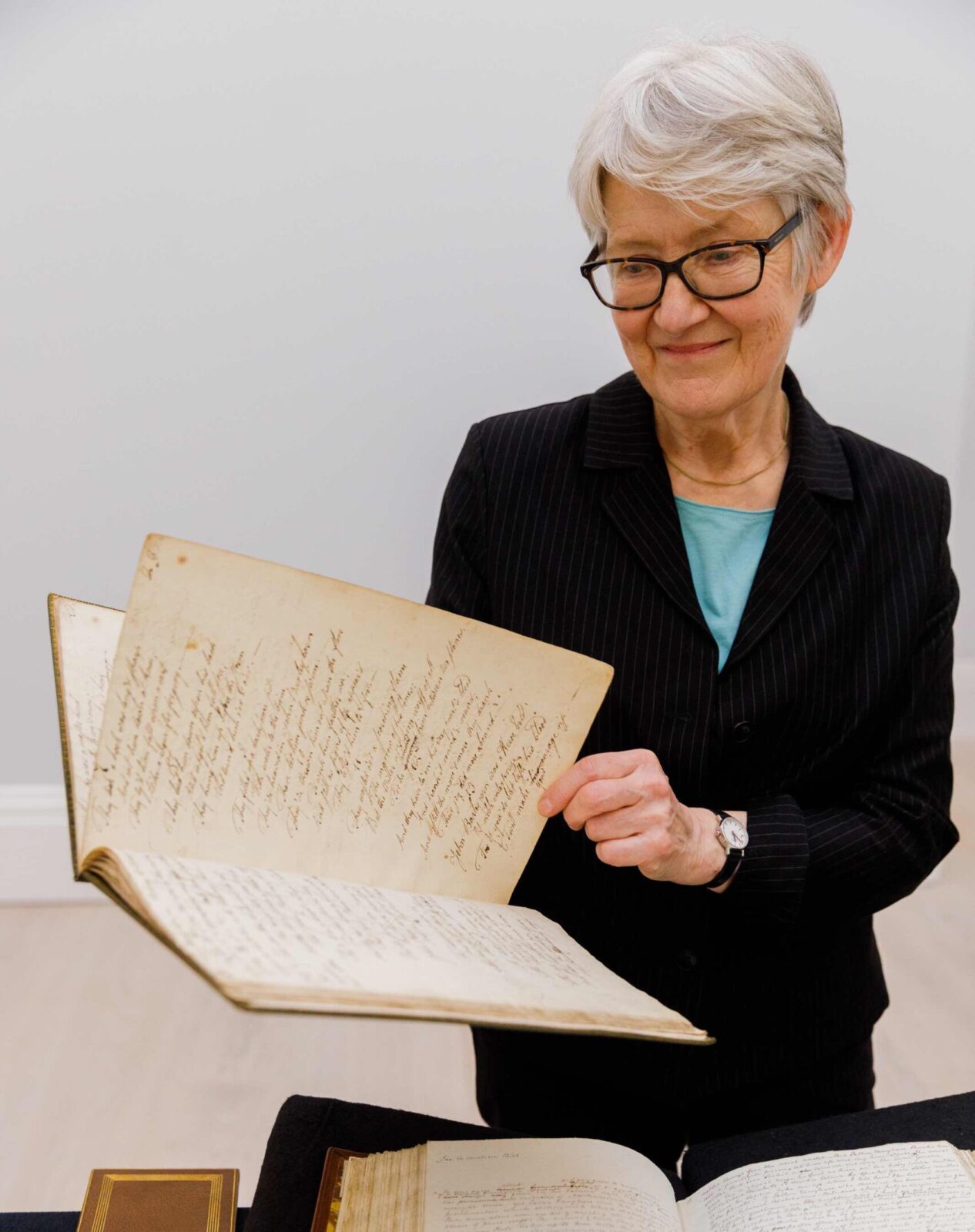
The conference started at noon in Spain, which was 6 AM for me in Georgia, USA, where I was participating online. Kathryn Sutherland opened with, “Jane Austen Practising: What Her Teenage Writings Can Teach Us.” Sutherland edited editions of the Juvenilia which reproduce the pages in Austen’s own handwriting with transcriptions. 

Sutherland gave a lively introduction to the Juvenilia, which she considers among the best comic writings in English. These stories are parodies of the novels and pulp fiction Austen enjoyed, as well as her schoolbooks on history and geography. Unlike in Austen’s mature novels, girls in the Juvenilia reject all advice on ladylike behavior. We see them overeating, drinking, stealing, accepting two offers of marriage, even involved in murder, sexual misdemeanors, and violence. The girls in the stories are tough, while the men are weak.

Austen experimented with exotic names for places, like “Crankhumdunberry” and “Pammydiddle,” and people, like “Jezalinda” and “Elfrida.” Sutherland called these kinds of names “multisyllabic confections.” She also said Austen was experimenting with what ingredients a novel needs. For example, does it need a hero? In “Jack & Alice,” Jack is only briefly mentioned as a drunk who died and made his sister rich:

“It may now be proper to return to the Hero of this Novel, the brother of Alice, of whom I beleive I have scarcely ever had occasion to speak; which may perhaps be partly oweing to his unfortunate propensity to Liquor, which so compleatly deprived him of the use of those faculties Nature had endowed him with, that he never did anything worth mentioning. His Death happened a short time after Lucy’s departure & was the natural Consequence of this pernicious practice. By his decease, his sister became the sole inheritress of a very large fortune”—”Jack and Alice,” chapter 7, Jane Austen’s Juvenilia [Variations in spelling and capitalization were common at this time.]

Are motivations and believable settings necessary? Austen’s Juvenilia characters act crazily and randomly. Are the boundaries set by society reasonable? These characters ignore them.

Catharine, or The Bower, shows Austen almost ready for her mature novels.

The last work of the third and final volume of the Juvenilia is Catherine, or The Bower. This is the longest work, and is realistic rather than comic. It includes political commentary and harsh criticism of restrictions on women. Catharine sets the stage for Austen’s later novels, which are set in her real world, with characters who need to live within social realities.

Spelling as Evidence

On the second day, Ingrid Tieken-Boon van Ostade gave the plenary talk, “Spelling as Evidence: from Jane Austen’s Juvenilia to The Watsons.” Van Ostade is the author of In Search of Jane Austen: The Language of the Letters, an in-depth analysis of the spelling, vocabulary, and grammar Austen used in her letters.

In Search of Jane Austen: The Language of the Letters explores Austen through her spelling, vocabulary, and grammar.

In this talk, van Ostade suggested dates for parts of Austen’s manuscripts based on different versions of Austen’s handwriting, different shades of ink, and different accepted spellings. She puts The Watsons at 1805-6 (family tradition suggests 1804), and “The Three Sisters” as an addition to the Juvenilia after 1804.

In “The Three Sisters,” a young lady agrees to marry a horrible man in order to spite her sisters. She haggles with him over what kind of coach they will get: she wants a blue one with silver spots.

One participant was working on a compilation of some letters of the period. Van Ostade encouraged such editors to include original spellings, capitalization, and punctuation, rather than “correcting” them. Such details contribute to our historical knowledge of the development and use of language in each time period. I would not have thought of that!

Spelling was not taught as a school subject in Austen’s time, though instructional texts were beginning to become available by the 1790s. Van Ostade says that throughout Jane Austen’s life, Austen was a “careful and consistent speller.” So the “mistakes” we see in her Juvenilia, such as “freindship” for what we would now spell “friendship,” were variations used at that time.

In a few days we’ll continue with more delights of Austen’s language.

“We are the sons as you already know, of the two youngest Daughters which Lord St Clair had by Laurina an italian opera girl. Our mothers could neither of them exactly ascertain who were our Father, though it is generally beleived that Philander, is the son of one Philip Jones a Bricklayer and that my Father was one Gregory Staves a Staymaker of Edinburgh. This is however of little consequence for as our Mothers were certainly never married to either of them it reflects no Dishonour on our Blood, which is of a most ancient and unpolluted kind.”–Love and Freindship, Letter the 15th, Jane Austen’s Juvenilia

What is a phrase from Jane Austen that you love?

To read more about Jane Austen’s brilliant use of language, check out the Social Customs tab above, and scroll down to Language and Linguistics.

*The conference was organized by Nuria Calvo Cortés at the Complutense University of Madrid.

Part 2: The Language of Jane Austen’s Teenage Writings

Brenda S. Cox is the author of Fashionable Goodness: Christianity in Jane Austen’s England. She also blogs at Faith, Science, Joy, and Jane Austen.

Read Full Post »

Fellow Janeites, I have a new book review for you in honor of Jane’s 250th year: Jane Austen’s Garden: A Botanical Tour of the Classic Novels written by Molly Williams and illustrated by Jessica Roux. This new book pairs two of my favorite things: Jane Austen and gardening! I looked forward to its release for months and it now sits prominently on my shelves!

Photo by Rachel Dodge, ©2025

Book Review

I knew this book would be beautiful, and I confess that I preordered it based on how pretty it looked. I have another gorgeous book by Jessica Roux called Floriography: An Illustrated Guide to the Victorian Language of Flowers. I’ve always been drawn to the language of flowers and their meanings.

When I ordered it, I assumed Jane Austen’s Garden would mostly include drawings and tidbits of information. However, when it arrived, I discovered that it is filled with detailed information about the flowers, plants, trees, fruits, and vegetables mentioned in Austen’s novels and in her own garden and kitchen garden! There are even instructions about how to grow your own fruits and vegetables at home.

And don’t let the Table of Contents fool you. This book has a LOT to offer. The editor(s) merely listed the craft projects in the book in the Table of Contents, which does a great disservice to Williams’ painstaking research and intriguing information. Williams provides ample material for Jane Austen fans and has done a wonderful job of researching every detail of this book.

Order Your Copy Here:

Literary Landscapes and Illustrations

In each chapter, there is a section entitled “From the Literary Landscape.” This is the best part!! This is where Jane Austen fans can really dig into Williams’ research. She outlines the instances when various trees, fruits, or flowers are mentioned in the novels (or how the Austens used them in their everyday lives). Then, Williams goes into detail about what they signified and/or their history. As many of you know from my articles over the years, I love to look for specific items in the novels and research them.

Finally, the illustrations in this book are to die for. Truly, Roux is a most extraordinary artist. You can see more of her art HERE. I truly could look at it all day long!!!! I have a dream of writing a book with botanical illustrations one day, and I can’t imagine having someone like Roux do the artwork. She brings Williams’ research to life and captures the Regency imagination beautifully.

Book Description

An elegantly illustrated celebration of Jane Austen’s life and literature as told through the flowers, plants, and landscapes that inspired her.

Through explorations of the botanical inspirations and symbolism in Austen’s work and personal life, as well as historical information about the gardens and landscapes of the Regency Era, Jane Austen’s Garden will transport readers back in time to the lush English landscape of the early 1800s. Woven throughout are DIY projects to help you create a home garden worthy of a surprise visit from Lady Catherine de Bourgh or maybe just give your dining table a bit of historical flair. Accessible, entertaining, and enhanced by the enchanted illustrations of celebrated artist Jessica Roux, Jane Austen’s Garden is a fun twist on a familiar subject that will delight plant lovers and Janeites alike.

Book Contents

The Table of Contents is misleading as it only outlines the various DIY projects you can try at home. The book itself has a LOT more meat to it, so don’t let the overview dissuade you from purchasing it. In an effort to provide a fuller picture of all that Williams included, I created a full outline of the book:

Below are two examples of how Williams includes information about different flowers and plants in the novels, along with more illustrations from Roux:

About the Author and Illustrator

Molly Williams is the author of Killer Plants: Growing and Caring for FlytrapsPitcher Plants and Other Deadly Flora, and Taming the Potted Beast: The Strange and Sensational History of the Not-So-Humble Houseplant, and she writes regularly for Apartment Therapy‘s gardening and horticulture section. She grew up on a flower farm and is now a professor of writing in New England. You can visit her online HERE.

Jessica Roux is a Nashville-based freelance illustrator and plant and animal enthusiast. She loves exploring in her own backyard and being surrounded by an abundance of nature. Using subdued colors and rhythmic shapes, she renders flora and fauna with intricate detail reminiscent of old-world beauty. She is the author and illustrator behind Floriography: An Illustrated Guide to the Victorian Language of FlowersOrnithography: An Illustrated Guide to Bird Lore & Symbolism, and the Woodland Wardens Oracle Deck & Guidebook. You can visit her online HERE.

250 Years of Bookish Bounty

Books like these truly make the 250th celebration of Jane Austen’s life, writing, and legacy a true gift and a joy. I’m so thankful to the authors, illustrators, editors, and publishers who make books like this possible. The bounty of books releasing this year is a wonder to behold. I hope you’ll check this one out and add it to your bookshelves!


RACHEL DODGE teaches college English classes, speaks at libraries, teas, and conferences, and writes for Jane Austen’s World blog. She is the bestselling, award-winning author of The Anne of Green Gables DevotionalThe Little Women DevotionalThe Secret Garden Devotional, and Praying with Jane: 31 Days Through the Prayers of Jane Austen. A true kindred spirit at heart, Rachel loves books, bonnets, and ballgowns. Visit her online at www.RachelDodge.com.

Read Full Post »

Inquiring Readers

Helen Robson, Fine Art Administrator with Lacy, Scott, & Knight Auction Centre in Bury St Edmunds, UK, contacted this blog with information that is perfectly suited for our year long celebration of Jane Austen’s birth.

Our 14th June auction includes a pair of George III silver Egyptian pattern candlesticks engraved with an interesting inscription, the Austen family crest, and mentioned in a museum’s recently transcribed manuscript, which links the Napoleonic Wars, the East India Company and the brother of one of Britain’s most beloved novelists.

Ms Robson has generously encouraged us to use LS&K’s images and texts. My aim, always, is to link to the original source, in this instance their website. I have downloaded the PDF from the site of a quite extensive history about the Admiral entitled “Jane Austen’s brother, the Napoleonic Wars and the East India Company.”  The link to the information sits here.

Francis Austen as a young man

This link leads to the PDF Doc, which can be printed out.

As it happens, and coincidentally, Jane Austen’s House has placed the link to the Memoir of Admirals Sir Francis Austen, whose translation was completed in 2024 by volunteers — just in time on their site!

These two pieces of information regarding Austen’s slightly older brother (born 1774), help us to understand more about the family dynamics through Frank’s career as a sailor, captain and admiral. His Memoir, written in a slim journal consisting of 78 pages, gives us a personal perspective on his life

Related Sites:

Read Full Post »

Natalie Jenner’s latest book, Austen at Sea, will become available through booksellers on May 6th! She will hold a discussion at The Poison Pen Bookstore at 2 PM, MST on May 5th. (In my Eastern state, the conversation will start at 5 PM.) Click on the link provided below to the YouTube video, subscribe, and hit the Notification Button! This discussion will include a live chat online.

Jenner describes her new novel in this link to her site, which should whet readers’ appetites! 

I’ve been listening to the audio version of the book, and my review will go online soon. This book is a quite ambitious project, and suits the 250 year anniversary of Jane Austen’s birth beautifully! – Vic

Read Full Post »

Jane Austen fans are flocking to theaters to watch the 2005 Pride and Prejudice film in theaters to celebrate its 20th anniversary. And what perfect timing with Jane’s own 250th celebration!

The film’s re-release in theaters was originally set for April 18-24, 2025, but it was extended to April 25-30, 2025 due to its success. It’s a limited engagement, primarily in the U.S., so Jane Austen friend groups, book clubs, and JASNA regional groups are taking advantage of this special event and gathering at movie theaters nationwide to watch it together.

Some, in Regency garb!

Pop Culture Craze

While the 2005 film version of Pride and Prejudice isn’t a favorite with some Jane Austen fans, who argue that it’s a very loose interpretation of the novel (and rife with historical inaccuracies), it’s been a huge sensation with a whole new wave of Austen fans since it first released 20 years ago. P&P 2005 fans discuss it non-stop online and have created fan groups and an endless library of memes, edits, reels dedicated to it. An entire fandom has formed itself around the film and its actors.

Hand Flex

And its popularity shows no sign of stopping. From Macfadyen’s emotionally complex portrayal of Mr. Darcy, the electricity between Knightley and Macfadyen, and the famous “hand-flex” scene, this highly romanticized adaptation of Austen’s novel is a cultural phenomenon in its own right.

Musical Score

The musical score alone is beloved by fans everywhere. Composed by Dario Marianelli and performed by Jean-Yves Thibaudet (piano) and the English Chamber Orchestra), the music is one of the reasons people love the film so much. The title track “Dawn” is just about as dreamy as it can get:

Awards and Nominations

After its release, the film won or was nominated for endless awards from the film industry, including Oscar nominations for Best Performance by an Actress in a Leading Role (Keira Knightley), Best Achievement in Art Direction (Sarah Greenwood, art director and Katie Spencer, set decorator), Best Achievement in Costume Design (Jacqueline Durran), and Best Achievement in Music Written for Motion Pictures (Original Score, Dario Marianelli).

Joe Wright, the film’s director and the 2006 Winner Carl Foreman Award for the Most Promising Newcomer, joined a Q&A several days ago at a special screening of the re-release. Of his directorial debut, he said, “I’m actually prouder of the film tonight than I think I’ve ever been.” (@focusfeatures)

Director Joe Wright at a Q&A Screening of the re-release of P&P 2005.

P&P Feuds

The 2005 Pride and Prejudice is often compared to the 1995 sweeping BCC version with Colin Firth and Jennifer Ehle, but it’s a bit like comparing apples and oranges. They are both so vastly different in every way. Nonetheless, fans have been debating this topic for 20 years now and will probably continue for another 20 years at least.

People outside the Jane Austen fandom probably won’t ever understand why we all feel so passionate about the different film versions of Austen’s novels, but in the words of Mr. Bennet, “For what do we live, but to make sport for our neighbours, and laugh at them in our turn?”

Re-Watching

Jane Austen fans LOVE to re-watch the films over and over. Have you been to the theater to watch the 2005 P&P re-release? Are you planning to go? (Did you / Will you dress up?) Which version do you prefer? Please comment below!

If you’d like to check showtimes in your local village theater, you can search AMC’s listings HERE. I’m hoping to see it before it’s gone. I can’t pass up the chance to watch a movie with other die-hard Janeites at the theater!


RACHEL DODGE teaches college English classes, speaks at libraries, teas, and conferences, and writes for Jane Austen’s World blog. She is the bestselling, award-winning author of The Anne of Green Gables DevotionalThe Little Women DevotionalThe Secret Garden Devotional, and Praying with Jane: 31 Days Through the Prayers of Jane Austen. A true kindred spirit at heart, Rachel loves books, bonnets, and ballgowns. Visit her online at www.RachelDodge.com.

Read Full Post »

« Newer Posts - Older Posts »