Feeds:
Posts
Comments

Archive for the ‘Popular culture’ Category

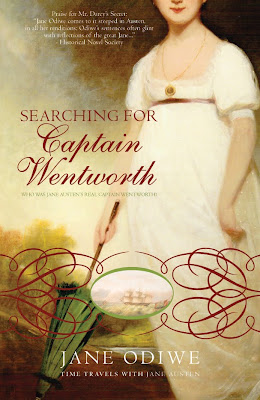
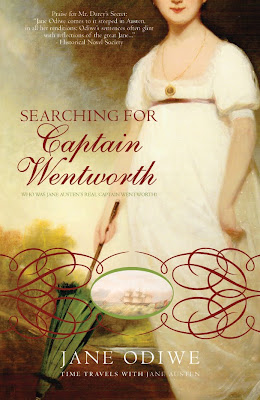
You’ve supported Jane Austen’s World since 2006, now it’s time to give back. Inquiring readers, I have enjoyed your comments and been most humbled by your visits. On the day that the 5 millionth reader visits my blog, I am giving a gift certificate of a Kindle mobi file from Amazon.com U.S. of Jane Odiwe’s Searching for Captain Wentworth. Who will it be?

Note: Contest Closed! Congratulations, Ruth!! Just leave a comment as to why you think that Persuasion is the best of Jane Austen’s novels. Or not. I am not picky. I just want your opinion. Click here to read my review of this time travel book.

The random generator drawing will be held on the day that my counter shows the magic number of 5 mill. (Estimate 1-2 weeks.)

Thank you, thank you for your interest and support. I intend to answer each comment, but will not include my replies in the drawing!

(Sadly, my offer only applies to U.S. readers. I do apologize to my foreign readers. Once again you are left out of the loop.)

Note: the green links lead to WordPress ads. The blue links are mine. I do not make money from my blog.

Read Full Post »

Searching for Captain Wentworth, by Jane Odiwe.

Time travel has always presented a logical difficulty for authors: How to make such a romantic notion seem plausible? I have a way of dealing with time travel stories – suspend disbelief and enjoy the ride. Jane Odiwe’s new book speaks directly to one of my fantasies – to meet Jane Austen and to get to know her as a friend. Oh, if that were only possible!

I’ll admit that I have a fondness for Ms. Odiwe’s books. In this new endeavor she has outdone herself. After finishing Searching for Captain Wentworth I felt as if I had taken a trip to Bath and Lyme Regis, met Jane Austen, and been treated to a wonderful romance.

Not everything about the book is perfect. While the love affair between Charles and Sophia had me engrossed, the one twixt Josh and Sophie left me somewhat cold. The ending seemed rushed, and although loose ends were tied, much of the details didn’t make sense, as with all time travel stories. But logic is not the point of a time travel book: it is fantasy and wish-fulfillment.

This book has fantasy aplenty, backed up by history and Ms. Odiwe’s intimate knowledge of Jane Austen’s life and the environs of Bath. I had the privilege of visiting Bath and staying in a hotel near Sydney Gardens just off Great Pulteney Street, and the book kept conjuring up memories that I thought I had forgotten. Vividly described is the arduous but ultimately rewarding climb up Beechen Cliff. Ms. Odiwe uses this walk as a marvelous plot device while taking us on a guided tour of that famous J.A. landmark. She takes her characters to Lyme Regis as well, and has a knack for writing an original story while admirably following Persuasion’s plot.

I could write a longer review, but I don’t want to reveal too much of the plot. Well done, Ms. Odiwe. This is one of the few review books that I read from start to finish. I give Searching for Captain Wentworth five out of five regency tea cups with this caution: If you are not a fan of romance novels, Austen sequels, or time travel tales, then you will wonder at my gushes.

This book can be purchased as an eBook as well as in the traditional format.

Jane Odiwe’s blog

Paperback: 320 pages
Publisher: Paintbox Publishing (September 7, 2012)
Language: English
ISBN-10: 095457222X
ISBN-13: 978-0954572228

Note: Green links are WordPress ads. The blue links are mine. I make no money from this blog.

Read Full Post »

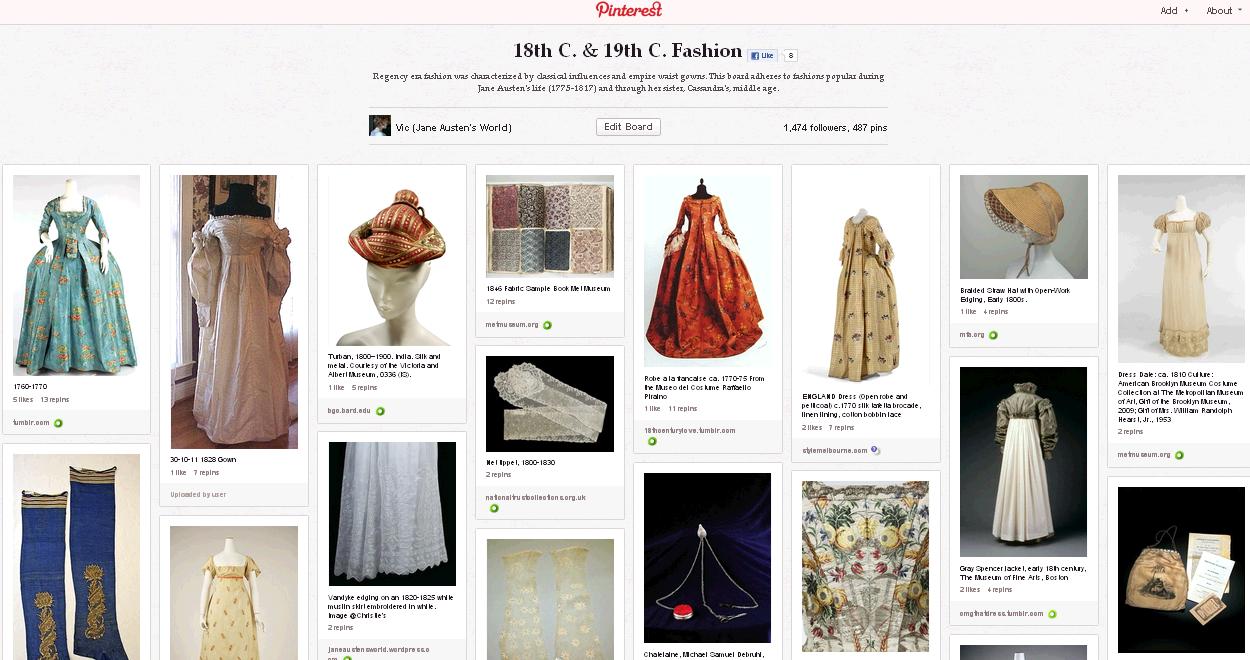
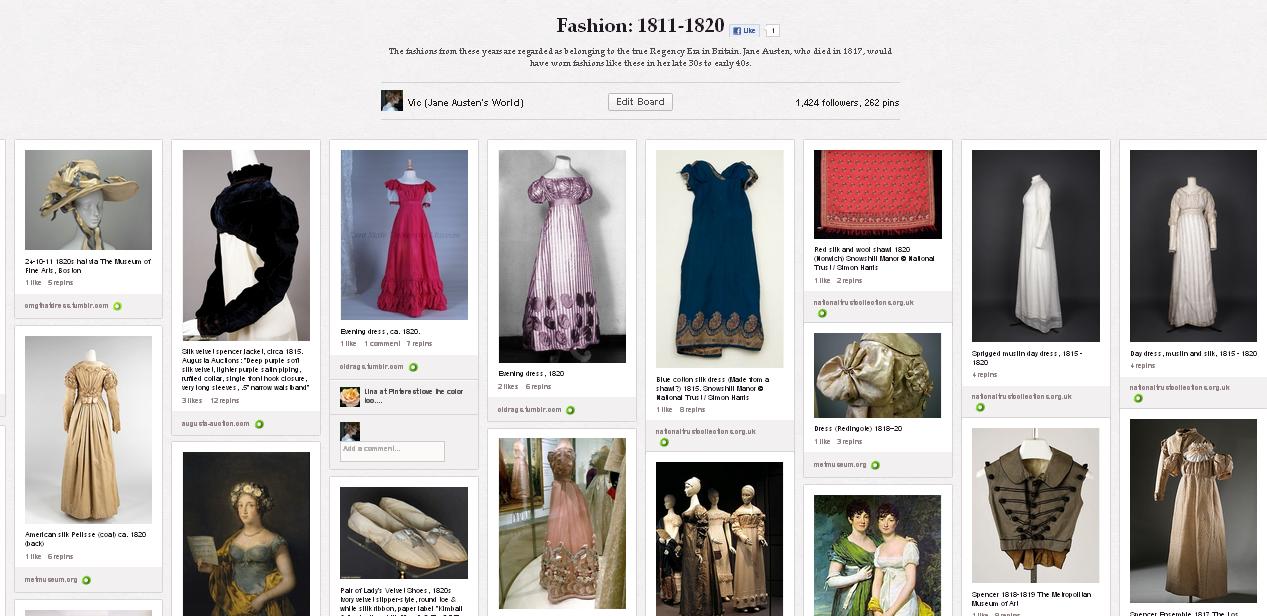
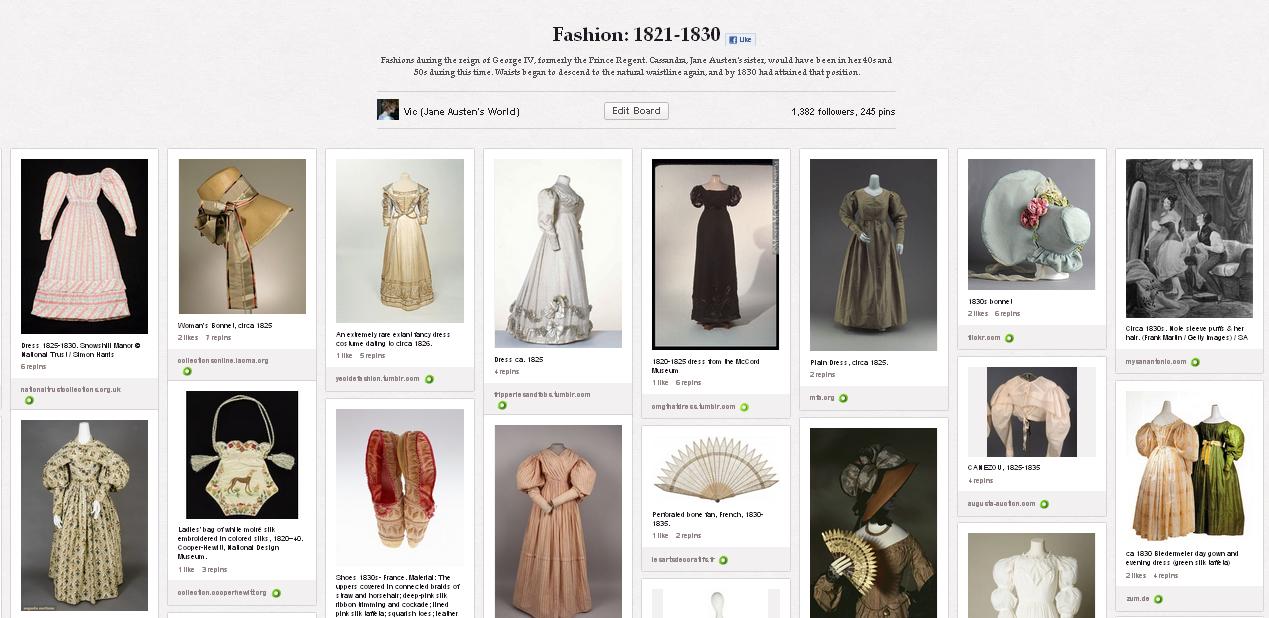
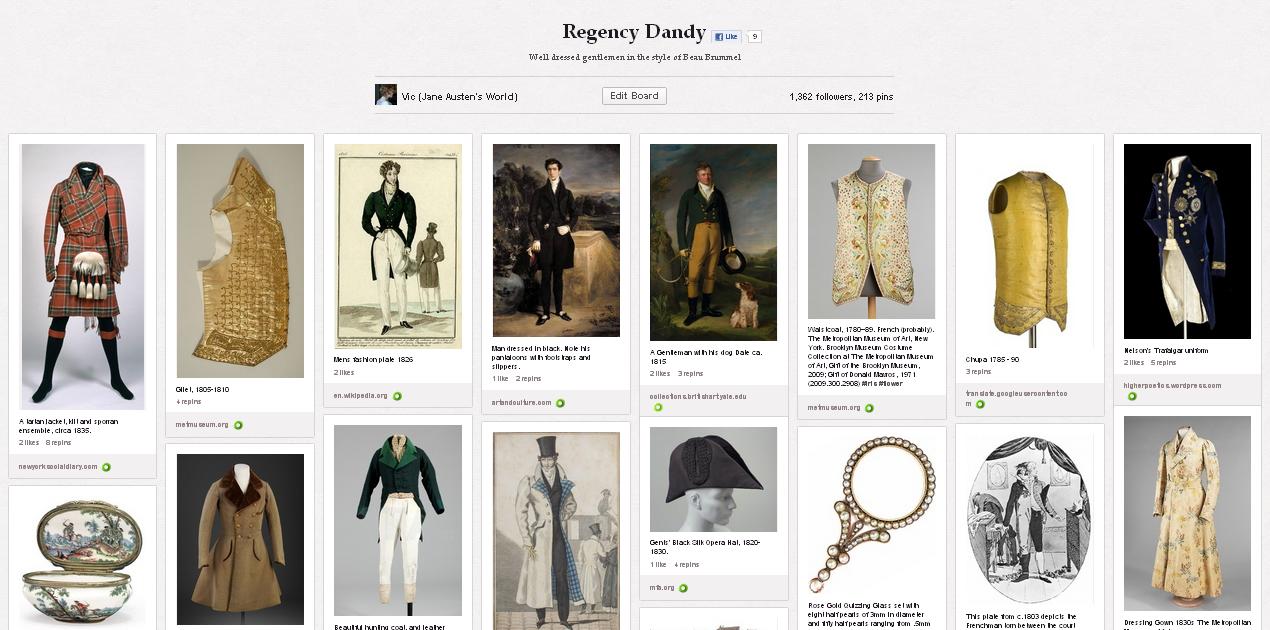
I’ve become a Pinterest addict. I can’t help it. I have always collected images for my blogs from a variety of sources, including museums, other bloggers, and historical websites. When I can, I provide attribution. Pinterest allows me to share interesting images in an easy and public forum. Just look at my fashion Pins. I have divided them into the following categories: 18th and 19th century fashions. Click here to see the full 18th and 19th century fashion board.

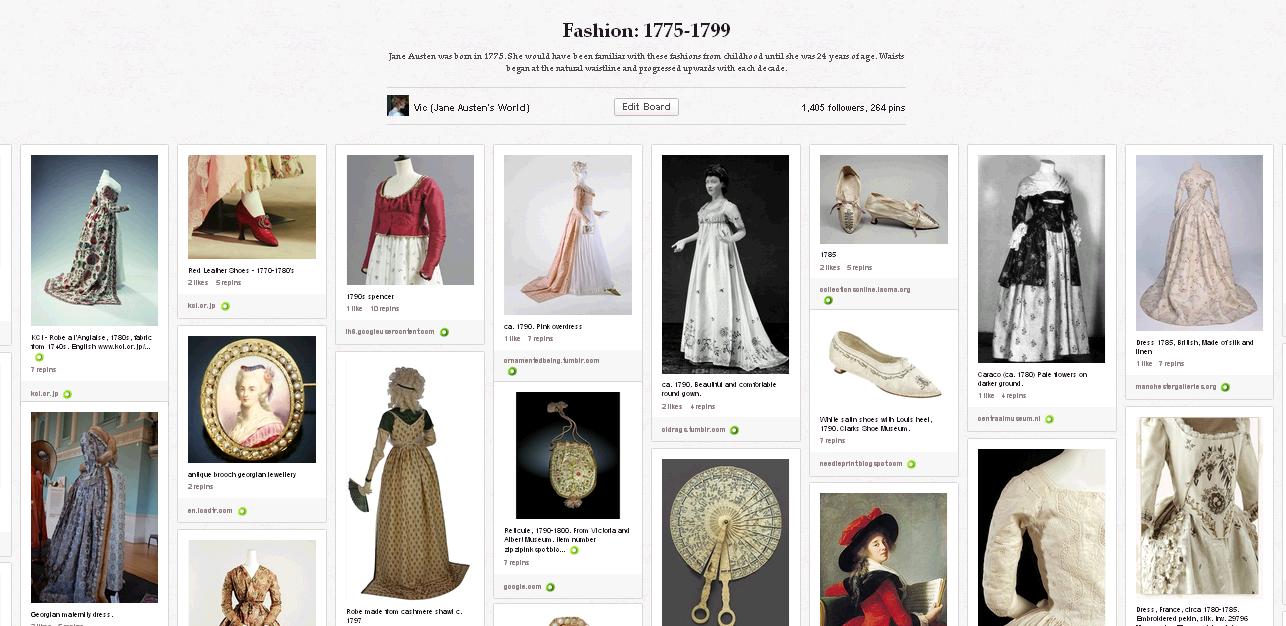
1775-1799: Click here to see the full board.

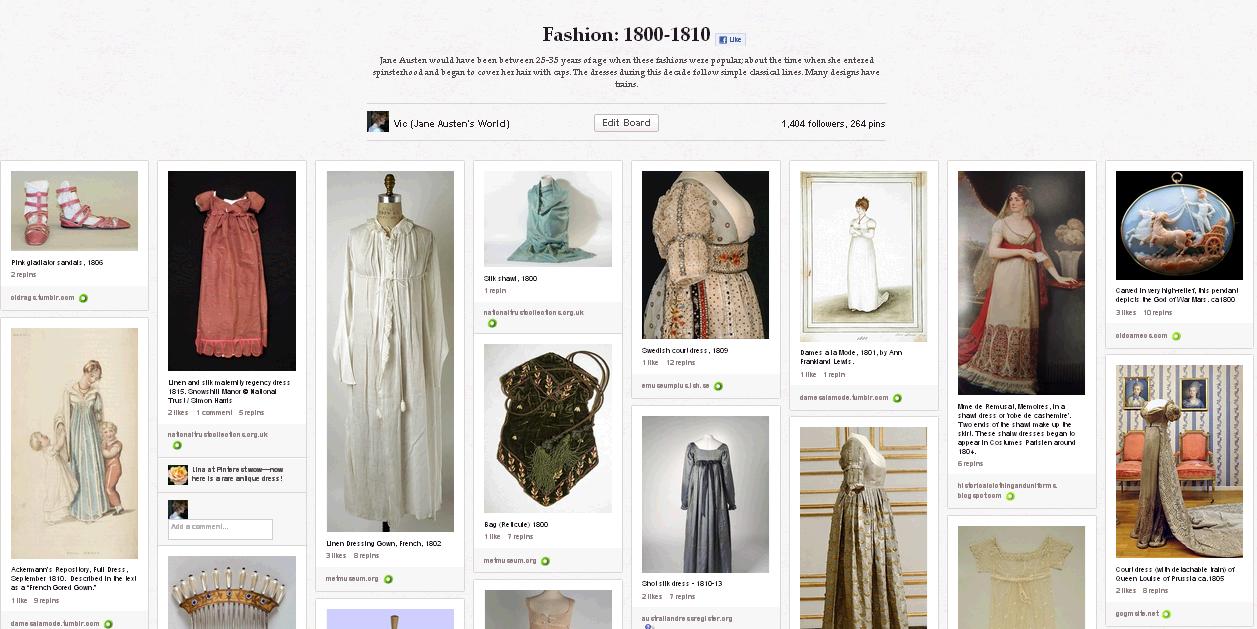
1800-1810: Click here to see the full board.

1811-1820: Click here to see the full board.

1821-1830: Click here to see the full board.

Regency Dandy: Click here to see the full board.

I love how I can file my images in logical Pinterest Boards, such as the ones you see above. I’d been collecting images for my private files, but now I can easily share them. Other bloggers have discovered this social media as well, sharing their unique pins (images) with others. I am thinking in particular of Two Nerdy History Girls, Austen Only, Evangeline Holland from Edwardian Promenade, and Heather Carroll from Marie Antoinette’s Gossip Guide

Pinterest is supposed to represent one’s personal interests. My fashion boards, especially, represent my POV. I like to mix up portraits, accessories, costumes, and fashion plates, so that the viewer gains a sense of what a lady’s (or dandy’s) wardrobe might look like in a particular time frame. I often think hard about the combination, making sure to provide a mix. In a few months, I plan to subdivide my boards, to provide a story about fashion or architecture, from which a student of Jane Austen’s World can take away a unique story.

I do have one major beef. While most people repin my images here and there, there are individuals who will repin hundreds of my images in one sitting. Mind you, it has taken me months to assemble the boards that represent my interests. To see one pinner simply appropriate more than 20 images in one sitting burns me up.

If you decide to join Pinterest, enjoy yourself! I do encourage you to follow Pinterest etiquette, however. In all things ask yourself: What would Jane Austen do? Join Vic’s Pinterest account at this link: http://pinterest.com/janeaustenworld/

Please note: Green links in this post are WordPress Ads.

Read Full Post »

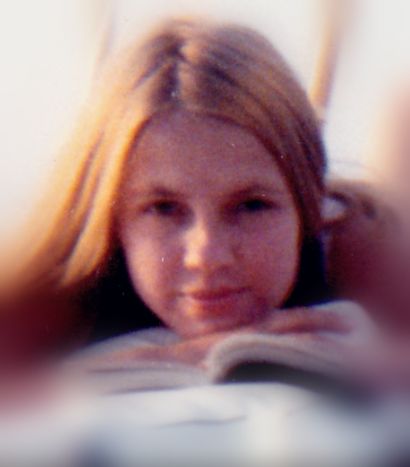
Vic at 22 on a sailboat, reading a Georgette Heyer novel. Look at those chubby Dutch cheeks!

I stumbled upon Georgette Heyer during a golden time of my life after college graduation when I had three precious free months before I began school again. Bursting with youthful energy, I didn’t know what to do with my time. And so I hit the books, but this time for pleasure. In those days, I could gobble up a book a day if I was so inclined, and I sped through Jane Eyre. Wuthering Heights. Tess of the d’Urbervilles. Rebecca. Father and Sons, by Ivan Turgenev, one of my favorite authors, and Pride and Prejudice (for the second time in my life). That last novel with its sparkling wit and clear view of village life seemed like a breath of fresh air after the heightened emotions of the Victorian authors.

To me, Mr. Bennet was the image of my father, whose wry statements always made me pause before I could figure out if he was making sport of me, himself, or some other unwitting target. Mrs. Bennet reminded me of my crazy Dutch grandmothers – both of whom were slightly hysterical and VERY demanding. I read Pride and Prejudice twice that summer (and began a tradition of reading it every summer for the next twenty years). Greedily I reached for more Jane Austen novels until there were none left. I railed against the illness that carried Jane off before she could produce enough novels to assuage my addiction. Where to turn?

The library, of course.

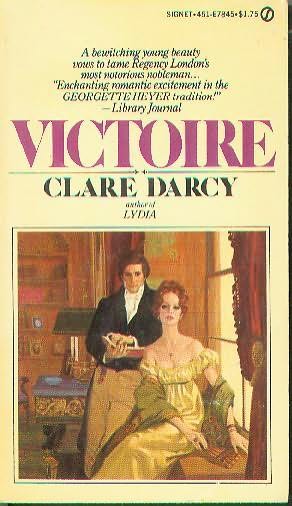
I looked up Regency novels and found … Clare Darcy. Ok, I thought. I’ll give her a try and picked up a copy of Victoire, a most logical choice given my given name, and read the book in one long sitting. How to state it nicely: Clare Darcy is to Jane Austen what a sputtering candle is to the sun at high noon.

My quest was not over.

My apartment roommie, also a Janeite, discovered the Flashman novels by George MacDonald Fraser. She LOVED them. But budding little feminist me wanted books written by humorous females, not a man with no interest in the goings on of small town families and their courtship rituals, and silly clergy, and strong heroines who were able to learn a thing or two. And so I continued my search.

One day I found a Barbara Cartland novel. Hahahahahahahaha! Tossing aside her cheesy book about a 16-year-old-heroine with a heart-shaped face, I wondered if I could charge her for wasting my precious life.

I continued my search.

And there it was. On the bottom shelf at the library. Arabella. It was a pathetic excuse of a book – dog-eared, blemished, and torn partially in the spine. I read the front cover – Arabella by Georgette Heyer – then sat on the floor and began to read. Witty words leapt from the pages. I laughed with delight. Before long I checked out the book and proceeded to read it in one long sitting. My roommie, who had started her new job two weeks after college, came home from work to find me engrossed. “I found a new author,” I said, telling her she could read the book when I was done. I gave it to her that night.

We were both instantly hooked on Georgette Heyer.

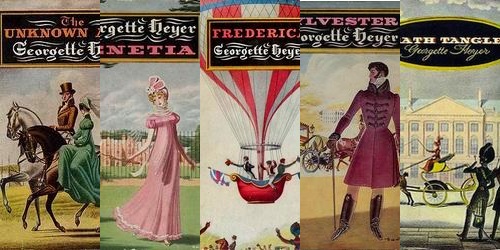
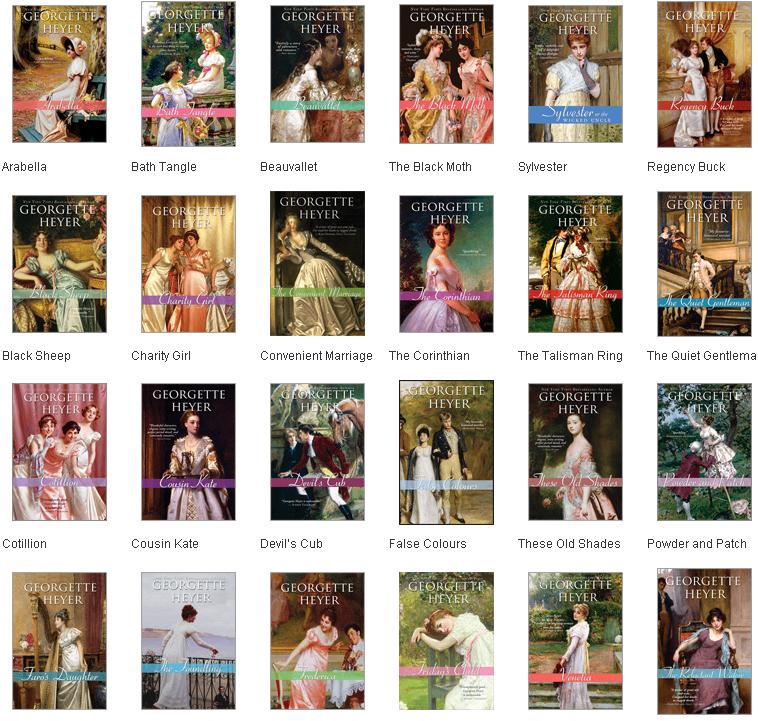
I returned to the library and checked out all the Georgette Heyers I could find. My roommie and I fell in love with Arabella, but we became die-hard fans when we encountered Venetia, The Grand Sophie, Sylvester, and Frederica. By summer’s end we had read ALL the GHs we could lay our hands on, even the mysteries and histories. (Thankfully, Georgette was prolific.)

My roommie and I were two young and hopeless romantics. We loved the glittering, detailed descriptions of the characters, the clothes they wore from expensive shops, and the houses, towns, and cities they inhabited. We learned about Regency London and the manners and mores of the Ton. Georgette Heyer characters spoke in cant, and thus we affected British accents and used cant-speech at every opportunity. Our boyfriends, while a bit mystified, played along, even debating which weapon was more effective in a fight – the epee or the sword.

Vintage GHs

But then life intruded and my intense love affair with Georgette Heyer had to take a back seat. I returned to school and began to read academic books again. I left my obsession behind, except for my yearly date with Pride and Prejudice.

Flash forward a number of decades when Sourcebooks began to republish Georgette Heyer novels. Once more I began to read them regularly, only this time I reviewed them as well.  I discovered that my tastes had changed and that I was more attracted to other novels like The Reluctant Widow and The Convenient Marriage. I never reread Arabella, for I did not want to revisit my first love only to discover that she had flaws.

I savor my memory of first discovering Georgette Heyer and thank Sourcebooks for the opportunity to relive that Golden Summer. I keep about 10 GH books on my Nook and Kindle (yes, I have both) so I am not ever very far from one of my favorite authors. If you are intrigued, all of GH s novels are available at Sourcebook’s Discover a New Love Website at http://www.discoveranewlove.com.

WIN A FREE BOOK! Those who leave a comment, have an opportunity to win a Georgette Heyer novel! Just let me know why you love to read Regency romances and/or Jane Austen! Contest ends on August 16th, (Contest ended!)which is Georgette Heyer’s 110th Birthday! Happy Birthday, GH, and thanks for the memories. Congratulations winners, Jan and Ginger, chosen through Random Number Generator! Thank you all for making a comment!

More on the topic: 

Read Full Post »

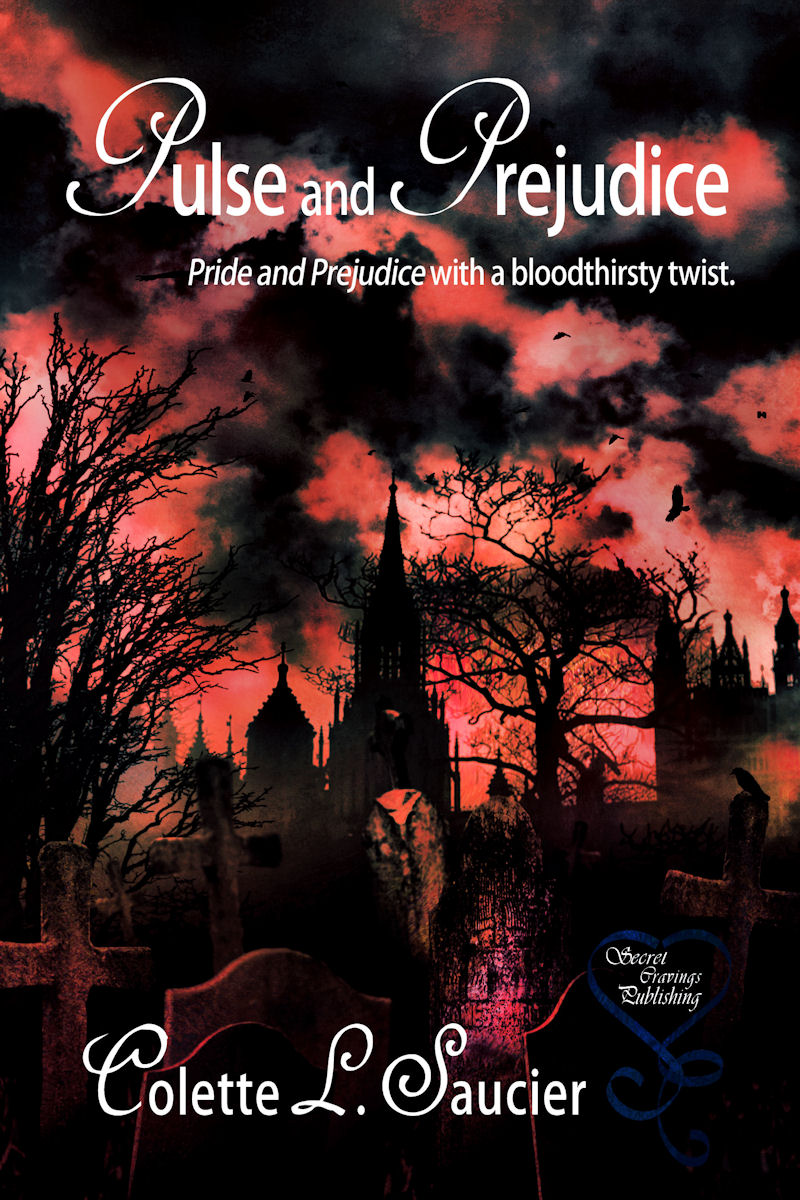
Gentle Readers, author Colette Saucier has written a description of her journey on writing Pulse and Prejudice, a vampire adaptation of Pride and Prejudice. Those of us who are fascinated with the vampire myth can relate to her journey! You can find more information about Colette and her book on Colette Saucier.com

This is a story of Mr. Darcy, Lord Byron, and vampires.

I love Pride and Prejudice. I have read it so many times, I cannot even remember a time before it was not part of my consciousness. Of course, I like all of Jane Austen’s novels, but the story of Mr. Darcy and Elizabeth speaks to me in a way the others do not. I do not believe I am alone in this, as it set the standard for every romance novel and romantic comedy since its publication 200 years ago: boy meets girl, boy likes girl, girl hates boy, girl and boy like each other, misunderstanding/outside forces tear them apart, reunion, reconciliation, happily ever after.

Quite a number of years ago, I had the misfortune of seeing what I refer to as the Pride and Prejudice mutilation, the 1940 film starring Laurence Olivier and Greer Garson. Not only did they dress all of the Bennet girls as Southern Belles, Greer Garson was thirty-six. THIRTY-SIX! Three years older than Olivier. I won’t even go into the plot except to say they had no right to call it Pride and Prejudice. After that, I decided never again would I subject myself to any adaptation of my beloved Austen. I did not even see the BBC miniseries with Colin Firth when it premiered.

So what changed? First, I saw the movie Clueless. I enjoyed every moment of it, all the while thinking to myself, “This is Emma!” Sure enough, Amy Heckerling had updated my second favorite Jane Austen novel. Then, without knowing Helen Fielding had written it as a modern variation on Pride and Prejudice, I read Bridget Jones’s Diary. Well, after that, I had to see Colin Firth’s Pride and Prejudice, and now I had a face to go with my Mr. Darcy. Thus ended my boycott of all things not-quite-Austen.

All of this, of course, occurred some fifteen years ago. Although my mind had been opened to the possibilities, I had no intention of writing any Austen adaptations myself. Then a little book called Pride and Prejudice and Zombies took off like wildfire and landed near the top of the New York Times bestseller list. I have never been a zombie fan myself, but I did love the film Shaun of the Dead. When I stumbled upon the zombie book in my daughter’s bedroom, I knew it was a parody, and I had hoped its approach would be similar to that film. I had never heard of a “mash-up” before, but now I know I do not like them. The (co)author had taken the complete text of Pride and Prejudice and just stuck zombies and ninjas between the paragraphs. Not impressed. The zombie book did, however, introduce me to the genre of Austen adaptations and variations, and an addiction was born. I ate them up like potato chips. Some were good, some were horrid, but many I found completely delightful. All of them allowed me to continue my literary love affair with Mr. Darcy.

Now to back up a bit, somewhere in the middle of my multiple readings of Pride and Prejudice (actual Austen, not adaptations), I learned about Lord George Gordon Byron. I had read some of his poems over the years, but after seeing the film Gothic, I became more interested in the man behind the words. That he was portrayed by a young Gabriel Byrne didn’t hurt! This film depicts the summer night when Byron and his pal Percy Shelley gathered with friends in Switzerland and told each other ghost stories, one of which became Mary Shelley’s Frankenstein.

That evening also inspired John Polidori to write The Vampyre – the original gentleman vampire. Although I never cared for zombies or werewolves or other monsters, I have always been a vampire fan. (To all of those publishers who rejected my manuscript because they believed the “vampire trend is over,” allow me to say, vampires will never of out of style. They’re immortal, after all!) I refer to the sensual, suave, and seductive variety of vampire, or the tortured souls such as Gary Oldman’s depiction in Bram Stoker’s Dracula. That image of the mysterious and charismatic vampire originated that night in 1816 with Polidori and Lord Byron.

Austen’s Mr. Darcy struck me as a Byronic figure – intelligent but arrogant, sophisticated and cynical, introspective and conflicted. “That man of loneliness and mystery, Scarce seen to smile, and seldom heard to sigh.” (The Corsair, I, VIII) Knowing that Polidori had based his Vampyre on Byron cultivated in my mind the idea that Darcy as a character – as well as Pride and Prejudice as a whole – lent itself well to a vampire adaptation; however, when I looked, I could not find the adaptation I envisioned. Yes, someone had published a vampire “mash-up,” but I have already expressed my opinion on those. I also found a vampire sequel told in gothic style. Regina Jeffers had written a fascinating novel inspired by Pride and Prejudice with Mr. Darcy as dhampir, battling against vampires while resisting the urge to become one himself.

I needed something more. I wanted Mr. Darcy to be an honest-to-goodness neck-biting, blood-drinking, night-walking vampire who could be healed in the moonlight as in the Polidori story. I felt the story must be told from Mr. Darcy’s point of view to explore that Byronic Hero aspect of his nature, which we only glimpse in Austen’s narrative, and allow the curse of vampirism to reveal further depths of character – an outcast, suffering, jaded . Because this adaptation of Pride and Prejudice did not exist, I had no choice but to write it myself.

I threw myself full-force into researching Regency England, vampire folklore, and Pride and Prejudice itself. This paranormal adaptation had to remain faithful to Austen in style, plot, and characters. How would Austen’s Elizabeth Bennet react to vampires? That itself required a thorough analysis of Elizabeth to ensure in this adaptation she remained true to the original character under remarkable circumstances. The novel had to be historically accurate and free of any anachronisms. I wanted it to be as if Jane Austen herself had written the story of Mr. Darcy as vampire, and I think I have succeeded. Well, except I did add another section – Beyond Pride and Prejudice – to peek into the passion, lust, and desire between Elizabeth and Mr. Darcy that simmers just under the surface in the original. Jane Austen teases us with hints of Darcy’s attraction to Elizabeth, and I could not leave that territory uncharted.

Thus, after fifteen years gestation, Pulse and Prejudice was born – an authentic vampire variation of the beloved classic. I hope I have written the paranormal adaptation others want to read as well.

Read Full Post »
« Newer Posts - Older Posts »