Feeds:
Posts
Comments

Archive for the ‘Popular culture’ Category

Dancing With Mr. Darcy is a fabulous book. A book reviewer isn’t supposed to reveal an opinion right away, but I have many reasons for liking this compilation, which began as a short story competition in 2009 sponsored by Chawton House Library to celebrate the bicentenary of Jane Austen’s arrival in the Hampshire village of Chawton. This was a momentous occasion in Jane’s life, for she would enjoy her most productive years there.

Dancing with Mr. Darcy is great for bed time reading.

When my head hits the pillow, I can stay awake for 20 minutes at the most. That’s just the right amount of time to savor one of these stories, which is between 2,000-2,500 words in length, reflect upon it, and turn off the light. The book will remain on your bedstand for at least 20 nights if you stick to this schedule. But here’s the kicker: It’s hard to put down.

The stories are truly original.

The inspiration for these stories was taken from any theme in Jane Austen’s novels, like a character or single sentence. Authors could also draw upon Chawton House, an Elizabethan mansion, as their muse. Whatever they decided, they were encouraged to get their creative juices flowing. And were they ever!

The book opens with a story inspired by Chawton and a dead Jane Austen crossing the River Styx . She is accused in a Higher Court by the older female characters she created for wilfully portraying them as manipulative harpies and scolds. I wondered how author Victoria Owen would resolve this curious plot, but it ended beautifully and logically. Another story that drew my attention was Felicity Cowie’s ‘One Character in Search of Her Love Story Role‘, in which the central charcter, Hannah Peel, a contemporary heroine, finds her voice by interacting with classic literary heroines, including Jane Bennet and Jane Eyre.

Fresh voices are given an opportunity to shine.

Unknown authors do not often get to compete in a public forum for an opportunity to have their work published with the backing of a prestigious institution. I read the short biographies at the end of the book, and while many of the authors took creative writing or majored in English, some are still students, one lives on a farm, another is a book reviewer, several are scholars, another is a math and science teacher, and yet another was educated to be a lady. With such a variety of backgrounds, it is no wonder that the stories are not clichéd.

Many of the tales had contemporary settings, and there were times that I had to puzzle out just what their connection was to Jane Austen or Chawton house. Like all compilations, I preferred some stories over others, such as Kelly Brendel’s Somewhere, inspired by a passage in Mansfield Park, and Eight Years Later, which is Elaine Grotefeld’s take of love lost and found again in the mode of Persuasion.

Jane Austen would have approved.

The variety of the stories, and their excellence and fresh approach to the Austenesque genre makes this book stand out from the pack. Jane Austen would have approved of their original plots, their intelligent writing, and the variety of ideas that sprang from the original impetus. These twenty stories were selected from 300 submissions, and one can only imagine how many good stories barely missed the cut.

Sarah Waters at Chawton House, July 2009. Image @Chawton House

In a different way, I found this compilation equally as thrilling as A Truth Universally Acknowledged, edited by Susannah Carson, a book of critical insights by famous authors about Jane Austen that I adored and reviewed late last year. Stories that are judged, weighted, or juried tend to have an edginess and contemporary bite that attract me.

In this instance, the stories were judged by a Chair judge, Sarah Waters, the author of Tipping the Velvet and Fingersmith, and a panel of judges: BBC journalist Lindsay Ashford; author Mary Hammond; Rebecca Smith (five-times great niece of Jane Austen, descended through her brother Frances); and freelance editor Janet Thomas.

The book is available today at your local or online bookseller. Run, don’t walk to obtain your own copy. I give it three out of three Regency fans and then some.

Read Full Post »

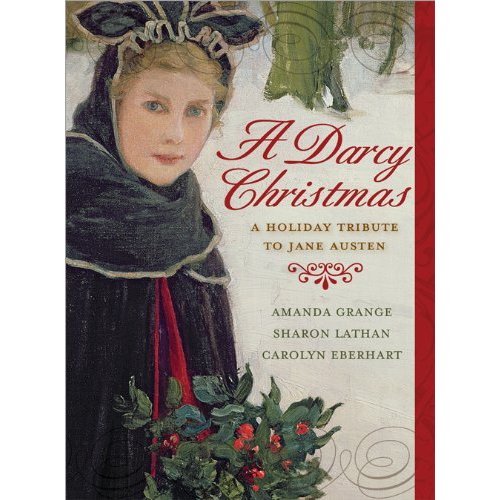
From the desk of Shelley DeWees… Gentle reader, guest writer Shelley DeWees, blog author of Uprising, writes book reviews for me. A Darcy Christmas: A Holiday Tribute to Jane Austen by Amanda Grange, Sharon Lathan, and Carolyn Eberhart is her first review for this blog. Welcome on board, Shelley.

A collection of stories designed to awaken the holiday spirit, A Darcy Christmas is a quick read showcasing veteran and amateur Austen spinoff writers. In the beginning, I was excited. I really wanted to be seduced by the magic imagery of the winter festivities, feel the warmth of some imaginary fire, manifest the taste of hot chocolate on my tongue while gazing at grainy photographs and luxuriating in a wool blanket…but success wasn’t to be mine.

The first problem was easy to spot: the short stories are printed in the wrong order. Books are like sandwiches in the way they should be designed. The fillings are important, yes, but they can be made to be better with the introduction of really delicious bread. Is your PB & J not to your liking? Too much jelly? Not enough peanut butter? Is the crunchy peanut butter a bit too crunchy? We all have our preferences. However, they seem to go by the wayside if the bread, beautiful in its simplicity and perfect in its splendor, is amazing. Who cares if the jelly to peanut butter ratio is off when the bread is wonderful?

If the first short story had in fact been the second, and Christmas Present by Amanda Grange had been the opening glimpse into Christmas à la Darcy, perhaps the subpar fillings would’ve been less noticeable. Instead, the book begins on its weakest leg, Mr. Darcy’s Christmas Carol by Carolyn Eberhart. As a fledgling author, Ms. Eberhart deserves commendation for her first publication. That being said, her portion of A Darcy Christmas was wholly unoriginal, insipid, and fraught with characters whose predictability astounded me. The connection to Charles Dickens’ timeless classic was, in my humble opinion, more than should’ve been allowed. Darcy essentially fills the shoes of Scrooge and does some soul searching, this time about whether he should renew his offer of marriage to Elizabeth (and with a little less snobbery, hmm?). The ghosts visit him, they show him the same humdrum imagery we’ve come to expect from the original story, and he has an easily-foreseeable revelation. Though a story about Darcy’s inner broodings over the loss of Elizabeth would be interesting, this one fell short and needn’t have taken place during Christmas at all.

Amanda Grange’s Christmas Present represented a noticeable uptick in the book’s procession. The story is engaging and sweet as we watch Elizabeth and Darcy bring their first child into the world, and the imagery is full-on wintery goodness. Familiar characters make their appearances including Mr. Collins, Lady Catherine, Kitty and Mary Bennet, and Bingley and Jane who have also become new parents. Mr. and Mrs. Bennet emerge too, albeit with Mrs. Bennet’s overly prominent vulgar comments and an odd social presence that seems a bit far-fetched. Beyond that though, everything is copacetic. Darcy and Elizabeth have no worries on the horizon and thus, no reason for their story to continue. This ever-positive view of their life together seems to have saturated the imaginations of all brilliant authors including Sharon Lathan, whose contribution rounds out A Darcy Christmas.

Her story, which shares the same title as the book, is another rendition of Darcy-and-Elizabeth-lived-happily-ever-after. Elderly and rich beyond measure, Mr. and Mrs. Darcy are busy hanging a family portrait when they begin to look back on their days, first as infatuated lovers and then as a cohesive couple. We see Darcy brooding over his first proposal, quietly but thoroughly berating himself, followed by a picture-perfect honeymoon scene, the birth of 5 children, the death of Mr. Bennet, and the marriage of their oldest son. There are, of course, few problems. In fact, the only recognizable woe comes in the form of a slightly disfigured daughter who is otherwise healthy, spunky, and smart.

It is at this point that I let out an audible sigh positively reeking of been-there-read-that. Isn’t there anything else that Darcy and Elizabeth could do with their lives? What about “Darcy and Elizabeth: The China Years”? Or how about a story where they lose all their money, move to a slum, and learn their true love for eachother as they slowly move forward? Though I realize that Jane Austen’s writings are most assuredly focused on the upper class, I tire of the same ‘ol “Everything is Perfect” spinoffs where Christmas means finery and feasts, gifts, treasures, and luxuries. A Darcy Christmas embodies some of the worst qualities of the holiday season, overconsumption and stuff-mongering among them.

And so it was that I felt no kinship with Christmas because of this book, no sudden urge for eggnog, no desire to buy things for my best Janeite friends or to call my Mom just because. This book left me wanting for a real story of life as a Regency twosome, with all the ups and downs that were part of everyone’s daily existence (even the very rich people of English high society). I’m tired of the “Look how happy we are!” stories that seemingly have no substance, no vulnerable underbelly, no challenge to them. A Darcy Christmas was a disappointment, not only as a vehicle for the Christmas spirit but as a statement of values as well.

Read Full Post »

I know I am late in reviewing this Jane Austen undead novel, which came out in August. My initial reaction to Emma and the Vampires was “Meh!” and “Oh, no, not another one of those deadfuls.” But as I read Wayne Josephson’s book further, its sweet and gentle quality and its quiet humor began to grow on me. Then I became confused.

If this book was meant to be a vampire mashup, then it failed miserably, for aren’t vampires ravenous for human blood? Aren’t they irresistibly drawn to the smell of humans to the point where they are sexually attracted to their victims and MUST have them at all cost? Aren’t vampires generally fearful of daylight and aren’t decent, law-abiding humans frightened to associate with them?

Emma, while highly skilled at driving stakes through the hearts of the rag tag vampires that attack humans, is unaware that a number of her social group have already gone over to the other side, including Miss Taylor upon her marriage to the vampire, Mr. Weston, Mr. Knightley and his brother George, Mr. Elton, who is attracted to her long neck, and Mr. Martin. These vampires live normally among humans, abstaining from feasting on their human acquaintances and friends, and concentrating on hunting wild animals. They are able to emerge on overcast or rainy days to go about human-like business, but they do not sleep or eat.

Then there are the horrible vampires, who bare their fangs, wear rags, and thrash and drool. These are the vampires that must be dealt with by both the citizens of Highbury and the aristocratic vampires, who are not of their class. In one scene, as the party leaves Randall’s because of the snow, the bad vampires attack the Knightley family and Mr. Woodhouse as they exit the door. As Mrs. Westos screams and Mr. Woodhouse faints, Mr. George Knightley dashes back into the house to return “with two sabres, one of which he tossed to Mr. Weston, who expertly caught it…Emma deftly retrieved her wooden stake from beneath her bombazines, having practiced the the exercise repeatedly at home.” John Knightley joins in the fray, and the fighters, half of them human, half of them aristocratic vampires, then quickly dispatch the drooling, murderous undead. These vampire wars and the dangers in the countryside feed Mr. Woodhouse’s paranoia and general sense of fear, a nice twist on his hypochondria. He is also clueless:

Yes, but the children never sleep—nor does John. They are up all the night long, running everywhere while John paces. And they keep disappearing into the forest, for what reason I haven’t the slightest notion. It worries me exceedingly, with so many wild vampires about.”

As with all vampire books, there are gaping gaps in logic. Why the humans of Highbury don’t seem to connect the dots – that the good vampires among them are never seen eating, that the majority of their activities are done at night, that their eyes are bright red – is beyond me, and one must suspend all logic when entering into the spirit of this novel. As my mom would say, the reader will simply have to go with the flow.

This Emma is Jane Austen light. The book’s tone and style are quite accessible to the modern reader. I had read somewhere that Mr. Josephson had written this novel for his young teenage daughter. If that is the case, then its sweet tone, its epic tale of benevolent vampires fighting evil ones, and its accessible introduction of the Emma character are appropriate.

I enjoyed this novel for what it was. This book certainly has a different take on vampires. If it is true that it is geared toward a younger audience, then it has found its niche. While it would not appeal to die-hard fans of True Blood and Ann Rice novels, it does have a charm of its own.

I give Emma and the Vampires two out of three regency fans.

My Other Mashup Reviews:

Read Full Post »

PBS Masterpiece Mystery! is featuring Faceless Killers, the first episode of Wallander, Season 2 online. Click here to see the video until November 2, 2010. Click here to read my review for the season.

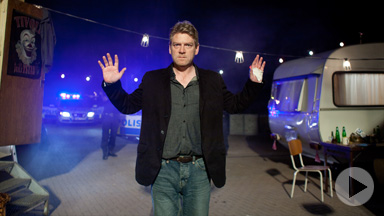
Kenneth Branagh is Wallander

Read Full Post »

Kenneth Branagh in Faceless Killers

Kurt Wallander’s life is all about work and it is killing him. Kenneth Branagh is perfect as  the world weary Swedish cop who cares about his cases at the expense of his family and physical and emotional health. The actor is fearless in depicting a tired, overweight and unkempt man who drinks too much, sleeps too little, and suffers from diabetes and depression. Wallander’s wife has left him, his relationships with his daughter and father stink, and he has no friends to speak of.

The first three episodes of Wallander (Series One) were a revelation. Series Two is as good if not better. The series is filmed in the bleak landscape of southern Sweden and in the small port city of Ystad. Initially, there was thought of producing a feature film, but Branagh voted against it, saying.

I thought it might be tough in the current climate to produce a film with somebody like me in it and expect it would last much longer than an opening weekend. Just because our business is incredibly brutal.” – Kenneth Branagh

Wallander is the brain child of Henning Mankell, a successful Swedish author who created the character in reaction to the anti-immigration sentiment expressed in his country.

I had no idea this would be the start of a long journey,” Mankell says. “I was writing the first novel out of anger at what was happening in Sweden. And, since xenophobia is a crime, I needed a police officer. So the story came first, then the character. Then I realised I was creating a tool that could be used to tell stories about the situation in Sweden — and Europe — in the 1990s. The best use of that tool was to say ‘What story shall I tell?’, then put him in it.” – Times Online

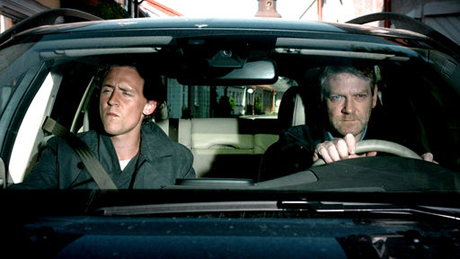
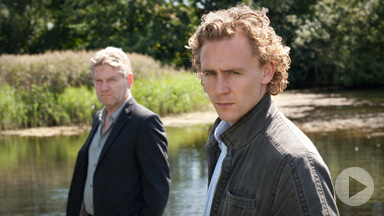
Tom Hiddleston and Kenneth Branagh in Wallander

Wallander’s single-minded doggedness in solving his investigations leaves him with little room in life for anything else. The solitary detective is miserable but unable to do anything to change his life, as Kenneth Branagh explained in a recent interview:

So there is little room in his mind for small talk, superficiality. He’s not much interested in sport. He doesn’t have hobbies. He doesn’t have extra room or space for what might be therapeutic reflection. It’s almost always about why people commit acts of violence. And complicated analysis and consideration of what drove him or her to it. Or why the person he has interviewed responded in the way they did. And sometimes in his own life why he is unable to say to his own daughter, “I love you”, or return her call.

‘So all of that physically just makes you feel heavier. I remember reading the script for the first of these new ones – I’d not been near it for a year – and by the end of it I was hunched and bent over. And I felt as though my skin was sagging. I felt as though the gravitational weight of Wallander was starting to have an impact.’  – Telegraph Co.UK

Jeannie Spark as Linda Wallander and Arsher Ali as Jamal, the young doctor she is seeing

The first series, produced by Yellow Bird, Mankell’s film production company, in partnership with Left Bank Pictures, ran on PBS in 2009. Wallander garnered Branagh a Golden Globe nomination and a BAFTA for Best Drama Series for the first season.

PBS will offer the following episodes in Series 2:

Faceless Killers, October 3


An elderly couple is brutally assaulted in their rural farmhouse. The press takes hold of the foreigner angle, inciting swift and deadly retribution against local migrant workers. But there is more to the case — a potential mistress, a lost son and a large sum of money. Wallander’s inquiry takes him deep into his own damaged psyche, forcing him to examine and question his own motives before he can even begin to understand those of a killer.

The Man Who Smiled, October 10,

Gustaf Torstensson quietly chants “Mea culpa, mea culpa,” as he drives to his death. His son Sten Torstensson, a friend of Inspector Kurt Wallander, begs the detective to investigate the suspicious case — Wallander is his last hope. But hope has all but drained from Wallander’s life, as he’s now on indefinite leave from his work and has been all but forgotten after enduring an on-the-job trauma.

The Fifth Woman, October 17

Inspector Kurt Wallander is torn between two disparate cases while dealing with one harsh and heartbreaking reality — the demise of his father. When another victim is found, it is clear that a serial killer is at work in Ystad.

Other features:

As usual, PBS Masterpiece Mystery provides special features that add dimension to the series.

Other posts

Read Full Post »

« Newer Posts - Older Posts »