Feeds:
Posts
Comments

Archive for the ‘Pride and Prejudice’ Category

There was nothing romantic about marriage in England before the 17th Century. The institution was viewed as a means of securing or advancing the family fortune. Alliances through marriage were arranged by parents; offspring were regarded as pawns; and couples were often engaged and wed while they were still children.

By the 18th and 19th centuries, the idea of marrying for love was gaining ground, although it was considered déclassé to demonstrate too much passion for one’s spouse. A man proposed to the woman of his choice, but parental approval of the engagement, especially for the woman, still needed to be obtained, for a father could withold a fortune from a daughter, whereas it was out of his power to prevent a son from inheriting his estate. Certain conventions, such as marrying for money, power, or position, did not change. David Shapard writes in The Annotated Pride and Prejudice:

Marriages among the upper classes frequently involved people whose families were related, or allied, in some way, for such marriages could further strengthen the family ties that were so crucial in this society in determining power, wealth, and position, especially among the upper classes. (p 645)

When Lady Catherine de Bourgh confronted Elizabeth Bennet with her suspicions about the younger woman’s relationship with Mr. Darcy, she told her that her daugher Anne had been intended for Mr. Darcy from infancy. By the early 19th century such parental arrangements were no longer common. Lady Catherine refers to this change in the first part of her speech:

The engagement between them is of a peculiar kind. From their infancy, they have been intended for each other. It was the favourite wish of his mother, as well as of her’s. While in their cradles, we planned the union: and now, at the moment when the wishes of both sisters would be accomplished in their marriage, to be prevented by a young woman of inferior birth, of no importance in the world, and wholly unallied to the family! Do you pay no regard to the wishes of his friends? To his tacit engagement with Miss De Bourgh?

A little later, Lady Catherine declares:

My daughter and my nephew are formed for each other. They are descended, on the maternal side, from the same noble line; and, on the father’s, from respectable, honourable, and ancient – though untitled – families. Their fortune on both sides is splendid. They are destined for each other by the voice of every member of their respective houses; and what is to divide them? The upstart pretensions of a young woman without family, connections, or fortune. Is this to be endured! But it must not, shall not be. If you were sensible of your own good, you would not wish to quit the sphere in which you have been brought up.”

Lady Catherine was right. Mr. Darcy’s immense fortune would have attracted the most desirable women in all of Britain. The fact that he proposed not once but twice to Elizabeth gave Pride and Prejudice, to my way of thinking, a Regency fairy tale ending.

Once a woman came out in Society she had but one duty to fulfill: to find a suitable match. Jane Austen wrote about Miss Mainwaring in Lady Susan:

Sir James Martin had been drawn in by that young lady to pay her some attention; and as he is a man of fortune, it was easy to see HER views extended to marriage. It is well know that Miss M. is absolutely on the catch for a husband…” (XIV, Mr. De Courcy to Sir Reginald)

While finding a suitable husband was the ultimate object of a young girl who was coming out, her life after the marriage would not be her own. Once the vows were said, the husband took charge of his wife’s possessions and she would have little say in how he chose to spend her income. Woe betide the poor woman who made a miserable match, or who did not bear her husband male children. In Maria, or the Wrongs of a Woman, a novel written in 1798 by Mary Wollstonecraft about a spectacularly bad marriage, the landlady lamented, “Women must be submissive. Indeed what could most women do? Who had they to maintain them, but their husbands?” (Chapter Thirteen).

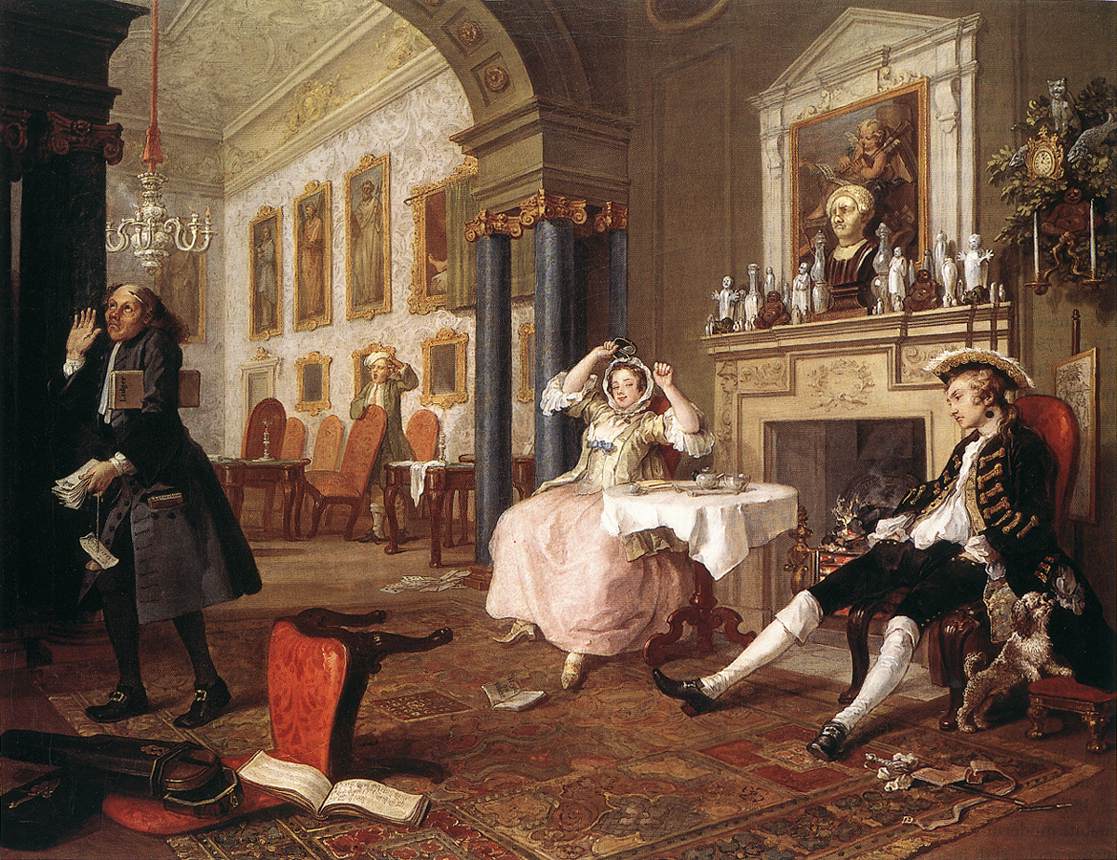
Not all marriages led to an unhappy ending, however. The first Duke of Richmond was an inveterate gambler. While staying in The Hague (Holland) in 1719, he lost a huge sum to the Irish Earl of Cadogan. At the time, the earl’s daughter, Sarah, was only thirteen years old. The Earl of March, the duke’s son, was eighteen. To pay off the debt, the Duke of Richmond agreed to an engagement between Sarah and the young earl, and a reduction of 5,000 pounds in Sarah’s marriage settlement. The deal sealed, the wedding was hastily arranged between the girl and the young earl, who had plans to embark on a Grand Tour with his tutor.

It seems almost incredible to our nineteenth century civilization that the marriage of this nobleman when Lord March, during his father’s lifetime, and a mere youth at college, should have been a bargain to cancel a gambling debt which his father was unable to meet. “The young Lord March,” writes Sir William Napier, “was brought from college, the lady from the nursery for the ceremony. The bride was amazed and silent, but the bridegroom exclaimed, ‘Surely you are not going to marry me to that dowdy?’ Married he was, however, and his tutor instantly carried him off to the continent. Lady Sarah went back to her mother, a daughter of Wilhelm Munter, States Councillor of Holland.

Three years afterward Lord March returned from his travels, an accomplished gentleman, but having such a disagreeable recollection of his wife that he avoided home, and repaired on the first night of his arrival to the theatre. There he saw a lady of so fine appearance that he asked who she was. ‘The reigning toast, the beautiful Lady March.’ He hastened to claim her, and they lived together so affectionately that, one year after his decease, in 1750, she died of grief.
The Mothers of Great Men and Women, and Some Wives of Great Men By Laura Carter Holloway, Laura C Langford, 1883

In Aristocrats, Stella Tillyard writes about the union:

Thus in an extreme form, [the 2nd Duke of Richmond and his duchess] acted out the powerlessness of aristocratic children, who could become pawns in a parental chess game, who were sacrificed for family alliances or sold for money and prestige.

When he grew up, [the duke] developed a taste for practical jokes, and came to see his marriage as one of them…He was never ashamed to demonstrate, in portraits, letters and drawing-rooms his love for his wife and children.” (p. 10)

Image: William Hogarth, Marriage à La Mode, Tête à Tête, 1745

Update: Marriage a La Mode, Part 3, The Inspection, Georgianna’s Gossip Guide

Read Full Post »

At first I was skeptical of the new Oxford World’s Classics reissues of Jane Austen’s famous novels. After all, didn’t I own a slew of editions from various well-known publishers already? And how different could each be from the other? The central core of these novels – Jane’s words – remains essentially unchanged, although a few of my books are illustrated, and one is the estimable Annoted Pride and Prejudice edited by David M. Shapard. So I asked myself: Why would Oxford University Press spend so much money and effort reissuing classics that it had first published in paperback form in 1980, and brought back in 1998, 2004, and now again this year?

Then I received my package of books from Oxford University Press. First, the cover illustrations are luscious. Pride and Prejudice’s jacket boasts a detail of a Sir Thomas Lawrence portrait of Mrs. Edward John Littleton. And second, this book contains the sort of information that rounds out the reading experience for both the experienced and novice reader.

I read recently that a reissue is only as good as its introduction. Written by scholars and authorities on the topic, a book’s introduction should add to our understanding of the work. Fiona Stafford, a Reader in English at the University of Oxford, does just that. Her essay discusses how Jane engages the reader with the text, and how she invites our speculations about the characters.

Part of [the novel’s] satisfaction, perhaps, is the persistent involvement of the reader in the narrative. Again and again, we are led into mild questioning about what has taken place, and thus encouraged to come up with a workable solution. Conversations between Jane and Elizabeth frequently offer alternative explanations for conduct or character and, in so doing, engage the reader in the debate. Is Mr. Bingley in love with Jane? Can Mr. Wickham be believed? How can Charlotte Lucas be engaged to Mr. Collins? – p. xix

Ms. Stafford also discusses the history of the epistolary novel and its influence on this book. In an age of strict conventions, letters allowed people to write down their emotions and show their true character. Think of the tone of Lydia’s careless letters after she elopes with Mr. Wickham, or the impact that Mr. Darcy’s impassioned letter of explanation had on Elizabeth. This is the first time in the novel that we are treated exclusively to his voice and point of view, and her reaction (and the reader’s) is a powerful one.

This Pride and Prejudice reissue is full of features that teachers and students of fine literature will especially love. They are:

  • A Chronology of Jane Austen, which lists important events in Jane’s life against an historical backdrop.
  • A select bibliography. Thanks to Google reader, many of these references can be found online.
  • Two appendixes: One titled “Rank and Social Status”, the other simply titled “Dancing.”
  • Textual notes, which compare various printed editions
  • Explanatory notes. These annotations, though not as extensive as David Shapard’s, help to explain obscure customs and terms from days gone by.

The Jane Austen reissues by Oxford World’s Classics came out on June 15th. As far as my thrifty pocketbook is concerned, the price of this quality trade paperback novel is just right.

Click here for my review of Lady Susan:A vicious Jewel

Read Full Post »

Elizabeth continued her walk alone, crossing field after field at a quick pace, jumping over stiles and springing over puddles with impatient activity, and finding herself at last within view of the house, with weary ankles, dirty stockings, and a face glowing with the warmth of exercise. – Jane Austen, Pride and Prejudice, Chapter Six

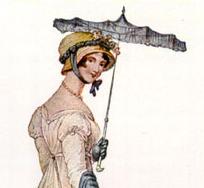
Exercise, cleanliness, and good skin care were as important in the 19th century as today. Back then a proper lady would not leave the house without covering her head with a bonnet, protecting her hands with gloves, and shading her skin with a parasol. Pale white skin had been highly prized for centuries, for it set a lady of quality apart from the working classes. Some women used dangerous cosmetics made of lead oxide to whiten their skin. These lotions, when used repeatedly, could lead to death or paralysis. It made more sense to follow a natural and safer regimen for preserving one’s looks:

“When the freshness of virgin youth vanishes; when Delia passes her teens, and fastly approaches her thirtieth year, she may then consider herself in the noon of the day, but the sun which shines so brightly on her beauties, declines while he displays them, and a few short years, and the jocund step, the airy habit, the sportive manner, all must pass away with the flight of Time. Before this happens, it would be well for her to remember that is is wise er to throw a shadow over her yet unimpaired charms, than to hold them in the light till they are seen to decay. (The Mirror of Graces, A Lady of Distinction, 1811, p 30)

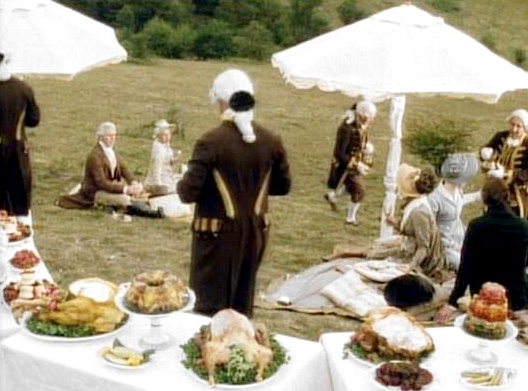
Such a shadow would be provided by a parasol, a canopy over a carriage, or an awning when eating out of doors. Exercise, while considered healthy, would have been performed in moderation. Daily walks were encouraged, but too vigorous an exertion was not deemed wise. A lady should not exercise to the point of sweating or turning her face red, as Elizabeth Bennet did when she walked three miles to Netherfield to be with her sick sister. In this regard, a Lady of Distinction noted:

The preservation of an agreeable complexion (which always presupposes health,) is not the most insignificant of exterior charms….The frequent and sudden changes from heat to cold, by abruptly exciting or repressing the regular secretions of the skin, roughen its texture, injure its hue, and often deform it with unseemly, though transitory, eruptions. All this is increased by the habit ladies have of exposing themselves unveiled, and frequently without bonnets, in the open air. The head and face have no defense against the attacks of the surrounding atmosphere, and the effects are obvious. (The Mirror of Graces, P 42)

Almost a century later, the Household Companion: The Home Book Of Etiquette, written by Alice A. Johnson, Mrs. Janet McKenzie Hill, and Dr. Henry HartShorne extolled a similar beauty regimen. In addition to protecting the skin from the sun and encouraging mild forms of exercise, the book also recommended adequate sleep. The authors quoted a charming old lady, who …

… revealed the secret of her fair and rosy complexion to a group of young women as follows : ” Late hours,” said she, ” and oversleeping ruin the complexion. Go to bed early, arise early, and you will grow old slowly, and retain your good looks to an advanced age. If, however, your position forces you into society and you are obliged to be up late at night, sleep an hour every afternoon. Before going to bed take a hot bath and remain in the water only a few moments. Then drink a cup of bouillon, and a small glass of Malaga wine. Sleep will soon follow, and last until the natural time of awakening, which is about ten o’clock in the morning under these circumstances. Take a cold plunge or sponge bath, a light breakfast of café au lait, and bread without any butter.” She continued: “Out-of-door exercise is an absolute necessity, but must not be carried to excess. A daily walk is excellent, and it is scarcely necessary to say that whole days of lawn tennis, croquet, etc., are not favorable to the complexion.”

One imagines that this elderly lady had heard these beauty tips from female friends and relatives who had lived during the early 19th century. Milky white skin remained a hallmark of beauty until the 1920s when Coco Chanel created a stir with the tan she acquired on the Duke of Westminster’s yacht.

  • 2nd image: picnic on Boxhill, Emma 1996

Read Full Post »

Mrs. Darcy’s Dilemma, which SourceBooks is now republishing for international distribution, takes place in an age of change, just as Queen Victoria is coming to the throne in 1837. Mr. and Mrs. Darcy, they of Pride and Prejudice fame, are now middle-aged. He is balding, she is an anxious mother, but they are still a charming, witty and fortunate couple, who know their happiness – until they make the mistake of inviting the two daughters of Mrs. Darcy’s profligate sister Lydia to visit at Pemberley…and trouble begins. The Darcys’ sons are far too interested in the young ladies; the younger, Cloe, is a faultlessly modest creature, but the elder, Bettina, is another pair of gloves entirely, and her flamboyant career includes a shocking turn on the London stage…Diana Birchall, Author

As I finished reading this satisfying and entertaining novel by Diana Birchall, I knew that all was right with Jane Austen’s world again. Mr. and Mrs. Darcy are still deeply in love; their children will find some measure of happiness; and the rest of Jane Austen’s characters are living out their lives much as we suspect they would.

Elizabeth was too wise to take either her husband’s love or his wealth for granted, and she never forgot to exult in all her manifold sources of happiness. It is impossible for human nature to be altogether without worry or pain, however, and Elizabeth’s anxieties were all reserved for her children.

At the start of the novel, Elizabeth Darcy, a matron in her forties and mother to Fitzwilliam, Henry, and Jane, receives a letter from her sister, Lydia Wickham. In reaction to the hardships Lydia describes, the Darcies invite the two oldest Wickham girls, Bettina and Cloe, for a protracted visit to Pemberley. This action sets the plot in motion. Before the generous-hearted Darcies realize what has happened, their eldest son Fitzwilliam, whose preference for horses far outweighs his common sense, has run off to London with the brazen Bettina. Shades of Wickham’s and Lydia’s ill considered elopement! Everyone is appalled when they do not marry, except for Lydia who doesn’t see why a 10-minute ceremony “should signify.”

Meanwhile, Henry, the second and more sensible son, has fallen for sweet and proper Cloe. He proposes to her, but deeply mortified by her sister’s actions, the penniless Cloe seeks a position as a governess.

As these events unfold, we meet Pride and Prejudice’s familiar cast of characters. Mr. Collins is as intolerable as ever. Due to the unfortunate circumstance of Mr. Bennet’s long and healthy life – and his desire not to shuffle off his mortal coil too soon – both the Collinses have become fractious from waiting. Charlotte has grown increasingly irritated with Mr. Collins in their tiny cottage crammed with furniture and their half dozen children.

Lady Catherine de Bourgh is still overbearing, and the early death of her only daughter Anne has not diminished her dislike of Elizabeth. Lydia seems not to have grown wiser at all, despite having raised a family in poverty and her disappointment with Mr. Wickham, a dissipated wastrel. Mary is a widow who has taken care of the aging Mr. Bennet since Mrs. Bennet’s death. Kitty as Mrs. Clarke, a minister’s wife, has turned into a sour childless woman. Having taken second place to Lydia in her younger years, she now feels inferior to Elizabeth and Jane, who married well. The book’s subplots echo many of Jane’s other novels, and one feels a comfortable familiarity with these characters as the novel progresses.

Ms. Birchall does not disappoint her readers. The plot is fast paced, and the story believable. “My primary interest in writing Mrs. Darcy’s Dilemma, which I did years before the booming proliferation of romantic sequels,” she says, “was in employing something as similar to Jane Austen’s original language as might be possible for an American writing two hundred years later. In other words: not possible at all! However, I have steeped myself in her prose, reading the novels not tens, not hundreds, but thousands of times over a thirty year period, and among many other things, Jane Austen proved to be the best writing teacher any author could have.”

My only (minor) quibble with the book is that it is not long enough. I would love to have read more scenes with Mr. Darcy and his wife in them. Diana is also known for her humor, and her wit was in too short supply. Had the book been longer, I believe we might have been treated to more sparkling and scintillating dialog. I have one final quibble: Diana describes our fabulous fifty-something Mr. Darcy as balding. I beg to differ, Ms. Birchall. Please take a look at this photo of a lovely man at 48, in which not a single follicle seems to be challenged. Could Mr. Darcy not have had a similar set of hair?

More about Diana Birchall:

Her Jane Austen-related novels, Mrs. Darcy’s Dilemma and Mrs. Elton in America, were both published by Egerton Press, a small English company, in 2004, and her pastiche/satire In Defense of Mrs. Elton was published by the Jane Austen Society in the US, UK and Australia in 2000. Her “day job” is as the literary story analyst at Warner Bros Studios in California, reading novels to see if they would make movies. She is also a ballet dancer and has taken classes most of her life.

Read Full Post »


A penny isn’t what it used to be, as you’ll discover on the following sites. For fuller explanations on the relative value of incomes and the cost of goods during the regency, read my other posts on the topic: Pride and Prejudice Economics and In Jane Austen’s Own Words: Economic Sense and Sensibility.

For more links on costs during this period, click on the following:

Read Full Post »

« Newer Posts