Feeds:
Posts
Comments

Archive for the ‘Regency food’ Category

Making traditional black butter

Inquiring readers: Reader Cora Harrison recently placed this comment on my blog: “In one letter, Jane [Austen] spoke of serving ‘black butter’ with wigeon and that she thought the butter was bad … Poor Jane, I thought. However, in reading a book called The Feast of Christmas I discovered that black butter was not butter at all, but what I would call a fruit cheese, made from equal quantities of apples, blackcurrants or blackberries and less sugar, and then boiled until it sets – and of course, the colour would be black!”

Her comment so intrigued me, that I decided to look up the topic. Jane wrote to her sister on December 27, 1808:

The first pot [of black butter] was opened when Frank and Mary were here, and proved not at all what it ought to be; it was neither solid nor entirely sweet, and on seeing it Eliza remembered that Miss Austen had said she did not think it had been boiled enough. It was made, you know, when we were absent. Such being the event of the first pot, I would not save the second, and we therefore ate it in unpretending privacy; and though not what it ought to be, part of it was very good.”

The recipe for making black butter, or apple butter as it is commonly known today, harkens back to medieval times. After the winter crop was picked, the preserve was made in huge quantities. In the 18th century, twenty percent of Jersey’s arable land was made up of orchards, and the tradition of producing ‘black butter’ or ‘Le Niere Buerre’ became an annual social  and festive occasion.  Jersey black butter was made from cider apples that were slowly boiled over a fire. Women would peel hundreds of pounds of apples, while the men and children would gather enough wood to keep the fire going for almost two days. After the cider was ‘reduced’ by half, apples, sugar, lemon, liquorice and spices were added. The Jersey tradition of making black butter included singing, dancing, and storytelling all through the night and until early morning. Jersey Island black butter is characterized by the addition of liquorice, which made the preserve quite dark. – RecipeZaar & BBC Jersey Black Butter.

According to Food Legends, black butter “contains no butter, the butter in the name being like the cheese in lemon cheese, more a description of the consistency and application of the product than anything else; and second, it is not really black, indeed a great deal of effort goes into avoiding the burning that would change the dark brown mass to black.” The following is likely Jane Austen’s recipe for Black Butter. Traditionally, the preserve is spread on bread, or it can be eaten by itself:

    Take 4 pounds of full ripe apples, and peel and core them. Meanwhile put into a pan 2 pints of sweet cider, and boil until it reduces by half. Put the apples, chopped small, to the cider. Cook slowly stirring frequently, until the fruit is tender, as you can crush beneath the back of a spoon. Then work the apple through a sieve, and return to the pan adding 1lb beaten (granulated) sugar and spices as following, 1 teaspoon clove well ground, 2 teaspoons cinnamon well ground, 1 saltspoon allspice well ground. Cook over low fire for about ¾ hour, stirring until mixture thickens and turns a rich brown. Pour the butter into into small clean jars, and cover with clarified butter when cold. Seal and keep for three months before using. By this time the butter will have turned almost black, and have a most delicious flavour. – Copyright Maria Hubert von Staufer March 1995

Black butter on bread

This recipe, which Cora must have at first thought Jane Austen was referring to, is a black butter that is generally served with fish, such as skate or salmon:

Black Butter: Put into a frying pan the necessary amount of butter, and cook it until it has a brown color and begins to smoke. At this moment add a large pinch of concassed parsley leaves and spread it immediately over the object to be treated. – Chest of Books

More on the topic:

Read Full Post »

Gentle readers, I am taking a short hiatus from this blog for Thanksgiving week. Meanwhile, enjoy these images of people dining in days of yore…

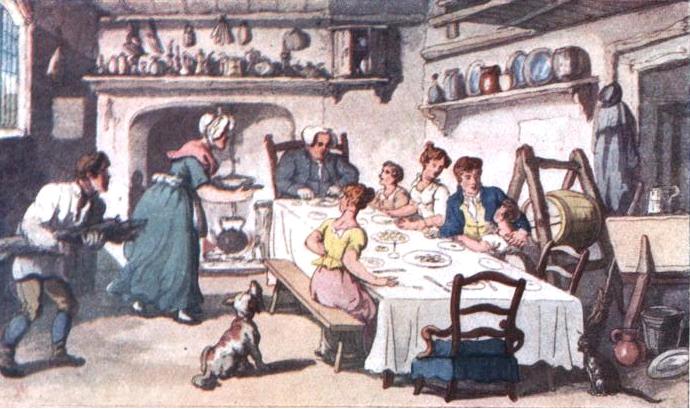
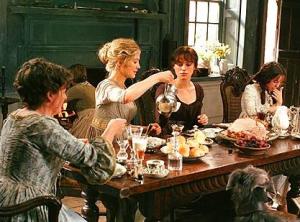
Dining for most people was a simple affair and food was taken from the land. Many families, unless their house was large enough to accommodate a dining room, ate in the kitchen.

Notice in this image of a family sharing a meal by Thomas Rowlandson (from The Vicar of Wakefield by Oliver Goldsmith), that the meal is eaten during the day and near the fire.

The rich could afford to eat by candlelight, as in this early 20th C. image of a Georgian dinner scene.

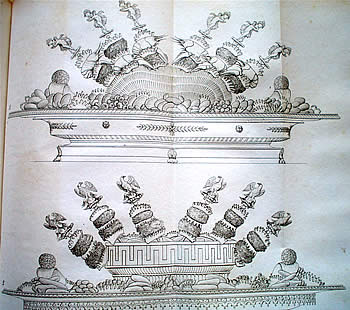
For some, like the Prince Regent, dinners were elaborate affairs.

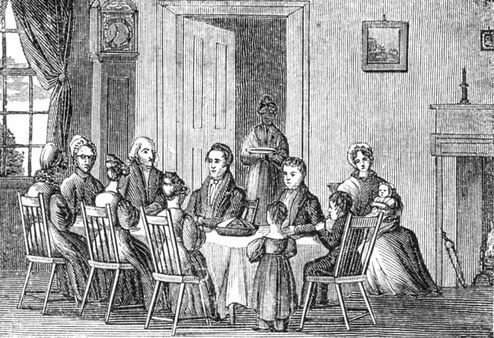
For other families the meal was more basic and simple.

Family Meal

The hours in which people ate meals were changing:

In the beginning of the sixteenth century in England, dinner, the main meal of the day, used to begin at 11:00AM. Meals tended over time to be eaten later and later in the day: by the eighteenth century, dinner was eaten at about 3:00PM…By the early nineteenth century, lunch, what Palmer in Moveable Feasts calls “the furtive snack,” had become a sit-down meal at the dning table in the middle of the day. Upper-class people were eating breakfast earlier, and dinner later, than they had formerly done…in 1808…dinner was now a late meal and supper a snack taken at the very end of the day before people retired to bed. For a long time luncheon was a very upper-class habit; ordinarily working people dined in the early evening, and contented themselves as they had done for centuries with a mid-day snack…Supper now means a light evening meal that replaces dinner; such a meal is especially popular if people have eaten a heavy lunch – The Rituals of Dinner, Margaret Visser [Penguid:New York] 1991 (p. 159-160) – Food Timeline

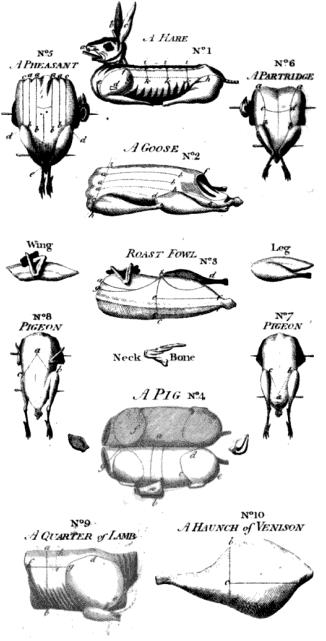
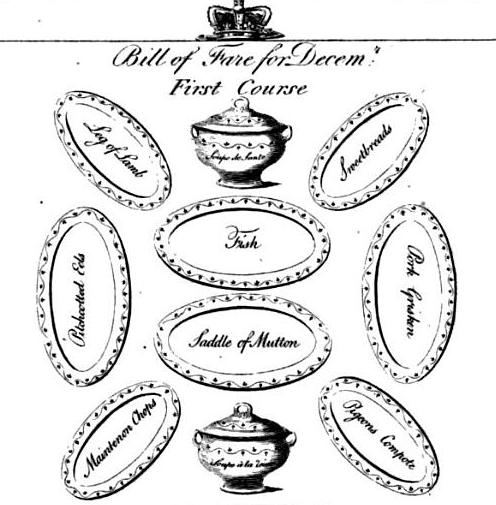
Image source: The Universal Cook: And City and Country Housekeeper, John Francis Collingwood and John Woollams, Principal Cooks at The Crown and Anchor Tavern in the Strand, 1792

Meat made up a large part of the Regency diet, even for the middle class. For most people living in London, the animals had to be brought a long way to market. Due to the length of the journey, the quality of meat was often poor. In contrast, venison and game procured from country estates and served fresh was often considered prize meat.

The Breedwell Family, Thomas Rowlandson

Families tended to be large and extended. In this boisterous family scene by Rowlandson, the Breedwells obviously bred beyond “the heir and the spare.”

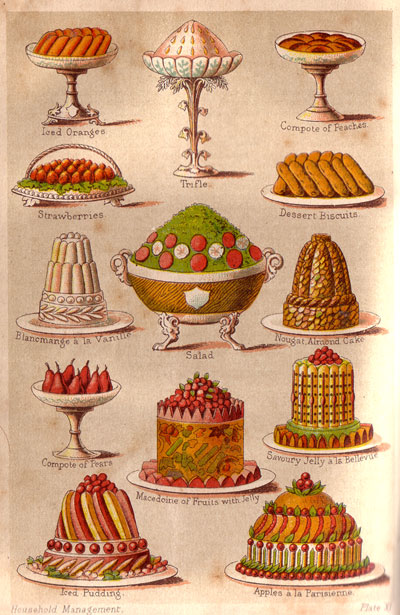
Desserts, Isabella Beaton

Desserts made up the last course of the meal. Even for the middle class this course was elaborate and plentiful, but for the rich it was spectacular.

Walled kitchen garden

Kitchen gardens provided fresh produce during the growing season. The very rich grew fruits and vegetables in hot houses, but most people ate meat, soups, or bread throughout the year. Fruit and vegetables were preserved, or, as in the case of apples and root vegetables, stored through the winter.

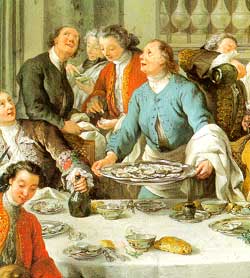
Seafood had to be served fresh and within hours of its harvest. Chances were that this tavern, where oysters were served on a platter, sits in a geographic area by the sea.

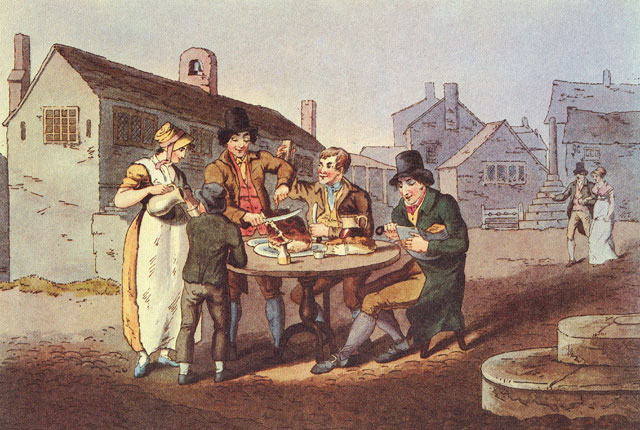
Life in Yorkshire

Elegant, or simple, the family meal meant togetherness.

Happy Thanksgiving everyone

More on the topic:

Read Full Post »

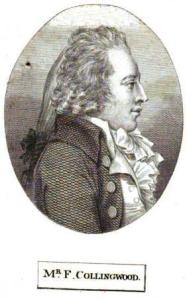
By the end of the eighteenth century, fashionable gentlemen began to dine with regularity in large taverns. As tavern food gained in popularity, the chefs who cooked the fare began to publish their own cookbooks.  These new culinary stars claim not to have learned their trade in a private household, but through methodical study as an apprentice.* The Universal Cook: And City and Country Housekeeper (1792) was written by John Francis Collingwood and John Woollams, the two principal cooks at The Crown and Anchor Tavern in the Strand. In their cookbook, which had the distinction of also being printed in French*, the two chefs discuss the meats, produce, and fruits that were in season. The foods listed below were common for the month of December:
banquet
MEATS
Beef, Mutton, Veal, Pork, House-Lamb, and Doe Venison.

POULTRY
Geese, Chickens, Wild Ducks, Turkeys, Pullets, Pigeons, Capons, Fowls, Hares, Rabbits. Woodcocks, Snipes, Larks, Teals, Widgeons, Dottrels, Partridges, and Pheasants.

First course

First course

FISH
Turbot, Gurnets, Smelts, Cod, Gudgeon, Eels, Sturgeon, Dorees, Codlings, Soles, Cockles, Mussels, Holobets, Bearbet, Carp, and Oysters.

VEGETABLES
Cabbages, Savoys, Potatoes, Skirrets, Garlick, Rocombole, Brocoli, purple and white; Scorzonera, Salfifie, Celery, Endive, Carrots, Leeks, Beets, Parsnips, Turnips, Lettuces, Cresses, All sorts of small Sallad, Onions, Shalots, Cardoons, Forced Asparagus, Spinach, Parsley, Thyme, and  All sorts of Pot Herbs.

FRUIT
Apples, Pears, Medlars, Services, Chesnuts, Hazle Nuts, Grapes, and Walnuts. The Universal Cook And City and Country Housekeeper By Francis Collingwood, John Woollams

Second course

Second course

Preparing the kitchen garden in December

Collingwood and Woollams also devoted a chapter of their cookbook to the kitchen garden. In December there were few plants that continued to grow, so much of their advice is spent on digging the soil in trenches and preparing it for spring sowing; as well as saving cauliflower, broccoli, and artichokes from hard frost.

mr-collingwoodmr-woollams

DUNGING and digging the ground is the principal business to be done in the kitchen garden this month and laying it in ridges to enrich for sowing and planting after Christmas with some principal and early crops for the ensuing spring and summer Dress your artichoke beds by first cutting down any remaining Items …Pay diligent attention to your asparagus hotbeds to keep up the heat of the beds by linings of hot dung and to admit air in mild days… Take up your red rooted beet on a dry day and let them be placed in sand and under cover for use in case of hard frosts… In all moderate weather give air to your cauliflowers in frames  The Universal Cook And City and Country Housekeeper By Francis Collingwood, John Woollams

The Universal Cook’s Bill of Fare for December describes a two-course meal consisting of 16 dishes and two soups. I’ve listed two recipes from the Second Course that use methods and ingredients that are still common:

diningroom-2005Ragout of Celery (From the Universal Cook)
To ragoo Celery, CUT the white part of the celery into lengths and boil it till it is tender. Then fry and drain it, flour it and put to it some rich gravy, a very little red wine, salt, pepper, nutmeg and catchup. Give it a boil and then send it up to table. The Universal Cook And City and Country Housekeeper By Francis Collingwood, John Woollams

*All Manners of Food, Stephen Mennell, p. 99

Other posts about Regency food on this blog:

Read Full Post »

Frontice piece of L'Art De La Cuisine Française Aux XIX-E Siècle by Antonin Careme

Frontice piece of L

I have just ordered a new “used” book from Alibris:Cooking for Kings: The Life of Antonin Carême, the First Celebrity Chef by Ian Kelly, and I cannot wait for it to appear in my mailbox. Antonin Carême was the first celebrity chef to make his mark as a major international figure in cuisine. A man from humble origins, who unfortunately did not live long (he died before reaching the age of 50), he attained the kind of fame reserved for only a select and talented few. Some of his spun sugar concoctions were so strong that court jesters could dance on them. According to Montagne, nothing was more important to this chef than his art – not money, not fame – and thus he set a standard for chefs and the culinary world for generations.

A post in The Old Foodie entitled An Extraordinary Banquet: describes Carême’s amazingly complex, multi-course banquet created for the Prince Regent at Brighton Pavilion in 1817.

Designs by Careme from All Manners of Food

Designs by Careme from All Manners of Food

Read more about this extraordinary chef in the following links. There will be more to come after I receive my new book!

Read Full Post »

The orange wine will want our care soon. But in the meantime, for elegance and ease and luxury, the Hattons and Milles’ dine here to-day, and I shall eat ice and drink French wine, and be above vulgar economy. Luckily the pleasures of friendship, of unreserved conversation, of similarity of taste and opinions, will make good amends for orange wine.- Jane Austen to Cassandra, Godmersham, June 20, 1808

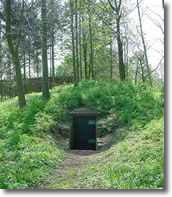
Icehouse, Bedale Park

Icehouse, Bedale Park

Jane wrote casually of eating ice in a day when the preservation of huge chunks of river and pond ice was no mean feat. Solid blocks of ice were hewn from nearby frozen ponds and rivers in winter, then hauled by teams of horses and men to a suitable storage space. Ships also brought in chunks of ice from glaciers and icebergs.

In early days, deep underground chambers whose doors faced north kept the temperatures freezing inside their heavily insulated structures, preserving the ice for up to two years.  By the 17th and 18th centuries, owners of great houses built icehouses adjacent to their dwellings. These storage spaces had double insulated walls and double doors that kept the warm air out. The cold chambers also kept water, milk, butter, and other perishables refrigerated.  Iced food remained the province of the rich, who could afford to build an ice house and pay servants who shaved the ice and prepared ices, ice sculptures, bombes, and ice cream. Experiments in flavors and designs abounded:

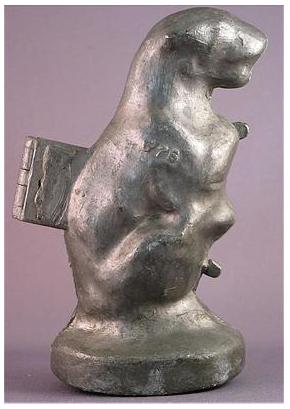
Squirrel ice cream mold, ruby lane antiques

Squirrel ice cream mold, ruby lane antiques

In the late 17th and early 18th century, long before refrigeration was available, Europeans were making ices and ice creams. Although they were often unsure about freezing techniques, they began experimenting with flavors immediately. Confectioners tried everything from breadcrumbs to grated cheese to candied orange flowers in these new frozen treats. They molded them into fanciful shapes and served them with style and flair. Once in a while, they stumbled – putting foie gras or puréed asparagus in ice cream, for example – but most of their experiments were successful. They led the way to the wonderful range of flavors we enjoy today. (Histories, Legends, and Myths of Ices and Ice Cream)

The great chefs were especially creative in the use of ice for preserving food, and making exotic foods. In a day before electricity, intricately carved ice sculptures of swans and cherubs and the like were all the rage in Europe. The great French chef Antonin Careme used iced water to make his spun sugar sculptures and kept desserts on ice and the pastry room cool to keep the unbaked pastries cool. (Crème du Carême)

Recipes for creating ices and ice cream haven’t changed much, but the methods have. By the mid 19th century small portable iceboxes and an ice cream maker had been invented, replacing laborious hand stirring with a handcrank until the mixture thickened. The following is an 18th-century ice cream recipe that illustrates how labor intensive and time consuming ice cream making had once been:

English ice cream pail, Derby 1790

English ice cream pail, Derby 1790. Image from Historic Foods.

Pare, stone and scald twelve ripe Apricots, beat them fine in a Marble Mortar, put to them six Ounces of double refined Sugar, a Pint of scalding Cream, work it through a Hair Sieve, put it into a Tin that has a close Cover, set it in a Tub of Ice broken small, and a large Quantity of Salt put amongst it, when you see your Cream grow thick round the Edges of your Tin, stir it and set it in again ’till it all grows quite thick, when your Cream is all Froze up, take it out of your Tin, and put it in the Mould you intend it to be turned out of, then put on the Lid, and have ready another Tub with Ice and Salt in as before, put your Mould in the Middle, and lay your Ice under and over it, let it stand four or five Hours, dip your Tin in warm Water when you turn it out; if it be Summer, you must not turn it out ’till the Moment you want it; you may use any Sort of Fruit if you have not Apricots, only observe to work it fine. – Ice cream recipe from The Experienced English Housekeeper by Elizabeth Raffald, 1769,  page 228:

  • Georgian Ices and Victorian Bombes is another informative post from Historic Food, one of the most interesting and historical food sites on the web. In it you will find a wealth of illustrations, photos, and information about making ice cream.
  • Lemon Ice: The Jane Austen Centre published a recipe for making lemon ice similar to one made in the 18th century. The article adds additional information about the origins of ice cream.
  • Ice Cream and Chocolate Parlor since 1700 describes an Italian ice cream parlor that has been in existence for over 300 years. Their specialty is an almond ice cream that is probably as easy to make and flavorful as the one below.
  • Histories, Legends, and Myths of Ices and Ice Cream provides a timeline and interesting tidbits of information about ices and ice cream over the ages.
Almond ice cream

Almond ice cream

Read Full Post »

« Newer Posts - Older Posts »