Feeds:
Posts
Comments

Archive for the ‘Regency Life’ Category

write letter byron 2003Gentle readers,

The Lady Susan Soiree is going full tilt at Austenprose, where Laurel Ann and her band of readers are finishing up Jane Austen’s last published novel. Lady Susan is an epistolary novel, or one that is written in letter format. Last week I wrote a post about Upper Seymour Street, one of the prominent addresses in the novel, this week I will be writing about the postal service during the Georgian era. Not only did Jane Austen write a novel in letter format, she was a great letter writer herself. Sending a letter over two hundred years ago was much like sending an email today: the service was expensive and it depended upon the smooth running of a money making operation. But in London the service was different, for the Penny-Post had been introduced. This form of sending letters was both easy, affordable and practical, and explains how a lady with straitened finances like Lady Susan Vernon could afford to write so many letters in such a short space of time.

During the eighteenth century a letter from London to Bath could take three days to arrive, but by the 1820s, mail was delivered the morning after posting in towns more than 120 miles apart. In central London the postal service was so efficient, and there were such frequent deliveries, than an invitation issued in the morning could be acknowledged the same afternoon. – High Society, Venetia Murray, ISBN: 0670857580, p. 2.

Venetia Murray’s entry about the postal service was short and to the point, but it does not come close to telling the entire story. Because I uncovered so much information, I am dividing this post into three parts: 1) Letters and the Penny-Post, 2) Post Roads and Post Boys, and 3) John Palmer and the Royal Mail Coach.

Part One: Letters and the Penny-Post

In 1635 Charles I opened up his ‘royal mail’ for use by the public. Oliver Cromwell established the General Post Office in 1657 and after the Restoration, Charles II authorized the General Post Office to operate the ‘royal mail’, with the revenue from the postal service going to the Government.
Small cross written letter

Small cross written letter

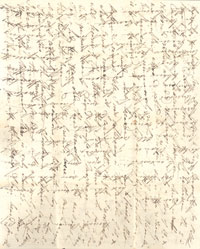
In those early days, postal rates were calculated according to the distances traveled and the number of sheets that comprised a letter. Because of their cost, only businesses and the wealthy could afford to send letters. Others simply had to entrust their missives to friends and family members, or ask people traveling to another town to serve as a messenger. Even the wealthy kept their sheets of paper small and wrote in a cross writing style to conserve space. (See the  image at right and click here to read my post on Letter Writing in Jane Austen’s Time.) Envelopes would have been considered an additional sheet, so these very early letters did not include them.  A letter was simply folded over and sealed with wax that was stamped by a signet ring or a seal.  Recipients, not the sender, had to pay for the cost of a letter. This system caused hardship in cases where the recipient did not have the money, and as a result many letters languished on a post office shelf or were thrown away. Knowing these facts about the postal system of the period helps the reader to understand the following passage from Mansfield Park. Even though this scene occured in the early 19th century, the costs associated with sending letters from one city to another had not changed in over 100 years, for the postal system would not significantly improve until 1837, when Rowland Hill set out to reform it.

    “But William will write to you, I dare say.” “Yes, he had promised he would, but he had told her to write first.” “And when shall you do it?” She hung her head and answered hesitatingly, “she did not know; she had not any paper.”

    “If that be all your difficulty, I will furnish you with paper and every other material, and you may write your letter whenever you choose. Would it make you happy to write to William?”

    “Yes, very.”

    “Then let it be done now. Come with me into the breakfast room, we shall find every thing there, and be sure of having the room to ourselves.”

    “But, cousin—will it go to the post?”

    “Yes, depend upon me it shall; it shall go with the other letters; and, as your uncle will frank it, it will cost William nothing.”

    “My uncle!” repeated Fanny, with a frightened look.

    “Yes, when you have written the letter, I will take it to my father to frank.”

    Fanny thought it a bold measure, but offered no farther resistance

Edmund also sits down to write “with his own hand his love to his cousin William, and sent him half a guinea under the seal.” This was a remarkable sum of money for the day, and demonstratedEdmund’s character like no words could. From this point on, William would have enough money to pay for Fanny’s letters as they came.
William Dockwra's postal markings

William Dockwra's postal markings

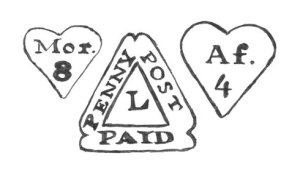
Interestingly, the Post Office did not handle letters sent from one London address to another. The city was a thriving metropolis and trading center, yet merchants had to employ private messengers to carry letters and packages across town, much like the poor in other parts of the country. In 1680, an enterprising merchant named William Dockwra introduced a local Penny-Post in London, which carried letters within a ten mile radius. His service also introduced the pre-payment of letters, a revolutionary idea. William’s advertisement in the Mercurius Civicus read:

“The Undertakers for the Incomparable and Advantageous Design for the Speedy and safe Conveyance of Letters and packquets under a pound weight, to all parts of the Cities of London and Westminster, and the suburbs thereof … [have] ordered their Messengers to call for all Letters at all Coffee-Houses in the High Roads and Streets following . . . And all persons, who leave their Letters at any of the places aforesaid, may be sure to have them speedily dispatched for ONE PENY”.

William’s method of operation was immediately successful, “particularly as letters left at any Penny-Post House were sent out “successively every hour of the Day, till Eight of the Clock at Night”. Furthermore, to ensure that correspondence was delivered as soon as possible, each letter was stamped with the hour of the day on which it was sent out. This way, people could work out whether the “delays that may happen be really in the Office, or their own Servants (or other) with whom their Letters were left in due time”. “– Potted History by Ben Locker

Dockwra used two main postmarks for each letter. One was a triangular stamp with “Penny-Post Paid” on the three sides and the initials of the sorting office in the centre. This indicated that the rate had been paid and there was no further charges necessary on receipt. The second postmark was a heart shaped stamp indicating the date and time of dispatch.

There was a great deal of opposition to Dockwra’s post from porters and messengers whose livelihood was affected by the service. The church, a powerful force at the time, also had strong opposition!

The most serious opposition to Dockwra’s system came from the General Post Office, which heavily resented the competition. As such, in 1682 legal action was taken against William Dockwra in the name of the Duke Of York (Later King James II.) who was responsible for overseeing the Post Office at the time. – William Dockwra

Unfortunately, the Duke of York  held the monopoly on collecting revenue from the mail. He prosecuted Dockwra for £100 (Wikipedia says it was £2,000)  in damages and forced the merchant to relinquish control of his enterprise. Four days after the judgement, the London Gazette announced that the Penny-Post would shortly be reopened as part of the General Post Office.  For nine years Dockwra petitioned the Duke to save him and his “family of 9 children from Ruine.” Eventually in 1689, after James II’s death, Dockwra received a “seven-year pension of £500 “in consideration of his good service in inventing and setting up the business of the Penny-Post.” (Potted History by Ben Locker)

General Post Office in Lombard Street, London

General Post Office in Lombard Street, London

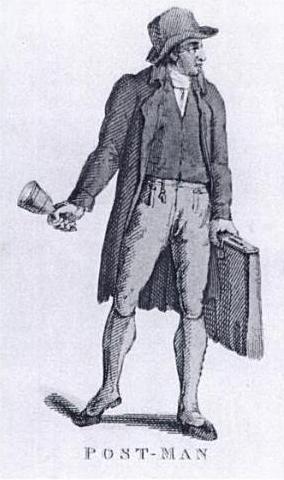
“The Penny-Post was quickly adopted in other cities and towns, like Dublin, Edinburgh and Manchester. Revenues steadily increased, and by 1727 the London District Post was so well regarded that ‘Daniel Defoe praised it for not charging for “a single Piece of Paper, as in the General Post-Office, but [sending] any Packet under a Pound weight . . . at the same price.'” The employment of extra letter carriers increased the number of deliveries, so that the system became even more efficient. From the 1770s the numbering of houses began, and by 1805 this system became mandatory in London Streets, making it even easier for letter carriers to deliver mail (Potted History by Ben Locker).  In contrast to the Penny-Post, letters that went out via the General Post Office still charged recipients for distance traveled and the number of sheets used, so that a letter sent from Steventon Rectory to Chawton would be quite expensive as compared to a letter sent from one London address to another, or one Manchester address to another.

Letter carrier, 1800, with bell and satchel

Letter carrier, 1800, with bell and satchel

For ordinary people the cost of receiving a letter was a significant part of the weekly wage. If you lived in London and your relatives had written to you from Edinburgh you would have to pay one shilling and one pence per page – more than the average worker earned in a day. Many letters were never delivered because their recipients could not afford them, losing the Post Office a great deal of money.” – Rowland Hill’s Postal Reforms
To help finance the war against Napoleon, the London Penny-Post was increased to tuppence in 1801; in 1805 the amount was raised to three pence. The beginning of uniform penny postage in 1840 made sending mail affordable to all for the first time. In 1837, English schoolmaster, Rowland Hill, wrote a pamphlet, Post Office Reform: its Importance and Practicability, which was privately circulated. In that year, he also invented the postage stamp, which necessitated the use of an envelope. “The Penny-Post system that began in 1840 used a lozenge-shaped sheet more akin to today’s aerogrammes, though in the same year George Wilson patented a system for printing several envelopes from one large sheet of paper, and in 1845 a steam-driven cutting and folding machine was invented.”  History of the Humble Envelope

Hill’s famous pamphlet, Post Office Reform, was privately circulated in 1837. The report called for “low and uniform rates” according to weight, rather than distance. Hill’s study showed that most of the costs in the postal system were not for transport, but rather for laborious handling procedures at the origins and the destinations.

Costs could be reduced dramatically if postage were prepaid by the sender, the prepayment to be proven by the use of prepaid letter sheets or adhesive stamps (adhesive stamps had long been used to show payment of taxes – for example, on documents).

Letter sheets were to be used because envelopes were not yet common – they were not yet mass produced, and in an era when postage was calculated partly on the basis of the number of sheets of paper used, the same sheet of paper would be folded and serve for both the message and the address. In addition, Hill proposed to lower the postage rate to a penny per half ounce, without regard to distance. He presented his proposal to the Government in 1838.

Postal service rates were lowered almost immediately, to fourpence from the 5 December 1839, then to the penny rate on the 10 January 1840, even before stamps or letter sheets could be printed. The volume of paid internal correspondence increased dramatically, by 120%, between November, 1839 and February, 1840. – Rowland Hill

More on this topic:

Read Full Post »

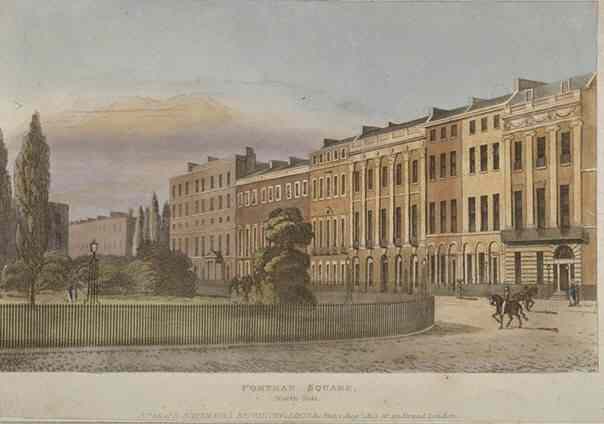
Detail of the North Side of Portman Square

Detail of the North Side of Portman Square

Inquiring readers: For two weeks, Laurel Ann, my blogging partner at Jane Austen Today, has been blogging about Lady Susan at her own blog, Austenprose. Lady Susan was published posthumously in 1871, almost 80 years after Jane Austen wrote this short epistolary novel. When one reads the book, one is struck by the number of letters Lady Susan writes to an address on Upper Seymour Street. This is where her friend Mrs. Johnson (Alicia) lives. It was Alicia who famously wrote at the end of the book:

I would ask you to Edward Street, but that once [Mr. Johnson] forced from me a kind of promise never to invite you to my house; nothing but my being in the utmost distress for money should have extorted it from me. I can get you, however, a nice drawing-room apartment in Upper Seymour Street, and we may be always together there or here; for I consider my promise to Mr. Johnson as comprehending only (at least in his absence) your not sleeping in the house. – Mrs. Johnson (Alicia) to Lady Susan, ca. 1805

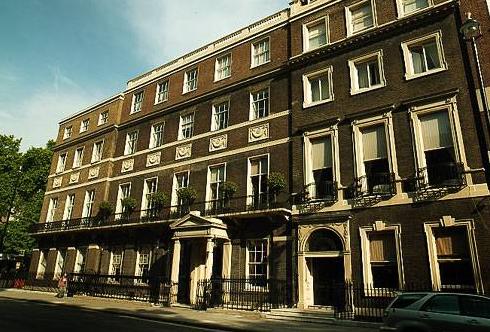
The houses along Upper Seymour Street in Westminster, which is situated near the Marble Arch (then known as Tyburn) near Hyde Park Corner, are tall, narrow, and four stories high. Edward Lear, the Victorian writer of charming limericks, lived in a house that has been converted to a hotel (Image below). I stayed on the 3rd floor a decade ago and can attest that the stairs are steep!
edlearfront_small

Living at this location off Oxford Street was considered a moderately respectable to fairly good address during the Regency era.  Upper Seymour Street is close to Hyde Park, and within easy walking distance to Mayfair and St. James’s, where the upper crust lived and visited each other when they stayed in London. Upper Seymour Street is actually situated in Marelybone, just around the corner from Portman Square and one block over from Upper Berkeley Street, an area that Jane Austen and her sister, Cassandra, knew well:

Upper Seymour Street and Portman Square

Upper Seymour Street and Portman Square

The Countess de Feuillide looked out from her windows in Upper Berkeley Street towards Portman Square, waiting for her cousin Cassandra to arrive. It still pleased the Countess to be know by her former title rather than as plain ‘Mrs Austen’, and she was always gratified by tradespeople and others who thought to humour her vanity in this matter. – Jane Austen: A Life, David Nokes, 1998, Google Books

North side, Portman Square, 1812

The nouveau riche, whose ambition was to enter Society, moved as close to the “action” as they could. In 1772, Lady Home, a 67-year-old widow,  made plans to move to Portman Square. This area of London was just beginning to be developed, and, as the image at right attests, the houses (Rated 1 and 2) were big and spacious.  Lady Home had been twice widowed and had become rich from the money she inherited from her father and first husband, Sir Nicholas Lawes, Governor of Jamaica. Her second husband, the 8th Earl of Home, was a dissipated spendthrift. Their marriage in 1742 was one of convenience, for while she got the title, he most definitely married her for her money. In 1744 the earl deserted Lady Home just months before she was to give birth to their child, who, sadly, did not survive. The earl died in 1761, leaving Lady Home a widow once again and free to act as she pleased.

Home House Today

Home House Today

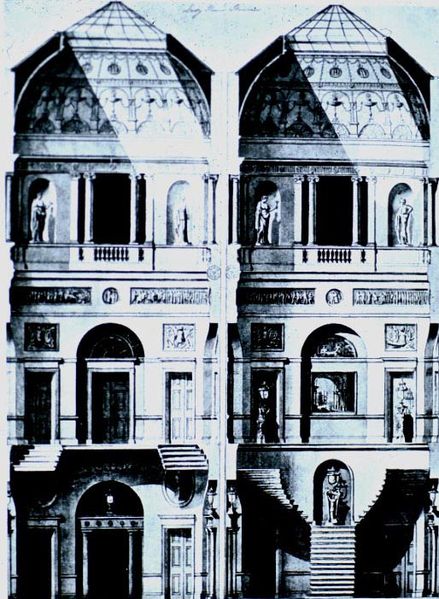
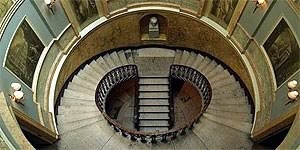
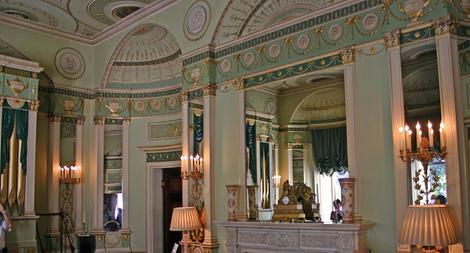
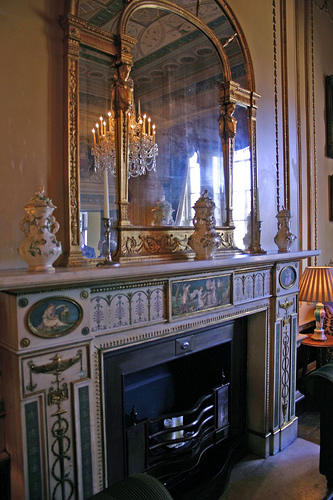
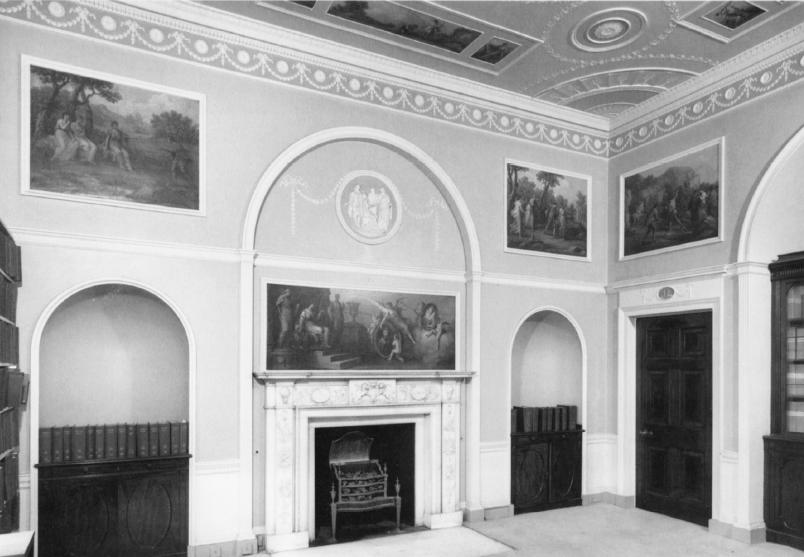
Very little is known about Lady Home’s life until she began to build her grand house in Portman Square. In the early 18th century, Henry William Portman had developed 200 acres of meadow passed down from a Tudor ancestor and turned them into Portman Square. In 1755 he began issuing the first housing leases. Lady Home took a 90 year lease from William Baker in June 1772, on which she was permitted to build a brick house. By 1774, builder Richard Norris was close to completing the house, which had been designed by the architect James Wyatt. His claim to fame was The Pantheon which had opened in 1772 when Mr. Wyatt was just 26 years old.  In 1775, Lady Home fired Wyatt and hired his archrival Robert Adam to complete the interior. One of the most unforgettable features of Adam’s design was the breathtaking  neoclassical stairway under a glass dome.

Stair case

Stair case

Stair case, view down

Stair case, view down

Staircase

Staircase

Skylight above staircase

Skylight above staircase

Adam details, Music room

Adam details, Music room

William Beckford, who came from another wealthy plantation-owning family, and who also lived in [Portman] square, described her as: ‘.. the Countess of Home, known among all Irish chairmen and riff-raff of the metropolis by the name, style and title of Queen of Hell…’ He went on to describe her extravagant and eccentric behaviour. She entertained other wealthy Caribbean plantation owners and was related to many of them. She also had royal connections. – BBC History, The business of enslavement

In reading about Lady Home, I was struck by her ambition and audacity, and began to compare her to Lady Susan. Publicly deserted but her husband, Lady Home chose to remain in London and entertain in high style. She successfully made a life for herself on the fringes of society, but, despite her wealth, she was never quite accepted among the haut ton. She lived and entertained in the house from 1776 to 1784, the year that she died.

Adam fireplace

Adam fireplace

In an interesting aside, Robert Adam and James Stuart were also the architects of Montagu House, which was built for Mrs. Elizabeth Montague in the northwest corner of Portman Square. The house, known as the ‘Montpelier of England’, became famous for its meetings with the literary world. The Blue-Stocking Club, named for the informal blue stockings that many in the group wore, invited intellectuals to discourse on a variety topics.

Library

Library

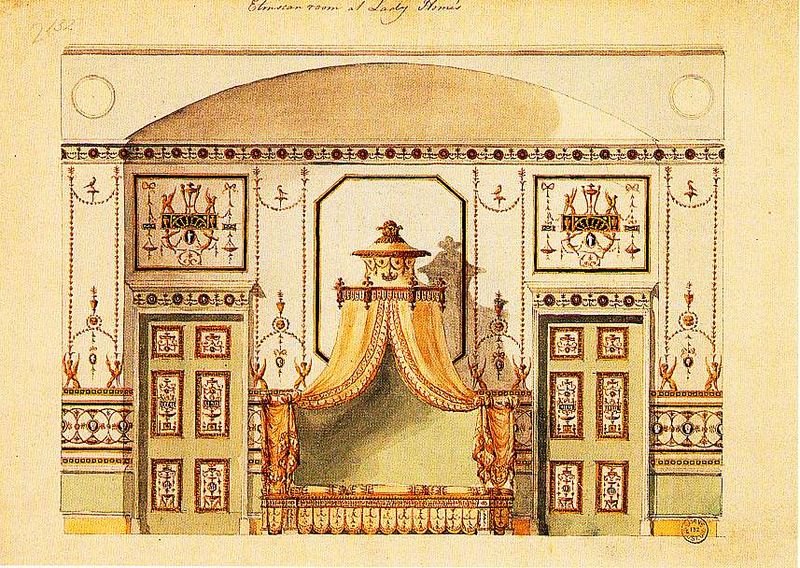
Lady Home’s Etruscan bedroom reflected the current interest in antiquities. The house almost did not survive. From 1989 to 1996, the house was listed on the 100 most endangered sites, and extensive renovations did not begin until 1998. Today the house is part of a private men’s club.

Etruscan room, Home house

Etruscan room (bedroom), Home house

Two portraits by Gainsborough hung in her house, depicting the duke and duchess of Cumberland. The duke was the brother of George III and the duchess related to Lady Home through her first husband. It has been suggested that Lady Home’s motive for building such a large and elegant house when she was a widow who had no children was to entertain the Cumberlands. – BBC History, The business of enslavement

Read Full Post »

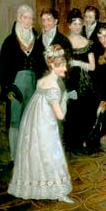
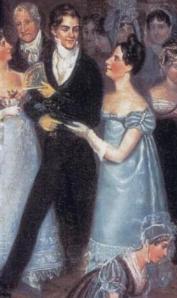
rolinda sharples men ballRolinda Sharples’s 1817 painting of the Cloak-Room, Clifton Assembly Rooms is a familiar one to most Jane Austen fans. This image graces many book covers and has been used for depicting life in the Regency era. Looking closely, one sees that the assembled party seem to be enjoying the occasion as they wait and chat. A lady’s maid is helping a woman exchange her shoes, a man holds a lady’s fan, and the ladies are wearing an assortment of pale dresses, and colorful headwear and shawls. John Harvey, author of Men in Black, 1996, a book about the predeliction men have had over the centuries for wearing black, noted on p. 37 that Rolinda’s painting illustrates the direction that fashion was taking in the 19th century:

The white-haired man to the left is dressed in the older style, with light-coloured knee-breeches and lighter stockings. The stooping man to the right is a transitional type, wearing black knee-breeches, black stockings.

Cloak Room, Clifton Assembly Room, 1817, Rolinda Sharples

Cloak Room, Clifton Assembly Room, 1817, Rolinda Sharples

The man to centre-left is dressed as Brummel dressed, in skin-tight black trousers.

The above style and the two previous styles would have been familiar to  Jane Austen, for she died the same year that this painting was made.
Rolinda Sharples Clifton detail of brummel type

Rolinda Sharples Clifton detail

It is the man to the right of him, in looser black trousers, who is dresed as the century was in future to dress. The men at Mr. Rochester’s party [in Jane Eyre] would all be in his style.

These links do not describe formal menswear, per se, but the are descriptive of men’s clothes of the era:

Read Full Post »

Jane's Window View, copyright Keith Mallet

Jane's Window View, copyright Keith Mallet

Gentle Reader, Keith Mallett wrote to me to say that he visited his homeland of England for the first time in 35 years after moving to Australia. One of his fondest memories of the trip is of a visit to Chawton. When he was a teenager living in England he used to almost drive past the house on the way to and from boarding school each term, but “I have to admit Jane Austen was not high on my teenage reading list.”

We can sympathize, Keith. Not many teenage boys relate to Jane. Not many men do, either, so it is my pleasure to share your insights with my blog’s readers. I also thank you for giving me permission to publish your photograph. How apropos that is was raining that day, for I have often imagined Jane finding excuses to stay inside and write.  Keith wrote in his journal about Jane:

It can be taken for granted that I am a fan of Jane Austen’s writing – I find the acute social commentary woven into the fabric of the romances and intrigues of those Regency days quite fascinating, and wonder how much the novels reflect Jane’s own personality and desires. She would have been a fascinating person to meet. But sadly I was too late by 191 years. I could only tread the bare floorboards of the house, peer into the rooms that contained her life all those years ago and take a few photographs. But she was suddenly present as I looked out from the window of the bedroom she shared with her sister, Cassandra. She must have looked out through the rain-spattered panes many a time, perhaps pondering on the chances of walking on that day, or absently plotting the life of one of her creations. They were dedicated walkers, and I suspect even the dirty weather of my day there would not have deterred that walking. The bedroom window looks out over the back yard to the out-buildings: where the day-to-day domestic tasks would have been done: the baking, the washing, and drawing cool water from the depths of the well.

More About Chawton House (where Jane’s brother Edward lived) and Chawton Cottage (where Jane lived with her mother and sister):

Read Full Post »

1800-1819 Cover Fashion Plates
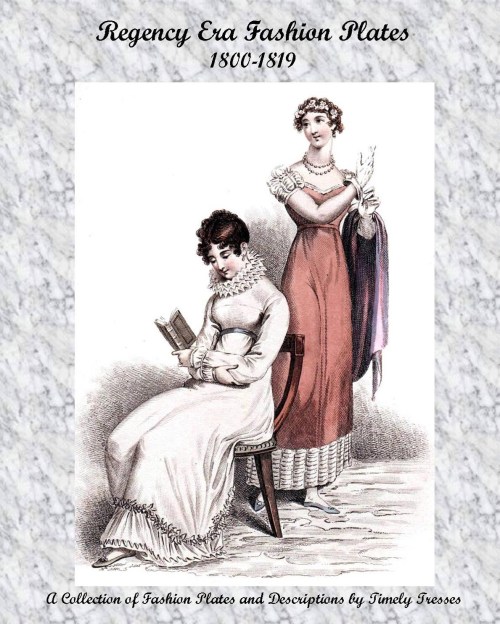
The moment I learned of Regency Era Fashion Plates, 1800-1819: A Collection of Fashion Plates and Descriptions by Timeless Tresses, I ordered it. Available in the U.K. through the Jane Austen Centre and at Amazon.com in the U.S., the book is not inexpensive. (My copy cost $44.) When it arrived I immediately tore open the package and began to peruse the book, which contain pages upon pages of colored fashion plates almost full copier paper size. That’s the good news. Compiled from the personal collections of Timely Tresses, the book is the joint venture of Mandy Foster and Dannielle Perry, two participants in living history who research fashion and create costumes based on the plates of a particular historic era. This is not the team’s first compilation. If you visit their site, you can choose from a variety of fashion plate books. But as I went through the book I was disappointed to find out that, while the fashion plates are arranged in date order, very few come with descriptions, nor are they identified by the season for which the dresses were designed. The plates are so large that in some instances they are blurred, and except for the cover, their colors are washed out.

Detail of a plate in the book, Costume Parisien, 1799

Detail of a plate in the book, Costume Parisien, 1799

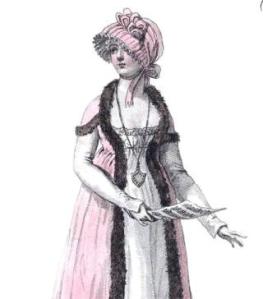
For those who are new to Regency fashion, it would have been helpful if these two seasoned collector/historians had shared some pertinent information about their fashion plates, helping the reader to “see” the changes in the silhouettes and styles of the gowns, where the fashion influences came from, and the difference between British fashion of the era and French fashion. Over half the plates are from Le Journal des Dames et des Modes Costumes Parisien or Costumes Parisien.  The Journal des Dames et des Modes was published in Paris from 1797 to 1803 and called Costume Parisien from 1803 to 1839. Until about 1825 the plates were drawn by Horace Vernet, which means that all of the Parisien plates in this book were drawn by him.

Before the Napoleonic wars, there had been a “pan-European” approach to dressing in which the rich and fashionable from countries across Europe largely wore similar fashions influenced by Parisian designs. But because of the war between the two countries, Britain and France took distinctly different approaches to dress design between 1808-1814. During this time period, very little information about fashion trends was shared. French waistlines remained high as British waistlines were lowered. Except for a few Ackermann plates, Regency Era Fashion Plates, 1800-1819, largely ignores British fashion during this 6-year time span, with most of the plates coming from Costumes Parisien. Since the book aims to be a resource for those desiring to make accurate costumes of the era, these differences need to be pointed out. A costumer for a film or play might mistakenly use  a French fashion plate to create a gown for a British character, for example. When British women were finally allowed to visit Paris after the war, they saw a stark difference between their British designed gowns and Parisian high fashion. In no time the French influence took over once more and British waistlines crept up again. After 1820, French designers looked across the Pond for inspiration and English-inspired motifs became all the rage.

The most obvious differences between British and French fashion would have been in the use of lace. Through a decree by Napoleon, French ladies were forbidden to use British fabrics, resulting in the revival of the French Valenciennes lace industry. British dresses began to be heavily influenced by Romantic motifs, such as the Gothic, whose embellishment looked ridiculous and cumbersome to the French.  I had hoped that these trends would have been pointed out clearly in the book and discussed at some length by the authors, but the annotations were sorely lacking, and only the end plates and a very few plates at the beginning describe the details of cloth and trim that the gowns were made of.  Even the simple expedient of sorting the plates according to year AND season would have made the plates easier to understand. (It is hard to tell whether the dresses were to be worn in fall or spring, for example.) Thankfully we can turn to the Ladies Monthly Museum on Cathy Decker’s site for some of the descriptions, but, frankly, this is a lot of work that the book could have saved us. One other point: the book concentrates solely on women’s fashion. Anyone looking for examples of men’s or children’s clothes of the era must look elsewhere.

3 regency fansFor the number of fashion plates, I give the book 3 out of three Regency fans. For overall impact and usefulness, I give it 2 out of three.

More links:

Regency Era Fashion

From Classic to Romantic: Changes in the Silhouette of the Regency Gown

Read Full Post »

« Newer Posts - Older Posts »