Feeds:
Posts
Comments

Archive for the ‘Regency style’ Category

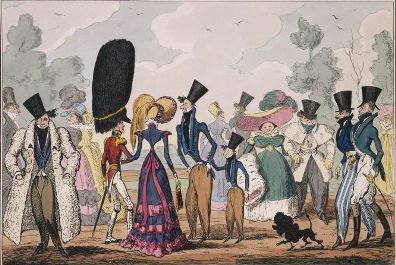
The Parks of London by Mary Elizabeth Brandon, 1868, on Dandyism.net discusses the dandies parading up and down London’s fashionable parks. After visiting that site, return to read some of my older posts about Hyde Park and the pleasure gardens.

More on the Topic:

Read Full Post »

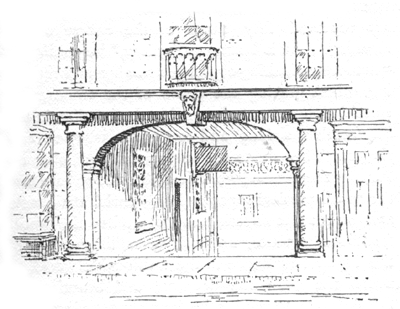
Archway opposite Union Passage, Constance Hill

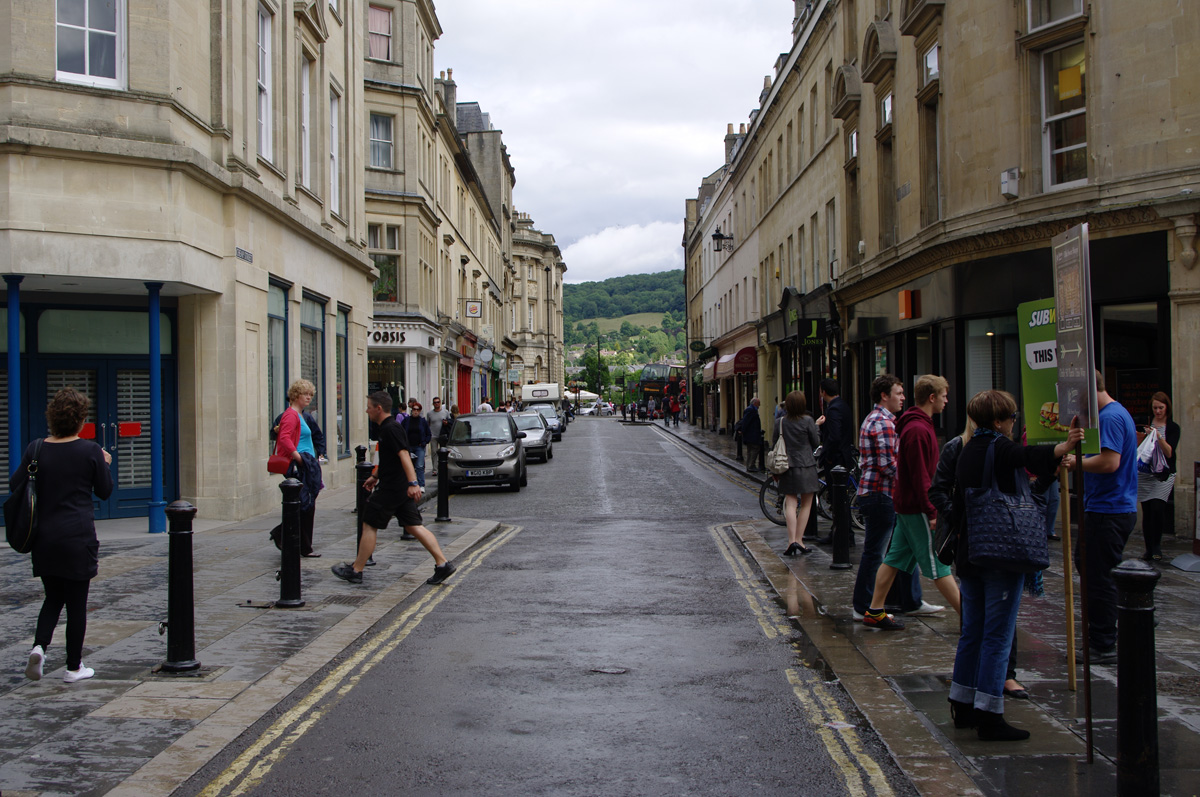
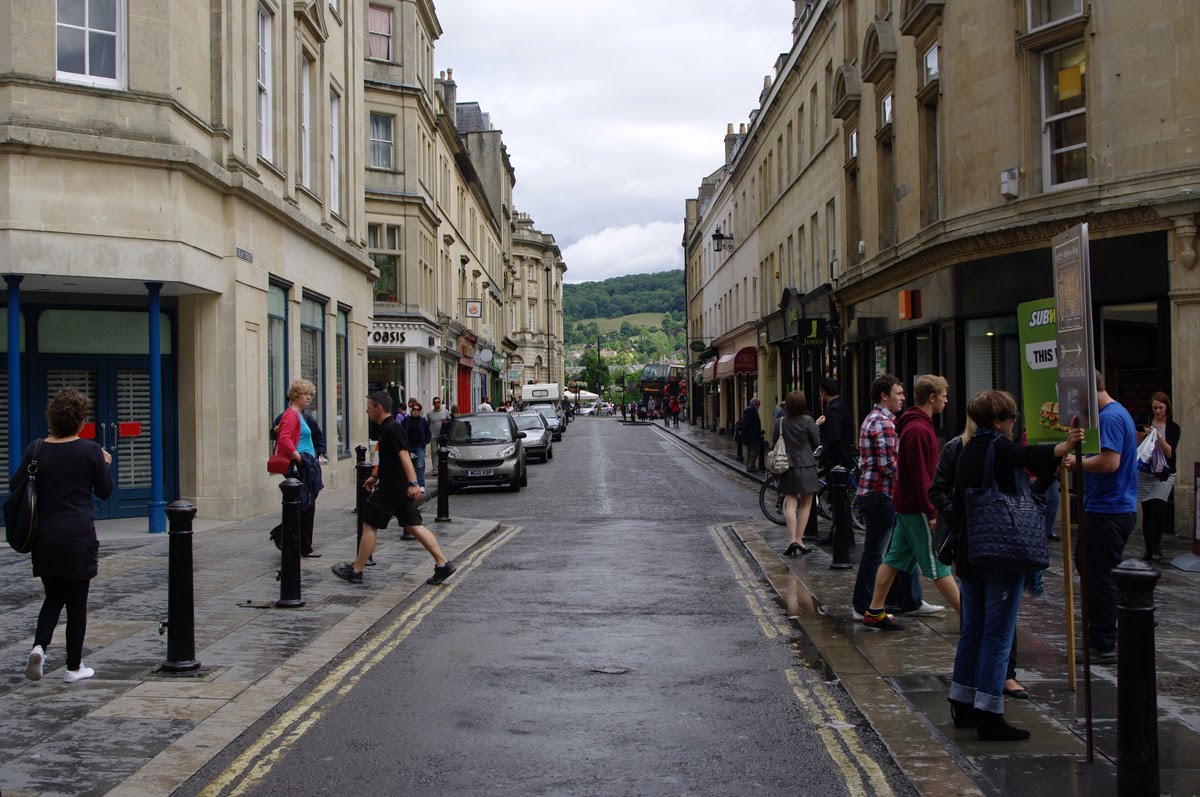
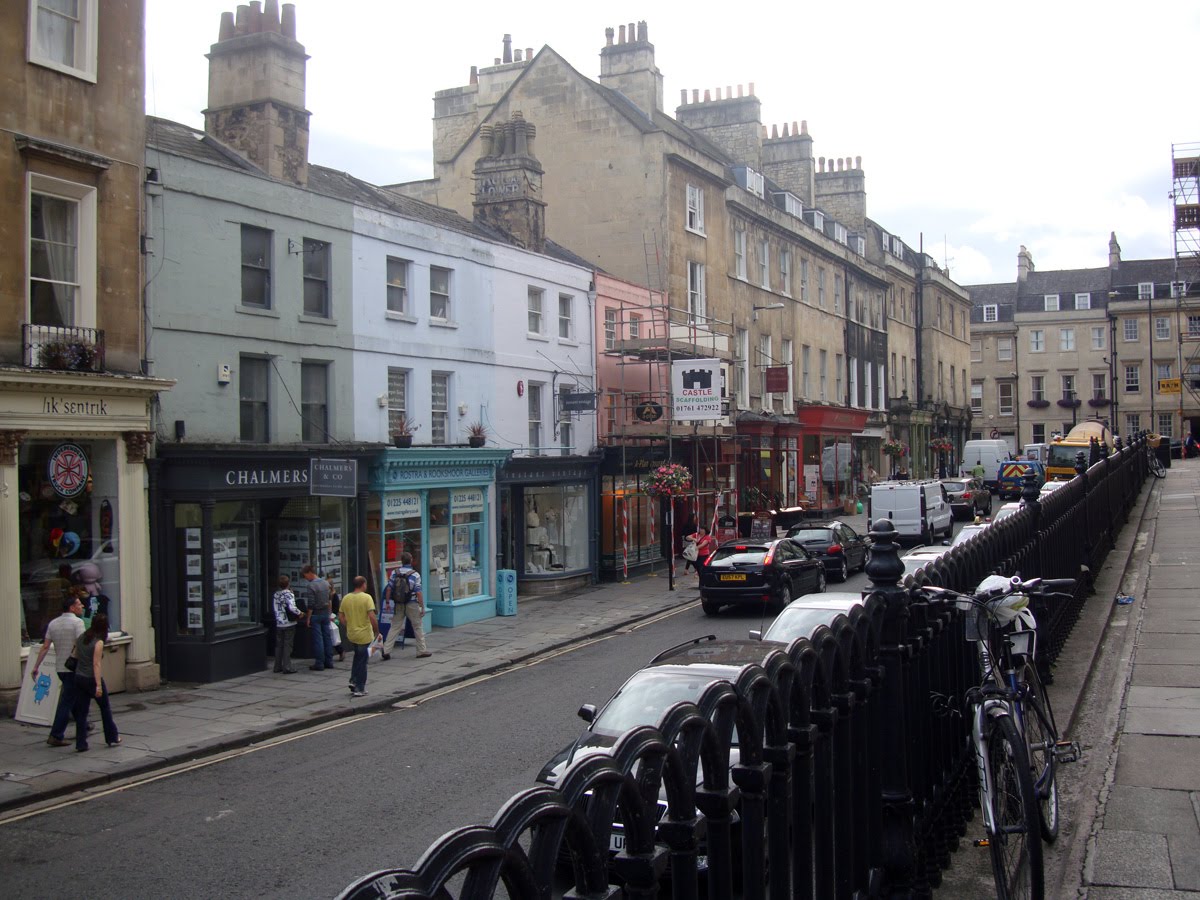
Half a minute conducted them through the pump-yard to the archway, opposite Union Passage; but here they were stopped. Everybody acquainted with Bath may remember the difficulties of crossing Cheap Street at this point; it is indeed a street of so impertinent a nature, so unfortunately connected with the great London and Oxford roads, and the principal inn of the city, that a day never passes in which parties of ladies, however important their business, whether in quest of pastry, millinery, or even (as in the present case) of young men, are not detained on one side or other by carriages, horsemen, or carts. This evil had been felt and lamented, at least three times a day, by Isabella since her residence in Bath; and she was now fated to feel and lament it once more, for at the very moment of coming opposite to Union Passage, and within view of the two gentlemen who were proceeding through the crowds, and threading the gutters of that interesting alley, they were prevented crossing by the approach of a gig, driven along on bad pavement by a most knowing-looking coachman with all the vehemence that could most fitly endanger the lives of himself, his companion, and his horse.- Northanger Abbey

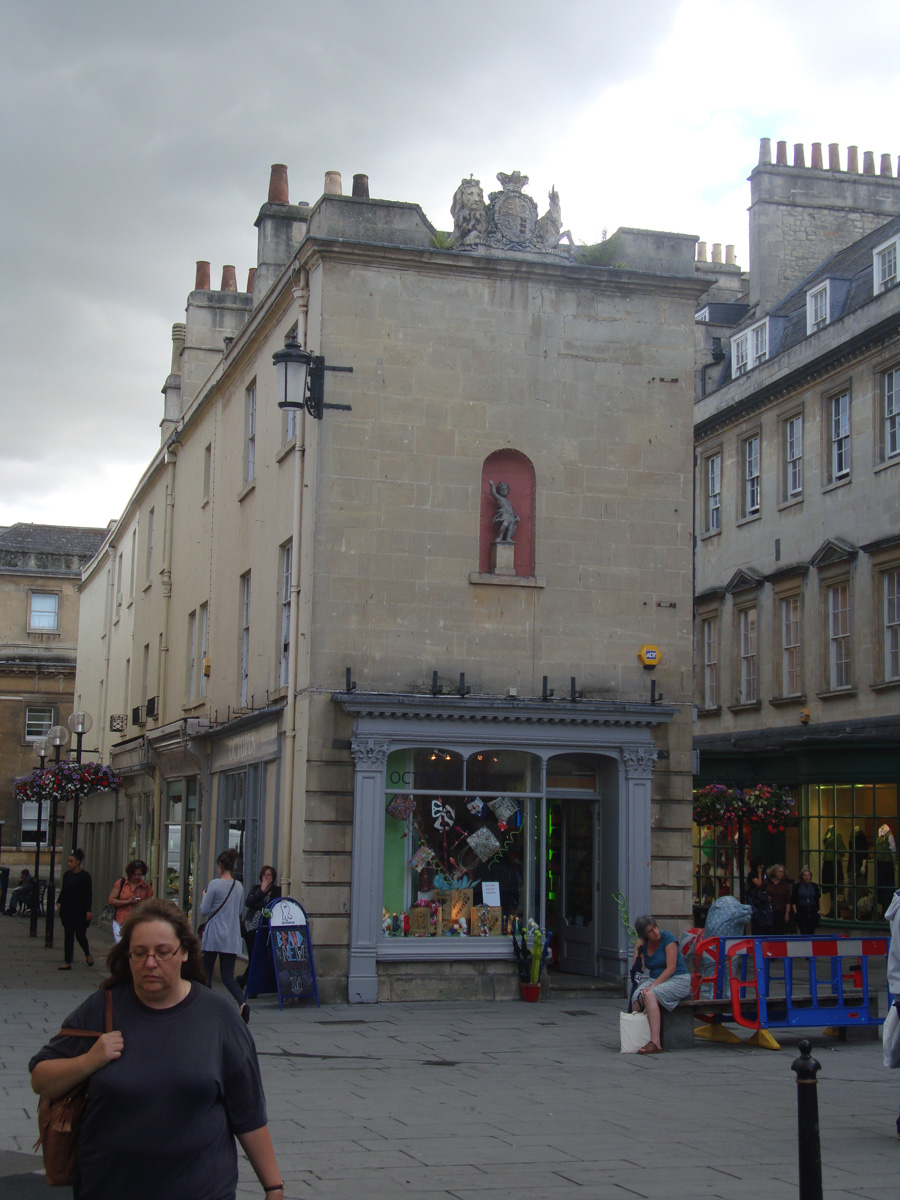
Cheap Street in 2010, Image Tony Grant

“Oh, these odious gigs!” said Isabella, looking up. “How I detest them.” But this detestation, though so just, was of short duration, for she looked again and exclaimed, “Delightful! Mr. Morland and my brother!”

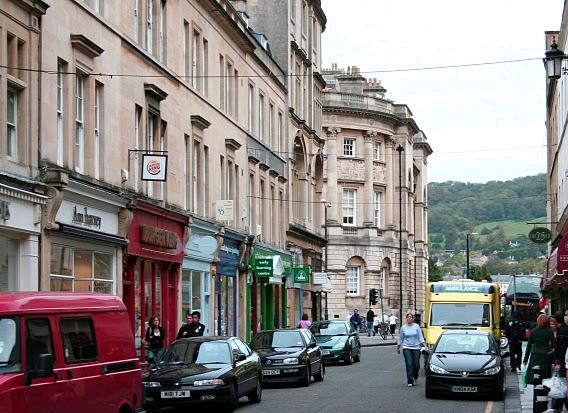
Another angle of the street

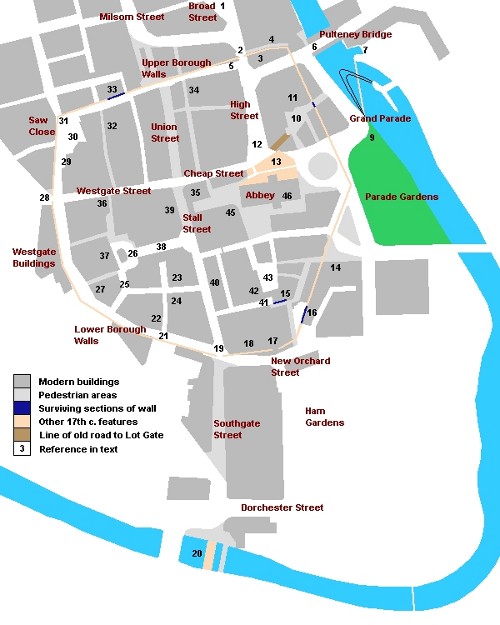
The Walking Tour of Bath provides a map that mentions many of the streets described by Jane Austen in the above passage, accompanied by images from medieval times to today.

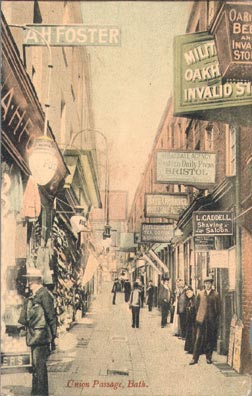
Cheap Street runs just north and parallel to the Abbey. In this turn-of-the-century post card of Union Passage, which intersects Cheap Street, one can see how drastically different Bath looked back then – many of the Georgian features are hidden under shop signs.

Union Passage in the Early 19th Century, Bath Post Cards

The Walking Tour mentions how Bath’s 18th century forefathers were concerned about preserving the nature of Bath’s gentrified renovations.

Incidentally, a friend who used to live in an 18th c. flat just round the corner in North Parade Buildings had some amusing conditions attached to the terms of his lease. He was prohibited from hanging bedding out of the window, holding public auctions and keeping livestock. One can only presume that the Georgian city fathers, having gentrified Bath at great expense, were concerned to prevent the locals spoiling things by falling back into their old peasant ways.”

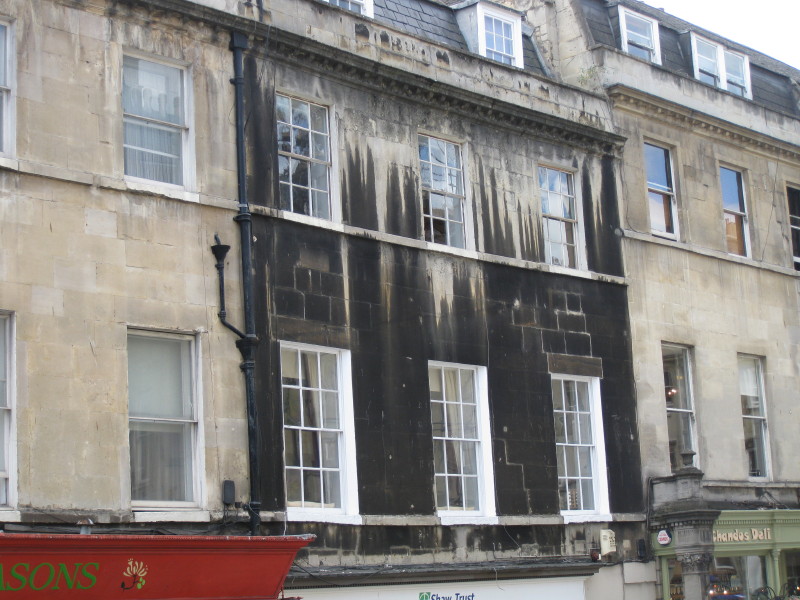
Coal soot blackened stone facades. Image Chuck and Claire Davis

The creamy colored limestone stone used in many of Bath’s architectural treasures have been used for building since the days of the Roman occupation.  The above image from European Adventure demonstrates how soot from coal fires blackened the buildings. Jane Austen was probably more familiar with these blackened facades than the creamy stones we are accustomed to viewing nowadays.

…in 1956 a clean air act was imposed. The townspeople were no longer allowed to burn coal and the buildings were painstakingly cleaned. He’s not sure why, but one building was left untouched, giving us the chance to see how they had looked.”

Today, the authentic nature of the buildings are still enforced legally. The Enforcement Policy in Bath Shopfronts Guide today requires:

Colour: No other single aspect of design has so much effect on the character of a shopfront than its colour. A good design can be completely spoilt by poor colour, or a nondescript design uplifted by the right choice of colour. Colour also has an effect on the Street Scene; out of key or aggressive colour will be damaging to everything within the field of vision.

Signs: The design and disposition of signs and the style of the lettering should always be historically credible and correct in design and detail for the design of the shopfront.

Illumination: The character of a shopfront and of the street will be altered by external illumination. This is often not acceptable, particularly where the shopfront is part of a listed building.

Appearance: Changes of a radical nature such as moving door positions are not normally acceptable. These may however be viewed more favourably if they can be shown to produce a permanent benefit such as the provision of a door to the upper floors.”

The cases described in The Bath Heritage Watchdog shows how vigilant the planning commission must be to preserve Bath’s unique heritage, and how historic preservation often clashes with business interests.

Read Full Post »

Inquiring Readers, Tony Grant has been contributing articles to Jane Austen Today for several months. Recently, Tony and his family traveled to Bath and the West Country. This is one of many posts he has written about his journey. Tony also has published several posts about his trip on this blog: Going to Bath With Jane Austen and The Servant’s Entrance to Regency Townhouses, for which he supplied the photographs. He has already contributed a post about Milsom Street for Jane Austen Today. This post about his tour through Bath was first published on Jane Austen Today, but the images caused the sidebar to be pushed out of sight, so I placed it here.

Bath Thoroughfare
Jane Austen knew Bath extremely well. Throughout Persuasion and Northanger Abbey she houses her characters in real streets and in real buildings, although she does avoid giving us the number of the house in such and such a street. The real owners and occupants might not have liked the notoriety. And today they might not like the notoriety as well. Was there such a thing as litigation in the 18th century? I’m sure there was.

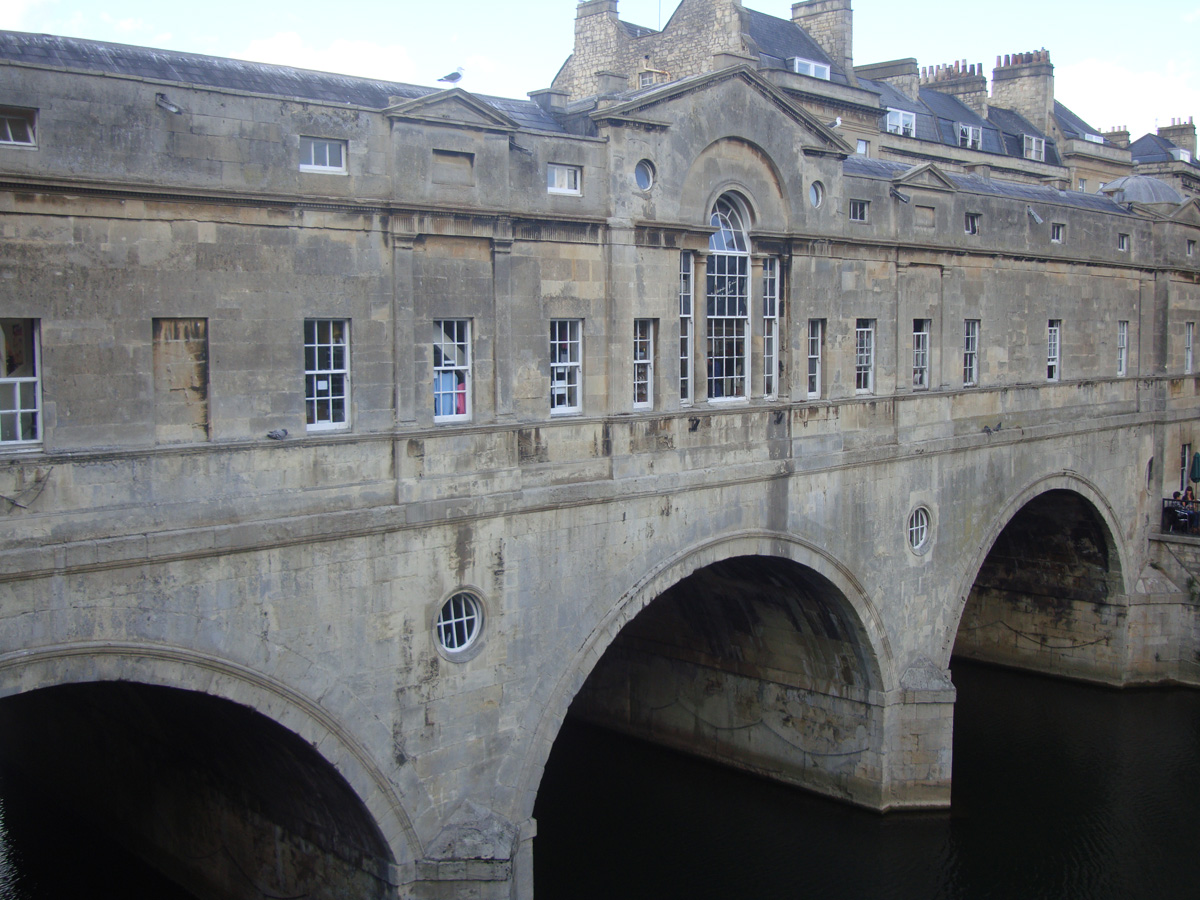
Pultney Bridge

Here are some of the places that Janes characters lived in and when you go to Bath you can see them for yourself.

  • Anne Elliot and her father lived in Camden Place up the hill at the top of the town.
  • Lady Russel lived in Rivers Street just north of The Circus.
  • Rich, Mrs Wallis lived in Marlborough Gardens on the hill leading down from the north end of The Royal Crescent.
  • Catherine Moreland lived in Pultney Street, which is now called Great Pultney Street, very close to Sydney Street. I wonder if Jane saw somebody in Pultney Street that she thought, “ah, that’s Catherine Moreland.”
  • The Dowager Viscountess Dalrymple lived in Laura Place at the end of Great Pultney Street and at the start of Pultney Bridge.

The meeting places and places central to both novels are Milsom Street where everybody shops. Shopping, the bain of my life. My wife and three daughters love shopping. Shopping could be their lives. In Jane’s time tooapparently. It makes me come out in a cold sweat thinking about it. The amount of standing in shops and outside of shops I’ve done.

God, I’ve suffered for shopping over the years.

Ah, that’s better. I needed that rant.

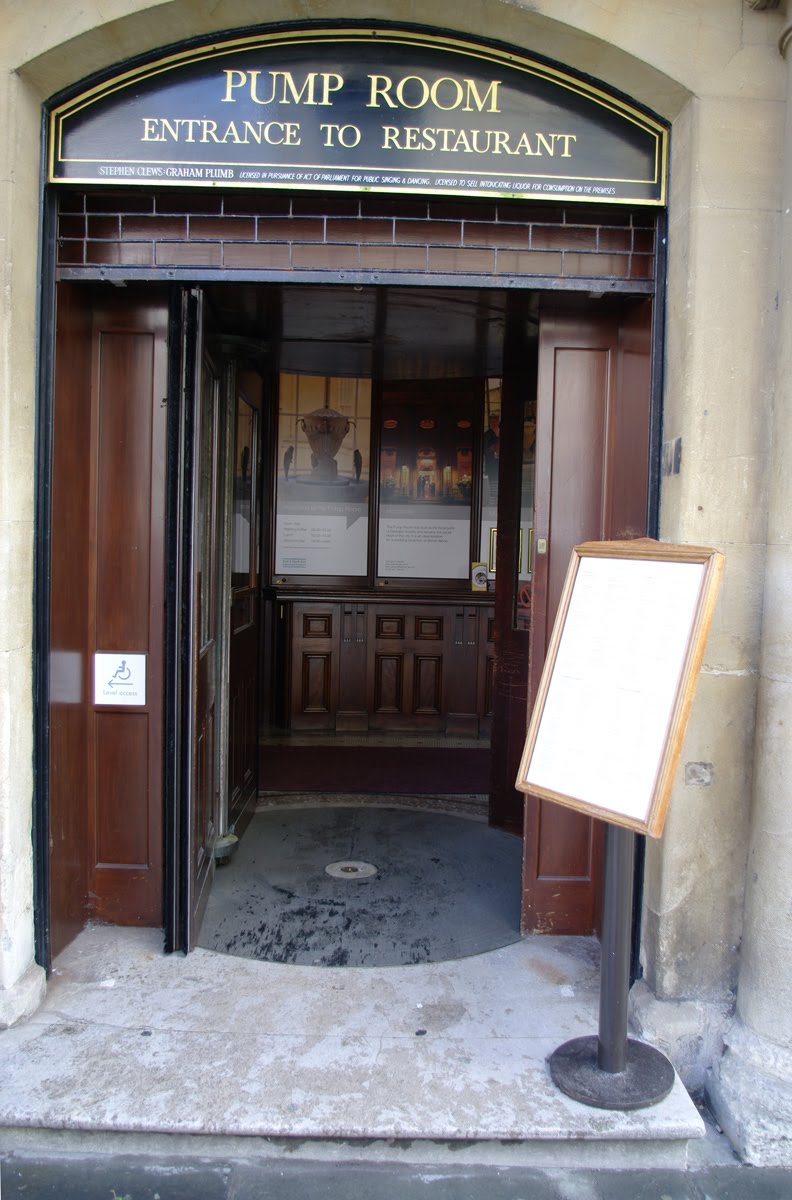
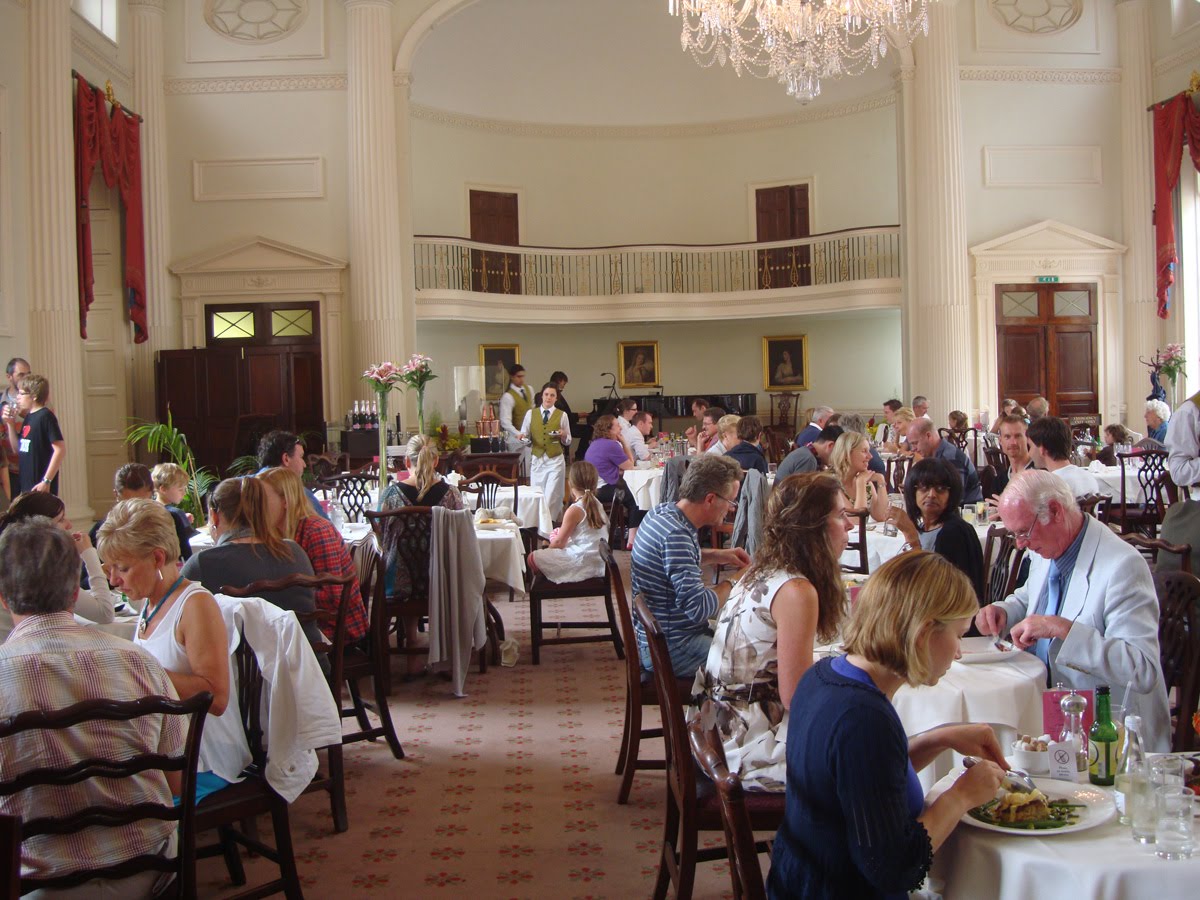
Also the Pump room. What a glorious place it is. I felt a tingle down my spine as I my wife, Abigail and myself were shown to our seats by the headwaiter and we were graciously handed the menus. A trio of musicians, cello, pianist and violinist, played sedately at one end of the room. People lined up at the water pump to imbibe Baths greatest commodity, water from the spring and we ordered tea and cakes.

Pump room window
The “pump room blend” of tea is as close as you can get to the blend of tea that Jane Austen, Catherine Morland and Anne Elliot would have drunk. The scones with clotted cream and fresh strawberry jam were exquisite. The tea was delicious and there I was with my family, in THE PUMP ROOM!!!!!!

The Pump Room

I could almost see Catherine Morland pop in to see if she could find Henry Tilney and of course take a few turns of the room to see and be seen. I knew nobody in The Pump Room just as Catherine knew nobody.

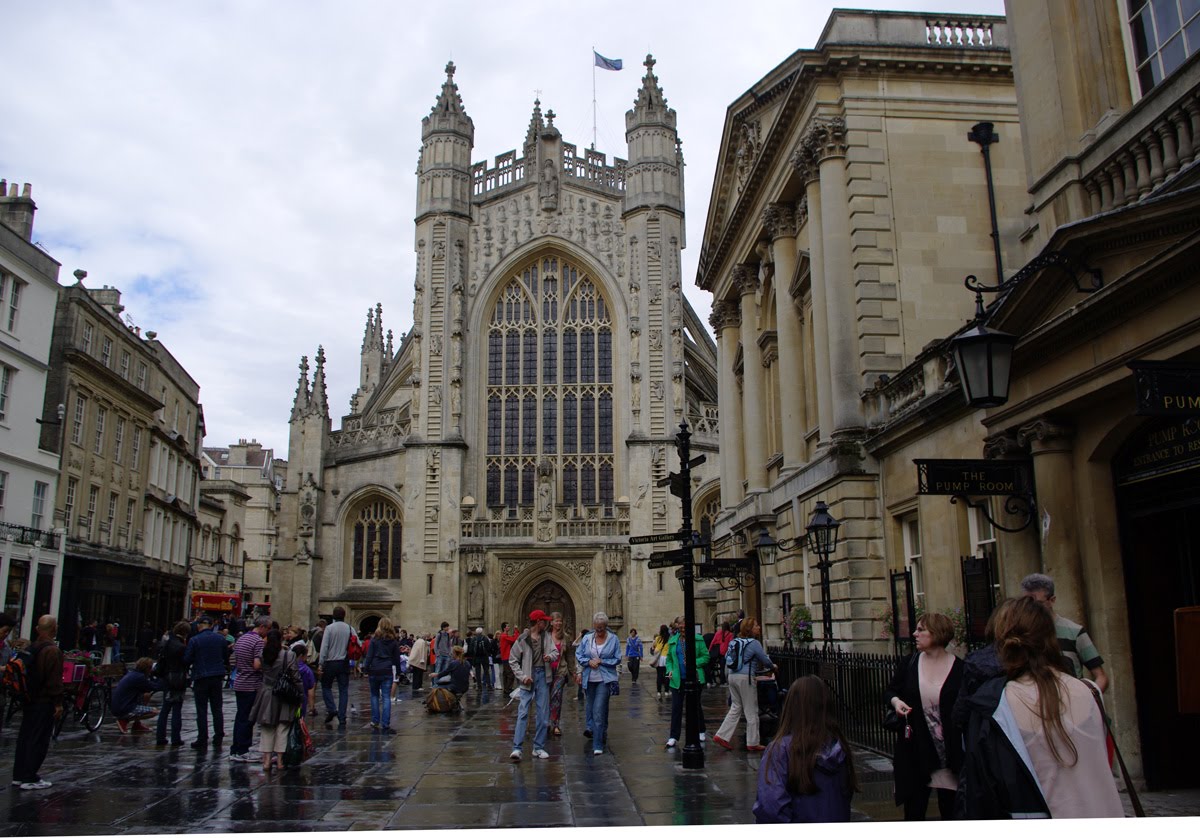
Bath Abbey


Then we had a look inside Bath Abbey. Jane seems to have not attended services at the abbey. She preferred The Octagon. This was a newly built chapel in Jane’s day. She seems to have preferred churches where the incumbent vicar had new and fresh ideas to deliver in his sermons.

Cheap Street
After Bath Abbey we walked through the passageway that leads from the churchyard opposite The Pump Rooms, called Union Passage and into Cheap Street. It is the very passage that Catherine Moreland walked through with Miss Thorpe and suddenly sees a carriage with her brother and coincidently Miss Thorpe’s brother too, the awful John Thorpe. It is their first fateful meeting.

George Street outside Edgar Buildings

We walked on up Milson Street to George Street where Edgar Buildings are situated. Edgar Buildings are where the Thorpes stayed.

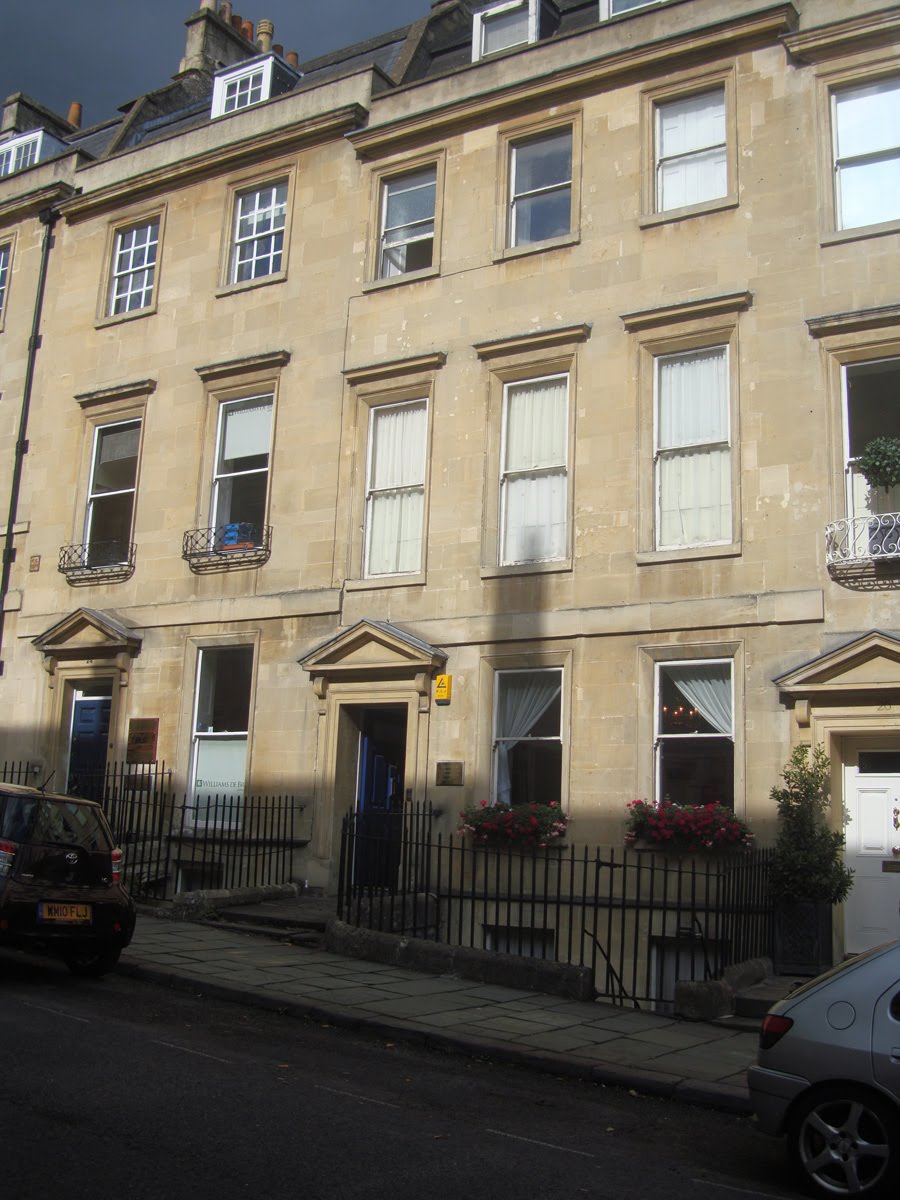
25 Gay Street

From George Street we went into Gay Street and walked past number 25 where the Austens stayed for a while.

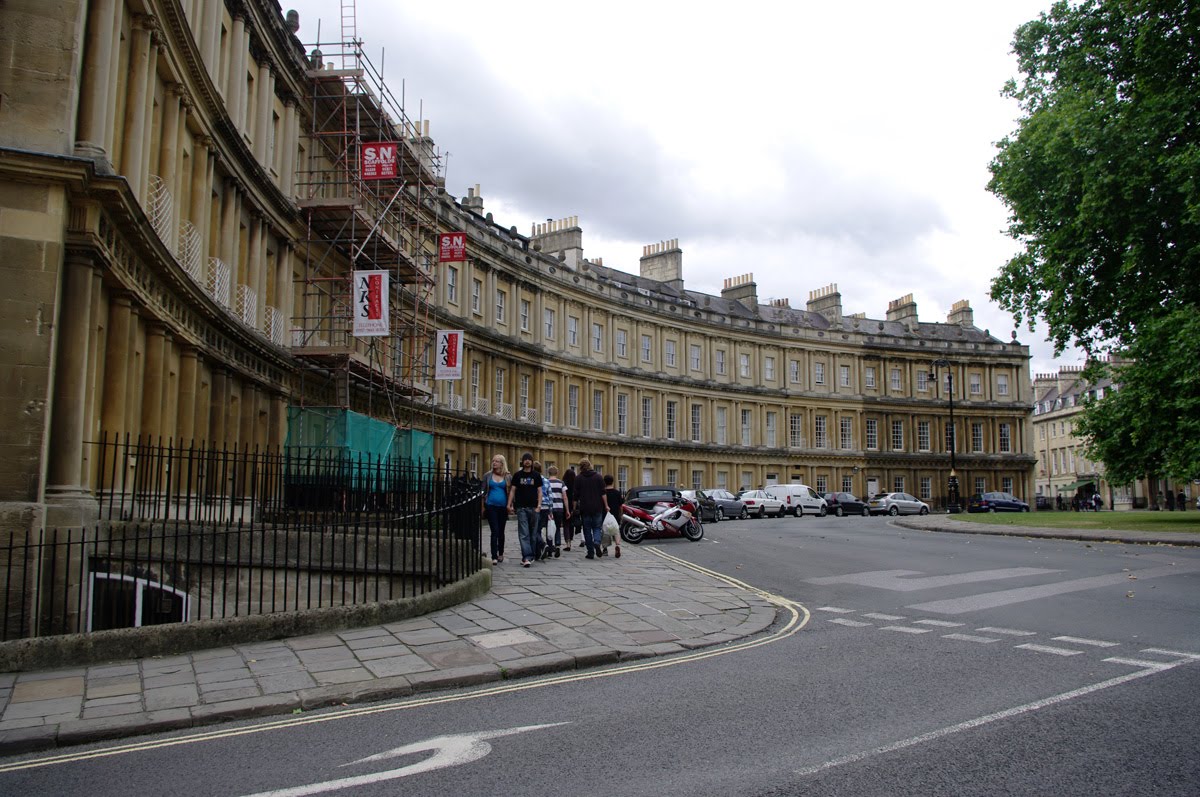
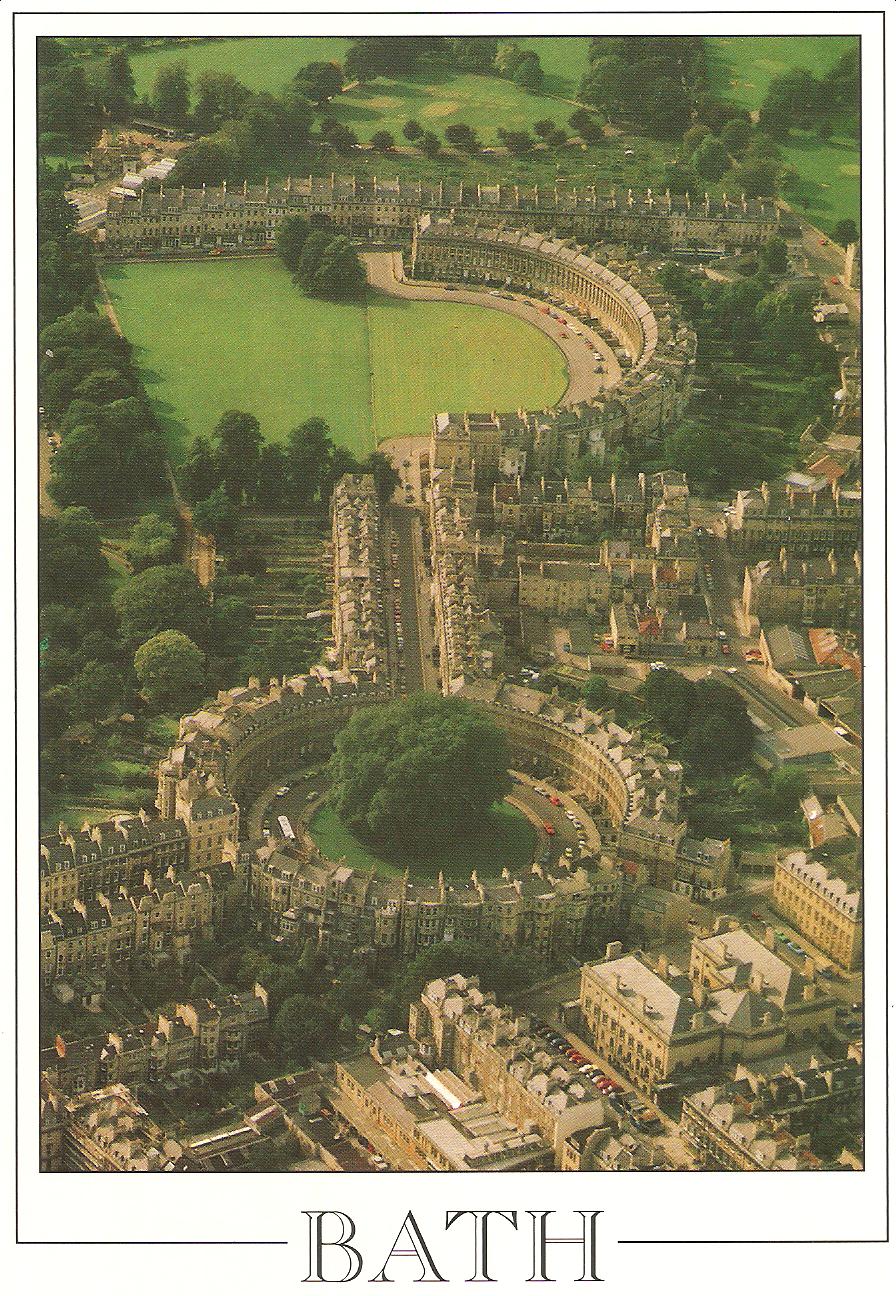
At the top of Gay Street is the magnificent, The Circus. This is a circle of the most magnificent Georgian Houses. There is a small green park in the centre of the circle in which grow four gigantic London Plains trees. They must be four or five hundred years old. Jane knew them. The portrait artist Gainsborough lived in one of these houses in The Circus for a while. Bath would have provided many opportunities to gain commissions and make money.

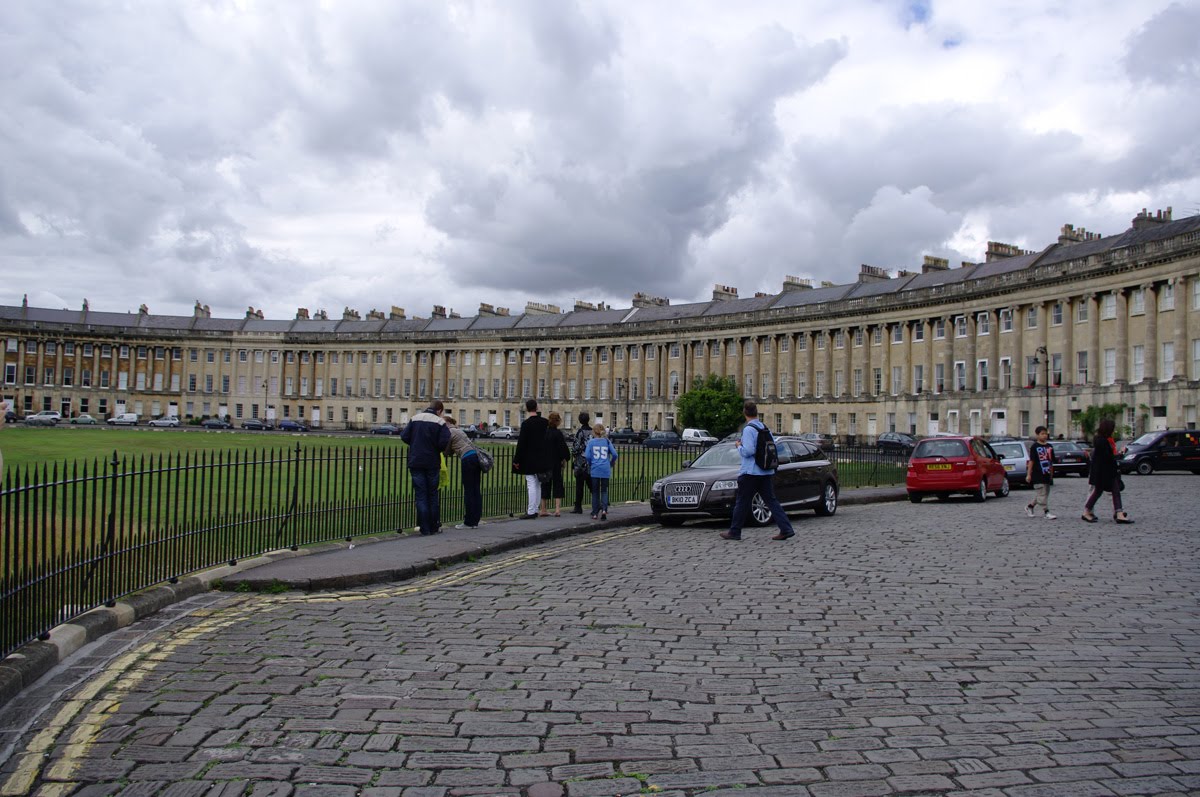
The Royal Crescent

From The Circus we turned down Brock Street and arrived at The Crescent at the top of the hill.

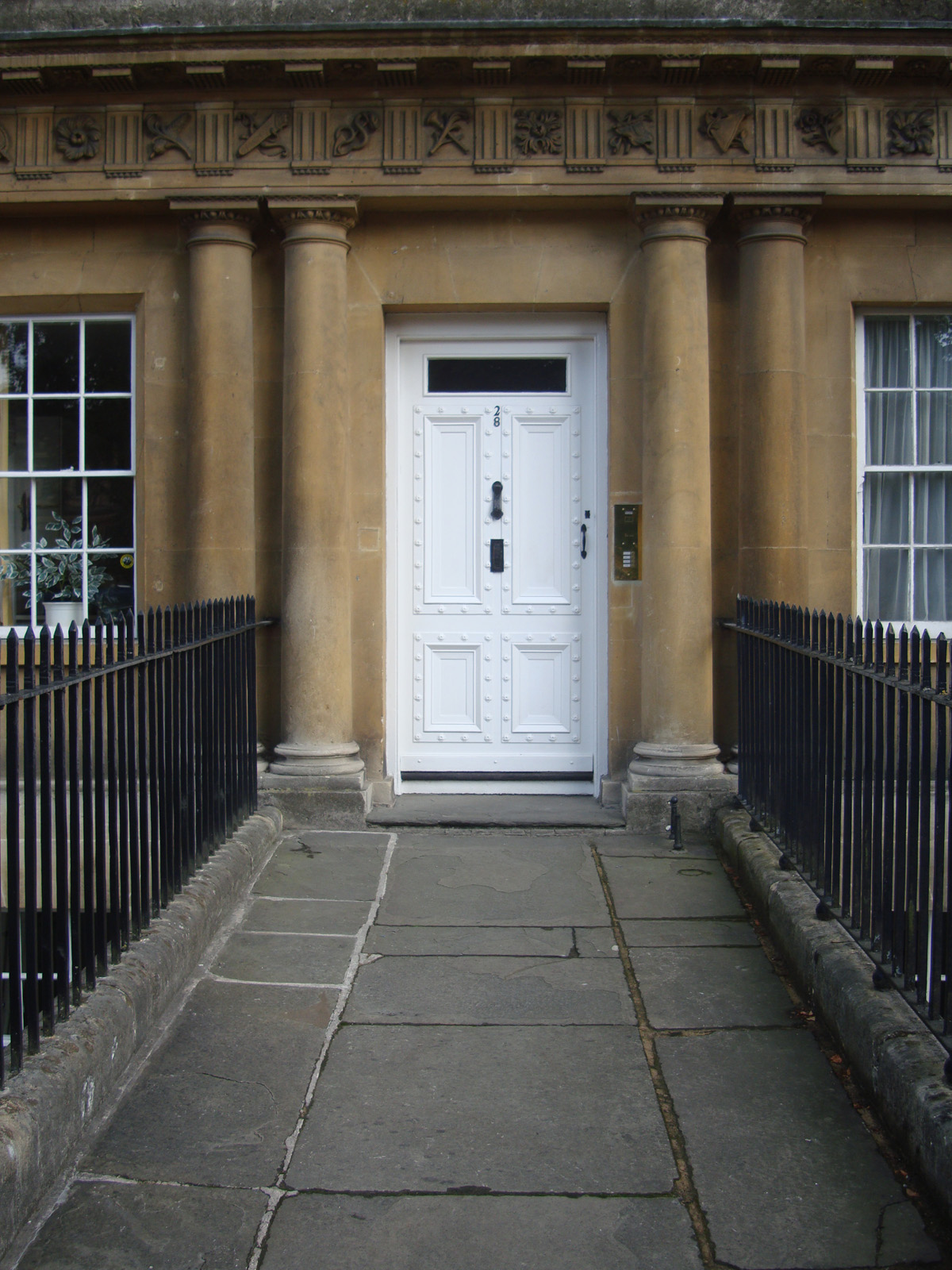
A front door at the Royal Crescent


This was the place where the elite lived. These were the largest and most expensive houses. Lords, Dukes and the very wealthy lived up here. It was also a good place to walk to get fresh air.

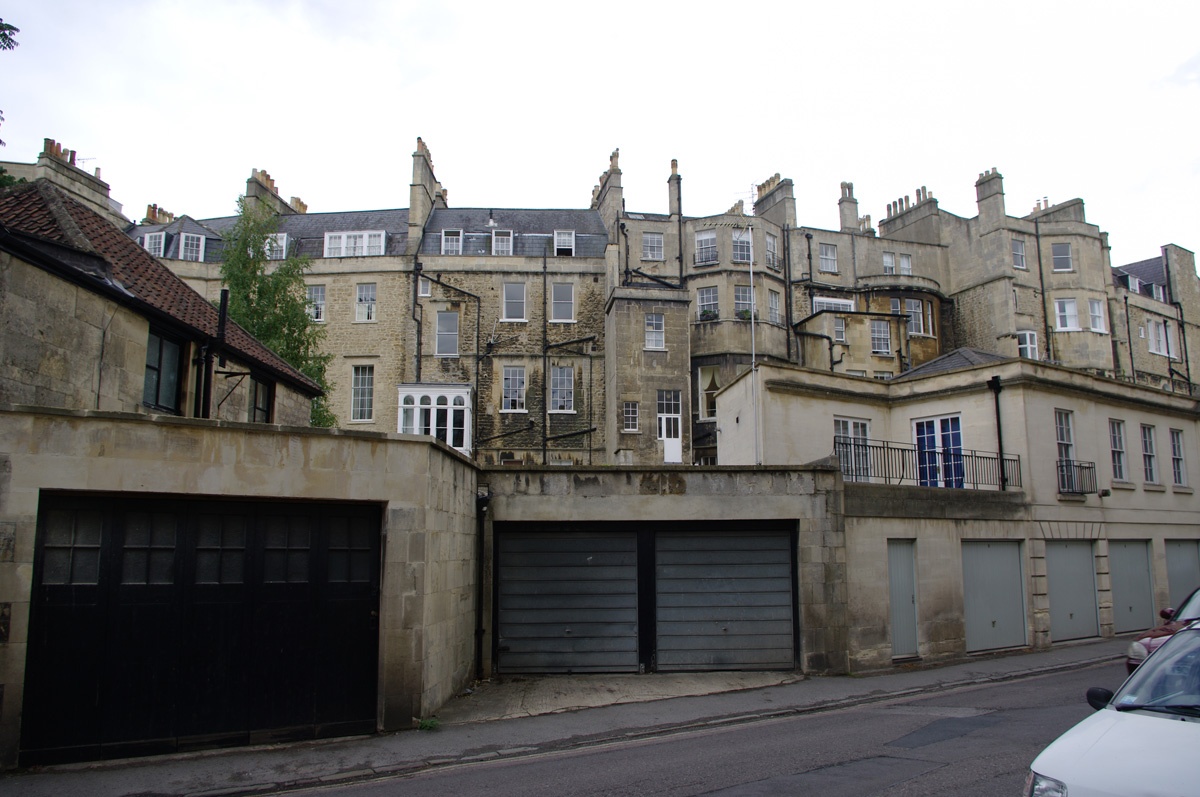
The back of the Crescent, each house is different
Jane mentions in her letters taking walks up to The Crescent and walking in the park and enjoying the views. Catherine Morland and Anne Elliot also walked there. There is a very good reason why Jane and her characters might want to walk here, the fresh air. If you look back over Bath you can see the beautiful city with its creamy yellow stonework In Jane’s time it would have been black. You will also notice the myriads of chimneys, which no longer spout black sooty smoke from thousands of coal fires. Coal is no longer burnt. We have clean air towns and cities nowadays. In Jane’s time the air was far from clean and the beautiful Cotswold stone became black. You can see today a building or two that have not had their surface cleaned since the clean air act was passed through parliament.

The Assembly Rooms

The Assembly Rooms, just north of The Circus, are what Jane and her characters knew as The Upper Assembly Rooms and also included the Octagon tearoom. This is where Catherine Morland met with the Thorpes.

The Lower Assembly Rooms, the original assembly rooms in Bath, where Beau Nash officiated , were situated near the abbey. They no longer exist. It was in the Lower Assembly Rooms that Catherine met Henry Tilney for the first time and fell in love.
Just to conclude, a couple of stories about Bath.

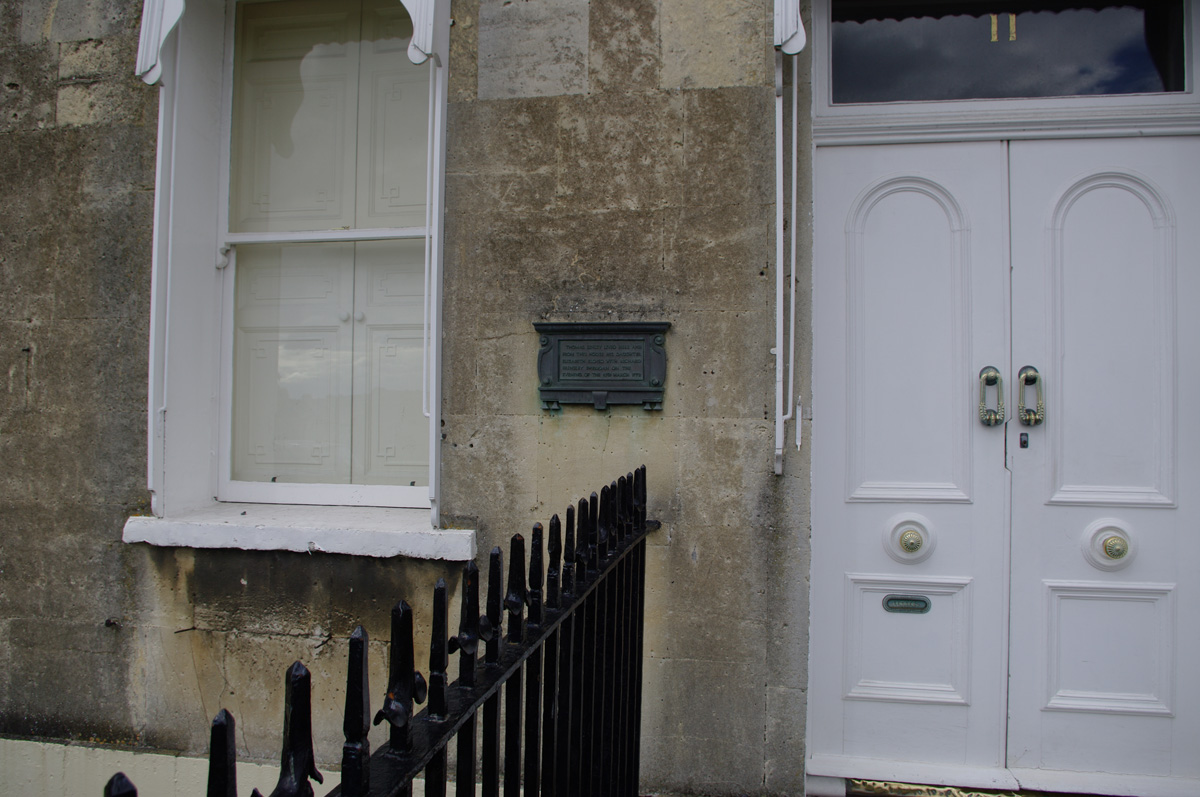
Sheridan eloped with Elizabeth from this house

In the Crescent , about half way round, is a house with plaque that relates a very dramatic story. In 1755 Richard Brinsley Sheridan, who was a great playwright in the 18th century and wrote The Rivals and School for Scandal and who was also the owner of the Covent Garden Theatre, absconded with a young lady from the house. Her father chased them all over Europe. When they were found the father made Sheridan marry his daughter. However soon after Richard Brinsley left her in the lurch. The chase was the thing. The excitement of the chase had gone. What a cad and bounder!!!!!

Tony at Pultney Bridge

Now, a story about myself. As we walked up Gay Street towards The Circus we obviously stopped outside number 25 to look at it and photograph ourselves outside. An irate and very upset looking lady marched out of the front door next to number 25 with a bowl full of water and threw it all over my legs. I must add this does not normally happen to me. The circumstances were, that some juvenile idiot had drawn rude graffiti over the side of her white van parked outside. She was trying to clean the words off. She was obviously upset and came out to wash the side of her vehicle. Unfortunately for me, she missed. She was SO sorry. Luckily it was a warm day and my trousers dried quickly in the walk up the hill.

The Royal Crescent (top) and the Circus (Bottom with trees at center.)

One fact before I finish. Did you know that the houses in The Crescent and in The Circus are all different? They all look the same because they are the same on the outside. The builder built the fronts and sold just the fronts. The new owners had to build their own backs to their houses. Hence, if you go round behind the houses in The Crescent they all look different.

Posted by Tony Grant, London Calling

Read Full Post »

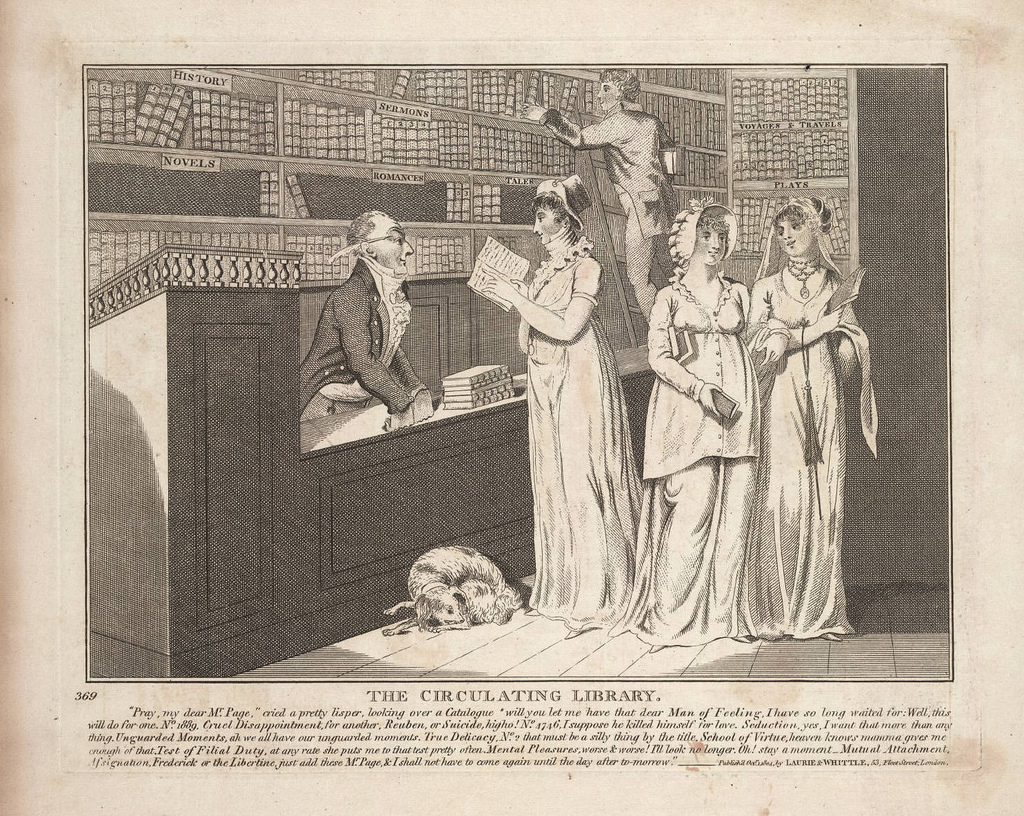
Circulating libraries in the 18th and 19th century were associated with leisure, and were found  in cities and towns with a population of 2,000 and upward. They were as much of an attraction in wealthy resorts, where people came to relax and look after their health, as in cities and small towns, like Basingstoke, where Jane Austen subscribed to Mrs. Martin’s circulating library.
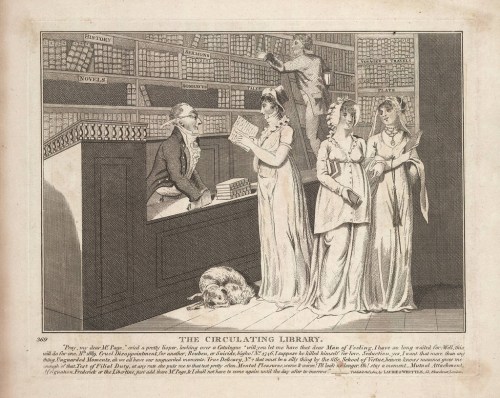
In 1801, it was said that there were 1,000 circulating libraries in Britain. Book shops abounded as well, but in 1815 a 3-volume novel cost the equivalent of $100 today. Such a price placed a novel beyond the reach of most people. Worried about a second edition for Mansfield Park, Jane Austen wrote in 1814:

“People are more ready to borrow and praise, than to buy –which I cannot wonder at.”

Circulating libraries made books accessible to many more people at an affordable price.  For two guineas a year, a patron could check out two volumes. Which meant that for the price of one book, a patron could read up to 26 volumes per year.

By 1800, most copies of a novel’s edition were sold to the libraries, which were flourishing businesses to be found in every major English city and town, and which promoted the sale of books during a period when their price rose relative to the cost of living. The libraries created a market for the publishers’ product and encouraged readers to read more by charging them an annual subscription fee that would entitle them to check out a specified number of volumes at one time. – Lee Ericson, The Economy of Novel Reading
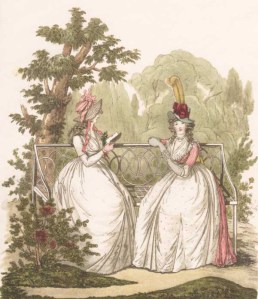
The leisurely classes had plenty of time for reading, late 18th c.

The practice of borrowing books was not a new concept in the Regency era. Records from the 17th century show that people were borrowing books from booksellers. As early as 1735, Samuel Fancourt advertised a circulating library in Salisbury for his religious books and pamphlets.

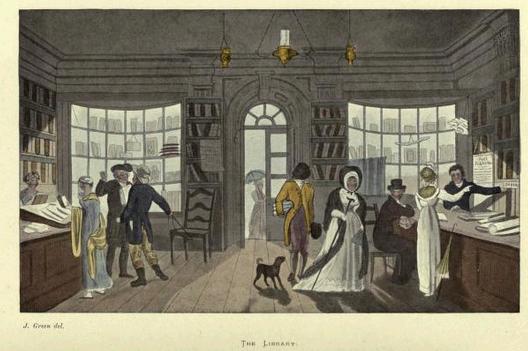
Circulating libraries attracted many patrons, even those who did not necessarily come to borrow or book or read, for they were also places for fashionable people to “hang out” and meet others.

In the resorts the circulating libraries became fashionable daytime lounges where ladies could see others and be seen, where raffles were held and games were played, and where expensive merchandise could be purchased.  – Lee Ericson, The Economy of Novel Reading

Jane Austen well knew the attractions of libraries at sea side resorts. Mrs. Whitby’s Circulating Library operated in Sanditon, and Lydia visited one in Brighton.  In her letters to Cassandra, Jane frequently mentioned circulating libraries, in particular visiting one in Southampton.
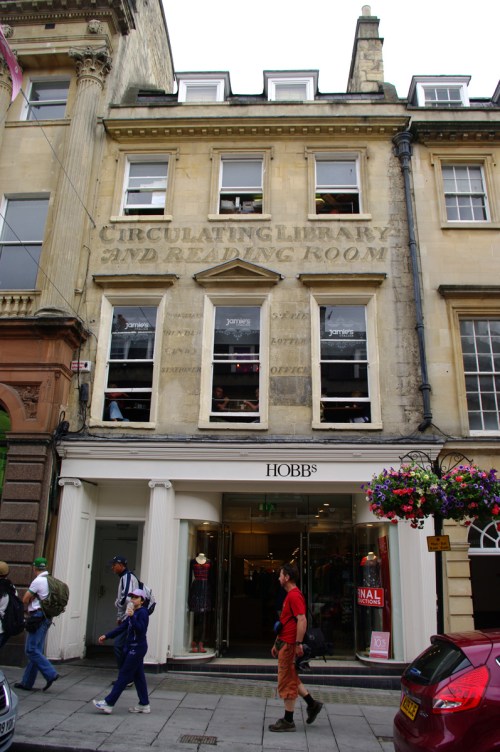
Circulating Library and Reading Room, Milsom Street, Bath. Image, Tony Grant

Circulating libraries tended to be located in a convenient location in the center of a resort. Newcomers would find out about them from guide books, such as the one in Brighton. The Royal Colonade Library advertised itself as thus:

MESSRS. WRIGHT AND SON’S ROYAL COLONADE LIBRARY, MUSIC SALOON, AND READING ROOMS.

This establishment is situated in North-street, at the corner of the New Road, and contains between seven and eight thousand volumes of History, Biography, Novels, French and Italian, and all the best Modern Publications. The Reading Room is frequented both by Ladies and Gentlemen, and is daily supplied with a profusion of London morning and evening papers, besides the French and weekly English journals, magazines, reviews, and general popular periodicals. – Brighton As It Is, 1836

In 1836, Cassandra Austen would have been familiar with the costs associated with the Royal Colonade Library’s terms of subscriptions:
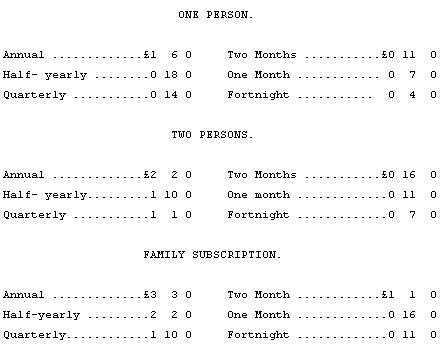
Terms of subscription

By the end of the 18th century, Scarborough, a resortt located in the county of North Yorkshire, boasted several circulating libraries. The town’s population had risen to 7,067 by 1811, and one can imagine that, with the many leisurely hours available to tourists and visitors, these libraries managed a booming business.


A circulating library in Scarborough around 1818, from Poetical Sketches of Scarborough

The Poetical Sketches of Scarborough, first published in 1813, features twenty-one illustrations of humorous subjects about the many features available in the resort, including a satiric poem about the Circulating Library:

As in life’s tide by careful fate
The mind is made to circulate
Just so each watering place supplies
It’s CIRCULATING LIBRARIES:

Where charming volumes may be had
Of good indifferent and bad
And some small towns on Britain’s shore
Can boast of book shops half a score
Scarbro and with much truth may boast
Her’s good as any on our coast
AINSWORTH’S or SCAUM’S no matter which
Or WHITING’S all in learning rich
Afford a more than common measure
Of pleasant intellectual treasure

One wonders if the following publication could be checked out a Scarborough circulating library at the turn of the 19th century, for the book was written by a local schoolmaster:

A Short Grammar of The English Language. In Two Parts By John Hornsey. Schoolmaster, Scarborough.

THE publick are much indebted to Mr Hornsey for this able and excellent compendium of English grammar. We acknowledge that we perused it with singular satisfaction; and are well persuaded that a more useful introduction to the English language cannot be placed in the hands of our youth. That this work should reach a second edition, did not excite our wonder; may it pass through many succeeding ones!- The Nichols, John.Gentleman’s Magazine, Vol 86, 1799, p 1144.

Read Full Post »
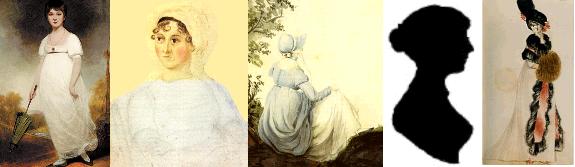
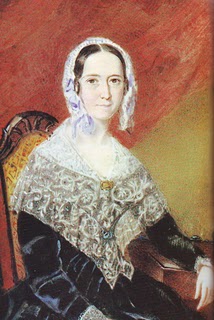
Even rarer than a first edition of a Jane Austen novel are images taken of her during her short lifetime. A small watercolor by her sister Cassandra has been reworked over the centuries to make Jane look more attractive. Another watercolor image taken of Jane’s backside as she sits in the grass, a dark silhouette, a small watercolor by James Stanier Clark, and a portrait of Jane at 14 (the validity of the latter two are in question) are all that we have to go by. Verbal descriptions of Jane Austen are also quite rare, and some seem to contradict each other, a few relatives and friends thinking her quite pretty and others declaring that her looks were rather ordinary.

Anna Lefroy

In 1864, Anna Lefroy, Jane Austen’s niece and James Edward Austen-Leigh’s sister, wrote her memories of Aunt Jane in a letter for Edward’s memoir. She apologized that her recollections were so shadowy and that she was unable to grasp anything of substance. She did recall that Jane and Cassandra wore pattens when they walked between Dean and Steventon in “wintry weather through the sloppy lanes”. Pattens, or shoe coverings that protected delicate shoes, were worn by gentlewomen at that time, but they would soon go out of fashion. Anna also described Jane as having a tall and elegant figure, and a “quick firm step,” an observation that she shared with others.

Anna goes on to relate one particularly sweet family story of a 7 year-old Jane and her 3 year-old brother Charles greeting Cassandra, who was returning from a visit with Dr. and Mrs. Cooper at Bath. Jane and Charles had toddled down the lane “as far as New Down to meet the chaise, & have the pleasure of riding home in it.” While the popular perception was that Jane and Cassandra were inseparable, they spent a great deal of time apart.

Young Cassandra frequently visited the Coopers in Bath, and as an adult became a regular guest at Godmersham, her brother Edward’s estate. She was a favorite with the family there, but the young Godmersham children were not quite as fond of Jane. This was not the case with the Jane’s other nieces and nephews, all of whom liked her exceedingly as a playfellow and a teller of stories. In her letter, Anna bemoaned the loss of Jane’s verbal stories, those “happy tales of invention” that she wove out of nothing.

Jane’s niece wrote this observation about her aunt’s image:

“Her complexion of that rather rare sort which seems the peculiar property of light brunettes. A mottled skin, not fair, but perfectly clear & healthy in hue; the fine naturally curling hair, neither light nor dark; the bright hazel eyes to match, & the rather small but well shaped nose.”

Anna concludes, as Cassandra’s portrait attests, that Jane failed to be a decidedly handsome woman. Seventeen years younger than Jane, one wonders if Anna was thinking of an older, more mature Jane, the one who had taken to wearing caps at all times, rather than a younger and prettier Jane with bright sparkling eyes and full round cheeks.

Other posts on this blog about Jane’s image and character sit below:

Le Faye, Deirdre. Anna Lefroy’s Original Memories of Jane Austen. The Review of English Studies, New Series, Oxford University Press, Vol 39, #155 (Aug, 1988), pp 417-421.

Read Full Post »

« Newer Posts - Older Posts »