Feeds:
Posts
Comments

Archive for the ‘Regency World’ Category

I recently received The Jane Austen Pocket Bible by Holly Ivins and have had occasion to use it a number of times. It is a small, compact, hard cover book filled with useful information about Jane’s life, novels, characters, movie adaptations, and the like.

Sprinkled throughout the chapters are facts and quotations, such as:

Pocket Fact:

“Some of Jeane’s earliest encouragement for her writing came from her neighbour Anne Lefroy, or Madame Lefroy as she was known. Anne was a lively and intelligent woman who was a great reader of Milton, Pope and Shakespeare, and was even known to write poetry herself…”

In Her Own Words:

“Our family are great Novel-readers and not ashamed of being so.” (Letter to Cassandra, 1798)

The book is divided into the following sections:

  • Introduction (including a timeline of her life and  how she wrote)
  • History and context, including a timeline of major historical events during this era.
  • Places Austen lived
  • Influences and literary context
  • Austen’s novels
  • Characters in Austen’s novels
  • Love, romance, and marriage in Austen’s novels
  • Film and TV adaptations of Austen’s novels
  • Glossary

Next time I visit England, I will bring this compact treasure trove with me. More than a guide, this handy reference will inform me and help me to recall important facts as I visit the places where she lived and worked. Outside of travel, this guide allows me to quickly look up facts as I write my posts.

I’ve taken the attractive paper cover off, for the book tucks in quite nicely in my briefcase or handbag, and its hard red cover is sturdy enough to withstand the wear and tear of travel.

I recommend this book to teachers, students, and Janeites whose interest in Jane Austen is never ending.

Other references:

Margaret Sullivan’s Jane Austen Handbook is delightful. Read my review here.

Joan Klingel Ray wrote Jane Austen for Dummies. Too large to take along on journeys, it nevertheless is a handy reference in any Jane Austen library. Read my review here.

I want to especially thank @sussexbestwalks, who I follow on Twitter, for arranging to send this book to me. What a lovely read and find. Order the book at this link.

Read Full Post »

Allemande

Definition of an Allemande -Music:
An allemande (also spelled allemanda, almain, or alman) (from French “German”) is one of the most popular instrumental dance forms in Baroque music, and a standard element of a suite, generally the first or second movement.

Definition of an Allemande – Dance:

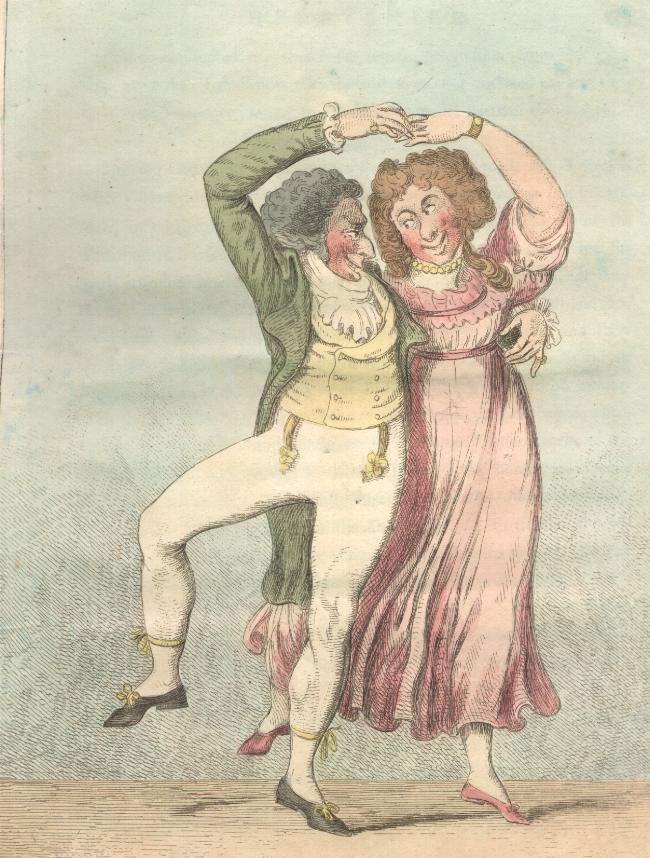
A 17th and 18th century court dance developed in France from a German folk dance: a dance step with arms interlaced.

The name ‘country dance’ has nothing to do with country as opposed to town, but comes from the French ‘contre-danse’, describing the way in which the dancers start by standing up facing each other in two long rows, men on one side and girls on the other. The leading couple would then move off down the row, the other couples falling in behind them; there was no fancy footwork involved, but the dancers would weave their way in a variety of patterns across the floor, linking arms or hands with their partners s the figure required – the ‘allemande’figure involved a ‘a great deal of going hand in hand, and passing the hands over heach other’s heads in an elegant manner’. – Jane Austen, The World of Her Novels, Deirdre Le Faye, p. 104.

More on the topic:

Read Full Post »

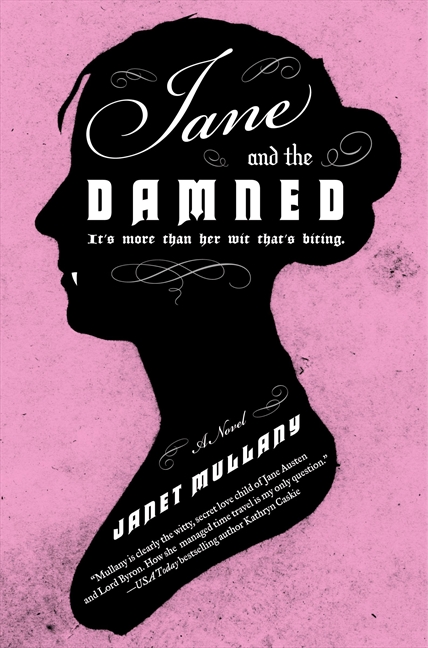
These days, centering a plot around Jane Austen as a vampire is as common as pre-packed sliced cheese, and so I approached Jane and the Damned with a jaundiced point of view. I must make a confession, however. I have been addicted to vampire novels and films about these bloodsuckers since my early 20’s, starting with Bram Stoker’s Dracula; Ann Rice’s Vampire Lestat series; Gary Oldman as the ancient bloodsucker; the cheeky tv series, Buffy the Vampire Slayer; and more recently True Blood and to a lesser extent, Twilight.

If an author or film director asks me to enter their vampire world, all I want in return is a rollicking good ride. In Jane and the Damned, author Janet Mullany does just that. Jane Austen, budding young writer, is turned into a vampire on a whim by William, a mature vampire and her dance partner at a local assembly ball. She begins to feel strange immediately.

Jane shares her awful knowledge with her father, who, while horrified at the news of his daughter having been bitten by one of the Damned, keeps a calm head. He trundles his family (wife Cassandra and daughter Cassandra and Jane) off to Bath so that Jane can take “the cure.” This treatment of taking the Bath waters is not guaranteed, for it might well kill Jane (and has killed many human seeking to rid themselves of the Vampiric poison inside them), but it is the only solution. They must rush against time before Jane’s human side disappears forever, for the longer they wait, the less successful and more painful and deadly the cure.

Rev Austen and Jane decide to keep Jane’s “condition” a secret from her mother and sister, saying only that Jane’s uncertain health requires that the family must remove to Bath immediately. As bad luck would have it, just as they settle into that Georgian city, the French invade England, and their lives are turned topsy-turvy.

Jane’s new life is conflicted on two fronts. First, she does not want to turn into a vampire. Second, she longs to taste human blood. And so her vampire adventure begins.

Going against vampire etiquette, Jane’s maker, William, has abandoned her to her fate. In Ms. Mullany’s vampire empire, the bear leader (or Creator) must guide an initiate into the intrecacies of becoming a vampire. The first feeding is problematic, since a full-blooded human takes a while to turn into one of the walking dead. A new vampire has not enough knowledge to wade through the many intricacies of vampire life without making a number of blunders. Enter Luke, who decides to act as Jane’s bear leader.

Handsome, witty, and wise in the way of Henry Tilney, Luke oversees Jane’s transformation with a hands-off approach, for he is ever aware that William has first claim on Jane and could change his mind at any time.

I have described the plot in more detail than is usual for one of my reviews, for this book is so filled with plots, sub-plots, and details that the story never peters out. Jane and the Damned feels rich, not thin, and Janet Mullany skillfully keeps juggling all the story threads she has tossed into play for a lively read. While I’ve disliked previous Jane Austen monster books, this one kept my interest for the following reasons:

1.) A thoroughly plotted back story. Mullany’s vampire empire and its mythology are well thought out. In the world Janet Mullaney has constructed, the monsters’ presence in Regency England, their ethics and mores, and their desire to rid Britain of the French make perfect sense.
2.) Internal conflict. Throughout the plot our heroine constantly struggles between her human self and vampire self, and this internal war adds to the external tension of a plot that is filled with action, romance, and historical detail. Jane must make a gutwrenching decision: to embrace her vampire life and leave her earthly family or to reclaim her human soul at the risk of death (and the chance for eternal life and happiness with the man she loves.)
3.) Desire and sensuality. In her new life, Jane yearns to be human, yet her desire for human blood overpowers her common sense, and as the novel progresses, she can no longer resist the charms of her hero. Sensuality begins to invade Jane’s life, whose awakening from sheltered spinsterhood to mature woman kept sparking my interest. (BTW, Ms. Mullany does not confuse sensuality with x-rated descriptions of the sexual act, for which I am grateful.)
4.) Boredom and ennui. Eternal life is not all that it’s cracked up to be. After a few centuries as one of the undead, a vampire is hard pressed to find anything new to do or interesting to experience. Janet Mullany has not neglected this important aspect of vampiric existence.
5.) Epic battle. In this instance, the army of the Damned has decided to defeat the French, who have invaded England (a real threat in those days) and who are bivoacked in Bath. Historical details of life in a war zone in the late 18th century are spot on, and author Mullany does not flinch from showing the seedier side of war: death, starvation, and occupation.

In short, Janet Mullany (right) addresses almost every fault I have found with other recent vampire novels set in the Regency era. Her vampire empire is so well crafted that she did not need to ride Jane Austen’s magical publicity coattails to make the story more palatable or salable. And yet, the thought of Jane Austen as an action heroine who comes into her own as she fights the French and surrenders to her own sensual longings is irresistible.

Add to the mix Ms. Mullany’s extensive knowledge about the Regency era and Jane Austen’s life (I love her depiction of Mrs. Austen), and you have a thoroughly enjoyable read. Do I recommend Jane and the Damned to everyone? No. But if you are a vampire junkie like me, you will be quite happy with your purchase.

Read Full Post »

Gentle reader, This post was written by Tony Grant of London Calling, whose association with this topic is mentioned at the bottom.

I’ve been reading a book recently called, The British Museum is falling Down, by David Lodge. One of the main threads of the story is that Roman Catholic, Adam Appleby, a research student, husband and father of three and with possibly one more on the way, goes off one night into the surreal and ethereal world of a smog bound London to visit an old lady in Bayswater who knew the writer, Egbert Merrymarsh. The author he is researching for his thesis. There is the possibility she has an unknown manuscript by this writer that would make Adam’s thesis shed new light and insights into the writers work and life. Within this world of smog, where he can hardly see in front of his own nose, he stumbles into sexual temptation, meat cleaver wielding characters from a sort of hades underworld and his strongly anti contraception, Irish parish priest, who he has a conversation with inside a shop that sells whips, corsets, chains and belts to be used for sexual gratification. The priest remains unaware of the shops purpose. The whole scenario had me laughing out loud. The story is a morality play but one hell of a funny one.

What makes it funny? Trying to explain humour is a death knell. Humour happens!!! And we enjoy it. To analyse it takes the humour away and the joke is lost. However a few pointers might be; humour is created when, misunderstandings lead to a series of unlikely mishaps, which often can be related to ourselves. The use of highly unlikely and ridiculous metaphors and similes with a strong ring of truth also can create humour. Negative statements cancelling each other out to make something positive or direct, can create a chuckle of recognition. Unlikely scenarios and happenings being put side by side can be funny. Opposing statements creating a third view. But, we must be taken by surprise to really laugh out loud.

Word play of every sort is what jokes are made from. Jane Austen was good at this. Throughout her letters and often in her novels there are examples of what people describe as waspishness. Sometimes this can be hurtful or even insulting to the person she talks about, if that person were to hear or read what Jane said about them. Some of them did, because she wrote the letter directly to them. Cassandra, Martha Lloyd and her own mother, Mrs Austen, did not escape.
 

Jane's Ballroom


Sunday 10th January 1796 to Cassandra written from Steventon.

Jane has just turned 21 the month before. This is the first letter we have of hers and one of her most famous because in this letter she extols the virtues of Tom Lefroy but it is not towards Tom she turns her twist of humour, it is towards another young man. She is relating to Cassandra the events of a ball at Ashe the night before.

“ I danced twice with Warren last night, and once with Charles Watkins, and, to my inexpressible astonishment, I entirely escaped John Lifford. I was forced to fight for it however.”

Bad breath, body odour, an inexpressibly boring way of talking, I wonder what it was?

Sunday 9th November 1800 to Cassandra from Steventon.

“Earle Harwood has been giving uneasiness to his family, & Talk to the neighbourhood; – in the present instance he is only unfortunate & not at fault.- About ten days ago, in cocking a pistol in the guard-room at Marcou, he accidently shot himself through the Thigh. Two young Scottish surgeons in the island were polite enough to propose taking off the Thigh at once but to that he could not consent; & accordingly in his wounded state was put on board a cutter & conveyed to Haslar Hospital at Gosport; where the bullet was extracted & where he now is I hope in a fair way of doing well.”

The more you consider this story you begin to think, how? what? did he really? were they going to? Sometimes telling a story straight is enough.

Here is one of my favourite quotes in a letter to Cassandra. I wonder how Cassandra was left feeling? The speed of this delivery is enough to bring a smile.
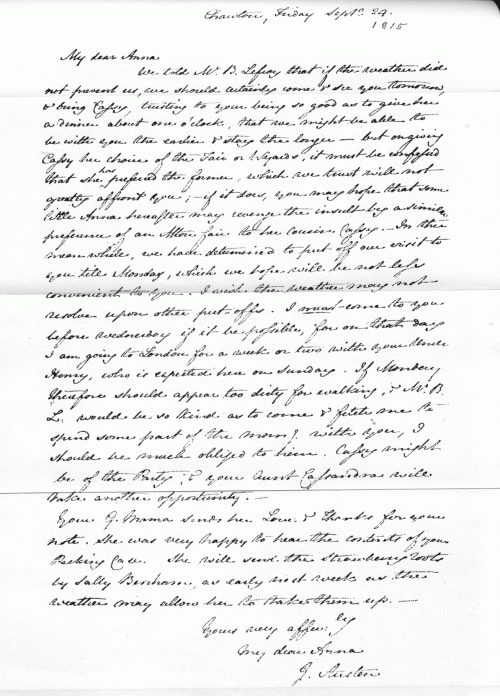
 

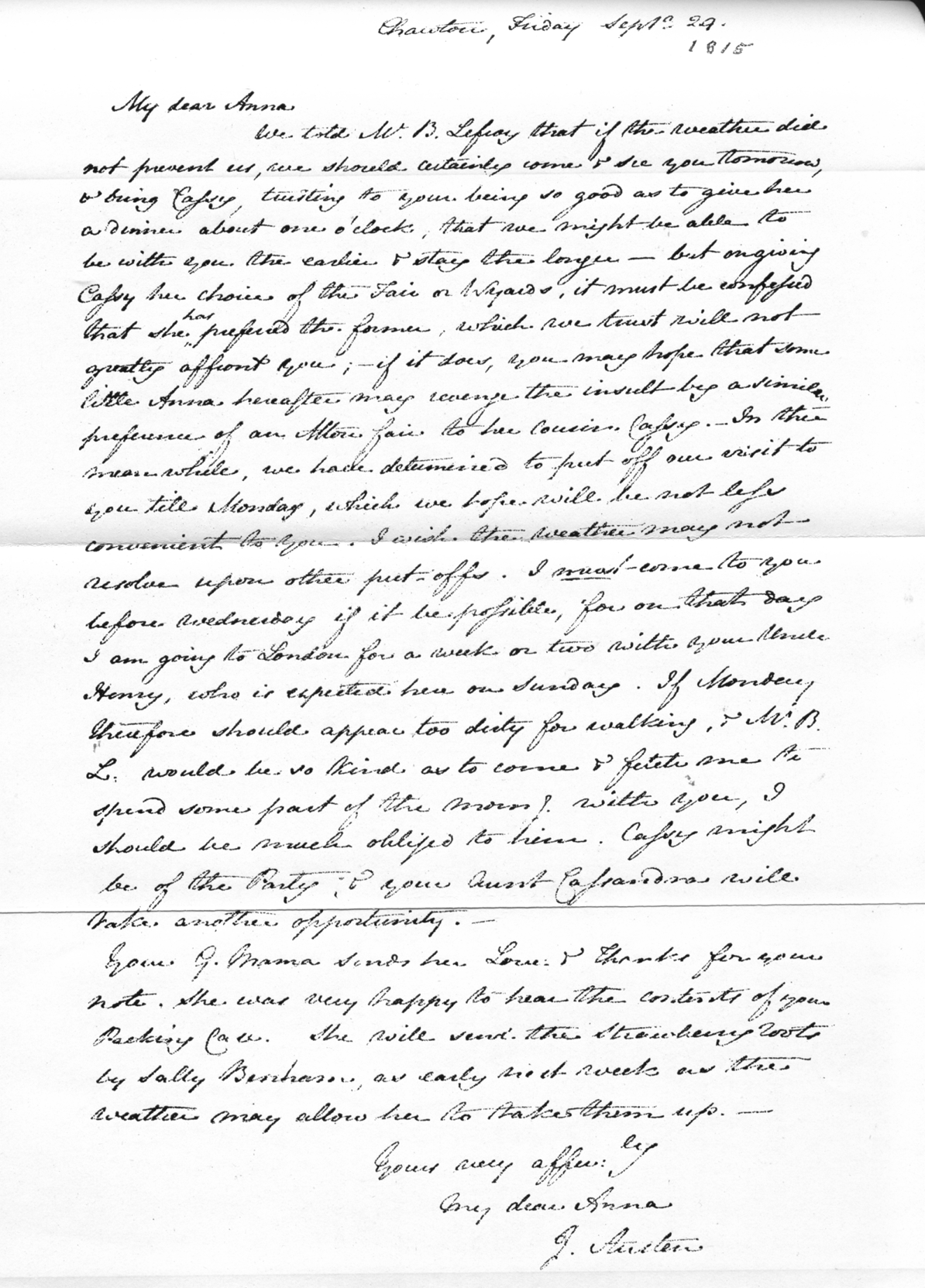
Jane's letters


Friday 31st May 1811

“ I will not say that your Mulberry trees are dead, but I am afraid they are not alive. We shall have pease soon- “

A double negative if I am not mistaken. A master of the art.
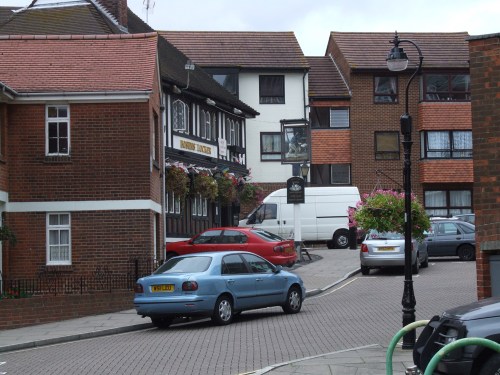
 

Castle Square today


Wednesday 28th December 1808 from Castle Square to Cassandra.

“ We spent Friday evening with our friends at the boarding house, & and our curiosity was gratified by the sight of their fellow inmates, Mrs Drew & Miss Hook, Mr Wynne and Mr Fitzhugh, the latter is brother to Mrs Lance, & very much the gentleman. He has lived in that house more than twenty years, & poor man is so totally deaf, that they say he could not hear a cannon, were it fired close to him; having no cannon at hand to make the experiment, I took it for granted, & talked to him a little with my fingers, which was funny enough.”

From the sublime to the ridiculous and back again. That’s almost a scene from Monty Python.
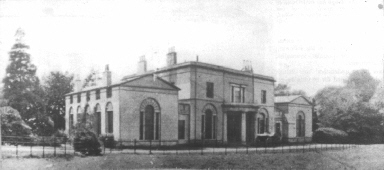
 

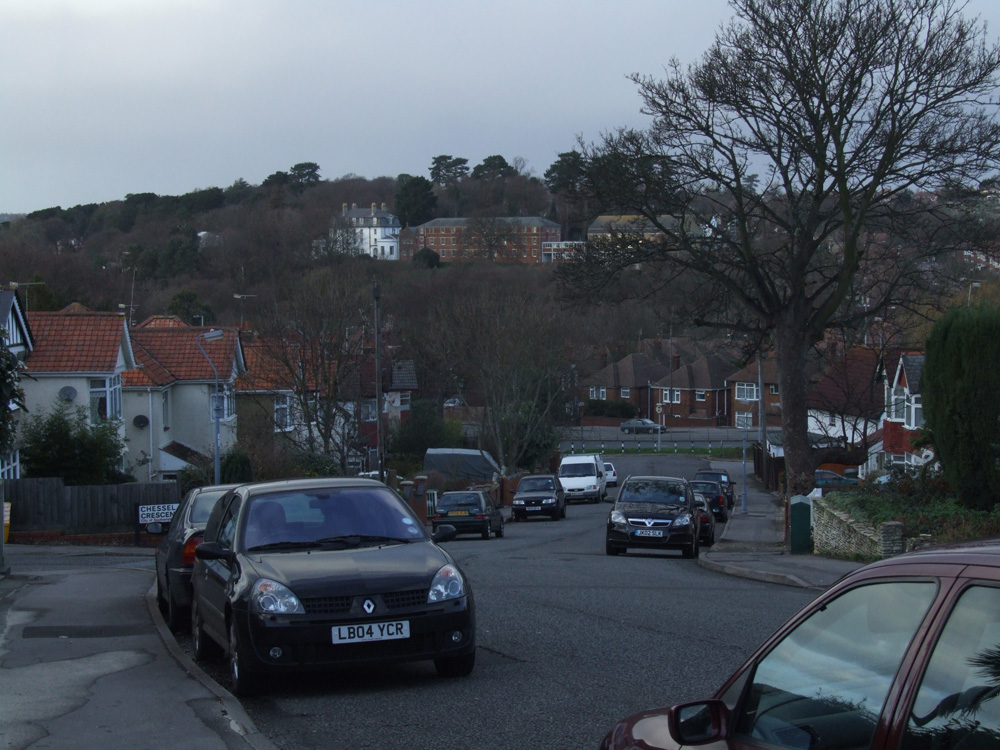
Chessil House, the home of the Lances.


Mrs Lance, who was mentioned in the last quotation comes under Jane’s scrutiny a few times over the two years the Austens are in Southampton. Mrs Lance was the wife of a well to do merchant and local politician, who owned a beautiful mansion and grounds just outside of Southampton at Bitterne Park. Two roads are named after the Lances to this day. The house no longer exists.
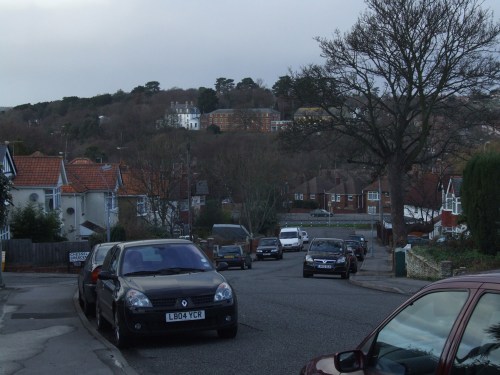
 

Little Lances Hill. On part of the Lance's estate.


Just after Jane, Mrs Austen and Martha move to Southampton they receive cards from Mrs Lance inviting them to tea. A mutual friend has informed Mrs Lance of the Austens coming to Southampton.

Thursday 8th January 1807 from Southampton to Cassandra.

“ We found only Mrs Lance at home, and whether she boasts any offspring beside a grand pianoforte did not appear.”

Synical, waspish,how would you describe that comment? Poor Mrs Lance obviously thought a lot of her pianoforte. Maybe she mentioned nothing else. Mrs Lance did have daughters and they appear in other letters and especially in Jane’s description of a ball at The Dolphin Hotel in Southampton’ s High Street.

Tuesday 24th January 1809 from Castle Square to Cassandra.

“The room was tolerably full, & the ball opened by Miss Glyn; – the Miss Lances had partners, Capt. Dauvergne’s friend appeared in regimentals, Caroline Maitland had an Officer to flirt with, & Mr John Harrison was deputed by Capt. Smith being himself absent, to ask me to dance, – Everything went well you see, especially after we had tucked Mrs Lance’s neckerchief in behind,& fastened it with a pin.”

What on earth was going on there? Can you imagine the scene?


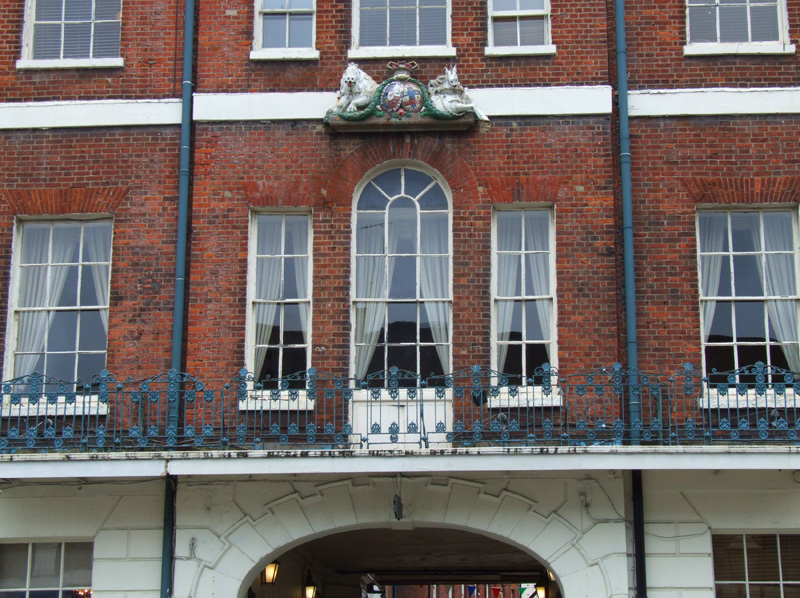
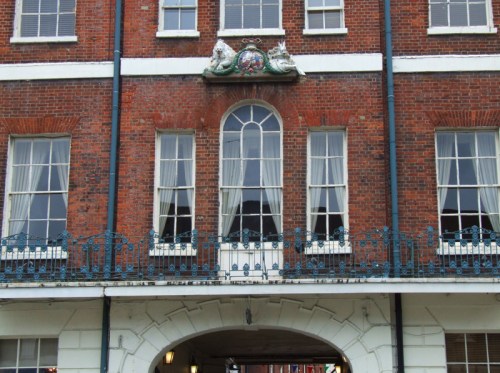
The Dolphin Hotel. Jane Austen attended balls here.


There is another ball Jane describes that took place at The Dolphin. Her sharp observation is in evidence here.

Friday 9th December 1808 from Castle Square to Cassandra.

“The room was tolerably full & there were perhaps thirty couple of Dancers; – the melancholy part was to see so many dozen young Women standing by without partners, & each of them with two ugly naked shoulders! – It was the same room we danced in 15 years ago! – I thought it all over – &in spite of the shame of being so much older, felt with thankfulness that I was quite as happy now as then. – We paid an additional shilling for Tea, which we took as we chose in an adjoining & very comfortable room. – There were only four dances and it went to my heart that the Miss Lances ( one of them too named Emma!) should have partners only for two.- You will not expect to hear that I was asked to dance – but I was…..”

This is not what you might term funny but perhaps confrontational in the style of Lenny Bruce. It’s confessional and opinionated. The emotions and the thoughts waver between memory, sadness, melancholy, joy and happiness. Jane is contemplating her past and her present.

I couldn’t possibly finish without a quote about, “The Americans.” Jane is staying with Henry at Hans Place. Henry hasn’t been well. Jane has been privy to a conversation between Henry and some of his banker friends, or, Henry has related their thoughts and beliefs to her.
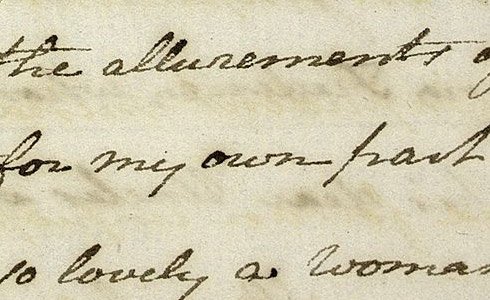
 

Jane's handwriting


Friday 2nd September 1814 from Hans Place to Martha Lloyd.

“ His view and the view of those he mixes with, of Politics is not cheerful – with regard to an American War I mean; – they consider it as certain, & as what is to ruin us. The Americans cannot be conquered, & we shall all be teaching them the skill in War, which they may now want. We are to make them good Sailors & Soldiers & gain nothing ourselves. – If we are to be ruined, it cannot be helped – but I place my hope of better things on a claim to the protection of Heaven, as a Religious Nation, a nation in spite of much evil improving in religion, which I cannot believe the Americans to possess.”

Powerful Lenny Bruce type stuff again. Confessional.

Any talk shows over there that could accommodate our Jane?

There are so many instances of Jane’s wit, humour, waspishness and deep intelligence throughout her letters. One of you could write a post with the same title as this and choose entirely different quotations. I can only regard what I have written here as a taste, a mere flavour. The letters are worth reading. Although they were thoroughly culled by Cassandra after Jane’s death, they do give us a deep insight into her thoughts, worries, beliefs, hopes and joys. Letters are very direct things. It’s the writer’s immediate voice talking to you.
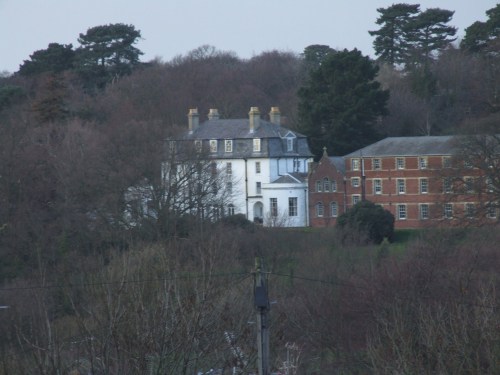
 

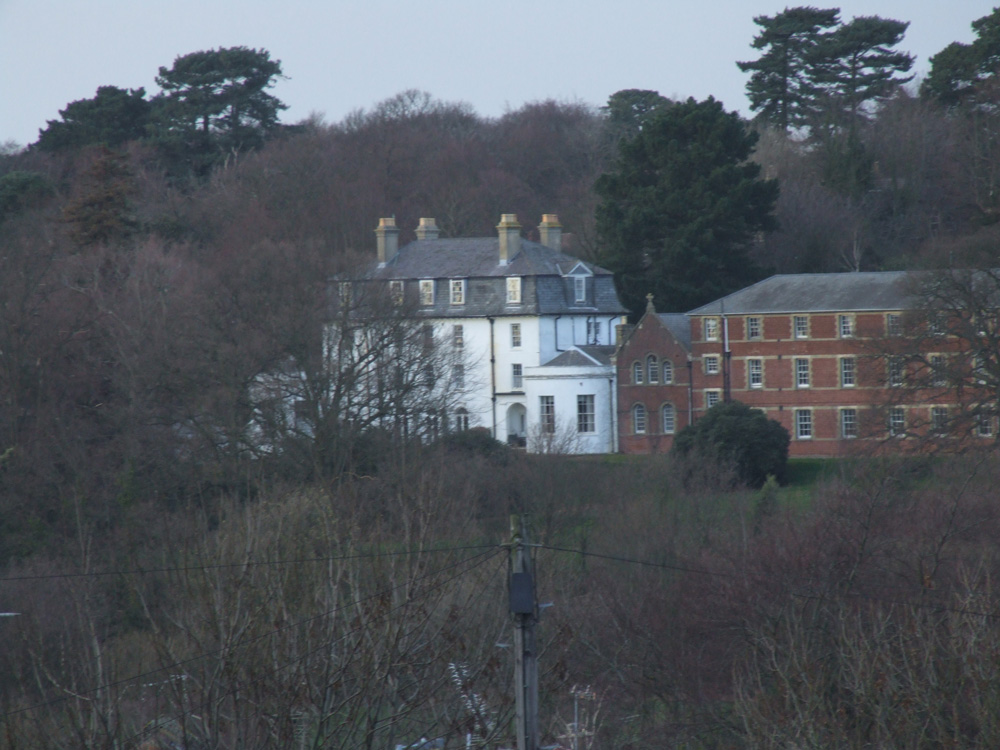
The white houseis 18th century. Jane would have seen this on the other side of the valley from Chessil House.


PS. The white house on the opposite side of the valley to where the Lances lived is my old school in Southampton still run today by the, de La Mennais Brothers, a French order from Brittany. It was their boarding school I went to at Cheswardine Hall in Shropshire – A connections between me and Jane!!!!!!!!!!!!!!

Read Full Post »
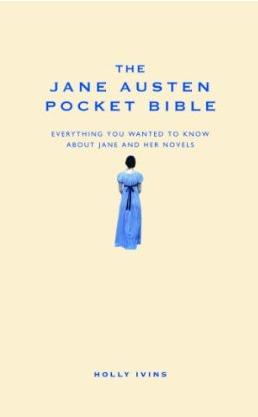
Dancing With Mr. Darcy is a fabulous book. A book reviewer isn’t supposed to reveal an opinion right away, but I have many reasons for liking this compilation, which began as a short story competition in 2009 sponsored by Chawton House Library to celebrate the bicentenary of Jane Austen’s arrival in the Hampshire village of Chawton. This was a momentous occasion in Jane’s life, for she would enjoy her most productive years there.

Dancing with Mr. Darcy is great for bed time reading.

When my head hits the pillow, I can stay awake for 20 minutes at the most. That’s just the right amount of time to savor one of these stories, which is between 2,000-2,500 words in length, reflect upon it, and turn off the light. The book will remain on your bedstand for at least 20 nights if you stick to this schedule. But here’s the kicker: It’s hard to put down.

The stories are truly original.

The inspiration for these stories was taken from any theme in Jane Austen’s novels, like a character or single sentence. Authors could also draw upon Chawton House, an Elizabethan mansion, as their muse. Whatever they decided, they were encouraged to get their creative juices flowing. And were they ever!

The book opens with a story inspired by Chawton and a dead Jane Austen crossing the River Styx . She is accused in a Higher Court by the older female characters she created for wilfully portraying them as manipulative harpies and scolds. I wondered how author Victoria Owen would resolve this curious plot, but it ended beautifully and logically. Another story that drew my attention was Felicity Cowie’s ‘One Character in Search of Her Love Story Role‘, in which the central charcter, Hannah Peel, a contemporary heroine, finds her voice by interacting with classic literary heroines, including Jane Bennet and Jane Eyre.

Fresh voices are given an opportunity to shine.

Unknown authors do not often get to compete in a public forum for an opportunity to have their work published with the backing of a prestigious institution. I read the short biographies at the end of the book, and while many of the authors took creative writing or majored in English, some are still students, one lives on a farm, another is a book reviewer, several are scholars, another is a math and science teacher, and yet another was educated to be a lady. With such a variety of backgrounds, it is no wonder that the stories are not clichéd.

Many of the tales had contemporary settings, and there were times that I had to puzzle out just what their connection was to Jane Austen or Chawton house. Like all compilations, I preferred some stories over others, such as Kelly Brendel’s Somewhere, inspired by a passage in Mansfield Park, and Eight Years Later, which is Elaine Grotefeld’s take of love lost and found again in the mode of Persuasion.

Jane Austen would have approved.

The variety of the stories, and their excellence and fresh approach to the Austenesque genre makes this book stand out from the pack. Jane Austen would have approved of their original plots, their intelligent writing, and the variety of ideas that sprang from the original impetus. These twenty stories were selected from 300 submissions, and one can only imagine how many good stories barely missed the cut.

Sarah Waters at Chawton House, July 2009. Image @Chawton House

In a different way, I found this compilation equally as thrilling as A Truth Universally Acknowledged, edited by Susannah Carson, a book of critical insights by famous authors about Jane Austen that I adored and reviewed late last year. Stories that are judged, weighted, or juried tend to have an edginess and contemporary bite that attract me.

In this instance, the stories were judged by a Chair judge, Sarah Waters, the author of Tipping the Velvet and Fingersmith, and a panel of judges: BBC journalist Lindsay Ashford; author Mary Hammond; Rebecca Smith (five-times great niece of Jane Austen, descended through her brother Frances); and freelance editor Janet Thomas.

The book is available today at your local or online bookseller. Run, don’t walk to obtain your own copy. I give it three out of three Regency fans and then some.

Read Full Post »

« Newer Posts - Older Posts »