Feeds:
Posts
Comments

From Prada to Nada made $3.3 million at the box office, both foreign and domestic. I’m surprised to read that it was that much. I happened to watch the film on Netflix this past weekend when I had nothing better to do than wash clothes.

The notion of a remake of Jane Austen’s Sense and Sensibility and plucking Marianne and Elinor Dashwood from Barton Cottage and landing them in 21st Century L.A. intrigued me, for Emma Woodhouse’s move from tranquil Highbury to a Beverly Hills high school in Clueless was a resounding success with both critics and viewers. I also liked the idea of switching up cultures, for hadn’t Ang Lee’s hit, Eat Drink Man Woman, been successfully transformed into the delightful Tortilla Soup with its Mexican-American family substituting for the Japanese chef and his daughters? But I quickly came to the conclusion that  From Prada to Nada is to Jane Austen what a black velvet painting is to the Mona Lisa.

Here then is the story:

Mary, Papa, and Nora before his fatal heart attack

Once upon a time in Beverley Hills there lived two very pretty girls in a house called Bonita Casita. They had a Papa but no Mama.

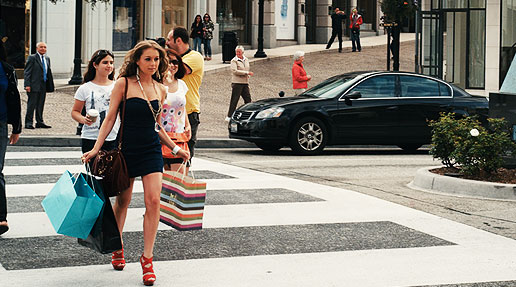
Mary (Alexa Vega) on Rodeo Drive.

One was short and ditzy, liked to shop, and wore party dresses morning, noon, and night. Her name was Mary Dominguez (MD = Marianne Dashwood).

Nora turned norange at Papa's funeral.

The other was a tall, practical, intellectual, wannabee lawyer named Nora (Elinor Dashwood).  While exotically beautiful, she suffered from a fatal Hollywood condition called orange skin. This viewer suspects it was to make her look more cliched Mexican, but should I really be so cynical? Mary had this condition to a lesser extent, and both girls swung from looking tanned to grossly ill, depending on lighting conditions.

I am happy to report that Nora (Camilla Belle) fully recovered from her skin malady shortly after filming.

Neither girl spoke Spanish, a fact that was mentioned often until it was pounded into the viewers’ brains.

While celebrating his birthday with his daughters, Papa falls flat on his face and dies, leaving the two bewildered girls penniless, for everything he seemingly owned belonged to the banks. The girls must move from their cozy environment in 90210 to a tacky neighborhood in East L.A., which is like asking a Swiss palace guard to work in a Columbian prison on short notice.

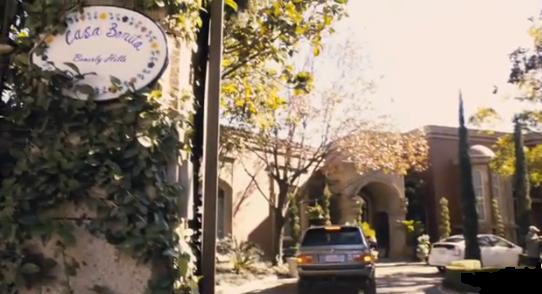
Casa Bonita in Beverly Hills

Before that indignity, they meet their half-brother, Gabriel, a  surprise from their papa’s past, who arrives for the funeral with his cheesy avaricious girlfriend, Olivia. It seems that bro and his tootsie want to renovate Papa’s mansion and sell it for a profit. In other words, bro flips houses for a living. Real class.

Q'eulle surprise! Half-brother Gabriel (Pablo Cruz) arrives at the funeral with his Tootsie, Olivia (April Bolwby), and she's mean, while he's a wuss

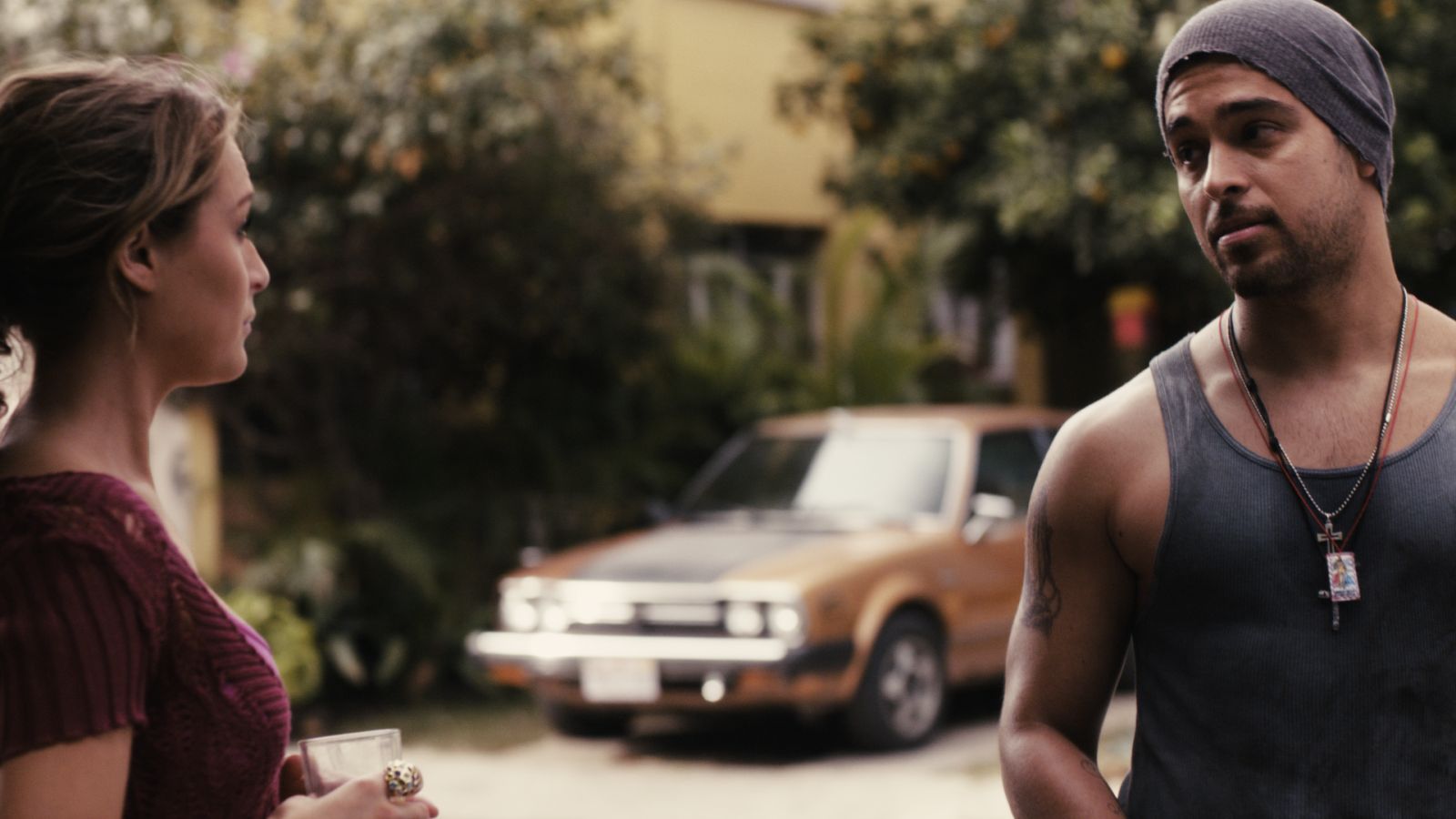
Without a living breathing mother to guide them, as Jane Austen had intended, Maria and Nora have nowhere to go but to their good-hearted aunt’s house all the way over to a neighborhood filled with barrios, gangstahs, and, worse, taco joints. There the girls encounter Bruno (Colonel Brandon) a handsome darkly Latino who obviously did not attend Beverly Hills High.

Bruno (Wilmer Valerrama) and Mary.

He’s friendly, but Mary snubs him, for she begins to suspect that he works for a living and that she  must share a bedroom with her sister. (Not that the two facts have anything to do with each other, but my sentence is no crazier than the plot of the film.)

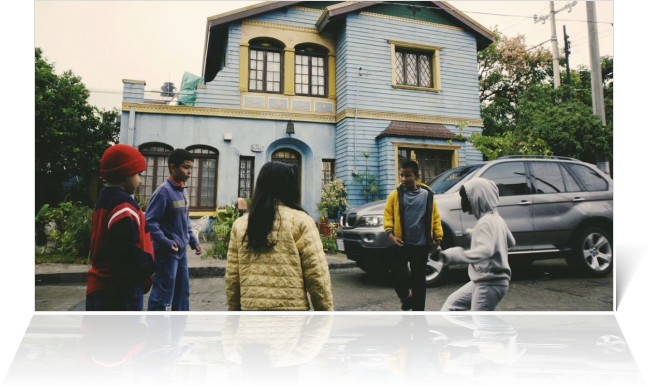
New house, new neighborhood

In rapid succession From Prada to Nada  throws at least one cliche per minute at the viewer, including a small sweat shop in Auntie’s living room, bad girls in the neighborhood, and clothes and interiors that could have been created by Agador (Armand and Albert’s gay Cuban houseboy in The Birdcage). How could this movie stand a chance with intelligent viewers when charactes are named Bad Guy #s 1-3, Comrade, Fiesta guest, and Chola (urban dictionary definition: the girl my brother gets pregnant)?

I imagine that people living in East L.A. were horrified to see Jane Austen’s fine tale mangled and twisted beyond recognition.

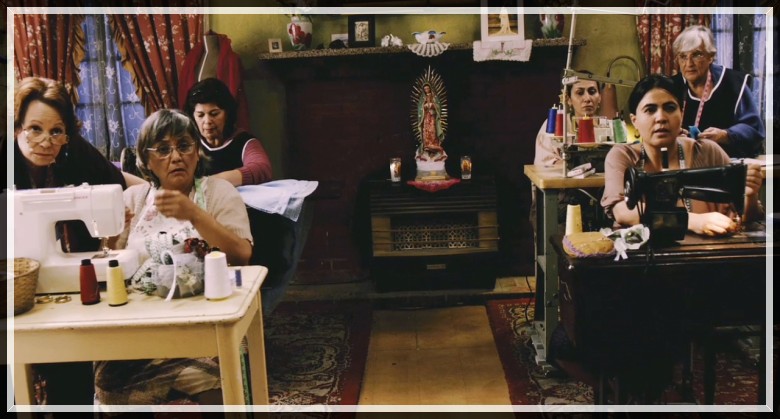
Sewing in Auntie's living room and prepared to hide the evidence at a moment's notice in case of an immigration raid.

The movie stumbles towards its inevitable cliched ending. Edward Ferris falls instantly for Nora and gives her a splendid job in his law firm. They part and then they come together for no reason that I can fathom, except that he is always coming around the house with a truck filled with big items.

Rodrigo (Kuno Becker) meets the aunties

Mary falls head over heels (instead of twisting her heel in the English countryside) for a tutor named Rodgrigo Fuentes, Willoughby’s stand in. He eventually visits Mexico then dumps her and purchases Papa’s hideously renovated mansion from her flipper bro.

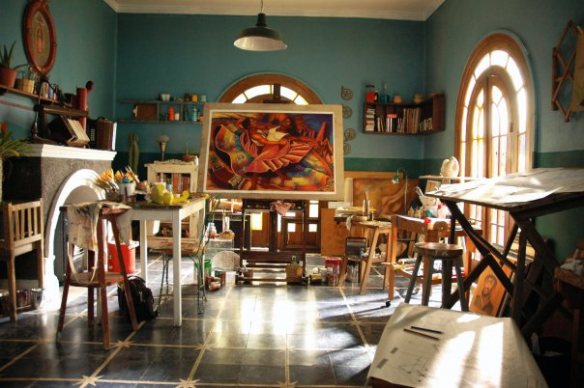
Bruno's amazing studio in his tiny house

Flipper bro turns out to be a nice guy, as does Bruno, who happens to be an immensely talented artist living in the body of a mechanic. For some reason, after her car accident Mary totally flips for the ever patient, long-suffering Bruno, who was able to see past her materialistic ways the moment he met her.

Bruno in his barrio uniform.

After I finished watching this movie, I realized I should have stayed in the basement with my laundry and read a good book as I waited for my washer and dryer to finish spinning. The producers of this clunker forgot one extremely important asset that no self respecting movie can do without: a well-written, intelligent script.

Not all the good intentions in the world of Latinizing Jane Austen, and thus making her more available to those who might otherwise be turned off by her English characters, can save a film so completely devoid of entertainment, originality and wit.

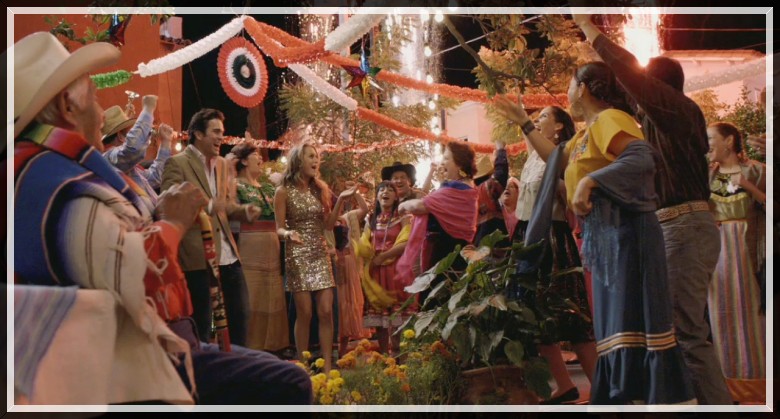
No Tex-Mex film is complete without a fiesta.

I imagine that Lady Catherine de Bourgh would have said of this film: “I take no leave of it. I send it no compliments. It deserve no such attention. I am most seriously displeased.” Amen to that.

Edward Ferris (Nicolas d'Agosto), the prince charming, comes bearing gifts, sweeping Nora off her feet.

Gentle readers, Downton Abbey, Season 2 will be shown on PBS through February 19, 2012. I will be writing a series of posts to help illuminate some historical details that might help the viewer who is not familiar with the events of this era. World War I’s connection to Jane Austen is poignant: soldiers in the trenches and those who were shell-shocked or recovering from injuries read Jane Austen’s novels to escape the horrors of war and relive a gentler, more civilized time. 

Warning: Minor plot spoilers

Downton Abbey’s more somber subtext this season is due to the reality of war. Season 2 opens with Matthew Crawley at the Battle of the Somme in Northern France, which lasted from July through November, 1916, and symbolizes the horrors of World War One for the British.

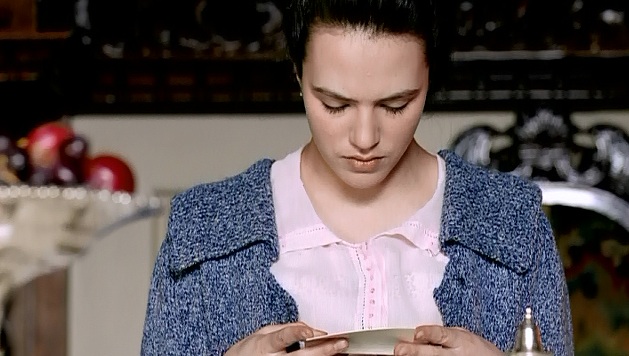
Lady Sybil reads about the death of a male friend. Credit: Courtesy of © Carnival Film & Television Limited 2011 for MASTERPIECE

The Great War was supposed to have lasted only a few months in the minds of British Generals, who were accustomed to quickly overwhelming poorly armed native fighters in the colonies. But this deadly conflict, triggered by Germany as its troops marched through neutral Belgium to invade France  (and which had been building up its cache of war equipment for a long time), lasted for more than 4 years. Casualties were so catastrophic that the numbers border on the unbelievable: Great Britain, 35.8% of the forces; France, 73.3%; Belgium, 34.9%; Germany, 64.9%; Austria/Hungary, 90%!

Battle of the Somme, 1916

Of the over 65 million troops fighting in that war from all over the world, including India and North Africa, nearly 60% were killed or wounded (PBS). Add to this total the killing of innocent civilians and animals, the destruction of villages and farms in Belgium and Northern France, the enormous debt and resulting poverty that European nations faced, and one can only shake one’s head and wonder how the world could have plunged into a second world war a mere 30 years later.

Here then are only a few features of a war which is still remembered for its destructiveness one hundred years later

Barbed wire

The Battle of the Somme was supposed to have gone smoothly after the British artillery spent a week shelling German trenches. Bombardment commenced on July 1st, 1916 and could be heard across the Channel in Britain: 1,738,000 shells rained upon German territory. It was believed that such continuous and massive bombing would open up gaping holes in the barbed wire that protected enemy lines, allowing British cavalry to rush through and overwhelm the Germans who survived the destruction of their trenches. This did not happen. German trenches were dug much deeper than was thought and were not pulverized. To their horror, the English immediately realized that the barbed wire also remained largely intact. This meant that soldiers could not storm the battlefield, but would be fatally delayed as they tried to cut through the barriers, allowing machine gunners to mow them down. And this is what happened. Over 60,000 British troops were lost that first day. At the end of the campaign, the British had lost 420,000 men (the French 200,000 and the Germans 500,000).

A wiring party going forward. Image @Daily Mail

Barbed wire had been used for the first time in the Spanish-American War and Boer Wars, but World War One brought its use in the battlefield to a new level. As soon as territory was conquered, a “wiring party” would go out to lay out barbed wire and protect their hard won land. Barbed wire was almost impossible to deal with until tanks were invented, although this piece of equipment was highly unreliable at first.

Modern weaponry

In my opinion, war has never been civilized or gentlemanly, but World War One raised the brutality to a new level that the stodgy British generals, in particular John French and Douglas Haig, were unable to fathom. The invention of machine guns allowed a single gunner to mow down hundreds of men within minutes. Flame throwers, known as Flammenwerfers in German, were portable and were first used by the Germans to terrify the British and French soldiers. The allies quickly learned to retaliate in kind.

Credit: Courtesy of © Carnival Film & Television Limited 2012 for MASTERPIECE

Lady Sybil with soldier blinded by mustard gas. Credit: Courtesy of © Carnival Film & Television Limited 2011 for MASTERPIECE

In 1914, the French were the first to unleash poison gas on the enemy. This gas was more an irritant, much like pepper spray is regarded today, and did not maim or kill. In 1915, the Germans used chlorine gas on the unsuspecting British, which leads to a slow and torturous death by asphyxiation. There were other gases. Phosgene gas would first go unnoticed and by the time the damage was felt, it was too late to save the victim. Mustard gas caused blistering both on the face and inside the respiratory organs. Many who survived mustard gas were permanently blinded. The vagaries of the wind often carried gas back to the troops who had unleashed it on the enemy. Over time both sides learned to wear gas masks, providing them for their horses and messenger dogs as well. However, the gas cloud killed any animal indiscriminately – horses, birds, wildlife, rodents that happened to be in its path died horrible deaths. Airplanes made their first appearance, dropping bombs from the sky and on civilians, and the mortality rate of fighter pilots was extremely high, ranging in the suicidal. German U-boats (early submarines) were amazingly effective in sinking ships and preventing food and ammunitions from reaching the allies.

Trench Rats

The rats were as big as cats some soldiers swore. Millions infiltrated the trenches, running over sleeping men and raiding their pockets or foodstuffs. Rats swarmed the battlefields, feasting on rotting corpses, first going for the eyes, then gorging themselves on the rest of the body until their bellies were swollen.

There was no proper system of waste disposal in trench life. Empty tins of all kinds were flung away over the top on both sides of the trench. Millions of tins were thus available for all the rats in France and Belgium in hundreds of miles of trenches. During brief moments of quiet at night, one could hear a continuous rattle of tins moving against each other. The rats were turning them over.” – Private George Coppard, Royal West Surrey Regiment

Rats can multiply by the tens of thousands in no time (one pair can produce 880 offspring per year) and there was no way to escape them. Although ever present, soldiers never quite became inured to these bold, opportunistic rodents.

Matthew on leave, with his fiancee Lavinia Swire, greeting Sir Richard Carlisle. Credit: Courtesy of © Carnival Film & Television Limited 2011 for MASTERPIECE

In Downton Abbey Season 2 Matthew Crawley leaves the front and visits England quite frequently. The reality was that the men spent only part of their time in the trenches, rotating to different sectors. Typically they would spend 2 weeks in the trenches, a week in support lines or support trenches, two weeks in reserve, and then one week resting. Out of a year, a soldier would spend about 4 months in the front lines. This was about all they could stand. Living with the constant fear of death by shelling, sniper, or disease drove some men out of their minds. It must be added that as in all wars, the men spent countless days, even weeks, living lives of boredom which were interspersed with moments of sheer terror. The problem that many faced was that at any day their number could be up, and with odds worse than Russian Roulette, for there was a 1:3 chance that the next battle would be a British soldier’s last.

Thomas, now a medic, in the trenches. Credit: Courtesy of © Carnival Film & Television Limited 2011 for MASTERPIECE

Shell shock

A society known for its stiff upper lip would have a hard time admitting that its finest and brightest men could suffer from shell shock. During the early 20th century, shell shock was not yet clearly defined. Men suffering from shell shock exhibited a variety of symptoms, ranging from psychological blindness to stomach cramps and diarrhea, as well as facial twitches, uncontrollable sweating, nightmares, tremors, and an inability to eat or sleep. By 1917, as many as 1 in 7 men, or 80,000 British soldiers, were discharged from service for emotional disorders related to the war. Sadly, many were regarded as malingerers and sent back to the front. Some committed suicide, others deserted or refused to obey orders, in which case they were court-martialled or shot.

In Downton Abbey, Lord Grantham’s new valet, Andrew Lang obviously suffered from shell shock. O’Brien, Lady Grantham’s lady’s maid, shows uncharacteristic sympathy when she realizes Lange’s condition, because her brother suffered from the same malady and was misunderstood. Mrs. Patmore’s nephew, Archie, must also have experienced the same fear and panicked. He was not quite so lucky and was caught and shot for desertion.

Also read:

Life in the Trenches: Edwardian Promenade

Season 2, Episode One Recap on Austenprose

Please note: the ads at the bottom of my posts are wordpress ads. I make no money from my blog.

Images Credit: Courtesy of © Carnival Film & Television Limited 2012 for MASTERPIECE

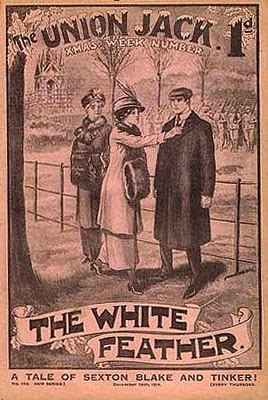
Gentle readers, Downton Abbey, Season 2 will be shown on PBS, Sunday, January 8, at 9 PM local time. I will be writing a series of posts to help illuminate some historical details that might help the viewer who is not familiar with the events of this era. World War I’s connection to Jane Austen is poignant: soldiers in the trenches and those who were shell-shocked or recovering from injuries read Jane Austen’s novels to escape the horrors of war and relive a gentler, more civilized time. Here then is meaning of the white feathers. In the interest of not spoiling the plot, certain facts will not be revealed.

Handing a white feather to an unlisted man.

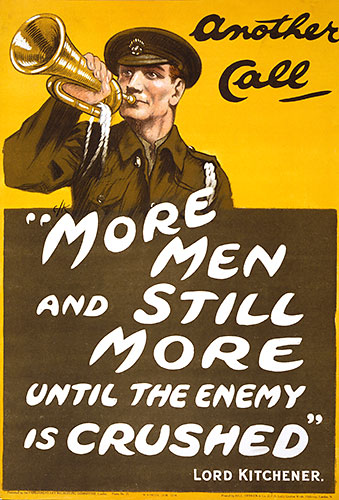
World War 1 was meant to last only a few months in the eyes of Great Britain, who entered the war to support its allies, France and Belgium. The mighty British empire had an army second to none, and had resoundingly defeated the Boers in South Africa using battle tactics that had been finely tuned by generals since the Napoleonic wars a hundred years before. At the start of the Great War, Englishmen  enlisted in droves. Men were not conscripted at the time and enlistment was wholly voluntary.

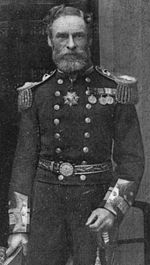
Almost from the very beginning, British Admiral Charles Cooper Penrose-Fitzgerald created the “Organization of the White Feather’ as a means to pressure men to enlist in the army. At first able bodied men served willingly, but as the war dragged on and the staggering losses of life and limb added up in vast unforeseen numbers, the need for fresh troops became vital.

Admiral Charles Penrose-Fitzgerald

There were perfectly good reasons for men not to enlist: many were needed at home to oversee crucial jobs, such as farming; others had medical conditions that precluded them from serving. This was the case with Rudyard Kipling’s son, Jack, who was so short-sighted that he needed glasses to see clearly. (Vehement in his patriotism, Kipling was able to cut through red tape so that his 18-year-old son could serve. Sadly, Jack was reported missing in action and his body was never found. Kipling found solace in reading Jane Austen’s novels to his wife and daughter as they awaited word of Jack’s fate and penned a short story about the Janeites, who found respite from that terrible war by reading Jane’s books.)

In Downton Abbey, two able-bodied characters were officially exempt from serving: William Mason, the footman, and Moseley,Matthew Crawley’s butler/valet. Two women rose from their seats in the middle of a concert at Downton Abbey to benefit the hospital; they began handing out white feathers to the men not in uniform, starting with William.

The expression of the woman at right (above) is one of disgust at those who they thought shirked their responsibilities to serve. This scene occurs in 1916, when it became clear that the war could only be won through slow stubborn attrition and by the side that lasted longest with men, ammunition, food, and sheer will power. Men were hunkered down in miserably uncomfortable circumstances in the  trenches and died by the tens of thousands in order to claim a few hundred shell-pocked yards of enemy territory. The slaughter was immense and of a proportion never before seen in civilized society, for new horrific weapons had been designed to kill and maim from a distance (flame throwers, mustard gas,  machine guns, bombs dropped from airplanes). Fresh troops were needed to replace those who were killed or wounded.

As early as 1915, a mere year after the war started, pressure began to be placed on able bodied men who did not serve, and the practice of handing out white feathers stepped up. The pacifist Fenner Brockway quipped that he had enough feathers to make a fan.

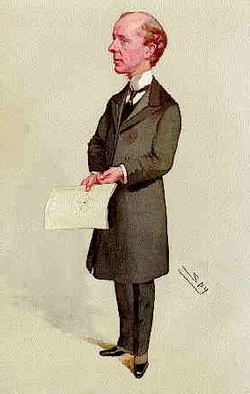
Men who wore no uniform, including soldiers on leave, were targeted to receive white feathers. Home Secretary Reginald McKenna authorized a badge that bore the words “King and Country,” which told onlookers that the man wearing it was excluded from the pressure to enlist.  – First World War.com

Reginald McKenna

Read my posts for Downton Abbey, Series One in the sidebar.

Gentle Readers, ‘The Many Lovers of Jane Austen’, a television special hosted by Amanda Vickery, was aired in Great Britain just before Christmas. Frequent contributer Tony Grant, who lives in Wimbledon and is the blog author of London Calling, graciously sent in his review. Those who cannot watch the show might enjoy this BBC radio interview. During the last eight minutes, Amanda Vickery discusses ‘The Many Lovers of Jane Austen’ with Libbie Purvves. You will need to download aBBC iPlayer.

On Friday 23rd December at 9.30pm BBC 2 showed Amanda Vickery’s exploration of the world of Jane Austen.
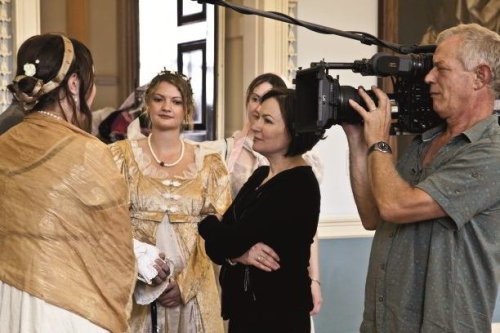
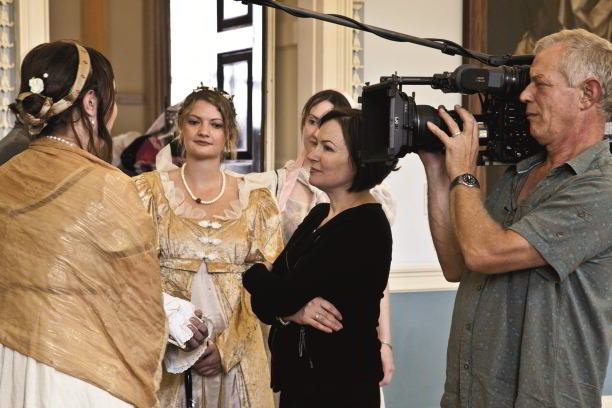
Vickery filming The Many Lovers of Jane Austen

Amanda Vickery wanted to explore how and why generations of readers have been won over to Jane Austen by just six classic novels. She takes us from the JASNA annual conference at Fort Worth, Texas; to Althorpe House, the ancestral home of Princess Diana’s family; Chawton Cottage, where she lived the last years of her life; her tomb in Winchester Cathedral; Bath, where Jane Austen is revered and celebrated; the trenches of The First World War; Sotheby’s auction house in London, where a global bidding war ensues over a fragment of Jane Austen’s writing; to Hollywood and the silver screen, and tries to discover how Jane Austen became a national treasure.
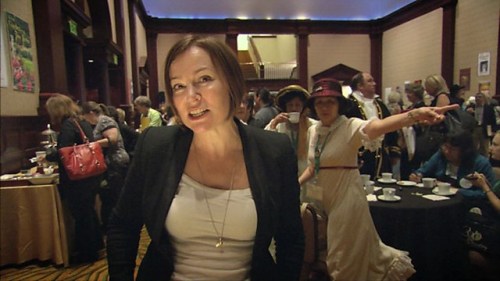
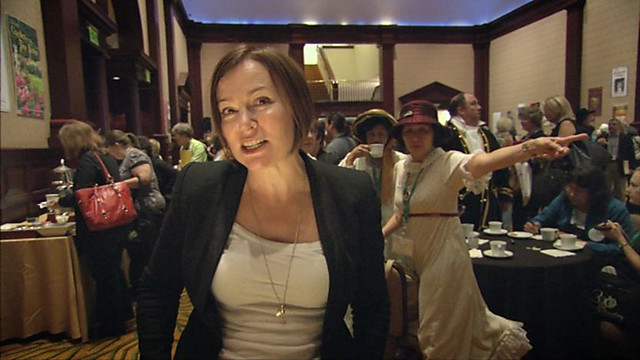
Vickery among the stalls at JASNA Fort Worth

The programme starts with Amanda Vickery strolling around the multitudinous market stalls laid out within a vast arena in the conference centre at Fort Worth. There are country and western singers and hundreds of people dressed in Regency fashions supplied by a costume company doing a very brisk trade. This is what the conference appears to be about, trade and commerce, almost “rampant commercialisation,” as Amanda Vickery describes the scene. The spin-off culture and the merchandising of Jane Austen is very evident at the Fort Worth conference. Amanda Vickery is almost surprised to find that there are actually many committed readers of the novels present. There is a mixture of popular devotion and academic prestige.
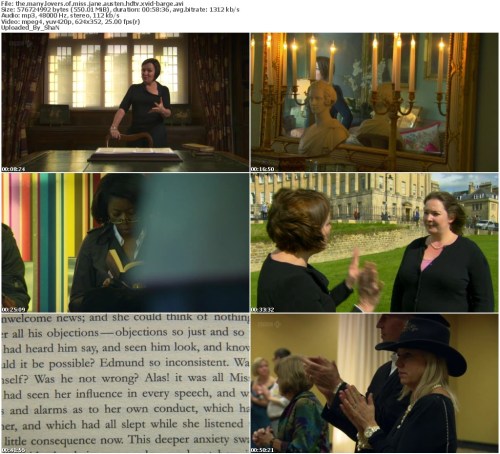
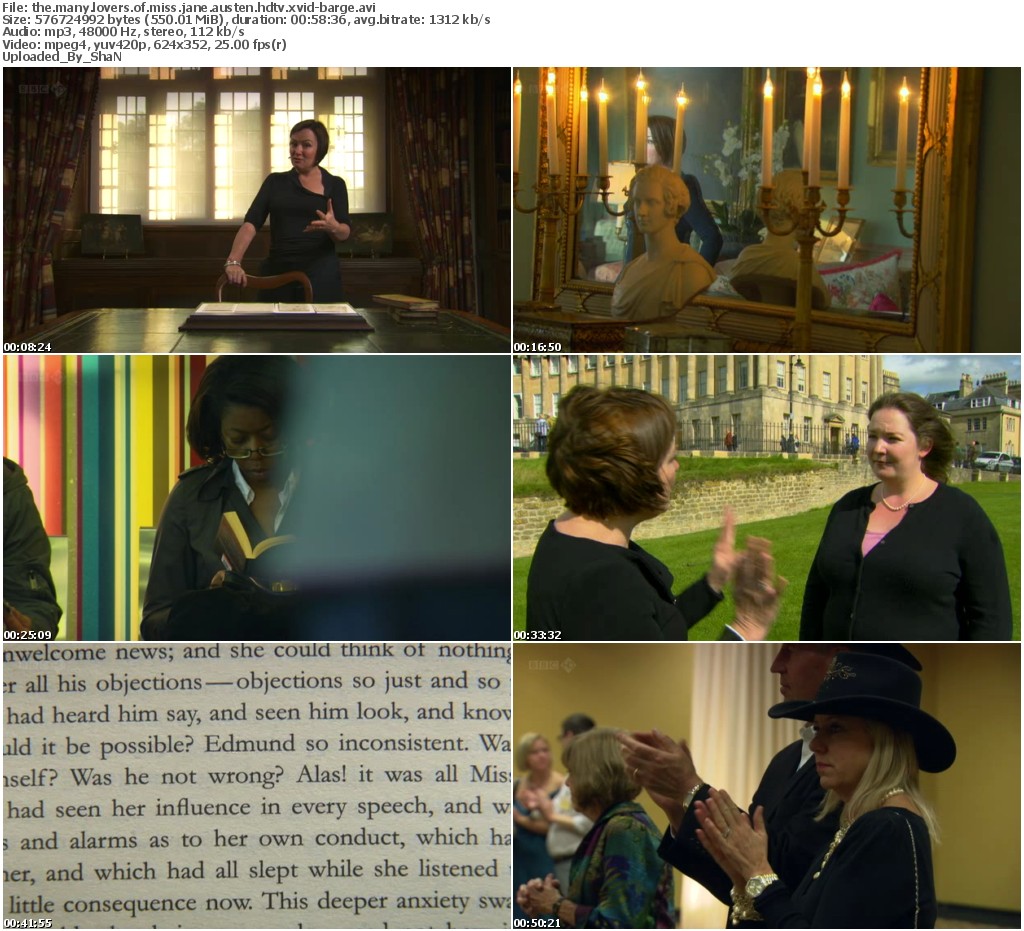
Images of The Many Lovers of Jane Austen @Shanitsinha

Trade and commerce, this is what lies at the heart of America and what has made America. The great driving force that drives a nation appears to drive the American people response to all they encounter, including Jane Austen. This intense commercial activity could actually be their way; their only way, of saying they love Jane Austen. It’s their default reaction. I think commercialisation and art have a very close relationship. Art and literature are made and written but they also have to be sold and for writers to develop they need to make money. But the balance has to be kept. The piece of art or novel has to be paramount. All this spin-off culture of nick knacks, crafts and spin-off novels can be in danger of burying the original creation.
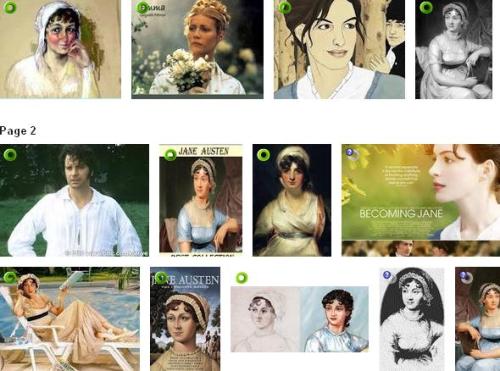
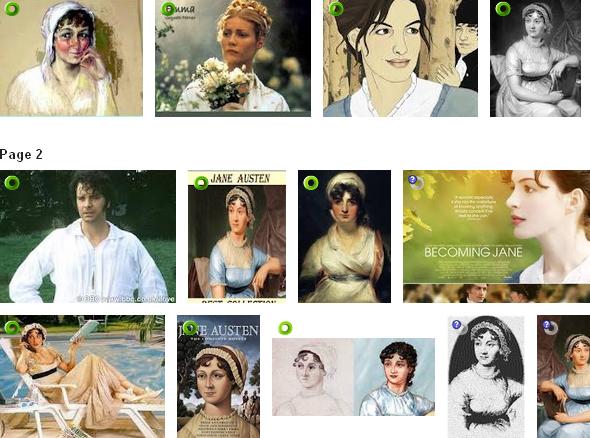
Google screen shot of "Jane Austen"

Amanda Vickery next moves to London and visits Sotheby’s, the auction house, where she attends the auction of a fragment of Jane Austen’s handwriting. It is an edited piece of The Watsons, one of her two uncompleted novels. Vickery handles the piece reverentially and reads it to us straight from Jane Austen’s very own handwriting. A great privilege for her and for us. She discusses the meaning of the fragment with the curator at Sothebys. It is the only piece of first draft written in Jane’s own hand still in existence. The words on the page are the first words that formed in her mind, which she then wrote on the paper – a very special document.
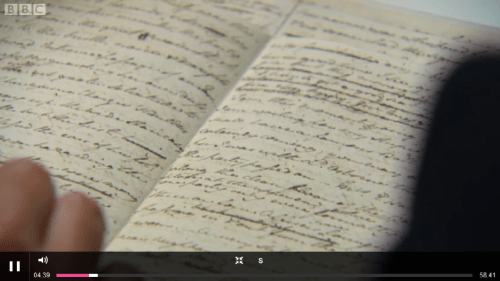
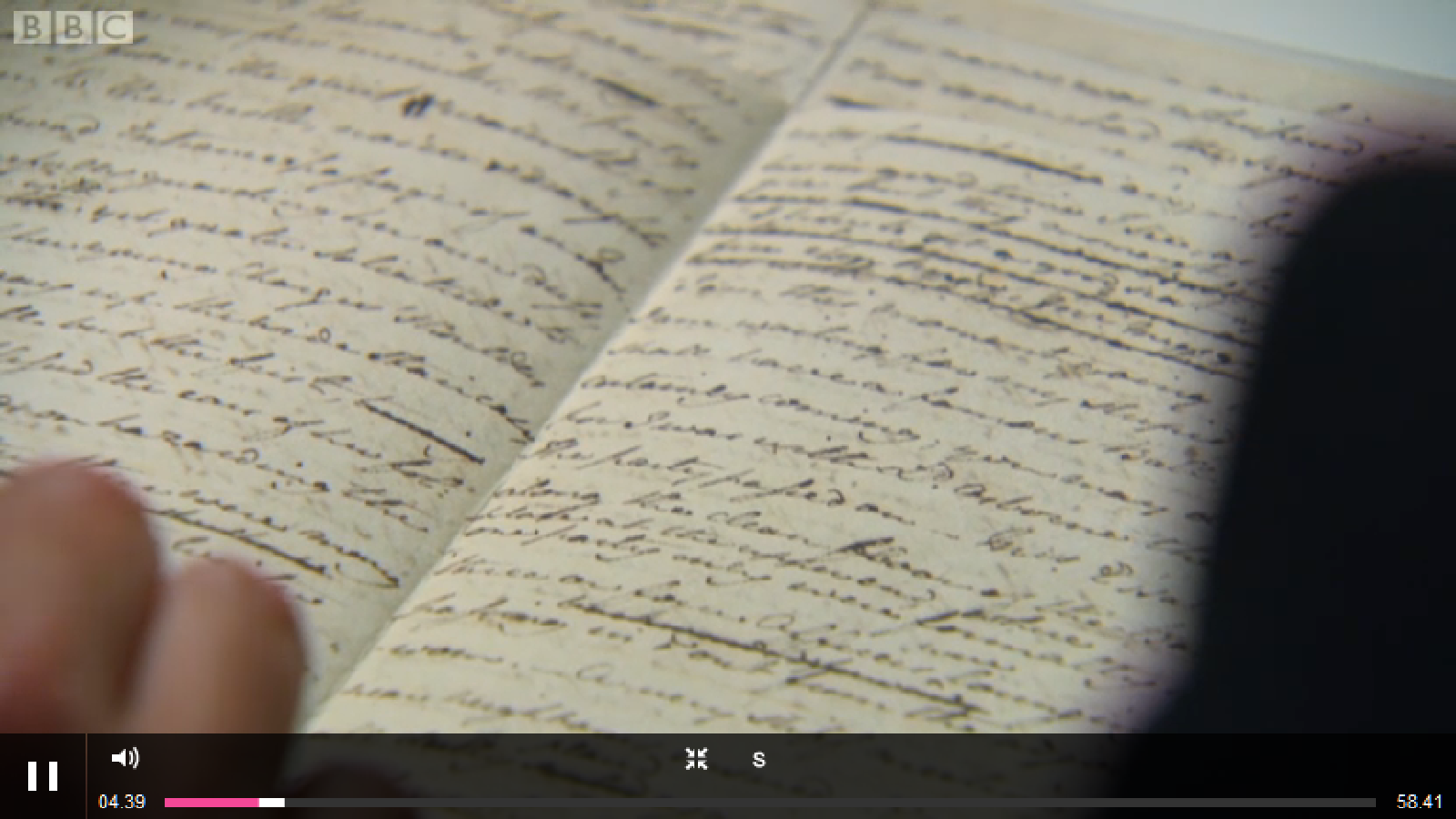
The Watson's manuscript with Jane's handwriting and edits

The Sotheby’s expert estimates a price of £ 300, 000 for the document. Amanda Vickery watches the auction taking place and we are there with her. The price soon goes past the £300,000 mark and continues on and upwards. It is eventually sold to the Bodleian Library in Oxford for a colossal, £850, 000. Nearly a million pounds. Everybody in the auction room is shocked and amazed. I could feel my heart thumping away just looking at the TV screen. Amanda looked flushed too. The document is a financial investment but in going to the Bodleian it will be displayed and used for academic and literary purposes. The importance to the Bodleain is obvious but it also means that it is kept here in the United Kingdom and remains a national treasure.
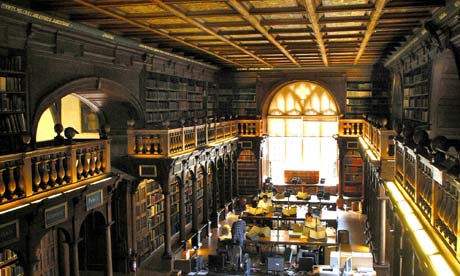
The Bodleian Library reading room. Image @The GuardianUK

So how did Jane Austen become a national treasure herself?

To start with her first readers were members of her own family. Jane would read to Cassandra, her sister, in their shared bedroom before the fireplace at Chawton. They would read, reread, act out scenes and discuss ideas together. Her brother, Henry, the banker, negotiated with publishers on her behalf. Professor John Mulllen suggests that Jane Austen wasn’t as private and shy as some make out. The statement of “By a lady,” on the title page of Sense and Sensibility, was not so much an attempt to be anonymous but to portray to the buyer of her book certain expectations. A novel,” by a lady,” suggested a certain plot arc; unmarried woman meets eligible bachelor, then courtship with certain misunderstandings occur, but all works out in the end and they marry. She was advertising a social and psychological drama of courtship. It was a commonplace deceit. Jane was aiming her novels at a certain readership. However there is little evidence and few clues about who first bought her novels. Lady Bessborough, a distant ancestor of Lady Diana Spencer, who lived at Althorpe, bought Sense and Sensibility, because she discusses the novel in letters to her friends. Austen’s novels would have been read out loud in the drawing rooms of the aristocracy as a sort of group event.”
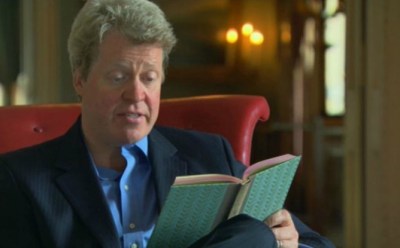
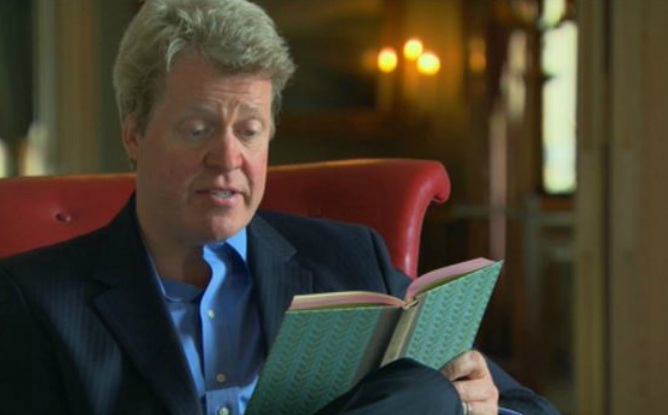
Earl Spencer reading Jane Austen at Althorp. Image @BBC

Soon after Jane died in 1817 at the age of 41, her novels went out of print and for a few years and they were no longer sold. The Romanticism of the 1840’s epitomised by the Brontes with stories set on wild moors and characters with wild passions, became all the vogue. Emily Bronte thought that Jane Austen was in  “denial about human psychology.” But if you really read Jane’s novels all the emotions and human frailty, the passions and the lusts, are quietly there beneath the surface not being broadcast loudly from some windswept moor. The Brontes for all their brilliance probably misread Austen because they were so caught up with their own wild passions. The emergence of circulating librarie,s however, saw her novels being reprinted. These libraries needed a vast source of material to fill their shelves, and writers who had gone out of fashion were brought back into fashion for new readers who had a great appetite for novels. As these became accessible to a broad swathe of society an increasing number of lower middle class people started to read her novels.
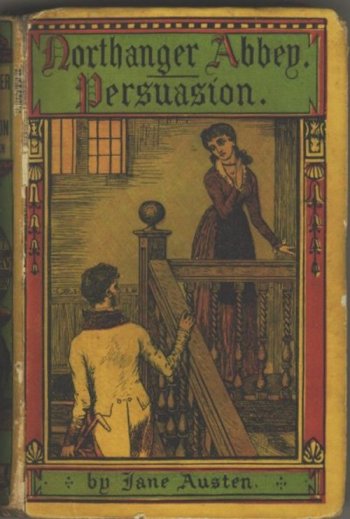
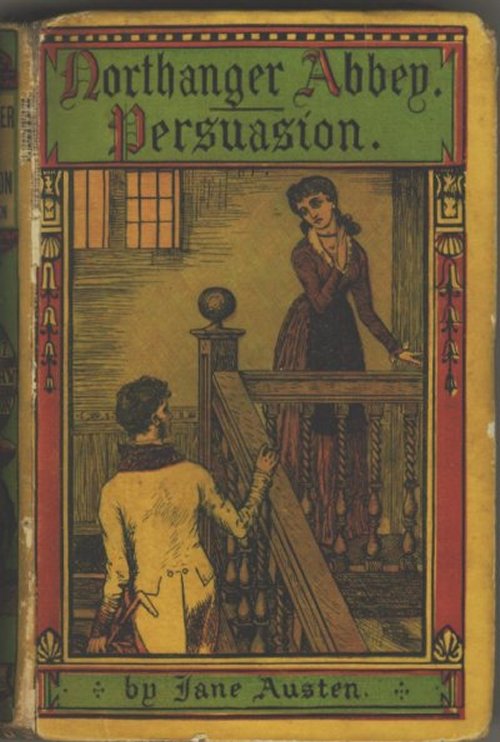
Yellow back version of Northanger Abbey

By the end of the 19th century Jane Austen got a boost through the development of the railway system throughout the British Isles. People on long journeys needed something to do so W.H.Smiths opened book shops and newspaper booths on the railway platforms. They published books that had been out of print and out of copyright because they could do this cheaply. Published  in standard yellow covers, they became known as yellow backs. Jane Austen’s novels were one such series of  yellow backs that were sold to travellers on long train journeys. They became popular again. In the late 1800’s, Persuasion became what we might term low price pulp fiction.
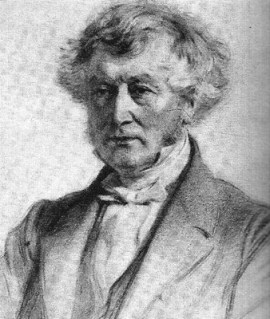
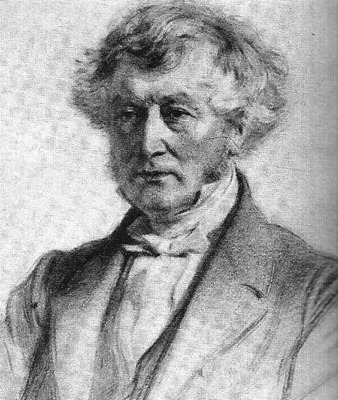
James Edward Austen Leigh

The real turning point in the success of Jane Austen was in 1870 when James Edward Austen Leigh wrote a biography of his relative’s life and so created the Jane Austen myth. Professor Kathryn Sutherland, talking to Amanda Vickery at Chawton Cottage, describes how the family took the only portrait they had of Jane, the rough sketch drawn by Cassandra and commissioned an artist to create a new, beautified copy of it so that they could publish it with James Austen Lee’s biography.
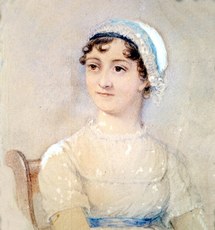
"Saint Jane"

There was very much a sense of the Austen family beginning to shape a view of Jane that they wanted the world to know. Amanda Vickery describes this mythical Jane as “Saint Jane.”
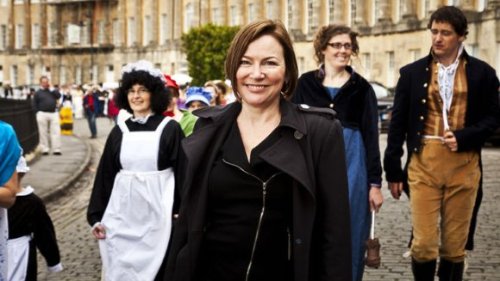
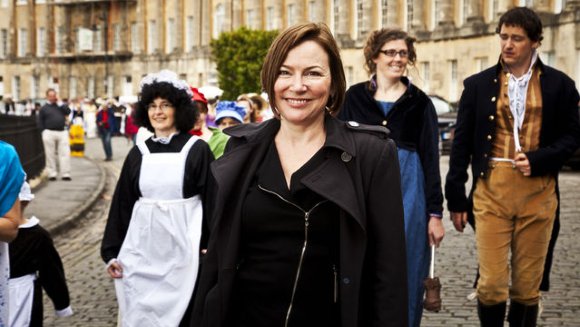
Amanda in Bath

These days, Bath, in Somerset, likes to think of itself as the spiritual heart of the Jane Austen culture. The fact that Hampshire, where she loved most of her life, has far more to do with Jane Austen appears to pass them by; perhaps more accurately, the Bathites would like us not to notice. Jane Austen used the setting of Bath in two of her novels, Persuasion and Northangar Abbey. In Persuasion especially Jane portrays the underclass side of Bath alongside the rich upper-class side. She herself was never reverential of Bath.
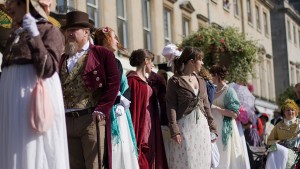
2008 Jane Austen Festival, Bath. Image @The Jane Austen Centre Online

Today Bath holds its festival once a year with balls and hundreds of people parading the streets in 18th century costumes. It is the home of the Jane Austen Centre positioned half way up the hill in Gay Street. But it appears to me that these are more attempts to create a tourist trade. They want the custom. Jane Austen herself did live in Bath for four years in various houses around the city, the family seemed to be forever on the move, but she was not particularly happy there. She felt that she had been torn from her dear Steventon in Hampshire by her parent’s sudden wish to retire and move to Bath to have a good time. Similar to the Fort Worth experience, Bath appears to be out to make money from Jane. Bath does create a world focus for Jane Austen and brings her to the attention of many. So it’s not all bad.
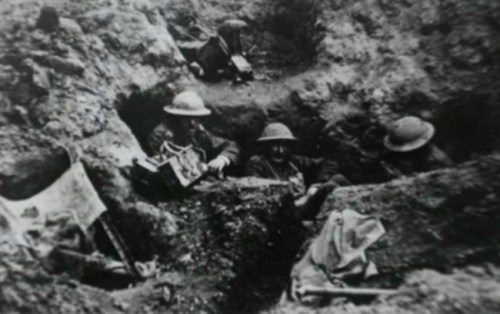
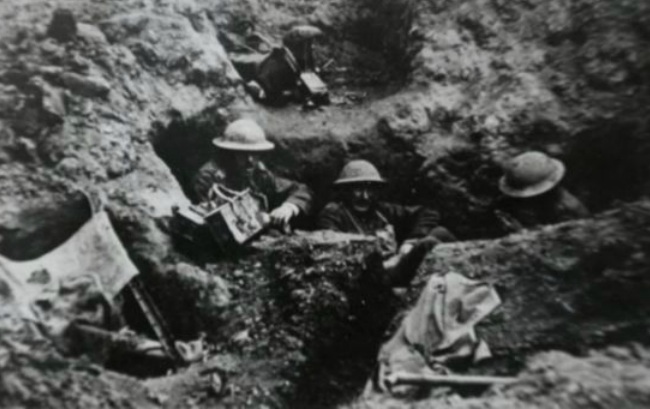
Jane Austen in the trenches of WWI. Image @BBC

In 1894 Sir George Saintsbury coined the term, Janeite. Rudyard Kipling was a renowned Janeite and so were other writers and academics.Rudyard Kipling wrote an article about a group of World War I soldiers in the trenches who read Jane Austen novels. Life in the trenches was horrific from more than one point of view. It wasn’t just the horrors of  “going over the top,” but it also included boredom, filth, lack of clean water and the deafening sounds of artillery, shell shock,and just grinding fear. Soldiers required a reading material that could take them away from this hell on earth. Jane Austen became very popular amongst soldiers in the trenches because she took them back to a pleasant land, a good, a peaceful England of quiet gentle manners and drawing rooms. William Boyd Henderson writing a letter home describes how much he enjoyed reading Jane Austen’s Emma. Winston Churchill is renowned to have said, when he was ill with a fever, “antibiotics and Pride and Prejudice have cured me.” Rudyard Kipling is said to have read Jane Austen constantly after hearing of his son, Jack’s, death in the trenches of the First World War.
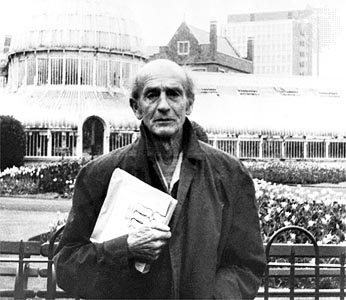
F. R. Leavis

After the First World War there was a great need for the civilising power of culture , the humanities and English Literature, to be part of the salving cure for damaged and bereft lives. F.R. Leavis, the great English Literature don at Downing College Cambridge was the driving force behind all analysis of English literature. The Professor of English literature at Downing College between the 1930’s and 1960, his was the dominant and dominating view that all others looked to. He talked about the great tradition and said there were only five great writers of the novel: D.H.Lawrence, Henry James, Joseph Conrad, George Elliot and the mother of them all, Jane Austen. Leavis’s view held dominant for decades and few could survive criticism of this view. Careers could be and were destroyed or limited if anybody went against him. Professor Janet Todd tells Amanda Vickery that Leavis thought English literature could save the world.
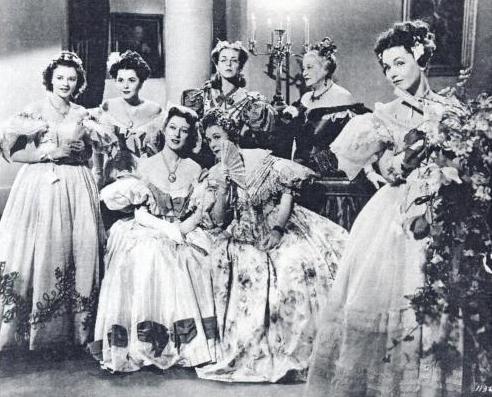
Female cast in Pride and Prejudice, 1940

In 1940 Hollywood took on Jane Austen when Pride and Prejudice with Lawrence Olivier and Greer Garson was produced. In the 1960’s the BBC produced a whole series of costume dramas portraying Jane Austen’s novels. In 1980, Pride and Prejudice was filmed again. Amanda Vickery says, ” It was as though Jane Austen was trapped in the Quallity Street tin.” It was a Laura Ashley version of Austen. This suggests that perhaps each generation gets the Austen they deserve. Each decade produces productions of Austen that reflect the age they are made in.
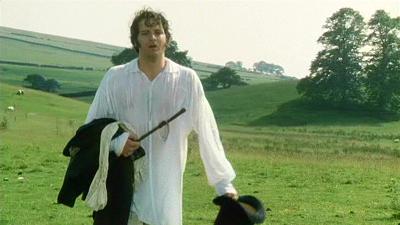
Colin Firth as Mr. Darcy

In 1995 came Andrew Davis’s wet t-shirt version with Colin Firth emerging from the lake at Pemberley, wet to the skin, pumping testosterone. A film for the young with hormones. There is lovely scene with Amanda Vickery taking the part of Elizabeth Bennett as Darcy/Firth emerges from the lake and Amanda gives Elizabeth Bennett’s lines in response to Darcy and the two films are cut together as though they are one. The 1995 film still appears to be the most popular version, even now in 2011, anyway it appeared to be so with the hordes of fans at The Forth Worth assemblage. Andrew Davies was the main guest speaker and he was very very popular. Do Janeites create a hysterical response like a form of Beatle mania? Well, perhaps not. They don’t throw their knickers at Andrew Davies; they just receive, rather cheekily, tiny black lace thongs in little black net bags provided with Willoughby’s phone number. Apparently Willoughby is sounding rather exhausted, if polite, on the phone these days!!
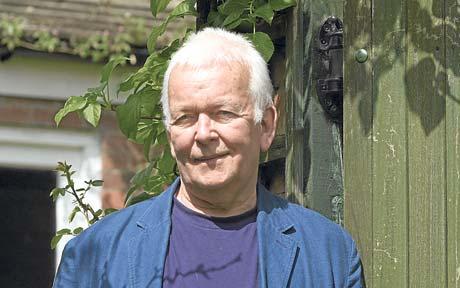
Andrew Davies. Image @The Telegraph

Dr Cheryl Kinney, a gynaecologist and the organiser of this year’s JASNA conference at Fort Worth, denies that the Willoughby knickers are a way of increasing the likelihood of sexually transmitted diseases so that she can make money curing people. The contemplation of this possibility makes Amanda Vickery laugh like a drain. Yes, we DO get the Austen we want.

We are left with a thought for the future: Austen has peaked in the west. Could  China and Japan be the next stops perhaps?

Other reviews: These will give you more insights and images!

Please note: The ads are placed here by WordPress. I do not make money from this blog.

Gentle Readers: Jane Austen Pilgrimage III: Jane Austen House Museum and the Writing Class I Took There is Christ Steward’s third post on her travels to England last summer. The author of the blog, Embarking on a Course of Study, Chris has been closely examining the life and novels of Jane Austen for well over a year.

We arrive at the magical day I’d been dreaming of for many years!

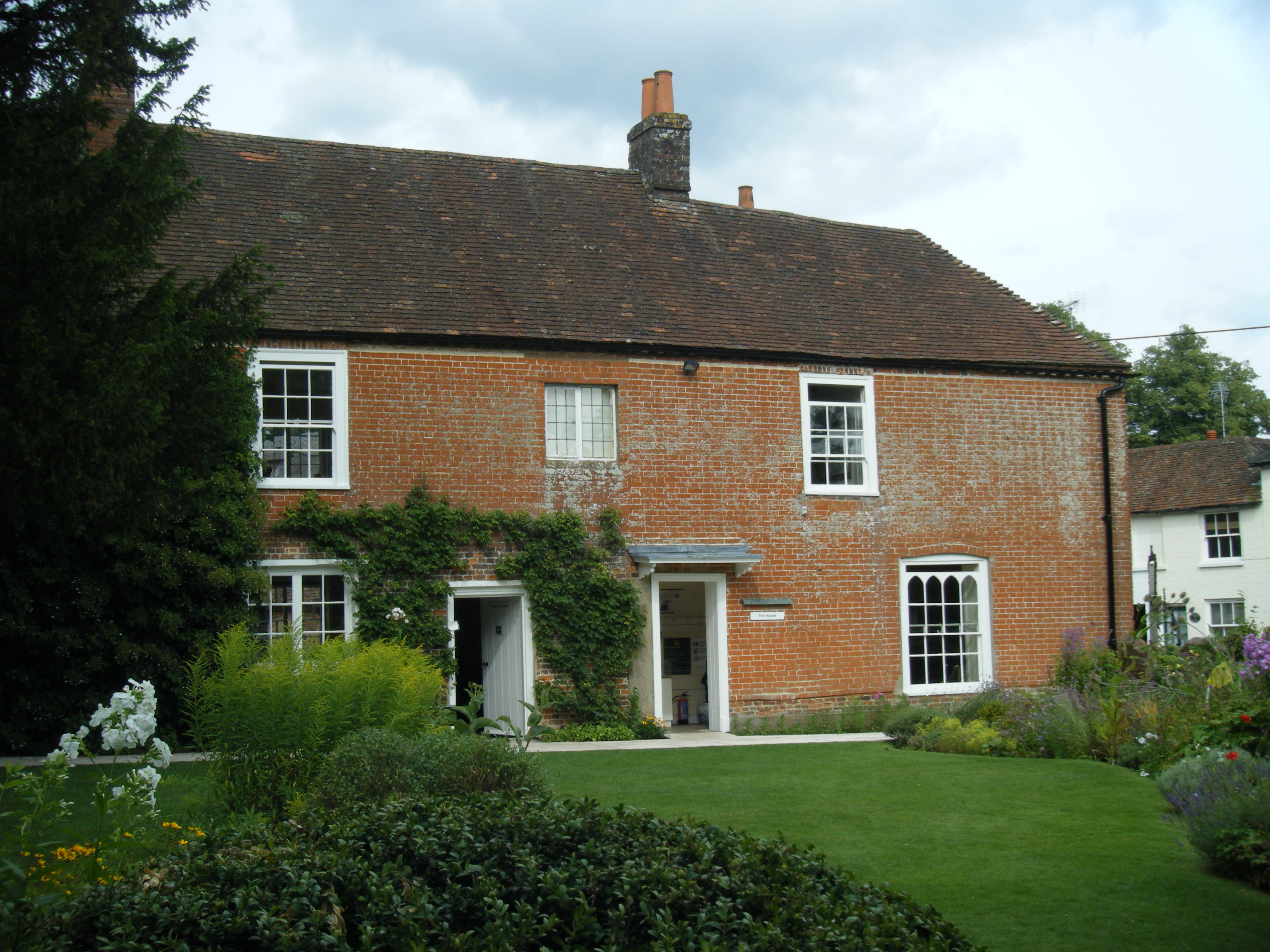
The day after my visit to Winchester I woke up in my charming little room at the Alton Grange so happy because I’d slept well but I had the best day of all ahead of me: a visit to the Jane Austen House Museum – Jane’s home – also known as Chawton Cottage.

This is where Jane’s writing life came back to life, after the grief over her father’s death and moving around to several places in Bath, the rectory in Adlestrop and also Stoneleigh Abbey. Finally she had a place that felt like home again—peaceful, beautiful, with a garden she loved. And it was here that she resurrected previous work and wrote new novels that were subsequently published, two posthumously.

It was a gorgeous day!

I thought I could take a taxi to Chawton (the map on the Jane Austen House Museum – JAHM from now on – site wasn’t at all clear about how to walk there, in my opinion. It looks easy, but once you’re standing there with the map and no real street signage, it’s not), but there was some conference in the area that was monopolizing all of them so I took the bus right outside the hotel.

I was told too late about the taxi problem to catch the right bus, so had to wait an hour for the next, fretting, I don’t mind telling you, all the while about how late I would be for the class. It started at 11:00 and the bus didn’t come until 10:50. I really didn’t want to walk in late to the class and miss anything.

But, lucky me, the bus driver was the same gentleman who had dropped me off the night before! I told him where I was going and he said he’d get me as close as he could, which he did. I was dropped off at a roundabout (middle of nowhere it looked like) and told to cross it to the other side and keep going.

To read more about the visit, the class, a charming tearoom, visiting Cassandra’s grave: http://www.embarkingonacourseofstudy.com