Feeds:
Posts
Comments

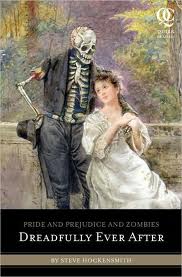
“What? Do I really have to read another Pride and Prejudice and Zombies review by Vic?”, you are asking yourself. Blame it on Quirk books, who recently sent me Dreadfully Ever After, the sequel to P&P&Zombies.

The folks at Quirk Books have been such good sports about the tongue-in-cheek barbs that I have slung in their direction, that I simply could not resist reviewing this latest zombies installment. I have slowly been finessed by their cagey publicists – who keep tossing books, and posters, and zombie paraphenalia my way – and whose understanding of promoting and branding a product in today’s tech savvy world could teach a marketing professor a thing or two.

Dreadfully ever After is Steve Hockensmith’s second foray into Regency England, land of the dead. After Seth Grahame-Smith’s record smashing P&P&Zombies, Hockensmith wrote the prequel, Dawn of the Dreadfuls, explaining how the undead plague invaded England and how those darling Bennet girls were trained to become fierce Shaolin warriors, able to lop off the heads of marauding dreadfuls with an economy of movement that Steven Seagal can only dream about.

After reviewing P&P& Zombies two years ago, I outsourced the Dawn prequel to another reviewer, who has hardly spoken to me since. And so, wishing to keep the few friends I still have, I decided to tackle this book on my own. I kept putting off Dreadfully Ever After, but the review’s deadline was looming. I then drank a bottle of wine or two and began to slowly read the book.

Well, the joke is on me, for as I read it I kept going. Wisely, Hockensmith made no effort to write like Jane Austen. He created a rousing tale using his own words and Jane’s familiar characters in a setting that is both familiar (Regency England) and unfamiliar (filled with zombie slayers and the undead).

Darcy and Elizabeth have been married for four blissful years when he is bitten in the neck by young master Brayles, a freshly made zombie. Unfortunately, Lizzie cannot lop off the affected limb, for that would mean beheading her husband and result in a book that ends after two chapters. Fortunately, Lady Catherine de Bourgh reputedly has access to an antidote that might save her nephew’s life, however she does not possess a cure that might reverse the deadly effects of a zombie bite.

She sends Elizabeth on a dangerous mission to London, saying, “If I told you there was but one path to this salvation—and it was also the path to your utter degradation—would you, I wonder, be able to bend that stiff neck of yours and do what you must?” Without hesitation a stoic Lizzie hands Darcy’s care over to her nemesis and sets off for London with her warrior father and sister, Kitty to look for a physician who holds the cure to the strange plague. Her sister, Mary, is left behind. But she is no namby pamby miss and scurries after them, knowing her skills as a warrior might be of use.

And so the stage is set for a rousing zombie tale. While Darcy exists in a twilight world and experiences unspeakable urges, the troupe in London follows the few leads they’ve been given. The city has been divided into a series of quadrants and is surrounded by fortress walls and watchtowers. Much like airports today, travelers must wait to go through security:

A line of coaches and wagons more than a mile long stretched from the Northern Guard Tower, and it took hours just to be near enough to spot the red-coated soldiers stationed at the gate. The queue was full of merchants and peddlers and performers, all drawn to town by the upcoming recoronation of George III. The king, finally cured of his “nervous exhaution” (otherwise known as “insanity” when it afflicts those of lower rank), was about to reclaim his throne.”

This short passage explains why prepubescent boys and fans of gory mash-ups love the P&P&Zombies series – except for the plague of the undead, lack of electricity and running water, and a smattering of history, Regency England is not so very different from our dangerous world today. And so the plot moves swiftly on, prompting the reader to ask: Will Darcy be saved in time, or will Lizzie, Kitty, Mary, and Mr. Bennet dawdle in London so long that he will turn into a slobbering, mouldering, flesh-eating mess?

Steve Hockensmith’s way with a phrase can be a hoot. On page 158, Kitty declares of Nezu, Lady C de B’s ninja warrior: “He’s like a male Mary!” To which Mr. Bennet retorts, “Mary’s like a male Mary.”

Steve Hockensmith

Parents who worry that these mash-ups will liquify their childrens’ brains  need not worry, for these books, while exposing their offspring to plenty of gore and carnage, provide no untoward exposure to gooey sex scenes or slimy kisses. And so I leave it to you, gentle reader, to decide whether you should subject yourself and your progeny to a zombified England, or gently turn your backs to a series of runaway bestsellers whose ability to generate an impressive stream of revenue would make even Nora Roberts jealous.

Dreadfully Ever After, generously illustrated as all Quirk mash-ups are,  goes on sale today.


Carnage rating: 5 out of 5 severed limbs
Romance rating: 1 out of 5 torn-out hearts
Humor rating: 5 out of 5 brainless zombies
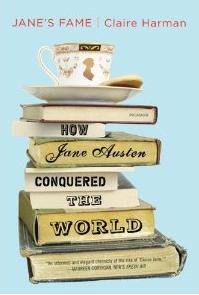
It is not often that a much-hyped book or film lives up to its reputation, as with The King’s Speech and Jane’s Fame: How Jane Austen conquered the world , the book by Claire Harman and the subject of this review. I’ll admit to being a wee bit partial to any book that mentions my blogs – Jane Austen’s World and Jane Austen Today – but this is not the sole reasons for my gushing over Ms. Harman’s lucid and accessible account of the slow rise of Jane’s Austen’s literary fame in the 19th century to her near rock-star status as a popular cultural icon today.

Jane’s Fame was published in 2009 amidst much controversy. Accusations of heavy borrowing and plagiarism flew from the mouth and pen of Ms. Harman’s former friend,  Kathryn Sutherland, who had published Jane Austen’s Textual Lives, from Aeschylus to Bollywood in 2005. Ms. Harman countered the accusations with equally strong words, saying she had followed the standard practice of sourcing all quotes and citing the earliest sources for her information. With this controversy in mind, I read Jane’s Fame with the same morbid curiosity that Two and a Half Men fans are reading articles about Charlie Sheen’s downward spiraling career today. I am delighted to announce that I think Jane’s Fame stands on its own, paying due homage to Jane Austen’s Textual Lives, but making what could have been a dry tale into an exciting read  for the modern audience.

Laurie Kaplan, who reviewed Sutherland’s book for the Jane Austen Society of Northern America, wrote:

Through an examination of biographies, portraits, manuscripts, films, and editions of the novels, Sutherland tracks the creation of Jane Austen as “a special cultural commodity.” From James Edward Austen- Leigh’s Memoir of Jane Austen (1870), which presents a “family-managed” biography of his relation, to the films, which sometimes bear only a passing relation to the novels, biographers, editors, and directors have “marketed” their own versions of “Jane Austen” to the public.”

I agree with this assessment of Sutherland’s book. Several years back I had read portions of Jane Austen’s Textual Lives and from it learned much about Jane’s slow rise in literary reputation and in the estimation of her peers. However, in my opinion Dr. Kathryn Sutherland’s revelations were not entirely new. Any Janeite who has read a number of Jane Austen biographies would have known that Jane’s literary reputation stagnated in the years after her death. The facts were scattered in a number of sources and Dr. Sutherland was astute enough to pull them together. She chronicled Jane’s rise in academic order, and had her efforts rewarded with the publication of her book by Oxford University Press. While her richly footnoted tome is perfectly suited for the shelves of a university library, her professorial writing style would in no way appeal to Mr & Mrs John Q Public.

Enter Ms. Harman.

One cardinal rule of copyright laws is that facts and historical events belong to the public domain. One cannot patent the dates of a person’s life or historic events. Ms. Harman, with her easy and accessible writing style and her academic knowledge, pounced on the Jane Austen bandwagon and came up with a runaway hit. In fact, Ms. Harman makes the rise of Jane’s fame seem exciting. Here is an excerpt of her description of James Edward Austen-Leigh’s attempt to take a look at Fanny Knatchbull’s letters from her Aunt Jane:

In 1869 Fanny’s sister Elizabeth Rice warned him not to wait for a sight of the letters, as there was virtually no chance of it. Lady Knatchbull, she said, was prone to giddiness and confusion, an impression of advancing senility confirmed by fanny’s daughter Louisa, who protested that her mother would have been only too delighted to assist James Edward ten years earlier, but it was too late now.”

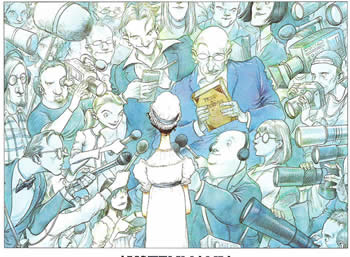
Chris Riddell's cover from the April 2009 issue of The Literary Review

It is universally acknowledged that Edward Austen-Leigh’s Memoirs of his aunt in 1869 (and quickly again in 1871) piqued the Victorian public’s curiosity, and that his biography prompted the buying public to purchase Jane’s novels in droves. In the first half of the 20th century, academics and the public alike discovered the rich literary minefield that Jane’s novels represented. Film adaptations only served to boost her reputation, and by 1995, when A&E presented a 6-part series of Pride and Prejudice and the Internet began to be embraced by non-geek users, the stage had been set for world-wide Austen adoration.

My major complaint about Jane’s Fame is that I suspect this book was written to meet a publisher’s deadline. The first 2/3 of its pages are rich with facts and anecdotes, with fully developed topics that satisfied my curiosity about Jane’s rise in popularity. But then the book’s pace speeds up and the last few chapters seemed rushed and thin. The most recent years of Jane’s popularity are barely covered, as if the author (and publisher) lost focus. Be that as it may, I read Jane’s Fame in two or three sittings and recommended it to my Janeite book club. They LOVED it. I am confident that you will too.

Please note: the ads at the end of this blog are a feature from WordPress. I do not make money from them.

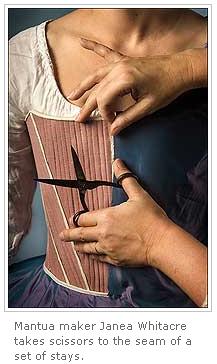
Milliner and Mantua Maker

Image @Colonial Williamsburg Official Site

The blog, Two Nerdy History Girls, featured Janea Whitacre, mistress of the millinery & mantua-making trades in Williamsburg in their last post about Accessories: Head to Toe, a symposium that was recently held in that historic city.   Accessories Head to Toe: Beautiful Fashion From 1760 to 1830 showcases some images from the people of the Margaret Hunter Shop, where milliners and mantua makers still plie their craft.

An interview with Ms. Whitacre illuminates how fashion was made in those days, and how fashion and economics are tied together.

Janea: Mantua-making – that’s gown-making, so we’re the 18th-century dressmaker, and what we do is cut the gown to the person, so the lady is her own mannequin or her own dress form. So I don’t need to take measurements, I don’t do patterns. We cut to the person.

Lloyd: Okay, so at the risk of getting this wrong, what you are is what in a male version a tailor would be.

Janea: There’s a lot of overlap between the trades. The tailor is going to claim that stay-making and making ladies riding habits is his trade. I’m going to claim that it’s my trade. But the difference between the trades is really how we cut the fabric out. He takes measurements and does patterns. We usually don’t, because our customers are perfection in their stays. So as long as they have the stays, we’re ready to cut.  Click here to read the rest of the interview on history.org

Handiwork: The Colonial Williamsburg Official Site

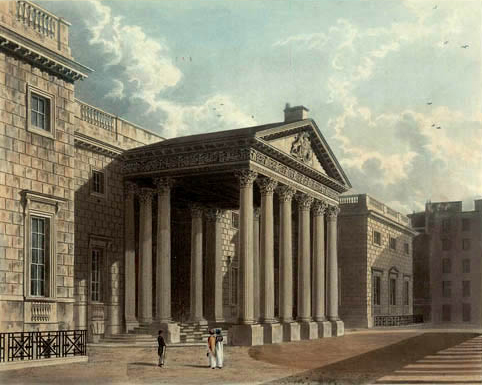
Carlton House was the town house of the Prince Regent for several decades from 1783 until it was demolished forty years later. It faced the south side of Pall Mall, and its gardens abutted St. James’s Park in the St James’s district of London. The location of the house, now replaced by Carlton House Terrace, was a main reason for the creation of John Nash’s ceremonial route from St James’s to Regent’s Park via Regent Street, All Souls, Langham Place and Park Square. Lower Regent Street and Waterloo Place were originally laid out to form the approach to its front entrance

An existing early eighteenth century house had been sold in 1732 to Frederick, Prince of Wales, and son of George I. William Kent had been employed to lay out the garden of which no trace remains. Frederick’s widow, Augusta, enlarged the house, had the entrance gates and porter’s lodge redesigned and a colonnaded porch built. She died in 1772 and for some years the house was unoccupied.

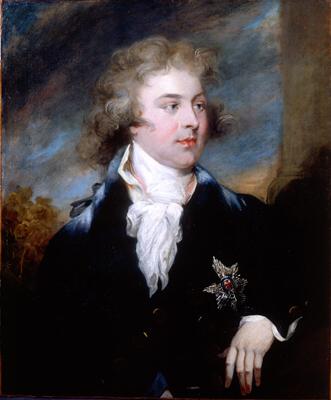
Portrait of The Prince of Wales, later King George IV (1762 – 1830) 1790. John Russell RA

In 1783 George III handed the house over, with £60,000 to refurbish it, to George, Prince of Wales on his coming of age. During the following years the interiors were remodelled and refurnished on a palatial scale.

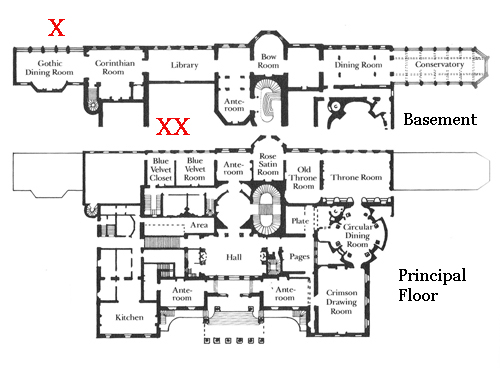
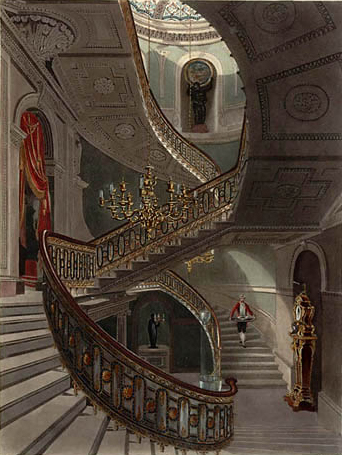
Carlton House ca.1825. As published in Britton and Pugin, Public Buildings of London. 1825. Patrick has worked on elements from the areas marked with a cross

Initially Sir William Chambers was appointed as architect, but he was quickly replaced by Henry Holland. Both Chambers and Holland were proponents of the French neoclassical style of architecture, and Carlton House would be extremely influential in introducing the Louis XVI style to England.

The Grand Staircase

Holland began working first on the State Apartments along the south (garden) front, the principal reception rooms of the house. Construction commenced in 1784. By the time of his marriage to Mrs Fitzherbert in December 1785, however, construction at Carlton House came to a halt because of the Prince of Wales’ mounting debts. Costs continued to soar and more money had to be found by the Prince…  Continue to read this post on Patrick Baty’s blog.

Inquiring Readers, Patrick Baty is one of the foremost authorities on architectural paint and colour on historic architecture and interiors. These days, the majority of Patrick’s time is spent as a historic paint consultant, sampling paint layers on buildings, bridges and architectural details to produce a forensic history of the decoration from creation to the present day. He has graciously allowed me to link to his post about Carlton House.

Other posts by Patrick Baty on this blog:

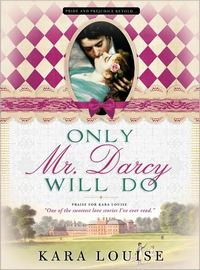
Only Mr. Darcy Will Do: An Austenesque book reviewer’s life is so romantic. They get to visit the world of Jane Austen over and over again, absorbing more and more of the sighs and oohs and aahs that come from her settings and characters, and they often times get to do it before anyone else does (“Have you read __________? I’m so totally into it that I stayed up till 3 a.m. just to finish! You know? Have you seen it?” The silent stare your friend gives you will then make it clear…You’ve read it. She has not.). When the doorbell rings, the book reviewer runs down to greet the mailman, her eyes sparkling with curious delight. What did I get this time? Ripping open the box is like Christmas, and it takes everything they’ve got not to plop down on the couch and start, right then and there, dinner be damned.

There is also, unfortunately, a time in a book reviewer’s life that isn’t so rosy. Normally, reading a book you’re not particularly fond of is a matter between you and you (or between you and the person who recommended it to you) but for the book reviewer, it’s different.

That being said, this particular reviewer also has opinions of her own about what constitutes a good book. It is in Austenesque literature that I look for something original, something imaginative, something that hooks me into Regency England with the devotion and fortitude of a forklift. I don’t think I’m alone when I vehemently say…the same old story of Elizabeth and Darcy is not something I want to read: the push-pull of courtship, the misunderstandings between the two of them, their marriage followed by a perfect existence where all is copacetic and no problems arise, ever. Money, parenting, family, health, societal dilemmas simply aren’t there, and are often times not even alluded to. And while I realize that this fantasy is one in which we could all swim in for a certain amount of time, my swimming time is over. What would true Darcy/Elizabeth love look like if they actually had to fight to stay together forever? Would it last? Moving in with someone, married or not, Regency England or not, is tricky (to say the least). What would that experience be like? Societal upheaval back then was surging out of control…does it really leave them completely alone, untouched and unharmed for the rest of eternity?

I say this because Only Mr. Darcy Will Do, despite having been written with wondrous care and expertise, pushed me into the deep end of a pool I’m through swimming in. In Kara Louise’s story, Elizabeth finds herself at a crossroads when her father passes away soon after she’s refused Darcy. Unable to support herself, she’s forced to take a job as a governess to make ends meet, and thus loses all hope of every traveling within the Darcy social circle again. But, lo and behold, she ends up seeing him again through a string of well-timed circumstances, and after spending months brooding over whether she should’ve accepted him. Again, the push-pull of courtship proceeds. Again. “How will it end?” is a question you’d never have to ask.

In its current form, Only Mr. Darcy Will Do cannot exist as a stand-alone story while the characters remain so undeveloped, relying so heavily on Jane Austen’s pen. Of course, deviating wildly from the character pattern would not have been allowed for a “retelling” novel, but perhaps it would’ve been more interesting. Huge pieces of potential plot points were skipped over in order to return the reader to the dull Darcy/Elizabeth back-and-forth. Perhaps in this instance, adherence to the original should’ve been secondary to expanding Louise’s idea (which truly had potential).

It’s disappointing, especially when Kara Louise’s prose is so beautifully formed, her style so elegant and charming!  I would love to see her write something else, something less predictable.  She can write like an angel, and for that she’s got a mountain of respect from her readers.  But next time, can we please have something besides the same old story?

The Reviewer: From the desk of Shelley DeWees, of the blog, The Uprising, and reviewer for Jane Austen’s World and Jane Austen Today. This is Shelley’s fifth post for this blog.

More Reviews: