Feeds:
Posts
Comments

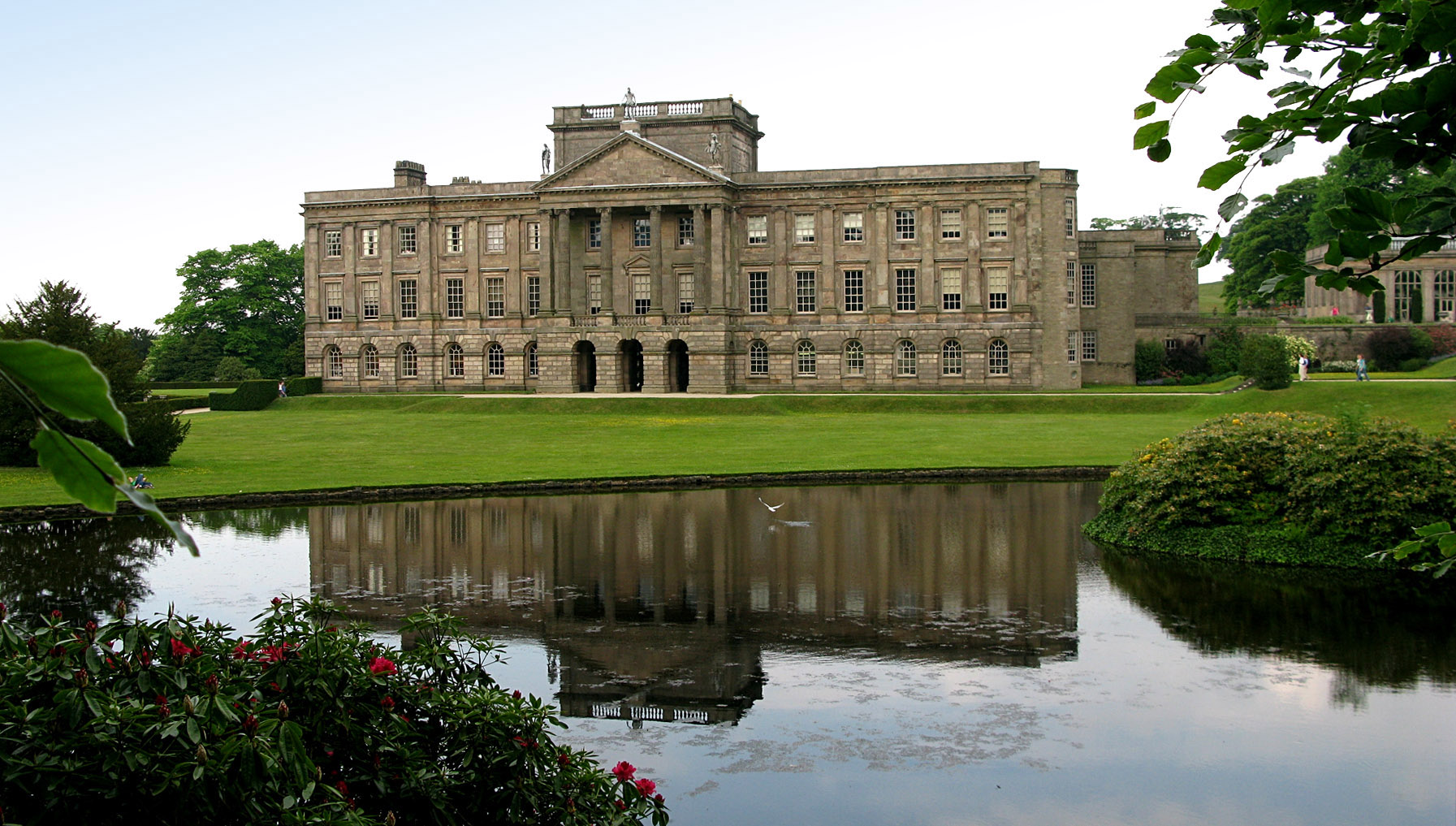
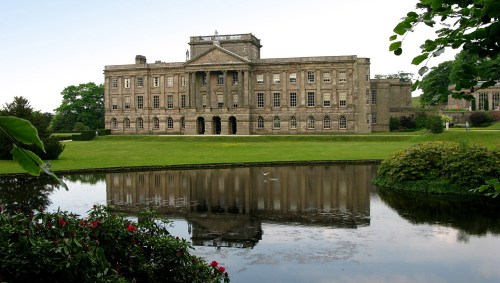
Copyright (c) Jane Austen’s World. Lyme Park in Chesire is best known today as the exterior of Pemberley in Pride and Prejudice 1995. The house, situated near the village of Disley, was the principal seat of the ancient family of Leghs, whose ancestor fought bravely in the battle of Cressy. Once a hunting lodge, the building dates back to Elizabethan times. Its classical facade was designed in the 1720’s by the famed Venetian architect, Giacomo Leoni. The lake made famous by Colin Firth’s dip was once the source of a cascade, or a staircase with water running down it, from 1703-1818.

Lyme Park. Image @Lesley Rigby, Panoramio

The vast moors and lands of Lyme Park housed herds wild cattle and fallow and red deer, which had roamed the area for around five hundred years. Lyme Park’s stags were famous for their size and fierceness, but their wildness did not prevent them from being driven annually across the water. The two sources below do not list the reason for this custom, but one imagines it was to drive the herds to “greener” pastures.

Manners & Customs of all Nations

CURIOUS CEREMONY OF DRIVING DEER THROUGH THE WATER (FORMERLY PRACTISED) IN LYME PARK CHESHIRE

(For the Mirror)

ORMEROD, in his splendid History of Cheshire, says, “The park of Lyme, which is very extensive, is celebrated for the fine flavour of its venison, and contains a herd of wild cattle, the remains of a breed which has been kept here from time immemorial, and is supposed indigenous. In the last century a custom was observed here of driving the deer round the park about Midsummer, or rather earlier, collecting them in a body before the house, and then swimming them through a pool of water, with which the exhibition terminated.”

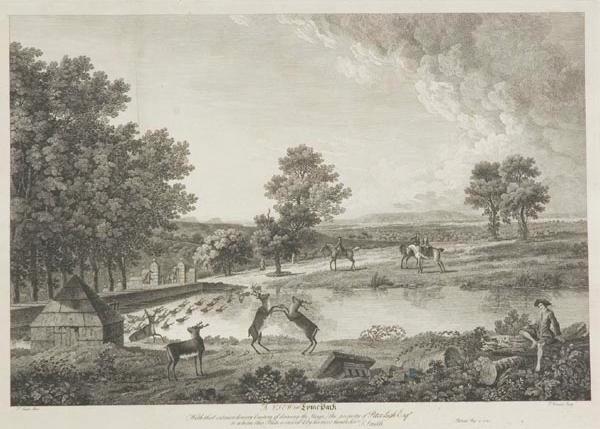
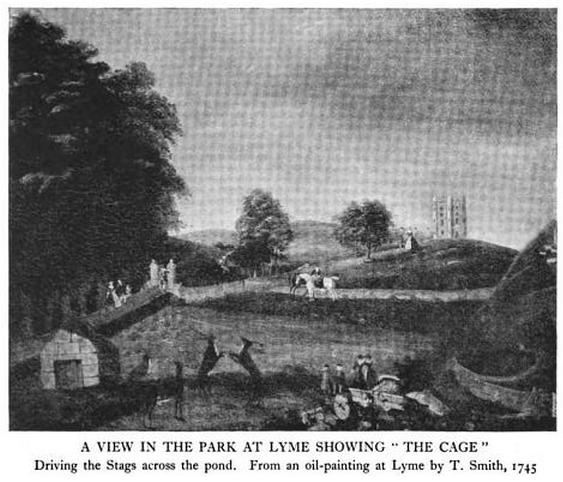
Driving the stags, a view of Lyme Park, 1745. Engraved by F. Vivares after a painting by Thomas Smith. Notice the differences in details between the print and the painting.

There is a large print of it by Vivares, after a painting by T. Smith, representing Lyme Park during the performance of the annual ceremony, with the great Vale of Cheshire and Lancashire as far as the Rivington Hills in the distance, and in the foreground the great body of the deer passing through the pool, the last just entering it, and the old stags emerging on the opposite bank, two of which are contending with their forefeet, the horns at that season being too tender to combat with. This art of driving the deer like a herd of ordinary cattle, is stated on a monument at Disley, to have been first perfected by Joseph Watson, who died in 1753, at the age of 104, “having been park keeper at Lyme more than sixty four years.”

Red deer stag and hind, George Stubbs, 1792

The custom however appears not to have been peculiar to Lyme, as Dr Whitaker describes, in his Account of Townley, ( the seat of a collateral line of Legh,) near the summit of the park, and where it declines to the south, the remains of a large pool, through which tradition reports that the deer were driven by their keepers in the manner still practised in the park at Lyme.” – The Mirror of Literature, Amusement, and Instruction, Vol 14, Percy and Timbs, 1829, p 101-102

In connexion with these deer a very curious custom prevailed at Lyme from earliest times, namely, the driving of the stags at midsummer across a pond, called the Stag Pond — now no longer in existence. This performance was attended by a certain amount of ceremony, it formed a species of entertainment, and neighbours and friends from a distance were invited to be present and to take part in the chase. Vivares,* in a print after a picture by T. Smith,| still preserved at Lyme, represents the stags swimming across the pond, those in the foreground emerging from the water and fighting with their forefeet, the horns being in velvet : in the background are the ladies and gentlemen following the hunt on horseback, dressed in eighteenth-century costume. The print is inscribed :

A View in Lyme Park
With that extraordinary Custom of driving the Stag,

the property of Peter Legh Esqr

to whom this plate is inscribed by his most humble

servant T. Smith

Published Aug : 17. 1745.

* Fran9ois Vivares (1709-1780), a French landscape engraver; came to London 1727 ; kept a print shop, 1750-1780. – The House of Lyme, From its Foundation to the end of the Eighteenth CenturyEvelyn Caroline Bromley-Davenport Legh Newton (baroness), Lady Newton, G.P. Putnam, 1917

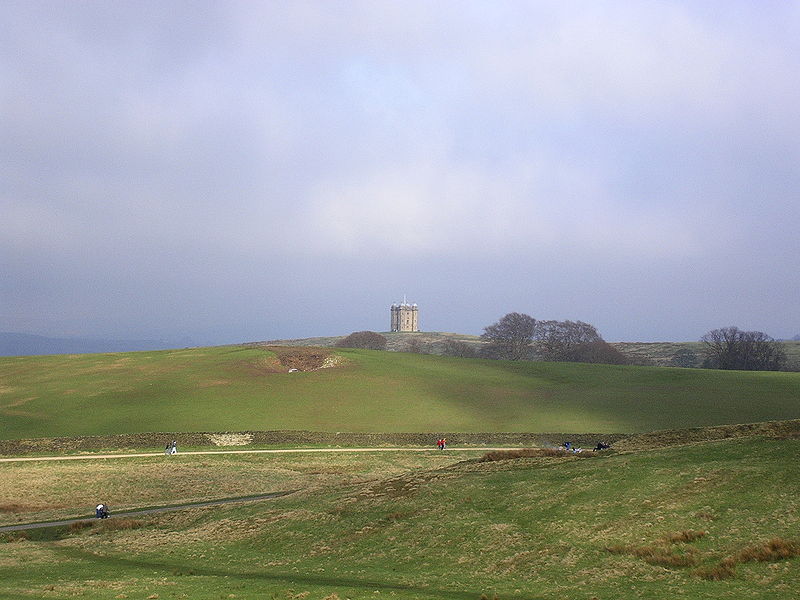
The Cage at Lyme Park overlooking the moors. Image @Wikimedia Commons. The structure was built as a hunting lodge and later used as a lockup for poachers.

More on the topic:


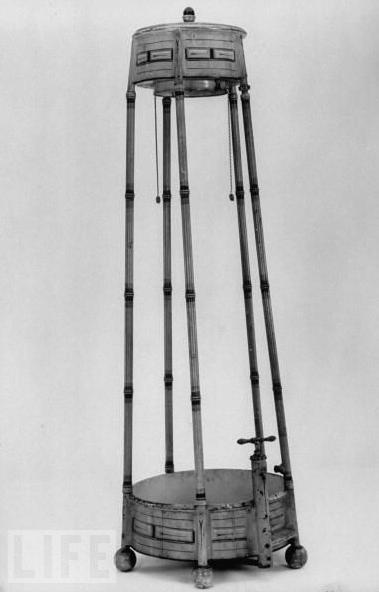
Copyright (c) Jane Austen’s World. Take a good look at this contraption. Life Magazine gave it the following description:

A treasury of old tubbery, Regency shower 12 feet high was a fancy bathing apparatus in England around 1810, pump lifted water from tank at bottom through pipe to top tank, water could be used over and over again.” – Life Magazine image

Readers familiar with the Regency era know that attitudes towards bathing and hygiene were on the cusp of change. In the early 18th century, a person might wash their face and hands daily, but at the most they would bathe every few weeks or months. Towards the end of the century, cleanliness was no longer regarded as frivolous by a growing number of people. Beau Brummel was a particular proponent of bathing and his affectation for cleanliness became the dandy’s creed. Others began to associate bathing with good health.

Washing made a comeback in the later 18th century. The age of revolution and romanticism valued simplicity and naturalness, and water – in the form of mountain torrents and medicinal springs – became fashionable. Rousseau recommended bathing children in ice-cold water, winter and summer, and a sophisticated clientele sought to relieve its frayed nerves and overtaxed digestions by taking the waters at spas. John Wesley, the founder of Methodism, who invented the phrase “Cleanliness is next to godliness”, wrote a manual claiming that cold baths had been known to cure blind-ness and leprosy, as well as “hysterick cholik” in ladies. – Review of Clean, An Unsanitized History of Washing

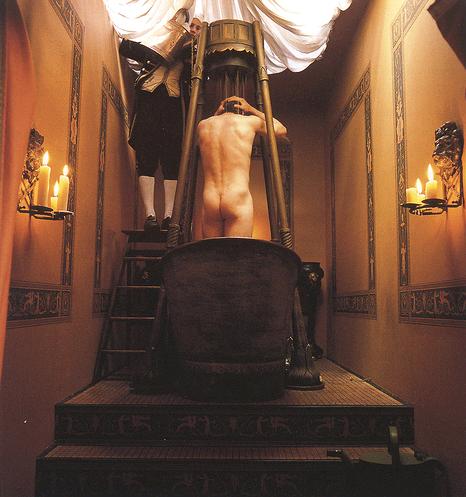
Image from Regency House Party.

The Americans echoed the British attitude towards cleanliness:

Until the last third of the 18th century, bathing practices were not clearly defined or categorized. The perceived effects on the body of the cold and warm bath were debated regularly in prescriptive literature, as were reasons for bathing in the first place. Motives for bathing changed somewhat over time, and different methods had specific connotations: did one bathe for pleasure, as a restorative of good health, for leisure and/or hot weather refreshment, as a luxurious display, or for actual, bodily cleanliness? Whatever the motivation, it was then up to the bather to decide whether she or he adhered to the cold or warm water method. – Bathing, Monticello.org

The pump is evident in this portable bath shower from the mid 19th c.

If a person opted to take a shower, the effect was at first quite bracing, for only cold water was used with this fairly new contraption, invented  in 1767)by William Feetham. In the image from Regency House Party, a servant is seen pouring water into the basin, but Feetham’s patented invention included a pump that forced the water to the upper basin and a chain that was pulled by the bather to pour water over himself. The advantage was that less water was used in bathing (A typical bath tub would require from 6-8 buckets of heated water to be carried from the nearest water source and up several flights of stairs). The early shower system’s disadvantage was clear:  the same water would be reused during the course of the shower. Not only did one reuse dirty water, but one felt quite cold during the process.

When the temperature of a bed-room ranges below the freezing-point, there is no inducement . . . to waste any unnecessary time in washing,” wrote Charles Francis Adams, grandson of President John Quincy Adams and brother of historian Henry Adams.  To Bathe or Not to Bathe

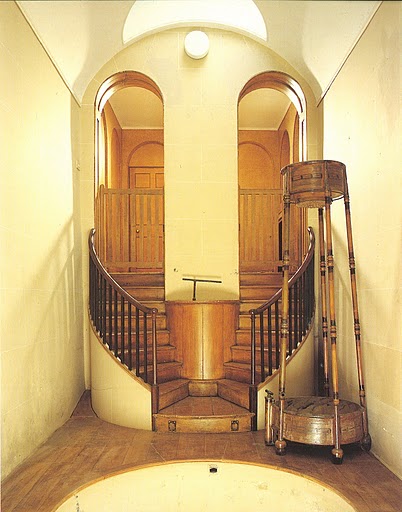
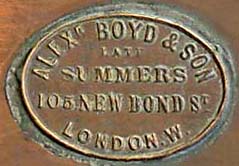
The elaborate bath house at Wimpole Hall, Cambridgeshire, with the shower made by Alexander Boyd of New Bond Street (See their mark below).

Philip Yorke, 3rd Earl of Hardwicke

The bath house at Wimpole Hall was unusual for its day. Around 1792, Sir John Soane designed the plunge pool for the 3rd Earl of Hardwicke. The pool held 2,199 gallons of water that was heated by a boiler below it in the basement.

The 10 – 12 ft tall metal supports, or poles, of these showers were painted to resemble bamboo wood and even offered a shower curtain for privacy. To protect their hair, bathers wore a conical hat made out of oil cloth.

Until plumbing with warm water was introduced inside the bathroom, the use of shower baths remained rare. Towards the middle of the 19th century, attitudes began to change.

Plumbers began to introduce indoor plumbing, and inventors experimented with perfecting showering tools and pumping in hot water. Improvements in showering equipment was continuous, as the patent given to William Feetham (below) in 1822 attests:  To William Feetham of Ludgate Hill, in the City of London, Stove grate Maker and Furnishing Iron monger, for his Invention of certain Improvements on Shower Baths, Sealed June 13 1822.

The intention of these improvements is to enable the patient, who is using the bath to regulate the flow of water, and thereby to soften the shower according as inclination or circumstances may require. This object is effected by two contrivances: the first is an adjustable stop, which may be set so as to prevent the cock from turning beyond any certain distance, so as to limit the opening of the water way to any required discharge; the second is a division of the perforated box or strainer into several chambers by two or more circular concentric partitions, by which limited quantities of water let out from the cistern above are necessarily confined to limited portions of the surface of the strainer …  Read more about the patent in The London Journal of Arts and Sciences, Vol. 5, Sherwood, Neely, and Jones, 1823, p284-6.

Feetham's Shower Bath, 1822

The Patentee states: “I do not claim, or intend hereby to claim, as my invention any of the parts which may be already in use, but I do claim the means of regulating the flow of the water from the cock of a shower bath, and also the method of extending, or contracting within central limits, the shower of water at pleasure.”

In December, 1822, Mr. Feetham was granted the patent for the following improvements:

Shower bath patent #4680 granted December 13, 1822

By the 1870’s, even middle class houses began to have hot water pumped in, for the increased rents the landlords were able to command for houses with hot water made it worthwhile for them to invest in plumbing.  Sponge baths were still recommended for “invigorating the system,” and as late as 1875 The Ladies Everyday Book cautioned that it was a great mistake to make a bath a regular event.

Godey’s Ladys Book, a popular ladies magazine in the U.S., reflected the changes in attitude towards bathing (as does John Leech’s 1851 cartoon):

Godey’s, June 1855:
The shower -bath  has the merit of being attainable by most persons, at any rate when at home, and is now made in various portable shapes. The shock communicated by it is not always safe; but it is powerful in its action, and the first disagreeable sensation after pulling the fatal string is succeeded by a delicious feeling of renewed health and vitality. The dose of water is generally made too large; and, by diminishing this, and wearing one of the high-peaked or extinguisher caps now in use, to break the fall of the descending torrent upon the head, the terrors of the shower-bath  may be abated, while the beneficial effects are retained.

Godey’s, March 1858:
The Shower Bath, whether of fresh or salt water, whether quite cold or tepid, is a valuable agent in the treatment of many nervous affections; it will suit some whom the general bath will not. It is well for persons of weak habit, or who suffer from the head, to have a thin layer of warm water put in the bottom of the shower bath  before getting in. Useful hand shower  baths are now manufactured for children.

Domestic Sanitary Regulation, John Leech 1851. In this scene, the shower is installed in the kitchen. The children are wearing the conical caps to protect their hair as they wait their turn wearing blankets, jackets or robes.

More on the topic:

Copyright (c) Jane Austen’s World. Inquiring reader: Tony Grant sent me images of Hans Place by way of a personal tour. I am sure he won’t mind my sharing his photos of one of the areas that Jane Austen stayed in when she visited her brother Henry in London. In addition, I have elaborated on other places where Jane Austen lodged when she spent time in London.

Jane visited London as early as 1796. Constance Hill writes in her 1901 book, Jane Austen: Her Homes and Her Friends:

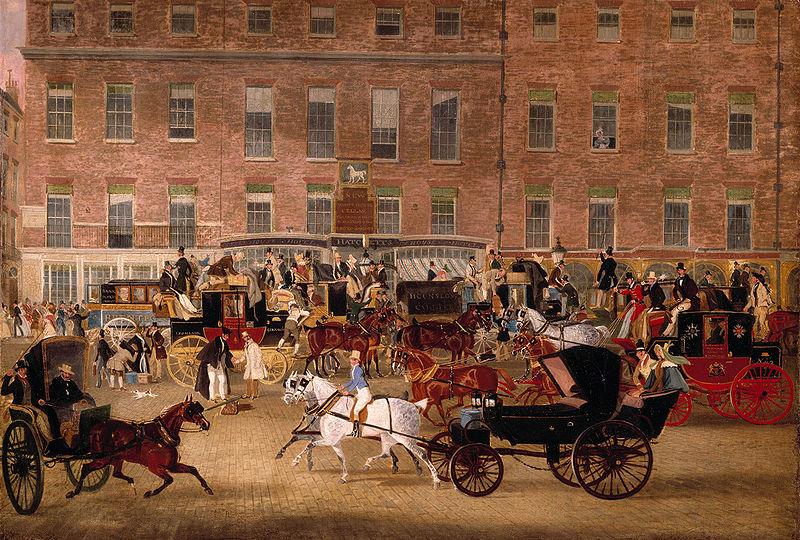
The White Horse Cellar, Piccadilly, by James Pollard

MISS JANE AUSTEN’S acquaintance with London began at an early date, as she frequently passed a few days there when journeying between Hampshire and Kent.
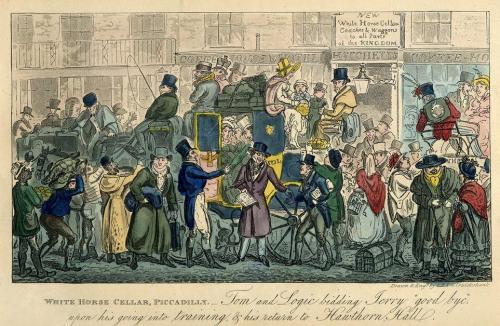
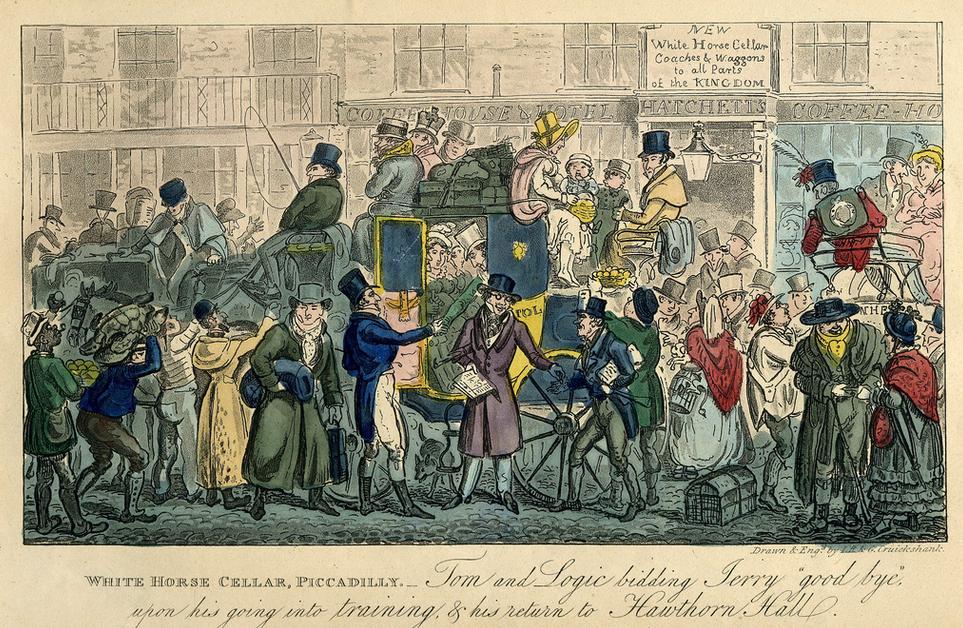
We have mentioned her sleeping at an inn in Cork Street in 1796. Most of the coaches from the south and west of England set down their passengers, it seems, at the “White Horse Cellar” in Piccadilly, which stood near to the entrance of what is now the Burlington Arcade. Jane and her brothers, therefore, probably alighted here and they would find Cork Street, immediately behind the “White Horse Cellar,” a convenient place for their lodging.

Jane visited Town on numerous occasions and stayed with her favorite brother, Henry, and his wife Eliza. Henry not only actively supported his sister’s writing career, but served as her agent, negotiating on her behalf with publishers and printers. When a book required editing and proofing, Jane would visit Henry to accomplish these ordinary, rather time-consuming tasks, Kathryn Sutherland’s opinions notwithstanding.

This post details her visits through Henry’s many moves as he experiences successes and tribulations in his professional and married life. In his varied career Henry served as a soldier in the Oxfordshire militia (1793-1801), a London banker (1801?-1816), and as a curate at Chawton from 1816.

Jane’s visit to Sloane Street, 1811
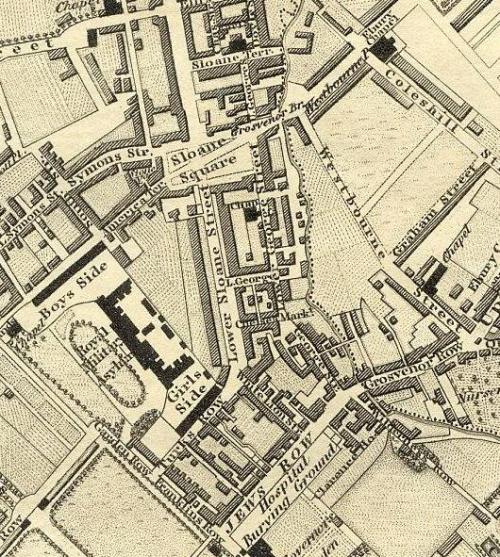
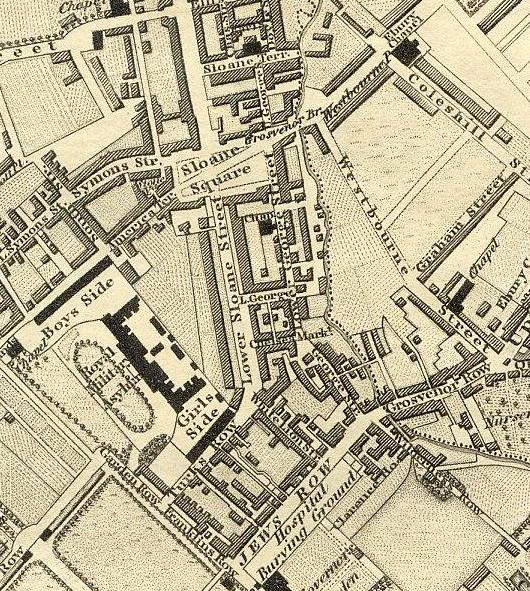
Greenwood's Map, 1827, of Lower Sloane St, Sloane Terrace, and Sloane Square

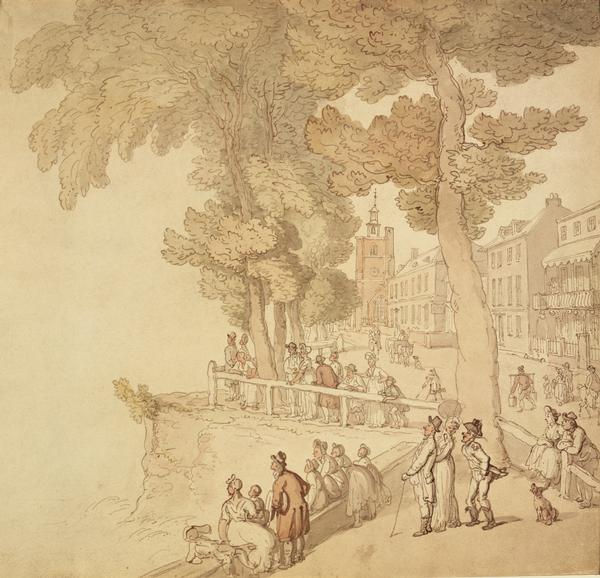
When Jane Austen visited her brother Henry in 1811, he lived in Sloane Street (today behind Harrods in Knightsbridge). At the time, the street was a wide thoroughfare that connected Knightsbridge with the west part of Pimlico and the east end of Chelsea. The area was still quite rural, for there was no development at the east side of Sloane Street before 1790.  In the late 18th century, the approach to London from this side was still regarded as a dangerous, for the area was rural and dimly lit. Chelsea, in fact, had just recently begun to be engulfed by a burgeoning London, but during Jane Austen’s day, the area was still quite bucolic and rural, as these images attest.
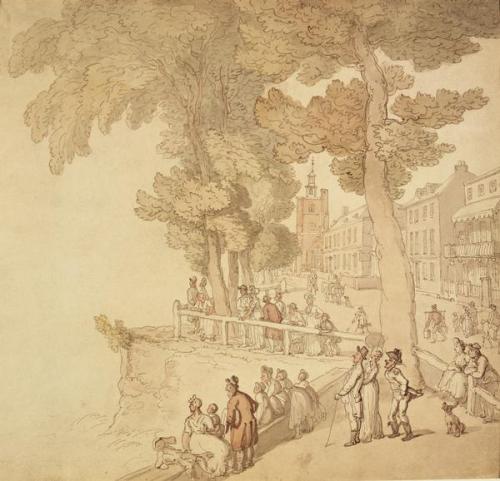
Cheyene Walk, London, late 18th c., early 19th century, People strolling by the banks of the River Thames, in the distance is Chelsea Old Church

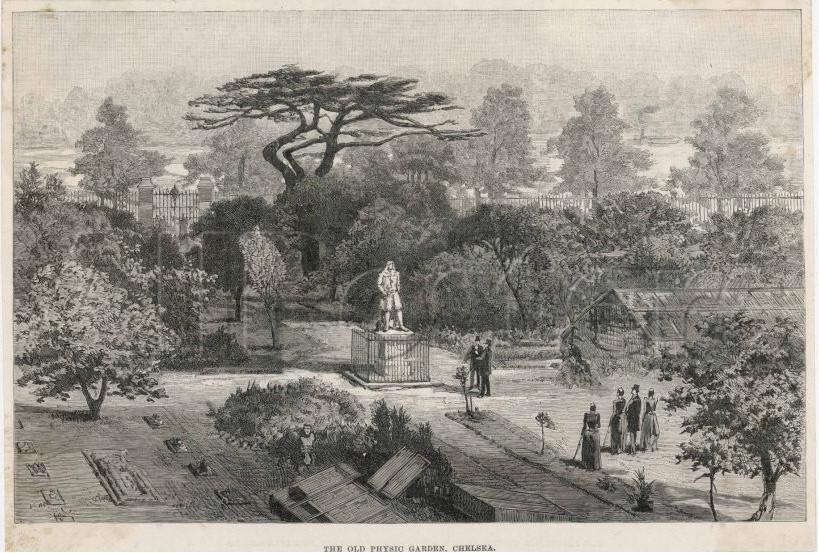
In 1796, the Old Dairy was erected, for cows still grazed nearby. The community was filled with gardens, in particular the Physic Garden founded in 1673 by the Worshipful Company of Apothecaries. Throughout these spacious grounds, apprentices learned to identify plants.
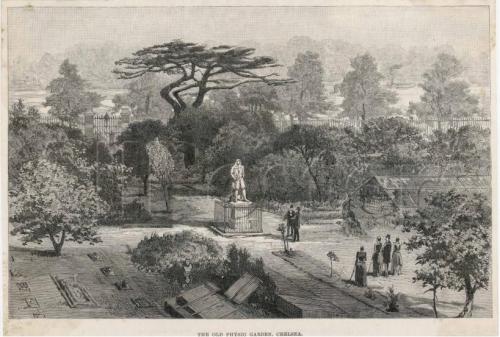
Chelsea, Old Physick Garden

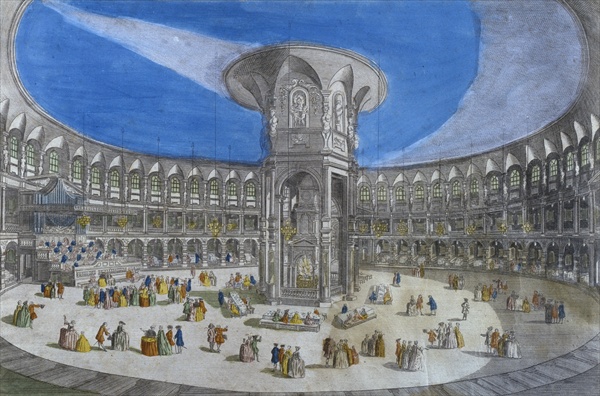
Ranelagh Gardens opened to the public in 1742 as a premier pleasure garden, popular with the wealthy and anyone who could afford a ticket.
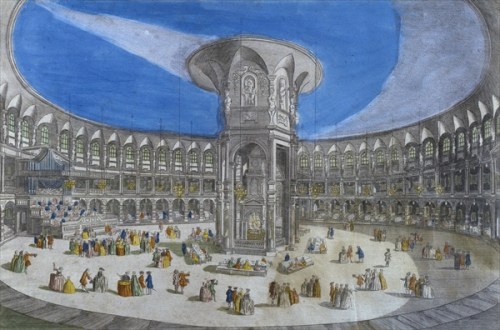
Rotunda, Ranelagh Gardens

King’s Road, so named in the day of  King Charles IIs, was actually a private road that dated back to 1703. It connected Westminster to Fulham Palace, where he took a boat to Hampton Court.  King Charles also used the road to visit his mistress Nell Gwyn. At this time, the royal palace was at Hampton Court and Chelsea was known as the Hyde Park on Thames.
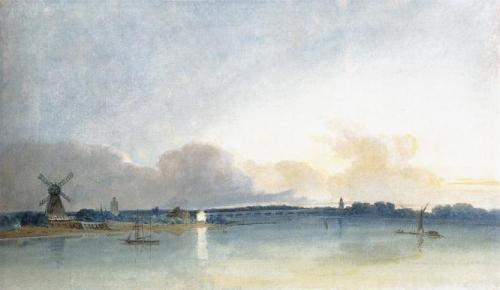
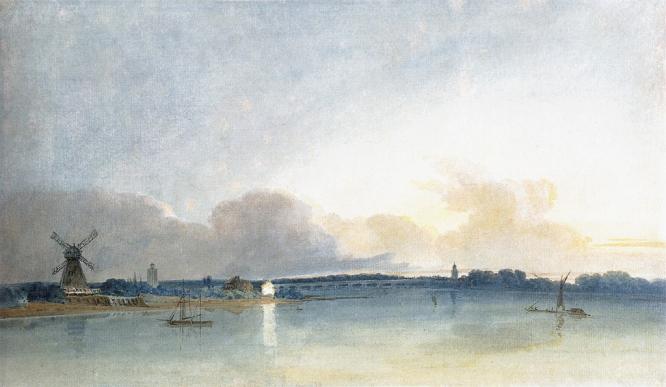
The White House at Chelsea, 1800, Thomas Girtin

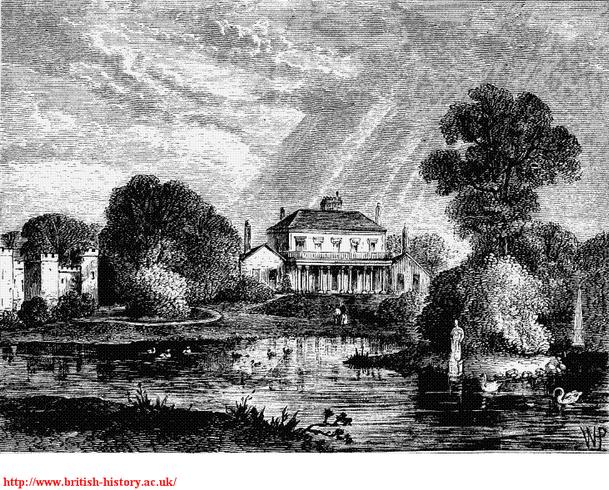
By the time Henry Austen moved to Sloane Street the neighborhood had changed enough for Jane to experience pleasant society, although ten years after Jane’s death, Greenwood’s Map (1827) still showed many empty lots and gardens in the vicinity. (See map above.)

While living in Sloane Street, Henry was a successful man:

Henry and two associates had founded a banking institution in London sometime between 1804 and 1806. Austen, Maunde and Tilson of Covent Garden flourished and enabled Henry and Eliza to move from Brompton (where Jane Austen had found the quarters cramped during a visit in 1808) to a more fashionable address and larger house at 64 Sloane Street. Jane’s visits here in 1811 and 1813 were happy events, filled with parties, theatre-going, and the business of publishing Sense and Sensibility and Pride and Prejudice. – Henry Austen: Jane Austen’s “Perpetual Sunshine” by J. David Grey

When visiting her brother, Jane would venture into Town to shop and visit the theatre (Read Tony Grant’s article about Jane Austen and the Theatre).  Henry and Eliza were a fun-loving  and popular couple, and from Jane’s description in a letter below,  they knew how to throw a party:
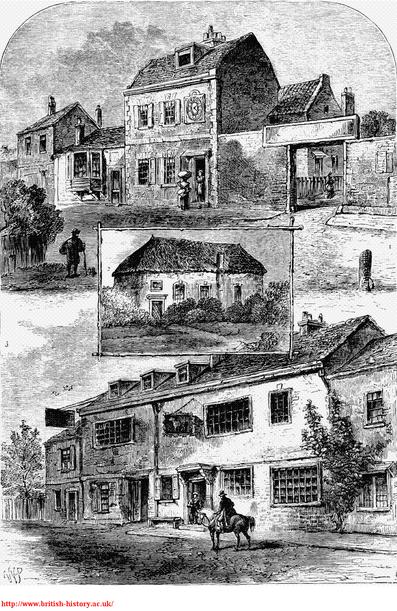
Old Chelsea, 1750. Clock House, Moravian Chapel, White Horse Inn Image from @BritishHistoryOnline

“Our party went off extremely well. The rooms were dressed up with flowers, &c., and looked very pretty. . . . At half-past seven arrived the musicians in two hackney coaches and by eight the lordly company began to appear. Among the earliest were George and Mary Cooke, and I spent the greatest part of the evening very pleasantly with them. The drawing-room being soon hotter than we liked, we placed ourselves in the connecting, passage, which was comparatively cool, and gave us all the advantage of the music at a pleasant distance, as well as that of the first view of every new comer. I was quite surrounded by acquaintance, especially gentlemen.”

She went on to describe the music as extremely good and “included the glees of ‘Rosabelle,’ ‘The Red Cross Knight,’ and ‘Poor Insect.’ Wiepart played the harp and Miss Davis, all dressed in blue, sang with a very fine voice.”

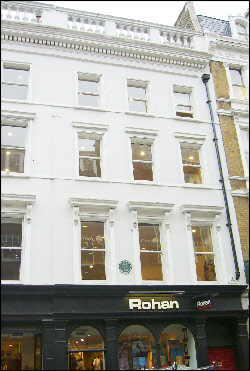
Henrietta Street today

Henrietta Street, 1813

In 1813, Henry, who was four years older than Jane, lost his wife after a painful and debilitating illness. In contrast, his Uncle Leigh Perrot and brother Edward helped to secure his appointment as Receiver-General for Oxfordshire,  a most definite honor. Soon after Eliza’s death, Henry moved to rooms over Tilson’s bank on Henrietta Street in Covent Garden, a location more centrally located in London.

Both Jane and Fanny Knight, their niece, visited him there in the spring of 1814, when Mansfield Park was with the publisher.
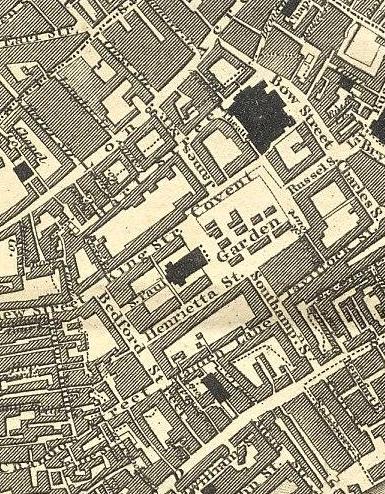
Henrietta Street Covent Garden 1827

As was the custom, Jane brought lists of items to purchase  in Town for those who had remained behind in the countryside. In her biography, Constance Hill writes about Jane’s shopping experience:

“I hope,” she writes to her sister, “that I shall find some poplin at Layton and Shear’s that will tempt me to buy it. If I do it shall be sent to Chawton, as half will be for you; for I depend upon your being so kind as to accept it . . . It will be a great pleasure to me. Don’t say a word. I only wish you could choose it too. I shall send twenty yards.” Layton and Shear’s shop, we find, was at 11, Henrietta Street, Covent Garden.

Hans Place, 1814

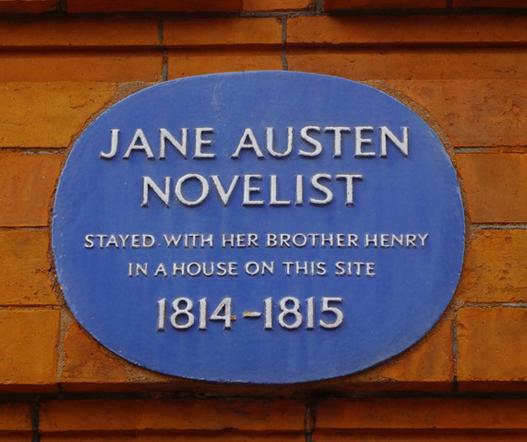
In 1814, Henry moved from his rooms above his bank to a house he purchased in Hans Place in Knightsbridge. The area was situated near his old quarters on Sloane Street, where he and his wife had spent such a pleasurable time together.
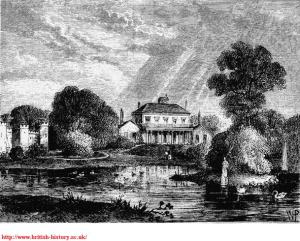
Hans Place, The Pavillion, 1812. Image @British History Online

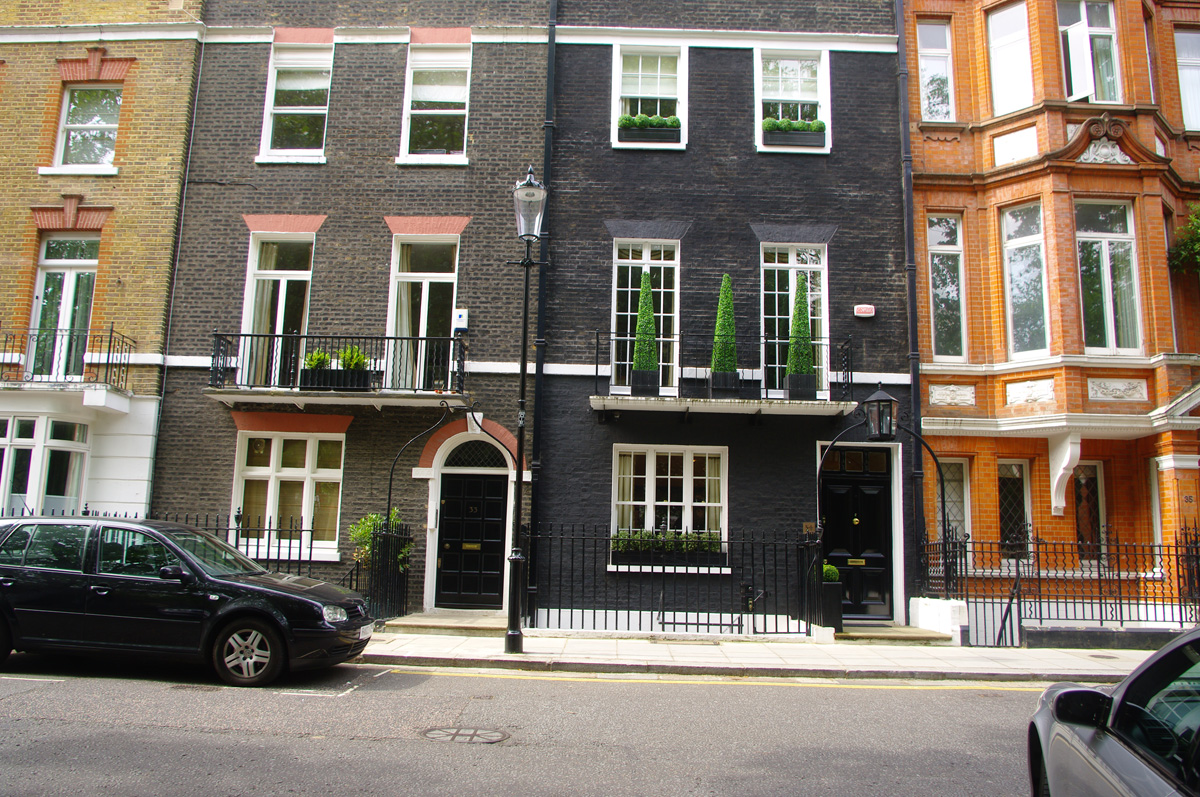
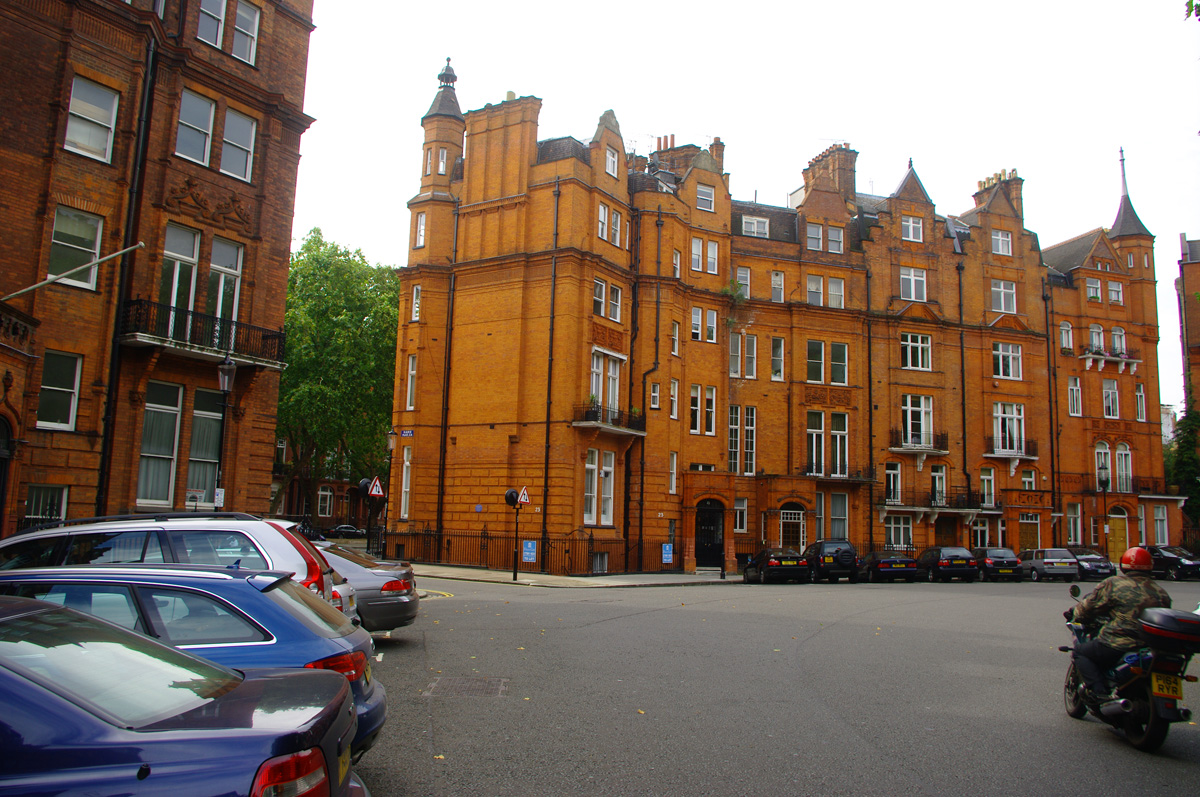
Today, the area, developed by Henry Holland, looks much different than when Jane and Henry knew it (see the image below), but the gardens are not much changed.

How Henry Austen's house must have looked. Image @TonyGrant
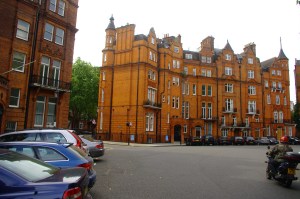
#23 Hans Place is on the corner. The location today.

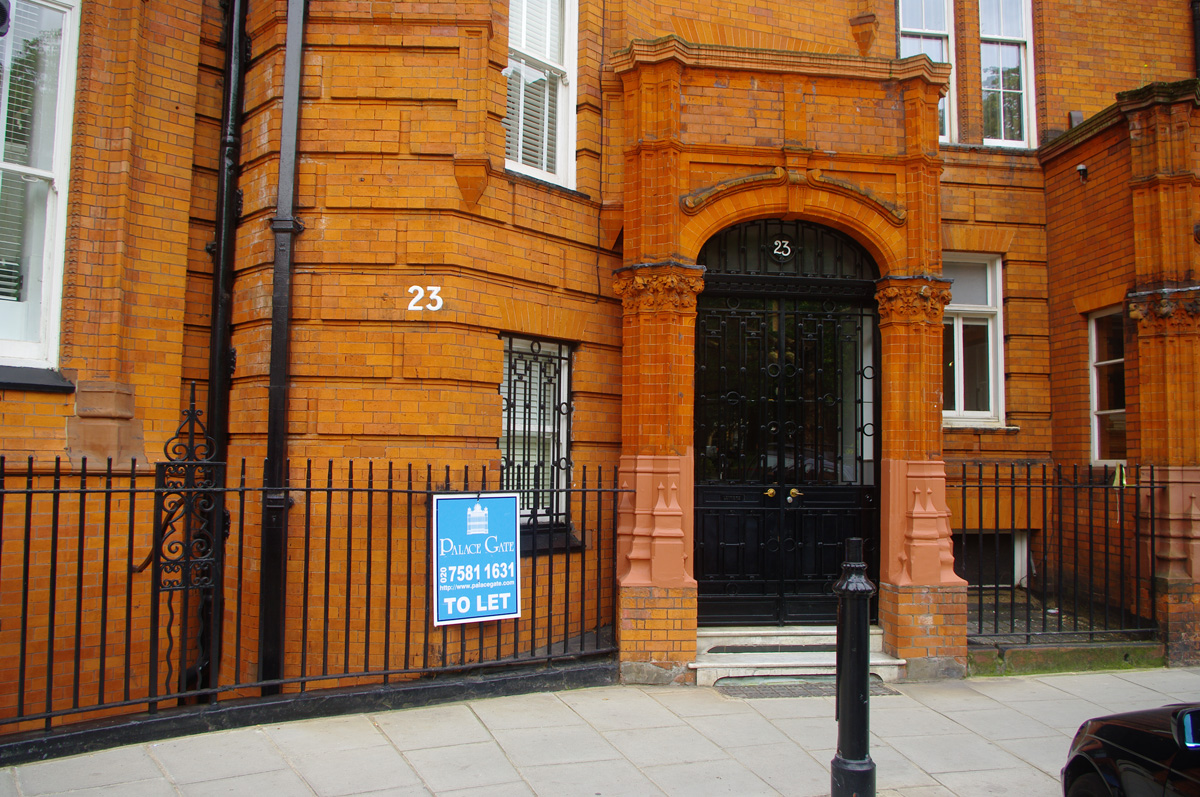
Jane found #23 Hans Place delightful and Henry’s new house more than answered her expectations. She also admired the garden greatly. In the early part of the 19th century, Sloane Square was an open space enclosed with wooden posts, connected by iron chains. (British History Online)
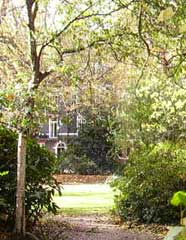
Hans Place garden

In Hans Place, Jane had the use of a downstairs room that opened onto the garden, and she describes her pattern of working indoors, then taking a break in the garden: “I go & refresh myself every now & then, and then come back to Solitary Coolness.” I like Claire Tomalin’s comment in her biography of Jane Austen (1997) that this is “very much what someone settling down to write does, getting up, pacing, thinking, returning to the page she is working on.” – My Long Jumble, Sarah Emsley
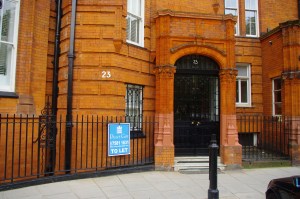
Door to #23 Hans Place today. Image @TonyGrant

Jane visited Henry in Hans place twice, once in 1814, and for a more extended period from October to December in 1815, when she was preparing Emma for publication. During this visit, Henry became seriously ill and Jane nursed him back to health. She also famously visited the Prince Regent’s library at Carlton House during Henry’s recuperation.
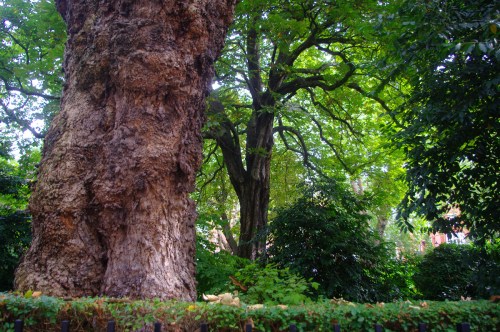
London plane trees in Hans Place, image @TonyGrant

Constance Hill writes in her biography: “… we are also told “that Hans Place” was then “nearly surrounded by fields…We hear of a small evening party to be given in Hans Place whilst Fanny is staying there with her aunt. After describing the morning engagements, Jane writes: “Then came the dinner and Mr. Haden [the apothecary who was instrumental in arranging Jane’s invitation to Carlton House] , who brought good manners and clever conversation. From seven to eight the harp; at eight Mrs. L. and Miss E. arrived, and for the rest of the evening the drawing-room was thus arranged: on the sofa the two ladies, Henry and myself, making the best of it; on the opposite side Fanny and Mr. Haden, in two chairs (I believe, at least, they had two chairs), talking together uninterruptedly. Fancy the scene! And what is to be fancied next? Why that Mr. H. dines here again to-morrow. . . Mr. H. is reading ‘Mansfield Park’ for the first time, and prefers it to P. and P.”
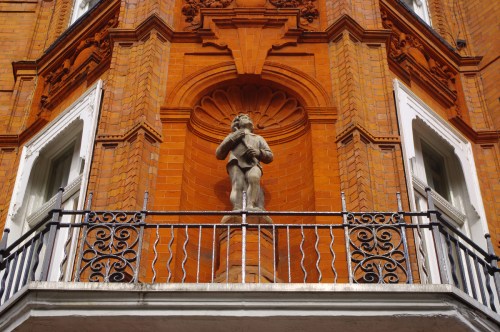
Corner of #23 Hans Place. Image @TonyGrant

Since Henry lived in #23, Hans Place has been redeveloped. Only numbers 15, 33 and 34 still survive as they once were, but the garden that Jane liked so much remains largely intact in its arrangement. The original railings, however, no longer survive, having been molten down for their iron in World War II.
Only months after Henry recovered from his illness, his bank crashed, bankrupting him and placing a number of his Austen siblings in financial distress. Henry soon became a curate at Chawton. After this period, no more visits by Jane to London are recorded. Today, two of Henry’s residences, the one on Henrietta Street and #23 Hans Place, are  still easy for visitors to tour during a short London excursion.
More on the topic:
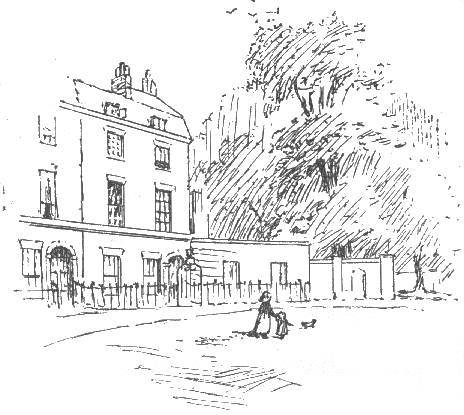
Houses in Hans Place drawn by Ellen G. Hill, 1901
Sherlock (Benedict Cumberbatch) examines microscopic evidence

Copyright (c) Jane Austen’s World. The ending of the final episode of Sherlock!, which represented the final Mystery! for PBS’s 2010 Masterpiece season left me sitting on the edge of my seat, and … I won’t spoil your enjoyment if you haven’t watched it yet. Click here to view The Great Game online if you missed it. Two of the three episodes will be available until December 7.

The countdown clock is ticking: 12 hours

Sherlock’s ingenuity is put to the test in The Great Game, which a darker and more complex tale than the previous two episodes. Holmes races against time to solve a mystery that began when he was a boy. Clues arrive from an adversary worthy of Sherlock, whose detective skills are put through their paces. Dr. Watson is also on top of his game, and more critical as Holmes’s partner than ever.

Watson accuses Sherlock of enjoying himself, even as another victim's deadline has dropped to 3 hours

The cat-and-mouse games become more and more intricate as clues arrive from Sherlock’s dangerous adversary. His presence has been hinted at in previous episodes, but, again, I won’t give the game away.

Watson (Martin Freeman) puzzles through the clues, which are elementary for Holmes

The script is fiercely funny and its wit sharper than the edge of a freshly honed knife. The ending is shocking. I won’t give it away except to say that PBS MUST air the second season of this series. That’s all.

The ending is a game changer that makes this series a must-see

Reade other Sherlock! reviews :

Copyright (c) Jane Austen’s World. The Cranford Companion, a book by Sue Birtwistle and Susie Conklin, the co-creators of the wildly popular series based on the Cranford books by Elizabeth Gaskell, is now available for purchase. The miniseries, produced by the BBC, aired last year in the United States on PBS.

Lushly illustrated in full color photographs, this companion book will provide fans of the two mini-series, Cranford and Return to Cranford, with all the behind the scenes stories about the production, film locations, map of Cranford, and the characters and actors who portray them. Included are points of historic interest, such as the building of the railroads, as well as information on etiquette, the fairer sex, Victorian society and more.

It is hard to describe the book when I think a short video can demonstrate all its fabulous features so much better!

I recommend The Cranford Companion highly to all Cranford and Elizabeth Gaskell fans. Purchase the book in England at this Bloomsbury site and in the U.S. at Amazon.com

Sue Birtwistle and Susie Conklin. Image @Manchester Literature Festival Blog*

My reviews of the series:

My post about Elizabeth Gaskell: A Short description of Her Life

*Manchester Literature Festival Blog