Happy 200th Birthday, Elizabeth Gaskell! Although your life was cut short at 55, you still cast a bright light in our world.
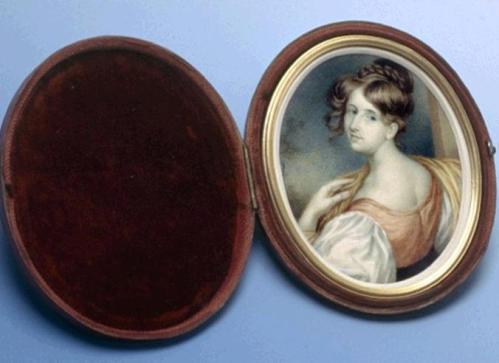
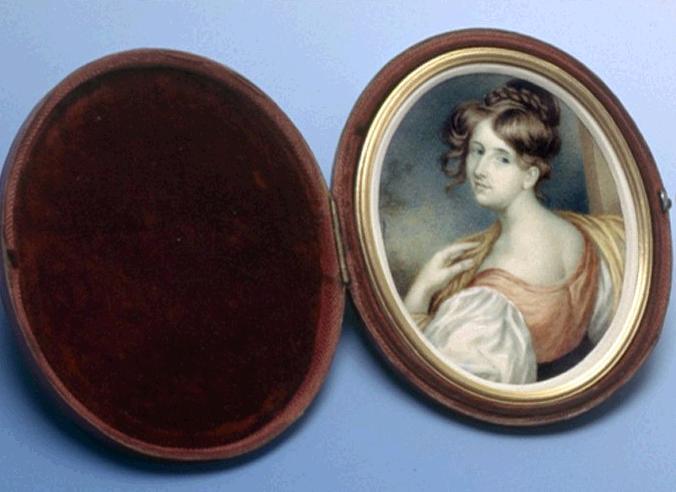
Elizabeth Gaskell around the time of her marriage, 1832
“No, I tell you it’s the poor, and the poor only, as does such things for the poor. Don’t think to come over me with th’ old tale, that the rich know nothing of the trials of the poor; I say, if they don’t know, they ought to know. We’re their slaves as long as we can work…” – Elizabeth Gaskell, Mary Barton
Since babyhood Elizabeth Cleghorn Gaskell nee Stevenson experienced profound sorrow and a sense of loss and displacement. Her parents, Elizabeth and William Stevenson, had eight children, but only two survived – baby Elizabeth and her older brother John. Her mother did not live to raise her, for she died a year after her daugher’s birth. Sadly, her widowed father did not feel up to taking care of his young daughter and sent Elizabeth away to live with her Aunt Lumb in Knutsford, Chesire.
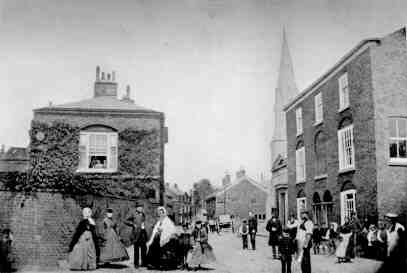
Knutsford, the model for Cranford, 1863
Under this loving aunt’s care, Elizabeth experienced a happy childhood. She played with cousins in the rural town of Knutsford where lived “11 widows of respectability who kept house, besides spinsters innumerable”. In later life, Elizabeth would use Knutsford as the idealized setting for Cranford. She was to return there often to recall the rare happy memories of her early childhood.
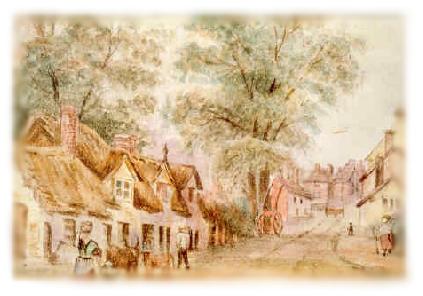
Knutsford in 1860, before the railroad came
Elizabeth’s father continued to reject her even after his remarriage. When she was nine years old, he finally sent for her to visit him in London, but Elizabeth and her stepmother did not hit it off. In addition, her father and his new wife favored the children of their union. Although often reduced to tears by their indifference, Elizabeth did have one person she could turn to, her beloved brother John.
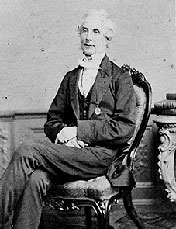
William Gaskel
When Elizabeth was twelve, John joined the merchant navy. She would never see him again, for he drowned six years later off the coast of India. Within six months of John’s death, her griefstricken father also died. And thus, at the tender age of eighteen, Elizabeth was alone again.
William Turner, a distant relative, took Elizabeth in to live with his family. As a Unitarian minister he influenced her religious beliefs and introduced her to charitable works. It was through William Turner’s daugher that Elizabeth met William Gaskell, whom she married in the Knutsford Parish Church on August, 1832.
Gaskell was also a Unitarian minister and a lecturer and educator. After their honeymoon, the young couple moved to industrial Manchester, where William had acquired a post as minister of the Cross Street Chapel. Gaskell was also to hold the chair of English history and literature in Manchester New College.
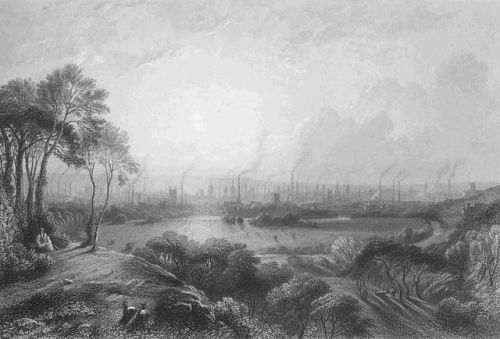
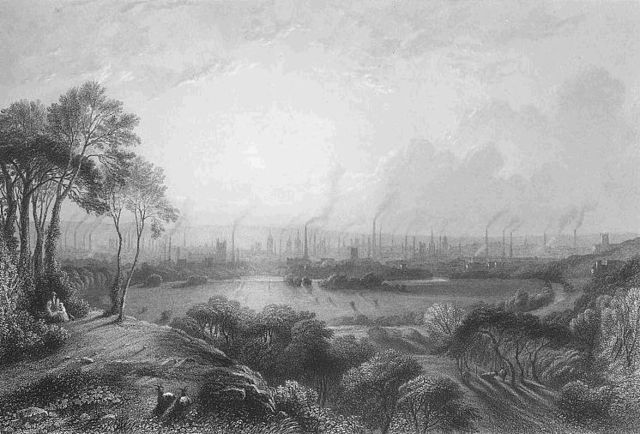
Manchester in 1840. Note the factory chimneys.
Elizabeth would eventually bear her husband six children, the first of whom was a stillborn daughter. Considering the losses she had already experienced in her life, the death of this little girl, born in 1833, must have grieved her deeply. Three years afterward she penned this touching poem:
On Visiting the Grave of My Stillborn Little Girl
I made a vow within my soul, O child,
When thou wert laid beside my weary heart,
With marks of Death on every tender part,
That, if in time a living infant smiled,
Winning my ear with gentle sounds of love
In sunshine of such joy, I still would save
A green rest for thy memory, O Dove!
And oft times visit thy small, nameless grave.
Thee have I not forgot, my firstborn, thou
Whose eyes ne’er opened to my wistful gaze,
Whose suff’ rings stamped with pain thy little brow;
I think of thee in these far happier days,
And thou, my child, from thy bright heaven see
How well I keep my faithful vow to thee.
– Elizabeth Gaskell’s poem for her stillborn daughter, 1836
Then three healthy girls arrived in succession: Marianne (1834), Margaret Emily (1837), and Florence Elizabeth (1842). In 1844 she gave birth to her son William. These years marked a busy and productive period in Elizabeth’s life. Both the Gaskell’s divided their time between his ministry, their social life, and charity work. In Manchester, Gaskell witnessed the dire poverty of the textile workers, which was to have a lasting effect on her writing.
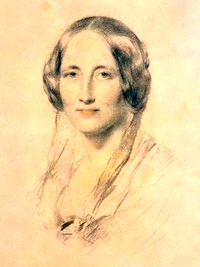
Elizabeth Gaskell by George Richmond, 1851. @National Portrait Gallery, London.
Between raising children and visiting the poor, Elizabeth managed to find the time to write. Her husband supported her in this endeavor, helping her with research and editing. The year she gave birth to her daugher Margaret, Elizabeth sold her first story to Blackwoods Magazine entitled “Sketches Among the Poor.” In 1846, she gave birth to another daughter, Julia.
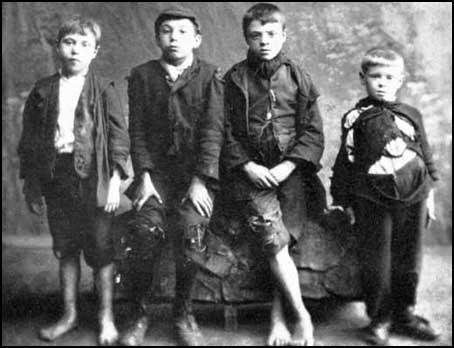
Factory Kids, Manchester 1836
Elizabeth’s life was a fulfilling and happy one until her nine-month old son, William, caught scarlet fever during a visit to Wales in1848, and died. The blow was too much. When a devastated Elizabeth was unable to rise out of bed, William encouraged her to concentrate on her writing and begin a novel. The result was Mary Barton, which told about the desperate poverty of those living in industrial cities like Manchester, a topic with which Elizabeth had become all too familiar during her charity work.
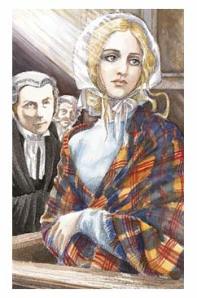
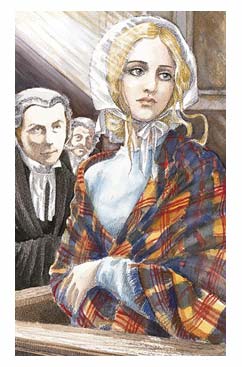
Illustration by Alexy Pendle from Mary Barton by Elizabeth Gaskell
Mary Barton brought success to Elizabeth. She was paid £200 for the book, which was published anonymously. Charles Dickens sang its praises. Other admirers included John Ruskin, Charles Kingsley, and Thomas Carlyle. Although critics took a jaundiced view towards her championing of the poor and calls for social reform, the novel led to her writing other books, each one making her more money. From then on she published her books under her own name, Mrs. Gaskell.
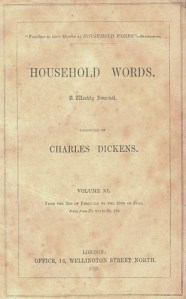
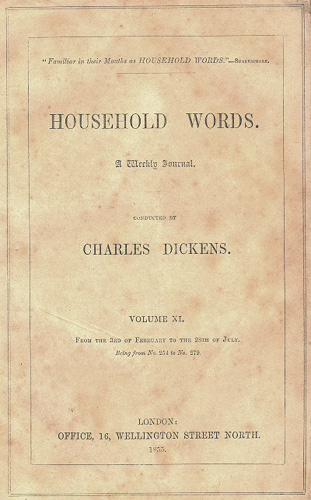
Houshold Words, Charles Dickens
Charles Dickens admired Elizabeth so much that he serialised her next novel, Cranford, in his journal, Household Words (1851-1853). More novels followed in rapid succession, including Ruth (1853), North and South (1855), and Sylvia’s Lovers (1863). These books did not represent her sole literary output. Elizabeth wrote several novellas, of which Cranford was one, as well as short stories and articles for periodicals.
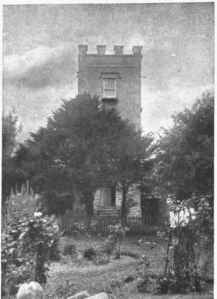
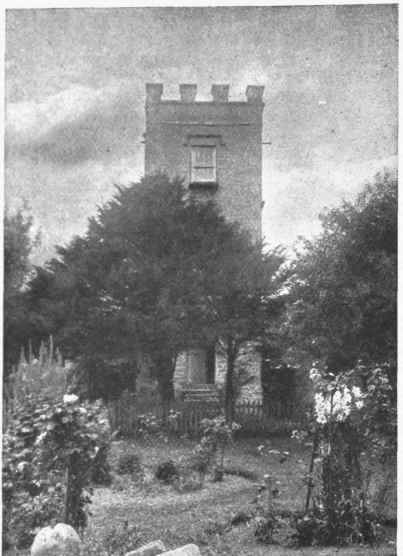
Gilbraltar Tower House, Carnforth. Mrs. Gaskell often wrote in the top room of the tower.
After her good friend Charlotte Bronte died, Gaskell wrote her acclaimed biography, using firsthand accounts and sources. This led her into some legal trouble, for shortly after the book’s publication a few of the people mentioned in it threatened to sue for having been represented incorrectly.
She made many other important friends, and was an avid correspondent, writing thousands of letters to friends and near strangers with the rapidity and ease of someone who, had she lived in the future, would most likely have embraced email.*
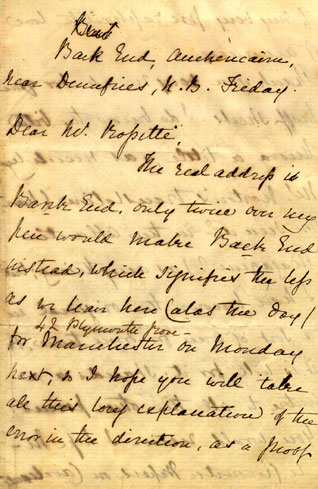
Mrs. Gaskell's letter to Dante Gabriel Rossetti about William Wordsworth, Princeton Collection
Elizabeth’s novels were enormously popular with the public, and the Gaskells lived well, traveling around Europe, hiring servants, and moving into a bigger house, Plymouth Grove, which still stands. Even with the income from her books and her popularity, Elizabeth continued to remain involved in her husband’s ministry and charity work.
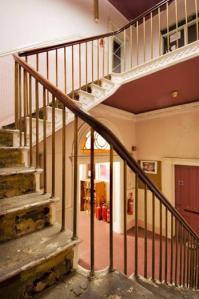
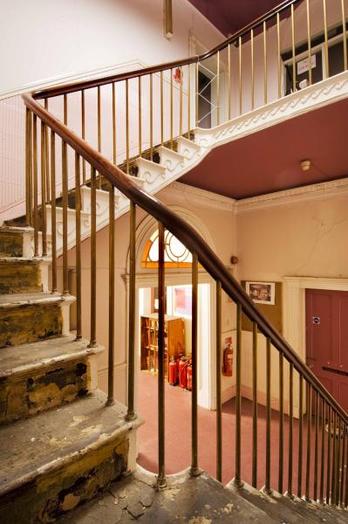
Interior of Plymouth Grove, National Trust
“He is very shy, but very merry when he is well, delights in puns & punning, is very fond of children… 6 foot high, grey hair and whiskers….I do believe he does like Manchester better than any other place in the world; and his study the best place in Manchester” – Elizabeth Gaskell, in describing her husband.
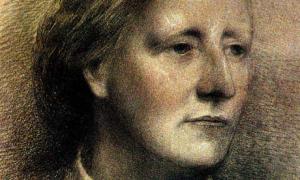
While Gaskell loved her husband dearly and was faithful to him, she did meet a young man in her later life who flattered her womanly ego. On one of her trips to Italy with her daughters, she met an American, Charles Norton, who was 20 years her junior and clearly worshipped her. One cannot be surprised by his attraction, for Elizabeth was a successful, intelligent, and passionate woman. But their friendship remained platonic and they corresponded until Elizabeth’s death. Her Roman flirtation left an indelible memory in Elizabeth’s mind: “It was in those charming Roman days that my life culminated,” she later wrote to a friend. “I shall never be so happy again. I don’t think I was ever so happy before.”**
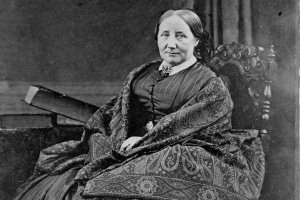
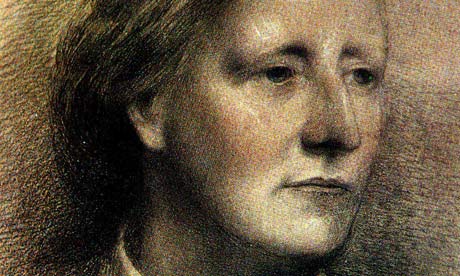
Mrs. Gaskell towards the end of her life.
Years of loss, sorrow, hard work, and success took a toll on her. Once a vibrant and lovely woman, she looked drawn and tired in later photographs. Elizabeth’s death came suddenly and unexpectedly on a visit to her cottage near Alton in Holybourne, Hampshire. Unknown to her husband, she had secretly purchased the house for their retirement.
“On Sunday November 12, 1865, she and her daughters spent a lazy morning before Elizabeth walked up the lane to church. The vicar thought she looked extremely well.
At 5pm, everyone sat in the drawing room for tea. Elizabeth was gossiping, relating a conversation she’d had with a judge when, mid-sentence, she stopped, gasped and slumped down dead from a heart attack.” – The Daily Mail Online, 2007
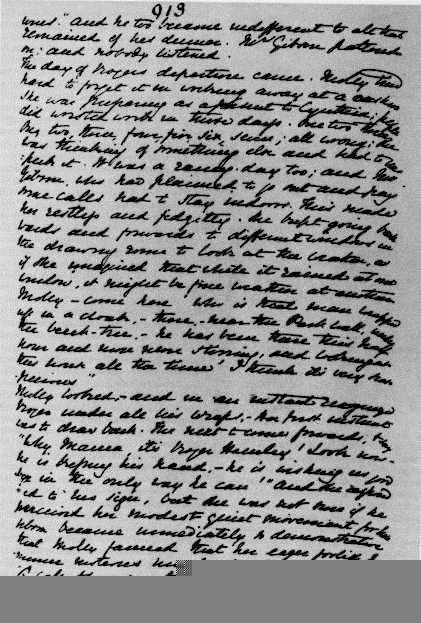
Manuscript of Wives and Daughters
Elizabeth had been witing her last work, Wives and Daughters, which remained unfinished. After her unexpected death, a friend wrote, “The world of English letters has lost one of its foremost authors,” a sentiment the Anthenaeum echoed: “If not the most popular, with small question, the most powerful and finished female novelist of an epoch singularly rich in female novelists.”
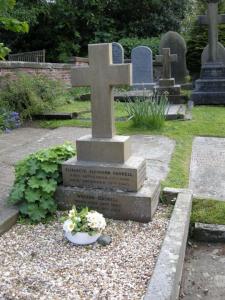
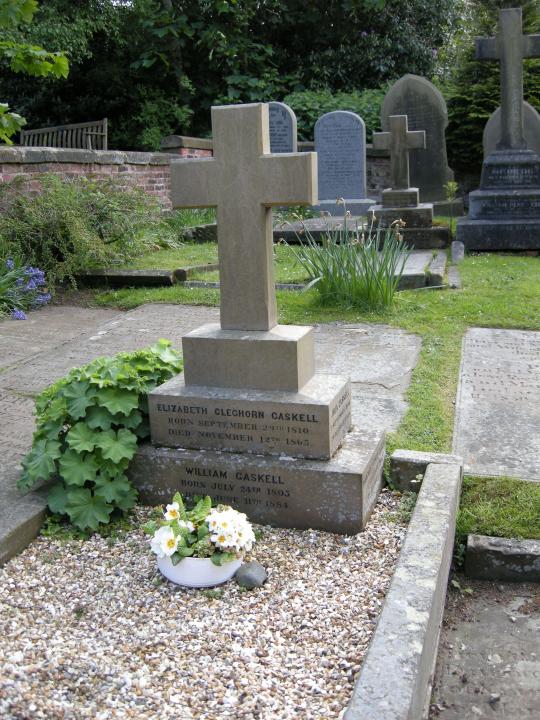
Burial spot for Elizabeth and William Gaskell
Elizabeth is buried at Brookstreet Chapel in Knutsford. William Gaskell survived her by two decades and never retired, serving as Minister in Cross Street and living in Plymouth Grove with two daughters until his death in 1884. He is buried beside her.
In terms of her legacy, this 1989 letter by Henry Rollin, Chairman, History of Psychiatry Group, sums up Elizabeth Gaskell’s body of work:
But of greater importance to the medical historian are the glimpses she gives in her novels of the socioeconomic diseases of the period of which she writes. Life is cheap. Alcoholism and prostitution are rife. Cholera and typhus are commonplace. Women die in childbirth. And she reveals in harrowing detail the prevalence of opium addiction. John Barton, the father of Mary Barton in her novel of that name, is portrayed as a man so bitterly humiliated by his abject failure in all departments of his life that he degenerates into the quintessential opium addict. But even more haunting is the intense pathos of her description of the relationship between opium and the grinding poverty and near-starvation of the underprivileged. “Many a penny that would have gone little way enough in oatmeal or potatoes, bought opium to still the hungry little ones, and make them forget their uneasiness in heavy troubled sleep”, she writes of the Manchester she knew in her day-to-day work as the wife of a Unitarian minister.”
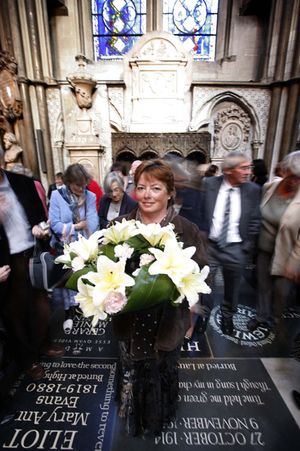
Gaskell's great great great granddaughter, Sarah Prince, lays a wreath in the Poet's Corner
In honor of the Bicentenary, Mrs. Gaskell was included in the poet’s corner in Westminster Abbey, a top honor indeed. Rest in peace, Elizabeth Gaskell, and happy, happy birthday!
Gentle Reader: This blog has joined fourteen others in celebrating the Elizabeth Gaskell Bicentenary Blog Tour, sponsored by Austenprose. The next blog on your tour is Mary Barton (1848) Book: Kelly’s of the Jane Austen Sequel Examiner. She will discuss Mary Barton, Gaskell’s first book.
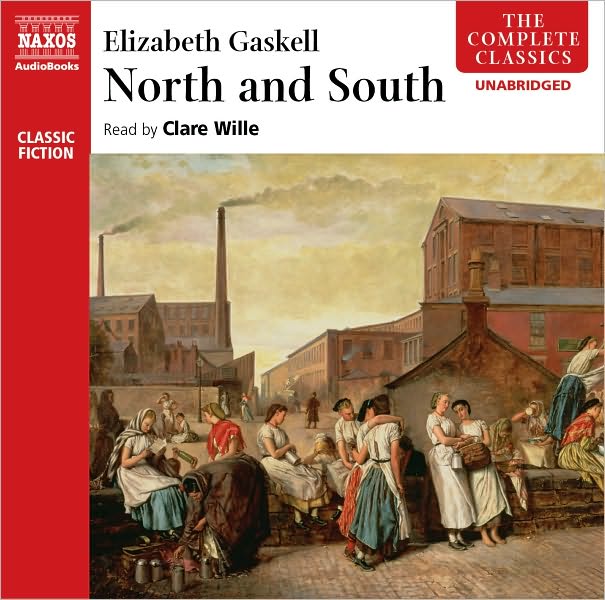
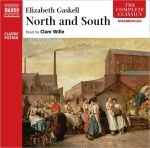 Leave a comment below for a chance to win a copy of an unabridged edition of North and South by Naxos AudioBooks read by Clare Willie. Deadline October 7th, midnight PT
Sources:
Thank you, Austenprose, for arranging this web tour!
The Gaskell Blog Tour:
Biography
Novels/Biography
Novellas
Resources
- 14.) Your Gaskell Library – a select bibliography of written resources and links to MP3′s, ebooks, audio books, other downloads and reading resources available online: Janeite Deb – Jane Austen in Vermont
- 15) Plymouth Grove – A Visit to Elizabeth Gaskell’s home in Manchester: Tony Grant – London Calling














 Jane Austen's World