Feeds:
Posts
Comments

The Paint Detective

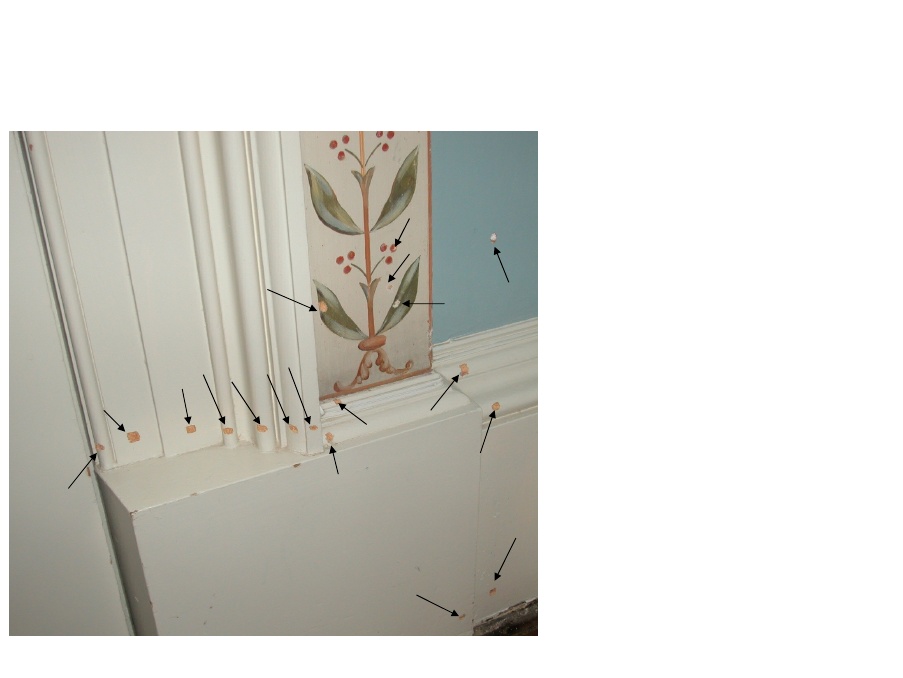
Inquiring readers, Patrick Baty has written a fascinating article, The Paint Detective on the methods he uses to identify and examine early paint layers.

Paint sampling, Image, Patrick Baty

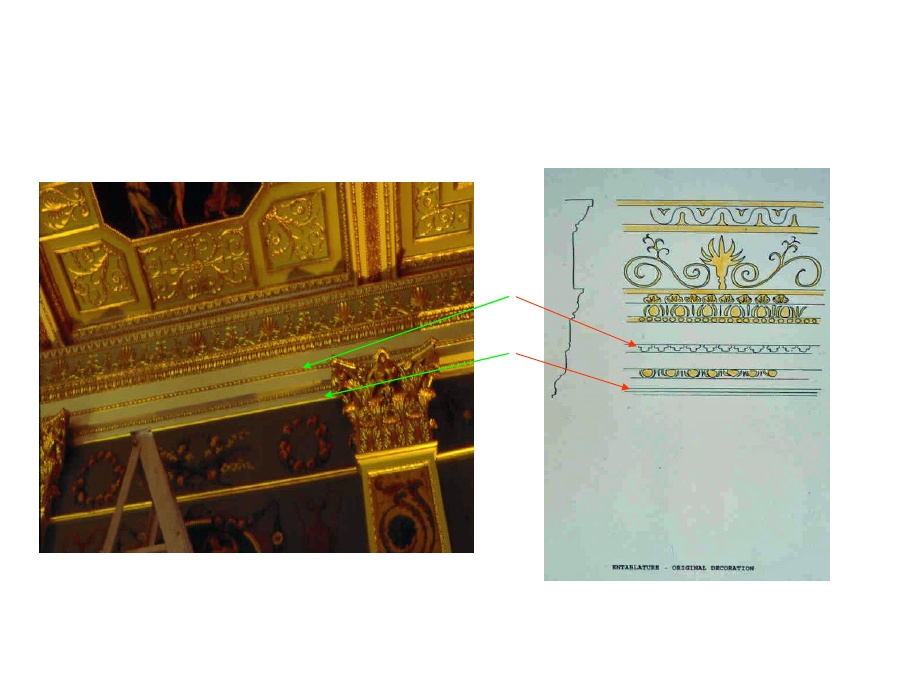
These images in his account demonstrate the methods he uses to analyze the paints. First, he takes small samples, which he sets in resin and cuts through to examine under various microscopes.

Spencer House Painted Room, Gilding. Image, Patrick Baty

He carries out pigment analysis and scans the samples under the electron microscope. These actions (and more) and documentary evidence lead him to restore the colors of rooms and houses as they once were (or close to it.)

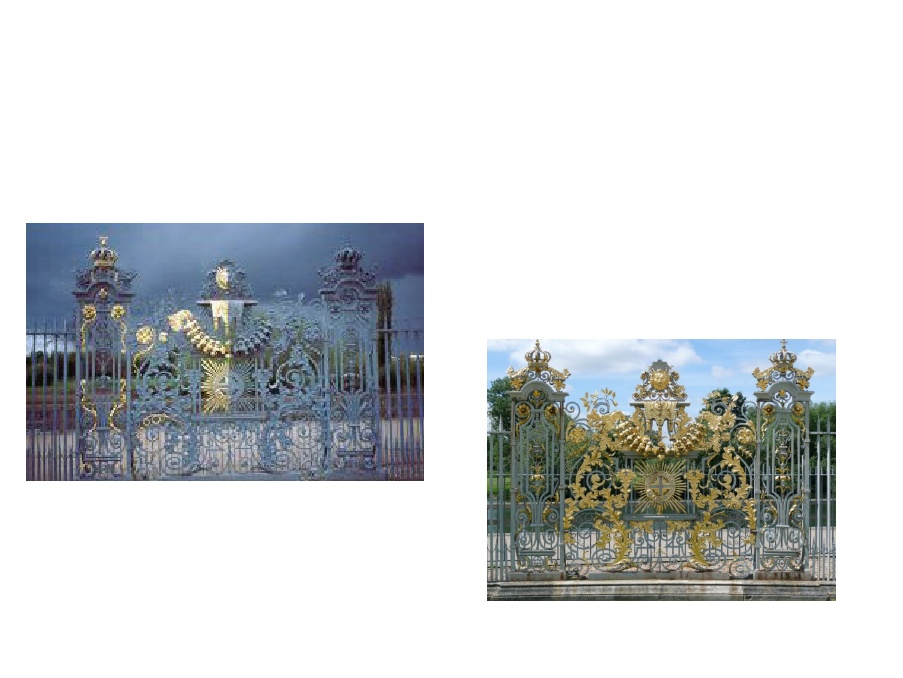
Hampton Court, Tijoy Screen, Image Patrick Baty

Read Patrick’s other posts on this blog:

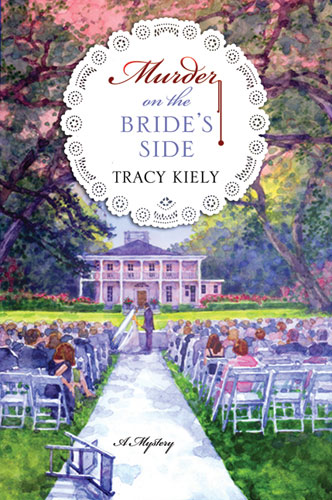
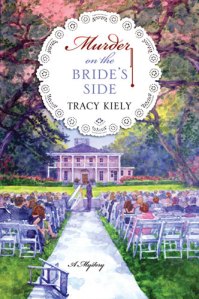
Murder on the Bride’s Side is Tracy Kiely’s second murder mystery. I thought her debut novel, Murder at Longbourn, quite charming. Although it was set in modern times, the tie ins to Jane Austen were detailed enough to be satisfying. (In the first book, Aunt Winnie was the proprietor of the Inn at Longbourn, the heroine Elizabeth Parker turned to reading Pride and Prejudice in times of stress, a cat named Lady Catherine prowled the premises, and two friends named Bridget and Colin joined a band of murder suspects for the New Year’s festivities.)

Murder on the Bride’s Side begins where Murder at Longbourn left off. Elizabeth Parker, the heroine who helped to solve the first murder, thereby saving her aunt from being falsely accused, is a fact checker for a local Virginia paper. This explains her eye for details. As the novel opens, guests are assembling to attend Bridget and Colin’s wedding in Richmond, Virginia. Elizabeth and Peter McGowan are now an item, which must have made Aunt Winnie deliriously happy, for she practically forced Peter’s company onto Elizabeth in Murder at Longbourn.

During her spare time Elizabeth reads Sense and Sensibility, which is quoted quite often at the start of this mystery. These quotes provide a tentative connection to Jane Austen, for, unlike Tracy Kiely’s first novel, the plot of this book has not been so neatly constructed around Jane’s oeuvre, and Tracy stops quoting Sense and Sensibility early on. She quotes other books as well, each one introducing a new chapter, setting up the theme.

As guests arrive for the wedding and assemble for the rehearsal dinner and reception, the reader is introduced to each murder suspect. The victim, Roni, is a suitably nasty individual whose treatment of her husband, Avery, her daughter, Megan, and the world in general is such that murdering her was quite a sensible solution.

Bridget and Colin are married and then the fun happens. As with Tracy Kiely’s first novel, the murder and its denouement are incidental to the development of the characters and their relationship to each other. Kiely’s writing style is breezy and effortless, and she has constructed a tight and entertaining mystery that leads to a satisfying conclusion. This time around the murder is not so easily solved, for she offers a side trail that a careless reader who has missed some important clues might follow.

And now we come to the tricky part of this review, for I truly enjoyed this novel. I live in Richmond, Virginia and was delighted to learn that the novel was set in my city. But the city that Tracy, a Maryland resident describes, is not one that I know. Basic mistakes were made. While going to The Tobacco Company in Shockoe Slip, Tracy has her guests park in a garage near Capitol Hill and then walk several long city blocks to the restaurant. With so many parking garages closer to this dining establishment, why would anyone want to walk through such a featureless, uninteresting part of town? The Governor’s mansion and Virginia state capitol building are not easily seen from the street and the traffic is ghastly. The cobble stone streets of East Cary Street with its trendy boutique shops, restaurants, and bars would have made a much more picturesque backdrop. Plus Tracy describes this slightly touristy, trendy-in-the-1980’s restaurant in detail, while barely mentioning the magnificent interior of the world class, historic register Jefferson Hotel several chapters later.

In this book, Tracy often arranges for people to meet “downtown”. Well, downtown Richmond is a wasteland of office buildings, banks, vacant lots, and parking garages. Major thoroughfares crisscross streets, making it hard for pedestrians to navigate towards the river, for example. The few restaurants that are making it in the financial district tend to be open only for breakfast and lunch. For entertainment and dining, Richmonders say they will meet in a specific section of town: The Fan, Cary Town, the Museum District, Church Hill, the Canal Walk, Belle Isle, Shockoe Slip, Shockoe Bottom, Libby and Grove, or the near or far West End. I am being picky, I know, but not once did I get the sense that Tracy’s characters were living and breathing in my city.

Perhaps I quibble too much, for this reviewer from The Richmond Times Dispatch was quite delighted with the book.

I give Murder on the Bride’s Side two out of three Regency fans. Will I read another Elizabeth Parker murder mystery when Tracy Kiely writes her third book? Why, yes, of course. I want to follow Peter and Elizabeth as they deepen their romance against a backdrop of murder most foul. Just not in Richmond.

More on the topic:
Watch the latest Inspector Lewis mystery, The Dead of Winter, on PBS’s Masterpiece Mystery site from September 6 until September 19. Click here for behind the scenes videos.

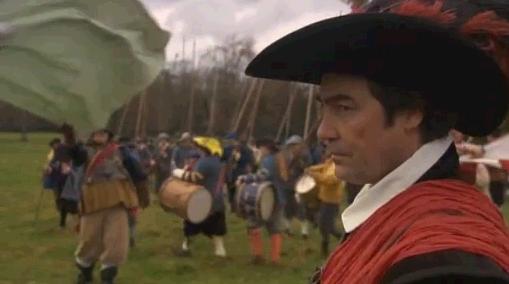
The episode opens with a shooting at a re-enactment of a battle on the grounds of Crevecoeur Hall

The curious case leads back to Crevecoeur Hall, a vast, history-rich Oxford estate, and as it happens, the setting for much of Detective Sergeant Hathaway’s (Laurence Fox) youth. Hathaway reconnects with his past – and Scarlett Mortmaigne, the daughter of the estate’s owner. But is he also consorting with a main suspect? It’s a case that threatens to expose the shortcomings and secrets of a wealthy family, cloud Hathaway’s judgment and ultimately put his relationship with Detective Inspector Lewis (Kevin Whately) in jeopardy.

Hathaway is haunted by the death of a 10 year-old girl

The Dead of Winter, the second episode in the third season, opens with a melancholic Hathaway testifying in court about an atrocity commited towards a ten year old girl. He cannot shake off the image of finding her body in a water cistern. Inspector Lewis is unable to communicate with his friend, and the emotional gulf between the two partners widens. As Dr. Hobson observes caustically, “boys never let anyone in.”

"Boys never let anyone in", Laura Hobson observes

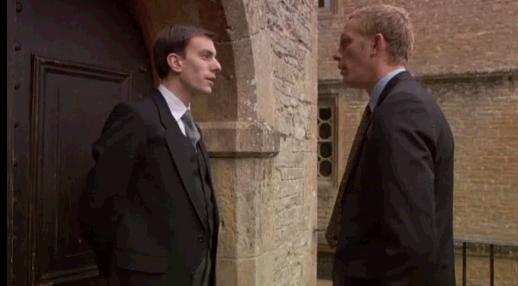
When Hathaway is called to a murder at Crevecoeur Hall, the estate where he spent the first 12 years of his life as the son of the estate manager, his past life comes tumbling back. As the story unfolds, we learn more about Hathaway’s childhood, and that he had once played with the butler (Pip Carter) another child on the estate, and young Lady Scarlett (Camilla Arfwedson), for whom he still carries a tendre and who fondly calls him “James the Just.” Her engagement to a rich man does not stop her from revealing to Hathaway how very much she still is attracted to him, but for James her confession is a painful reminder of “what might have been.” James the Just can see no reason for her preferring money over love, the choice she has made.

While attracted to Hathaway, Scarlett chooses money over love

The script weaves in these threads of James’s former life with current events and the murder of a doctor who had visited Crevecoeur Hall. As James investigates thecrime, the current estate manager of Crevecoeur Hall, whose wife had run away 20 years ago, commits suicide.

Hathaway and Paul Hopkiss, the butler and his former childhood friend

We meet an array suspects: the lord of the manor, Augustus Mortmaigne, the Marquess of Tygon (Richard Johnson); his wife, Selina Mortmaigne (Juliet Aubrey); her brother in law, Philip (Nathaniel Parker) with whom she is having an affair. Add a valuable painting that has been altered and that might hold clues, a Jesuit priest who knows more than he lets on, and a purring cat that Inspector Lewis rescues from the dead doctor’s home, and you have a fully fleshed mystery story populated with likely suspects. As both Lewis and Hathaway pursue the killer, both come at cross purposes.

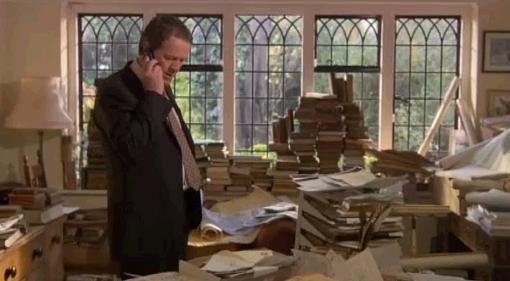
Lewis pursues his own clues in the dead Dr's office

That last statement of the quote that opens this review is a bit misleading. While Lewis becomes exasperated with Hathaway, whose surpressed longings for Scarlett have gotten in the way of his judgment, he has not come to the point of breaking off their relationship, and he makes it clear that he is content with Hathaway as a partner.

The lord of the manor and those who live on his estate have many secrets to hide

This second episode in Season 3 is better than the first – more tightly written and much darker in tone. The final scene is filled with suspense, and I did not guess the murderer until just before the major clue about corn starch was dropped. For those who have missed the episode, you can watch it online from September 6 through September 19.

Jane Austen fans tend to read her books repeatedly throughout their lives.  In an article in the Guardian UK, Charlotte Higgins describes how her identity with a Jane Austen character changes with age. Here are some of her thoughts:

If you read Jane Austen more or less annually, as I have done since my late teens, you end up marking yourself against the characters. Oh reader, when I first read Pride and Prejudice I was Lydia’s age. I am about to become older than the delightful Mrs Croft in Persuasion. I still hang on to Anne Elliot, though. A tender 27 she may be, but in modern money I reckon you can give her another 10 years.

This is so true. I am starting to identify more with Mrs. Croft and Lady Russell than Anne Elliot. Charlotte Higgins goes on to say:

Persuasion is a very middle-aged novel, with its melancholic flavour and its acknowledgement that yes, you can make a grotesque mess of your life (the romance part I find much less satisfactory than the bleakly comic first three quarters of the book, essentially before one reaches Bath). It is true, however, that you can tell you are middle-aged when you start to empathise with P&P’s Mrs Bennet: with what Sir Walter Elliot would call “the rapid increase of the crow’s foot” comes a sense of sympathy with this character, written off as absurd in one’s heedless youth. At least she is trying to save her daughters from a future of poverty. And she’s certainly not getting any help from that husband of hers.

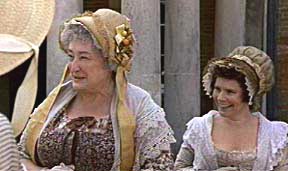
So true again. Only in recent years have I become impatient with Mr. Bennet and more sympathetic with his silly wife. I have also become more observant of Mrs. Jennings in Sense and Sensibility, of how hospitable she is, how she tries to become a matchmaker to all the unmarried ladies, and how her house is open to guest seemingly all the time. Yes, she is a silly and irritating woman, traits I could not stand when I was young (thus I could not appreciate her other than as a comic relief character), but now I rather like her positive qualities, as I do Mrs. Palmer’s. Elinor Dashwood is aware of Mrs. Palmer’s good nature and would tolerate her better if she weren’t such an unflaggingly cheerful airhead all the time.

Mrs. Jennings and Mrs. Palmer, Sense and Sensibility

As I get older I see that Lady Catherine de Bourgh is all bluster, and that her authority over Elizabeth Bennet is precisely zero. Young Lizzie is smart enough to know that, but as a 19 year-old reader, I was in awe of Lizzie’s stubborn attitude towards that lady when she stormed to Longbourn to demand Lizzie promise never to marry Mr. Darcy.

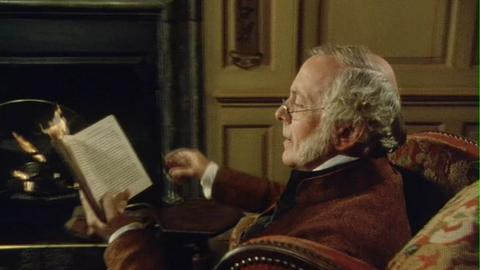
Mr. Bennet reading. Image from Jim and Ellen Moody

There are other ways that my attitude towards Jane Austen’s novels is changing. I notice how few happy marriages are portrayed. Right off the bat I can think of only the Crofts, the Gardiners, the John Knightleys, and the Musgroves. These days, I am more on the side of a pragmatic Charlotte Lucas, who has learned long ago not to look at the world through rose colored glasses, than Elizabeth, who waits for love. To be sure, she snagged her Mr. Darcy, but would Charlotte have had such an opportunity? I think not. I also see that Fanny Price’s strength of character and resolve in the face of so much bullying is a trait to admire; and that Mr. Bennet’s extensive library and unwillingness to compromise a cushy lifestyle were acquired at the expense of his family’s future financial security.

As the years roll by, my tastes and preferences for Jane’s novels are changing. Persuasion and Pride and Prejudice are running neck and neck in my favorite category. P&P used to have the field all to itself. While I loathed Mansfield Park the first time I read it, I don’t mind it so much now, and I find Emma less and less interesting and much too long . Perhaps I should lay the book aside for a few years.

Are your tastes and preferences changing towards Jane Austen’s books and characters as time goes on? How? Curious minds want to know.

Inquiring Readers, Tony Grant has been contributing articles to Jane Austen Today for several months. Recently, Tony and his family traveled to Bath and the West Country. This is one of many posts he has written about his journey. Tony also has published several posts about his trip on this blog: Going to Bath With Jane Austen and The Servant’s Entrance to Regency Townhouses, for which he supplied the photographs. He has already contributed a post about Milsom Street for Jane Austen Today. This post about his tour through Bath was first published on Jane Austen Today, but the images caused the sidebar to be pushed out of sight, so I placed it here.

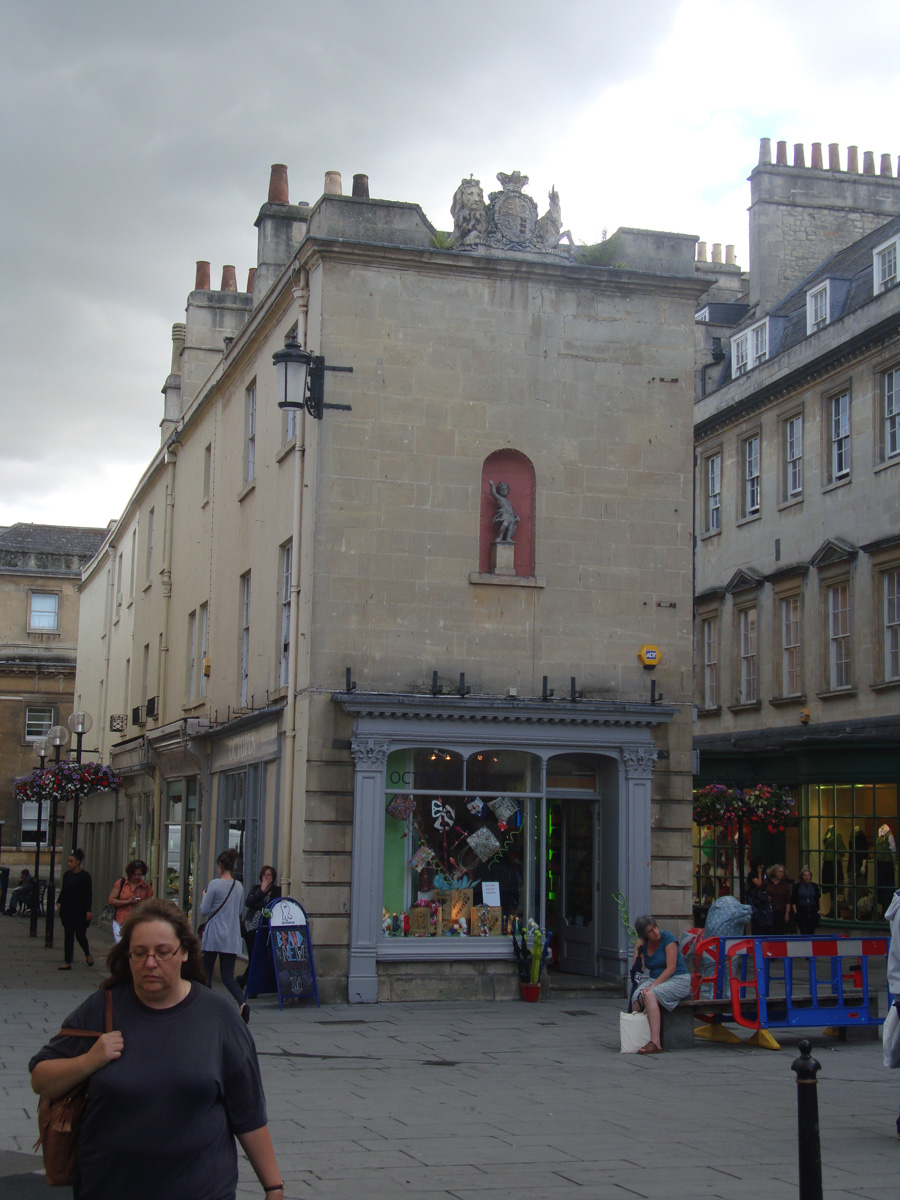
Bath Thoroughfare
Jane Austen knew Bath extremely well. Throughout Persuasion and Northanger Abbey she houses her characters in real streets and in real buildings, although she does avoid giving us the number of the house in such and such a street. The real owners and occupants might not have liked the notoriety. And today they might not like the notoriety as well. Was there such a thing as litigation in the 18th century? I’m sure there was.

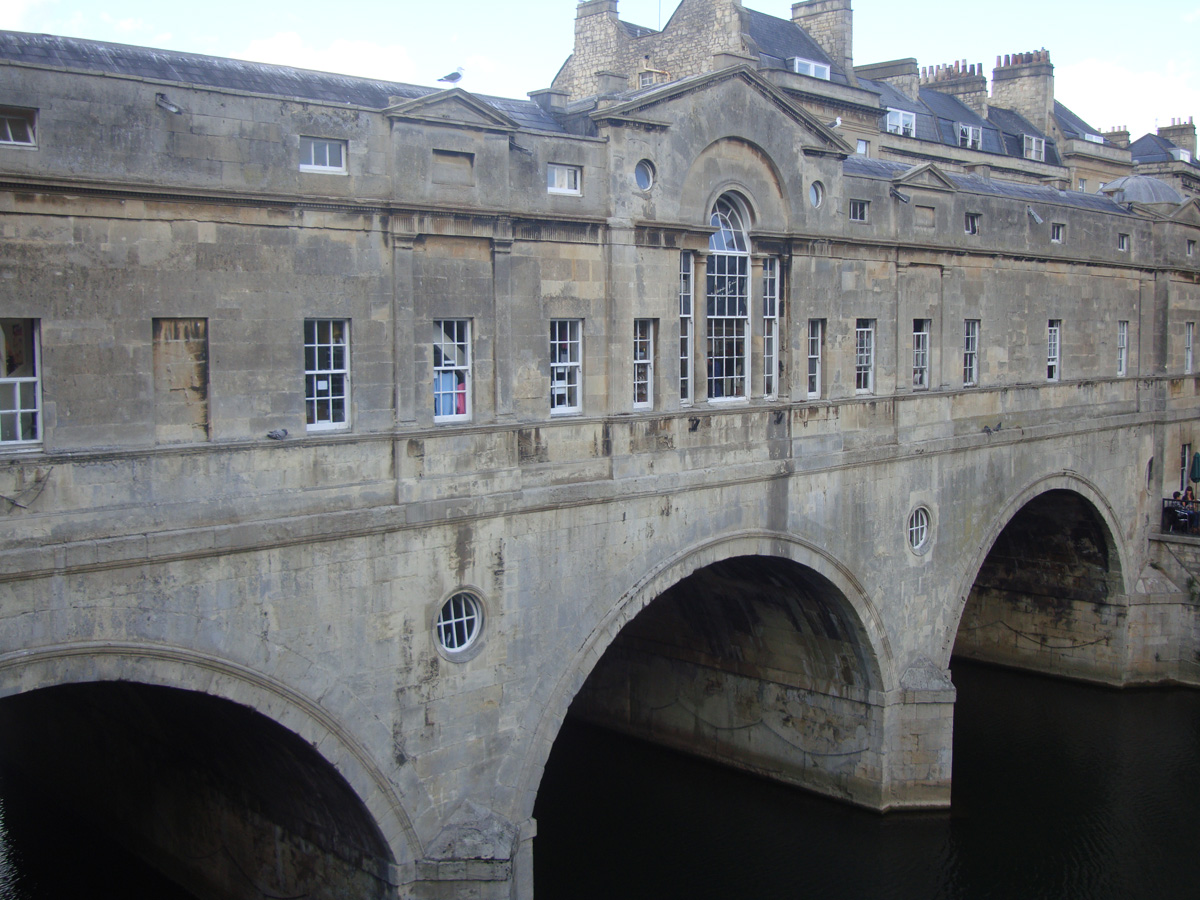
Pultney Bridge

Here are some of the places that Janes characters lived in and when you go to Bath you can see them for yourself.

  • Anne Elliot and her father lived in Camden Place up the hill at the top of the town.
  • Lady Russel lived in Rivers Street just north of The Circus.
  • Rich, Mrs Wallis lived in Marlborough Gardens on the hill leading down from the north end of The Royal Crescent.
  • Catherine Moreland lived in Pultney Street, which is now called Great Pultney Street, very close to Sydney Street. I wonder if Jane saw somebody in Pultney Street that she thought, “ah, that’s Catherine Moreland.”
  • The Dowager Viscountess Dalrymple lived in Laura Place at the end of Great Pultney Street and at the start of Pultney Bridge.

The meeting places and places central to both novels are Milsom Street where everybody shops. Shopping, the bain of my life. My wife and three daughters love shopping. Shopping could be their lives. In Jane’s time tooapparently. It makes me come out in a cold sweat thinking about it. The amount of standing in shops and outside of shops I’ve done.

God, I’ve suffered for shopping over the years.

Ah, that’s better. I needed that rant.

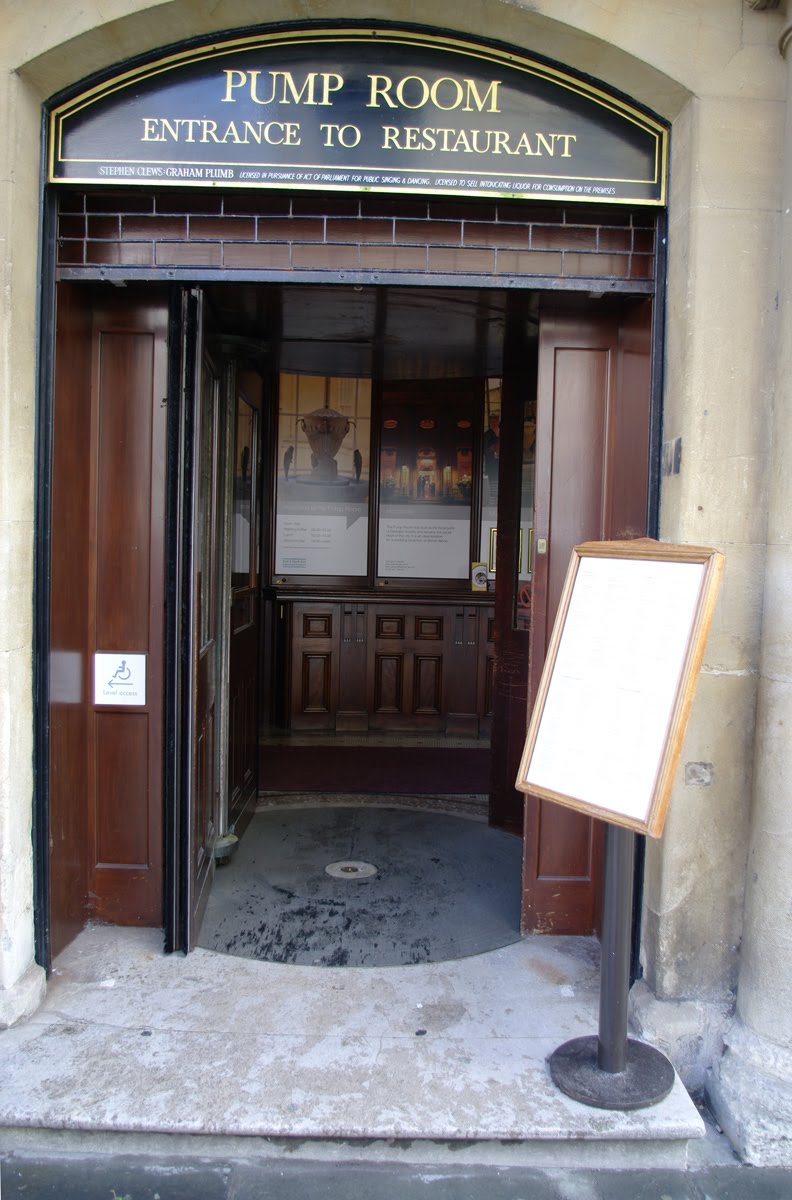
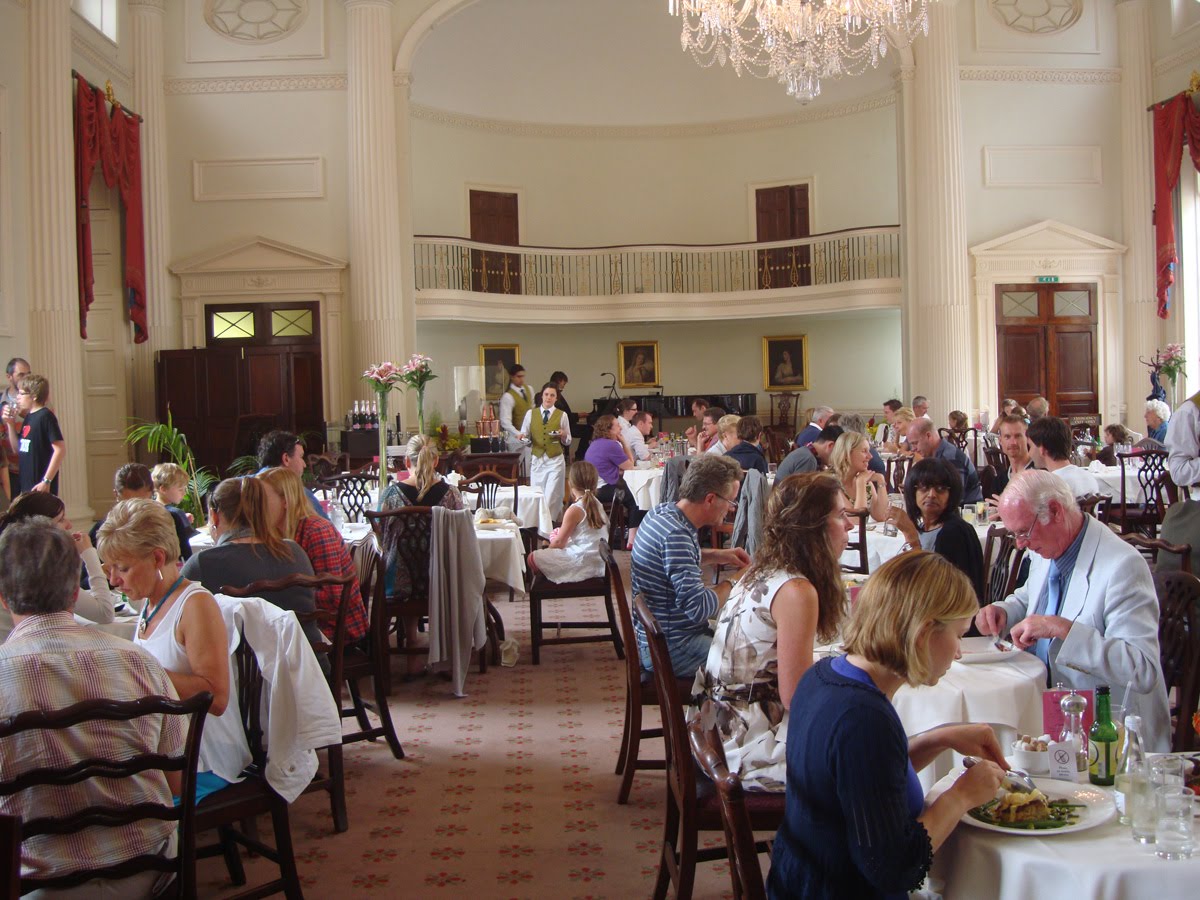
Also the Pump room. What a glorious place it is. I felt a tingle down my spine as I my wife, Abigail and myself were shown to our seats by the headwaiter and we were graciously handed the menus. A trio of musicians, cello, pianist and violinist, played sedately at one end of the room. People lined up at the water pump to imbibe Baths greatest commodity, water from the spring and we ordered tea and cakes.

Pump room window
The “pump room blend” of tea is as close as you can get to the blend of tea that Jane Austen, Catherine Morland and Anne Elliot would have drunk. The scones with clotted cream and fresh strawberry jam were exquisite. The tea was delicious and there I was with my family, in THE PUMP ROOM!!!!!!

The Pump Room

I could almost see Catherine Morland pop in to see if she could find Henry Tilney and of course take a few turns of the room to see and be seen. I knew nobody in The Pump Room just as Catherine knew nobody.

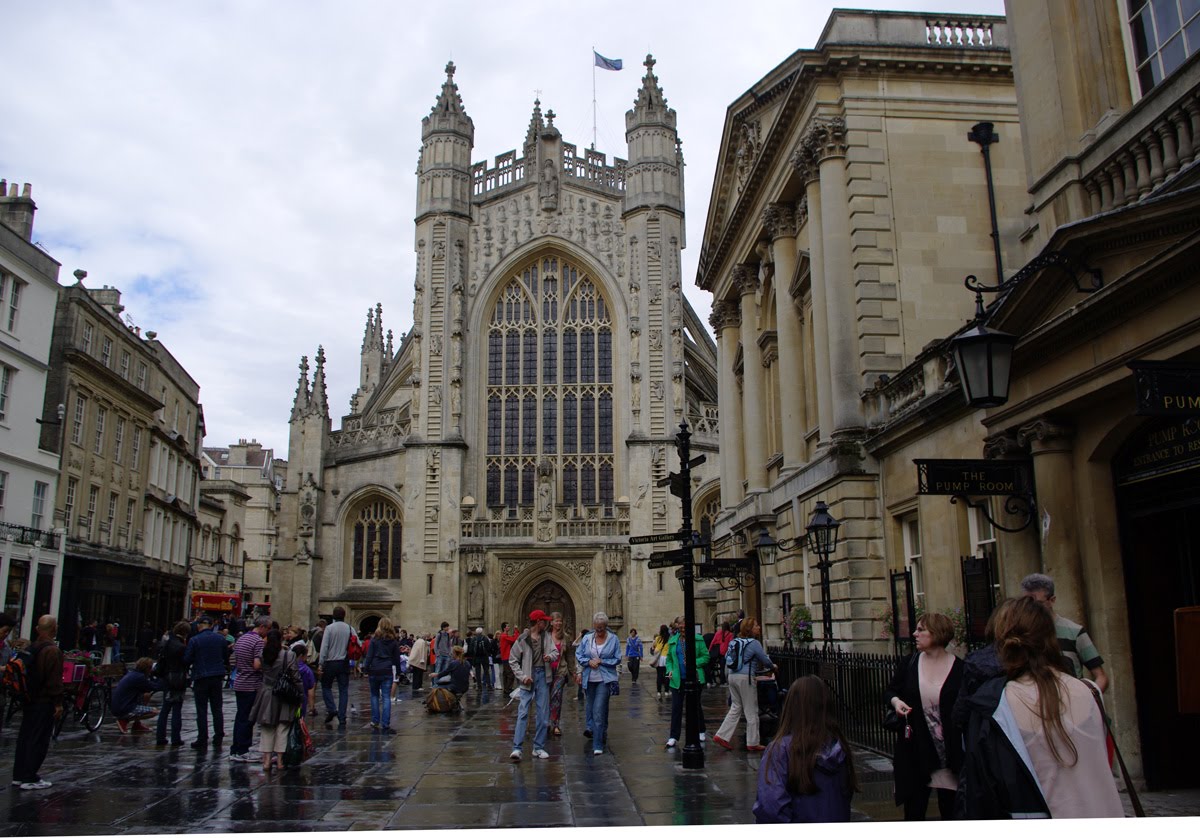
Bath Abbey


Then we had a look inside Bath Abbey. Jane seems to have not attended services at the abbey. She preferred The Octagon. This was a newly built chapel in Jane’s day. She seems to have preferred churches where the incumbent vicar had new and fresh ideas to deliver in his sermons.

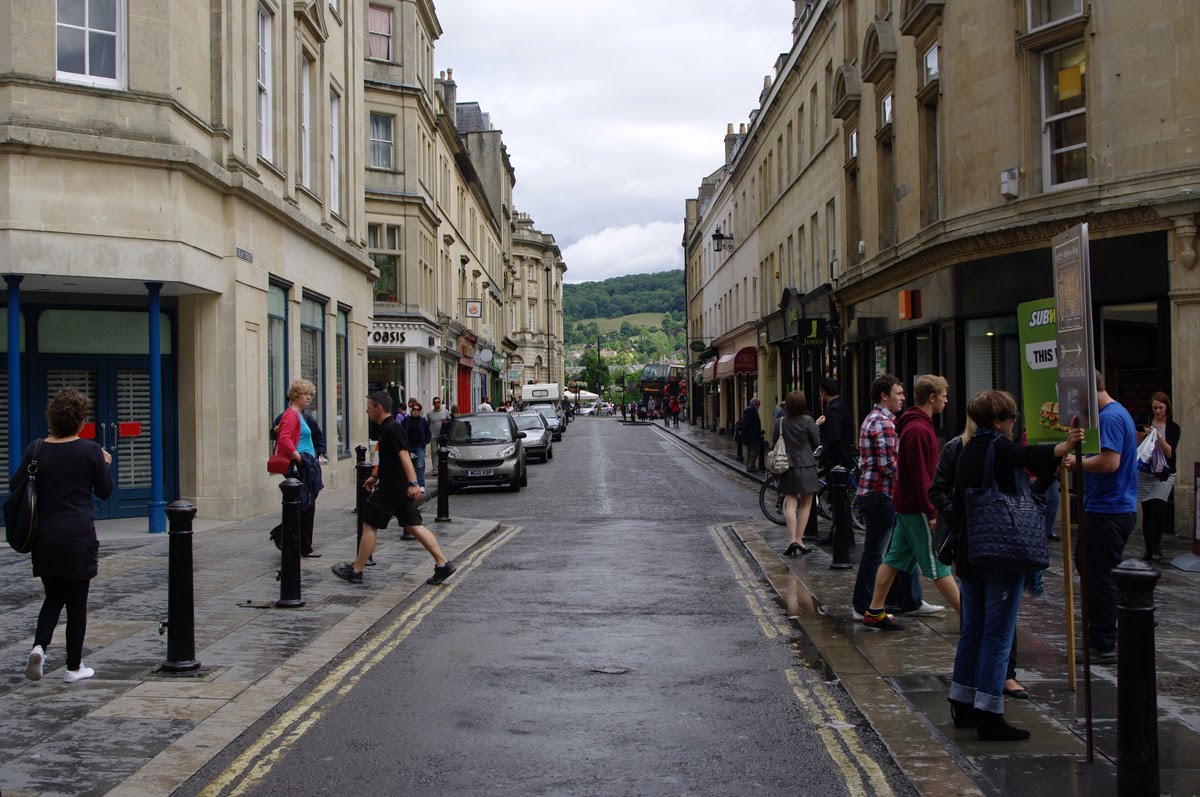
Cheap Street
After Bath Abbey we walked through the passageway that leads from the churchyard opposite The Pump Rooms, called Union Passage and into Cheap Street. It is the very passage that Catherine Moreland walked through with Miss Thorpe and suddenly sees a carriage with her brother and coincidently Miss Thorpe’s brother too, the awful John Thorpe. It is their first fateful meeting.

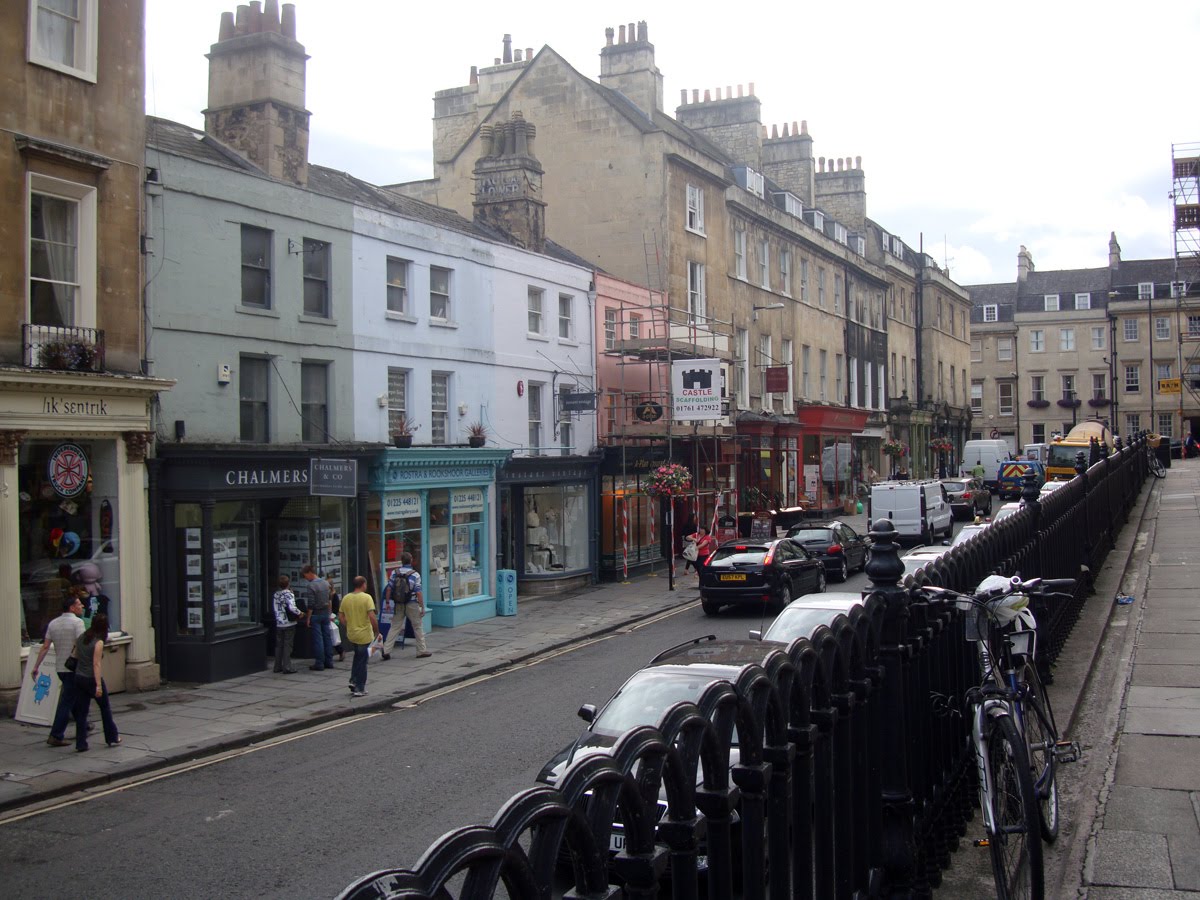
George Street outside Edgar Buildings

We walked on up Milson Street to George Street where Edgar Buildings are situated. Edgar Buildings are where the Thorpes stayed.

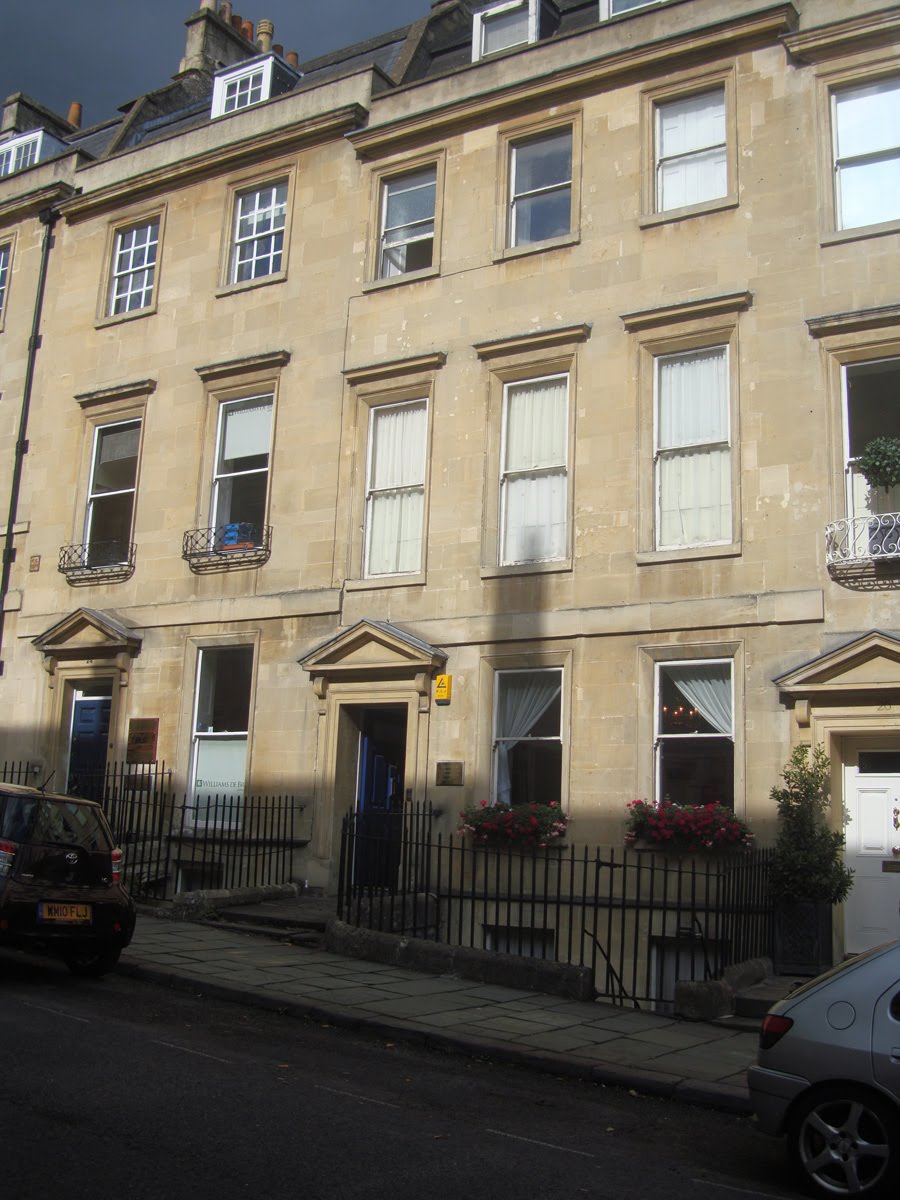
25 Gay Street

From George Street we went into Gay Street and walked past number 25 where the Austens stayed for a while.

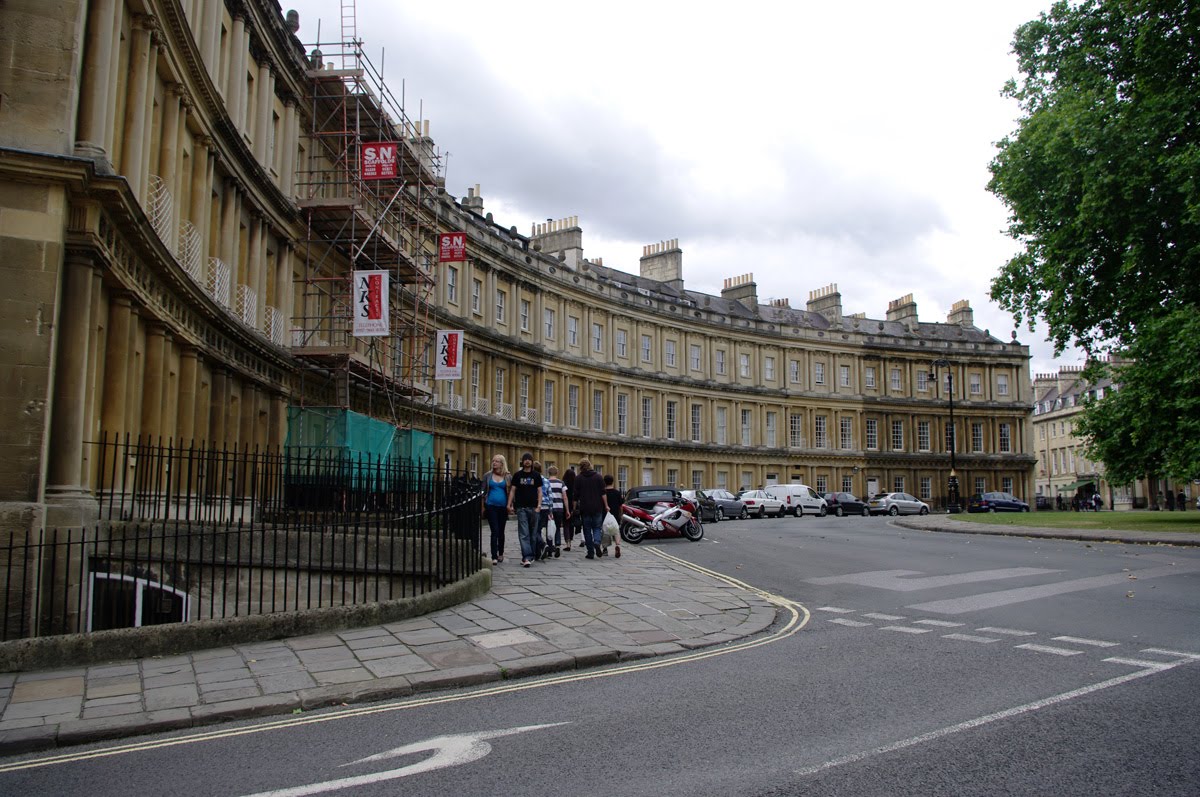
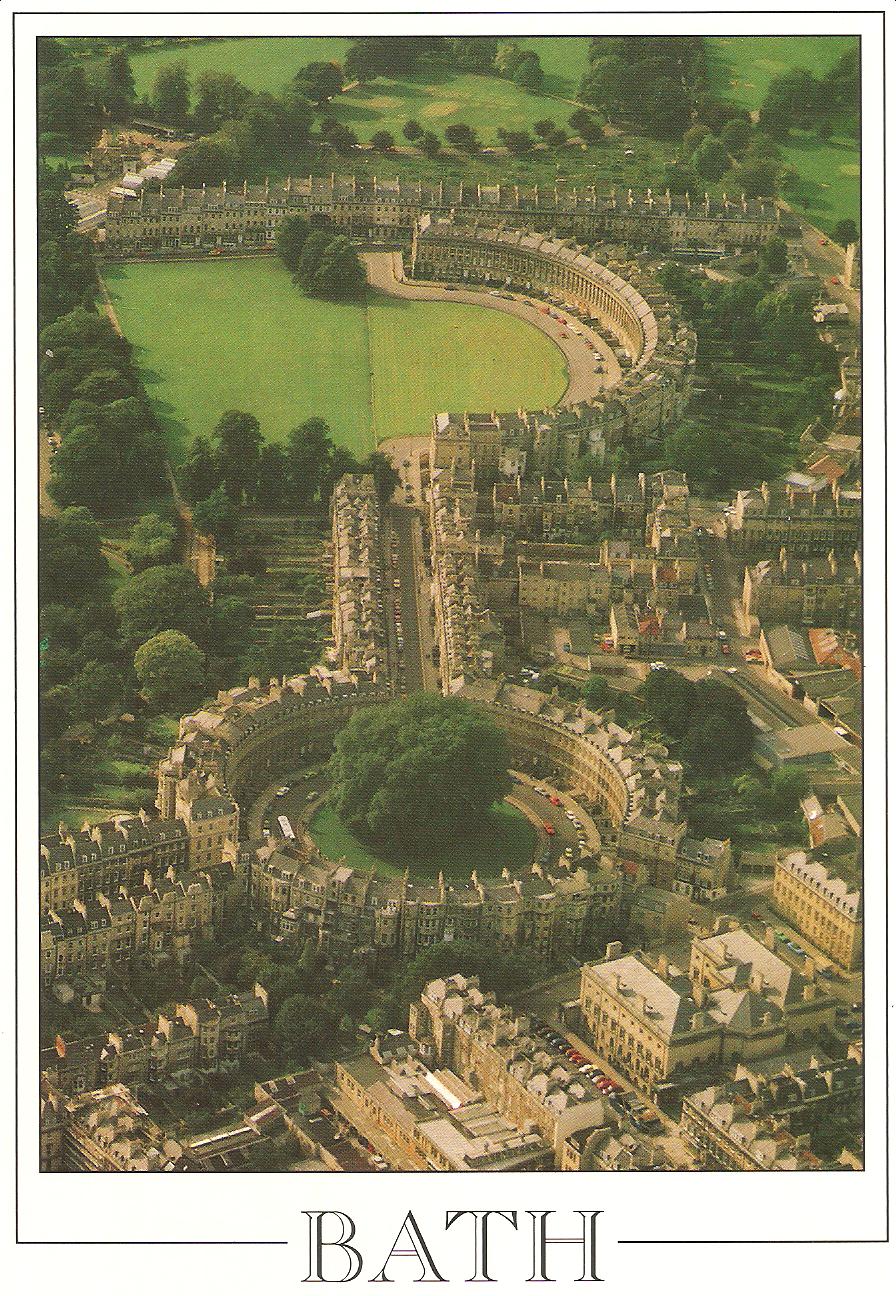
At the top of Gay Street is the magnificent, The Circus. This is a circle of the most magnificent Georgian Houses. There is a small green park in the centre of the circle in which grow four gigantic London Plains trees. They must be four or five hundred years old. Jane knew them. The portrait artist Gainsborough lived in one of these houses in The Circus for a while. Bath would have provided many opportunities to gain commissions and make money.

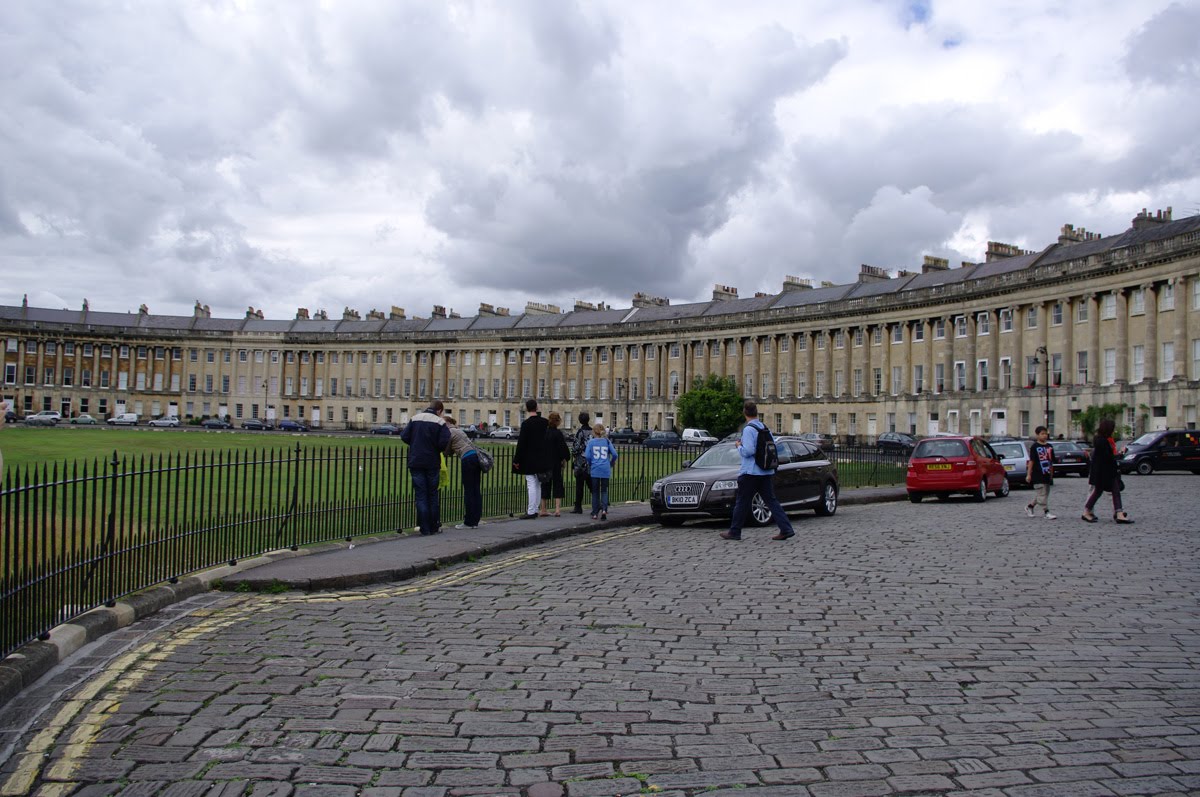
The Royal Crescent

From The Circus we turned down Brock Street and arrived at The Crescent at the top of the hill.

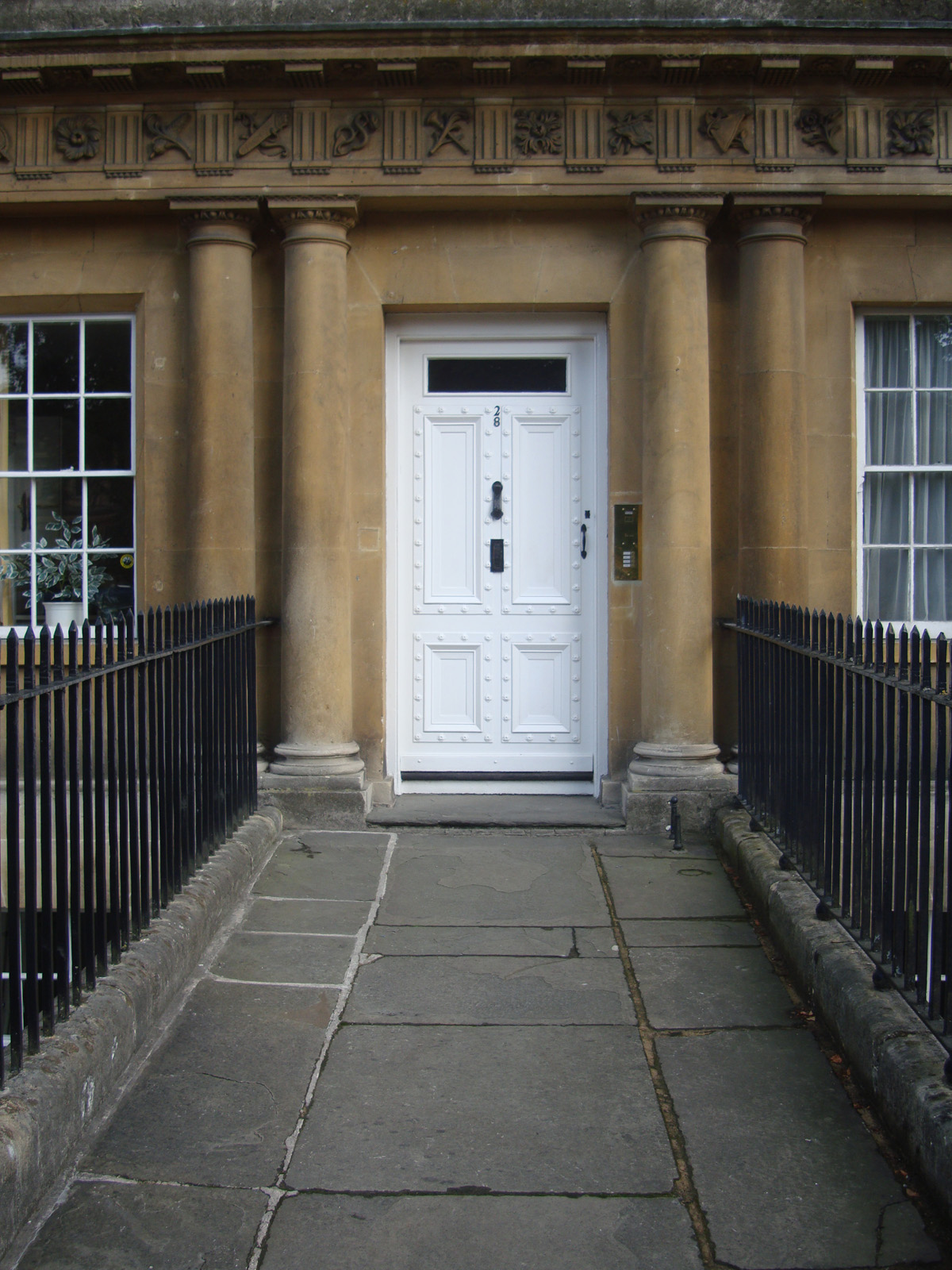
A front door at the Royal Crescent


This was the place where the elite lived. These were the largest and most expensive houses. Lords, Dukes and the very wealthy lived up here. It was also a good place to walk to get fresh air.

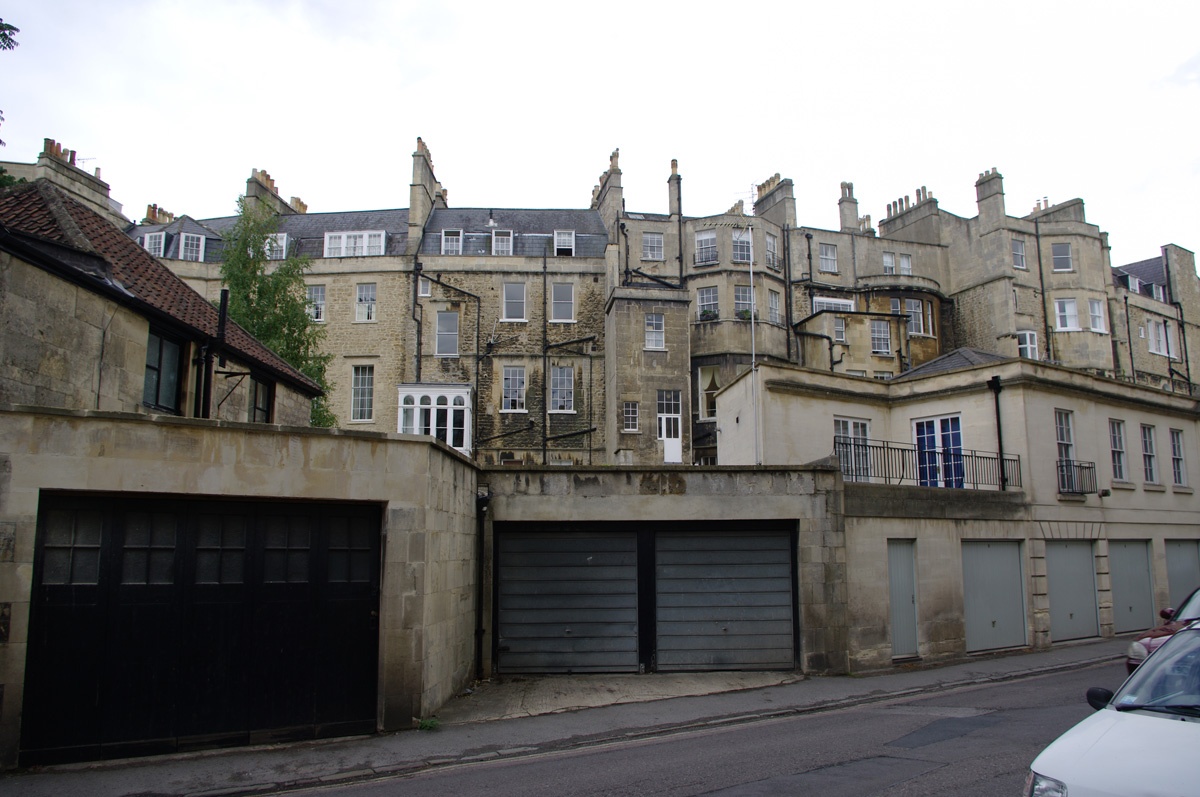
The back of the Crescent, each house is different
Jane mentions in her letters taking walks up to The Crescent and walking in the park and enjoying the views. Catherine Morland and Anne Elliot also walked there. There is a very good reason why Jane and her characters might want to walk here, the fresh air. If you look back over Bath you can see the beautiful city with its creamy yellow stonework In Jane’s time it would have been black. You will also notice the myriads of chimneys, which no longer spout black sooty smoke from thousands of coal fires. Coal is no longer burnt. We have clean air towns and cities nowadays. In Jane’s time the air was far from clean and the beautiful Cotswold stone became black. You can see today a building or two that have not had their surface cleaned since the clean air act was passed through parliament.

The Assembly Rooms

The Assembly Rooms, just north of The Circus, are what Jane and her characters knew as The Upper Assembly Rooms and also included the Octagon tearoom. This is where Catherine Morland met with the Thorpes.

The Lower Assembly Rooms, the original assembly rooms in Bath, where Beau Nash officiated , were situated near the abbey. They no longer exist. It was in the Lower Assembly Rooms that Catherine met Henry Tilney for the first time and fell in love.
Just to conclude, a couple of stories about Bath.

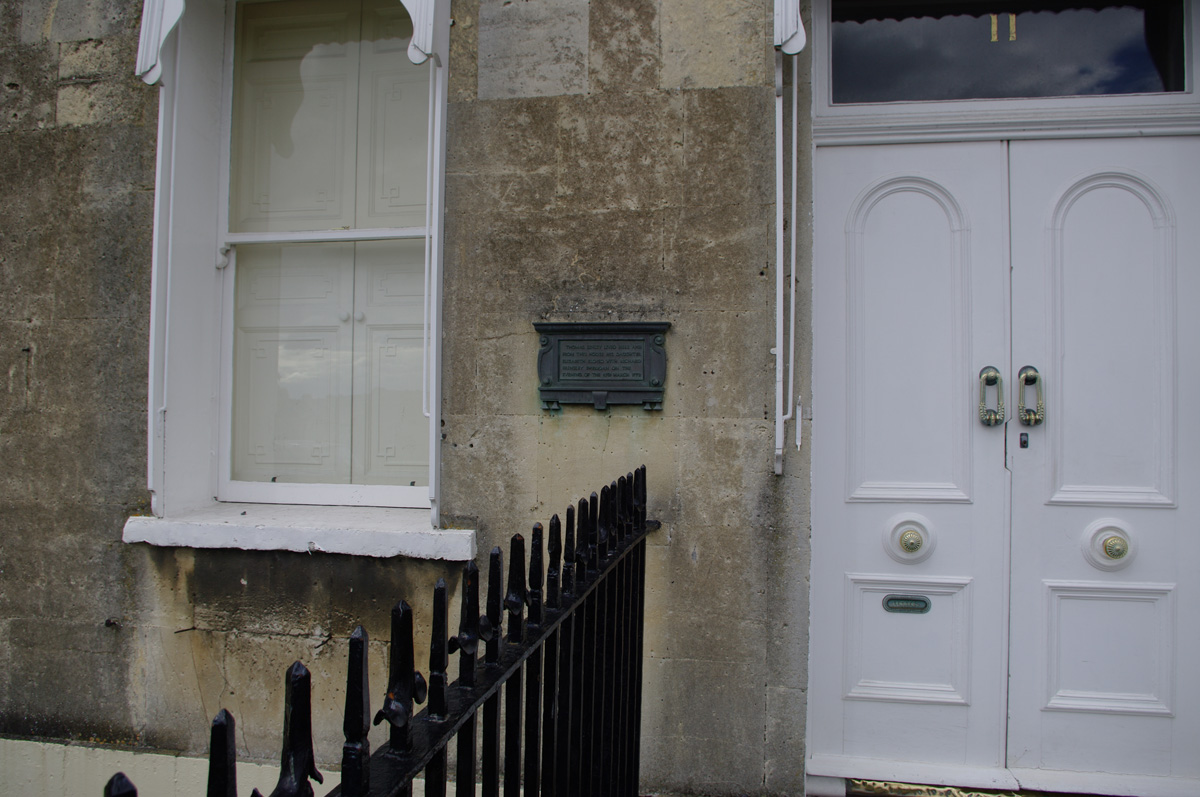
Sheridan eloped with Elizabeth from this house

In the Crescent , about half way round, is a house with plaque that relates a very dramatic story. In 1755 Richard Brinsley Sheridan, who was a great playwright in the 18th century and wrote The Rivals and School for Scandal and who was also the owner of the Covent Garden Theatre, absconded with a young lady from the house. Her father chased them all over Europe. When they were found the father made Sheridan marry his daughter. However soon after Richard Brinsley left her in the lurch. The chase was the thing. The excitement of the chase had gone. What a cad and bounder!!!!!

Tony at Pultney Bridge

Now, a story about myself. As we walked up Gay Street towards The Circus we obviously stopped outside number 25 to look at it and photograph ourselves outside. An irate and very upset looking lady marched out of the front door next to number 25 with a bowl full of water and threw it all over my legs. I must add this does not normally happen to me. The circumstances were, that some juvenile idiot had drawn rude graffiti over the side of her white van parked outside. She was trying to clean the words off. She was obviously upset and came out to wash the side of her vehicle. Unfortunately for me, she missed. She was SO sorry. Luckily it was a warm day and my trousers dried quickly in the walk up the hill.

The Royal Crescent (top) and the Circus (Bottom with trees at center.)

One fact before I finish. Did you know that the houses in The Crescent and in The Circus are all different? They all look the same because they are the same on the outside. The builder built the fronts and sold just the fronts. The new owners had to build their own backs to their houses. Hence, if you go round behind the houses in The Crescent they all look different.

Posted by Tony Grant, London Calling