Feeds:
Posts
Comments

Gentle Readers, (UPDATE: Contest Closed. The random number generator chose Jill! Thank you everyone for participating! Your comments were excellent!)

Maria Beatrice from Italy is conducting a survey the world over. Her question is simple:

How and when did you discover Jane?

When you leave your comment, please include your age and gender. (I know, I know, ahem.)

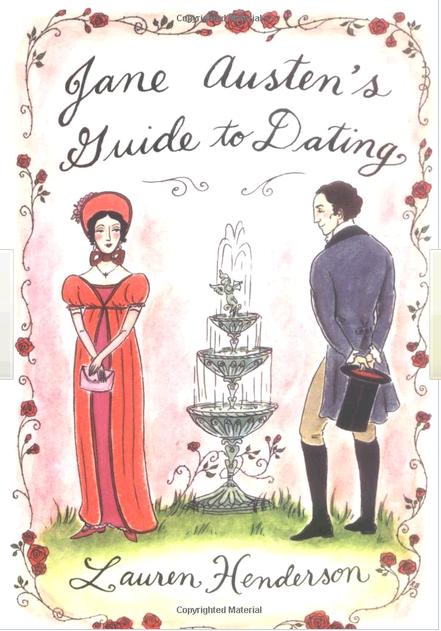
People who leave a comment will have a chance of winning a copy of Jane Austen’s Guide to Dating by Lauren Henderson. (You must be a US or Canadian citizen to be eligible to win.)

The giveaway contest ends at midnight on June 9th.

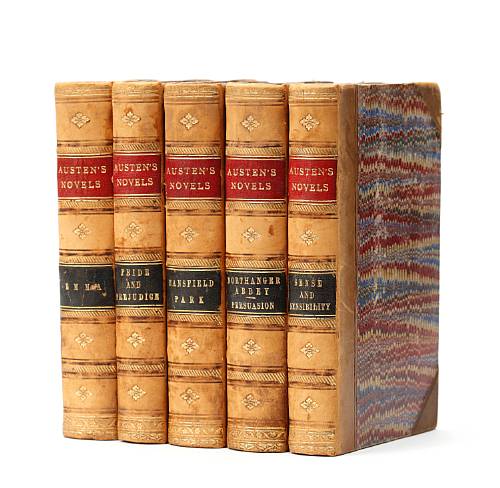
1833 Bentley edition of Jane Austen's novels

If you are thinking about getting out of the stock market and placing your money on a sure thing, consider bidding for this edition of six Jane Austen novels in 5 volumes at Bonhams. Set to be sold on June 8, with an estimate of £2,000 – 3,000, the value of this rare set is sure to  go up during the auction and for many years thereafter. The description of the Standard Novels on Bonhams’ web site states:

[Works, Bentley’s Standard Novel edition], 6 vol. in 5, 5 engraved frontispieces and additional titles, some light spotting to first and final few leaves, small corner tear to printed title “Pride and Prejudice”, without half-titles, ownership inscription of Eularia E. Burnaby (1856) on printed titles, bookplate of Henry Vincent, bookseller’s label of H.M. Gilbert, Southampton, uniform contemporary half calf, red and dark green morocco labels, extremities lightly rubbed [Gilson D1-D5], 8vo, R. Bentley, 1833 – Bonhams Website

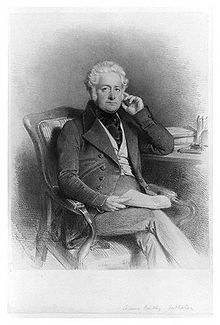
Richard Bentley (Wikimedia Commons)

The Bentley editions are notable in that no English reissue of JA’s novels is known after 1818. In 1832, Richard Bentley, publisher, purchased the remaining copyrights to Jane’s novels. (An excellent description of how Henry and Cassandra Austen sold the copyright to Richard Bentley and how little money they received for relinquishing their rights to their sister’s novels can be found in Claire Harman’s Jane’s Fame.) Bentley published all of Austen’s completed novels in 1833 in five volume sets known as the Standard Novels.  They came with illustrations that were significant for depicting scenes in early Victorian settings, not Regency settings. (One wonders how much the costume designers of the 1940 Pride and Prejudice film adaptations were influenced by these illustrations.) Bentley’s purchase marked a milestone, for from this time forward Jane Austen’s novels would always remain in print.

Illustration, Pride and Prejudice, Bentley edition (Image: Wikimedia Commons)

At the time of the Bentley reissues, Jane Austen was still regarded as a niche writer. Only a few hundred copies of her books were published and reprinted over the years. When Bentley’s copyrights expired, other printers began to publish her works, but book sales remained modest. Then came 1870. The publication of A Memoir of Jane Austen by J.E. Austen-Leigh, Jane’s nephew, sparked renewed interest in her novels. Bentley reprinted the novels as 21-5 in his Favorite Novels series (Sutherland, page 3),keeping Jane’s name in front of the public. Public demand for Jane’s novels continued to rise with the arrival of Bentley’s deluxe Steventon edition in six volumes in 1882. In 1884, Jane’s great nephew Lord Brabourne published the 2-volume set of Letters of Jane Austen. Combined with the previous publications and a largely favorable assessment of scholars and critics, Jane’s star was born.  A second wave of popularity, whose crest we are still riding, surged after the Jane Austen film adaptations of the 1990’s. It is conjectured that interest in her novels, adaptations, and sequels has peaked, but the number of readers that continue to visit this blog (and other Jane Austen blogs) and to clamor for films based on her life and novels belie that belief .

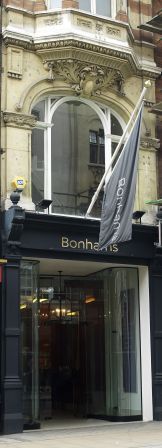
Bonhams, New Bond Street

About Bonhams LTD:

Bonhams is the world’s oldest and largest auction house still in British ownership. Thomas Dodd, an antique print dealer, and Walter Bonham, a book specialist, founded Bonhams in London in 1793.  When the auction house was launched, it was one of several similar concerns in Georgian London. The firm handled antique objects as well as fine wines. Today Bonhams is considered on of the four major auction houses in England, along with Christie’s, Sotheby’s, and Phillips, and sales take place almost daily at the firm’s New Bond Street location in Mayfair, London. (Image at right: University of Notthingham.)

For a more detailed description of Eularia E. Burnaby, whose name is inscribed inside the printed titles of this Standard Novel Edition, read Laurel Ann’s post entitled, Hey Bonhams! That Bentley Edition of Jane Austen Novels is Worth More Than You Thought!

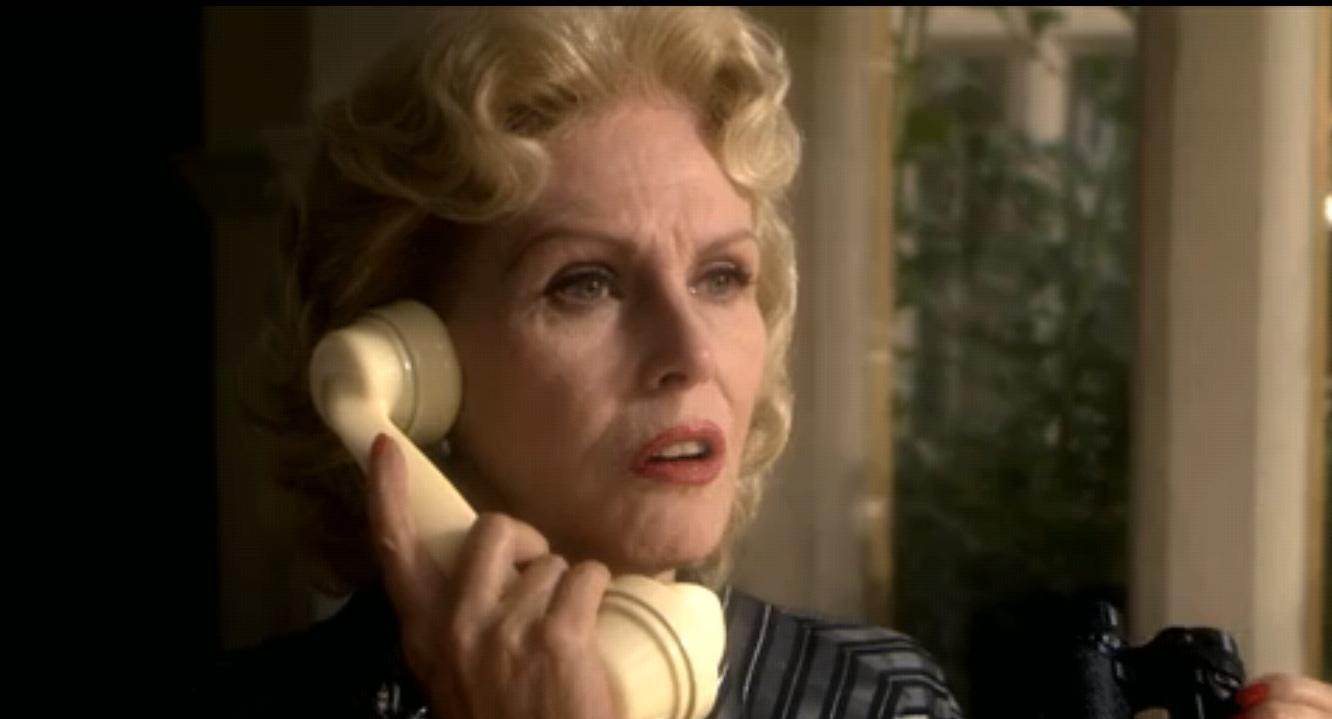
Miss Marple (Julia McKenzie) and Dolly Bantry(Joanna Lumley)

Last Sunday, Miss Marple made a grand fifth season entrance for PBS Masterpiece Mystery! with its latest episode, The Mirror Crack’d from Side to Side. If you missed the episode, it is available online at this link until June 6th.

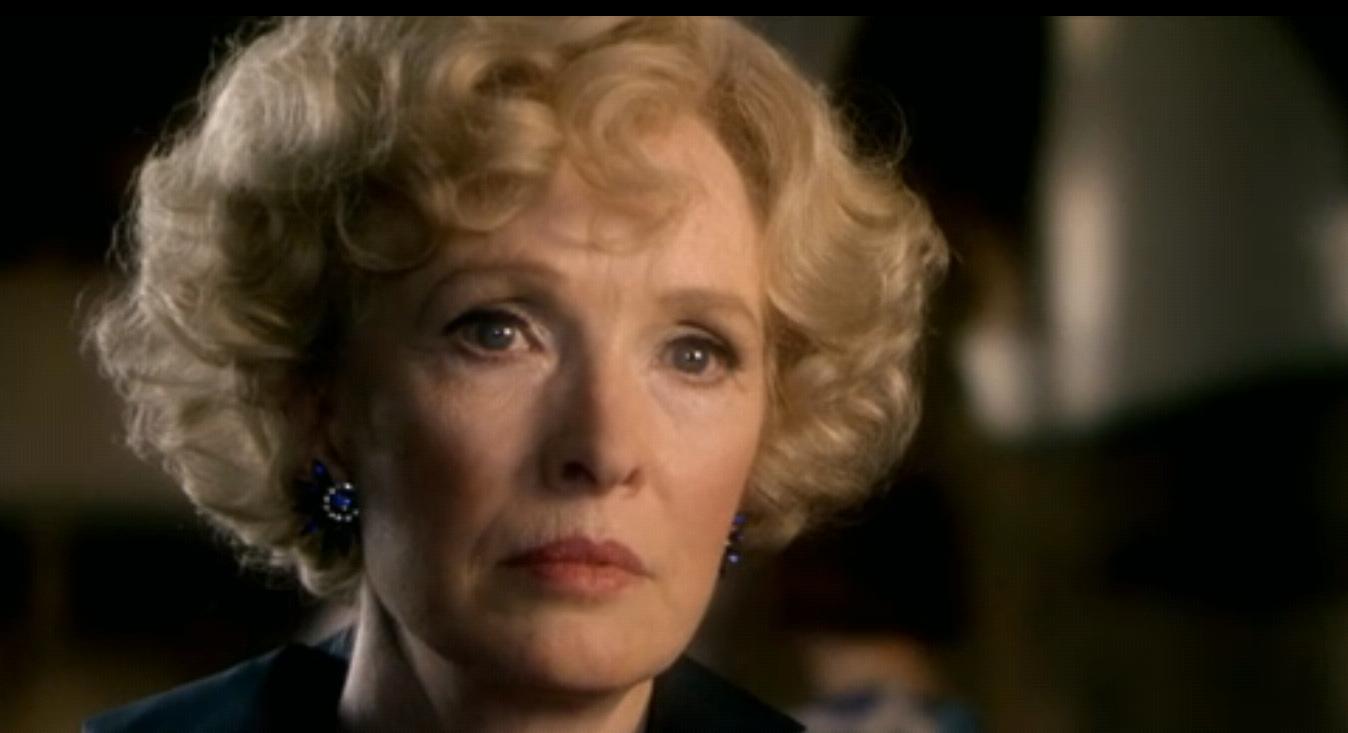
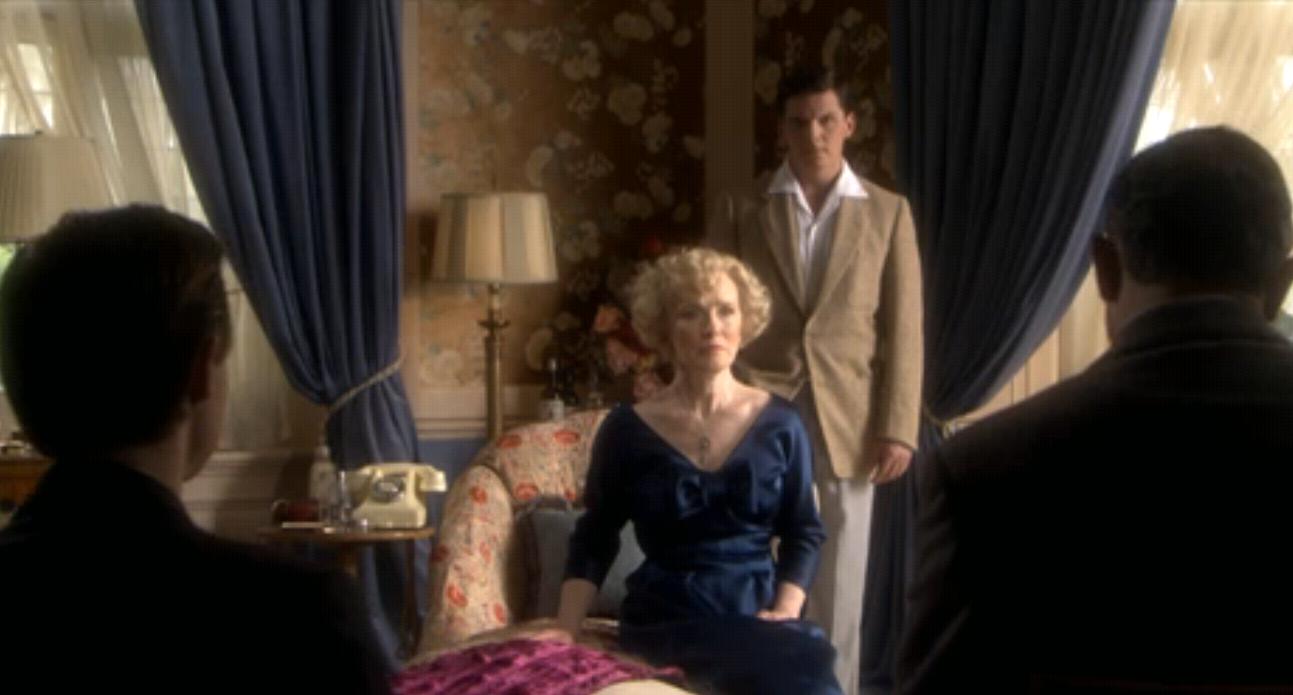
Marina (Lindsay Duncan) stares off into space with a look of doom

In this elegant mystery, based on a tragic event in actress Gene Tierney’s life, film star Marina Gregg (Lindsay Duncan) takes up residence at Gossington Hall with her fifth husband, young film director Jason Rudd (Nigel Harman). During a charity garden party, a guest named Heather Badcock (Caroline Quinton) drinks a poisoned cocktail and survives the experience by a mere few seconds. Laid up with a sore ankle, Miss Marple learns from her friend Dolly Bantry (played by the incomparable Joanna Lumley) that Marina was caught staring into space with a look of doom on her face just before poor Heather cocked up her toes.

Marina and husband #5, director Jason Rudd (Nigel Harman)

Enter Inspector Hewitt, whose list of usual suspects includes Marina’s past husbands and entourage of employees, colleagues, and hangers-on, looks for the obvious suspect. An attempt is made on Marina’s life while she is filming a movie, which confirms in Hewitt’s mind that she was the original target for murder, not Heather. Throw in a blackmailer, who is also found dead, and the plot has sufficiently thickened to leave viewers scratching their heads and relying on Miss Marple to make sense of the mayhem.

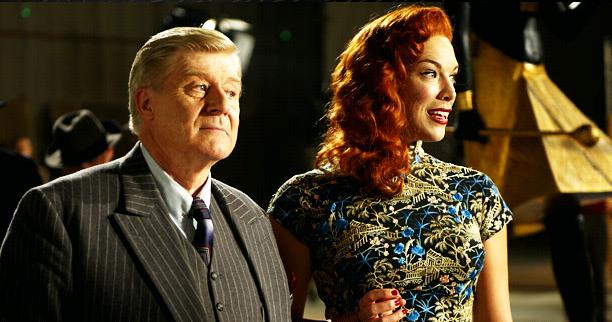
Inspector Hewitt (Hugh Bonneville, L) and sidekick take a traditional approach to solving a murder

As always, the cast of characters is superb. In addition to Ms. Lumley, Lindsay Duncan (Lady Catherine de Bourgh in Lost in Austen) and High Bonneville (Mr. Bennet in Lost in Austen and Mr. Rushworth in Mansfield Park) also make an appearance. I’ve grown quite accustomed to seeing Julia McKenzie as Miss Marple, and she fits my idea of that dowdy but sharp-eyed sleuth like a well worn glove. (As an aside, I advise that any of Miss Marple’s friends or relatives should steer clear of her, for where ever she goes, death is sure to follow!)

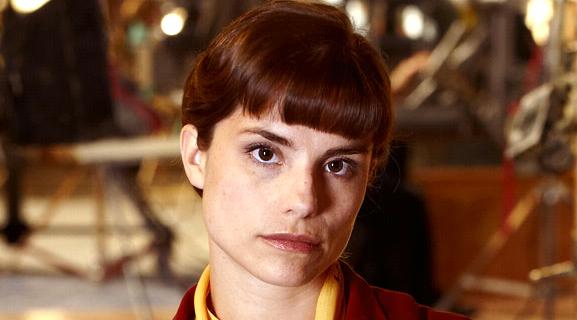
Why is reporter Margot Bence (Charlotte Riley) making life difficult for Marina?

The setting of a small English village and costumes of the late 1950’s, early 1960’s (the book was published in 1962) are superb. I have had the privilege to watch all three new episodes of Miss Marple this season, and while I liked this tale, it is not the best of the three. Perhaps because Mirror was based on a true story, the murder plot seemed a little loose and diffuse. The ending is enigmatic and lacks the satisfying and tidy wrap up of most of Agatha Christie’s plots. And yet I found my hour and a half well spent.

Joanna Lumley as Dolly Bantry

Well done, PBS Masterpiece Mystery! Two more original episodes will be aired (The Secret of Chimneys and The Blue Geranium), including two encore presentations (A Pocketful of Rye and Murder is Easy.) Five Miss Marples in one season! Life can’t get much better than this.

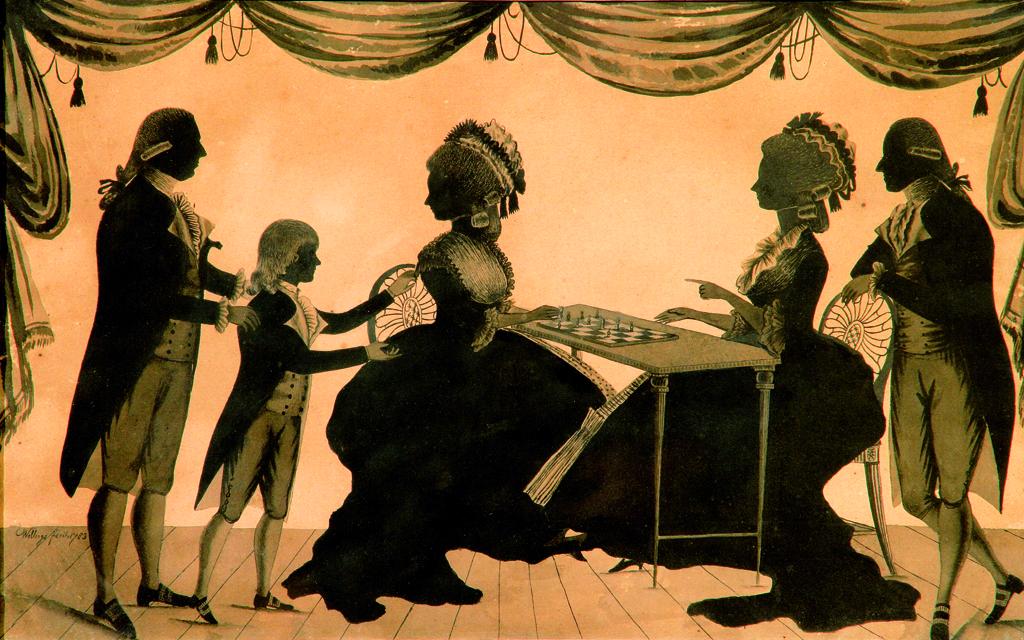
Chawton House Library has in its collection a rare green suit worn by Jane Austen’s brother, Edward. The suit – a child’s frock coat with matching breeches – looks very similar to the clothes young Edward is seen wearing in the Wellings Silhouette, which depicts his presentation to his adoptive parents. The suit is made of green silk, while the coat is fully lined with gold taffeta. Edward apparently liked oversized buttons, which can be seen in this frock coat and in the Grand Tour painting he had commissioned during his travels through Europe as a young man.

As you can see from the images of the suit (below), extensive and expensive conservation work is needed to stabilize the suit’s condition to prevent its further deterioration. Work on long term preservation is required before the suit (which was made in 1789 ) can be displayed, and donations are needed for its long term preservation.
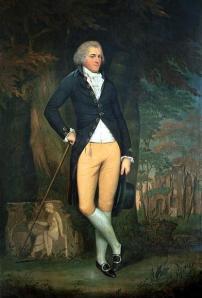
Edward Austen Knight on the Grand Tour

The suit’s provenance is impeccable. While experts can’t categorically say that this is the actual jacket worn in the Wellings silhouette, it certainly belonged to Edward. The suit was passed down through generations of the Knight and Bradford family, and finally ended up in a dressing up box belonging to the Bradford family. The Bradfords are relations of the Knight Family and also descendents of Edward Austen Knight. Richard Knight, current owner of Chawton House, was given the suit some years ago by the Bradford Family.

Edward a fortunate child, had two families who considered him their son: the Austens and the Knights. The following history (which is reproduced by permission), chronicles how Edward Austen was adopted by the Knight family, a practice commonly followed by childless couples of the time:
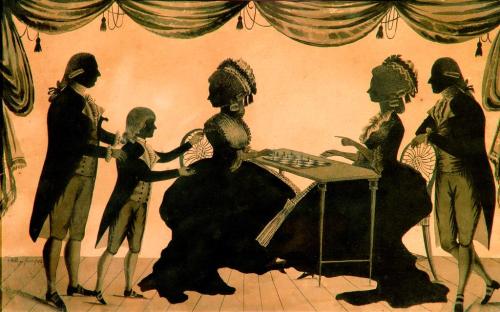
Rev. George Austen presents his son Edward to the Knight family

The freehold of Chawton House has remained in the Knight family ever since the sixteenth century, though on many occasions the ownership passed laterally and sometimes by female descent, requiring several heirs to change their surnames to Knight. Sir Richard Knight, who inherited at the age of two in 1641, had no children and he left the estate to a grandson of his aunt, Richard (Martin) Knight. His brother, and then his sister, Elizabeth, inherited in their turn. During the first part of the eighteenth century, Elizabeth undertook the further development of the house and gardens. She married twice, but again no children were born, and when she died the estate passed to her cousin Thomas Brodnax May Knight, who united it with his own large fashionable property in Kent, Godmersham Park.

In 1781, Thomas Knight II inherited, but when he and his wife Catherine showed no sign of having children of their own, they adopted a son of the Reverend George Austen, who was a cousin of Thomas Knight’s. The Austen’s had six sons and two daughters, and the Knights adopted the third eldest son, Edward. Edward Austen Knight eventually took over management of the estates at Godmersham and Chawton in 1797, living mostly at Godmersham and letting the Great House at Chawton to gentlemen tenants.

In 1809 he offered a house in the village to his mother and two sisters Cassandra and Jane, and it was there that Jane Austen began the most prolific period of her writing life. Her career as a novelist took off with the publication of Sense and Sensibility in 1811, and she went on to publish a further three of her novels while at Chawton (two more followed shortly after her death). She lived in Chawton almost until her death in 1817, only moving to Winchester near the end of her life to be nearer medical care.

This meeting and subsequent adoption is a pivotal moment in English literary history because, had not Edward been adopted by Thomas and Catherine Knight, and then inherited Chawton House, his sister, Jane Austen may not have been able to complete her novels and as a consequence, probably the most famous women writers of the age, would never have been discovered.

The Library intends to eventually display the suit in the Oak room at Chawton House, a room well known by Jane Austen and where the original of the ‘Wellings’ silhouette is located. Supporters are asked to donate funds for the project, which will cost £12,000 ($ 17, 318). A stockman and environmentally controlled cabinet need to be custom-made for a secure display. A child’s mannequin, which must be constructed of conservation quality materials, will also be made for the display.
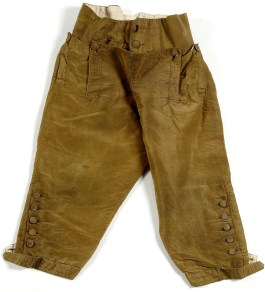
Green silk Breeches, dated to approximately 1789.

Frock coat with lining

Additional plans include making a replica suit to show to school children. Students and visitors will learn about the social history and background of the suit, including its style and construction, and from what materials the suit was made (silk and taffeta), who made it, and where the silk came from.

To make a donation, click on the link to the Virgin Giving website.

About Chawton House:

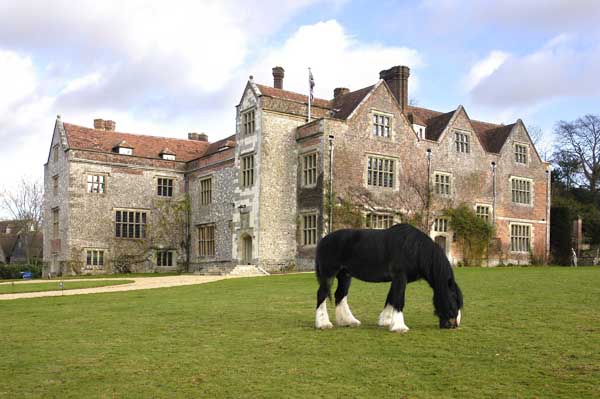
The house is open to the public for ‘Open’ tours in the afternoon of Tuesdays and Thursday each week, and pre booked tours most days of the week. Conferences  based on studies of the ‘Long’ 18th Century and women writers are scheduled regularly. Last year an important three day international conference was held to celebrate the bicentennial anniversary of Jane Austen’s arrival in Chawton. The event was attended by Austen scholars from all over the world. In excess of 8,000 visitors visited the house, gardens and library last year.

Chawton House (Image from website)

Chawton House Library works in partnership with Jane Austen’s House Museum to provide high quality visits to both sites for primary, secondary and A level schools and colleges. These include presentations of Jane Austen Life and works, tours of both houses, workshops relating to dress, manners and the use of herbs, dancing in replica clothing and an opportunity to handle real objects from the period of Austen’s life. For this work both Houses were awarded a Heritage Education Trust award.  Restoration of Edward’s suit is integral to the history of Chawton House and also has an important place in the interpretation of the life and legacy of Jane Austen.
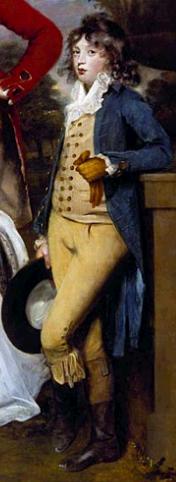
Thomas Draddyll in 1789 wears a typical boy's suit of the era. Painted by Sir Joshua Reynolds.

Breakdown of Project Costs

  • Conservation of the Suit: £6629.35
  • Display Case: £4788.13
  • Mount or Stockman: £587.50
  • Replica Suit: £646.25
  • Total Project Costs £12,651.23

More on the topic:
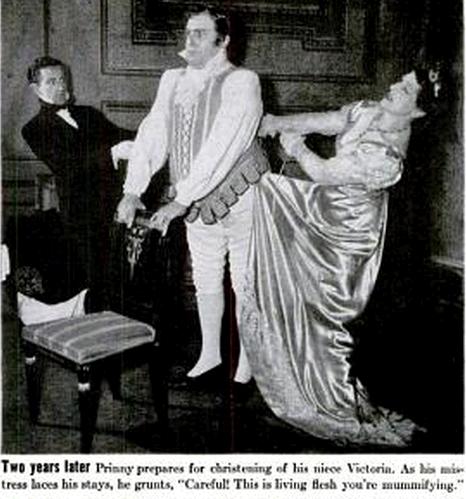
Robert Morley and Wendy Hiller, The First Gentleman, 1945 (Image, LIFE magazine)

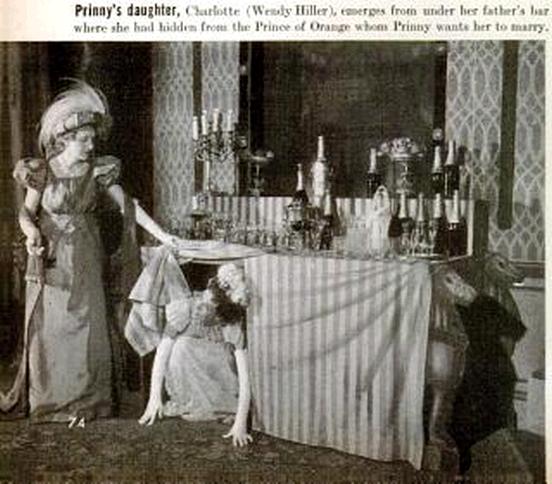
While researching information for my post about the Prince Regent and his strange marriage to Princess Caroline of Brunswick, I ran across this obscure item – a play in two acts about Prinny named The First Gentleman, written by Norman Ginsbury and performed in London in 1945. Robert Morley played Prinny and Wendy Hiller portrayed the doomed Princes Charlotte (who died in childbirth in 1817, the same year that Jane Austen died). I surmise that Frances Waring acted the role of Caroline of Brunswick, but could not confirm this detail. About Wendy Hiller’s performance, Roberth Morley said:

Wendy Hiller as Princes Charlotte hides under the table

She was never afraid of over-acting when she felt instinctively that the role required her to do so and, as Princess Charlotte, she was in turn so fierce and so gentle that, on some evenings, after she had died in the second act it seemed a waste of time continuing with the play.- Dame Wendy Hiller

The play ran in London’s New Theatre for a run of 654 performances. In 1948, a film of the same name was made. This movie, released in 1949, also remains obscure.

Set Design for The First Gentleman, Columbia, 1948

A theatre programme from the pre-West End touring production in Liverpool’s The Royal Court Theatre was recently for sale online. The play’s cast also included Brown Derby, Wilfred Walter, Guy Le Feuvre, Sigrid Landstad, Una Venning, Christina Horniman, Helen Stirling, Catharina Ferraz, Christine Lindsay, Robert Beaumont, Geoffrey Toone, Amy Frank, Mary Masters, Ian Sadler, Beryl Harrison, Pamela Carme, Martin Beckwith, John Baker, Grenville Eves, Robin Christie, Mary Marshall, Sebastian Minton and Valentine Richmond.

The Prince Regent after Charlotte's death

More on the topic: