Feeds:
Posts
Comments

With the Coronation of Charles III and Camilla kicking off on Saturday, May 6, we Janeites have much to look forward to! Whether you enjoy following along with the Royal Family, can’t wait to see the grandiose pomp and pageantry, or want to know more about England and the many historic traditions surrounding the Crown, the Coronation provides a historic moment we won’t soon forget.

Watch Live or Later:

Whether you’re planning to set your alarm and watch it live (for those of us who don’t live in England), watch the recorded proceedings later in the day, or attend a watch party or live event, there is something for everyone. For a schedule of events for this 3-day affair, you can read “The Full Schedule of Events for Coronation Weekend” (Town & Country).

Worldwide Celebration:

People from around the world will tune in for this incredible event. In England, this is a 3-day weekend with plenty of celebrations to enjoy, including an extra Bank Holiday on Monday! If you live in England, you probably have a plan in place to either watch live with friends or perhaps you’ve traveled to London to participate in the city-wide celebrations. If so, please take photos and send them to us here at Jane Austen’s World!

If you don’t live in England, there are two major options: Either get up early and watch it live or watch a recording later in the day. If you’re a true, die-hard fan, you’ll be up early, dressed to the nines, with your tea service ready and fresh scones in the oven. If you’re like me, you’ll get up early to watch some of it live, but also plan something later in the day so that your family members can participate as well!

Ways to Celebrate at Home:

I’m planning to make a weekend of it, so that I can enjoy the Coronation itself and some of my favorite documentaries about the Royal family. While I’ll always remain loyal to Queen Elizabeth II, and though I do have quite a soft spot for William and Kate, I’m looking forward to seeing my very first coronation!

To make the weekend special (and to lure my family into watching with me), I’m planning plenty of special food and drink! If you’d like to create your own British tea party at home, you can keep it simple with tea and cookies, cakes, or biscuits or you can create a fancier spread!

To read about the difference between afternoon tea, high tea, and cream tea, check this out: “Afternoon Tea vs. High Tea vs. Cream Tea: A Brief Tutorial” (The Spice & Tea Shoppe).

Delicious Magazine: Coronation Recipes

Cream Tea:

I’m planning on making cream tea, which is tea and scones with clotted cream and jam. The best cream tea I ever had was in Lyme Regis on a JASNA Pathfinders tour. It was rainy and cold that day, and my friend and I tucked into a tiny hole-in-the-wall bakery for a bite to eat. We ordered a cream tea and I will never forget how good it tasted!

If you’re curious about the English tradition of Cream Tea, you can read more HERE. Cream Tea is “most often associated with the West Country, i.e. Cornwall, Devon, Dorset and Somerset. It usually consists of scones, clotted cream or butter, strawberry jam, and of course, tea” (The Spice & Tea Shoppe).

To create your own cream tea at home, you’ll need tea, scones, clotted cream (or butter), and jam! I prefer making my own scones, but you can also find scones at many bakeries or a mix at the grocery store.

Culinary Ginger, “Clotted Cream for Afternoon Tea”

A Cuppa:

You can drink any type of tea you like, but if you want to truly enjoy a “cuppa” the way the British people drink it, you’ll want to try something traditional. In “How do British tea drinking habits compare with other Europeans?”, you can see some of the top favorites:

Many British people enjoy milk in their tea, but usually without any sweetener. I personally enjoy honey and milk in my tea. I drink a delightful herbal tea that is everyone’s favorite in my house. I buy Bourbon Street Vanilla Rooibos from the English Tea Store.

If you don’t like tea (otherwise known as “hot brown water,” according to Ted Lasso), you might try it with milk and honey. I’ve turned quite a few people into tea-lovers with that special combo!

Scones:

True British scones are more like an American biscuit in shape and texture than the type of scones you find at Starbucks. I’ve never met a scone I didn’t like, but if you’d like to make a more traditional British scone, you won’t be disappointed.

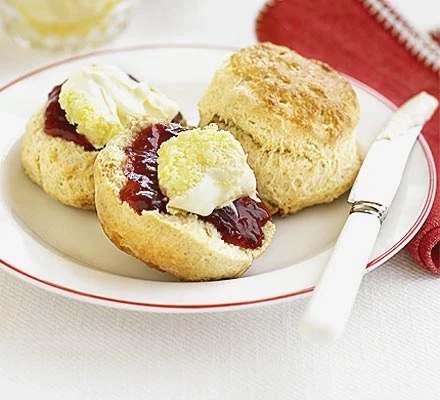
This scone recipe receives high marks from BBCGoodFood.com: Classic scones with jam & clotted cream.
Clotted Cream:

But how does one find clotted cream if one does not live in England? Many specialty food stores and gourmet supermarkets now carry clotted cream. You can usually find it in the dairy section, the deli area, or the artisan cheese section. Pictured here is Devon clotted cream, which I can usually find at Whole Foods:

But you can also make it at home! The trick is finding heavy whipping cream that isn’t ultra-pasteurized (which is sadly much harder to find in the U.S. in the past few years). Here’s a recipe if you’d like to try it by the Curious Cuisiniere: Homemade Clotted Cream.

Jam or Cream-Which comes first?

You can choose whichever jam you like. I love strawberry jam on my scones! But here’s the real debate about jam and clotted cream: Which goes on the scone first? Do you put the cream on first and then the jam? Or is it the other way around?

For most Americans, I think we’d automatically say it’s cream first and then jam, since we usually butter our biscuits and toast first and then add jam second. But in England, there’s a big debate about which one goes first: “While those in Devon typically spread the clotted cream first followed by jam, the Cornish tradition is to spread jam first followed by cream” (The Independent).

The Sun reports that the Queen herself prefers jam first. Thus, if you want to eat your scones like the Queen, you know what to do. You can read all about it HERE.

Tea with Biscuits:

If you prefer biscuits with your tea, there are many to choose from. I’m personally obsessed with chocolate Digestives and chocolate Hob Nobs. British people love their biscuits and are quite opinionated about which are the best, particularly for dunking.

Apparently, the most “dunkable” biscuits are Jaffa Cakes, according to a recent study: “The best biscuits for dunking, according to science – so is YOUR favourite on the list?” (The Daily Mail)

But if you’re interested in knowing the most popular biscuits in England, The Sun has all the answers. If you’d like to try some of the top biscuits yourself, you can read more here: “CHOCCY WOCCY DOO DAH Britain’s top 20 favourite biscuits revealed – but do YOU agree?”

Victoria Sponge:

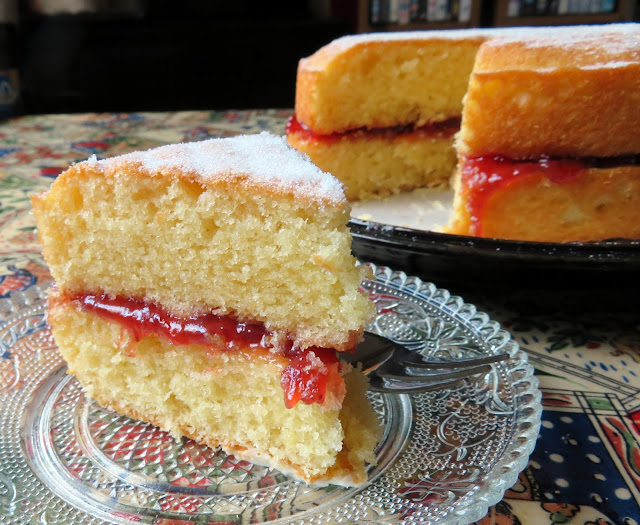
If you really want to take it to another level and pretend you’re under the tent at The Great British Baking Show, you can try Mary Berry’s famous Victoria Sandwich Cake for your Coronation dessert! This is next-level baking, and it’s something I’ve always wanted to try. I like this recipe from The English Kitchen because it lists ingredients in British grams and American measurements: “Mary Berry’s Victoria Sandwich Cake.”
Tea Sandwiches:

If you’re planning to spend the day or weekend watching Coronation events, it’s best to plan on sandwiches as well. Otherwise, tea with scones, biscuits, and/or cake might be a bit too sweet! You can make a tray or a tiered tower of your own favorite sandwiches or prepare several classic tea sandwiches.

According to BBCGoodFood.com, here are the “15 best afternoon tea sandwich ideas.” I personally love anything with cream cheese and cucumbers, but my family likes something with a bit more protein involved!

Make it a Celebration:


If you want to decorate your table, get out your fine china tea cups, dress up, or even invite people over, the sky’s the limit. You can decorate a sun hat with real or faux flowers, cut out paper crowns, or print your own invitations.

Whether you’re planning to make a weekend of it or if you’re just going to watch the highlights, this is an event to remember.

If you’re planning something special, which I’m sure many of you are, please comment below. We’d love to hear from you over the next few days as we all enjoy the beauty of this historic moment in time!


RACHEL DODGE teaches college English classes, gives talks at libraries, teas, and book clubs, and writes for Jane Austen’s World blog. She is the bestselling author of The Little Women DevotionalThe Anne of Green Gables Devotional and Praying with Jane: 31 Days Through the Prayers of Jane Austen. Now Available: The Secret Garden Devotional! You can visit Rachel online at www.RachelDodge.com.

Growing Older with Jane Austen by Maggie Lane: Review and Highlights by Brenda S. Cox

“Me! a poor, helpless, forlorn widow, unfit for anything, my spirits quite broke down . . .”—Mrs. Norris, Mansfield Park, chapter 3

“That Lady Russell, of steady age and character, and extremely well provided for, should have no thought of a second marriage, needs no apology to the public, which is rather apt to be unreasonably discontented when a woman does marry again, than when she does not; but Sir Walter’s continuing in singleness requires explanation.”—Persuasion, chapter 1

Last month we began looking at older characters in Jane Austen’s novels, drawing from Maggie Lane’s fascinating book, Growing Older with Jane Austen. We saw the importance of beauty in making matches, and the position of women as wives and mothers, or as single “old maids.” 

Next, Lane turns to older men, in the chapter:

Still a Very Fine Man (chapter 6)

With the exception of Sir Walter Elliot, the older men in Austen are less concerned about their appearances. But they are more likely to want to remarry than the older women. This is because men generally contribute financially to the marriage. If women are lucky, money may pass into their hands when they are widowed and they can be independent.

For the men, though, they depend on women for housekeeping, and they are uncomfortable without a female relative caring for them and their households. Younger men like Henry Tilney or Colonel Brandon, expecting to marry, may be happy with a paid housekeeper for the time being. But older men like the Dashwoods’ great-uncle want a female relative to care for them. So those young enough to remarry, like Mr. Weston and Mr. Dashwood (Elinor’s father), are likely to find a second wife, and in Austen’s novels they find happiness.

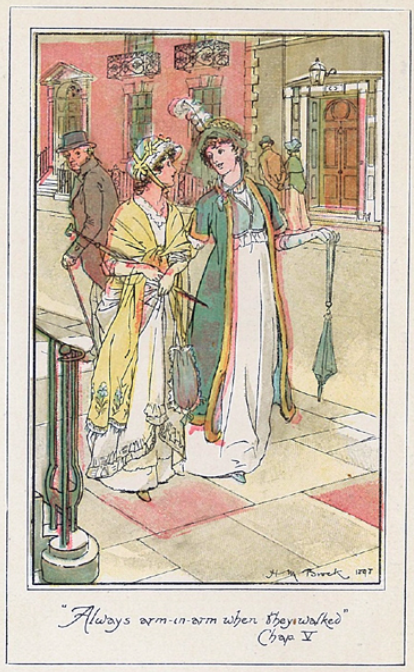
Sir Walter Elliot wanted to remarry, but failed. He probably proposed to women much younger than himself, with his eye for beauty. They were not interested in a “foolish, spendthrift baronet.” Instead, he depends on his daughter Elizabeth, who is very much like himself. Unfortunately she does not balance him, “promot[ing] his real respectability,” as his wife had.

Vain and foolish, Sir Walter Elliot failed to find a second wife who would accept him.
C.E. Brock, public domain

Mr. Woodhouse, of course, also depends on his daughter Emma, and she carefully fulfills her duty to him. He is at least loving, though selfish. In contrast, General Tilney bosses his daughter around harshly and keeps control of his household in his own hands.

Austen presents some happy marriages of older men. “Older men have usually settled down to an accommodation with their wives, and Austen presents many portraits of ageing couples who seem well-knit together: the Shirleys, the senior Musgroves, and the Morlands, for example” (Lane, 109). Even Sir Thomas Bertram and Mr. Allen are always courteous to their rather foolish wives.

Merry Widows (chapter 7)

The next three chapters explore the varying possibilities for widows. Lane says, “The conventional ‘merry widow’ of literature is an unprincipled predator with a voracious sexual appetite and a carefree disregard of conventional morals” (122). The only widow like that in Austen is, of course, Lady Susan Vernon (of Lady Susan), whom Lane discusses at length.

Another widow in Austen who follows a different contemporary stereotype is Mrs. Turner of The Watsons. She is taken in by a fortune-hunting Irish officer; she marries him and leaves her niece penniless.

Other widows in Austen’s novels, like Mrs. Jennings and Lady Russell, have a comfortable income and seem content to remain unmarried. Austen makes an interesting remark about double standards when she says of Lady Russell that “the public . . . is rather apt to be unreasonably discontented when a woman does marry again, than when she does not.” Lane explains that if a woman doesn’t need to remarry for money or a home (as Lady Susan does), she is “giving proof of continuing sexual desires.” A man, though, was expected to have continuing sexual desires, and “if he lost one wife, he was thought to be doing a good thing in seeking another—and in giving another single woman the chance to be wed” (Lane, 132).

In her letters, though, Austen commended a woman, Lady Sondes, who was being criticized for marrying again (and apparently had not married for love the first time). Jane writes, “I consider everybody as having a right to marry once in their Lives for Love, if they can” (Letters, Dec. 27, 1808).

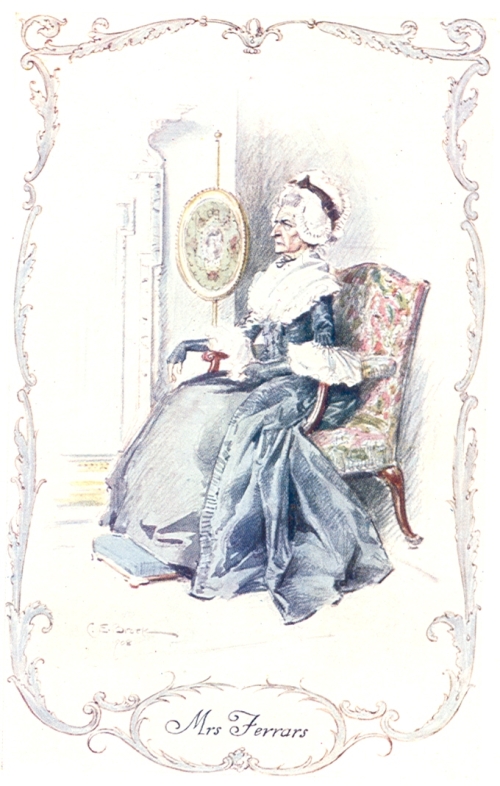
Mrs. Ferrars of Sense and Sensibility is a despot over her family. She controls the money and wants to control their lives.
C. E. Brock, public domain

Four Dowager Despots (chapter 8)

Not all of Jane Austen’s widows are as loving as Mrs. Jennings and Lady Russell. While power was usually held by men in Austen’s world, Austen gives us four rich widows who tyrannize others. (Think for a minute; who are they?) Mrs. Ferrars of S&S, Lady Catherine de Bourgh of P&P, Lady Denham of Sanditon, and Mrs. Norris of Mansfield Park. (Mrs. Norris doesn’t have a lot of her own money, but exercises authority on behalf of her “supine sister and absent brother-in-law.”)

Lane writes, “Only Lady Denham is a true dowager, the strict definition of which is a woman whose income derives by legal pre-arrangement from her late husband’s estate, the estate [and title, if there is one] having passed on his death to his heir” (136). Lady Catherine and Mrs. Ferrars appear to completely control their late husbands’ fortunes. But all of them show “a mixture of self-importance and interference in others’ lives” (Lane, 137). Lady Catherine, in particular, controls her whole parish, and it appears that Lady Denham also has great influence in Sanditon.

Lane contrasts two older women in Sense and Sensibility: the manipulative Mrs. Ferrars, who uses money to control her sons, and Mrs. Smith, who controls Willoughby financially. “The telling difference between Mrs. Ferrars and Mrs. Smith is that the latter only wants her young relation to be good, not rich or distinguished” (Lane, 142). Mrs. Smith was likely an elderly maiden lady, of “uncompromising propriety,” who was given the honorary title of “Mrs.” Her motivations are better than Mrs. Ferrars’s selfishness.

Not the Only Widow in Bath (chapter 9)

Another dowager, Mrs. Rushworth, is not a despot as far as we know. When her son marries, she retires, “with true dowager propriety,” to Bath, ready to boast of Sotherton during her evening parties. While Mrs. Elton tries to convince Emma to go to Bath to find a husband, many older people went for other reasons. People like Austen’s parents moved to Bath for “freedom from the cares of a country property and housekeeping; company on tap; and easy access to medical attention as well as to shops, libraries, concerts, and plays” (Lane, 157). (Sounds good to me; I wish I could afford to retire to Bath!)

No longer a place of high fashion, Bath now appealed to “the kind of people Jane Austen knew and wrote about: the minor gentry with a taste for social life and the means to indulge their real or imagined illnesses; the less well-off, especially single women, desperately clinging to their shreds of gentility in a place where living was comparatively cheap; well-funded widows and retired professional men with their families . . . and . . . a motley assortment of hangers-on and would-be social climbers” (Lane, 157-8).

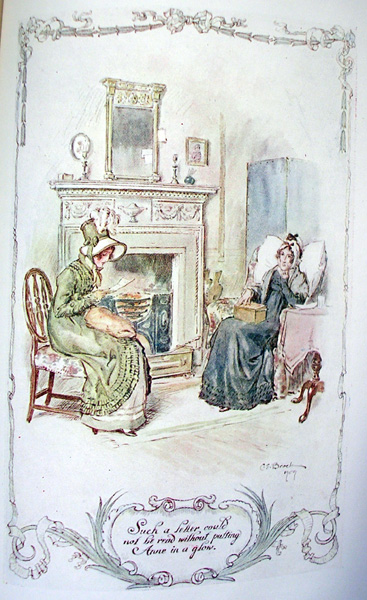
Sir Walter Elliot, a widower, goes there to “be important at comparatively little expense.” Lady Russell, a widow, spends every winter there, “finding mental refreshment in meeting up with old friends and getting all the new publications.” Widowed Mrs. Thorpe of Northanger Abbey goes to find husbands for her daughters. Impoverished invalids like Mrs. Smith of Persuasion go for medical care, while a similar widow, Mrs. Clay, is looking to marry again.

Widowed Mrs. Smith of Persuasion goes to Bath for her health.
C.E. Brock, public domain

Because of changes in Bath, in Austen’s later novels, “Bath appears not as the place of fun and frivolity it is in Northanger Abbey, but increasingly the choice of the old and dreary. . . . Austen’s Bath is not without its young people but it is an appropriate stage for so many of her older ones” (Lane, 170).

Age and Money (chapter 10)

How they live in Bath or elsewhere depends on their income. Some of Austen’s characters got richer as they aged. These include Mr. Weston, Mr. Cole, John Knightley, Robert Martin, Mr. Jennings (now deceased), Mr. Gardiner, Captain Wentworth, and Charles Bingley’s father. They all prospered in their work.

Others, though, like Austen’s naval brothers and Henry, got poorer as they aged. They suffered reverses from “the vagaries of their profession[s].” Captain Harville has been wounded, causing him to fall on hard times, and Mrs. Smith of Persuasion has lost a fortune due to her husband’s extravagance. Mrs. Bates, a clergyman’s widow, lost her income when her husband died.

Those in the lower classes might be miserable in old age, like “old John Abdy” of Emma. Well-off families, though, were expected to care for their household servants in old age. For example, three servants of Edward Ferrars’s father receive yearly annuities from his estate.

Wills and inheritance, of course, played an important part in Austen’s novels and her life. Most famously, the entail on the Bennets’ estate, and the Dashwoods’ uncle’s will, cause the girls in the story to be urgently in need of husbands.

The Dangerous Indulgence of Illness (chapter 11)

Mrs. Bennet is constantly fearing her husband’s death, which will leave the family penniless. Illness and death were constant threats in Austen’s world (as they are today, of course). This chapter discusses Austen’s final illness. Surprisingly, she wrote Sanditon during that time, which includes absurd hypochondriacs exaggerating their own illnesses.

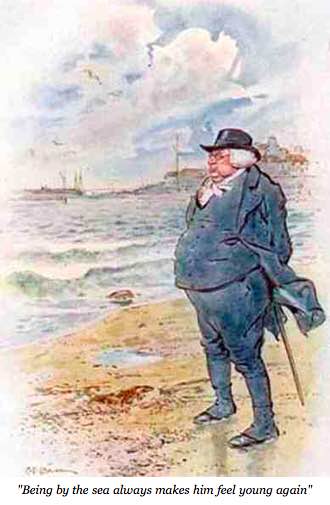
Sea-bathing was considered a cure-all, and the Knightleys, Dr. Shirley, and Mary Musgrove try it at seaside resorts like the fictional Sanditon. Others go to Bath to take the waters for their “gout and decrepitude.” Mr. Allen, General Tilney, Admiral Croft, and Mrs. Smith of Persuasion go to Bath for their health, as did some of Austen’s friends and relations.

For Dr. Shirley of Persuasion,  “coming to Lyme for a month did him more good than all the medicine he took; . . . being by the sea always makes him feel young again.”
C. E. Brock, public domain

Illness is also a way to control others in Austen’s novels. Dr. Grant, Mary Musgrove, Fanny Dashwood, Mrs. Bennet, Mr. Woodhouse, and Mrs. Churchill all use illness or pretended illness to get their own way.

Once Mrs. Churchill actually dies, though, her illnesses are taken seriously. Austen uses several deaths as plot devices, including this one which frees Frank to marry. Dr. Grant’s death similarly frees Edmund and Fanny to take the living of Mansfield Park.

Lane says, “Mansfield Park is the only novel in which ideas of the hereafter find a place” (206). Fanny worries about Tom, during his illness, considering “how little useful, how little self-denying his life had (apparently) been”—she’s worried about him not going to heaven. And Austen indicates that, while society does not punish a man for adultery as it does a woman, the penalties “hereafter” will be more equal.

The chapter includes a fascinating list of the funeral expenses for Elizabeth Austen’s elaborate burial (Edward Austen Knight’s wife). For example, 22 mourning cloaks were hired for the day, and 60 pairs of black gloves bought for family, servants, and others, including the carpenter and bricklayer.

“Jane Austen’s attitude to the death of others ranged between the insouciant, the pragmatic, and the heartfelt” (Lane, 216). She of course approached her own death very seriously. She took Holy Communion one last time, while she could still understand it, about a month before her death.

For more on this topic, see my article, “Preparation for Death and Second Chances in Austen’s Novels,” which draws partly from Lane’s ideas.

Conclusion

The author explores how Austen might have fared in old age. She would probably have become more famous. Her sister Cassandra, Jane’s heir, prospered financially as the years went on, and Jane would have prospered with her.

The book ends, “Apart from the sad loss of Jane, Cassandra’s old age was in fact a secure and comfortable one. If only she had been able to share it with her sister” (Lane, 225).

I’ve only been able to give you a small taste of the riches in Growing Older with Jane Austen, but I hope you’ve found some ideas you can pursue on your own. If you can get a copy of the book (perhaps through your library), I highly recommend it. It’s well worth exploring the lives of older men and women in Austen’s novels and in Jane Austen’s world.

What do you think would have been most difficult about growing older in Jane Austen’s England? What might have been better about it than growing older in our society today?

For more on the topic of aging women in Jane Austen’s novels, see:

“Growing Older with Jane Austen, Part 1”

“’My Poor Nerves’: Women of a Certain Age on the Page,” about perimenopausal women in Austen

Past the Bloom: Aging and Beauty in the Novels of Jane Austen,” by Stephanie M. Eddleman, a fascinating article

Three Stages of Aging with Pride and Prejudice,” by Emily Willingham, a light look at how we identify with different characters as we have more life experience 

Age and Money in Austenland”: Susan Allen Ford’s review of Growing Older with Jane Austen

And, of course, the source for most of these two posts:

Growing Older with Jane Austen, by Maggie Lane

Brenda S. Cox writes about Faith, Science, Joy, and Jane Austen. Her recent book is Fashionable Goodness: Christianity in Jane Austen’s England.

This June she will be speaking about Mr. Collins at Jane Austen Regency Week in Alton, England, and would love to see some of you there!

Portrait of an Artist

(Portrait of an Artist by Unknown Artist) is part of the collection of the Michele and Donald D’Amour Museum of Fine Arts, Springfield., MA. Image courtesy of theMichele and Donald D’Amour Museum of Fine Arts.

Inquiring readers,

In 2012, I included this fascinating portrait in a post entitled Men’s Hairstyles at the Turn of the Nineteenth Century. That post has been one of our most popular articles over the years. This image depicts the natural, romanticized and popular look of men living during the height of the regency era. In fact, when I look at this unknown man, I see Jane Austen’s most famous hero, Mr Darcy; the romantic poet, Byron; or a suffering Mr Rochester. The fact that both sitter and painter are unknown heightens the mystery of this painting. My sense is that it is a self portrait, for the man looks at us as if he was studying his image for posterity. The painting’s sitter reflects the same strong studied gazes in the self-portraits described in this Artmajeur article, Top 8 Most Famous Self-Portraits in the History of Art.

While the Men’s Hairstyles post has been up for 11 years, I just received a correction from the Springfield Museums. Mr Stephen Sullivan, the museum’s registrar, kindly sent the correct information, and also offered a higher resolution image. Ms Maggie North, the curator of the Springfield Museums, sent the following description of the painting:

The Springfield Museums’ striking portrait has intrigued and puzzled scholars for decades. Shortly after it was purchased by the Springfield Museums in 1954, Walter Pach (translator of the journals of Eugène Delacroix) attributed the painting to the Famous French romantic artist Delacroix and likened it to a portrait of Baron Louis-Auguste Schwiter at the National Gallery of Art. That attribution was accepted until the 1970s, when Robert Henning, a curator here in Springfield, determined that the piece could not be confidently attributed to Delacroix and suggested that the title of the work be changed from Portrait of Baron Schwiter to the more general Portrait of an Artist. Since then, several suggestions about the attribution, including artists Richard Parkes Bonington, Sir Thomas Lawrence, and even Baron Schwiter himself, have been made. However, none of these suggestions have been confirmed. Most recently, a scholar proposed that the painting could possibly be a self-portrait of the artist Pierre-Narcisse Guérin (an interesting idea when we compare the painting to Robert Lefèvre’s portrait of Guérin at the Musee des Beaux-Arts d’Orleans). Still, more research is needed!

As the title of the work indicates, we believe that the work is likely a portrait of an artist due to presence of a form presumed to be a palette which is visible in the foreground. Certainly, it may be a self-portrait, but of whom we cannot be certain. Even without attribution, this painting of a brooding, handsome young man is a wonderful example of the Romantic period in art, in which individual experience and was valued. The work is a visitor favorite here at the Springfield Museums, and as Stephen can attest, images of the work have been used in publications that range from fictional to scholarly. I think that the incredible magnetism of the sitter’s gaze, his effortlessly stylish sensibility, and the mystery of his identity make our artist a very compelling character!

The Springfield Museums in Massachusetts remind me of the various buildings that comprise the Walters Art Museum (WAM), in Baltimore, where I am a docent. Both museums were formed from private 19th century collections donated by wealthy families to their communities. The close connections that Americans felt towards their European ancestors are represented in these excellent collections.

This short history from the the D’Amour Museum of Fine Arts website states:

The Michele and Donald D’Amour Museum of Fine Arts, established in 1933 and housed in an Art Deco style building, includes a comprehensive collection of Americanand European paintings, prints, watercolors, and sculpture as well as a large collection of Japanese prints and representative examples of drawing, furniture, metalwork, textiles, glass and ceramics. The Museum houses a comprehensive collection of European Art (French, Dutch, and Italian) and the Currier & Ives (active 1834-1907) collection, one of the largest holdings of lithographs in the nation.”

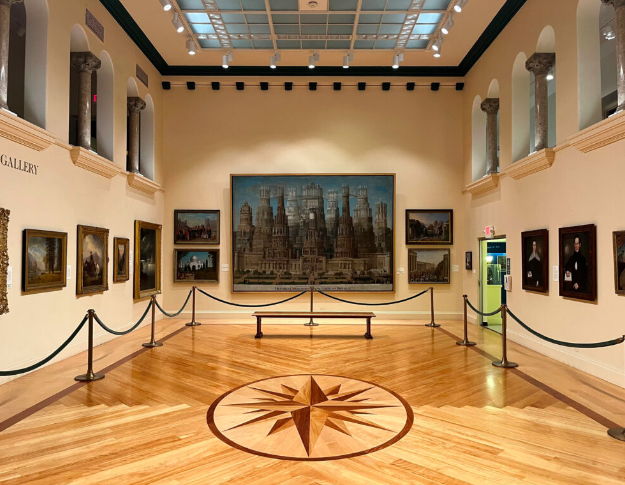
Screen Shot 2023-04-13 at 3.33.11 PM

Blake Court, D’Amour Museum of Fine Arts, Springfield

Compare this history with WAM’s description:

The Walters Art Museum was established in 1934 “for the benefit of the public.” Originally called the Walters Art Gallery, the museum started when Henry Walters (1848–1931) bequeathed to the City of Baltimore an extensive art collection begun by his father, William T. Walters (1819–1894)..Henry built upon his father’s collection of European sculpture and Asian decorative arts, acquiring archaeological works from the ancient Mediterranean world—Mesopotamia, Egypt, Greece, and Rome—followed by medieval European and Islamic art and manuscripts, and European paintings and sculptures from the Renaissance through the 19th century.

palazzo interior wam

View of the palazzo’s sculpture court, Walters Art Museum. Notice how the courtyards in both museums echo each other – WAM’s is based on an Italian palazzo and D’Amour’s follows the Art Deco style popular during the 1930’s. Wikimedia image –palazzo building 

These two museums are small and intimate compared to their much larger counterparts, like the Metropolitan Museum of Art in New York, Boston Museum of Fine Art, and the Art Institute of Chicago. Comparable “small” museums would be the Isabella Gardner Museum, Frick Gallery, and the Morgan Library & Museum, which held a memorable exhibit in 2009-2010 entitled A Woman’s Wit: Jane Austen’s Life and Legacy.

Both the D’Amour and Walters Art museums involve their local communities by featuring exhibits with contemporary artists and artisans:

  • Just recently the D’Amour Museum of Fine Arts hosted a local fashion designer, Justin Haynes (Jus10H) presented his collection on February 15, 2023, during a New York Fashion Week CFDA Runway 360 Showcase.
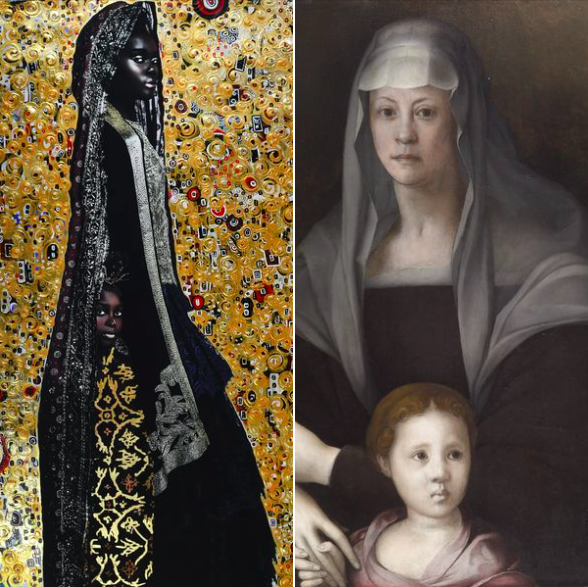
  • Around the same time, WAM concluded an exhibit entitled ‘Activating the Renaissance’ that featured 6 contemporary artists, most of whom lived in and around Baltimore. Class groups and adult visitors were able to compare and contrast the iconography of today’s paintings with centuries old masterpieces. This exhibit was among the most popular at WAM in a 12-month period. See this comparison of images of two mothers with child. Although separated by centuries, both are compelling.  WAM’s facebook page (see image below.)

Screen Shot 2023-04-18 at 1.51.19 PM

(1) Tawny, Chatmon, Covered/Vienna, 2017-19. Courtesy of the artist. (2) Pontormo (Jacopo Carucci), Portrait of Maria Salviati de’ Medici and Giulia de’ Medici, ca. 1539. Bequest of Henry Walters, 1931.

Private Collections:

Jane Austen was no stranger to viewing private collections in opulent houses. Her mother’s family lived in Stoneleigh Abbey, an ancient and impressive pile of stone. And her brother Edward Austen Knight inherited Godmersham ParkChawton House, and Chawton Cottage, in which Austen, her sister Cassandra, and mother lived.  One can imagine the grand rooms and salons she experienced as a visitor, especially in her brother’s dwellings. All of these houses are open to the public today for a fee.

clarke-portrait

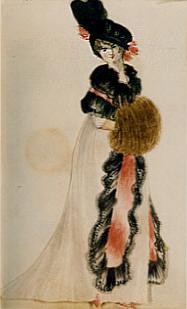
Watercolor of Jane Austen (?) 1816, by librarian, James Stanier Clarke

On the cusp of publishing Emma and at the invitation of the Prince Regent’s librarian, Austen visited Carlton House‘s impressive library. Although she felt disdain for the prince himself, she must have felt some awe walking through the legendary sumptuous hallways and public rooms. This house no longer exists, but many images and descriptions survive that attest to its magnificence.

As in Pride & Prejudice, owners who were often absent from their houses for weeks or months at a time, allowed their housekeepers (who expected a generous tip) to escort a party around the public rooms to view paintings, sculptures, and furniture.  When Lizzy Bennet moved through Pemberley with the Gardiners and heard the housekeeper’s effusive compliments about Mr Darcy, and as she strolled around Pemberley’s extensive grounds, Lizzy realized that she could have been mistress “of all this.” At this juncture in the novel, she had begun to realize that her first impression of Mr Darcy might have been wrong: Mrs Reynolds provided even more information for her contemplation.

Private collections were not new. As trade and travel expanded  around the world during the 16th, 17th, & 18th centuries, merchants, seafarers, and tourists, who embarked on lengthy grand tours, brought back artifacts, paintings, sculptures, jewelry, and the like. In many instances, historic artifacts were stolen from countries and churches, but that is a topic for another post

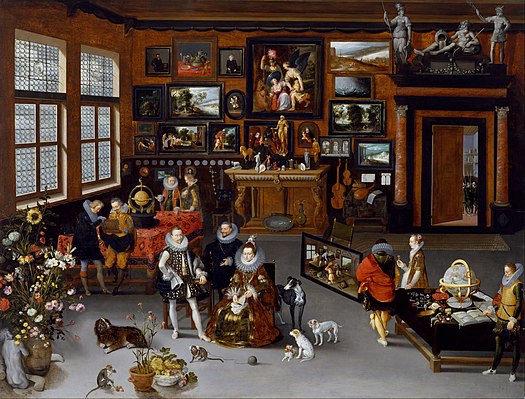
Seventeenth century Flemish merchants filled their houses with artifacts that were brought from their trade routes, and showed them to their friends. The Chamber of Wonders, WAM includes objects from the natural world (shells, butterflies, sea creatures) in each continent, as well as paintings, sculptures, and artifacts. This painting by Jan Brueghel the Elder and Hieronymus Francken II, title ‘The Archdukes Albert and Isabella Visiting a Collector’s Cabinet’ shows a room filled with one merchant’s collection. The archduke and his wife are at the center of the room. Other visitors are visible as well.

Hieronymus_Francken_Ii_-_The_Archdukes_Albert_and_Isabella_Visiting_a_Collector's_Cabinet_-_Google_Art_Project

The Archdukes Albert and Isabella Visiting a Collector’s Cabinet, 1621-1623, public domain, Walters Art Museum

Jane Austen’s Visits to Public Exhibitions

Austen’s frequent travels around England – Brighton, Lyme Regis, Bath, London, Winchester, and the environs around Steventon and Basingstoke – belie her reputation as a spinster who lived a narrow, rural life. In her visits to London she attended public exhibits. Two were especially notable:

“the Sir Joshua Reynolds retrospective in 1813 or the Shakespeare Gallery as it looked in 1796. These two Georgian blockbusters took place, years apart, in the same London exhibition space at 52 Pall Mall (it no longer exists). When Austen visited in 1813, the building housed the British Institution, an organization promoting native artists. On her earlier London visit in 1796, it was the first-ever museum dedicated to William Shakespeare. – What Jane Austen Saw.

Interestingly, the exhibits Austen viewed also featured contemporary artists.  Seeing Art the Way Jane Austen Saw It.

Conclusion:

Before institutional museums became a major way for the general public to view collections of past objects, paintings, sculptures and other artifacts (scientific or those from the natural world), private collections and homes were the means for the populace to view these precious objects.  Who would have thought that a portrait shared by the Springfield Museums would prompt my imagination to wander down so many paths? This trip was delightful.

Find: More information about the Springfield Museums and the D’Amour Museum of Fine Arts can be found in the links. The Walters Art Museum provides images of the museum’s objects at this link. Type ‘online collections’ in the search bar. Entry to the museum is free; on street parking is free on Sundays.

In this series, we’re exploring Jane Austen’s novels and identifying the romantic themes used in each one – with the goal of proving that Jane Austen not only used romantic themes ingeniously but also played an important role in developing several key plot devices that are still used in modern filmmaking today.

Last month, I wrote about the “Enemies-to-Lovers” theme in Pride and Prejudice. This month, I’m delving into Emma and looking at the romantic themes it continues to inspire in modern romantic movies and shows.

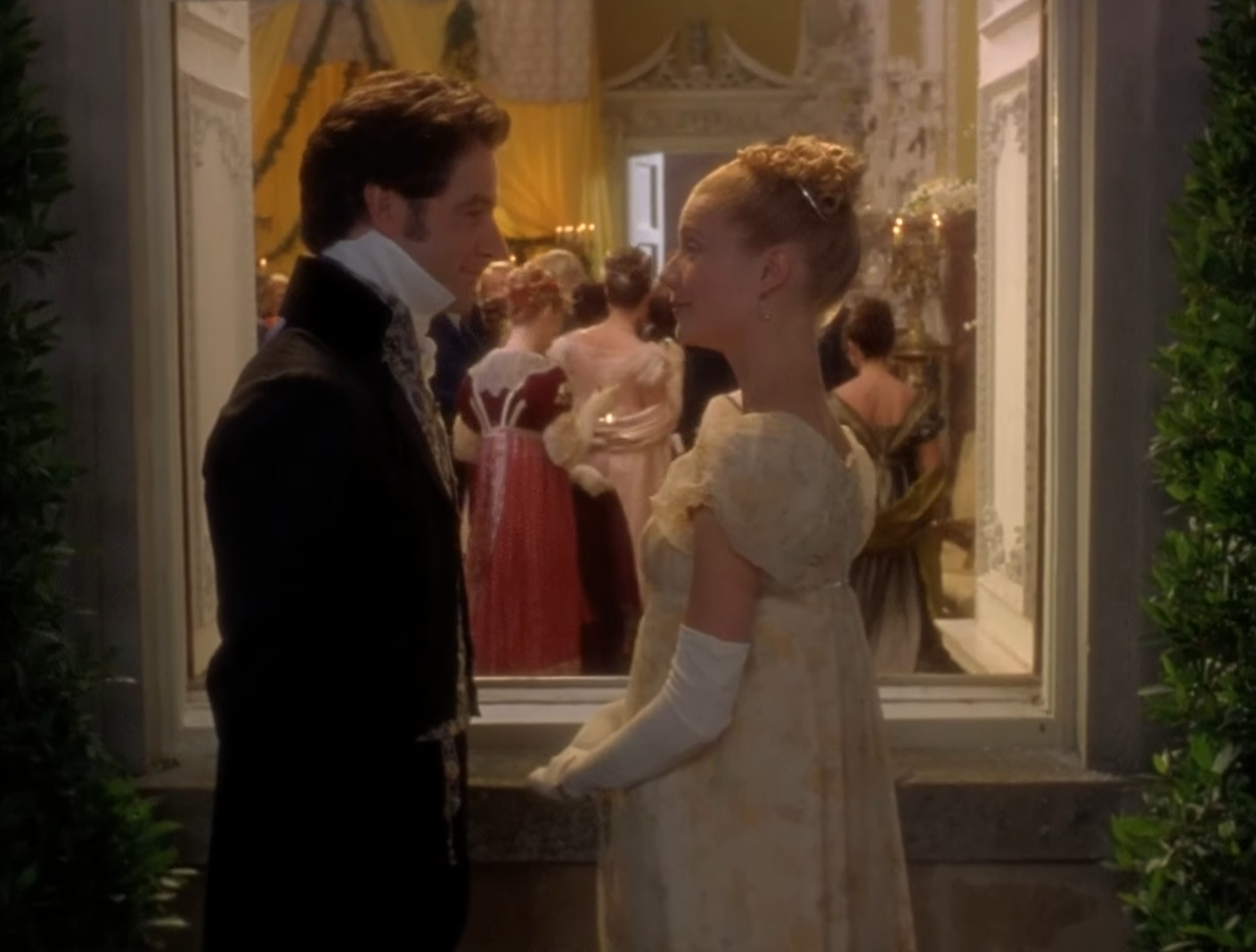
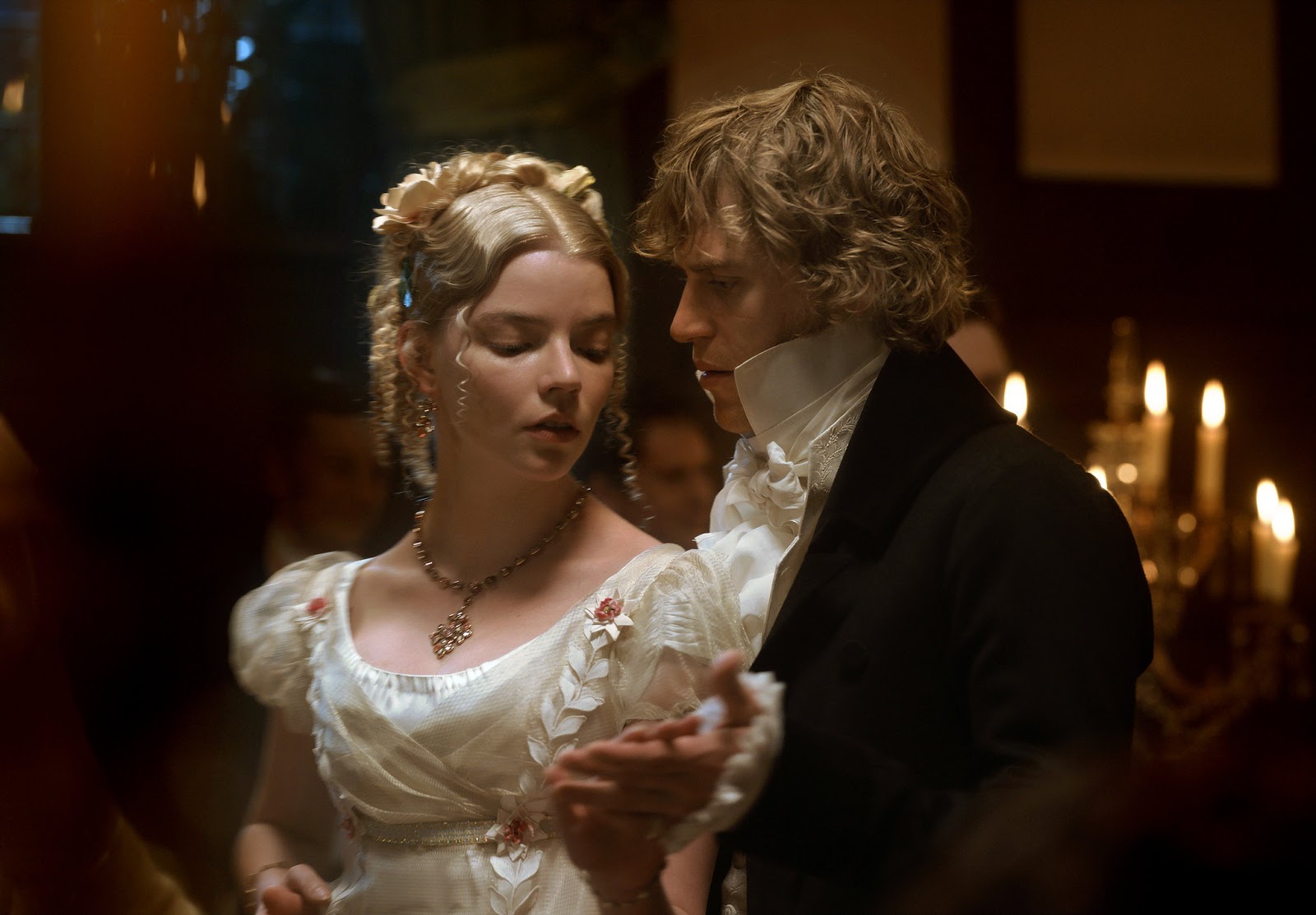
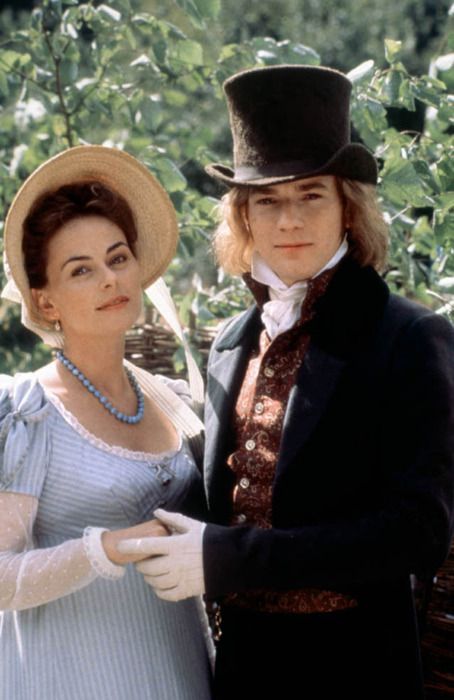
Emma 1996

Enemies to Lovers in Emma

In “The Rom Com Explained” on TheTake.com, we read this humorous definition of the popular enemies-to-lovers trope that I discussed last month in regard to Elizabeth Bennet and Mr. Darcy:

“The two love interests probably start out at odds. They may come from different worlds, have competing goals, or simply get off on the wrong foot. But as the rom-com wisdom goes, there’s a very thin line between love and hate, and the story frames all this friction as kindling for sparks to fly.”

What about Emma and Mr. Knightley? In Emma, some have said that Mr. Knightley and Emma fit the rivals description as well because of their witty banter and playful digs, but their delayed love interest seems to be much more about their age gap, their family history, and their comfort level with one another that comes from being brother- and sister-in-law.

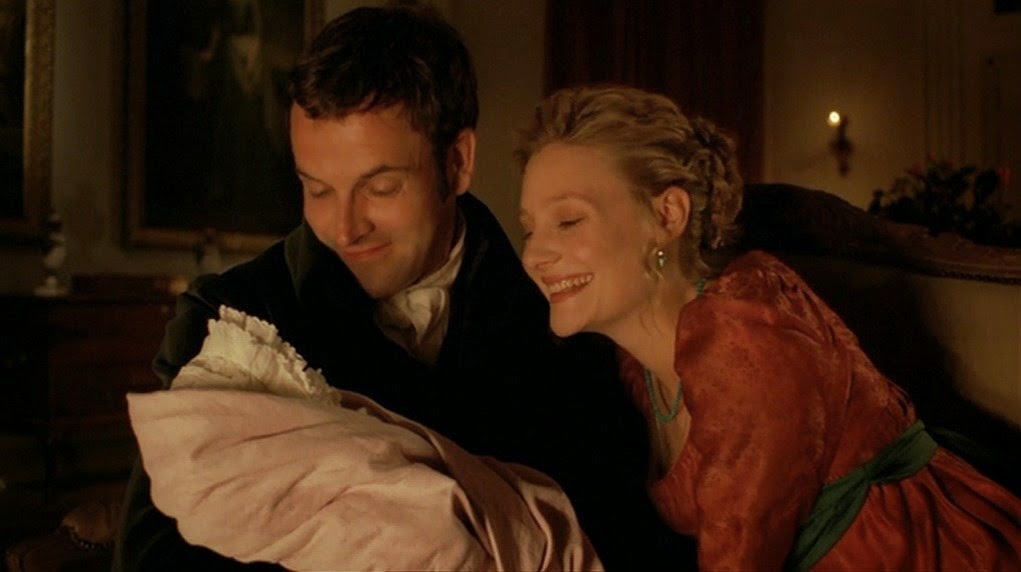
Emma 2009

Defining the Relationship

But if they aren’t rivals-to-lovers, what makes the romance between Emma and Mr. Knightley so irresistible? What techniques does Austen use to cleverly draw us into their world? What causes the slow burn that builds between them?

Are they boy/girl next door lovers? Possibly.

Friends-turned-lovers? Probably.

While Emma falls into both of these categories, if we want to narrow it down even further, the romance between Emma and Mr. Knightley best fits the “It Was Right In Front Of You All Along” theme. Their love story starts with a slow simmer, builds to a slow burn, and turn into a raging inferno.

The Slow Burn

In Emma, the relationship between Emma and Mr. Knightley sizzles because it’s so unexpected—at least for the two main characters. We, the readers, watch it slowly build (and hope that it will happen), but the characters themselves don’t recognize their own feelings for quite some time. It takes Emma the longest to realize, which adds to the charm of the story. With the Slow Burn love story, there are obstacles standing in the way (knowing one another too well, growing up together, not seeing each other “that” way, and other love interests). Most commonly, there’s a distraction that keeps one or the other from recognizing the chemistry that is building all along the way.

Emma 2020

The Red Herring Distraction

In a Slow Burn love story, there is usually at least one misleading love interest or storyline (or “red herring”) to keep readers off the trail. Jane Austen obviously sets the bar high for the red herring theme in Emma, but here’s a definition from “The Rom Com Explained” article:

“Rom-com leads often start out with a red herring love interest who seems very appealing but turns out to be all wrong. Meanwhile, as the protagonist spends time with someone they aren’t actively trying to impress, they can be their unfiltered self and get to know the other person in a real way.”

Emma, Pride and Prejudice, and Sense and Sensibility all have at least one red herring love interest. In each, there’s a man who seems charming and agreeable at first but turns out to be quite the opposite. In PP and SS, the red herrings turn out to be villains (yes, I’m looking at you Mr. Wickham and Mr. Willoughby), but in Emma, Frank Churchill, an immature and obnoxious man who think it’s funny to play with other people’s emotions, acts as the red herring. These red herring lovers keep audiences busy trying to figure them out so that they don’t notice the real love story brewing beneath the surface.

Emma 2020
Emma 2009

Reading Emma like a Detective

Unlike most modern romantic comedies, Jane Austen’s plot in Emma is anything but obvious. She outdoes herself with several misleading storylines. She keeps us so busy figuring out what’s happening between Emma and Frank Churchill, Emma or Harriet and Mr. Elton, Harriet and Frank Churchill, and even Harriet and Mr. Knightley that the majority of first-time readers never even notice the Frank and Jane Fairfax storyline until later in the novel.

In fact, Emma is so cleverly written that many scholars believe it reads more like a detective story than a romance. If you’d like to delve into this fascinating topic, click to read David H. Bell’s brilliant article, “Fun with Frank and Jane: Austen on Detective Fiction” in JASNA’s Persuasions.

Emma 1997 (Jane Fairfax and Frank Churchill)

Hidden in Plain Sight

The other side of the coin with a red herring love story is that the false-love interest helps hide the true love interest—the one the heroine’s known for a long time and has never thought about “in that way.”

In the red herring plot line, this “real” love interest hides in plain sight. Sometimes, like in the situation with Mr. Darcy, he’s cloaked in some kind of mystery, misunderstanding, or perceived arrogance. Other times, as with Mr. Knightley, the hidden male lead is considered “off limits” because he’s a cousin, a step brother, a friend, or a co-worker. Most of the time, we (the audience) know he’s the real love interest rather quickly, but it takes most of the movie for the heroine to figure it out.

This is where Mr. Knightley really shines. He’s “the one,” hiding in plain sight. From the start, Austen casts him as the “big brother-type.” As a neighbor and friend, and the brother of Emma’s sister’s husband, Mr. Knightley is the perfect “off limits” hidden love interest. Emma has never looked at him in “that way.” It has never crossed her mind that he could see her as anything other than an annoying little sister.

The Aha Moment

“This long-developing chemistry leads to a moment of epiphany, where the character suddenly realizes the feelings that have been crystal-clear to the viewer all along” (“The Rom Com Explained”).

In this type of plot, usually one lead character realizes his/her feelings first, while the other takes longer to wake up to what’s going on between them. In Emma, Mr. Knightley sees Emma as much more than a neighbor and friend early on, but Emma is busy chasing other love stories and doesn’t see her own true love story blossoming right in front of her nose.

It’s only later in the film that Emma finally realizes that she loves Mr. Knightley. It’s always been him. This realization comes when she finds out that Harriet has feelings for Mr. Knightley (and that her feelings might possibly be returned). Startled by the powerful feelings of jealousy that come over her, she finally awakens to the deep love she’s felt for Mr. Knightley for quite some time.

Emma 1996

Modern rom-coms patterned after Emma:

Ever since Emma, there have been countless stories of friends-turned-lovers and lovers-hidden-in-plain-sight.

Modern films that fit this category are 13 Going on 30, Always Be My Maybe, Love and Basketball, Just Friends, Made of Honor, When Harry Met Sally, and Yesterday. In television, there are several couples in The Big Bang Theory, Monica and Chandler on Friends, and Jim and Pam from The Office. While these romances also fall into the friends-turned-lovers category, they fit the themes in Emma because most include a love interest that is hiding in plain sight but also “off limits” for one reason or another.

The most obvious modern film to follow in Emma’s footsteps is Clueless. It’s worth discussing because it is considered by many as one of the best modern remakes of a Jane Austen novel. Though some say it’s just a silly teen romance, it’s also incredibly clever in its own right. I truly believe it belongs in the “It was Right in Front of You All Along” category.

Clueless 1995
Clueless 1995

Finally, while Bridget Jones’s Diary is most often connected with Pride and Prejudice, there are also plenty of similarities between it and Emma. Mark Darcy has many attributes that closely align with Mr. Knightley. He’s an older, wiser family friend who seems (and probably is) far too good for Bridget but actually finds her quite adorable and captivating. It takes Bridget a long time to realize that Daniel Cleaver is a jerk and Mark is the better, more mature man.

If you love Emma and Mr. Knightley as much as I do, what do you think makes their romance so charming? At what point do you think Mr. Knightley realized his romantic feelings for Emma?


RACHEL DODGE teaches college English classes, gives talks at libraries, teas, and book clubs, and writes for Jane Austen’s World blog. She is the bestselling author of The Little Women DevotionalThe Anne of Green Gables Devotional and Praying with Jane: 31 Days Through the Prayers of Jane Austen. Now Available: The Secret Garden Devotional! You can visit Rachel online at www.RachelDodge.com.
Jane Austen in the News

Inquiring Readers, 

Several news items about Jane Austen have piqued my interest! My friend Deborah Barnum, who oversees the excellent Jane Austen in Vermont blog, referred me to an article written in February by Catherine Bennet entitled Who’s going to be triggered by Northanger Abbey? It’s hardly Game of Thrones. 

Greenwich University’s Trigger Warnings Towards Northanger Abbey

Question: Does catering to students’ sensitive sensibilities and possible antipathy towards a gently humorous and ironic novel prepare them for a successful adulthood and working life? Northanger Abbey, originally titled Susan, was written by a 23-year-old author around 230 years ago. Inquiring minds want to know.

Catherine Bennet sums up the article in one sentence, “Greenwich University is warning students to prepare themselves for the ‘toxic friendships’ Jane Austen satirises in her novel.”

TOXIC?  I gasped as I read the reasoning this university gave for protecting students from gender stereotypes and toxic relationships so they won’t be upset. Do universities no longer teach classic literature in context of the historical times in which it was written? Do literature professors no longer supervise robust debates and healthy discussions? Or help their classes to understand how, over the course of her short life, Austen’s novels and her personal viewpoint changed and transformed her own understanding of the human condition?

Must our childrens’ tender sensibilities be given a safe space from a brilliant spinster writer who helped to revolutionize the novel? I’ll tell you what triggered me, Greenwich University, and forced my bosom to heave:  It was your pandering where none was needed.

To quiet my suffering nerves, I must now reach for my smelling salts, drink some elderberry wine, and rest. A handsome companion holding my hand would not be amiss. Hint: humor and irony here. (My friend and editor would have merely added a wink emoji, but yours truly desires to dramatize her feelings à la Marianne Dashwood!)

Steventon House for Sale

Screen Shot 2023-04-05 at 12.45.12 PMJust as this article surfaced, another one popped up! While Jane Austen is more popular than ever, which has me chuffed, this account does not quite describe the before and after differences of the Steventon House. Here’s the description of the sale of Steventon House today.
The Austen family’s house was actually demolished in the early 19th century, soon after the George Austen family moved to Bath. All that remains to this day of the old Rectory is a pump surrounded by a tiny fence. The rest of the house is gone. The current sale article describes today’s site/situation as such:

“Steventon House was the birthplace of the iconic author Jane Austen,” said Ed Sugden, director of Savills, the estate’s listing agency, along with Knight Frank. “Although the original structure has since disappeared, the Georgian masterpiece that currently stands, envisioned by her older brother Edward, perfectly befits the milieu that Austen captured in her writing.”

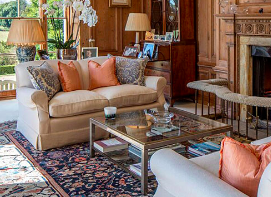
Well, no. Take a look at the link to these images. Can you see anything that resembles late 18th C./early Regency furnishings? One must applaud the mystery that our spinster Jane still holds over her admirers today. The new owners would not be living in her family’s historic house, but they could still  imagine trodding the same lanes that she and her family walked towards  Steventon Church, to friends’ houses, and to purchase goods in nearby towns. They can still experience the landscape that nurtured her childhood and budding writing career. These imaginings alone should be worth the cost of their purchase.

Here’s a link to Remains of Jane Austen’s Steventon House Unearthed by the BBC

My previous thoughts are a perfect segue to:

Jane Austen’s Little Book of Wisdom: Words on Love, Life, Society, and Literature, Compiled by Andrea Kirk Assaf. (Click on link.)

Jane Austen's Little Book of WisdomThis book provides the reader with a quote a day or the opportunity to devour swaths of her genius at a time. Be that as it may, let’s gauge how many of Austen’s sayings are as inspiring and witty as ever:

“I declare after all there is no enjoyment like reading!” – Pride & Prejudice, back cover

“I hate to hear you talk about all women as if they were fine ladies instead of rational creatures. None of us want to be in calm waters all our  lives” – Persuasion, p140

“I think it ought not to set down as certain that a man must be acceptable to every woman he may like himself” – Mansfield Park, p 49

For a lady who was never married, she sounds modern and reasonable. This lovely book will provide a daily diet of Austen sensibility every day of the year. My vote: 4 out of 4 teacups.

A friend Discovers Jane Austen

A fellow board member who serves with me on a local board asked me out of the blue about the two BBC Jane Austen films he had watched. They were Emma, 2009 (he stood up and applauded the film at the end) and Sense and Sensibility, 2007, which he also applauded. When I asked him why he began watching the films, he confessed to reading this blog and being intrigued by my devotion to Jane.

He then asked if Pride and Prejudice was worth watching. After a short conversation, I realized he had never read Jane’s novels. I told him that P&P was regarded as one of the top novels in literature, and asked him which version he had borrowed from the library. It was the splendid 1995 A&E/BBC Firth/Ehle mini series.

He viewed P&P and within two days told me that this tale/movie version was his favorite. He then asked for more suggestions. I gave him a few, but he made it clear that he wanted to see the movies based on her other novels. What say you, fair readers? Which Austen film adaptations should he watch next in your opinion? And why.