Feeds:
Posts
Comments

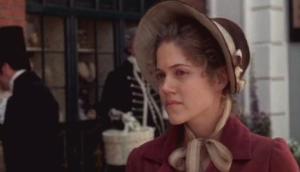
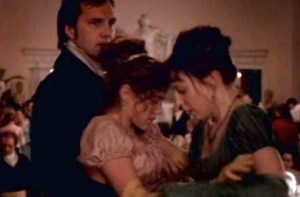
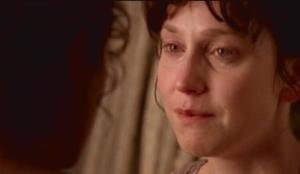
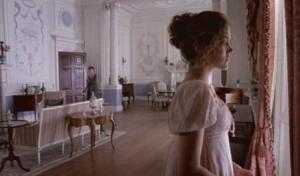
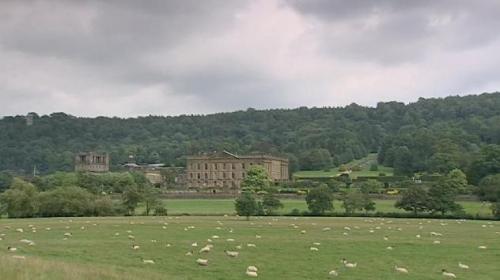
We continue our revisit with Sense and Sensibility and visual review of Part 2 of the movie (click here for Part 1) wherein Mrs. Ferrars is suitably creepy and mean, and Marianne’s tear ducts gush more water than the fountains at Chatsworth House. While many details in Jane’s novel were changed in this production, the film’s length was satisfying. Strangely I found many echoes of Emma Thompson’s and Ang Lee’s excellent 1995 film in this adaptation as well.

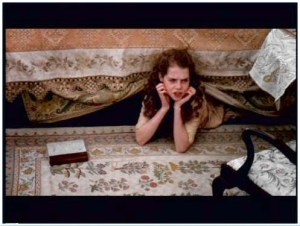
Margaret hiding in the library is a scene taken from the 1995 film.

Margaret hiding in the library is a scene taken from the 1995 film.

Lucy and Anne Steele had different accents. While Lucy seemed more refined, Anne stole the show.

Lucy and Anne Steele spoke in different accents. While Lucy seemed more refined, Anne was comedic.

Henry Dashwood, much older than in Jane's novel, seems a bit embarassed wearing those curls and collar.

Henry Dashwood, much older than in Jane's novel, seems a bit embarrassed wearing long curls and a frilly collar.

Edward chopping wood in the rain.

Working off his frustration, Edward chops wood in the rain.

Elinor talks to Edward in the rain.

Elinor, confused with Edward's behavior, talks to him in the rain.

In fact most of the outdoor shots were filmed in the rain.

In fact most of the outdoor shots were filmed in the rain.

In London Marianne looks for Willoughby in vain.

Newly arrived in London, Marianne looks for Willoughby in vain.

Lucy and Anne ogle the nasty beasts at the assembly.

Lucy and Anne ogle the nasty beasts, as Anne describes the men at the ball.

When she finds him she is seriously displeased.

When Marianne sees Willoughby she overcome.

Marianne finally receives a letter from Willoughby.

Marianne finally receives a tepid letter of explanation from Willoughby.

Edward awkwardly offers his arm to his betrothed in front of Elinor.

Edward awkwardly offers his arm to his betrothed in front of Elinor.

Elinor confesses to Marianne how unhappy she has been.

Elinor confesses to Marianne how unhappy she has been.

Mrs. Ferrars is seriously displeased with Edward when he confesses his engagement to Lucy.

Mrs. Ferrars is seriously displeased with Edward when he confesses his engagement to Lucy.

Fanny Dashwood, equally upset, holds onto her husband's hand.

Fanny Dashwood, equally upset with the news, clenches her husband's hand.

Marianne wants to leave London.

Marianne cannot wait to leave London for home.

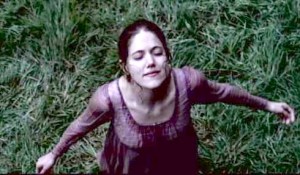
Walking to Willoughby's house, Marianne is refreshed by the rain.

She walks to Willoughby's house in the rain and catches a lung infection, more reminiscent of the 1995 film than Jane's novel.

The colonel is beside himself with worry.

The colonel is beside himself with worry.

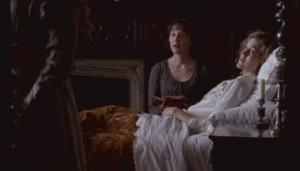
Charity Wakefield, looking suitably wan, properly thanks Colonel Brandon.

Marianne looked suitably wan in bed, but very pretty when she thanks the colonel.

An anguished Willoughby tries to convince Elinor that he truly cared for Marianne.

An anguished Willoughby tries to convince Elinor that he truly cared for Marianne.

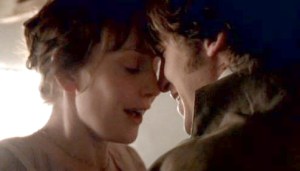
The film ends on a happy and romantic note in a scene that is eerily similar to 1995's Sense and Sensibility.

The film ends on a happy and romantic note in a scene that is eerily similar to 1995's Sense and Sensibility.

The colonel carries his bride across the threshold.

The colonel carries his bride across the threshold.

My other Sense and Sensibility posts sit here, including Sense and Sensibility Soaked.

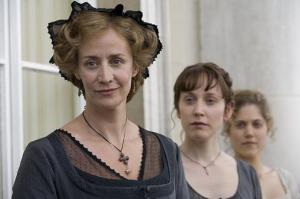
Post script: Where was Janet McTeer/Mrs. Dashwood? A fine actress, she wasn’t given much camera time except for reaction shots.

Think I'll add a few more Mrs. Dashwood lines in the script. Wonder if anyone will notice?

Think I'll add a few more Mrs. Dashwood lines in the script. Wonder if anyone will notice?

Elizabeth, as they drove along, watched for the first appearance of Pemberley Woods with some perturbation; and when at length they turned in at the lodge, her spirits were in a high flutter.

The park was very large, and contained great variety of ground. They entered it in one of its lowest points, and drove for some time through a beautiful wood, stretching over a wide extent.

Elizabeth’s mind was too full for conversation, but she saw and admired every remarkable spot and point of view. They gradually ascended for half a mile, and then found themselves at the top of a considerable eminence, where the wood ceased, and the eye was instantly caught by Pemberley House, situated on the opposite side of a valley, into which the road, with some abruptness, wound…. Elizabeth was delighted. She had never seen a place for which nature had done more, or where natural beauty had been so little counteracted by an awkward taste. – Jane Austen, Pride and Prejudice

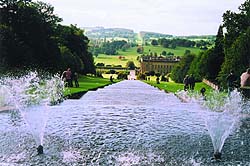
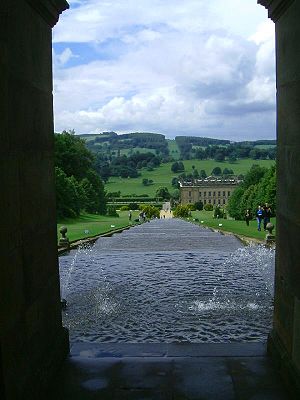
Chatsworth

Chatsworth

Waterfall from the top

Waterfall from the top

Chatsworth is said to be the model for Pemberley, Mr. Darcy’s home in Pride and Prejudice, and the great house served as Pemberley for the 2005 film adaptation. The home of the Dukes of Devonshire, Chatsworth dates from the Elizabethan era when Bess of Hardwick and William Cavendish, the treasurer of the Chamber to Henry VIII, acquired the land. The exterior was rebuilt in the early 1700’s by William, the 1st Duke of Devonshire (Bess’s son). He built it wing by wing until some of the Elizabethan structure was buried deep within its new walls.

The first duke also renovated the garden, making it a complement to the house and causing Daniel Defoe to call it “the most pleasant garden and the most beautiful palace in the world.”  In 1760 the 4th Duke widened the Derwent River. He also directed famed landscape architect Capability Brown to make neoclassical improvements to the land surrounding the house:

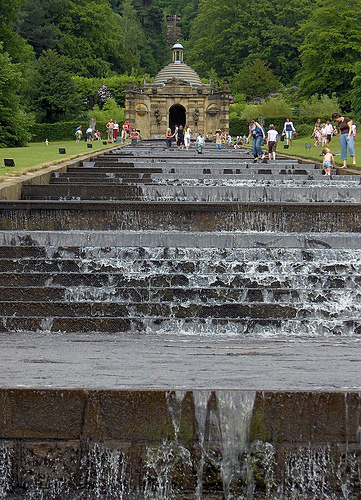
The cascade of the willow tree fountain is a dramatically splashing and rushing water feature, originally designed in the 1690s by Grillet, a pupil of Ande Le Norte. Several years later, this cascade was dug up and extended, and a temple pavilion designed by Thomas Archer was placed at the top of the cascade in 1703 to provide a dramatic vista from the east side of the house. Around 1830, Paxton supervised the rebuilding of more than half the water cascade to align it better with the house. A new water aqueduct filling the garden ponds, reservoirs, and pipework were built to supply it. Later in the 19th century, some criticized the cascade, which is rather unique for an English garden. Joshua Major, in his book on the theory and practice of landscape gardening, remarked on how the cascade combination of art and nature opposes the dictates of good taste. However, pushing the limits of water power and its effects interested Paxton, his innovative work on the cascade and other fountains, as well as his designs for the garden, still delights visitors today. The water cascades, a sheet of water flows over the series of elegant steps, down from the Baroque pavilion to disappear abruptly into a culvert at the bottom, and feed into yet another fountain, the Sea Horse Fountain on the South lawn close to the house. – The Fountains at Chatsworth

The cascade waterfall is old, beautiful, and unique

The cascade waterfall is old, beautiful, and unique

From that first period remain several formalist landscape designs including a spectacular cascade tumbling down stone steps in the hillside east of the house, which was designed by Grillet, a pupil of Le Notre. The little temple at the head of the steps is fitted out with pipes and spouts and becomes itself a fountain with water cascading down its dome.

The great parterres of this period were swept away by the vogue for the romantic or natural landscape as created by Lancelot (Capability) Brown for the fourth Duke. By the 1760’s, the gardens became lawns (Chatsworth boasts the oldest lawn in Britain under continuous care) and the hills were crested with oaks and elms seen today in their maturity. An unspoiled Capability Brown park is what Jane Austen was describing.- New York Times, 300 Years of Treasures At Chatsworth

The step waterfall attracts tourists and waders.

The step waterfall attracts tourists and waders.

rossettis-bed-project-gutenberg

A few days after Jane [Austen’s] birth a blizzard struck and paralyzed all the south of England, making travel almost impossible as snow drifted deeply and blotted out all signs of roads and tracks. On four nights in January the temperatures sank so low that even urine in chamber pots underneath beds became frozen. It was weeks before a thaw occurred, and even then the spring was very cold, so Jane was not taken out to Steventon church for her christening until early April 1776. – Jane Austen: The World of Her Novels, Deirdre Le Faye

In Ways to Keep Warm in the Regency era, Part 1, the post ended with the invention of the Rumford fireplace, a vast improvement over previous fireplaces in which most of the heat from a fire went up the chimney and smoke billowed into the room. Not all people during the Regency period could afford the more efficient new fireplaces. There were ways, however, to capture heat and to prevent feeling ice cold on one side while too hot on the other.
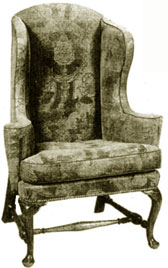
Mid 18th century Wing Back Chair, England

Mid 18th century Wing Back Chair, England

Wing chairs

Arranged in a circle around a cozy fire, wing chairs served a dual purpose, conserving heat and protecting the sitter from draughts. English homes were notorious for chill draughts entering under doors and through ill fitting window frames. The highs backs of these chairs and wings, sometimes known as cheeks, prevented cold air from swirling around the head and upper body, and at the same time prevented heat from escaping past the sitter. High backed wood settees served a similar purpose but were not quite so comfortable.

Room screens

Also known as draught screens, room screens have been used since medieval times as a protection against draughts. Thought of as a necessity, they partitioned off long halls and kept draughts from entering too close to the heated portion of the room. They could also serve as protection against too much sun in the summer in a room that faced west.

Text not available

Family Physician A Manual of Domestic Medicine, 1886
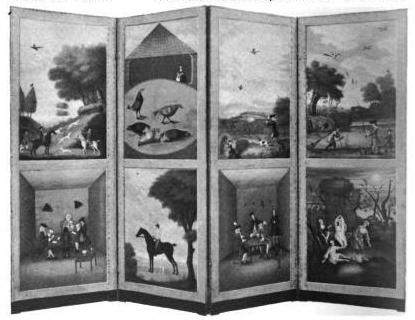
Draught Screen 1744

Draught Screen 1744

Of the tribe of fire screens and draught screens there are so many varieties that it is impossible to mention more than a tithe. The purpose of the former is so apparent as to need little commendation. So long as we are scorched baked or fried at one side of the room and frozen at the other so long shall we require at times a screen between the fire and those nearest it. This screen may take the form of transparent glass or tinted cathedral glass in leaded squares. It may have its panels of brocade, or old leather of rare needlework by skilful fingers, or of painting on panel in oils or in water colour. – The Furniture Gazette 1881

pole-screenPole screens

A beautiful addition to any room, decorative pole screens served an important function in the 18th century: The tall thin screens shielded people’s faces from the direct heat of the fire. In the 17th and 18th centuries both men and women wore makeup to hide blemishes. (It was said that before he turned fifty the Prince Regent’s face had turned waxen and copper colored from make up.)  The cosmetic preparation worn to hide small pox was thick, and made up of wax and white lead. The lead was toxic, especially when warmed, and the heat from a fire could be life threatening. A pole screen protected the face from intense heat and prevented the wax from melting and the cosmetics from interacting with the skin.  Pole screens were fitted with sliding panels that could be enlarged or diminished as needed. The earliest panels were made of wicker, but these were replaced with beautiful needlework or embroidered panels that came in many shapes and sizes – oval, heart-shaped, rectangular, etc. By the late 18th century, skin disfiguration caused by plagues was no longer as prevalent as before, and smaller polescreens became more fashionable.

The Bedroom

The bedroom remained a primary focus for staying warm. Privacy was a luxury only the rich or rising middle classes could afford. Most poor and working class families shared rooms (or lived in a one-room hovel), and children often shared a bed and huddled together. For the privileged, life was vastly different. A half hour before the family retired, a servant would enter the bedrooms and start a fire in each room. They would also warm the bed sheets with bed warmers.
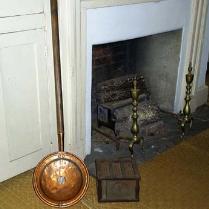
antique-brass-bed-warmer

Bed warmers

Brass bed warmer open

Brass bed warmer open

Bed warmers like the one depicted in the image above were made of brass tin or lined copper, and had long wood handles. The round metal pan was hinged so that it could be easily filled with hot coals. The pan would then be moved gently back and forth between the sheets to warm the beds on cold evenings. These bed warmers gradually fell into disuse in the 19th century after hot water bottles made of rubber became affordable and widespread.

Four poster beds

The thick hangings that surrounded a four poster or tester bed kept cold draughts out and body heat in. Popular since before the Elizabethan age, their design changed with the times: ornate in the 16th century, plain in the 18th century, and a rich but restrained neoclassical style in the 19th century. The bed and bedding materials varied according to wealth. Luxurious hanging made of velvet or brocade were often worth more than the wood bed frame, and in times past the rich would take the hangings with them as they traveled, leaving the wood bed behind. As improvements in insulation and draught exclusion were made, the four poster bed became more decorative than functional.
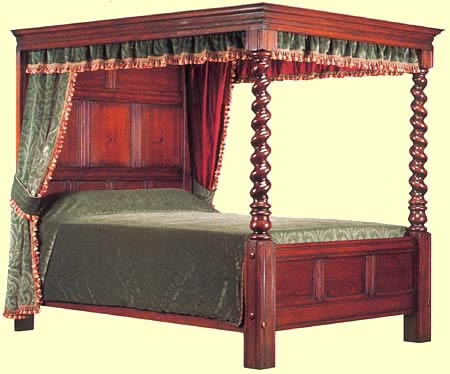
Four poster bed

Four poster bed

Night caps (also known as jelly-bags in the 19th century).

Knitted wool or silk stocking caps provided warmth while sleeping. This distinctive cap was also used other than for sleeping. From the 14th-19th century it was known as a skullcap and worn indoors by men when they removed their wigs. Women wore a more ornate mob cap during the day, to bed, and outdoors under their hats.

Nightcaps are no protection against snoring

Nightcaps are no protection against snoring

Foot warmers

18th-cent-foot-warmer Foot warmers were small, practical and transportable. Most foot warmers were simple wood, tin, or brass boxes with metal trays that held hot coals. The sides were poked with holes in a patterned design, and a rope or metal handle allowed for easy portability. Women and children would carry footwarmers to church or inside a carriage. They were used in a cold room as well. Women’s long skirts would hang over the warmer, providentially holding the heat around their feet. By the end of the 19th century, footwarmers were primarily used in sleighs and carriages until the advent of the automobile

High-sided Church Pews:

For about 54 shillings a year a family could rent a high sided pew whose tall wooden walls protected worshipers from winter drafts. Family members would sit close together and share the heat from a foot warmer. The pews were often individualized by family members who brought in their own pillows or fabrics, and even furniture. Pews in the galleries were for parishioners who could not afford to rent a box downstairs.

Family Pew, Tichborne

Family Pew, Tichborne

Read more about this topic at these links:

First Image, Rossetti’s Bed
Sense and Sensibility will have its second airing on PBS Masterpiece Classic tonight at 9 PM EST. For those who prefer not to watch the Super Bowl, this film provides a fine alternative viewing. Click here for my review, Sense and Sensibility Makes Sense for the Most Part. Click below to view the trailer for Part One:

I have since added more images from this adaptation to my collection.

The opening scene was a bit confusing. Who was making love and why?
The opening scene was a bit confusing. Who was making love and why? Does not this actress resemble Hattie Morahan?

The Dashwoods lived in a grand house when Mr. Dashwood unexpectedly died.

The Dashwoods lived in a grand house when Mr. Dashwood unexpectedly died.

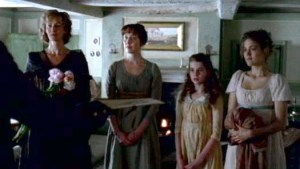
Poor Mrs. Dashwood, Elinor and Marianne were still in deep mourning

Poor Mrs. Dashwood, Elinor and Marianne were still in deep mourning when ...

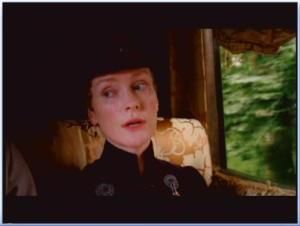
Fanny Dashwood was suitably creepy and mean

. . . John and Fanny Dashwood (who was suitably creepy and mean), showed up with very little notice.

She deserved to eat this unappetizing fish

Fanny deserved to eat this unappetizing fish ...

and to wear this terrible hairdo

... and to wear this terrible hairdo.

Edward was handsomer than expected

Edward was handsomer than expected ...

and so was Colonel Brandon

and so was Colonel Brandon.

In fact, both were more attractive than Willoughby, which is not what Jane Austen intended.

In fact, both were more attractive than Willoughby, which is not what Jane Austen intended.

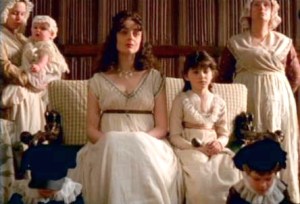
Sir John Middleton ...

Sir John Middleton ...

... had quite a handsome family. We see them in so few movie adaptations.

... had quite a handsome family. We see them in so few movie adaptations.

Mrs. Jennings was vulgar and effusive as ever.

Mrs. Jennings was as vulgar and effusive as ever.

Barton Cottage was quite a comedown from Norland Park.

Barton Cottage was quite a comedown from Norland Park.

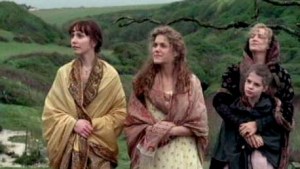
But they managed to make the best of the situation.

But the Dashwood ladies managed to make the best of the situation.

Stay tuned for more images next week … at this link.

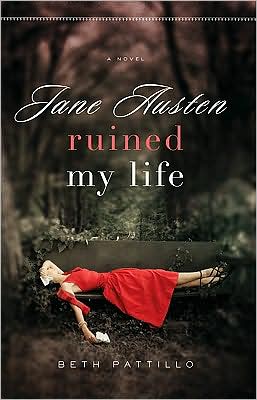
jane-austen-ruined-my-lifeJane Austen Ruined My Life by Beth Pattillo is a surprisingly fast and fun read, and I found myself unable to put it down at times. The plot revolves around wishful thinking: WHAT IF Jane Austen’s sister Cassandra saved more of her letters than we know about? What if the missing correspondence is hidden somewhere protected from the public?

This knowledge has English professor and devoted Jane Austen scholar Emma Grant salivating. Her academic reputation is in tatters after her husband and his teaching assistant (and paramour) accuse her of plagiarism. Newly divorced and denied tenure, Dr. Grant travels to London hot on the trail of the rumored missing letters. There she meets up with Mrs. Gwendolyn Parrot, a Formidable, who tantalizingly allows Emma to read a copied snippet of Jane’s missing letters. Scholar that she is, Emma immediately recognizes Jane’s handwriting and the (seeming) authenticity of the fragment. To be certain, she would have to read a copy of the original.

After extracting a promise of secrecy from Emma, Mrs. Parrot sends her on a series of tasks, in which Emma visits Steventon, Chawton Cottage, Bath … well, you get the drift … all the places that Jane Austen either lived in or traveled to. Emma’s motives for going through all this trouble are the possibilities of handling the actual letters and researching them. Her resulting book would salvage her academic reputation. Traveling with Emma is an old flame who, coincidentally, is staying in the same flat as Emma. Does he know of her secret or is he truly as interested in her as he claims? His presence adds to the mystery and suspense of the plot. The book is a fast read and I found it completely satisfying until the very end. While Emma finds her own definition of a happy ending (which, I will concede, made logical sense), I wanted to scream out “No!” and rewrite that ending. You see, romantic that I am, I do believe that people can have their cake and eat it too.

Beth Pattillo’s latest novel reads less like a Jane Austen sequel and more like a The Da Vinci Code offspring. Consequently it will appeal to a broader audience than most Austenesque books. Having said that, the plot is not wholly original . There are echoes of  Syrie James’s The Lost Memoirs of Jane Austen (in which Jane’s lost manuscript is uncovered and in which she describes a lost love) and Lori Smith’s A Walk With Jane Austen (in which Lori visits the places where Jane lived or traveled). The author, whose writing style is elegant and spare, has written eight other popular books, including the award winning Heavens to Betsy. You can visit her at http://www.bethpattillo.com for more information.

3-regency-fansJane Austen Ruined My life, a Guideposts Book, is slated to come out on February 3rd. 978-0-8249-4771-2, $14.99. Order a copy at this link.

I give it 3 regency fans out of 3.