Feeds:
Posts
Comments

The orange wine will want our care soon. But in the meantime, for elegance and ease and luxury, the Hattons and Milles’ dine here to-day, and I shall eat ice and drink French wine, and be above vulgar economy. Luckily the pleasures of friendship, of unreserved conversation, of similarity of taste and opinions, will make good amends for orange wine.- Jane Austen to Cassandra, Godmersham, June 20, 1808

Icehouse, Bedale Park

Icehouse, Bedale Park

Jane wrote casually of eating ice in a day when the preservation of huge chunks of river and pond ice was no mean feat. Solid blocks of ice were hewn from nearby frozen ponds and rivers in winter, then hauled by teams of horses and men to a suitable storage space. Ships also brought in chunks of ice from glaciers and icebergs.

In early days, deep underground chambers whose doors faced north kept the temperatures freezing inside their heavily insulated structures, preserving the ice for up to two years.  By the 17th and 18th centuries, owners of great houses built icehouses adjacent to their dwellings. These storage spaces had double insulated walls and double doors that kept the warm air out. The cold chambers also kept water, milk, butter, and other perishables refrigerated.  Iced food remained the province of the rich, who could afford to build an ice house and pay servants who shaved the ice and prepared ices, ice sculptures, bombes, and ice cream. Experiments in flavors and designs abounded:
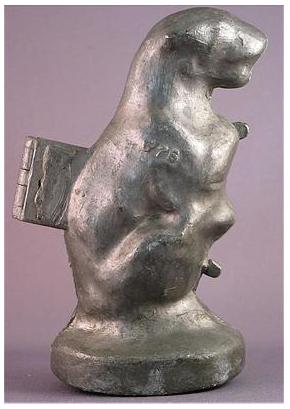
Squirrel ice cream mold, ruby lane antiques

Squirrel ice cream mold, ruby lane antiques

In the late 17th and early 18th century, long before refrigeration was available, Europeans were making ices and ice creams. Although they were often unsure about freezing techniques, they began experimenting with flavors immediately. Confectioners tried everything from breadcrumbs to grated cheese to candied orange flowers in these new frozen treats. They molded them into fanciful shapes and served them with style and flair. Once in a while, they stumbled – putting foie gras or puréed asparagus in ice cream, for example – but most of their experiments were successful. They led the way to the wonderful range of flavors we enjoy today. (Histories, Legends, and Myths of Ices and Ice Cream)

The great chefs were especially creative in the use of ice for preserving food, and making exotic foods. In a day before electricity, intricately carved ice sculptures of swans and cherubs and the like were all the rage in Europe. The great French chef Antonin Careme used iced water to make his spun sugar sculptures and kept desserts on ice and the pastry room cool to keep the unbaked pastries cool. (Crème du Carême)

Recipes for creating ices and ice cream haven’t changed much, but the methods have. By the mid 19th century small portable iceboxes and an ice cream maker had been invented, replacing laborious hand stirring with a handcrank until the mixture thickened. The following is an 18th-century ice cream recipe that illustrates how labor intensive and time consuming ice cream making had once been:

English ice cream pail, Derby 1790

English ice cream pail, Derby 1790. Image from Historic Foods.

Pare, stone and scald twelve ripe Apricots, beat them fine in a Marble Mortar, put to them six Ounces of double refined Sugar, a Pint of scalding Cream, work it through a Hair Sieve, put it into a Tin that has a close Cover, set it in a Tub of Ice broken small, and a large Quantity of Salt put amongst it, when you see your Cream grow thick round the Edges of your Tin, stir it and set it in again ’till it all grows quite thick, when your Cream is all Froze up, take it out of your Tin, and put it in the Mould you intend it to be turned out of, then put on the Lid, and have ready another Tub with Ice and Salt in as before, put your Mould in the Middle, and lay your Ice under and over it, let it stand four or five Hours, dip your Tin in warm Water when you turn it out; if it be Summer, you must not turn it out ’till the Moment you want it; you may use any Sort of Fruit if you have not Apricots, only observe to work it fine. – Ice cream recipe from The Experienced English Housekeeper by Elizabeth Raffald, 1769,  page 228:

  • Georgian Ices and Victorian Bombes is another informative post from Historic Food, one of the most interesting and historical food sites on the web. In it you will find a wealth of illustrations, photos, and information about making ice cream.
  • Lemon Ice: The Jane Austen Centre published a recipe for making lemon ice similar to one made in the 18th century. The article adds additional information about the origins of ice cream.
  • Ice Cream and Chocolate Parlor since 1700 describes an Italian ice cream parlor that has been in existence for over 300 years. Their specialty is an almond ice cream that is probably as easy to make and flavorful as the one below.
  • Histories, Legends, and Myths of Ices and Ice Cream provides a timeline and interesting tidbits of information about ices and ice cream over the ages.
Almond ice cream
Almond ice cream
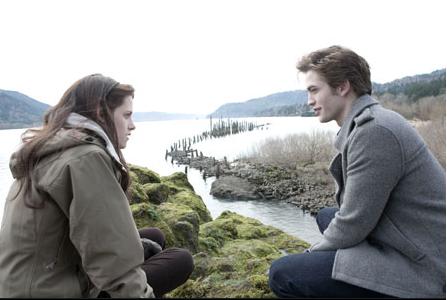
Edward and Bella at the River's Edge

Edward and Bella at the River's Edge

Several of us are planning to see Twilight when the movie comes out at the end of November, and we’ve made a pact to read the books before that event. Imagine my delight and surprise when I came across this passage. Bella, wanting to take her mind off Edward Cullen, picks up a tattered volume of the complete works of Jane Austen:

I lay on my stomach, crossing my ankles in the air, flipping through the different novels in the book, trying to decide which would occupy my mind most thoroughly. My favorites were Pride and Prejudice and Sense and Sensibility. I’d read the first most recently, so I started into Sense and Sensibility, only to remember after I began chapter three that the hero of the story happened to be named Edward. Angrily, I turned to Mansfield Park, but the hero of that piece was named Edmund, and that was just too close. Weren’t there any other names available in the late eighteenth century?

Indeed there were, Bella, and you might have kept going and started reading Emma. Knowing how popular these vampire books are, I am glad that Stephenie Meyer wrote about a seventeen-year-old freely choosing to read Jane Austen’s books.  Here’s the trailer for the film:

and here’s the link to the official website.

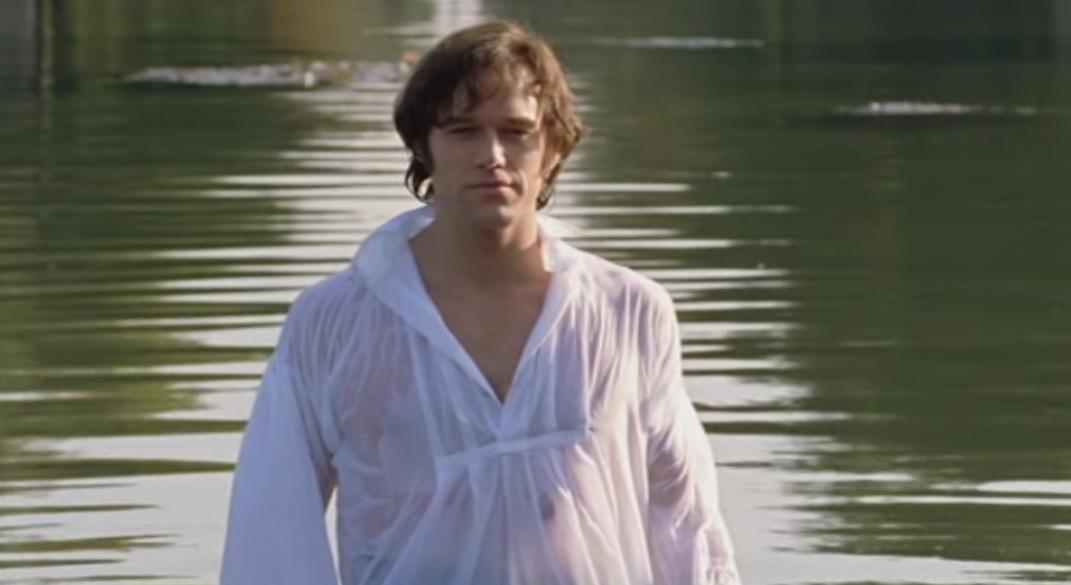
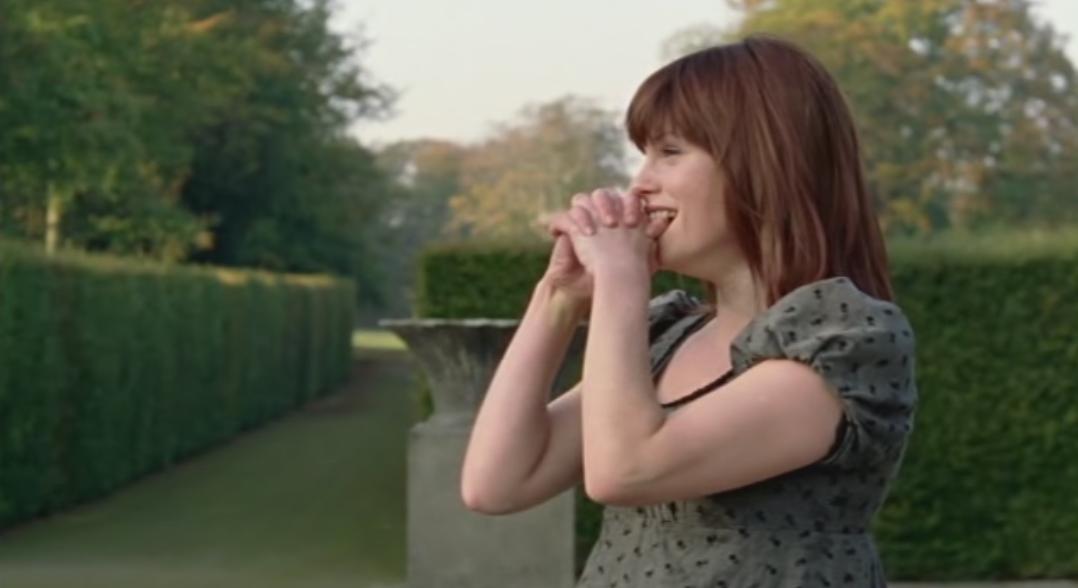
To quote a comment I read online, Lost in Austen, Episode Four was both brilliant and bonkers. And its 46 minutes sped by at turbo speed. In fact the episode felt so rushed that I knew after Amanda and Mr. Darcy stepped into modern London that there would not be enough time left for more than a summary wrap up, which is precisely what happened.

Jane and Bingley reunite, Mrs. Bennet acquires a backbone (and Mr. Bennet’s admiration), Lizzy gets her wish (with her father’s blessing), Amanda finds her true love, and … Charlotte remains lost in African limbo, we see Caroline Bingley flirting with George Wickham before riding off in a carriage, and Lydia seems completely unaffected by events, such as spending an unchaperoned night with Mr. Bingley. Click here to read Pop Sugar’s very detailed recap of the final episode.

Inside, crying. Outside, a happy face.

Inside, crying. Outside, a happy face.

There seems to be two minds about this show out in the blogosphere: people either loved it or hated it. I, for one, wonder why ITV gave so much airtime to this series and so little to the three Jane Austen adaptations in 2007. Never mind. Here’s what The Culture Show had to say about the series:

And this series is science fiction – although with a more female bent than often is the case.
I’m not claiming that Lost in Austen is great art, but it is a well-acted and enjoyable series which imagines what the result might be if a reader were to enter the book and tried to influence events.

One must completely suspend disbelief when watching this show, otherwise one might be overly bothered by the contrived coincidences that push the plot forward.  Mr. Wickham seems to pop up at just the right places at precisely the right time to help Amanda out of a pickle, and Amanda spots Mr. Darcy in that great and bustling metropolitis, London, with very little effort. While Mr. Darcy walks about a bit dazed in the 21st century, he does not seem overly inquisitive about his new surroundings.

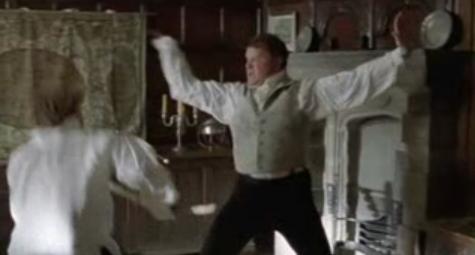
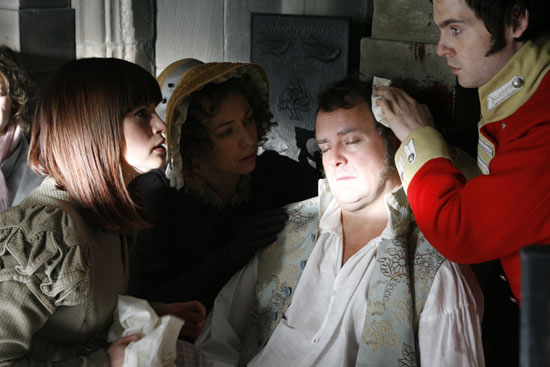
Mr.Bennet duels Bingley

Mr.Bennet duels Bingley

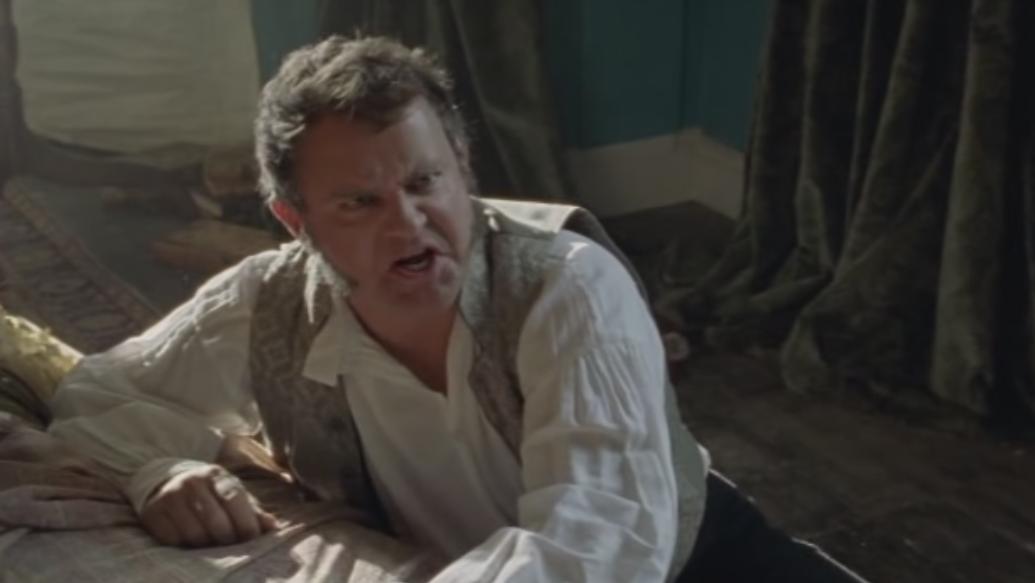
Lizzy (Gemma Arterton) relishes her life working as a nanny in London, turning appliances on and off, using her cell phone, and reducing her employers’ carbon footprints. One gets the sense from these scenes that quite a bit of time must have passed for Lizzy to become so comfortable and settled in the future. The dialogue remains sparkling and witty, and the roles are well acted, even though poor Elliot Cowan is made to move about like an automaton once he makes it to London. Mr. Bennet finally arrives on center stage, and Hugh Bonneville takes full advantage of his moments in the spotlight, stealing every scene he’s in.

Lizzy in the future

Lizzy in the future

For those who were unable to watch the series, you can download ITV’s press pack and read detailed descriptions of each episode. Amazon.uk offers the DVD for sale for £11.98 at this link. During my travels I’ve discovered that my laptop will play just about any DVD from around the world, and so does my portable DVD player. And a comment left by Charley Brown on my Episode Three review will direct viewers to a link that leads to past episodes.

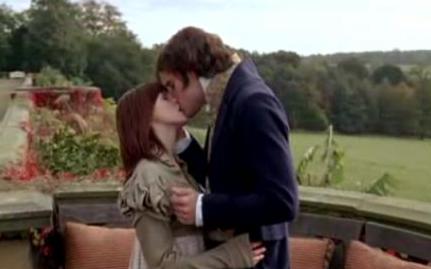
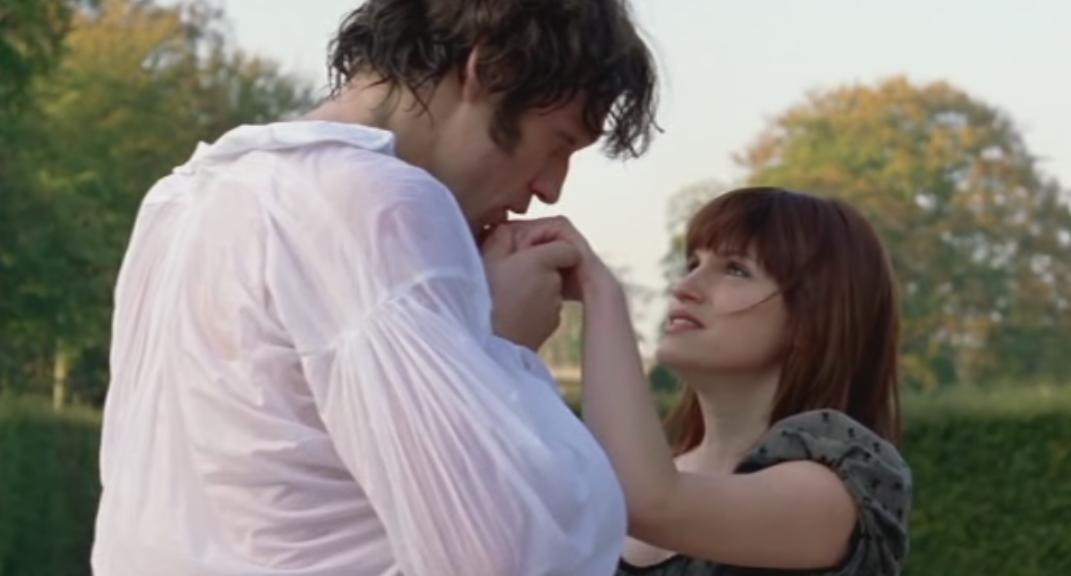
Kissing Mr. Darcy

Kissing Mr. Darcy

I’m rather sad that this show has ended. I found it as addictive as a bucket of buttered popcorn. Once you get started, you can’t stop eating until every morsel is gone. And then you still look for more.

The End

The End

Michele Ann Young

Michele Ann Young

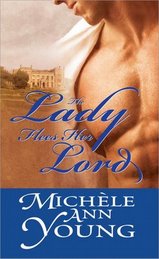
Inquiring readers: One of my favorite go-to blogs is Regency RambleMichele Ann Young never disappoints me with the choice of her topics or depth of her research about England or the regency era. In addition, the photos of her frequent trips to England provide endless and original variety. Michele is also an author, and her new novel, The Lady Flees Her Lord, is coming out from Sourcebooks in October (in about two weeks). Having admired Michele for so long, and knowing her book is about to come out, I thought this was a perfect time to have a chat with her.

Vic: Hello Michele, thank you for taking time out to answer my questions!

Michele: First I would like to thank you for inviting me to your blog. What a pleasure and a privilege. I am always so pleased when you pop by the Regency Ramble and leave me a note.

Vic: (Blush) I wish I could visit it more often, but whenever I do I look forward to reading your regular features, which you repeat with regularity, like the regency fashion for a particular month, the flora and fauna that are in season, and your travel specials. Most recently I loved your Regency footwear posts, and thought your posts about regency money were fascinating. I especially liked the images of old money, and believe it is the first time I have seen a farthing! Tell me a bit about your research in each of these areas. What are some of your favorite sources and why?

Michele: I first started the regency ramble because I wanted somewhere to keep track visually of things I thought might be useful for scene setting in my books as well as factual information. I thought others might like it too.


Walking dresses, September 1805, Lady's Monthly Museum

Walking dresses, September 1805, Lady's Monthly Museum

The regular fashion feature came about because I wanted to see how fashions changed throughout the time period (the long regency, so really Prinny), and how fashions changed month to month. So I started collecting all the fashion pictures I could find in two folders, one organized by year and one by month. I decided to put the fashions on the blog in the month in which they were worn.

A similar thing occurred with the flora and fauna blog, though it tends to be more flora and insects, because most of my information comes from a Naturists Diary and then I go hunting for pictures. I am looking for a good source for fauna but use some of my own knowledge to then search out the information on particular animals.

My special trip blogs started out fairly haphazardly, but now I carefully document each picture, as best I can in situ and then look up more information for the text. I visit as many old buildings, cities, castles as I can on each trip I make. I like to find interesting places in addition to London where I can set my books, for example Royal Tunbridge Wells and Dover.

Ladies shoes, 1800

Ladies shoes, 1800

The shoe museum was a bonus. A friend invited me to go with her for the day, and I had so much fun, because they really had lots of stuff. And we all love shoes.

As I write my stories, I discover things I need to know, and then I blog about them. It helps me three ways, one, to actually do the research and absorb the information, two, to get visual impressions that I can recall when I am writing and three, to keep track and find it again. I have scores of computer files on myriad topics, but they are often dry texts that I hunt through to find a specific piece of information. But then I have to bring them to life. And often blogging about them, helps me do that.

With regard to resources:

I am lucky to belong to a university library, so I have lots of access to diaries and books that might not be available in the general library system. I belong to the Beaumonde chapter of RWA and they are very generous with their resources and information. I also subscribe to the Moonstone Research Publication Newsletters and have received permission to post a limited number of fashions pictures from that list each month. I also collect my own plates when I can afford them. And I buy lots and lots of books, rare books, used books. I scour second hand bookshops everywhere I go.

Vic: Are you English or American? It seems to me that you naturally straddle both worlds.

Michele: I am English originally. I grew up in England and Scotland. I left there to come to Canada when I got married. I now travel back to England every year to visit family and of course to do my research.

Vic: Is your blog, Regency Ramble, a natural extension of the research you do for your novels? Or is your interest in historical detail a separate passion?

Regency Ramble definitely started because I decided to write novels in the era, because that is what I love to read. But I majored in history at college, European Economic History, primarily after the Regency era. I love all historical topics. I am fascinated with the Tudors, and the Stewarts. I like the Victorian era, but I feel it is too close to today to keep me entranced. I have oodles of general history books covering all eras. But because there is so much to learn about the Regency, it keeps me fully occupied.

Vic: When did you decide to become a writer, and how did you settle on historical romance?

Michele: I wrote my first novel in 2000. I wrote it for something to do during a period of forced inactivity. The story that came into my mind was a regency and I finished it. It wasn’t very good, but I discovered I loved the process and set about to learn about the craft of writing.

I like stories about relationships. And I like happy endings. It turns out that these are romances, although I didn’t realize that when I started. I am also writing a historical novel which does not have a central relationship, or at least not in the first book, since I am planning a single protagonist series also set in 1809 through to 1815. Whether it will sell, I’m not sure.

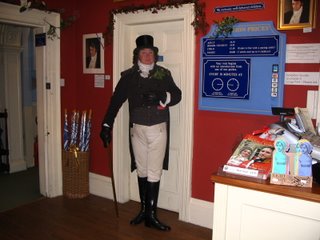
Jane Austen Centre gift shop, Bath 2007

Jane Austen Centre gift shop, Bath 2007

Vic: Tell me a little about your creative process. Do you come up with the plot first and then research the period, or do the two go together? Are you a disciplined writer or do you wait for inspiration?

Michele: I tend to get a scene in my head with one or both main characters. Usually the opening scene of the book. For No Regrets it was a picture of a man riding into a medieval kitchen that was being used as a scullery for a hunt ball. The woman in the kitchen was someone he’d been trying to talk to for a while. For my new book, The Lady Flees Her Lord, the scene was a woman trying to escape her husband.

These opening scenes pose all kinds of questions and I follow where they lead. Sometimes my research will generate that opening scene. I do a lot of reading of history books for interest. Occasionally I will research an important point along the way, if it might make or break the plot. Otherwise, I highlight something I want to double-check and go back to it later.

I write in a linear fashion from there to the end, with no idea of the plot until it happens. This often requires major rewrites, when the story takes an unexpected turn that messes up the beginning.

I am a full time writer and I write every weekday starting at 9 am until about three. I have several contracts to fulfill, so I have to be disciplined. I do email and research and promotional things later in the day.

Vic: Who are your favorite Jane Austen hero and heroine, and why?

Michele: I have to say Lizzie Bennet and Mr. Darcy. I enjoy her other characters, but those two are standouts for me.

Vic: Thank you for your thoughtful answers, Michele. Before ending this interview, I have one final question. I see that Sourcebooks will come out with your novel in October. What can people look forward to when they read The Lady Flees Her Lord?

The Lady Flees her Lord by Michele Ann Young

The Lady Flees her Lord by Michele Ann Young

Michele: Physically and emotionally abused because she has failed to produce an heir, the plump Lucinda, Lady Denbigh, is running from her husband. A softhearted collector of strays, she rescues a street urchin on her way and posing as a widow, she seeks refuge in the quiet Kent countryside…

Lord Hugo Wanstead, with a wound that won’t heal, and a death on his conscience, he finds his estate impoverished, his sleep torn by nightmares, and brandy his only solace.

When he meets Lucinda, he finds her beautiful, body and soul, and thinks she just might give him something to live for…

Together they can begin to heal, but not until she is free of her violent past…

One reviewer said: Our author has given us a little slice of Heaven molded from a minuscule slice of Hell. Our emotions are played like a violin with endearing words, breath taking scenes and a virtuous sense of right and wrong. The authors writing style is highly comparable with Jane Austin but with more of today’s romance mentality. Lush and loving, heart wrenching beautiful, one could only hope to have a Lord Hugo Wanstead to desire us so truly and deeply.

Vic: Good luck with your new book. I wish you much success and a best seller!

Michele: Thanks so much.

Warning about this review of the third episode of Lost in Austen: Spoiler Alert! In my defense, I’ve used the language that sits on ITV’s online press centre, which has been placed on the blogosphere for all to see. You can also read a synopsis of Episode Four at that link, and my review of Episode Four here.

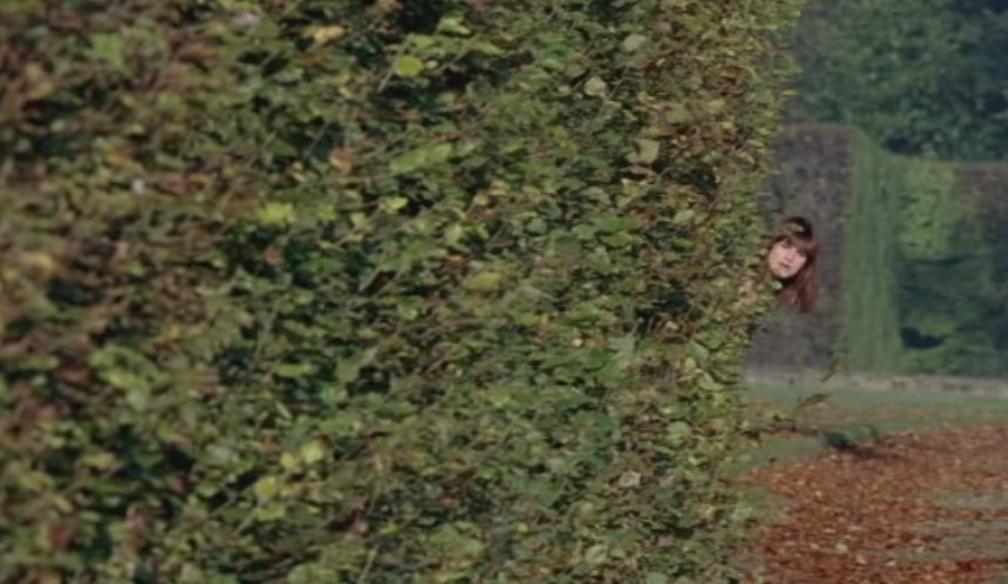
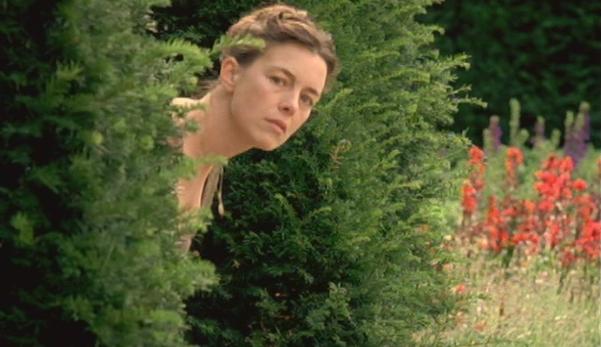
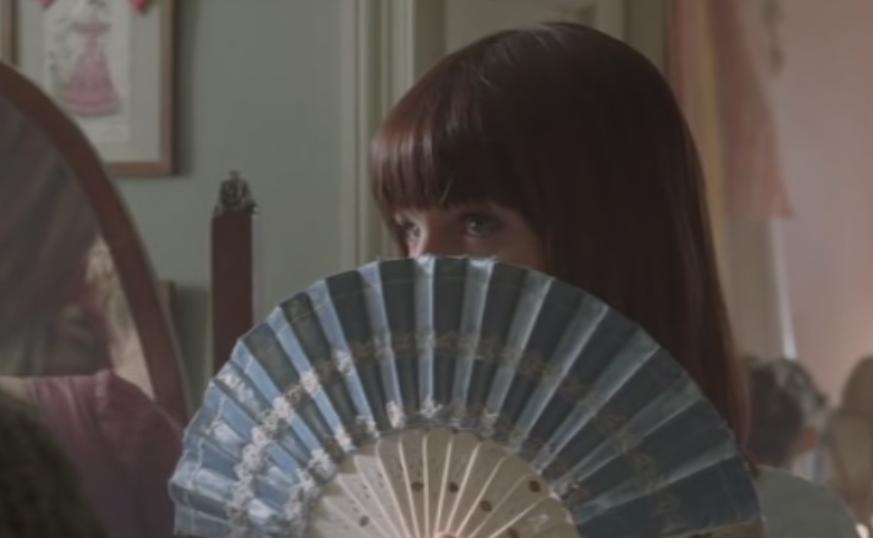
Amanda’s zany journey through Pride and Prejudice land continues. The plot twists keeps getting more convoluted, and one wonders if the last episode will have enough time for the unraveling. This film’s visual puns of other JA movie adaptations are fun to spot, such as this one of Miss Austen Regrets.

or the Twisted Version of Pride and Prejudice

Olivia Williams in Miss Austen Regrets

Olivia Williams in Miss Austen Regrets

Mr. Wickham is the most intriguing character in Episode Three, and he’s been given some choice lines which I won’t spoil for you. Let’s just say that he teaches Amanda a few tricks about dress and manners in the regency.

The coguette imperial. Amanda receives instruction in the fine art of being a lady from ...

Practicing the coguette imperial, Amanda receives instruction in the fine art of being a lady from ... Wickham.

... Mr. Wickham, of all people, who instructs her in the art of dress and manners, telling her "Ladies are strangers to the itch."

... Mr. Wickham, who instructs her in the art of dress and manners

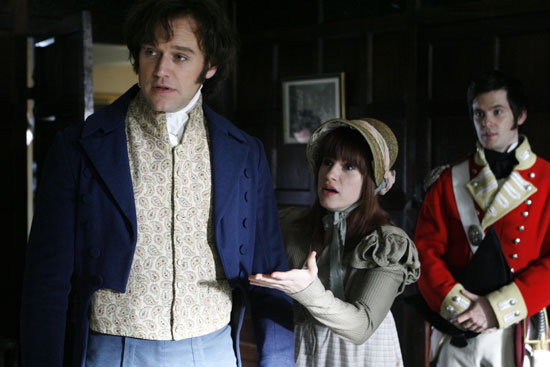
Meanwhile at Barton Cottage, Mr. Collins is all a tremble at the thought of having his Jane ...

Meanwhile at Hunsford, Mr. Collins is all a-tremble at the thought of having his Jane ...

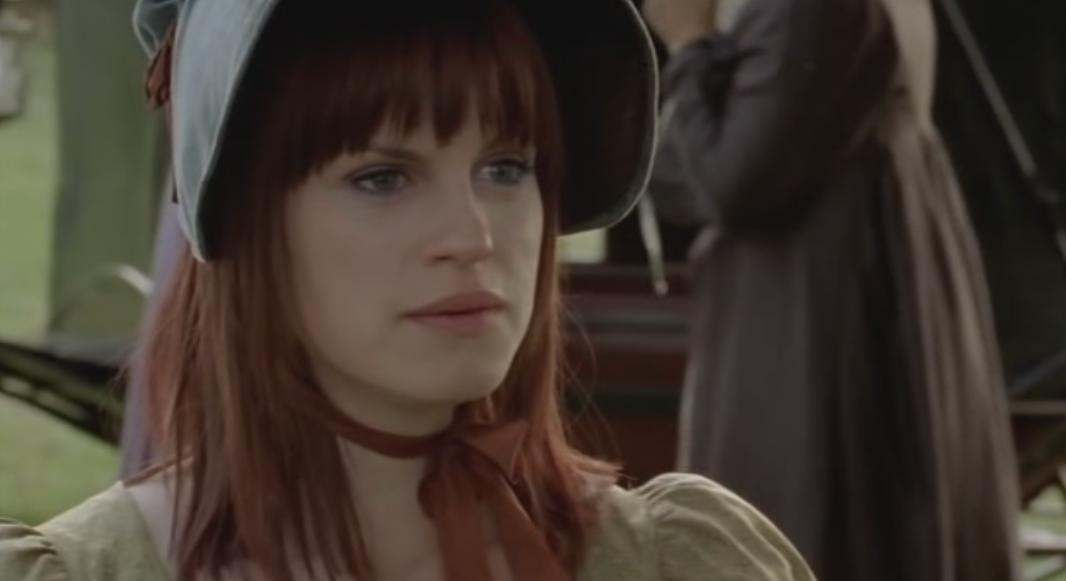
Alas,  Jane (Morven Christie), does not quite share the same anticipation. In fact, she’s miserable and spends all of Episode Three moping and looking sad.

Mrs. Collins can only think of the one she lost ...

Mrs. Collins can only think of the man she lost ...

Mr. Bennet is furious with himself for allowing Mr. Collins to wed Jane, and he spends his nights in his study.

Mr. Bennet wallows in unhappiness at allowing Jane's marriage.

Mr. Bennet wallows in unhappiness at allowing Jane to wed Mr. Collins.

The situation at Longourne has become untenable, so Mrs. Bennet and Lydia visit Jane in her new home, bringing her a hostess gift.

Mrs. Bennet brings stilton cheese and loganberries.

A basket of stilton cheese and loganberries.

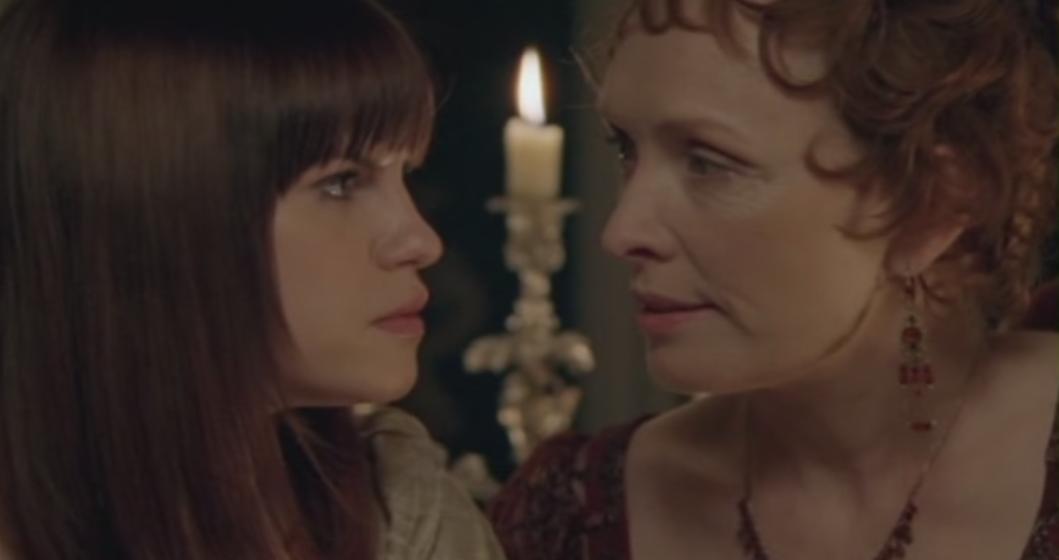
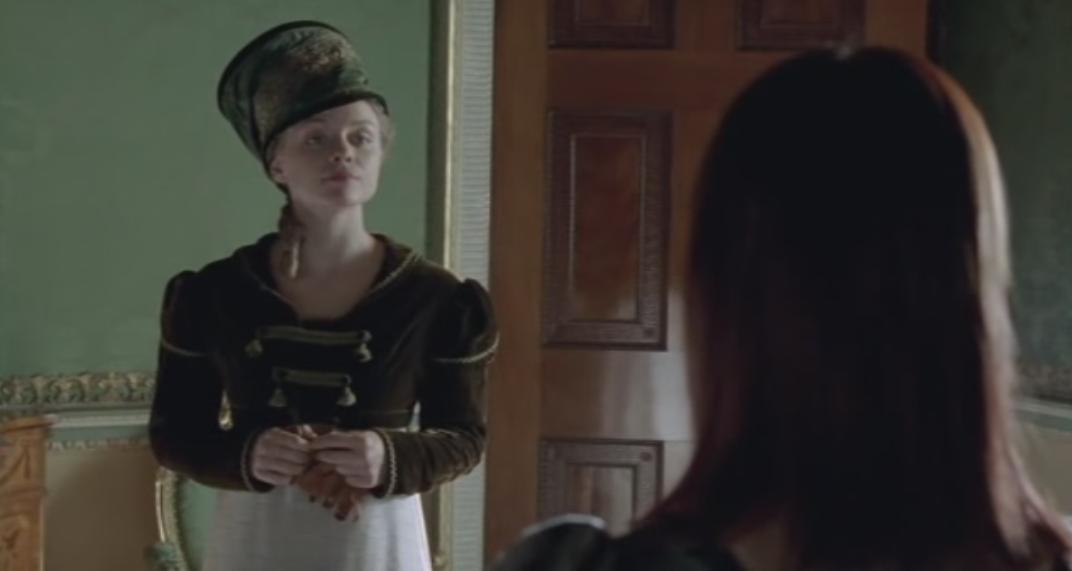
We finally meet Lady Catherine de Bourgh, delightfully played by Lindsay Duncan. Lady Catherine isn’t fooled by Amanda one bit, and rather enjoys sparring wits with the saucy girl..

Lady Catherine de Bourgh inspects Amanda.

Lady Catherine de Bourgh inspects Amanda up close.

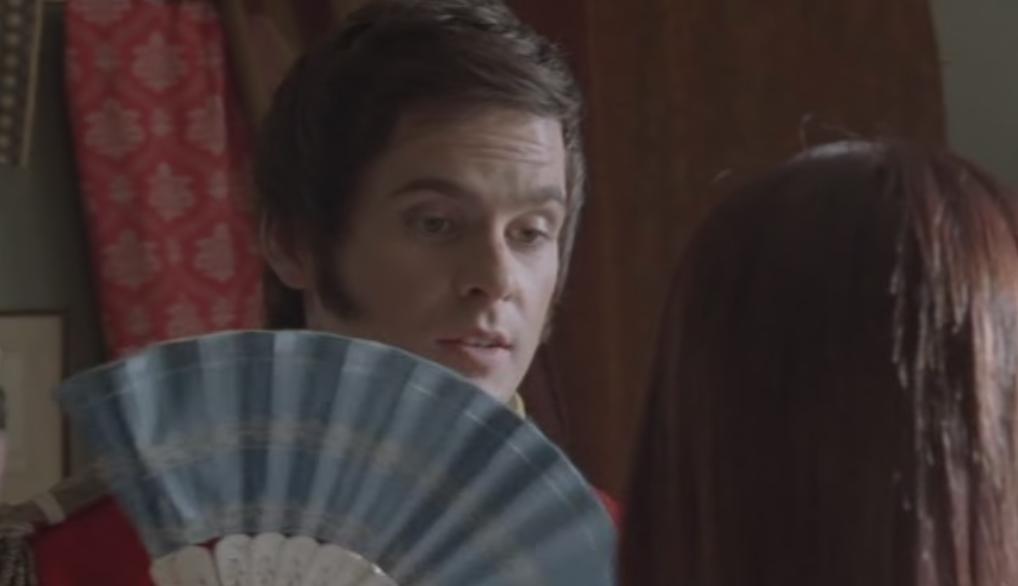
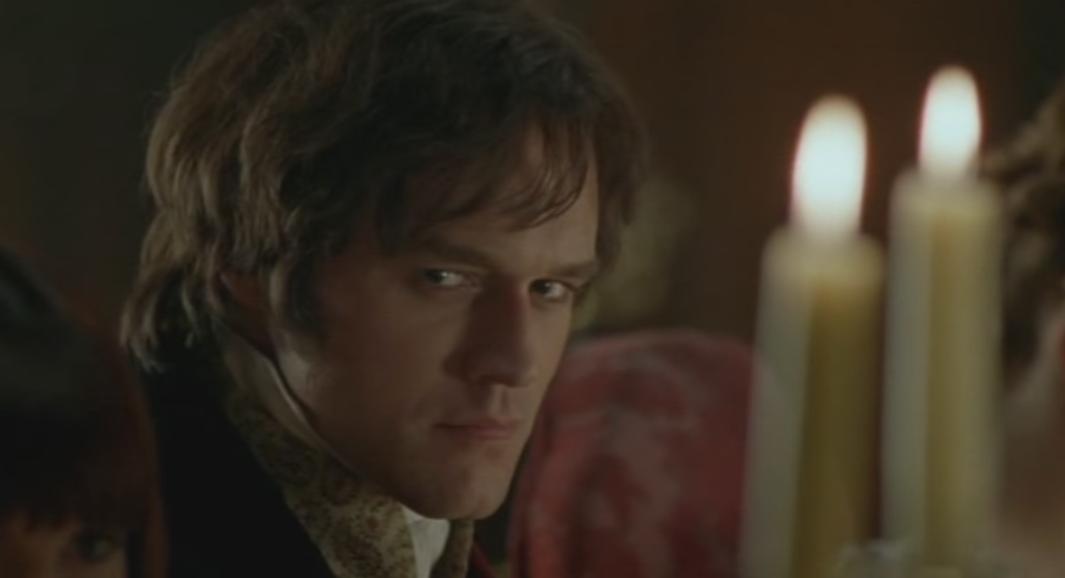
Elliot Cowan plays Mr. Darcy as a straight man. He suspects Amanda of following him and gives her many disapproving looks. Amanda continues to detest him, calling him toxic.

Darcy suspects Amanda of following him.

Darcy suspects Amanda of following him.

Lady Catherine, ever mindful of her ambitions for her daughter Anne, warns Amanda off Mr. Darcy.

Lady Catherine de Bourgh warns Amanda, "You cannot have Fitzwilliam Darcy."

Lady Catherine de Bourgh warns Amanda.

Tom Mison as Bingley is having as miserable a time as Jane. He realizes he still loves her and blames Darcy for influencing him in giving Jane up.

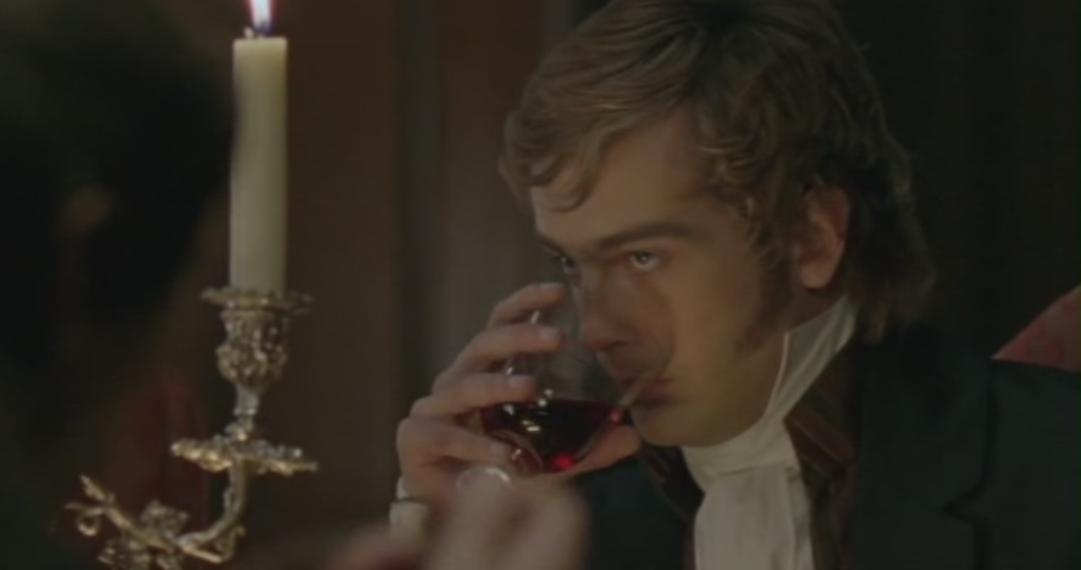
Unhappy about losing Jane, Bingley takes to drinking.

Unhappy about losing Jane, Bingley takes to drinking.

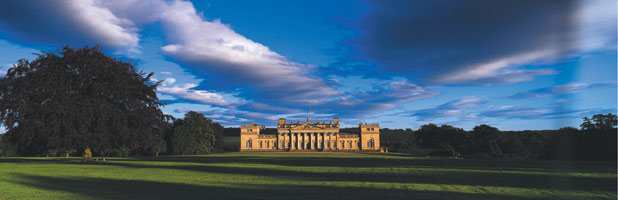
Darcy, observing his friend’s unhappiness, admits he was wrong about Jane. He invites Amanda and the others in the party to Pemberley.

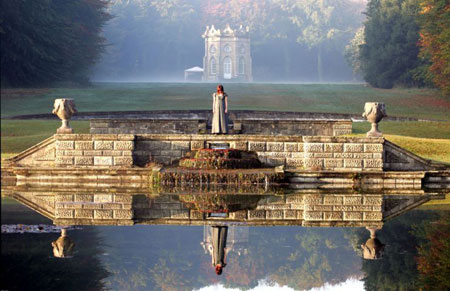
Pemberley (Harewood House)

Harewood House as Pemberley

Amanda's first view of Pemberley

Amanda gets a first glimpse of Pemberley

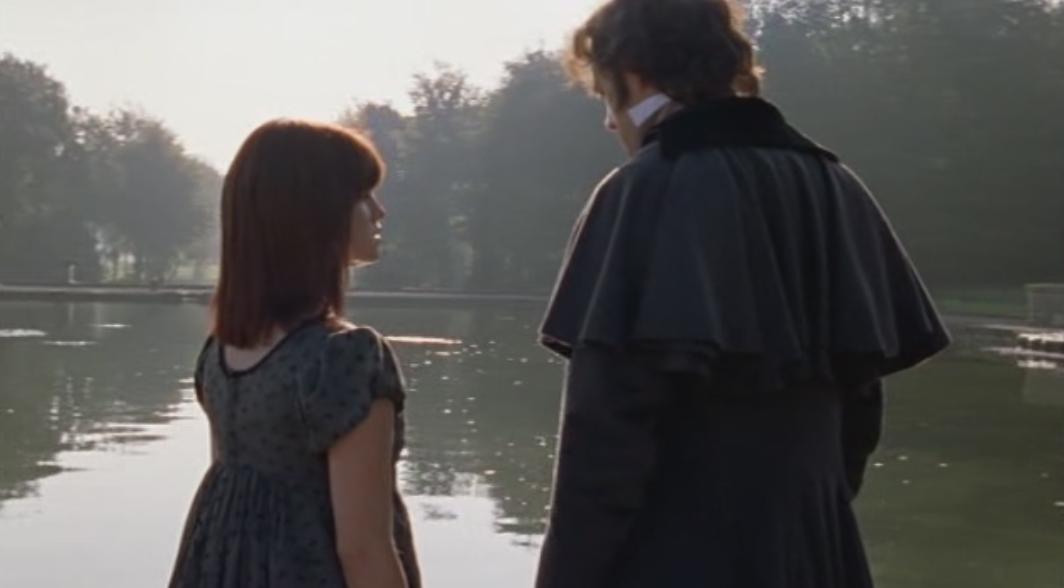
Thrown together in close proximity, Darcy’s feelings towards Amanda change, but not without an internal struggle. Amanda’s feelings also change as she finds herself equally attracted to man she once detested.

Amanda and Darcy talk.

Amanda and Darcy talk.

She asks him a favor ...

She asks a favor of him ...

She rather likes what she sees ...

And rather likes what she sees ...

… the attraction is mutual.

Darcy declares his feelings towards Amanda. She realizes she’s in love, but her conscience stabs at her: What about Elizabeth? Then, with a mental leap that bounds out of nowhere, she realizes that as Darcy’s wife, “she will have the power to make amends for all that has gone wrong. She can look after Jane, and even buy Longbourn for the Bennet family.”

Huh? This dialogue had me scratching my head. Where did those thoughts come from?

she wants Darcy for herself.

Caroline throws down the gauntlet: she wants her paws on Darcy. Or does she?

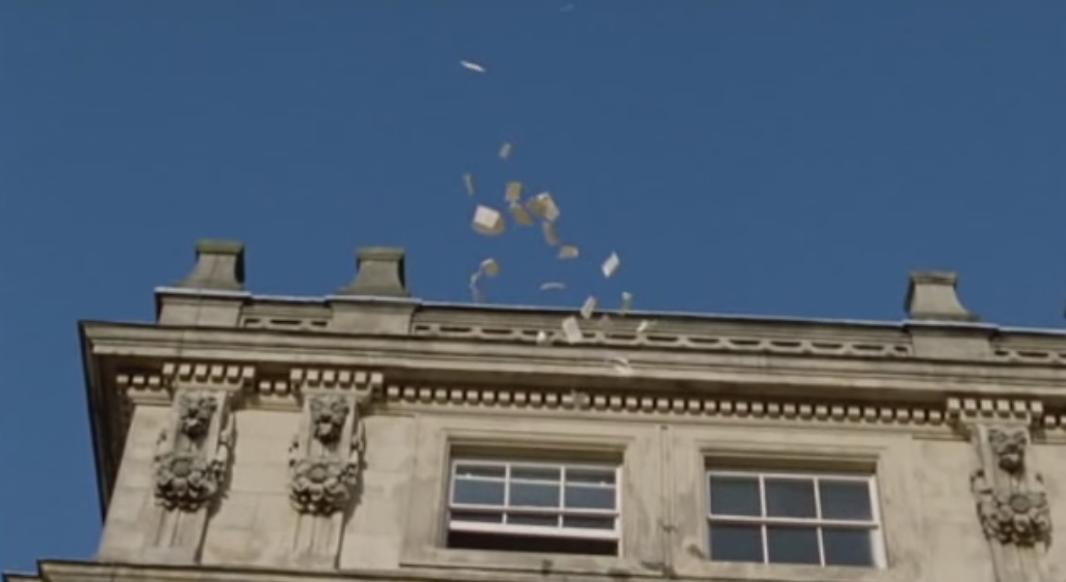
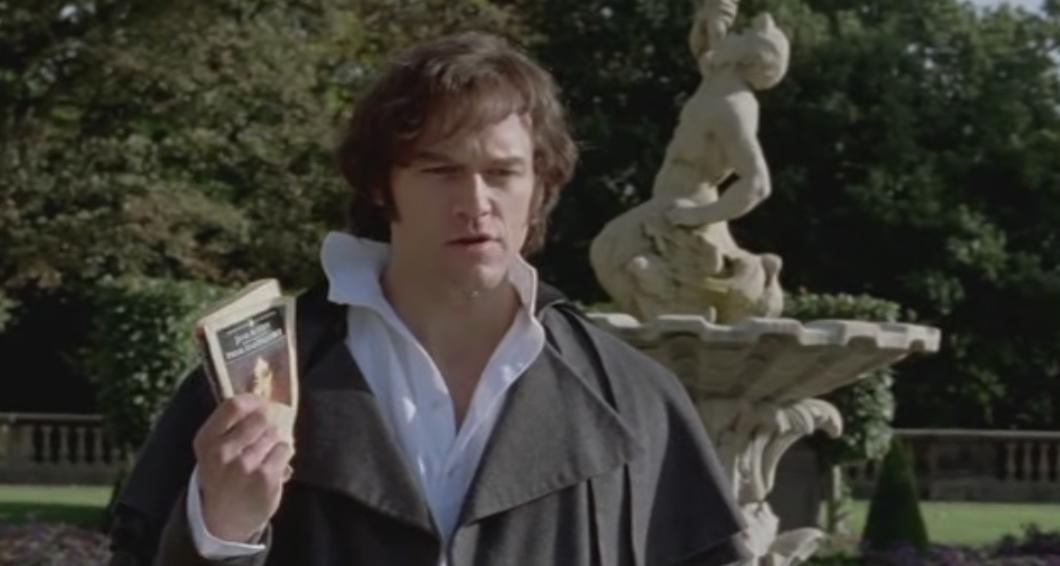
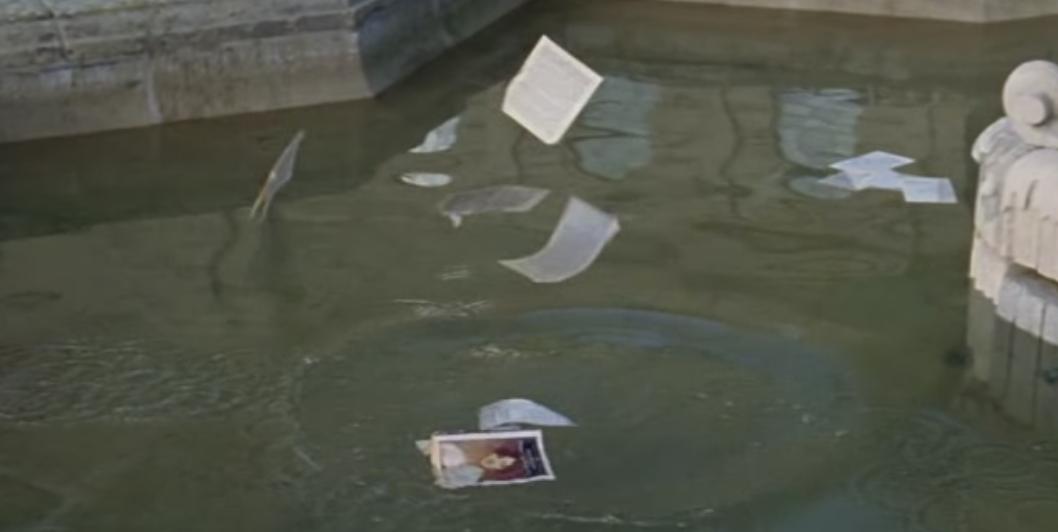
Caroline Bingley adds another wrinkle to the mix, and her questions force Darcy to ask Amanda an important question. Her answer results in their break up. Hurt, angry, and disappointed, Amanda rushes to the upper floor of Pemberley, rips up her copy of Pride and Prejudice, and tosses it out the window.

Amanda rips up her copy of Pride and Prejudice

Amanda tosses her ripped copy of Pride and Prejudice

Which Darcy reads.

Darcy reads...

Which she had flung into a fountain.

... a torn wet book that landed in a fountain.

Have you ever tried to read a wet book with the pages out of order? It’s nearly impossible. Never mind. I still laughed during this episode, but it was not nearly as much fun as the previous two. (Too many dark moments, even with Wickham charmingly stealing the show.)

Only one episode remains to be viewed, which does not leave much time to weave the various plot threads together. Darcy follows Amanda into the 21st century where they meet up with Lizzy. Will Darcy fall in love with her? Will Mr. Bennet stop sleeping in his study? Will Mr. Collins finally have his ecstatic moments with Jane? Stay tuned this Wednesday to find out.