Feeds:
Posts
Comments

Book Review by Brenda S. Cox

“Trusting providence [God] seemed to lead to trusting people, as well. How differently the world appeared, when one stopped cringing away from it and faced it in the light.”—Fanny Bertram in The Murder of Mr. Wickham by Claudia Gray

Who doesn’t love a cozy mystery? Gather a large group of unconnected people for an English house party at a manor house. There should be one member of the party who is hated by all, though each has his or her own reasons. Snow them in or otherwise disconnect them from civilization, and the nasty one of course gets murdered (in the middle of the night while somehow most people are wandering around the house). Then an incompetent policeman tries to figure it out, and one or two members of the group actually uncover “whodunnit,” at great danger to themselves.

Now in this fun cozy mystery, The Murder of Mr. Wickham by Claudia Gray, the manor house belongs to George and Emma Knightley. Their guests are some of our favorite people—Fitzwilliam and Elizabeth Darcy, Marianne and Colonel Brandon, Anne and Frederick Wentworth, and Fanny and Edmund Bertram. Each has a plausible reason for being there. Of course, Wickham also shows up, and he gets himself deservedly killed (the title told you this already).

The Murder of Mr. Wickham, by Claudia Gray, is a fun cozy mystery starring many of our favorite Jane Austen characters.

Frank Churchill, local magistrate, is the incompetent sleuth (with a flirtatious daughter). The Darcys’ oldest son (who we can see is mildly autistic) and the Tilneys’ teenage daughter try to solve the mystery, while not transgressing propriety any more than absolutely necessary–sort of.

Well, all that would have sold me on the book already. It’s also beautifully written and consistent with Austen’s characterizations. Gray has even postulated dates for each novel’s events and given the characters appropriate ages (though she’s made Sense and Sensibility rather late, apparently in order to make Marianne and Brandon newlyweds, which is fine).

Now, the stresses of Wickham’s dastardy toward each family, and then the suspicions aroused by his murder, awaken marital tensions in each couple. (The Darcys are also grieving the death of a loved one, and Fanny is keeping a secret.) So we get to see each pair struggling to communicate better, and growing in their marriage relationship. To me, the most interesting couple is Fanny and Edmund, whose conversations deal with deeper issues of judgment, mercy, and family loyalty.

Of course there is also a delightful budding romance between Jonathan Darcy and Juliet Tilney. After a rocky start, Juliet is very accepting of Jonathan’s quirks. When he tells her that when he gets overwhelmed, he rocks back and forth, she says she would not mind that. She adds, “It is peculiar, of course, . . . but my mother has often told me that most people are really very peculiar, once you get to know them. The only difference is in how well we hide our peculiarities. Your habit seems harmless.”

By the way, Juliet’s mother, Catherine Tilney, is not in this story. But we’re told she has become a successful novelist. A hint to Claudia: I’d like to meet Catherine in another story . . .

In the story, Wickham, the charming rogue, has deceived various characters into investing in a false scheme and stolen their money, which is quite plausible. (It seems less likely that after this has been revealed, he’s still legally able to force them to give the money they promised him.) We’re also not surprised that when he discovers a compromising letter, he steals it and holds it for ransom. (Whether that letter would have been written and mailed around the world through various hands in the first place seems less likely to me.) All this fits Wickham’s character very well. And his final demise is appropriate.

If you enjoy mysteries and sequels to Jane Austen, I highly recommend The Murder of Mr. Wickham to you. I loved being with all these characters again for an extended time. The themes are good, and the ending is satisfying. Great summer reading!

See Claudia Gray’s website for more on her wide range of books.  

Brenda S. Cox blogs at Faith, Science, Joy, and Jane Austen. Her book entitled Fashionable Goodness: Christianity in Jane Austen’s England should be out this fall, Lord willing.

As the entire world mourned the death of HM Queen Elizabeth II this last two weeks, I have spent time honoring her life and reign, learning more about her personality and leadership, and watching countless hours of television coverage.

I was home on September 8, 2022 and watching the news, as I had heard the reports of her health failing. When her death was announced and the national anthem played, I couldn’t believe what I was hearing or seeing; it was so surreal.

Once reality set in, I found myself weeping.

Her Majesty, the Queen

The Queen was a beautiful lady in every respect, a wonderful wife and mother, and an exemplary queen. And though I honor her role as the Queen of England, I most admire her character, her steadfastness, and her strong faith.

The beautiful sight of a double rainbow over Buckingham Palace just before her death was announced, and the sound of the crowd outside the Palace singing “God Save the Queen” right after, brought immense joy to my heart. Her life meant so much to so many people.

Photo: Yahoo!News

Days of Remembrance

Her Majesty’s funeral was quite touching, as were the many other events and processions leading up to it, especially the Vigil held by her grandchildren.

Vigil at Westminster Hall

I watched the funeral processional and funeral service on television and read the Committal program. As I read and listened, I greatly admired the thoughtful prayers, Bible verses, and songs that were selected. Everything was quite fitting for such an honorable woman of such deep conviction.

The Committal Program

Her Life

Like many of you, I enjoy exploring the many biographies, movies, miniseries, and documentaries about the Queen, the history of the House of Windsor, and the Royal Family. I think that we honor people best when we spend time finding out more about their lives, experiences, and history.

Below are a few of my all-time favorites. There are countless others to explore.

The Queen (2006)

The Queen, starring Helen Mirren, is a 2006 British film that depicts the events following the death of Diana, Princess of Wales in 1997. Initially, the Queen and Royal Family regarded Diana’s death as a private affair and thus not to be treated as an official royal death, in contrast with the views of then Prime Ministry Tony Blair and Diana’s ex-husband, Prince Charles (now King Charles III), who both favored an official, public expression of grief.

WAYS TO WATCH

The Crown (2015)

As most of you probably know, The Crown is a fascinating and resplendent Netflix television series that follows the political rivalries and romance of Queen Elizabeth II’s reign and the events that shaped the second half of the twentieth century.

IMDB Trivia: “The series is one of the most expensive television series ever made. Each episode is budgeted at £5 million and it had already been commissioned for two seasons, with the intention of four more, before the first episode had even been completed, or any episode broadcast.”

WAYS TO WATCH

The Royal House of Windsor (2017)

Drawing on newly available evidence, The Royal House of Windsor, an epic Netflix series, explores the Windsor dynasty’s gripping family saga, providing fresh insights into how our royal family have survived four generations of crisis.

I have watched this series twice, as so much of it was absolutely fascinating to me and my family. There was so much that we did not know about the Windsor family that helped connect many dots for us.

WAYS TO WATCH

Listed below are several lists of other documentaries, films, and television series you might be interested in watching:

Biographies on Queen Elizabeth II

There are, of course, dozens of books you can read about the Queen, her life, her family, and her reign. I love reading biographies, but I have yet to read one about Queen Elizabeth II. I’ve been perusing these lists, in order to select 1-2 biographies I’d like to read:

The biography I’ve had in my Amazon cart for quite some time is The Faith of Queen Elizabeth: The Poise, Grace, and Quiet Strength Behind the Crown by Dudley Delffs because I have always admired and been curious about the Queen’s personal faith.

Book Description: “Discover the inspiring spiritual legacy of Queen Elizabeth II, the longest-reigning monarch in British history. Sharing a behind-the-scenes glimpse into the life of this notoriously private monarch, The Faith of Queen Elizabeth features intimate stories and inspiring reflections on the personal faith behind the Crown.”

Life and Legacy

If, like me, you enjoy learning more about Britain’s current Royal family and British history as a whole, I hope that this commemoration of HM Queen Elizabeth II’s life has been meaningful. Please comment below with your favorite shows, biographies, and resources so we can all learn more about her life and legacy. Finally, please share what Queen Elizabeth’s life and reign have meant to you.


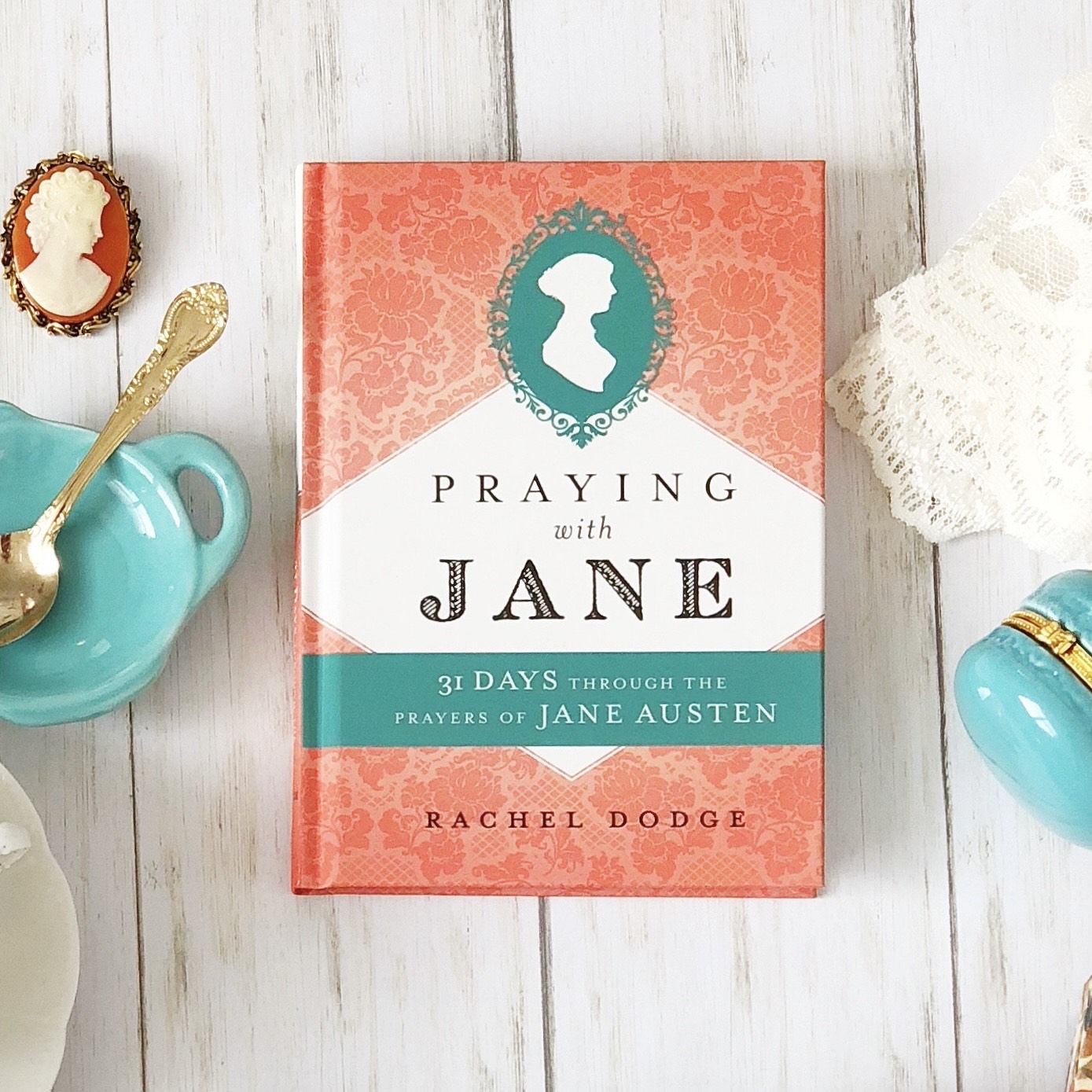
RACHEL DODGE teaches college English classes, gives talks at libraries, teas, and book clubs, and writes for Jane Austen’s World blog. She is the bestselling author of The Little Women DevotionalThe Anne of Green Gables Devotional and Praying with Jane: 31 Days Through the Prayers of Jane Austen. Her new book The Secret Garden Devotional releases October 31. You can visit Rachel online at www.RachelDodge.com.

Gentle Readers, This review discusses an historical novel based on one of Jane Austen’s least admired characters, Mary Bennet. Katherine Cowley manages to keep my interest in the growth of Mary in her self-confidence and talents.

The Lady’s Guide to Death and Deception is Katherine Cowley’s third installment of a series of five books based on Mr and Mrs Bennet’s middle daughter. Cowley, in her three published novels, has captured Mary’s qualities and mannerisms, as well as her vulnerability and insecurities. In three novels Mary’s been transformed from a character living in the shadows of her vivacious sisters to a woman with the daring and tenacity of a spy. The background of the three novels is the Napoleonic Wars. 

Covers of Katherine Cowley's first three books

In the first novel, The Secret Life of Miss Mary Bennet, we met Mary sitting by her father’s deathbed alone at night. During this sad time, she anticipated a life of silent misery under the rule of her widowed mother. In the early hours someone knocks on the door. Enter Lady Trafford and her nephew Mr Withrow. Claiming to be a distant relation, she invites Mary to visit her in a castle along the shores of the Sussex Coast. Lady Trafford sees a silent strength in Mary and recognizes her isolation from her family, and her patience, and accurate observations. After a time as her guest, she invites Mary to become a spy and promises to train her. 

Author Katherine Cowley astutely endears the reader to Austen’s Mary, while pointing out the skills that this middle sister learned as she lived in her sisters’ shadows, for Mary’s strength as a spy lies in her natural state of invisibility. She’s a nobody. Anonymous and unnoticed. Therefore, she’s the perfect spy. She’s also a stickler for keeping copious and accurate notes. 

Oh, Mary’s still self-deprecating and annoyingly awkward, but these traits are familiar to the Austen reader. Her transformation as a double agent and her release from dependency on her family as an unmarried female makes sense. (Read my review of the novel in this link.)

In book two of the series, entitled The True Confessions of a London Spy, Mary travels to London to ostensibly visit the Darcys, who are residing in their splendid London townhouse. We see this couple through Mary’s eyes. Better yet, her younger sister Kitty is visiting as well, as is Darcy’s sister, Georgiana. Cowley’s descriptions of Mary’s interactions and perceptions with her relatives and acquaintances are developed in a satisfying way.  

In True Confessions Mary must wend her way to follow Mr Darcy’s strict rules for single female visitors to his house and the freedom she needs to spy on an assortment of gentlemen, one of whom is suspected of murder. The author writes a fascinating account of our revisit with a beloved Austen couple along with Mary’s growing self-awareness and as a spy. Better yet, Mary receives her first proposal!  In this novel the reader discovers that while Mary does not regard herself as particularly beautiful or interesting, some men found her fascinating. Cowley threads many historical details in this tale, while keeping the spotlight on our spy heroine.

Book Three takes us to The Lady’s Guide to Death and Deception, one of five novels she’s contracted to write for Tule Publishing. The third installment about Mary’s journey as a spy does not disappoint. In this book, she and the spy team of Lady Tafford and Mr Whitford are shipped off to Brussels, a city that plays an important part in the events prior to the battle of Waterloo. Mary’s honed her spy skills. She’s learned to shoot a pistol and has improved her disguises in a variety of roles and accents.

Cowley weaves fiction and history together in a way that satisfies both my love for historical novels and romance. Her Mary Bennet is written with great respect towards Austen’s character. 

As a wide-eyed and bushy tailed 20-something and in love with Jane Austen’s novels, I was aghast to learn she had written only six. In desperation to find another Austen, I turned to Georgette Heyer’s Regency romances. My flat mate and I DEVOURED them. Now, in my (ahem) more mature age, I appreciate Heyer’s historical novels more than her light comedies.

Heyer’s An Infamous Army and The Spanish Bride are considered to be so historically accurate that few find fault with her research. Cowley’s writing style is her own; like Heyer she weaves a romance and a mystery into an account of the weeks prior to Waterloo. The Book Tour’s media kit succinctly states:

Life changes once again for British spy Miss Mary Bennet when Napoleon Bonaparte escapes from the Isle of Elba. Mary quickly departs England for Brussels, the city where the Allied forces prepare for war against the French. But shortly after her arrival, one of the Duke of Wellington’s best officers is murdered, an event which threatens to break the delicate alliance between the Allies.

Investigating the murder forces Mary into precarious levels of espionage, role-playing, and deception with her new partner, Mr. Withrow-the nephew and heir of her prominent sponsor, and the spy with whom she’s often at odds. Together, they court danger and discovery as they play dual roles gathering intelligence for the British. But soon Mary realizes that her growing feelings towards Mr. Withrow put her heart in as much danger as her life. And then there’s another murder.

Mary will need to unmask the murderer before more people are killed, but can she do so and remain hidden in the background?”

While Cowley is spare in her descriptions, she offers more details than Austen. She includes important characters like Sir Arthur Wellesley, the 1st Duke of Wellington, Prussian General Blücher and William of Orange (later King William II of The Netherlands), who at the time of Waterloo was a Lieutenant-General. All interact with Mary in her various guises. I found Cowley’s details of Brussels with its many canals and the Duchess of Richmond’s famous ball satisfying. She did not dwell overly long on the battle, but gave it enough pages to recount its horrors, just as she provided more than an amuse-bouche to Mary’s budding romance. 

This slideshow requires JavaScript.


One last observation for purists: At the end of the book, Cowley acknowledges that for the sake of her plot she changed some historical facts. She lists them and mentions why the changes were made. Of Cowley’s three novels, I found this one the most satisfying and look forward to reading the remaining two Mary Bennet adventures.

Author Bio

Katherine-Cowley-225x300

Author Catherine Cowley

Katherine Cowley read Pride and Prejudice for the first time when she was ten years old, which started a lifelong obsession with Jane Austen. Her debut novel, The Secret Life of Miss Mary Bennet, was nominated for the Mary Higgins Clark Award. Her Mary Bennet spy series continues with the novels The True Confessions of a London Spy and The Lady’s Guide to Death and Deception. Katherine loves history, chocolate, traveling, and playing the piano, and she has taught writing classes at Western Michigan University.

Purchase Links

AMAZON | BARNES & NOBLE | BOOK DEPOSITORY | BOOKSHOP | GOODREADS | BOOKBUB

Audiobook Purchase Links

AUDIBLE | LIBRO.FM | CHIRP BOOKS | APPLE BOOKS

“Well, here we are at Bath; we got here about one o’clock, & have been arrived just long enough to go over the house, fix our rooms & be every well pleased with the whole of it. … it has rained almost all the way, & our first view of Bath has been just as gloomy as it was last November twelvemonth.

Jane Austen to Cassandra Friday, 17 May, 1799

Sunday, 11th September 2022 marks a celebration at Sydney Gardens in Bath to commemorate the completion of the Garden Restoration project. (Facebook: Garden Gala) This project started three years ago. The £ 3.4  million restoration of the gardens and historic buildings includes the Temple of Minerva (below) and the Loggia (link to a 1972 photo not in the public domain).

Detail_of_Minervas_Temple,_Sydney_Gardens,_Bath_(geograph_Stephen Richards

Detail of the Minerva Temple, Sydney Gardens, Bath. Wikimedia Commons, Public Domain Image. Stephen Richards, Photographer.

“There is to be a grand gala on Tuesday evening in Sydney Gardens, a concert, with illuminations and fireworks. To the latter Elizabeth and I look forward with pleasure, and even the concert will have more than its usual charm for me, as the gardens are large enough for me to get pretty well beyond the reach of its sound. In the morning Lady Willoughby is to present the colours to some corps, or Yeomanry, or other, in the Crescent, and that such festivities may have a proper commencement, we think of going to . . .”

Jane Austen to Cassandra, June 2, 1799 on a visit to Bath

Plan-of-sydney-gardens-1810

Plan of Sydney Gardens, 1810. Wikimedia Commons, Public Domain

Bath’s 21st century gala celebrating the renewal of Sydney Gardens coincides with the Jane Austen Festival, a well attended and internationally recognized yearly event. Click here to see details for the 2022 Jane Austen Festival which will be held from the 9th to the 18th of September of this year.

janeaustenfestival.padfoot.bath

Jane Austen Festival in Bath, padfoot.org.uk

Location of the gardens:

Sydney Gardens is located at the end of Great Pulteney Street, behind the Holburne Museum. In Jane Austen’s day the museum was known as the Bath Hotel. Built in 1795, the park was popular from the late 18th into the 19th century. Jane and her family moved from Steventon to #4 Sydney Place in May, 1801, when the park was quite new.

Sydney_Place_Bath-Wikipedia-Public Domain

Sydney Place today. A plaque commemorates the location of #4. Wikipedia. Public Domain

The house the Austen’s rented is situated across the street from the park, diagonally opposite the hotel. (See Google map image below.) 

Bath-Pulteney St-Sydney-Gardens

Sydney Gardens in relation to Great Pulteney Street in Bath, with a star over #4 Sydney Place. Screen shot of Google Maps

The distractions this pleasure garden afforded Bath’s populace and visitors were musical and theatrical entertainments, outdoor parties, fireworks, menageries, illuminated night time walks, and even a hot air balloon ascent. During Austen’s day, the Bath Hotel (now Holburne Museum) drew guests, and offered a tavern, coffee room, and billiard room. These amenities were expected by the upper crust during the height of Bath’s popularity. (“Outdoor Parties in the 1800’s vs Now” – Sasha Semjonova, 2021)

Sketch_of_the_Fancy_Fair_at_Sydney_Gardens,_Bath

Sketch of the Fancy Fair at Sydney Gardens, ca. 1836, artist unknown, Wikimedia Commons, Public Domain.

One can imagine that country women like Cassandra and Jane, who were accustomed to long daily walks and bracing air, must have loved their daily perambulations along Sydney Garden’s paths while smelling the scent of its grasses, trees, and flowers. Number 4 Sydney Place had a long narrow garden in the back of the house, so that the Austen women and a maid servant were able to grow some herbs and vegetables, and perhaps raise a few chickens for fresh eggs. The family could not grow all their own food and depended on frequent purchases for their provisions from city vendors, markets, and shops, where meat and produce were not as fresh and nourishing as at their former home in Steventon. 

Jane noted in June 1799 that public breakfasts were offered at Sydney Gardens every morning. She and others were enthusiastic about pretty illuminations (fireworks), visits to the theatre, long strolls in the city and its environs, and walks around the Pump Room to meet and greet other visitors. (Geri Walton.)

Recreating the Labyrinth in Sydney Gardens

Interestingly, Austen wrote this passage to her sister in January, over four months before the family moved to Bath:

“…it would be very pleasant to be near Sidney Gardens!  We might go into the Labyrinth every day.”

Jane Austen to Cassandra, January, 1801

The Labyrinth Austen mentioned fell into disuse and was reconstructed in 2017. Its restoration is fully described in Richard Wyatt’s article “It’s Amaze-ing!” in the November 20, 2017 issue of Bath Newseum. A short YouTube video entitled “Sydney Gardens: Recreating the Labyrinth” and created by the BathnesCouncil includes many images past and present. 

Articles about Sydney Gardens, with many images not in the public domain:

  • Visit Bath: Sydney Gardens from Visit Bath provides some lovely photographs of the current garden, which is among the last of the pleasure gardens that people in Regency England frequented. 
  • The Bath Magazine’s article entitled “The History of Sydney Gardens” offers lovely images of the gardens throughout the 19th century, from Austen’s time and on.
  • Today, #4 Sydney Place, the Austen’s first rented house in Bath is now available as an Airbnb. The Literary Hub discusses this house past and present. One can appreciate its proximity to Sydney Gardens and in some article view the long garden in back of the house, but the dwelling has been extensively renovated and, I assume, has been so changed that the Austen family would not recognize its interior. The reviews from those who have stayed there are positive. If one is inclined to rent the rooms, this link will take you to the page to check its availability. As you stay in Bath, you can “Walk: In the Footsteps of Jane Austen”, as described by Bath Magazine. My husband and I stayed at the Dukes Hotel many moons ago. Our view from our room was the Holburne museum.

No.4-SydneyPlace-Airbnb

Number 4 Sydney Place Airbnb screenshot. The modern renovations are in the former kitchen areas, described by Constance Hill in 1923. Obviously this part of the house has been renovated:

“…  a passage leads to a garden at the back of the house. The large, old-fashioned kitchen, with its shining copper pans and its dresser, laden with fine old china, looked as if it had remained untouched since the Austens’ day.

Chapter XII, Bath, Jane Austen: Her Homes & Her Friends, by Constance Hill, 1923

This charming blog post (with even more pictures) discusses a 2015 stay at the Austens’ former dwelling in Bath. Click Here. 

Other Resources:

“From [a husband] that loves any thing besides me, [except that which] is very just and honourable—deliver me!”

I came across this prayer in The New Lady’s Magazine, October, 1791. I can just imagine some of Jane Austen’s heroines praying it. Here’s the prayer, entitled “A Young Lady’s Prayer for a Husband”:

“From a prophane (profane) libertine, from one affectedly pious, from a profuse almoner, from an uncharitable wretch, from a wavering religioso and injudicious zealot—deliver me.

“From one of starched gravity, or ridiculous levity, from an ambitious statesman, from a restless projector, from one that loves any thing besides me, but what is very just and honourable—deliver me!

“From an extasy’d poet, a modern wit, a base coward, and a rash fool—deliver me!

“From a Venus darling, from a Bacchus proselyte, . . . from all other masculine affectations, not yet recounted—deliver me!

“—But give me one, whose love has more of judgment than passion, who is master of himself, or at least an indefatigable scholar in such a study, who has an equal flame, a parallel inclination, a temper and soul so like mine, that, as two tallies, we may appear more perfect by union.

“—Give me one of as genteel an education as a little expence of time will permit, with an indifferent fortune, independent of the servile levees of the great, and yet one whose retirement is not so much from the public, as into himself; one (if possible) above flattery and affronts, and yet as careful in preventing an injury, as able to repair it; one, the beauty of whose mind exceeds that of his face, yet that not deformed, so as to be distinguishable from others by it’s ugliness.

“—Give me one that has learned to live much in a little time; one that is no great familiar in converse with the world, nor no little one with himself; one (if two such happinesses may be granted at one time to our sex) who with these endowments may have an easy honest disposition; who by his practice, as well as principles, has made himself so, let him be truly virtuous and pious, and me be truly happy in my choice.” –Inamorato.

Where do you see Austen’s characters in this prayer? How about:

Deliver me from Mr. Collins (one of starched gravity), from Mr. Parker (a restless projector, starting overly-ambitious projects), and from Mr. Willoughby, Wickham, or Crawford (profane libertines). Also deliver me from Sir Walter Elliot (who is “servile to the great”).

I’m guessing a “Venus darling” is a fop, for which I need to go to Georgette Heyer’s The Unknown Ajax and say, deliver me from Claud Darracott. A “Bacchus proselyte” is obviously a drunk, so we might say deliver me from Mr. Hurst (?) or any of the party in “Jack and Alice” of Austen’s Juvenilia, all of whom were carried home “dead drunk.” 

Deliver me from Mr. Collins, a man of “starched gravity.” Mr. Collins proposes, Pride and Prejudice, C.E. Brock

What kind of man does this young lady pray for instead?

A man who:

  • Loves her based more on judgment than on passion.
  • Has mastered or is learning to master himself.

That is, he does NOT love her as Mr. Darcy first professes to love Elizabeth. She tells him: “you chose to tell me that you liked me against your will, against your reason, and even against your character” (ch. 34). Instead, Darcy learns to love her AND “what is very just and honorable,” which he shows by rescuing Lydia, blaming his own reticence for her predicament.

Darcy’s first proposal, based on passion, not judgment and self-mastery. Pride and Prejudice, C.E. Brock, 1895

The “young lady” also prays for a man who:

  • Is reasonably well-educated
  • Does not flatter or take offense easily, but avoids injuring others and can help repair injuries unwittingly inflicted.

I think Henry Tilney is a good example of this. When he finds out what Catherine has been imagining about his father, he does rebuke her, but he obviously doesn’t hold a grudge. He does all he can to make her comfortable later. Henry is also obviously well-educated.

Henry Tilney confronts Catherine, but immediately afterwards he is kind to her and helps heal her “injuries.” Northanger Abbey, C.E. Brock

The young lady also prays for someone who:

  • Has an easy, honest disposition
  • Is more handsome in mind than in face (but not obviously ugly).

Elinor sees this beauty of mind and honesty in Edward Ferrars, who “was not handsome, and his manners required intimacy to make them pleasing. He was too diffident to do justice to himself; but when his natural shyness was overcome, his behaviour gave every indication of an open, affectionate heart. His understanding was good, and his education had given it solid improvement.”

Edward Ferrars, “the beauty of whose mind exceeds that of his face,” proposes to Elinor. Sense and Sensibility, C.E. Brock

And finally, and presumably most importantly, the young lady prays for a man who:

  • Is truly virtuous (treating others as he wants to be treated) and pious (honoring God) in beliefs and practices. And, he
  • Makes her happy.

Sometimes in Austen’s novels there is a test of virtue. In Pride and Prejudice, Mr. Darcy acts virtuously when he humbles himself and gets Mr. Wickham to marry Lydia. Wickham shows his lack of virtue by eloping with Lydia with no intention of marriage.

In Sense and Sensibility, Colonel Brandon shows his virtue in continuing to serve Marianne and her family any way he can, without really believing Marianne will love him. He also shows loyalty to his first love, Eliza, even after her disgrace. Willoughby, of course, shows his lack of virtue by seducing and abandoning Eliza’s daughter, then abandoning Marianne for a rich woman. 

And, we can see that each hero is the very one to make the heroine happy! Prayers answered, courtesy of Jane Austen.

Colonel Brandon passes the test of virtue; Willoughby does not. Sense and Sensibility, C.E. Brock

Do you see other Austen characters in “A Young Lady’s Prayer for a Husband”? (Or Georgette Heyer characters, if you wish!) Tell us in the comments!

The “Young Lady’s Prayer” can be found on google books