This Jane Austen blog brings Jane Austen, her novels, and the Regency Period alive through food, dress, social customs, and other 19th C. historical details related to this topic.
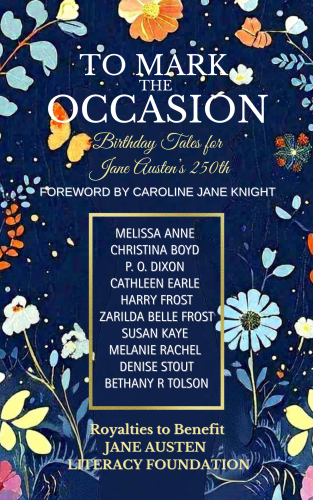
Inquiring Readers: One of our most loyal readers is publicist and author Denise Stout Holcomb. She leaves her comments on almost every post on this blog as far back as I can recall. Denise recently sent us this alert for a new book coming out at the end of this month: To Mark the Occasion: Birthday Tales for Jane Austen’s 250th. What a wonderful gift for this important month celebrating Austen’s life. – Vic
Celebrate 250 years of Jane Austen with a thoughtful collection of birthday tales inspired by her unforgettable characters!
In honour of Austen’s milestone jubilee, ten Austenesque authors reimagine the lives—and fêtes—of her most beloved (and occasionally infamous) creations. Join the festivities for Pride and Prejudice favourites such as Mr Darcy, Elizabeth Bennet, Mr Bingley, Charlotte Lucas, Kitty Bennet, and Georgiana Darcy, celebrate Captain Wentworth’s long-awaited occasion after Persuasion, attend the debut of Mansfield Park’s Mary Crawford, while two funerals and a birthday return us to Northanger Abbey.
Each story sparkles with wit, warmth, and a few surprises in the spirit of dear Jane. Brimming with humour, romance, and a keen understanding of the human heart, To Mark the Occasion:Birthday Tales for Jane Austen’s 250th is an enthusiastic tribute to Austen’s enduring genius—and a joyful reminder that every year (and every story) is worth celebrating.
All proceeds from this anthology will be donated to Jane Austen Literacy Foundation.
Foreword by Caroline Jane Knight. Below sit links to Caroline’s connection to her famous aunt Jane.
“Caroline is the fifth great niece of Jane Austen, and is the last of Jane’s nieces to grow up in Chawton House, in the South of England, on the family’s ancestral estates where Jane herself lived, wrote and published her most famous works…
Caroline has unique insight into the life, works and family of a literary icon. The worldwide celebrations of the 200-year anniversary of Pride & Prejudice in 2013 inspired Caroline to establish the Jane Austen Literacy Foundation to harness the passion for Jane Austen and support the practice of literacy across the world, in honour of Jane. ..
I very much enjoyed Sarah Emsley’s new novel, The Austens. It is written as a series of first-person diary entries and letters, mostly invented, but based on solid research. It shows the relationship between Jane Austen and her younger brother Charles’s wife, Fanny Palmer Austen.
Sarah Emsley gives us deep insights into the lives and struggles of women of Austen’s time. We see contrasts and commonalities between the lives of a young naval wife and mother traveling the world, and an unmarried author living with her family in rural Hampshire.
The Austens, a new novel by Sarah Emsley, tells the story of Jane Austen and her sister-in-law Fanny Palmer Austen in a series of letters and journal entries.
Jane Austen’s World: Sarah, what led you to write this book? Why did you choose Fanny Palmer Austen as the second main character?
Sarah Emsley: The striking contrasts between the lives of Jane Austen and her sister-in-law Fanny Palmer Austen sparked my imagination, leading to The Austens. I wanted to tell a story about the Austen family set partly in North America and to focus on sisterhood and friendship.
While Jane is writing fiction in England, not knowing if any of her novels will ever be published, Fanny is sailing from Bermuda to Nova Scotia and back again, and eventually to England. She is dealing with the challenges of pregnancy and childbirth and caring for her young daughters.
No letters between the two of them survive, and that gap seemed an area worth exploring in fiction. I imagined Jane and Fanny developing a friendship through letters sent across the North Atlantic and then meeting in person the summer before Sense and Sensibility was published.
Also, as I researched The Austens, my own first novel, imagining my way into the story, I found my heroine Fanny asking Jane urgent questions about her books: What was left out? What might happen to her heroines after the happy endings?
From the beginning of my work on The Austens, the voices of both Jane and Fanny were central. I don’t think it could have been a novel about just one heroine or the other.
JAW: What do you admire most about Fanny Austen?
I like and admire Fanny Austen’s courage in doing the best she could to adapt to the challenges and uncertainties of her husband’s naval career. Like Mrs. Croft in Persuasion, she and other naval wives learned that “We none of us expect to be in smooth water all our days.”
JAW: How long did it take you to research and write the book?
Eighteen years! When I began, I had no idea it would take that long. It wasn’t my only project during that period, but it was the main one. I worked on it steadily over all those years. I learned through experience that books need to take the time they take. The writing and publishing process are different every time, for every book and every writer. I sort of knew that before, from writing and publishing nonfiction, but this novel taught me far more about patience and persistence. I cared so much about the Austens, Jane and Fanny and their extended family, that I couldn’t give up on them.
Sarah Emsley spent 18 years working on The Austens, which is set in England, Bermuda, and her native Halifax, Canada.
JAW: There are many books on Jane Austen and her family. What makes yours unique?
My novel has a particularly North American flavour because it’s set on this side of the Atlantic as well as in England, during Jane Austen’s lifetime. I was inspired to begin the book when I learned about the Austen family’s connections with my hometown of Halifax, Nova Scotia at the 2005 Jane Austen Society (UK) conference. The organizer was Patrick Stokes, a direct descendant of Charles Austen and Chairman of the Society. He had asked the archivist at St. Paul’s Church in Halifax to search for the baptismal record for Charles and Fanny’s first daughter, Cassy.
I was a parishioner at St. Paul’s and got married there. I had written a short, illustrated history of the church in 1999, without knowing about the Austen connection. Details of Cassy’s baptism were first published by Sheila Johnson Kindred in Jane Austen and the North Atlantic, a collection of conference papers I edited for the Jane Austen Society in 2006.
When I began my novel in 2007, I did extensive research on the Austen family and their historical period. I had already visited Austen-related sites in England. I began to visit Austen-related places in my own hometown, including Government House in downtown Halifax, featured on the cover of The Austens. Those visits were among the many joys of working on this book.
JAW: What was the hardest part of this book for you to write?
The Harris Bigg-Wither section, near the beginning of The Austens, was the hardest to write. In early drafts, I used a flashback to 1810 to show Jane accepting and rejecting his marriage proposal. I wasn’t satisfied with that approach, and I kept going back to imagine what it might have felt like for her to live through those painful hours. Early in 2019, after almost twelve years of work, I finally wrote a draft of this section I liked. Then I revised it many more times before the book was published.
One of the hardest parts of writing this book was figuring out where to begin the story! Some of the earliest drafts began with Fanny’s perspective in 1809. As I worked, I saw where I needed to expand and deepen the story, going further back in time.
JAW: What was the most fun part of the book to write?
I loved bringing to life the ball at Government House. Fanny wrote to her sister Esther that this ball was “splendid” (12 June 1810). She also referred to Captain Pechell, one of Charles’s brother officers, as her “very great favorite” (14 August 1810). (You can read these letters in Sheila Johnson Kindred’s biography, Jane Austen’s Transatlantic Sister: The Life and Letters of Fanny Palmer Austen.) It was such fun to research and write this scene.
I pictured Fanny arriving at Government House with her husband on a chilly evening in June, wishing she could linger with him in the garden. But she knows she must follow him into the ballroom and socialize with Admiral and Lady Warren and other guests. Each time I visited Government House, I could see Fanny there, dancing with Captain Pechell, playing cards with Lady Warren, and feeling naïve and excluded from the inner circles of Halifax society when she hears about a scandalous poem.
Emsley chose to write in the voice of Fanny Palmer Austen, wife of Charles Austen. Painting by Robert Field, public domain, via Wikimedia Commons
JAW: Why did you choose to write in the first person as Jane Austen? What source material did you use to echo her voice? How difficult was it to get into the mind of the author?
When I began to work on this book, I wrote in third person—first person didn’t even occur to me. I suppose it was too intimidating to think of writing in the voice of Jane Austen, one of the greatest writers of all time. At the same time, I was trying to write a novel that would look and sound sort of like an Austen novel. Paradoxically, then, I was trying to echo her voice, style, and structure too closely.
Through research and immersion in Jane Austen’s world for many years, I got a good sense of what she might have been thinking and feeling. However, I was at first too scared to say any of it from her point of view. But after about twelve years (!), once I had worked out the shape of the plot, I decided to try writing in the first person. I wanted to see what Jane would sound like, and that transformed the novel. Reading, and rereading, her letters and teenage writings helped me find the voice I wanted.
Jane herself gave me courage, especially through her strong heroines, Fanny Price and Elizabeth Bennet. I needed to stay true to my vision of this story, told from inside the minds and bodies of my two heroines. I found my own voice, and allowed myself the freedom to include letters, newspaper clippings and notices, and other pieces of writing. Once I invented letters from Jane to Fanny and from Fanny to Jane, it felt natural to write longer chapters also in the first person.
Figuring out how to write in both Jane’s voice and Fanny’s voice was part of the long, eighteen-year process of helping the novel find its best possible shape.
Thanks very much, Brenda and Vic, for the opportunity to talk about The Austens!
Brenda: Thank you, Sarah, for your insightful answers.
Gentle readers, I think you will love The Austens, as I did. No matter how well you know Jane Austen, it will give you new perspectives on her novels, her life, and the life of her sister-in-law. You may also enjoy Sarah Emsley’s blog.
The Austens: Jane Austen chooses art and the freedom to write fiction instead of marrying for money and thereby selling her body and soul, while her sister-in-law Fanny chooses to marry for love. Their disagreements about work and family threaten their friendship in a world that is hostile to art and love, and even the idea of a woman making a choice.
Sarah Emsley is the author of Jane Austen’s Philosophy of the Virtues and the editor of Jane Austen and the North Atlantic. She lives in Halifax, Nova Scotia, with her family, and she writes about Austen and other authors she admires at www.sarahemsley.com. The Austens is her first novel.
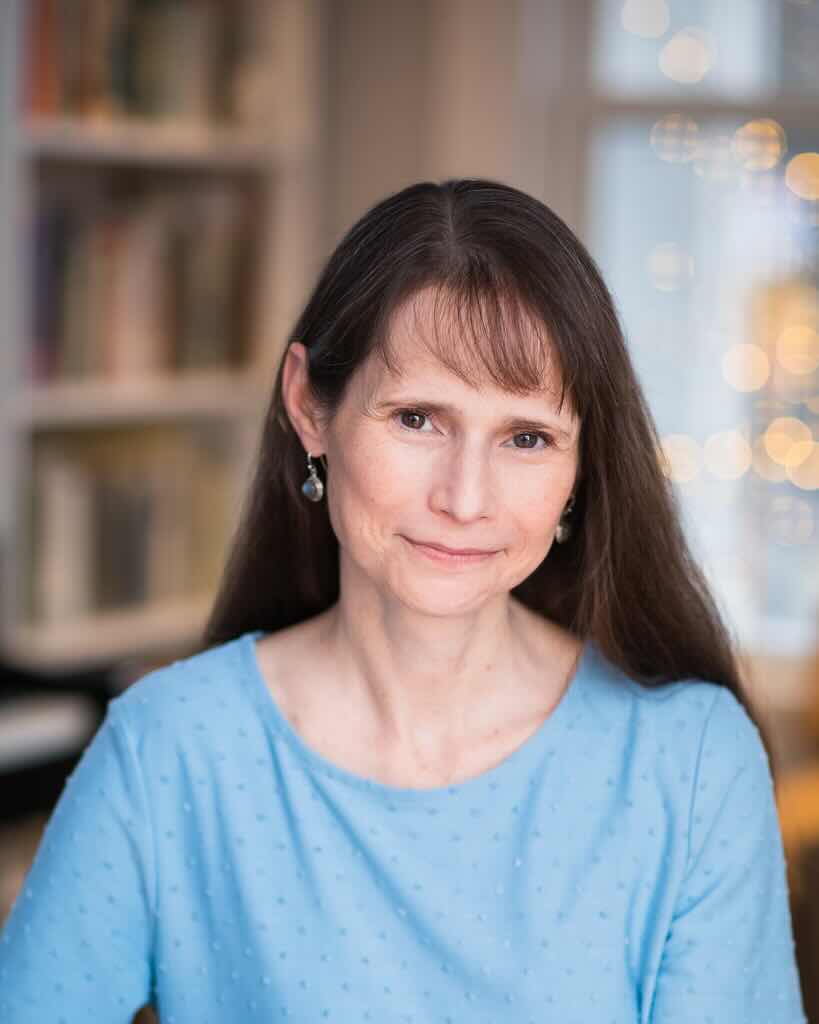
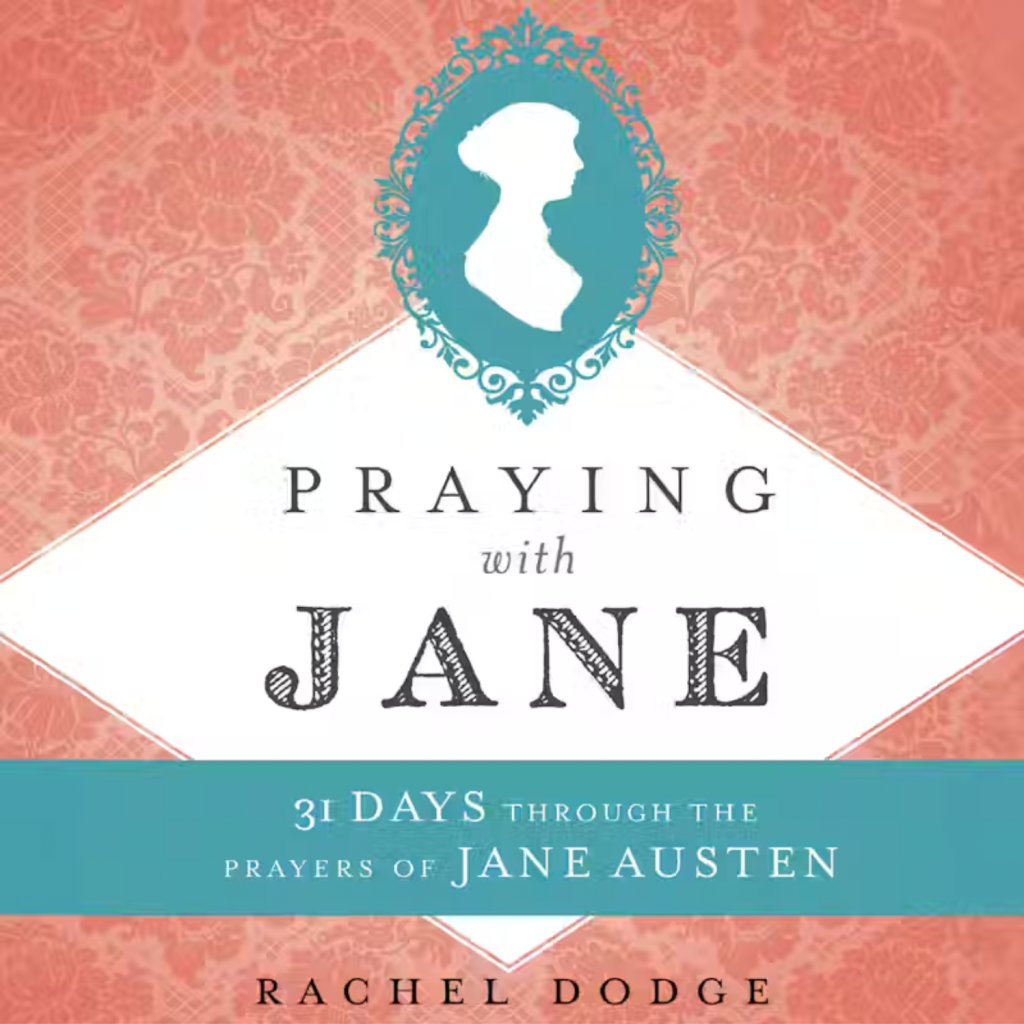
In honor of Jane Austen’s 250th anniversary year, I’m happy to announce a new audiobook project: The Praying with Jane Audiobookfeaturing narration by actress Amanda Root and author Rachel Dodge (yours truly). Published by ONE Audiobooks, this title is available on all major audiobook platforms.
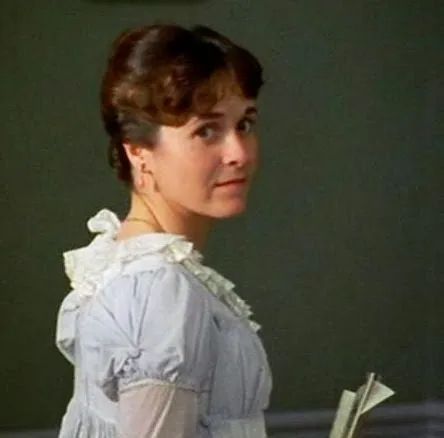
Amanda Root is best known by Austen fans around the world for her starring role as Anne Elliot in the acclaimed 1995 BBC adaptation of Jane Austen’s Persuasion. Root claimed audience hearts opposite Ciarán Hinds, as Captain Wentworth, and has held them ever since.
Proceeds from this anniversary project will be donated directly to the Jane Austen House Museum to further Jane Austen’s lasting legacy.
Persuasion film adaptation with Amanda Root (1995).
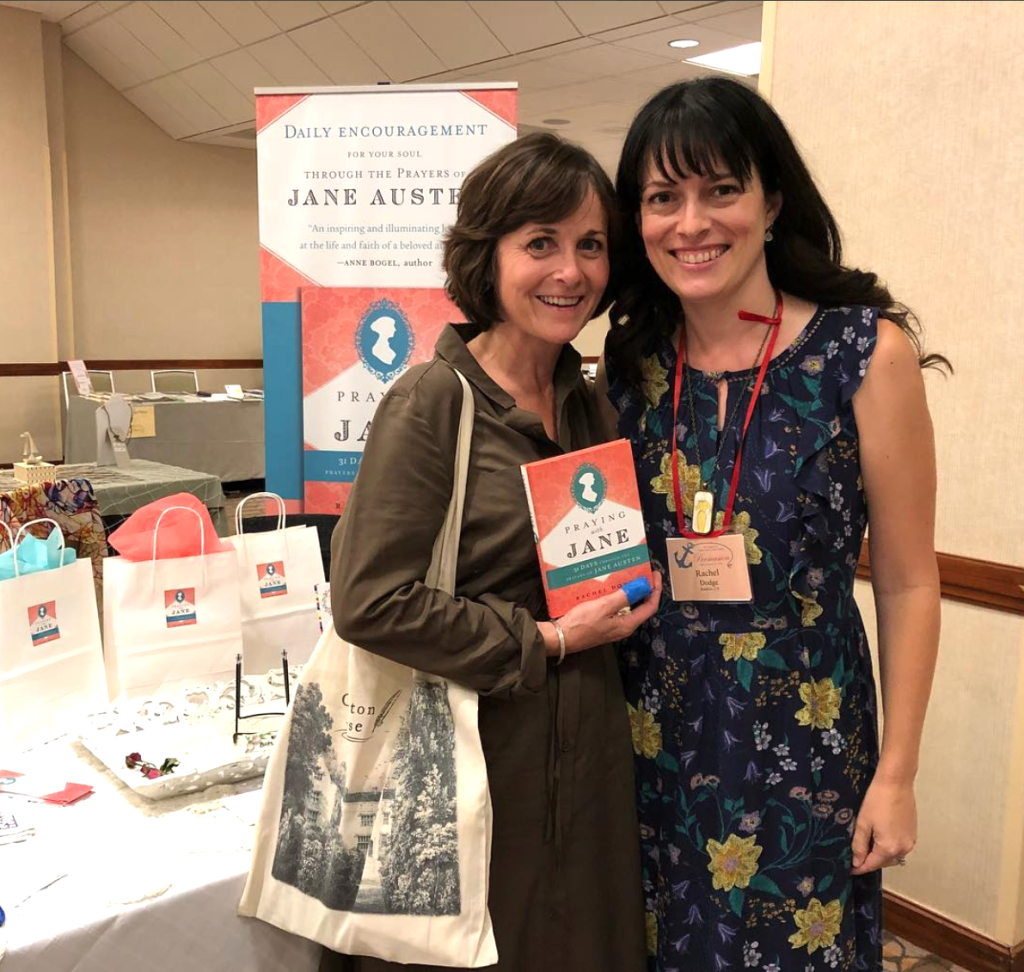
Amanda Root and Rachel Dodge, Kansas City AGM.
Audiobook Description
In this 31-day devotional, you will get an in-depth look at Jane Austen’s prayers. Her faith comes to life through her exquisite prayers, touching biographical anecdotes, intimate excerpts from family letters and memoirs, illuminating scenes from her novels, and spiritual insights. Austen’s prayers read by British film and voice actress Amanda Root; text read by author Rachel Dodge.
You can listen to a sample of Jane Austen’s Prayer 1 here, read by actress Amanda Root:
Proceeds will be donated to the Jane Austen House Museum.
Amanda Root Bio
Amanda Root is an English stage and screen actress and a former voice actress for children’s programs. Root is known for her starring role in the 1995 BBC film adaptation of Jane Austen’s Persuasion, her role in the British TV comedy All About Me (2002), as Miranda, alongside Richard Lumsden in 2004, and for voicing Sophie in The BFG (1989). She trained for the stage at Webber Douglas Academy of Dramatic Art. (IMBD Mini Bio)
This week I’d like to introduce you to a new book by Helena Kelly called The Worlds of Jane Austen: The Influences and Inspiration Behind the Novels. This book caught my eye, initially, because of its beautiful cover – yes, I admit it! I do judge a book (first) by its cover. But more than that, I was intrigued by the idea that Jane Austen’s novels reveal deeper influences that we might not realize without careful digging.
Austen lived through many historically significant moments, and though Austen doesn’t discuss war or politics or social issues in detail in her novles, Kelly asserts that Austen’s “sharp, observant fiction reveals just how engaged she was with the issues of her time.”
Kelly’s chapter titles include: “The Rectory,” “The Revolution,” “Army and Navy,” “Give a Girl an Education,” “City,” “Countryside,” “Seaside,” and “Empire and Slavery.” Three additional chapters are titled “Legacies,” “Austenmania,” and “Present Day.” Kelly explores the various facets of each topic in detail, providing key examples from Austen’s novels to show the way each influence plays a part in her writing, which is always my favorite part.
The Worlds of Jane Austeninvites readers to see one of Britain’s most beloved authors in a completely new light. Far from the quiet world of country houses and tea parties, Austen lived through revolution, war and major social change, and her sharp, observant fiction reveals just how engaged she was with the issues of her time.
This lively and accessible guide explores the people, politics and places that shaped Austen’s life and work. It features expert insight from bestselling author Helena Kelly alongside over 150 photographs, artworks and illustrations that bring her world vividly to life.
Whether you are discovering Austen for the first time or returning to her novels with fresh eyes, The Worlds of Jane Austen is the perfect companion for curious readers, literature lovers and admirers of classic storytelling.
About the Author
Helena Kelly holds a doctorate in English Literature from Oxford, where she has also taught from time to time and where she is about to return for a visiting scholarship at the Oxford Centre for Life Writing at Wolfson College.
She is the author of The Life and Lies of Charles Dickens (November 2023), already praised by Kirkus Reviews as ‘a literary bio that deftly untangles truth from untruth’, and of Jane Austen, the Secret Radical (2016), hailed as ‘a sublime piece of literary detective work’ (The Observer) and ‘an interpretive coup that is dazzling and dizzying’ (The New Yorker).
Additional Influences
I enjoyed this book tremendously and learned a great deal. I was familiar with some of it, but there were many new areas of information for me to delve into. I do have a few additional area of inspiration and influence I would be curious to investigate further as well.
In Kelly’s words, “Book could teach you almost anything.” I would have appreciated an additional chapter or section devoted to the books Austen read in the chapter about education for women and Austen’s personal education. After all, we are what we read. Our opinions and convictions are a compilation of our influences, and many of those ideas for Austen came through extensive reading. Austen read widely and deeply, even memorizing great portions of text, secular and religious alike, and her reading interests surely influenced her writing and the ideology behind her novels.
In a similar vein, I would have also enjoyed learning about the influence of religion on her writing. Austen had a brilliant mind and read Fordyce’s Sermons, The Book of Common Prayer, William Cowper, and other religious writers and materials during her lifetime. She was not silent about the role of the clergy in her novels, nor was she ignorant of the issues facing the Church of England during her lifetime. As a clergyman’s daughter, her daily life was intertwined with the Church, and it would be fascinating to read more scholarly information about that particular influence in her life.
However, exploring Austen’s influences could become a lifelong project, so I applaud Kelly’s careful research on the topics she chose and her excellent focus on the texts of Austen’s novels. Seeing the “proof” on the page is always the best part! Seeing Austen’s influences play out on the pages of her novels was splendid. Austen tells us so much, even when she’s not telling us much.
New Releases for Austen’s 250th
This is yet another incredible book in the great line up of books releasing this year for the 250th celebration of Austen’s life and legacy. The bounty of books knows no bounds this year! If you’d like to read a comprehensive live of new releases for this year, I invite you to visit this wonderful blog resource that I recently found in my searches: Regency Explorer: “Jane Austen 250 – a list of new books scheduled for 2025” by Anna M. Thane.
If you’re like me, you’ll find yourself overjoyed and overwhelmed by the vast list of books Thane put together. It must have taken an immense amount of time and dedication. I plan to reference it as I continue to explore the many new Austen books that have released this year (and some that are coming next year).
The 2025 AGM in Baltimore has come to an end. I was too late in registering for this conference, the largest ever held in the U.S., with over 900 attendees. I did have the pleasure of going to the conference site for several hours on Friday and meeting up with Sarah Emsley, Brenda Cox, and Deborah Barnum. I also visited the emporium, where I purchased books, and the pop up sessions, where one can examine the precious objects that many well recognized attendees brought over from England to show us. Caroline Jane Knight, whose presentation of her life in Chawton Manor was marvelous, brought the serving spoons commissioned by Edward Austen, the creamware plates, two keys from Godmersham Park, and much more. Janice Golder brought a modern reproduction of the quilt made in 1810 by Jane Austen, her sister Cassandra, and her mother. (Image of the reproduction was taken by me at the conference.)
I registered for the streaming sessions, and so partially enjoyed both the onsite experience and the at-home fun of watching the presentations online in my pj’s. Their links will be available to us streamers until February. Whew! I can still catch up on the presentations I missed.
Below are some of the fabulous books I purchased!
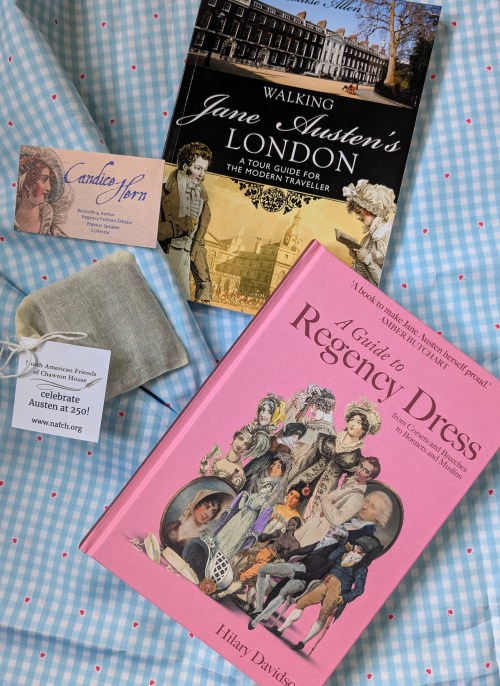
I walked portions of Jane Austen’s London the four times I visited that city. Every day I found a new path, which I at times revisited in subsequent trips. Louise Allen’s book is a treasure, heavily illustrated with maps and images of the buildings during Austen’s era. It’s a book I’ll treasure and will help me fondly reminisce those paths I once walked. This slim book is entitled Walking Jane Austen’s London: A Tour Guide for the Modern Traveller, and is well worth its purchase.
I met Hillary Davidson in a previous AGM and bought her marvelous new book back then: Dress in the Age of Jane Austen: Regency Fashion. I obtained her latest book at this AGM, A Guide to Regency Dress: From Corsets and Breeches to Bonnets and Muslins. It’s a treasure trove, and quite different in format from her other book – more like a reference guide, which makes it easy to look up information, and filled with images that are so helpful! Both aforementioned books are modest in size, and will fit very well in my overflowing room length bookcase.
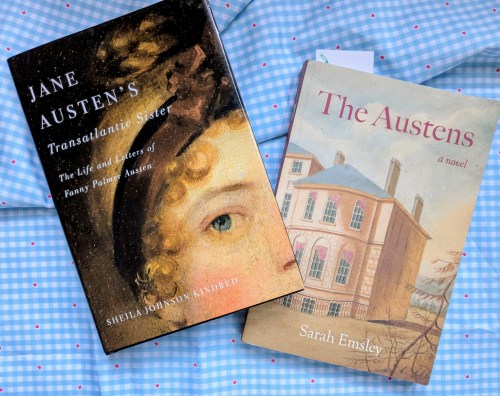
When Sarah Emsley sent me her latest book, The Austens, I didn’t quite get to my review or send her a series of questions for added interest. It turns out that Brenda Cox, who also writes for this blog, had the same plans in mind. So we agreed on a change. At the AGM I purchased Jane Austen’s Transatlantic Sister: The Life and Letters of Fanny Palmer Austen by Sheila Johnson Kindred. Since The Austens deals with Jane’s relationship with the Palmers, I decided to read both books and then write about the relationship between Jane and Fanny with more knowledge. I can’t wait to read the books and compare and contrast them!
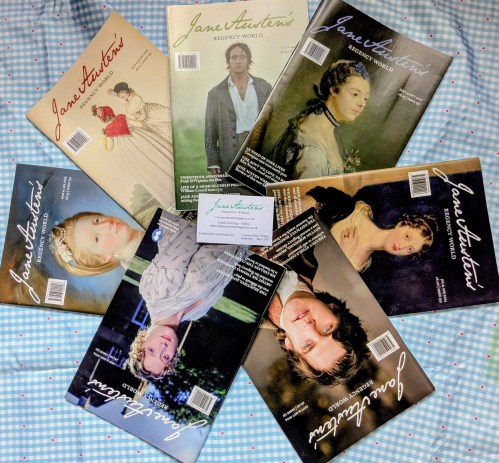
At each AGM I purchase copies of the magazine entitled “Jane Austen’s Regency World”. Published in the UK, they are published every other month. I chose 3 from 2024: July through December. And four from 2025: March through October. Sadly, I missed the Ja/Fe 2025 edition. The latest issue in the Sept/Oct two-month period includes these topics, although there are more than these few: “Of No Fixed Abode: Mrs Austen’s search of a home”; Cover Story: “Georgians and Cats – the feline as a pet is a modern concept”; “Miss Tilney Wore White: The process of bleaching cloth”; and “A Jane Austen Pilgrimage: Reminiscences from a self-organized UK tour”.
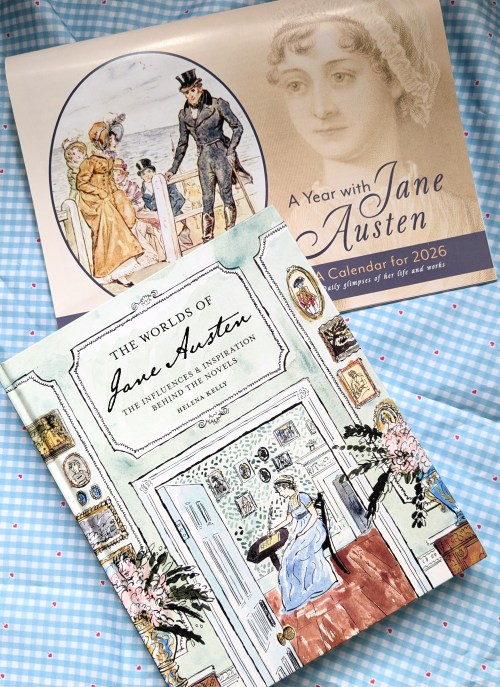
The purchase of “A Year with Jane Austen: A Calendar for 2026” is a first for me (I usually buy dog calendars!) But this one is a treasure. Filled with C.E. Brock illustrations, Austen quotes, and tidbits of information, such as “Did you know that Mr Darcy first proposed to Elizabeth Bennet on May 1 – and that she finally accepted a marriage proposal on October 6?”
The Worlds of Jane Austen: The Influences & Inspiration Behind the Novels, by Helena Kelly is a lovely, lavishly illustrated book. It was a gift from Brenda Cox, who writes wonderful posts for this blog. These are its contents listed by pages: 6-The Rectory; 22-Revolution; 44-Army and Navy; 56-Give a Girl an Education; 80-City; 96-Countryside; 114-Seaside; 128-Empire and Slavery; 148-Legacies; 174-Austenmania; and 188-Present Day.
Lastly, my acquisitions before the AGM:
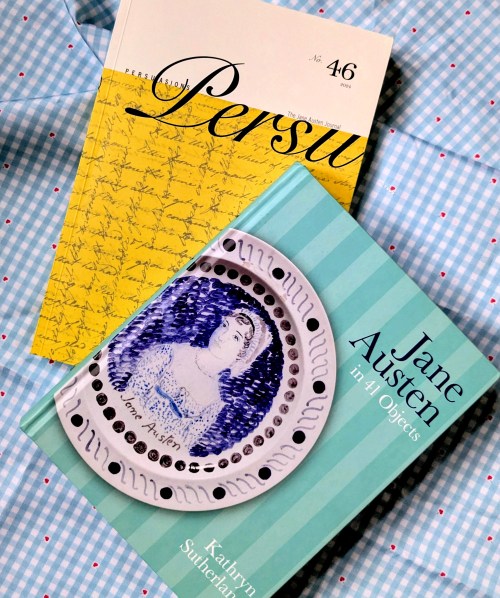
As a livelong member of JASNA, I opted to receive the physical print of “Persuasions: The Jane Austen Journal” printed by the Jane Austen Society of North America. I received the latest edition #47 recently last summer. This volume published the main presentations during “AGM 2024 in Cleveland, OH: Austen Annotated: Jane Austen’s Library, Political, and Cultural Origins.” Persuasions Online 45, No.1 lists the rest of the workshops.
After reading a review this spring of Kathryn Sutherland’s Jane Austen in 41 Objects, I ordered it. I learned that I have personally seen a few in person: Jane Austen’s small watercolour portrait by her sister, Cassandra; some of her letters and a few pages of a manuscript in an exhibit at the Morgan Library in New York City; and the Octagon Room in Bath (in fact I saw most of the buildings she frequented in Bath, including the houses she lived in). I’ve seen additional personal Austen memorabilia at Goucher College’s important Jane Austen Collection.
This has been a special long weekend in Baltimore for Austenites, the largest AGM in the U.S. so far. I was so pleased to have made the time to both come in person and to watch the live streams from home. Let us know in the comment section which books you purchased at the AGM in Baltimore!
Fashionable Goodness: Christianity in Jane Austen's England is now available! By JAW contributor Brenda S. Cox. See Review. Available from Amazon and Jane Austen Books.
Available through December 31st, 2025. Click on image for details, and share this poster with other teachers and students!
The Obituary of Charlotte Collins by Andrew Capes
Click on image to read the story.
Comments
“My idea of good company…is the company of clever, well-informed people, who have a great deal of conversation.” – Jane Austen, Persuasion
Gentle readers: Please feel free to post your comments and continue the conversation! Due to SPAM, we will no longer accept comments on posts after 30 days of publication. In some instances, links will be removed from comments as well.
Administrators and Contributors
Vic Sanborn, founder of this blog, is supported by a team of talented and knowledgeable writers about Jane Austen and the Regency era. They are:
Tony Grant, who now contributes his photos from London and England
Click on their names to enter their own blogs.
In addition, we thank the many experts and authors who frequently contribute their posts and opinions, and who continue to do so freely or at our request.
Click here to enter the page. Topics include Regency fashion, historic foods, Jane Austen societies, British sites, related topics. Click on image.
May we suggest?
Hello, my name is Vic and I live in Maryland, USA. I have adored Jane Austen almost all of my life. I am a proud lifetime member of the Jane Austen Society of North America. This blog is a personal blog written and edited by me and my team. We do not accept any form of cash advertising, sponsorship, or paid topic insertions. However, we do accept and keep books and CDs to review.
If you would like to share a new site, or point out an error, please email us. (Yes, we are fallible. We'll own up to our mistakes and will make the corrections with a polite smile on our faces.) Write us at
Thank you for visiting this blog. Your comments and suggestions are most welcome.
Project Gutenberg: eBook of Stage-coach and Mail in Days of Yore, Volume 2 (of 2), by Charles G. Harper
STAGE-COACH AND MAIL IN DAYS OF YORE: A PICTURESQUE HISTORY
OF THE COACHING AGE, VOL. II, By CHARLES G. HARPER. 1903. Click on this link.











 Jane Austen's World