Feeds:
Posts
Comments

Archive for the ‘Jane Austen Early Life’ Category

It’s well-established that Jane Austen’s family and friends played an important role in her writing life, and we know that she enjoyed a vibrant social life. She was a keen observer of human nature, as evidenced in her letters and novels. It’s intriguing to consider how the people in her life may have inspired her writing.

Austen’s novels reveal how deeply familiar she was with relationships, personalities, and social dynamics. They center on people and relationships, and in each of her novels, she situates her heroine within a specific sphere of her home life, family of origin, and social circle—either in a country “neighborhood” or in a town (or both)—but always within the context of a carefully curated group of friends, family members, and acquaintances.

In a letter to her niece Anna Austen, Jane wrote:

You are now collecting your people delightfully, getting them exactly into such a spot as is the delight of my life. Three or four families in a country village is the very thing to work on, and I hope you will do a great deal more, and make full use of them while they are so very favourably arranged. (Austen, Letter to Anna Austen, 9 Sept. 1814)

It’s clear that Austen truly enjoyed writing about a collection of families in a neighborhood village. In this series, I’ll explore how Austen’s own family, friends, and neighbors, or “village,” may have influenced the way the characters in her novels lived and socialized.

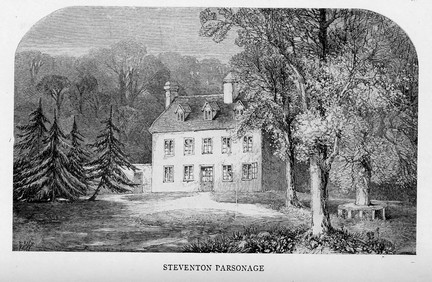
Steventon Rectory, Public Domain, Wikipedia

Rectory Life

Let’s start with Steventon Rectory, where Austen grew up. The people within that household formed her first village and family of origin. From birth through her mid-twenties, Jane lived at the Rectory, a crowded, cheerful parsonage in Hampshire, England, with her mother, father, sister, and brothers, and often several boarders. One can imagine the hustle and bustle of that home, especially when her brothers were home and her father’s pupils were boarding. (Hussain)

The home of Austen’s childhood and adolescence was full of activity and people. In this full, lively environment, young Jane was probably never alone for long, and there was plenty to keep her entertained and occupied. As her nephew James Edward Austen-Leigh later wrote in A Memoir of Jane Austen, Steventon was “the cradle of her genius,” the place where Austen’s imagination first flourished in the midst of a large, affectionate family and busy household. (Austen-Leigh)

The old rectory site where the parsonage once stood.

A Lively Home

Growing up in a home filled with literature and learning must have shaped Jane Austen in countless ways. Rev. Austen encouraged his children to read widely, and the family library contained an array of books—from history and theology to poetry, essays, novels, sermons, and plays (Rev. Austen’s Bookcase).

But the Austen home offered more than books for Austen. It is described as a place of lively conversation, spirited debate, dramatic performances, music, games, and the clamor of daily life (“Jane Austen: A Life”). With brothers returning from school and university, boarding pupils from different families, neighboring clergy and gentry dropping in for dinner, and parish life unfolding all around her, Jane was surrounded by an endless supply of personalities to observe. Long before she began writing Pride and Prejudice or Emma, her bright mind was absorbing the way people spoke, behaved, loved, argued, grieved, and (occasionally) embarrassed themselves.

Regency family eating a meal together.

First Audience

Thus, even though Austen grew up in a small village in the countryside, she did not grow up reading and writing in a vacuum. She was never alone in her creative endeavors, in isolation, writing for herself—and her writing shows it. Her early writing is rife with comedic moments and hilarious, even ridiculous language, and it’s clear she wrote to entertain.

The people around Jane didn’t simply provide material for observation; they also provided her with an audience. Austen had a built-in audience in her home and community during those formative, Steventon years. Her work was enjoyed by her friends and family members, and within that safe, supportive circle, she could play with language and rhetoric, try out various characters and voices, and test her humor and wit on a safe and accessible audience. Best of all, her home audience was enthusiastic and supportive, and it’s clear that her writing talent flourished in that arena. (“Jane Austen: A Life”)

“Volume the First: Facsimile Display.”

Juvenile Dedications

Austen’s Juvenilia provides additional proof that she wrote for her family and friends, as evidenced by the dedications she wrote for her stories.

In “Love and Freindship” (sic), she wrote: “Deceived in Freindship and Betrayed in Love,” which she dedicated to her cousin Eliza de Feuillide (Austen, “Love and Freindship”). In “The Beautifull Cassandra,” Austen dedicated the story to “Miss Austen,” understood to be her older sister, Cassandra, and addressed to her with a playful compliment: “You are a Phoenix. Your taste is refined, your Sentiments are noble, & your Virtues innumerable” (Austen, “The Beautifull Cassandra”). And “Evelyn” was dedicated to “Miss Mary Lloyd” (Austen, “Evelyn”).

As we know, Austen’s early stories weren’t simply private exercises; they were written within the circle of people Jane knew and loved. Writing for that audience provided her with an opportunity to practice her writing skills and observe people’s responses to her writing. She honed those skills to perfection over the years, but much of her early talent started at home.

“Volume the First: Page I.”

Future Novels

During her years at Steventon, Austen began working on the early versions of several novels that would eventually become some of her most beloved works. She was only about nineteen when she began “Elinor and Marianne,” the early version of Sense and Sensibility, and about twenty when she wrote “First Impressions,” which would become Pride and Prejudice. By her early twenties, she had also written “Susan,” the early version of Northanger Abbey.

Before Jane Austen left Steventon at age twenty-five, she had already moved beyond writing entertaining stories for her family and friends and was developing the novels that would eventually launch her literary career. Austen’s early years at Steventon surely helped produced her incredible talent.

Road to St. Nicholas Church, Steventon. Photo @ Rachel Dodge.

Jane Austen’s Village

Austen’s first audience was her inner circle. But the world of Steventon extended beyond the Rectory, especially as Austen grew older. The families who lived nearby formed another kind of community—one that provided Jane with friendships, social gatherings, conversations, and relationships that would remain important throughout her life.

In my next article in this series, we’ll step outside the Rectory and meet some of the neighbors and friends who populated Jane’s Steventon world. From the Digweeds to the Lefroys, these families were more than simply people Jane knew; many became enduring parts of her life. They help give us an even richer glimpse into the world from which Austen drew her understanding of people and relationships.

Rachel Dodge teaches writing classes, speaks at libraries, teas, and conferences, and writes for Jane Austen’s World. She is the bestselling, award-winning author of The Anne of Green Gables DevotionalPraying with Jane: 31 Days Through the Prayers of Jane Austen, the Praying with Jane Audiobook with actress Amanda Root, and other classics-based devotional books. Her newest release, A Christmas Carol Devotional, is now available for pre-order! Visit Rachel online at www.RachelDodge.com.

Works Cited

Austen, Jane. “The Beautifull Cassandra.” Jane Austen’s House, Jane Austen’s House Museum, https://janeaustens.house/teenage-writings/the-beautifull-cassandra/. Accessed 6 Aug. 2026.

Austen, Jane. “Evelyn.” Jane Austen Fiction Manuscripts: Volume the Third, Jane Austen’s Fiction Manuscripts, University of Oxford, https://janeausten.ac.uk/edition/ms/VolThirdHeadNote.html. Accessed 4 Aug. 2026.

Austen, Jane. “Love and Freindship.” Jane Austen: Juvenilia, jausten.it, https://www.jausten.it/jajuv201.html. Accessed 6 Aug. 2026.

Austen, Jane. Letter to Anna Austen, 9 Sept. 1814. Jane Austen’s House, Jane Austen’s House Museum, https://janeaustens.house/articles/nanowrimo/. Accessed 7 Aug. 2026.

Austen-Leigh, James Edward. A Memoir of Jane Austen. 1871. Project Gutenberg, https://www.gutenberg.org/ebooks/17797. Accessed 8 Aug. 2026.

Hussain, Azar. “The Boys at Steventon: Mr. Austen’s Students 1773–1796.” Persuasions On-Line, vol. 44, no. 1, 2023, Jane Austen Society of North America, https://jasna.org/publications-2/persuasions-online/volume-44-no-1/hussain-2/. Accessed 5 Aug. 2026.

“Jane Austen: A Life.” Jane Austen’s House, Jane Austen’s House Museum, https://janeaustens.house/jane-austen/jane-austen-a-life/. Accessed 5 Aug. 2026.

“Rev. Austen’s Bookcase.” Jane Austen’s House, Jane Austen’s House Museum, https://janeaustens.house/object/the-rev-george-austens-bookcase/. Accessed 6 Aug. 2026.

“Volume the First: Front Board.” Jane Austen Fiction Manuscripts, University of Oxford and King’s College London, https://janeausten.ac.uk/facsimile/blvolfirst/Front_(left)_board.html. Accessed 8 Aug. 2026.

“Volume the First: Page I.” Jane Austen Fiction Manuscripts, University of Oxford and King’s College London, https://janeausten.ac.uk/facsimile/blvolfirst/i.html. Accessed 8 Aug. 2026.

Read Full Post »

In honor of Jane Austen’s 250th anniversary year, I’m happy to announce a new audiobook project: The Praying with Jane Audiobook featuring narration by actress Amanda Root and author Rachel Dodge (yours truly). Published by ONE Audiobooks, this title is available on all major audiobook platforms.

Amanda Root is best known by Austen fans around the world for her starring role as Anne Elliot in the acclaimed 1995 BBC adaptation of Jane Austen’s Persuasion. Root claimed audience hearts opposite Ciarán Hinds, as Captain Wentworth, and has held them ever since.

Proceeds from this anniversary project will be donated directly to the Jane Austen House Museum to further Jane Austen’s lasting legacy.

Persuasion film adaptation with Amanda Root (1995).
Amanda Root and Rachel Dodge, Kansas City AGM.

Audiobook Description

In this 31-day devotional, you will get an in-depth look at Jane Austen’s prayers. Her faith comes to life through her exquisite prayers, touching biographical anecdotes, intimate excerpts from family letters and memoirs, illuminating scenes from her novels, and spiritual insights. Austen’s prayers read by British film and voice actress Amanda Root; text read by author Rachel Dodge.

You can listen to a sample of Jane Austen’s Prayer 1 here, read by actress Amanda Root:

Purchase Here

Proceeds will be donated to the Jane Austen House Museum.

Amanda Root Bio

Amanda Root is an English stage and screen actress and a former voice actress for children’s programs. Root is known for her starring role in the 1995 BBC film adaptation of Jane Austen’s Persuasion, her role in the British TV comedy All About Me (2002), as Miranda, alongside Richard Lumsden in 2004, and for voicing Sophie in The BFG (1989). She trained for the stage at Webber Douglas Academy of Dramatic Art. (IMBD Mini Bio)

Rachel Dodge Bio

Rachel Dodge teaches writing classes, speaks at libraries, teas, and conferences, and writes for Jane Austen’s World blog. She is the bestselling, award-winning author of The Anne of Green Gables DevotionalThe Little Women DevotionalThe Secret Garden Devotional, and Praying with Jane: 31 Days Through the Prayers of Jane Austen. She has narrated numerous book titles, including the Praying with Jane Audiobook with actress Amanda Root. A true kindred spirit at heart, Rachel loves books, bonnets, and ballgowns. Visit her online at www.RachelDodge.com.

Read Full Post »

This week I’d like to introduce you to a new book by Helena Kelly called The Worlds of Jane Austen: The Influences and Inspiration Behind the Novels. This book caught my eye, initially, because of its beautiful cover – yes, I admit it! I do judge a book (first) by its cover. But more than that, I was intrigued by the idea that Jane Austen’s novels reveal deeper influences that we might not realize without careful digging.

Austen lived through many historically significant moments, and though Austen doesn’t discuss war or politics or social issues in detail in her novles, Kelly asserts that Austen’s “sharp, observant fiction reveals just how engaged she was with the issues of her time.”

Kelly’s chapter titles include: “The Rectory,” “The Revolution,” “Army and Navy,” “Give a Girl an Education,” “City,” “Countryside,” “Seaside,” and “Empire and Slavery.” Three additional chapters are titled “Legacies,” “Austenmania,” and “Present Day.” Kelly explores the various facets of each topic in detail, providing key examples from Austen’s novels to show the way each influence plays a part in her writing, which is always my favorite part.

ORDER YOUR COPY HERE

About the Book

The Worlds of Jane Austen invites readers to see one of Britain’s most beloved authors in a completely new light. Far from the quiet world of country houses and tea parties, Austen lived through revolution, war and major social change, and her sharp, observant fiction reveals just how engaged she was with the issues of her time. 

This lively and accessible guide explores the people, politics and places that shaped Austen’s life and work. It features expert insight from bestselling author Helena Kelly alongside over 150 photographs, artworks and illustrations that bring her world vividly to life. 

Whether you are discovering Austen for the first time or returning to her novels with fresh eyes, The Worlds of Jane Austen is the perfect companion for curious readers, literature lovers and admirers of classic storytelling.

About the Author

Helena Kelly holds a doctorate in English Literature from Oxford, where she has also taught from time to time and where she is about to return for a visiting scholarship at the Oxford Centre for Life Writing at Wolfson College.

She is the author of The Life and Lies of Charles Dickens (November 2023), already praised by Kirkus Reviews as ‘a literary bio that deftly untangles truth from untruth’, and of Jane Austen, the Secret Radical (2016), hailed as ‘a sublime piece of literary detective work’ (The Observer) and ‘an interpretive coup that is dazzling and dizzying’ (The New Yorker).

Additional Influences

I enjoyed this book tremendously and learned a great deal. I was familiar with some of it, but there were many new areas of information for me to delve into. I do have a few additional area of inspiration and influence I would be curious to investigate further as well.

In Kelly’s words, “Book could teach you almost anything.” I would have appreciated an additional chapter or section devoted to the books Austen read in the chapter about education for women and Austen’s personal education. After all, we are what we read. Our opinions and convictions are a compilation of our influences, and many of those ideas for Austen came through extensive reading. Austen read widely and deeply, even memorizing great portions of text, secular and religious alike, and her reading interests surely influenced her writing and the ideology behind her novels.

In a similar vein, I would have also enjoyed learning about the influence of religion on her writing. Austen had a brilliant mind and read Fordyce’s Sermons, The Book of Common Prayer, William Cowper, and other religious writers and materials during her lifetime. She was not silent about the role of the clergy in her novels, nor was she ignorant of the issues facing the Church of England during her lifetime. As a clergyman’s daughter, her daily life was intertwined with the Church, and it would be fascinating to read more scholarly information about that particular influence in her life.

However, exploring Austen’s influences could become a lifelong project, so I applaud Kelly’s careful research on the topics she chose and her excellent focus on the texts of Austen’s novels. Seeing the “proof” on the page is always the best part! Seeing Austen’s influences play out on the pages of her novels was splendid. Austen tells us so much, even when she’s not telling us much.

New Releases for Austen’s 250th

This is yet another incredible book in the great line up of books releasing this year for the 250th celebration of Austen’s life and legacy. The bounty of books knows no bounds this year! If you’d like to read a comprehensive live of new releases for this year, I invite you to visit this wonderful blog resource that I recently found in my searches: Regency Explorer: “Jane Austen 250 – a list of new books scheduled for 2025” by Anna M. Thane.

If you’re like me, you’ll find yourself overjoyed and overwhelmed by the vast list of books Thane put together. It must have taken an immense amount of time and dedication. I plan to reference it as I continue to explore the many new Austen books that have released this year (and some that are coming next year).


RACHEL DODGE teaches writing classes, speaks at libraries, teas, and conferences, and writes for Jane Austen’s World blog. She is the bestselling, award-winning author of The Anne of Green Gables DevotionalThe Little Women DevotionalThe Secret Garden Devotional, and Praying with Jane: 31 Days Through the Prayers of Jane Austen. A true kindred spirit at heart, Rachel loves books, bonnets, and ballgowns. Visit her online at www.RachelDodge.com.

Read Full Post »

The new BBC miniseries “Miss Austen”, based on Gill Hornby’s novel of the same name, is currently the focus of much attention worldwide. The series aired in the UK in February and comes to PBS this May. Some of you have maybe already seen the show, depending on where you live, but for those who are waiting for it to air, I am here to say this:

Read the book while you wait!

You won’t regret it. In anticipation of the show, I decided to read Miss Austen by Gill Hornby, fully expecting to dislike it (I’m very picky). But I’m here to report that I loved it! I actually finished it in two days because I could not put it down (which is not easy as a writer with a busy household of teens). The story flows at a slower pace, but Hornby’s style–and the whole world she created–pulled me in and kept me engaged from start to finish.

In the book, an older Cassandra searches for a packet of Jane’s letters that she does not want anyone to ever see or read. As she finds and reads the various letters, we travel back through her memories to visit her younger self. I found myself completely immersed in the real (and imagined) details about Cassandra’s relationship with Tom Fowle (a former pupil of Reverend Austen), the Fowle family, and the Lloyd family.

Overall, the book does tell a sad story because it deals with a fictional retelling of Cassandra’s real-life story, her heartbreaks, her deep affection for her beloved family (many of whom she outlived), the Austens’ move to Bath, Reverend Austen’s death, the Austen women and their search for stability after his death, and Cassandra’s devotion and loyalty to Jane. However, there are many endearing and uplifting themes as well. The writing itself is exquisite.

While Hornby of course employs creative license as a novelist, I was also impressed by the copious amounts of research she must have done to write this book. Though fictional, it acts as a poignant biography of Jane’s sister and best friend. I felt as though I understood Cassandra, and had a deeper understanding of her protectiveness over Jane, by the end of the book. Hornby’s perspective on Jane is intriguing, and her (entirely fictional) character Henry Hobday adds depth to Cassandra’s story.

For those of you that read Miss Austen when it released in 2020, you might enjoy a reread. For those who have never read it, it’s a wonderful way to prepare yourself for the show. And even if you’ve already watched the show, you might like to read it and compare the two.

Book Description

England, 1840. Two decades after the death of her beloved sister, Jane, Cassandra Austen returns to the village of Kintbury and the home of her family friends, the Fowles. In a dusty corner of the vicarage, there is a cache of Jane’s letters that Cassandra is desperate to find. Dodging her hostess and a meddlesome housemaid, Cassandra eventually hunts down the letters and confronts the secrets they hold, secrets not only about Jane but about Cassandra herself. Will Cassandra bare the most private details of her life to the world, or commit her sister’s legacy to the flames?

Moving back and forth between the vicarage and Cassandra’s vibrant memories of her years with Jane, interwoven with Jane’s brilliantly reimagined lost letters, Miss Austen is the untold story of the most important person in Jane’s life. With extraordinary empathy, emotional complexity, and wit, Gill Hornby finally gives Cassandra her due, bringing to life a woman as captivating as any Austen heroine.

(The collection of cover art included in this article is from various editions sold worldwide.)

About the Author

Gill Hornby is the author of Miss Austen, The Hive, and All Together Now, as well as The Story of Jane Austen, a biography of Austen for young readers. Her most recent novel is Godermsham Park, also available from Pegasus Books. She lives in Kintbury, England, with her husband and their four children.

About the Show

Miss Austen takes an historic literary mystery – the notorious burning of Jane Austen’s letters by her sister Cassandra – and reimagines it as a fascinating, witty, and heart-breaking story of sisterly love, while creating in Cassandra a character as captivating as any Austen heroine.

Based on Gill Hornby’s best-selling novel, this period drama brings a fresh and intimate perspective to the Austen sisters’ lives — their joys, heartaches, and the passions that shaped Jane’s iconic novels.

Keeley Hawes (The Durrells in Corfu, Bodyguard, Line of Duty) as the loyal and loving Cassandra leads an ensemble cast that includes Rose Leslie (Game of Thrones, Downton Abbey) as family friend Isabella Fowle, Patsy Ferran (Living) as young Jane Austen, and Synnøve Karlsen (Bodies) as young Cassy.

PBS Episode Schedule

Premieres: Sunday, May 4, 2025, at 9/8c
Episode 2: Sunday, May 11, 9/8c
Episode 3: Sunday, May 18, 9/8c
Episode 4: Sunday, May 18, 10/9c

Miss Austen, Dutiful Daughter and Sister

I cannot wait to watch the show soon, and I hope to come back to discuss it later this year, but in the meantime, I enjoyed the book immensely. I usually only review nonfiction books here, but I felt that a novel of such high caliber warranted a thorough review, especially in light of the upcoming show. Here’s to celebrating Jane Austen’s 250th year and to enjoying her world more fully!


RACHEL DODGE teaches college English classes, speaks at libraries, teas, and conferences, and writes for Jane Austen’s World blog. She is the bestselling, award-winning author of The Anne of Green Gables DevotionalThe Little Women DevotionalThe Secret Garden Devotional, and Praying with Jane: 31 Days Through the Prayers of Jane Austen. A true kindred spirit at heart, Rachel loves books, bonnets, and ballgowns. Visit her online at www.RachelDodge.com.

Read Full Post »

As we enjoy the crisp air of autumn, let’s take a tour of October in Jane Austen’s World! We’ll look at her life and times through the lens of her letters, novels, and personal interests and see what we can learn about Regency life in the month of October.

If you’re just jumping on the bus, you can find previous articles in the “A Year in Jane Austen’s World” series here: JanuaryFebruaryMarchAprilMayJuneJuly, August, and September.

First off, let’s see what Jane Austen’s beautiful Hampshire countryside looks like in October. Big changes occur as the month continues, which means the lush green of summer turns to the yellow, gold, and ruby colors of fall. Here is a stunning photo of Chawton House Gardens:

Chawton House in October: Photo @ChawtonHouse.

October in Hampshire

October in Jane Austen’s Hampshire brings a total change of atmosphere. The leaves turn, and the weather cools and crisps, just like the apples in the orchard at Chawton House. As is our tradition, I’ve collected a few snippets from Austen’s letters regarding the season change, weather, and gardens/orchards:

24 October 1798 (“Bull & George,” Dartford): “My day’s journey has been pleasanter in every respect than I expected. I have been very little crowded and by no means unhappy. Your watchfulness with regard to the weather on our accounts was very kind and very effectual. We had one heavy shower on leaving Sittingbourne, but afterwards the clouds cleared away, and we had a very bright chrystal afternoon.”

27 October 1798 (Steventon): “I understand that there are some grapes left, but I believe not many; they must be gathered as soon as possible, or this rain will entirely rot them.”

24 October 1808 (Castle Square): “We have just had two hampers of apples from Kintbury, and the floor of our little garret is almost covered.”

11 October 1813 (Godmersham Park): “We had thunder and lightning here on Thursday morning, between five and seven; no very bad thunder, but a great deal of lightning. It has given the commencement of a season of wind and rain, and perhaps for the next six weeks we shall not have two dry days together.”

Such detailed descriptions of October! Here now is a current glimpse of Jane Austen’s House Museum and its gardens in October:

Jane Austen’s House in October, Photo: @JaneAustensHouse.

October in Jane Austen’s Letters: Jane’s Writing

While there are other October letters to consider, there is one excerpt that requires our attention first because it pertains to the safekeeping of Austen’s writing!

24 October 1798 (“Bull and George,” Dartford):

  • “I should have begun my letter soon after our arrival, but for a little adventure which prevented me. After we had been here a quarter of an hour it was discovered that my writing and dressing boxes had been by accident put into a chaise which was just packing off as we came in, and were driven away toward Gravesend in their way to the West Indies. No part of my property could have been such a prize before, for in my writing-box was all my worldly wealth, 7l., and my dear Harry’s deputation. Mr. Nottley immediately despatched a man and horse after the chaise, and in half an hour’s time I had the pleasure of being as rich as ever; they were got about two or three miles off.”

Thank goodness her writing box was found (and any money stowed in it). And what a beautiful description: “all my worldly wealth.” Though money and paperwork are important, one wonders if any of her writing might also have been in that box–a letter, a scene, a phrase. That would be treasure indeed.

Regency Era traveling writing desk.

October in Jane Austen’s Letters: A Great Loss

Now we must turn our main focus to Austen’s letters dating from October 1808. For those of us who take a personal interest in Jane Austen’s life and family, this is the month when Elizabeth Austen, Edward’s darling wife, died (10 October 1808).

Elizabeth Austen nee Bridges (1773-1808) married Edward Austen (Knight) on 27 December 1791, in Goodnestone, Kent, England. They had a large family and were very happily married. She was 35 when she passed and Edward never remarried.

The letters between Jane and Cassandra during that time are particularly tender. Both sisters mourned her death, but as is usual when a family member loses a spouse, they were even more concerned for Edward and his children (Jane’s nieces and nephews). I highly recommend reading the letters in full on your own, but below are several excerpts that share the beautiful manner in which Jane and Cassandra helped to comfort Edward and his children as they grieved the lost of a beloved wife and mother:

13 October (Castle Square):

  • First news of Elizabeth’s death: “My dearest Cassandra,—I have received your letter, and with most melancholy anxiety was it expected, for the sad news reached us last night, but without any particulars. It came in a short letter to Martha from her sister, begun at Steventon and finished in Winchester.”
  • Family Condolences: “We have felt, we do feel, for you all, as you will not need to be told,—for you, for Fanny, for Henry, for Lady Bridges, and for dearest Edward, whose loss and whose sufferings seem to make those of every other person nothing. God be praised that you can say what you do of him: that he has a religious mind to bear him up, and a disposition that will gradually lead him to comfort.”
  • Fanny Knight: “My dear, dear Fanny, I am so thankful that she has you with her! You will be everything to her; you will give her all the consolation that human aid can give. May the Almighty sustain you all, and keep you, my dearest Cassandra, well; but for the present I dare say you are equal to everything.”
  • Update on the boys: “You will know that the poor boys are at Steventon. Perhaps it is best for them, as they will have more means of exercise and amusement there than they could have with us, but I own myself disappointed by the arrangement. I should have loved to have them with me at such a time. I shall write to Edward by this post.”
Patchbox with portrait of Elizabeth Austen, courtesy of Jane Austen’s House.

15 October (Castle Square):

  • Concern for Edward: “Your accounts make us as comfortable as we can expect to be at such a time. Edward’s loss is terrible, and must be felt as such, and these are too early days indeed to think of moderation in grief, either in him or his afflicted daughter, but soon we may hope that our dear Fanny’s sense of duty to that beloved father will rouse her to exertion. For his sake, and as the most acceptable proof of love to the spirit of her departed mother, she will try to be tranquil and resigned. Does she feel you to be a comfort to her, or is she too much overpowered for anything but solitude?”
  • Concern for Lizzy: “Your account of Lizzy is very interesting. Poor child! One must hope the impression will be strong, and yet one’s heart aches for a dejected mind of eight years old.”
  • Mourning clothes for Cassandra: “Your parcel shall set off on Monday, and I hope the shoes will fit; Martha and I both tried them on. I shall send you such of your mourning as I think most likely to be useful, reserving for myself your stockings and half the velvet, in which selfish arrangement I know I am doing what you wish.
  • Mourning clothes for Jane: “I am to be in bombazeen and crape, according to what we are told is universal here, and which agrees with Martha’s previous observation. My mourning, however, will not impoverish me, for by having my velvet pelisse fresh lined and made up, I am sure I shall have no occasion this winter for anything new of that sort. I take my cloak for the lining, and shall send yours on the chance of its doing something of the same for you, though I believe your pelisse is in better repair than mine. One Miss Baker makes my gown and the other my bonnet, which is to be silk covered with crape.”
  • Sisterly Condolences: “That you are forever in our thoughts you will not doubt. I see your mournful party in my mind’s eye under every varying circumstance of the day; and in the evening especially figure to myself its sad gloom: the efforts to talk, the frequent summons to melancholy orders and cares, and poor Edward, restless in misery, going from one room to another, and perhaps not seldom upstairs, to see all that remains of his Elizabeth. Dearest Fanny must now look upon herself as his prime source of comfort, his dearest friend; as the being who is gradually to supply to him, to the extent that is possible, what he has lost. This consideration will elevate and cheer her. Adieu. You cannot write too often, as I said before. We are heartily rejoiced that the poor baby gives you no particular anxiety. Kiss dear Lizzy for us. Tell Fanny that I shall write in a day or two to Miss Sharpe.”
From Beatrice Knight’s article on Regency Mourning. Click HERE to read her article on this topic.

24 October (Castle Square):

  • Edward’s sons arrive: “Edward and George came to us soon after seven on Saturday, very well, but very cold, having by choice travelled on the outside, and with no greatcoat but what Mr. Wise, the coachman, good-naturedly spared them of his, as they sat by his side. They were so much chilled when they arrived, that I was afraid they must have taken cold; but it does not seem at all the case: I never saw them looking better.”
  • Jane’s Affectionate Observations: “They behave extremely well in every respect, showing quite as much feeling as one wishes to see, and on every occasion speaking of their father with the liveliest affection. His letter was read over by each of them yesterday, and with many tears; George sobbed aloud, Edward’s tears do not flow so easily; but as far as I can judge they are both very properly impressed by what has happened. Miss Lloyd, who is a more impartial judge than I can be, is exceedingly pleased with them.”
  • Entertaining the boys: “George is almost a new acquaintance to me, and I find him in a different way as engaging as Edward. We do not want amusement: bilbocatch, at which George is indefatigable, spillikins, paper ships, riddles, conundrums, and cards, with watching the flow and ebb of the river, and now and then a stroll out, keep us well employed; and we mean to avail ourselves of our kind papa’s consideration, by not returning to Winchester till quite the evening of Wednesday.”
  • Church on Sunday: “I hope your sorrowing party were at church yesterday, and have no longer that to dread. Martha was kept at home by a cold, but I went with my two nephews, and I saw Edward was much affected by the sermon, which, indeed, I could have supposed purposely addressed to the afflicted, if the text had not naturally come in the course of Dr. Mant’s observations on the Litany: ‘All that are in danger, necessity, or tribulation,’ was the subject of it.”
  • Sunday walk: “The weather did not allow us afterwards to get farther than the quay, where George was very happy as long as we could stay, flying about from one side to the other, and skipping on board a collier immediately.”
  • Sunday evening: “In the evening we had the Psalms and Lessons, and a sermon at home, to which they were very attentive; but you will not expect to hear that they did not return to conundrums the moment it was over… While I write now, George is most industriously making and naming paper ships, at which he afterwards shoots with horse-chestnuts, brought from Steventon on purpose; and Edward equally intent over the ‘Lake of Killarney,’ twisting himself about in one of our great chairs.”
A game of “Spillikins,” image courtesy of the Jane Austen Centre. Read their article for the rules of the game!

25 October (Castle Square) – contained in the same post:

  • Updates on Edward: “All that you say of Edward is truly comfortable; I began to fear that when the bustle of the first week was over, his spirits might for a time be more depressed; and perhaps one must still expect something of the kind.”
  • Adventures to Northam and Hopeful Plans for Netley: “We had a little water-party yesterday; I and my two nephews went from the Itchen Ferry up to Northam, where we landed, looked into the 74, and walked home, and it was so much enjoyed that I had intended to take them to Netley to-day; the tide is just right for our going immediately after moonshine, but I am afraid there will be rain; if we cannot get so far, however, we may perhaps go round from the ferry to the quay. I had not proposed doing more than cross the Itchen yesterday, but it proved so pleasant, and so much to the satisfaction of all, that when we reached the middle of the stream we agreed to be rowed up the river; both the boys rowed great part of the way, and their questions and remarks, as well as their enjoyment, were very amusing; George’s inquiries were endless, and his eagerness in everything reminds me often of his uncle Henry.”
  • Evening Entertainment: “Our evening was equally agreeable in its way: I introduced speculation, and it was so much approved that we hardly knew how to leave off.”
Site of the Itchen ferry in the 18th C.

October in Jane Austen’s Novels

Sense and Sensibility

  • Private Balls and Parties: “When Marianne was recovered, the schemes of amusement at home and abroad, which Sir John had been previously forming, were put into execution. The private balls at the park then began; and parties on the water were made and accomplished as often as a showery October would allow.”
  • Colonel Brandon’s Fateful Letter: “The first news that reached me of her [little Eliza] came in a letter from herself, last October. It was forwarded to me from Delaford, and I received it on the very morning of our intended party to Whitwell; and this was the reason of my leaving Barton so suddenly, which I am sure must at the time have appeared strange to every body, and which I believe gave offence to some. Little did Mr. Willoughby imagine, I suppose, when his looks censured me for incivility in breaking up the party, that I was called away to the relief of one whom he had made poor and miserable; but had he known it, what would it have availed? Would he have been less gay or less happy in the smiles of your sister? No, he had already done that, which no man who can feel for another would do. He had left the girl whose youth and innocence he had seduced, in a situation of the utmost distress, with no creditable home, no help, no friends, ignorant of his address! He had left her, promising to return; he neither returned, nor wrote, nor relieved her.”
Alan Rickman as Colonel Brandon, Sense and Sensibility (1995).

Pride and Prejudice

  • Mr. Collins Writes to Mr. Bennet: Excerpts from letter, from “Hunsford, near Westerham, Kent, 15th October,” read as follows:

    “The disagreement subsisting between yourself and my late honoured father always gave me much uneasiness; and, since I have had the misfortune to lose him, I have frequently wished to heal the breach: but, for some time, I was kept back by my own doubts, fearing lest it might seem disrespectful to his memory for me to be on good terms with anyone with whom it had always pleased him to be at variance… As a clergyman, moreover, I feel it my duty to promote and establish the blessing of peace in all families within the reach of my influence…

    “If you should have no objection to receive me into your house, I propose myself the satisfaction of waiting on you and your family, Monday, November 18th, by four o’clock, and shall probably trespass on your hospitality till the Saturday se’nnight following, which I can do without any inconvenience, as Lady Catherine is far from objecting to my occasional absence on a Sunday, provided that some other clergyman is engaged to do the duty of the day.”
David Bamber as Mr. Collins, Pride and Prejudice 1995.

Mansfield Park

  • Tom Bertram on Hunting: “We have just been trying, by way of doing something, and amusing my mother, just within the last week, to get up a few scenes, a mere trifle. We have had such incessant rains almost since October began, that we have been nearly confined to the house for days together. I have hardly taken out a gun since the 3rd. Tolerable sport the first three days, but there has been no attempting anything since.”
  • Mr. Crawford on Fanny: “You see her every day, and therefore do not notice it; but I assure you she is quite a different creature from what she was in the autumn. She was then merely a quiet, modest, not plain-looking girl, but she is now absolutely pretty. I used to think she had neither complexion nor countenance; but in that soft skin of hers, so frequently tinged with a blush as it was yesterday, there is decided beauty; and from what I observed of her eyes and mouth, I do not despair of their being capable of expression enough when she has anything to express. And then, her air, her manner, her tout ensemble, is so indescribably improved! She must be grown two inches, at least, since October.”
  • Miss Crawford’s Response: “Phoo! phoo! This is only because there were no tall women to compare her with, and because she has got a new gown, and you never saw her so well dressed before. She is just what she was in October, believe me. The truth is, that she was the only girl in company for you to notice, and you must have a somebody.”
Fanny Price refusing Henry Crawford.

Emma

  • Emma Longs for Isabella’s Christmas Visit: “[Emma’s] sister, though comparatively but little removed by matrimony, being settled in London, only sixteen miles off, was much beyond her daily reach; and many a long October and November evening must be struggled through at Hartfield, before Christmas brought the next visit from Isabella and her husband, and their little children, to fill the house, and give her pleasant society again.”
  • Mrs. Weston on Mr. Frank Churchill and Jane Fairfax: “‘You may well be amazed,’ returned Mrs. Weston, still averting her eyes, and talking on with eagerness, that Emma might have time to recover— ‘You may well be amazed. But it is even so. There has been a solemn engagement between them ever since October—formed at Weymouth, and kept a secret from every body. Not a creature knowing it but themselves—neither the Campbells, nor her family, nor his.—It is so wonderful, that though perfectly convinced of the fact, it is yet almost incredible to myself. I can hardly believe it.—I thought I knew him.'”
  • Mr. and Mrs. Weston’s Pain: “Engaged since October,—secretly engaged.—It has hurt me, Emma, very much. It has hurt his father equally. Some part of his conduct we cannot excuse.”
  • Emma and Mr. Knightley get married in October:
    • “Before the end of September, Emma attended Harriet to church, and saw her hand bestowed on Robert Martin…”
    • “The Mr. Churchills were also in town; and they were only waiting for November. The intermediate month was the one fixed on, as far as they dared, by Emma and Mr. Knightley. They had determined that their marriage ought to be concluded while John and Isabella were still at Hartfield, to allow them the fortnight’s absence in a tour to the seaside, which was the plan.”
    • “But Mr. John Knightley must be in London again by the end of the first week in November.”
    • “[Emma] was able to fix her wedding-day—and Mr. Elton was called on, within a month from the marriage of Mr. and Mrs. Robert Martin, to join the hands of Mr. Knightley and Miss Woodhouse.”
Gwyneth Paltrow as Emma Woodhouse, Emma 2009.

October Dates of Importance

This brings us now to several important October dates relating to Jane and her family:

Family News:

7 October 1767: Edward Austen born at Deane.

25 October 1804: Austen family returns to Bath and lives at 3 Green Park Buildings East.

October 1806: Austen women move to Southampton to live with Francis Austen and wife Mary.

14 October 1812: Edward Austen officially adopts “Knight” as surname.

4 October 1815: Austen travels to London and stays two months to nurse Henry during his illness.

Historic Dates:

19 October 1781: Major British defeat at the Battle of Yorktown, marking the end of the fighting during the American Revolutionary War.

16 October 1793: Marie Antoinette executed in France.

1 October 1801: Truce between Britain and France.

21 October 1805: Nelson defeats French-Spanish fleet at the Battle of Trafalgar.

Writing:

October 1796: Austen begins writing “First Impressions” (later revised as Pride and Prejudice).

30 October 1811: Sense and Sensibility published “By a Lady.”

Sorrows:

10 October 1808: Elizabeth Austen (Edward’s wife) dies after eleventh childbirth.

Battle of Trafalgar.

October

As we round the corner into the last few months of the year, it’s fascinating to find so many interesting tidbits each month in Jane Austen’s letters, novels, and life. Next month, we’ll take a look at November in Jane Austen’s World!


RACHEL DODGE teaches college English classes, gives talks at libraries, teas, and book clubs, and writes for Jane Austen’s World blog. She is the bestselling author of The Little Women DevotionalThe Anne of Green Gables Devotional and Praying with Jane: 31 Days Through the Prayers of Jane Austen. Now Available: The Secret Garden Devotional! You can visit Rachel online at www.RachelDodge.com.

Read Full Post »

Older Posts »