Feeds:
Posts
Comments

Archive for the ‘Jane Austen’s Influences’ Category

Austen’s first inner circle was found with her family at home, at the Rectory in Steventon (see previous article). But the families who lived nearby in her immediate neighborhood and beyond, formed another kind of community—especially as she grew older. She was surrounded by friendships that became a meaningful part of her life, well into adulthood.

We know Austen dearly loved to “collect” people together in her novels and arrange them in a specific way within a specific location. She called it the “delight” of her life. In a letter to Anna Austen, she said, “Three or four families in a country village is the very thing to work on, and I hope you will do a great deal more, and make full use of them while they are so very favourably arranged. (Austen, Letter to Anna Austen, 9 Sept. 1814)

It’s intriguing to consider the “three or four families” Austen enjoyed mingling with in her everyday life. Let’s find out a bit more about the people in Austen’s personal “village,” and consider how they might have inspired her writing.

Thomas Rowlandson drawing of an afternoon tea visit
Afternoon tea, Thomas Rowlandson. Image in the public domain.

Steventon Neighbors

During the Steventon years, the Austens enjoyed a wide social circle in the Steventon and Deane parishes and the surrounding areas. Jane’s world extended well beyond the rectory as she grew older, and it included family friends, neighbors, local clergy and gentry, and several lifelong companions.

These main families included in this article are the Digweed family, the Harwood family, the Lefroy family, the Lloyd family, the Bigg-Wither family, and the Fowle family. There were many others, but these are some of the families that played a role in the Austen family life and home as Jane was growing up. Many of the children of these families remained friends of hers well into adulthood.

Steventon Rectory. Image Wikimedia Commons
Steventon Rectory. Image: Wikimedia Commons.

Digweed Family (Steventon Manor)

The Digweeds were the Austens’ nearest genteel neighbours during Jane’s Steventon years. They rented Steventon Manor, directly across the lane from the rectory and church, from Thomas Knight and later from his heir, Jane’s brother Edward Austen Knight. The family had five sons, John, Harry, James, William, and Francis, who were close in age to several of the Austen children (Le Faye; St Nicholas Church, Steventon).

Their proximity created a long-lasting friendship between the two families. The Austen and Digweed young people shared the joys and obligations of country life, including dinners, balls, card parties, riding, parish concerns, and visits. The Digweeds appear repeatedly in Jane’s correspondence over the years as evidence of the family ties (Le Faye; “Jane Austen’s Friends: The Digweeds”). James Digweed later became the curate at Steventon in 1798, extending the connection between the two families even further (“Portrait Miniatures”; Le Faye).

Three portrait miniatures of the Digweed Family now feature at Jane Austen’s House Museum of Francis William Digweed, James Digweed, and Mary-Susannah Digweed, nee Lyford. They were done in 1811 and are described thus:

Three oval portrait miniatures, painted in watercolour, gouache and bodycolour on ivory. They depict Francis William Digweed, James Digweed, and his wife, Mary-Susannah Lyford. The portraits are mounted in rectangular frames, wood painted black with a decorative hanging device. (“Portrait Miniatures”)

“Portrait Miniatures,” Jane Austen’s House.

Harwood Family (Deane House)

Deane House, only a short distance from Steventon, was home to the Harwoods, a well-established landed family whose household formed part of the Austens’ wider local world. Jane knew the family from childhood, and John Harwood appears in her letters in connection with visits, balls, and other gatherings—evidence of the easy social life that existed between the Rectory and Deane House (“John Harwood”).

The Harwoods also illustrate how closely the neighboring families were interconnected. Charles Harwood married Eliza Terry (another neighbor), while Eliza’s sister Jane married Harry Digweed. Such marriages helped bind together the households Jane knew at Deane, Steventon, and Ashe. These intertwined family networks created exactly the kind of “three or four families in a country village” that Austen later recommended to Anna. (Le Faye)

Deane House

Lefroy Family (Ashe Rectory)

Ashe Rectory, only about two miles from Steventon, was home to the Reverend Isaac Peter George Lefroy, his wife Anne, and their family. Anne Lefroy was a poet, hostess, philanthropist, and a cherished friend and formative influence on Jane; they first met when Jane was eleven (Jane Austen’s House, “Room 2”).

The two households met often within the social world of Ashe, which included the Austens, Bigg-Withers, Digweeds, Terrys, and others (Jenkins; Le Faye). During Tom Lefroy’s visit to his aunt and uncle at Ashe in the winter of 1795–96, Jane and Tom apparently danced and flirted (Austen, Letters).

Sadly, Anne Lefroy’s accidental death from a tragic fall from her horse on 16 December 1804 (Jane’s twenty-ninth birthday) was a painful loss to Jane and the Austen family. Jane later commemorated her life in the poem, “To the Memory of Mrs. Lefroy” (“Obituary for Mrs Anne Lefroy”).

Ashe Rectory. Illustration by Ellen Hill. Jane Austen’s House.

Lloyd Family (Deane Parsonage and Ibthorpe)

After the death of the Reverend Noyes Lloyd in 1789, his widow and their daughters, Mary and Martha, rented Deane Parsonage from George Austen. The Lloyds quickly became part of the Austens’ closest circle; Mary later married Jane’s eldest brother, James, while Martha became one of Jane and Cassandra’s most enduring companions (Jane Austen’s House, “Room 3”; “Martha Lloyd”).

Jane’s own description of Martha as a “friend and sister under every circumstance” conveys the depth of that bond (Austen, Letters; Jane Austen’s House, “Room 3”). After Mrs. Lloyd’s death in 1805, Martha joined the Austen women in Bath. She moved with them to Southampton and then to Chawton Cottage in 1809 (Jane Austen’s House, “A Timeline”). Much later, in 1828, she married Jane’s brother Frank, which provided a wonderful continuation of their lifelong friendship (Jane Austen’s House, “Room 3”; “A Timeline”).

Ibthorpe, Photo by Rachel Dodge.

Bigg-Wither Family (Manydown Park)

The Bigg-Withers family of Manydown Park belonged to the landed-gentry circle that welcomed Jane and Cassandra as frequent visitors. Jane was particularly close to the Bigg sisters, Alethea and Elizabeth, and her letters indicate a friendship that included shared reading, plenty of witty commentary, and the delightful intimacies of a long acquaintance with dear friends (Kaplan; Honan).

Manydown is most remembered because, while visiting in December 1802, Jane accepted an offer of marriage from the family’s son and heir, Harris Bigg-Wither, then withdrew her acceptance the following day (Honan; Duckworth). Though a marriage to Harris would have provided material security, Jane could not go through with it (Honan; Jane Austen’s House, “A Timeline”).

18th century engraving of Manydown Park
18th century engraving of Manydown Park. Wikipedia Commons.

Fowle Family (Kintbury)

The Fowle family’s connection to the Austens began in the Steventon rectory school. Tom Fowle, later Cassandra Austen’s fiancé, was a pupil of George Austen, as was his brother Fulwar; the school placed the Fowle family within the Austens’ social circle long before Cassandra’s engagement to Tom (Harris; Hussain, “The Boys”).

Cassandra and Tom’s marriage was delayed because he lacked a living sufficient to support a household (Harris; Jane Austen’s House, “A Timeline”). In 1796, Tom travelled to the Caribbean as private chaplain, but he died of yellow fever at sea in February 1797 before the couple could marry (Harris; Jane Austen’s House, “A Timeline”). Tom’s death shaped Cassandra’s life in many ways, and the Fowles remained connected to the Austens for years (Harris; Jane Austen’s House, “Jane Austen’s Family”). The Fowle family lived at the vicarage in Kintbury, West Berkshire, a setting later reimagined in Gill Hornby’s novel Miss Austen.

Kintbury Vicarage, British Listed Buildings.

More to Learn

This is only a brief snapshot of a handful of the families Austen socialized with when she lived at Steventon. One could spend endless amounts of time learning more about these wonderful families and their connection to the Austens. I highly recommend reading: Deborah Kaplan’s article, “Jane Austen and the Bigg Sisters,” as well as the other Persuasions articles listed in the Works Cited below.

Though Austen’s novels were not autobiographical, it’s intriguing to consider how the families she knew and loved might have influenced the way Austen arranged her characters. It’s clear from her own life that Austen enjoyed a bustling household and a busy social life, with plenty of friends and neighbors in the surrounding area.


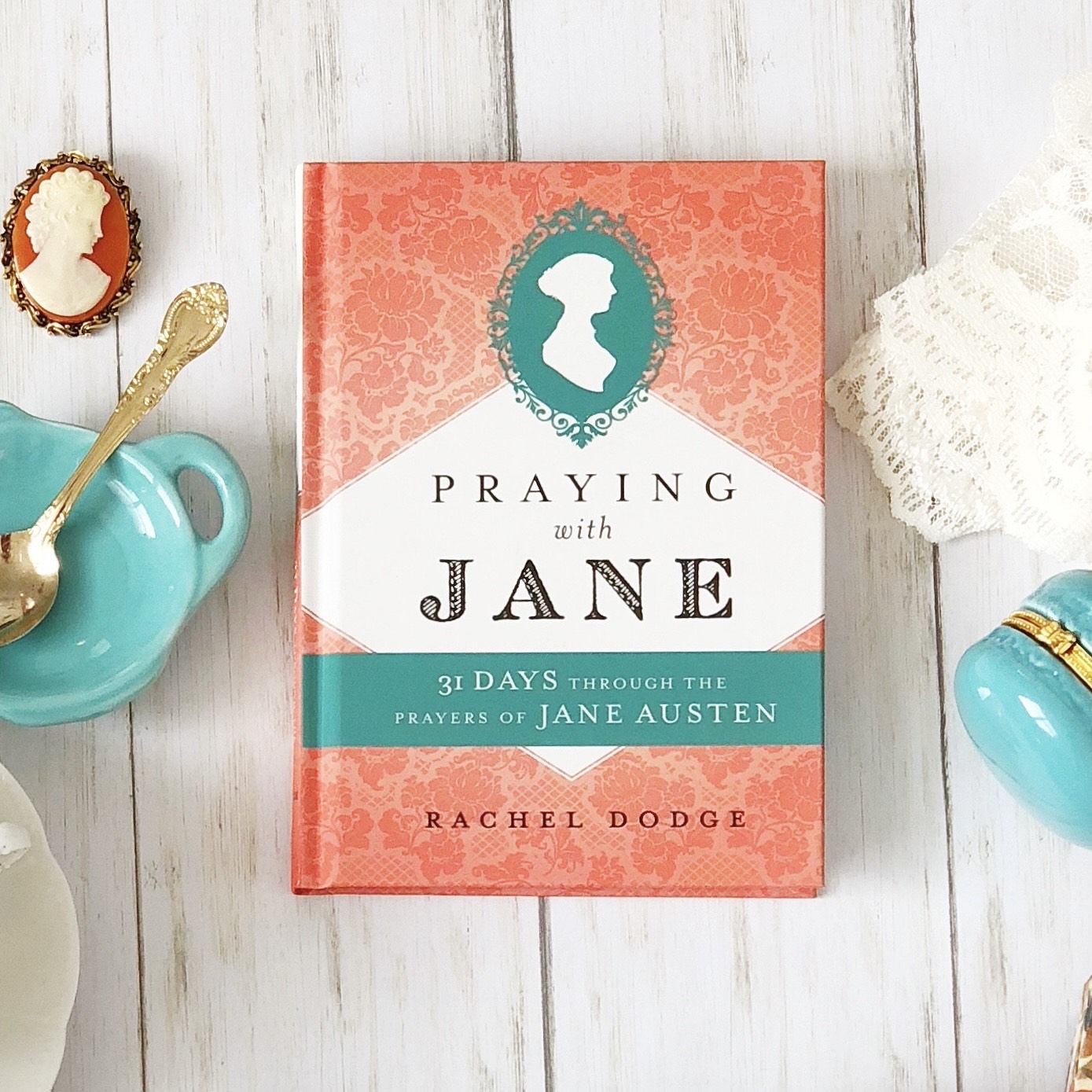
Rachel Dodge teaches writing classes, speaks at libraries, teas, and conferences, and writes for Jane Austen’s World. She is the bestselling, award-winning author of The Anne of Green Gables Devotional, Praying with Jane: 31 Days Through the Prayers of Jane Austen, the Praying with Jane Audiobook with actress Amanda Root, and other classics-based devotional books. Her newest release, A Christmas Carol Devotional, is now available! A true kindred spirit at heart, Rachel loves books, bonnets, and ballgowns. Visit her online at www.RachelDodge.com.

Works Cited

Austen, Jane. Letters of Jane Austen. Various eds., including Brabourne and later selections; see especially letters dated 14–15 Jan. 1796 and those referring to the Bigg and Lloyd families.

Duckworth, Alistair M. “Jane Austen’s Accommodations.” Persuasions, no. 7, Jane Austen Society of North America.

Harris, Jocelyn. “Jane Austen’s Real and Imagined Characters.” Persuasions On-Line, vol. 35, no. 1, 2014, Jane Austen Society of North America, jasna.org/persuasions/on-line/vol35no1/harris.html.

Honan, Park. “Jane Austen’s Manydown Proposal.” Persuasions, no. 10, 1988, Jane Austen Society of North America, jasna.org/persuasions/printed/number10/honan.htm.

Hussain, Hafsa. “The Boys at Steventon: Mr. Austen’s Students, 1773–1796.” Persuasions On-Line, vol. 44, no. 1, 2023, Jane Austen Society of North America, jasna.org/assets/Persuasions-On-Line/Vol44-No1/Hussain-2/Hussain_The-Boys-at-Steventon-Mr-Austens-Students.pdf.

Jane Austen’s House. “A Timeline of Jane Austen’s Life and Works.” 23 Oct. 2023, janeaustens.house/jane-austen/timeline/.

Jane Austen’s House. “Jane Austen’s Family.” 7 Jan. 2026, janeaustens.house/jane-austen/family/.

Jane Austen’s House. “Letter from Jane Austen to Cassandra Austen, 14–15 January 1796.” 27 Mar. 2025, janeaustens.house/object/letter-from-jane-austen-to-cassandra-austen-14-15-january-1796/.

Jane Austen’s House. “Obituary for Mrs Anne Lefroy, 21 December 1804.” 27 Mar. 2025, janeaustens.house/object/obituary-for-mrs-anne-lefroy-21-december-1804/.

Jane Austen’s House. “Portrait Miniatures of the Digweed Family.” 26 June 2024, janeaustens.house/object/digweed-family-portrait-miniatures/.

Jane Austen’s House. “Room 2: Mrs Leigh-Perrot, Madam Lefroy, Anne Sharp.” 26 Feb. 2025, janeaustens.house/online-exhibition/obstinate-headstrong-girls/obstinate-headstrong-girls-room-2/.

Jane Austen’s House. “Room 3: Martha Lloyd, Miss Austen and Mrs Austen.” 22 Aug. 2025, janeaustens.house/online-exhibition/obstinate-headstrong-girls/obstinate-headstrong-girls-room-3/.

Jenkins, Jennifer. “The Letters of Mrs Lefroy: Jane Austen’s Beloved Friend.” Persuasions On-Line, Summer 2008, Jane Austen Society of North America, jasna.org/publications-2/book-reviews/summer-2008/the-letters-of-mrs-lefroy-jane-austens-beloved-friend/.

Kaplan, Deborah. “Jane Austen and the Bigg Sisters.” Persuasions, no. 10, 1988, Jane Austen Society of North America, jasna.org/persuasions/printed/number10/kaplan.htm.

Le Faye, Deirdre. “Three or Four Families: Suggestions for New Directions in Biographical Research.” Persuasions On-Line, vol. 30, no. 2, Spring 2010, Jane Austen Society of North America, jasna.org/persuasions/on-line/vol30no2/lefaye.html.

“John Harwood.” Jane Austen’s World, 29 May 2024, janeaustensworld.com/tag/john-harwood/.

“Jane Austen’s Friends: The Digweeds.” Jane Austen Quickstep Travel Guide, 2 Mar. 2025, janeaustenquickstepguide.com/janes-friends-the-digweeds/.

St Nicholas Church, Steventon. “Inside the Church—The Nave.” Steventon Parish, steventonhants.org.uk/snguide/insidechurch.html.


Read Full Post »

It’s well-established that Jane Austen’s family and friends played an important role in her writing life, and we know that she enjoyed a vibrant social life. She was a keen observer of human nature, as evidenced in her letters and novels. It’s intriguing to consider how the people in her life may have inspired her writing.

Austen’s novels reveal how deeply familiar she was with relationships, personalities, and social dynamics. They center on people and relationships, and in each of her novels, she situates her heroine within a specific sphere of her home life, family of origin, and social circle—either in a country “neighborhood” or in a town (or both)—but always within the context of a carefully curated group of friends, family members, and acquaintances.

In a letter to her niece Anna Austen, Jane wrote:

You are now collecting your people delightfully, getting them exactly into such a spot as is the delight of my life. Three or four families in a country village is the very thing to work on, and I hope you will do a great deal more, and make full use of them while they are so very favourably arranged. (Austen, Letter to Anna Austen, 9 Sept. 1814)

It’s clear that Austen truly enjoyed writing about a collection of families in a neighborhood village. In this series, I’ll explore how Austen’s own family, friends, and neighbors, or “village,” may have influenced the way the characters in her novels lived and socialized.

Steventon Rectory, Public Domain, Wikipedia

Rectory Life

Let’s start with Steventon Rectory, where Austen grew up. The people within that household formed her first village and family of origin. From birth through her mid-twenties, Jane lived at the Rectory, a crowded, cheerful parsonage in Hampshire, England, with her mother, father, sister, and brothers, and often several boarders. One can imagine the hustle and bustle of that home, especially when her brothers were home and her father’s pupils were boarding. (Hussain)

The home of Austen’s childhood and adolescence was full of activity and people. In this full, lively environment, young Jane was probably never alone for long, and there was plenty to keep her entertained and occupied. As her nephew James Edward Austen-Leigh later wrote in A Memoir of Jane Austen, Steventon was “the cradle of her genius,” the place where Austen’s imagination first flourished in the midst of a large, affectionate family and busy household. (Austen-Leigh)

The old rectory site where the parsonage once stood.

A Lively Home

Growing up in a home filled with literature and learning must have shaped Jane Austen in countless ways. Rev. Austen encouraged his children to read widely, and the family library contained an array of books—from history and theology to poetry, essays, novels, sermons, and plays (Rev. Austen’s Bookcase).

But the Austen home offered more than books for Austen. It is described as a place of lively conversation, spirited debate, dramatic performances, music, games, and the clamor of daily life (“Jane Austen: A Life”). With brothers returning from school and university, boarding pupils from different families, neighboring clergy and gentry dropping in for dinner, and parish life unfolding all around her, Jane was surrounded by an endless supply of personalities to observe. Long before she began writing Pride and Prejudice or Emma, her bright mind was absorbing the way people spoke, behaved, loved, argued, grieved, and (occasionally) embarrassed themselves.

Regency family eating a meal together.

First Audience

Thus, even though Austen grew up in a small village in the countryside, she did not grow up reading and writing in a vacuum. She was never alone in her creative endeavors, in isolation, writing for herself—and her writing shows it. Her early writing is rife with comedic moments and hilarious, even ridiculous language, and it’s clear she wrote to entertain.

The people around Jane didn’t simply provide material for observation; they also provided her with an audience. Austen had a built-in audience in her home and community during those formative, Steventon years. Her work was enjoyed by her friends and family members, and within that safe, supportive circle, she could play with language and rhetoric, try out various characters and voices, and test her humor and wit on a safe and accessible audience. Best of all, her home audience was enthusiastic and supportive, and it’s clear that her writing talent flourished in that arena. (“Jane Austen: A Life”)

“Volume the First: Facsimile Display.”

Juvenile Dedications

Austen’s Juvenilia provides additional proof that she wrote for her family and friends, as evidenced by the dedications she wrote for her stories.

In “Love and Freindship” (sic), she wrote: “Deceived in Freindship and Betrayed in Love,” which she dedicated to her cousin Eliza de Feuillide (Austen, “Love and Freindship”). In “The Beautifull Cassandra,” Austen dedicated the story to “Miss Austen,” understood to be her older sister, Cassandra, and addressed to her with a playful compliment: “You are a Phoenix. Your taste is refined, your Sentiments are noble, & your Virtues innumerable” (Austen, “The Beautifull Cassandra”). And “Evelyn” was dedicated to “Miss Mary Lloyd” (Austen, “Evelyn”).

As we know, Austen’s early stories weren’t simply private exercises; they were written within the circle of people Jane knew and loved. Writing for that audience provided her with an opportunity to practice her writing skills and observe people’s responses to her writing. She honed those skills to perfection over the years, but much of her early talent started at home.

“Volume the First: Page I.”

Future Novels

During her years at Steventon, Austen began working on the early versions of several novels that would eventually become some of her most beloved works. She was only about nineteen when she began “Elinor and Marianne,” the early version of Sense and Sensibility, and about twenty when she wrote “First Impressions,” which would become Pride and Prejudice. By her early twenties, she had also written “Susan,” the early version of Northanger Abbey.

Before Jane Austen left Steventon at age twenty-five, she had already moved beyond writing entertaining stories for her family and friends and was developing the novels that would eventually launch her literary career. Austen’s early years at Steventon surely helped produced her incredible talent.

Road to St. Nicholas Church, Steventon. Photo @ Rachel Dodge.

Jane Austen’s Village

Austen’s first audience was her inner circle. But the world of Steventon extended beyond the Rectory, especially as Austen grew older. The families who lived nearby formed another kind of community—one that provided Jane with friendships, social gatherings, conversations, and relationships that would remain important throughout her life.

In my next article in this series, we’ll step outside the Rectory and meet some of the neighbors and friends who populated Jane’s Steventon world. From the Digweeds to the Lefroys, these families were more than simply people Jane knew; many became enduring parts of her life. They help give us an even richer glimpse into the world from which Austen drew her understanding of people and relationships.

Rachel Dodge teaches writing classes, speaks at libraries, teas, and conferences, and writes for Jane Austen’s World. She is the bestselling, award-winning author of The Anne of Green Gables Devotional, Praying with Jane: 31 Days Through the Prayers of Jane Austen, the Praying with Jane Audiobook with actress Amanda Root, and other classics-based devotional books. Her newest release, A Christmas Carol Devotional, is now available for pre-order! Visit Rachel online at www.RachelDodge.com.

Works Cited

Austen, Jane. “The Beautifull Cassandra.” Jane Austen’s House, Jane Austen’s House Museum, https://janeaustens.house/teenage-writings/the-beautifull-cassandra/. Accessed 6 Aug. 2026.

Austen, Jane. “Evelyn.” Jane Austen Fiction Manuscripts: Volume the Third, Jane Austen’s Fiction Manuscripts, University of Oxford, https://janeausten.ac.uk/edition/ms/VolThirdHeadNote.html. Accessed 4 Aug. 2026.

Austen, Jane. “Love and Freindship.” Jane Austen: Juvenilia, jausten.it, https://www.jausten.it/jajuv201.html. Accessed 6 Aug. 2026.

Austen, Jane. Letter to Anna Austen, 9 Sept. 1814. Jane Austen’s House, Jane Austen’s House Museum, https://janeaustens.house/articles/nanowrimo/. Accessed 7 Aug. 2026.

Austen-Leigh, James Edward. A Memoir of Jane Austen. 1871. Project Gutenberg, https://www.gutenberg.org/ebooks/17797. Accessed 8 Aug. 2026.

Hussain, Azar. “The Boys at Steventon: Mr. Austen’s Students 1773–1796.” Persuasions On-Line, vol. 44, no. 1, 2023, Jane Austen Society of North America, https://jasna.org/publications-2/persuasions-online/volume-44-no-1/hussain-2/. Accessed 5 Aug. 2026.

“Jane Austen: A Life.” Jane Austen’s House, Jane Austen’s House Museum, https://janeaustens.house/jane-austen/jane-austen-a-life/. Accessed 5 Aug. 2026.

“Rev. Austen’s Bookcase.” Jane Austen’s House, Jane Austen’s House Museum, https://janeaustens.house/object/the-rev-george-austens-bookcase/. Accessed 6 Aug. 2026.

“Volume the First: Front Board.” Jane Austen Fiction Manuscripts, University of Oxford and King’s College London, https://janeausten.ac.uk/facsimile/blvolfirst/Front_(left)_board.html. Accessed 8 Aug. 2026.

“Volume the First: Page I.” Jane Austen Fiction Manuscripts, University of Oxford and King’s College London, https://janeausten.ac.uk/facsimile/blvolfirst/i.html. Accessed 8 Aug. 2026.

Read Full Post »

In honor of Jane Austen’s 250th anniversary year, I’m happy to announce a new audiobook project: The Praying with Jane Audiobook featuring narration by actress Amanda Root and author Rachel Dodge (yours truly). Published by ONE Audiobooks, this title is available on all major audiobook platforms.

Amanda Root is best known by Austen fans around the world for her starring role as Anne Elliot in the acclaimed 1995 BBC adaptation of Jane Austen’s Persuasion. Root claimed audience hearts opposite Ciarán Hinds, as Captain Wentworth, and has held them ever since.

Proceeds from this anniversary project will be donated directly to the Jane Austen House Museum to further Jane Austen’s lasting legacy.

Persuasion film adaptation with Amanda Root (1995).
Amanda Root and Rachel Dodge, Kansas City AGM.

Audiobook Description

In this 31-day devotional, you will get an in-depth look at Jane Austen’s prayers. Her faith comes to life through her exquisite prayers, touching biographical anecdotes, intimate excerpts from family letters and memoirs, illuminating scenes from her novels, and spiritual insights. Austen’s prayers read by British film and voice actress Amanda Root; text read by author Rachel Dodge.

You can listen to a sample of Jane Austen’s Prayer 1 here, read by actress Amanda Root:

Purchase Here

Proceeds will be donated to the Jane Austen House Museum.

Amanda Root Bio

Amanda Root is an English stage and screen actress and a former voice actress for children’s programs. Root is known for her starring role in the 1995 BBC film adaptation of Jane Austen’s Persuasion, her role in the British TV comedy All About Me (2002), as Miranda, alongside Richard Lumsden in 2004, and for voicing Sophie in The BFG (1989). She trained for the stage at Webber Douglas Academy of Dramatic Art. (IMBD Mini Bio)

Rachel Dodge Bio

Rachel Dodge teaches writing classes, speaks at libraries, teas, and conferences, and writes for Jane Austen’s World blog. She is the bestselling, award-winning author of The Anne of Green Gables Devotional, The Little Women Devotional, The Secret Garden Devotional, and Praying with Jane: 31 Days Through the Prayers of Jane Austen. She has narrated numerous book titles, including the Praying with Jane Audiobook with actress Amanda Root. A true kindred spirit at heart, Rachel loves books, bonnets, and ballgowns. Visit her online at www.RachelDodge.com.

Read Full Post »

This week I’d like to introduce you to a new book by Helena Kelly called The Worlds of Jane Austen: The Influences and Inspiration Behind the Novels. This book caught my eye, initially, because of its beautiful cover – yes, I admit it! I do judge a book (first) by its cover. But more than that, I was intrigued by the idea that Jane Austen’s novels reveal deeper influences that we might not realize without careful digging.

Austen lived through many historically significant moments, and though Austen doesn’t discuss war or politics or social issues in detail in her novles, Kelly asserts that Austen’s “sharp, observant fiction reveals just how engaged she was with the issues of her time.”

Kelly’s chapter titles include: “The Rectory,” “The Revolution,” “Army and Navy,” “Give a Girl an Education,” “City,” “Countryside,” “Seaside,” and “Empire and Slavery.” Three additional chapters are titled “Legacies,” “Austenmania,” and “Present Day.” Kelly explores the various facets of each topic in detail, providing key examples from Austen’s novels to show the way each influence plays a part in her writing, which is always my favorite part.

ORDER YOUR COPY HERE

About the Book

The Worlds of Jane Austen invites readers to see one of Britain’s most beloved authors in a completely new light. Far from the quiet world of country houses and tea parties, Austen lived through revolution, war and major social change, and her sharp, observant fiction reveals just how engaged she was with the issues of her time. 

This lively and accessible guide explores the people, politics and places that shaped Austen’s life and work. It features expert insight from bestselling author Helena Kelly alongside over 150 photographs, artworks and illustrations that bring her world vividly to life. 

Whether you are discovering Austen for the first time or returning to her novels with fresh eyes, The Worlds of Jane Austen is the perfect companion for curious readers, literature lovers and admirers of classic storytelling.

About the Author

Helena Kelly holds a doctorate in English Literature from Oxford, where she has also taught from time to time and where she is about to return for a visiting scholarship at the Oxford Centre for Life Writing at Wolfson College.

She is the author of The Life and Lies of Charles Dickens (November 2023), already praised by Kirkus Reviews as ‘a literary bio that deftly untangles truth from untruth’, and of Jane Austen, the Secret Radical (2016), hailed as ‘a sublime piece of literary detective work’ (The Observer) and ‘an interpretive coup that is dazzling and dizzying’ (The New Yorker).

Additional Influences

I enjoyed this book tremendously and learned a great deal. I was familiar with some of it, but there were many new areas of information for me to delve into. I do have a few additional area of inspiration and influence I would be curious to investigate further as well.

In Kelly’s words, “Book could teach you almost anything.” I would have appreciated an additional chapter or section devoted to the books Austen read in the chapter about education for women and Austen’s personal education. After all, we are what we read. Our opinions and convictions are a compilation of our influences, and many of those ideas for Austen came through extensive reading. Austen read widely and deeply, even memorizing great portions of text, secular and religious alike, and her reading interests surely influenced her writing and the ideology behind her novels.

In a similar vein, I would have also enjoyed learning about the influence of religion on her writing. Austen had a brilliant mind and read Fordyce’s Sermons, The Book of Common Prayer, William Cowper, and other religious writers and materials during her lifetime. She was not silent about the role of the clergy in her novels, nor was she ignorant of the issues facing the Church of England during her lifetime. As a clergyman’s daughter, her daily life was intertwined with the Church, and it would be fascinating to read more scholarly information about that particular influence in her life.

However, exploring Austen’s influences could become a lifelong project, so I applaud Kelly’s careful research on the topics she chose and her excellent focus on the texts of Austen’s novels. Seeing the “proof” on the page is always the best part! Seeing Austen’s influences play out on the pages of her novels was splendid. Austen tells us so much, even when she’s not telling us much.

New Releases for Austen’s 250th

This is yet another incredible book in the great line up of books releasing this year for the 250th celebration of Austen’s life and legacy. The bounty of books knows no bounds this year! If you’d like to read a comprehensive live of new releases for this year, I invite you to visit this wonderful blog resource that I recently found in my searches: Regency Explorer: “Jane Austen 250 – a list of new books scheduled for 2025” by Anna M. Thane.

If you’re like me, you’ll find yourself overjoyed and overwhelmed by the vast list of books Thane put together. It must have taken an immense amount of time and dedication. I plan to reference it as I continue to explore the many new Austen books that have released this year (and some that are coming next year).


RACHEL DODGE teaches writing classes, speaks at libraries, teas, and conferences, and writes for Jane Austen’s World blog. She is the bestselling, award-winning author of The Anne of Green Gables Devotional, The Little Women Devotional, The Secret Garden Devotional, and Praying with Jane: 31 Days Through the Prayers of Jane Austen. A true kindred spirit at heart, Rachel loves books, bonnets, and ballgowns. Visit her online at www.RachelDodge.com.

Read Full Post »

One of the most beautiful new books available for Jane Austen fans this year is the Jane Austen: Visual Encyclopedia by French authors Claire Saim and Gwen Giret. With sumptuous artwork throughout and gorgeous illustrations by Sophie Koechlin, this is one of the most extensive catalogs of the Jane Austen fandom I’ve seen in recent years.

It’s a showstopper and conversation-starter that you’ll want to keep on your coffee table indefinitely. While the sticker price is a bit steep (currently on sale on Amazon), this beautiful book is an investment many Jane Austen fans and book collectors will want to make. 

Available Now
Order HERE

Book Review

As I explored this gorgeous new collectible book, I felt as though I was immersed in the entire world of Austen’s life, novels, and film adaptations. It’s a rich compilation of all-things-Austen for the dedicated Austen fan. It’s a one-stop book for everything you could ever hope to know about Austen, and it’s rare to see so many photos, articles, and illustrations in one place. It is not a scholarly book or a research tool, as it sticks more to the more popular aspects of Austen’s legacy, but it is delightful all the same.

Most of all, this book provides an expansive introduction to the enduring popularity of Jane Austen. It makes a wonderful gift for new Austen fans who have recently discovered the films or books. For fans of the film adaptations, it has many interesting tidbits about the various films throughout.

This is the book I would have wanted to read in college or in my grad school years when my Austen addiction truly took hold of me. I read dozens of books about her and watched as many documentaries as I could find during my early “Jane years,” but this has everything in one place.

Lastly, I cannot say enough about the actual look and feel of this book. When it arrived, wrapped in plastic, I was impressed. Once I opened it, it was even more stunning than I expected. It has a nice heavy feel to it, but you can still hold it comfortably in your lap, unlike larger coffee-table books. It’s definitely a book people will pick up if they see it displayed, which is what I’m planning to do!

Book Description

From her beloved family and her romantic escapades to her literary adventures and her enduring popular culture influence, experience the life and legacy of Jane Austen in this full-colour, beautifully illustrated, definitive 312-page encyclopedia.

Bursting with over 200 photographs and illustrations, explore Jane Austen’s work, which consists of six completed novels, two incomplete novels, letters and early writings. From the written word to the screen, from adaptations to secrets and filming locations, this book invites you on a fascinating journey of discovery through Austen’s writing.

Want to walk in the footsteps of Jane Austen, dressing in Regency style or simply enjoying a delicious afternoon tea? This coffee-table book features a beautiful gold-foiled cover and is perfect gift for fans of Jane Austen, her works and their enduring legacy.

Book Outline:

  • PART 1: Jane Austen, a woman of her time
    • Essays on Jane Austen, her family, friends and potential lovers
    • Illustrations and photos from across Jane’s beloved England
    • Researchers discuss Jane Austen’s appearance
  • PART II: The world of Jane Austen
    • A complete chronology of Jane Austen’s work
    • The historical and fictional backgrounds to iconic characters such as Elizabeth Bennet, the Dashwoods, and Mr Darcy
    • Filming locations and production secrets from over 30 adaptations
    • The unfinished novels and how they were eventually published
    • Expert analysis of early works and other writings
  • PART III: Jane Austen’s legacy
    • A comprehensive guide to the best Austen festivals
    • Details on the famous museums and collections dedicated to Jane Austen
    • From postage stamps to Funko-Pops Jane’s indelible influence

About the Authors

This book was lovingly compiled by Claire Saim and Gwen Giret (French authors), Sophie Koechlin (illustrator, French writer, painter & designer, and Hermès scarf designer), Lizzie Dunford (contributor and current Director at Jane Austen’s House Museum), and Helen Moss (translator).

Claire Saim, deeply in love with everything English, from literature to history and culture – including scones, obviously – she has been a devoted Janeite for many years. Always looking around Paris in search of whatever could be a reminder of her dear Great Britain, she shares her adventures on Instagram @jane_austen_france_. Based in France.

Gwen Giret, Jane Austen is a long-time passion of hers which led her to create a blog titled Jane Austen and her world. Her favourite things include travelling through the Pride and Prejudice author’s footsteps, reading all about Captain Wentworth and eating tons of clotted cream. Based in France.

Book Interior

If you’d like to take a tour of the interior of the book, you can watch this lovely video posted by the Jane Austen Centre: 

Celebrating 250 Years of Jane

This book is a true testament to Austen’s timelessness and enduring legacy. Her life and work only become more popular with each passing year. It’s a comfort for many Austen fans to read about her life or sit down with one of her novels and slip into her world.

As we work our way through the many new books released and releasing in honor of Jane Austen’s 250th year, there is so much more to come! We have books to read and new shows to watch. What could be more delightful than a Year of Austen in books and on screen?


RACHEL DODGE teaches college English classes, speaks at libraries, teas, and conferences, and writes for Jane Austen’s World blog. She is the bestselling author of The Anne of Green Gables Devotional, The Little Women Devotional, The Secret Garden Devotional, and Praying with Jane: 31 Days Through the Prayers of Jane Austen. A true kindred spirit at heart, Rachel loves books, bonnets, and ballgowns! You can visit her online at www.RachelDodge.com or on Instagram @KindredSpiritBooks.

Read Full Post »

Older Posts »