This Jane Austen blog brings Jane Austen, her novels, and the Regency Period alive through food, dress, social customs, and other 19th C. historical details related to this topic.
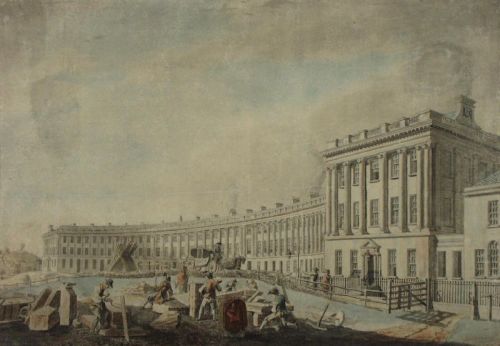
When I visited Bath in the U.K., I made a point of seeing No. 1 Royal Crescent, a fascinating museum whose interior was decorated in the Georgian style of the late 18th century/early 19th century. One had the feeling when entering the house that it may have been inhabited by people Jane Austen might have met in the Pump Room or the Upper Assembly Rooms.
Completion of the Royal Crescent, Thomas Malton, 1769. No. 1 Royal Crescent sits towards the front. Image in the public domain. Wikimedia.
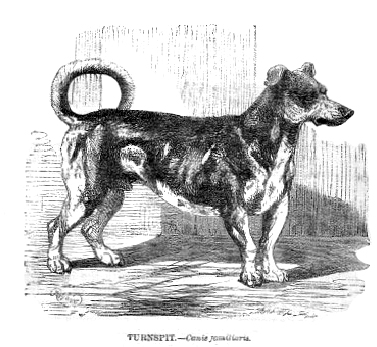
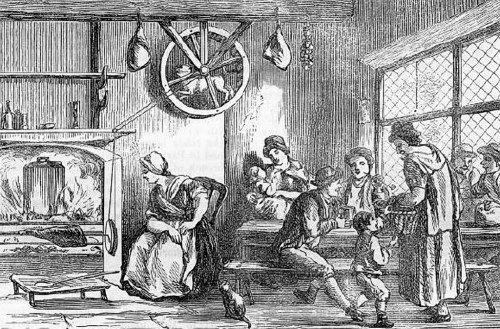
My one lasting memory is of the kitchen and a contraption near the ceiling. It hung in the far corner near a fire place and looked like a torture instrument. Inside the wooden wheel was a stuffed dog, popularly known in its time as a turnspit dog, which represented a breed that no longer exists. They were small, long-bodied, and sturdy; had short crooked legs; and were trained to run inside a wheel that turned a roasting spit. These long-suffering, hard-working canines, resembled curs not purebreds, and saved cooks (or menial boys of the lowest servant order) the task of turning roasting spits by hand for hours.
Turnspit dog, 1862. H Weir – Illustrated Natural History, Rev JG Wood. Image in the public domain. Wikipedia
The dogs were first mentioned in 1576 under the name “Turnespete”(Wikipedia). Their lives were hot, tedious, strenuous, and short. They were considered more kitchen utensils than pets, this during the centuries when animal cruelty was casual and baiting animals was a sport.
A dog at work inside a wheel near the ceiling; from Remarks on a Tour to North and South Wales (1800). Wikipedia, public domain image
Their breed was considered so common that its origins are unknown, although some experts think the turnspit dog was related to a terrier or perhaps the Welsh Corgi. Imagine the life of this dog–confined to a wheel for hours, forced to run near a fireplace while smelling the roasting meat of an animal that was out of their reach, tired, aching, and thirsting for water.
“The wheels were put up quite high on the wall, far from the fire in order for the dogs not to overheat and faint.”- NPR
As we all know, heat rises, so one wonders how well that placement worked! Turnspit dogs worked in alternating teams of two and were regularly relieved by an equally hardworking companion dog. They often were given Sundays off, not because their owners cared about their well being, but because they acted as foot warmers in cold church pews (Kitchensisters). One must imagine their relief for these few hours of rest.
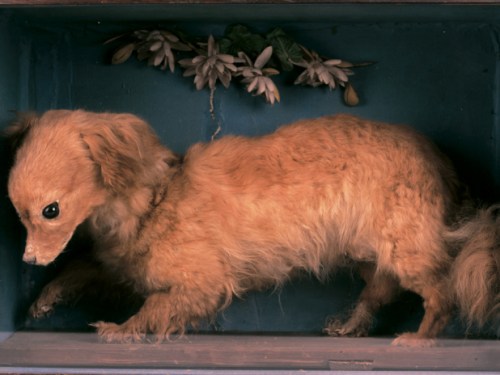
These tiny unloved dogs were prevalent in the mid 18th century, but by 1900 mechanical spit turning machines replaced them. Since they were considered ugly and lowly, their breed became extinct. Whiskey, the last known surviving turnspit dog, lives on as a taxidermied specimen in the Abergavenny Museum in Wales.
As an interesting footnote, in the United States the plight of the turnspit dog inspired the founding of the SPCA (Society for the Prevention of Cruelty to Animals).
“In 1850, founder of the ASPCA, Henry Bergh, was so moved by the appalling conditions in which the Turnspits were found in Manhattan hotels, that its horrific living conditions contributed to the birth of the organization in 1866. Coincidentally, this was around the time the dogs had become scarce, and 50 years later, they completely disappeared.”- Barkpost
Note: Before COVID-19, Vic volunteered with the local SPCA, which is a no-kill shelter. She’s also been privileged to live with two rescue dogs, both of whom were (aside from friends and family) the loves of her life. Neither dog revealed their living conditions before she adopted them.
More References:
Spit Roast Doggie, Richard Wyatt, September 21, 2014, Day by Day. Bath News Museum
A Breed You’ve Never Heard Of Is The Reason We Fight Animal Cruelty Today, Bark Post
Inquiring readers: While our world travels have been curtailed during the COVID-19 pandemic, we can think of no better a way to take a tour than with Tony Grant, who has served as a guide in Jane Austen country for many years.
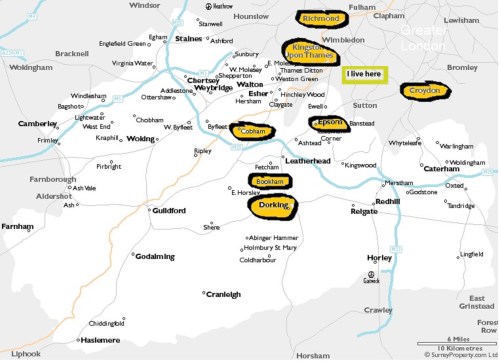
Map of Surrey
Map of Surrey
Jane Austen criss crossed the county of Surrey many, many times in her lifetime. Surrey is the county north of Hampshire. All the direct routes from Basingstoke, Steventon and Chawton to London pass through Surrey. She mentions Surrey places in her letters, providing a sense of what it was like to travel the roads of the 18th and 19th centuries. Emma, her completed Surrey novel, is set in the fictitious Highbury and Hartfield located right in the middle of the county, surrounded by the real Surrey, Dorking, Mickleham, Box Hill, Cobham and with Kingston upon Thames and Richmond upon Thames to the north. Jane’s earlier attempt at another Surrey novel, The Watsons, begun while living in Bath in 1804 was never completed. The few pages of The Watsons that were completed set the action mostly in Dorking but also some outlying places. Croydon, a large town, is repeatedly referred to and,” a village about three miles distant,” from Dorking, Westhumble, is a template for Stanton. Jane stayed at Great Bookham just north of Dorking with her relations, the Cookes. It is a short carriage ride away from Box Hill. Just north of Great Bookham is Leatherhead which has a debatable role in this account and to the north west of Great Bookham is Cobham, another place of interest mentioned in Emma. Interestingly a well-known, famous town in Surrey–Epsom– also gets a passing mention in Pride and Prejudice. It is amazing to see how the places and locations in Surrey came together in Jane’s imagination and how she used them in her novels. It’s like pieces of a jigsaw fitting together neatly.
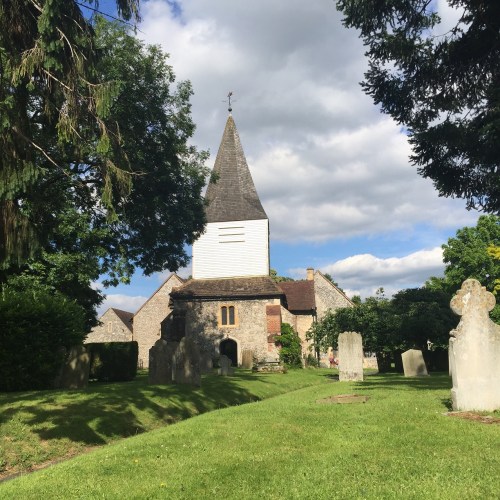
Great Bookham
St. Nicholas, Great Bookham. Photo by Tony Grant
I am going to introduce Great Bookham first, because although Jane knew many places in Surrey well and visited most of them many times she actually spent lengthy periods of time in Great Bookham, staying with her aunt and uncle and cousins, the Cookes. Cassandra Cooke, her mother’s cousin, was Jane ‘s aunt. You might notice, the name Cassandra seems popular within the extended family as well as her immediate family. It is the same name as both Jane’s sister and mother. Cassandra Cooke was a budding writer. A forgotten novel called, Battleridge, is her contribution to posterity. Jane’s uncle Samuel Cooke was the vicar of St Nicholas Church in Great Bookham. The Cookes were well acquainted with Fanny Burney, who lived in the village with her husband, General D’Arblay, and their young son. The Reverend Cooke asked Fanny Burney‘s father for advice about church music. Burneys father, Charles Burney, was a reputed musician and composer. It is from Great Bookham that Jane first visited Box Hill a few miles away. Great Bookham, like Highbury and Hartfield, is at the centre of the geographical world of both The Watsons and Emma.
Box Hill
Mickleham to the right of Box Hill. Photo by Tony Grant
So, to Box Hill, a mere few miles east of Great Bookham.
“They had a very fine day for Box Hill……. Seven miles were travelled in expectation of enjoyment, and everybody had a burst of admiration on first arriving.” Emma
Later, Frank Churchill, as though proclaiming from a vast church pulpit, (which indeed, if you stand on the top of Box Hill and look out over the surrounding countryside, does feel like that,) announces grandly and perhaps grandiosely
“Let everybody on the hill hear me if they can. Let my accents swell to Mickleham on one side and Dorking on the other.”
Box Hill is part of the chalk incline that forms the North Downs in Surrey. It was a beauty spot, where visitors loved to look out on the beautiful surrounding countryside in Jane’s time and that is the situation still today. A National Trust shop and café is at the top. A 19th century fort built as part of a line of forts to help repulse a French invasion is there too. Throughout the 18th and most of the 19th century, France was always a threat to Britain real and imaginary. Pre Raphaelite artists painted there, poets wrote poetry about the countryside and John Logie Baird, the inventor of the television, carried out experiments from his cottage at the top of the hill. It is a nature reserve, the site of a very strange burial, and is still a great picnic site, as Emma was anticipating.
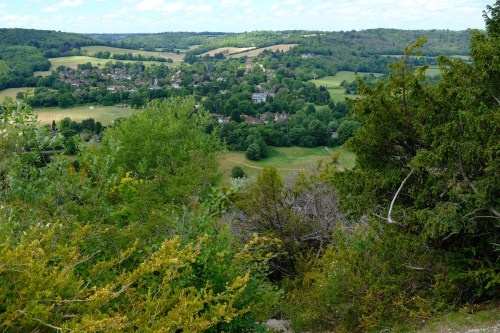
Mickleham
Mickleham, photo by Tony Grant
If you do as Frank Churchill informs us, look out from Box Hill with Mickleham to one side and Dorking to the other you will be facing west straight towards Great Bookham. Mickleham is located at the foot of Box Hill on its north west side. It is home to a junior school called Box Hill School. St Michael’s Church in the village is where Fanny Burney and General D’Arblay were married. General D’Arblay was a French exile, who fled France for England after the rise of Maximillian Robespierre. He and other emigres were living at Juniper Hall on the edge of Mickleham. The house was leased from 1792 to 1793 by David Jenkinson, a wealthy landowner, to a group of French emigres which included Anne Louise Germaine de Staël, a writer who Jane Austen admired, although de Stael was dismissive of Jane Austen’s writing. Charles Maurice de Talleyrand-Périgord, Louis, comte de Narbonne-Lara grandson of King Louis XV of France, and General Alexandre D’Arblay were among the key emigres staying at Juniper Hall. D’Arblay met Fanny Burney in the Templeton Room here.
Dorking
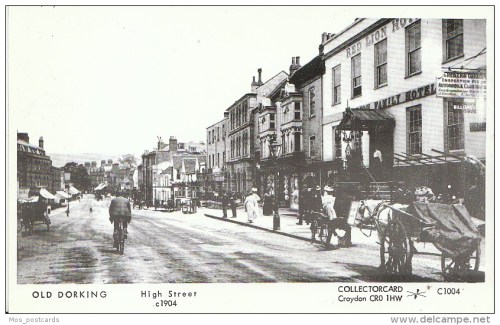
Dorking, the Red Lion Hotel, 1904 Postcard
Dorking is located south west of Box Hill. From Stanton ( Mickleham) the two Watson sisters travelled by the turnpike road which led to the east end of the town. As they entered the town they could see the White Hart Inn on their right, where the ball they were so anticipating was to take place, and the church steeple of St Martins just behind the inn. In the Penguin Classic version of The Watsons the editor, Claire Lamoy suggests that The White Hart was in reality The Red Lion Inn, located in Dorking High Street which Jane visited while staying at Great Bookham. The Red Lion backed on to the churchyard of St Martins Church. The inn does not exist nowadays. A modern row of shops stands in its place. Many buildings in Dorking do originate from the 18th century and some earlier. It is an ancient market town. Dorking has links to The Pilgrim fathers. William Mullins a shoe maker from Dorking was on that first voyage of The Mayflower. His shop still stands in the High Street and is now a coffee shop. There are also connections to Dickens and Vaughn Williams, the 20th century composer.
Croydon
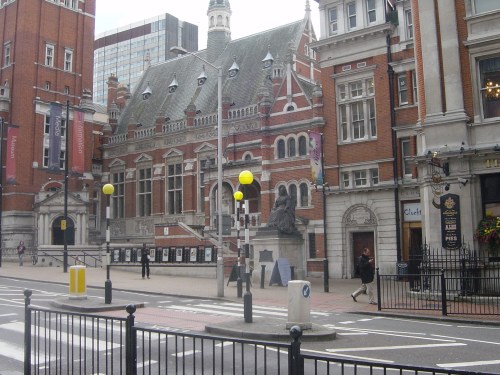
Croydon Town Hall and Art Gallery. Photo by Tony Grant.
In The Watsons the town of Croydon, about 17 miles from Dorking, is mentioned a number of times. Rich relations of the Watsons live there. It is where Emma Watson has been living with an aunt. When the story starts her aunt has died and Emma has recently returned to her family in Stanton.
Cobham
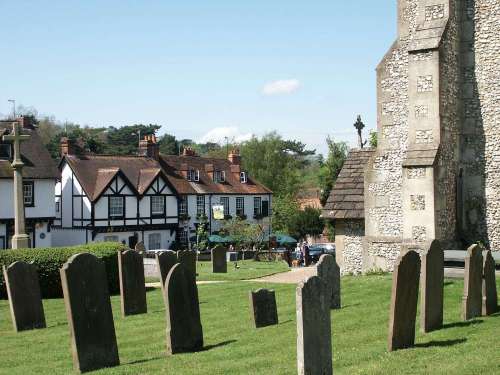
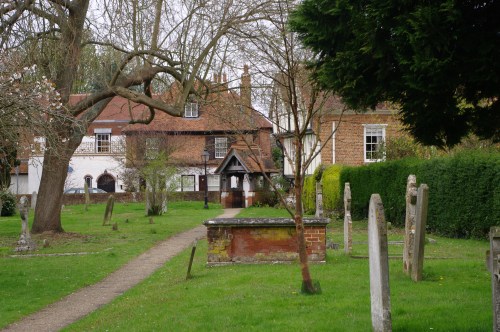
Cobham churchyard photo by Tony Grant
Cobham, north west of Great Bookham, has a cameo appearance in Emma. John Knightley’s wife Isabella, in praise of Mr Weston, states,
“and ever since his kindness last September twelvemonth in writing that note, at twelve o’clock at night, on purpose to assure me that there was no scarlet fever at Cobham, I have been convinced there could not be a more feeling heart nor a better man in existence.”
I have always thought that Cobham fits a description of Highbury and Hartfield. Many of the features of Cobham are the same. But you can find similar features in most country towns and large villages. There are the church, a mill, a local school, old coaching inns, houses for the local gentry and a large estate such as Mr Knightley’s a mile from the centre of town. Cobham has Painshill Park on its outskirts and Jane herself mentions it in a letter to Cassandra when travelling through leafy Surrey on one of her many visits to London.
Kingston upon Thames
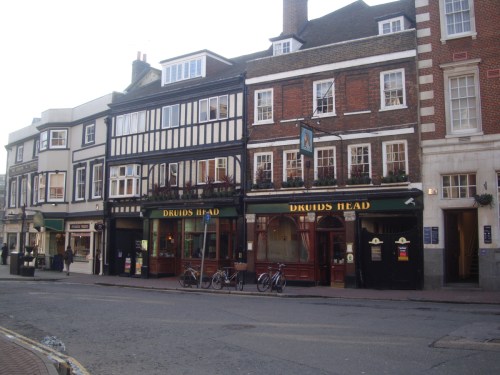
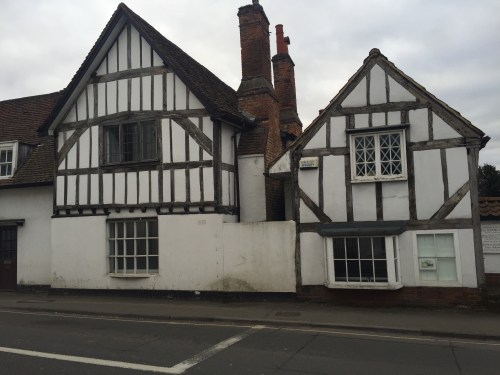
O Druids head coaching inn, Kingston. Photo by Tony Grant.
Kingston upon Thames is an important location in Emma. Mr Martin and also Mr Knightley go to Kingston regularly.
Harriet after meeting Robert Martin in the street reports to Emma
“He has not been able to get, “The Romance of the Forest,” yet. He was so busy the last time he was in Kingston that he quite forgot it, but he goes again tomorrow.”
Kingston used to have a large cattle market on the edge of town The area where it was located is still called The Cattle Market to this day. The municipal swimming baths and sports centre is on the site. It had an apple market, and that spot is still called The Apple Market, and also a large central market in the middle of the town where fishmongers, butchers, and fruit and vegetables from market gardens were sold. Fresh meat, fish, fruit and vegetables are sold from market stalls in the same location today. A few of the 18th century coaching inns still exist, The Griffin and The Druids Head are still pubs and inns, and the site of The Crown Inn that Jane Austen knew well is a department store that still retains a magnificent 18th century carved oak staircase. She often mentioned her visits to Kingston in letters to Cassandra as she travelled on the way to London. Kingston was an important place for carriages to change horses.
To Cassandra. Wednesday 15-Thursday 16 September 1813 from Henrietta Street
“… We had a very good journey-Weather and roads excellent-the three stages for 1s-6d & our only misadventure the being delayed about a quarter of an hour at Kingston for Horse, & being obliged to put up with a pair belonging to a Hackney Coach & their Coachman which left no room on the Barouche box for Lizzy.”
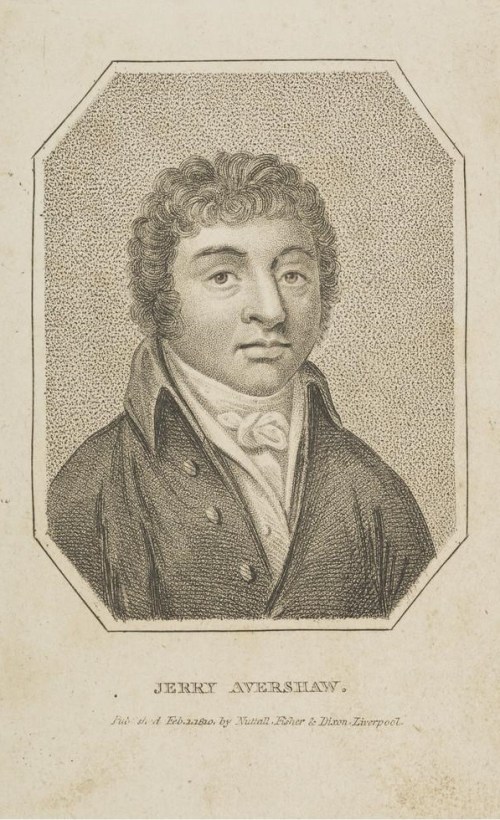
Jerry Abershaw
Louis Jeremiah or Jerry Abershaw, 1773-1795. Highwayman, National Gallery of Scotland
Kingston has a more chilling aspect to i,t which has a relevance to Northanger Abbey. On the main road from Kingston into the centre of London the route passed through a remote wild area of heath and woodland. In 1795, at Tibbets Corner (the Putney, Wandsworth and Wimbledon Village junction) beside Wimbledon Common, a young highwayman called Jerry Abershawe was detained and executed. His body hung at Tibbets Corner inside a gibbet to rot and be picked to pieces by carrion crows as a warning to all highwaymen. In Northangar Abbey General Tilney sends the teenage Catherine Moreland away from the Abbey by herself in a public coach. Highwaymen were a danger. Even Jane’s brothers would not let her travel independently. Perhaps Jane and Cassandra witnessed Abershawe’s body in the gibbet. His body would have been left there until nothing was left. It would take a year or two to disappear.
Richmond upon Thames
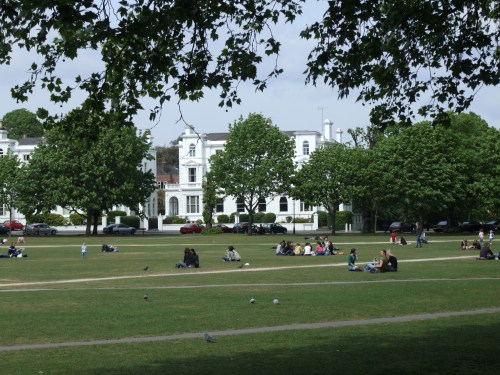
Richmond Green. The Churchills lived here. Photo by Tony Grant.
Richmond upon Thames further north along The Thames from Kingston also has an importance in Emma. The Churchill’s removed from London to Richmond because of Mrs Churchill’s health.
“It soon appeared that London was not the place for her. She could not endure its noise. Her nerves were under continual irritation and suffering; and by the ten days’ end, her nephew’s letter to Randalls communicated a change of plan. They were going to remove to Richmond. Mrs Churchill had been recommended to the medical skill of an eminent person there.”
I know Richmond well. It is just seven miles north of Richmond Park from where I live. It has an amazing history with connections to the nobility and the Monarchy. A Tudor palace was located at Richmond and also just outside of Richmond is Kew Gardens and Kew Palace where George III and his family spent a lot of time. Richmond was a very well connected town. Jane used this in Emma as an underlying comment about Frank Churchill.
Epsom
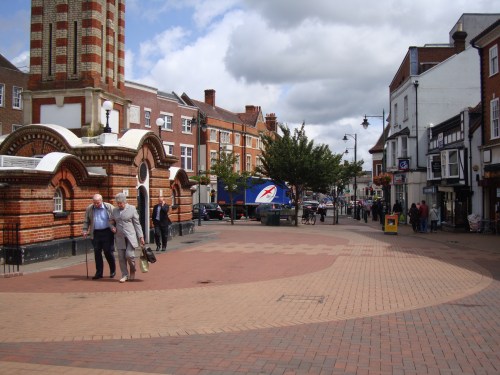
Epsom Centre photo by Tony Grant
Epsom, at the foot of the north downs and famous for the Derby Racecourse, the forerunner of all Derbys around the world, gets a mention in Pride and Prejudice. When Wickham and Lydia elope from Brighton, where Wickham’s regiment is stationed, they of course have to pass through the county of Surrey to reach London. They change horses at Epsom.
Lydia had disappeared with Wickham and Mr Bennet had turned into a man of action. Elizabeth enquired.
“She then proceeded to enquire into the measures which her father had intended to pursue, while in town, for the recovery of his daughter.”
“He meant,” I believe, “replied Jane, to go to Epsom, the place where they last changed horses, see the postilions and try if anything could be made out … His principal object must be to discover the number of the hackney coach which took them …”
Epsom, is a lovely market town and has an amazing central clock tower and wide thoroughfare for the market stalls set up there. There is also a well preserved 18th century Assembly Rooms called, “The Assembly Rooms,” which is now a Weatherspoon’s pub and restaurant. I have indeed imbibed a pint or two in there. There are many 18th century buildings still in the town.
Leatherhead
Leatherhead Museum. Photo by Tony Grant
I must mention Leatherhead, very close to Great Bookham and Box Hill. It is a town Jane would have visited and probably knew well. It has become somewhat a cause celebre in the world of Jane Austen and generally causes arguments. Highbury and Hartfield are fictitious places set within the real world of Surrey. There are those, however, who are convinced that Leatherhead is indeed Highbury and Hartfield. They point out all the places that are in and around Leatherhead which they think fit Jane’s descriptions in Emma. It cannot be forgotten that Emma is a fiction, all said and done. Highbury and Hartfield are the quintessential 18th century English villages. Jane is concerned about the lives and relationships of people within a community. That is what really counts.
There are many places in Surrey that Jane knew. I have included an overall map to show some of the key places I mention in this article and here are a few more places she mentions either in her novels or in her letters.
Guildford, Streatham, The Hogsback (A long hill outside of Guildford) Ripley, Painshill, Clapham, Battersea, Barnes and Egham.
To Cassandra Austen Thursday 20th May 1813
“We left Guildford at 20 minutes before 12- (I hope somebody cares for these minutes) & were at Esher in about 2 hours more.- I was very much pleased with the country in general-;- between Guildford and Ripley I thought it particularly pretty, also about Painshill & everywhere else; & from a Mr Spicer’s Grounds at Esher which we Walked into before dinner, the views were beautiful. I cannot say what we did not see but I should think there could not be a wood or a meadow or a palace or a remarkable spot in England that was not spread out us on one side or another.-“
Streatham is interesting, located in South London at Tooting. It is where Dr Johnson lived for a while with Esther Thrale and her husband in their grand house next to the common and where many of the artistic glitterati of the 18th century met.
REFERENCES:
Austen J. Lady Susan, The Watsons, Sanditon Penguin Classics (first published 1974) Revised edition published 2015
Austen J. Emma, Penguin Classics (Published in Penguin Classics 1996) reissued 2003.
Austen J. Pride and Prejudice, (published by Penguin Classics 1996) reissued 2003.
Austen J. Northanger Abbey, (published by Penguin Classics 1996) reissued 2003.
Le Faye D. Jane Austen’s Letters, (Third Edition) Oxford University Press 1995.
TONY’S OTHER BLOG POSTS: Below are some of the blog posts I have written connected with places I have mentioned in this article located in Surrey and South London where I live.
Captain Wentworth’s letter to Anne Elliot at the end of Jane Austen’s Persuasionhas long been heralded as one of the most romantic letters—and moments—in English literature. But does Wentworth’s letter live up to today’s standards of a really well-written love letter?
If you look up how to write the perfect love letter on the Internet, quite a lot of interesting information comes up. One article that might be of particular interest to a man like Captain Wentworth is this one: “How to Write a Love Letter” by Brett and Kate McKay from the web site, The Art of Manliness.
First, the article states that, “A handwritten letter is something tangible that we touch and hold and then pass to another to touch and hold. And they are preserved and cherished in a way that text messages or email never will be.” Captain Wentworth’s letter certainly meets this criteria. He writes his letter to Anne by hand, folds the paper “hastily,” and writes a “hardly legible” direction “to ‘Miss A. E.— ’” on the outside. (As to whether his letter will be preserved and cherished, I’ll leave that up to your excellent imaginations.)
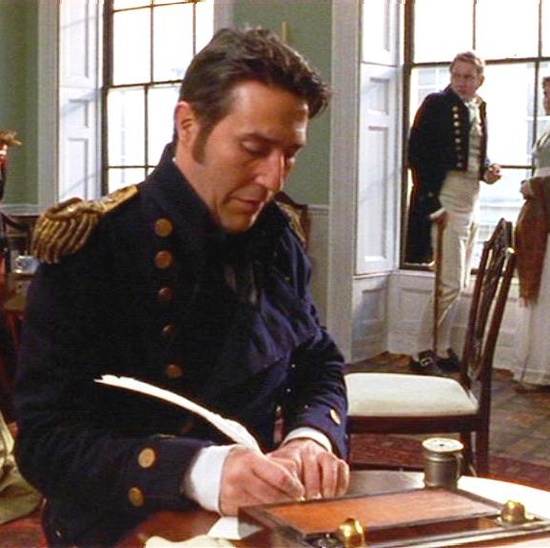
Captain Wentworth pens his letter.
Next, there is the mode of delivery. For lovers who are separated by miles, an envelope and a stamp do the job nicely. Others might choose to leave their letters under a door mat, on a bedside table, or beside a dinner plate. As for Wentworth, he prefers the rather intense (and covert) personal delivery system for his letter to Anne:
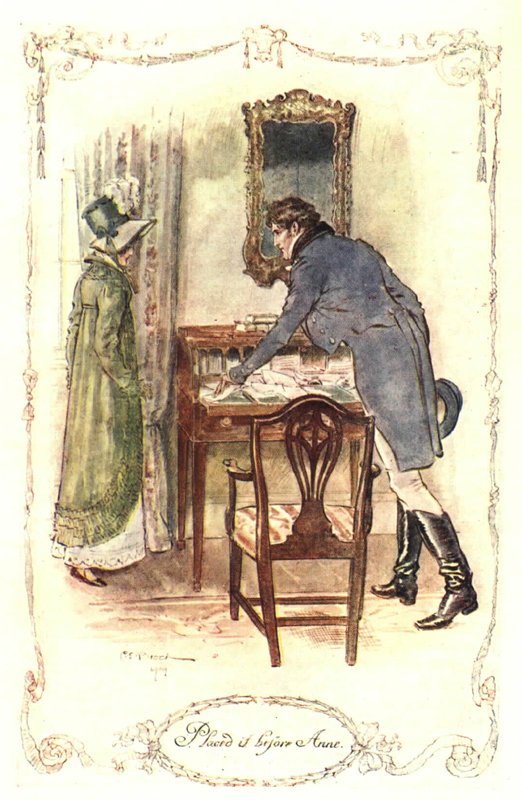
[Wentworth] drew out a letter from under the scattered paper, placed it before Anne with eyes of glowing entreaty fixed on her for a time, and hastily collecting his gloves, was again out of the room, almost before Mrs Musgrove was aware of his being in it: the work of an instant!
Jane Austen’s Persuasion
“Placed it before Anne.” Illustration by C.E. Brock, 1909.
Finally, we must consider the contents of the letter. Wentworth hastily writes his letter at a writing table as he listens in on Anne and Captain Harville’s conversation about love and constancy. But does his hurried letter check all the boxes of a first-rate love letter?
The Art of Manlinesssuggests that every good love letter much include six major elements. Let’s go through the checklist and find out if Wentworth’s letter to Anne makes the grade:
Six Keys to a Good Love Letter
1. Start off by stating the purpose of your letter. Captain Wentworth certainly doesn’t waste any time getting to the point and stating his purpose. There is no question that this is a passionate love letter right from the start:
“I can listen no longer in silence. I must speak to you by such means as are within my reach. You pierce my soul. I am half agony, half hope. Tell me not that I am too late, that such precious feelings are gone for ever. I offer myself to you again with a heart even more your own than when you almost broke it, eight years and a half ago.”
2. Recall a romantic memory. Though their past is painful, Wentworth lets Anne know that his memories of her—and his love for her—have never faded, no matter what has happened between them or what he has tried to do to heal and forget her:
“Dare not say that man forgets sooner than woman, that his love has an earlier death. I have loved none but you. Unjust I may have been, weak and resentful I have been, but never inconstant.”
3. Tell her all the things you love about her. For Captain Wentworth, every word out of Anne’s mouth is like water to his thirsty soul. He knows her voice better than anyone else and hangs on her every word:
“I can hardly write. I am every instant hearing something which overpowers me. You sink your voice, but I can distinguish the tones of that voice when they would be lost on others. Too good, too excellent creature! You do us justice, indeed.”
4. Tell her how your life has changed since meeting her. Wentworth could probably write a whole book about this (indeed, Austen did), but his letter checks this box in a rather dramatic way as he reveals that Anne is the only thing he cares about and that she is the sole focus of all his thoughts and plans:
“You alone have brought me to Bath. For you alone, I think and plan. Have you not seen this? Can you fail to have understood my wishes? I had not waited even these ten days, could I have read your feelings, as I think you must have penetrated mine.”
5. Reaffirm your love and commitment. Wentworth declares his love several times in this letter and has no trouble expressing his commitment to Anne. He clearly asks for her hand in marriage:
“I offer myself to you again with a heart even more your own than when you almost broke it, eight years and a half ago.” He declares his love in absolute terms: “I have loved none but you.” And after listening to her conversation with Captain Harville, he closes his letter with another affirmation of his fervent and undying love for her:
“You do believe that there is true attachment and constancy among men. Believe it to be most fervent, most undeviating, in F. W.”
6. End with a line that sums up your love. One might actually think Captain Wentworth was a contributing writer for The Art of Manliness because he accomplishes this task with an eloquent post script, asking for one word or look from Anne to seal his fate:
“I must go, uncertain of my fate; but I shall return hither, or follow your party, as soon as possible. A word, a look, will be enough to decide whether I enter your father’s house this evening or never.”
Wentworth’s letter certainly seems to satisfy the most important aspects of an eloquent love letter, but the true test of any romantic letter is the addressee’s response. For that, we must go to Anne herself for her reaction to the letter:
Such a letter was not to be soon recovered from. Half an hour’s solitude and reflection might have tranquillized her; but the ten minutes only which now passed before she was interrupted, with all the restraints of her situation, could do nothing towards tranquillity. Every moment rather brought fresh agitation. It was overpowering happiness.
Jane Austen’s Persuasion
Indeed, Wentworth’s letter is a complete success. When they meet in the street, Anne returns his pointed look and the “cheeks which had been pale now glowed, and the movements which had hesitated were decided.” There, in the street, they exchange “again those feelings and those promises which had once before seemed to secure everything, but which had been followed by so many, many years of division and estrangement.”
Truly, “such a letter” is not to be “soon recovered from.” By Anne or by us.
The sky’s the limit with letter writing. And love letters are never to be outdone by “newsy,” handwritten letters that fly back and forth between friends. But if you do write a love letter, make sure you take some pointers from Captain Wentworth.
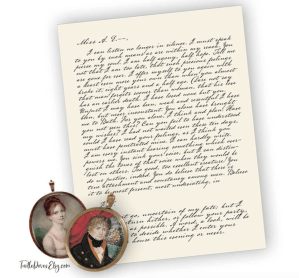
For more information about the digitized version of Captain Wentworth’s Letter by TurtleDoves on Etsy (pictured above), click HERE.
Inquiring readers: The lists in this blog post describe us (Vic, Rachel, Brenda, and Tony) and our interests to a tee. If we were to remove our names heralding our choices, you could probably guess who chose which list. The books mentioned are those that we read in 2020 and that have influenced our interests, thoughts, and research. Enjoy! Feel free to leave your own book suggestions in the comment section!
Vic Sanborn
1. Trailblazing Women of the Georgian Era: The Eighteenth-Century Struggle for Female Success in a Man’s World, Mike Rendell, Pen & Sword History, Pen & Sword Books LTD, 2018.
This useful reference details the contributions of 18th century women (despite their lack of legal standing) in the arts, literature, sciences, business, commerce, reform, and education. Some women, like Frances Burney and Mary Wollstonecraft, are well known to us today. How many of us know about Mary Darly, Jane Marcet, Elizabeth Fry, or Ann Damer? This is a beautiful book well worth owning.
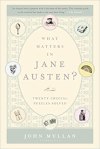
2. What Matters in Jane Austen? Twenty Crucial Puzzles Solved, John Mullan. 2003, Bloomsbury Press
John Mullan’s book was highly recommended to me. In it he discusses diverse topics in 20 chapters, such as: “How Much Does Age Matter?,” “Which Important Characters Never Speak in the Novels?,” “How Do Jane Austen’s Characters Look?,” “When Does Jane Austen Speak Directly to the Reader?,” and more. Mr. Mullan’s analysis prompts me to reread crucial passages in Austen’s novels; he helps me understand how much I still need to explore in her novels after all these years.
3. Belle: The Slave Daughter and the Lord Chief Justice, Paula Byrne, 2014, Harper Perennial.
I decided to purchase this book after watching “Bridgerton.” I did not see “Belle,” the movie, but have read short descriptions of the remarkable life of this illegitimate daughter of a captain in the Royal Navy and an enslaved African American woman.
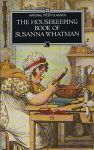
4. The Housekeeping Book of Susanna Whatman: 1776-1800, National Trust, a primary source.
This extremely short book (62 pages) was not noticed until it was printed in 1952. Whatman’s observations on household management was for personal use only. It provides a snapshot of how an 18th century housewife managed a household, and describes her expectations and relationship with her servants. This primary source is extremely useful for anyone interested in the servant/mistress relationship during that time.
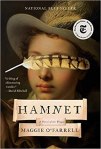
5. Hamnet,kindle edition, by Maggie O’Farrell, Deckle Edge, July 2020, mentioned as one of the 10 best books of 2020. Winner of the Women’s Prize for Fiction.
This is my only entry that was recently published. My Janeite friend, Deb Barnum, could not praise the book enough and urged me to read it. O’Farrell’s tale about the death of William Shakespeare’s son is told in prose so beautiful, lyrical, poignant and magical that one enters another world entirely. The tale is sad, for Hamnet died of the plague, but the topic speaks to the grief that so many families in this world are feeling as they mourn lost ones due to the pandemic.
Brenda Cox
1. Jane Austen and Religion, by William Jarvis. ISBN: 095271261X
This fascinating little book gives more insight into the role of religion in Austen’s life and novels. Quite easy to read, unlike some of the other books on this topic.
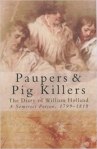
2. Paupers & Pig Killers: The Diary of William Holland, A Somerset Parson, 1799-1818, edited by Jack Ayres. ISBN-10 : 0750932015
These selections from a parson’s diary give you an idea of what the daily lives of Austen’s family might have been like (since her father and two of her brothers were country parsons).
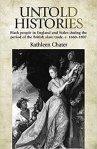
3. Untold Histories: Black People in England and Wales during the period of the British Slave Trade, c. 1660-1807, by Kathleen Chater. 2011. ISBN-10 : 0719085977
If you’d like to know about black people in Jane Austen’s England and their lives, this book is based on extensive research from primary sources. See the History tab above, the section Black History, for more resources.
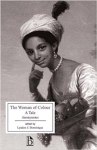
4. The Woman of Colour, anonymous, edited by Lyndon Dominique. ISBN-10 : 0719085977
This novel of 1808, possibly written by a woman of color, gives you a more personal view of the situation for black people in Austen’s England. It includes contemporary accounts from the slave-holding colonies.
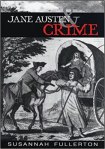
5. Jane Austen & Crime, by Susannah Fullerton. ISBN-10 : 0976353954
This novel is full of great insights into law and crime in Austen’s England and in her life and her novels.
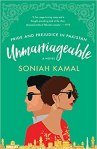
6. Unmarriageable, by Soniah Kamal. ISBN-10 : 0525486488
This book is a parallel retelling of Pride and Prejudice set in Pakistan. Lots of fun. See my review.
Rachel Dodge
1. Becoming Mrs. Lewis: The Improbable Love Story of Joy Davidman and C. S. Lewis by Patti Callahan. ISBN-10: 0785224505
“In this masterful exploration of one of the greatest love stories of modern times, we meet a brilliant writer, a fiercely independent mother, and a passionate woman who changed the life of this respected author and inspired books that still enchant us and change us. Joy lived at a time when women weren’t meant to have a voice—and yet her love for Jack gave them both voices they didn’t know they had.”
This book is perfect for fans of C.S. Lewis who want to know more about his wife, Joy Davidman. This novelized version of Joy’s life is hard to put down! I loved getting to know more about the brilliant mind and life of the woman Lewis called “my whole world.”
2. Les Miserablesby Victor Hugo: ISBN-10 : 1846140498
This novel is one of my best memories of 2020 and one of my greatest achievements as a reader. I read this with an online read-along group for six months and fell in love with the novel and with Hugo’s writing. I could have never finished it without the group to help me stay on track. We had weekly online discussions that were incredibly invigorating. I highly recommend Les Mis to anyone who hasn’t read it — but if you can, read it with a buddy or a group. There’s nothing like it!
3. Caroline: Little House, Revisited by Sarah Miller: ISBN-10 : 006268535X
“In this novel authorized by the Little House Heritage Trust, Sarah Miller vividly recreates the beauty, hardship, and joys of the frontier in a dazzling work of historical fiction, a captivating story that illuminates one courageous, resilient, and loving pioneer woman as never before—Caroline Ingalls, “Ma” in Laura Ingalls Wilder’s beloved Little House books.”
This book gives a detailed view of the Little House books as told from Caroline “Ma” Ingalls’ perspective. It is meticulously researched and written, and I was mesmerized by the story of this incredibly strong woman. I have always wondered about the “real Ma” and how she handled even the worst situations with such grit and grace.
4. The Blue Castle by L.M. Montgomery:mISBN-10 : 1402289367
“Valancy Stirling is 29 and has never been in love. She’s spent her entire life on a quiet little street in an ugly little house and never dared to contradict her domineering mother and her unforgiving aunt. But one day she receives a shocking, life-altering letter―and decides then and there that everything needs to change. For the first time in her life, she does exactly what she wants to and says exactly what she feels.”
I’m including this on my list because it’s one of L.M. Montgomery’s best books–and many people have never read it. It is one of only two books Montgomery wrote for an adult audience, and I’ve yet to meet anyone who didn’t enjoy it. If you need a fun, quick, and invigorating read, this is a great one to pick up. You will love Valancy and Barney.
Tony Grant
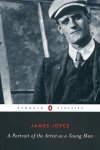
1.A Portrait of the Artistby James Joyce. Published by the Penguin Group 1992 (First published 1914-15.)
Published in 1916, the book plots the course of the early life of Stephen Daedalus, his struggles with religion, education and relationships. All the things that matter in life. At that time the way people lived in Ireland was strongly controlled by the Catholic Church. We all know how that has turned out. As a lapsed catholic, even I shuddered and felt troubled by the four page description of hell.
2. Nicholas Nickleby by Charles Dickens. Published by the Penguin Group1999 (First published 1839)
I like a good dose of Dickens every now and then. I read Nicholas Nickleby recently. If you want a roller coaster of emotions, good, bad and ugly this is for you. The evil Ralph Nickleby and the Yorkshire headmaster, Squeers of Do The Boys Hall, are counterbalanced by the angelic Brothers Cheeryble and a few ,”Madonna,” like young women.It wouldn’t be Dickens without an angelic, perfect, beautiful young woman, defenceless waiting to be saved. Its Dickens at his best, mining the depths of humanity, sending your emotions in all directions like a firework display.
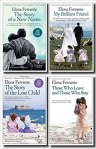
3. The Neopolitan Novels by Ellena Ferrante, translated by Ann Goldstein, and published by Europa Editions (2012-2015). Four novels entitled:
My Brilliant Friend.
Those Who Leave and Those Who Stay.
The Story of a New Name.
The Story of the Lost Child.
Even if you read just one of these amazing novels it is worth it. The quartet is a powerful evocation of humanity. Like all of us, the characters in these novels make awful mistakes and some terrible things happen to them but nevertheless their lives move forward. Lina and Ellena, two friends who have known each other from birth, brought up in the back streets of Naples live off their innate animal intelligence. Ferrante plots their lives. If you think in terms of soul mates these two are each one half of the same organism. Both brilliant in different ways, their lives diverge but the link between them always remains. Their power and strength is derived from their connection. Together they are a force of nature. It is tough reading at times . There is not much humour but you feel that you have gone through a cathartic experience. This is Joyce and Dickens combined. Ferrante is a genius.
4. Conversations With Friends by Sally Rooney. Published by Faber and Faber, 2017
This is the book Rooney wrote before, “Normal People.” Set in Ireland in the present time, it plots the love lives of young people. Rooney writes about her own age group. She is a great writer, plotting human relations through many hard, confusing, elating and passionate moments. Her characters are on a journey. The novel feels real, honest and gritty, with tenderness mixed in. Even at my advanced age I can empathise with the way their relationships pan out. This is the book James Joyce wanted to write, tried to write and for which he was virtually kicked out of Ireland.
5. The Rio Tape/Slide Show(Radical Community Photography in Hackney in the 1980s)
Published by Isola Press London (IsolaPress.com) October 2020.
Ok, this is not a novel but it engaged and absorbed me completely. I felt so inspired I wrote a long review for my blog, London Calling. Hackney is a London Borough in the east end of London. In the 1980s, there was a lot of unemployment and poverty. It was a whole melting pot of different cultures and ethnic minorities. People were bullied by the police and government policies made life even harder. The Rio Tape Slide project based at The Rio Cinema in Kingsland Road began community initiatives. They educated the local people in ideas, photography, art workshops, news reporting, writing and community action. News reals, shown at the cinema, were made by local people who went out with cameras to record and write about their community. The project brought people together to form very effective action groups. This is Gandhi’s peaceful action alongside Martin Luther King’s ideas about community . As well as the photographs illustrating much of what went on, there are essays written by some of the original organisers of the campaigns that occurred. They explain their philosophy and thinking behind their actions. This should be read by everybody. It is a template for grass roots social action. I kept thinking,” this is how it’s done!!” Politics can be beneficial.
__________________
And, so, gentle readers. Which books have you read? Which of them would you recommend? Which new books would you add to our list in the comments? Curious minds want to know. Thank you for participating!
“. . . we shall be overpowered with Johnson and Blair all the rest of the way.” –Northanger Abbey, when Henry Tilney is criticizing Catherine’s modern usage of the word “nice.”
“. . . like my dear Dr. Johnson, I believe I have dealt more in notions than facts.”—Letter from Jane Austen to Cassandra, Feb. 8, 1807, quoting from a letter from Johnson to Boswell.
Nowadays, we take dictionaries for granted. When an author is writing a book, she can access all kinds of dictionaries online. Even before the internet, we had a wide variety of reference books, and any author would have at least one dictionary.
However, in Jane Austen’s England, dictionaries were still relatively rare and expensive. Jane Austen may not have owned one. However, she had access, at least some of the time, to her brother Edward’s library at Godmersham Park and his library at Chawton House. The Godmersham library has been recreated online, so we can see some of the books she might have used. The 1818 library catalog lists twenty dictionaries. Most are for specialized categories. For example, the Knights owned a dictionary of heraldry, a farming dictionary, a law dictionary, and a classical dictionary.
Early Dictionaries
It took time for our modern style of dictionary to develop.
In the 1500s, some bilingual dictionaries were produced, translating from Latin, French, or Italian into English. The Knights owned a Latin dictionary published much later, in 1816.
In 1604, the first English-to-English dictionary was published, by Robert Cawdrey. However, his dictionary and later dictionaries of that century focused only on difficult, unusual words; slang expressions; or words from certain fields of study or regions of the country. They listed such words and explained them in simpler English. Some of these dictionaries were rather pretentious, including rare words like abequitate and commotrix. Cawdrey intended his dictionary to “benefit & help” “Ladies, gentlewomen or any other unskillful persons” to better understand difficult English words they might hear or read in the Bible or in sermons, and to use those words themselves. Everyday words were not defined.
The Knight Collection included one such dictionary, by Edward Phillips, published in 1678. It listed “Terms that conduce to the understanding of any of the Arts or Sciences.” Sciences at that time were simply areas of knowledge. (Austen calls dancing a science, for example.) The areas listed for this dictionary range from theology to astrology to jewelling to hunting to much more.
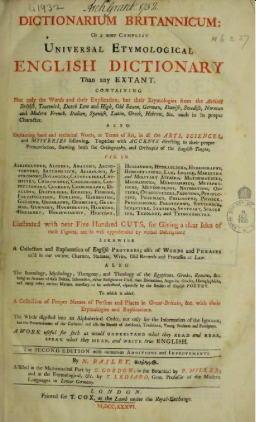
Nathaniel Bailey made the first attempt at a complete English-to-English dictionary in 1721.
The first attempt to include all the words of English in a dictionary was in 1721, when Nathaniel Bailey produced his Universal Etymological English Dictionary. (Etymological means giving the original sources of words; many entries, however, do not include etymologies.) Thirty editions appeared between 1721 and 1802; the last was about 900 pages long. The Knights and their family and friends could look words up in the fourteenth edition of this dictionary, published in 1751.
While Bailey’s dictionary included “many Thousand Words more” than any previous English dictionary, it was still not complete enough. Literary leaders such as Daniel Defoe and Jonathan Swift called for a better source to standardize the English language.
Johnson’s Dictionary
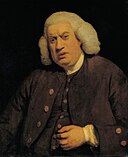
Jane Austen’s “dear Dr. Johnson” took up the challenge. Simon Winchester calls Johnson’s A Dictionary of the English Language “an unparalleled triumph . . . a portrait of the language of the day in all its majesty, beauty, and marvelous confusion.”
In 1746, a group of London booksellers hired Samuel Johnson to produce a new dictionary. He hired six men as scribes and spent the following years compiling his dictionary.
Samuel Johnson’s Dictionary became the definitive dictionary of English in England for the next century.
How do you write a dictionary? Johnson began by reading. He bought or borrowed stacks and stacks of books. He went through them, reading hundreds of thousands of pages. He listed and organized all the words he found.
Since he couldn’t go through all of history (as the later Oxford English Dictionary would do), he chose books from a time period of about 150 years: beginning with Sir Philip Sydney, who died in 1586, and ending with authors who had recently died in Johnson’s own time (plus a little Chaucer thrown in here and there).
As Johnson read, he marked the words he wanted and chose good sentences illustrating all the varied meanings of each word. His assistants wrote the sentences on slips of paper, which he filed.
Four years later, in 1750, Johnson had finished gathering words. Then he spent another four years sorting, choosing, and editing his 118,000 sample quotations (which he occasionally altered!). Finally, he wrote definitions for the 43,500 words included. Sometimes he based the definitions on earlier dictionaries, but many were entirely his own.
Imagine how much work this was, for one man! No wonder he defined lexicographer as “A writer of dictionaries; a harmless drudge, that busies himself in tracing the original, and detailing the signification of words.” There must have been a great deal of drudgery involved in digging out and organizing so many words, with no help from a computer or even a typewriter. While a few definitions, like lexicographer, show Johnson’s personal opinion, most are careful and exact.
I learned in a linguistics class that it is very hard to write definitions. You need to use only words that are simpler than the word you are defining, explain clearly what the word means and rule out what it doesn’t mean, and not use circular definitions (defining Word A as meaning B, but when you look up B you find it means A). Try making up a definition for an everyday word, and you’ll get some appreciation for Johnson’s task. Then you might want to compare your definition with Johnson’s.
Johnson’s dictionary was very thorough, including most of the words in use at the time. As in modern dictionaries, many words have multiple definitions. The word take, for example, is followed by 134 definitions. All are supported by at least one quotation from literature, and most have several.
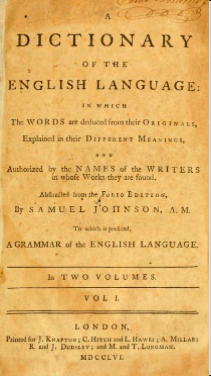
Samuel Johnson’s Dictionary, 1756
When Johnson was almost ready to publish his dictionary, he convinced Oxford University to give him an honorary degree, so he would have letters to put after his name (Samuel Johnson, A. M.), and the dictionary was published in 1755.
The final dictionary was over 2300 pages long. It was printed on high quality paper in large, heavy, expensive volumes. Jane’s parents probably could not have afforded a set.
The fact that Godmersham had two copies of this dictionary shows us something of the Knight family’s wealth. They owned a first edition, published in 1755, and a twelfth edition, published in 1810; each was in two volumes.
Samuel Johnson’s was England’s definitive dictionary of English until 1928, when the Oxford English Dictionary (OED) was completed. Simon Winchester tells the enthralling story of the OED in his book The Professor and the Madman: A Tale of Murder, Insanity, and the Making of the Oxford English Dictionary. Most of this article comes from his section on Johnson’s dictionary. For the OED, a team of thousands of volunteers sent the compilers over six million slips of paper with sample sentences on them, from works in English throughout history. After five years, the compilers had only gotten to the word ant. It took from 1879 to 1928 to produce all ten volumes of the dictionary. The OED has been constantly updated since then, because of course language is always changing.
(In America, of course, Noah Webster published the first dictionary of American English in 1806. American and British dialects and spelling were already diverging at that point.)
Austen and Johnson’s Dictionary
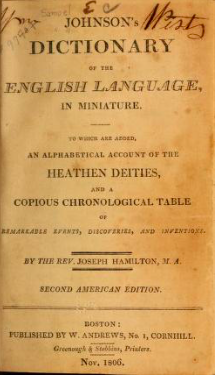
We don’t know how much Jane Austen consulted Johnson’s Dictionary, but we do know that she loved to read Dr. Johnson’s works, so she probably read some of the dictionary when she could. There might have been a copy at Chawton House near her cottage. Also, shorter, smaller abridged versions, without all the quotes, were published later in her lifetime, so perhaps she owned one of those.
Shortened versions of Johnson’s Dictionary were soon produced, like this one in 1806.
Henry Tilney is “Nice”
In Northanger Abbey, Catherine Morland and Henry Tilney have a discussion about a word and its definition:
Catherine: “But now really, do not you think Udolpho the nicest book in the world?”
Henry: “The nicest—by which I suppose you mean the neatest. That must depend upon the binding.”
“Henry,” said Miss Tilney, “you are very impertinent. Miss Morland, he is treating you exactly as he does his sister. He is forever finding fault with me, for some incorrectness of language, and now he is taking the same liberty with you. The word ‘nicest,’ as you used it, did not suit him; and you had better change it as soon as you can, or we shall be overpowered with Johnson and Blair all the rest of the way.”
“I am sure,” cried Catherine, “I did not mean to say anything wrong; but it is a nice book, and why should not I call it so?”
“Very true,” said Henry, “and this is a very nice day, and we are taking a very nice walk, and you are two very nice young ladies. Oh! It is a very nice word indeed! It does for everything. Originally perhaps it was applied only to express neatness, propriety, delicacy, or refinement—people were nice in their dress, in their sentiments, or their choice. But now every commendation on every subject is comprised in that one word.”
“While, in fact,” cried his sister, “it ought only to be applied to you, without any commendation at all. You are more nice than wise.”
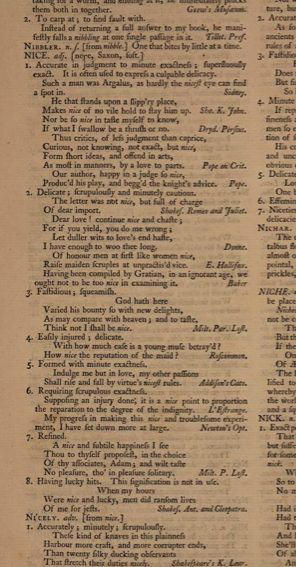
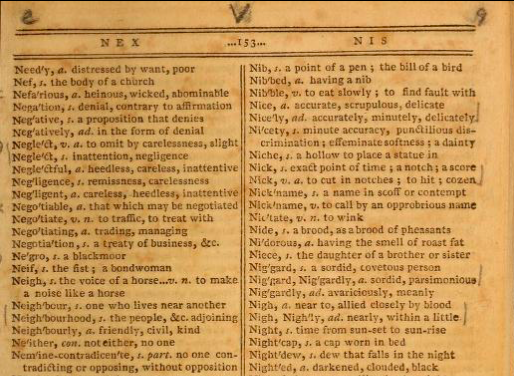
“Nice” in Samuel Johnson’s original dictionary
So how did Samuel Johnson define the word nice? He gave these definitions:
Accurate in judgment to minute exactness; superfluously exact. (This may describe Tilney himself in the discussion, as his sister says.)
Delicate; scrupulously and minutely cautious.
Fastidious; squeamish
Easily injured; delicate
Formed with minute exactness (Perhaps this is the definition by which Tilney says the book’s binding may be nice.)
Requiring scrupulous exactness
Refined
Having lucky hits (a meaning no longer in use)
Catherine, however, was using the word more as we would use it today, to simply mean something good or pleasant. Apparently, when Johnson wrote his dictionary forty years earlier, nice was not often used that way, at least in books. Even an 1817 short version of his dictionary still defines nice as “accurate, scrupulous, delicate.” Henry Tilney was overly scrupulous, or too nice, in his use of words.
(By the way, Eleanor refers to “Johnson and Blair.” Blair is Dr. Hugh Blair, a Scottish minister who wrote books of sermons that Mary Crawford mentions in Mansfield Park. He also wrote Blair’s Rhetoric, teaching good writing and speaking, which is what Eleanor mentions here.)
“Nice” in an 1806 abridged version of Johnson’s Dictionary
“Nice” Austen Quotes in the Oxford English Dictionary
The current Oxford English Dictionary (OED) quotes Jane Austen in three of its 44 definitions of nice (24 of these definitions are now obsolete, 2 others are rare).
For the obsolete definition 3c, “Particular, strict, or careful with regard to a specific point or thing,” this example appears from Persuasion, 1817: “Good company requires only birth, education and manners, and with regard to education is not very nice. Birth and good manners are essential.”
The OED’s definition 14a of nice, “That one derives pleasure or satisfaction from; agreeable, pleasant, satisfactory; attractive,” is illustrated of course by Catherine and Henry’s conversation in Northanger Abbey. (It’s not the first example, though–that came from actor David Garrick in 1749, just a little too late to be included in Johnson’s Dictionary.)
And there’s one more “nice” example from Austen in definition 14d, where nice is “used ironically”: the very instance is from Jane Austen’s letter of Dec. 24, 1798: “We are to have Company to dinner on friday; the three Digweeds & James.—We shall be a nice silent party I suppose.”
Language has changed so much that we sometimes need dictionaries to understand writers of former ages. It would be easy to assume that wherever we see the word nice, for example, it means “pleasant,” but in Austen’s time it was much more likely to mean something else. In my research on the church in Austen’s time, I’ve found a number of words that had religious meanings in her time, words like principle and serious, that are now used differently. The wordcandourhas changed almost entirely; it meant assuming the best of a person (which is why Jane Bennet is an example of candour), rather than plain speaking.
What are your favorite examples of words used in Jane Austen which now have different meanings, or are obsolete now? And, what’s your favorite dictionary or website where you look them up?
Johnson’s Dictionary Online is a fantastic free resource. You can look up any word in the original 1755 dictionary. Page view is available for all the words (click on the letters at the top), and some have been transcribed (search in the search window). If you want to know what words were in use in Jane Austen’s England, and how they were used, this is the book for you. If you want a later edition, archive.org has volumes of the dictionary from later dates.
“Dr. Johnson, His House, Jane Austen, and a Cat Called Hodge,” by Tony Grant (who writes for Jane Austen’s World), gives a fascinating overview of Johnson’s life, Jane Austen’s comments about Johnson, and lovely photos of Johnson’s house. He also includes the intriguing story of Johnson’s black servant Francis Barber, who was like a son to Johnson; Johnson left most of his estate to Barber.
Dr. Johnson’s House, a museum of Samuel Johnson, can be visited in London (though it is currently closed for covid; check the website before going).
The Oxford English Dictionary will give you more detail and more quotations, but if you are not part of a library or university with access to it, it’s quite expensive. (Currently subscriptions are deeply discounted, at $90 per year.)
Fashionable Goodness: Christianity in Jane Austen's England is now available! By JAW contributor Brenda S. Cox. See Review. Available from Amazon and Jane Austen Books.
Available through December 31st, 2025. Click on image for details, and share this poster with other teachers and students!
The Obituary of Charlotte Collins by Andrew Capes
Click on image to read the story.
Comments
“My idea of good company…is the company of clever, well-informed people, who have a great deal of conversation.” – Jane Austen, Persuasion
Gentle readers: Please feel free to post your comments and continue the conversation! Due to SPAM, we will no longer accept comments on posts after 30 days of publication. In some instances, links will be removed from comments as well.
Administrators and Contributors
Vic Sanborn, founder of this blog, is supported by a team of talented and knowledgeable writers about Jane Austen and the Regency era. They are:
Tony Grant, who now contributes his photos from London and England
Click on their names to enter their own blogs.
In addition, we thank the many experts and authors who frequently contribute their posts and opinions, and who continue to do so freely or at our request.
Click here to enter the page. Topics include Regency fashion, historic foods, Jane Austen societies, British sites, related topics. Click on image.
May we suggest?
Hello, my name is Vic and I live in Maryland, USA. I have adored Jane Austen almost all of my life. I am a proud lifetime member of the Jane Austen Society of North America. This blog is a personal blog written and edited by me and my team. We do not accept any form of cash advertising, sponsorship, or paid topic insertions. However, we do accept and keep books and CDs to review.
If you would like to share a new site, or point out an error, please email us. (Yes, we are fallible. We'll own up to our mistakes and will make the corrections with a polite smile on our faces.) Write us at
Thank you for visiting this blog. Your comments and suggestions are most welcome.
Project Gutenberg: eBook of Stage-coach and Mail in Days of Yore, Volume 2 (of 2), by Charles G. Harper
STAGE-COACH AND MAIL IN DAYS OF YORE: A PICTURESQUE HISTORY
OF THE COACHING AGE, VOL. II, By CHARLES G. HARPER. 1903. Click on this link.













 Jane Austen's World