This Jane Austen blog brings Jane Austen, her novels, and the Regency Period alive through food, dress, social customs, and other 19th C. historical details related to this topic.
Inquiring readers, Today is one of celebration for those of us who honor Christ’s birth. This is a year of challenge for so many in our communities whose jobs and families have been affected by COVID-19. Inspired by the Georgians in times past, I do what I can in my community and for those in need. Austen describes this community/family/friend caring so well in her novels, a theme that Rachel Dodge covered in a recent post , and Brenda Cox in a post entitled “Thankfulness in Jane Austen’s Novels.”
Charity and the sharing of bounty with the less fortunate was an appropriately pious response to the season.” — Hilary Davidson
One book I purchased this year was written by Hilary Davidson entitled Dress in the Age of Jane Austen: Regency Fashion. Yale Books offers a blog post with information from this book entitled “A Jane Austen Christmas.” Enjoy!
Inquiring readers, I first read Pride and Prejudice when I was fourteen years old. The novel was a Christmas gift from my parents. One of the first Christmas songs this Dutch girl learned in English was “The Twelve Days of Christmas,” a song that was popularized in an arrangement by Frederic Austin in 1909. We all know the tune, but do we know the words as Jane Austen wrote them? After singing the song, please stay to answer a few questions.–Enjoy & Merry Christmas! Vic
[Verse 1]
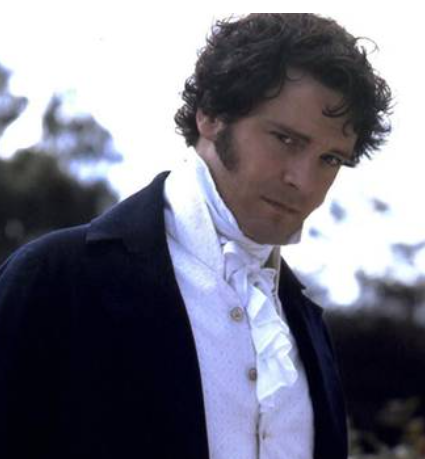
On the first day of Christmas, Jane Austen sent to me A HERO named Mister Darcy
[Verse 2]
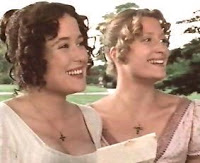
On the second day of Christmas, Jane Austen sent to me Two wise Bennet girls, and A HERO named Mister Darcy
[Verse 3]
On the third day of Christmas, Jane Austen sent to me Three various suitors, Two wise Bennet girls, and A HERO named Mister Darcy
[Verse 4]
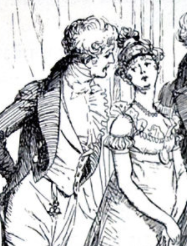
On the fourth day of Christmas, Jane Austen sent to me Four Bingley dances, Three various suitors, Two wise Bennet girls, and A HERO named Mister Darcy
[Verse 5]
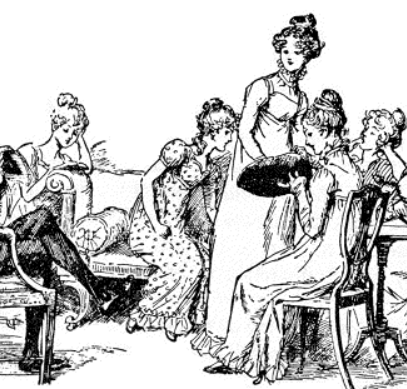
On the fifth day of Christmas, Jane Austen sent to me FIVE S.I.N.G.L.E GIRLS!
Four Bingley dances, Three various suitors, Two wise Bennet girls, and A HERO named Mister Darcy!
[Verse 6]
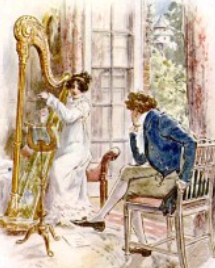
On the sixth day of Christmas, Jane Austen sent to me Six accomplished women FIVE S.I.N.G.L.E GIRLS!
Four Bingley dances, Three various suitors, Two wise Bennet girls, and A HERO named Mister Darcy!
[Verse 7]
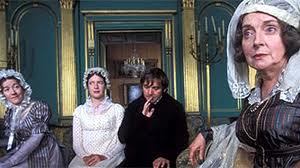
On the seventh day of Christmas, Jane Austen sent to me Seven days at Hunsford Six accomplished women FIVE S.I.N.G.L.E GIRLS!
Four Bingley dances, Three various suitors, Two wise Bennet girls, and A HERO named Mister Darcy!
[Verse 8]
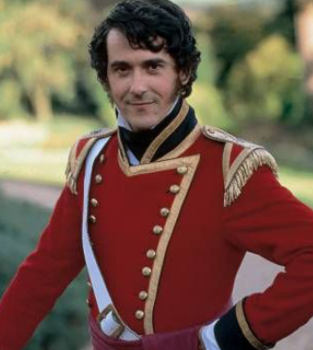
On the eighth day of Christmas, Jane Austen sent to me Eight charms of Wickham Seven days at Hunsford Six accomplished women FIVE S.I.N.G.L.E GIRLS!
Four Bingley dances, Three various suitors, Two wise Bennet girls, and A HERO named Mister Darcy!
[Verse 9]
On the ninth day of Christmas, Jane Austen sent to me Nine ladies dancing Eight charms of Wickham Seven days at Hunsford Six accomplished women FIVE S.I.N.G.L.E GIRLS!
Four Bingley dances, Three various suitors, Two wise Bennet girls, and A HERO named Mister Darcy!
[Verse 10]
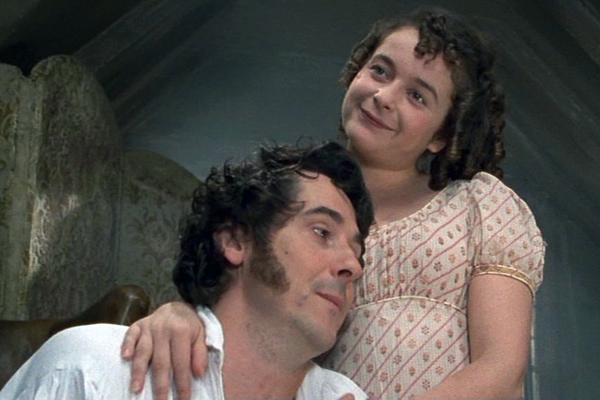
On the tenth day of Christmas, Jane Austen sent to me Lydia eloping Nine ladies dancing Eight charms of Wickham Seven days at Hunsford Six accomplished women FIVE S.I.N.G.L.E GIRLS!
Four Bingley dances, Three various suitors, Two wise Bennet girls, and A HERO named Mister Darcy!
[Verse 11]
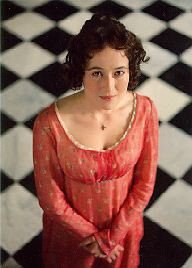
On the eleventh day of Christmas, Jane Austen sent to me Lizzy’s eyes a’ opening Lydia eloping Nine ladies dancing Eight charms of Wickham Seven days at Hunsford Six accomplished women FIVE S.I.N.G.L.E GIRLS!
Four Bingley dances, Three various suitors, Two wise Bennet girls, and A HERO named Mister Darcy!
[Verse 12]
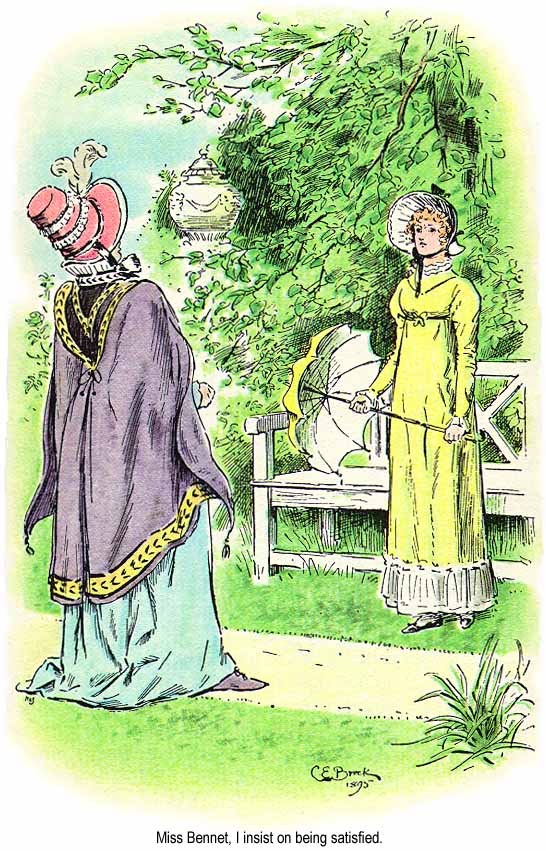
On the twelfth day of Christmas, Jane Austen sent to me L C’s condescensions Lizzy’s eyes a’ opening Lydia eloping Nine ladies dancing Eight charms of Wickham Seven days at Hunsford Six accomplished women FIVE S.I.N.G.L.E GIRLS!
Four Bingley dances, Three various suitors, Two wise Bennet girls, and A HERO named Mister Darcy!
________________
Now, Gentle Readers, I shall pose a few questions. How do you respond to Pride and Prejudice? How are you disposed towards a few characters? (Your opinions are most welcome.) As you can see, I favor the 1995 Firth/Ehle film version of P&P! So, don’t be shy in sharing your thoughts.
L C’s condescension: In your estimation, what is the most memorable Lady Catherine de Bourgh’s condescending statement?
Lizzy’s eyes a’ opening: What events changed Elizabeth’s attitude towards Mr. Darcy? Which one stands out in your mind?
Lydia eloping: How old was Lydia when she ran off with Mr. Wickham? What, in her naivete, did she hope her life would have been like with him, away from her family?
Nine ladies dancing: Think of the ladies Austen mentioned in Pride and Prejudice. Which women would have most likely danced at the Netherfield Ball?
Eight charms of Wickham: Can you name Mr. Wickham’s charms, be they true or false, as Austen described them?
Seven days at Hunsford: How did Lizzy spend her days at Hunsford? What memorable scenes occurred during this time?
Six accomplished women: Who first mentioned six accomplished women? How did the conversation come up and where?
Please name all the five single girls and their primary characteristic (in your opinion).
Four Bingley dances: This phrase refers to an event at the beginning of the novel.
Three various suitors: Name all the suitors you can think of in the novel. Who had three? Who are they?
Two wise Bennet girls: Who are they? How would you personally describe them?
A HERO named Mister Darcy! Why are we so mesmerized by Austen’s most memorable hero? What are the characteristics that make him stand out to you?
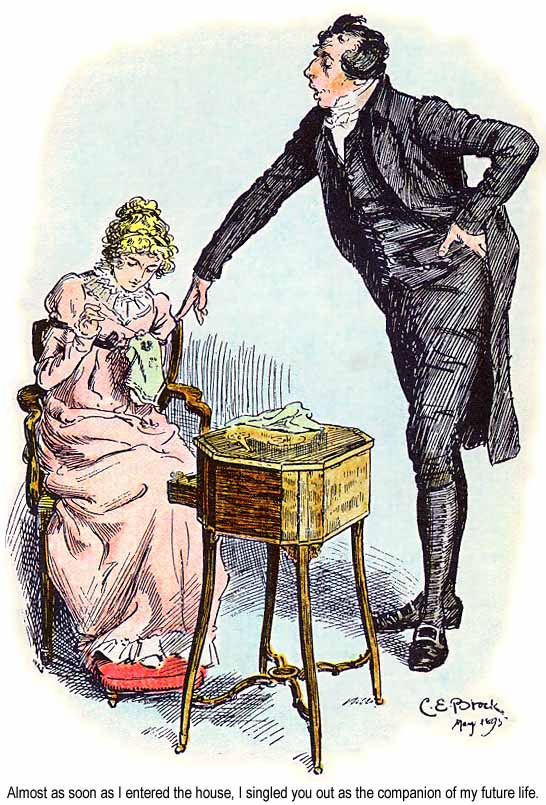
After this C.E. Brock composite image of Pride and Prejudice, I’ve added my own observations to a few of the questions. Thank you for participating. May you have a lovely holiday season. Please love and take care of each other in your family, your neighbors, and your community.
“Look with compassion upon the afflicted of every condition, assuage the pangs of disease, comfort the broken in spirit.”—Jane Austen, Prayers
This time of year—especially during 2020—many people are in need of comfort and compassion. I find it particularly touching that Jane Austen’s own timeless novels and prayers provide messages of hope that never seem to fade or wear out.
When Marianne Dashwood falls ill in Sense and Sensibility, she is “afflicted” in both body and heart. She doesn’t just need the physical “pangs of disease” assuaged; she needs comfort for her broken spirit. Sick at heart, she also lies sick in bed. It is during these difficult days that we see family members and friends coming to her aid to provide the love and care she needs.
First, Elinor spends her days “attending and nursing” Marianne and “carefully administering the cordials prescribed” (ch. 43). When Marianne worsens on the evening of the third day, Elinor notices her altered condition and stays with Marianne while Mrs. Jennings goes to bed, “knowing nothing of any change in the patient.” Anxious to see Marianne rest quietly, she resolves “to sit with her” as she sleeps. When Marianne’s pulse becomes “lower and quicker than ever,” and she suffers hours of “sleepless pain and delirium,” Elinor anxiously calls for the apothecary, sends Colonel Brandon for her mother, and never leaves her bedside.
Elinor Dashwood (Hattie Morahan) and Marianne Dashwood (Charity Wakefield)
This example of sisterly love is similar to the type of care Jane and Cassandra Austen provided for their own family members when they were unwell. When their brother Henry became suddenly and severely ill during one of Jane’s visits to him in London, Jane and Cassandra both helped to nurse him. Caroline Austen provides this detail in her memoir, My Aunt Jane: “Aunt Cass. stayed on nearly a month, and Aunt Jane remained some weeks longer, to nurse the convalescent.” And when Jane herself fell ill, Cassandra, along with Mrs. Mary Austen (née Lloyd), to “take a share in the necessary attendance,” went with her and cared for her in Winchester.
Even once Marianne begins to improve, Elinor stays by her side, “with little intermission . . . calming every fear, satisfying every inquiry of her enfeebled spirits, supplying every succour, and watching almost every look and every breath” (ch. 43). It is only when Elinor is absolutely sure that Marianne is peaceful and sleeping soundly that she can “silence every doubt” and finally quit her post.
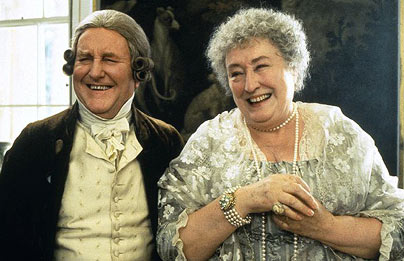
Sir John Middleton (Robert Hardy) and Mrs. Jennings (Elizabeth Spriggs)
Mrs. Jennings, “with a kindness of heart which made Elinor really love her,” also provides as much comfort and practical help as she can during Marianne’s illness: She sends for the Palmers’ apothecary and endeavors, “by her own attentive care, to supply to her the place of the mother she had taken her from.” Elinor quickly finds Mrs. Jennings “on every occasion a most willing and active helpmate, desirous to share in all her fatigues, and often by her better experience in nursing, of material use.”
The morning after Marianne’s long, difficult night, Mrs. Jennings greets Elinor “[w]ith strong concern, and with many reproaches for not being called to their aid.” Austen tells us “[h]er heart was really grieved.” She is “struck” with concern for Marianne’s life, one who “had been for three months her companion, was still under her care, and . . . was known to have been greatly injured, and long unhappy.” She imagines the “distress” Elinor feels and is awakened to the fact that Marianne must be to Mrs. Dashwood what her own daughter Charlotte is to her: and “her sympathy in HER sufferings was very sincere.”
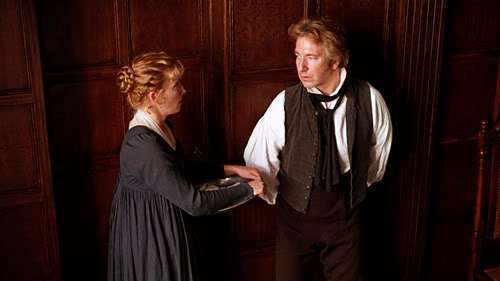
Elinor Dashwood (Emma Thompson) and Colonel Brandon (Alan Rickman)
Finally, Colonel Brandon helps the Dashwood family by staying close at all times and volunteering to bring Mrs. Dashwood to town when Marianne becomes delirious and asks for her mother. When Elinor goes downstairs to the drawing room to ask his advice, “her difficulties were instantly obviated, for with a readiness that seemed to speak the occasion, and the service pre-arranged in his mind, he offered himself as the messenger who should fetch Mrs. Dashwood.”
The entire Dashwood family is greatly relieved by Colonel Brandon’s help:
“The comfort of such a friend at that moment as Colonel Brandon—or such a companion for her mother,—how gratefully was it felt!—a companion whose judgment would guide, whose attendance must relieve, and whose friendship might soothe her!—as far as the shock of such a summons COULD be lessened to her, his presence, his manners, his assistance, would lessen it.”
Sense and Sensibility, Jane Austen
Again, during Marianne’s recovery, Colonel Brandon is never far away. He stays in town, visits often, and only returns home when Marianne is well enough to travel back to Barton Cottage with her family.
True to Jane Austen’s style, this portion of the novel also provides us with a message of hope. It’s not just that Marianne’s health improves; it’s also the idea that the long night of anxious waiting doesn’t last forever. That dark hour for Elinor and Marianne does pass. A new day dawns, their mother arrives, and Marianne heals in body and in spirit. Back at Barton Cottage, she once again finds great delight in music and books, walks and nature. And she is eventually able to move forward, finding a deeper, truer love in her marriage to Colonel Brandon than she previously thought possible.
As we enter into this holiday season, perhaps we can find inspiration and hope in the example set by Austen and her characters. Though things look a lot different this year for many of us, we can still provide comfort and compassion in a variety of creative ways. Like Elinor, we can check in and keep careful watch over those who are vulnerable or lonely. Like Mrs. Jennings, we can sympathize and provide for others with genuine concern and generosity. Or, like Colonel Brandon, we can anticipate needs and jump in to help wherever we’re needed.
This year more than ever, we have the opportunity to help those around us, provide care where needed, and extend small kindnesses. We can write, we can call, and we can meet online. We can send gifts and treats and little surprises. And we can share with others those things which give us the most comfort—whether it be a handwritten card, a prayer, a poem, a verse, a piece of music, a handmade gift, or a copy of one of Austen’s beautiful novels.
“I wish you a cheerful and at times even a Merry Christmas.” — Jane Austen
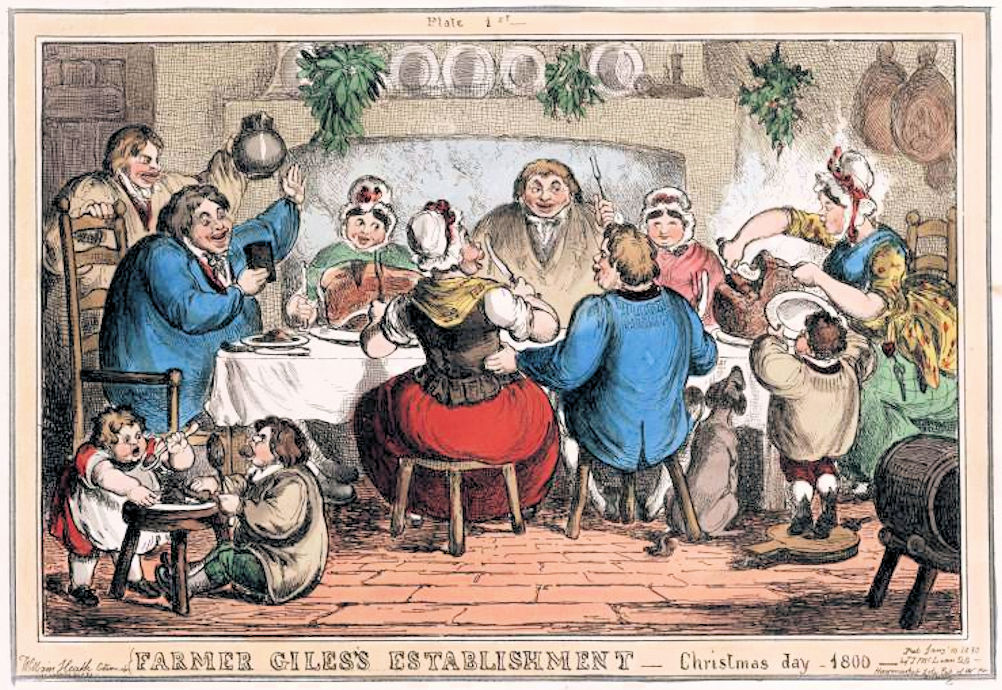
While Christmas festivities were not as commercial as they were during Queen Victoria’s and our time, families in Jane Austen’s era celebrated the holiday with much merriment, many gatherings and parties, and some gift giving. Houses were decorated with evergreens and kissing boughs made of holly, ivy, and mistletoe, although these greens were not brought in until Christmas Eve. On the same night, a large yule log was ceremoniously brought into the house, with the hope that it would last for the rest of the holiday season.
Celebrations lasted from December 6th, St. Nicholas Day, when presents were given, to January 6th , Twelfth Night. On December 25th people attended church service, then ate Christmas dinner. December 26th was known as Boxing Day, when staff and servants were given Christmas boxes and that day off by their benefactors.
The season ended the night of January 5th , the last day of Christmastide, with a Twelfth Night party filled with games and more partying. The revelers ate traditional foods, such as a slice of the elaborately decorated Twelfth Cake, that was topped with enough sugar, sugar figures, and sugar piping to cause a diabetic coma in a horse. (I might have exaggerated slightly.) After the revelers finished partying, superstition dictated that all decorations in the house be taken down and burned, else bad luck would befall the household for the year.
Certain foods marked the season.
“Just at this time these shops are filled with large plum-cakes, which are crusted over with sugar, and ornamented in every possible way. These are for the festival of the kings, it being part of an Englishman’s religion to eat plum-cake on this day, and to have pies at Christmas made of meat and plums.” – p. 63, Mr. Rowlandson’s England, text written by English poet Robert Southey as a fictitious Spanish tourist visiting England.
In “A Miscellany of Christmas Pies, Puddings and Cakes,” Joanne Major describes the typical foods that were served: Christmas pudding, which started out as plum porridge or pottage (and is also known as plum or figgy pudding); sweet and savory mince pies; Christmas cake; and a savory Yorkshire Christmas-Pie. She includes the following quote in her article:
Stamford Mercury, 15th January 1808
At Earl Grosvenor’s second dinner at Chester, as Mayor of that city, on Friday the 1st instant there was a large Christmas pie, which contained three geese, three turkies, seven hares, twelve partridges, a ham, and a leg of veal: the whole, when baked, weighed 154 lbs.!
The following description confirms Robert Southey’s observation that there was no food or protein an Englishman wouldn’t eat, including animals and seafood from all parts of the world—turtles from the West Indies, curry powder from India, hams from Portugal, reindeer’s tongues from Lapland, caviar from Russia; sausages, maccaroni, and oil from Italy, which also provided olives along with France and Spain; cheeses from Switzerland; fish from Scotland; mutton from Wales; and game from France, Norway, or Russia (p 60, Mr. Rowlandson’s England). In his observations, Southey remarked that an Englishman would hunt and shoot anything that could be stuck in a pot.
Gout, a prevalent disease of the well-to-do Georgian, was the painful result of an excessive and repeated ingestion of large quantities of protein and alcohol. The large gout-inducing Christmas pie described by Earl Grosvenor was most likely a version of the Yorkshire Christmas-Pie described by Hannah Glasse in her influential cookery book, The Art of Cookery Made Plain and Easy.
To Make a Yorkshire Christmas-Pie
“FIRST make a good standing crust, let the wall and bottom be very thick; bone a turkey, a goose, a fowl, a partridge, and a pigeon, Season them all very well, take half an ounce of mace, half an ounce of nutmegs, a quarter of an ounce of cloves, and half an ounce of black-pepper, all beat fine together, two large spoonfuls of salt, and then mix them together. Open the fowls all down the back, and bone them; first the pigeon, then the partridge; cover them; then the fowls then the goose, and then the turkey, which must be large; season them all well first, and lay them in the crust, so as it, will look only like a whole turkey; then have a hare ready cased, and wiped with a clean cloth. Cut it to pieces, that is, joint it; season it, and lay it as close as you can on one side; on the other side woodcocks, moor game, and what sort of wild-fowl you can get. Season them well, and lay them close; put at least four pounds of butter into the pie, then lay on your lid, which must be a very thick one, and let it be well baked. It must have a very hot oven, and will bake at least four hours. This crust will take a bushel of flour. In this chapter you will see how to make it. These pies are often sent to London in a box, as presents; therefore, the walls must be well built.”
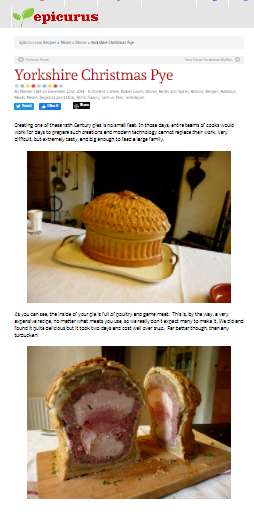
A post entitled “Yorkshire Christmas Pye” in Epicurus describes how tough it was in 2014 to recreate an 18th Century pie. Back then, teams of cooks would work for days to accomplish the feat. According to the chef and author, not even modern appliances could compete with those bygone techniques. The modern pie, from assembly (8 ½ hrs), to baking (4 hrs), to its presentation at the table, took 12 ½ hours in total.
Screenshot of the Epicurus blog page. Photos of the exterior and interior of the Pye made by Ivan Day, whose scrumptuous recreation of Georgian recipes are works of art: Food History Jottings
The Master Chef modified Glasse’s recipe and used the boned meat of the following animals: turkey, goose, partridge, pheasant, woodcock, grouse, and hare. With the added lard in the crust and butter in the filling, I imagine the diner would probably have lacked the energy to push off from the table.
So, inquiring reader, if you are interested in recreating this English pye recipe for Christmas, I encourage you to start dieting on water and vegetables, and exercising on the hour every waking hour to make room for this artery clogging, but very tasty specialty!
“Thank you for the Christmas Cake” was written as a poem by Helen Maria Williams (Read by Tom O’Bedlam)
Patient readers: I apologize for the messy look of the resources list sitting below. The new WordPress “blocks” are wreaking havoc with my ability to publish material on this blog nicely. Obviously I have not learned this “improved” design adequately. I spend more hours fixing problems than writing the article. I assure you, neither Rachel nor Brenda are having this problem. I’ll get the hang of things soon…(I hope.) My comment is this: what was wrong with the old design and, why, if one chooses the classic mode do the blocks keep jumping to the new mode? I’m irked. This is irksome!
Resources:
“A Miscellany of Christmas Pies, Puddings, and Cakes,” Joanne Major, December 11, 2014. All Things Georgian: Super Sleuths who blog about anything and everything to do with the Georgian Era. This post is filled with informative quotes!
Some Georgian Christmas Fare!,” December 16, 2011, Julie Day, Countryhousereader Blog. Great information on Christmas food served at an English country house. Includes information from Bills of Fare for Christmas feasting, 1805 and the suggested meal courses.
Christmas: Georgian Style! From Norfolk Tales, Myths & More! This rich source and fascinating blog provides detailed information on a Georgian Christmas in this post.
Twelfth Night Cake, British Food and History, January 5, 2019. Detailed account of recipes used on that final Christmastide night.
The Englishman’s Plum Pudding, History Today, Maggie Black, Volume 31, Issue 12, December 1981. Includes a history of the British Christmas pudding.
Mr. Rowlandson’s England, text from Robert Southey, Illustrations by Thomas Rowlandson. Southey, Robert, ISBN 10: 0907462774, Published by Antique Collectors Club Ltd, 1985. I loved this book so much (I read it online at the Internet Archive) that I ordered my own copy.
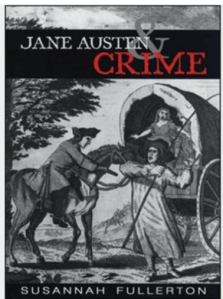
Inquiring readers, Susannah Fullerton lives in Australia, a land Down Under, which at this moment is experiencing spring, that blessed season. Recent articles on this blog have referred to her book, “Jane Austen & Crime,” first published in 2004. Susannah presents yet more historical information from her knowledge of this era.Much of the information in this post was new to me.
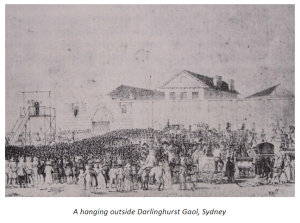
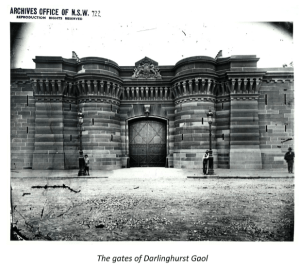
On a hot Australian summer morning in February, 1844, a man was led forth, closely guarded, from the impressive gates of Darlinghurst Gaol in Sydney. It was 9 o’clock in the morning, but already 10,000 people had gathered in the public square in front of the prison, eager to watch the last moments of the condemned man. He was praying as he walked and “appeared to be deeply sensible of the awful position in which he stood. A dark and frowning eternity began to press itself with fearful force upon his mind, while his apparently sincere cries for mercy became more and more earnest as the tragic scene drew on.” He was given a chance to speak some last words to the two clergymen who were present, and then he mounted the scaffold. The noose was placed around his neck, and the man “was launched into another world”. Church bells tolled his passing nearby. The huge crowd, which included women and children, watched silently, awed by the solemnity of the spectacle and, after the body was cut down and removed to within the prison, they quietly walked away. The event was widely reported the next day in Sydney newspapers, so those who had been unable to attend, could read all about it there.
A hanging outside Darlinghurst Gaol, Sydney
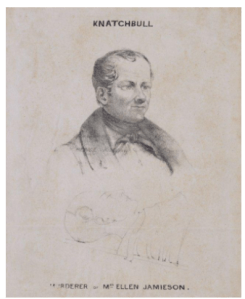
Jane Austen had died more than 25 years before this horrid event. What possible connection could there be between this man, and the great novelist? Well, his name was John Knatchbull and he was the half-brother of the Edward Knatchbull who married Jane Austen’s favourite niece Fanny Austen Knight. Edward and John’s father, Sir Edward Knatchbull, had twenty children by his three different wives. Fanny’s family and the Knatchbull family, also from Kent, had known each other for some years before her marriage with Edward united them, and it is quite possible that Jane could have heard something of the ‘difficult’ son of the family.
John Knatchbull was probably born in 1793 (he was baptized in January of that year) in Kent. As a schoolboy he displayed “vicious inclinations” and when he joined the Navy, he soon found himself treated with contempt by fellow officers, and in financial difficulties. To pay what he owed, he indulged in petty frauds and in 1824 he was tried for the theft of two sovereigns and a blank cheque form. That was enough in value to see him hanged in England, but the judge was lenient on the young man and instead sent him to Botany Bay, the dumping ground for England’s unwanted criminals. John Knatchbull was sentenced to remain in Australia for 14 years before being permitted to return to England. His Kentish family was relieved to be rid of him.
The family black sheep failed to behave any better once he was in Australia. In 1831 he was sentenced to death for forgery. But once more the sentence was commuted, this time to seven years of penal servitude on Norfolk Island, about the grimmest place a convict could be sent. In his time on Norfolk Island John took part in two mutinies and tried to poison with arsenic the food prepared for the guards. However, by 1839 he was back in Sydney. In 1844 John Knatchbull was planning to marry, but he needed money. Returning to his brutal ways, he stole from a shopkeeper Ellen Jamieson, then killed her by hacking at her skull with a tomahawk. Her two children were left orphaned and her murderer, who tried to make a plea of insanity, was described by the judge as “a wretch of the most abominable description”. This time there was no leniency and John Knatchbull was sentenced to hang. Darlinghurst Gaol is still there today (though an art college, not a prison, now does business behind its high stone walls). The square where the 1844 hanging occurred is named Green Square, not for the colour of the grass that grows there but because Mr Green was the name of the hangman.
Had Jane Austen still been alive, no doubt she and Fanny would have discussed the shameful story and its horrific outcome. Both women were aware that another member of their family could also have ended up in the Antipodes. Aunt Jane Leigh Perrot had been at serious risk of a trip to Botany Bay, when she was accused of shop-lifting in Bath in 1799. Incarcerated for some months in Ilchester Gaol, Mrs Leigh Perrot had defended herself vigorously and, at her trial, she was acquitted. However, she knew a journey to Australia was highly probable and made plans that her husband James would accompany her if she was sent there. The entire Austen family must, at this worrying time, have speculated about what life in the colony would be like for their relations.
Jane Austen was interested in prisons. In 1813 she visited Canterbury Gaol with her brother Edward, who had to visit the institution as part of his duties as a magistrate. This was a most unusual thing for a Regency lady to do. My book Jane Austen and Crime explains what sort of institution she saw there. Jane Austen’s interest in punishment and imprisonment went into her next novel, Mansfield Park, a novel that is rich in prison imagery and a book that examines various types of imprisonment in its themes.
The gaol in Canterbury, visited by Jane Austen
Anyone who lived in Britain’s Georgian era must have had a strong awareness of crimes and punishments. Hangings, time in the pillory, and other punishments were very public events. Trials were short and brutal, prisons were being much discussed and were undergoing huge changes, and yet some crimes such as smuggling and poaching were regarded much more leniently by the general public. I started to write my book on crimes in Jane Austen’s world and fiction when a bus on which I was travelling stopped by Darlinghurst Gaol and I began to reflect on the Knatchbull story and to wonder what actually constituted a crime in Austen’s day? Was elopement to Gretna Green a crime? What about Maria’s adultery with Henry Crawford – how did the law regard such behaviour? Which of Jane Austen’s characters commit hanging offences, and how does her juvenilia reflect her interest in criminal activity? Which of her characters work as magistrates, who are the lawyers in her fiction, and how did she regard such crimes as duelling and gambling? The result of that moment on a bus was, some years later, my book. Claire Tomalin was kind enough to describe it as “essential reading for every Janeite”. I found it fascinating to see Jane Austen’s world and fiction through the lens of crime – I hope you enjoy and learn from it too.
About Susannah Fullerton, OAM, FRSN, President of the Jane Austen Society of Australia: Susannah Fullerton is a Canadian-born Australian author and literary historian. She has been president of the Jane Austen Society of Australia since 1996, which is the largest literary society in Australia.
You are welcome to sign up to Susannah’s free monthly newsletter, ‘Notes from a Book Addict’. To sign up, email susannah@susannahfullerton.com.au and
your name will be entered in a draw ON DECEMBER 20TH to win one of the following prizes:
A signed copy of Jane Austen and Crime by Susannah Fullterton.
An additional copy of the book from Vic Sanborn for U.S. and Canadian citizens.
A 1-year subscription to ‘Tea with a Book Addict’, an exciting programme of zoom / video talks which will take you around the world with 12 fabulous novels.
1 video talk of your choice from Susannah’s website
Please quote the password KNATCHBULL to have your name entered in the draw for prizes.
Fashionable Goodness: Christianity in Jane Austen's England is now available! By JAW contributor Brenda S. Cox. See Review. Available from Amazon and Jane Austen Books.
Available through December 31st, 2025. Click on image for details, and share this poster with other teachers and students!
The Obituary of Charlotte Collins by Andrew Capes
Click on image to read the story.
Comments
“My idea of good company…is the company of clever, well-informed people, who have a great deal of conversation.” – Jane Austen, Persuasion
Gentle readers: Please feel free to post your comments and continue the conversation! Due to SPAM, we will no longer accept comments on posts after 30 days of publication. In some instances, links will be removed from comments as well.
Administrators and Contributors
Vic Sanborn, founder of this blog, is supported by a team of talented and knowledgeable writers about Jane Austen and the Regency era. They are:
Tony Grant, who now contributes his photos from London and England
Click on their names to enter their own blogs.
In addition, we thank the many experts and authors who frequently contribute their posts and opinions, and who continue to do so freely or at our request.
Click here to enter the page. Topics include Regency fashion, historic foods, Jane Austen societies, British sites, related topics. Click on image.
May we suggest?
Hello, my name is Vic and I live in Maryland, USA. I have adored Jane Austen almost all of my life. I am a proud lifetime member of the Jane Austen Society of North America. This blog is a personal blog written and edited by me and my team. We do not accept any form of cash advertising, sponsorship, or paid topic insertions. However, we do accept and keep books and CDs to review.
If you would like to share a new site, or point out an error, please email us. (Yes, we are fallible. We'll own up to our mistakes and will make the corrections with a polite smile on our faces.) Write us at
Thank you for visiting this blog. Your comments and suggestions are most welcome.
Project Gutenberg: eBook of Stage-coach and Mail in Days of Yore, Volume 2 (of 2), by Charles G. Harper
STAGE-COACH AND MAIL IN DAYS OF YORE: A PICTURESQUE HISTORY
OF THE COACHING AGE, VOL. II, By CHARLES G. HARPER. 1903. Click on this link.
 nquiring readers, Today is one of celebration for those of us who honor Christ’s birth. This is a year of challenge for so many in our communities whose jobs and families have been affected by COVID-19. Inspired by the Georgians in times past, I do what I can in my community and for those in need. Austen describes this community/family/friend caring so well in her novels, a theme that Rachel Dodge covered in a recent post , and Brenda Cox in a post entitled “Thankfulness in Jane Austen’s Novels.”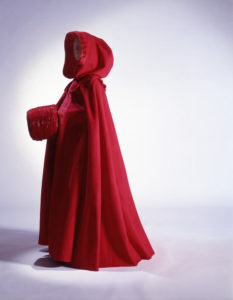
 [Verse 1]
 On the second day of Christmas, Jane Austen sent to me
 On the third day of Christmas, Jane Austen sent to me
 On the fourth day of Christmas, Jane Austen sent to me
 On the fifth day of Christmas, Jane Austen sent to me
 On the sixth day of Christmas, Jane Austen sent to me
 mas, Jane Austen sent to me
 On the eighth day of Christmas, Jane Austen sent to me
 On the tenth day of Christmas, Jane Austen sent to me
 On the eleventh day of Christmas, Jane Austen sent to me
 On the twelfth day of Christmas, Jane Austen sent to me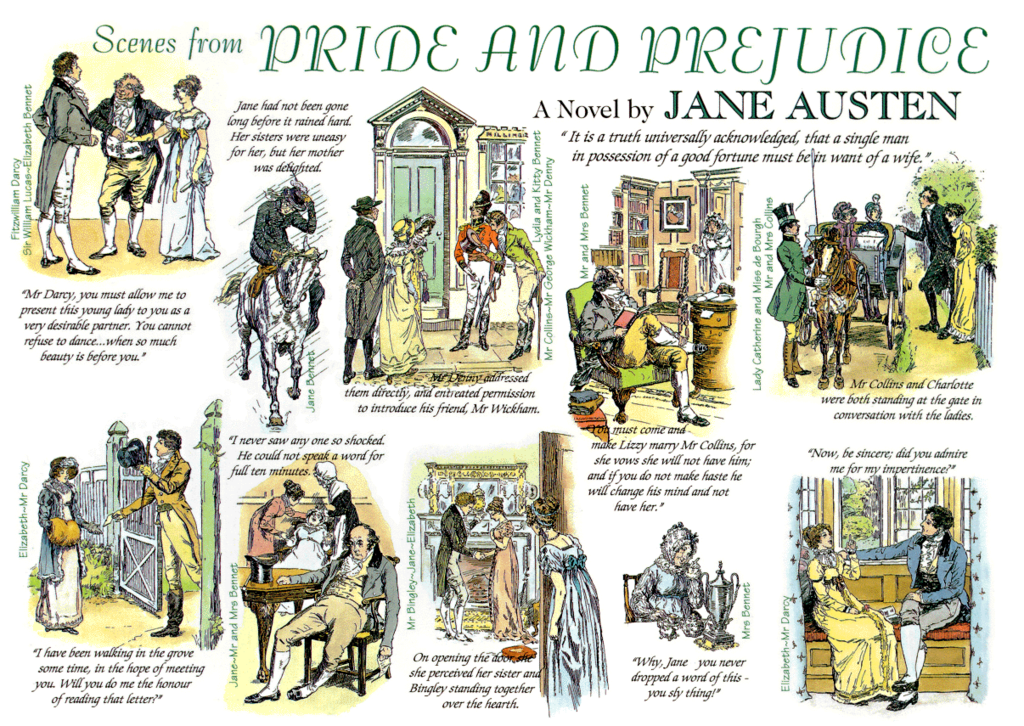











 Jane Austen's World