Feeds:
Posts
Comments

Posts Tagged ‘celebrating pride and prejudice’

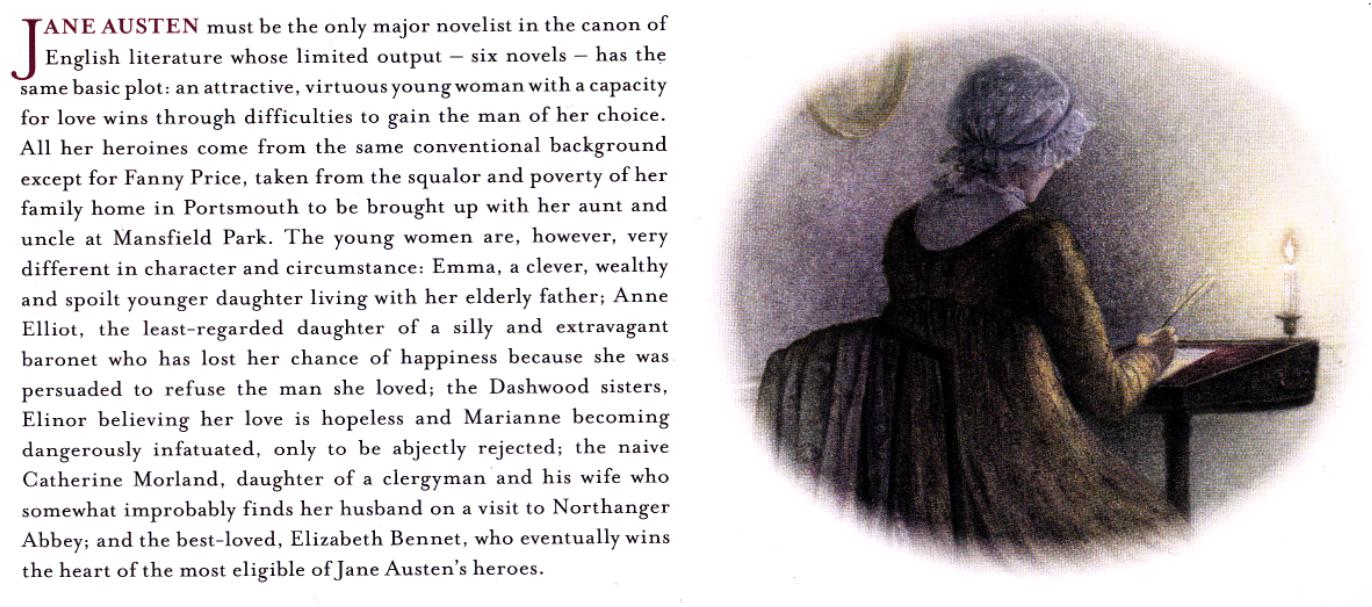
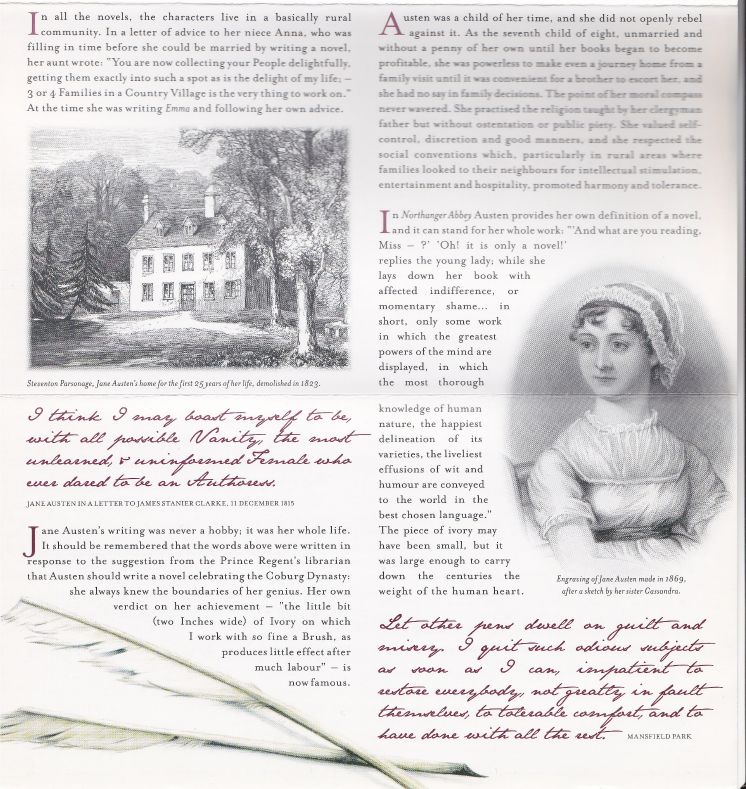
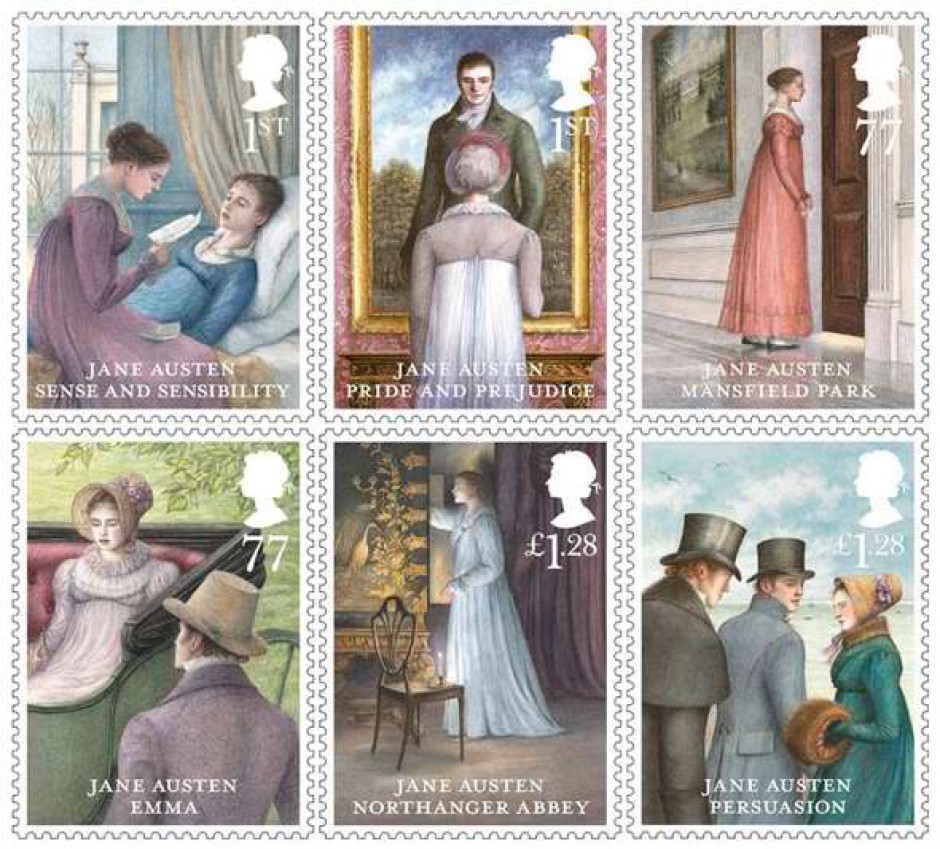
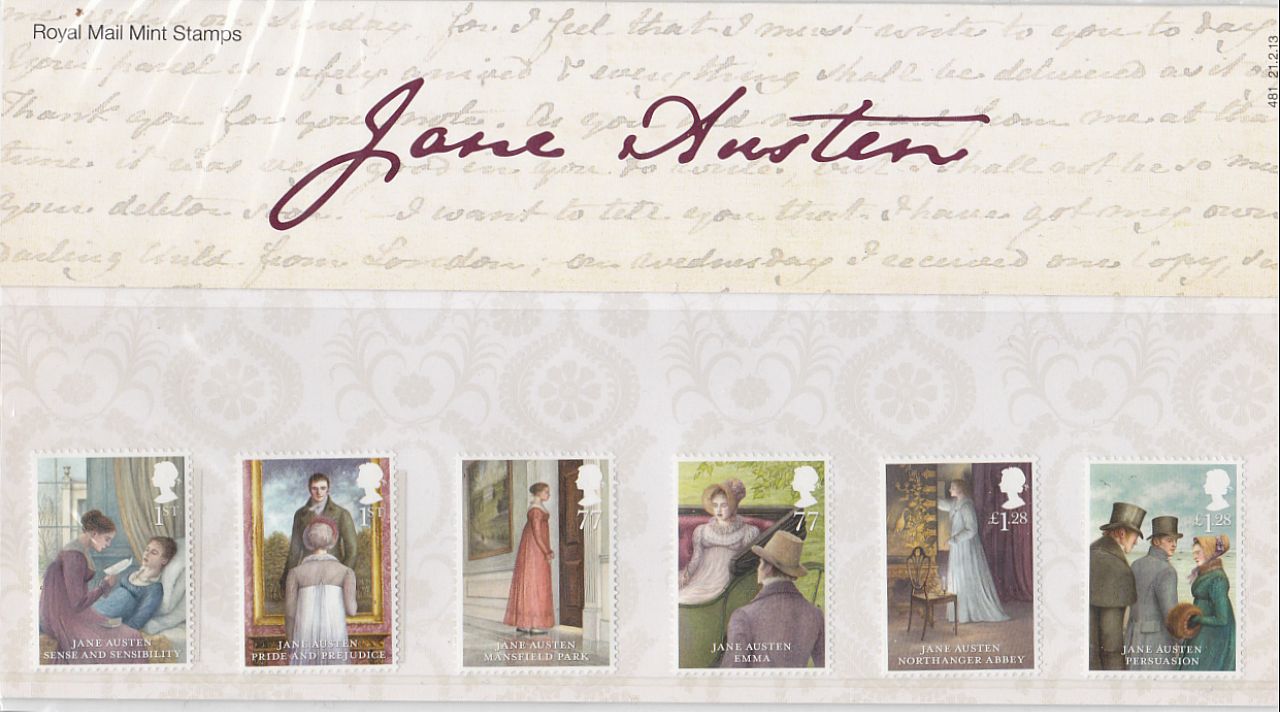
Inquiring Readers, my friend and frequent contributor, Tony Grant, sent me a gift that went straight to my heart – the Royal Mail’s new Jane Austen stamps. These were printed to mark the 200th anniversary of Pride and Prejudice. The packaging, as you can see from my scans, is divine, with Jane’s name printed in a font based on her handwriting.

BeFunky_jane austen stamps.jpg
For a lucky few, letters that were posted during a designated week in Chawton in Hampshire, where she lived during the last 8 years of her life, and in Steventon near Basingstoke, where she spent her first 20 or so years, will bear a special postmark. To read the information on the packaging, click on the images.

Jane Austen

BeFunky_georgette heyer_0004.jpg

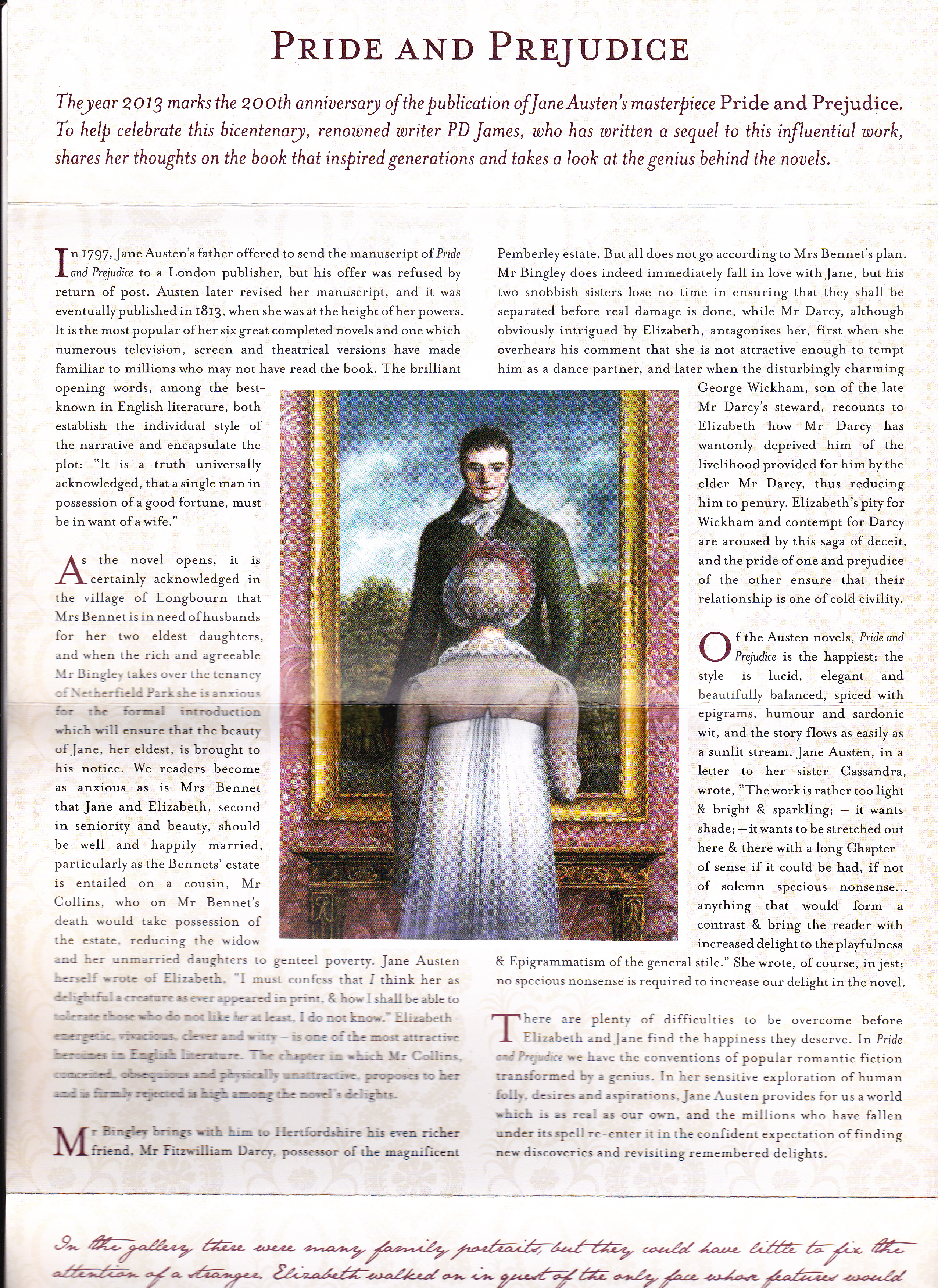
In the scan below the Pride and Prejudice stamp is blown up and sits in the center. Again, click on the image to read the text.
georgette heyer_0002
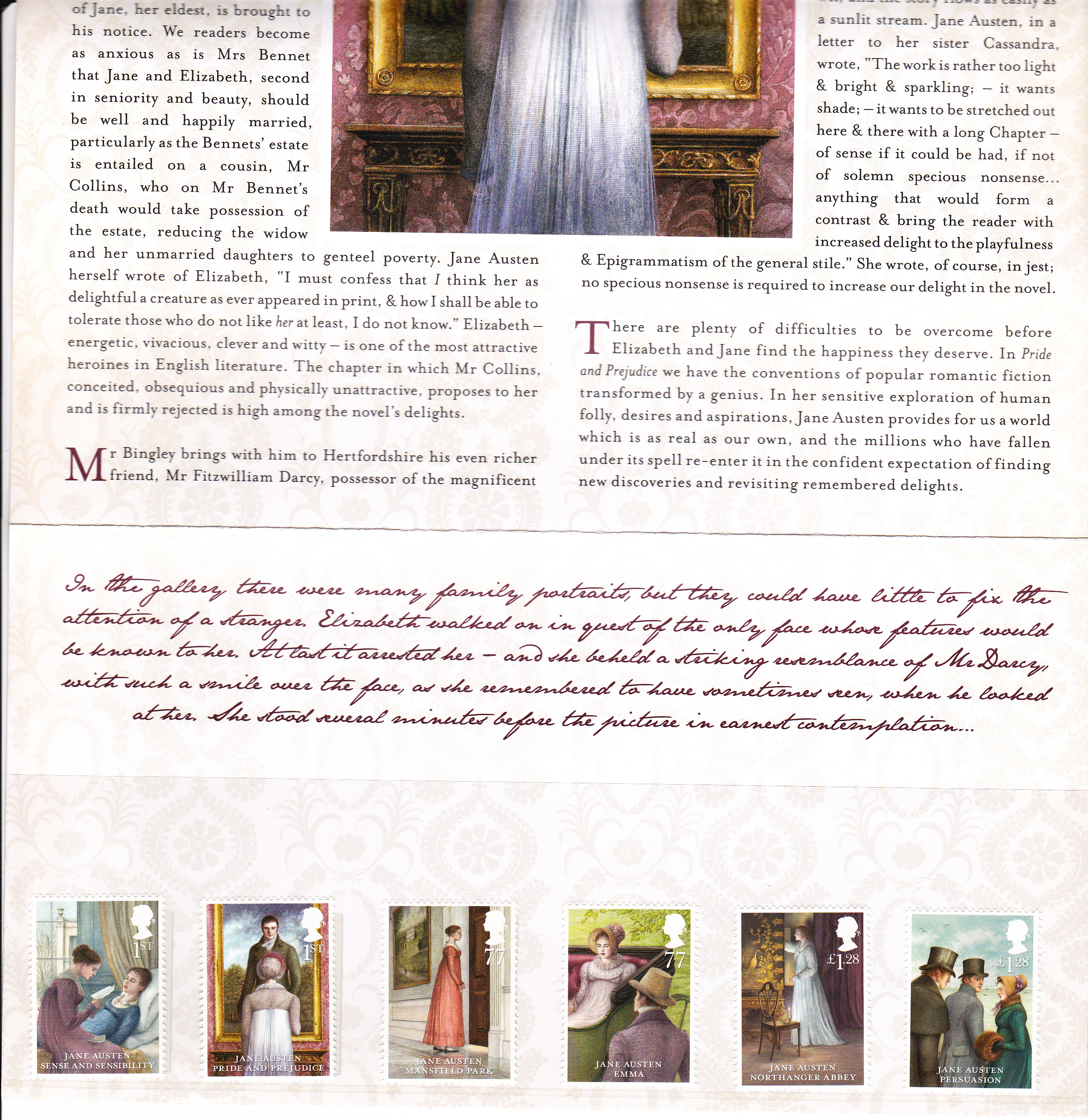
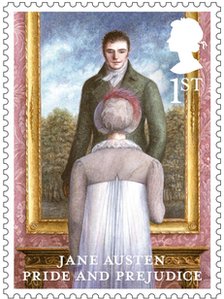
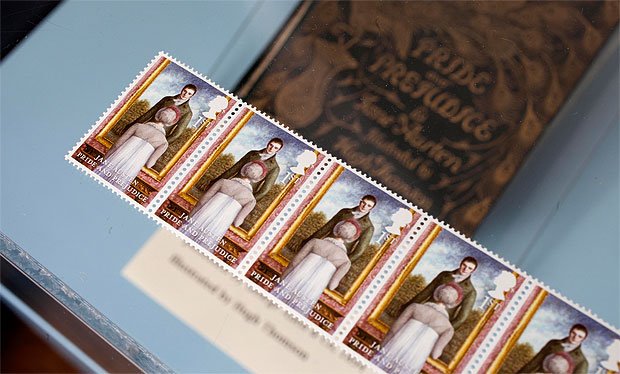
Elizabeth views Darcy’s portrait as she wanders through Pemberley, guided by the housekeeper and escorted by her aunt and uncle. The scans overlap a bit. In the one below you can see the six stamps affixed at the bottom.

georgette heyer_0003

The special postmark for the  set features the Pride And Prejudice quote: “Do anything rather than marry without affection.” Royal Mail’s Andrew Hammond said: “It is an honour for Royal Mail to commemorate [Jane Austen’s] work.”

timthumb

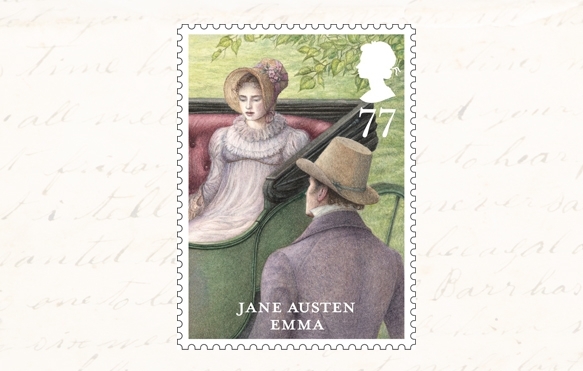
Illustrator Angela Barrett was commissioned to illustrate the six stamps that make up the st. One can only wish that somewhere up in heaven she and her family are aware of how very far her fame has spread. If you will note, the Sense and Sensibility and Pride and Prejudice stamps make up the first class stamps.

_65977674_janeaustenstampprideandprejudice

In 2007, a BBC poll for World Book Day voted Pride and Prejudice as the book most respondents could not live without. – BBC News

Jane-Austen_MRM-583x371px

Published in 1813, Pride and Prejudice was Austen’s second novel and she described it as her “own darling child”. – The Guardian

Jane_Austen_commemorative_stamps_go_on_sale

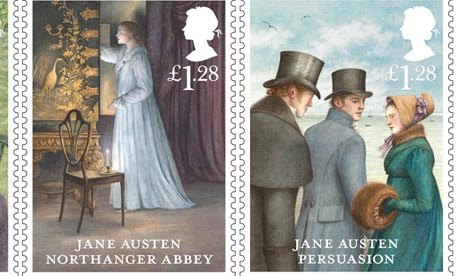
Below are the enlarged stamps of Northanger Abbey and Persuasion.

Jane Austen 200th anniversary Royal Mail stamps

Information and images from ExpressGazette,  Radio Times, and BBC News.

 Thank you, Tony, from the bottom of my heart. These Jane Austen stamps are the perfect gift for a Janeite.

Read Full Post »

Gentle readers, in celebration of Pride and Prejudice’s 200 year anniversary, Jane Austen’s World will feature a regular article about Jane Austen’s most popular novel throughout 2013. We can count on frequent contributor Tony Grant from London Calling to provide us with a unique perspective. Enjoy!

All good films have a car chase. Some originate from well written, exciting, nail-biting, on the edge of your seats, breathless descriptions in a novel.

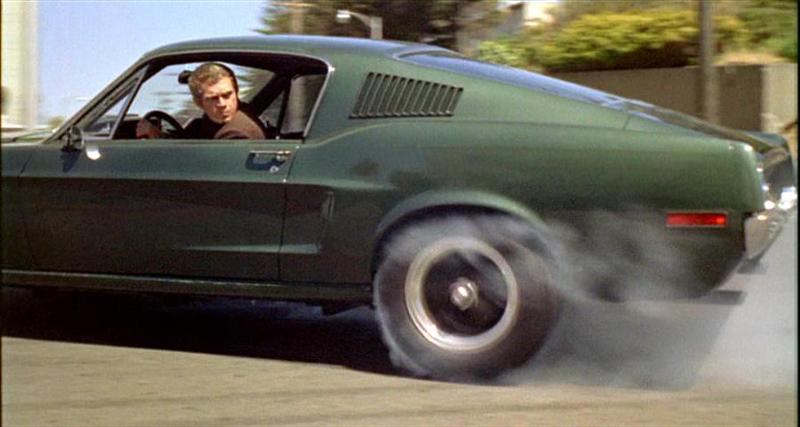
Steve McQueen in mustang

Steve McQueen in mustang

Let it not be said Pride and Prejudice doesn’t have it’s nail biter, it’s moment of burning rubber and screeching tyres that is right up there with Steve McQueen ripping up the streets of San Francisco in Bullitt, hurling his Ford Mustang over the lips of hills and down daredevil slopes with a street fighters aggression or Michael Caine escaping the Italian police with wheels spitting gravel and door smashing bravado in his supercharged mini cooper GT along the Corniche, “not many people know that,” or John Thaw in The Sweeney, as gritty streetwise cop Jack Regan thundering through the Isle of Dogs in his 3 litre V6 Ford Consul GT. Mr Bennett has his contenders, but not, may I dare say, his equals, oh no.

Elizabeth Bennett, who is visiting Derbyshire with her aunt and uncle, the Gardeners has received a letter from her sister Jane

Since writing the above, dearest Lizzy, something has occurred of a most unexpected and serious nature; but I am afraid of alarming you — be assured that we are all well. What I have to say relates to poor Lydia. An express came at twelve last night, just as we were all gone to bed, from Colonel Forster, to inform us that she was gone off to Scotland with one of his officers; to own the truth, with Wickham!”

Image of eloping couple. 1815

Image of eloping couple. 1815

This piece of information about Lydia sets in motion, literally, a series of coach journeys and desperate searchings that rivals anything Steve McQueen or Michael Caine partook of.

Michael Caine: Nuts to your watches! You just be at the Piazza at a quarter to..
Steve McQueen: Look, you work your side of the street, and I’ll work mine.
Det. Insp. Jack Regan: Remember, no guns unless they use ’em.

Mr Gardner and Mr Bennett walking the streets of London, searching for Wickham and Lydia could well have used lines like those. What needs to be said, what needs to be done, never changes whatever century, don’t you think?

“…and all three being actuated by one spirit, every thing relating to their journey was speedily settled. They were to be off as soon as possible.”

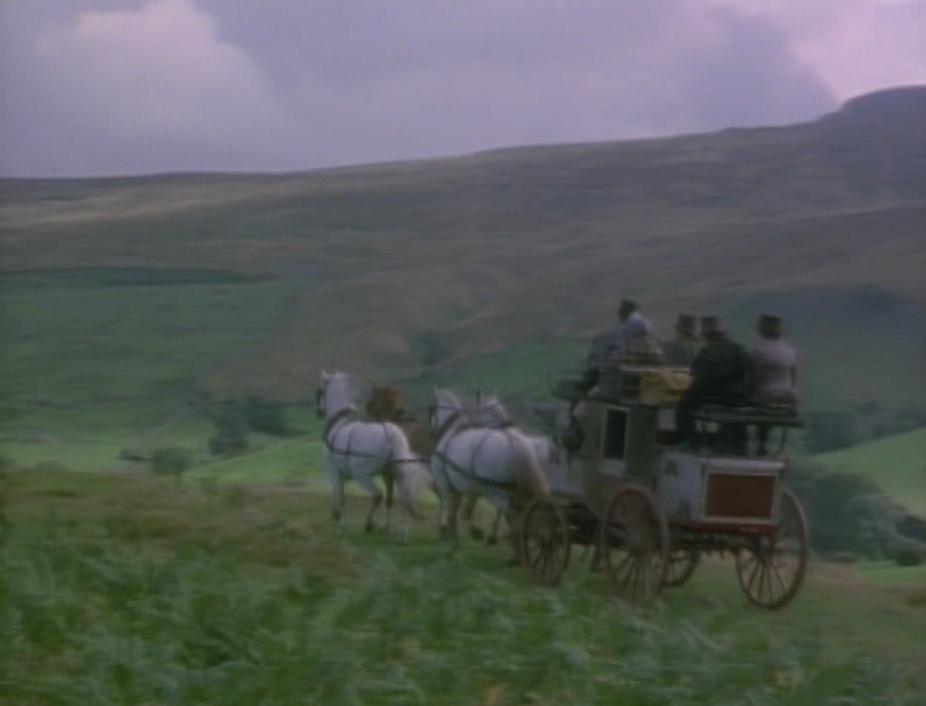
Coach travel

Coach travel

And so Mr and Mrs Gardner and Lizzie Bennett sped south to Longbourn at the hair-raising speed of 10 miles per hour or more, on the occasion of increased velocity being achieved when long flat straight roads presented themselves; jolted and tossed about, no doubt, like three potatoes in a sack.

But Lydia and Wickham were as devious and cunning as any mafia on the streets of Naples, or ruthless bank robbers from the East End of London or murderous killers off the dangerous streets of San Francisco. Gretna Green was, dare I say, a red herring. They spread rumours, gasp, horror; they planned and they plotted, they predicted and they saw clearly with their crazed, devious minds thinking out brilliantly, their next move. They lived the heady adrenalin pumped life of criminals on the run.

Mr Bennett “… did trace them easily to Clapham, but no farther; for on entering that place they removed into a Hackney coach and dismissed the chaise that brought them from Epsom.”

Oh gosh and golly, what subterfuge, what dastardly cunning. They actually changed from a chaise to a hackney coach.The evil mind games of those criminals. But they were hunted, yes, hunted, by Mr Bennett, he, a wily, ruthless backwoodsman who once he smelled the scent of his prey cannot, will not, be put off his quest. Mrs Bennett was right to be desperate in her concerns,

And now here’s Mr Bennett gone away and I know he will fight Wickham, wherever he meets him, and then he will be killed, and what is to become of us all?”.

Popeye Doyle himself could not compete with Mr Bennett surely in his ruthless endeavour

 The son of a bitch is here. I saw him. I’m gonna get him.”

But our Mr Bennett in his utter, focused, desperate determination can but say,

“Who should suffer but myself? It has been my own doing, and I ought to feel it.”

Good gracious, the man is a titan of hot-blooded aggression. Surely nothing can prevail? Wickham has met his match.

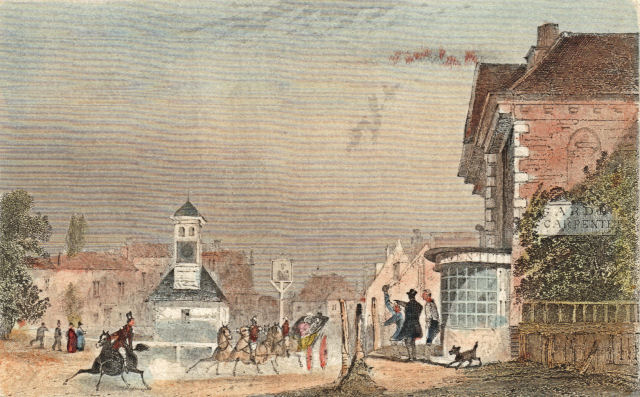
epsom

Epsom Watch House & Clock c1840 from Dugdale’s England & Wales
Image courtesy of Surrey Libraries and is held in the
Epsom & Ewell Local And Family History Centre

Elizabeth was desperate to know what lengths, what depths her father would go to retrieve his wayward daughter, her very own sister.

He meant, I believe,” replied Jane, “to go to Epsom, the place where they last changed horses, see the postilions, and try if anything could be made out from them. His principal object must be to discover the number of the hackney coach which took them from Clapham. “

Of course, a touch of sheer genius; find out the number of the Hackney Coach. That would do it. He would be sure to find them then.
And after all this searching, this animal desperation, this wolf like howl of anguish ripped from the primeval instinctive depths of Mr Bennett’s heart, what then? What could be the consequences? So after many letters flying backwards and forwards, if anything, P&P appears to hinge very often on the writing, sending and receiving of letters, Mr Gardner has appeared to pay Wickhams debts,, Mr Bennet has only to provide a paltry £100 a year, he can’t believ his luck and can’t quite work out the finances as if he ever could work out his finances. (Aside: we all know who really has settled the finances, don’t we?? Ha! Ha! It’s getting more like a pantomime all the time this. Mrs Bennnet as Widow Twanky and Mr Bennet as Baron Hardup.)

He had never before supposed that, could Wickham be prevailed on to marry his daughter, it would be done with so little inconvenience to himself as by the present arrangement. He would scarcely be ten pounds a year the loser, by the hundred that was to be paid them; for, what with her board and pocket allowance, and the continual presents in money which passed to her through her mother’s hands, Lydia’s expenses had been very little within that sum.

That it would be done with such trifling exertion on his side, too, was another very welcome surprise; for his chief wish at present was to have as little trouble in the business as possible. When the first transports of rage which had produced his activity in seeking her were over, he naturally returned to all his former indolence.”

Mr. Bennet

Mr. Bennet

So Wickham was to marry Lydia and Mrs Bennett was happy and all was well with Mr Bennett and he could return to his former state of,” indolence.” A sort of Popeye Doyle with carpet slippers smoking a pipe and reading his newspaper seated at his fireside; a Michael Caine reminiscing about his past, cold eyed and tough emotionless roles in Get Carter relaxing now in his easy chair or Steve McQueen sitting back on his ranch, his rocking chair gently calming his fevered brain and letting his motorbikes go rusty, crying into his beer, or, even a Jack Regan from The Sweeney who could at last ,” Shut it!” himself. Ah, all was well in the end. Colonel Forster could return too to Brighton, to the lesser dangers of defending our shores and leading his regiment against Napoleon knocking at the very shingle on Brighton Beach. Mr and Mrs Gardner could return to the hustle and bustle and shops and markets of Gracechurch Street in the city and Lizzie and Jane, yes, well, we know what becomes of Lizzie and Jane,

Happy for all her maternal feelings was the day on which Mrs Bennet got rid of her two most deserving daughters. With what delighted pride she afterwards visited Mrs Bingley and talked of Mrs Darcy may be guessed.”

Lydia in connubial bliss and Wickham not so

Lydia in connubial bliss and Wickham apparently not so

So, in a novel dedicated to getting daughters married, a lot of horse and carriage mileage is accrued and many letters are written. We only hear of weddings, but we certainly know about how characters felt. Will, Lady Catherine ever get over being, “exceedingly angry” or will she just explode with high blood pressure?

Read Full Post »

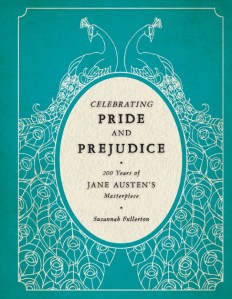
9780760344361Happy 200th year anniversary, Pride and Prejudice! Much to my delight, author Susannah Fullerton has written a comprehensive homage to the novel to start off a year-long celebration. Celebrating Pride and Prejudice: 200 Years of Jane Austen’s Masterpiece is chock full of new and old information about Jane Austen’s most popular and beloved work. Written in Susannah’s breezy style (reading the book is like hearing Susannah talk enthusiastically about one of her favorite authors in person), the book follows the creation, writing,  and publication of Pride and Prejudice; examines the appeal of its hero and heroine minutely; analyzes other major and minor characters; and discusses translations, illustrators, sequels and adaptations, films and theatricals, and P&P paraphernalia in some depth. In other words, Celebrating Pride and Prejudice is a one-stop reading shop for P&P enthusiasts.

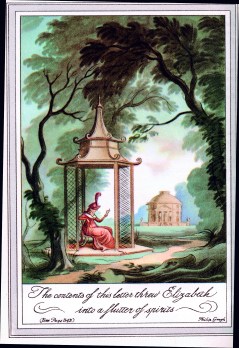
Gough2 (1)

Copyrighted Gough image courtesy Voyageur Press.

Fullerton’s book is lavishly illustrated, with a number of images not well-known in the Austen cannon, such as Philip Gough’s lovely colored images which have been hidden from contemporary view for too long (unless one purchases an expensive out of print 1951 edition – if one can be found!), and also those from Robert Ball, Rhys Williams, Joan Hassal, and Isabel Bishop. Modern illustrators like Jane Odiwe, Liz Monahan, and Anne Kronheimer are also included.

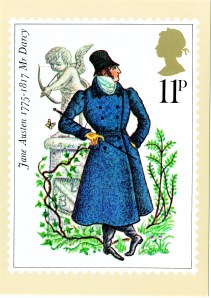
DarcyStamp

Mr. Darcy on a UK stamp commemorating Jane Austen. Copyrighted image courtesy Voyageur Press.

Fullerton enlivens her chapter with interesting details, such as the location of Lydia’s wedding, Mrs. Bennet’s housekeeping skills, what other critics say about Lizzy and Darcy, and Christmas in Austen’s day. She also includes an interesting theory about Mr. Darcy (with which I vehemently disagree), which describes him as being “slightly autistic”. (Note that Fullerton merely introduces a theory proposed by Phyllis Ferguson Bottomer in her book, So Odd a Mixture.) Such details add a little peppery spice to this celebration of P&P. There are many more insights, but I particularly liked Fullerton’s own conclusion about Elizabeth and Lydia:

Ghastly as Lydia Bennet is, she and Elizabeth make credible sisters; Jane Austen has taken genetics into account. Both are attracted to Wickham, both break society’s rules (Elizabeth walks alone through the countryside), both have high energy levels,… and they share the same thoughts about Miss King (‘nasty little freckled thing’).”

google image pride and prejudice

Shot of google page with Pride and Prejudice book covers.

Celebrating P&P includes an extensive listing of British, American, and foreign film and television productions of P&P. As a would-be purchaser you might ask yourself: Does Fullerton offer new insights about P&P in her new book? Not for the more seasoned Janeite, but that isn’t its purpose. It’s meant to be an homage and celebration, much as the title states. Fullerton concludes her book with “Pride and Prejudice as bibliotherapy” and an essay from Elsa Solender, past president of JASNA. For those of us who eat, breathe, sleep, and dream Pride and Prejudice and all things Jane Austen,  Reading Celebrating Pride and Prejudice: 200 Years of Jane Austen’s Masterpiece is exactly the bibliotherapy we need to start 2013 off right. I congratulate Susannah Fullerton for a job well done and thank her for an enjoyable three evenings of reading this holiday season.

Opening sentence of Pride and Prejudice in different languages. Fullerton discusses its meaning in quite some detail.

Opening sentence of Pride and Prejudice in different languages. Fullerton discusses its meaning in quite some detail.

Susannah Fullerton

Susannah Fullerton is also the author of A Dance with Jane Austen

The book is on sale today:

ISBN: 9780760344361

Item # 210748

240 pages, 35 color, 35 b/w photos

http://www.voyageurpress.com

More with Susannah Fullerton

Read Full Post »

Inquiring readers: This is the first of many posts I’ll be writing about “Pride and Prejudice” in honor of that novel’s 200 year anniversary in 2013. Enjoy.
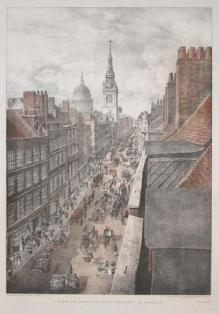
Cheapside in 1823. Engraved by T.M. Baynes from a drawing by W. Duryer.JPG

Cheapside in 1823. Engraved by T.M. Baynes from a drawing by W. Duryer. Image @Wikipedia

Some London streets seem determined never to distinguish themselves. No mediaeval scuffle has ever occurred in them; no celebrated church hoards its monuments; no City hall cherishes its relics there; no celebrated person has honoured it by birth or death. Gracechurch Street is one of these unambitious streets. It derived its name, says Stow, from the grass or herb market there kept in old time, and which gave its name to the parish church of St. Bennet. – British History Online,

It is a woeful fact that I most likely crossed Gracechurch Street on my first visit to London and never new it. We had just visited Tower Hill and were heading for St. Paul’s Cathedral on foot. My husband and I wandered here and there and got lost, no nearer to our destination. This part of London seemed a mismash of old and mostly modern buildings, with wide and narrow streets, some twisting and winding, others straight. It was nothing like the old London my 24-year-old self had expected to see, for at that time I did not fully realize the extent of the devastation that the great fire of 1666 had wrought. Those changes were compounded by the London Blitz during WWII and recent modernization.

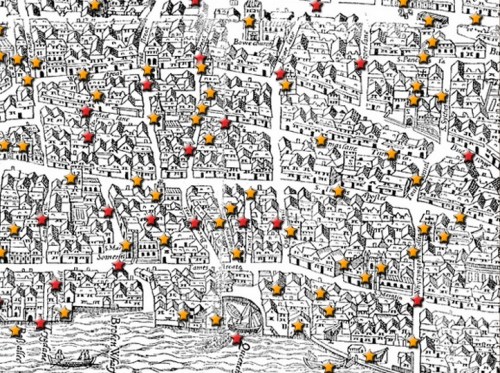
Early modern map of Cheapside. Image @The Map of Early Modern London

Early modern map of Cheapside. Image @The Map of Early Modern London One can see Bow Church at the top center.

We finally boarded a transit bus and missed noticing Gracechurch Street. Not that I would have searched for it. At that time I would not have recalled the few references in Pride and Prejudice to the street where Lizzy Bennet’s aunt and uncle Gardiner lived.

Mr. Gardiner was a sensible, gentlemanlike man, greatly superior to his sister, as well by nature as education. The Netherfield ladies would have had difficulty in believing that a man who lived by trade, and within view of his own warehouses, could have been so well bred and agreeable. Mrs. Gardiner, who was several years younger than Mrs. Bennet and Mrs. Philips, was an amiable, intelligent, elegant woman, and a great favourite with all her Longbourn nieces. Between the two eldest and herself especially, there subsisted a very particular regard. They had frequently been staying with her in town.

The first part of Mrs. Gardiner’s business on her arrival, was to distribute her presents and describe the newest fashions.

I love the Gardiners, two sane people in a novel filled with characters and oddballs. They provide ballast and sound advice to Elizabeth, who wisely turned to Mrs. Gardiner, not her mother, when mulling a problem about love and life. Mr. Gardiner was a merchant who lived close to his warehouse. Despite their middle class background, the Gardiners are more refined and sensible than many of their social betters. Elizabeth is proud to introduce them to Mr. Darcy when visiting his estate, knowing that their restrained behavior would not make him (or her) cringe.

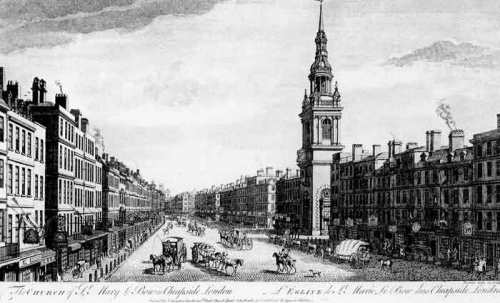
Cheapside in the mid 18th century. Image @Republic of Pemberley

Cheapside in the mid 18th century. Image @Republic of Pemberley

Caroline Bingley, whose snobbishness was evident when she paid Jane a hasty courtesy call at Gracechurch Street, demonstrated a decided lack of class when she all but wrinkled her nose at a neighborhood she had probably managed to avoid all her life, an interesting attitude considering her family’s wealth came from trade and she was but one generation away from the “stench” of the merchant class. Social calls, their timing and length – or lack thereof – could be used to extend a friendship or give the cut direct, which in this instance Miss Bingley chose to do to Jane. Her lack of civility and coolness before and during the visit finally opened Jane’s eyes to Caroline’s desire to end their friendship. This was an event that Mrs. Gardiner and Lizzy correctly predicted beforehand:
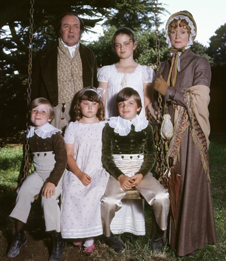
The Gardiners and their brood, Pride and Prejudice, 1995

The Gardiners and their brood, Pride and Prejudice, 1995

Chapter 25:  [Mrs. Gardiner] Poor Jane! I am sorry for her, because, with her disposition, she may not get over it [her failed love affair with Bingley] immediately. It had better have happened to you, Lizzy; you would have laughed yourself out of it sooner. But do you think she would be prevailed on to go back with us? Change of scene might be of service — and perhaps a little relief from home, may be as useful as anything.”

Elizabeth was exceedingly pleased with this proposal, and felt persuaded of her sister’s ready acquiescence.

“I hope,” added Mrs. Gardiner, “that no consideration with regard to this young man will influence her. We live in so different a part of town, all our connexions are so different, and, as you well know, we go out so little, that it is very improbable they should meet at all, unless he really comes to see her.”

“And that is quite impossible; for he is now in the custody of his friend, and Mr. Darcy would no more suffer him to call on Jane in such a part of London! My dear aunt, how could you think of it? Mr. Darcy may, perhaps, have heard of such a place as Gracechurch Street, but he would hardly think a month’s ablution enough to cleanse him from its impurities, were he once to enter it; and, depend upon it, Mr. Bingley never stirs without him.”

“So much the better. I hope they will not meet at all. But does not Jane correspond with the sister? She will not be able to help calling.”

“She will drop the acquaintance entirely.”

Dennis Severs house, a Georgian merchant's house. Image @photographsRoelof Bakker, www.rbakker.com

Dennis Severs house, a Georgian merchant’s house in Spitalsfield. Image @photographs
Roelof Bakker, http://www.rbakker.com

“…lessen their chance of marrying men of any consideration in the world.

With this phrase, Austen gives us a clue about the Bennet girls’ situation, but, as we know, the ending of Pride and Prejudice proves this forecast wrong (for Lizzy and Jane, at least).

Lizzy is right about Caroline Bingley, but not about Darcy. In the following scene her prejudice towards that proud man comes to the fore. She assumes that Mr. Darcy’s attitude towards Gracechurch Street will echo that of Caroline Bingley, for this bustling shopping district simply wasn’t an area that the upper crust tended to visit. Caroline, Darcy and Bingley made their observations about the Bennet family during their stay at Netherfield:

Darcy and Caroline at breakfast

Darcy and Caroline at breakfast

“I think I have heard you say that their uncle is an attorney in Meryton”

“Yes; and they have another, who lives somewhere near Cheapside.”

“That is capital,” added her sister, and they both laughed heartily.

“If they had uncles enough to fill all Cheapside,” cried Bingley, “it would not make them one jot less agreeable.”

“But it must very materially lessen their chance of marrying men of any consideration in the world,” replied Darcy.

Darcy, it turns out, is made of finer stuff than Caroline Bingley, for when he visits the Gardiners in his quest to find Wickham, his attitude is anything  but snobbish – stubborn, as Mrs. Gardiner later relates, but not snobbish. While arranging Wickham’s marriage to Lydia, he visits Gracechurch Street on several occasions and even dines with the Gardiners, leaving them with a very positive impression of his character:

Chapter 51 [Letter from Mrs. Gardiner to Lizzy after Lydia revealed Darcy’s part in her marriage to Wickham] He dined with us the next day, and was to leave town again on Wednesday or Thursday. Will you be very angry with me, my dear Lizzy, if I take this opportunity of saying (what I was never bold enough to say before) how much I like him. His behaviour to us has, in every respect, been as pleasing as when we were in Derbyshire. His understanding and opinions all please me; he wants nothing but a little more liveliness, and that, if he marry prudently, his wife may teach him. I thought him very sly;—he hardly ever mentioned your name. But slyness seems the fashion.

Mansion House, Cheapside. Image @Darvill's Rare Prints

Mansion House, Cheapside. Image @Darvill’s Rare Prints

At the time that Jane Austen wrote Pride and Prejudice, Cheapside was a very elegant thoroughfare with many sumptuous warehouses, convenient coffee houses, and  smart shops. In Real Life in London, Pierce Egan writes a passage in which Tom and Bob walk through this area filled with shopkeepers, bankers, merchants, shoppers, and “walking” billboards:

“Neither,” replied Dashall; “this is no other than the shop of a well-known dealer in stockings and nightcaps, who takes this ingenious mode of making himself popular, and informing the passengers that

“Here you may be served with all patterns and sizes,
From the foot to the head, at moderate prices;”
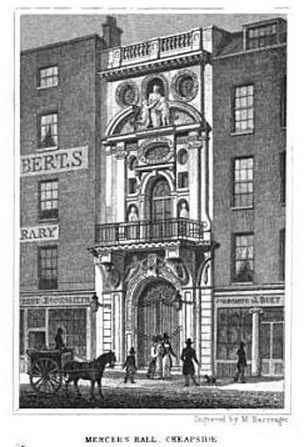
Mercer's Hall, Cheapside. Image @London and Its Environs

Mercer’s Hall, Cheapside. Image @London and Its Environs in the Nineteenth Century

with woolens for winter, and cottons for summer—Let us move on, for there generally is a crowd at the door, and there is little doubt but he profits by those who are induced to gaze, as most people do in London, if they can but entrap attention. Romanis is one of those gentlemen who has contrived to make some noise in the world by puffing advertisements, and the circulation of poetical handbills. He formerly kept a very small shop for the sale of hosiery nearly opposite the East-India House, where he supplied the Sailors after receiving their pay for a long voyage, as well as their Doxies, with the articles in which he deals, by obtaining permission to style himself “Hosier to the Rt. Hon. East India Company.” Since which, finding his trade increase and his purse extended, he has extended his patriotic views of clothing the whole population of London by opening shops in various parts, and has at almost all times two or three depositories for Romanis, the eccentric Hosier, generally places a loom near the door of his shops decorated with small busts; some of which being attached to the upper movements of the machinery, and grotesquely attired in patchwork and feathers, bend backwards and forwards with the motion of the works, apparently to salute the spectators, and present to the idea persons dancing; while every passing of the shuttle produces a noise which may be assimilated to that of the Rattlesnake, accompanied with sounds something like those of a dancing-master beating time to his scholars. his stock. (sic) At this moment, besides what we have just seen, there is one in Gracechurch Street, and another in Shoreditch, where the passengers are constantly assailed by a little boy, who stands at the door with some bills in his hand, vociferating—Cheap, cheap.”

“Then,” said Bob, “wherever he resides I suppose may really be called Cheapside?”

“With quite as much propriety,” continued Ton, “as the place we are now in; for, as the Irishman says in his song,

“At a place called Cheapside they sell every thing dear.”

During this conversation, Mortimer, Merrywell, and Harry were amusing themselves by occasionally addressing the numerous Ladies who were passing, and taking a peep at the shops—giggling with girls, or admiring the taste and elegance displayed in the sale of fashionable and useful articles—justled and impeded every now and then by the throng. Approaching Bow Church, they made a dead stop for a moment.

“What a beautiful steeple!” exclaimed Bob; “I should, though no architect, prefer this to any I have yet seen in London.” – Real Life in London, Egan
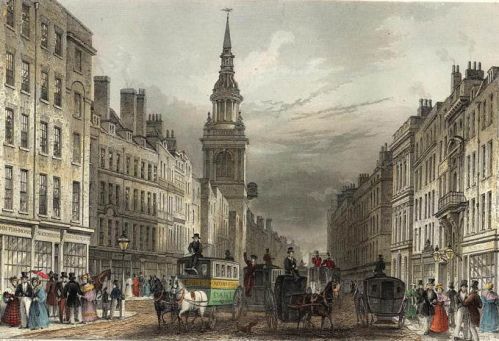
Cheapside and Bow Church engraved by W.Albutt after T.H.Shepherd publ 1837 edited. The pretty steeple is visible in this image. (wikipedia)

Cheapside and Bow Church engraved by W.Albutt after T.H.Shepherd publ 1837 edited. The pretty steeple is visible in this image. (wikipedia)

Once upon a time, Cheapside and Gracechurch Street were in the commercial heart of the city of London. It was the main shopping district in Jane Austen’s day. She describes the journey to Gracechurch street and Lizzy’s visit with the Gardiners in this lively scene:

Chapter 27: It was a journey of only twenty-four miles, and they began it so early as to be in Gracechurch Street by noon. As they drove to Mr. Gardiner’s door, Jane was at a drawing-room window watching their arrival; when they entered the passage she was there to welcome them, and Elizabeth, looking earnestly in her face, was pleased to see it healthful and lovely as ever. On the stairs were a troop of little boys and girls, whose eagerness for their cousin’s appearance would not allow them to wait in the drawing-room, and whose shyness, as they had not seen her for a twelvemonth, prevented their coming lower. All was joy and kindness. The day passed most pleasantly away: the morning in bustle and shopping, and the evening at one of the theatres.
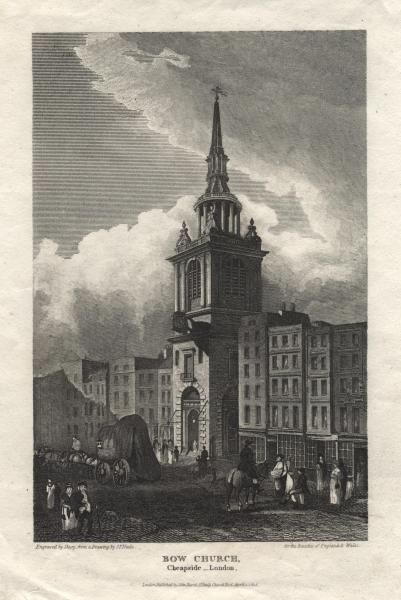
steel engraving of the Bow Church on Cheapside Street in London (the Bow Church is probably better known as Saint Mary's Le Bow and it is said that all true Cockneys were born within the sounds of this church's bells)

Steel engraving of the Bow Church on Cheapside Street in London (the Bow Church is probably better known as Saint Mary’s Le Bow and it is said that all true Cockneys were born within the sounds of this church’s bells) Image @bouletfermat.com

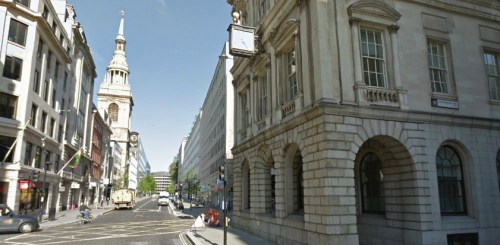
Gracechurch Street means grass-church and was thus named because of a hay market nearby (1680-1868). The distinctive steeple of  St Mary-le-Bow Church is the only structure remaining today that Jane Austen would have recognized. A church has stood on this ground since Saxon times. After the Fire of 1666, Christopher Wren designed a new structure, which was destroyed during a 1941 bombing was and carefully reconstructed during the 1950s. Today, Gracechurch Street largely resembles a modern office block.
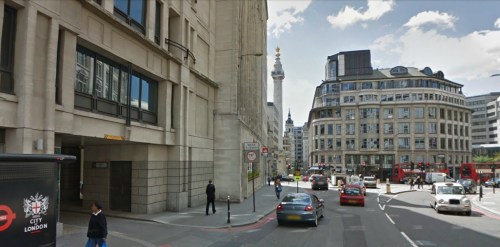
Gracechurch street today (Google maps)

Gracechurch street today (Google maps)

In the 17th century, coffeehouses arrived in the City and these soon became the place to pick up news. Some houses became the makeshift offices of the trades they served, giving birth to some of the world’s greatest financial institutions – the London Stock Exchange started in Jonathan’s Coffeehouse in Change Alley and Lloyds of London takes its name from Edward Lloyd, the proprietor of a coffeehouse in Tower Street. This, coupled with the founding by Royal Charter of the Bank of England in 1694, was the catalyst for the development of the City as a financial centre. – History of Cheapside

Cheapside was anything but cheap, the name “cheap” being the Saxon term for market. (Learn more about Cheapside Street here.) The names of the streets in that section of the City described the trades contained within this district: Wood Street, Milk Street, Bread Street, Honey Lane, Poultry and Friday Street for fish.

Today plans are afoot to revitalize this section of London and return it to its glory as a major shopping destination. History of Cheapside

More on the topic:

Read Full Post »
« Newer Posts