Feeds:
Posts
Comments

Posts Tagged ‘Emma’

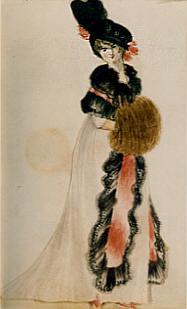
Watercolor by James Stanier Clarke. Thought to be of Jane Austen in 1815, when she visited Carlton House just months before the publication of Emma

Posted by: Tony Grant, London Calling

Jane Austen published Emma in December 1815, sixteen years after the French Revolution had ended but during a time when the women of that revolution were campaigning for women’s suffrage and especially for female education. It wasn’t a concept of education that had been considered before for women. Women were always thought unable to think like men. Their minds and brains worked differently on a much more superficial level, apparently. The grave subjects of philosophy, concepts about societies social needs, the study of History,mathematics,science, theology or Latin or Greek, were certainly not encouraged. It was a form of intellectual slavery. Women were kept childlike They were for marrying, procreating, looking after the home, bringing up children and being proficient in the finer arts of sewing, playing the pianoforte, singing, speaking French and being able to shop in a dress shop.

Rouseau and the Marquis de Condorcet (Marie Jean Caritat) in France and Mary Wollstonecroft here in England had different ideas for womens education.These ideas were infiltrating into the thoughts of Englishmen and women. They were the sort of ideas that would change society. I think Jane Austen introduced the character of Jane Fairfax to hint at such radical ideas. Jane Fairfax is an uncomfortable character within Emma. Emma Woodhouse can’t relate to her although they appear to be each others doppelganger, a mirror reflection of each other in many ways. But of course mirror reflections are opposites and you can’t actually become in contact with your reflection. There is a barrier, a layer of glass between you and your reflection. Jane and Emma, seem to exist in parallel worlds that cannot touch.
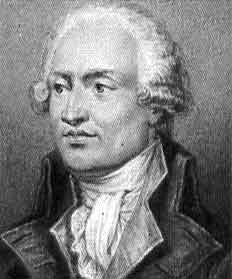
Marquis de Condorcet

Jane Austen, herself was an authoress earning money from what she wrote, but she still remained within the bounds of decent society. Emma is introduced by, “the Author of Pride and Prejudice.” She did not use her name. She was careful enough to dedicate Emma to The Prince Regent when it was suggested she might like to. She followed her urges and her intelligence and her talents but she kept her head down. She herself was critical of the education offered to young ladies and she herself had a horror of the profession of teacher as a result of her own experiences. Towards the end of her life Jane was writing Sanditon. Her heroine, Charlotte Heywood, is perhaps the most radical of her characters, in her views and in her actions. Would Jane Austen have eventually, “come out?”
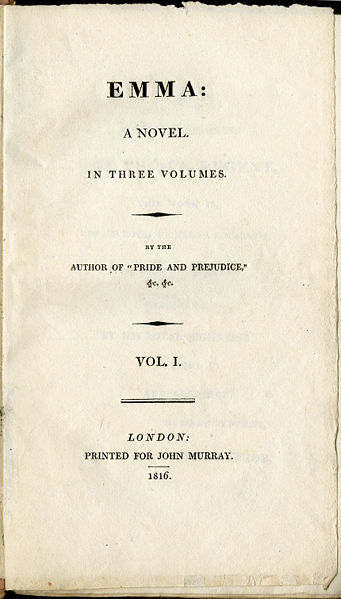
Jane Fairfax was the daughter of Lieutenant Fairfax, and her mother had been, before marriage, Miss Bates, the youngest daughter of Mrs Bates of Highbury.When her father was killed in action in a foreign country and her mother died soon after of consumption, Jane had returned to live with her grandmother and aunt, her mother’s elder sister in Highbury. However, Colonel Campbell, her fathers superior officer, offered to educate her and bring her up in his own small family to give her all the benefits of education and culture he could provide. Lieutenant Fairfax had been instrumental in saving his colonel’s life years before and being a dear officer and friend, Colonel Campbell felt it his duty to look after his friends daughter, Jane. Here is a passage from Emma describing Jane Fairfax’s education.

“ She had fallen into good hands, known nothing but kindness from the Campbells, and been given an excellent education. Living constantly with right minded and well informed people., her heart and understanding had received every advantage of discipline and culture; and Colonel Campbells residence, being in London, every lighter talent had been done justice to, by the attendance of first rate masters.”

It is interesting to note that Jane alludes to two sorts of education in relation to Jane Fairfax. First she says that she was, “given an excellent education,” and associated with well informed people and received every advantage of discipline and culture. The discipline bit is a little vague. It might refer to personal, behavioural discipline or it might refer to an intellectual discipline of the mind, inquisitive, challenging ideas, thinking. Maybe Jane Austen is being vague on purpose to allay the doubts and fears of the middle class reading masses. But what does Jane Austen mean by “an excellent education?” We know what she means by, “every lighter talent.”

It can only mean one thing. Jane Fairfax had been educated in cultural aspects that might include history, geography, mathematics, science and all the areas of learning usually kept for the great universities and the exclusive education of men.She had had the influence of right minded and well informed people too. Jane Austen herself had undoubtedly been immersed in and influenced by this sort of cultural education by way of her father’s library and erudite discussions with her intelligent and learned brothers.
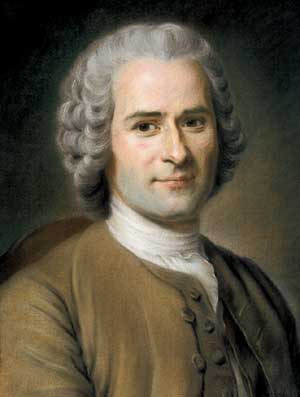
Jean Jaques Rousseau

Jean Jaque Rouseau ( 28th June 1712 – 2 July 1778) was a philosopher and writer.
He thought;

“ The education of women should always be relative to that of men. To please, to be useful to us, to make us love and esteem them, to educate us when young, to take care of us when grown up.”

His idea of education being important to women was so that they could then, in turn, educate their sons. He was only a little on the way to realising the full possibilities and potential for women. He wasn’t for giving women total freedom.

Marie Jean Antoine Nicolas Caritat (1743 – 1794) the Marquis de Condorcet, wanted to go much further than Rouseau with women’s education and freedoms. He wanted universal education as did Adam Smith, Thomas Paine and Thomas Jeffereson. He thought that the advances in reason and science would automatically limit family sizes leaving women the freedoms to expand their talents and energies in other directions. He wanted women to be admitted to the rights of citizenship. A very modern gentlemen. He had to go into hiding for his beliefs.

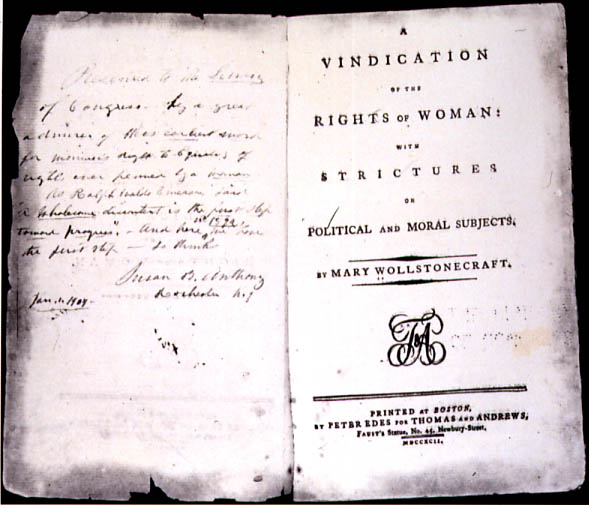
In England there was Mary Wollstonecroft. In the introduction to her “A Vindication of the Rights of Woman,” Mary Wollstonecroft writes,

“Contending for the rights of woman, my main argument is built on this simple principle, that if she be not prepared by education to become the companion of man, she will stop the progress of knowledge and virtue; for the truth must be common to all, or it will be inefficacious with respect to its influence on general practice. And how can woman expected to co operatre unless she knows why she ought to be virtuous? Unless freedom strengthens her reason till she comprehends her duty, and see in what manner it is connected with her real good. If children are to be educated to understand the true principle of patriotism, their mother must be a patriot; and the love of mankind, from which an orderly train of virtues spring, can only be produced by considering the moral and civil interest of mankind; but the education and situation of woman at present shuts her out from such investigations.”
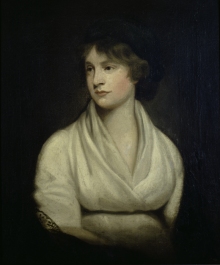
Mary Wollstonecraft

What Mary Wollstonecroft is actually saying here is that men and women need to be equal for the good and progress of mankind and if women are to be the teachers of children they need an education which enables them to think and explore and understand ideas, otherwise she cannot teach those ideas. An argument which cannot be challenged surely. Teachers today have degrees and are expected to have a thorough knowledge of their subjects and to be able to think and be creative.

How does this bring us back to Jane Fairfax? Jane Fairfax has had an, “excellent education,” and she appears to be evasive. It might be more a case of her having to be evasive as a means to survival. Emma Woodhouse cannot form a close relationship with her. As the novel unfolds we learn Jane is breaking societies strongest taboos. She and Frank Churchill are a match made in the realms of a freedom not acceptable in the England of those times. They are of a different economic and class backgrounds. Frank Churchill’s guardian, Mrs Churchill, while alive, would never condone such a relationship. Jane and Frank keep it secret and have to resort to all manner of subterfuge. Emma Woodhouse, in all her plans and manoeuvrings, and imaginings is defeated. Jane Austen is delving into areas that are perhaps closer to her own heart than she may well want to admit out right. In her final novel Sanditon, I think the way the character of Charlotte Heywood develops Jane was becoming more outspoken in her views about hypocrisy and the role of women in society. If Jane had lived into old age, with societies changes becoming more rapid with the industrial revolution, she might have become a champion of womans rights herself.
Finally, Jane Austen resolves the dilemmas, in a sort of Midsummer Nights Dream way. Characters find their true loves and permission is given, after Mrs Churchill’s death, for Frank and Jane to marry. So we have a happy ending for everybody. In a way, because Jane rounds everything off too nicely, as modern readers used to the full force of rough reality in the modern classic novel, perhaps we itch for Jane Austen to have gone the full hog. But, written as it was in the Georgian period, it was brave enough to allude to these issues. Jane couldn’t resist her true beliefs, really.

Gentle Readers, Tony Grant, who lives in England and oversees the blog, London Calling, wrote this most timely post. At the turn of the 19th century, women were not allowed to vote. This post points out the harsh realities for our female ancestors just a few generations ago. Regardless of party affiliation, I urge every woman in the U.S. to go to the polls on November 2 and exercise their hard-won freedom to VOTE for the candidate of their choice. – Vic

Images: Wikimedia Commons

Read Full Post »

Watching Emma 2009 is a visual feast for the eye. I wrote about my visceral reaction to this film for the PBS blog Remotely Connected and discussed the similarities between Jane Austen and Vermeer. This review addresses my other impressions about Emma 2009, first shown by the BBC in Great Britain last fall and airing on PBS Masterpiece Classic over the next three Sundays. Take a poll here and tell us what you think of Episode One.

A young Emma plays with her sister Isabella in Hartfield

I am of two minds about this new version of Emma. The script follows the story linearly, from Emma’s birth to the moment of Miss Taylor’s wedding to Mr. Weston, whereas in the book the story starts with the marriage. Interestingly, the narrator at the start of the film is Jonny Lee Miller (Mr Knightley), and we hear of Emma’s story from his perspective. The film sets up three characters from the start: Emma Woodhouse, Frank Churchill née Weston, and Jane Fairfax. All three children lost their mothers at an early age, but only Emma remained in Highbury. She led a charmed life under the care of her governess, Miss Taylor, a kind and loving mother figure.

Emma walks with Miss Taylor in Highbury

I must admit that I was in “high dudgeon” when I first watched these scenes, unable to connect the script to Jane Austen’s writing. However, I am aware that films are a visual and expensive medium, and they must not only take into account time restrictions, but also the richness of visual language. It might take Jane Austen several pages to describe a scene that the eye can perceive within moments. Mr. Woodhouse’s nervous-Nellie approach to life, always worried about the minutia of the health and the welfare of his family and friends, is woven into the fabric of the script, and is often shown more than told.

Tamsin Greig as Miss Bates

Mrs. and Miss Bates’ downfall is not described per se. We first see them saying goodbye to Jane Fairfax in the hallway of the comfortable vicarage, which was their home when Rev. Bates was still alive. We then see them next in their new lodging, an upstairs apartment in Highbury with crumbling walls and meanly furnished rooms. A single glance from Tamsin Greig (Miss Bates) belies her cheery disposition and tells us all we need to know about their reduced circumstances.

Emma 2010 character costumes compliment the setting and each other

I was also struck by the costumes and how the colors the characters wore complimented the settings as well as each other. In one scene in Hartfield, Mr. Knightley’s vest, Mr. Woodhouse’s scarf, and Emma’s sash picked up the colors in the room and of each other. This scheme is followed repeatedly in many scenes.

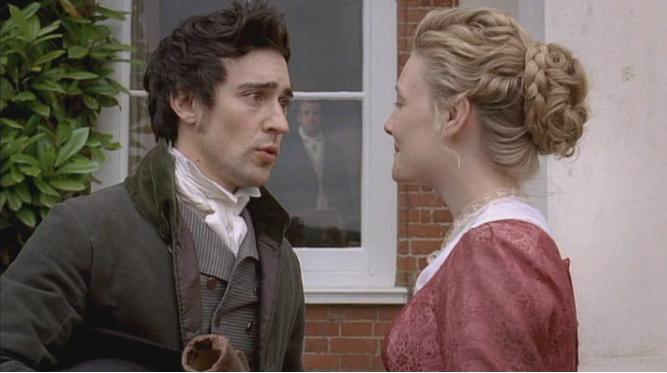
Jonny Lee Miller as Mr. Knightley reacts to Harriet Smith's rejection of Mr. Martin

The more I watch this film adaptation (I have seen portions of it four times), the more my impressions of the actors keep changing. In real life, Jonny Lee Miller is 37 years old, exactly Mr. Knightley’s age. Some critics have thought him too young or all wrong for the part, but as the film progressed, especially in the second and third installments, I warmed towards him. I now regard his performance as George Knightley as my favorite of all the actors who have played this gentleman. High praise coming from me, for I admit I was among the naysayers when Jonny’s casting was first announced.

Emma (Romola Garai) talks to Mr. Knightley

Although I changed my mind about Jonny Lee Miller, I have never quite warmed up to Romola Garai as Emma. She is a lovely and talented actress, and I liked her star turn in Daniel Deronda immensely, but I found her facial contortions in this film disconcerting and cannot recall such exaggerated mannerisms in her other films. A friend who watched the film with me liked Romola’s performance, saying that her portrayal of a spoilt, headstrong girl who was raised by a doting father was spot on. However, I thought Romola’s performance was too theatrical, as if she were trying to reach the audience seated in the last row of a large theatre. The camera’s lens magnifies everything facial movement, and she could have (should have) toned down her grimaces, toothy smiles, and wide-eyed looks of wonder or consternation. I did come to appreciate Romola’s chemistry with Jonny Lee Miller, which was palpable. One can see the sparks fly between these two characters, which is the point of a romance after all.

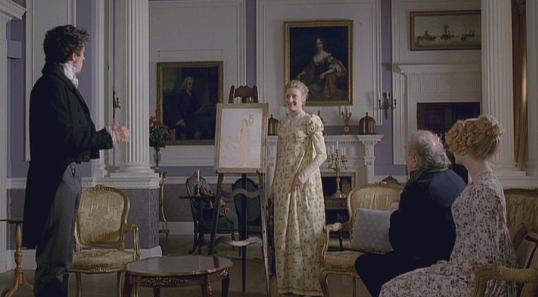
Blake Ritson as Mr. Elton offers to take Emma's drawing to London to be framed. Mr. Knightley watches the scene, aware of Mr. Elton's intentions, but Emma is clueless.

As for the secondary characters, I admired Tamsin Greig’s Miss Bates, which surprised me. While her character is irritating, Tamsin managed to make us feel sorry for her even as we were irritated by her babbling. Her performance is almost as memorable as Sophie Thompson’s, whose 1996 portrayal of Miss Bates remains my favorite. Valerie Lillie’s performance as Mrs. Bates was way past tea, for she looked comatose and unresponsive. Frankly, her part required nothing more than for her to sit in a chair and look dour. Blake Ritson’s turn as Mr. Elton was a bit too mannered for my tastes, but he was perfectly matched with Christina Cole’s vulgar Mrs. Elton. And I quit liked Louise Dylan as Harriet Smith: pretty but not as attractive as beautiful Emma, sweet-natured and malleable, and as dim as a snuffed candle. I’m not sure Michael Gambon was quite right for the part of Mr. Woodhouse. His face and figure are too vigorous for a hypochondriac and worrywart, and his performance did not in any way displace my estimation of Bernard Hepton’s masterful portrayal of Mr.Woodhouse in 1996.

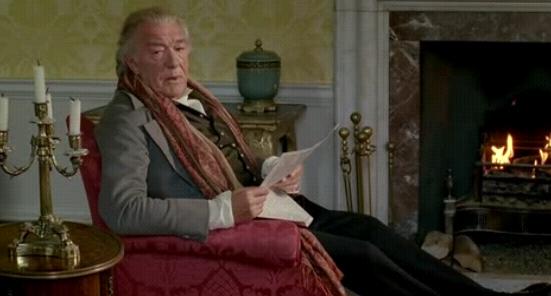
Michael Gambon as Mr. Woodhouse

As far as I am concerned, the Frank Churchill of my imagination has never been captured by any of the Emma adaptations, including this one. I thought that pug-nosed Rupert Evans was all wrong for the part and I did not believe for a moment that anything about his looks or behavior would attract Emma’s interest. As for Laura Pyper as Jane Fairfax, she’s talented, but much too mousy for my tastes. Yes, her situation is untenable, for Frank does not at all act in a gentleman like manner, but I rather liked Olivia Williams’ interpretation of the character, beautiful, demure, and alternately angry and hurt.

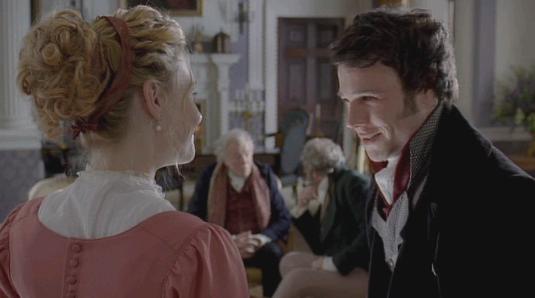
Emma finally meets Frank Churchill (Rupert Evans)

This film gets stronger with each episode, and the second and third installments sealed my admiration for this latest version of Emma. The cinematography is beautiful and the actors play their characters in lovely interiors, settings and locations. The film is almost four hours long, which, thankfully, allows for more plot and character development than a 2-hour version.

At the Coles, Emma and Mrs. Weston (Johdi May) listen to Jane Fairfax sing and play

I must add that PBS has gone out of its way to make its Masterpiece Classic site worth visiting. Those who missed the first installment can watch it online starting Monday, January 25th. The site offers a Bachelors of Highbury quiz (such fun), a Romola Garai audio slide show, screenwriter Q&A with Sandy Welch, and other features.

My other posts:

Read Full Post »

Mr. Knightley's Harvest Ball

Mr. Knightley's Harvest Ball

I prefer Kate Beckinsale’s Emma, written by Andrew Davies, because of the film’s depiction of ordinary life, such as farmers threshing grain before the Harvest Ball. These scenes were not written by Jane Austen, but they added authenticity to the film. When I saw this image, (Detail taken from the New York Public Library’s digital collection of the Costumes of Yorkshire, 1813-1814), I knew that the costumers and the director, Diarmuid Lawrence, had done their research. I loved the quality of the golden light that bathed the workers, lending the scene an antique, painterly feel. There are so many glorious visual moments in this film, which is well worth watching despite the script’s many variations from Jane’s plot.

Detail, Rape Threshing, 1813, The Costume of Yorkshire, New York Public Library

Detail, Rape Threshing, 1813, The Costume of Yorkshire, New York Public Library

By 1750, British agricultural practices were regarded as among the best in the world. The Industrial Revolution accelerated new practices in agriculture, in which animal power and human labor were aided by newly invented farm machinery. These inventions, as well as the new methods of food production, greatly increased the food supply.

harvest
Four-field rotation was practiced in England.  Specific crops were grown in a scientific sequence that managed the different nutrients in the soil. With this method, the continuous use of land was possible; more importantly, additional forage crops for livestock could be grown. This increase in the food supply could support livestock through the winter, which led to an improved diet year round. Even the poor could occasionally augment their bread with meat and dairy products, such as cheese.

harvest 2 (2)
While the Enclosure Acts from 1750-1831 drove many subsistence farmers off their small holdings of around 20 acres, the movement combined land into larger tracts for more efficient farming, and allowing portions of the fields to lie fallow. The traditional method of subdividing the land allowed farmers to feed their families, but their holdings were too small to follow the new method of crop rotation.  The larger holdings (which usually favored the richer land owners) applied modern methods of crop production. The unlucky farmer who lost his lands also lost the means to support his family independently. He and his family had no choice but to find work in the industrial north or in London. These burgeoning urban centers required an enormous amount of food to be brought in daily over long distances. One imagines that after Mr. Knightley set aside enough of the harvest for his own consumption, he transported the remainder to cities to be sold for profit.

harvest 3 (2)

More on the topic:

Read Full Post »

jane-austen-7-males2

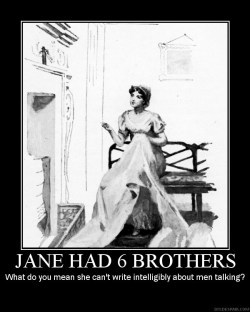
At Steventon Rectory, Jane lived in a house with five brothers (the 6th lived elsewhere), a father, and his male student boarders. As an author she chose not to write scenes showing men talking. In my opinion, this doesn’t necessarily mean she knew little about the way men spoke or thought. Unless the rectory was well carpeted and insulated, she must have overheard any number of conversations between her brothers, or her father and other males. Yet there is a perception that Jane did not know enough about  men talking in private to write about the topic. Ian MacKean observes: “The men may well have discussed politics, but not with the women, and Jane Austen never writes scenes with only men present, for the simple reason that she could never have witnessed such a scene herself.” While Mr. MacKean might be correct in his first observation, how can he know that Jane could NEVER have witnessed two men talking politics? Jane lived in a household where reading and conversation were encouraged, and where the family gathered together to entertain each other and read to each other. MacKean’s conclusion, which is echoed by others from multiple sources, makes little sense to me. I am not a scholar, but I cannot imagine that Jane was never alone in a room with two or more men, and that they always limited their conversation while this lively, talented, and opinionated woman was present. Steventon Rectory was crowded, and I imagine at times it was impossible for Jane to find a private spot with so many people (translate males) in the house.

In this passage in Emma, Jane writes the rarest of scenes: that of two brothers talking about their land holdings. They are the Knightleys to be more specific. This manly dialogue is an unusual occurrence in Jane’s novels, so enjoy.

The brothers talked of their own concerns and pursuits, but principally of those of the elder, whose temper was by much the most communicative, and who was always the greater talker. As a magistrate, he had generally some point of law to consult John about, or, at least, some curious anecdote to give; and as a farmer, as keeping in hand the home-farm at Donwell, he had to tell what every field was to bear next year, and to give all such local information as could not fail of being interesting to a brother whose home it had equally been the longest part of his life, and whose attachments were strong. The plan of a drain, the change of a fence, the felling of a tree, and the destination of every acre for wheat, turnips, or spring corn, was entered into with as much equality of interest by John, as his cooler manners rendered possible; and if his willing brother ever left him any thing to inquire about, his inquiries even approached a tone of eagerness.

Read Full Post »

“Marianne’s [letter] was finished in a very few minutes; in length it could be no more than a note; it was then folded up, sealed, and directed with eager rapidity. Elinor thought she could distinguish a large W in the direction; and no sooner was it complete than Marianne, ringing the bell, requested the footman who answered it to get that letter conveyed for her to the two-penny post. This decided the matter at once. – Jane Austen, Sense and Sensibility, Chapter 26

Footmen appear prominently in Sense and Sensiblity, 2008, and Emma 1996. They stand at attention in a row with the other servants when John and Fanny Dashwood arrive at Norland Park to take residence, and flank a seated Mrs. Ferrars when she banishes Edward and Lucy Steele from her sight. A footmen, as mentioned by Jane Austen, conveyed Marianne’s first letter to Willoughby when she arrives in London.
In Emma 1997, the viewer is treated to the ridiculous sight of footmen moving kneeling cushions among the rows of strawberries as Mr. Knightley’s guests pick the fruit in his garden. By and large, footmen represented a status symbol. Chosen for their looks and height, they wore livery of a style that was popular a century earlier, with “knee breeches and braided coats with shoulder knots. At Clandon Park in Surrey in 1876, Lord Onslow provided his footmen with silk stockings, gloves and pumps, and one guinea per annum to pay for powder to dress their hair for state occasions.” (Household Management, p 18.*)
According to Daniel Pool, footmen knew their status, and were generally known for their self-importance and lack of humor. The popular saying went that “calves came before character.” Taller footmen were paid higher wages, but the best status symbol of conspicuous wealth was a pair of footmen who were matched in height and looks.
Although footmen were assigned duties both inside and outside the house, such as polishing the silver, or riding on the back of coaches, they spent an inordinate amount of time conspicuously waiting, either in an entrance hall, dining room, or wherever their services might be required at a moment’s notice. “Daily comfort is provided by servants who are almost always invisible in Austen’s novels. They are there to provide leisure and services for their superiors and to disappear—like Thomas, the footman in Sense and Sensibility: ‘Thomas and the tablecloth, now alike needless, were soon afterwards dismissed'”**

“Has no letter been left here for me since we went out?” said [Marianne] to the footman who then entered with the parcels. She was answered in the negative. “Are you quite sure of it?” she replied. “Are you certain that no servant, no porter has left any letter or note?” – Jane Austen, Sense & Sensibility, Chapter 26

When the man replied, “none,” Marianne turned her back to him dismissively and moved to the window.

Servants were regarded by the gentry much as a backdrop, like wallpaper or furniture. Such indifference did not go unnoticed. Eric Horne, author of What the Butler Winked At (1923) observed: “Do they ever ask themselves this question, ‘Where did I come from? And Why? Where am I going to, and when?'” (Below Stairs, p. 95.***) In most cases, apparently not.

Read more on the topic in these resources and links:

Read Full Post »

« Newer Posts - Older Posts »