Feeds:
Posts
Comments

Posts Tagged ‘Tony Grant’

Gentle readers, in celebration of Pride and Prejudice’s 200 year anniversary, Jane Austen’s World will feature a regular article about Jane Austen’s most popular novel throughout 2013. We can count on frequent contributor Tony Grant from London Calling to provide us with a unique perspective. Enjoy!

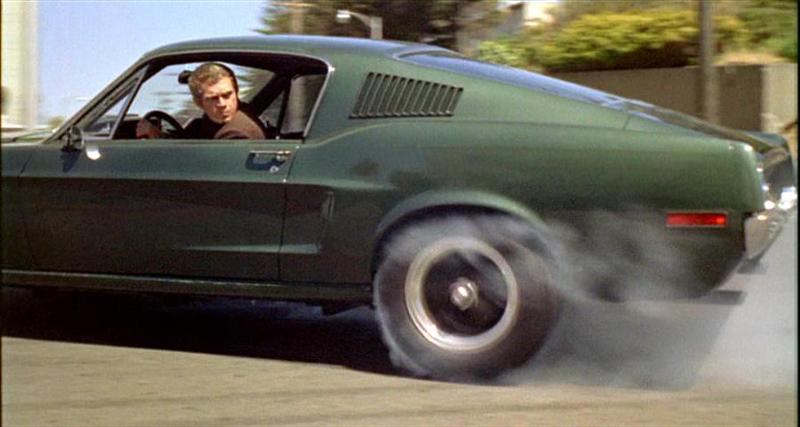
All good films have a car chase. Some originate from well written, exciting, nail-biting, on the edge of your seats, breathless descriptions in a novel.
Steve McQueen in mustang

Steve McQueen in mustang

Let it not be said Pride and Prejudice doesn’t have it’s nail biter, it’s moment of burning rubber and screeching tyres that is right up there with Steve McQueen ripping up the streets of San Francisco in Bullitt, hurling his Ford Mustang over the lips of hills and down daredevil slopes with a street fighters aggression or Michael Caine escaping the Italian police with wheels spitting gravel and door smashing bravado in his supercharged mini cooper GT along the Corniche, “not many people know that,” or John Thaw in The Sweeney, as gritty streetwise cop Jack Regan thundering through the Isle of Dogs in his 3 litre V6 Ford Consul GT. Mr Bennett has his contenders, but not, may I dare say, his equals, oh no.

Elizabeth Bennett, who is visiting Derbyshire with her aunt and uncle, the Gardeners has received a letter from her sister Jane

Since writing the above, dearest Lizzy, something has occurred of a most unexpected and serious nature; but I am afraid of alarming you — be assured that we are all well. What I have to say relates to poor Lydia. An express came at twelve last night, just as we were all gone to bed, from Colonel Forster, to inform us that she was gone off to Scotland with one of his officers; to own the truth, with Wickham!”

Image of eloping couple. 1815

Image of eloping couple. 1815

This piece of information about Lydia sets in motion, literally, a series of coach journeys and desperate searchings that rivals anything Steve McQueen or Michael Caine partook of.

Michael Caine: Nuts to your watches! You just be at the Piazza at a quarter to..
Steve McQueen: Look, you work your side of the street, and I’ll work mine.
Det. Insp. Jack Regan: Remember, no guns unless they use ’em.

Mr Gardner and Mr Bennett walking the streets of London, searching for Wickham and Lydia could well have used lines like those. What needs to be said, what needs to be done, never changes whatever century, don’t you think?

“…and all three being actuated by one spirit, every thing relating to their journey was speedily settled. They were to be off as soon as possible.”
Coach travel

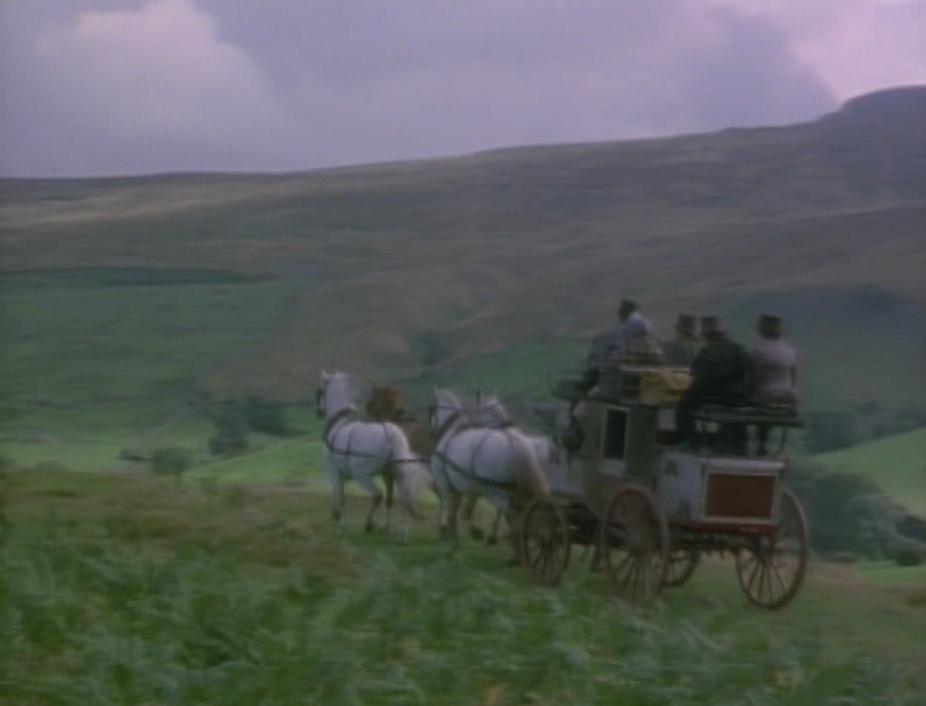
Coach travel

And so Mr and Mrs Gardner and Lizzie Bennett sped south to Longbourn at the hair-raising speed of 10 miles per hour or more, on the occasion of increased velocity being achieved when long flat straight roads presented themselves; jolted and tossed about, no doubt, like three potatoes in a sack.

But Lydia and Wickham were as devious and cunning as any mafia on the streets of Naples, or ruthless bank robbers from the East End of London or murderous killers off the dangerous streets of San Francisco. Gretna Green was, dare I say, a red herring. They spread rumours, gasp, horror; they planned and they plotted, they predicted and they saw clearly with their crazed, devious minds thinking out brilliantly, their next move. They lived the heady adrenalin pumped life of criminals on the run.

Mr Bennett “… did trace them easily to Clapham, but no farther; for on entering that place they removed into a Hackney coach and dismissed the chaise that brought them from Epsom.”

Oh gosh and golly, what subterfuge, what dastardly cunning. They actually changed from a chaise to a hackney coach.The evil mind games of those criminals. But they were hunted, yes, hunted, by Mr Bennett, he, a wily, ruthless backwoodsman who once he smelled the scent of his prey cannot, will not, be put off his quest. Mrs Bennett was right to be desperate in her concerns,

And now here’s Mr Bennett gone away and I know he will fight Wickham, wherever he meets him, and then he will be killed, and what is to become of us all?”.

Popeye Doyle himself could not compete with Mr Bennett surely in his ruthless endeavour

 The son of a bitch is here. I saw him. I’m gonna get him.”

But our Mr Bennett in his utter, focused, desperate determination can but say,

“Who should suffer but myself? It has been my own doing, and I ought to feel it.”

Good gracious, the man is a titan of hot-blooded aggression. Surely nothing can prevail? Wickham has met his match.
epsom

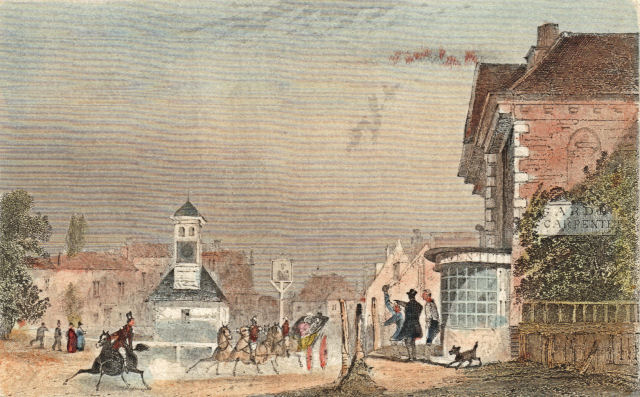
Epsom Watch House & Clock c1840 from Dugdale’s England & Wales
Image courtesy of Surrey Libraries and is held in the
Epsom & Ewell Local And Family History Centre

Elizabeth was desperate to know what lengths, what depths her father would go to retrieve his wayward daughter, her very own sister.

He meant, I believe,” replied Jane, “to go to Epsom, the place where they last changed horses, see the postilions, and try if anything could be made out from them. His principal object must be to discover the number of the hackney coach which took them from Clapham. “

Of course, a touch of sheer genius; find out the number of the Hackney Coach. That would do it. He would be sure to find them then.
And after all this searching, this animal desperation, this wolf like howl of anguish ripped from the primeval instinctive depths of Mr Bennett’s heart, what then? What could be the consequences? So after many letters flying backwards and forwards, if anything, P&P appears to hinge very often on the writing, sending and receiving of letters, Mr Gardner has appeared to pay Wickhams debts,, Mr Bennet has only to provide a paltry £100 a year, he can’t believ his luck and can’t quite work out the finances as if he ever could work out his finances. (Aside: we all know who really has settled the finances, don’t we?? Ha! Ha! It’s getting more like a pantomime all the time this. Mrs Bennnet as Widow Twanky and Mr Bennet as Baron Hardup.)

He had never before supposed that, could Wickham be prevailed on to marry his daughter, it would be done with so little inconvenience to himself as by the present arrangement. He would scarcely be ten pounds a year the loser, by the hundred that was to be paid them; for, what with her board and pocket allowance, and the continual presents in money which passed to her through her mother’s hands, Lydia’s expenses had been very little within that sum.

That it would be done with such trifling exertion on his side, too, was another very welcome surprise; for his chief wish at present was to have as little trouble in the business as possible. When the first transports of rage which had produced his activity in seeking her were over, he naturally returned to all his former indolence.”
Mr. Bennet

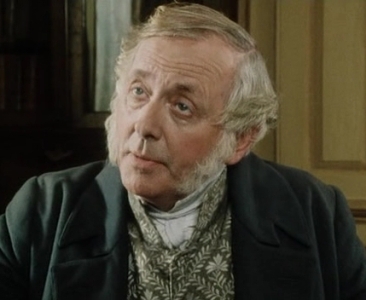
Mr. Bennet

So Wickham was to marry Lydia and Mrs Bennett was happy and all was well with Mr Bennett and he could return to his former state of,” indolence.” A sort of Popeye Doyle with carpet slippers smoking a pipe and reading his newspaper seated at his fireside; a Michael Caine reminiscing about his past, cold eyed and tough emotionless roles in Get Carter relaxing now in his easy chair or Steve McQueen sitting back on his ranch, his rocking chair gently calming his fevered brain and letting his motorbikes go rusty, crying into his beer, or, even a Jack Regan from The Sweeney who could at last ,” Shut it!” himself. Ah, all was well in the end. Colonel Forster could return too to Brighton, to the lesser dangers of defending our shores and leading his regiment against Napoleon knocking at the very shingle on Brighton Beach. Mr and Mrs Gardner could return to the hustle and bustle and shops and markets of Gracechurch Street in the city and Lizzie and Jane, yes, well, we know what becomes of Lizzie and Jane,

Happy for all her maternal feelings was the day on which Mrs Bennet got rid of her two most deserving daughters. With what delighted pride she afterwards visited Mrs Bingley and talked of Mrs Darcy may be guessed.”

Lydia in connubial bliss and Wickham not so

Lydia in connubial bliss and Wickham apparently not so

So, in a novel dedicated to getting daughters married, a lot of horse and carriage mileage is accrued and many letters are written. We only hear of weddings, but we certainly know about how characters felt. Will, Lady Catherine ever get over being, “exceedingly angry” or will she just explode with high blood pressure?
Read Full Post »

Inquiring readers: Tony Grant from London Calling has been a frequent contributor to this blog, sending posts and images. He lives in Wimbledon and acts as a tour guide, taking visitors on tours to Jane Austen country, the Lakes region, and points of interest all around London and the U.K. Recently, Tony sent in his thoughts about Jane Austen and his wish to delve deeper into other authors and their lives. As an active guide, he knows whereof he speaks. I asked Susannah Fullerton, author, president of JASA, and also a tour guide, to give her response (with Tony’s approval).  Here, then, is their very interesting conversation. I intend to weigh in. Does anyone else have an opinion? If so, please feel free to comment. Meanwhile, to all my U.S. readers, Happy Thanksgiving! Drive safely and have a wonderful time with kith and kin.

“Good-Bye to All That,” is an autobiography by Robert Graves. Graves said, “It was my bitter leave-taking of England where I had recently broken a good many conventions”.

I was reading a poem by Edward Thomas, (Philip Edward Thomas, 3rd March 1878 – 9th April 1917) recently, entitled, “The Brook.” In the poem Thomas is sitting by a stream and watching a child paddling in the brook. His senses are completely alert to the sights and sounds of insects, the sight of birds and the sounds of birds unseen, the play of sunlight, the rippling tinkling sounds of water and the memories of a past horseman and horse buried under a barrow on the heath nearby. The poem ends,

And then the child’s voice raised the dead.
“No one’s been here before,” is what she said.

It occurred to me that the child was right. Of course, probably, many people had been to that spot over years and decades. For each of us, however, when we go to a place for the first time that is pristine and natural and remains how it has always been we do experience something for the first time. It is as if nobody has been there or done that, or experienced that before us. We can experience things fresh and new for ourselves when we go somewhere like this, for the first time.

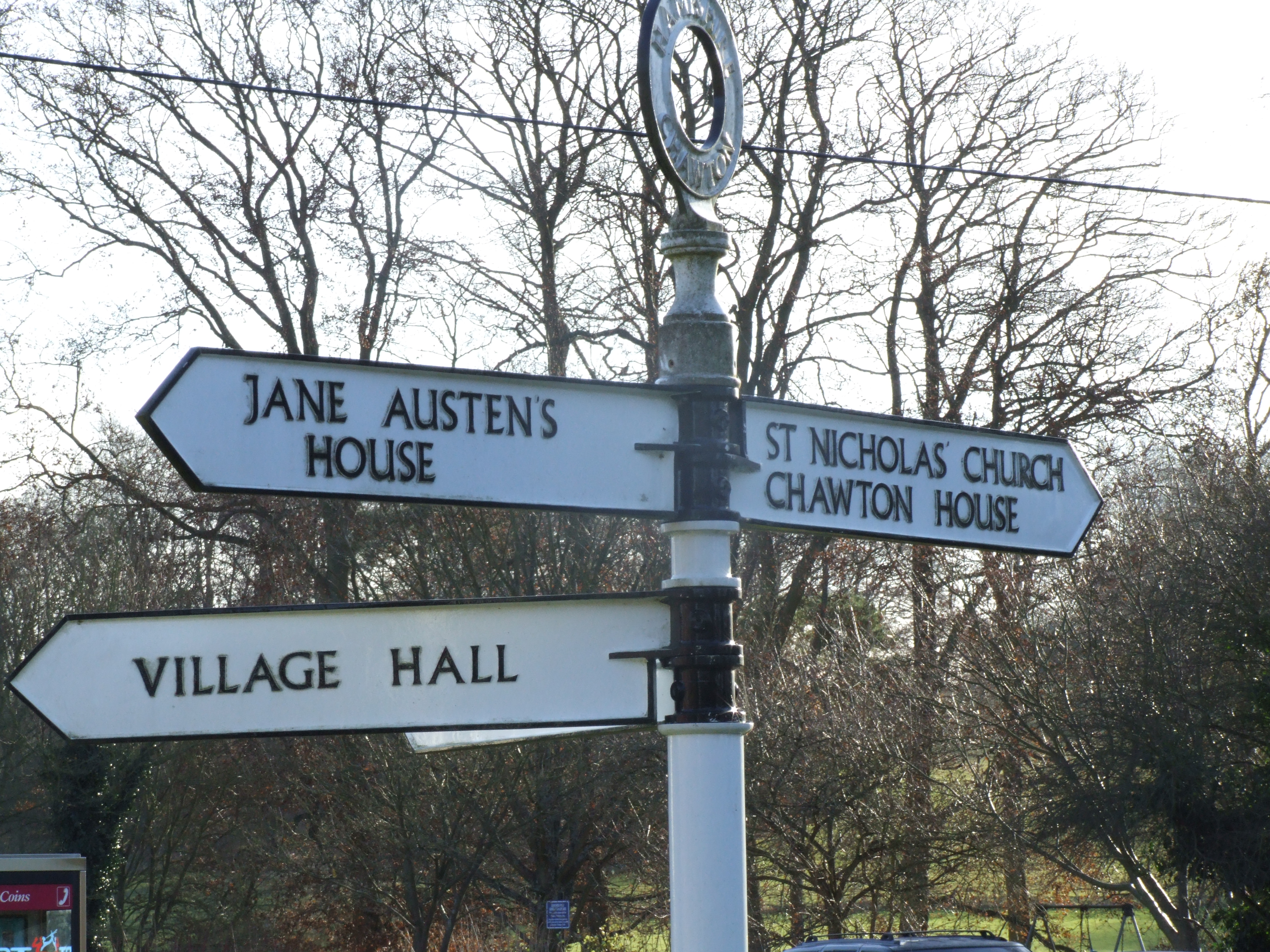
Signpost. Image @Tony Grant

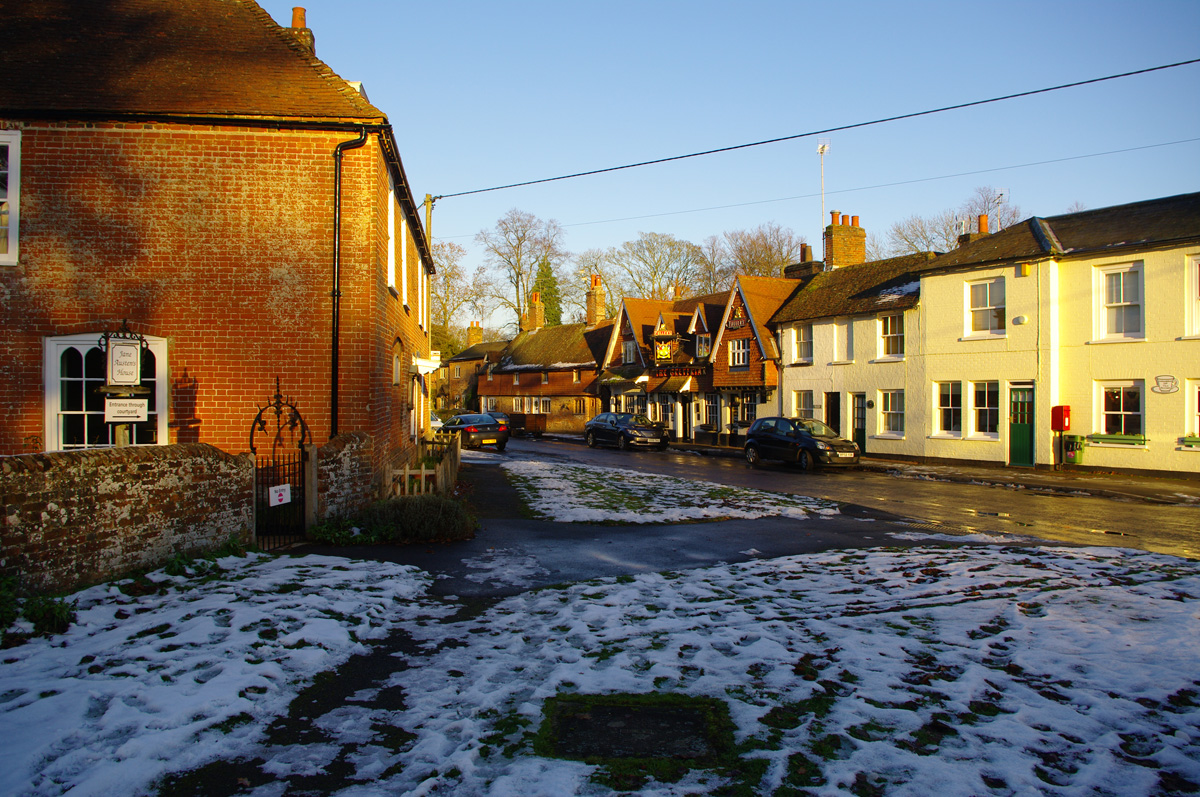
Now lets take a visit to Chawton, Jane Austen’s last home before she died. I wonder if we can actually experience things fresh and new to us on a visit to Chawton and say,“No one’s been here before,” in the way the child in Edward Thomas’s poem did?

I remember standing at the crossroads in Chawton , years ago, for the first time. What I should have experienced, according to Jane Austen pilgrims to Chawton, is a sense of where she lived, a connection with Jane Austen – where she wrote, cooked, sewed, wrote letters, enjoyed the company of Cassandra, Martha, her mother and brothers and neighbours too. Indeed, Jane Austen (16 December 1775 – 18 July 1817) did all this over two hundred years ago. But can I or any of us get that feeling of, “No one’s been here before.” Do we really get an experience standing at Chawton crossroads next to that much photographed sign post put up in the 1930’s with pointers to the great house, the church and the cottage that it is the Chawton of Jane Austen? Do we really believe that we have a connection with Austen by being there? Isn’t it all in our imaginations because we want to believe?

Chawton Village street. Image @Tony Grant

Chawton high street is full of parked cars with Japanese, French, German, Spanish and Scandinavian makers emblems on them. The road is metalled and covered in tarmac. It has a pavement edged by slate and granite curb stones from Dartmoor. It has concrete and tarmac pavements. Houses surrounding the cottage have a mesh of telecommunication wires leading to each one. People who live in Chawton are all connected to the World Wide Web with broadband like the rest of us. Modern street lights light the streets at night. In the small park opposite the cottage there is a children’s playground with steal clambering structures and swings. The pub opposite, The Greyfriar, is a Fullers pub. They hold a quiz night once a week for locals that probably doesn’t include questions about Jane Austen. Fullers, by the way, is a London brewery situated on the Great West Road, leading out towards Heathrow Airport, close to where Hogarth had his country retreat. These very locals travel to Winchester, Southampton or even commute to London for work every day. Chawton C of E Primary School, just along the road, on the way to The Great House, is an ordinary primary school that teaches the national curriculum. The children are like children anywhere and this is where they live. The Jane Austen connection to them is by the by, not really pertinent to their lives. Although, I am sure, as the school is in Chawton the children will know a lot about Jane Austen, but she will really be just somebody else on their list of famous people and writers to know about. Those children play computer games on their Ipads at home. Chawton is an ordinary place where people live and get on with their ordinary lives, where Jane doesn’t loom much in their minds when they are peeling the potatoes or hoovering their carpets or watching the TV.

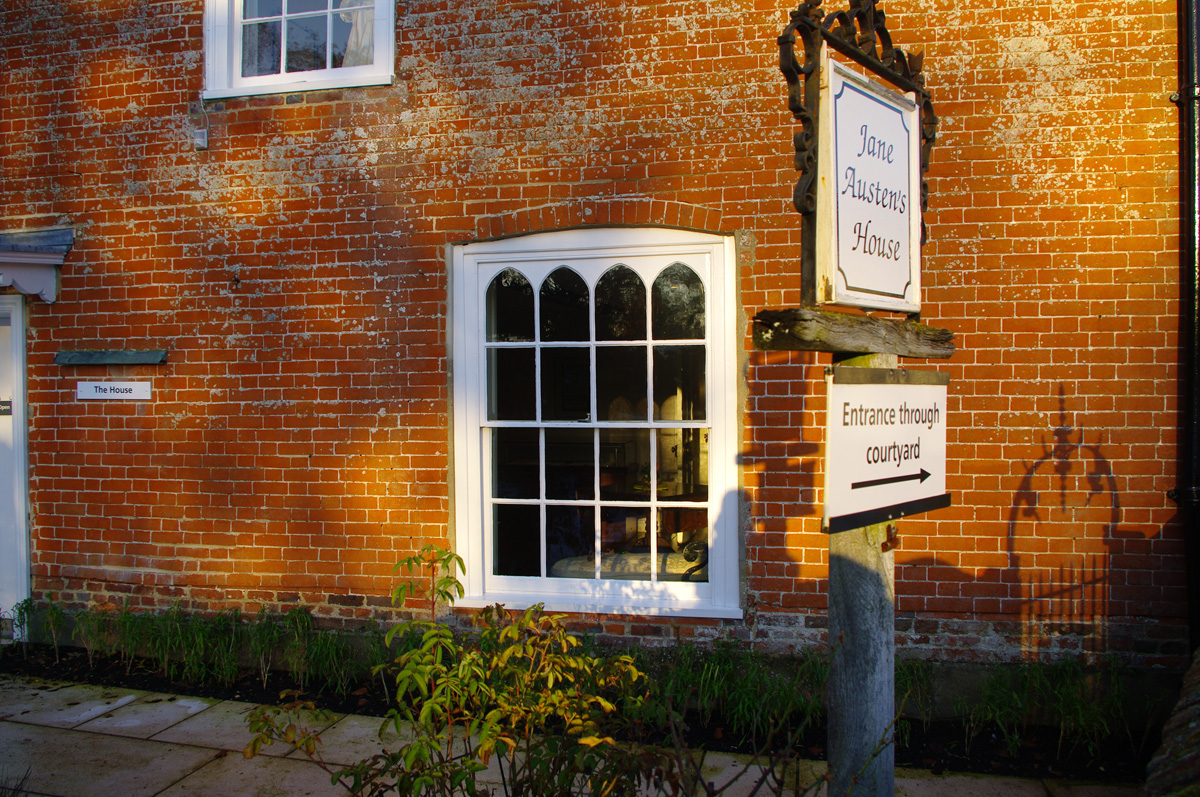
Chawton Cottage signs. Image @Tony Grant

Looking at the cottage from the outside, the Jane Austen societies have stuck large obtrusive signs on the walls facing the road. If you look at the structure of the building itself you begin to wonder what of it Jane would actually recognise if she were to come back today. Windows have obviously been bricked up. Was that a result of 18th century window taxes or because at one time the cottage was split into a group of smaller cottages? It has a variety of doors to enter by too which probably weren’t there or were in different locations in Jane’s day.

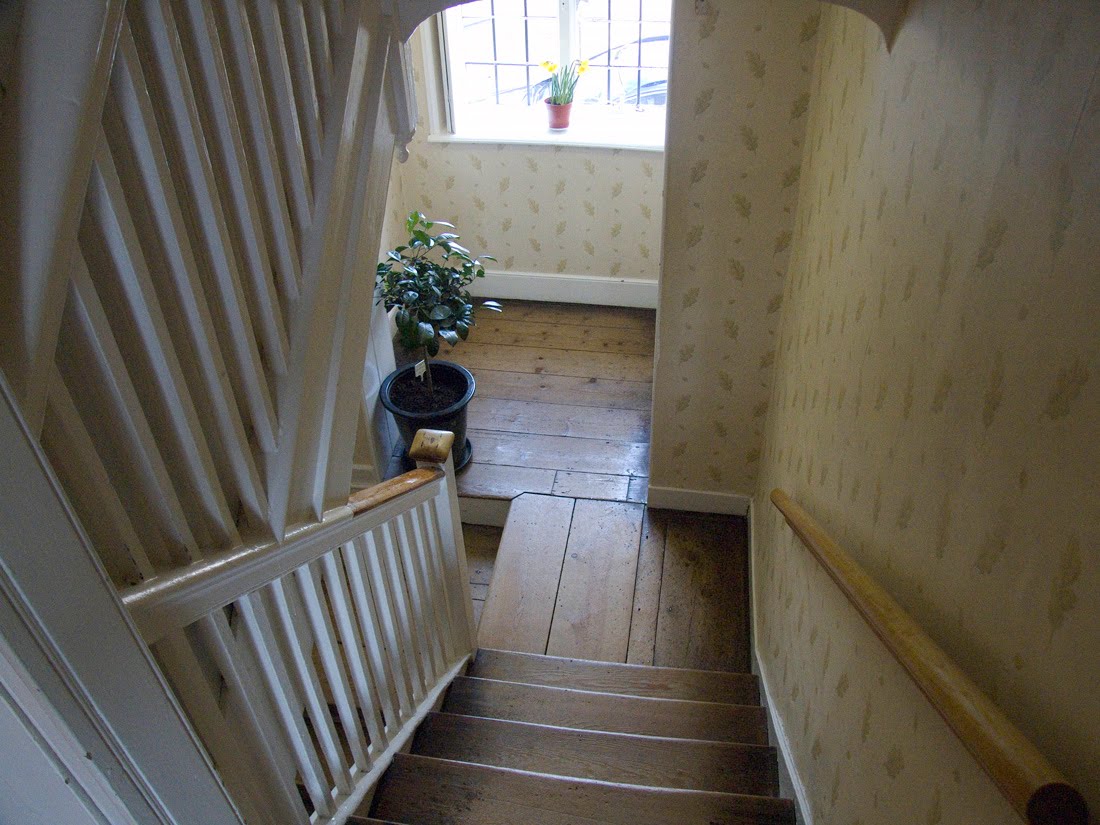
Staircase. Image @Tony Grant

When you go into the cottage you see modern radiators, electrical wiring, plug sockets and fire exit signs with the requisite fire extinguisher points. These are not subtly hidden or unobtrusive but are very prominent. Many of the display cases, especially upstairs, are bulky and obtrusive. They don’t look good. The staircase itself is not the staircase Jane Austen would have known in her time. The whole house has actually been restructured. The Austen’s might not recognise the place. It’s not really the place they knew.

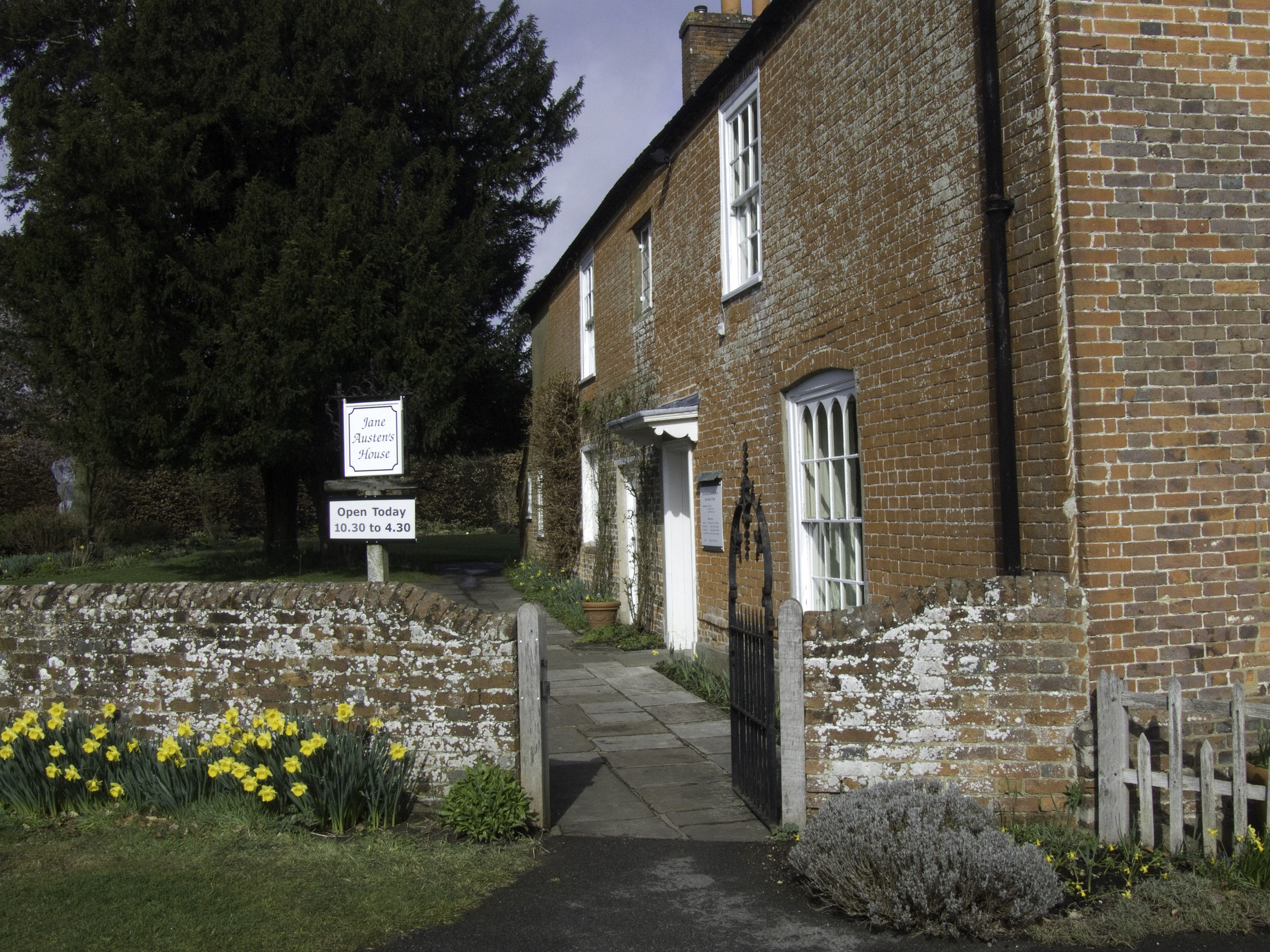
The visitor’s entrance to Chawton Cottage. Image @Tony Grant

I always come back to the books and her letters. That is where to find Jane Austen. That is where we are going to get glimpses of the real person if we are attentive.
Now don’t get me wrong, I absolutely love reading Jane’s novels, her letters and the biographies written about her. However all these Jane Austen societies bother me. They worship and idolise her. They focus exclusively on her. They wring every bit of Janenness out of her. They make Chawton a false holy of holies. She was one writer for goodness sake. The world is a diverse and varied place full of great writers that we all need to read and not be partisan about. If I had my way I would get rid of all literary societies connected with all writers and say, just read. Reading develops us and helps us grow. Centering on one writer narrows us.

Penguin Classics

As a paraphrase of Robert Graves, this article “ (Is) my(not so) bitter leave-taking of (Austen) where I (have) recently broken a good many conventions”. We all need to stop squeezing the life out of Jane Austen and get on with real life and the rest of the real literary world. Returning to the essence of the Edward Thomas poem, I feel that my senses need to be open but to other writers without the weighty manufactured image of Jane Austen hovering over my shoulder.

Doesn’t anybody else feel that they would like to get out from underneath the weight of Austen and breath freely again?

Tony Grant

I am going to read all of Virginia Woolf’s novels after Christmas and post reviews. My mate Clive and I are going to do this in tandem. If you want an antidote to all things Jane, don’t stray!!!!!!! Clive and Tone are on their way.

Tony Grant, Wimbledon

Hi Tony,

I hope you are well. I enjoy reading your comments on Vic’s lovely website. Your photo of the Dolphin Hotel looks so nice in my new book, A Dance with Jane Austen. Thanks again for giving me permission to use it when we met.

I’m intrigued by your comments about Jane Austen societies, but don’t agree with you that they are in any way narrowing. My experience is quite the opposite. At JASA we’ve had talks on Jane Austen’s connections with / influence on many other writers – Kipling, Georgette Heyer, Byron, Radcliffe, the Brontes, etc. Such talks immediately send you hurrying off to get to know more about those other writers. We’ve had talks about Jane Austen and various historical figures, so you then want to learn more about them, and of course we’ve had talks and articles about the age in which she lived, so our members then explore music in her time, art and what paintings she knew, they learn about the church in that era, the navy and army, Georgian crime, fashion, food, travel, and the list goes on. I see JASA (and the other literary societies to which I belong) as a wonderful way of extending my reading and my knowledge, not limiting it.

And joining good literary societies is addictive. If you get great pleasure from learning more about one writer, you soon realise that you can do the same with another writer. It does not have to be exclusive – I’m extremely promiscuous indeed when it comes to joining literary groups! I’m part of an Anthony Trollope group (we have trouble knowing what to call our group – ‘The Trollopes’ has dubious connotations – I’d love to hear suggestions??) and we have been making our way through Trollope’s more than 40 novels with enormous pleasure. (Trollope, by the way, was a great admirer of Jane Austen). We have also read biographies of Trollope, biographies of his mother Frances, critical books about his writings, and books about the position of women in Victorian England. It’s a small group but we have all felt so enriched by it. Plus we have great fun, good food and wine, picnics (in places Trollope visited in Australia) and we have all made new friends.

And lastly a fabulous reason to join a literary society is for the social aspects. I have met some of my dearest friends through JASA and other Jane Austen connections. I can honestly say that joining JASA has totally changed my life – and all for the better – so there’s been nothing ‘narrowing’ about my passion for Jane Austen’s novels. Rather than ‘squeezing the life’ out of Jane Austen, my love of her writings has widened my knowledge, increased my appreciation of her books, life and historical era, has taken me around the world, given me new friends and given me intense happiness. The more I turn to her novels, the more I get from them; and the same goes for JASA – Jane Austen keeps giving and giving and I receive so very happily all she has to give in so many ways.

Am I waxing too lyrical??? I think you need to pay a visit to Australia, Tony, so that I can show you in person all you could get from a great literary society. Please come and visit any time!!!! JASA would love to welcome you to sunny Sydney.

Cheers,
Susannah

Read Full Post »

Drawing tonight for two Georgette Heyer books. Leave a comment at this link on Why I Love Georgette Heyer. Congratulations winners, Jan and Ginger, chosen through Random Number Generator! Thank you all for making a comment!

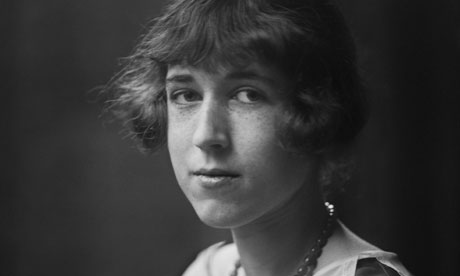
Georgette Heyer in 1923, when she was 21 and lived in Ridgway Place. She had already written The Black Moth for her sick brother Boris.

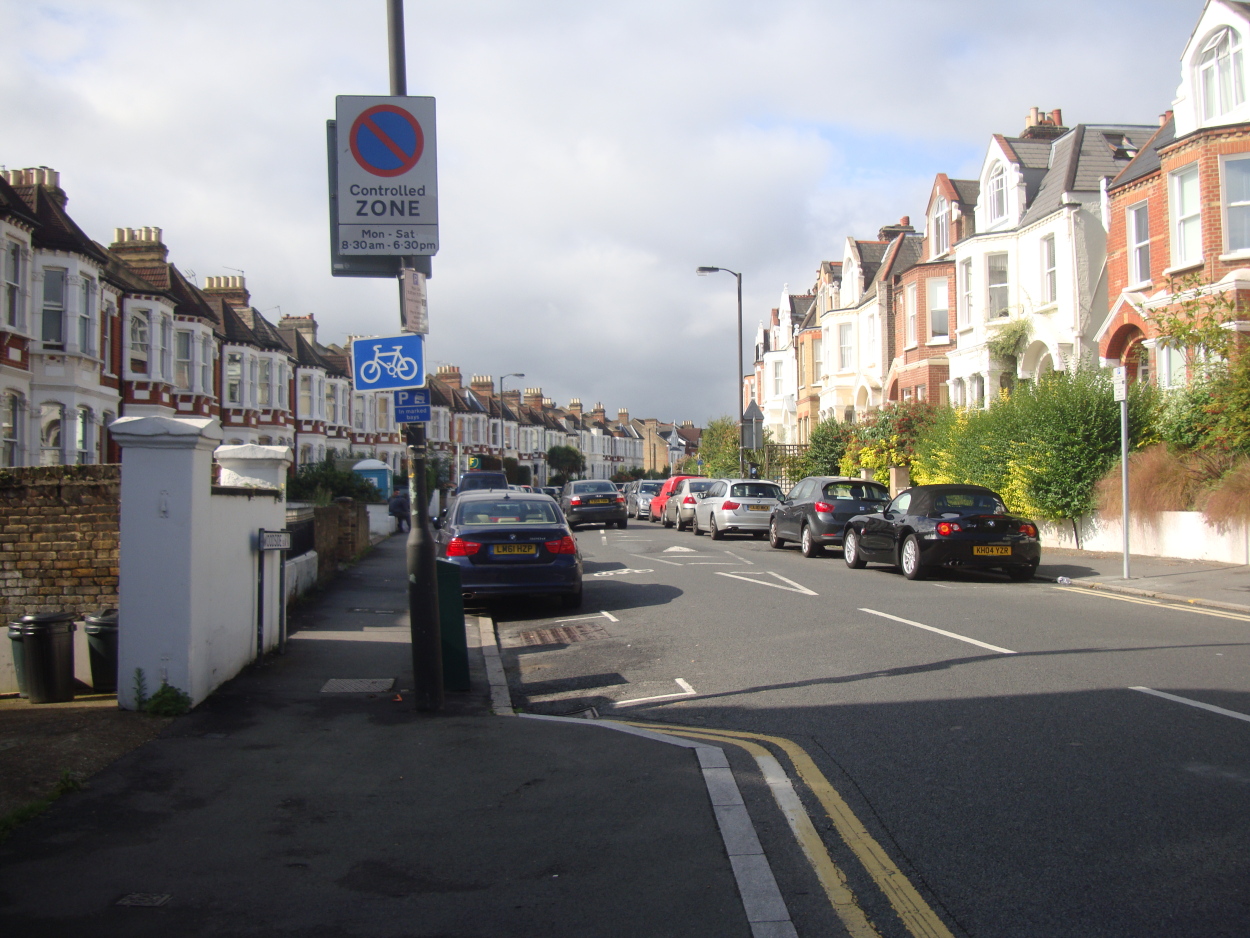
Georgette Heyer was born 110 years ago (August 16, 1902) at 103 Woodside, a mere 500 yards from Wimbledon Library. She was named after her father George, a descendant of a Russian fur merchant who had immigrated to England during the mid-19th century. The family lived at Woodside from 1902 to 1906 before moving to 1 Courthope Road. Georgette’s family lived in several houses in Wimbledon, all middle class, all close to each other.

Tony Grant, who lives in Wimbledon and took the images of her childhood homes and neighborhood for this post, speculates that “Maybe her  father and mother  rented rather than bought. That might not sound  strange to  you  but it is  rare  for us. We generally buy our  houses [and] don’t move  that often.”

Georgette Heyer’s birthplace. Image @Tony Grant

Another view of her birthplace

He adds an interesting tidbit:  “People here don’t really appreciate her that much. They tend to think she was always trying to give them a history lesson. Things they knew anyway…But I can see how someone who  wanted to immerse themselves in the period would love her.”

Woodside, Wimbledon

Georgette Heyer came from a respectable background. She and her family lived  at various addresses in Wimbledon: 103 Woodside (1902-6), 1 Courthope Road (c.1907-9), 11 Homefield Road (1918) and 5 Ridgway Place (1923–5).

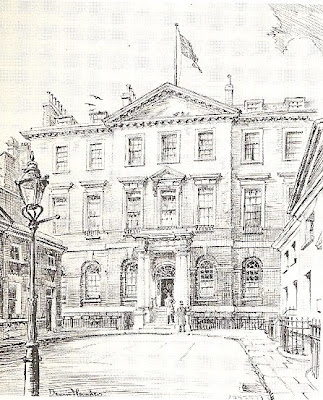
The Albany, Mayfair

She was married to George Ronald Rougier CBE QC, a mining engineer who later became a shopkeeper and then a barrister. For 24 years the couple lived in a rented space in Albany House in Mayfair, London, a swanky area where so many of her upper crust characters shopped and danced and found romance. They had one son, Richard. Georgette experienced great success during her lifetime, receiving excellent reviews and seeing the sales of her novels increase yearly. Almost 40 years after her death in 1974, her novels, especially her Regency romances, remain in print.
While Georgette was aware of the popularity of her Regency romances, she was unhappy that her more serious historical novels were not similarly embraced. On August 16th of this year, Tony reports that the Wimbledon Library will have no events to  remember her by. “I feel  quite sad now”, he added, “[She] probably needs a 150th anniversary to  get a mention!”

Read Full Post »

Gentle readers, frequent contributor Tony Grant has recently returned from visiting the Lake Country with his friend, Clive. (Visit his blog, London Calling, where he shares his experiences and wonderful images.) While there he was reminded of Wordsworth’s poem about Tintern Abbey and sent in his thoughts. Thank you, Tony, for making poetry come alive!

“Lines composed a few miles above Tintern Abbey, on Revisiting the Banks of the Wye during a Tour, July 13, : 1798”

Wye Valley

This rather ungainly title is the precursor to a poem by William Wordsworth written in 1798, as the title shows, which lays out his philosophy about his understanding of the world and the effect it has on him.

First of all the title tells us about a revisiting of the Wye Valley. Wordsworth may well have been using the guide book written by William Gilpin about the Wye and Tintern Abbey. Gilpin was a fellow lover of nature, who was also born in Cumberland and The Lakes. In this poem Wordsworth is revisiting, recalling, adjusting his memory of a place and adding to the strength of its power over him.

Once again

Do I behold these steep and lofty cliffs,

That on a wild secluded scene impress

Thoughts of more deep seclusion; and connect

The landscape with the quiet of the sky.”

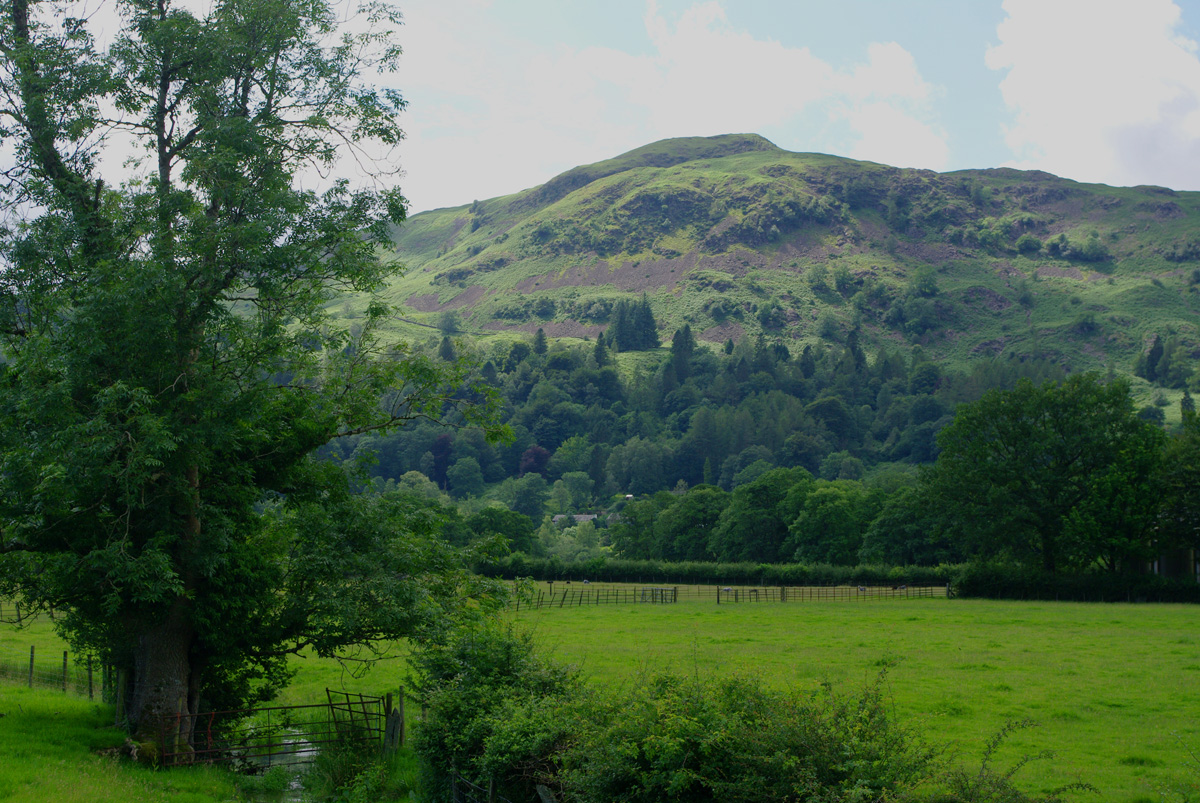
The Lakes. Image @Tony Grant

Wordsworth emphasises seclusion such as a hermit might experience.. This aloneness is an important aspect of this poem. When we meditate we find a secluded tranquil spot to be alone in.

The use of his senses is paramount to this process.

again I hear

These waters, rolling from their mountain-springs

With a soft inland murmur.”

And also,

Once again I see

These hedgerows, hardly hedgerows, little lines

Of sportive wood run wild; these pastoral farms,

Green to the very door; and wreaths of smoke

Sent up,”

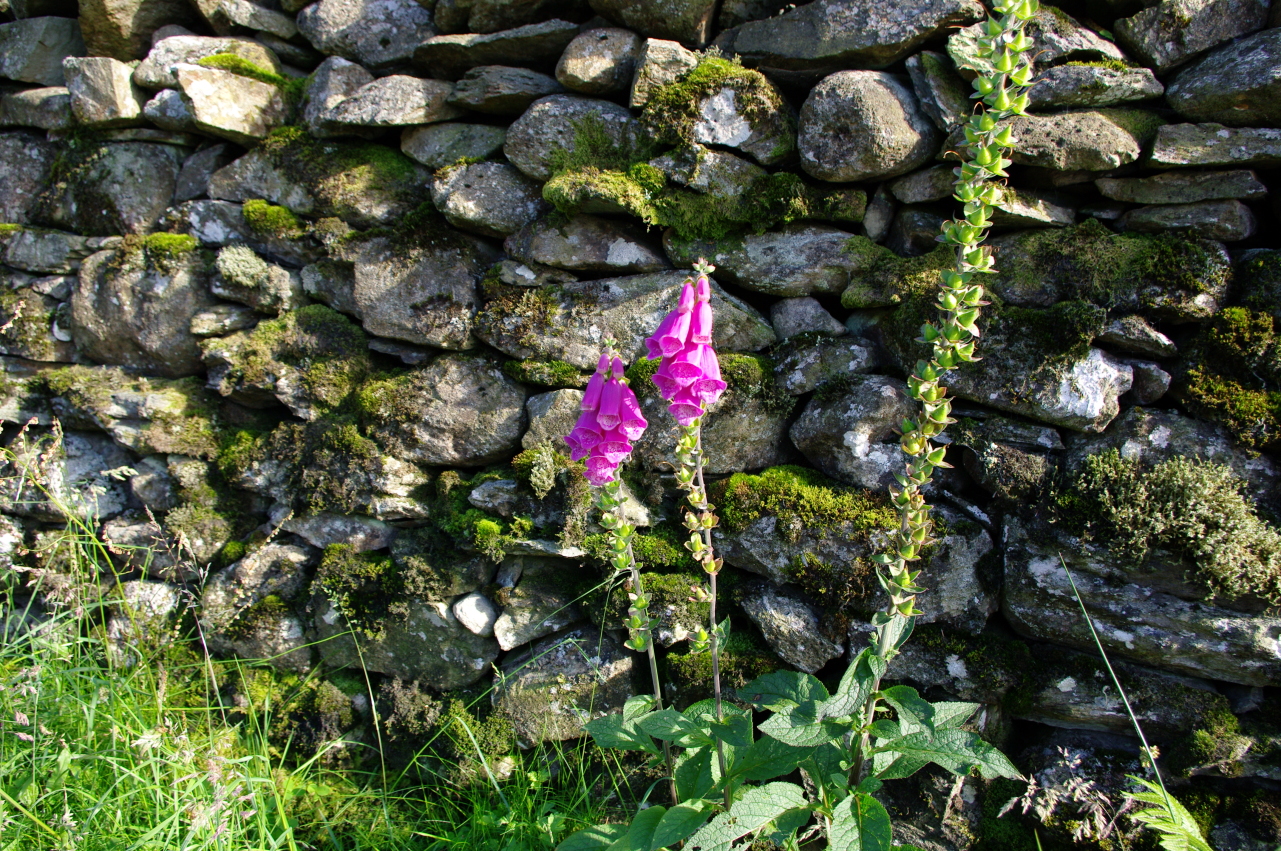
Foxgloves and dry stone wall. Image @Tony Grant.

Sound and sight come together to make an impression on his mind and feelings. But these are not short lived impressions. They have a deep and profound effect.

“oft, in lonely rooms, and ‘mid the din

Of towns and cities, I have owed to them,

In hours of weariness, sensations sweet,

Felt in the blood, and felt along the heart;

And passing even into my purer mind,

With tranquil restoration: -feelings too

Of unremembered pleasure; such, perhaps,

As have no slight or trivial influence.”

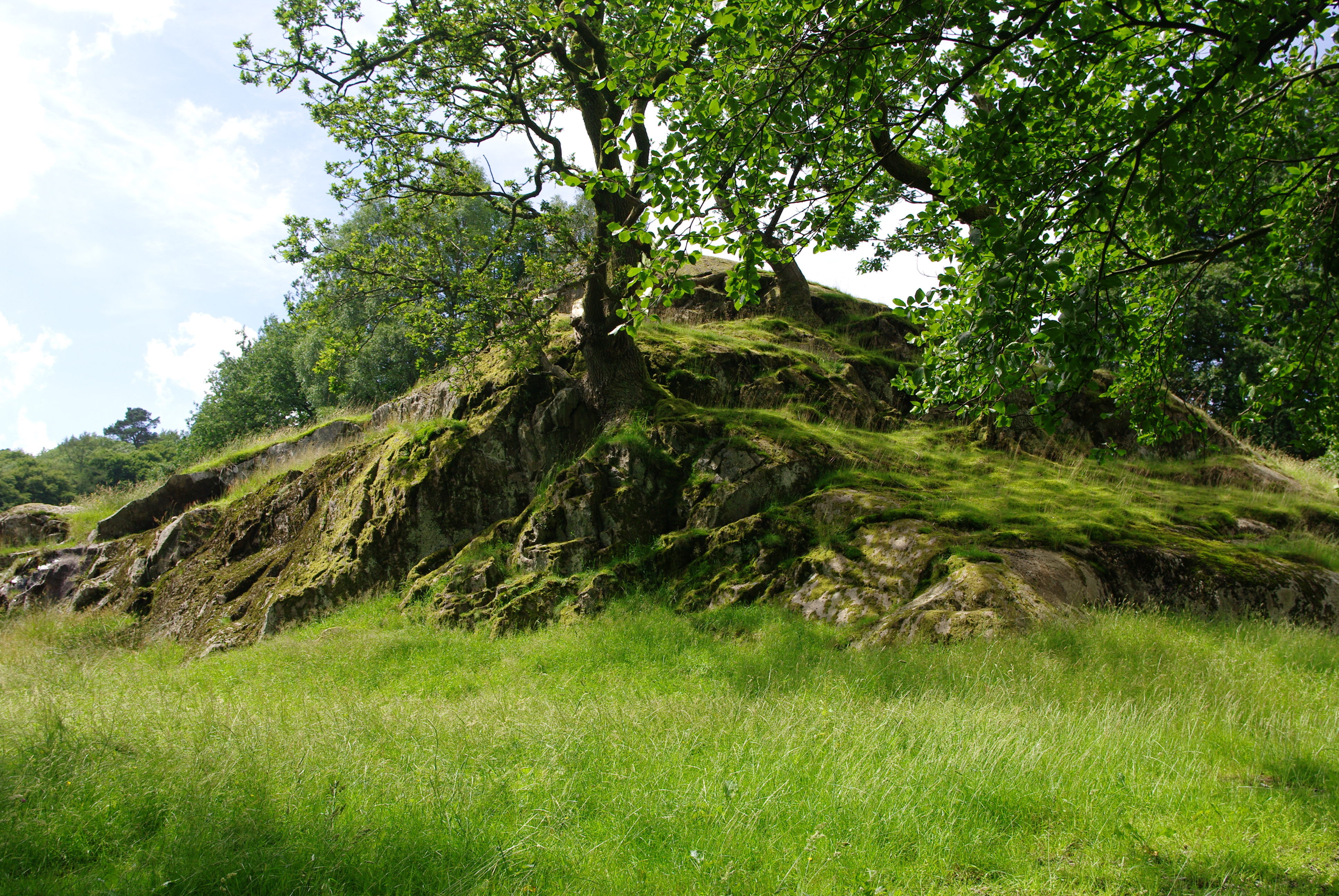
Rocky outcrop, image @Tony Grant

Wordsworth is saying that remembering the sensations that nature has had on him can be recalled, relived at other times and in other places and help him overcome things such as weariness and other detrimental sensations.

how oft –

In darkness and amid the many shapes

Of joyless daylight; when the fretful stir

Unprofitable, and the fever of the world,

Have hung upon the beatings of my heart –

How oft, in spirit, have I turned to thee,

Tintern Abbey

Memory, imagination, recalling good sensations, becomes a sort of force that Wordsworth can use. He describes it as being “felt in the blood” and “along the heart. “ These sound strange phrases to us. We might describe these experiences as affecting us deeply or having a psychological influence or even providing a spiritual experience.

Methods of meditation use memory and imagination in this way. Athletes and sportspeople use this method too. We are experiencing the Olympics at this moment. Athletes have described how they use imagination to help them perform to the best of their ability. A white water canoeist was interviewed yesterday morning and asked how she prepares for such a hazardous descent and how is she able to get the timing of her turns just right. She answered that she imagines the descent through the rough and tumbling waters again and again, living in her imagination every move, paddle stroke and turn she is going to make.

Wordsworth gives even more importance to the powers of nature when he says these experiences have an effect ,

On the best portion of a good man’s life,

His little, nameless, unremembered, acts

Of kindness and of love.”

He is saying our experience of nature has an actual effect on the way behave.

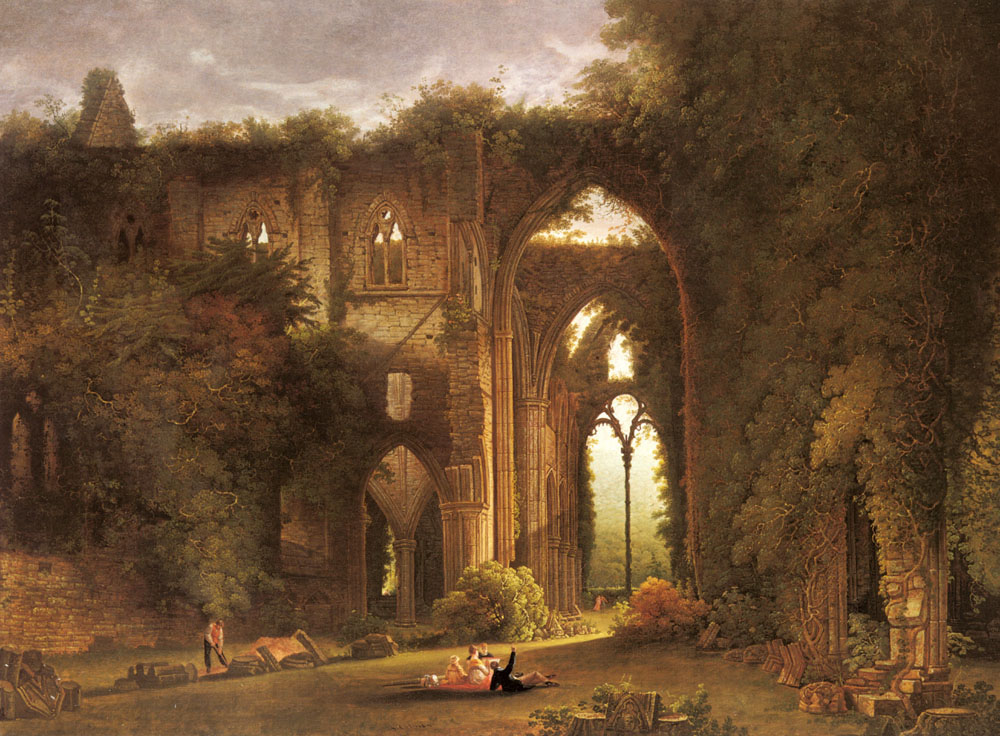
The chancel crossingot Tintern Abbey looking towards the east window, JWM Turner, 17942

Wordsworth takes his ideas to an even higher almost mystical religious level when he says,

that blessed mood,

In which the burthen of the mystery,

In which the heavy and the weary weight

Of all this unintelligible world,

Is lightened: -that serene and blessed mood,

In which the affections gently lead us on –

Until, the breath of this corporeal frame

And even the motion of our human blood

Almost suspended, we are laid asleep

In body, and become a living soul;”

The effects last into the afterlife and affect our experience of heaven. This is serious stuff. Wordsworth is completely taken with this concept.

Banks of the Wye

Towards the end of the poem it becomes a letter, almost a love letter, to his sister Dorothy, who he sees as his soul mate. He includes her in his understanding of what he experiences,

all which we behold

Is full of blessings.”

What is interesting to consider is that in this poem Wordsworth describes how he uses his experience of nature through his senses to lighten and bring joy and spiritual pleasure to himself at other times. This revisit to the Wye Valley five years after his first visit appears to be an attempt to strengthen his experiences of nature and to replenish and strengthen his memories so he can use a stronger dose, so to speak, of his experiences in future. This begs the question , does Wordsworths poem, help the reader of the poem along this path of spiritual experience in anyway or is he just telling the reader, you must go and experience nature yourself to gain these effects?

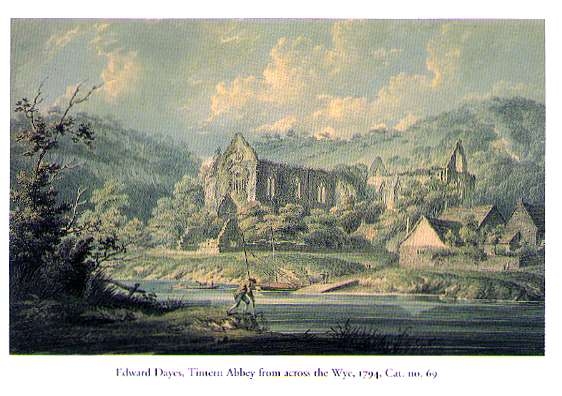
Edward Dayes, Tintern Abbey from across the Wye 1795.

What the poem does for me is help me recall my own experiences of places that gave me pleasurable experiences through my senses. Wordsworth in his poem is triggering our memory of good things too. He suggests we find a secluded place ourselves, remember, imagine and discover our own benefits. Nature can provide a healing process,

when thy mind

Shall be a mansion for all lovely forms,

Thy memory be as a dwelling place

For all sweet sounds and harmonies; oh! then,

If solitude, or fear, or pain, or grief,

Should be thy portion, with what healing thoughts

Of tender joy wilt thou remember me,”

There is something ageless in Wordsworth’s theory which is the theory of Romanticism. It makes me think of Karma and the Buddhist approach to meditation.

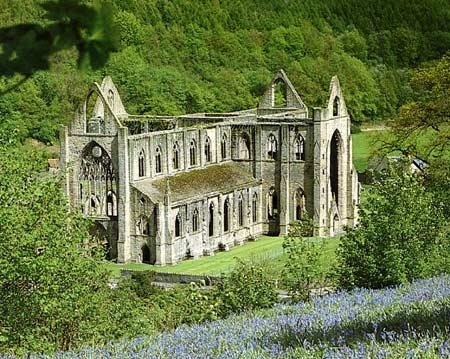
Tintern Abbey. Postcard photo courtesy of Paradoxplace.com.

As an addenda to the William Gilpin (1724-1804) reference above: Wordsworth may have used Gilpin’s guide book in the Wye Valley. Gilpin also was an advocate of experiencing nature and drawing benefits from it , it’s hues and colours and it’s natural arrangement He wasn’t averse, however, to making suggestions about its arrangement. He might suggest in his writing the removal or addition of a tree or even the roughing up and creation of a more crumbling effect of Tintern Abbey to create a better aesthetic affect. It is suggested that Jane Austen made fun of this in Northanger Abbey.

More on the topic:

Read Full Post »

Vintage book cover. The book had been purchased in the shop at Dove Cottage. Image @Grey Pony

Inquiring readers, frequent contributor, Tony Grant,  has done it again and brought the 19th century alive through his discussion of poetry. One can walk the paths along Grasmere in the Lake District with him and William Wordsworth, inhaling the clean crisp air and regarding the sad cautionary tale of Martha Ray, the woman in the scarlet cloak. Visit Tony’s blog at London Calling.

Saturday August 23rd 1798.

“ A very fine morning. Wm was composing all the morning. I shelled peas, gathered beans and worked in the garden till half past twelve. Then walked with William in the wood. The gleams of the sunshine, and the stirring trees, and gleaming boughs, cheerful lake, most delightful. After dinner we walked to Ambleside…”

Thus Dorothy Wordsworth describes the division of labour in the Wordsworth house hold at Dove Cottage, Grasmere in Cumbria. She did the labour and William her brother did the,” Romanticising.” But it shows the division of experience wasn’t as clear cut as might appear at first. Dorothy shows her emotional response to the world she inhabits too, as much as her esteemed brother does in his poetry.

Dorothy

Romanticism was a way of seeing and experiencing the world and which Wordsworth promoted in his poetry. It wasn’t necessarily about being romantic however. It was about an emotional response to the world that balanced a logical factual approach. It promoted the importance of feelings, myth, symbolism and intuition as well as taking into account the facts of a situation.

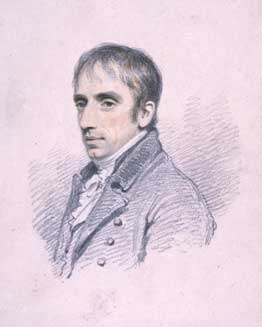
William Wordsworth by Henry Eldridge, 1807

”The Thorn,” written by William Wordsworth in 1789 is very melodramatic and tells the story of a solitary, rejected woman, Martha Ray, who’s baby has died and the mythology that builds around her.

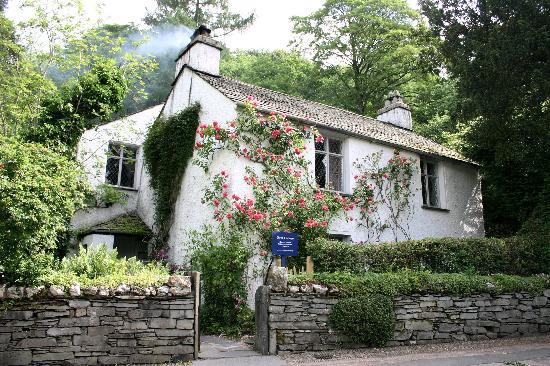
Dove Cottage.

Wordsworth, in the opening stanzas introduces us immediately to the thorn describing it as , “so old and grey,” “stands erect,” “A wretched thing forlorn.” And takes the personification to a higher degree saying it is,” Not higher than a two year’s child.”

He is setting us up to respond to natural things in an emotional way.

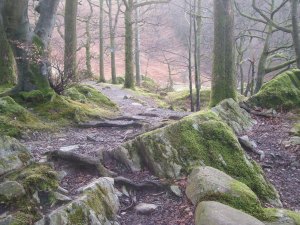
Footpath around the lake. Image @A Year In the Lakes

He then balances this emotional approach with factual evidence as he gives us the thorns location ,”high on a mountains highest ridge,” and the minutest detail, telling us that three yards from the thorn is, “a muddy pond,” and close beside the thorn is,

“A beauteous heap, a hill of moss.
Just half a foot in height.”

A mixture of fact and emotion balanced.
Three things are described in close proximity and we wonder how they relate to each other.

Colour is very important. The mound of earth near the thorn has, “vermilion dye,” “lovely tints,” “olive green, “scarlet bright,” “green red and pearly white.” Vivid in our minds eye.

Then, “A woman in a scarlet cloak,” Martha Ray, is introduced into this setting and we are asked,

“Now wherefore, thus, by day and night,
In rain, in tempest, and in snow,
Thus to the dreary mountain top
Does this poor woman go?”

The question all the local villagers ponder too. Observation, and imagination create a myth. Many believe she has killed her baby and buried it next to the thorn but they don’t actually know that. Wordsworth keeps pulling us back to reality, tempering our emotional response, “I cannot tell; I wish I could; for the true reason no one knows.”

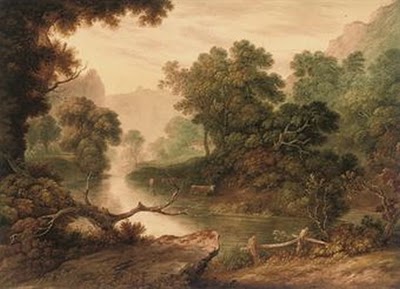
Cattle watering at Grasmere, near Ambleside, Cumbria, by John Glover.

Wordsworth also begins to use the personal pronoun. It is an egotistical device but we are with him. It is us as well as Wordsworth asking the same questions. He has got involved in this apparent tragedy and so have we.

Wordsworth relates to us the story of Martha Ray and what makes her mad.

“Full twenty years are past and gone
Since she (her name is Martha Ray)
Gave with a maidens true good will
Her company to Stephen Hill”

Stephen Hill, we are told, gets Martha pregnant but leaves her and marries somebody else. As result she has the baby but it is never seen by other people.

Then imagination intervenes again,

“For many a time and often were heard
Cries coming from the mountains head
Some plainly living voices were:
And other, I’ve heard many swear,
Were voices of the dead:
I cannot think, whate’er they say,
They had to do with Martha Ray.”

Wordsworth then draws us back to a cool scientific approach,

“But what’s the Thorn? And what the pond?
And what the hill of moss to her?”
And what the creeping breeze that comes
The little pond to stir?”

You can almost imagine Wordsworth and us being explorers into this mystery using investigative questions.
However, finally, myth is triumphant

“…but some will say
She hanged her baby on the tree
Some say she drowned it in the pond
Which is a little step beyond
But all and each one agree
The little babe was buried there
Beneath the hill of moss so fair.”

Fact, imagination, emotion, have combined to create a myth.

What use would this mythologizing be to those people in the hills and mountains of the Lake District? Would it help them make moral decisions? They wanted to bring Martha Ray to public justice based on what they thought and felt. Would it help them to create their own response to Martha’s predicament without having to experience it themselves? Is that the purpose of mythologizing? The purpose of fairy tales and myths have always been important to childhood and early emotional development and moral growth. Wordsworth has created an adult myth. So does the need for myths go beyond childhood and remain important to all?

……………………………………………………………………………………….

In a few weeks, a good friend of mine, Clive, is coming over from Canada for a reunion of old school friends. Some of us are reaching 60 this year and we are getting together for a celebration in Liverpool. Clive and I are going on further north into the Lake District for a couple of days. We will be staying in Ambleside, not far from Grasmere and Wordswoth’s Dove Cottage. We will visit Dove Cottage and I promise we will listen out for the cry of Martha Ray caught in the winds blowing about the peaks surrounding Grasmere and we will too be able to say,

“That I have heard her cry,
“Oh misery! Oh misery!
Oh woe is me! Oh misery!”

More on the topic:

Read Full Post »

« Newer Posts - Older Posts »