Military History Podcast features the following podcasts about Napoleon’s life, rise, and fall:
Archive for September, 2007
Podcasts About Napoleon
Posted in jane austen, Napoleon on September 9, 2007| 1 Comment »

Jane Austen Character Paper Dolls
Posted in jane austen on September 8, 2007| 5 Comments »

Legacy Design’s Legacy Pride Paper Dolls designs and sells a series of spectacular paper dolls based on literary characters and authors, such as the one of Anne Elliott above. I had highlighted only one or two in a previous post, but the author of Old Grey Pony kindly sent links to a slew of them that I could not ignore. Check out her website, including Georgian Resources, if you haven’t seen them so far and bookmark them. They are well worth the return visits. 
Click on these links to find:
Jane Austen
Wentworth
Henry Tilney
Edward Ferrars
Elinor Dashwood
Edmund Bertram
Fanny Price
Emma Woodhouse
Knightly
Elizabeth Bennet
Darcy
Josephine Bonaparte
Revolutionary Fashion

Silhouettes: Tracing Jane Austen’s Shade
Posted in jane austen, Jane Austen's image, Regency style, tagged jane austen, Jane Austen's image, Jane Austen's portrait, Silhouette on September 7, 2007| 4 Comments »
Before photography, tracing silhouettes was a hugely popular and inexpensive way of capturing a person’s likeness. Even financially stretched families could afford to have a family member stand in front of a light. Their profiles were then traced onto a sheet of paper and cut with scissors. Granted, artistry was involved in the tracing and cutting, for the difference between one person and the next is in the minutest proportions. Should the tracer trace slightly wrong or cut off a tad too much, a different image will result from the original model. Witness these two silhouettes claimed to be of Jane Austen. The first was created around 1800 in Bath.

The second image of Jane, supposedly traced in 1815, shows a more pronounced nose. If one didn’t have the illustration of Jane’s father to compare to this silhouette, one might completely dismiss it. But one can see a distinct resemblance in the shapes of the noses. If this is not an image of Jane (and the Victorian hairdo and high collar or necklace suggest it is not), one can still conclude that the image might be of a family member. Read more about these two images of Jane here.


Learn more about silhouette making in these links:
A Glimpse of Jane Austen at Work
Posted in Uncategorized, tagged jane austen merchandise on September 6, 2007|
Marianne, “a niece of Austen’s, ” recalls the memory of Jane sitting quietly in the library Godmersham, her sewing on her lap, saying nothing for a long time. Suddenly Jane would burst out laughing, jump up and run across the room to find pens and paper and write something down. Then she would return to her fireside seat and go on stitching quietly as before.

From: Obstinate Heart: A Biography, by Valery Grosvenor Myer, 1997
The quote is from this review: Jane Austen: As Rich a Mix as Any of Her Women, Christopher Lehman, New York Time, April, 1997
Maid of All Work
Posted in Servants on September 5, 2007| 1 Comment »
On December 1, 1798, Jane Austen wrote her sister Cassandra:
We are very much disposed to like our new maid; she knows nothing of a dairy, to be sure, which, in our family, is rather against her, but she is to be taught it all. In short, we have felt the inconvenience of being without a maid so long, that we are determined to like her, and she will find it a hard matter to displease us.
In days of yore even the lowliest families that could afford it would hire a maid of all work, usually a young girl from an impoverished family. If you recall in Mansfield Park, Fanny Price’s real mother and father employed such a maid. To go without one meant hauling one’s own water, laying the fire, sweeping (which must have been endless), and accomplishing the myriad tasks needing to be done in an age that lacked electricity and internal plumbing.
 Next to the scullery maid (who in a large household with many servants, was relegated to perform the meanest duties), the maid-of-all-work had one of the least desirable jobs in the servant hierarchy. Because she was the only servant or one of only a few, all the hard, backbreaking household tasks fell to her. Even Mrs. Beeton, whose expectations of servants was strict, commiserated with this maid’s lot, saying: Her life is a solitary one, and in, some places, her work is never done. She is also subject to rougher treatment than either the house or kitchen-maid, especially in her earlier career.

Learn more about the maid of all work here:
- A Day in the Life of a Maid of All Work
- Maid of All Work: Her Tasks (Victorian Era)
- Click here for my previous posts on servants
The Cock of Cotton Walk and Maid of All Work, 1820: A Satiric Verse
Illustrations from Pyne’s Microcosm
-
Join 7,218 other subscribers
-
2025 AGM in Baltimore
-

-
Items of Interest
Blog Stats
- 18,538,324 hits
- Follow Jane Austen's World on WordPress.com
-
RECOMMENDED BOOKS AND RESOURCES
-
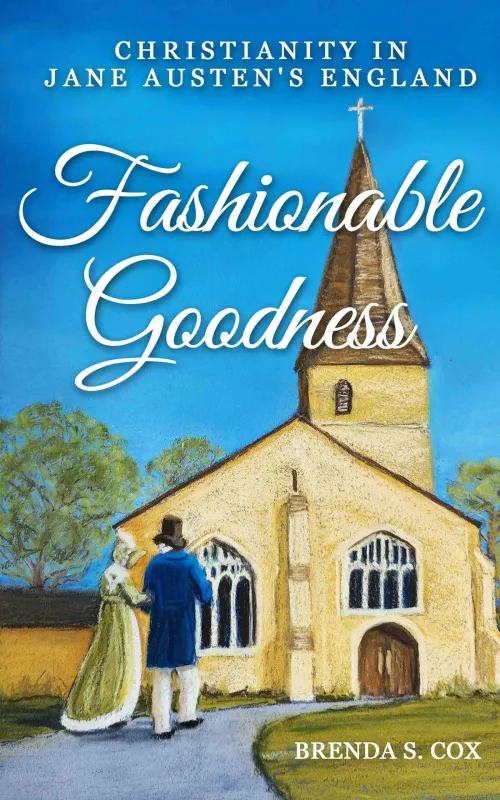
Fashionable Goodness: Christianity in Jane Austen's England is now available! By JAW contributor Brenda S. Cox. See Review. Available from Amazon and Jane Austen Books. 
We also recommend JAW contributor Rachel Dodge's devotionals based on Jane Austen's prayers and classic literature. Reviews:
Praying With Jane: 31 Days Through the Prayers of Jane Austen
The Anne of Green Gables DevotionalThe Little Women Devotional
The Secret Garden Devotional
The Tour of Doctor Syntax. Edited by Ben Wiebracht. Read the review of the book at this link. Click to order the book on Amazon US or Amazon UK or Jane Austen Books FREE Student Membership to JASNA
Available through December 31st, 2025. Click on image for details, and share this poster with other teachers and students!

The Obituary of Charlotte Collins by Andrew Capes

Click on image to read the story.
Comments
“My idea of good company…is the company of clever, well-informed people, who have a great deal of conversation.” – Jane Austen, Persuasion

Gentle readers: Please feel free to post your comments and continue the conversation! Due to SPAM, we will no longer accept comments on posts after 30 days of publication. In some instances, links will be removed from comments as well.
Administrators and Contributors
Pin It!

Top Posts
-
Recent Posts
Links to Jane Austen Blogs
May we suggest?
Hello, my name is Vic and I live in Maryland, USA. I have adored Jane Austen almost all of my life. I am a proud lifetime member of the Jane Austen Society of North America. This blog is a personal blog written and edited by me and my team. We do not accept any form of cash advertising, sponsorship, or paid topic insertions. However, we do accept and keep books and CDs to review.
If you would like to share a new site, or point out an error, please email us. (Yes, we are fallible. We'll own up to our mistakes and will make the corrections with a polite smile on our faces.) Write us at

Thank you for visiting this blog. Your comments and suggestions are most welcome.
Project Gutenberg: eBook of Stage-coach and Mail in Days of Yore, Volume 2 (of 2), by Charles G. Harper
STAGE-COACH AND MAIL IN DAYS OF YORE: A PICTURESQUE HISTORY
OF THE COACHING AGE, VOL. II, By CHARLES G. HARPER. 1903. Click on this link.
Top Posts & Pages
- Regency Fashion: Men's Breeches, Pantaloons, and Trousers
- Men's hair styles at the turn of the 19th century
- Highclere Castle Floor Plan: The Real Downton Abbey
- Pictorial History of Regency Hairstyles
- Regency Hygiene: The Bourdaloue
- Social Customs During the Regency
- Review of The Secret Life of Miss Mary Bennet, and an Interview with Author Katherine Cowley
- Jane Austen’s Regency Women: A Day in the Life, Part 1
- The Servant's Quarters in 19th Century Country Houses Like Downton Abbey
- Regency “Privy” Matters: Feminine Hygiene, Bodily Functions, and Childbirth
Tour Chawton Cottage on YouTube
-
Disclaimer: Our team makes no profit from this blog. We may receive books (physical or digitized) for review purposes.
-
Copyright Statement: © Jane Austen's World blog, 2009-2024. Unauthorized use and/or duplication of this material without express and written permission from this blog’s author and/or owners is strictly prohibited. Excerpts and links may be used, provided that full and clear credit is given to Jane Austen's World with appropriate and specific direction to the original content.




 Jane Austen's World