Feeds:
Posts
Comments

Archive for 2010

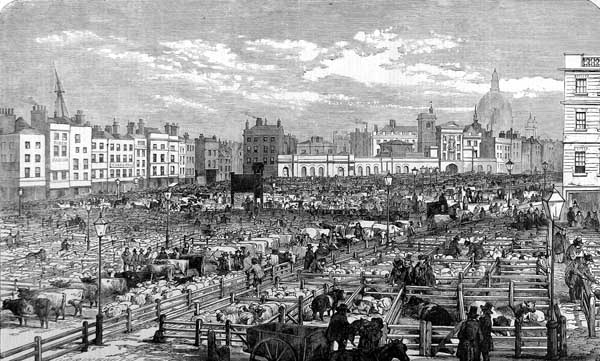
Last day of Old Smithfield, 1855

By the turn of the 19th century, over one million people lived and worked in London and its environs. The challenge in feeding so many people was no mean feat. Surrounding  farms sent produce to London’s markets, and drovers brought sheep and cattle over deeply rutted and ancient roads  from as far north as Scotland. Every September and October, enormous numbers of animals converged in Smithfield market, where they were sold and slaughtered for consumption. In Oliver Twist (1838), Charles Dickens described the filth of Smithfield Market, and the bellowing of frightened animals who had been forced to trudge from their peaceful pastures to what must have been a frightful, bewildering and nightmarish place.

It was market morning. The ground was covered nearly ankle deep with filth and mire; and a thick steam perpetually rising from the reeking bodies of the cattle, and mingling with the fog, which seemed to rest upon the chimney tops, hung heavily above … Countrymen, butchers, drovers, hawkers, boys , thieves, idlers, and vagabonds of every low grade, were mingled together in a dense mass: the whistling of drovers, the barking of dogs, the bellowing and plunging of beasts, the bleating of sheep, and the grunting and squealing of pigs; the cries of hawkers, the shouts, oaths, amd quarrelling on all sides, the ringing of bells, and the roar of voices that issued from every public house; the crowding, pushing, driving, beating, whooping and yelling; the hideous and discordant din that resounded from every corner of the market; and the unwashed, unshaven, squalid, and dirty figures constantly running to and fro, and bursting in and out of the throng, rendered it a stunning and bewildering scene which quite confused the senses.’
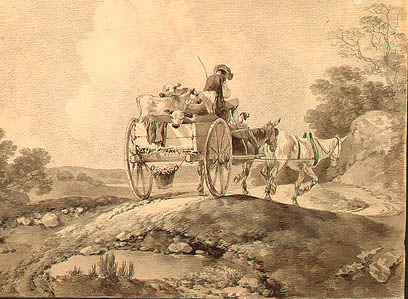
Drover with calves in a country cart, Gainsborough, 1755

Smithfield Market Days.-Monday for fat cattle and sheep. Tuesday, Thursday, and Saturday, for hay and straw; Friday, cattle and sheep and much cows, and at 2 o’clock for scrub-horse and asses. All sales take place by commission. The customary commission for the sale of an ox of any value is 4s., and of a sheep 8d. The City receives a toll upon every beast exposed to sale of 1d. per head, and of sheep at 2d. per score, and for every pen 1s. The total produce to the Corporation is from 5000l. to 6000l. a-year. Smithfield salesmen estimate the weight of cattle by the eye, and from constant practice, approach so near exactness, that they are seldom out more than a few pounds. The sales are always for cash. No paper is passed, but when the bargain is struck, the buyer and seller shake hands and close the sale. Several millions, it is said, are annually paid away in this manner in the narrow area of Smithfield Market.

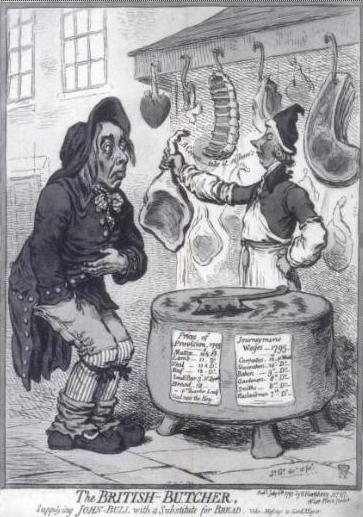
The British butcher

Quantities sold -The average weekly sale of beasts is said to be about 5000 ; and of sheep about 30,000 ; increased in the Christmas week to about 4000 beasts, and 47,000 sheep. As a sheep market, Smithfield has been constantly on the decrease within the last ten years. The following return shows the number of cattle and sheep annually sold in Smithfield during the following periods – Peter Cunningham, Hand-Book of London, 1850 – Victorian London Markets

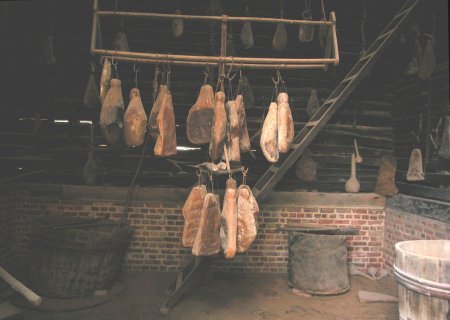
Smoke house, Mt. Vernon, Virginia. Image @Donald Mark
Without refrigeration and cookstoves, food storage and preparation presented challenges to the housewife and innkeeper alike. Fortunately, salt needed for preservation was plentiful in England. Cattle were brought into the market towns in September and October. The beef was salted and then hung up in smoke to preserve it. Pork was likewise both salted and smoked to make bacon and ham. For poorer families, these were practically the only meats eaten during the winter months. – Merrye Olde England: Food
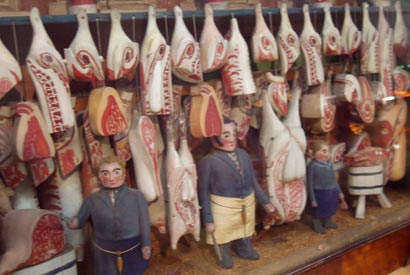
Toy 19th century butchers. Image @The Royal County Arbiter

The preservation of meat turned out to be a relatively simple technique. The meat was salt cured, which meant preserving it with a mixture of salt and saltpetre. Flavorings could be added, such as honey, sugar, pepper, and juniper berries. The salt in the meat drew out moisture, reducing the weight of the meat by as much as 18%-25%, and preventing the meat from decomposing.  The salted meat was hung to dry cure from a few months to a year. This process deepened the color of the meat and produced an intense flavor. Dried and cured, the meat was cut into thin slices and could be served at any time. – Historical Recipes: Dry Cured Ham


Read Full Post »

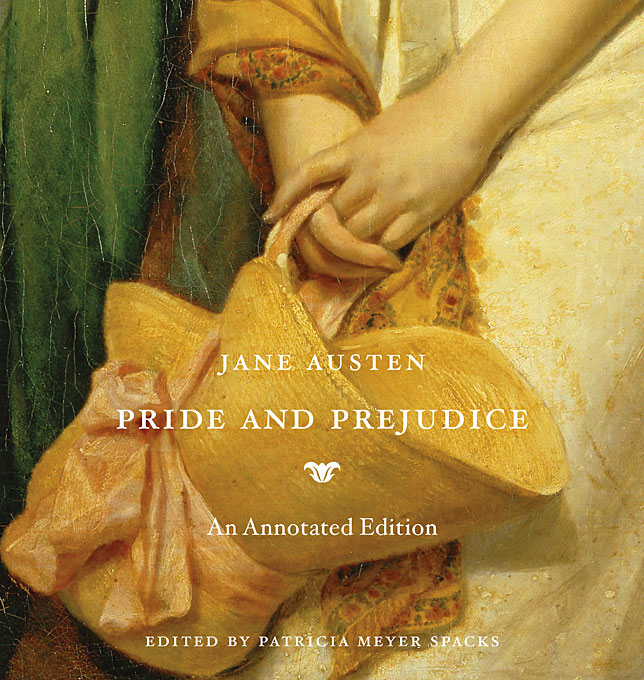
Coming in October is the new annotated edition of Pride and Prejudice by Patricia Myer Spacks. Here’s a peek I took for you of this beautifully illustrated and informative book.

Click here to view this blog listed at Harvard University Press. I’m chuffed!

Read Full Post »

Dark Matter, the third installment of season three of Inspector Lewis, is available online from September 13 through October 12.

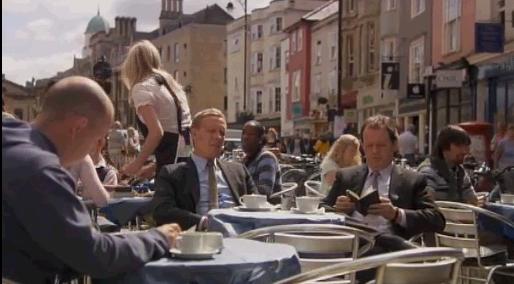
Peaceful Oxford, or is it?

In this episode, Professor Andrew Crompton, an amateur astronomer and the Master of Gresham College, is found dead at the foot of the University Observatory stairs. Lewis and Hathaway investigate the dark goings on among family, friends, colleagues, and staff. Two murders, one in broad daylight, baffle them until a crucial piece of evidence is revealed. The initial murder is set against the backdrop of Gustav Holst’s The Planet Suite, Mars: The Bringer of War.

Roger Temple (Warren Clark) rides his bike to work

In fact, Holst’s fabulous music and the city of Oxford take a front seat as the murderer goes about doing dastardly deeds and Hathaway and Lewis canvas the streets and university looking for clues and talking to suspects.

Laura Hobson (Clare Holman) playing clarinet

We also learn more personal details about Dr. Laura Hobson, who plays 3rd clarinet at the gala memorial concert, which our detectives have paid to see but must leave as they pursuit the murderer. Before this happens, Lewis enlists Hobson to spy on her fellow orchestra members, notably Gwen Raeburn, also an astronomy lecturer; her husband, Sir Arnold; and the guest conductor Malcolm Finniston.

Lewis and Hathaway go over the clues

As I watched this particular episode I realized why I generally prefer shows produced for British television – middle aged people, indeed those who would be considered elderly, are allowed to find love and romance and are not relegated to stereotypical Golden Girl or old codger roles. The BBC employs skilled and seasoned actors to portray the characters, not some flavor of the month or pretty boy pinup.

Robert Hardy as Sir Arnold Raeburn

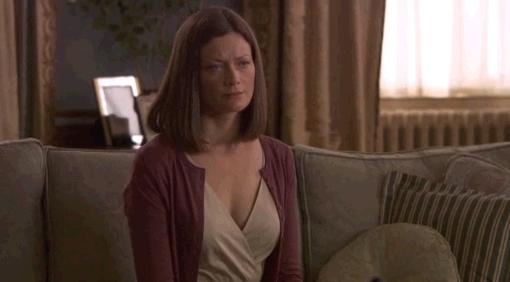
Actors like Robert Hardy (Sir Arnold Raeburn), Warren Clarke (Roger Temple), Sophie Ward (the grieving widow, Isobel),

Sophie Ward as Isobel Crompton

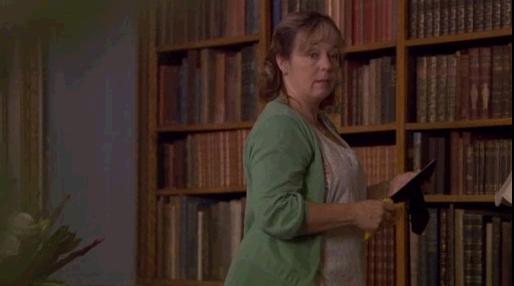
Diana Quick (Gwen Raeburn), and Annabelle Apsion (Babs Temple) are at the top of their game.

Annabelle Apsion as Babs Temple, the Crompton's housekeeper

It is simply a pleasure to watch them create a world in which I can immerse myself for an hour and a half.

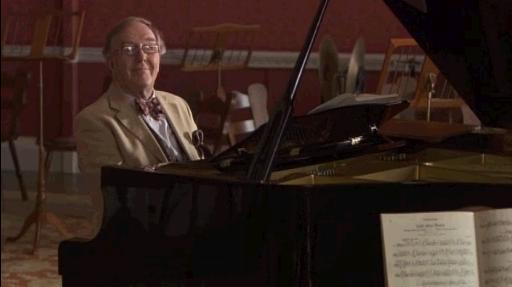
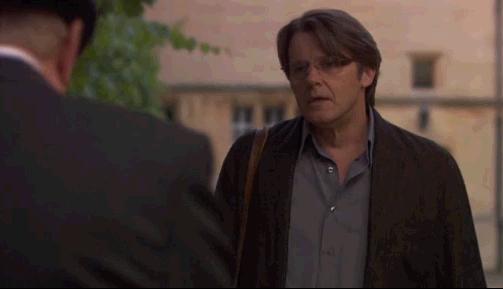
Malcolm Finniston, guest conductor

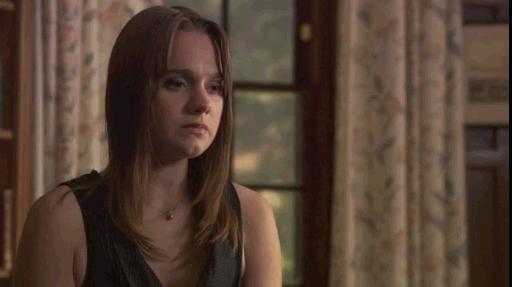
Even the young actors, like Ruby Thomas, aren’t just cookie cutter pretty. They can hold their own against their more seasoned counterparts.

Ruby Thomas as Kate Cameron

I solved the murder mystery fairly quickly, but I didn’t care. Its the relationship between Inspector Lewis and Hathaway that keeps me in thrall and tuning in to PBS Masterpiece Mystery every Sunday night. In fact, these episodes give me an excess of joy.

It was nice to see Dr. Hobson wear a dress and pursue personal goals

Read Full Post »

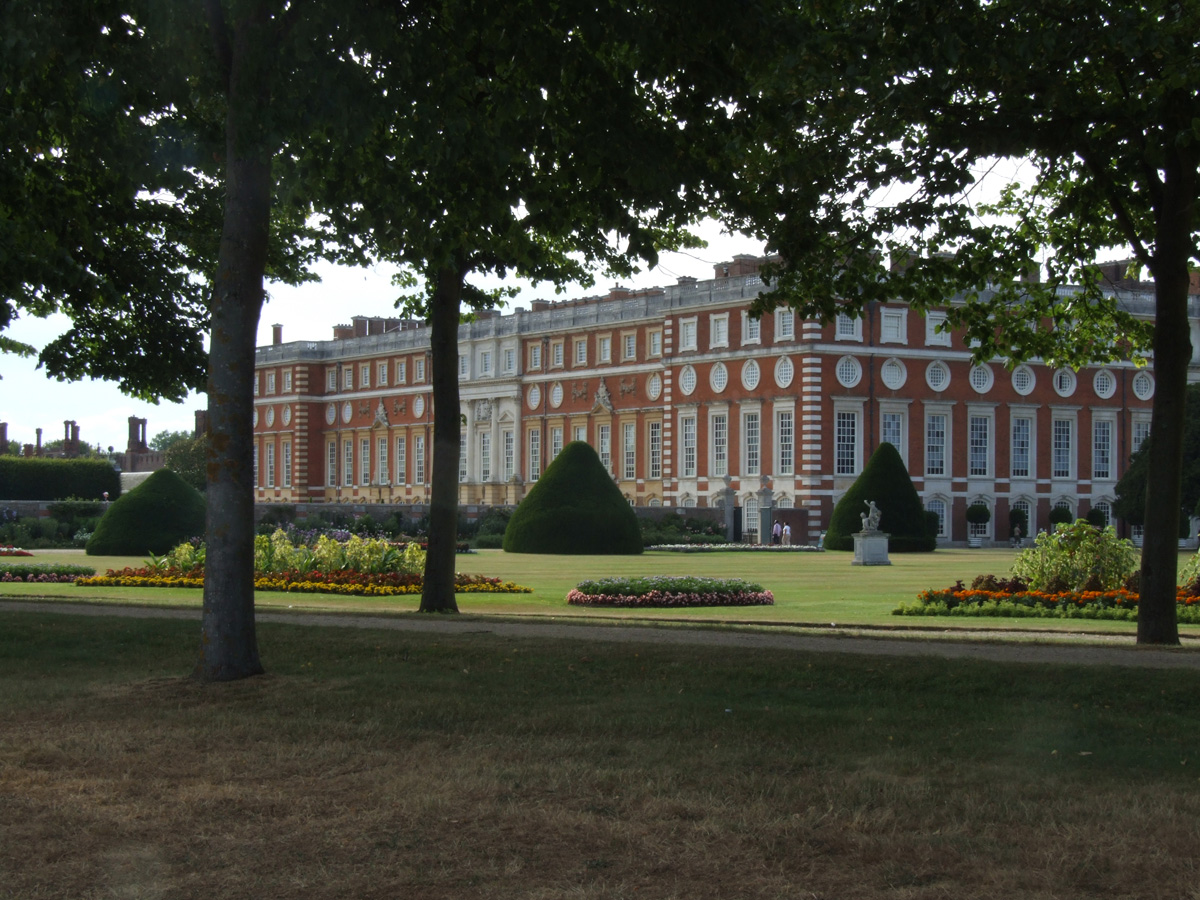
The back of Hampton Court

Gentle Reader, When I published the post about Patrick Baty’s article, The Paint Detective, Jane Austen’s World contributor, Tony Grant, did a double take. He had visited Hampton Court and taken note of the gates that Patrick’s firm had analyzed and that were subsequently repainted. Tony wrote:

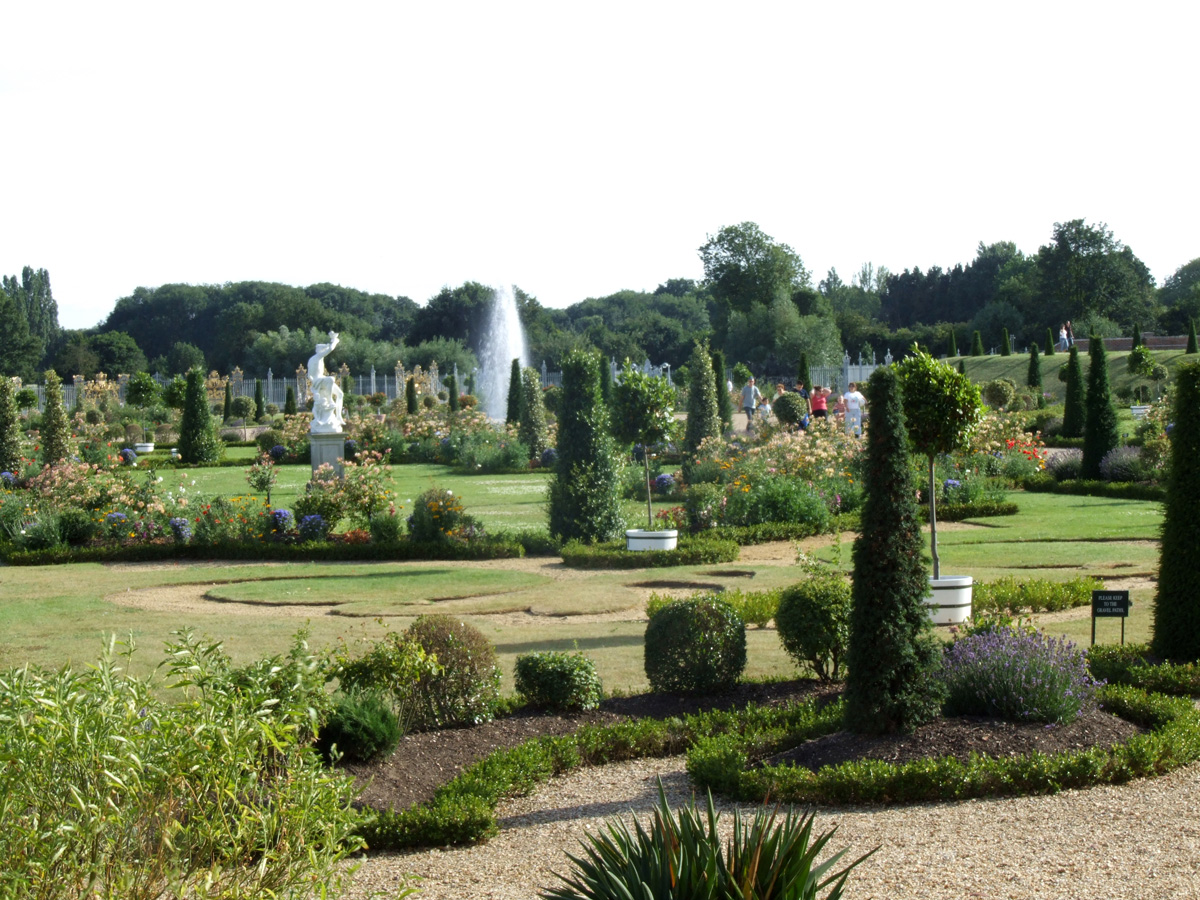
Privy garden, Hampton Court

“I thought I was seeing things in your recent article, Vic, on Jane Austen’s World. Well I was. I was looking at some of the gates on the river side of Hampton Court. Hampton Court is four miles from us. Whenever friends or family come to stay. if the weather is fine, we often have a walk around Hampton Court. For those who have never seen it, it WOWS!!! them big time.

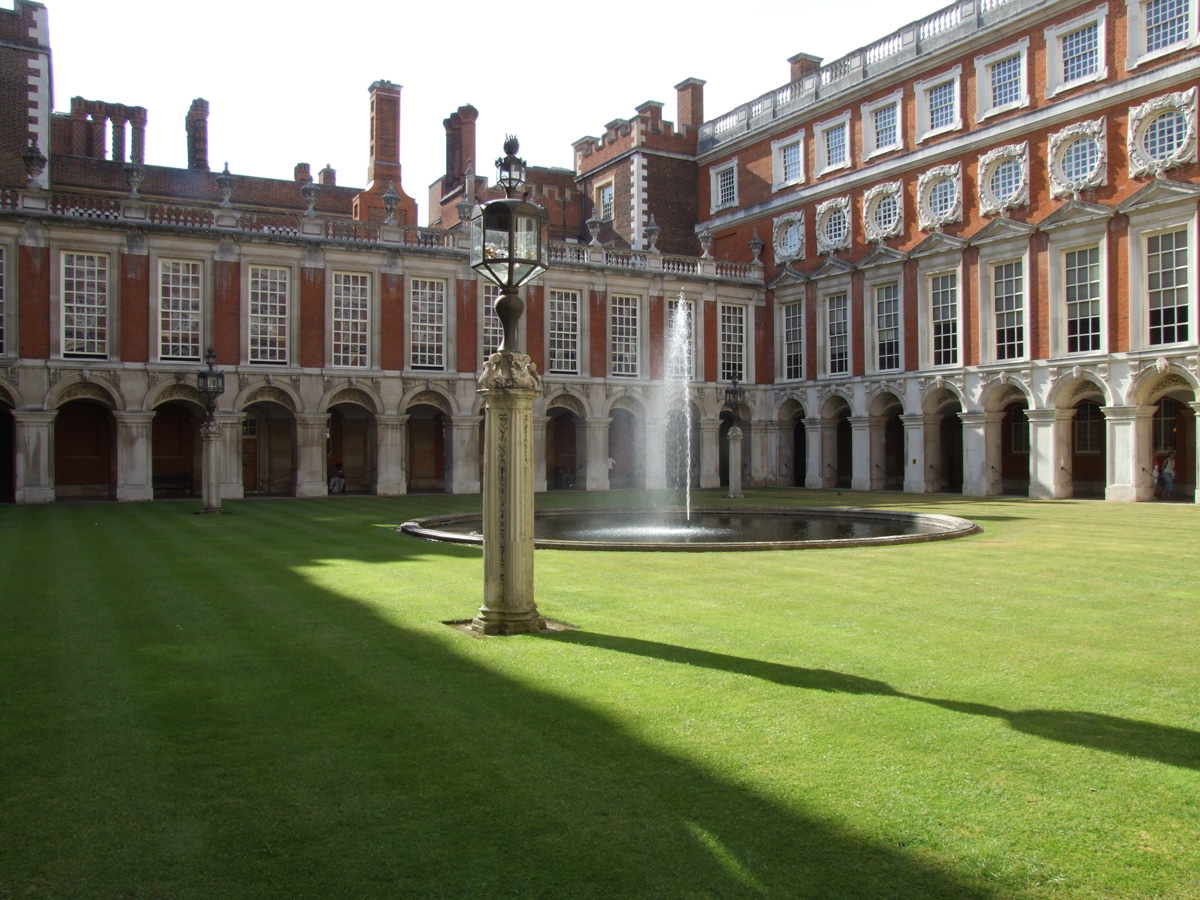
William and Mary Courtyard, Hampton Court

These pictures are when an old school friend of mine, Clive, was over with his family from Hamilton Ontario. These pictures were taken in 2005.”

To the Tudor kitchens, Hampton Court

From these images, you can see that Hampton Court is indeed a “living Tudor world.”

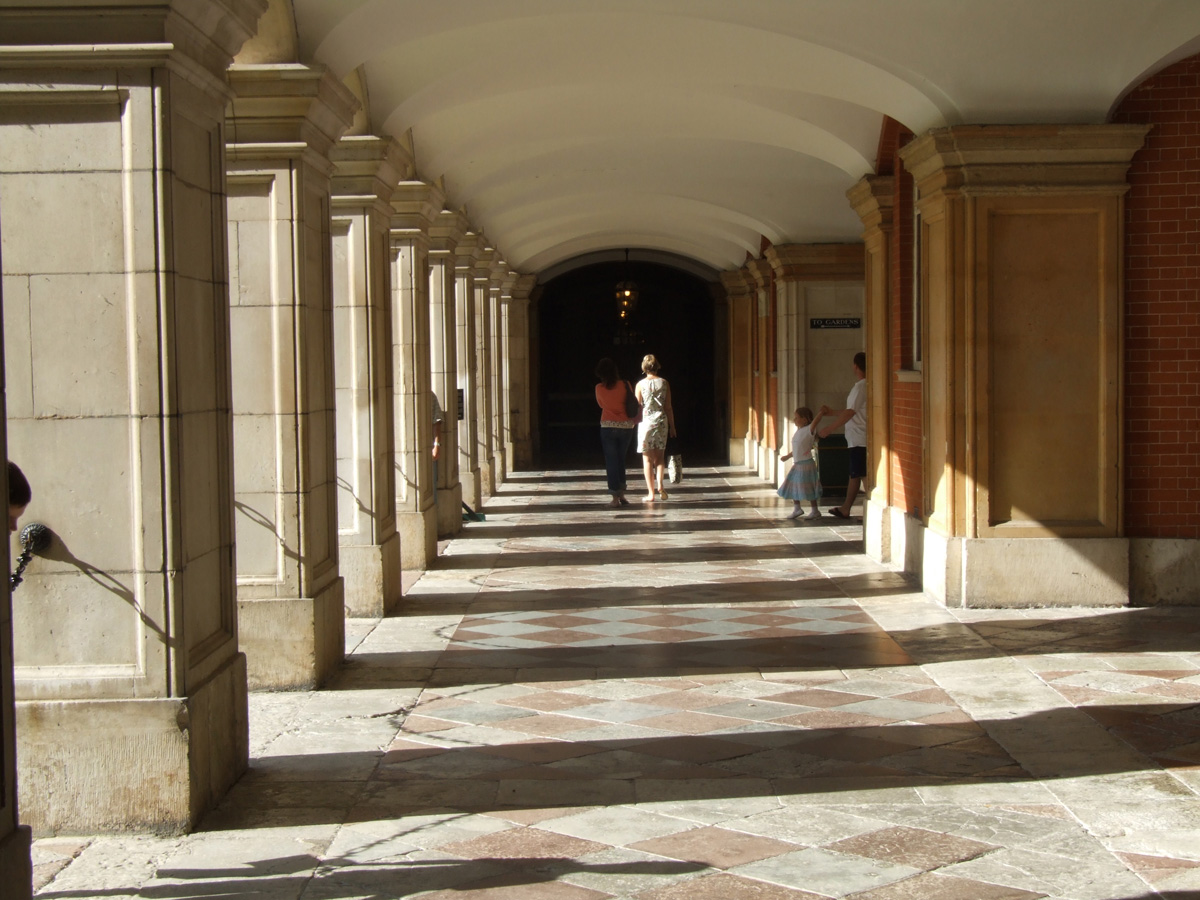
Cloistered area, Hampton Court

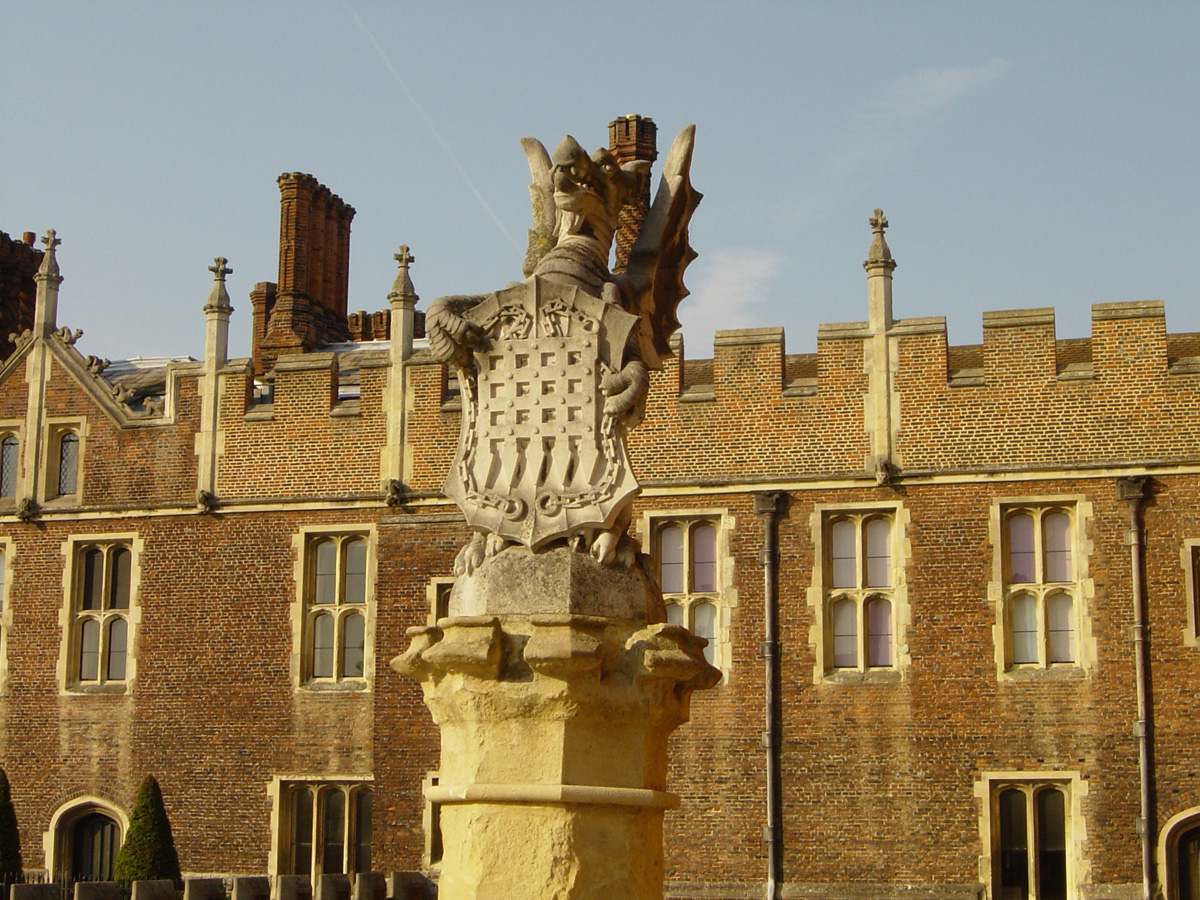
Armorial beast, Hampton Court

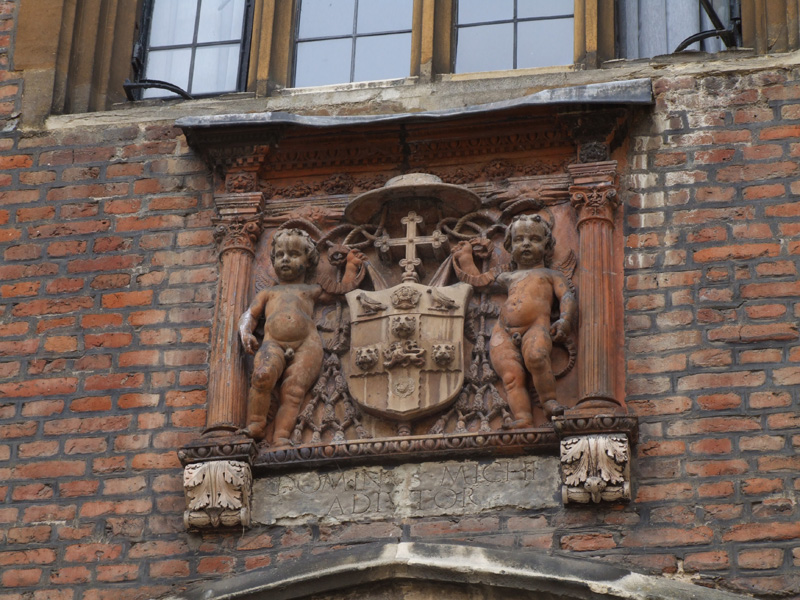
Wolsey's Coat of Arms

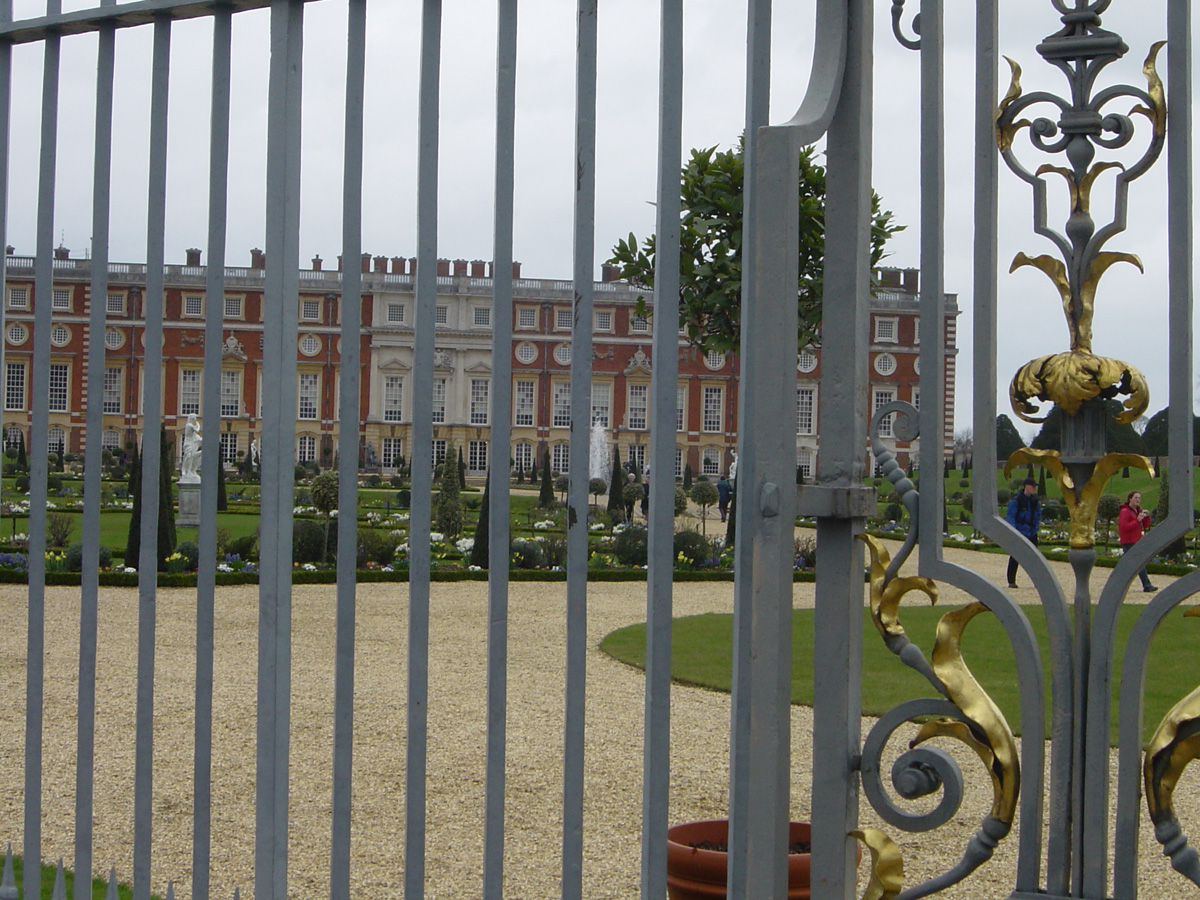
From the river walk through the railings of the fence, Hampton Court

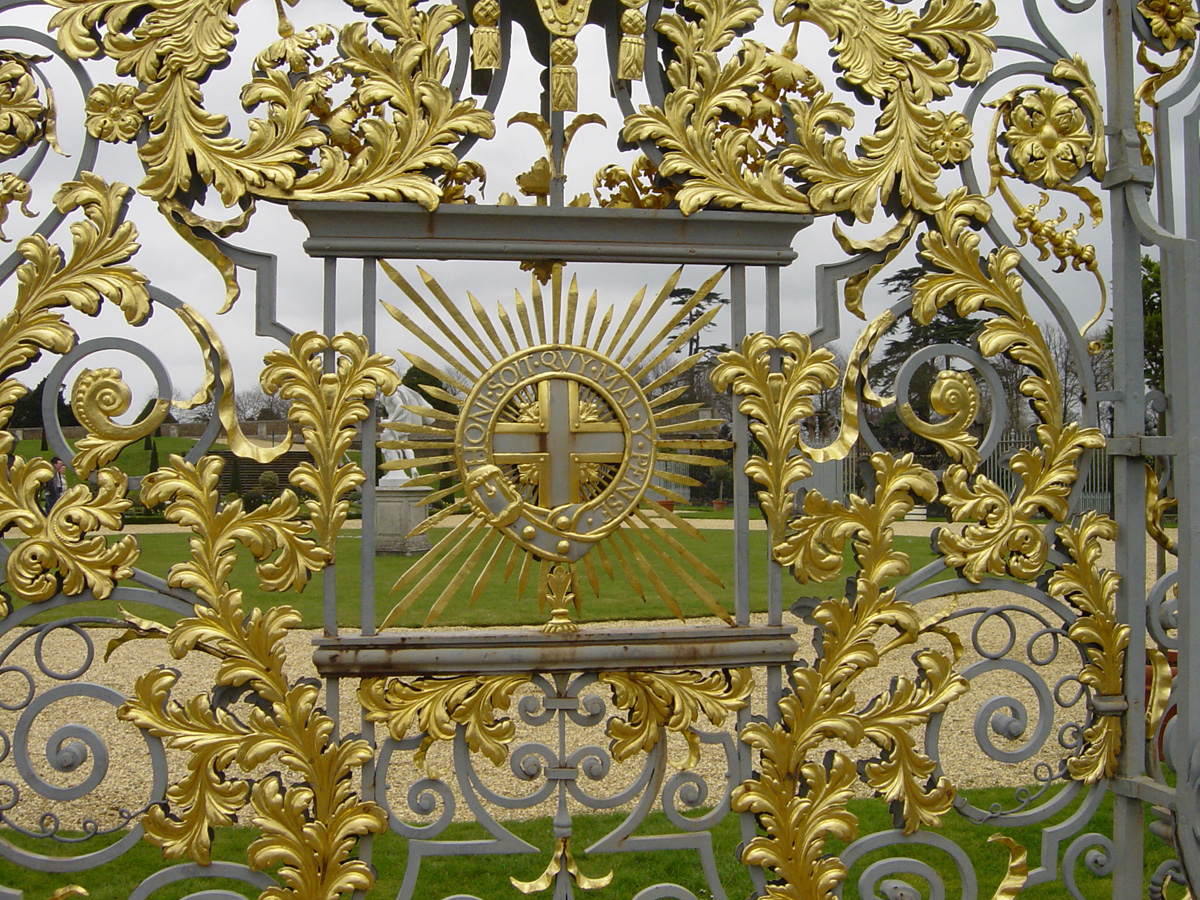
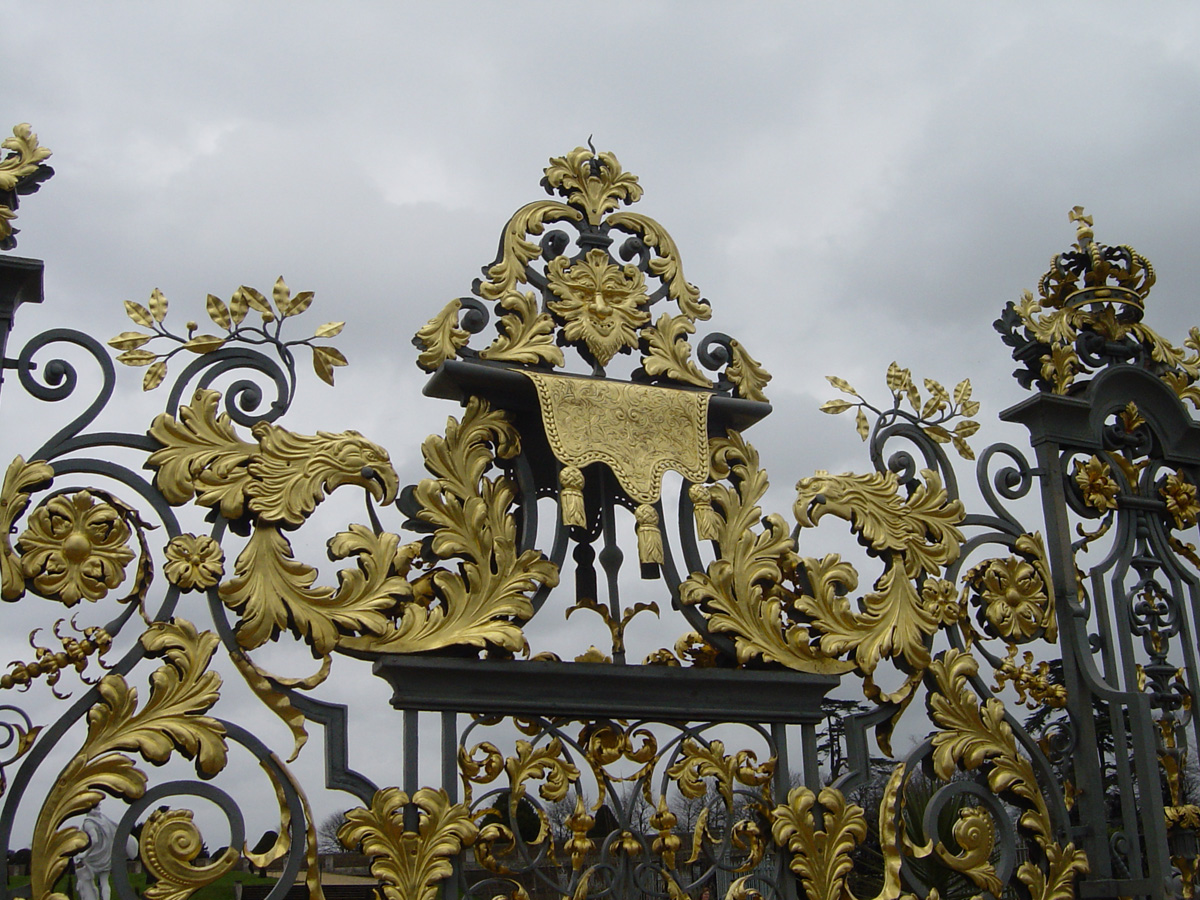
Gilded gate, Hampton Court

Another image of the gate, Hampton Court

Read Full Post »

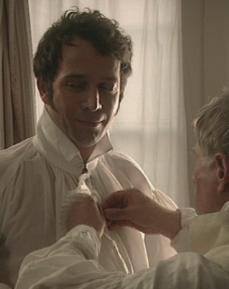
James Purefoy as Beau Brummel

Of course it became a fashion to exaggerate the Beau’s fastidiousness concerning his toilet. He is said to have employed at least two glovers to make his gloves — the first being entrusted exclusively with the making of the thumbs, the second with the fingers and the rest of the hand; to have made his blacking with champagne, to have had the ties of his cravats designed for him by an eminent portrait painter; to have engaged three hairdressers arrange his hair, one being entrusted with temples, one with the front, and the third his occiput [back of the head].

Quote from: Once a Week, by Eneas Sweetland Dallas, 1864,   p 242-243

Read Full Post »

« Newer Posts - Older Posts »