Feeds:
Posts
Comments

Archive for 2011

Murder Most Persuasive is Tracy Kiely’s 3rd mystery based loosely on Jane Austen’s novels. One can readily guess the influence from the title. Elizabeth Parker makes her third appearance as a sleuth. Much like Miss Marple she finds herself at the right place at the right time. Like Miss Marple, Elizabeth understands that she has a talent for solving mysteries.

In this instance, Elizabeth has gathered with family members at the funeral of great-uncle Martin Reynolds. When Uncle Martie’s house in St. Michael’s is sold for the benefit of his three daughters, the body of Michael Barrow is discovered buried underneath the swimming pool. Michael, who was to have married Reggie, Martie’s eldest daughter, had disappeared the night before the wedding and only days before the pool’s concrete shell was poured.

Along with Michael went a great deal of Uncle Martie’s money, embezzled by the runaway groom it was presumed. With the discovery of Michael’s body the questions uppermost in everyone’s minds are: how did Michael wind up under that slab of cement and what happened to the money?

As with Tracy’s other novels, the writing style is light and breezy and the mystery’s fun to follow. In this instance, the parallel to Austen’s Persuasion is hard to ignore. Ann, Uncle Marty’s middle daughter, broke up with young Joe Muldoon under the influence of her father and her dead mother’s dearest friend, an action she still regrets 8 years later. A mousy professor who has lost her looks, she encounters Joe, now a successful man and the detective on the case. Will this star crossed couple come to find love again? My curious mind not only wanted to know, but was wholly satisfied.

I could describe the plot in more detail, but I don’t want to spoil the fun for you. Of Tracy’s three mysteries, this is my favorite so far (as is Austen’s Persuasion). I enjoyed meeting the characters so much that I quite forgot to follow the clues. Still, even when I tried to solve the mystery, I was pleasantly surprised to find out who had done the dastardly deed.

Tracy writes mysteries in the old style. No gritty reality and base language sully her pretty towns and well-drawn characters. Blood, while mentioned, is not described down to its forensic core. Thus I recommend that you read Tracy’s book on a lazy afternoon in a sunny alcove, with a pot of steaming hot tea and some scones and clotted cream, and a cat on your lap and a dog at your feet. I give this delightful tale four out of five Regency tea cups.

Murder Most Persuasive by Tracy Kiely
Hardcover: 304 pages
Publisher: Minotaur Books (August 30, 2011)
Language: English
ISBN-10: 0312699417
ISBN-13: 978-0312699413

Giveaway Contest:

The name of the winner will be drawn by random number generator at midnight on September 10th, EST. To enter, please tell me which Jane Austen character you would like to see murdered in a mystery and why. Contest over. Congratulations, Martha!

My other Kiely reviews:
Read Full Post »

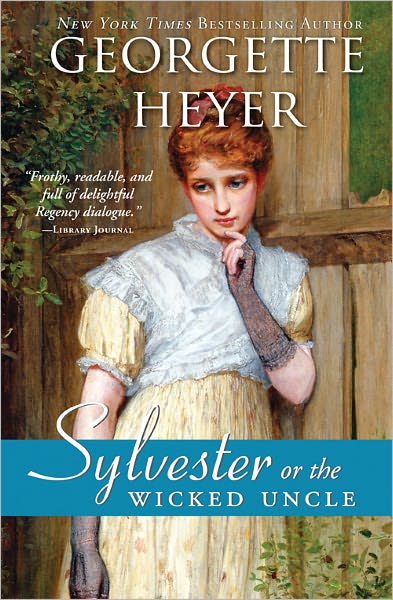
Gentle readers: Please leave a comment if you wish your name to be be eligible for a drawing of Sylvester, or the Wicked Uncle, a wonderful Regency romp by Georgette Heyer. The drawing will be held the moment electricity is restored in my house. My best estimate is that this will take another week. Only U.S. and Canadian residents are eligible. (So sorry, but the book is being sent by the publisher, who has requested this geographic restriction.) Update: Contest closed. Congratulations Rebeka! You have won a copy of Sylvester.

Sylvester, Duke of Salford thinks quite highly of himself and is pleased by his impeccable manners and easy smile, which easily influences servants to do his bidding. But Phoebe Marlow, whose mousy manner hides her bright mind and talents as an equestrienne and a writer, was not so impressed when she first met him during her coming out season. She is even less enthralled with the Duke when he arrives for a visit at her father’s estate to look her over as a possible bride.

Sylvester’s fond Mama also harbors concerns for her son, especially when Sylvester announces his intentions to marry and begins to discuss his preference for a bride with her:

‘But I’m inclined to think now that is is more important that she should be intelligent. I don’t think I could tolerate a hen-witted wife. ‘Besides I don’t mean to foist another fool on to you.’

‘I am very much obliged to you!’ she said, a good deal entertained. ‘Clever, but not beautiful: very well! Continue!’

‘No, somedegree of beauty I do demand. She must have countenance, at least, and the sort of elegance which you have, Mama.’

‘Don’t try to turn my head, you flatterer! Have you discovered among the debutantes one who is endowed with all these qualities?’

‘At first glance, I suppose a dozen, but in the end only five.’

‘Five!’

At this point Sylvester’s mama becomes concerned, for she realizes that he is choosing his life’s mate with his head, not his heart. The woman who immediately springs to her mind for her son is Phoebe Marlow, and so our cluelessly haughty (yet kind) Duke collides with the novel’s heroine, who is not in the least willing to spend any time with him, at least not until circumstances throw them together and she gets to know him better.

The plot revolves around Phoebe’s big SECRET: she has authored a book in which Sylvester, with his saturnine brows, is featured prominently as the villain. The more Phoebe gets to know Sylvester, the more she realizes how wrong she was about him and the more she worries about the book’s effect on their budding friendship (for Phoebe was uncannily accurate in her representation about certain aspects of Sylvester’s life).

Georgette Heyer takes us from the cozy settings of country mansions, to London in High Season, to Dover and over to France. A colorful array of her usual characters add liveliness to a somewhat improbable plot, including Phoebe’s good friend Tom, Sylvester’s dodo bird of a sister-in-law, Ianthe, and a supremely idiotic and over-indulged fop named Sir Nugent.

In my opinion, if you are a Georgette Heyer fan and haven’t read this book yet, you will be well advised to do so now. I give it four out of five Regency tea cups!

For a chance to win this book, leave a comment about your favorite Georgette Heyer book! Contest closed. The winner is: Rebeka!

Read Full Post »

I will be resurrecting old posts until electricity has been restored in my house. The power company promised that 95% of households will be online by Friday. In 2004, our tiny street did not receive full service until 13 days after the storm. Right now I am looking for a hot shower!!

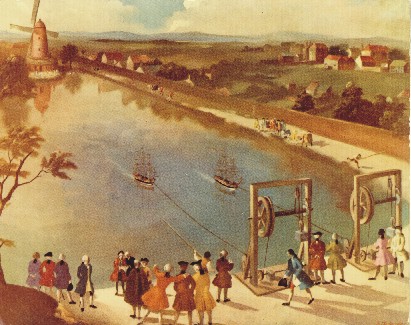
I published this post about the Peerless Pool two years ago. Perhaps my new readers might be interested in learning a few facts about a public swimming pool in London over 200 years ago. Click here to read the post.

Read Full Post »

Announcement

No new posts will be published until electricity has been restored to my house and office. Hurricane Irene did not do much damage, except for the downed lines and trees. Stay tuned.

Read Full Post »

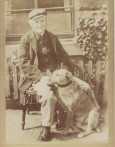
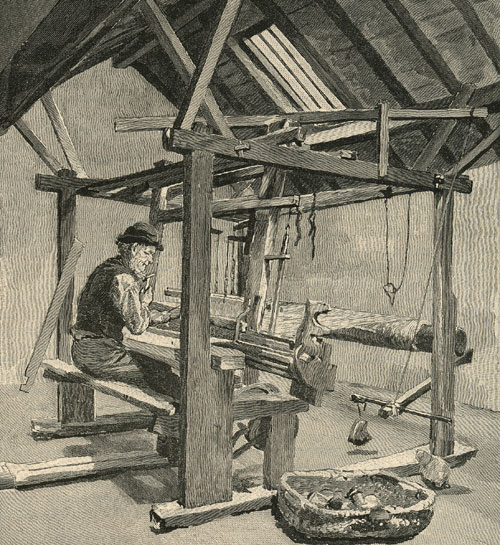
Jospeh Pinder, one of the last living handloom weavers of the 19th century

This poem was printed in Punch Magazine in 1862. In the early 19th century Luddites attacked the factory machines that were about to destroy the cottage industry of handloom weavers. By 1815, these weavers had difficulty finding work. They tried selling their cloth at lower prices than the factories, with the result that their average wages plummeted from 21 s to less than 9 s in 1817, the year of Jane Austen’s death. By 1850, handloom weavers had been reduced to starvation wages. In light of their plight, this poem, which contrasts the wistful observances of the lowly weaver against the lavish lifestyle of the Ton, becomes all the more poignant.

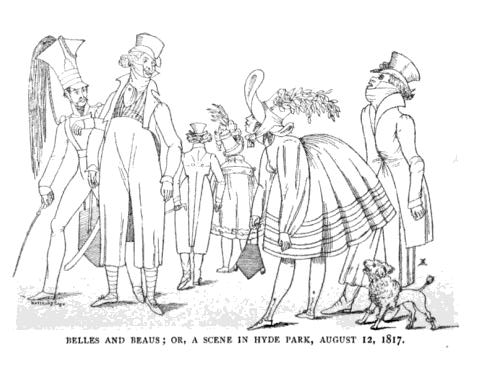
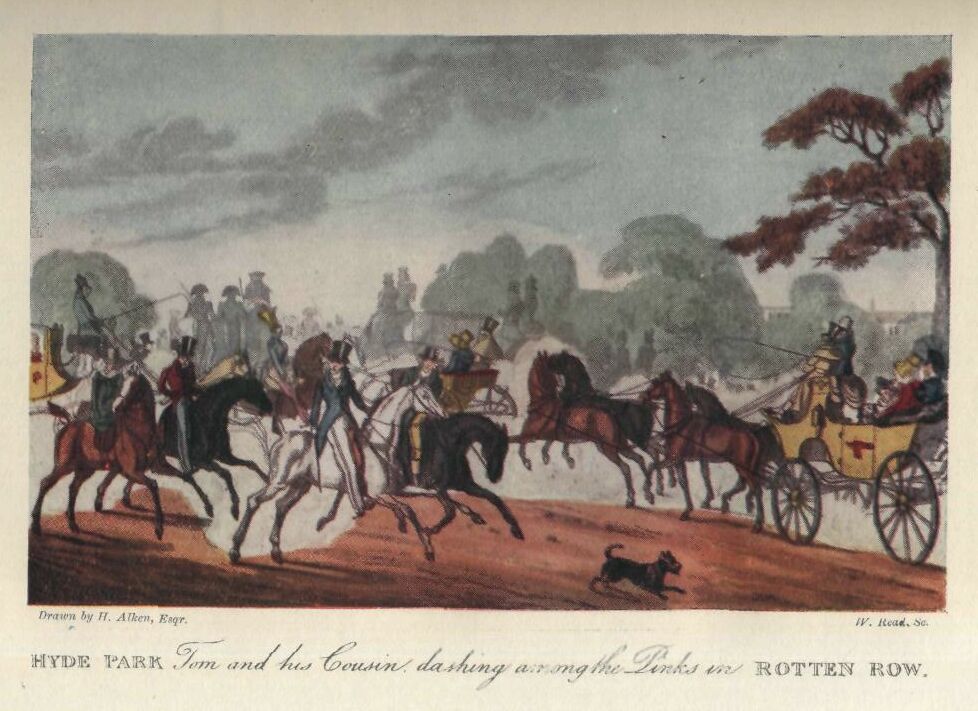
Hyde Park, 1817

SPITALFIELDS AND HYDE PARK.

A Little “Weaver, unemployed,
Chanced in Hyde Park to stray,
And there, as best he might, enjoyed

Unwilling holiday.
The great folks being now in Town,

He strolled, and viewed their show,
Around the Ring, and up and down

A stroll in the park

The walk by Rotten Row.
What high-bred cavaliers were there,
Straight-backed, and clean of limb;
What horsewomen, superbly fair,

Displayed their airs to him!
What equipages Beauty bore.

And Consequence, reclined,
Whom portly coachmen sat before;

Smart footmen stood behind!
The little man, admiring, read
The faces of the Great,
Who passed him with erected head,

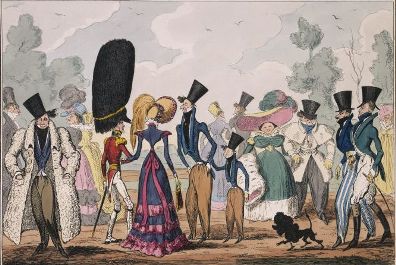
Rotten Row, Tom and Jerry, 1821

And countenance elate,
High fed, from sordid want secure,

From cares and troubles mean,
How brave their bearing, to be sure,

Their aspect how serene!
A heart our little weaver had
In others’ joy that shared.
Himself though hungry, he was glad

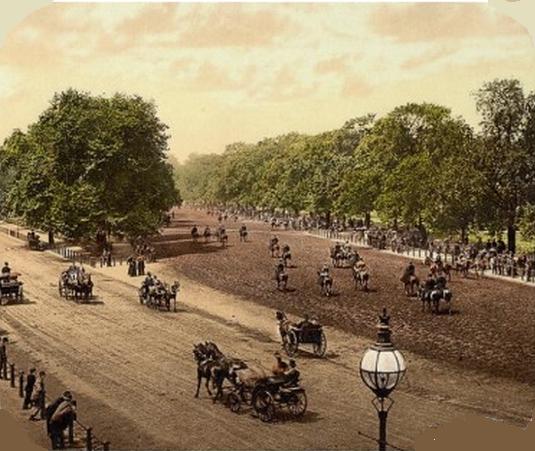
Hyde Park, Rotten Row

To think how well they fared.
It raised him in his self-respect
To see how riches can,
With nurture in a sphere select,

Exalt his fellow-man.
If, entering on this earthly scene,
Endowed with Fortune’s boon, His infant lips he had between
But held a silver spoon, He thought he also might have shone
Amongst the grand and gay, Then being out of work alone,
Not likewise out of pay.

Punch Magazine, Vol 42-43, 1862, p 133

Handloom weaver, 1888

More on the topic:

Read Full Post »

« Newer Posts - Older Posts »