This Jane Austen blog brings Jane Austen, her novels, and the Regency Period alive through food, dress, social customs, and other 19th C. historical details related to this topic.
Gentle Readers, this is Christine Stewart’s second post about her trip to England this past summer. The author of Embarking on a Course of Study, you will enjoy her reminiscences.The day after visiting Jane’s writing desk and portrait in London, I went to Paris. Yes, for the day. It was there so I popped over to squeeze in what I could – a long, exquisite day of mostly walking and a trip up the Eiffel Tower (okay, more like hobbling because I walked everywhere in Reykjavik and had two days of London walking behind me as well. My ankles looked like I was 85 years old. But it was worth it for the view).
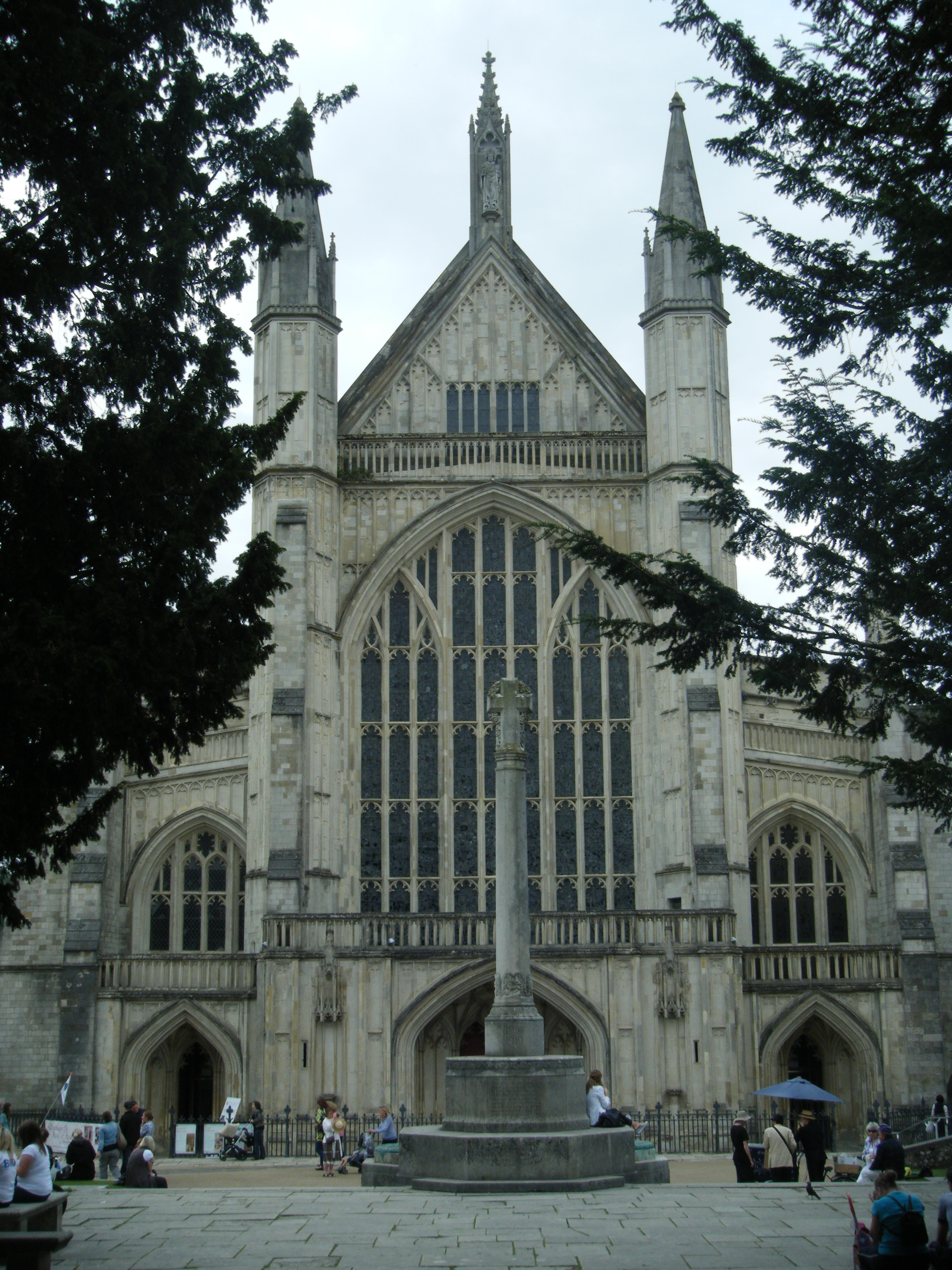
Paris turned out to be a 20 hour day, so I slept in and caught a later train to Winchester and had just enough time to see the Cathedral and the house on College Street where Jane died before catching my bus to Alton (near Chawton) to reach my hotel.Winchester is delightful. Twisty turny streets, archways, alleys tucked between the backs of houses with gates and wooden doors. It felt like one big secret garden to me. I could have wandered for hours. The sky was grayish when I arrived at the Cathedral – perfect for photographs. I took many pictures of the outside as there were so many interesting vantage points but here’s the main one (to keep reading: http://www.embarkingonacourseofstudy.com
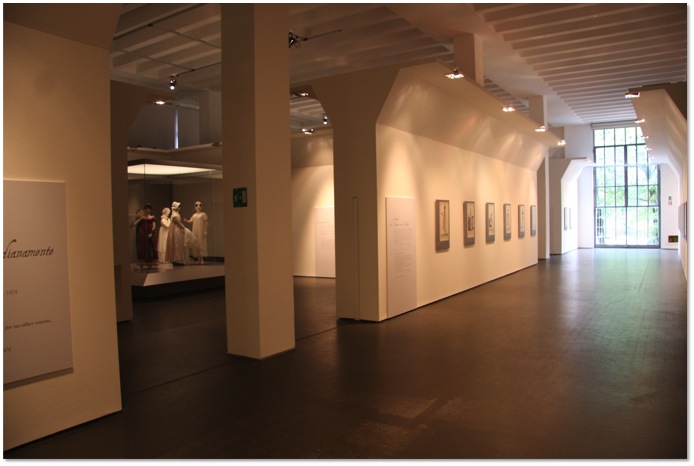
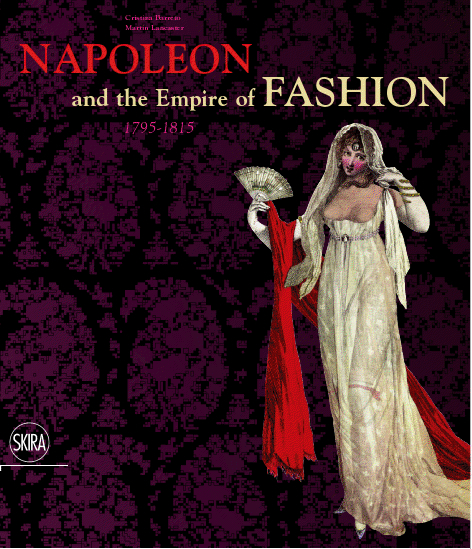
The lush fashion exhibition, Napoleon and the Empire of Fashion, closed in Milan in September. On the website, readers are still allowed to choose where they would like it to travel next!
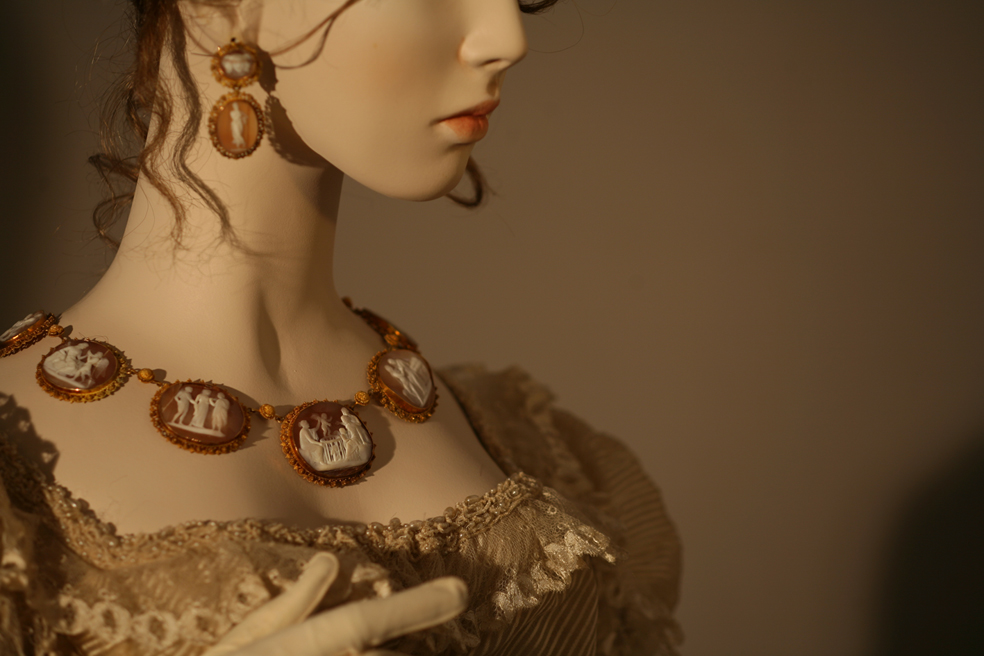
The beautiful cameo necklace and earrings complete this evening ensemble.
The catalogue, written by Cristina Barreto and Martin Lancaster, is sumptuous and filled with color photographs. The clothes are compared to fashion illustrations of the day. One cannot get a better education of French fashion during this period than this book. This video and the link to the slide show below it show what we have missed by not traveling to Milan last spring and summer.
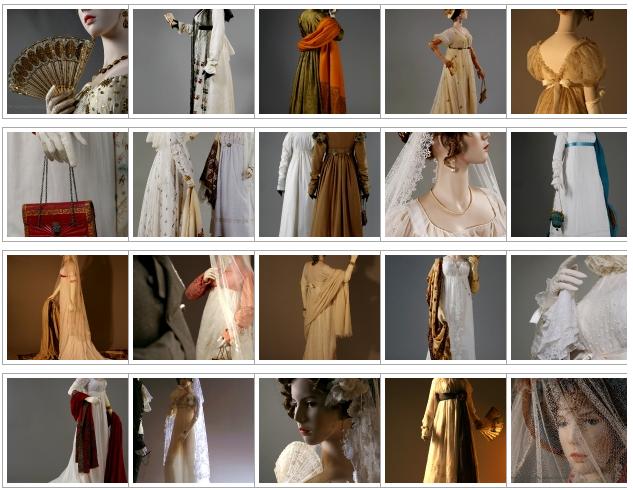
Napoleon’s desire to protect the garment industry in France after the French Revolution resulted in an explosion of designs that propelled the French fashion industry to the forefront, making it hugely influential. By encouraging women to purchase many gowns (so that they would not be seen in the same dress too often), France became synonymous with fashion. See the slide show of images from the exhibition by clicking on this link.
The many French fashions shown from the 1795-1810 years
Gentle readers, this incredible panorama was found in an attic in Rhinebeck, New York. Forgotten and neglected in a barrel, filthy, and badly torn, this painting c. 1810 revealed itself to be over eight feet long when it was unrolled. Click here to see a magnified version of the painting. The details are staggering. I even see a fire! Can you spot other details? Like cannon fire? Or is this my imagination?
London panorama, unknown artist, c. 1810
The ‘Rhinebeck’ Panorama of London, c.1810. Facsimile publication (no.125) of the London Topographical Society, 1981. Stk ++ DA 683 RF396.
Gentle Readers, Patty of Brandy Parfums frequently contributes articles of interest to this blog. Her latest post is about Anonymous, the film about the authorship of Shakespeare’s plays, which recently opened in theatres.
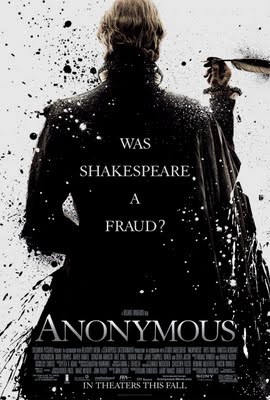
Film Poster
Introduction – Instead of writing a traditional plot-spoiler review of Anonymous, which can be found in many newspapers and magazines, I’ve written what I think will be more useful – a short guide to Shakespeare authorship. Enjoy! – Patricia Saffran
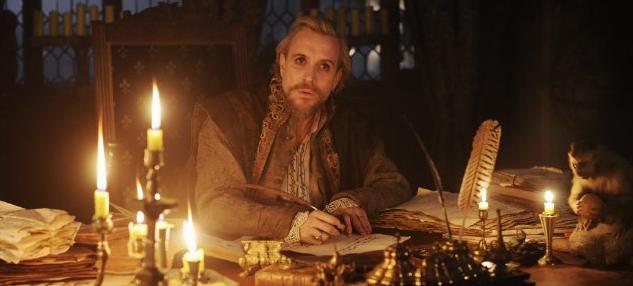
Jamie Campbell Bower as the young earl of Oxford
A Guide to Shakespeare Authorship
Jane Austen knew Shakespeare’s plays well and based a number of her novels on Shakespeare’s characters and plot devices. Stephen Derry writes about these many references in his paper for the Jane Austen Society of North America, ‘Jane Austen’s Use of Measure for Measure in Sense and Sensibility.’ Derry begins his paper by saying -In Mansfield Park, Edmund Bertram declares that one is familiar with Shakespeare in a degree from one’s earliest years. His celebrated passages are quoted by everybody we all talk Shakespeare, use his similes, and describe with his descriptions.
Tudor England
Knowing of Jane Austen’s profound knowledge of Shakespeare should give those who love her works a keen interest in all things Shakespeare – and in this new movie, which brings the Elizabethan period to life. This is the first time a major movie studio has taken a leap, with an elaborate period production, costumes, and star-studded cast, to delve into the question plaguing scholars for centuries, as to who the author of Shakespeare’s plays really was.
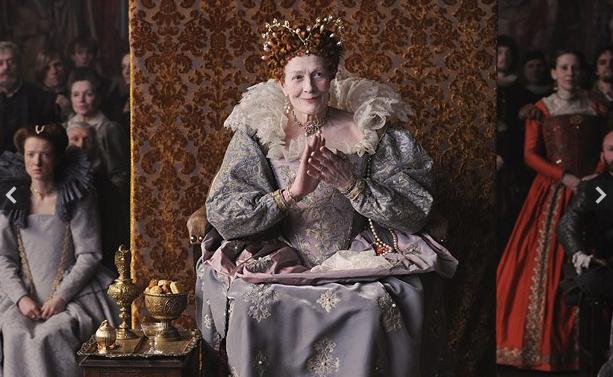
Joely Richardson as a young Elizabeth I and Jamie Campbell Bower as a young Earl of Oxford
The gamble has payed off, as this is a truly sensational
movie. It takes place during the succession of Queen Elizabeth I, and the Essex Rebellion against her – a period of turmoil and political instability. During this period, being the author of a play with politically loaded or satirical material was dangerous. Some authors chose anonymity………
Shakespeare authorship as an area of inquiry is not new. While making a list of the greatest Elizabethan poets, Henry Peacham in The Compleat Gentleman published in 1622, when the First Folio was being created, lists Edward de Vere, the Earl of Oxford, first on his list and does not include Shakespeare at all. Many believe that this was Peacham’s way of hinting that Edward de Vere, not William Shakespeare, wrote the plays and poetry.
Rafe Spall as William Shakespeare
More recently, in the past 150 years, there have been many notable actors, writers, and Supreme Court judges who have questioned William Shakespeare as the author of the plays. Among them are Mark Twain, Leslie Howard, Charlie Chaplin, Orson Welles, Sigmund Freud, Charles Dickens, Walt Whitman, Henry James, J. Thomas Looney, Michael York, Sandra Day O’Connor, Harry A. Blackmun, and John Paul Stevens. Besides de Vere and William Shakespeare, the other main candidates to have written the plays are Bacon, Marlowe, and Neville.
Rhys Ifans as the mature Earl of Oxford
A fantastic short video by the director of Anonymous, Roland Emmerich, summarizes ten reasons why it is implausible that the Stratford William Shakespeare wrote the plays. For some, the main reason is that unlike all other great authors of the period, no letters exist either to or from Shakespeare.
A new book coming out November 8th continues to examine the question of Shakespeare authorship – The Shakespeare Guide to Italy by Richard Paul Roe, paints the Stratford man who never left England as an improbable author of the many distinctively Italian plays.
Vanessa Redgrave as the mature Elizabeth I
Current scholars, and by extension many of their now journalist proteges, who defend William Shakespeare as the author of the plays, are extremely defensive and say there is no room for doubt. Time will likely make the world more receptive to exploring Shakespeare authorship, but for now Anonymous will inspire interest in this fascinating field. I highly recommend this film.
For more on Shakespeare and Shakespeare Authorship:
Anonymous, the new movie about Edward de Vere, the Earl of Oxford, as the true author of Shakespeare’s plays. With Rhys Ifans, Vanessa Redgrave, David Thewlis, and along with those who actively support authorship studies, Derek Jacobi and Mark Rylance. Directed and produced by Roland Emmerich, released by Columbia.
Fashionable Goodness: Christianity in Jane Austen's England is now available! By JAW contributor Brenda S. Cox. See Review. Available from Amazon and Jane Austen Books.
Available through December 31st, 2025. Click on image for details, and share this poster with other teachers and students!
The Obituary of Charlotte Collins by Andrew Capes
Click on image to read the story.
Comments
“My idea of good company…is the company of clever, well-informed people, who have a great deal of conversation.” – Jane Austen, Persuasion
Gentle readers: Please feel free to post your comments and continue the conversation! Due to SPAM, we will no longer accept comments on posts after 30 days of publication. In some instances, links will be removed from comments as well.
Administrators and Contributors
Vic Sanborn, founder of this blog, is supported by a team of talented and knowledgeable writers about Jane Austen and the Regency era. They are:
Tony Grant, who now contributes his photos from London and England
Click on their names to enter their own blogs.
In addition, we thank the many experts and authors who frequently contribute their posts and opinions, and who continue to do so freely or at our request.
Click here to enter the page. Topics include Regency fashion, historic foods, Jane Austen societies, British sites, related topics. Click on image.
May we suggest?
Hello, my name is Vic and I live in Maryland, USA. I have adored Jane Austen almost all of my life. I am a proud lifetime member of the Jane Austen Society of North America. This blog is a personal blog written and edited by me and my team. We do not accept any form of cash advertising, sponsorship, or paid topic insertions. However, we do accept and keep books and CDs to review.
If you would like to share a new site, or point out an error, please email us. (Yes, we are fallible. We'll own up to our mistakes and will make the corrections with a polite smile on our faces.) Write us at
Thank you for visiting this blog. Your comments and suggestions are most welcome.
Project Gutenberg: eBook of Stage-coach and Mail in Days of Yore, Volume 2 (of 2), by Charles G. Harper
STAGE-COACH AND MAIL IN DAYS OF YORE: A PICTURESQUE HISTORY
OF THE COACHING AGE, VOL. II, By CHARLES G. HARPER. 1903. Click on this link.










 Jane Austen's World