• Home
  • Audio/Podcasts
  • Austensites
  • AV/E-Texts
  • History
  • JA Novels & Bio
  • Links
  • Original Sources/19th C. Texts
  • Social Customs During the Regency
  • Teacher/Student
  • Writer/Literature Resources

Jane Austen's World

This Jane Austen blog brings Jane Austen, her novels, and the Regency Period alive through food, dress, social customs, and other 19th C. historical details related to this topic.

Feeds:
Posts
Comments
« Silent Monday: The King’s Speech
How the Bell Flowers on Princess Charlotte’s Court Dress Were Made »

Sir John Soane’s Museum: London

March 1, 2011 by Vic

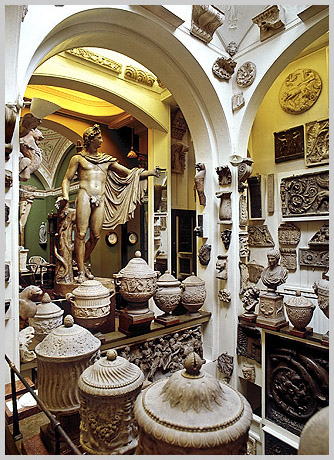
Interior, Sir John Soane’s House Museum

At Lincoln’s Inn Field , architect Sir John Soane (1753-1837) built three townhouses between 1792 and 1824 to house his remarkable collection of antiquities and objects d’art. The Museum was established by a private Act of Parliament in 1833 The house was opened to the public after the architect’s death in 1837.

Today, the museum is best seen on first Tuesday evening of each month when it is lit by candlelight. In three years, after a £7 million restoration, Soane’s private apartments will be opened to view for the first time in 170 years. Soane was known for his original designs of internal spaces and lighting, and for incorporating shallow domes, segmental arches, and clerestories.
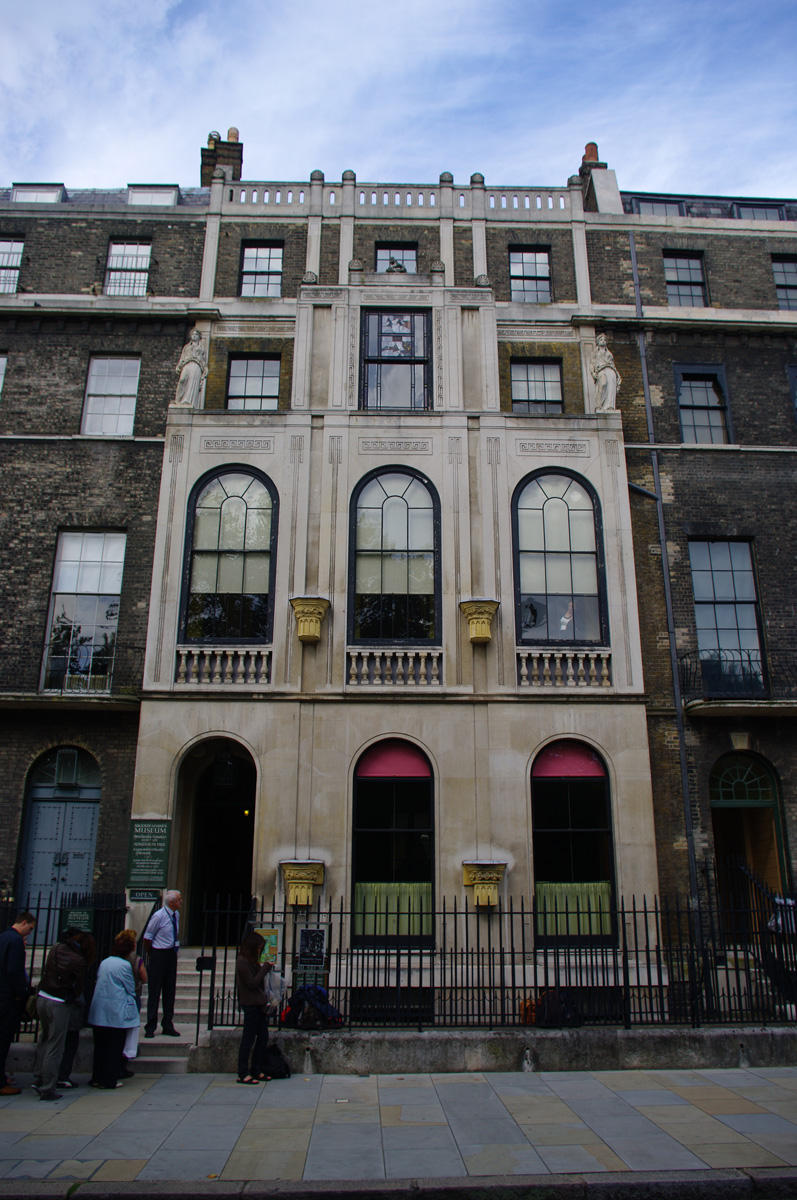
Sir John Soane’s House and Museum. Image @Tony Grant

During the latter half of the 18th century (before the Napoleonic Wars), it was the custom of British collectors, painters and patrons to study antiquities of the ancient world during their Grand Tour of the Continent. The great collectors returned home laden with objects that they had acquired, most notably sculptures, gems, coins, vases, mosaics,  paintings, and architectural fragments from such countries as Italy, Egypt, and Greece. These visitors, mostly gentlemen, also brought back their vast knowledge (and love) of classical architecture, which in turn influenced the Neoclassical buildings, interiors, and styles so popular during the Georgian and Regency eras.
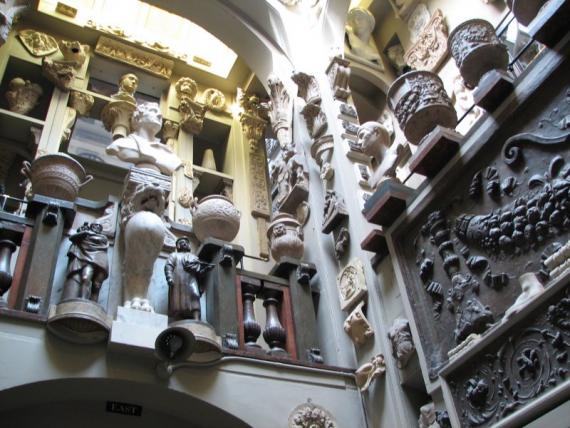
Interior of the Soane Museum**
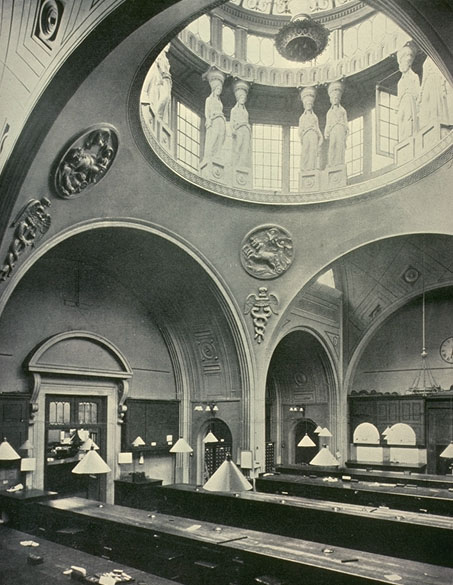
Interior, original Bank of England

Sir John Soane traveled to Italy between 1777 – 1780 to study architecture on a scholarship from the Royal Academy, and acquired his collection between the 1780s and his death in 1837. Among his designs are the Bank of England (now torn down), Dulwich College Art Gallery, and his own houses in Lincoln Fields Inn.

On his appointment as Professor of Architecture at the Royal Academy in 1806 Soane began to arrange the Books, casts and models in order that the students might have the benefit of easy access to them and proposed opening his house for the use of the Royal Academy students the day before and the day after each of his lectures. By 1827, when John Britton published the first description of the Museum, Soane’s collection was being referred to as an ‘Academy of Architecture’. – Sir John Soane’s Museum: Official Site
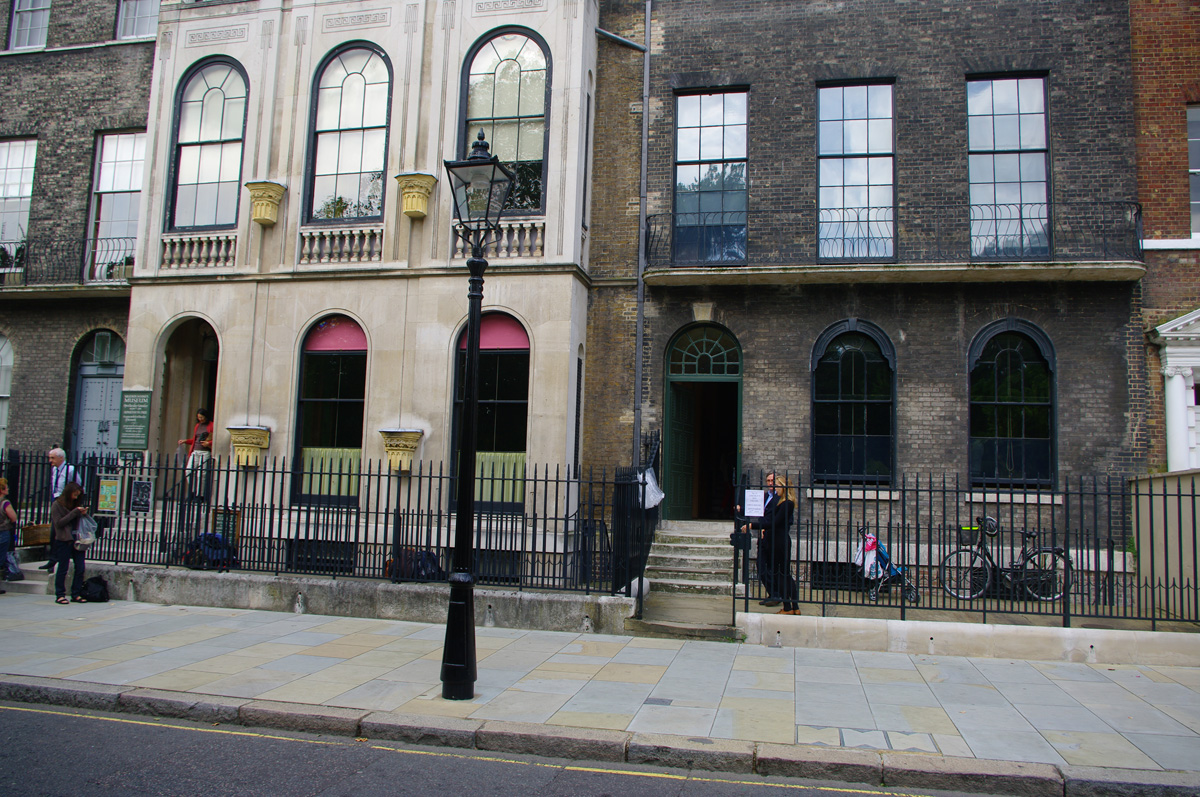
 

The three doorways to the Sir John Soane’s House Museum. Image @Tony Grant

Share with others:

  • Click to email a link to a friend (Opens in new window) Email
  • Click to print (Opens in new window) Print
  • Click to share on Facebook (Opens in new window) Facebook
  • Click to share on Reddit (Opens in new window) Reddit
  • Click to share on X (Opens in new window) X
  • Click to share on Pinterest (Opens in new window) Pinterest
  • Click to share on Tumblr (Opens in new window) Tumblr
  • Click to share on LinkedIn (Opens in new window) LinkedIn
Like Loading...

Related

Posted in 18th Century England, Architecture, Jane Austen's World, Regency Art, Regency Life, Regency London, Regency style, Regency World | Tagged Lincoln Fields Inn, Sir John Soane, Sir John Soane's Museum, Soane's Museum | 10 Comments

10 Responses

  1. on March 1, 2011 at 07:42 Chris Squire's avatar Chris Squire

    Details of the ‘candlelight openings on the first Tuesday of each month’ [i.e. today March 1] are at: http://www.soane.org/your_visit/evening_opening/

    ‘ . . This event is extremely popular, and we suggest arriving as early as possible to avoid disappointment. The queue generally builds up from around 5pm. The first 60 people will be invited in to the house, and then we operate a one in one out system for the evening. Average visiting time is about an hour or so . . ‘

    It is a cold and windy day today in London, so I think I leave this treat to be enjoyed by younger and hardier folk than I . .


    • on March 1, 2011 at 11:38 Vic's avatar Vic

      Wow, that line is long! I agree with you. On a cold day, I would sit in a snug pub and have a proxy stand in for me. Hah!


  2. on March 1, 2011 at 20:29 Mary Simonsen's avatar Mary Simonsen

    Another reason to go back to England.


    • on March 2, 2011 at 22:22 Vic's avatar Vic

      I’ll go with you!


  3. on March 2, 2011 at 01:42 Miss Osborne's avatar Miss Osborne

    Oh wow…thanks for posting this! I love that museum! I went in the early 90s for an architecture class. My favorite part (other than the insanity of the sheer volume of stuff in there) was an area with tons of Hogarth paintings. They were hanging on swinging doors–sort of like how you view rugs at a store. I’ve never seen art hung in such a manner.


    • on March 2, 2011 at 22:23 Vic's avatar Vic

      I wanted to show the Hogarth paintings in situ, but had no source. Love your description.


  4. on March 3, 2011 at 20:57 Tony Grant's avatar Tony Grant

    The Hogarth display is a amazing. Miss Osborne is right. You walk into a small room 3 or 4 meters square and each wall has maybe four Hogarth paintings on them, so 16 to start with. Then each wall has panels that in turn fold back to reveal another set of Hogarth paintings. Then a third layer of panels fold back to reveal yet more. It is an insane number of paintings in that very small room. The Hogarth pictures are not the black and white prints but the original coloured ones. I think it’s the entire story of The Rakes Progress from what I remember.

    I think there are also illustrations, in the same room, of Soane’s plans for The Bank of England and other grand monumental bulidings. Most of them didn’t get built. Great ambitions but foiled by expense in the end.

    The Bank of England building we have nowadays is a mere shadow of Soanes original plans.


  5. on March 5, 2011 at 14:46 Charles Bazalgette's avatar Charles Bazalgette

    Umm – Lincoln’s Inn Fields, surely.


  6. on March 14, 2011 at 23:24 Karen Field's avatar Karen Field

    I’m late to the game on this post but I sure enjoyed it and wish I could go see it.


  7. on June 8, 2011 at 11:14 Soane’s Regency London: Images from the Sir John Soane’s Museum « Jane Austen's World

    […] Sir John Soane’s Museum […]


Comments are closed.

  • Enter your email address to subscribe to this blog and receive notifications of new posts by email.

    Join 7,246 other subscribers
  • 2025 AGM in Baltimore

  • Items of Interest

  • Blog Stats

    • 18,382,940 hits
  • Follow Jane Austen's World on WordPress.com
  • RECOMMENDED BOOKS AND RESOURCES

  • Fashionable Goodness: Christianity in Jane Austen's England is now available! By JAW contributor Brenda S. Cox. See Review. Available from Amazon and Jane Austen Books.
  • We also recommend JAW contributor Rachel Dodge's devotionals based on Jane Austen's prayers and classic literature. Reviews:
    Praying With Jane: 31 Days Through the Prayers of Jane Austen
    The Anne of Green Gables DevotionalThe Little Women Devotional
    The Secret Garden Devotional
  • The Tour of Doctor Syntax. Edited by Ben Wiebracht. Read the review of the book at this link. Click to order the book on Amazon US or Amazon UK or Jane Austen Books
  • FREE Student Membership to JASNA

    Available through December 31st, 2025. Click on image for details, and share this poster with other teachers and students!

  • The Obituary of Charlotte Collins by Andrew Capes

    Click on image to read the story.

  • Comments

    “My idea of good company…is the company of clever, well-informed people, who have a great deal of conversation.” – Jane Austen, Persuasion


    Gentle readers: Please feel free to post your comments and continue the conversation! Due to SPAM, we will no longer accept comments on posts after 30 days of publication. In some instances, links will be removed from comments as well.

  • Administrators and Contributors

    Vic Sanborn, founder of this blog, is supported by a team of talented and knowledgeable writers about Jane Austen and the Regency era. They are:

    • Brenda Cox
    • Rachel Dodge and
    • Tony Grant, who now contributes his photos from London and England

    Click on their names to enter their own blogs.

    In addition, we thank the many experts and authors who frequently contribute their posts and opinions, and who continue to do so freely or at our request.

  • Pin It!

    Follow Me on Pinterest
  • Top Posts

    • Exploring Jane Austen's Prayers
      Exploring Jane Austen's Prayers
    • Cassandra Writes About Jane Austen's Death, July 18, 1817
      Cassandra Writes About Jane Austen's Death, July 18, 1817
    • Highclere Castle Floor Plan: The Real Downton Abbey
      Highclere Castle Floor Plan: The Real Downton Abbey
    • Regency Fashion: Men's Breeches, Pantaloons, and Trousers
      Regency Fashion: Men's Breeches, Pantaloons, and Trousers
    • Men's hair styles at the turn of the 19th century
      Men's hair styles at the turn of the 19th century
    • Happy 250th Birthday, Jane Austen!
      Happy 250th Birthday, Jane Austen!
    • More Birthday Events for Jane Austen!
      More Birthday Events for Jane Austen!
    • Sense and Sensibility, 1995 & 2008: Marianne’s Illness
      Sense and Sensibility, 1995 & 2008: Marianne’s Illness
    • In Jane Austen’s Own Words: Economic Sense and Sensibility
      In Jane Austen’s Own Words: Economic Sense and Sensibility
    • Social Customs During the Regency
      Social Customs During the Regency
  • Recent Posts

    • More Birthday Events for Jane Austen!
    • Happy 250th Birthday, Jane Austen!
    • Coming Soon: Birthday Tales for Jane Austen’s 250th
    • Book Review: The Austens, by Sarah Emsley
    • Praying with Jane Audiobook with Amanda Root
  • Links to Jane Austen Blogs

    Click here to enter the page. Topics include Regency fashion, historic foods, Jane Austen societies, British sites, related topics. Click on image.

  • May we suggest?

  • Unknown's avatarHello, my name is Vic and I live in Maryland, USA. I have adored Jane Austen almost all of my life. I am a proud lifetime member of the Jane Austen Society of North America. This blog is a personal blog written and edited by me and my team. We do not accept any form of cash advertising, sponsorship, or paid topic insertions. However, we do accept and keep books and CDs to review.

    If you would like to share a new site, or point out an error, please email us. (Yes, we are fallible. We'll own up to our mistakes and will make the corrections with a polite smile on our faces.) Write us at

    gmailbw

    Thank you for visiting this blog. Your comments and suggestions are most welcome.

  • Project Gutenberg: eBook of Stage-coach and Mail in Days of Yore, Volume 2 (of 2), by Charles G. Harper

    STAGE-COACH AND MAIL IN DAYS OF YORE: A PICTURESQUE HISTORY
    OF THE COACHING AGE, VOL. II, By CHARLES G. HARPER. 1903. Click on this link.


  • Top Posts & Pages

    • Exploring Jane Austen's Prayers
    • Cassandra Writes About Jane Austen's Death, July 18, 1817
    • Highclere Castle Floor Plan: The Real Downton Abbey
    • Regency Fashion: Men's Breeches, Pantaloons, and Trousers
    • Men's hair styles at the turn of the 19th century
    • Happy 250th Birthday, Jane Austen!
    • More Birthday Events for Jane Austen!
    • Sense and Sensibility, 1995 & 2008: Marianne’s Illness
    • In Jane Austen’s Own Words: Economic Sense and Sensibility
    • Social Customs During the Regency
  • Tour Chawton Cottage on YouTube

  • Disclaimer: Our team makes no profit from this blog. We may receive books (physical or digitized) for review purposes.

  • Copyright Statement: © Jane Austen's World blog, 2009-2024. Unauthorized use and/or duplication of this material without express and written permission from this blog’s author and/or owners is strictly prohibited. Excerpts and links may be used, provided that full and clear credit is given to Jane Austen's World with appropriate and specific direction to the original content.

Blog at WordPress.com.

WPThemes.


  • Reblog
  • Subscribe Subscribed
    • Jane Austen's World
    • Join 7,246 other subscribers
    • Already have a WordPress.com account? Log in now.
    • Jane Austen's World
    • Subscribe Subscribed
    • Sign up
    • Log in
    • Copy shortlink
    • Report this content
    • View post in Reader
    • Manage subscriptions
    • Collapse this bar
 

Loading Comments...
 

    %d

