Feeds:
Posts
Comments

Archive for 2021

Inquiring Readers, We will soon be ringing in 2022 and celebrating New Year’s Eve. Superstitions and traditions from the Regency era still survive. This post mentions customs Jane Austen and her family probably knew about or personally followed.

Did you know that the New Year’s Day date was changed to January 1st in 1752?

William Savage, who writes about Georgian England in his blog and who lives in England, writes that his oldest relatives still often refer to January 6th as ‘Old Christmas Day.’ The change came: 

from the time in 1752 when Britain adopted the Gregorian calendar to align our dates with those in use on the continent. The calendar was advanced by 11 days: Wednesday 2nd September, 1752 was followed by Thursday 14th September, 1752 and the year shortened to just 355 days to allow the New Year to fall on January 1st.” – The Superstitious Eighteenth Century, William Savage, Pen and Pension: Immerse Yourself in Georgian England 

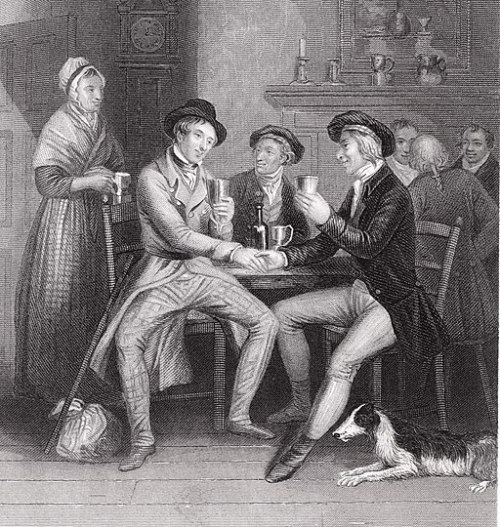
Black and white engraving of two men in a tavern shaking hands at midnight, singing Auld Lang Syne

The Complete Works of Robert Burns: Containing the Poems, Songs, and Correspondence. Illustrated By W.H. Bartlett, T. Allom, and Other Artists. With a New Life of the Poet, and Notices, Critical and Biographical by Allan Cunningham, London: George Virtue, ca. 1841. Image, Wikimedia Commons

Cleaning

Savage also mentions that washing any clothes on New Year’s Day was considered as “washing someone out of the family,” resulting in their death in the coming year. Meanwhile, the Chinese avoided any cleaning on New Year’s Eve, since they believed that any scrubbing or cleansing would guarantee that no one in the house would  experience luck in the next twelve months.

Donna Hatch states, however, that “During the Regency and Georgian Eras, one tradition was to clean the house thoroughly, including ashes in the hearth, scraps, and rags, and even eating or discarding any perishable food in order to start the year fresh, discarding bad luck and inviting good luck.” Her source, I believe, is Maria Grace’s book, A Jane Austen Christmas: Regency Christmas Traditions. 

Doors and Thresholds

As part of their New Year’s celebrations on the final day of the old year on the Gregorian Calendar, also known as Hogmanay, the Scots still practice ‘first footing,’ an ancient Gaelic tradition, in which the first person to cross a home’s threshold can bring good or bad luck in the next year. This individual should be someone who was not in the house before midnight, and  

… should be someone who is tall, dark, handsome and bearing gifts such as coins, coal, salt, bread and whiskey. But beware, as fair-haired males are considered unlucky. It is believed this superstition dates back to the Viking invasion, back when blonde strangers turning up at your door usually meant trouble.” – East Anglian Daily Times, 12 quirky New Year’s Eve superstitions” 

 A Dozen Guests or An Even Number?

In ‘Regency Folklore: An Uneven Superstition,’ Regency Reader writes:

A popular superstition alive in the Regency era had all to do with an uneven number of dinner guests.  Apparently, if the number of guests at a table reached 13, it was a bad omen. Of death. Specifically, death to the youngest at the table and within a year of the dinner party.”

The Last Supper was one obvious basis for this tradition/superstition. The feast featured 13 people, one of whom (Judas) betrayed Jesus. The omen of death makes sense in this context. Less known by many is a Viking legend passed through oral tradition in Christian Britain, one that concerns twelve people sharing a meal in Valhalla, which was crashed by Loki, a cunning trickster and spirit of strife. One person at that banquet ended up dead. The unlucky number 13 figures most highly with superstitious people.

The even number of guests might explain a French theory of why most dinner sets come in multiples of twelve. This article from How Stuff Works describes why

The thirteenth person who ends up with a mismatched plate would feel unloved, and come into bad luck.”

As an aside, my family’s tradition has been to give our guests the matching dinner service, while we use the mismatched ware. It also seems that any uneven number of guests at the New Year’s table might bring ill luck in the new year. Protocol and etiquette, especially in proper Regency and Victorian households, required an even number at the table so that guests were paired. 

Auld Lang Syne

Who hasn’t sung this famous song when the clock strikes midnight?  Kristen Koster writes that Auld Lang Syne translates to “old long since.”

After a long tradition of being sung during the Scottish celebration of Hogamany on New Year’s Eve, the Scottish poet, Robert Burns, collected and wrote down the lyrics in 1788 and it was first published in 1796. It quickly spread to much of the English-speaking world and is now sung at the stroke of midnight instead of when the guests leave the party. – A Regency Primer on Christmastide & New Year’s

“Auld Lang Syne” – Music and Lyrics by Trad.(Robert Burns). Arranged by Dougie MacLean. Published by Limetree Arts and Music (PRS & MCPS UK), Butterstone Studios.

Happy New Year, ALL!

In conclusion, our blog team wishes you a Happy New Year’s Eve and a joyous 2022. May the pandemic release its stranglehold on our world citizens and may we experience freedom of movement once again to go where and when we like.

Other Resources

New Year’s articles on this blog

English Historical Fiction, English History Authors: A Regency Holiday Calendar

Regency Folklore: An Uneven Superstition

Custom Survived: New Year’s Day First Footing 

Read Full Post »

by Brenda S. Cox

“This is quite the season indeed for friendly meetings. At Christmas every body invites their friends about them, and people think little of even the worst weather.”–Mr. Elton, Emma

I hope you are all enjoying the holidays. In Austen’s novels, Christmas is a time for parties and for family and friend to gather, just like today. It was also a day for attending church (see Emma ch. 16 and Mansfield Park ch. 23), after weeks of Advent when prayers focused on the coming of Christ. For more on the prayers and readings that Austen would have prayed and read for Advent and Christmas, see my post Advent with Jane Austen. You can also find many posts at this site (and others) on Christmas customs in Jane Austen’s England.

I recently gave a presentation on “Satirical Cartoons and Jane Austen’s Church of England” at JASNA’s Annual General Meeting (you can read it in this month’s Persuasions On-Line, or, if you are a JASNA member, you can watch it in the AGM on Demand).  Today I’d like to share a few cartoons about Christmas in Austen’s England. (I didn’t find many; perhaps Christmas was not a popular subject for caricatures.)

Triumphal Procession

Let’s start with this wild one.

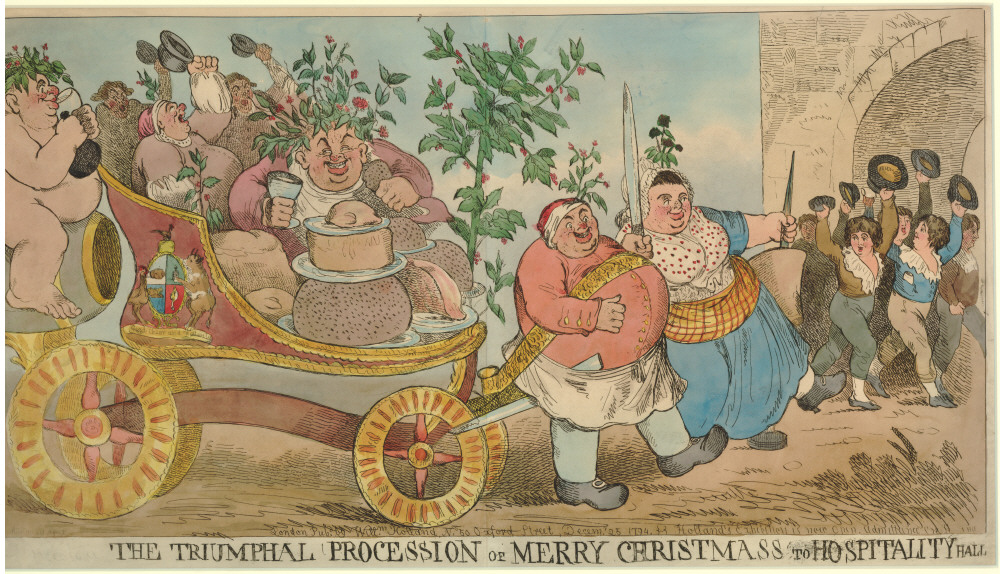
The Triumphal Procession of Merry Christmas to Hospitality Hall, Richard Newton, 1794.
© Trustees of the British Museum (CC BY-NC-SA 4.0) via wikimedia

In an earlier post about the Clerical Alphabet cartoon, I wrote about Richard Newton, a prolific young artist of the time. Newton drew the above cartoon in 1794, satirizing the general gluttony and drunkenness associated with Christmas. In The Triumphal Procession of Merry Christmas to Hospitality Hall, men on a carriage feast on large pieces of meat while behind them a naked man sits on a barrel, probably of wine or another alcoholic beverage.

Academics at Christmas

Christmas Academicks, Playing a Rubber of Whist, Thomas Rowlandson, 1803.
Public domain via the Metropolitan Museum of Art.

University professors have a much more restrained celebration, though still not a devout one. Thomas Rowlandson’s The Christmas Academicks Playing a Rubber of Whist (1803) shows four academics playing cards, while a fifth stands nearby and a servant brings drinks. All are clergymen, probably fellows (professors or tutors) at the University of Oxford or Cambridge, who would be single clergymen. (Jane Austen’s father was a fellow at Oxford until he married.) As in many satirical cartoons of the time, the clergymen are pictured as overweight and self-indulgent. They are gambling and drinking, not in church. 

Farmer Giles’s Establishment, Christmas day, 1800, by William Heath, 1830
Courtesy of The Lewis Walpole Library, Yale University

Farmer Giles: Christmas Through the Years

Some years later, in 1830, William Heath drew a series on Christmas as a political satire. It begins with a delightful version of an 1800 country Christmas, such as the Musgroves or Westons might have enjoyed in Austen’s novels.

Farmer Giles was a symbol of the unsophisticated country farmer. Here he feasts with his joyful family at Christmastime. As we see in Austen’s novels, Christmas was a time for parties and feasts. Greenery decorates the fireplace and the wife is slicing plum pudding. Farmer Giles is apparently prosperous and he becomes more so.

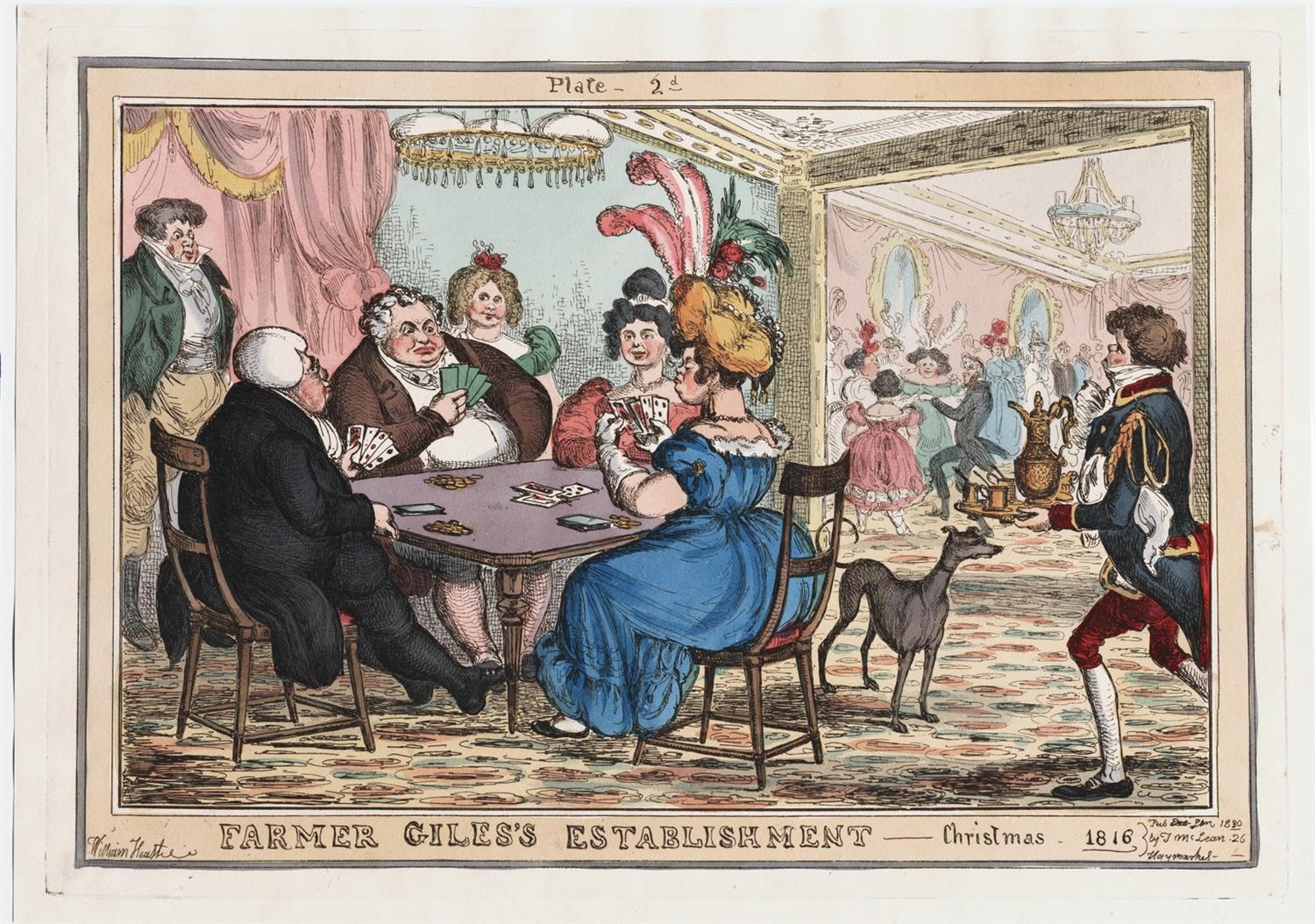
Farmer Giles’s Establishment Christmas 1816 by William Heath, 1830
Courtesy of The Lewis Walpole Library, Yale University

By 1816, the farmer has done well and moved up into fashionable society. This Christmas he and his wife are playing cards (gambling) while guests dance in the ballroom. However, they look much less happy than in the first print. The children are grown now, and looking on. The farmer’s hand appears to be bandaged for the gout, from overeating and excessive drinking.

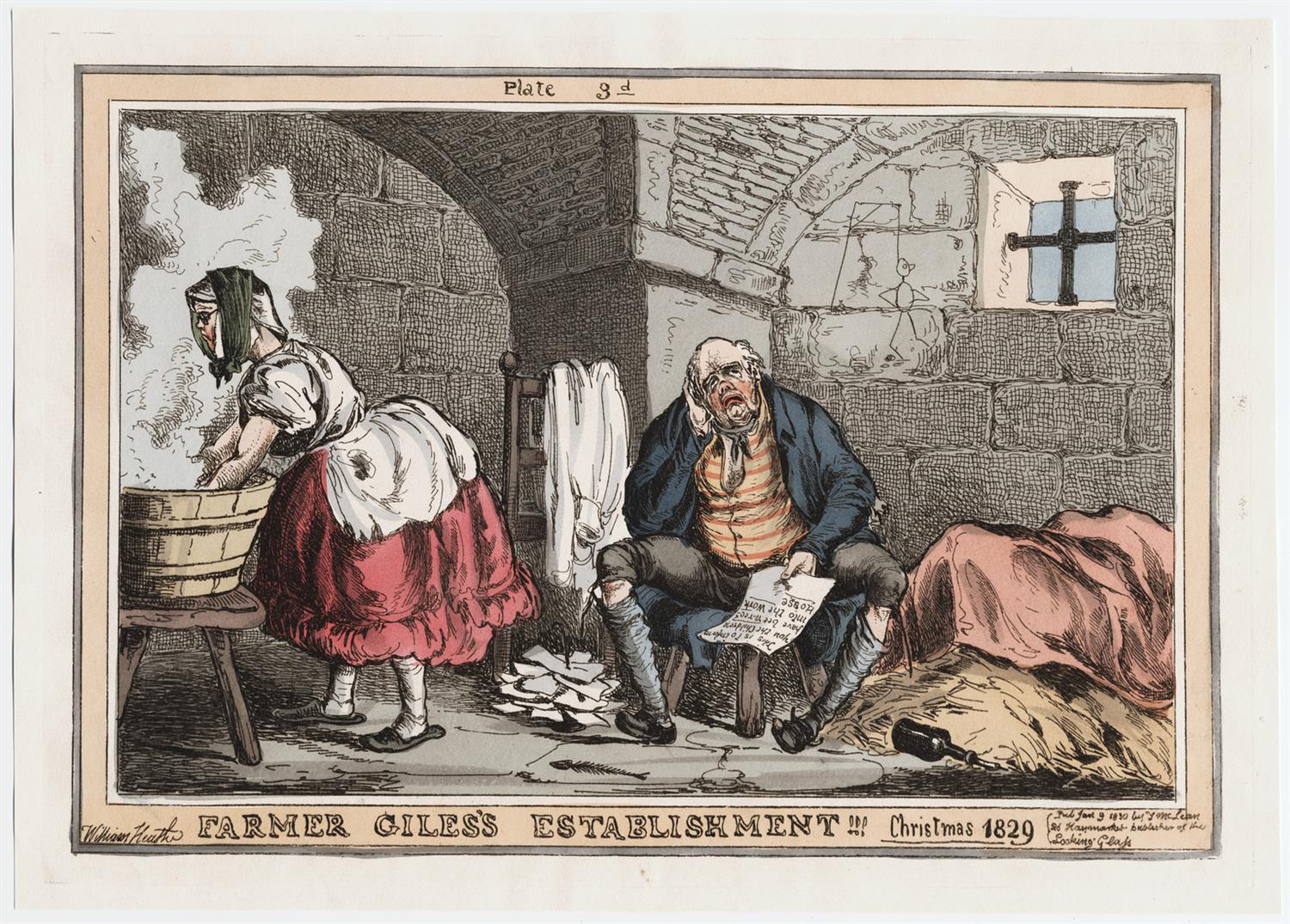
Farmer Giles’s Establishment!!! Christmas 1829 by by William Heath, 1830
Courtesy of The Lewis Walpole Library, Yale University

Their financial prosperity doesn’t last, though. The agricultural economy crashed.

In the third plate, Farmer Giles’ Establishment!!! Christmas 1829, the farmer is in a debtors’ cell. He holds a paper saying his children have been sent to the work house. His wife is doing laundry in a tub.

So this series becomes political satire, criticizing the government for its policies which led to an agricultural depression. A very sad Christmas.

The Merry Musgroves

But let’s return to Austen’s happier times. 

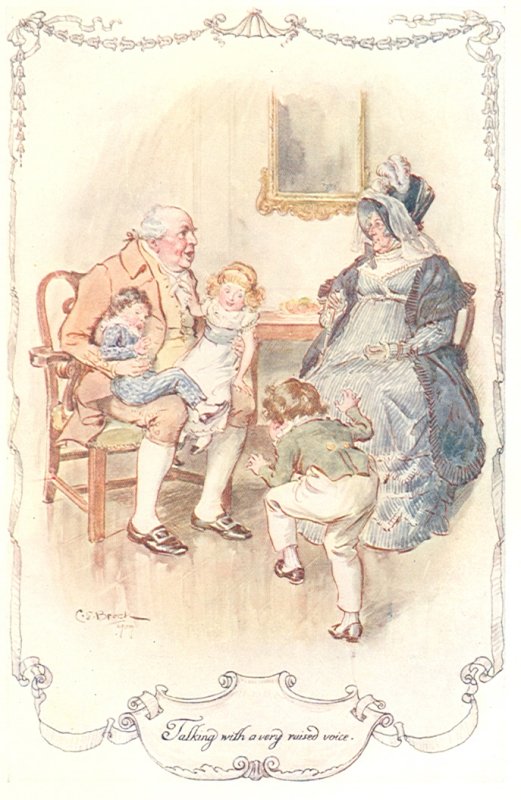
The Musgroves and children at Christmas
C.E. Brock, Persuasion, Volume 2, chapter 2

As Austen describes Christmas at the Musgroves, in Persuasion:

On one side was a table, occupied by some chattering girls, cutting up silk and gold paper; and on the other were tressels and trays, bending under the weight of brawn and cold pies, where riotous boys were holding high revel; the whole completed by a roaring Christmas fire, which seemed determined to be heard, in spite of all the noise of the others. . . .

Anne, judging from her own temperament, would have deemed such a domestic hurricane a bad restorative of the nerves, which Louisa’s illness must have so greatly shaken; but Mrs. Musgrove, . . . concluded a short recapitulation of what she had suffered herself, by observing, with a happy glance round the room, that after all she had gone through, nothing was so likely to do her good as a little quiet cheerfulness at home. . .

“I hope I shall remember, in future,” said Lady Russell, as soon as they were reseated in the carriage, “not to call at Uppercross in the Christmas holidays.”

Every body has their taste in noises as well as in other matters . . .

I hope this Christmas is just to your taste! Many blessings to you in the New Year.

Brenda S. Cox writes on Faith, Science, Joy, and Jane Austen. She is currently working on a book entitled Fashionable Goodness: Faith in Jane Austen’s England.


For more on satirical cartoons in Jane Austen’s England, see:

Satirical Cartoons and Jane Austen’s Church of England

The Stereotype of the Self-Indulgent Clergyman: Rowlandson’s Parsonage 

The Clerical Alphabet: Problems in Austen’s Church of England 

Keeping Within Compass  Mike Rendell also shows and discusses many other fascinating cartoons from Austen’s era on this blog, but be aware that many are risque. I am indebted to Mike for posting on the Newton Clerical Alphabet cartoon that got me started looking at cartoons and the clergy.
 

For more on Christmas in Austen’s England, see:

Party Like the Musgroves, by Rachel Dodge, to have your own party like the Musgroves did in the passage above!

Christmas Georgian Style 

Archive for Regency Christmas Traditions (various posts on this site)

Christmas Traditions (various posts from various sites)

More Regency Christmas Traditions (and scenes and stories, various posts from Maria Grace’s site) 

Joy to the World: Psalms, Hymns, and Christmas Carols in Austen’s England

Regency Christmas Carols

Handel’s Messiah in Jane Austen’s England 

Advent with Jane Austen: Now, and Not Yet 

Georgian Christmas Pie Recipes

Regency Christmas Songs and Games

A Jane Austen Christmas: Regency Christmas Traditions, book by Maria Grace

Christmas in Jane Austen’s Time

Jane Austen’s Christmas

. . . and much more!

Read Full Post »

I love the idea of a Regency-style Christmas season, complete with gifts, foods, and traditions that Jane Austen and her heroines might have enjoyed. Though Christmas traditions were different during Jane Austen’s time than they are today, as I share in my article about Regency Christmas Traditions, it’s fun to think of creative ideas that can make for a truly Austen-tatious holiday season.

In Persuasion, Austen paints a Christmas scene. It’s one of my favorite festive scenes, and I love to think of ways to recreate it:

On one side was a table occupied by some chattering girls, cutting up silk and gold paper; and on the other were tressels and trays, bending under the weight of brawn and cold pies, where riotous boys were holding high revel; the whole completed by a roaring Christmas fire, which seemed determined to be heard, in spite of all the noise of the others. […] Charles and Mary also came in, of course, during their visit, and Mr Musgrove made a point of paying his respects to Lady Russell, and sat down close to her for ten minutes, talking with a very raised voice, but from the clamour of the children on his knees, generally in vain. It was a fine family-piece.

Persuasion, Jane Austen

Evergreen Decor:

Create your own holiday decorations the way people did during Jane Austen’s time. Trim your windows and home with holly branches and evergreen trimmings.

On Christmas Eve the children laid out the traditional holly branches on the window ledges…

Jane Austen: A Life, Claire Tomalin, p. 4.

For Regency-inspired holiday decorating ideas, check out this Jane Austen’s World article on Regency Era Christmas Evergreen Decorations.

Craft Table with Silver & Gold Paper:

Create a craft station for children and adults to make ornaments or other crafts like these: Christmas Crafts for Kids and Adults from Abbi Kirsten.

On one side was a table occupied by some chattering girls, cutting up silk and gold paper…

Persuasion, Jane Austen

Tressels and Trays:

…on the other were tressels and trays, bending under the weight of brawn and cold pies…

Persuasion, Jane Austen
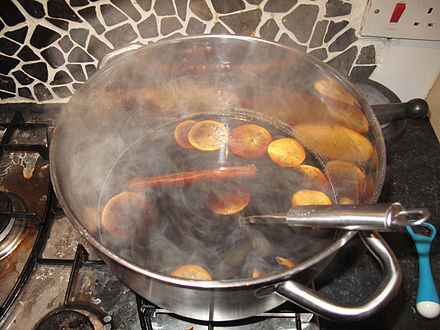
A pot of simmering wassail, infused with citrus fruit slices and cinnamon sticks. (Wikipedia Commons)

Riotous Games:

…riotous boys were holding high revel…

Persuasion, Jane Austen

A Roaring Fire:

…the whole completed by a roaring Christmas fire, which seemed determined to be heard, in spite of all the noise of the others.

Persuasion, Jane Austen

Jane-Inspired Gifts to Buy

This holiday season, add a little “Jane” to your gift giving! Here are a few shops and lists to peruse:

Austenesque Homemade Gifts

Want to make your own gifts? Check out these creative ideas!

Charitable Giving

Finally, charitable gift giving was a large part of the Regency Christmas season. On the day after Christmas, on St. Stephen’s Day (now called Boxing Day), people gave gifts to charities and to those in need.

The gentry gave gifts to the servants who worked in their homes and those hired to help on their land. Read The History of Boxing Day And How To Celebrate It (Lindsay Schlegel – Verity.com) for some modern-day ideas for ways to celebrate Boxing Day.


Now it’s your turn! What do you like to do around the holidays to make your gifts and get-togethers special? Do you have any Jane Austen traditions this time of year? I enjoy attending one of the local Jane Austen Birthday Teas in my area at this time of year. At home, I love to decorate the house with greenery and bake family recipes! -Rachel

RACHEL DODGE teaches college English classes, gives talks at libraries, teas, and book clubs, and writes for Jane Austen’s World blog and Jane Austen’s Regency World magazine. She is the bestselling author of The Anne of Green Gables Devotional: A Chapter-By-Chapter Companion for Kindred Spirits and Praying with Jane: 31 Days Through the Prayers of Jane Austen. Her newest book The Little Women Devotional is coming this January! You can visit Rachel online at www.RachelDodge.com.

Read Full Post »

Northanger Abbey, Vol 2, Chapter XIII + XIV

Inquiring readers, 

In Volume Two, Chapters 13 & 14, the emotional drama that Eleanor Tilney and Catherine Morland share almost explodes from its pages. After discovering that Catherine Morland was not the great heiress he thought her to be, General Tilney ordered his daughter, Eleanor, to oust Catherine from Northanger Abbey. Heretofore, Jane Austen has depicted Eleanor as a quiet, genteel, and deferential young lady, who had not been given much of a center stage. Now Austen reveals us to her inner thoughts and emotions. Catherine, as usual, continues to be an open and wide-eyed innocent.

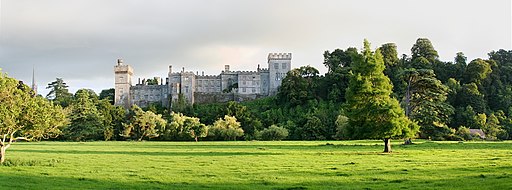
Image of Lismore Castle in a setting of trees and fields.

Lismore Castle, Ireland, County Waterford served as Northanger Abbey in the 2007 film of the same name, Wikimedia Commons. Image taken by Ingo Mehling, 18 August, 2010. CC BY-SA 3.0

Eleanor’s Reluctant Message

“Eleanor, stood there. Catherine’s spirits, however, were tranquillized but for an instant, for Eleanor’s cheeks were pale, and her manner greatly agitated. Though evidently intending to come in, it seemed an effort to enter the room, and a still greater to speak when there. Catherine, supposing some uneasiness on Captain Tilney’s account, could only express her concern by silent attention, obliged her to be seated, rubbed her temples with lavender-water, and hung over her with affectionate solicitude. “My dear Catherine, you must not — you must not indeed — ” were Eleanor’s first connected words. “I am quite well. This kindness distracts me — I cannot bear it — I come to you on such an errand!”

“Errand! –to me!”

“How shall I tell you! — Oh! how shall I tell you!” 

The above scene is more about Eleanor’s mortification at being the messenger of bad tidings than Catherine Morland’s reaction, which was concern for another, not herself. Eleanor knew the consequences of her angry’s father’s actions and is devastated. Catherine, perplexed, wonders about the reason for her departure. 

A new idea now darted into Catherine’s mind, and turning as pale as her friend, she exclaimed, “‘Tis a messenger from Woodston!”

Catherine’s only concern is for Henry Tilney. Woodston is his residence, about 20 miles away from the Abbey.

“You are mistaken, indeed,” returned Eleanor, looking at her most compassionately — “it is no one from Woodston. It is my father himself.” 

Eleanor could not lie. Indeed, she could not implicate her brother, who had no part in this deception. 

Her voice faltered, and her eyes were turned to the ground as she mentioned his name. His unlooked-for return was enough in itself to make Catherine’s heart sink, and for a few moments she hardly supposed there were anything worse to be told. 

Eleanor bravely continues, telling Catherine of her part as an unwilling messenger. She also reveals how much Catherine’s friendship means to her:

She  [Catherine] said nothing; and Eleanor, endeavoring to collect herself and speak with firmness, but with eyes still cast down, soon went on. “You are too good, I am sure, to think the worse of me for the part I am obliged to perform. I am indeed a most unwilling messenger. After what has so lately passed, so lately been settled between us — how joyfully, how thankfully on my side! — as to your continuing here as I hoped for many, many weeks longer, how can I tell you that your kindness is not to be accepted — and that the happiness your company has hitherto given us is to be repaid by — but I must not trust myself with words. My dear Catherine, we are to part. My father has recollected an engagement that takes our whole family away on Monday. We are going to Lord Longtown’s, near Hereford, for a fortnight. Explanation and apology are equally impossible. I cannot attempt either.”
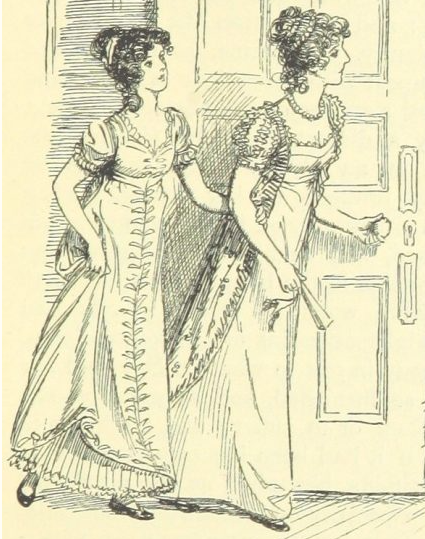
Eleanor-Catherine-closeup-Tomson

Detail of Catherine (L) and Eleanor (R), Hugh Tomson drawing, 1897, entitled “General Tilney was Pacing the Drawing Room.”

Although the General’s excuse was a lie, poor Eleanor was forced to give it. She could not hide her shame. Anything Eleanor said between the lines escaped Catherine, who must have known that Lord Longtown could not be ignored.

“My dear Eleanor,” cried Catherine, suppressing her feelings as well as she could, “do not be so distressed. A second engagement must give way to a first. I am very, very sorry we are to part – so soon, and so suddenly too; but I am not offended, indeed I am not. I can finish my visit here, you know, at any time; or I hope you will come to me. Can you, when you return from this lord’s, come to Fullerton?”

Eleanor answers:

“It will not be in my power, Catherine.”

This sentence illustrates Eleanor’s story in a nutshell – she has no power and is entirely ruled by her father. Her oldest brother is largely absent. Henry is the only male in her family who shows her respect and deference, but she still must depend on him to escort her in public. 

Catherine, Eleanor, and Henry had forged a close relationship because of their genuine like for each other. The brother and sister loved Catherine for her guileless utterances. She in turn admired them for the attention they paid her, which she found flattering. She trusted them like an eager puppy and reveled in their company, especially Henry’s, with whom she had fallen in love. 

Astounded by Eleanor’s answer, she swallows her disappointment, but still can’t understand why she must leave the Abbey.

“Come when you can, then.” —

Eleanor made no answer; and Catherine’s thoughts recurring to something more directly interesting, she added, thinking aloud, “Monday — so soon as Monday; — and you all go. Well, I am certain of — I shall be able to take leave, however. I need not go till just before you do, you know. Do not be distressed, Eleanor, I can go on Monday very well. My father and mother’s having no notice of it is of very little consequence. The General will send a servant with me, I dare say, half the way — and then I shall soon be at Salisbury, and then I am only nine miles from home.”

Her sweet speech hurt Eleanor more than harsh words ever could. Eleanor must have steeled herself before answering her friend. Someone new to reading Jane Austen’s novels or who has recently been introduced to the Regency Era with all its strict customs, mores, and rules of etiquette could only guess why Eleanor was so distressed by her father’s behavior. The truth was that no genteel Regency lady of Catherine’s station was allowed by her family to travel as an unescorted passenger in a public coach. 

“Ah, Catherine! were it settled so, it would be somewhat less intolerable, though in such common attentions you would have received but half what you ought. But — how can I tell you? — tomorrow morning is fixed for your leaving us, and not even the hour is left to your choice; the very carriage is ordered, and will be here at seven o’clock, and no servant will be offered you.”

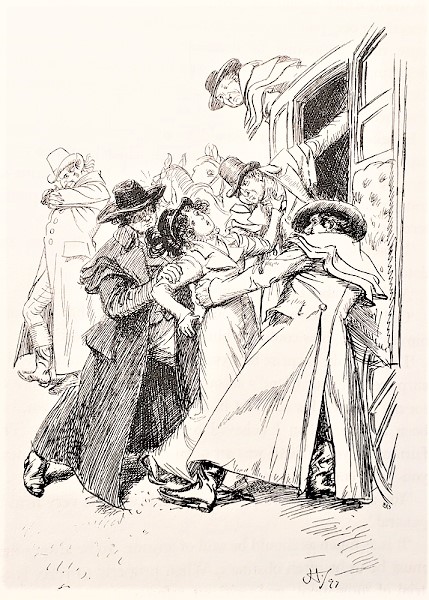
The General’s edict was dangerous and indefensible. Both Eleanor and Catherine understood the full import of the message. Catherine was to be banished without even the most common decency or courtesy, alone, and without funds – her nightmare has come true, except she was not to be abducted but evicted.
carriage-Northanger Abbey-HThompson-Sm (3)

Catherine’s nightmare: Three villains force her into a carriage. Hugh Tomson, 1897. Catherine’s imagination takes her to Gothic levels, but the danger of a single woman in a public carriage was real.

Catherine sat down, breathless and speechless. “I could hardly believe my senses, when I heard it; — and no displeasure, no resentment that you can feel at this moment, however justly great, can be more than I myself — but I must not talk of what I felt. Oh! that I could suggest anything in extenuation! Good God! what will your father and mother say! After courting you from the protection of real friends to this — almost double distance from your home, to have you driven out of the house, without the considerations even of decent civility! Dear, dear Catherine, in being the bearer of such a message, I seem guilty myself of all its insult; yet, I trust you will acquit me, for you must have been long enough in this house to see that I am but a nominal mistress of it, that my real power is nothing.”

Catherine searches for an answer:

“Have I offended the General?” said Catherine in a faltering voice.

Eleanor can give no good excuse:

“Alas! for my feelings as a daughter, all that I know, all that I answer for, is that you can have given him no just cause of offence. He certainly is greatly, very greatly discomposed; I have seldom seen him more so. His temper is not happy, and something has now occurred to ruffle it in an uncommon degree; some disappointment, some vexation, which just at this moment seems important, but which I can hardly suppose you to have any concern in, for how is it possible?”

Catherine still grasps for excuses and is still sorry for offending the General. She is only sad that he had not recalled his assignation with Lord Longtown earlier, so that she could have written to her parents for funds and an escort. 

Eleanor responds:

“I hope, I earnestly hope, that to your real safety it will be of none; but to everything else it is of the greatest consequence: to comfort, appearance, propriety, to your family, to the world. Were your friends, the Allens, still in Bath, you might go to them with comparative ease; a few hours would take you there; but a journey of seventy miles, to be taken post by you, at your age, alone, unattended!”

“Oh, the journey is nothing. Do not think about that. And if we are to part, a few hours sooner or later, you know, makes no difference. I can be ready by seven. Let me be called in time.” Eleanor saw that she wished to be alone; and believing it better for each that they should avoid any further conversation, now left her with “I shall see you in the morning.”

Catherine must have had an accurate idea of her journey’s long distance and its travails. (Northanger Abbey is over twice the distance from her home than the thirty mile journey with the Allens to Bath.) She also must have known that the General’s order was grossly uncivil. However, she was given no choice as to the time and day she was to depart, or of her mode of travel, and thus, stripped of choice, she spent a sleepless night. 

As good as her word, Catherine was ready early.

Soon after six Eleanor entered her room, eager to show attention or give assistance where it was possible; but very little remained to be done. Catherine had not loitered; she was almost dressed, and her packing almost finished.” 

The silence between the two women spoke volumes. 

Very little passed between them on meeting; each found her greatest safety in silence, and few and trivial were the sentences exchanged while they remained upstairs, Catherine in busy agitation completing her dress, and Eleanor with more good-will than experience intent upon filling the trunk.” 

One can imagine the discomfort both women felt at that moment. They were quiet and deep in thought, and for the first time experienced awkwardness in each other’s company. Catherine, her appetite gone, silently reminisced how cheerful and carefree her previous breakfast in this room had been with brother and sister. 

The appearance of the carriage, a hack post chaise, brought Catherine and Eleanor back to the present. A hack post chaise was a basic hired carriage guided only by a post-boy or postillion on a lead horse. (Jennifer S. Ewing states in her JASNA article: “Olsen observes that “There is always something vaguely tacky about hack vehicles in Austen.  When she wants to convey a sense of comfortable, sophisticated travel, she uses the phrase ‘post-chaise’ or something similar.  Hackney coaches are associated with poverty, disgrace, anonymity, and disappointment…”)

Eleanor turns to her friend:

“You must write to me, Catherine,” she cried, “you must let me hear from you as soon as possible. Till I know you to be safe at home, I shall not have an hour’s comfort. For one letter, at all risks, all hazards, I must entreat. Let me have the satisfaction of knowing that you are safe at Fullerton, and have found your family well, and then, till I can ask for your correspondence as I ought to do, I will not expect more. Direct to me at Lord Longtown’s, and, I must ask it, under cover to Alice.”

Eleanor asks Catherine to send word of her safe arrival at Fullerton to someone named Alice. This person was probably her maid or a servant, as Eleanor would not have called Lord Longtown’s wife or daughter by their first names. The secrecy was necessary, for her controlling father would have the mail delivered to him before distributing the letters to his family.

Eleanor would not rest until she learned of Catherine’s safe arrival. Catherine balks at first, but then gives in – “Oh, Eleanor, I will write to you indeed.”

This gave Eleanor some comfort, but she suspected Catherine might not have had enough money left from her personal allowance to pay for the ride home. This…

proved to be exactly the case. Catherine had never thought on the subject till that moment, but, upon examining her purse, was convinced that but for this kindness of her friend, she might have been turned away from the house without even the means of getting home…”

Catherine’s artless utterances during her visit with the Tilneys must have clued Eleanor about the true state of her family’s finances, and so her father’s reason for evicting her from the Abbey was probably no surprise.

The Journey Home

Catherine was too wretched to be fearful. The journey in itself had no terrors for her; and she began it without either dreading its length or feeling its solitariness. Leaning back in one comer of the carriage, in a violent burst of tears, she was conveyed some miles beyond the walls of the abbey before she raised her head…”

During this first stage of the ride Catherine must have been alone in the carriage. Had passengers been present, she would not have burst violently into tears. Gentle ladies were taught to hold their emotions in check. While she was impulsive and naive, she also had impeccable manners.

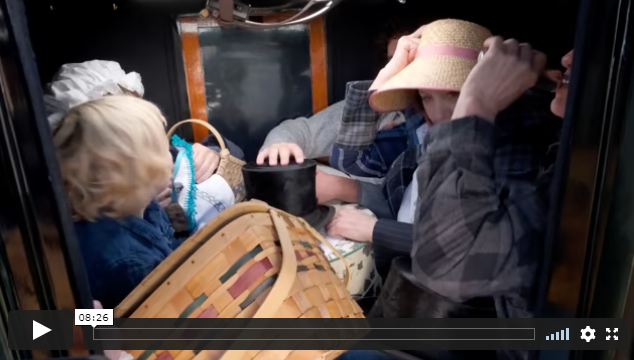
A public coach was generally cramped and dirty. The straw on the floor was rarely changed. Passengers sought the four corners for some privacy, but some passengers in a six-seater coach were squeezed into the center, like the filling in a sandwich. 
Sandy.Lerner.Carriage.JASNA

Crammed quarters. Image of Sandy Lerner’s Part 2 video of Pen and Parsimony: Carriages in the Novels of Jane Austen. Copyright Sandy Lerner. JASNA

Watch the beginning of Part 2 of two videos from a JASNA article about riding in a public coach, by Sandy Lerner .

The distance between Fullerton and Northanger Abbey was seventy miles. Carriages during that time could go as fast as 6-7 miles per hour on a post road. They often slowed down significantly on secondary roads, which were rutted after heavy rains and badly maintained. Austen writes:

…”she traveled on for about eleven hours without accident or alarm, and between six and seven o’clock in the evening found herself entering Fullerton.” 

The journey lasted from ten to eleven hours, which meant that the horses reached speeds of up to 7 miles per hour. The added time was due to the stops in stages when fresh horses were exchanged with spent horses. Horses could pull a carriage for an average from 15 to 20 miles at most before needing to stop. The exchanges were rapid, and took as little as five minutes per stop (think of the speed of NASCAR pit stops – Regina Jeffers). 

…after the first stage she had been indebted to the post-masters for the names of the places which were then to conduct her to it; so great had been her ignorance of her route. She met with nothing, however, to distress or frighten her. Her youth, civil manners, and liberal pay procured her all the attention that a traveller like herself could require; and stopping only to change horses…”

Of the journey, Jane writes that “the hours passed away, and her journey advanced much faster than she looked for”, but Catherine had not eaten since breakfast, which ended around 7 AM. She must have been hungry and exhausted when the coach stopped in Fullerton. Her spirits lifted, however, when she was met with joy by her family and she reveled in their unconditional love.

The chaise of a traveller being a rare sight in Fullerton, the whole family were immediately at the window; and to have it stop at the sweep-gate was a pleasure to brighten every eye and occupy every fancy — a pleasure quite unlooked for by all but the two youngest children, a boy and girl of six and four years old, who expected a brother or sister in every carriage…”

“…Her father, mother, Sarah, George, and Harriet, all assembled at the door to welcome her with affectionate eagerness, was a sight to awaken the best feelings of Catherine’s heart; and in the embrace of each, as she stepped from the carriage, she found herself soothed beyond anything that she had believed possible. So surrounded, so caressed, she was even happy!” 

This heartwarming homecoming was the balm Catherine needed after such a heartsore night and day, but after the homecoming, reality set in and the family noticed her pale looks:

In the joyfulness of family love everything for a short time was subdued, and the pleasure of seeing her, leaving them at first little leisure for calm curiosity, they were all seated round the tea-table, which Mrs. Morland had hurried for the comfort of the poor traveller, whose pale and jaded looks soon caught her notice, before any inquiry so direct as to demand a positive answer was addressed to her.”

As Catherine spoke for half an hour, her family’s distress on her behalf increased.

…but here, when the whole was unfolded, was an insult not to be overlooked, nor, for the first half hour, to be easily pardoned. Without suffering any romantic alarm, in the consideration of their daughter’s long and lonely journey, Mr. and Mrs. Morland could not but feel that it might have been productive of much unpleasantness to her; that it was what they could never have voluntarily suffered; and that, in forcing her on such a measure, General Tilney had acted neither honourably nor feelingly — neither as a gentleman nor as a parent. Why he had done it, what could have provoked him to such a breach of hospitality, and so suddenly turned all his partial regard for their daughter into actual ill will…”

Mrs Morland was struck by General Tilney’s actions of sending her away without even a servant to escort her, and the needless trouble he caused her daughter. Not only could travel be dangerous during this era, especially at night when highwaymen roamed (recall the earlier Hugh Thomson image), or in the bitter cold of winter, but the journey might be delayed due to a broken wagon wheel, a lame horse, or impassable roads, rivers, or streams. Mrs Morland, ever the positive thinker, concludes that this experience was a character builder for her daughter.

“Well,” continued her philosophic mother, “I am glad I did not know of your journey at the time; but now it is over, perhaps there is no great harm done. It is always good for young people to be put upon exerting themselves; and you know, my dear Catherine, you always were a sad little shatter-brained creature; but now you must have been forced to have your wits about you, with so much changing of chaises and so forth; and I hope it will appear that you have not left anything behind you in any of the pockets.”

Catherine Keeps her Promise and Writes a Letter

Catherine reproached herself for coolly saying goodbye to Eleanor. The funds she gave her provided for a safe journey instead of one that was fraught with danger. If she had run out of the ability to pay, she might have been stranded miles from home without the means to contact her family.

According to Deborah Barnum, author of the Jane Austen in Vermont blog, the estimated cost of a hired post-chaise in 1800 was “about £1 / mile [i.e @1 shilling / horse / mile, to include the postillion.]”  Eleanor’s gift was truly generous when one considers that Jane Austen’s annual allowance for personal purchases (which included gifts) was around £ 20 per year. Cassandra’s yearly income from the investments she made with the  £1,000 that Tom Fowler bequeathed to her was around  £35 (Lucy Worsley). The sisters’ combined income could not have paid for this expensive journey. 

The money therefore which Eleanor had advanced was enclosed with little more than grateful thanks, and the thousand good wishes of a most affectionate heart.”

Mrs Morland observed how sadly out of luck Catherine had been in making friends during her ventures in Bath and at the Abbey, and says ”the next new friends you make I hope will be better worth keeping.”

Catherine coloured as she warmly answered, “No friend can be better worth keeping than Eleanor.”

Eleanor, who had largely been invisible before this drama, became a three-dimensional character in these two chapters. She reacted with real feeling and emotion when her father ordered her to remove Catherine from the Abbey, and when she had to put the plan in motion, but when Austen sped the novel to its conclusion, she was placed in the background again. 

General Tilney’s behavior so disgusted his son Henry that it irrevocably altered their relationship. Henry hurried to Fullerton to apologize to Catherine and ask for her hand in marriage. She was just the sweet acquiescent girl he’d been searching for as his wife.

Additional Resources

Jane Austen Northanger Abbey: An Annotated Edition, edited by Susan J. Wolfson, 2014.Harvard University Press, Massachusetts, US. London, UK. 363 pp.

Worsley, Lucy.Jane Austen at Home: A Biography, 2017. St. Martin’s Press, 1st. Ed. NY

Jane Austen’s World, Tagged with royal mail coaches

Jerry Abershaw, Highwayman, Tony Grant

Regina Jeffers: Every Woman Dreams: Traveling by Coach During the Regency, an Overview

Susanna Ives’ Floating World: Lost in the Regency Mail

As the Wheel Turns: Horse-Drawn Vehicles in Jane Austen’s Novels » JASNA

Read Full Post »
“We are to have a tiny party here tonight; I hate tiny parties–they force one into constant exertion.” — Jane Austen to Cassandra, May 21, 1801,  while visiting her Aunt Jane and Uncle James Leigh-Perrot in Bath

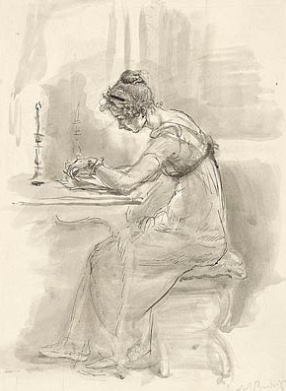
Drawing of a Regency woman writing a letter

Image by Isabelle Bishop, from the Morgan Library Exhibit of Life, Work, and Legacy of Jane Austen.

Inquiring readers, 

Tomorrow it will be December, a time for parties, celebrations, family gatherings, and Christmas activities, mostly  in Christian regions. During Austen’s time, people associated this period with the religious calendar, as well as with pagan traditions observed since ancient times. Celebrations during Austen’s life began on Dec 6th, St. Nicholas Day, and lasted until January 6th, or 12th night — the Feast of the Epiphany. 

Since 2009, this blog has posted many articles about British Christmas and New Year’s traditions, with food, dress, and customs during the Regency era and before. Austen described holiday festivities in her novels, and balls, such as the one at Netherfield Park, but none of her personal descriptions are as detailed as those mentioned in this letter to Cassandra, which tells of a large musical party that her brother Henry and sister-in-law, Eliza, held in their house in London ( 64 Sloane Street) on 25th April, 1811.

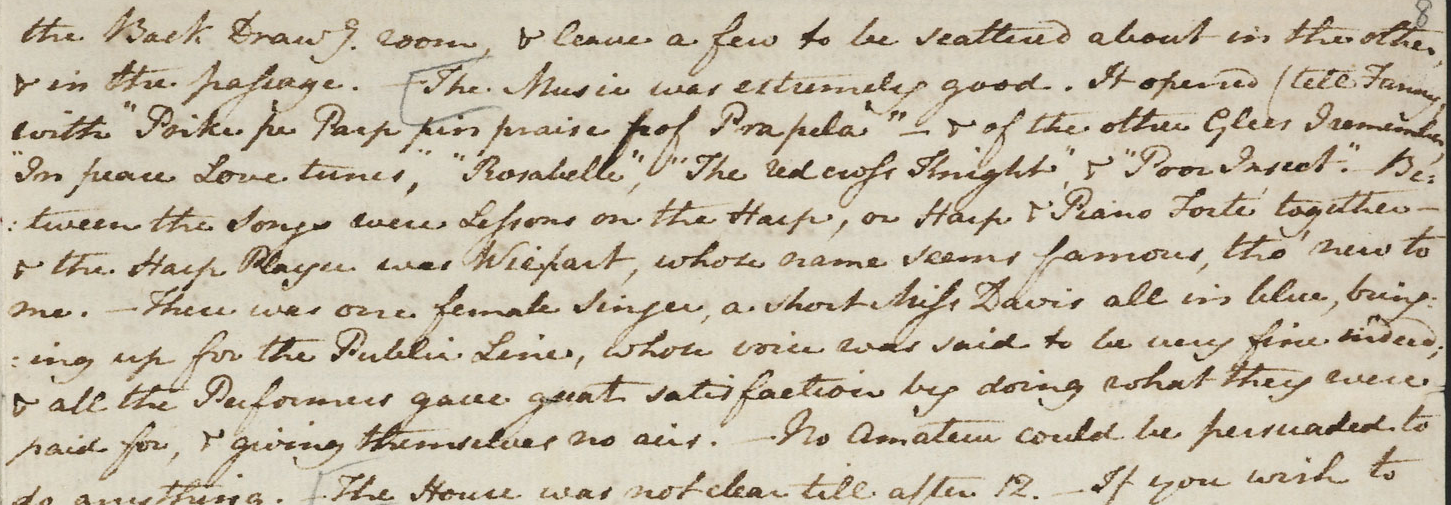
snip of the letter

Detail of Austen’s letter to Cassandra. Image: British Library Online.

The reason for Austen’s visit was to work on proofs for Sense and Sensibility, her first published novel. I chose this letter because musical parties and get-togethers were given frequently, regardless of the time of year. The songs, decorations, and fashions might have changed with the seasons, but Austen’s description of this large party, the musicians, and the guests must have seemed quite familiar to her contemporaries, despite her spare details.

NOTE: I’ve related only the details of the party in the letter. Read the full transcript at this link to The British Library.

The Letter 

  1. To Cassandra Austen (# From Deirdre Le Faye’s Fourth Edition of Jane Austen’s Letters)

Thursday, 25, April 1811

Sloane St Thursday April 25

Before the party:

My dearest Cassandra

… Our party went off extremely well. There were many solicitudes, alarms, and vexations, beforehand, of course, but at last everything was quite right. The rooms were dressed up with flowers, &c., and looked very pretty. A glass for the mantlepiece was lent by the man who is making their own. Mr. Egerton and Mr. Walter came at half-past five, and the festivities began with a pair of very fine soals. 

(Soals is an obsolete spelling for sole, a flat fish. Hannah Glasse described a recipe for Fricasee of Soles made with lemon soles or a larger, thicker plaice fish, which fed more people.)

In this passage, Jane described the usual hustle and bustle before a grand party that we all have felt in our own lives. In this letter, she provided more details for her sister than in her novels for her readers.)

Mr Egerton is the publisher who brought out Jane’s first novel, “Sense and Sensibility”.)

Events leading up to the party:

Yes, Mr. Walter — for he postponed his leaving London on purpose — which did not give much pleasure at the time, any more than the circumstance from which it rose — his calling on Sunday and being asked by Henry to take the family dinner on that day, which he did; but it is all smoothed over now, and she likes him very well.”

(This sentence is somewhat enigmatic. Why would his postponement not give him much pleasure? How was the situation smoothed over? Mollands.net says this about Mr. Walter: [He] must have been related to Jane through her grandmother (Rebecca Hampson), who married first, Dr. Walter; secondly, William Austen. Mr. Ronald Dunning wrote a post about  Rebecca Hampson for this blog just a week ago. 

As the festivities began:

At half-past seven arrived the musicians in two hackney coaches, and by eight the lordly company began to appear. Among the earliest were George and Mary Cooke*, and I spent the greater part of the evening very pleasantly with them. The drawing-room being soon hotter than we liked, we placed ourselves in the connecting passage, which was comparatively cool, and gave us all the advantage of the music at a pleasant distance, as well as that of the first view of every new comer.”

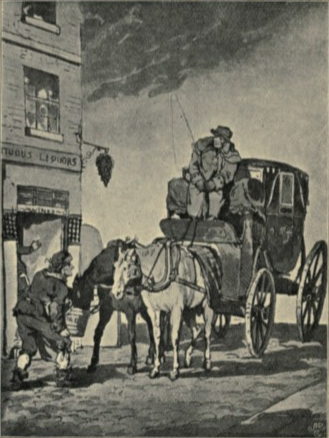
Black and white drawing of a Hackney Coach drawn by two horses

Hackney Coach, ca 1800

(Two hackney coaches carried 6 people per coach, so we may surmise that at least 12 musicians arrived with their  instruments. 

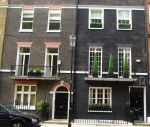
Houses in town were listed as 1st, 2nd, 3rd & 4th rate, fourth being the largest and first being the smallest. Henry’s house, located on 64 Sloane Street, is today unrecognizable from its Georgian size and façade. At the time he and Eliza rented the house, it was a 3rd rate house (3 windows wide), worth between £ 350 and £ 850 with from 500 – 900 square feet of floor space.) Because Henry was a successful banker during this time and Eliza had considerable means of her own, we can surmise that the house they rented was most likely on the larger side of 500 – 900 square feet of floor space.

Austen comments on a few acquaintances:

I was quite surrounded by acquaintances, especially gentlemen; and what with Mr. Hampson, Mr.Seymour, Mr. W. Knatchbull, Mr. Guillemarde, Mr. Cure, a Captain Simpson, brother to the Captain Simpson, besides Mr. Walter and Mr. Egerton, in addition to the Cookes, and Miss Beckford, and Miss Middleton, I had quite as much upon my hands as I could do. Poor Miss B. has been suffering again from her old complaint, and looks thinner than ever. She certainly goes to Cheltenham the beginning of June. We were all delight and cordiality of course. Miss M. seems very happy, but has not beauty enough to figure in London.”

This slideshow requires JavaScript.

(Fashion: While Austen did not describe the clothes worn by guests, Cassandra would have easily envisioned what people wore. Jane had a limited yearly budget for personal items. At a party held on Christmas, 1811, she would have refurbished a previously worn evening gown, from 1810 or before. The 1811 evening dresses had narrower skirts, mostly without trains, and hems cut at or above ankle length. Eliza de Fuillide, a woman of rank and fortune, would have worn the latest fashion. Henry Austen was quite prosperous when he rented the house at 64 Sloane Street and therefore was able to spare no expense in hosting this party.

Although Jane hated tiny parties because they required constant exertion, this musical party seemed to require as much of her attention as the former. Her wit was on full display in this letter.  Miss M., sadly, has not sufficient funds nor the looks to attract a possible husband, unlike Jane Bennet in “Pride and Prejudice” or Cassandra Austen, as described by Lucy Worsley in “Jane Austen at Home.”

Many of the people mentioned by Jane are identified by Deidre Le Faye. Find their descriptions at the end of this article.**

Cheltenham, whose famous mineral waters were founded in 1716,  was prominent during the Georgian era. (Christy Somers noted a short article by Carolyn S. Greet, in Jane Austen Reports for 2003, “Jane and Cassandra in Cheltenham. Diana Birchall wrote: 

“In the spring of 1816 Jane and Cassandra paid a visit to Cheltenham, primarily for the sake of Jane’s health. Other members of the family had previously visited the little town, including James and his wife Mary, as Jane had mentioned in a letter of 1813. Cheltenham was then in its fashionable heyday, with its attractions being both therapeutic and social. It was still small and rustic compared with Bath, and all the buildings were still grouped along the single mile-long High Street. It was not lit with gas until 1818, and had a single set of Assembly Rooms, theatre, libraries, shops, and lodging houses. There is a description of the saline wells, which people drank from in the morning, for a laxative effect.- Reveries Under the sign of Austen

Numbers Attending the Party:

Including everybody we were sixty-six — which was considerably more than Eliza had expected, and quite enough to fill the back drawing-room and leave a few to be scattered about in the other and in the passage.”

Jane had mentioned standing in the connecting passage, which was cooler than the two drawing rooms. The image below might be a facsimile of Henry’s and Eliza’s first floor, which typically consisted of two rooms for entertaining guests. One was larger than the other. A passageway connected the stairs to the two rooms. 

The first floor:

“It was held on the first floor in the octagonal rear salon and the front drawing room. Jane told Cassandra that she spent most of the time talking to friends in ‘…the connecting Passage, which was comparatively cool, & gave us all the advantage of the Music at a pleasant distance, as well as that of the first view of every new comer.’ There were glee singers, a harpist and floral decorations” – Walking Jane Austen’s London. Louise Allen, Bloomsbury Publishing10 Jul 2013 .

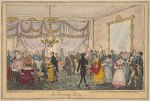
None of the above images showed fashions even close to those worn in 1811. Formal menswear had not changed much, however, and the illustrations do give us an idea of how these parties were held.

Sixty-six people in a Regency London townhouse would have presented quite a squeeze. Even on a cold day in December, the rooms, with candles burning in chandeliers and candelabras, and heat rising from the kitchen in the basement, would have already been hot. In April, when this letter was written, the heat would have been substantial. The large group of guests would have intensified the heat even more. We do not know if the 66 guests included the musicians and singer. As Cruikshank’s images showed, card tables were set up, a common practice that Jane does not mention. One wonders if they were set up on the ground floor, near the dining room, and the floor just above the kitchen. This level would also have been easier for older people to reach. One can only conjecture about these arrangements.

Deirdre Le Faye mentions Winnifred Watson’s description of the interior of 64 Sloane Street, but the few remaining copies of her small out of print booklet, “Jane Austen in London,” are above my budget (one was listed at over $260) and so I could not read it. London townhouses built after the great London fire followed strict guidelines in both design and materials. Henry and Eliza at this juncture in their lives could probably afford a 3rd rate house with a larger square footage of floor space, perhaps even 900 sq. feet. 

Using Jane’s description, and Deirdre Le Faye’s mention of this house, I found this image and quickly drew the other one very badly.

The Music:

The music was extremely good. It opened (tell Fanny) with “Poike de Parp pirs praise pof Prapela”; and of the other glees I remember, “In peace love tunes,” “Rosabelle,” “The Red Cross Knight,” and “Poor Insect.” Between the songs were lessons on the harp, or harp and pianoforte together; and the harp-player was Wiepart, whose name seems famous, though new to me. There was one female singer, a short Miss Davis, all in blue, bringing up for the public line, whose voice was said to be very fine indeed; and all the performers gave great satisfaction by doing what they were paid for, and giving themselves no airs. No amateur could be persuaded to do anything. “

This image of Regency guests listening to musicians sits on the Alamy website. Since I have not purchased it, please click on the  link to view it: https://www.alamy.com/thomas-rowlandson-a-little-evening-music-georgian-cartoon-of-a-fashionable-image9616736.html 

(Interestingly, the phrase “Poike de Parp pirs praise pof Prapela” was a special language that Jane used with her niece Fanny by placing a ‘p’ in front of every word. The only one I could decipher was Harp for Parp. https://bit.ly/3o8Nb97, Jane Austen, Her Contemporaries and Herself: An Essay in Criticism, By Walter Herries Pollock, 1899, Google Books.

Mollands.net adds:  Jane and her niece Fanny seem to have invented a language of their own–the chief point of which was to use a ‘p’ wherever possible. Thus the piece of music alluded to was ‘Strike the harp in praise of Bragela.’)

Miss Davis was a professional singer in London. Jane mentions that no amateur stepped up to play after listening to these fine players and singer.

About musicians during this time: 

“Amateur orchestras in city taverns or in gentlemen’s clubs competed with the professional concerts that began to sprout up in public places. (- The Rage for Music, Simon McVeigh) Local musicians would be hired for assembly balls in small towns. Musicians with a more professional background would be enlisted to play at more stylish events, like the Netherfield Ball. The lady asked to lead a set would choose the music and the steps, and relay her request to the Master of Ceremonies. “  https://janeaustensworld.com/2010/07/12/jane-austen-and-music/

Cities like London or Bath provided steady incomes for musicians. In order to make ends meet, those living in rural areas traveled from town to town to the different public assemblies or parties.

Glees

Glees were quite popular at this time. Jane mentioned glee songs in Mansfield Park. “Fanny Price was the only one of Austen’s heroines who never receives any musical training at all.” Fanny was unsuccessful in enticing Edmund to go outside to look at the stars. As soon as he hears singing, he says to her, “We will stay till this is finished, Fanny.” She was mortified.

Austen also mentioned glees in this letter to Cassandra, which during her time were songs for men’s voices in three or more parts, usually unaccompanied, popular especially c. 1750–1830. These songs, by the way, were nothing like the productions created for the TV series, Glee, which ran from 2009-2015. I found one glee recording on YouTube: Reginald Spofforth- 18th Century Glee Club: L’ape E La Serpe, from Vanguard Classics. 

In Peace Love Tunes the Shepherds Reed, the glee was meant for three voices, with words supplied by Walter Scott. Instrumentals were accompaniments for Piano Forte & Harp, or two performers on one Piano Forte. This glee was written by J. Atwood

This Rosabella score by John Wall Calcotte (1766-1821) in this link is for a cappella (originally). Piano accompaniment was added later by William Horsley. The lyrics were by Walter Scott.

The Red Cross Knight was written by Callcott, 1797. Also written by Callcott is the Poor Insect, a refrain from “The May Fly.”

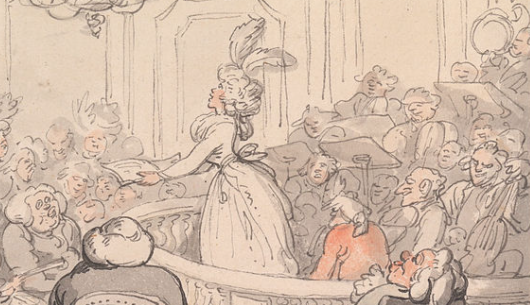
Comforts of Bath-The Concert-Rowlandson-Google Art Project-Wikimedia Commons

Detail: The Concert, The Comforts of Bath, Thomas Rowlandson, 1798. Wikimedia Commons

At Party’s End:

The house was not clear till after twelve.” 

This party lasted a little over four hours. London had street lights that guided guests back to their lodgings and houses. In country houses, parties, which were scheduled under the light of the full moon, often lasted until the wee early hours. After a party at a country house, Jane would often spend the night as a guest at a friend’s house, at times with her dear friend Martha Lloyd if she could manage it. 

The following day:

Her party is mentioned in this morning’s paper.”  

“…in the Morning Post of 25 April, which must have been very gratifying, even if the newspaper spelled her name wrong: ‘Mrs H Austin had a musical party at her house in Sloane-street.” – http://what-when-how.com/Tutorial/topic-673689/London-A-Tour-Guide-for-Modern-Traveller-10.html  “Travel Reference In-Depth Information, Walk 1: Sloane Street to Kensington, A Tour Guide for the Modern Traveler.”

The guests:

* Cooke family of Great Bookham. Rev. George Cooke and his unmarried sister Mary. Their father, Rev. Samuel Cooke was Jane’s godfather. 

**

  • Mr. George Hampson was a baronet who chose not to use his title. He is one of Jane’s cousins through her relationship to her grandmother, Rebecca Hampson, whose second husband was William Austen.
  • Mr. William Seymour, Henry Austen’s friend and a lawyer, who, it was speculated, might have considered proposing to Jane, but he didn’t.
  • M. Wyndham Knatchbull, merchant in London, or Reverend Doctor Wyndham Knatchbull, the eldest son of Sir Edward Knatchbull, 8th Baronet. 
  • Mr. Guillemarde is probably John Lewis Guillemarde, who lived in London
  • Mr. Capel Cure, who lived in London. His father, George, had first married Elizabeth Hampson, daughter of Sir George Hampson, but she died childless. Capel is the son of George Cure’s second wife.
  • Captain John Simpson, brother of Captain Robert Simpson. 
  • Mr. Thomas Egerton, Austen’s first publisher. He brought out S&S, P&P, and the first edition of Mansfield Park. His presence at the party, and Jane’s purpose for visiting Henry and Eliza to complete work on Sense & Sensibility connects his attendance at the party in a marvelous way.
  • Miss Maria Beckford, unmarried, lived with the Middleton family as hostess for her brother-in-law, John Middleton. When in London for the season Miss Beckford lived at 17 Welbeck Street. (Le Faye, p 495)
  • Miss Middleford. No explanation by Ms. Le Faye.)

Additional sources:

Characteristics of the Georgian Townhouse , June 3, 2009 , Jane Austen’s World, Vic

Jane Austen’s Letters, 4th Edition, Deirdre Le Faye, 2011, Oxford University Press. 

Jane Austen’s visit to Sloane Street , Kleurijk Jane Austen, 9-2014

Jane Austen, Her Contemporaries and Herself: Walter Herries Pollock · 1899 – Explanation of “Poike de Parp pirs praise pof Prapela”

Georgian Terrace Houses, April 27, 2021, Random Bits of Fascination.com, Georgian Townhomes

Thank you, Tony Grant, for contributing the 3 current photographs of Hans Place (2) and of 64 Sloane Street (1).

Read Full Post »
Older Posts »