By Brenda S. Cox
“We dined at Goodnestone, and in the evening danced two country dances and the Boulangeries. I opened the ball with Edward Bridges . . . We supped there, and walked home at night under the shade of two umbrellas.”—Jsane Austen, Sept. 5, 1796.
More than thirty times in her letters, Jane Austen mentions Goodnestone (pronounced “GOOD-nuh-stun” or “gunston.”) The original name was Godwynestone, after the Anglo-Saxon family who lived in the area from before the Norman Conquest until the reign of King Henry VIII. The founder of the family, Earl Godwyn (or Godwin), was the father of King Harold II, killed in the Norman Conquest.
The estates of the area passed through a few other families. They were eventually acquired by Brook Bridges, Esq. in the early 1700s. He built Goodnestone Park. His son became a baronet, like Sir Thomas Bertram and Sir Walter Elliot in Austen’s novels. He passed that title down to his descendants, a Brook Bridges in each generation.
Jane Austen visited Goodnestone several times, and often refers to the comings and goings of her friends and relations there. What was her connection to this place?
Goodnestone Park and Farm and Rowlings
Last month on this site we “visited” Godmersham, home of the Knight family who adopted Jane Austen’s brother Edward. Edward Austen married Elizabeth Bridges, daughter of Sir Brook William Bridges, owner of the nearby estate of Goodnestone. When Edward and Elizabeth were first married, they lived at Rowling, about a mile from Goodnestone. Their first four children were born there. Jane Austen visited them there, socializing with Elizabeth’s family at Goodnestone Park. (See “A Walk in Kent” for photos of Rowling.)
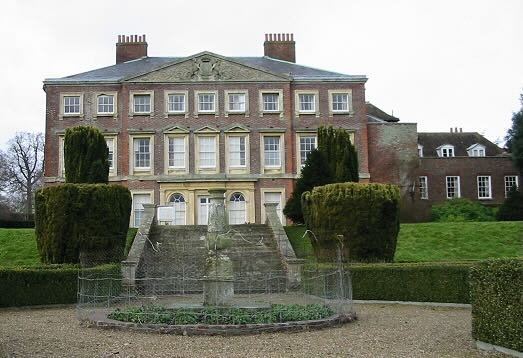
Photo by Nick Smith / Goodnestone House, 2007, CC BY-SA 2.0
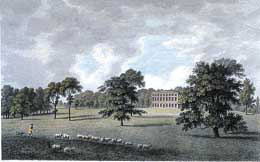
Public domain via wikimedia
“The Mrs. Finches were afraid you would find Goodnestone very dull; I wished when I heard them say so that they could have heard Mr. E. Bridges’ solicitude on the subject, and have known all the amusements that were planned to prevent it.”—Aug. 24, 1805, from Jane Austen at Godmersham Park to Cassandra Austen at Goodnestone Farm, Wingham
Edward and his wife inherited Godmersham and moved there at the end of 1797. Jane and Cassandra continued to visit other Bridges family members at Goodnestone Farm. Her nephew described Goodnestone Farm as “a comfortable house very near the great house, which has generally been inhabited as a dower house or by some younger member of the Bridges family, to whom it belongs.”
Jane’s friend Harriot (or Harriot-Mary), one of her sister-in-law Elizabeth’s younger sisters, insisted Jane stay longer on a visit in 1805. In the following year, Harriot married Rev. George Moore. He was the son of an archbishop and held four church livings. One of Elizabeth’s younger brothers, Rev. Brook-Edward, was perpetual curate of Goodnestone from 1802-9, as well as holding five other church livings at various times. His older brother, Rev. Brook-Henry, held two church livings. (They did like hyphenated names.) The Bridges family apparently had “considerable patronage in the church,” like the Darcys of Pemberley, or at least they had close connections with families who had patronage (the right to assign church livings).
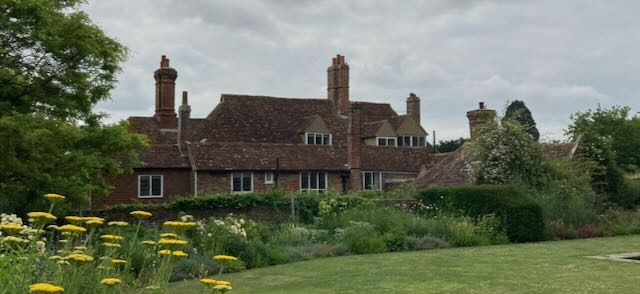
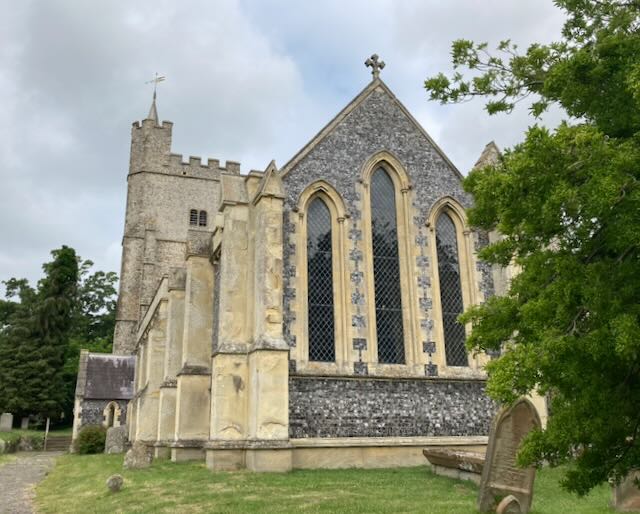
Holy Cross Goodnestone church
On her visits, Austen must have attended the local church, Holy Cross Goodnestone. This is now considered an “Austen Family Church,” like others we have visited in this series. Jane’s brother Edward married his wife Elizabeth in this church in 1791.
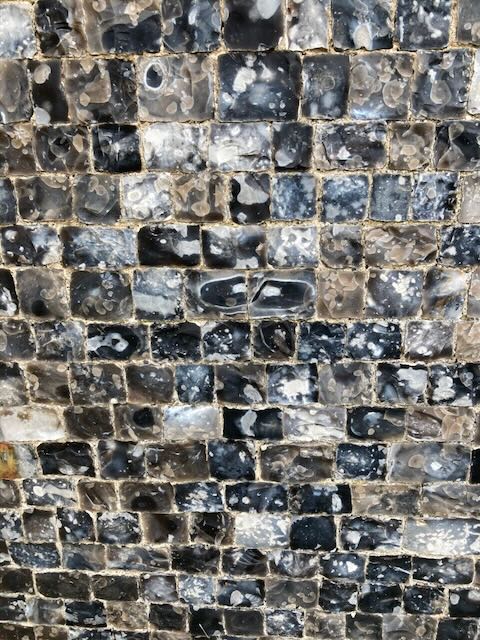
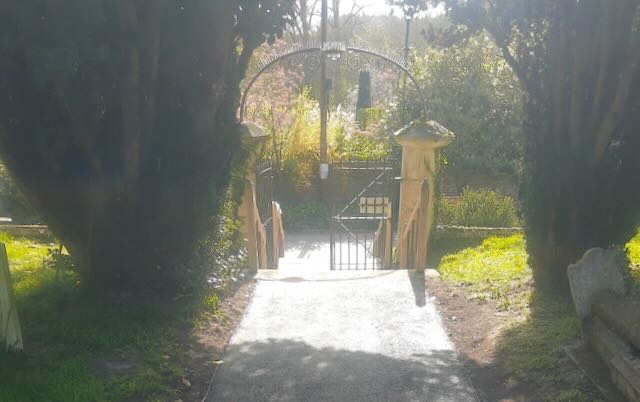
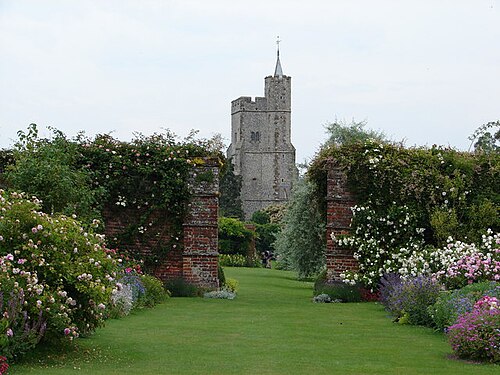
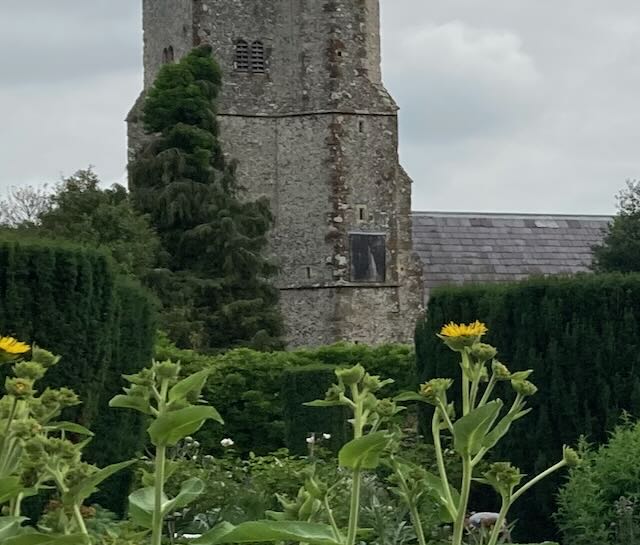
Detail of photo by Adam Hincks, CC BY-SA 2.0
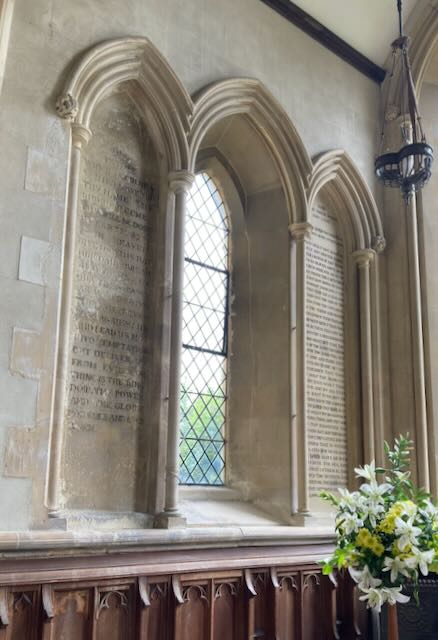
Holy Cross Goodnestone church interior
The interior of the church was remodeled in the Gothic Revival style in 1841, so it looks different now than it did in Austen’s time.
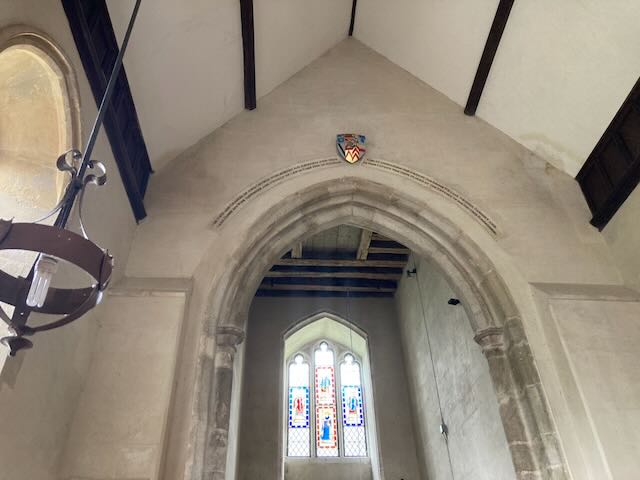
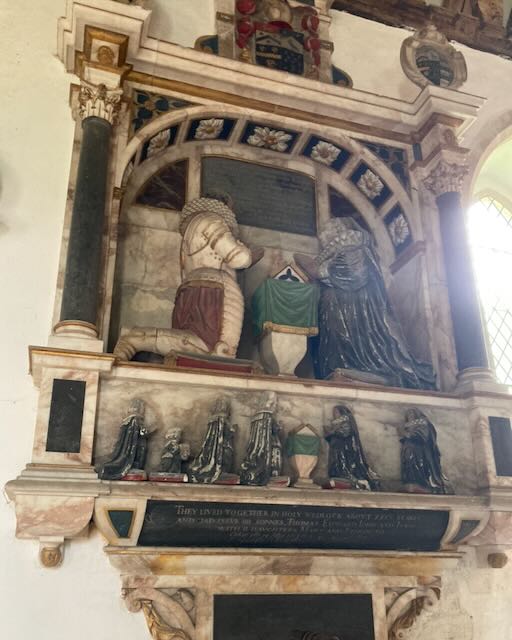
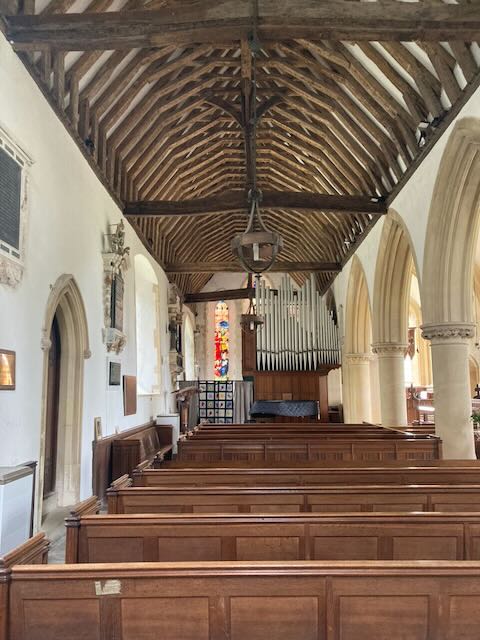
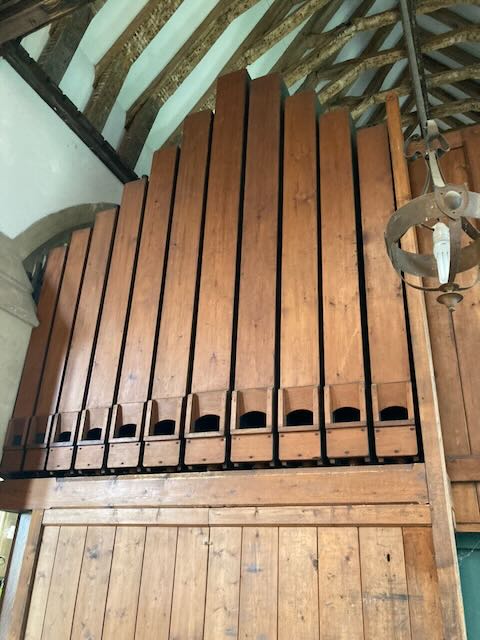
“We have walked to Rowling on each of the two last days after dinner, and very great was my pleasure in going over the house and grounds. We have also found time to visit all the principal walks of this place, except the walk round the top of the park, which we shall accomplish probably to-day.”—Jane Austen at Goodnestone Farm writing to Cassandra at Godmersham, August 30, 1805.
Church and Community
A congregation of about twenty people gather for Sunday services at the church (fewer when their excellent choir is not singing). But they may have 100 to 120 participants at services for holidays and weddings.
Like many country churches, the Goodnestone church is also used for various community services. Concerts are held there regularly, and the choir is excellent. They have sung Evensong in cathedrals as well. Schoolchildren come to the church once a week from the Church of England primary school in the village. The church even serves as a post office, open two mornings a week.

Goodnestone is part of the Canonry Benefice, which includes seven churches in East Kent. The vicar and other clergy for the benefice serve all the churches, at services alternating between the churches. For example, during the upcoming Holy Week, from Palm Sunday to Easter Sunday, fifteen church services will be held at the various churches (at least one per day). Three of them will be at Holy Cross, Goodnestone.
The church is well worth seeing if you visit the area. It is generally open during daylight hours. You can contact the church if you have questions. Jane Austen enjoyed the gardens and walks in the area, and you can also walk through the lovely gardens and the “Serpentine Walk.” See Visitor Information. Goodnestone Park is now used as a wedding venue.
Brenda S. Cox is the author of Fashionable Goodness: Christianity in Jane Austen’s England. She also blogs at Faith, Science, Joy, and Jane Austen.
All photos in this post, unless otherwise marked, ©Brenda S. Cox, 2023
For Further Exploration
Goodnestone, Godmersham, and Canterbury
Rowling and Rowling House
Detailed History of Goodnestone and Church, written in 1902
More photos of Holy Cross, Goodnestone
Old Photographs of Goodnestone
History of Goodnestone Park with paintings
Goodnestone Park Grade II* listing (Grade II* means a “particularly important building of more than special interest.” Listed buildings require special permissions before any significant changes can be made.)
Church of the Holy Cross Grade I listing with photos (Grade I means “of exceptional interest.”)
Other Austen Family Churches
Hamstall Ridware and Austen’s First Cousin, Edward Cooper
Adlestrop and the Leigh Family
Stoneleigh Abbey Chapel and Mansfield Park
Great Bookham and Austen’s Godfather, Rev. Samuel Cooke
St. Paul’s Covent Garden (with links to other churches mentioned in Austen’s writings)







 Jane Austen's World
Thank you for the history and the tour. ~ denise