Feeds:
Posts
Comments

Archive for the ‘18th Century England’ Category

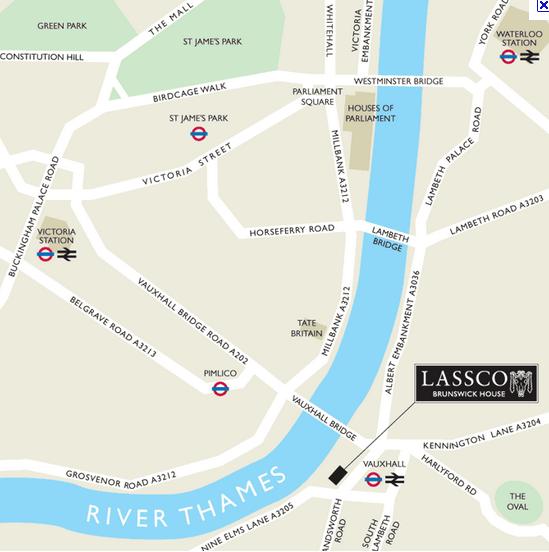
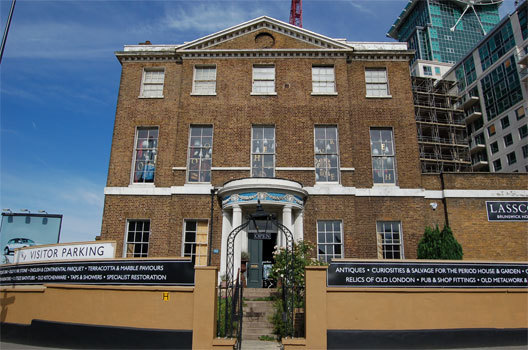
In his post about Hogarth’s The Rake’s Progress a few weeks ago, Tony Grant mentioned Brunswick House as a possible stand-in for Tom’s inherited home. Brunswick House was built in 1758 on #30 Wandsworth Road and was the former home to the Dukes of Brunswick.

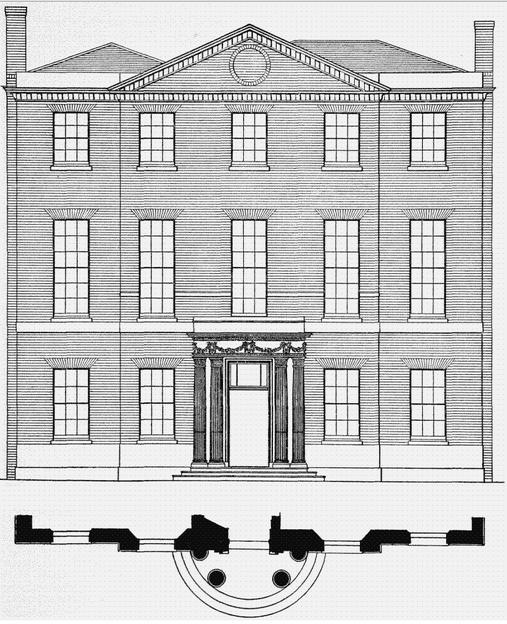
Brunswick House. Image @Tony Grant

It sat on 3 acres of land along the South Bank of the Thames River near what was once Vauxhall Pleasure Gardens. This once popular entertainment destination, with its vast gardens, pavilions, and nightly illuminations, looms large in Georgian biographies and novels and modern books set in the Regency era.

Brunswick House. Image @British History Online

The 3-story house, almost square in shape, was once described as a mansion house with offices, coach-house, and a stables. Its surroundings, once filled with vistas of green fields, woods, and river, is now crammed with tall buildings and flats made of concrete, steel and glass.

Brunswick House today. Image @Stephen Richards

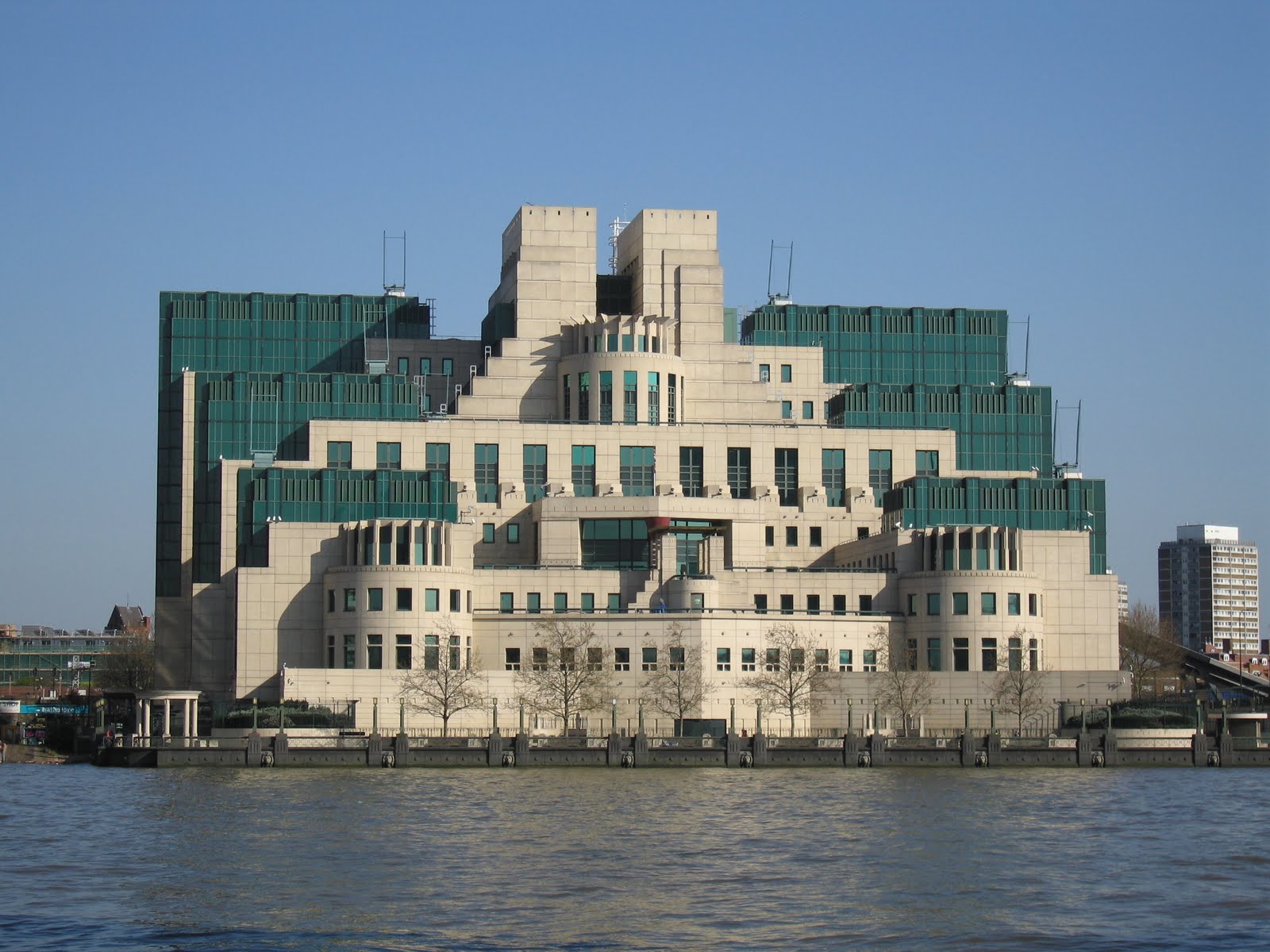
This relic of the Georgian era sits in Nine Elms on the South Bank opposite Vauxhall Tube Station and next to the green glass edifice of MI5…

M15 building, also known as Babylon on Thames. Image @Tony Grant

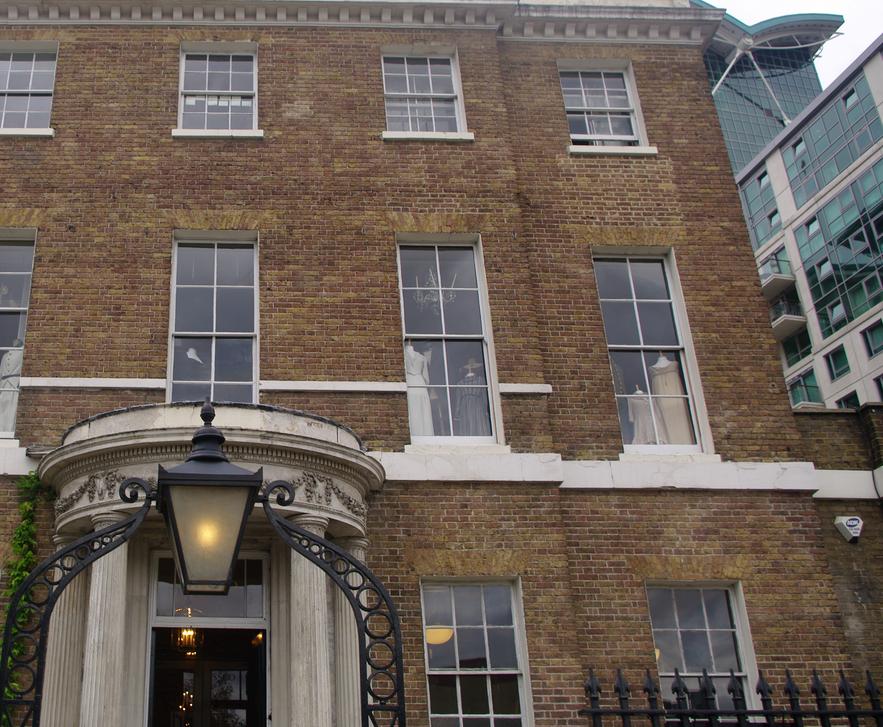
…its centrally placed semi-elliptical porch of painted Coade’ stone facing busy Wandsworth Road, where cars, lorries, and buses rush by at a fast pace.

Close up includes details of Georgian dress in second story windows. Image @Tony Grant

The porch

“has two free-standing and two engaged columns with enriched moulded bases, fluted and cabled shafts, and water-leaf capitals. The entablature has a frieze decoration of rams’ skulls linked by floral festoons, and the cornice bedmouldings are enriched. The surmounting blocking-course continues the lines of the first-floor platband.” – British History Online 

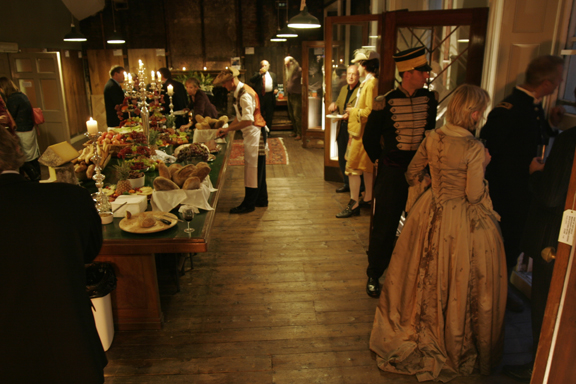
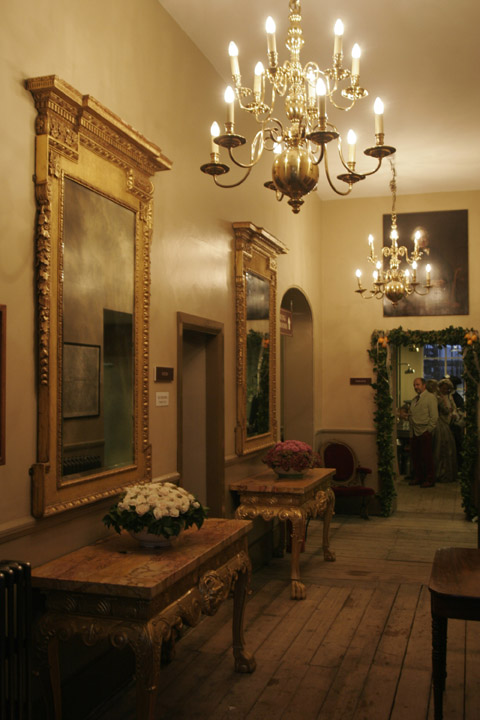
LASSCO launch party, Brunswick House, 2005

While Brunswick house’s exterior remains largely as it once was, the interior has changed so much that the original plans are no longer discernable. Today the structure is the home of LASSCO (The London Architectural Salvage and Supply Company) antique dealers.

“After the squatters were removed, the building was restored and it’s now used by LASSCO as a premises from which to sell architectural salvage. Members of the public are welcome to visit the restored building for a glimpse of Vauxhall’s elegant past.” – Time Out London http://www.timeout.com/london/museums-attractions/event/2156/brunswick-house

Restored interior, Brunswick House, 2005

Images from LASSCO’s launch party in 2005 show glimpses of the restored interior, especially the wood floors.

More about Brunswick House:

Read Full Post »

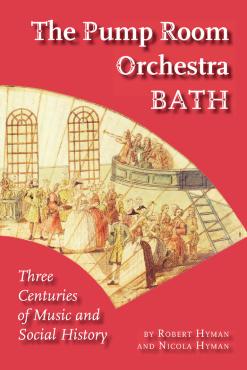
Gentle Readers, Nicola Hyman, one of the authors of The Pump Room Orchestra, Three Centuries of Music and Social History, a book that she co-wrote with her musician husband, Robert, sent me this information about music in the Pump Room. The book is available at Hobnob Press in the UK.

The Pump Room Orchestra is believed to be the first resident band in the country to play in an assembly room in the early 1700s. The book chronicles the three hundred year old history of this Band, from its inception to today. Beau Nash founded the Band and, during his sojourn, his supremacy over its management was unequalled. However, over the decades municipal philistinism, wars, economic slumps and the appeal of (usually Italian), virtuosi in Bath threatened its almost unbroken continuity. Handel visited Bath in 1749 and collaborated with Thomas Chilcot whose support of the Pump Room Band leader, during one of its most intense conflicts, is explored in the book. Thomas Linley and William Herschel both played in the Band in the 1760s. Haydn enthused over the progress of the new Grand Pump Room built in 1795 where the present Trio play. The glamorous backdrop of eighteenth century Bath was underpinned by a climate of fierce rivalry and partisan affiliations among many musicians, many who struggled to survive.

Several fine German musicians were directors or members of the Pump Room Orchestra during the nineteenth century, including up to the Great War, the great grandfather of Bristol based composer Richard Barnard. Bath was now a more sober city, its appeal as a resort diminishing and the Corporation’s control of the Pump Room Orchestra a constant challenge. During bleak pre Great War years, Holst conducted the Orchestra for the first performance of his Somerset Rhapsody.

During the Spa hey day of the 1920s ‘cellist Gilhermina Suggia, contralto Edna Thornton , violinist Daniel Melsa, Arthur Rubenstein and Solomon are just a few of the well known guest soloists who played with the Orchestra. Sir Thomas Beecham conducted the Orchestra several times during this period. Elgar was another guest conductor. As Spa Director, John Hatton’s progressive style of marketing revived Bath as a tourist attraction. A thriving Pump Room Orchestra reflected the unique collaboration Hatton had with Jan Hurst, the Orchestra’s director.

In the late 1930s the Orchestra was directed by the distinguished Maurice Miles and concerts were regularly aired on the BBC. His predecessor, the brilliant and popular ‘showman’ Edward Dunn, had emigrated to South Africa. Dunn’s role as Durban’s Director of Music led him after the War to build up an International Arts League of Youth Festivals across South Africa. While, after the Second World War, the direction of the Yorkshire Symphony Orchestra and the BBC Northern Ireland Orchestra were among Maurice Miles’s later roles.

However, it is the forgotten army of predominantly rank and file players in the Orchestra which is a central theme in the book. Many of these players were given solo roles and played in chamber ensembles in the Pump Room. Our research has divulged fascinating cameos, many tragic but many invested with astonishing devotion to music in the Pump Room and to Bath. One example was Lawrence Lackland who switched, at Lionel Tertis’ suggestion, to viola, and whose father was a violinist in St Helens under Thomas Beecham’s early orchestra.

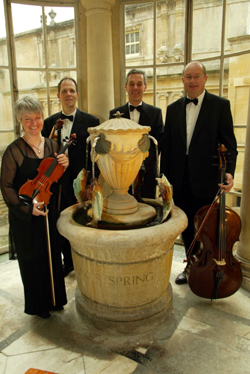
The Pump Room Trio at the fountain

A piano trio was the phoenix from the ashes of the Second World War, an unbroken legacy to this day. Now two violinists share the role dividing the 363 days of music in the Pump Room between them. All four members of the Trio are experienced, conservatoire trained musicians (RCM, RAM, RNCM, the Juilliard School).
People from all over Britain and the world come to the Pump Room. For many the visit is a regular pilgrimage, whether they be tourists or academics; their awe of the building enhanced by the music. Many writers, researchers and musicians have shared their expertise and knowledge in the development of this book. It is a departure from the many histories of Bath which are usually focussed on its architecture and archaeology. As such it covers unchartered territory – the people who played in the Pump Room. Trevor Fawcett, the eminent social historian and 18th century expert on Bath, has kindly helped with editing and other suggestions. The book will be marketed in Bath and other Spa towns in Britain as well as other independent book shops in this country and overseas. The publisher John Chandler (see http://www.hobnobpress.co.uk) will oversee distribution and contributes to on-line sales sites, such as Amazon. The book is eagerly awaited by the many contributors, either as a relative of an Orchestra member, regular visitor to the Pump Room, research contributor or musician.
© Nicola and Robert Hyman

To order The Pump Room Orchestra, Bath: Three Centuries of Music and Social History

US customers can order the book at Amazon.com at this link.

Please find attached the website http://www.hobnobpress.co.uk for an order form for those readers who would like to purchase The Pump Room Orchestra, Bath: Three Centuries of Music and Social History. Robert Hyman, (who studied at the Juilliard School, New York) is a violinist in the Pump Room Trio in Bath. Together he and his wife Nicola have researched and written this history. The book has a Foreward by Tom Conti. Colour plates include a photo ‘Leaving the Pump Room’ of ladies dressed in costume for the annual Jane Austen Festival. Two chapters in the book explore music in the Pump Room when Austen first visited Bath. They are ‘When Jane Austen Came to Bath’ and ‘After Rauzzini’. There is also a chapter called Screen and Stage which chronicles movies filmed in and around the Pump Room; actors who visit or have visited the Pump Room, some because they are performing at the Theatre Royal in Bath, and also TV productions of Jane Austen’s novels, where many of the scenes were filmed in the Pump Room. UK customers can order the book directly from the publisher. 

November 2011, 214 pages + 8 pages of colour, £14.95. ISBN 978-0-946418-74-9.

Read Full Post »

Gentle Readers, Frequent contributor, Tony Grant from London Calling, has been on a hiatus. But he has returned with a vengeance. Please enjoy his observations about Hogarth’s breathtaking series, The Rake’s Progress, and the modern pictures he took as he went on a quest to search for The Rake’s London.

In 1733 William Hogarth began a new series of progress pictures. He had already created The Harlott’s Progress which had been very popular. He now began a series called The Rake’s Progress.
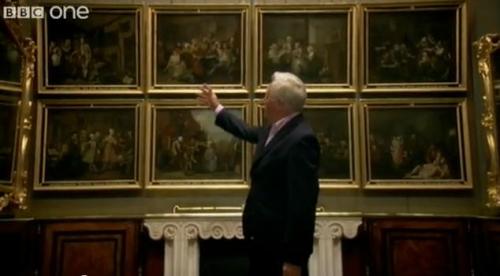
A Rake's Progress at the Sir John Soane's Museum

A rake was a stylised type of young man that had a literary tradition already before Hogarth began his series. He was generally regarded as a very impressionable young man, usually born and bred in the countryside to a wealthy father who had gained his riches by working hard and amassing a fortune which he had inevitably hoarded and not spent. The young man, cut off from society in the countryside during his childhood and not needing to work because of his inherited wealth, embarks on a dissolute life in the fleshpots of London. His fate usually includes the squandering of his fortune, venereal disease, prison and eventual death. Hogarth keeps to this format but also adds in a few other nuisances.
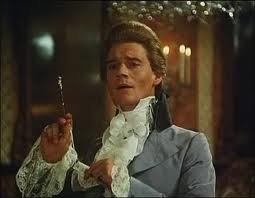
Anthony Andrews as the Scarlet Pimpernel, the quintessential 18th century fop.

Hogarth shows Tom Rakewell as aspiring to be cultured like a young well-educated aristocrat, commissioning and sponsoring poets and musicians with no idea about what has merit. He has no taste. He is not cultured or educated to any high standard. The popular name for this type of upstart in the 18th century was a ,”cit.” Tom also tries to create an outward show of elegance and sophistication. He is self deluded and fits the term “fop” exactly.
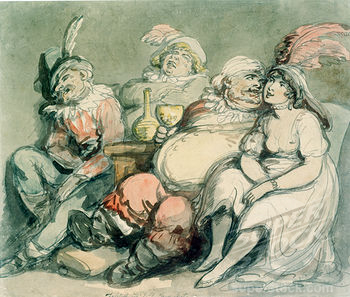
Fallstaff and Doll Tearsheet, Thomas Rowlandson. Image@Huntington Library

Tom’s surname, Rakewell, describes him. Hogarth is drawing again on a long comic and literary tradition. Many of Shakespeare’s lower class characters have names which describe them – ‘Doll Tearsheet’, in Henry IV part 1 and 2. ‘Bullcalf’, or somebody recruited by Falstaff in the same plays. Dickens often uses the same convention: Mould, the undertaker in Martin Chuzzlewit and Mr Choakumchild in Hard Times are prime examples. English comedians still play with these names to this day.

Inherited wealth is not so prevalent in the 21st century,  but these days the spoilt, glossy, manicured characters who seem to do no work and have as much money to squander as they wish, as portrayed in the docudrama series, E4’s “Made In Chelsea,” fit the rake, male and now, female version.

Scene 1.
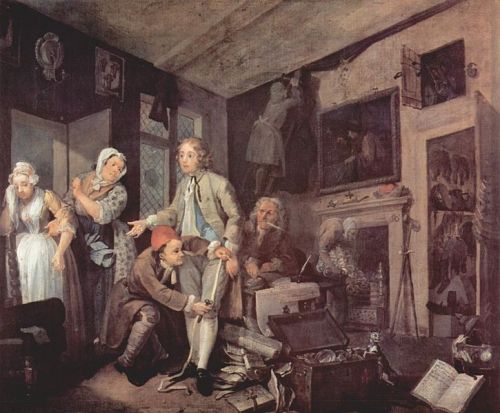
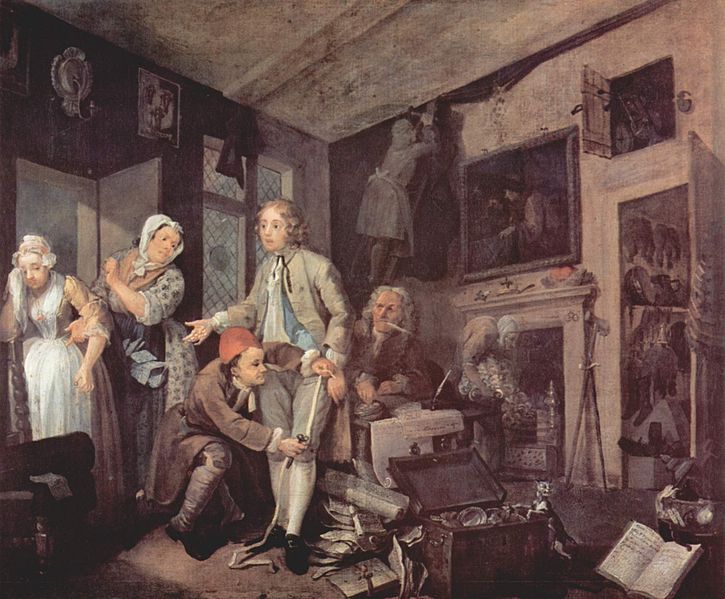
We are introduced to Tom Rakewell standing in the dingy dark parlour of his inherited country house, a red-capped gentleman measuring him up for a new suit. We can be sure it will be made from the most expensive silks and have the most garish designs. His old steward looks furtive, hunched behind him, trying to fiddle the books and put some cash into his own pocket. A weeping pregnant girl, Sarah Young, is being rejected by Tom and he tries to pay off her mother with a desultory sum. Tom is breaking his mould. We can see the wrong he is doing immediately although Tom is oblivious of the road he has set out upon.
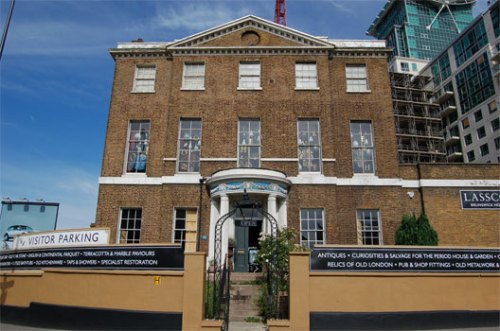
Brunswick House

There are many fine Georgian houses in the English Countryside. I found this one in Nine Elms on the South Bank opposite Vauxhall Tube Station and next to the great green glass edifice of MI5. It is called Brunswick House and it is the home of Lassco antique dealers. I thought this particular Georgian house fitted The Rake’s Progress nicely as standing in for Tom’s inherited home.The house would have been in the countryside on the outskirts of London during the 18th century. Today the house is a grade I listed building and a fine example of the Georgian Houses that used to be in Nine Elms. It stands alone now, surrounded by high rise modern flats and offices. The Nine Elms road junction is before it, awash with cars, buses and lorries at all times of the day, every day. It is an anomaly, as indeed Tom Rakewell’s life became an anomaly.

Scene 2.
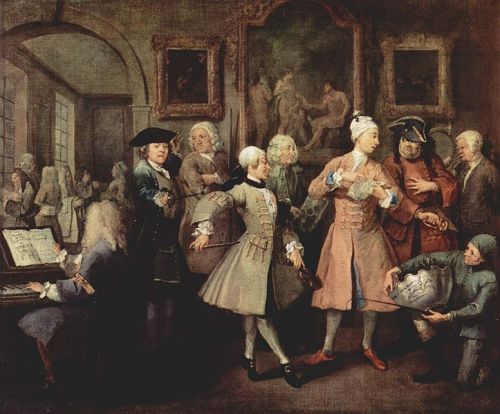
In this scene Tom is still at his country house. He is adapting to his new lifestyle. This scene shows a levee taking place. A levee consisted of the Lord or Duke holding a meeting every morning, as he dressed in his bedchamber with local tradesmen showing their wares and the Lord purchasing his requirements. Here Tom is following this tradition, and beginning to spend his money.

Tom doesn’t realise what he is doing. The gentry who follow this fashion of the levee were very wealthy people who owned lands , trading ships and industries that were creating more and more wealth for them. They spent money within their means. Tom has inherited amount of money, which he has no intention or wherewithal to add to. He knows not what he does. He appears to be what we might term, rather stupid. He is a prodigal son.

Scene 3.
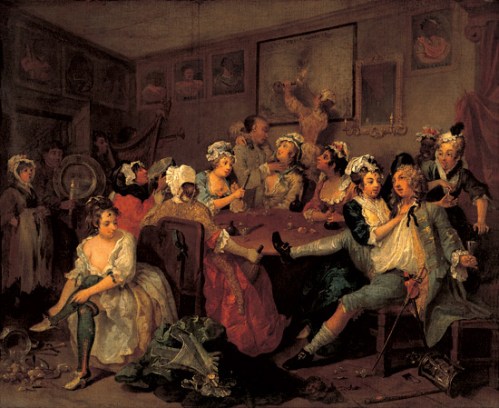
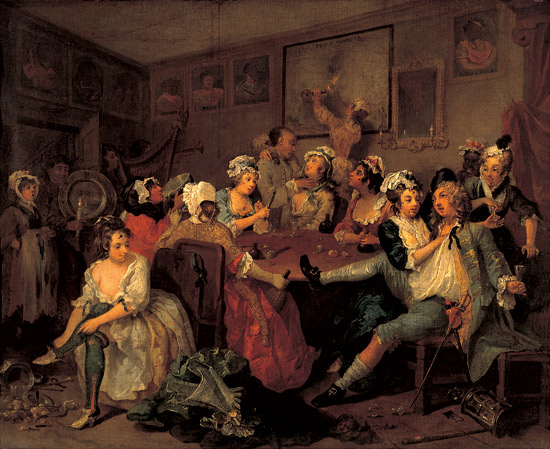
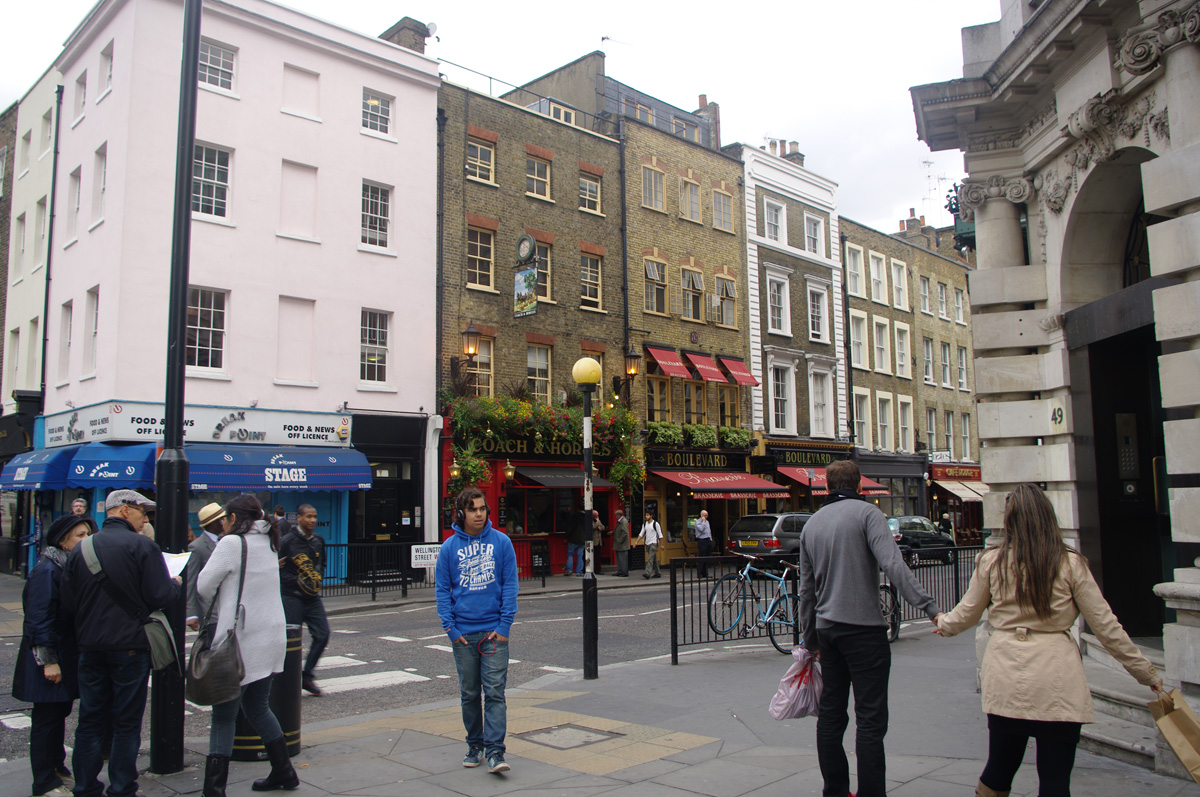
This is The Rose Tavern in Covent Garden. It was situated on the corner of Drury Lane just opposite The Drury Lane Theatre.

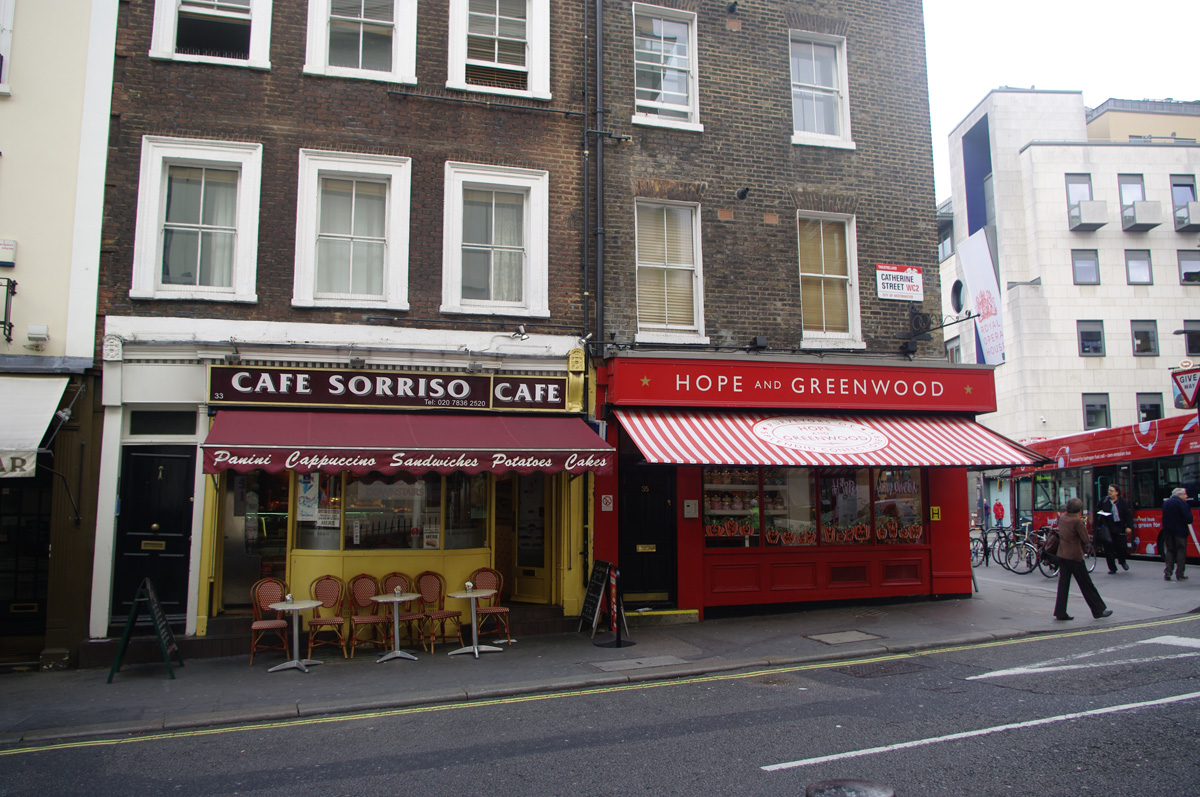
Rose Tavern site, corner of Drury Lane. Image @Tony Grant

What is happening in this picture is a scene of debauchery. Tom is sitting to the right, his clothing loosened and being administered to by two prostitutes. A girl is removing her stockings in the foreground. Eventually she will be naked. A male servant is bringing in a silver platter for her to dance on. The tradition for new members of the trade, presumably still virgins, was to strip naked and perform a lewd dance on a silver plate high on a table for the wealthy clientele to view. She and her virginity would go to the highest bidder. A virgin could bring a very high price.
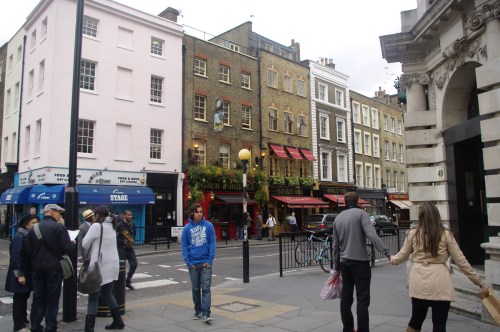
Site of 18th century brothels. Image @Tony Grant

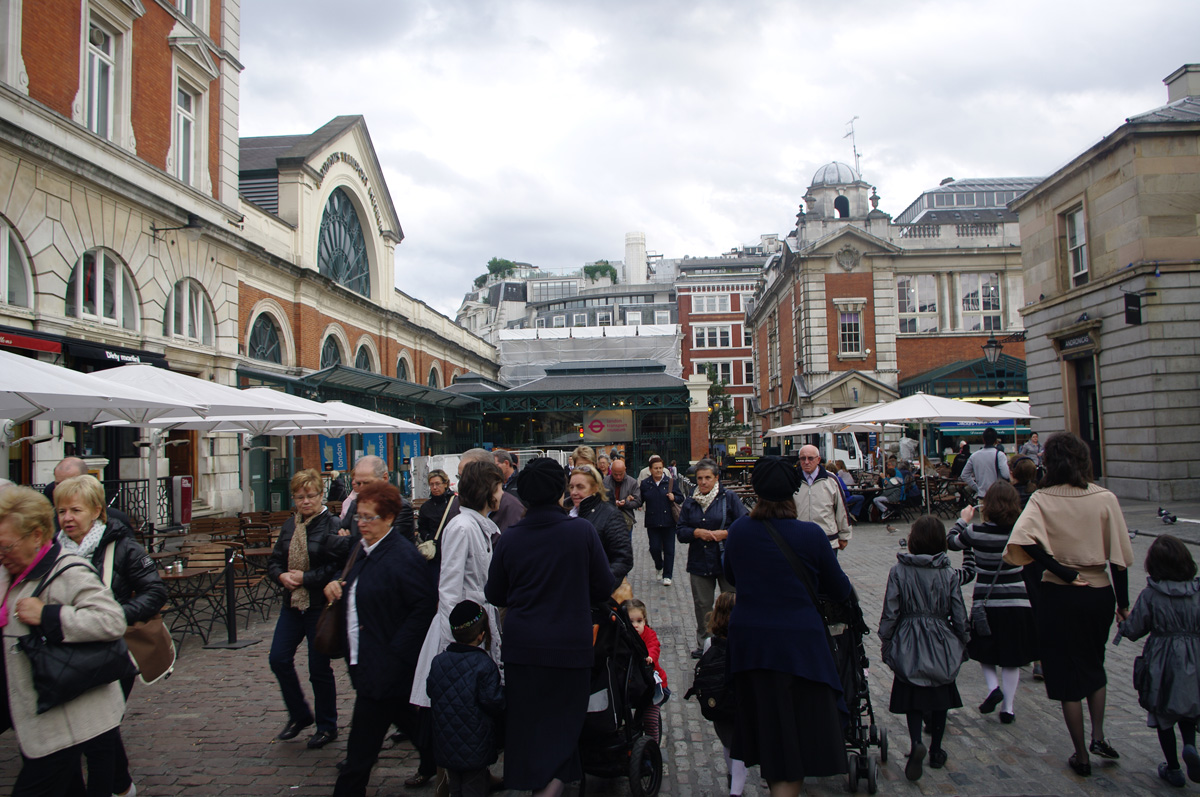
The reason many of the brothels were situated in and around Covent Garden was because it was there all the produce from the countryside was brought into London. With the farm carts young country lasses seeking their fortune would arrive in London too. The market was not just for fruit and vegetables. Old prostitutes, too old to ply their trade, would become madams. They would meet these young girls arriving in Covent Garden Market and befriend them, offering them warm lodgings and work. One such madam was called Elizabeth Needham. She features in Hogarths picture of Moll Flanders arriving in Covent Garden at the start of Daniel Defoe’s story.
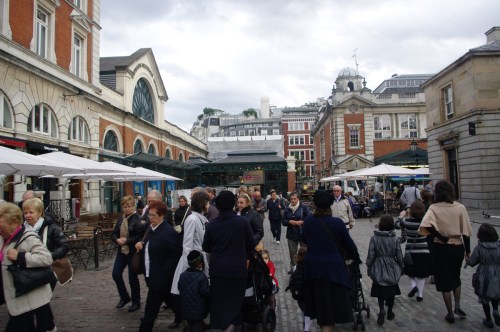
Covent Garden. Image @Tony Grant

Many of the authorities and the public were so incensed by her activities she was put into the stocks and stoned to death. At the height of prostitution in the 18th century it was said that one in five women in London were prostitutes. London was the most licentious city in Europe. After these girls fresh from the countryside had settled in at the madams house, they soon found out what the work they were to do. The madam would start to ask for rent and the cost of food. Of course the girls had no other means of paying. They could be threatened with their lives. Many did have, on the surface, respectable trades. They might be taught to be seamstresses or servants in the pubs around Covent Garden. but they would also provide certain other services. It was attractive because they could earn a lot more money than the ordinary servant or maid. The down side was that they would get diseases, such as gonorea and syphilis, and their lives and careers could be short. The black dots shown on many portraits of these girls were placed there to cover the ravages of syphilis.
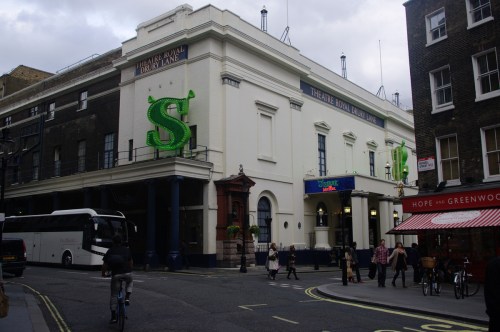
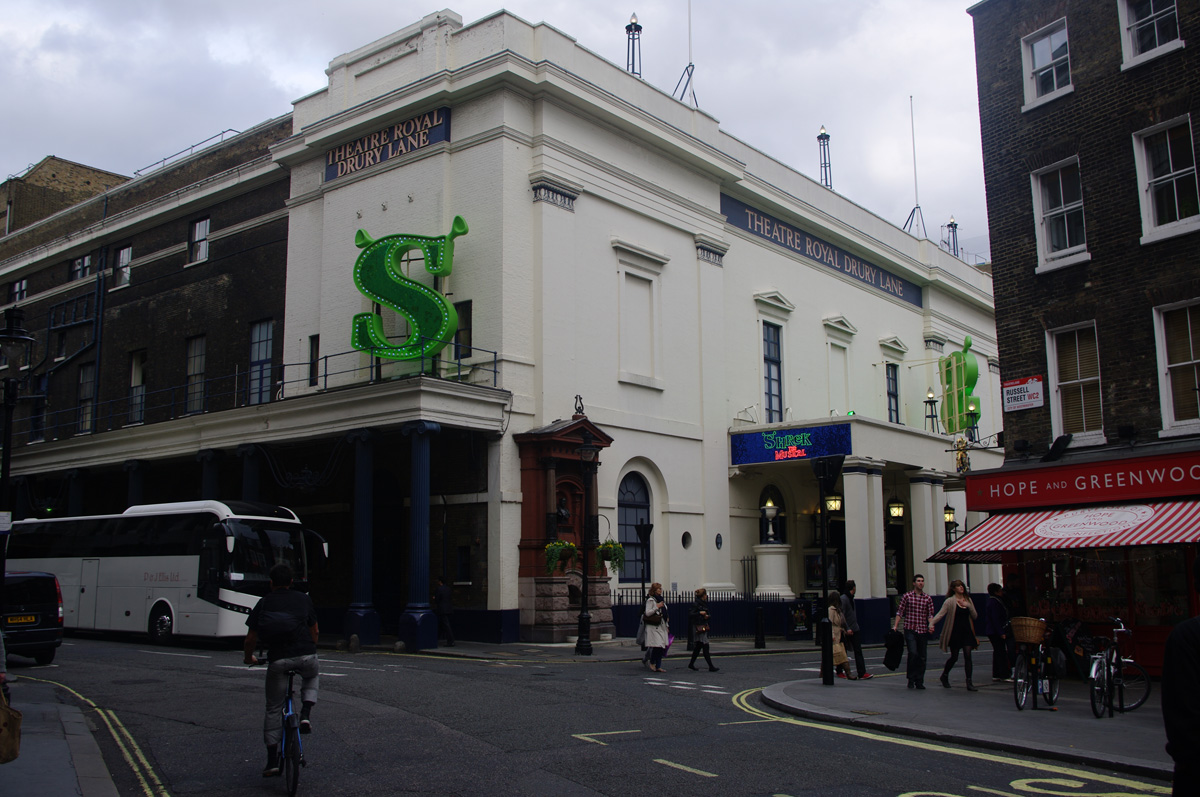
Drury Lane Theatre. Image @Tony Grant

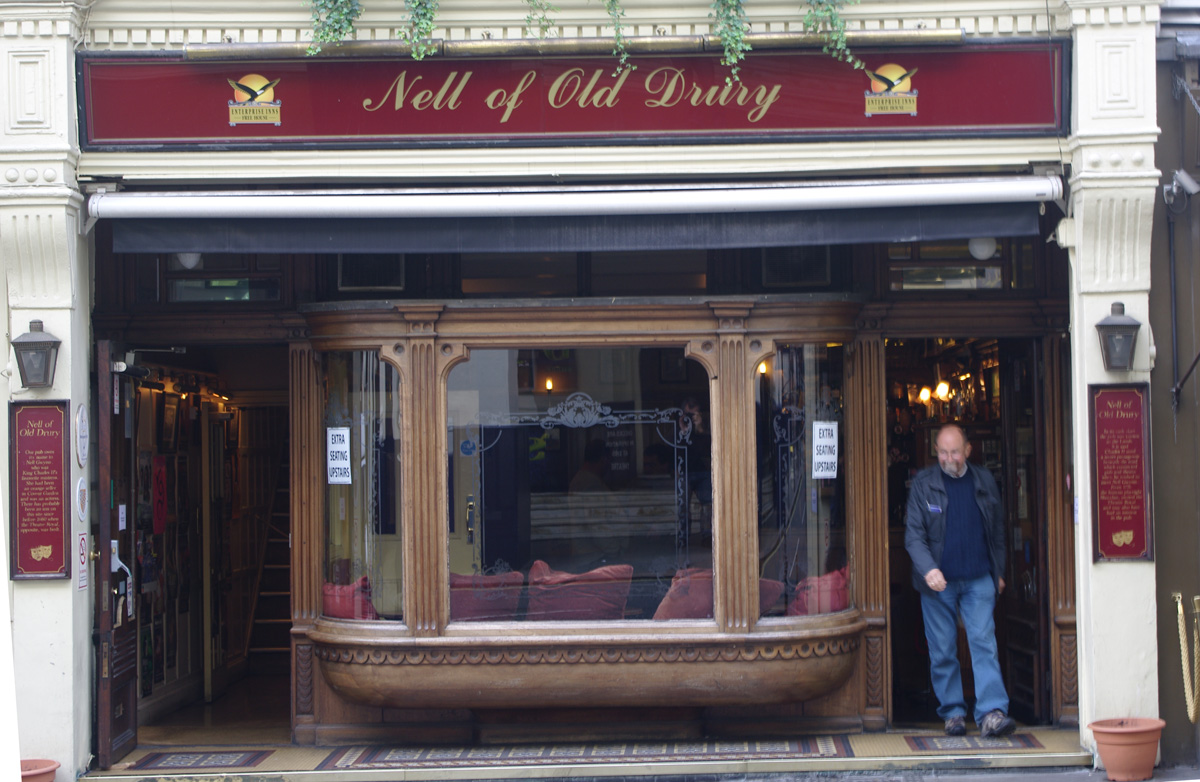
Some of the establishments that were pubs cum brothels were owned by supposedly reputable people. The Nell Gwyn, which exists today, opposite The Theatre Royal in Drury Lane. was partly owned at one time by Sherridan, the great playwright, who also owned and ran The Theatre Royal.
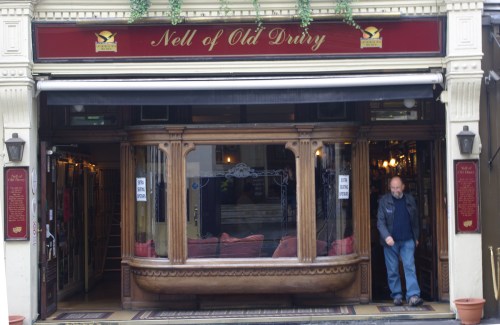
Nell Gwyn's hang out. Image @Tony Grant

It appears he had shares in the prostitution trade. Whether the Church of England owned brothels I am not sure. It was such a lucrative market and comprised a sizeable share of London’s economy, that I would not be surprised. The church needed money too.

There are shops on the site of The Rose Tavern today. Whether they are the original building I am not sure.

Scene 4.
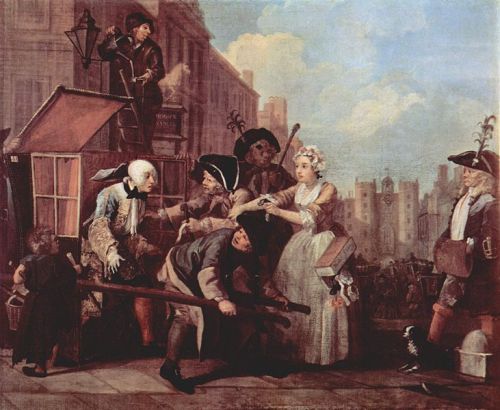
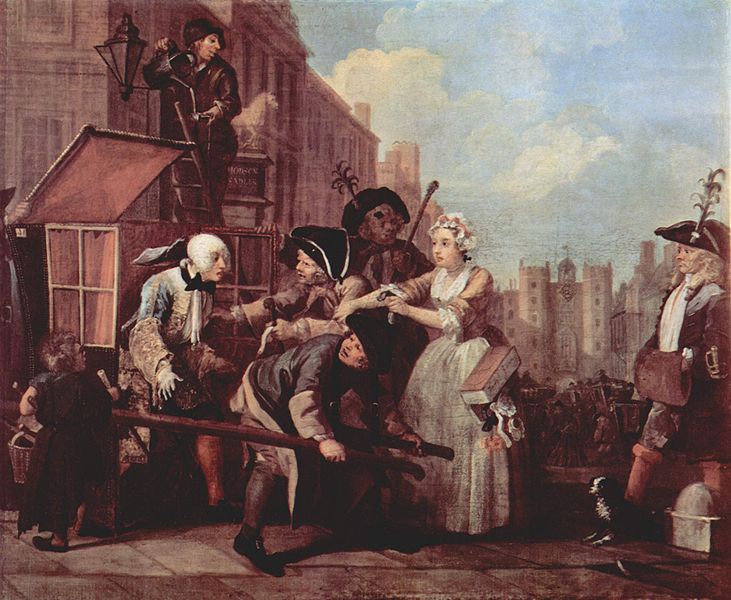
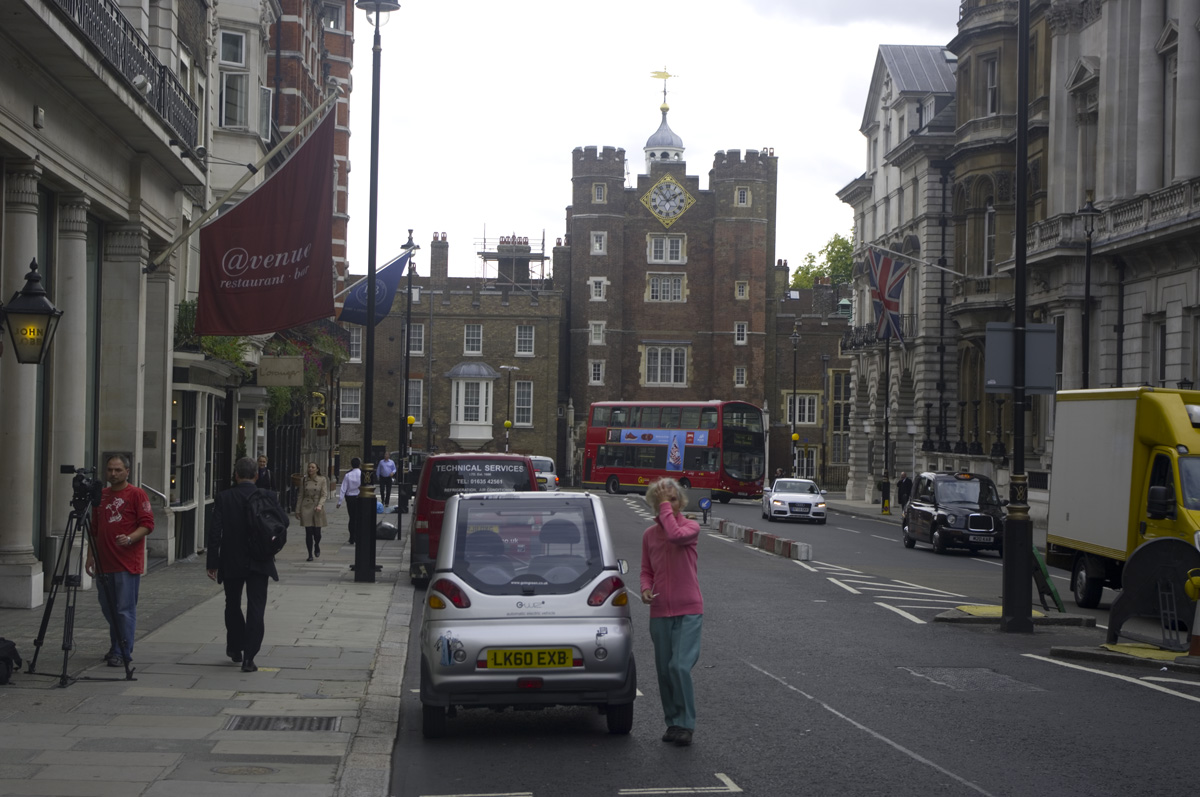
This scene show’s St James’s Street. In the background is St James’s Palace on the corner with Pall Mall. Tom is being apprehended by a bailiff requesting payment of his debts. He is obviously bereft of finances at the precise moment he is about to achieve one of his pretentious ambitions, being presented at court. He is in his rich finery and being taken to St James’s Palace in a sedan chair. He doesn’t want to get his expensive shoes dirty. Sarah Young is there again willing and ready to pay his debts for him. It is a heartbreaking scene in many ways.
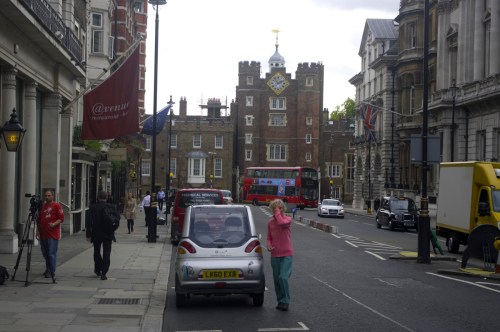
St. James's palace. Image@Tony Grant

I tried to get a photograph of the same scene from the position Hogarth aligned his picture. It meant I had to stand in the middle of the road with cars buses and vans roaring past.

Scene 5.
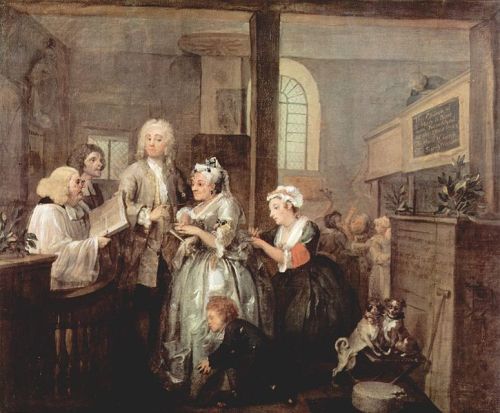
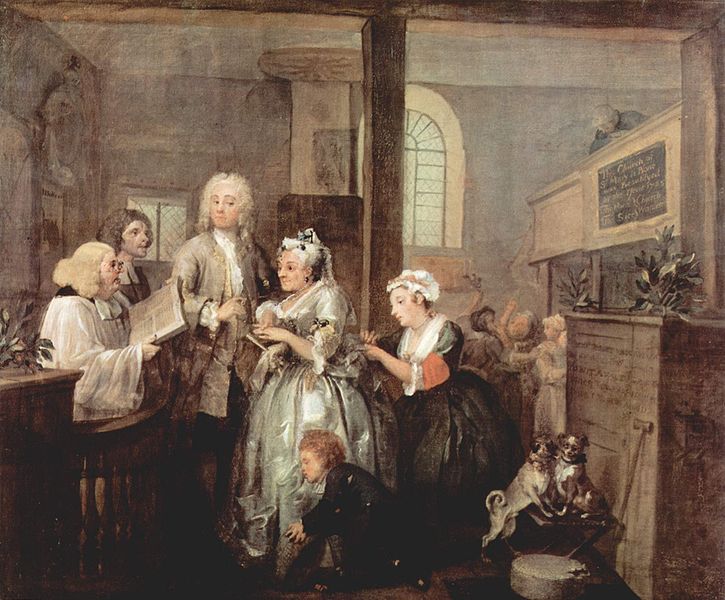
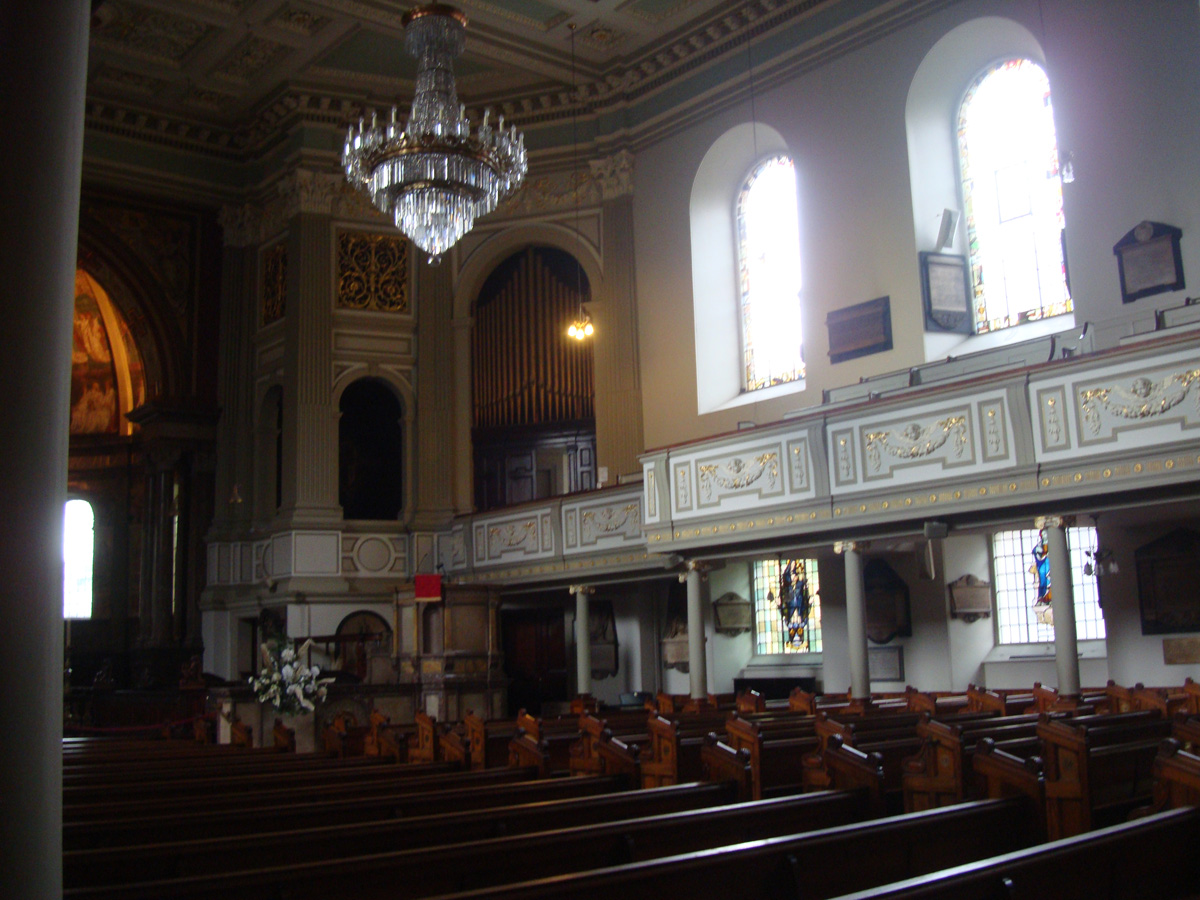
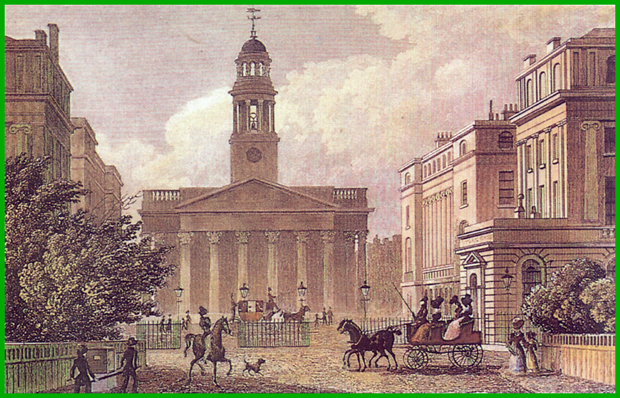
This is the interior of Marylebone Old Church. It was outside the city, towards Hyde Park. In the 18th century it became notorious for clandestine weddings. In this picture Hogarth shows Tom marrying an aging, overweight, one-eyed heiress undoubtedly for her money. He had to go to drastic lengths to pay his debtors and obtain more wealth. She may have lost her eye because of syphilis. Tom looks down on her as though she is a necessary evil, a bad smell under his nose that he must endure. She, undoubtedly, is looking forward to the wedding night. Two dogs show more love and affection than Tom shows for his bride. In the background a churchwarden refuses entry to Sarah Young and the child Tom has fathered with her.
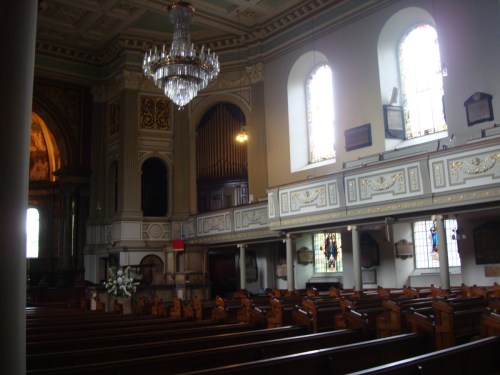
Interior, Marylebone church. Image@Tony Grant

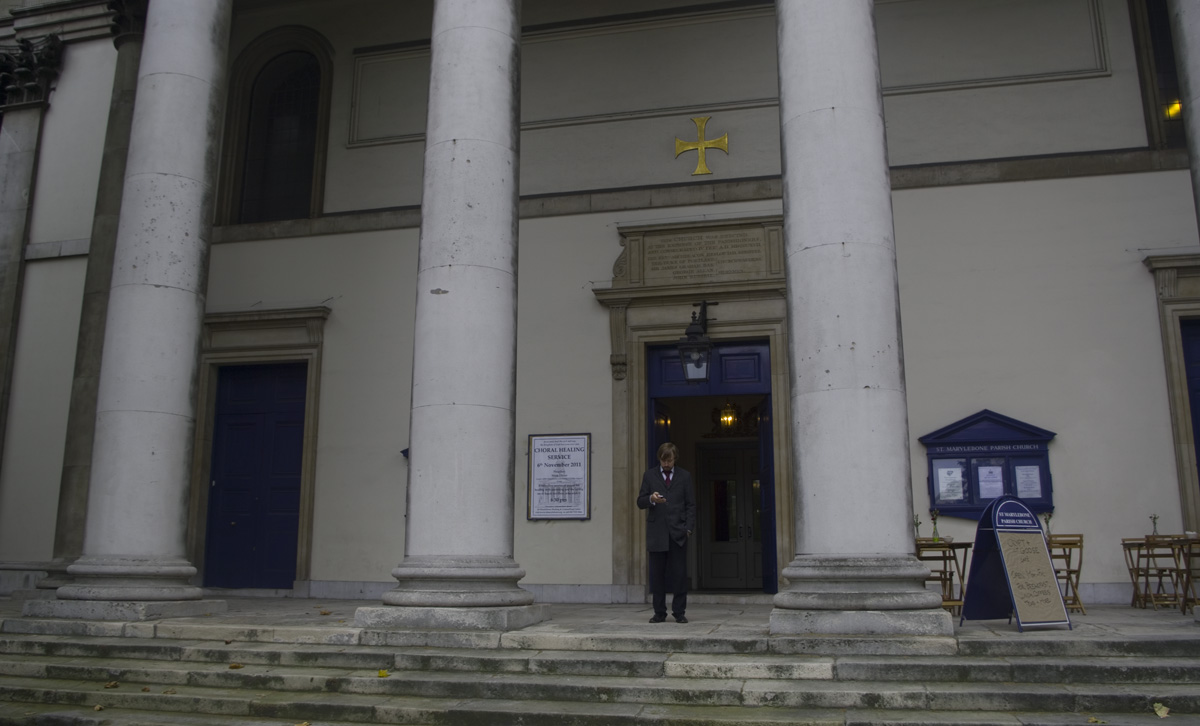
I cycled into London to try and find Marylebone Old Church. There are a number of elegant 18th-century and early Victorian churches in Marylebone. I thought it would be easy to find but I was mistaken. I spoke to two workmen decorating a church just off Old Marylebone Road. They hadn’t heard of it. One very kindly did an internet search on his i-phone for me and found it with a map attached. I was a mere half mile away, so off I peddled in the London traffic. Yes, I took my life in my hands for this project.
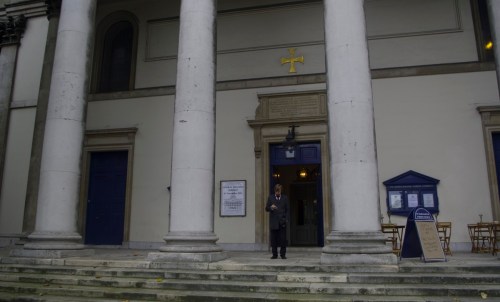
Marylebone church entrance. Image@Tony Grant

I found it!!! It was situated next to the park gates leading into Regent’s Park. It was beautifully ornate with balconies and a magnificent organ playing. The church organist was practicing. I discovered that Charles Dickens had lived in a house close by before he left his wife and family; he used to frequent St Marylebone Old Church. Then I found that this was not the church that Tom married his heiress in.

St. Marylebone parish church

The original had been demolished in the 1920’s. This church, near Regent’s Park, had taken over as the parish church of Marylebone. Anyway, it is a beautiful church and worth visiting and seeing.

Scene 6.
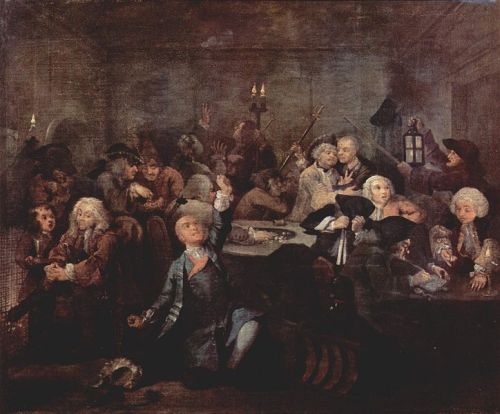
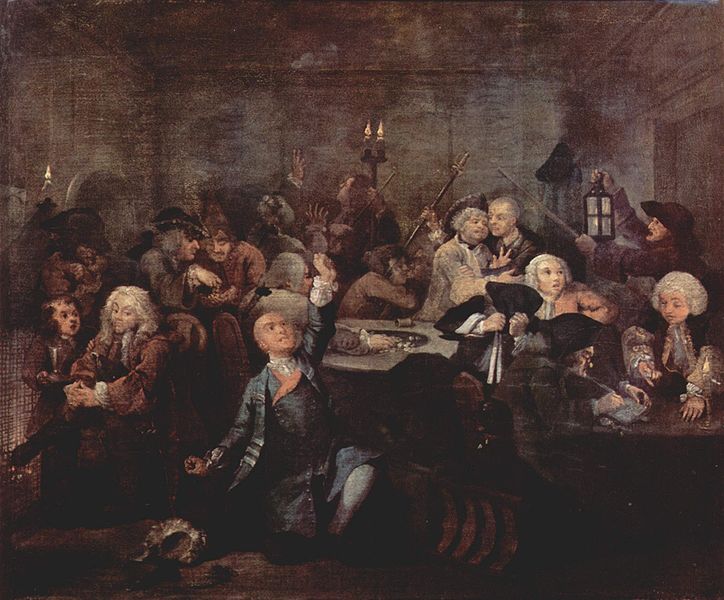
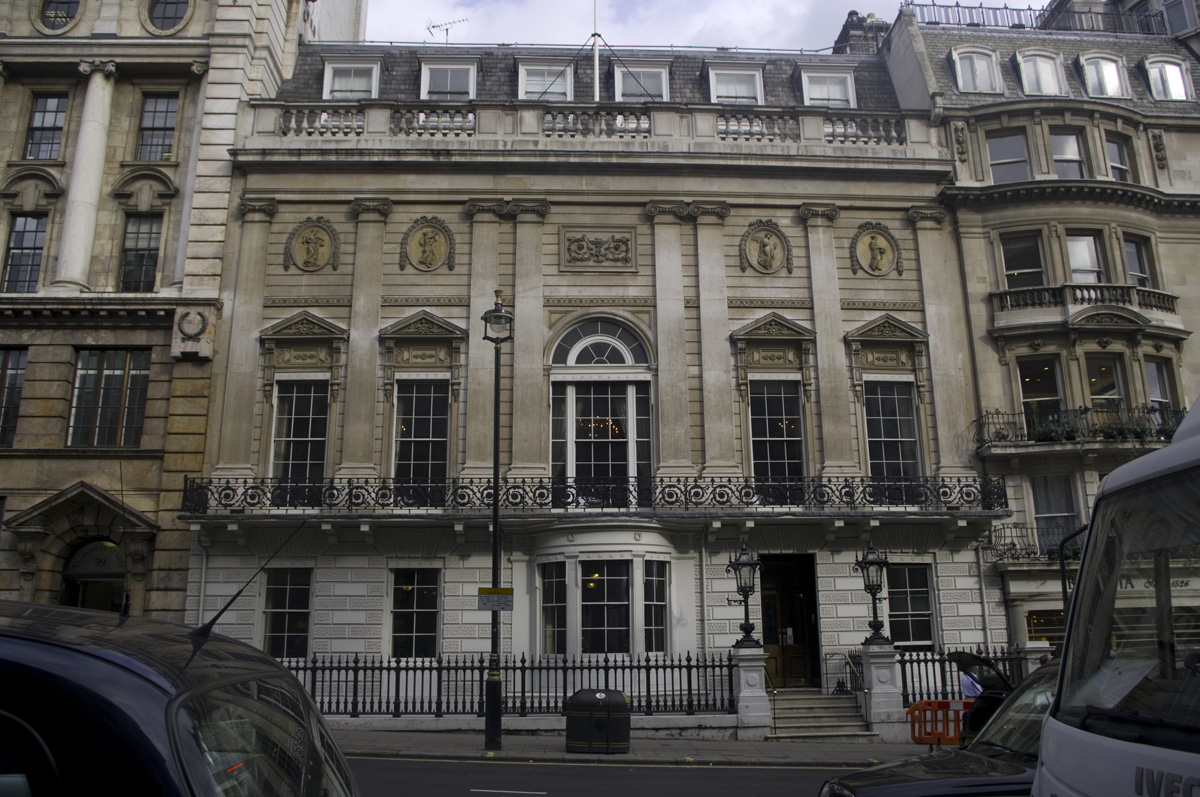
Here is Tom just having gambled away his second fortune provided by his new wife. He is railing against God and bad fortune. It is a shame he doesn’t realise it is his own fault. Smoke is spiralling up to show that the club is on fire but nobody notices they are so intent on gambling. This is symbolic of how they lead their lives. They don’t notice the destruction they are heaping on themselves. This is White’s Club. It was a place to drink the new sources of traded wealth, tea and chocolate. Many famous people at the time were members of White’s or one of the other well-known men’s clubs in the St James’s area.

White's club. Image@Tony Grant

St James is still full of gentleman’s clubs today. They are an 18th century invention but are still going strong. Many wealthy people, industrialists, famous actors,politicians, members of the Royal family and Lords and Dukes still frequent them. They are male preserves. They provide a room, servants, fine dining, a library very often, and a place to meet people of equal status in a social and friendly situation. Not anybody can join. You have to be invited by one of the members.You have to be right sort.

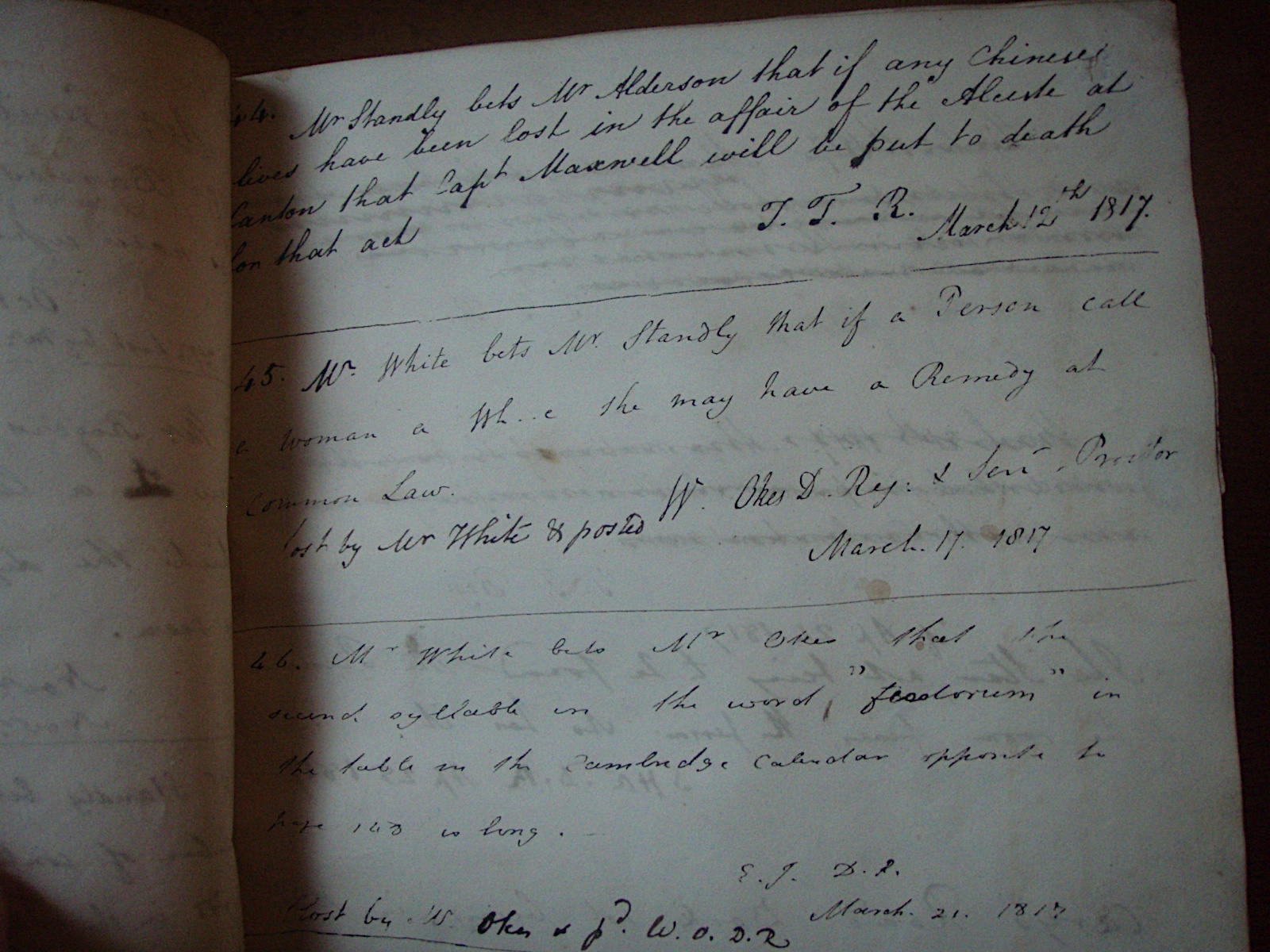
Betting book, 1817. Image @The Long Now Foundation

A couple of interesting points about White’s. The bow window at the front was the reserve of the most famous member of the club at one time. He was permitted to sit in the bay window for the world to see and for him to see the world. Beau Brummell, the great 18th century arbiter of fashion and master of ceremonies at Bath and Royal Tunbridge Wells was the first to sit there. You could almost bet on anything at White’s. The most famous bet being a wager on two rain drops falling down one of the pains of glass in the bow window. Which one would reach the bottom first? So it was here that Tom lost his second fortune.

Scene 7.
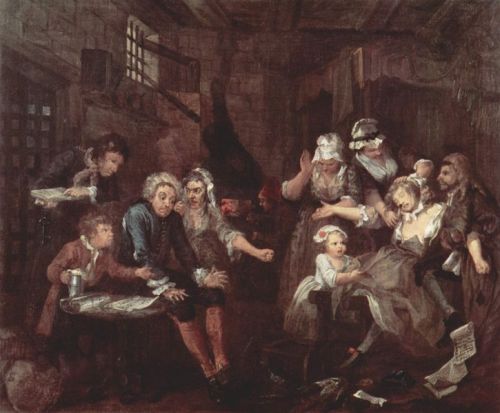
This scene leads to the finale. Tom is in The Fleet Prison in Farringdon Street because of his debts. It was named after The Fleet River which flowed into the Thames before it.
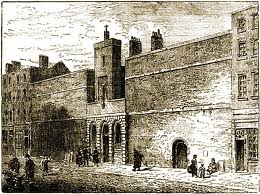
Fleet Prison

His now emaciated wife that was so plump at their wedding, shows the depths to which Tom has brought them. He has no money even for food. With his wig askew on top of his head Tom is attempting to write a play. He thinks he can make money this way. His delusion is now complete. Madness has come upon him.
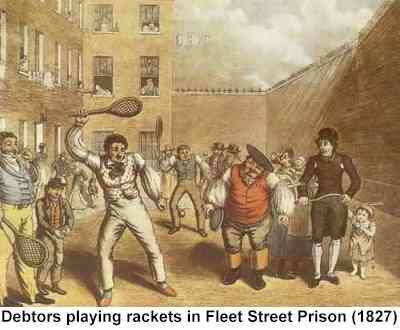
One interesting piece of information about The Fleet is that it had a raquets court for the inmates to keep themselves presumably fit and occupied.

Scene 8.
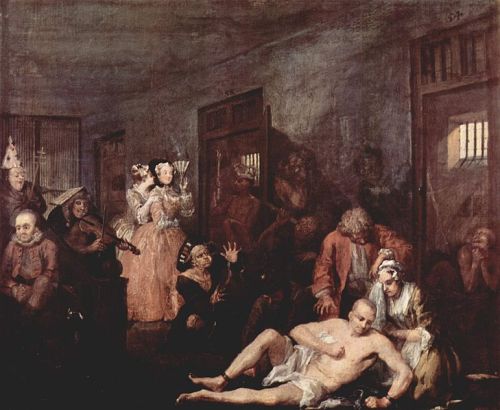
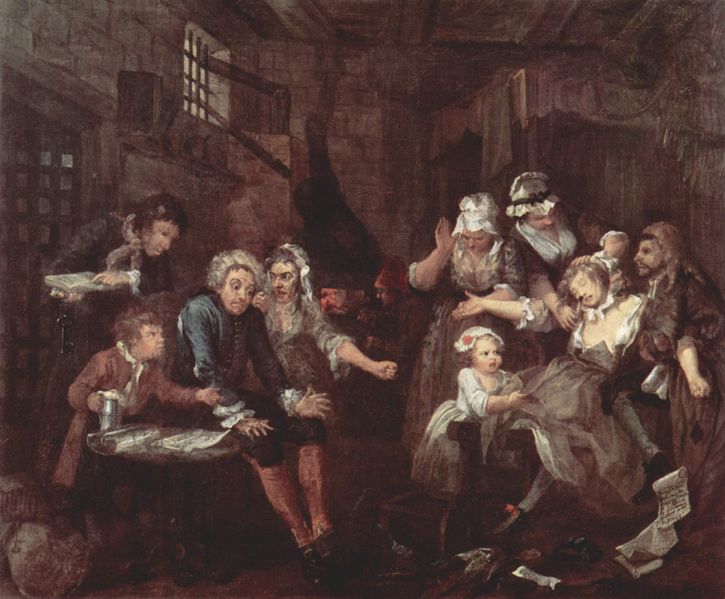
And finally here is Tom in Bedlam. The Bethlehem Hospital for the insane in Moorefields, just north of St Pauls and The City. He lies there almost naked stripped of everything including his clothes and his sanity. Wealthy ladies from the aristocracy look on.
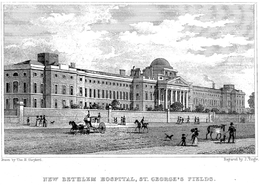
Bedlam

People were allowed to come and gawp at the strange antics of the inmates. Tom and the other people incarcerated are the entertainment. The people he aspired to be like and live like, are now mocking him. Sarah is there at the last, weeping.

Such a sad story.

More about this topic:

Read Full Post »
Dressing in a 1790s round gown is a short 23 second clip.

This video of getting into an 1805 gown has been around longer, but is worth revisiting. Koshkacat has a fabulous site. In this video one can see why a maid’s (or a relative’s) help is required.

At the bottom of this web page by Wm Booth Draper, you will see the sort of straight pins that were used to close gowns.

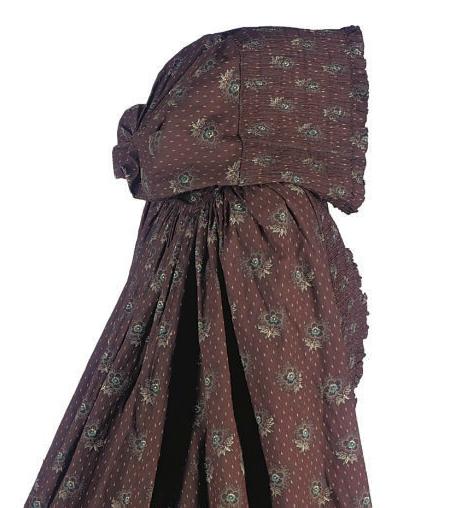
This chocolate brown chintz cloak from 1790 has a cream and turquoise floral print. The hood and edges are deeply pleated, and the entire garment is lined in cream flannel with a scarlet floral print and a tan print cotton. Images@Christie’s.

Read Full Post »

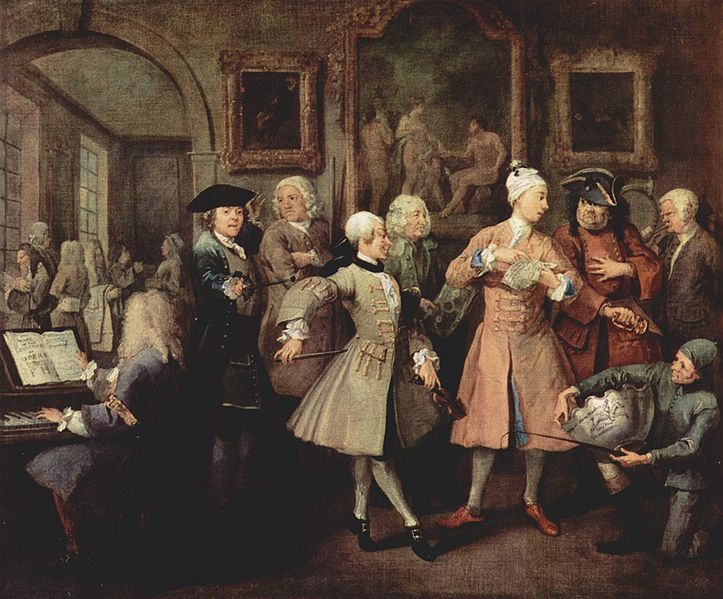
French paintings of ladies dressing and at their toilettes provide us with an insight of  how dressing rooms were once constructed and used. While we think of dressing as a private affair, William Hogarth demonstrates in his painting, Marriage à-la-mode: The Countess’s Morning Levee, how a woman of means with a large elaborate dressing room would entertain visitors while she was completing her toilette.

Image @Wikipedia

In reality, the toilette became a ritual in 18th century France for the very rich, one that had both intimate and public elements. A maid would groom and sponge bathe her lady in private, but then her mistress would devote hours to having her hair dressed, eating her breakfast from a tray, writing letters, entertaining friends, and picking the clothes she would wear for the day. The wealthier the woman, the more elaborate her morning ritual. As Hogarth showed, the custom of entertaining guests in one’s dressing room was also popular in England. In the image below, a shameless young lady is entertaining her spiritual adviser in her boudoir. His expression is priceless.

The Four Times of Day: Morning, Nicholas Lancret, 1739. Image@National Gallery, London

Wikipedia provides a history of the word “toilet”. The word did not have the same meaning back then as it does today.:

It originally referred to the toile, French for “cloth”, draped over a lady or gentleman’s shoulders while their hair was being dressed, and then (in both French and English) by extension to the various elements, and also the whole complex of operations of hairdressing and body care that centered at a dressing table, also covered by a cloth, on which stood a mirror and various brushes and containers for powder and make-up: this ensemble was also a toilette, as also was the period spent at the table, during which close friends or tradesmen were often received. The English poet Alexander Pope in The Rape of the Lock (1717) described the intricacies of a lady’s preparation:

“And now, unveil’d, the toilet stands display’d
Each silver vase in mystic order laid.”

These various senses are first recorded by the OED (Oxford English Dictionary) in rapid sequence in the later 17th century: the set of “articles required or used in dressing” 1662, the “action or process of dressing” 1681, the cloth on the table 1682, the cloth round the shoulders 1684, the table itself 1695, and the “reception of visitors by a lady during the concluding stages of her toilet” 1703 (also known as a “toilet-call”), but in the sense of a special room the earliest use is 1819, and this does not seem to include a lavatory.

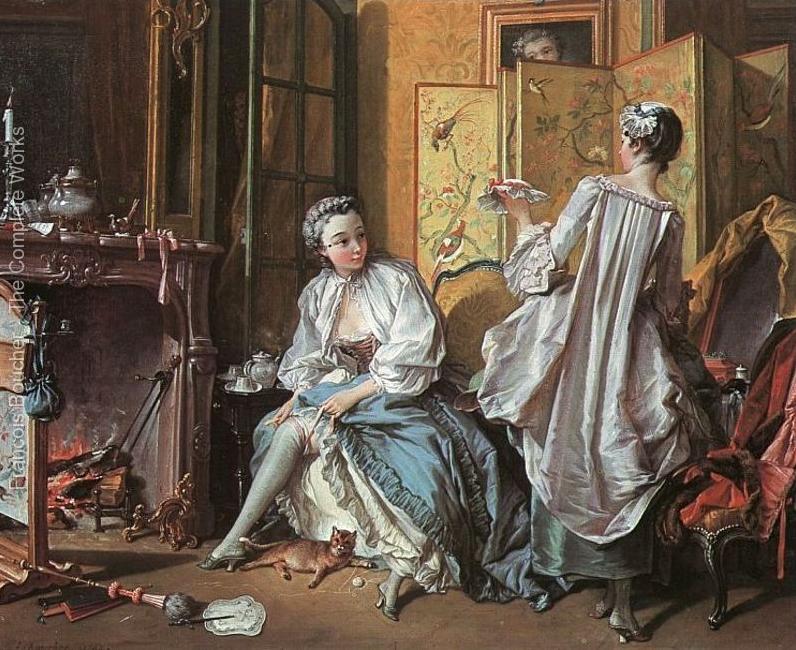
La Toilette, Boucher, 1742. Image@francoisboucher.org

Woman’s Fashions of the 18th Century fully describes the above painting by Boucher, in which the seated woman, probably a courtesan, is tying a garter over her stocking while wearing a short jacket to protect her outfit from particles of applied makeup and the powder on her wig. No visitors invade this intimate scene, which clearly shows a tray with refreshments and a decorative dressing screen behind the chair.

James Gillray portrays the progress of the toilet. Note the wash basin and water urn on the floor.

Women did use their dressing rooms at more intimate and private moments, when one presumed they would be alone. The washing of one’s face, feet and hands was a daily ritual, while bathing one’s entire body was not.  Such ablutions were done privately.  People would wash in basins. A portable hip bath would be placed in the dressing room if they decided to bathe completely.

Boilly, La Toilette Intime ou la Rose Effeuille. Image @Wikimedia Commons

While outhouses were common, the wealthy tended to use elaborate potty chairs (see image below). The French used bidets inside their dressing rooms, as shown in Boilly’s painting above. Invented by the French, their earliest recorded use was in 1710. If one wonders how women in elaborate costumes managed to go to the bathroom, this image by Boucher provides a glimpse. The handling of the bowl and upright posture was possible, for women during that era wore no underdrawers.

18th century Sheraton potty chair

Dressing rooms remained popular for a long time. In Can You Forgive Her?, Lady Glencora invites Alice Vavasor to have tea in her dressing-room, saying “You must be famished, I know. Then you can come down, or if you want to avoid two dressings you can sit over the fire up-stairs till dinner-time.” Alice follows Lady Glencora into the dressing-room, “and there found herself surrounded by an infinitude of feminine luxuries. The prettiest of tables were there;–the easiest of chairs;–the most costly of cabinets;–the quaintest of old china ornaments. It was bright with the gayest colours,–made pleasant to the eye with the binding of many books, having nymphs painted on the ceiling and little Cupids on the doors.” Lady Glencora goes on to explain, “I call it my dressing-room because in that way I can keep people out of it, but I have my brushes and soap in a little closet there, and my clothes,–my clothes are everywhere I suppose, only there are none of them here.”

Dressing room with chamber pot chair, 1765. Image@Morris Jumel House, Manhattan.

Anthony Trollope made an interesting point. During the 1860’s, when his novel was written, wealthy women changed their wardrobes more often for different functions during the day than Regency women. She invites Alice to linger in her dressing room, presumably to rest, read, and drink tea, rather than change into yet another set of clothes to join the company downstairs. Lady Glencora also indicates that the dressing room could also be a refuge away from visitors and prying eyes.

Jane Austen's bedroom. The closet with wash basin and potty sits to the left of the fireplace.

A wealthy couple might have two bedrooms (his and hers) with an adjoining sitting room. Each person would have their own dressing room. Simpler households did not have the luxury of such space. In Chawton Cottage, Jane Austen and her sister, Cassandra, shared one bedroom. Their potty and wash basin where stored in a closet.

Today’s walk in closets with adjoining bathroom most closely approximate the dressing room of yore, although people today do not tend to entertain their visitors in their closets.

Other posts on the topic:

Read Full Post »
« Newer Posts - Older Posts »