Feeds:
Posts
Comments

Archive for the ‘18th Century England’ Category

The script in Thomas Rowlandson’s 1810 cartoon states:

“Ah! My old Friend I wish you had called
at some more convenient time but this is washing
day — I have nothing to give you but cold Fish, cold Tripe
& cold potatoes — you smell soap suds a mile!
Ah Jack, Jack you don’t know these Comforts!
you are a Bachelor!”

In Rowlandson’s image, two well fed men are seen smiling. The host is apologetic, for his guest will not get anything but cold collations, probably leftovers from the previous day. His wife and maid are seen toiling over a bucket, their hands probably raw and red from the effects of harsh lye soap. Neither of them will have the time to look to his comforts or make a hot meal, which is why he is apologizing to his unexpected guest. Since laundering was not considered man’s work, he had to “suffer” the lack of his wife’s and servant’s attentions until the wash was done.

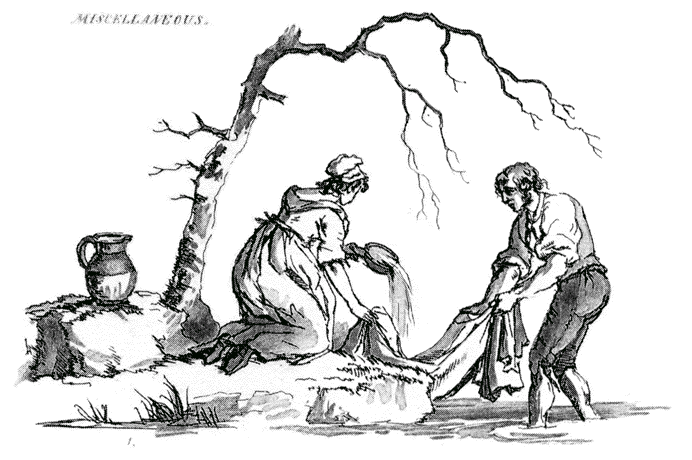
Doing the wash in a stream, 1806

First Boyle all the Cloaths with soap, and then wash them..” – John Harrower, indentured servant, writing to his wife (June 14, 1774)

Doing the wash in the Regency era was no small task, and housewives had to set aside two days to perform this dreaded duty, for it meant hauling water, boiling the cottons and linens, washing them with pungent lye soap, which burnt the skin, rinsing the clothes in clean water, which meant hauling more water from the well or a nearby stream, twisting the cloths to remove as much water as possible, hanging the clothes to dry, and then praying that rain would stay away long enough for the sun to perform its duty as a dryer. If one had to do laundry in a town or city, one had to pray that coal soot would not drift upon the clean clothes in a cramped back yard before they dried.

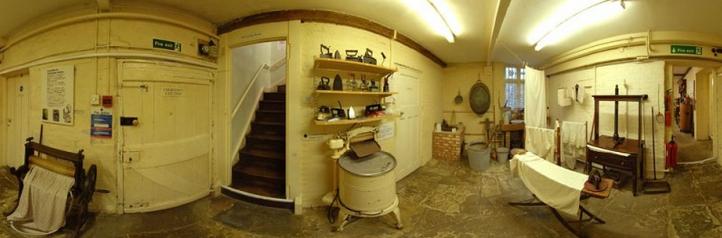
The Victorian scullery in a fine household included a copper for boiling water, a wringer, press, and ironing board.

Doing laundry was so enormous an undertaking, that unless the household were of a great size and boasted many servants, the mistress of the house and her daughters would frequently pitch in with the servants. There were chemises to be laundered, bed and table linens, towels, shirts, muslin dresses, handkerchiefs, socks, and the like. First the clothes would have to be treated for stains, the muslins and silks most delicately. After the wash had dried, ironing would commence, another laborious task.

Drying damp clothes over chair backs in front of a fireplace. Elizabeth Bennet and Mrs. Gardiner at the Lambton Inn, Pride and Prejudice, 1980

Chemises and shirts, which were worn next to the skin, were purposefully made with sturdier cloth so that these inner garments could withstand rougher treatment and more frequent washing. People tended to own more under garments for this reason. Outer clothes were subject to less frequent laundering because they were made of finer stuff, though one must wonder at the cleanliness of trailing hems, the edges of collars and sleeves, and armpits in the days before daily baths became popular, when air conditioning was just a distant dream, and when sweat must have stained clothes in a most visible manner. Is it no wonder that a majority of the Regency fashions that have survived to this day belonged to the rich, who probably wore their fashionable outfits once or twice before purchasing others?

 For more on the topic:

Read Full Post »

I am at a conference for the rest of the week. Workshops begin at 8:30 AM. Working backwards, this means I must be up by 5 AM to get washed and dressed, eat breakfast, drive to the training site, set up the workshop room, and be ready to greet participants (without a bleary eye) by 8:15 AM.

Upon reading my statements, early morning risers will think, “What’s so strange about that?” But for those of us who were meant to keep Regency hours, this schedule is akin to torture. I would much have preferred Jane Austen’s hours.

How the English during the Regency era spent their mornings depended on their status. The schedule of the modern day trainer or worker is, in fact, one that a servant in the 19th century would have kept, rising at dawn to haul and boil water, stoke the fires, and get the house in shape before the gentry arose. Unlike  19th century  servants, modern day folks generally eat breakfast before the workday begins. Servants, who had been toiling for at least 3-4 hours making the house ready for the day and tending to the family’s needs, would not break their fast until after the family’s breakfast dishes had been cleared and rinsed.

Ladies in their morning gowns at breakfast. Heideloff, 1794. Image @Fashion Gallery

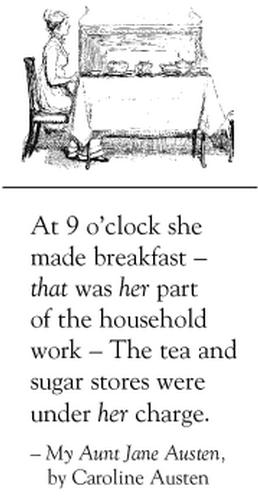
Mrs. Bennet or Mr. Knightley, both country gentlemen, would rise earlier than their city counterparts, who kept later more fashionable hours. Upon rising at 7 AM, Jane Austen, for example, would not immediately sit down to breakfast. She would write letters or practice on the piano, walk in the garden to pick flowers, or even go into the village to run a short errand before sitting down with her family at 9 AM to partake of a simple breakfast consisting of rolls, breads, butter, preserves, and tea or a pot of hot chocolate. If she were on vacation or at the seaside, she might take a leisurely stroll to the beach or point of interest before partaking of the morning meal at an inn.

Mr. Darcy and Miss Bingley interrupted at breakfast, Pride and Prejudice 2005

Lady Bertram, whose day revolved around pleasing herself, would in all likelihood arise from her bed much later than Jane and remain in her dressing room with her maid until she was suitably dressed. Before breakfast, she would also consult with her housekeeper about the household plans for the day, giving her instructions to relay to the cook about the day’s meals. She might write letters in her boudoir and emerge in her morning gown and cap to eat breakfast with her family, or perhaps have it sent to her rooms on a tray.

Sir Thomas Bertram or Mr. Knightley would also delay breakfast. They might consult with their bailiffs, or check out a new horse at the stable before consuming their morning meal. General Tilney stuck to a strict schedule and had the family eat breakfast at nine. The Middletons, whose house was always filled with guests, ate breakfast at Barton Park around 10 AM. Some families sat down together, while others strolled in during a certain set time, say between 10 and 11 AM let’s say, to help themselves from dishes placed on a sideboard. One imagines that the Tilneys observed the former practice, whereas Mr. Bingley and the Middletons allowed people to wander into the breakfast room at their own pleasure. Edward Austen Knight, Jane’s rich brother, had breakfast served at 10 AM, and expected the entire family to be at the table.

By 11:30 AM, breakfast service was generally over. Town times were much different, and meals were served at a later, more fashionable hour. Often the very fashionable would stick to those hours even when in the country. Lizzie Bennet walked 3 miles to Netherfield Park after breakfast to be with her sick sister, Jane, only to encounter Mr. Bingley’s town guests just sitting down to breakfast over an hour later.

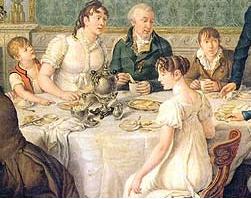
Regency family eating a meal together

The Regency definition of morning differed vastly from ours. Visiting hours were kept at set times. A family might receive visitors on Tuesdays and Thursdays, for example, or on Wednesday, between 11 AM to 3 PM. These hours were considered morning hours. When Anne Elliot arrived at Uppercross Cottage at 1:00 PM, she considered the time to be early in the morning.

Regency ladies wore morning gowns when they were at home. If a lady had no plans to go visiting or receive visitors, and simply stayed at home, she would wear her morning gown well past the hour of three, not bothering to change until dinner, when she was expected to dress more formally. Morning gowns could be made of simple dimity gowns covered by a pinafore if the lady, like Elinor Dashwood or Cassandra Austen at Chawton Cottage, was working in the kitchen or garden, or the gown could be made of finer stuff, like a delicate muslin. Ladies in morning gowns could be seen by family and guests, but they would never dare set foot in public while wearing one.

I must admit to liking Regency hours. On the weekends or on vacations, I rise late and will lounge for hours in my study/dressing room, reading or writing for my blog while sipping coffee. I’ll throw on some clothes and walk my dog Cody, and afterwards will make breakfast. I’ll then hang around the house in my ratty lounge wear, doing a little of this and a little of that, before donning more respectable garments to receive visitors, go out and shop, or visit with friends and family. If I am home all day, I’ll stay in my frayed jeans and tee shirt.

Would that my daily schedule resembled my weekend schedule! But, alas, I must work to earn my dog’s kibbles. The clock tells me I must get dressed now and be out of the door in half an hour. The powers that be decreed that our work day starts anywhere between 7 and 9 AM (even earlier for many). Obviously, considering those hours, our bosses view us more as servants than as revered guests.

I, for one, was meant to be a lady of leisure. Perhaps I shall be reincarnated as one?

More on the topic:

Sources:
Wilson, Kim. Tea With Jane Austen. Frances Lincoln LTD, ISBN: 9780711231894
Le Faye, Deirdre. Jane Austen: The World of her novels, Frances Lincoldn LTD, ISBN: 9780711222786

Read Full Post »

I sat on an outdoor balcony during lunch yesterday, editing some work and eating a salad, and was struck by the sounds of the city – the traffic whizzing by, the rattling chain of an old bicycle, the siren of a distant firetruck, the buzz of a lawn mower, the chirps and tweets of birds, and … almost no human voices. It was late and I was practically alone, and the heat was keeping pedestrians indoors.

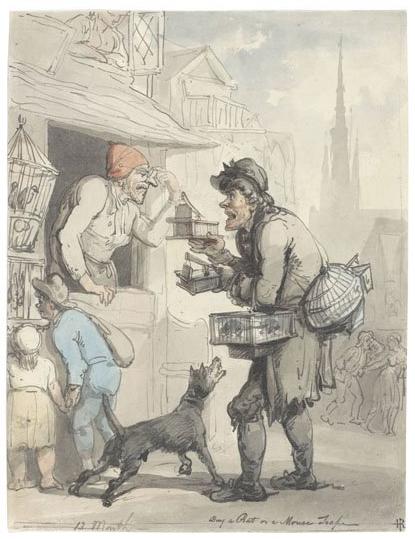
Rowlandson's "Buy a trap, a rat trap, buy my trap"

London in the 18th 19th centuries was famous for its noises. The rattling of carriage wheels, the sounds of animal hooves as they were driven to market, and the cries of the street vendors competing with each other created a daily assault to auditory nerves. On hot days, people propped their windows open to capture the slightest breeze, thereby letting in the noise. In Richmond yesterday all I heard was the hum of air conditioners and fans, for windows were kept firmly shut allowing no city sounds in.

Jane Austen moved from the quiet rural life in Steventon to Bath, and I wonder how much the noise and dirt of city life affected her creativity. Some people cannot abide noise while they are writing. I wonder if this was the case with Jane?

Cries of London, "Buy my rat trap," Rowlandson

Captured in many illustrations by a number of artists over the centuries, the street Cries of London are still famous today, though the voices have died down. This illustration by Rowlandson illustrates the cry for rat traps. (My favorite rat trap is my terrier, Cody.) Color illustrations were expensive, much like color printing is today. Even fashion illustrations in ladies magazines came in two forms, color for those who could afford the cost and black and white for the frugally minded.

Today promises to be another scorcher. I will keep my windows shut again and the city noises out.

Click here to read my post about London Street Noises: The Enraged Musician by William Hogarth

Read Full Post »

It’s a truth universally acknowledged that after a bride and groom consummate the marriage the pitter patter of little feet will surely follow (and follow and follow and follow). Such was the case during Jane Austen’s day. Her mother bore eight children and luckily survived her ordeals. The wives of Jane’s brothers Edward and Frank did not, both dying in childbirth with their eleventh child. That these two women were able to survive so many pregnancies was a miracle in itself, given that the chance of a woman dying in childbirth at the time was 20%.
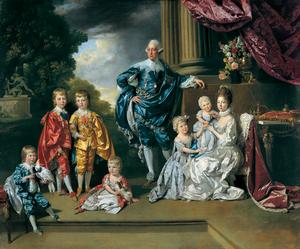
Queen Charlotte, King George IIIs consort, gave birth to 15 children in 21 years. The King and Queen are depicted with their 6 eldest.

Deborah Kaplan writes in Jane Austen Among Women:

“On the birth of his fourteenth child in 1817, Thomas Papillon received this advice within a letter of congratulations from his wife’s uncle, Sir Richard Hardinge: It is now recommended to you to deprive Yourself of the Power of Further Propagation. You have both done Well and Sufficiently.”
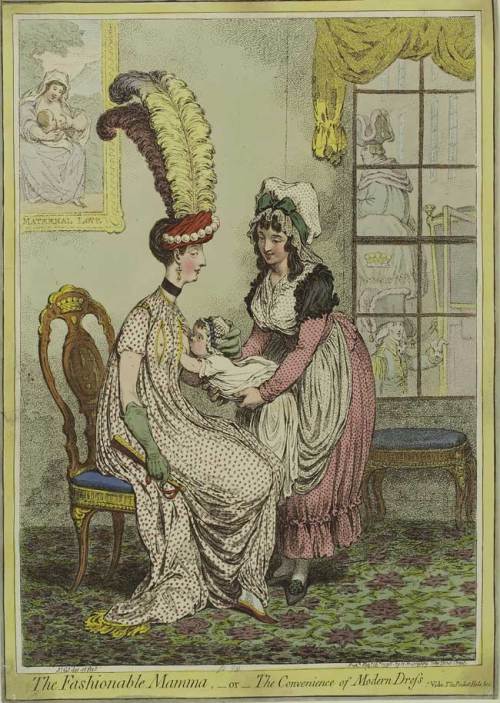
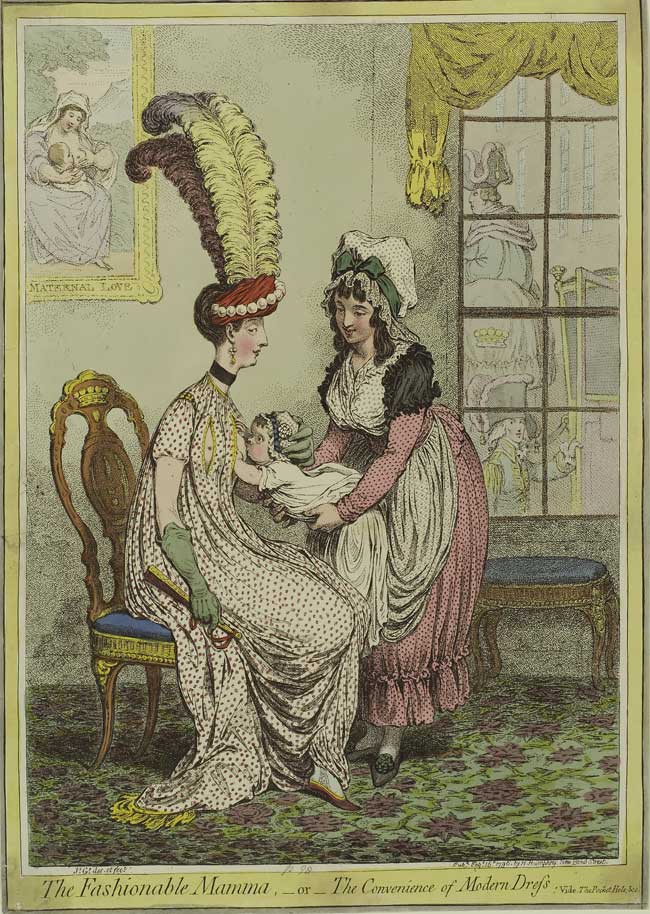
The fashionable mamma, or the convenience of modern dress, James Gillray

Abstinence was one method of birth control, as Sir Richard recommended. Breast feeding was another. If a mother breasfed her child for 3-4 years, the pregnancies would be naturally spaced inbetween periods of amenorrhea (the absence of menstruation). While breastfeeding regained some popularity during the Georgian and Regency eras, women did not feed their babies long enough to supress menstruation for very long and often handed them over to a wet nurse. Cassandra Austen farmed her children to a nurse in a nearby village after six to eight months, guaranteeing that her lactation would soon cease and that she would soon be fertile again. The common belief that having intercourse during lactation would in some way harm the mother and child did offer some added protection from pregnancy, but large families were still common.
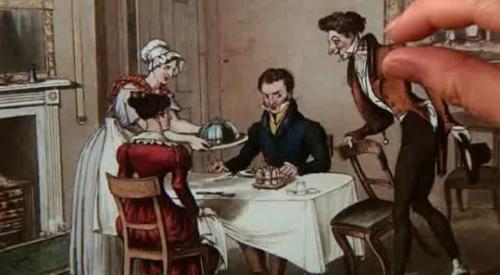
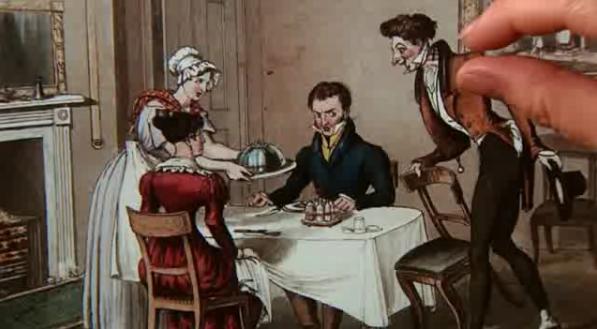
Amanda Vickery shows a bachelor cadging food from an irritated married friend. The poor young man probably lived in a modest rented room.

Social customs also served to keep pregnancies down. Amanda Vickery mentioned in At Home with the Georgians that a bachelor needed to acquire a house and reliable income before he could seriously contemplate marriage. Such acquisitions took years to amass and would hold up the young man’s inevitable role as parent. Once the young man could afford to marry, however, his long period of delayed consummation with a chaste woman ended and he would waste no time in siring a legitimate child.

A woman’s chaste reputation owed much to the urgent necessity of her not getting pregnant before marriage. Conceiving a child out of wedlock turned a woman into a pariah. In medieval times a chastity belt guaranteed that no bride would enter her marriage bed sullied. Unfortunately, these contraptions came in only one size and were therefore extremely uncomfortable for the larger sized woman.(Johannah Cornblatt, Newsweek). Update: Information about chastity belts in medieval times is being debunked these days as a myth. See links in the comment section below.
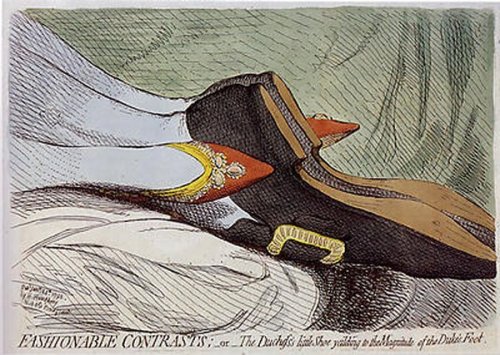
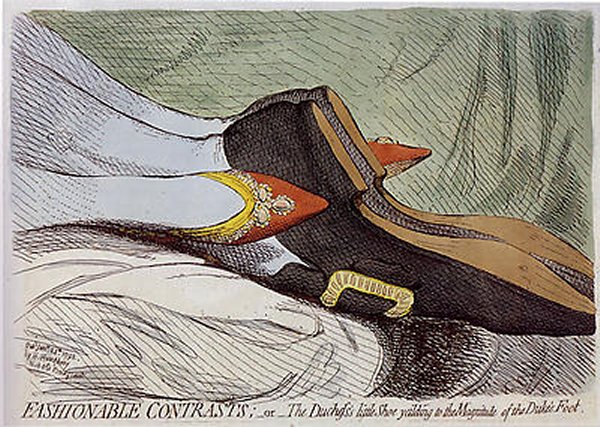
James Gillray's priceless caricature.

Married couples anxious to reduce their number of offspring (or who had reached their limit of 10, 11, or 15) tried coitus interruptus and the rhythm method. Since the female fertility cycle was not fully understood until the early twentieth century, the latter form of birth control resembled a game of Russian Roulette more than family planning. Several religious institutions, the Catholic Church in particular, frowned upon a married couple attempting any form of birth control at all, but there was evidence that birth control was effectively practiced. “Some couples managed to delay the first conception within marriage and few babies were born in the months of July and August, when the heaviest harvest labor took place.”-History of Birth Control.

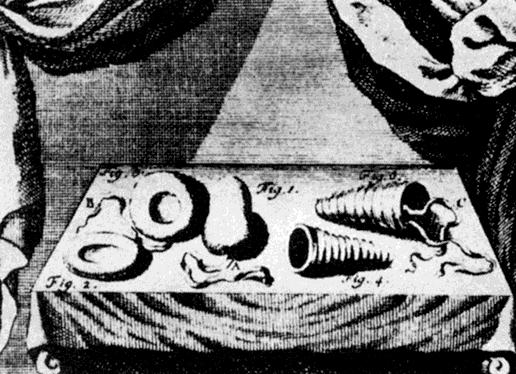
Condoms, which were made of linen soaked in a chemical solution or the lining of animal intestines, had been in use for centuries, but this method of birth control was linked to vice and was mostly practiced in houses of ill repute.
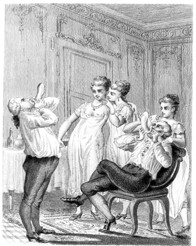
Casanova blowing up a condom with prostitutes looking on.

Giacomo Girolamo Casanova (1725-1798) was among the first to use condoms to prevent pregnancy. The famous womanizer called the condom an “English riding coat.” His memoirs also detail his attempt to use the empty rind of half a lemon as a primitive cervical cap. The engraving shows the Italian seducer blowing up a condom. The photo shows an early 19th-century contraceptive sheath made of animal gut and packaged in a paper envelope. – Newsweek
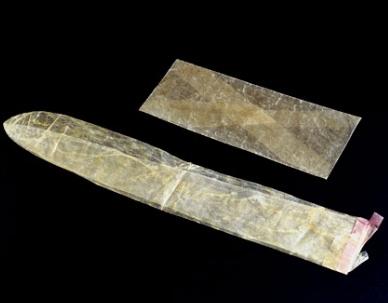
Condom made of animal gut with paper envelope. Image @Newsweek

One can imagine that such clumsy barriers to impregnation failed on too many occasions to count, although they did manage to prevent venereal disease.
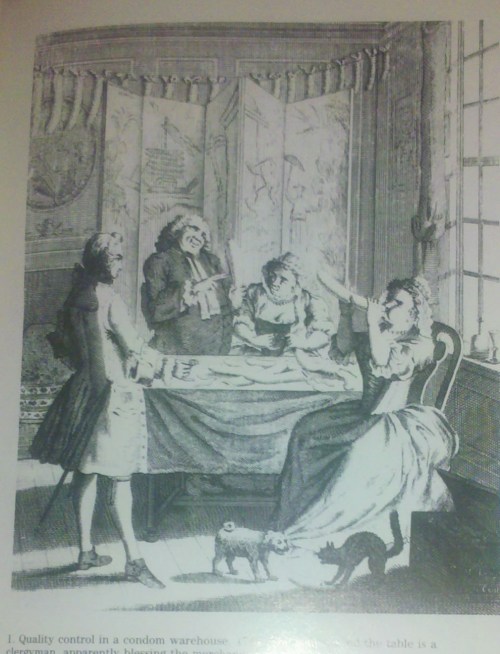
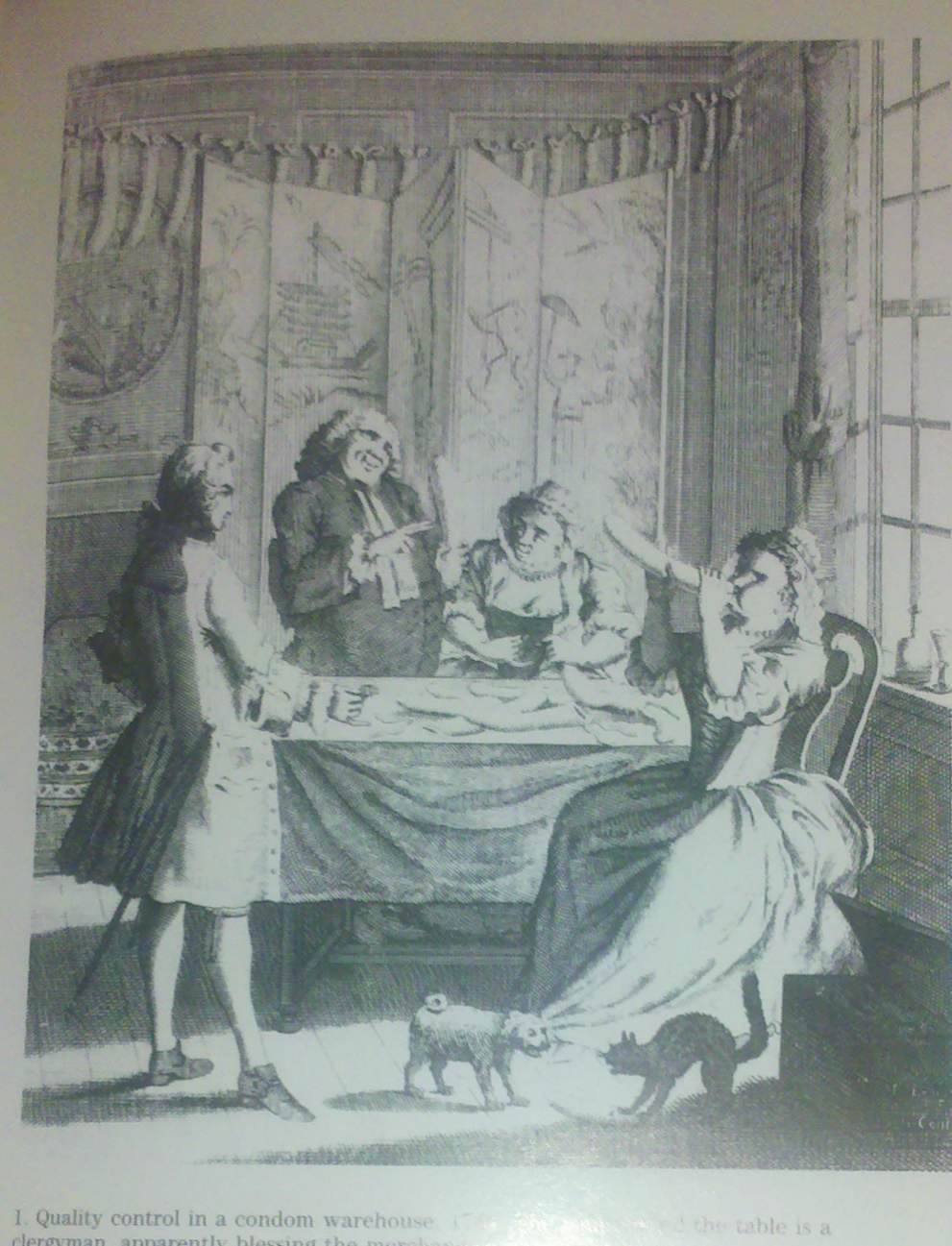
Georgian caricatures made much sport of condoms. This one is entitled: "Quality control in a condom warehouse."

There were other means of pregnancy prevention. Aristotle recommended anointing the womb with olive oil. His other spermicides included cedar oil, lead ointment, or frankincense oil.
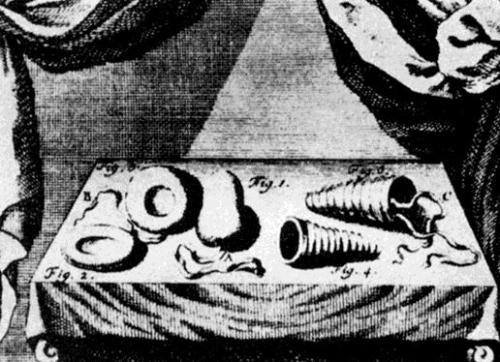
Pessaries, 1755. Image @The Global Library of Women's Medicine

“The pessary [mechanical tool or device used to block the cervix] was the most effective contraceptive device used in ancient times and numerous recipes for pessaries from ancient times are known. Ingredients for pessaries included: a base of crocodile dung (dung was frequently a base), a mixture of honey and natural sodium carbonate forming a kind of gum. All were of a consistency which would melt at body temperature and form an impenetrable covering of the cervix. The use of oil was also suggested by Aristotle and advocated as late as 1931 by birth control advocate Marie Stopes.” – History of Birth Control

Other societies had used methods of blocking sperm including plugs of cloth or grass in Africa, balls of bamboo tissue paper in Japan, wool by Islamic and Greek women, andlinen rags by Slavic women. Ancient Jews used a sea sponge wrapped in silk and attached to a string. – History of Birth Control.

Many young girls who had been seduced, engaged in pre-marital sex, or been raped would attempt not to get pregnant by any means. The unfortunate women who did were ostracised, much like Colonel Brandon’s young charge, Liza, who had been enticed by Willoughby in Sense and Sensibility to give up her virginity. These women were frantic to end their pregnancies rather than lose their standing in society or their livelihood, for no pregnant unmarried woman could work as a maid, shopgirl, or seamstress. They would try anything to end their pregnancies, including ingesting turpentine, castor oil, tansy tea, quinine water into which a rusty nail was soaked, horseradish, ginger, epsom salts, ammonia, mustard, gin with iron filings, rosemary, lavender, and opium. Severe exercise, heavy lifting, climbing trees, jumping, and shaking were also attempted, in most instances to no avail. – History of Birth Control
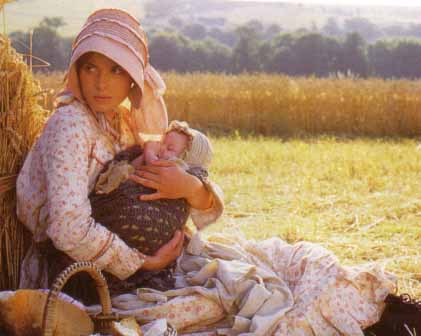
Tess of the D'Urberfield and her baby, Sorrow. Thomas Hardy wrote about the consequences of seduction. (Nastassia Kinski as Tess, 1980)

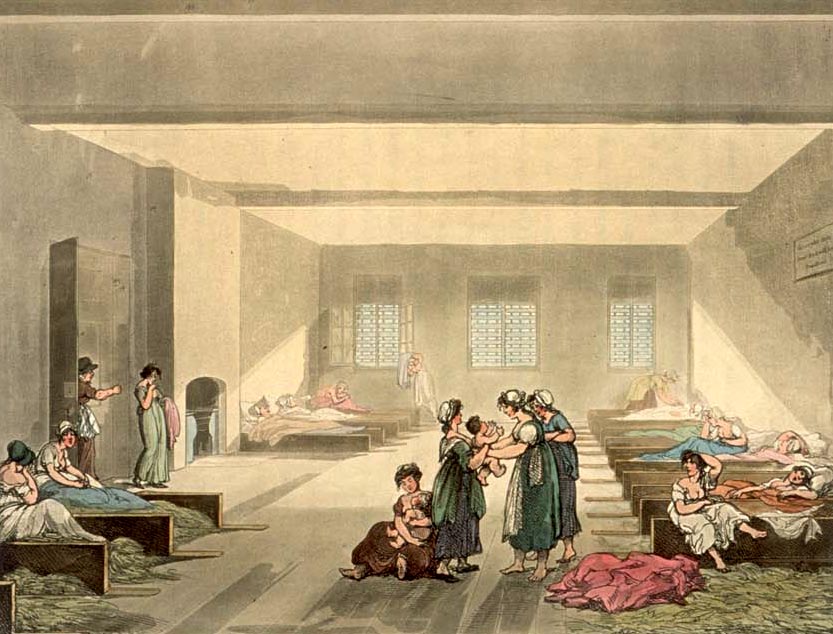
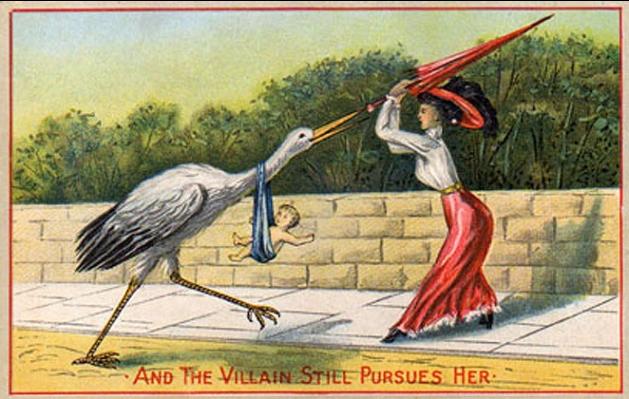
Infanticide has been practiced since the dawn of time, most famously with the Greeks, who left deformed babies to die outdoors. In Regency times, desperate women would leave their babies in the streets to die. Many left their infants at workhouses, a form of infanticide as the quote below attests, and a large number, too poor to support themselves and unable to work off their debts, wiled away their time in prison.

“When the poor stayed with their children in workhouses, the outcome was little better. Between 1728 and 1757, there were 468,081 christenings and 273,930 infant deaths in those younger than the age of 2 in London workhouses. Foundling hospitals and workhouses were institutionalized infanticide machines.” – Global Library of Women’s Medicine
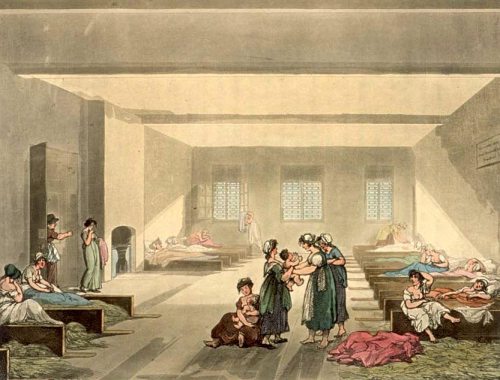
Women at Bridewell Prison, 1808. Rowlandson and Pugin for Ackermann's Repository of Arts

Once children were born and the family was large, it was not unusual to farm out a few children, some to work in their childhood, as Charles Dickens did, and other to live with relatives, as was the case with Fanny Price, who lived with her aunt’s family in Mansfield Park and Edward Austen Knight, who was adopted by a rich, childless couple.
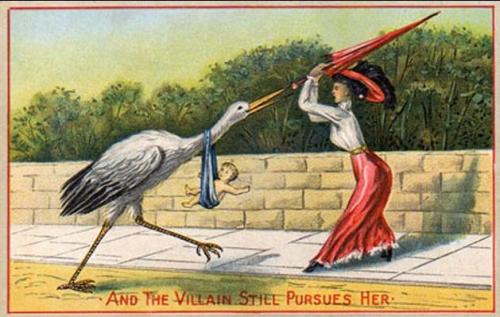
Early 20th century attitude towards an unwanted child. Image @Newsweek

It has been said that families had many children during the 18th and 19th centuries because of the high rate of infant mortality and the need for many helping hands on the farm. But as society became industrialized, large families became a hindrance. With many mouths to feed and limited resources (except in the case of the rich), it is no wonder that couples since time immemorial have searched for ways to limit the number of their offspring.  Update: As Nancy Mayer rightly pointed out in her comment, most women during the Georgian and Regency eras thought it their duty to bear their husbands children and oversee the family household. The matter of family planning might well have been influenced by women of a certain class who could not allow pregnancies to interfere with the rhythm of the work cycle, single women who were desperate to seek ways to end their pregnancies before their condition became obvious, and in houses of ill repute, where condoms would offer some protection against disease. Mistresses and prostitutes would find pregnancies to be more of a hindrance than help in their work. I have often wondered, for example, how Emma Hamilton managed to have so few children and yet enjoy the charms of so many men.
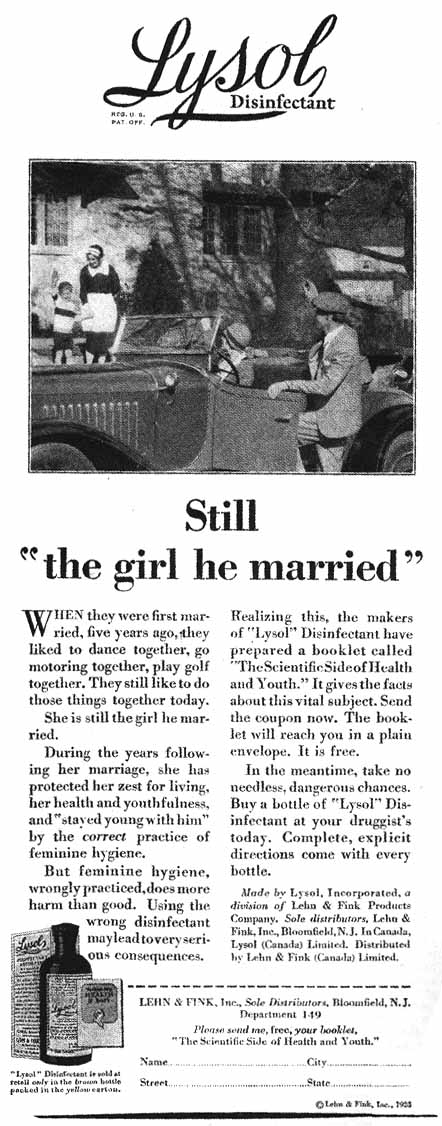
1920's Lysol Advertisement. Image @The Museum of Menstruation and Women's Health

More on the topic:

Read Full Post »

If I had only read Kim Wilson’s Tea with Jane Austen many years ago, I would have saved myself a lot of trouble. Yes, gentle readers, I spent hours researching the history of tea and how and when people in the Regency era served it only to find that most of the information had already been gathered in this book.

Tea With Jane Austen at the Morgan Library & Museum gift shop. Image @Jane Austen's World

Kim published her slim but informative book in 2004, two years before I began this blog. It is now in its second edition, and rightly so. The author has included almost all the facts and social customs about tea that a Regency romance author or Jane Austen fan or 18th- and 19th-century social historian could want.

Image inside the book. Copyright 2011 Frances Lincoln Ltd

I read this slim but fact-packed volume in two sittings the first time around, and have since read it twice more. Each time I have been DELIGHTED. Kim includes information about the Austens; a short history of tea; mealtimes and the hours they were taken by both simple folks and the gentry;

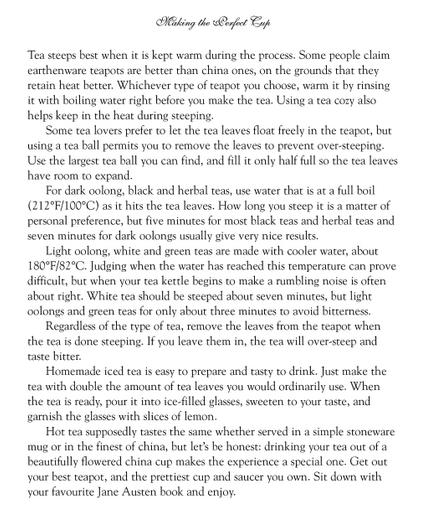
A sample page - Making the Perfect Cup. Click on image. Copyright 2011 Kim Wilson

tea served in the home and outside of it; tea served in the morning and at a grand ball; the best way to prepare tea (or how the English do it); the health benefits of tea; shopping for tea; recipes for tea treats (including one for Mr. Woodhouse’s gruel!); and the difference between high tea and low tea (and why so many of us use the terms wrong).

One of the many charming quotes sprinkled throughout the book. Copyright 2011 Frances Lincoln Ltd

If I have any fault to find with the book is that it’s too short. Thankfully, Kim Wilson also wrote In the Garden with Jane Austen, a book I shall review at a later time. I give Tea with Jane Austen five out of five china tea cups. Order the book here: Frances Lincoln, UK; and Amazon.com US

5 out of 5 tea cups

Binding: Hardback, 128 pages
ISBN: 9780711231894
Format: 215mm x 165mm
40 colour and 45 b/w illustrations

BIC Code: BGL, WBX
BISAC Code: BIO007000
Imprint: Frances Lincoln

More About Tea

Read Full Post »
« Newer Posts - Older Posts »