Feeds:
Posts
Comments

Archive for the ‘18th Century England’ Category

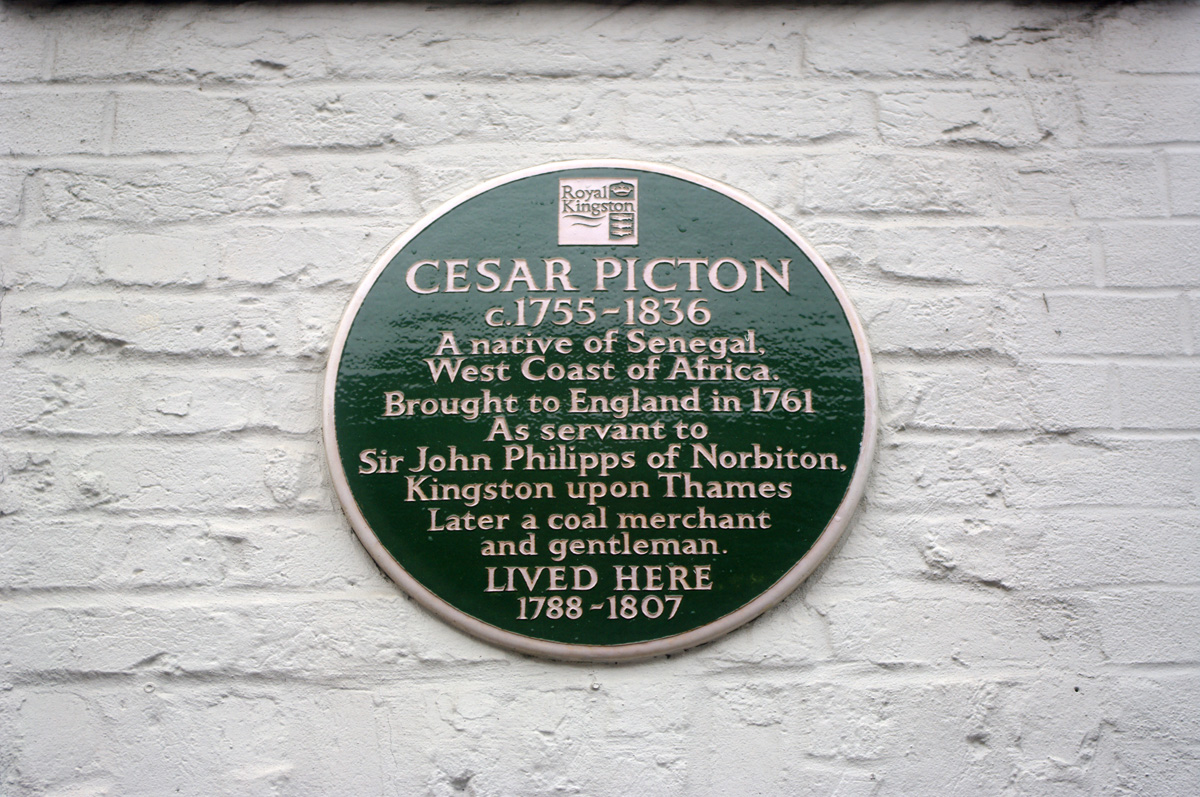
There is an old 18th century white washed house in The High Street of Kingston upon Thames that backs on to the river. On the road side there is a large circular green plaque positioned on the outside wall of this house that reads:

“ Cesar Picton
c1755-1836.
A native of Senegal
West Coast of Africa.
Brought to England in 1761
as servant to Sir John Philips of Norbiton
Kingston upon Thames.
Later a coal merchant and gentleman.
Lived here 1788 – 1807.”
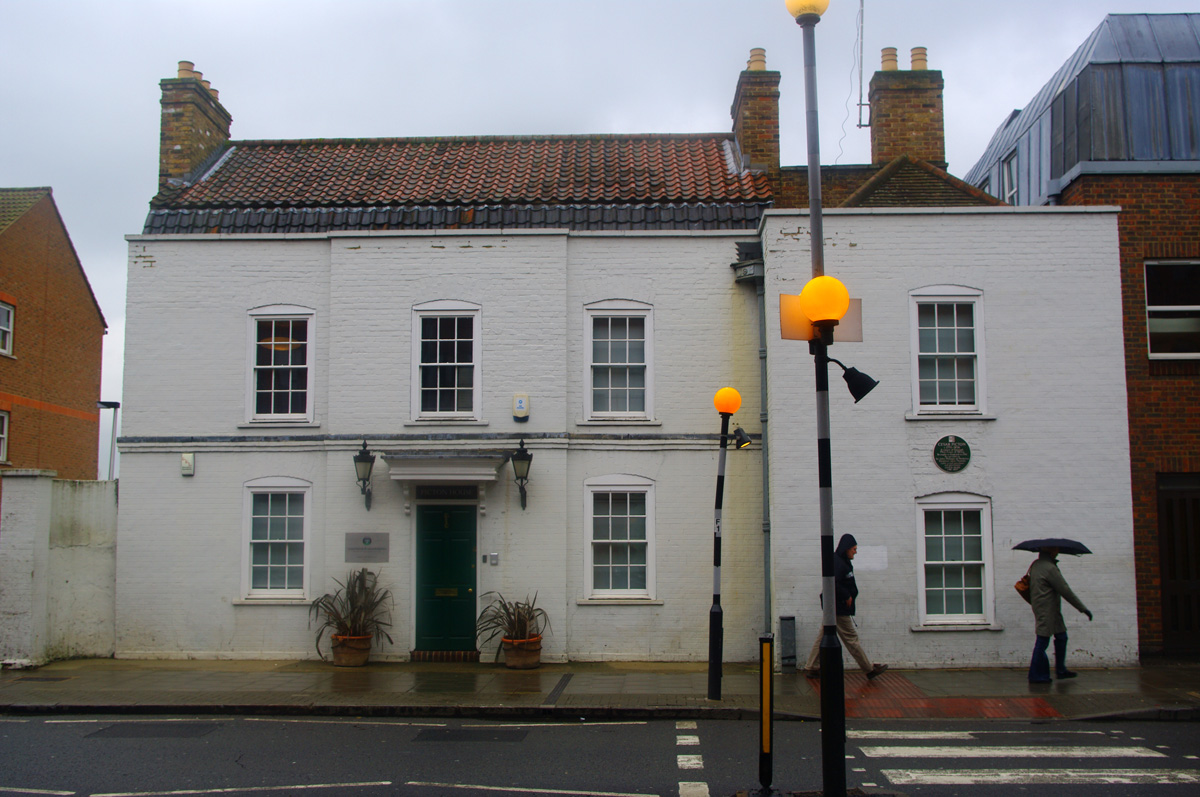
Cesar Picton's house, front. Image @Tony Grant

Cesar Picton was a slave in the ownership of Sir John Philips, and was made a freed man. It is interesting to note that 1807, the last year Cesar Picton lived in this house, before he moved to Thames Ditton, a few miles away,  the year the slave trade was abolished in Britain. It would be another twenty-six years before slavery itself would be abolished.

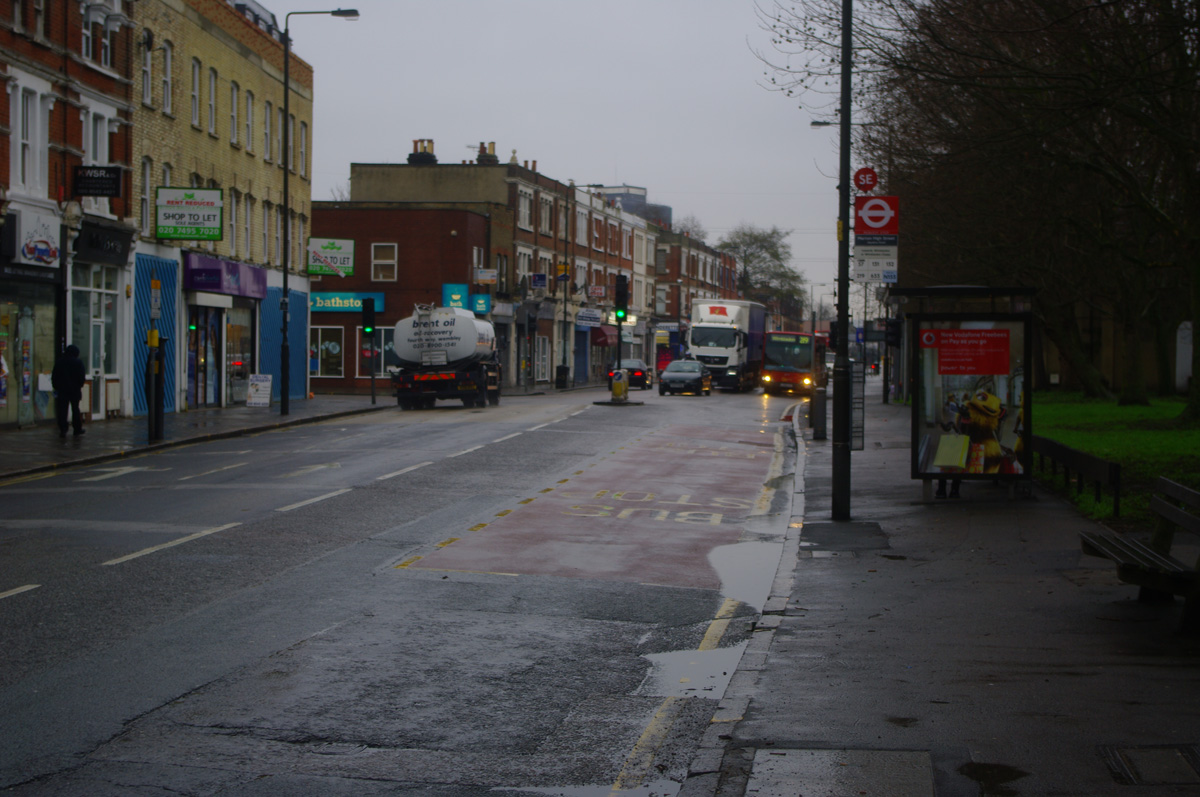
The road outside Cesar Picton's house. Image @Tony Grant
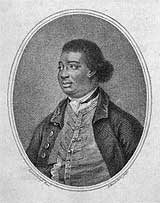
Cesar Picton

But Cesar Picton was a freed man long before this  event and already a prosperous merchant. His freedom had to do with Sir John Philips and what he and his family believed. Jane Austen would have passed through Kingston at the time Cesar Picton was a gentleman and merchant there. I wonder if she saw him in the streets? Jane’s family must have had close connections with slavery. Her brother Henry was a banker. Most of the wealth of Britain at the time came from slavery. Her brother Charles was a Royal Naval captain and was stationed on the North American station, often calling into Bermuda. His ship must have been used to protect the slaving ships that the fictional SirThomas Bertram, in Mansfield Park, relied on for his wealth in the plantations.
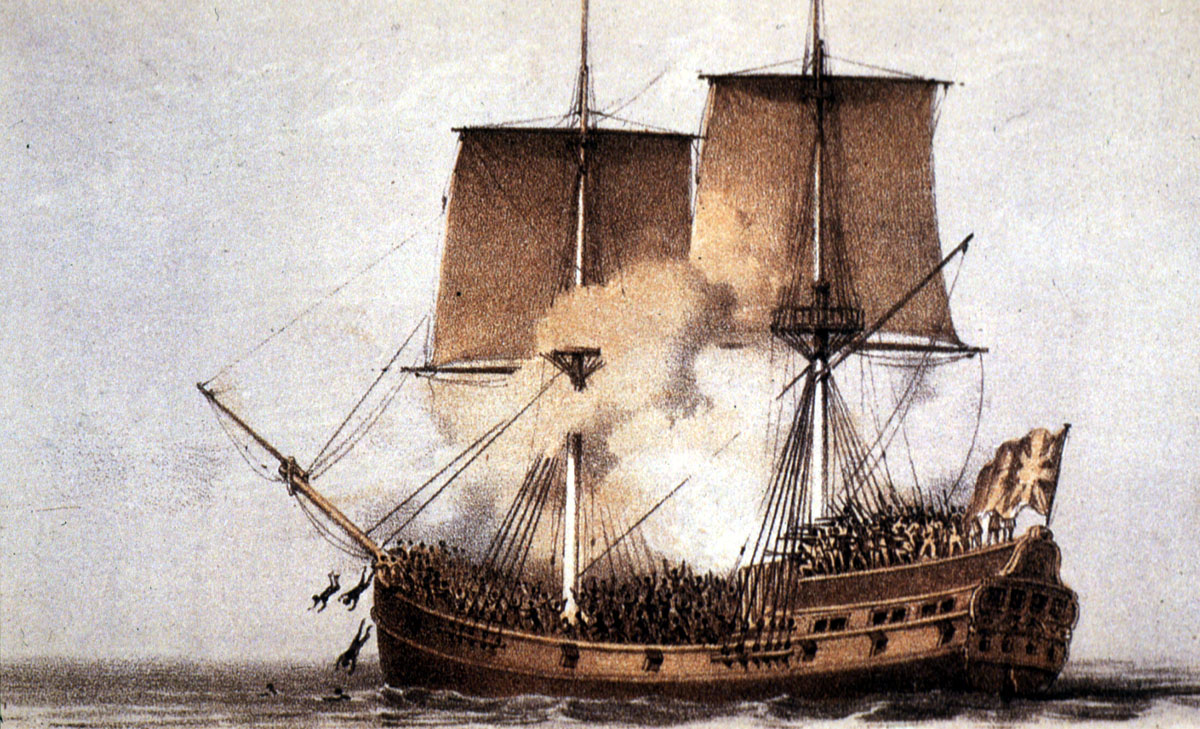
Slave ship, Bristol

Apart from this oblique reference in Mansfield Park, Jane never mentions slavery or her views about it. During her lifetime the slave trade was abolished but not slavery itself. But change was happening, and by the time Cassandra died slavery was seen as a repugnant thing and was abolished. Was it one of the reasons Jane’s letters were culled by Cassandra in later life? Did she try to hide Jane’s – perhaps – unpopular views in the tide of anti slavery? We will never know.

The year 1761, when Cesar Picton was brought to Britain by Captain Parr of the British Army especially for Sir John Phillips,  is an interesting one. Senegal had been British up to 1677, when the French took it over. France and Britain had been at war in the late18th and early 19th centuries. Goree, the island just off Senegal that was used for trading slaves, changed hands briefly during these wars back and forth between the British and French. It could well have been during one of these brief spells in charge by the British that Cesar Picton was bought as a promising servant for a wealthy man back in England.
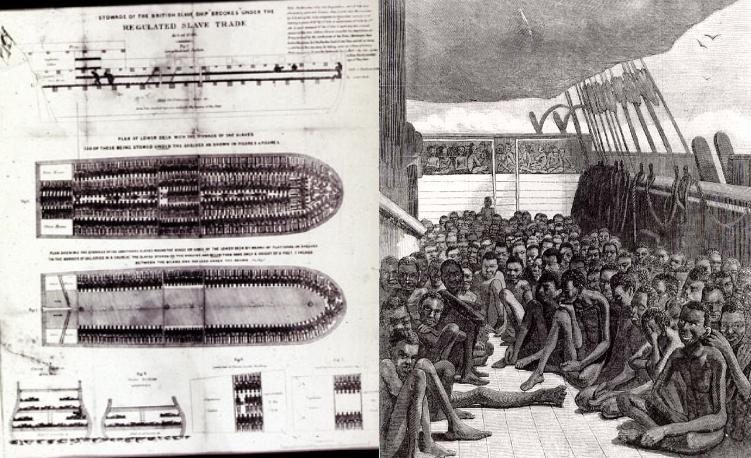
There must have always been an element in British religious and moral sensibilities that saw these African slaves as equal human beings and at a high government level. In 1788 Britain set up a settlement for freed slaves further along the coast from Senegal to accommodate slaves from the plantations of Virginia and Carolina. They had helped the British fight The War of Independence against the Americans, and a place for them to live had to be found after the British retreated from America. Nova Scotia was their first settlement, but the climate was too cold.
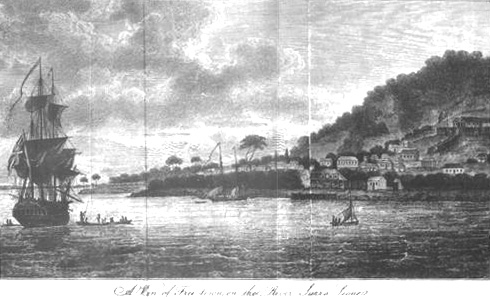
Freetown, Sierra Leone, 1803

Sierra Leone on the West African coast was set up for them, and Freetown, the capital, was established. But slavery was a vital element in the Empire for trade and financial wealth. It couldn’t be given up that easily, no matter how much it pricked certain people’s consciences, and the majority of people in England were kept ignorant of what went on in the slave plantations.
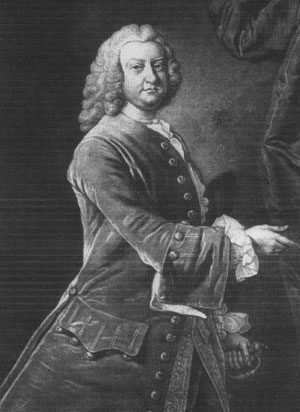
Sir John Philipps

Sir John Philipps (1666 – 1773), the gentleman who obtained Cesar Picton, was a member of an illustrious family whose main seat was Picton Castle, near Haverfordwest in Pembrokeshire, South Wales. In the 18th century, the Philips family was the most powerful family in the political, social, and economic arenas  in Pembrokeshire. Sir John Philips, who owned large areas of land in Wales, was a philanthropist who supported the building of schools. He built twentythree of them in Pembrokeshire alone. He also built schools in Camarthenshire.
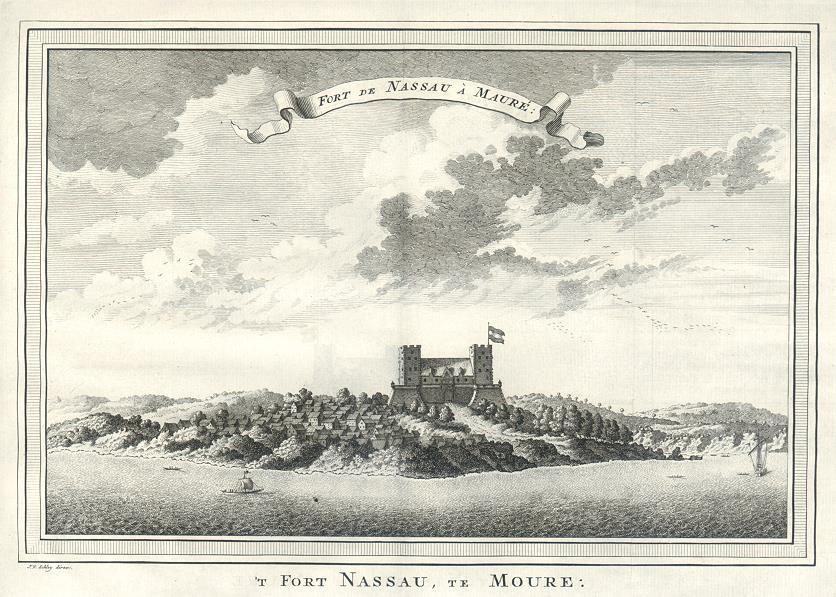
Fort Nassau, Senegal, 1760

It was to Picton Castle in Wales that Cesar Picton was first brought from Senegal. He then took the name of the castle as his surname.
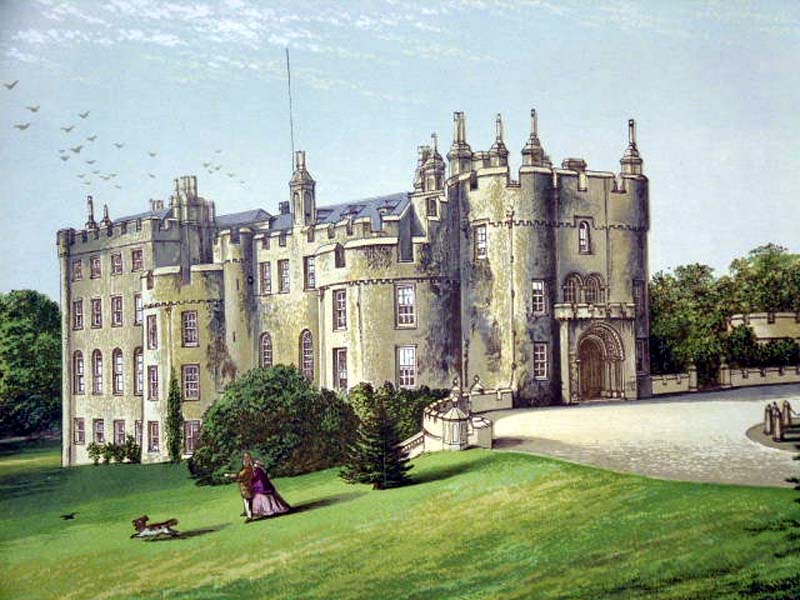
Picton Castle, Pembrokeshire, 1865

Sir John Philipps attended Westminster public school in 1679 when he was 13 years of age. He went on to Trinity College, Cambridge between 1662 to 1664, and was admitted to Lincolns Inn in 1683. He did not complete his degree at Cambridge, and he was not called to the bar either. Sir John appears to have wasted his time and seemed to have enjoyed a frivolous life style when he was young. However by 1695 he became the Member of Parliament for Pembrokeshire. He remained a Member of Parliament until 1702. He then later returned to parliament for Haverfordwest and remained there until 1772. On the 18th January, 1697, Sir John’s father died, and he became the 4th baronet. In the same year he married Mary, the daughter and heiress of Anthony Smith, a rich East India merchant. Sir John had influential friends and great wealth. His sister Elizabeth’s daughter married Horace Walpole in 1700.
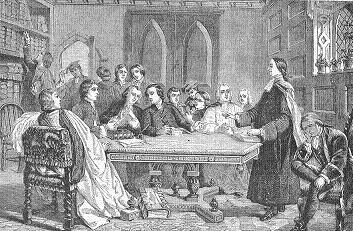
The Oxford Holy Club

From 1695 to 1737, Sir John was a leading figure in many religious and philanthropic movements. Most important of all, in relation to Cesar Picton, Sir John was a member of The Holy Club. The Holy Club had many religious reformers amongst its numbers, A.H. Francke, A.W. Boehme, J.F. Osterwald, John and Charles Wesley and George Whitefield. These were Evangelists, Methodists and Quakers. It was from amongst these religious colleagues that the anti slavery movement found it’s strength and became an unstoppable force. Sir John was part of a group therefore that constructed the legislation to abolish the save trade and eventually abolish slavery. In his treatment of Cesar Picton we can see these beliefs in early action. It might have been that Sir John Picton actively sought a slave from Senegal with the express purpose of freeing him once back in England and supporting him to become a wealthy esteemed member of society. Maybe Cesar Picton was his proof that slaves were his equal. This is what happened to Cesar Picton.
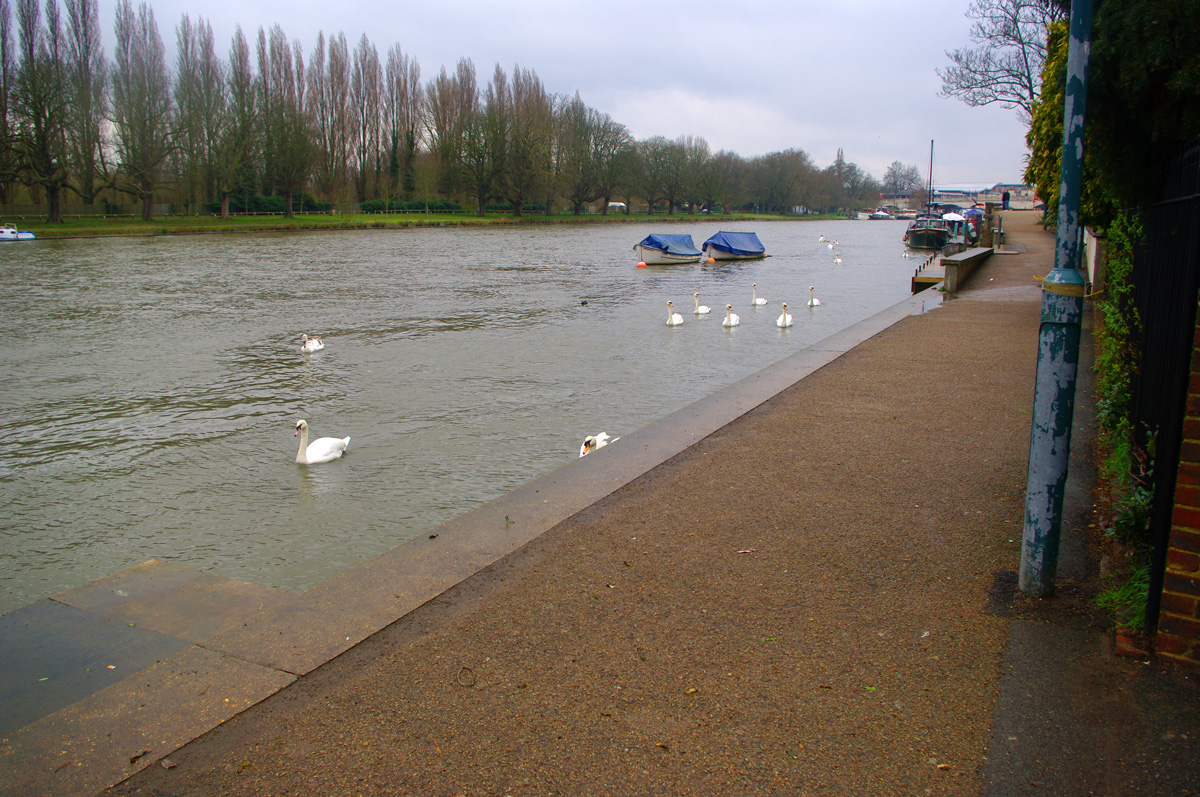
Cesar Picton's coal wharf site. Image @Tony Grant

Cesar Picton was six years old when he was brought to England by Captain Parr , an British Army officer who had been serving in Senegal.. He was given to Sir John Philips along with a parakeet. Cesar was born a Muslim but soon after arriving in Sir John’s household at Picton Castle he was baptised and given the name of Cesar on the 6th December 1761. He was dressed as a servant wearing a velvet turban, which cost 10 shillings and sixpence. It was fashionable for black servants to be richly dressed. There were very few black servants in England. Only very rich merchants and the wealthy aristocracy would have them. They were not treated the same as slaves which were used in their tens of thousands on the sugar, tobacco and cotton plantations of the West Indies and the mainland coast of America. Normally a black servant would have been the personal servant of the male head of the household but Cesar became the favourite of Lady Philips. He mixed with the family on equal terms. Sir John’s philanthropic and religious beliefs were applied to the treatment of Cesar.

Horace Walpole

Horace Walpole, the younger son of the first British Prime Minister Robert Walpole. who married Elizabeth the sister of Sir John, wrote in a letter to a friend in 1788,

“I was in Kingston with the sisters of Lady Milford; they have a favourite black, who has been with them a great many years and is remarkably sensible.”

Sir John died in 1764 and his son became Lord Milford. Milford is the area in Wales where Picton Castle is situated. Lady Milford made a new will in which she left Cesar £100. Her son sold Norbiton Place near Kingston. With the money he was given, Cesar was able to rent a coach house and stables next to the Thames in Kingston. This building today is called Picton House.

Kingston Upon Thames, 18th century

After paying a corporation tax of £10 to trade, Picton set himself up as a coal merchant. By 1795 he had made enough money to buy Picton House, a wharf for his coal barges, and a malt house for brewing beer. In 1801, one of the Philips daughters died and left him a further £100. He was wealthy by now on his own terms. In 1807,when he was 52, he let his properties in Kingston and lived in Tolworth neaby to Kingston for a while.
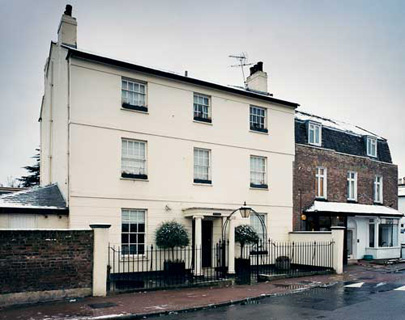
Picton House, Thames Ditton

In February 1816 he bought a house in Thames Ditton, down river from Kingston, for the then massive sum of £4000. He lived there for the next twenty years until his death. When he died the list of the contents of his house included a horse and chaise, two watches, with gold chains, seals, brooches, gold rings, a tortoiseshell tea chest, silver spoons and tongs. There were also paintings of his friends hanging in his house including a portrait of himself.

While Picton was living in Thames Ditton, the other two Philips daughters died in Hampton Court. Joyce left him £100 and Katherine left him £50 and a legacy of £30 per year for life. Cesar himself died in 1836 aged 81. He did not marry and had no heirs,  and was buried in All Saints Church, Kingston upon Thames on the 16th June, 1836. He had become very fat in his old age and his body had to be taken to the church on a four-wheeled trolley.

Cesar Picton Gravestone. Image @Find a Grave

Unlike some of the other freed slaves in England at the time, Cesar did not make his thoughts known about slavery and the slave trade. He was happy to lead a comfortable life. Olaudah Equiano wrote a book about his experiences and actively took part in the campaigning of William Wilberforce and Thomas Clarkson. Others, like Briton Hammon and Ukawsaw Gronniosaw, made oral accounts that were transcribed. Letters were written by Ignatius Sancho to help bolster the anti slavery cause.

Jane Austen wrote in Mansfield Park,

These opinions had been hardly canvassed a year, before another event arose of such importance in the family, as might fairly claim some place in the thoughts and conversation of the ladies. Sir Thomas had found it expedient to go to Antigua himself, for the better arrangement of his affairs, and he took his eldest son with him in the hope of detaching him from some bad connections at home. They left England with the probability of being nearly a twelve month absent.”
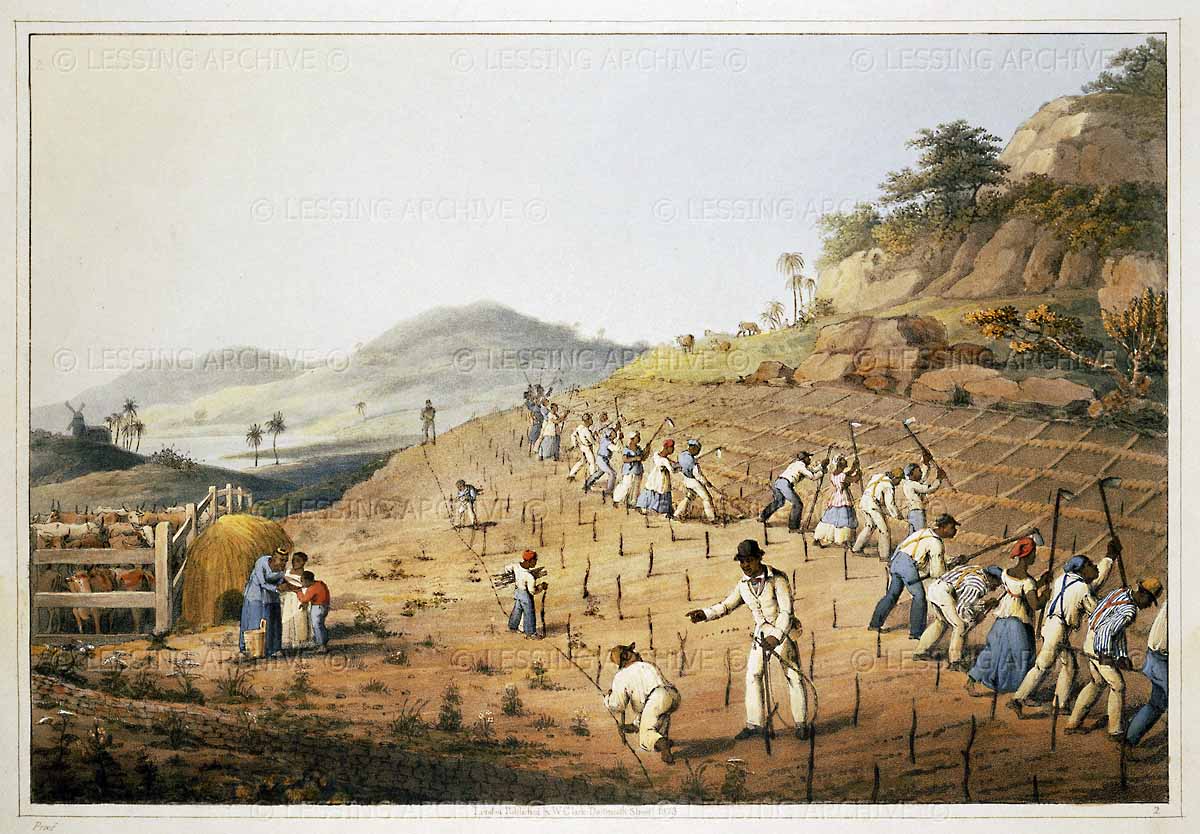
Slaves digging the cane holes, Antiqua, 1823

Sir Thomas Bertram’s affairs in Antigua could only have referred to his sugar plantations, the source of all his wealth and the financial source of Mansfield Park itself.
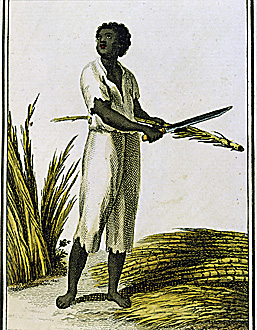
Slave cutting sugar cane, 1799

Jane’s own brothers, Frank and Charles would have been amongst the captains with their warships used to protect the likes of Sir Thomas Bertram’s trading ventures, which must have included slaves for his plantations in Antigua. Henry, Jane’s favorite brother, would have invested the proceeds of this trade through his bank. It is very possible that Jane caught sight of the famous Cesar Picton, wealthy merchant and freed man, walking in the streets of Kingston upon Thames. I wonder what her opinion was?

Kingston Upon Thames, Thomas Hornor, 1813

Post written by Tony Grant, London Calling.

More on the topic:

Read Full Post »

1810 woven Chinese silk cloth with handpainted decorations. Image @Victoria & Albert Museum

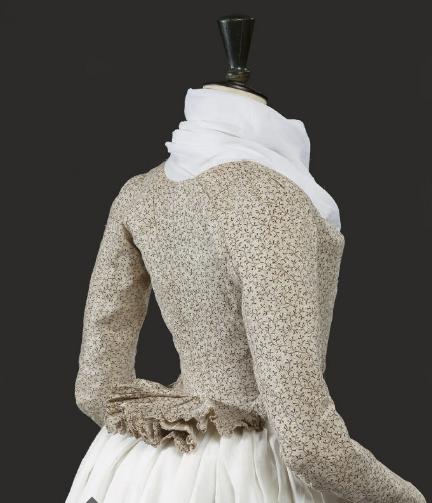
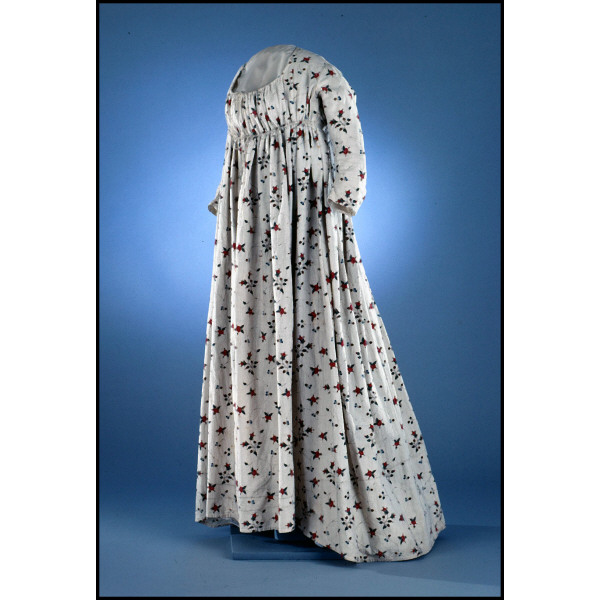
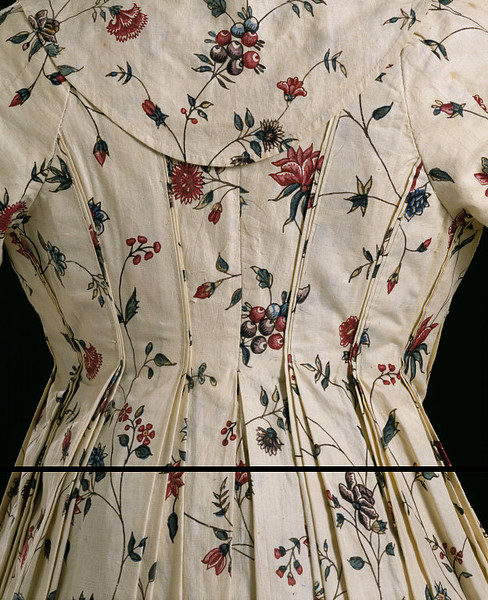
We have come to associate delicate white muslin material woven in India with Regency fashion to such a degree that it is easy to forget that other colors and printed fabrics were also used, and that many silk and cotton dresses were made of fabrics with colorful patterns and distinctive designs, such as this 1820’s day dress, or this 1790 caraco printed jacket…


1790 Caraco jacket of printed cotton. Image @Christie's

…or the lively Ackermann dress below.

Dinner dress, Ackermann. 1817

Some of the fabrics were  lavishly embroidered…

1810 Evening Dress with embroidery

… or painted to produce a patterned effect.

1780-1800. Painted satin cloth. Image @Victoria & Albert museum

But with the industrial revolution, printing and dying techniques began to be improved.

Fabric, Manchester art gallery

By the mid-eighteenth century, wood-block printing on cotton and linen textiles had developed to a high standard, even though the home market was affected by legislation protecting the silk and wool industries.” – *V&A


Block printed round gown. Image @Colonial Williamsburg

The dyeing techniques used to produce the strong fast colours on imported Indian chintzes which had dazzled European customers in the seventeenth century had been mastered, and colour ranges were developed further with the introduction of ‘pencilling’ of indigo in the 1730s, and ‘china blue’ by the early 1740s.” – *V&A

Block printed cotton, 1790. Image @Victoria & Albert Museum

“A commentator on the state of British textile arts in 1756 wrote : “chintz…can imitate the richest silk brocades, with a great variety of beautiful colours. This length of block-printed cotton dress fabric is typical in its design and colouring of English production at the end of the 18th century.” – *Block Printed Cotton, Victoria & Albert Museum


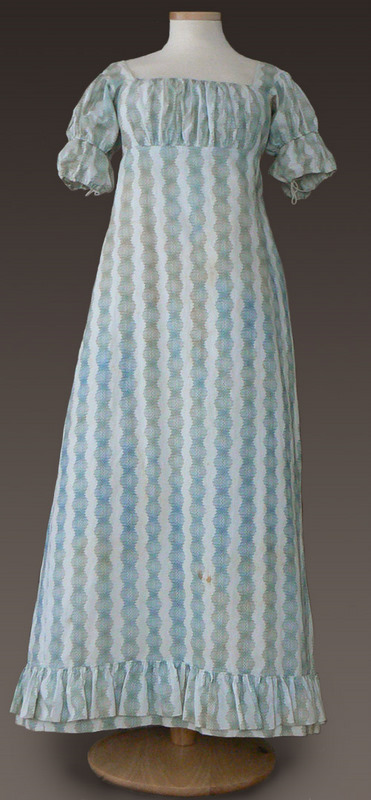
Child's cotton dress roller printed, 1820. Image @Vintage Textile

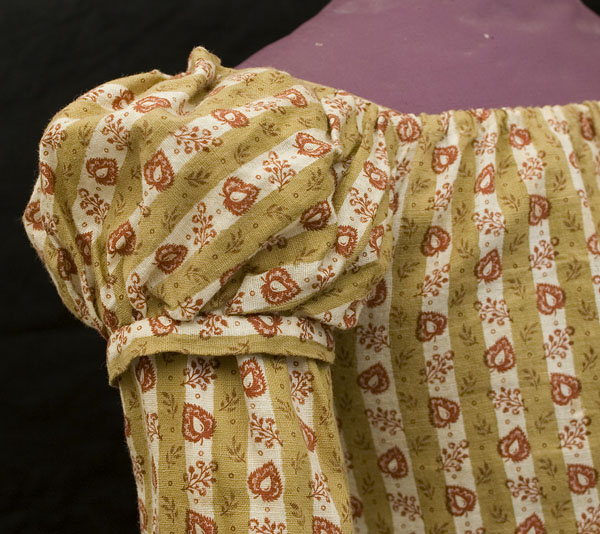
Roller printing also became popular.

Roller printing, a mechanical improvement on the copperplate technique, was developed in England in the late eighteenth century and was in use in the north of England by 1790.” – **Met Museum

Detail, roller printed Regency day gown.

The copper roller gave manufacturers the ability to print larger quantities of fabrics at greater speeds, for lower prices, and the production of printed cotton increased dramatically in the nineteenth century.” – ** Source: Textile Production in Europe: Printed, 1600–1800 | Thematic Essay | Heilbrunn Timeline of Art History | The Metropolitan Museum of Art

1800 dress fabric, British. Image @Victoria & Albert Museum


19th century white cotton gown with roller print. Image @Greene Collection

More on the topic:
1795-1800 Printed cotton gown detail. Image @Victoria&Albert Museum

Read Full Post »

Banyan, Dress for Excess

Dress for Excess: Fashion in Regency England, the fashion exhibition at the Brighton Pavilion this year, features a quilted printed (chintz) banyan, or men’s dressing robe worn over a shirt and knee breeches. (Click here to see the full image of the robe .)
When at home, a gentleman would change into an informal knee-length dressing gown known as a banyan, and wear it around his family at breakfast,  playing games, such as cards or backgammon, and while reading in his library or writing letters. One can readily imagine Mr. Bennet wearing a banyan in his study, and most definitely Mr. Woodhouse (image below), as he sat by the fire reading a newspaper.

Mr Woodhouse (Bernard Hepton) in a fur-lined fitted man's dressing gown, or banyan

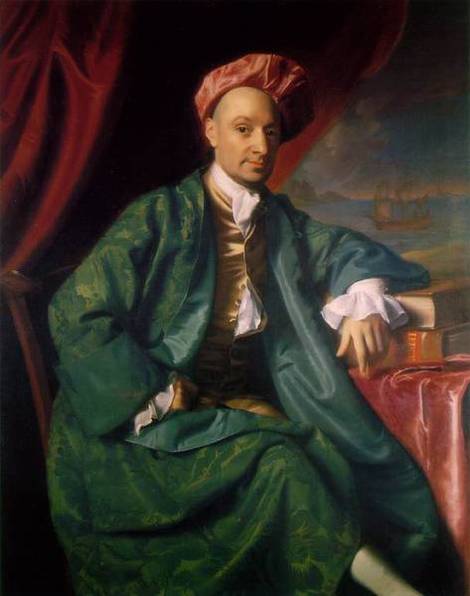
The banyan was a loose, full kimono style in the early 18th century, but later evolved into a more fitted style with set-in sleeves, similar to a man’s coat. It was known as an Indian gown, nightgown, morning gown, or dressing gown. First used as a type of robe, it was originally worn for leisure and in at-home situations; but came to be worn as a coat out-of-doors, in the street, or for business. Many gentlemen had their portraits made while wearing banyans. They were made from all types of fabrics in cotton, silk, or wool (Cunningham, 1984). – Cross cultural influences on fashion prior to the twentieth Century

Nicholas Boylston in a loose fitting banyan, 1767. Painted by John Singleton Copeley. Image @Wikipedia

More on the Topic

Tartan wool banyan lined in bottle green silk, 1800. Image @Christie's


Read Full Post »

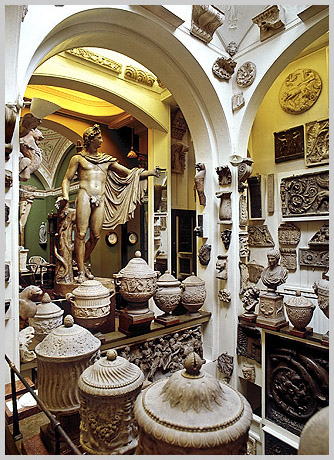
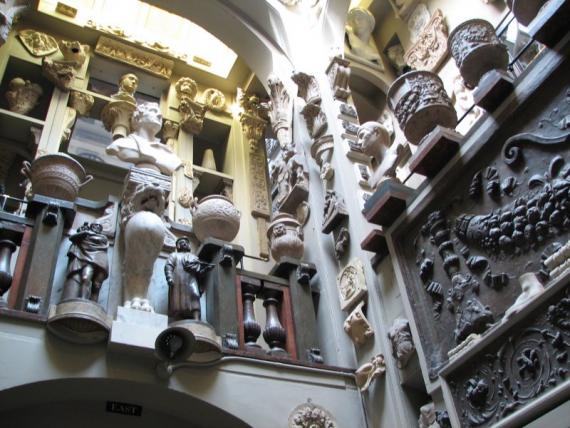
Interior, Sir John Soane’s House Museum

At Lincoln’s Inn Field , architect Sir John Soane (1753-1837) built three townhouses between 1792 and 1824 to house his remarkable collection of antiquities and objects d’art. The Museum was established by a private Act of Parliament in 1833 The house was opened to the public after the architect’s death in 1837.

Today, the museum is best seen on first Tuesday evening of each month when it is lit by candlelight. In three years, after a £7 million restoration, Soane’s private apartments will be opened to view for the first time in 170 years. Soane was known for his original designs of internal spaces and lighting, and for incorporating shallow domes, segmental arches, and clerestories.

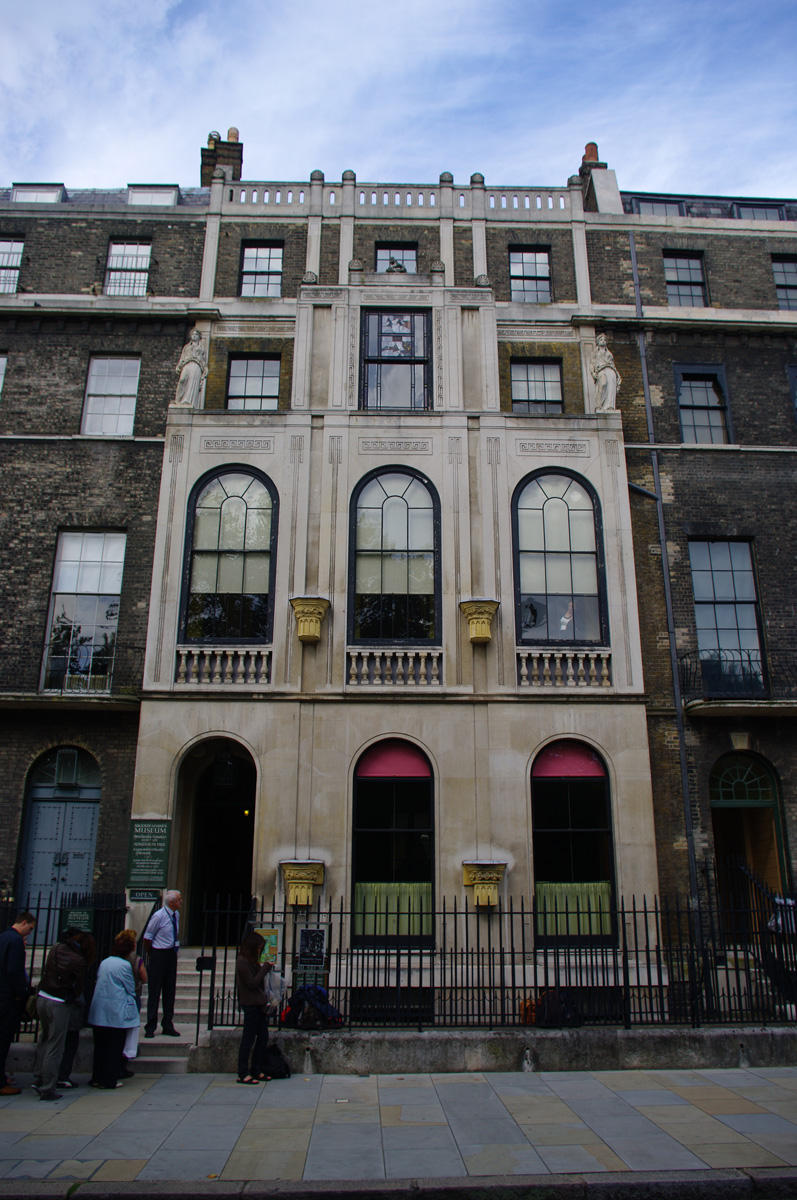
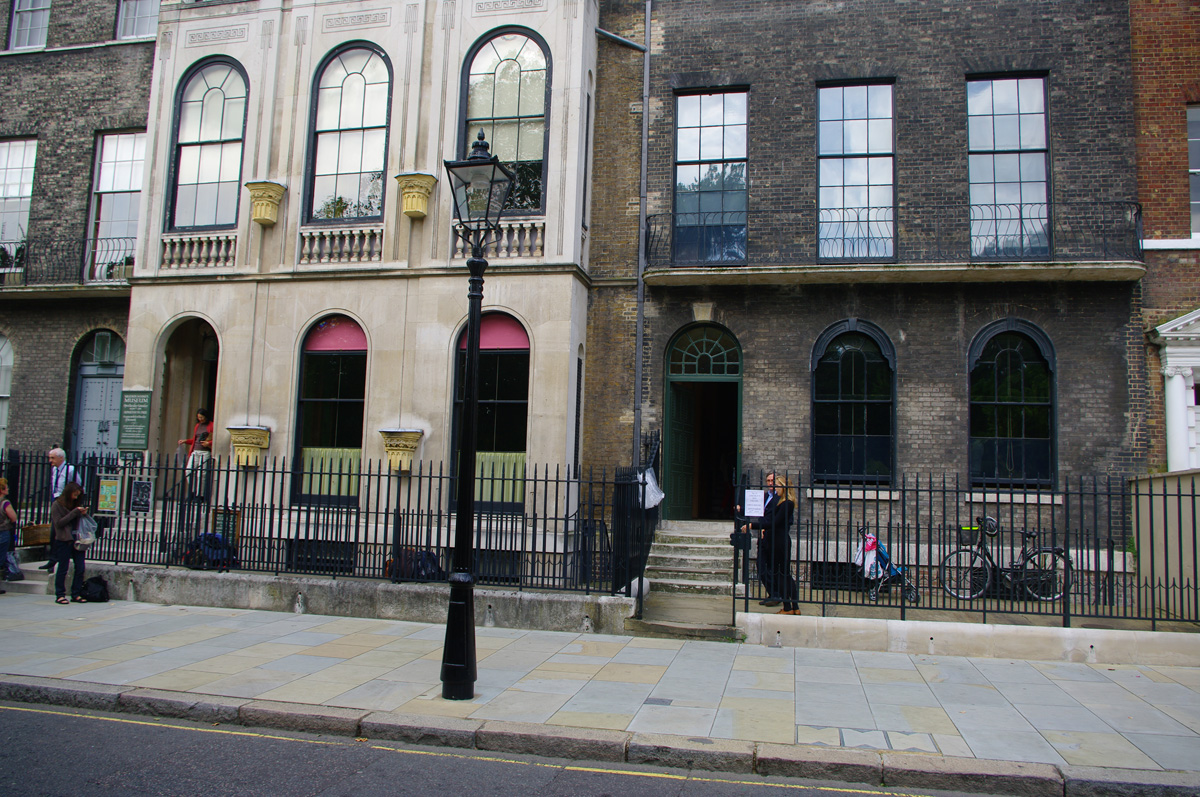
Sir John Soane’s House and Museum. Image @Tony Grant

During the latter half of the 18th century (before the Napoleonic Wars), it was the custom of British collectors, painters and patrons to study antiquities of the ancient world during their Grand Tour of the Continent. The great collectors returned home laden with objects that they had acquired, most notably sculptures, gems, coins, vases, mosaics,  paintings, and architectural fragments from such countries as Italy, Egypt, and Greece. These visitors, mostly gentlemen, also brought back their vast knowledge (and love) of classical architecture, which in turn influenced the Neoclassical buildings, interiors, and styles so popular during the Georgian and Regency eras.

Interior of the Soane Museum**

Interior, original Bank of England

Sir John Soane traveled to Italy between 1777 – 1780 to study architecture on a scholarship from the Royal Academy, and acquired his collection between the 1780s and his death in 1837. Among his designs are the Bank of England (now torn down), Dulwich College Art Gallery, and his own houses in Lincoln Fields Inn.

On his appointment as Professor of Architecture at the Royal Academy in 1806 Soane began to arrange the Books, casts and models in order that the students might have the benefit of easy access to them and proposed opening his house for the use of the Royal Academy students the day before and the day after each of his lectures. By 1827, when John Britton published the first description of the Museum, Soane’s collection was being referred to as an ‘Academy of Architecture’. – Sir John Soane’s Museum: Official Site


The three doorways to the Sir John Soane’s House Museum. Image @Tony Grant

Read Full Post »

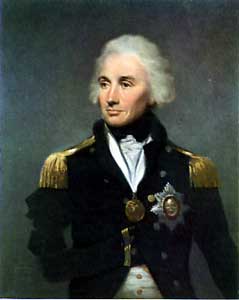
Towards the end of his life Horatio Nelson, the victor of Trafalgar, lived at Merton Place, an elegant country house set in 160 acres of landscaped grounds in what is now the London Borough of Merton in South London in an area more commonly known as South Wimbledon, where I live.

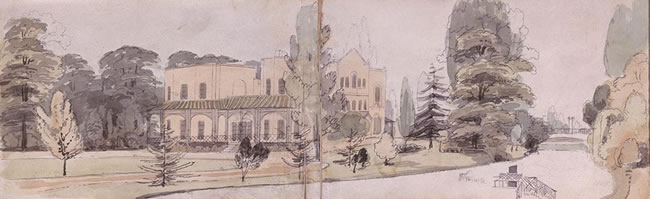
Merton Place. Image @National Maritime Museum, Greenwich

Nelson had gathered many honours for services to his country during his career. Horatio Nelson was known as  1st Viscount Nelson, 1st Duke of Bronte KB. The KB is the term for Knight of the Bath, which is a high-ranking knighthood. Knighthoods came and still come in different categories. Nelson’s knighthood was the top rank.

Admiral Lord Nelson

Nelson was born into a prosperous family in Norfolk on the 29th September 1758. His uncle, Maurice Suckling, encouraged him to join the Navy. His talent was recognised at an early age because he served with the leading naval officers of the time and he rose rapidly through the ranks. He obtained his first command in 1778 at the age of twenty. His reputation grew because of his courage and valour in battle and his ability to gather a firm grasp of naval tactics very quickly. Nelson was a sickly individual and often had periods of illness. After The Wars of American Independence he was laid off and was without a ship for a while.

Emma Hamilton in an attitude of dance

With the onset of the French Revolutionary Wars, Nelson was called back into service to serve primarily in the Mediterranean theatre of war. He fought in various minor battles just off Toulon, at the Capture of Corsica, and then was given diplomatic duties with the Italian States. On 12 September 1793, he first met Lady Hamilton. At the time, Nelson was a 35-year-old post captain and she was the 28-year-old wife of Sir William Hamilton, the British Envoy to Naples. Emma was famous as a great beauty and a performer of ”Attitudes”, based on Ancient Greek statuary. She wore diaphanous floating materials for these poses but some , which left nothing to the imagination. (What an old buffer like Sir William Hamilton was doing with a party girl, as a wife is another story!)

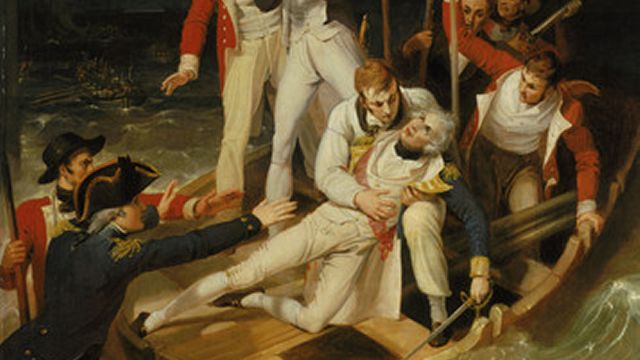
Nelson loses his arm

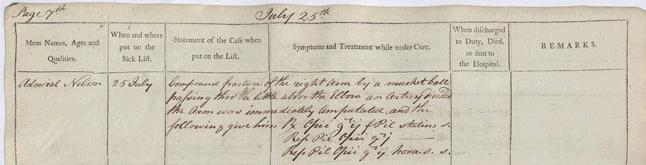
In 1797, Nelson came to prominence again as captain of HMS Captain at the Battle of Cape St Vincent. Soon after he took part in the battle of Santa Cruz de Tenerife, in which he was badly wounded and lost his right arm. He was forced to return to England to recuperate.

Extract from HMS Theseus medical officer’s journal for 25 July 1797 relating to the amputation of part of Nelson’s right arm. Image @National Archives

It is interesting to note, in the Georgian navy any badly damaged limb was always amputated. This was the only way they could prevent disease setting into the wounds. If ever you have the chance to visit HMS Victory at Portsmouth you can see the surgeon’s instruments laid out on the deal-operating table below decks.  The surgeon had two assistant surgeons and used the help of the seaman’s mates to hold him down. They experimented with alcohol as an anaesthetic but discovered that getting the injured sailor drunk made the blood thin and it wouldn’t clot. The only thing they could do at that time was to strap him down and give him a piece of leather to grip between his teeth. A scalpel paired back the skin and flesh. A caffater was used to drain the blood. The arteries were severed and then a saw was used to cut quickly through the bone. A file was used to smooth the end of the bone. The arteries were tied. The flap of skin was sewn over the stump. The stump was dipped in tar and then and only then, the man was given rum, lots of it, to get drunk. All done and dusted in 90 seconds.

In 1798 Nelson returned to action and beat Napoleons navy at the battle of The Nile. One of Nelson’s greatest achievements. He remained in the Mediterranean to support the State of Naples against a French invasion. In 1801 Nelson was ordered to go to the Baltic and this time he defeated the Danes at The Battle of Copenhagen. The Danes to this day don’t like Nelson. The Danish fleet was in port and by attacking the fleet in port a lot of the bombardment also hit the city of Copenhagen and destroyed much of the city,  killing many ordinary citizens.


HMS Victory. Image @Tony Grant

After this encounter in the north Nelson took over the blockade of the French and Spanish fleets in Toulon. They escaped and Nelson chased them to the West Indies and back without bringing them to battle. He now began the blockade of the French and Spanish in Cadiz. The end game was approaching although nobody knew that at the time. He returned to England and Merton Place for some respite with his family that had become Lady Hamilton, her husband Sir William (who was living with them),  Nelson and Emma’s daughter, Horatia. It was a scandalous arrangement for the time, but Sir William Hamilton appeared to be comfortable with the situation. That tells another story.

Sir William Hamilton, Emma, and Admiral Nelson. Image @The Nelson Society

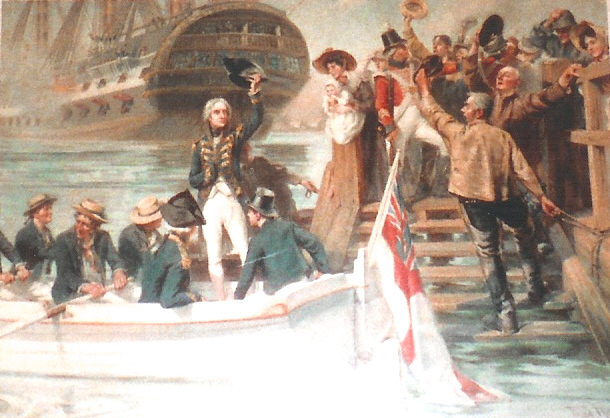
In October  1805, Nelson returned to action off Cadiz. He was a great national hero by this time, and he journeyed in triumph from Merton Place, cheered by villagers as he made his way to Portsmouth. Normally a sea captain or admiral would have been rowed by longboat to his ship waiting at sea from the hard at Portsmouth, which is next to the dockyard entrance.

Nelson leaving Southsea beach, just outside of Portsmouth.

However, massive crowds had gathered to see Nelson leave for Cadiz. Worried about safety, he asked to leave from Southsea beach, about three quarters of a mile east of Portsmouth.  So it was Southsea he was rowed from, to a waiting ship that took him to HMS Victory off Cadiz harbour. A famous painting portrays Nelson’s departure from Southsea beach.

HMS Victory, broadside. Image @Tony Grant

People talk about “the Nelson touch,” and the superiority of the British Navy. The British navy like the British army was and is a family. Officers knew each other personally and socialised together. Nelson was going to Cadiz to meet friends, the other naval officers commanding the ships under his overall command. They knew each other’s weaknesses and strengths and Nelson played to these. He knew who could do what, exactly. It was a, “well oiled machine.” Also British gun crews trained continuously in the using and firing of their guns. They were trained thoroughly. The whole fleet worked as a well-run unit.

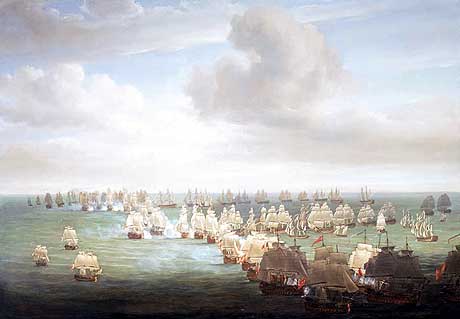
Trafalgar

The fact that the French and Spanish were a combined fleet made up of two navies had an inbuilt fault. Their gun crews were not so efficient. There were two languages to contend with and there was a matter of pride on each side that caused friction. The French and Spanish commanders did not know their men and captains as well as the officers in the British navy knew theirs. The British fleet was smaller but a much more efficient group. Nelson also utilised unconventional tactics. Because of the superior numbers of the opposing fleet Nelson decided not to go for a broadside attack where the two fleets would have passed each other firing side by side until one side gave in. He was outnumbered and this would not have faired well for the British fleet. Nelson decided to form his fleet into two parts, each forming a line, which sailed into the French and Spanish fleets, like two arrows fired perpendicularly to the line of French and Spanish ships.


Battle of Trafalgar

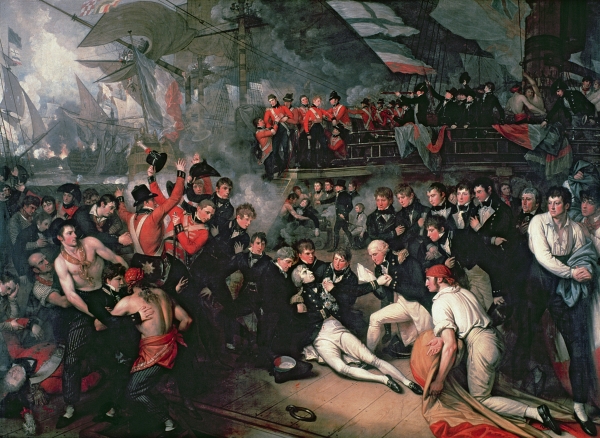
This split the opposing force into three parts. Nelson’s fleet dealt with each part separately. The Spanish and French fleet was taken unawares with this tactic and many of their ships were not able to engage the British at first. This gave time for the British to pick off the enemy, slowly destroying them almost, one by one. Nelson was victorious. A sniper high in the rigging of the mizzenmast of the French ship Redoubtable picked out Nelson and Captain Hardy standing on the poop deck of the Victory and shot Nelson. The bullet passed through his shoulder, through his lungs and severed his spine. The ships surgeon later did an autopsy to find the cause of Nelson’s death and extent of his injuries. A marine called John Pollard revenged Nelsons death by shooting the French sniper dead. He was seen falling from the mizzenmast into the shrouds hanging from the Redoubtable.


Death of Nelson

To illustrate Nelson’s shear courage and perhaps bravado, minutes before he himself was shot, an officer standing next to him had been severed in half by a cannon ball from the French ship and the blood and body parts of this unfortunate had only just been cleared away when Nelson himself was struck.

The stern of the HMS Victory. Image @Tony Grant

Most injuries and deaths in a battle of this sort were from flying splinters of wood. Victory was made from 6000 trees, 90% of which were oak but some elm, pine and fir were used. When you see the Victory and some of the massive wooden elbows, struts and planks used in it’s construction you can imagine how great sharp pieces of wood could go flying about when hit by a cannon ball going at the speed of sound. The majority of fatalities were from splinters to the head.

Nelson was not the nicest of personalities. He was proud, vain, and authoritarian but he was also extremely brave, astute and a brilliant tactician. He was loved and admired by his men and the whole of the British nation.

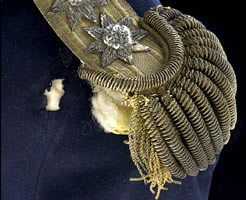
Bullet hole in Nelson's uniform.

If you go to The National Maritime Museum at Greenwich you can see the admirals coat Nelson was wearing when he was shot. The bullet hole is visible in the shoulder and the expensive white silk lining is heavily blood stained.

Nelson did not want a sea burial. He had the right to ask for a land burial. It would be months before The Victory would return to Portsmouth so the ships surgeon suggested they place Nelson’s body in a large cask of rum. They did this and the body remained in relatively good condition until Nelson’s state funeral and burial in the crypt of St Paul’s Cathedral. There is rather a gruesome story following Nelson’s funeral. The crew of HMS Victory are reputed to have drunk the rum Nelson’s body had been preserved in.

Nelson's crypt in St. Paul's Cathedral. Image @LIFE Magazine

So, Nelson’s final journey to super stardom and the gratitude of an adoring nation started from Merton Place in South Wimbledon.
Merton Place no longer exists and the 160 acres of land Nelson owned around Merton Place have long been sold off and used for housing over various generations.

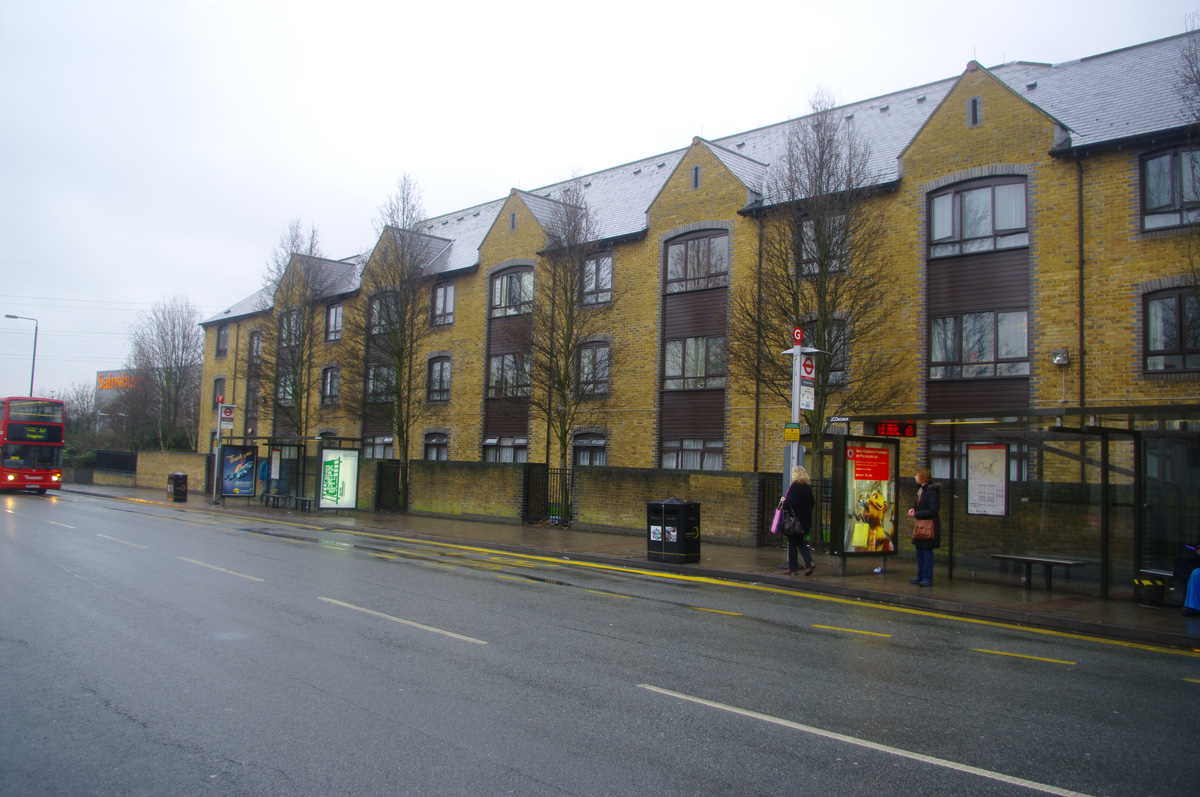
London road today crossing what was Nelson's estate. Image @Tony Grant

Roads of Victorian, Edwardian and more modern flats and housing now covers what was once Nelson’s idyllic estate of Merton. There is much evidence still existing though, if you take the time to look.

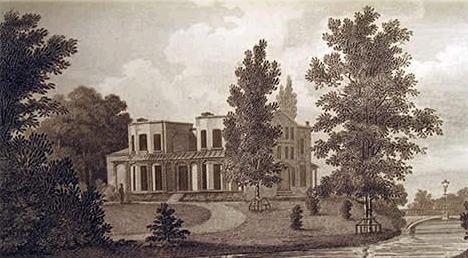
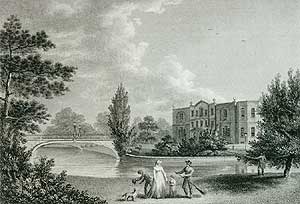
Merton Place as it once was, also former home of Thomas Sainsbury, Lord Mayor of London. Image @Old London Maps

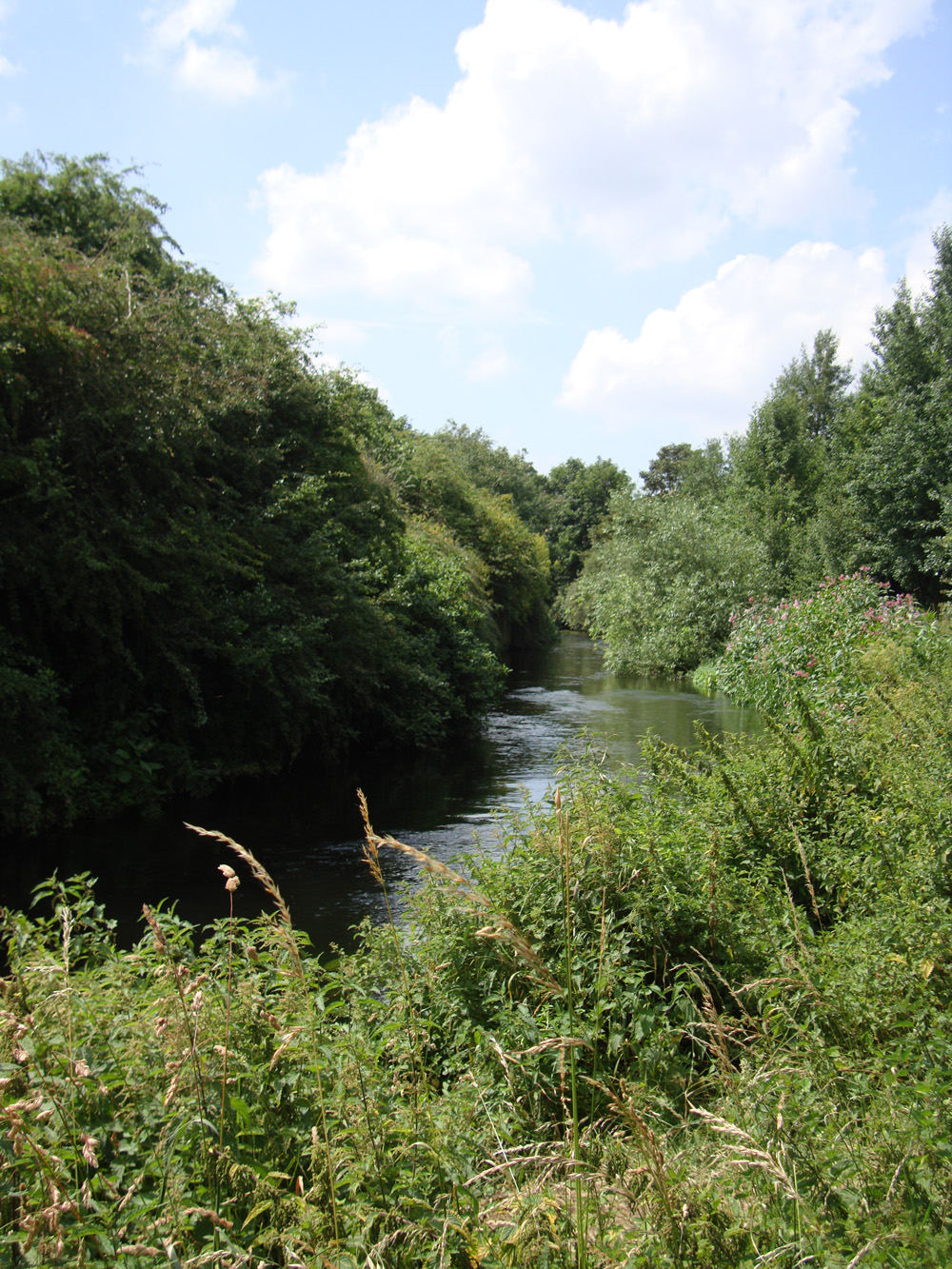
By 1801 Nelson had separated from his wife Fanny. He wanted to find a home where  he could entertain his friends. Lady Hamilton found Merton Place situated next to the picturesque Wandle River and Nelson paid £9000 for it.


The Wandle River. Image @Tony Grant

Nelson paid for the house’s development. Great changes to it took place in 1805. Nelson employed the architect Thomas Chawner to create a new layout. It became a double fronted house with a grand drive leading up to it.

Merton Place, parish of Merton.

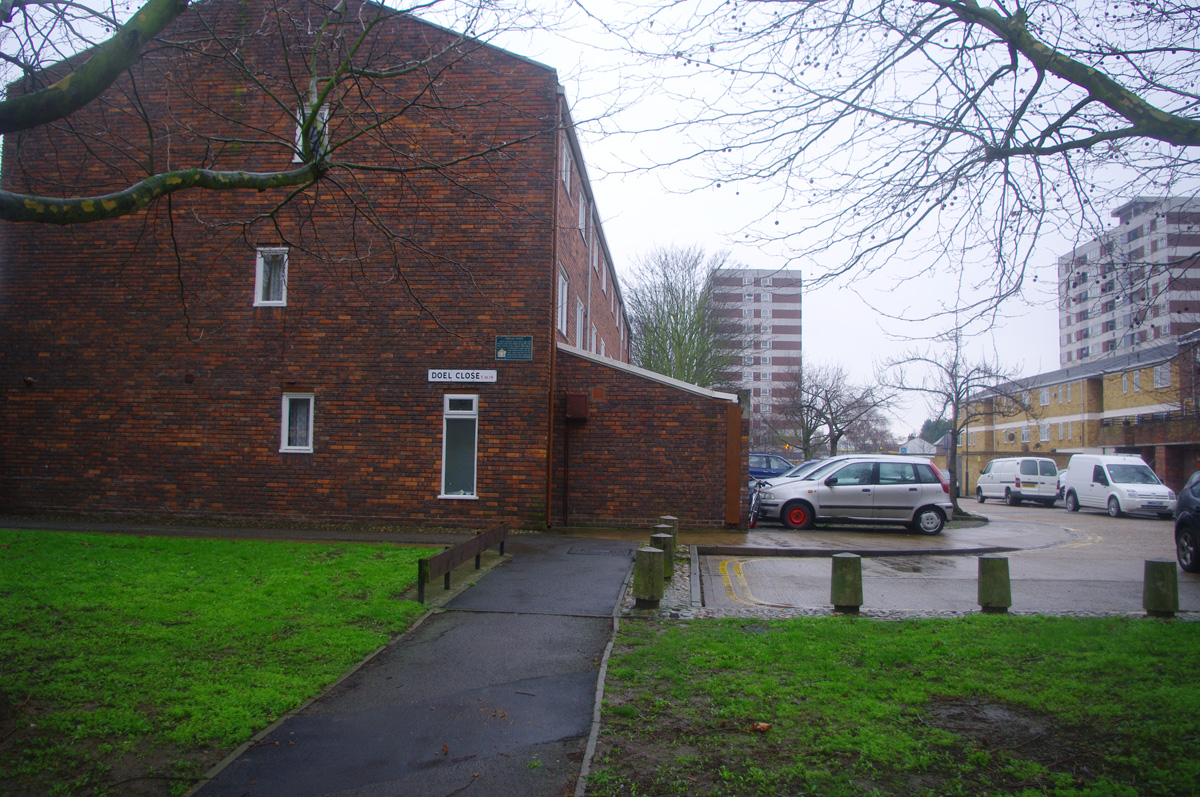
Also a tributary from the Wandle River was dug leading up to the house. This was named The Nile, after Nelson’s famous victory. If you go to the site of Merton place to day there is a housing estate; houses and flats built in the 1960’s.


Nelson's estate today. Image @Tony Grant

On the very site of, “Merton Place,” is a block of flats called, “Merton Place.” On the site of the entrance to the grand drive that lead up to the house from the London Road is a pub called, The Nelson Arms.

The Nelson Arms on the site of the entrance to Merton Place. Image @Tony Grant

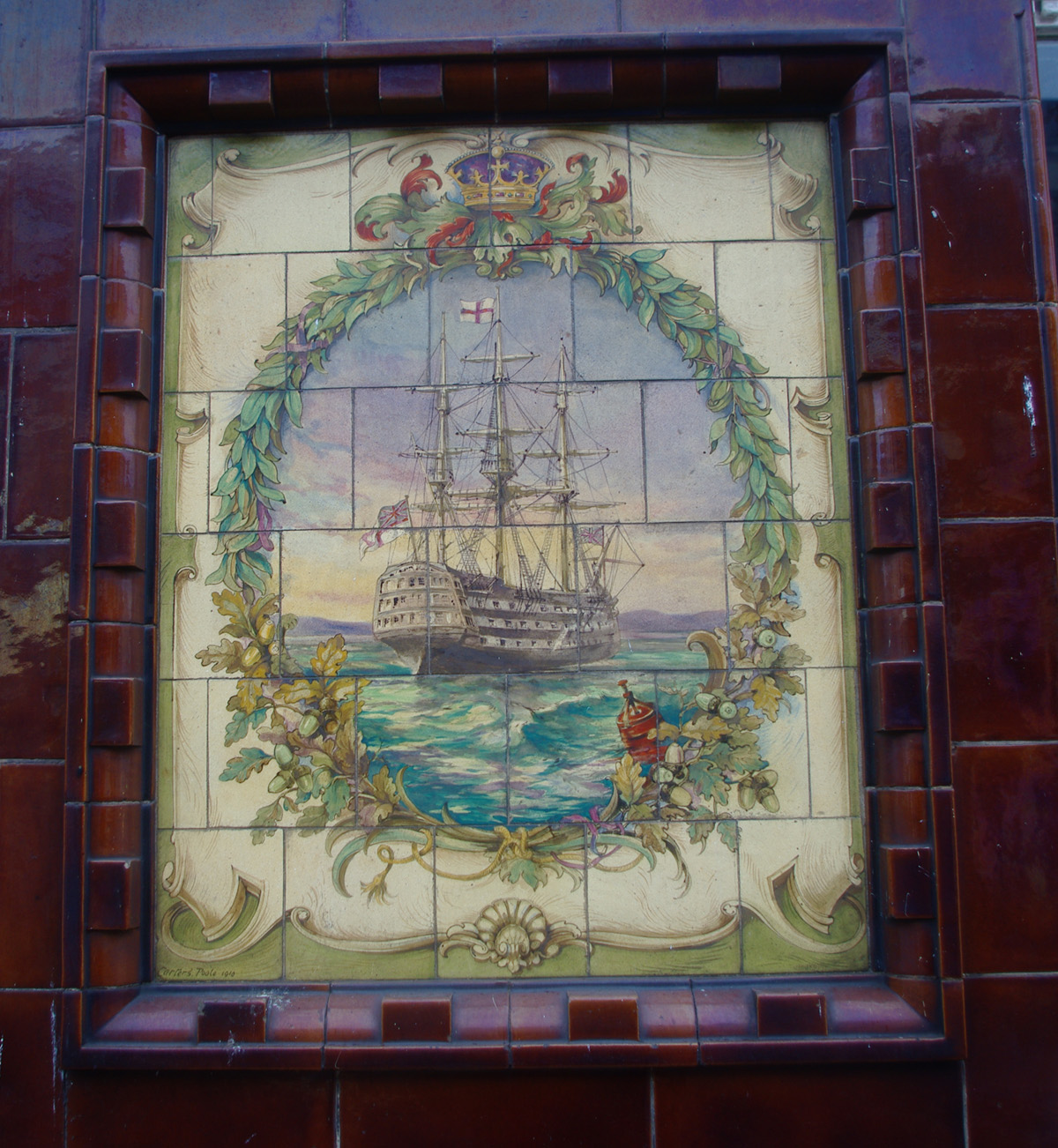
It is a spectacular Edwardian edifice with large tiled pictures of Nelson’s portrait and HMS Victory.


The gatehouse site today. Image @Tony Grant.

A few hundred yards form The Nelson Arms are some housing and flats that are on the site of a building that was called, The Gatehouse. The owner was a friend of Nelson’s, James Halfhide. Nelson often visited James in The Gatehouse. A little further along the London Road, leading into Tooting, is Wandle Park, the site of Wandle Park House. Lady Hamilton and Nelson are known to have visited the owner James Perry the editor and owner of the Morning Chronicle, the most successful London Newspaper in Georgian times.

St. Mary the Virgin. Image @Tony Grant

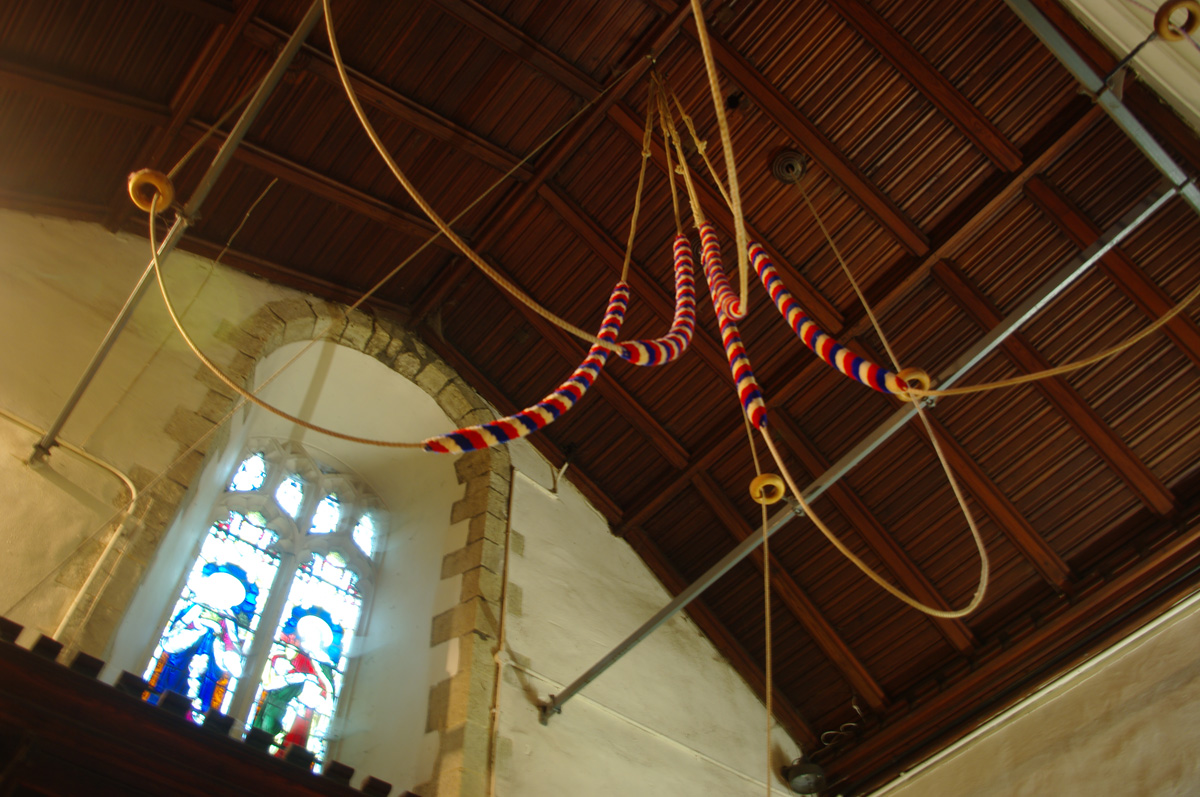
A mile west of Merton Place is the church of St Mary the Virgin, where Nelson worshipped regularly on a Sunday. The pew he used is still there.

Bell ropes, St. Mary the Virgin. Image @Tony Grant

Not far from here is a newer church called St John the Divine. Built in 1914, it was designed by the architect C. Cage to mark the anniversary of the death of Nelson. The church was built on what was part of the western extension of Nelson’s lands as a memorial to Nelson, and was financed by funds collected from local people.

St. John the Divine, Burne Jones window

It has a stained glass window designed by the pre-Raphaelite artist Edward  Burne Jones and was made at the William Morris works situated next to the Wandle River near Merton Place. The high altar is made from a piece of timber from HMS Victory.

Nelson Park. Image @Tony Grant

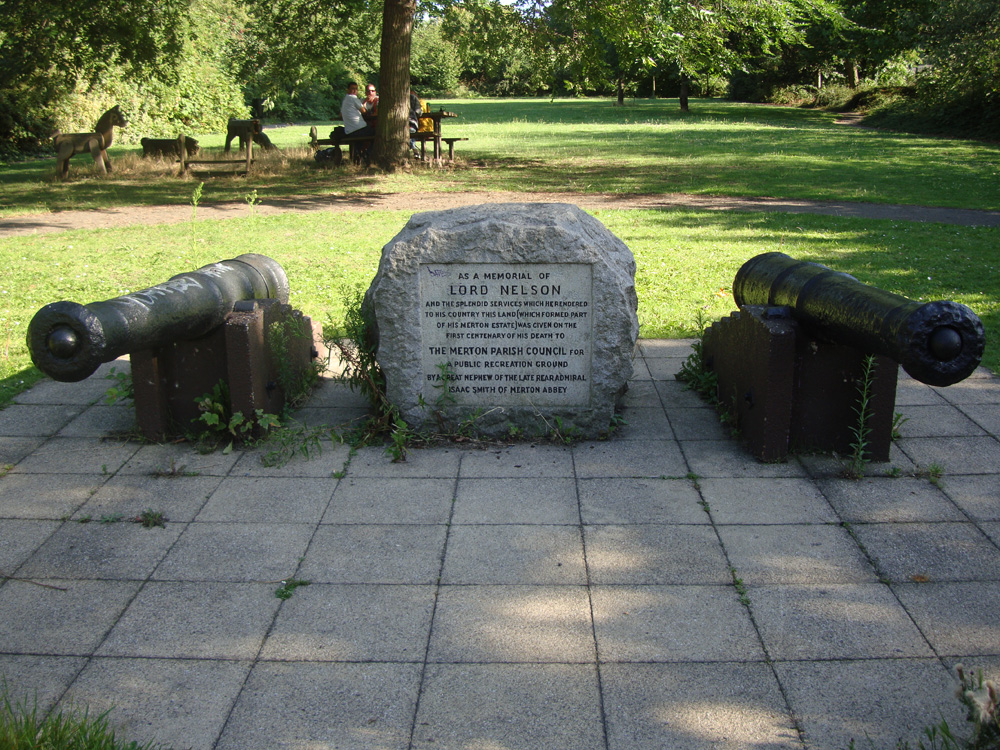
Next to the church is a small park with a granite monument that has an inscription recalling Nelson. This stone is flanked by two cannons which stood at the entrance to the doorway into Merton Place.

The cricket pitch at Mitcham. Image @Tony Grant

A mile and a half south of Merton Place at Mitcham, is Mitcham Cricket club, which still exists today. Some excellent pubs surround the cricket green at Mitcham and it is very relaxing to sit out in front of one of the pubs on a balmy summers day, drinking a pint of local Youngs beer, watching white flannelled cricketers hitting leather on willow.  It is one of the most famous and oldest local, amateur cricket clubs in England. Nelson watched cricket here.

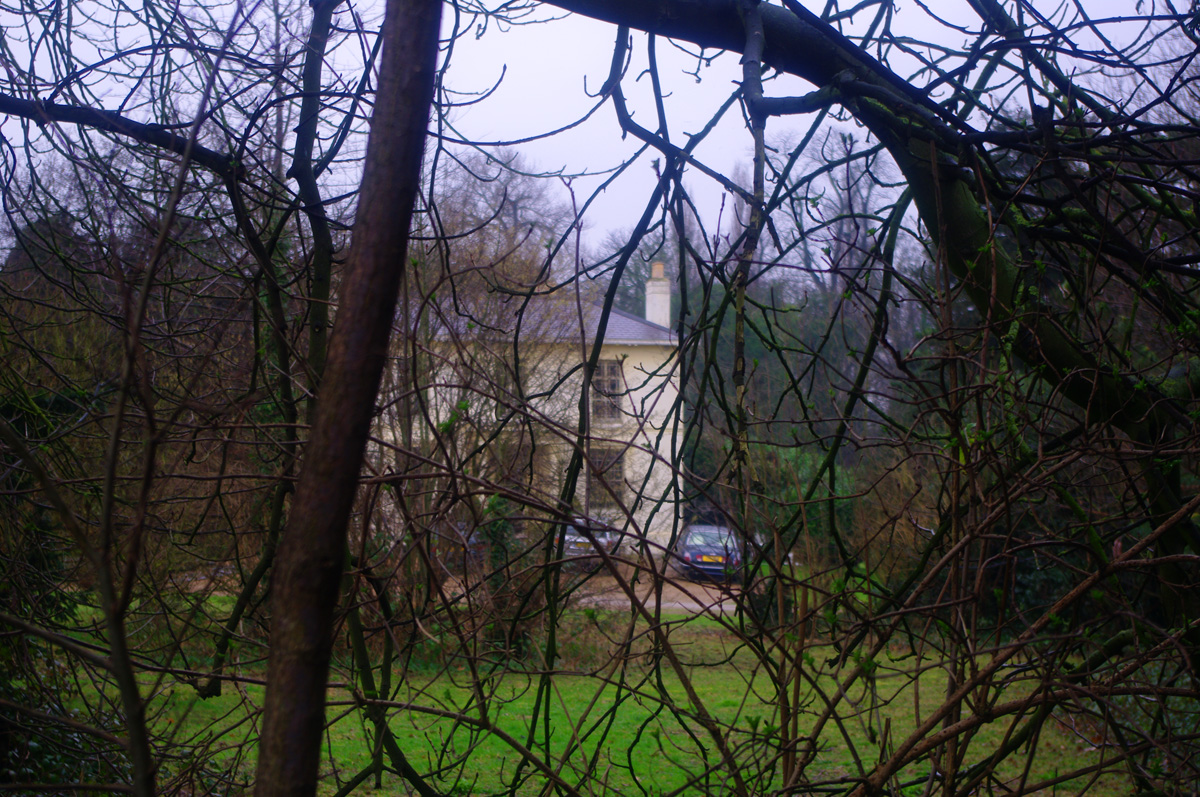
Mordern Lodge. Image @Tony Grant

Going west from Mitcham Cricket club back towards Merton is Mordern Lodge. It is set back from the road and set within some beautiful grounds. It is a private residence surrounded by lawns, shrubs and trees and can be just glimpsed from the road. Here lived in the 19th century Abraham Goldsmid, an eminent Jewish banker of Anglo Dutch decent. He was a senior partner in one of the Capitals most powerful brokerage firms, Goldsmid. He had friends in high places – The Prince Regent, Sheridan, the playwright William Pitt, and the prime minister were friends, and Nelson himself was a personal, close friend. They lived virtually next to each other.

After Nelson’s death, Abraham and a group of fellow trustees gave Emma Hamilton £3,700 to save her from spiralling debt.

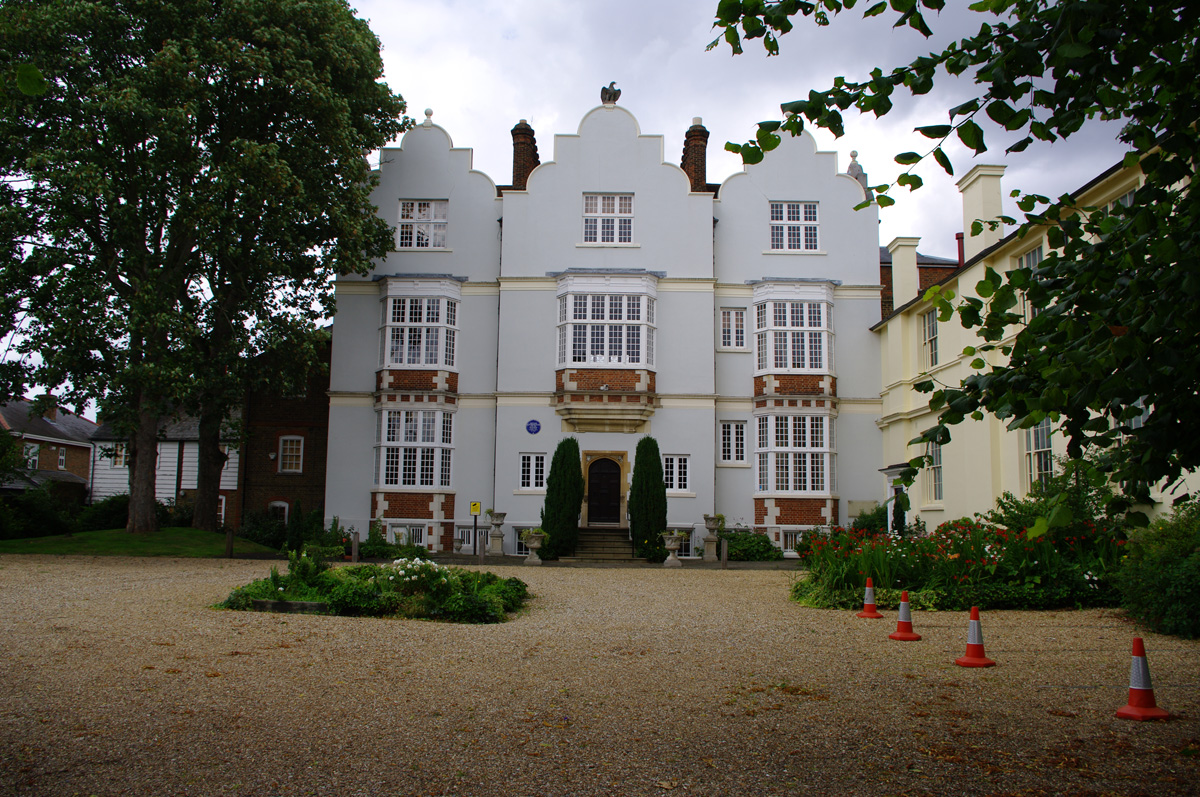
Eagle House. Imge @Tony Grant

A mile and a bit north of Merton Place are Wimbledon Village and Wimbledon Common. There is a very elegant and unusually designed house called Eagle House in the village, once owned by the Reverend Thomas Lancaster. Nelson visited when it was a school for young noblemen and gentlemen. After Nelson’s visit it was renamed “Nelson House School.”

Tile panel on The Nelson Arms. Image @Tony Grant

Wimbledon and South London do not look the same as in Nelson’s day but he would recognise some of it. Wimbledon Common and much of the village has not changed much since his day. He would certainly recognise some buildings, but Merton Place, the house and grounds he loved so much, no longer exist. He would think he was in some alien landscape.

Written by Jane Austen’s World contributor, Tony Grant, London Calling.


The Princess Royal Pub on the Nelson Estate. Image @Tony Grant

More on the topic

Pub sign, Princess Alexandra Pub. Image @Tony Grant

Read Full Post »

« Newer Posts - Older Posts »