Feeds:
Posts
Comments

Archive for the ‘19th Century England’ Category

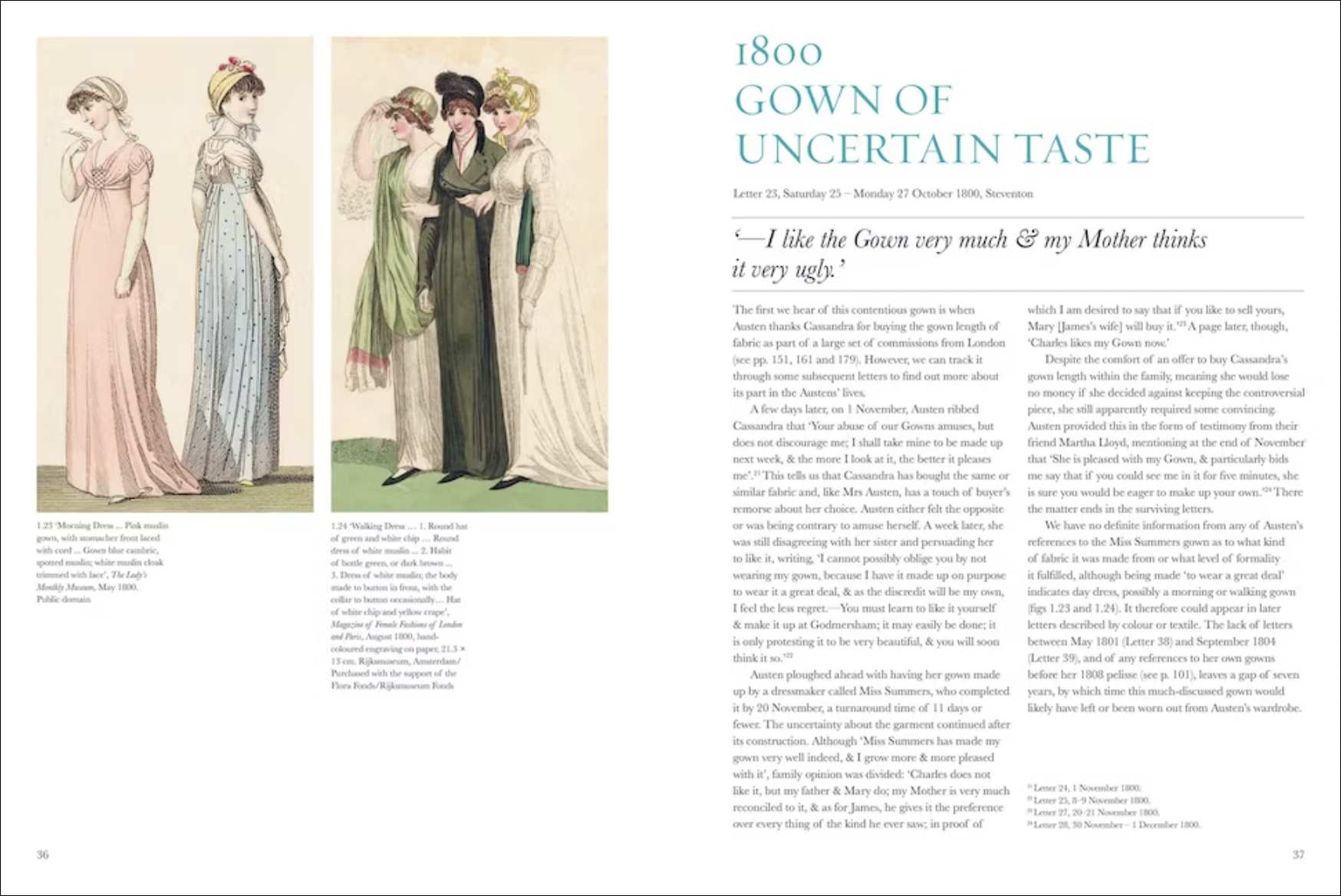
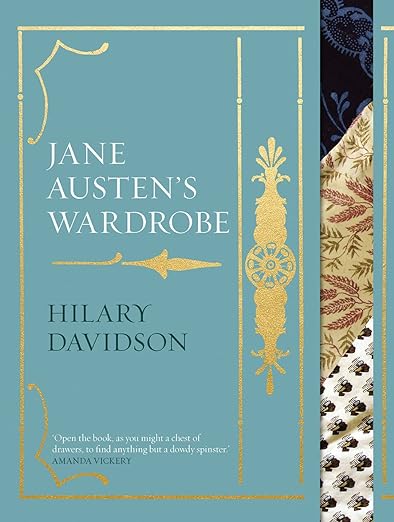
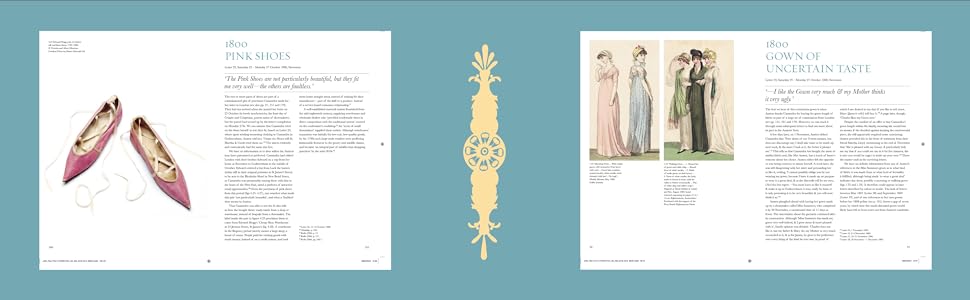
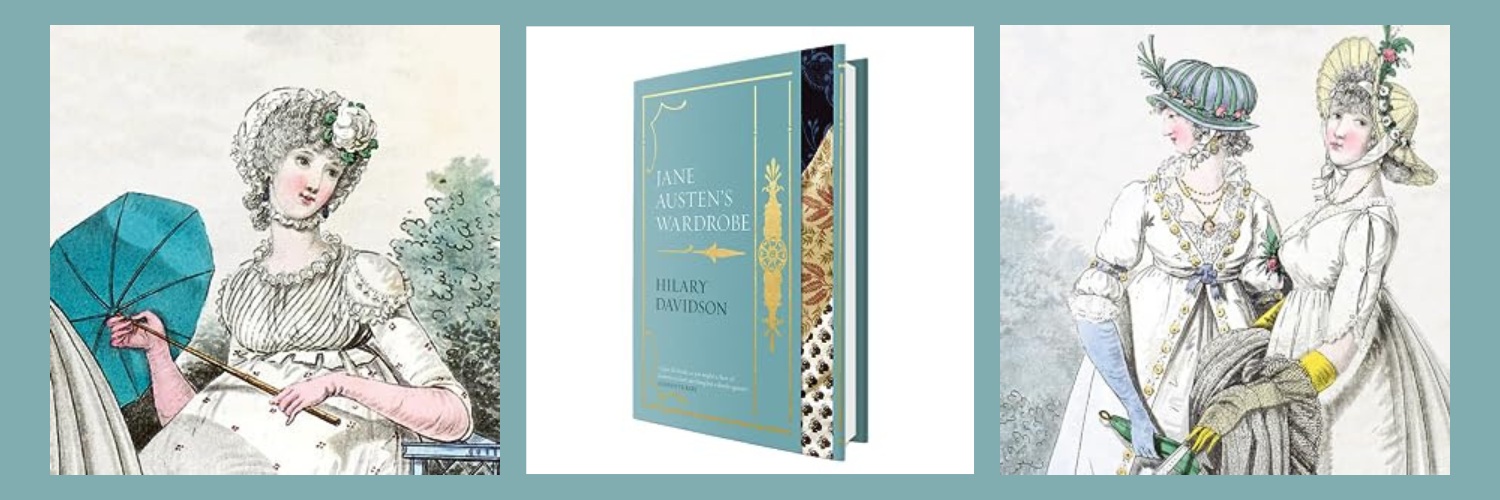
Dear readers, I have an exquisite new book to share with you today: Jane Austen’s Wardrobe by Hilary Davidson!

Filled with incredible photos and written information, it’s one of the most detailed books I’ve seen in a long time on this topic. Not only is it beautiful, it is filled with fascinating information on one of my most favorite topics.

This is my new favorite book on Jane Austen’s Regency Fashion. I know I’ll continue to pour over it for years to come!
Austen’s Wardrobe by Category

Within the pages of this lovely book, Davidson works her way through Austen’s personal wardrobe chronologically, from head to toe. Davidson’s system for cataloging Austen’s wardrobe is fascinating! For those of us who delight in a linear and/or chronological order to a wide and varied topic, Davidson definitely checks all the boxes.

First, she breaks all of Austen’s clothing down into the following categories:

  • Clothes Press: Gowns
  • Closet: Spencers, Pelisses and Outer Garments
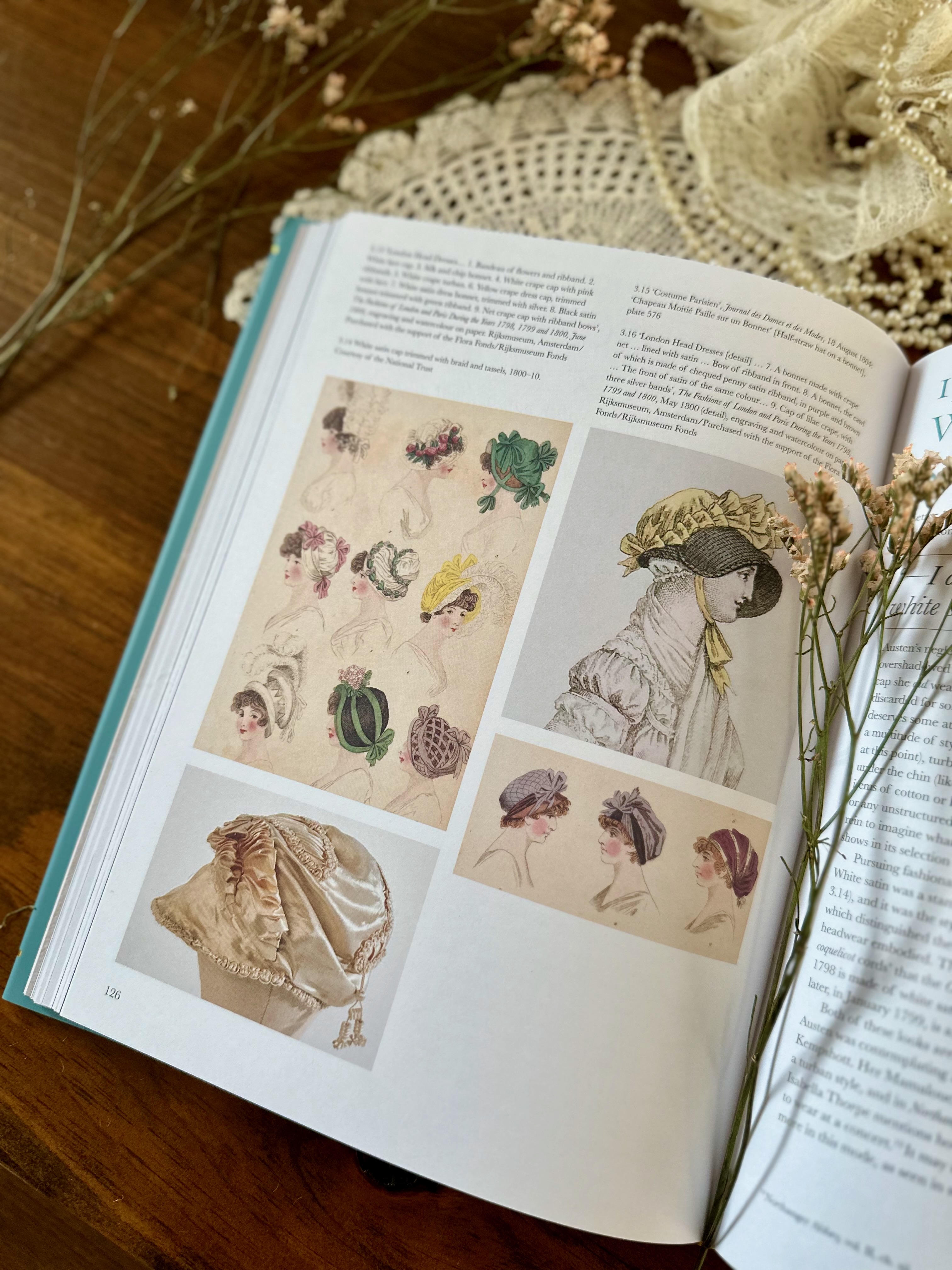
  • Band Box: Hats, Caps and Bonnets
  • Shelves: Shawls, Tippets, Cloaks and Shoes
  • Dressing Table: Gloves, Fans, Flowers, Trims and Handkerchiefs
  • Jewelery Box: Necklaces, Rings and Bracelets
  • Drawers: Undergarments and Nightwear

Davidson even includes several pages of sketches, descriptions, and explanations for Jane’s “Portrait Gown” – which I found completely engrossing.

Austen’s Letters Quoted

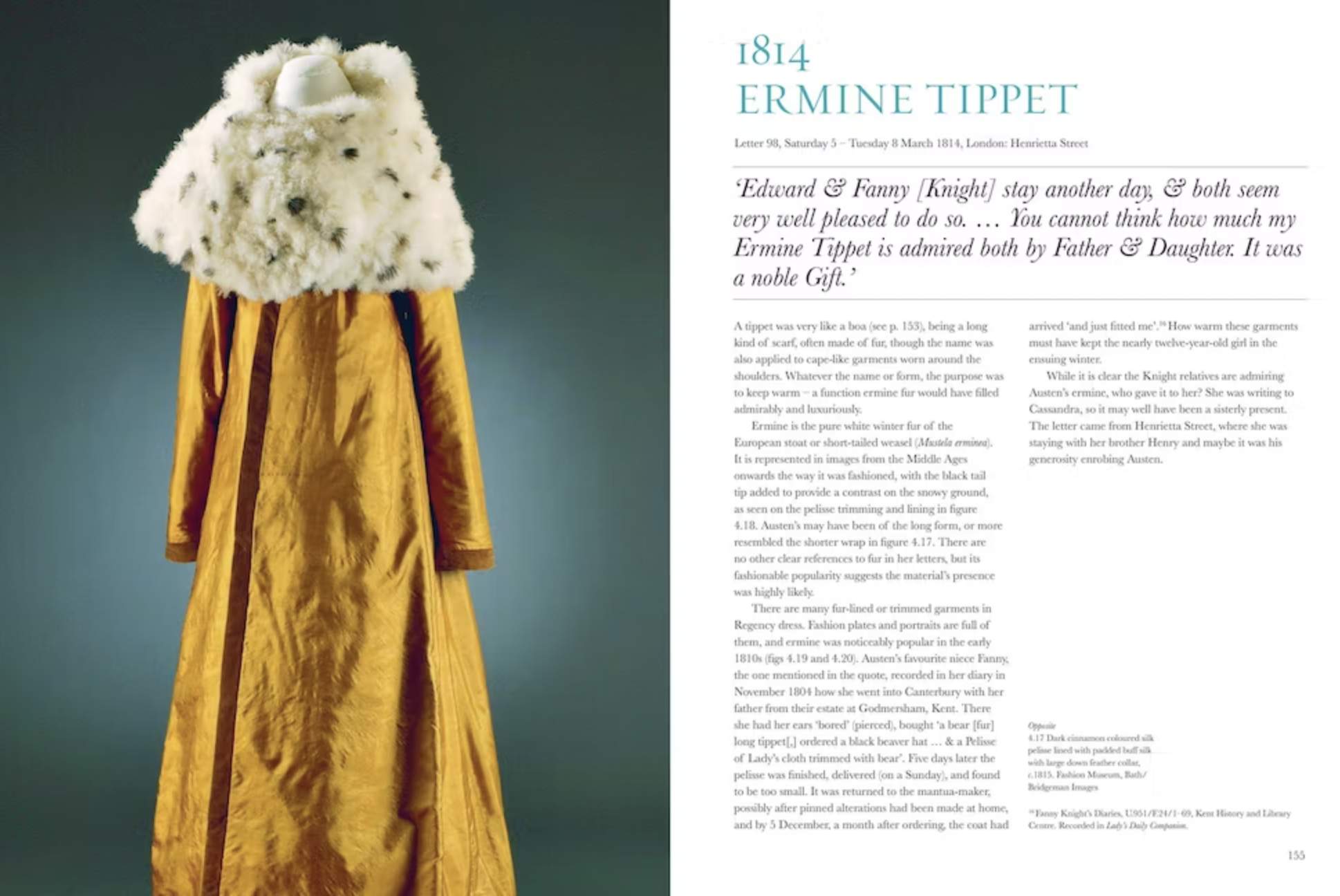
Next, Davidson utilizes Austen’s personal letters to explore every inch of Austen’s wardrobe, working her way through each category in chronological order. To do this, she shares one quote at time, citing portions of letters that mention Austen’s clothing. Then, for each article of clothing, every hat, and every piece of jewelry, she explains that quote in great detail and provides photos to aid our understanding.

For instance, Austen writes this in Letter 65:

“I can easily suppose that your six weeks here will be fully occupied, were it only in lengthening the waists of your gowns. I have pretty well arranged my spring & summer plans of that kind, & mean to wear out my spotted Muslin before I go. –You will exclaim at this–but mine has signs of feebleness, which with a little care may come to something.”

Tuesday 17 – Wednesday 18 January, 1809, Castle Square

Davidson provides photos of spotted muslin fabric swatches and a photo of a dress made of spotted muslin, dated 1805-10. Then she explains the muslin fabric, provides quotes from Austen’s novels about muslin dresses, and explains Austen’s quote. She goes over the dress styles, what was involved in “lengthening the waist” of a gown, the meaning of “worked” fabric, and the ins and outs of fragile fabrics of that time period, including how women used belts to cover holes in the fabric when a waist was lengthened.

I found this incredibly interesting because I’ve always been curious about Austen’s extensive quotes about her dresses and hats in her letters. The result is a delightful (and sometimes hilarious) tour through Jane Austen’s closet in her own words, with pictures and explanations to match!

Here are several more examples, provided by Yale University Press:
Informative and Beautiful

Like many of Austen’s heroines, this book is both intelligent and beautiful. Inside and out, this book is absolutely stunning. The photos provide a detailed look into Jane Austen’s clothing that is hard to find, especially all in one place. This book feels like a worldwide museum tour of all the most exquisite clothing artifacts from Austen’s time.

This is the perfect addition to any Jane Austen library – and it will look gorgeous on your coffee table!

Book Description

Hilary Davidson delves into the clothing of one of the world’s great authors, providing unique and intimate insight into her everyday life and material world.
 
Acclaimed dress historian and Austen expert Hilary Davidson reveals, for the first time, the wardrobe of one of the world’s most celebrated authors. Despite her acknowledged brilliance on the page, Jane Austen has all too often been accused of dowdiness in her appearance. Drawing on Austen’s 161 known letters, as well as her own surviving garments and accessories, this book assembles examples of the variety of clothes she would have possessed—from gowns and coats to shoes and undergarments—to tell a very different story.

The Jane Austen Hilary Davidson discovers is alert to fashion trends but thrifty and eager to reuse and repurpose clothing. Her renowned irony and wit peppers her letters, describing clothes, shopping, and taste. Jane Austen’s Wardrobe offers the rare pleasure of a glimpse inside the closet of a stylish dresser and perpetually fascinating writer.

About the Author

Hilary Davidson is a dress, textile and fashion historian and curator. Her work encompasses making and knowing, things and theory, with an extraordinary understanding of how historic clothing objects come to be and how they function in culture.

Hilary is equally skilled in analysing historical and archaeological material culture artefacts; presenting engaging, fascinating talks to diverse audiences; and producing influential academic research.

Her extensive experience includes:

  • Scholarly research
  • Lecturing, teaching and public talks
  • Broadcasting and journalism
  • Historic dressmaking

Hilary trained as a bespoke shoemaker in her native Australia before completing a Masters in the History of Textiles and Dress at Winchester School of Art (University of Southampton) in 2004. Since graduating, Hilary’s practice has concerned the relationship between theoretical and highly material approaches to dress history, especially in the early modern and medieval periods.

As a skilled and meticulous handsewer, she has created replica clothing projects for a number of museums, including a ground-breaking replication of Jane Austen’s pelisse. At the same time she lectured extensively on fashion history, theory and culture, on semiotics, and cultural mythologies, especially red shoes.

In 2007 Hilary became curator of fashion and decorative arts at the Museum of London. She contributed to the £20 million permanent gallery redevelopment opening in 2010, and curated an exhibition on pirates, while continuing to publish, teach and lecture in the UK and internationally. In collaboration with Museum of London Archaeology, Hilary began analysing archaeological textiles and continues to cross disciplines by consulting in this area in England and Australia. She also worked on the AHRC 5-star rated Early Modern Dress and Textiles Network (2007-2009) and from 2011 has appeared as an expert on a number of BBC historical television programmes, and as a frequent radio guest speaker in London and Sydney.

From 2012 Hilary worked between Sydney and London as a freelance curator, historian, broadcaster, teacher, lecturer, consultant and designer, while working on a PhD in Archaeology at La Trobe University, Melbourne. In addition to historical studies she has been a jewellery designer, graphic designer, photographer, gallerist, and worked in retail fashion and vintage clothing. In 2022 she moved to New York City to take up the role of Associate Professor and Chair of the MA Fashion and Textile Studies: History, Theory, Museum Practice at the Fashion Institute of Technology.

Hilary has taught and lectured extensively, including at the University of Southampton, Central St Martins, the University of Cambridge, the University of Glasgow, New York University London, The American University Paris, Fashion Design Studio TAFE Sydney and the National Institute of Dramatic Art (NIDA), Sydney. She speaks regularly at academic conferences and to the public. Her first monograph book was Dress in the Age of Jane Austen (2019) followed by Jane Austen’s Wardrobe in 2023. Her extensive publications can be found on Academia and ResearchGate.
To Order the Book:

You can order the book by clicking HERE
or by clicking the image below:

Recommended Book Gift

I hope you’ve enjoyed this short tour of this stunning new book by Hilary Davidson. If you’re looking for a gift for a fellow Jane Austen fan, or if your friends or family members need an idea for a gift for you this holiday season, I highly recommend this one!
RACHEL DODGE teaches college English classes, gives talks at libraries, teas, and book clubs, and writes for Jane Austen’s World blog. She is the bestselling author of The Little Women DevotionalThe Anne of Green Gables Devotional and Praying with Jane: 31 Days Through the Prayers of Jane Austen. Now Available: The Secret Garden Devotional! You can visit Rachel online at www.RachelDodge.com.

Read Full Post »

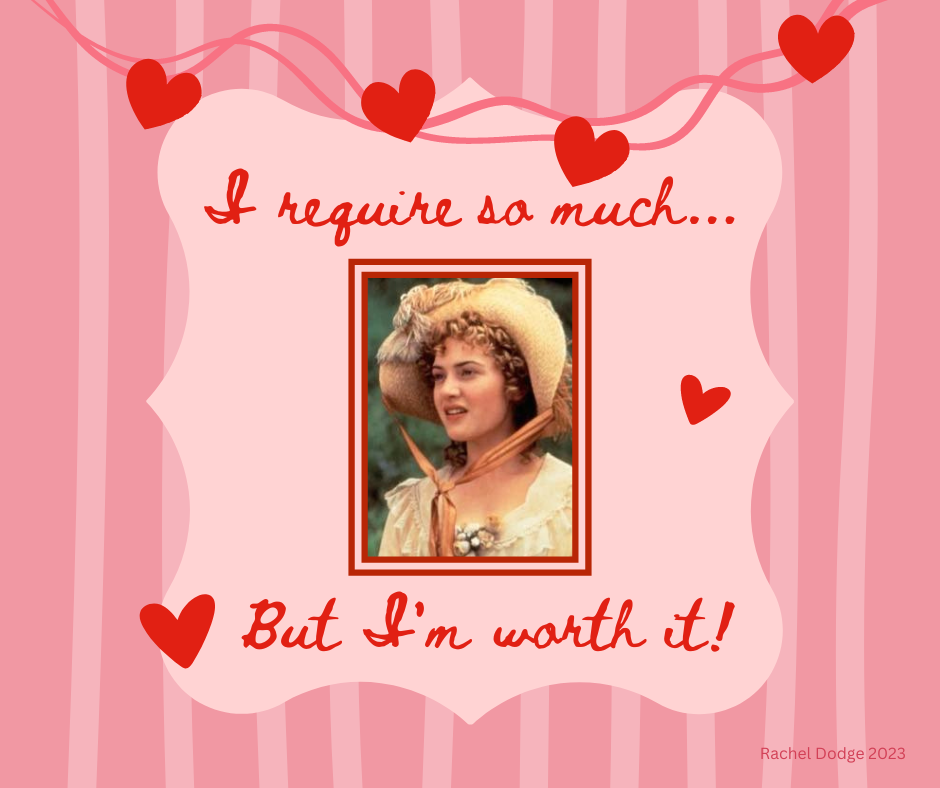
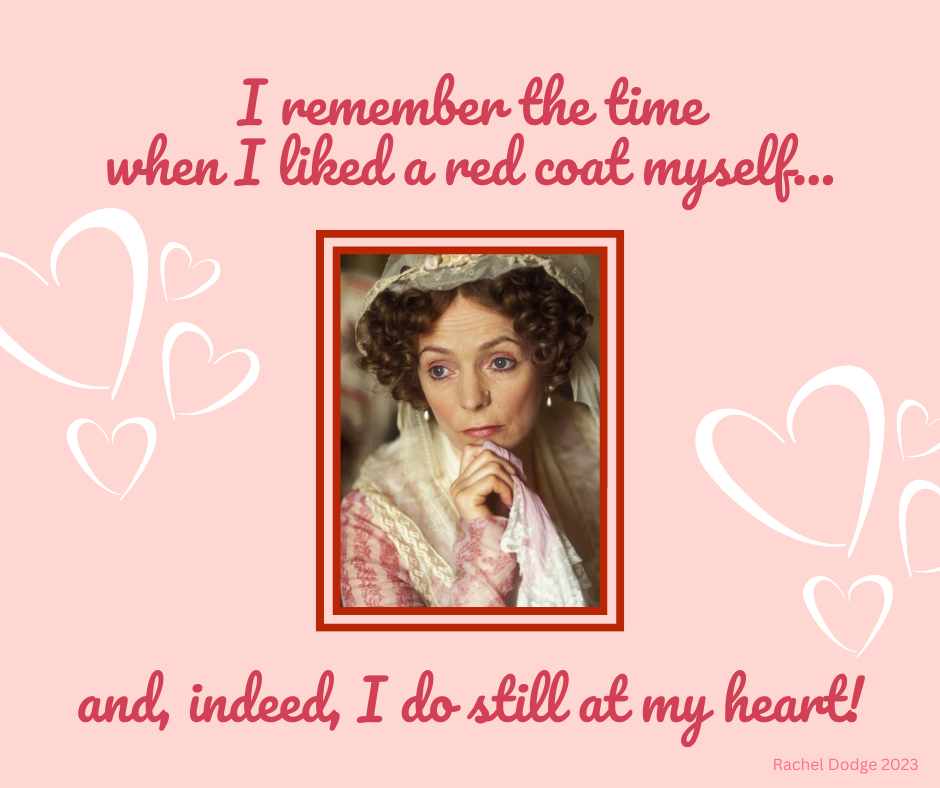
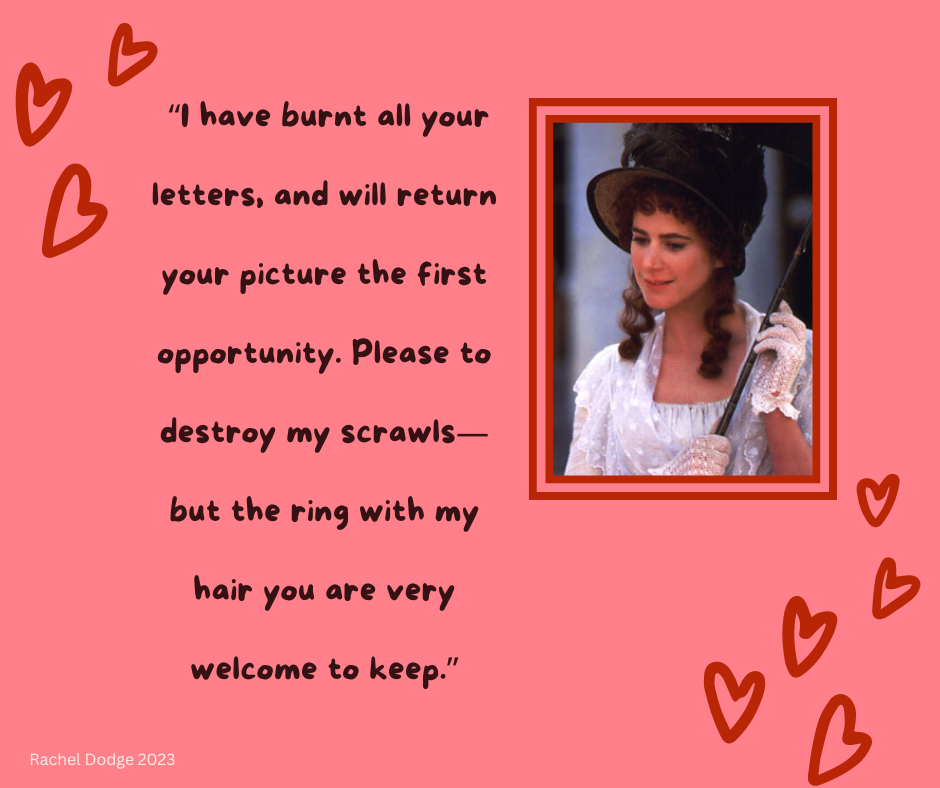
Happy Valentine’s Day, JAW friends! Are you sending cards this year or planning something special? I found it interesting to read about Valentine’s Day during the Regency Era and found several histories of the holiday online. A short overview from The Jane Austen Centre proved intriguing.

As I thought about the kinds of Valentine’s Day cards and letters Jane Austen’s characters might have sent to one another, I had a few creative ideas. The following is the fruit of an hour spent laughing over what some of Austen’s most famous (and silly) characters might say if they sent out Valentine’s Day cards.

Enjoy!

True Romantics

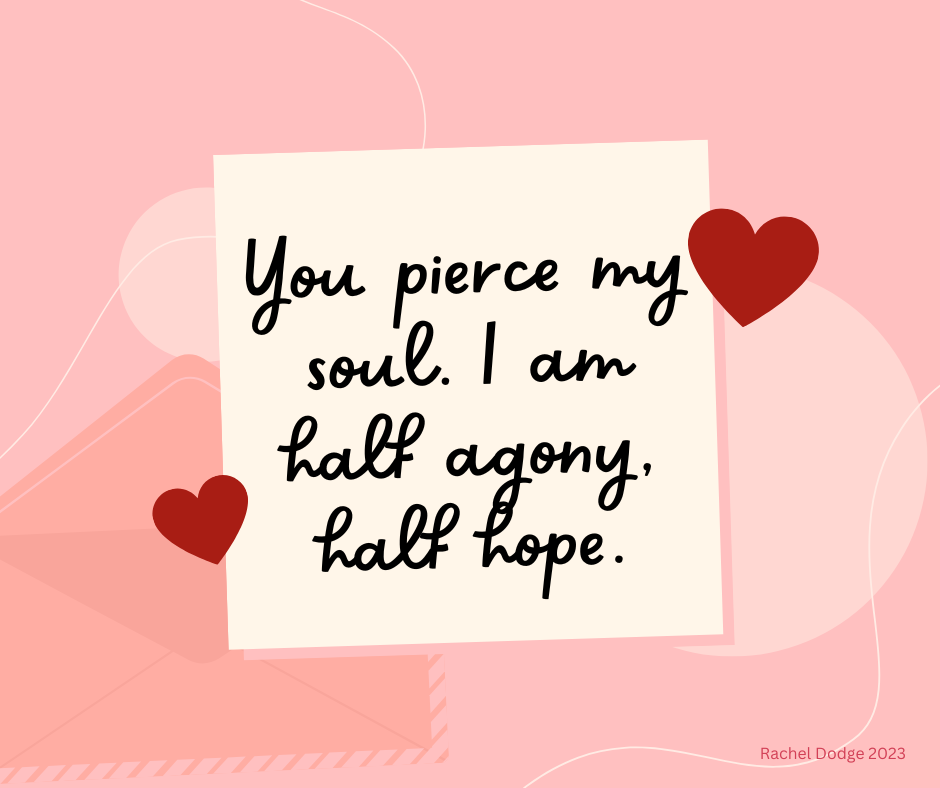
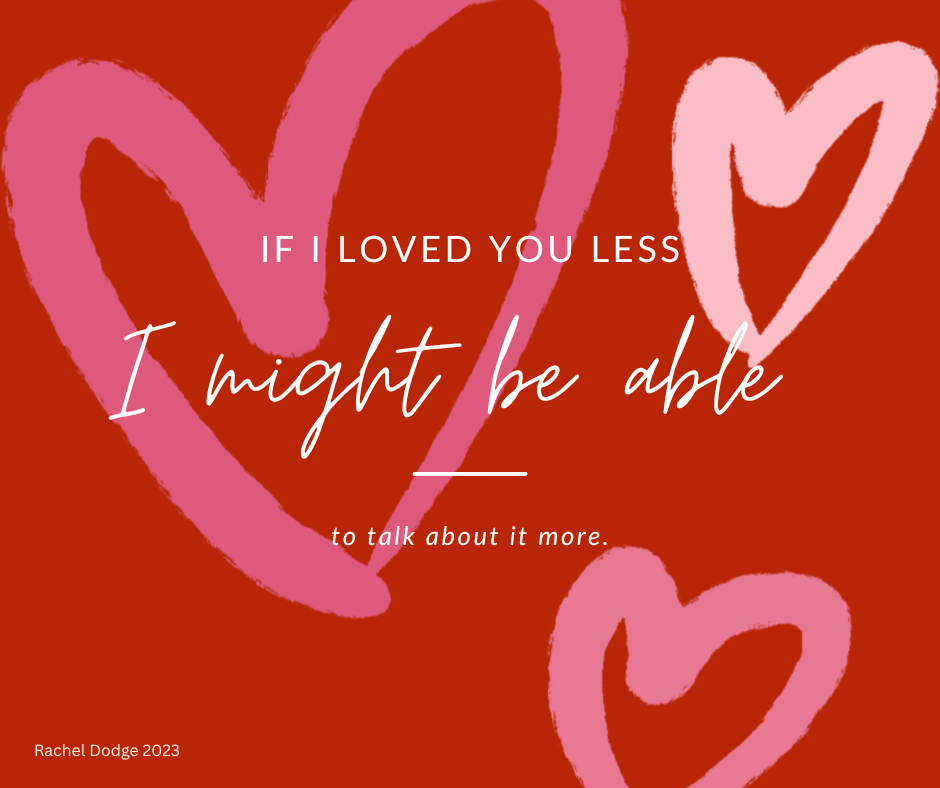
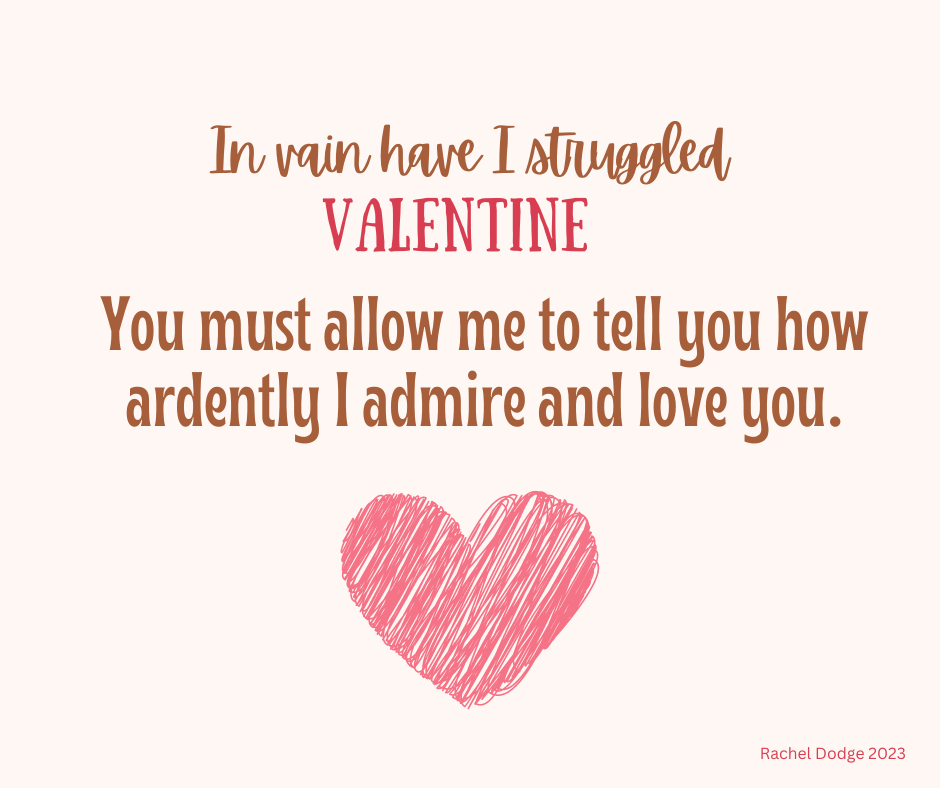
And finally, a few Jane Austen-themed Valentine’s Day graphics that you might like to share with a loved one! After all, she did write some of the most romantic lines in the English language!

A very Happy Valentine’s Day to you, from all of us here at Jane Austen’s World! May your day be filled with love, laughter, friends, sweet treats, and good books. Feel free to share this post with your friends and loved ones!


RACHEL DODGE teaches college English classes, gives talks at libraries, teas, and book clubs, and writes for Jane Austen’s World blog. She is the bestselling author of The Little Women DevotionalThe Anne of Green Gables Devotional and Praying with Jane: 31 Days Through the Prayers of Jane Austen. Now Available: The Secret Garden Devotional! You can visit Rachel online at www.RachelDodge.com.

Read Full Post »

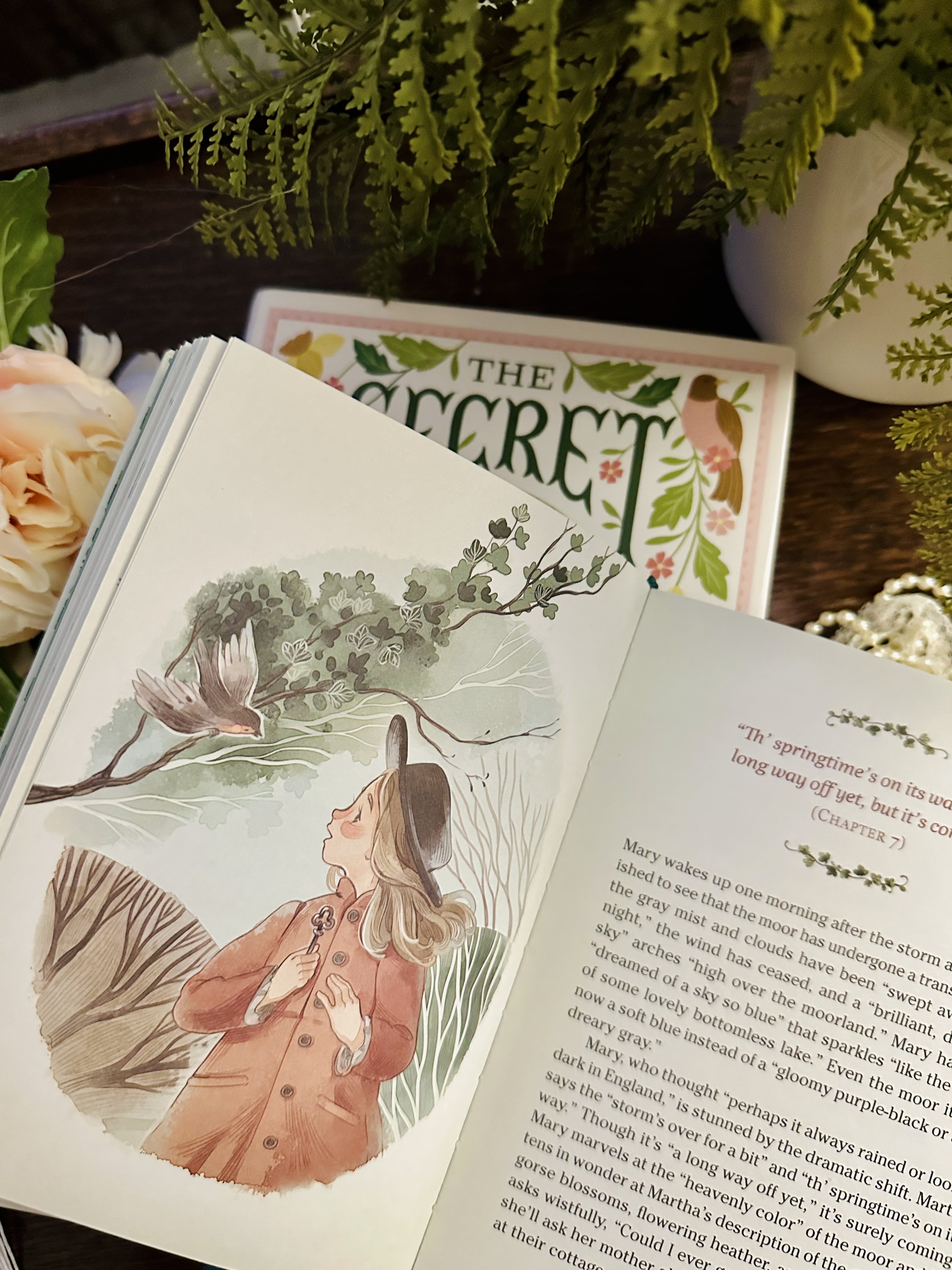
When I hosted a read-along of The Secret Garden by Frances Hodgson Burnett earlier this fall, we spent time discussing the wonderful personality, character, and symbolism of the robin “who showed the way” to the secret garden. After hearing many intriguing tales that members of the group had heard about robins at Christmas time, I decided to read more for myself. I especially wanted to know why the robin features so often on British Christmas cards, tins, and decorations – especially those that have a more vintage feel.

And, of course, I wanted to know if Robin Redbreast was part of the Christmas season during Jane Austen’s lifetime or if that came about later. What I found was fascinating!

Robins as Symbols of Good Will

If you’ve ever seen a robin, you’ll notice that the friendly brown bird’s breast is more of an orange color than a reddish hue. Apparently, the color orange didn’t originally have a name in the UK. Thus, according to tradition, the robin was named for its “red” breast and it stuck.

Robins in art and literature are always associated with good will and friendliness. They are known to be the gardener’s friend. They are intelligent, happy birds who almost seem as though they are communicating. Robins also symbolize spring, good fortune, new beginnings, and rebirth.

Robins are so generally known as happy, cheerful birds that many field guides even say that the robin’s call sounds like this: “Cheer up! Cheerily! Cheer up! Cheerily!”

Wikipedia Commons, European Robin.

Robins as Guides in Literature

Robins feature throughout British folklore, stories, and classic literature. They are usually bright, friendly, happy, cheerful birds. They are often depicted as clever and intelligent birds.

The robin features in The Secret Garden as Mary Lennox’s first friend in England and the one who shows the way to the door of the mysterious garden and to the key to the locked door:

“You showed me where the key was yesterday,” Mary said. “You ought to show me the door today; but I don’t believe you know!”

The robin flew from his swinging spray of ivy on to the top of the wall and he opened his beak and sang a loud, lovely trill, merely to show off. Nothing in the world is quite as adorably lovely as a robin when he shows off—and they are nearly always doing it.

One of the nice little gusts of wind rushed down the walk, and it was a stronger one than the rest. It was strong enough to wave the branches of the trees, and it was more than strong enough to sway the trailing sprays of untrimmed ivy hanging from the wall. Mary had stepped close to the robin, and suddenly the gust of wind swung aside some loose ivy trails, and more suddenly still she jumped toward it and caught it in her hand. This she did because she had seen something under it—a round knob which had been covered by the leaves hanging over it. It was the knob of a door.

The Secret Garden

In C.S. Lewis’ Chronicles of Narnia, a robin is a guide once again, helping the Pevensies find their way:

They were all still, wondering what to do next, when Lucy said, “Look! There’s a robin, with such a red breast. It’s the first bird I’ve seen here. I say!—I wonder can birds talk in Narnia? It almost looks as if it wanted to say something to us.” Then she turned to the Robin and said, “Please, can you tell us where Tumnus the Faun has been taken to?” As she said this she took a step towards the bird. It at once hopped away but only as far as to the next tree. There it perched and looked at them very hard as if it understood all they had been saying. Almost without noticing that they had done so, the four children went a step or two nearer to it. At this the Robin flew away again to the next tree and once more looked at them very hard. (You couldn’t have found a robin with a redder chest or a brighter eye.)

“Do you know,” said Lucy, “I really believe he means us to follow him.”

“I’ve an idea he does,” said Susan, “what do you think, Peter?”

“Well, we might as well try it,” answered Peter.

The Robin appeared to understand the matter thoroughly. It kept going from tree to tree, always a few yards ahead of them but always so near that they could easily follow it. In this way it led them on . . .

The Lion, the Witch, and the Wardrobe

In fact, robins are so well known as symbols of goodness, when Edmund asks Peter, “How do we know which side that bird is on? Why shouldn’t it be leading us into a trap?” Peter replies, “That’s a nasty idea. Still—a robin you know. They’re good birds in all the stories I’ve ever read. I’m sure a robin wouldn’t be on the wrong side.

Robins and December

Robins in the UK (European Robins) don’t migrate; they stay in England year-round. They are territorial birds and they do not often leave their homes or nesting areas. It’s common to see them out and about during the winter because that is when they begin to look for mates. This is another reason robins have become synonymous with December and winter time.

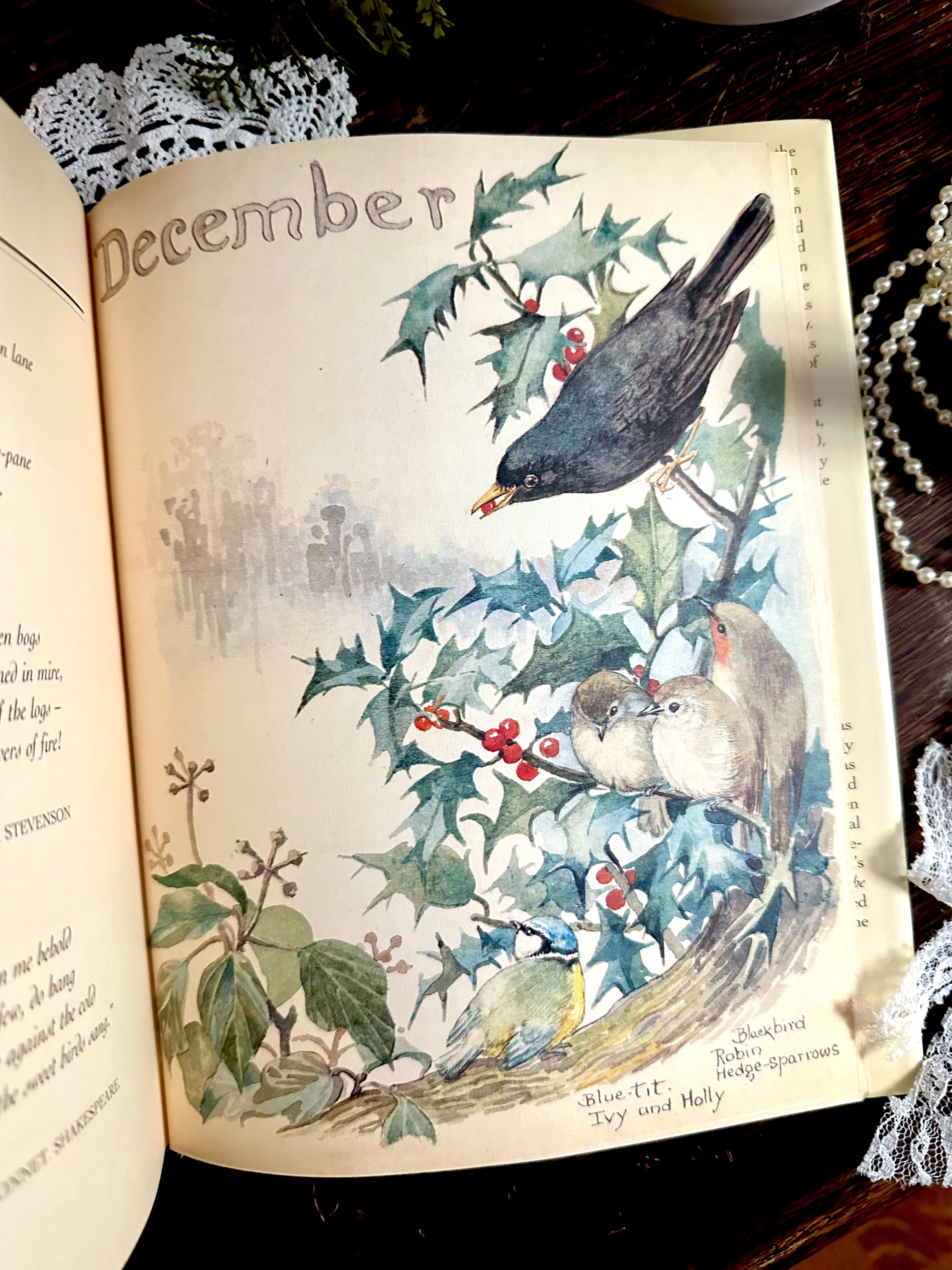
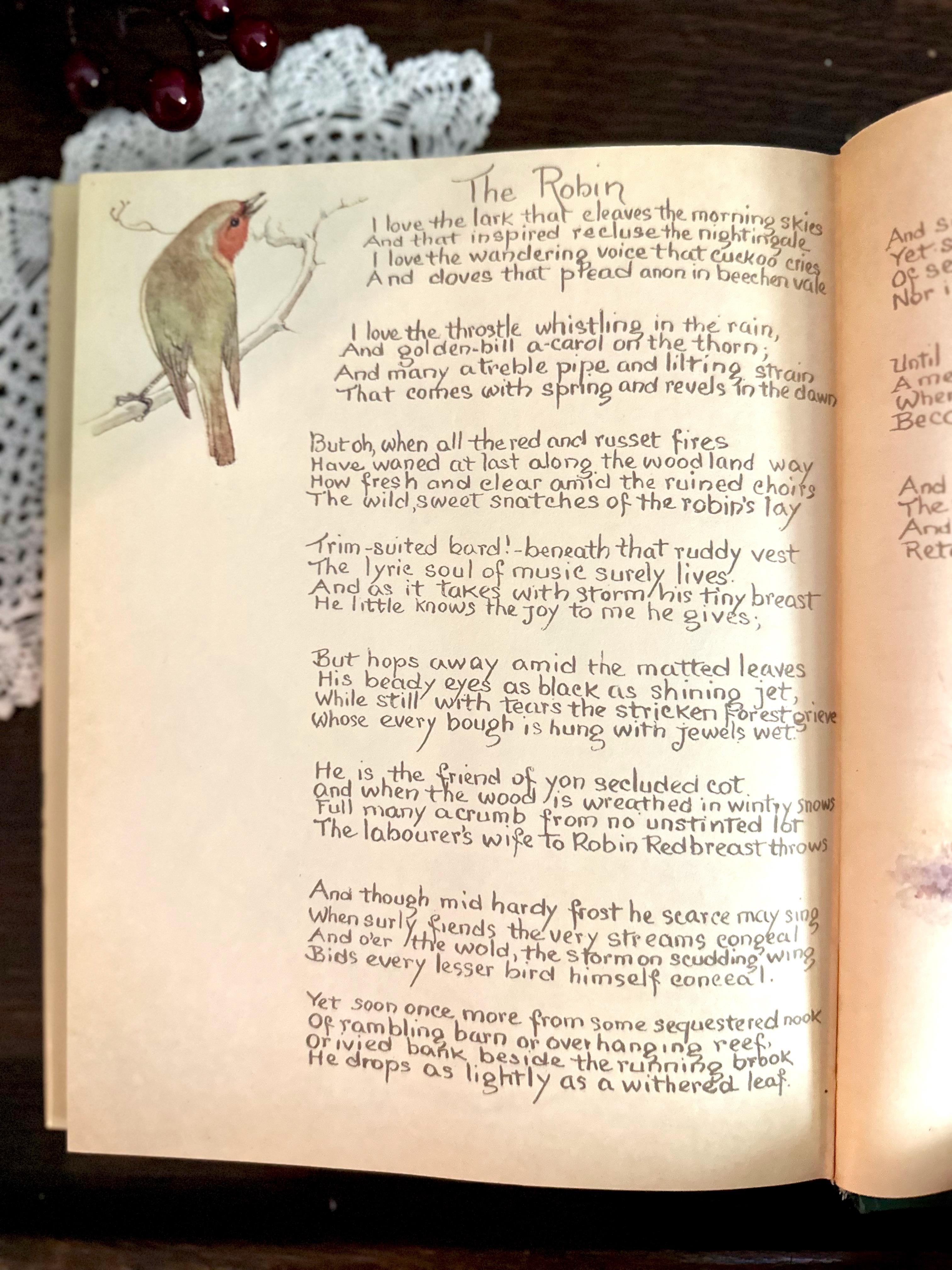
In The Nature Notes of an Edwardian Lady (1905) by Edith Holden, a journal of watercolor paintings of flowers, plants, birds and butterflies, along with poems and anecdotes, the author has a section devoted to each month of the year. For December, she includes this watercolor of several birds, including a robin. She also includes a poem about robins.

Robins and Christianity

Several old English fables and folk tales link the robin to Christianity. There are many versions of the tales told, but there are two that are quite popular. The first one explains that the robin used to be a plain, brown bird with no red breast, but it went to sing to Jesus when he was dying on the cross. The blood from Jesus’ wounds are said to have stained the bird’s breast, thereby giving it a red breast.

In another tale, the robin was present at the birth of Jesus. It was a cold night in Bethlehem, and the story goes that a brown bird came near and fanned the flames of a small fire to help keep the baby Jesus warm. His breast was scorched by the flames and turned red thereafter.

There are other similar old fables and tales that link robins with Christmas in the Christian tradition. Perhaps you’ve heard one. (If so, please share it in the comments.) There have been many stories told and written since that feature the robin or other friendly birds at Christmas.

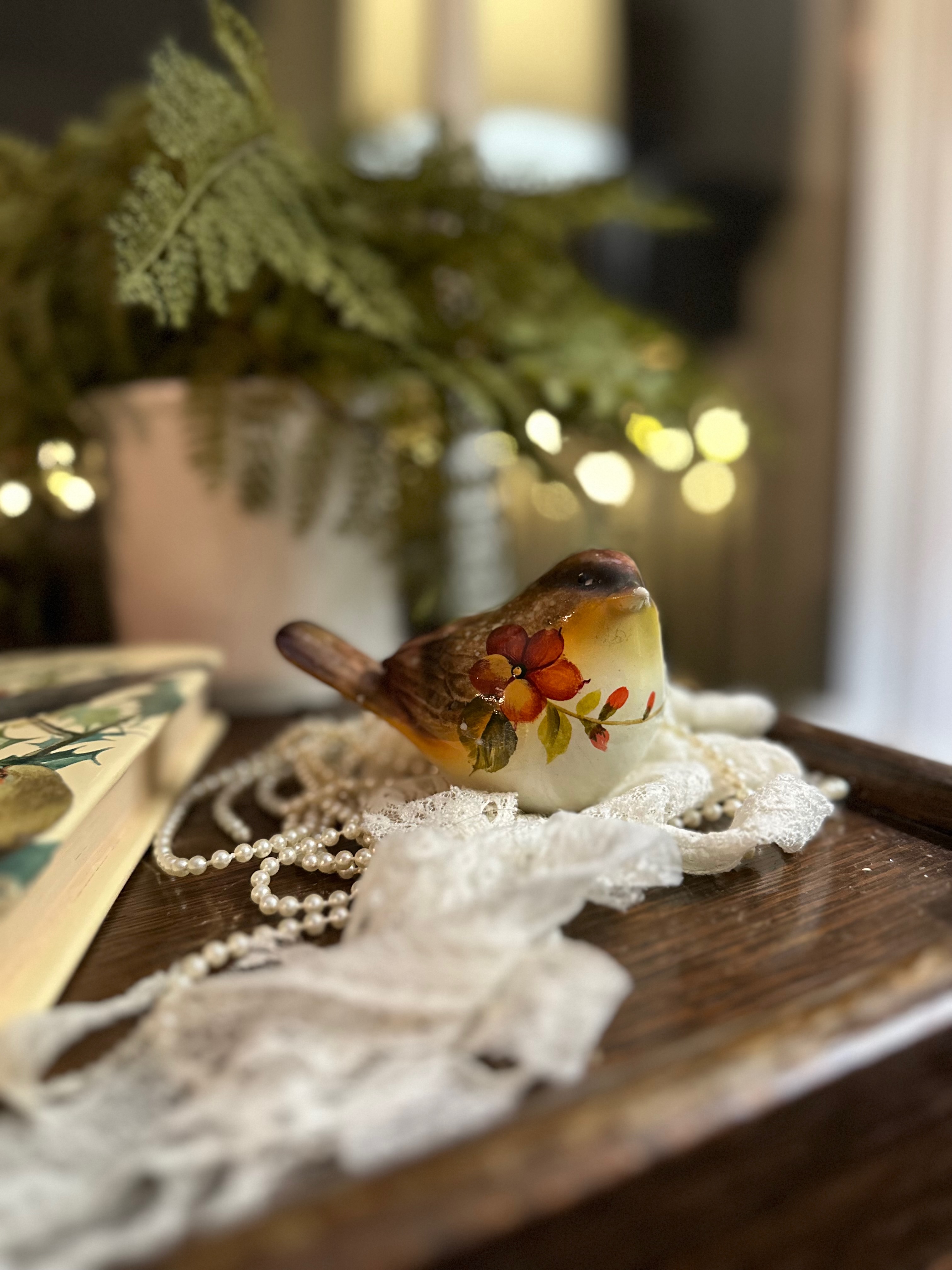
Photo by Rachel Dodge, 2022

Robins and Victorian Christmas Cards

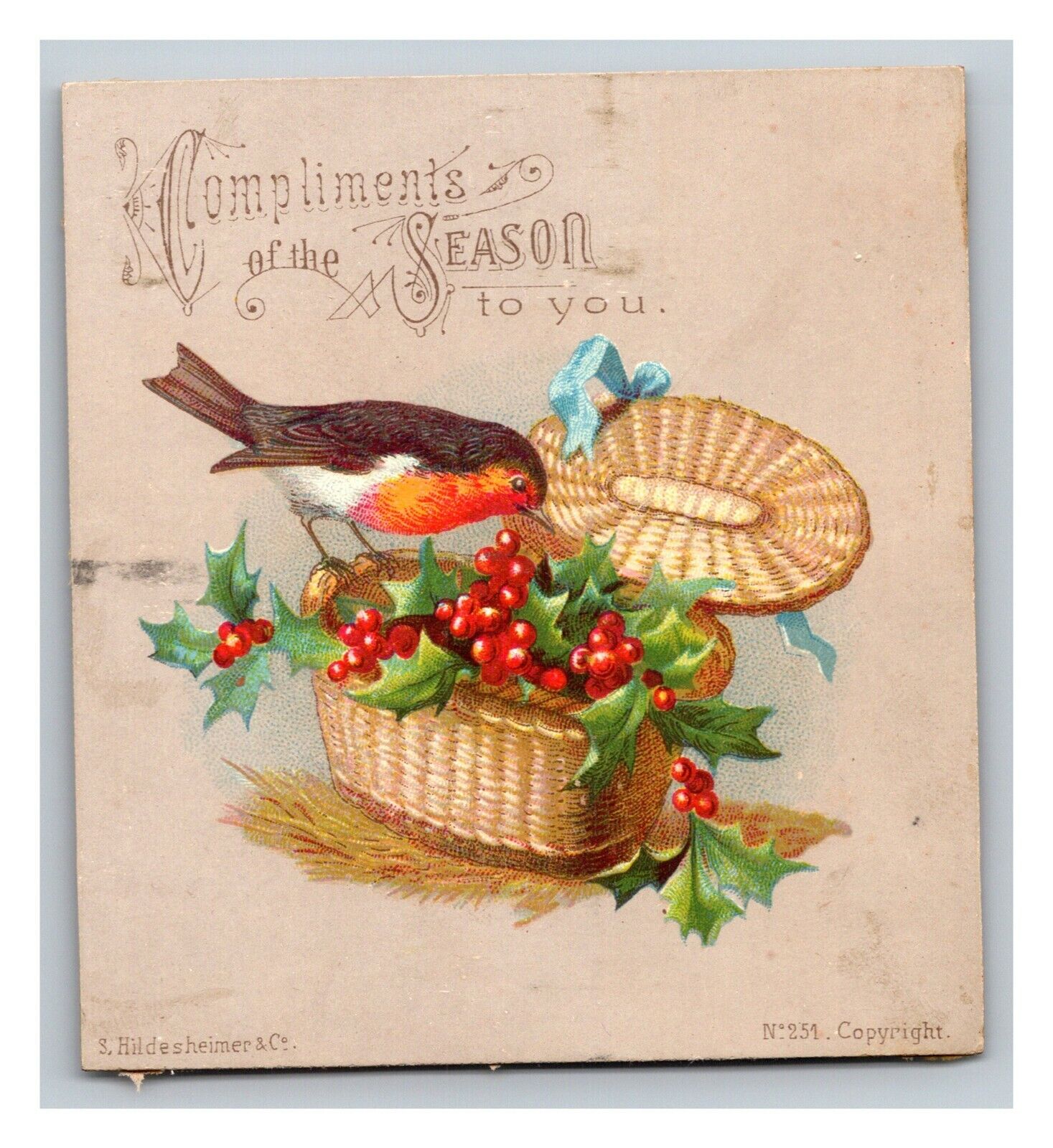
If you’ve seen Christmas cards and decorations featuring a robin redbreast, it most likely came about during the Victorian era.

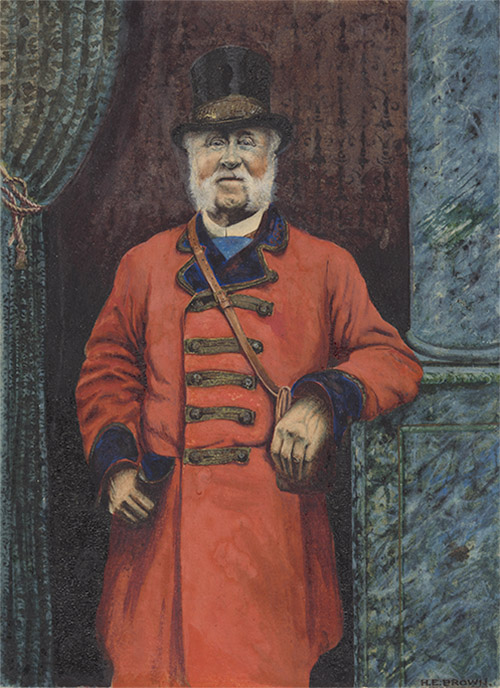
During the mid-1800s in England, Christmas cards became popular. People even began to send Christmas greetings by post. At the time, Victorian postmen wore red coats. Tradition has it that these “red breasted robins” went from house to house and from street to street, delivering season’s greetings and well-wishes.

Moses James Nobbs: (Last of the Mail Coach Guards), Watercolour by H E Brown. C 1890. Courtesy of The Postal Museum.

Ever since the days of these red-breasted mail carriers, robins have been featured on Christmas cards. Many vintage Christmas cards from that era even have drawings of a robin with a letter in its mouth. Robins delivering the mail – even sometimes dressed as mail carriers – has been part of traditional Christmas culture ever since!

Victorian Christmas Card, Ebay.

Robins and Jane Austen

Would Jane Austen have sent Christmas cards or been familiar with the robin red-breast at Christmas time? No, she would not. She definitely would not have sent cards at Christmas. However, she may have been familiar with some of the old tales about the robin. And of course, I’m sure she met many robins on her rambles through the country lanes of Hampshire.

Yet again, the Victorians introduced another beloved Christian tradition and symbol that we’ve all come to enjoy and recognize.

If you’re feeling blue this Christmas or winter, try some bird-watching. It’s such fun and you just might hear a friendly, “Cheer up! Cheerily! Cheer up! Cheerily!”


RACHEL DODGE teaches college English classes, gives talks at libraries, teas, and book clubs, and writes for Jane Austen’s World blog. She is the bestselling author of The Little Women DevotionalThe Anne of Green Gables Devotional and Praying with Jane: 31 Days Through the Prayers of Jane Austen. Now Available: The Secret Garden Devotional! You can visit Rachel online at www.RachelDodge.com.
Read Full Post »

Having just made a big move myself, I was intrigued by the thought that Jane Austen herself—not to mention several of her characters—knew what it took to move an entire household from one place to another.

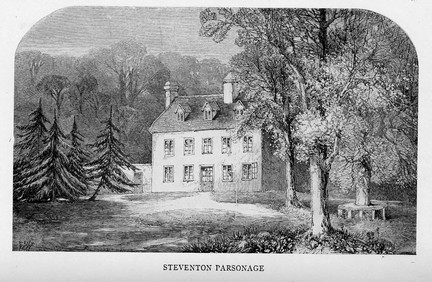
One of the best resources available to us regarding a big move is the letter Austen wrote to Cassandra on January 3, 1801, prior to their family’s move to Bath from Steventon. From it, and from the details in her novels, we learn many interesting details about what a big move entailed.

If you’ve ever wanted some Regency advice on moving house, this is for you!

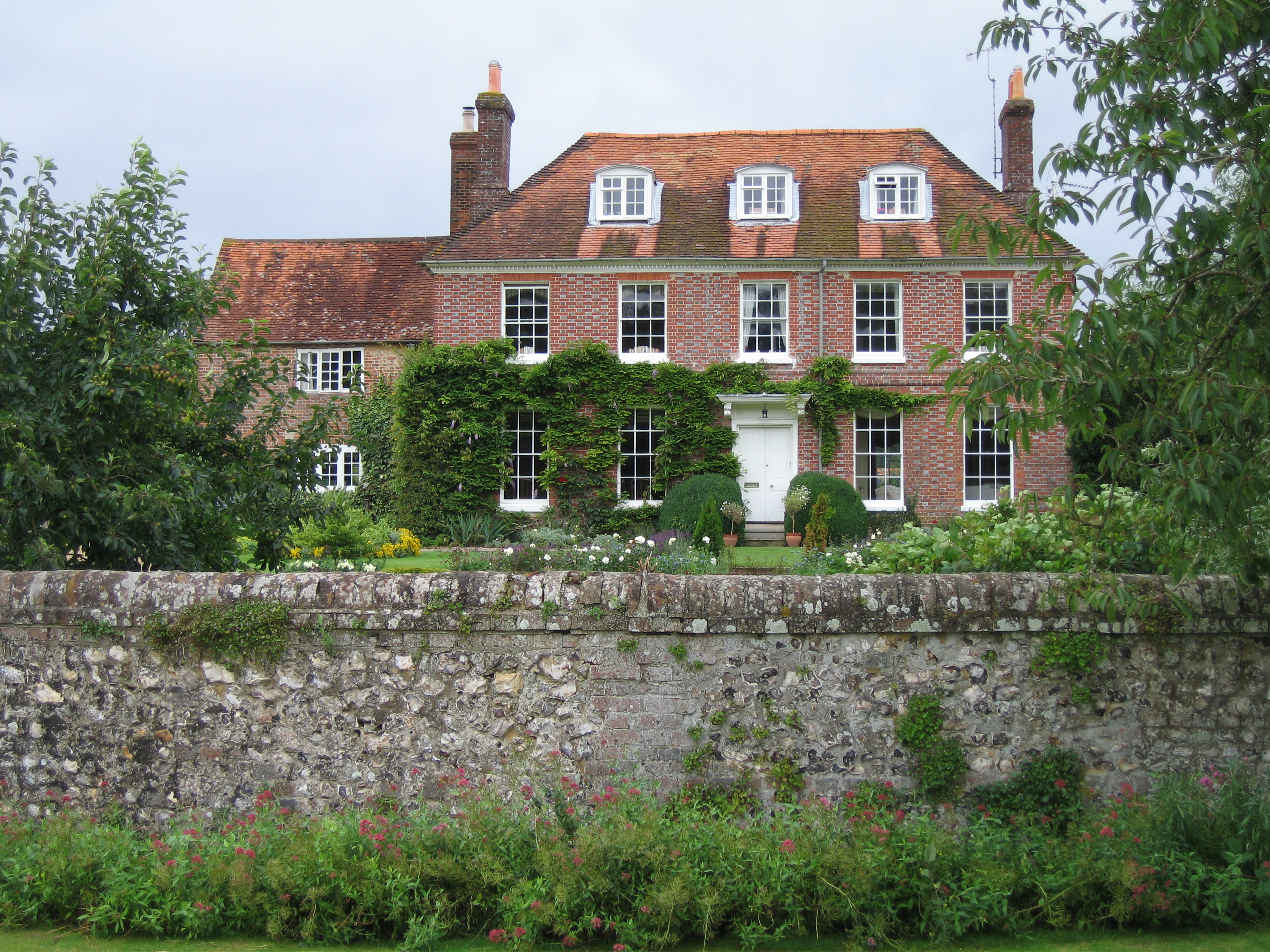
Image of Steventon Rectory, Wikimedia Commons
Steventon Rectory, Wikimedia Commons

Send Your Servants Ahead

In terms of logistics, members of the genteel class usually sent servants ahead of them when they went from one house to another, as we see when Mr. Bingley goes to Netherfield:

Why, my dear, you must know, Mrs. Long says that Netherfield is taken by a young man of large fortune from the north of England; that he came down on Monday in a chaise and four to see the place, and was so much delighted with it that he agreed with Mr. Morris immediately; that he is to take possession before Michaelmas, and some of his servants are to be in the house by the end of next week.

Pride and Prejudice

Similarly, Elinor and Marianne, when arriving in London with Mrs. Jennings after three days of travel, are greeted by “all the luxury of a good fire.” The house is “handsome, and handsomely fitted up.” Elinor writes to her mother before a dinner that will not “be ready in less than two hours from their arrival.” It’s clear that Mrs. Jennings employs servants who clean, cook, shop, and prepare the house for her visits.

Hire Good People

When preparing to move to Bath, Jane Austen’s mother wanted to keep two maids: “My mother looks forward with as much certainty as you can do to our keeping two maids; my father is the only one not in the secret.”

With her typical flair for humor, Austen hoped to engage other servants as well: “We plan having a steady cook and a young, giddy housemaid, with a sedate, middle-aged man, who is to undertake the double office of husband to the former and sweetheart to the latter. No children, of course, to be allowed on either side.”

Do Your Research

In Austen’s letter, she talks about several areas of Bath where they hoped to find a house: Westgate Buildings, Charles Street, and “some of the short streets leading from Laura Place or Pulteney Street.”

About Westgate Buildings, Austen wrote: “though quite in the lower part of the town, are not badly situated themselves. The street is broad, and has rather a good appearance.” Regarding Charles Street, she thought it “preferable”: “The buildings are new, and its nearness to Kingsmead Fields would be a pleasant circumstance.” And concerning the third area: “The houses in the streets near Laura Place I should expect to be above our price. Gay Street would be too high, except only the lower house on the left-hand side as you ascend.”

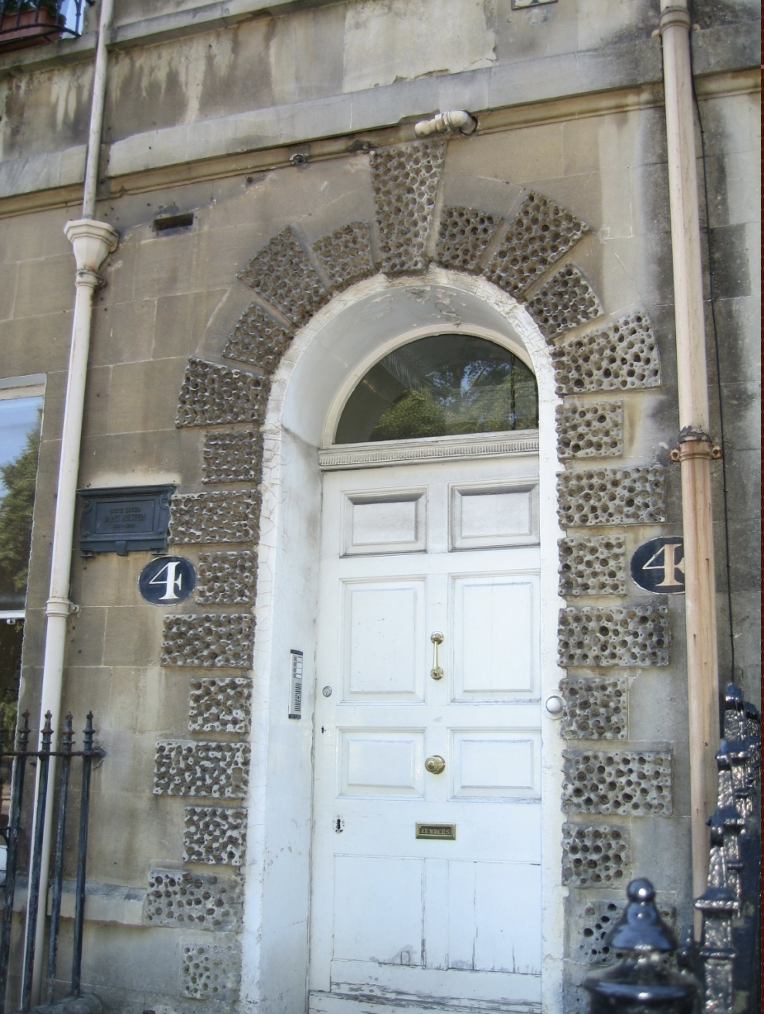
4 Syndey Place, Bath

Mrs. Austen seemed to have a preference: “her wishes are at present fixed on the corner house in Chapel Row, which opens into Prince’s Street. Her knowledge of it, however, is confined only to the outside, and therefore she is equally uncertain of its being really desirable as of its being to be had.”

None of the Austens were in favor of Oxford Buildings: “we all unite in particular dislike of that part of the town, and therefore hope to escape.”

Bring Your Art

We know from Austen’s letter that they planned to take the following pictures and paintings from Steventon to Bath: “[T]he battle-piece, Mr. Nibbs, Sir William East, and all the old heterogeneous miscellany, manuscript, Scriptural pieces dispersed over the house, are to be given to James.”

Good artwork is hard to find.

Of special note, Jane tells Cassandra, “Your own drawings will not cease to be your own, and the two paintings on tin will be at your disposal.”

Good Furniture is Worth Moving

Apparently, Rev. and Mrs. Austen had a very good bed that was irreplaceable: “My father and mother, wisely aware of the difficulty of finding in all Bath such a bed as their own, have resolved on taking it with them…” Austen wrote this about the rest of the household beds: “all the beds, indeed, that we shall want are to be removed — viz., besides theirs, our own two, the best for a spare one, and two for servants; and these necessary articles will probably be the only material ones that it would answer to send down.”

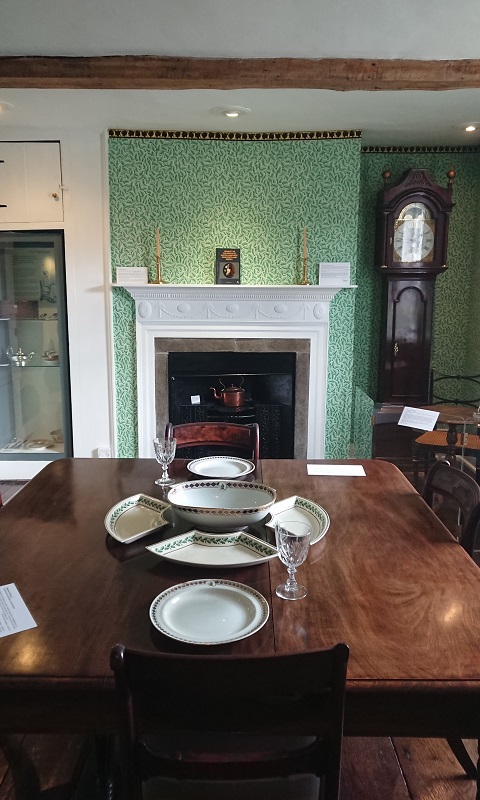
When it came to their dressers, they decided it was time for an upgrade: “I do not think it will be worth while to remove any of our chests of drawers; we shall be able to get some of a much more commodious sort, made of deal, and painted to look very neat…”

Image of dining room at the Jane Austen House Museum
Jane Austen’s House Museum in Chawton.

As to the rest of their furniture, they decided it would be better to replace most of it in Bath: “We have thought at times of removing the sideboard, or a Pembroke table, or some other piece of furniture, but, upon the whole, it has ended in thinking that the trouble and risk of the removal would be more than the advantage of having them at a place where everything may be purchased. Pray send your opinion.”

Jane’s final comments to Cassandra are amusing as ever: “My mother bargains for having no trouble at all in furnishing our house in Bath, and I have engaged for your willingly undertaking to do it all.”

Visit People on the Way

In Austen’s letter, she explains their family travel plans: “[M]y mother and our two selves are to travel down together, and my father follow us afterwards in about a fortnight or three weeks. We have promised to spend a couple of days at Ibthorp in our way. We must all meet at Bath, you know, before we set out for the sea, and, everything considered, I think the first plan as good as any.”

Ibthorpe, Photo by Rachel Dodge

Not So Different

Moving house in Jane Austen’s day was not quite so different from today. Though the modes of transportation and the methods of research and communication were somewhat different, I was delighted to find that the Austens’ moving plans were surprisingly applicable to mine! (Except for the servants.)


RACHEL DODGE teaches college English classes, gives talks at libraries, teas, and book clubs, and writes for Jane Austen’s World blog. She is the bestselling author of The Little Women DevotionalThe Anne of Green Gables Devotional and Praying with Jane: 31 Days Through the Prayers of Jane Austen. Coming this fall: The Secret Garden Devotional. You can visit Rachel online at www.RachelDodge.com.

Read Full Post »

By Brenda S. Cox

Church livings play an important part in most of Jane Austen’s novels.

For example:

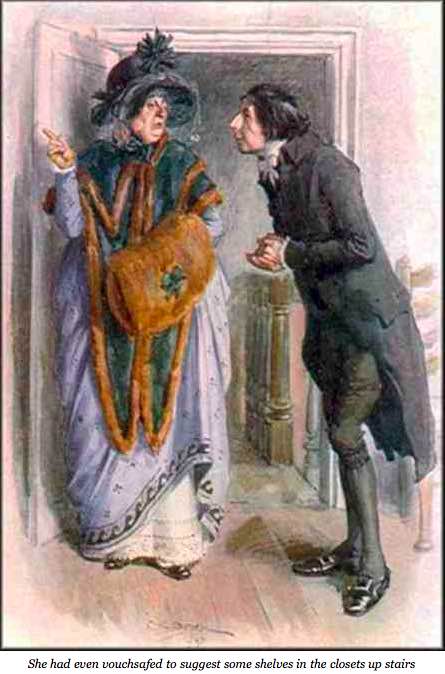
A fortunate chance had recommended him [Mr. Collins] to Lady Catherine de Bourgh when the living of Hunsford was vacant; and the respect which he felt for her high rank, and his veneration for her as his patroness, mingling with a very good opinion of himself, of his authority as a clergyman, and his right as a rector, made him altogether a mixture of pride and obsequiousness, self-importance and humility.—Pride and Prejudice chapter 15

Mr. Collins “venerates” his patron Lady Catherine, who gave him a living as a rector. (C.E. Brock)

A church living was a permanent job as rector or vicar of a parish, and the income, house, and farmland that went along with that.

In a country parish, most of the income came from tithes. People in the parish were legally required to pay the clergyman 10% of their income, which was usually from farming. It might be paid in crops, animals, and eggs, or in cash. During Austen’s time the system was changing over to cash, but many still paid in produce.

The clergyman also sometimes got income from glebe, the farmland that was part of the living. (Austen usually calls this land “meadow.”) And he might get a few pounds a year from the fees people paid for weddings, funerals, etc.

Some parishes in England traditionally had (and still have) a rector. Others traditionally had (and still have) a vicar. Mr. Collins was a rector, like most of Austen’s clergymen. Edward Ferrars is also offered a position as a rector:

“It is a rectory, but a small one”—Col. Brandon on the church living he is offering Edward Ferrars, Sense and Sensibility chapter 39

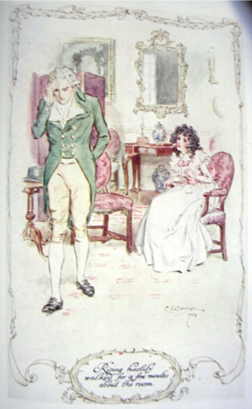
Colonel Brandon with Elinor; he gave a living to Edward Ferrars as a parish rector. (C.E. Brock)

The word rectory could mean either a job as a rector, or the rector’s home (also called a parsonage) that was provided with the living. Here it means his position. The word rector, by the way, is related to the words right and rectify. The rector was supposed to lead his parish in the right direction, and he had certain rights, which Mr. Collins is proud of.

Mr. Elton, though, is not a rector. He’s a vicar.

“He [Mr. Elton] had a comfortable home for her [Harriet], and Emma imagined a very sufficient income; for though the vicarage of Highbury was not large, he was known to have some independent property”—Emma chapter 4

Emma does not recognize Mr. Elton’s need for money, thinking he will marry Harriet. (C. E. Brock)

The word vicarage, like the word rectory, could refer to his position or his home; here it means his position. Vicar is related to vicarious, it means standing in the place of someone else.

A rector or a vicar had the same duties. They led church services, preached, officiated at ceremonies like baptisms, met with the vestry to deal with parish issues, helped the poor, and so forth. However, they did not receive the same level of pay.

There were two kinds of tithes. Parishes had their own agreements and definitions about what was included in each. But most commonly:

Greater tithes included everything that came from the ground, like wheat, oats, and barley.

Lesser tithes were usually fruit, eggs, and the young of animals.

If a clergyman was the rector of a parish, he got all the tithes.

If a clergyman was the vicar of a parish, he only got the lesser tithes, usually about a quarter of the total tithes. Someone else, probably the patron, was actually the rector and took the greater tithes.

Farmers brought their tithes of grain and animals to the parish clergyman. From A Clerical Alphabet, Richard Newton, Courtesy of The Lewis Walpole Library, Yale University

So, I think Austen is very intentional when she makes Mr. Elton a vicar. Emma knows that he doesn’t make a lot of money as vicar (“the vicarage . . . was not large”). Austen also gives us another clue:

“Mrs. Bates, the widow of a former vicar of Highbury, was a very old lady . . . She lived with her single daughter in a very small way . . . her [daughter’s] middle of life was devoted to the care of a failing mother, and the endeavour to make a small income go as far as possible.” —Emma chapter 3

Mrs. and Miss Bates, the widow and daughter of the former vicar of Highbury, live in poverty. (C.E. Brock)

Mrs. Bates’s husband, the former vicar, had not made enough money to leave much for his wife and daughter. So the income of this parish, at least for the vicar, is certainly low.

Emma, as usual, is clueless. She doesn’t realize that Mr. Elton, a vicar, is going to need to marry for money (though her readers would have known). So, the fun begins!

The third major type of clergyman was a curate. You can read more about curates in my post Nothing But a Country Curate

Brenda S. Cox blogs on Faith, Science, Joy, and Jane Austen at brendascox.wordpress.com . She is working on a book entitled Fashionable Goodness: Christianity in Jane Austen’s England.

Read Full Post »

« Newer Posts - Older Posts »