Feeds:
Posts
Comments

Archive for the ‘19th Century England’ Category

Gentle readers: Please leave a comment if you wish your name to be be eligible for a drawing of Sylvester, or the Wicked Uncle, a wonderful Regency romp by Georgette Heyer. The drawing will be held the moment electricity is restored in my house. My best estimate is that this will take another week. Only U.S. and Canadian residents are eligible. (So sorry, but the book is being sent by the publisher, who has requested this geographic restriction.) Update: Contest closed. Congratulations Rebeka! You have won a copy of Sylvester.

Sylvester, Duke of Salford thinks quite highly of himself and is pleased by his impeccable manners and easy smile, which easily influences servants to do his bidding. But Phoebe Marlow, whose mousy manner hides her bright mind and talents as an equestrienne and a writer, was not so impressed when she first met him during her coming out season. She is even less enthralled with the Duke when he arrives for a visit at her father’s estate to look her over as a possible bride.

Sylvester’s fond Mama also harbors concerns for her son, especially when Sylvester announces his intentions to marry and begins to discuss his preference for a bride with her:

‘But I’m inclined to think now that is is more important that she should be intelligent. I don’t think I could tolerate a hen-witted wife. ‘Besides I don’t mean to foist another fool on to you.’

‘I am very much obliged to you!’ she said, a good deal entertained. ‘Clever, but not beautiful: very well! Continue!’

‘No, somedegree of beauty I do demand. She must have countenance, at least, and the sort of elegance which you have, Mama.’

‘Don’t try to turn my head, you flatterer! Have you discovered among the debutantes one who is endowed with all these qualities?’

‘At first glance, I suppose a dozen, but in the end only five.’

‘Five!’

At this point Sylvester’s mama becomes concerned, for she realizes that he is choosing his life’s mate with his head, not his heart. The woman who immediately springs to her mind for her son is Phoebe Marlow, and so our cluelessly haughty (yet kind) Duke collides with the novel’s heroine, who is not in the least willing to spend any time with him, at least not until circumstances throw them together and she gets to know him better.

The plot revolves around Phoebe’s big SECRET: she has authored a book in which Sylvester, with his saturnine brows, is featured prominently as the villain. The more Phoebe gets to know Sylvester, the more she realizes how wrong she was about him and the more she worries about the book’s effect on their budding friendship (for Phoebe was uncannily accurate in her representation about certain aspects of Sylvester’s life).

Georgette Heyer takes us from the cozy settings of country mansions, to London in High Season, to Dover and over to France. A colorful array of her usual characters add liveliness to a somewhat improbable plot, including Phoebe’s good friend Tom, Sylvester’s dodo bird of a sister-in-law, Ianthe, and a supremely idiotic and over-indulged fop named Sir Nugent.

In my opinion, if you are a Georgette Heyer fan and haven’t read this book yet, you will be well advised to do so now. I give it four out of five Regency tea cups!

For a chance to win this book, leave a comment about your favorite Georgette Heyer book! Contest closed. The winner is: Rebeka!

Read Full Post »

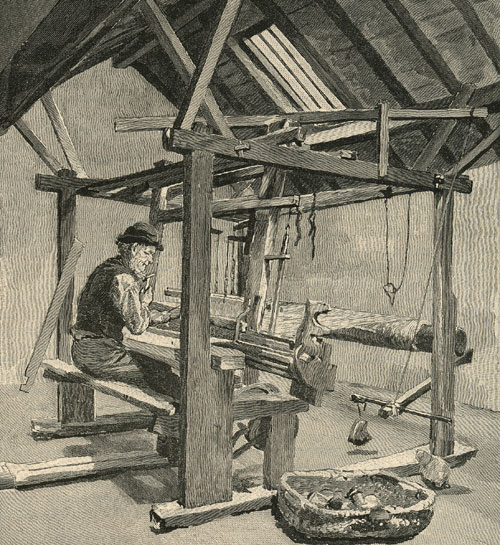
Jospeh Pinder, one of the last living handloom weavers of the 19th century

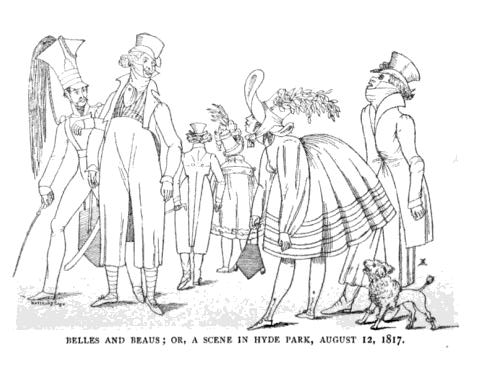
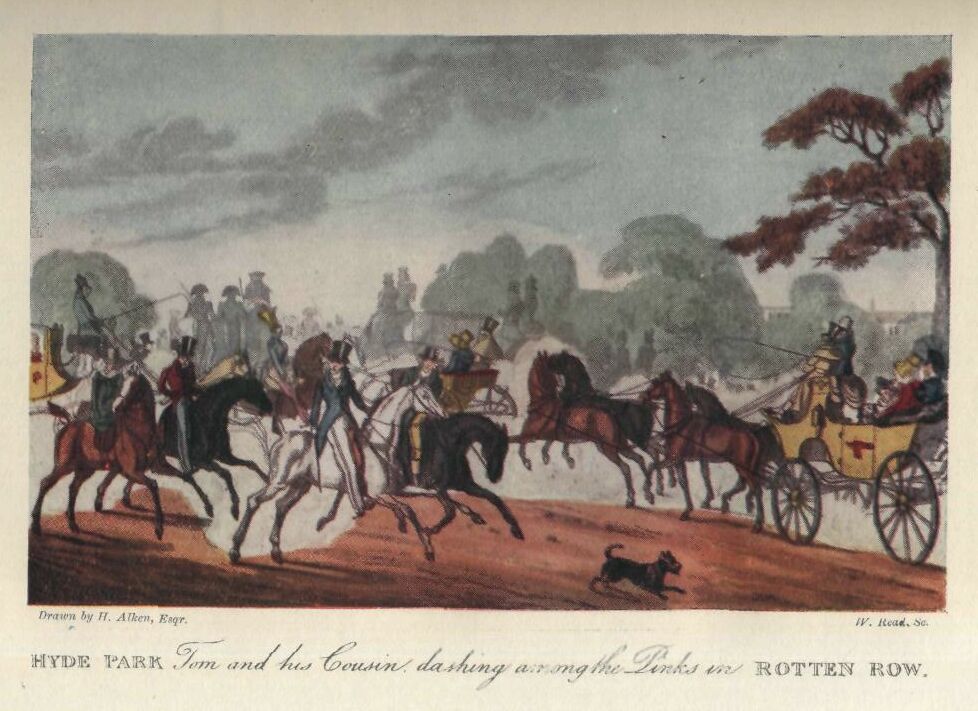
This poem was printed in Punch Magazine in 1862. In the early 19th century Luddites attacked the factory machines that were about to destroy the cottage industry of handloom weavers. By 1815, these weavers had difficulty finding work. They tried selling their cloth at lower prices than the factories, with the result that their average wages plummeted from 21 s to less than 9 s in 1817, the year of Jane Austen’s death. By 1850, handloom weavers had been reduced to starvation wages. In light of their plight, this poem, which contrasts the wistful observances of the lowly weaver against the lavish lifestyle of the Ton, becomes all the more poignant.

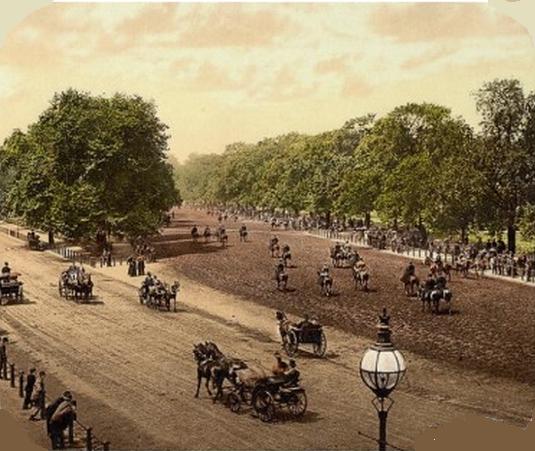
Hyde Park, 1817

SPITALFIELDS AND HYDE PARK.

A Little “Weaver, unemployed,
Chanced in Hyde Park to stray,
And there, as best he might, enjoyed

Unwilling holiday.
The great folks being now in Town,

He strolled, and viewed their show,
Around the Ring, and up and down

A stroll in the park

The walk by Rotten Row.
What high-bred cavaliers were there,
Straight-backed, and clean of limb;
What horsewomen, superbly fair,

Displayed their airs to him!
What equipages Beauty bore.

And Consequence, reclined,
Whom portly coachmen sat before;

Smart footmen stood behind!
The little man, admiring, read
The faces of the Great,
Who passed him with erected head,

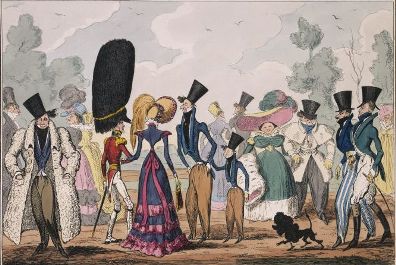
Rotten Row, Tom and Jerry, 1821

And countenance elate,
High fed, from sordid want secure,

From cares and troubles mean,
How brave their bearing, to be sure,

Their aspect how serene!
A heart our little weaver had
In others’ joy that shared.
Himself though hungry, he was glad

Hyde Park, Rotten Row

To think how well they fared.
It raised him in his self-respect
To see how riches can,
With nurture in a sphere select,

Exalt his fellow-man.
If, entering on this earthly scene,
Endowed with Fortune’s boon, His infant lips he had between
But held a silver spoon, He thought he also might have shone
Amongst the grand and gay, Then being out of work alone,
Not likewise out of pay.

Punch Magazine, Vol 42-43, 1862, p 133

Handloom weaver, 1888

More on the topic:

Read Full Post »

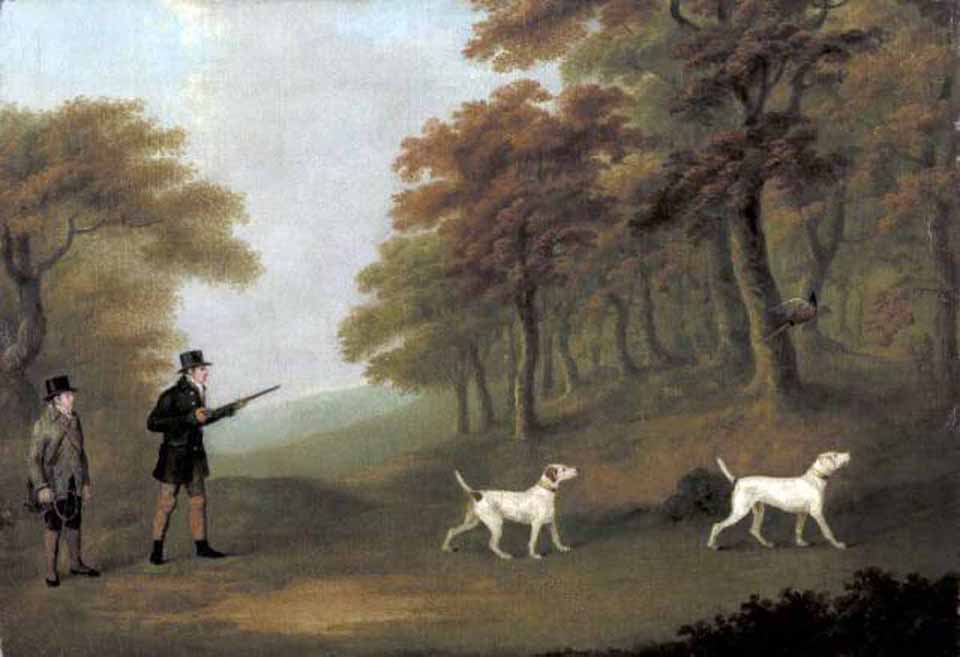
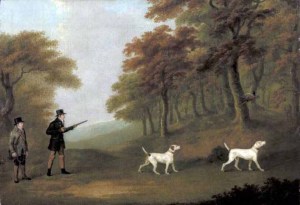
Two gentlemen shooting pheasant, 1790

When Sir Thomas Bertram returned from the East Indies, his family had been in the midst of rehearsing for Lovers Vows, the play that Fanny Price knew Sir Thomas would have nixed had he been home. Waiting for the tea tray, Lady Bertram innocently mentions the play. Tom, the heir, quickly deflects the conversation and speaks of hunting:

“The all will soon be told,” cried Tom hastily, and with affected unconcern; “but it is not worth while to bore my father with it now. You will hear enough of it tomorrow, sir. We have just been trying, by way of doing something, and amusing my mother, just within the last week, to get up a few scenes, a mere trifle. We have had such incessant rains almost since October began, that we have been nearly confined to the house for days together. I have hardly taken out a gun since the 3d. Tolerable sport the first three days, but there has been no attempting any thing since. The first day I went over Mansfield Wood, and Edmund took the copses beyond Easton, and we brought home six brace between us, and might each have killed six times as many; but we respect your pheasants, sir, I assure you, as much as you could desire. I do not think you will find your woods by any means worse stocked than they were. I never saw Mansfield Wood so full of pheasants in my life as this year. I hope you will take a day’s sport there yourself, sir, soon.” – Jane Austen, Mansfield Park

Hedgerows in the Cotswolds. Image @The Independent

The enclosure acts helped the pheasant hunters in England immensely, for enclosed lands were surrounded by hedgerows and wild thickets, which provided a nice cover for the birds.  A century earlier, the number of pheasants were in decline when woodlands were cleared and marshes were drained. Tough game laws were enacted in 1800 to preserve the number of pheasants. But with land enclosures the number of pheasants rose, for they preferred dead brush and weeds that were about knee high and that were situated near the edges of corn and grain fields. Pheasants were not native to England.
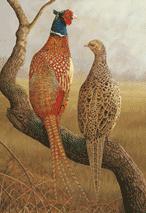
Pair of pheasants - a cock and hen

The Common Pheasant (Phasianus colchicus) was brought over by the Norman’s in the eleventh century and soon dispersed around the country, being introduced to parts of Wales, Scotland and Ireland in the late sixteenth century. By the early nineteenth century they had become the most important game bird.  – Birds of Britain 

Hunters benefited from the pheasants’ penchant for sticking to a regular feeding schedule and their habit of returning to an area where food was abundant. They would leave their nightly roost sites in the morning about two hours after sunrise and begin to exercise and move around in thick brush, dense patches of grasses, or standing cornfields. An hour after rising they could be seen foraging for food in the fields or picking at gravel or grit near roads. Nearly 90% of the pheasants would be searching for food at this time. Their unvarying schedules meant that hunters knew the precise time to set out to hunt the birds and where to find them. By mid-morning, pheasants would stop feeding and seek cover in thick brush or in trees until late afternoon. If the weather was particularly nasty, they would seek refuge in deeper cover, which explains Tom’s statement about the thick rain confining him to the house.
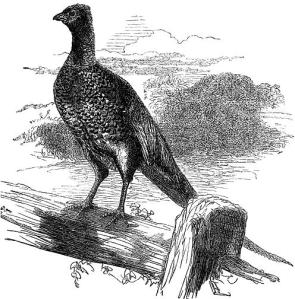
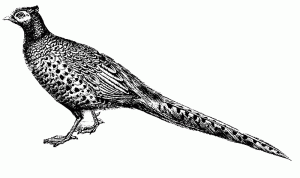
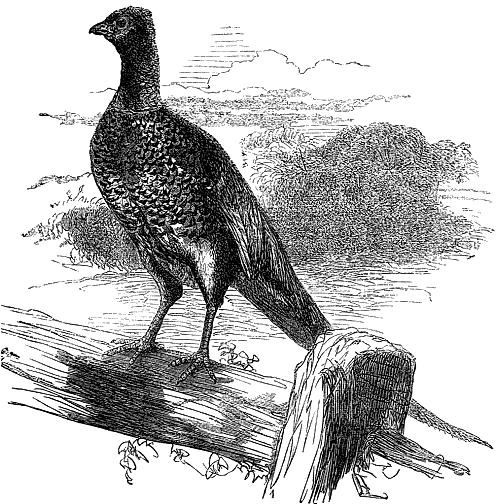
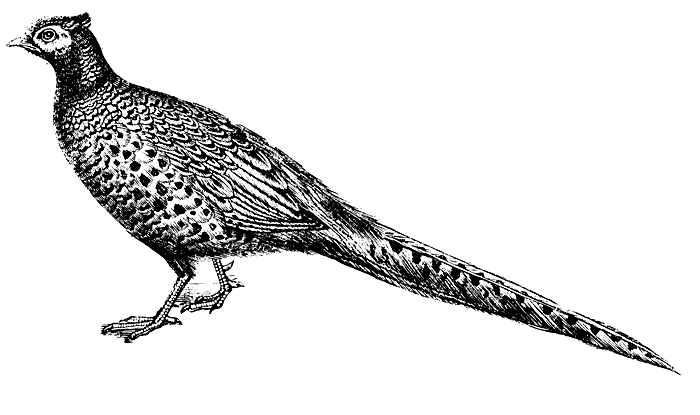
Pheasant. Image @Project Gutenberg

Pheasants that were hunkered down in large fields of standing corn were hard to hunt, for they ran through the brush to avoid their pursuers. Running is a pheasant’s preferred mode of flight, although they will burst dramatically into the air when startled with wings whirring, alerting their brethren with a kok-kok-kok call.
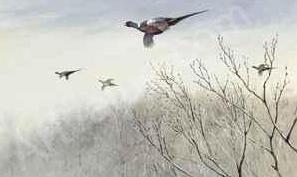
Detail, George Edward Lodge's Pheasants in Flight

A wily pheasant will not move, even when a dog’s nose is almost upon it. It’s color camouflages it so well in the brush that a hunter can walk right past it without ever noticing the bird. A good hunting dog will point at the pheasant, alerting its owner. And after the bird has burst into flight, will retrieve it where it fell. The oldest pheasant hunting dog breeds include Cocker Spaniels, English Setters and Pointers.

The whirring Pheasant springs,
And mounts, exulting on triumphant wings:
Ah! What avails his glossy, varying dyes,
His purple crest, and scarlet-circled eyes,
The vivid green his shining plumes unfold,
His painted wings, and breast that flames with gold.

Alexander Pope – Windsor Forest, 1713.

At mid-day, it was best for hunters to search for them resting  in their roosting placing of grassy stands and marches, and along edges of fields and ditch banks. They love to eat berries, seeds, grasses such as clover and alfafa, and insects. Pheasants eat almost any plant or animal food (grasshoppers, fly larvae, mosquitoes)  that is within reach and is abundant, although the largest percentage of their food consumption are vegetables, fruits, and grains. Their crops can contain as much as 19 grams to a whopping 50 grams of food. (Paul L. Dalke) The birds find the greatest variety of food in October. In June they graze largely on insects and grain.
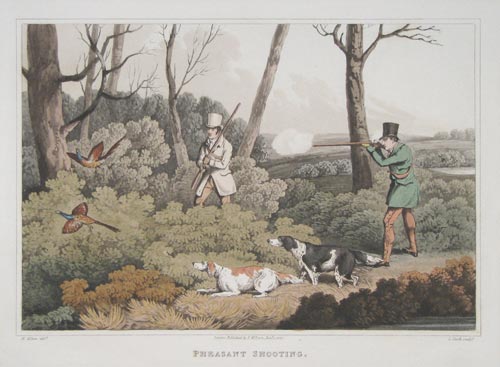
Henry Thomas Alken, Pheasant Shooting

Much of their colors and size is of course influenced by their habitat and diet. The ones around cropfields tend to get larger in size and finer eating after feasting on corn, wheat, hops or other grains. Those around the woodland and wetlands make a living more on buds, berries, fruits, slugs and snails, worms and bugs, small animals like juvenile mice, snakes, lizards or even other little birds at times…- The Pheasant, Or Everyone’s Royal Bird

Hunting for pheasant occurred principally from November through January. (Just before the Upper Crust returned to London for the Season.) Locals guarded their best fowling grounds fiercely, even though game was still plentiful in England and Scotland during the 18th century. Hunters not only hunted for sport, but for food as well, so hunting had a practical nature.

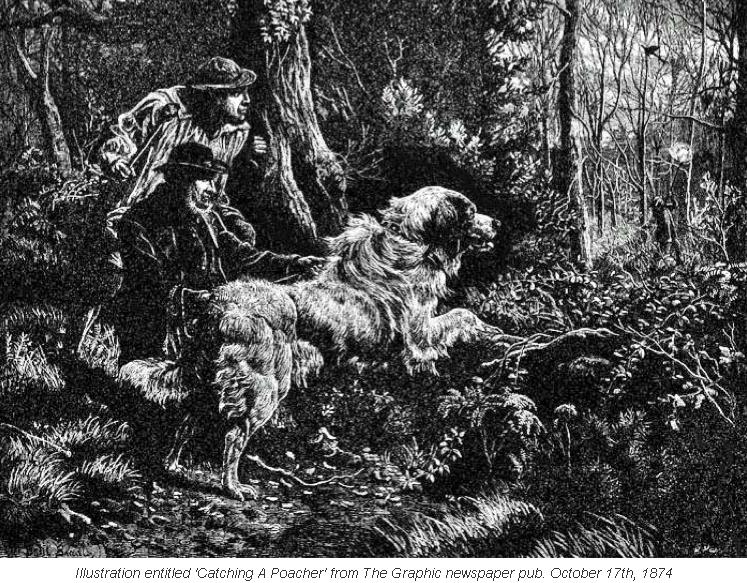
Only landowners had the right to hunt. Poaching increased during times of famine and want, even though penalties were severe for poachers who were caught.
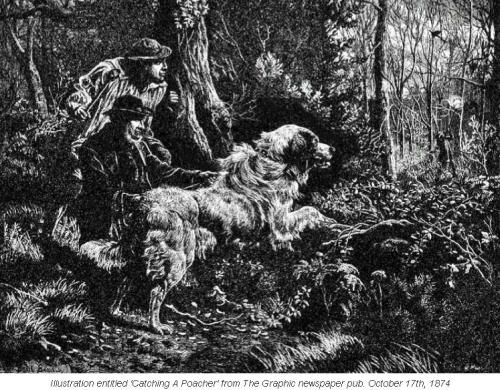
Catching a poacher, 1874. Image @Curious Sutton Crime

Only persons who met specified property qualifications, essentially gentlemen and the aristocracy, could legally hunt game (such as deer, rabbits, or pheasants). Anyone else hunting these animals, whether using nets, guns, or other animals, were committing a crime, even if they owned land upon which the game was found. Prosecutions under these statutes frequently occurred outside the courts, under summary jurisdiction, but some offences were made punishable by death under the “Black Act” (1723) and in the process brought within the jurisdiction of the Old Bailey. This Act made it a capital offence to hunt, wound, or steal deer, conies, hares, and fish in the King’s forests; break down the heads of fishponds; or simply go about armed and disguised anywhere game was kept. This act was repealed in 1823, but being armed and entering into enclosed land in order to remove game remained a crime throughout the period covered by the Proceedings  [or through 1913]. – The Proceedings of the Old Bailey

By late afternoon, around 4 hours before sunset, approximately 75% of the pheasants would return to their feeding areas. This was, obviously, another good time to go after them.
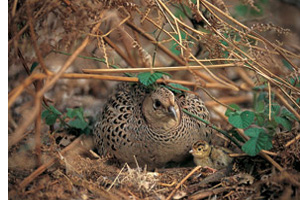
Nesting hen. Image @Game & Wildlife Conservation Trust

Hens nested on the ground; a cock might service as many as 6 mates. Although predation, hunting, and modern methods of agriculture have reduced wild thickets and roosting places, the bird is still quite successful at breeding. This tale from a book published in 1881 relates how stubbornly and persistently a hen will remain on her nest:

Although there is usually some attempt at concealment under covert, pheasants nests are not unfrequently placed even by perfectly wild birds in very exposed situations. Mr John Walton of Sholton Hall, Durham, related the following account of the singular tameness of a wild bred bird: A hen pheasant, a perfectly wild one so far as rearing is concerned, for we have no artificial processes here, selected as the site for her nest a hedge by a private cart road, where she was exposed to the constant traffic of carts farm servants and others passing and repassing her quarters, all of which she took with infinite composure. She was very soon discovered on her nest, and actually suffered herself when sitting to be stroked down her plumage by the children and others who visited her, and this without budging an inch. In fact, she seemed rather to like it. Perhaps she became a pet with the neighbours from this unusual docility, and her brood, fourteen in number, was thereby saved, for every egg was hatched, and the young birds have all got safely away. – Pheasants: Their Natural History and Practical Management

Brace of pheasants on a bank, James Hardy Jr., 19th c. Image @Christie's

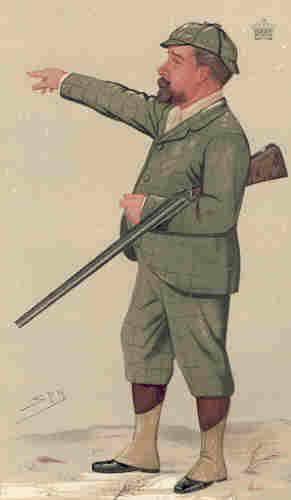
In Mansfield Park, Tom mentioned returning with six brace of pheasants, which translated to six males and six females. (A pair made a brace.) Tom’s number approximates the average number of pheasants for a typical hunter, although there were spectacular exceptions:
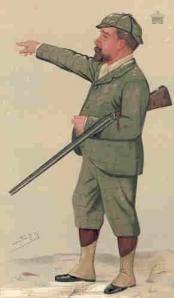
I wonder if pheasants sat at the right hand of God along with the other game he shot in untold numbers, in judgment of Lord Ripon, known as the Best Game Shot in England.

His majesty King George V of Great Britain, a keen and avid bird shooter as world has ever seen, in 1913 has claimed over a thousand pheasants in one day, out of a total bag of 3937 in much less than a weeks worth of personal shooting. The numbers are well documented and strict records are still kept by the reputed British gamekeepers. Another grand English shooter, Lord Rippon, had bird tallies surpassing anything mankind has ever seen since: he layed claim in his gamekeeping books for almost a quarter million pheasants, shot by himself. His records tell he dispatched 222,976 pheasants in his long shooting career, between 1867 and 1913, with an average of 4774 pheasants per season. – The Pheasant, Or Everyone’s Royal Bird

Sir Thomas Elyot best described in 1536 why pheasants were a favorite game bird – because they tasted so good in the pot!

‘Fesaunt excedeth all fowles in sweetnesse and holsomnesse, and is equall to capon in nourishynge…’
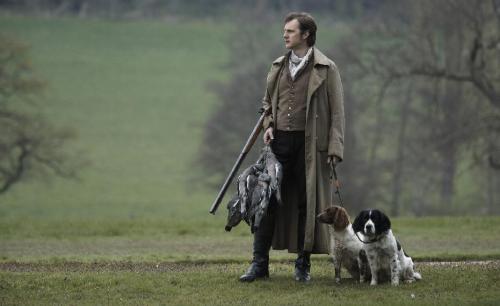
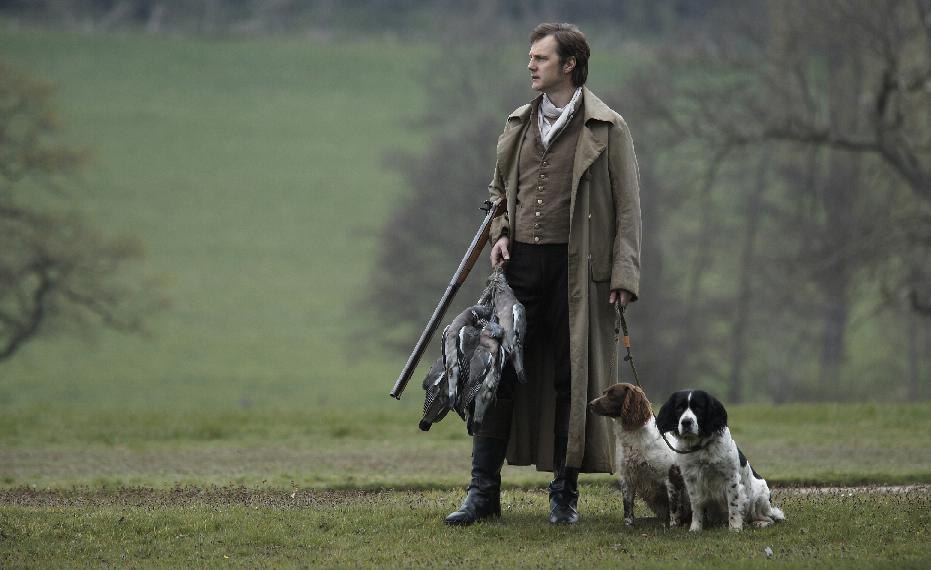
Andrew Davies likes to show Jane Austen's heroes in masculine pursuits. Colonel Brandon (David Morrissey) is in hunting garb (Sense and Sensibility 2008). I can't quite make out the game birds, but it looks like he's carrying 3 braces.

More on the Topic

Engraving, Pheasant.

Read Full Post »
Jane Austen’s mother, Cassandra’s

features were aristocratic; her hair was dark and her eyes an unusual tint of grey. She had an instinctive tendency to depreciate her own appearance; it was her elder sister Jane, she always insisted, who was the beauty of the family. But Cassandra did admit to a certain vanity concerning her fine patrician blade of a nose.” – Jane Austen, a family record by Deirdre Le Faye, William Austen-Leigh

However, by 1782, when her daughter Jane was only 7 years old, she was described as having lost several foreteeth, which made her look old.

Cassandra Leigh Austen, Jane Austen's mother, with her patrician nose and missing foreteeth

Modern dentistry was still in its infancy when Cassandra Austen gave birth to her eight children. While the wealthy could afford dentists, rural folks still depended on the village blacksmith, who only knew how to pull teeth. Market fairs sold tinctures, toothpowders and abrasive dentifrices.

Lucy Baggott, of Wychwood Books, says: ‘It was not uncommon for the local farrier to draw teeth to relieve toothache of those in desperate pain, for then the blacksmith in many rural communities doubled as a tooth drawer. ‘There were many dubious practices adopted: hot coals, string, forceps, and pliers to name a few. Children were lured to sacrifice their teeth for the supposed benefit of the wealthy in exchange for only a few shillings. One print reads: “Most money given for live teeth”. – Dental Quackery Captured in Print

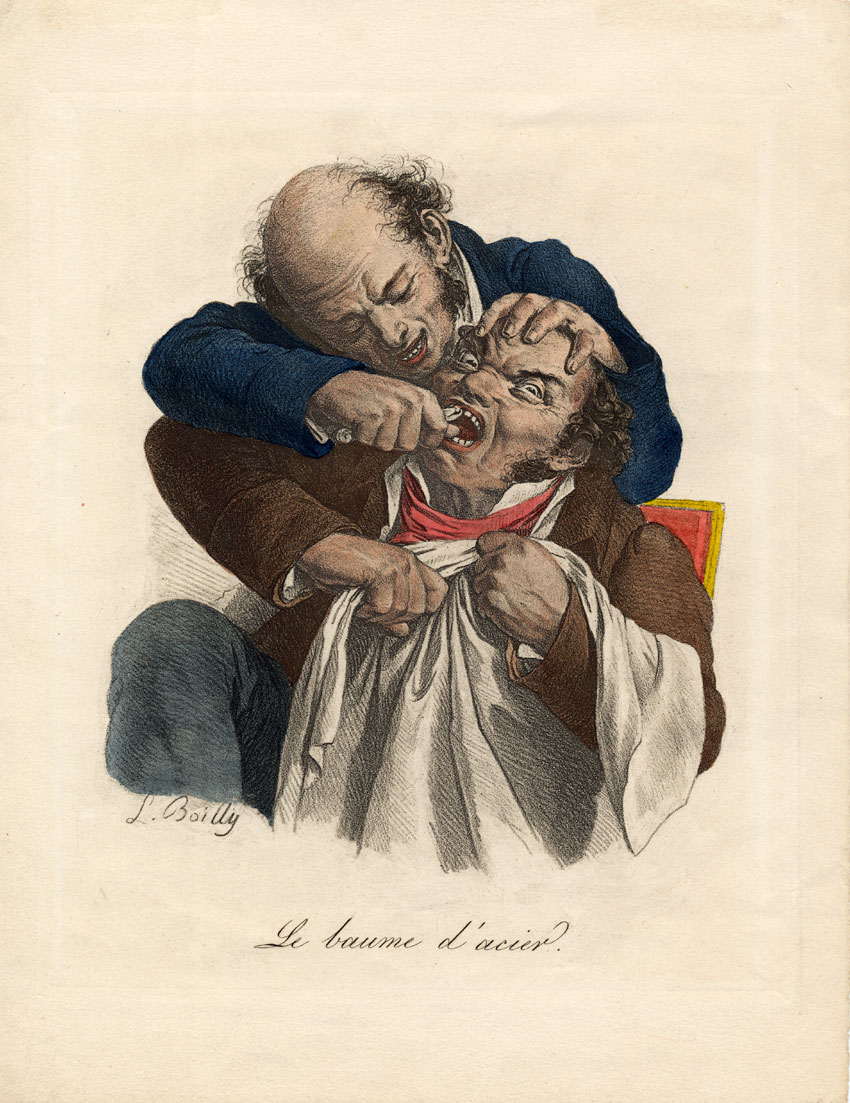
Louis-Leopold Boilly (1761-1845), Dentist Teeth Patient, 1827

We do know this: tooth extraction was painful and a most unpleasant affair before the age of ether and anesthetics.

In two letters to Cassandra, on Wednesday 15 & Thursday 16 September 1813, Jane [Austen] describes in some detail accompanying her young nieces Lizzy, Marianne and Fanny, on a visit to the London dentist Mr Spence. It was, she relates, ‘a sad business, and cost us many tears’. They attended Mr Spence twice on the Wednesday, and to their consternation had to return on the following day for yet another ‘disagreeable hour’ . Mr Spence remonstrates strongly over Lizzy’s teeth, cleaning and filing them and filling the ‘very sad hole’ between two of the front ones. But it is Marianne who suffers most: she is obliged to have two teeth extracted to make room for others to grow. – The Poor Girls and Their Teeth, A Visit to the Dentist, JASA

Tooth maintenance and dental hygiene were not a new concept. The aristocrats suffered more cavities, for they could afford sweets and foods that would eat into enamel, but they did use tooth powders, tooth picks, and toothbrushes to keep their teeth clean.

The ancient Chinese made toothbrushes with bristles from the necks of cold climate pigs. French dentists were the first Europeans to promote the use of toothbrushes in the seventeenth and early eighteenth centuries. William Addis of Clerkenwald, England, created the first mass-produced toothbrush. Toothpaste: modern toothpastes were developed in the 1800s. In 1824, a dentist named Peabody was the first person to add soap to toothpaste. John Harris first added chalk as an ingredient to toothpaste in the 1850s.- History of Dentistry

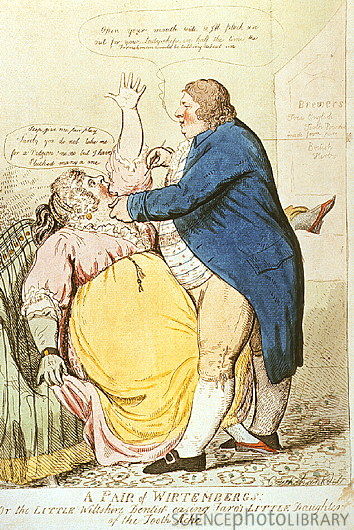
Isaac Cruikshank

The caption to the above cartoon states: Dentist. 18th century caricature of a fat dentist with his struggling, overweight female patient. The patient is begging the dentist not to pluck her teeth out like he would the feathers of a pigeon. People who eat large amounts of sugary food are often both overweight and suffer from dental decay. Image drawn in 1797 by British artist Isaac Cruikshank (1756-1811). – Science Photo Library

Tooth Extraction, William Henry Bunbury, mid-18th century

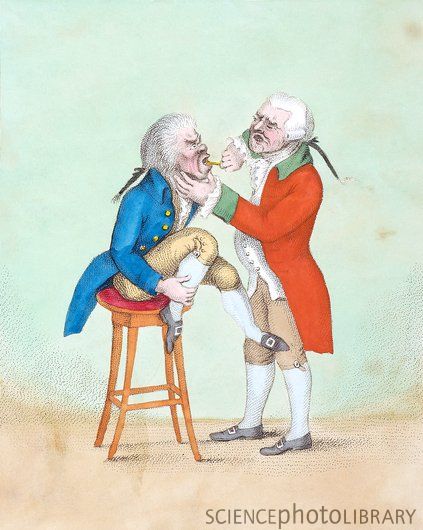
Extractions were by forceps or commonly keys, rather like a door key…When rotated it gripped the tooth tightly. This extracted the tooth – and usually gum and bone with it…Sometimes the jaws were also broken during an extraction by untrained people.”- BBC

A timeline of dentistry in the 18th and 19th centuries:

1780 – William Addis manufactured the first modern toothbrush. 1789 – Frenchman Nicolas Dubois de Chemant receives the first patent for porcelain teeth. 1790 – John Greenwood, one of George Washington’s dentists, constructs the first known dental foot engine. He adapts his mother’s foot treadle spinning wheel to rotate a drill. 1790 – Josiah Flagg, a prominent American dentist, constructs the first chair made specifically for dental patients. To a wooden Windsor chair, Flagg attaches an adjustable headrest, plus an arm extension to hold instruments. 19th Century 1801 – Richard C. Skinner writes the Treatise on the Human Teeth, the first dental book published in America. 1820 – Claudius Ash established his dental manufacturing company in London. 1825 – Samuel Stockton begins commercial manufacture of porcelain teeth. His S.S. White Dental Manufacturing Company establishes and dominates the dental supply market throughout the 19th century. – Nambibian Dental Association

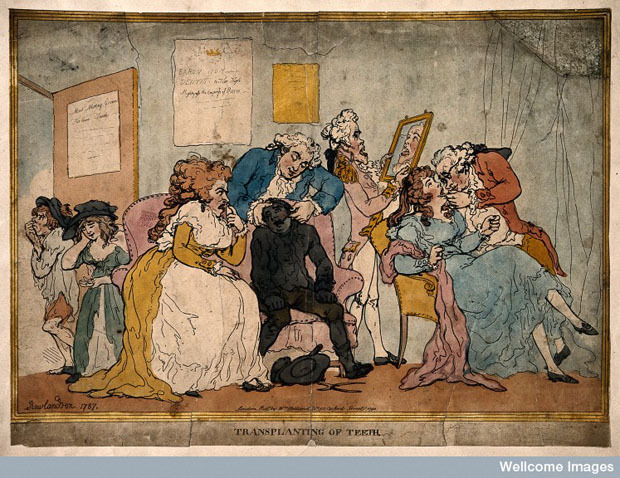
Annotation of the above cartoon by Thomas Rowlandson:

This print is by Thomas Rowlandson (1756-1827) and is dated 1787. It is a satirical comment upon the real practice of rich gentlemen and ladies of the 18th century paying for teeth to be pulled from poor children and transplanted in their gums. The dentist present is portrayed as a quack. There are even two quacking ducks on the placard advertising his fake credentials. He is busy pulling teeth from the mouth of a poor young chimney sweep. Covered in soot and exhausted, he slumps in a chair. Meanwhile the dentist’s assistant transplants a tooth into a fashionably dressed young lady’s mouth. Two children can be seen leaving the room clutching their faces and obviously in pain from having their teeth extracted. As people lost most of their teeth by age 21 due to gum disease, teeth transplants were popular for some time in England although they rarely worked. – Wellcome Images

Thomas Rowlandson – A French dentist showing a specimen of his artificial teeth and false palates Coloured engraving 1811 Image @ Rowlandson, Wellcome Library

Dentures did exist:

Perhaps the most famous false-toothed American was the first president, George Washington. Popular history gave Mr. Washington wooden teeth, though this was not the case. In fact, wooden teeth are impossible; the corrosive effects of saliva would have turned them into mushy pulp before long. As a matter of fact, the first president’s false teeth came from a variety of sources, including teeth extracted from human and animal corpses. – A Short History of Dentistry

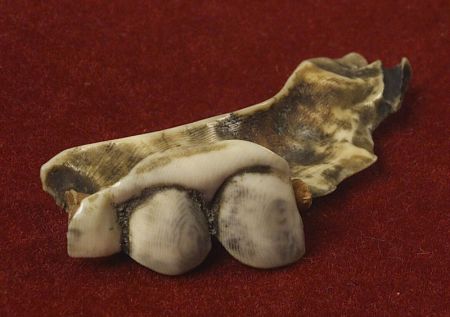
Carved ivory upper denture, late 18th century. Image @Skinner Auctioneers

As always, the upper classes had the upper hand:

The upper classes could afford a greater range of treatments, including artificial teeth (highly sought after by the sugar- consuming wealthy). Ivory dentures were popular into the 18th century, and were made from natural materials including walrus, elephant or hippopotamus ivory. Human teeth or ‘Waterloo teeth’ -sourced from battlefields or graveyards- were riveted into the base. These ill fitting and uncomfortable ivory dentures were replaced by porcelain dentures, introduced in the 1790’s. These were not successful due to their bright colours, and tendency to crack.Before the 1800’s, the practice of dentistry was still a long way from achieving professional status. This was to change in the 19th century – the most significant period in the history of dentistry to date. By 1800 there were still relatively few ‘dentists’ practicing the profession. By the middle of the 19th century the number of practicing dentists had increased markedly, although there was no legal or professional control to prevent malpractice and incompetence. Pressure for reform of the profession increased. – Thomas Rowlandson, “Transplanting Teeth (c.1790) [Engraving],” in Children and Youth in History, Item #164, http://chnm.gmu.edu/cyh/primary-sources/164 (accessed August 10, 2011). Annotated by Lynda Payne

More on This Topic:

Read Full Post »

The script in Thomas Rowlandson’s 1810 cartoon states:

“Ah! My old Friend I wish you had called
at some more convenient time but this is washing
day — I have nothing to give you but cold Fish, cold Tripe
& cold potatoes — you smell soap suds a mile!
Ah Jack, Jack you don’t know these Comforts!
you are a Bachelor!”

In Rowlandson’s image, two well fed men are seen smiling. The host is apologetic, for his guest will not get anything but cold collations, probably leftovers from the previous day. His wife and maid are seen toiling over a bucket, their hands probably raw and red from the effects of harsh lye soap. Neither of them will have the time to look to his comforts or make a hot meal, which is why he is apologizing to his unexpected guest. Since laundering was not considered man’s work, he had to “suffer” the lack of his wife’s and servant’s attentions until the wash was done.

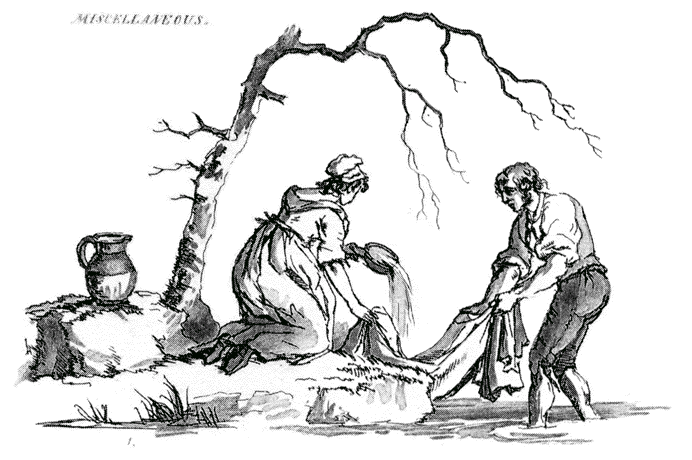
Doing the wash in a stream, 1806

First Boyle all the Cloaths with soap, and then wash them..” – John Harrower, indentured servant, writing to his wife (June 14, 1774)

Doing the wash in the Regency era was no small task, and housewives had to set aside two days to perform this dreaded duty, for it meant hauling water, boiling the cottons and linens, washing them with pungent lye soap, which burnt the skin, rinsing the clothes in clean water, which meant hauling more water from the well or a nearby stream, twisting the cloths to remove as much water as possible, hanging the clothes to dry, and then praying that rain would stay away long enough for the sun to perform its duty as a dryer. If one had to do laundry in a town or city, one had to pray that coal soot would not drift upon the clean clothes in a cramped back yard before they dried.

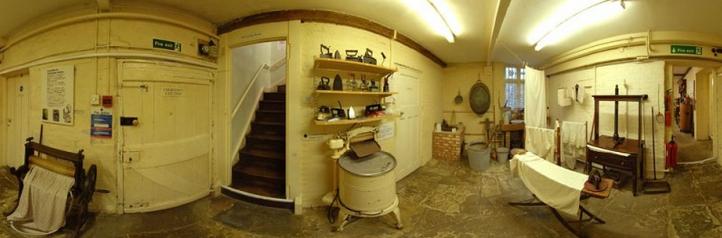
The Victorian scullery in a fine household included a copper for boiling water, a wringer, press, and ironing board.

Doing laundry was so enormous an undertaking, that unless the household were of a great size and boasted many servants, the mistress of the house and her daughters would frequently pitch in with the servants. There were chemises to be laundered, bed and table linens, towels, shirts, muslin dresses, handkerchiefs, socks, and the like. First the clothes would have to be treated for stains, the muslins and silks most delicately. After the wash had dried, ironing would commence, another laborious task.

Drying damp clothes over chair backs in front of a fireplace. Elizabeth Bennet and Mrs. Gardiner at the Lambton Inn, Pride and Prejudice, 1980

Chemises and shirts, which were worn next to the skin, were purposefully made with sturdier cloth so that these inner garments could withstand rougher treatment and more frequent washing. People tended to own more under garments for this reason. Outer clothes were subject to less frequent laundering because they were made of finer stuff, though one must wonder at the cleanliness of trailing hems, the edges of collars and sleeves, and armpits in the days before daily baths became popular, when air conditioning was just a distant dream, and when sweat must have stained clothes in a most visible manner. Is it no wonder that a majority of the Regency fashions that have survived to this day belonged to the rich, who probably wore their fashionable outfits once or twice before purchasing others?

 For more on the topic:

Read Full Post »

« Newer Posts - Older Posts »