Feeds:
Posts
Comments

Archive for the ‘Anglican Church’ Category

“My father’s old Ministers are already deserting him to pay their court to his Son; the brown Mare, which, as well as the black was to devolve on James at our removal, has not had patience to wait for that, & has settled herself even now at Deane.”—Jane Austen to Cassandra, Jan. 8, 1801, when her brother James was about to take over their father’s place as clergyman at Steventon church (as his father’s curate), and James was taking over much of their property as Jane, Cassandra, and their parents moved to Bath.

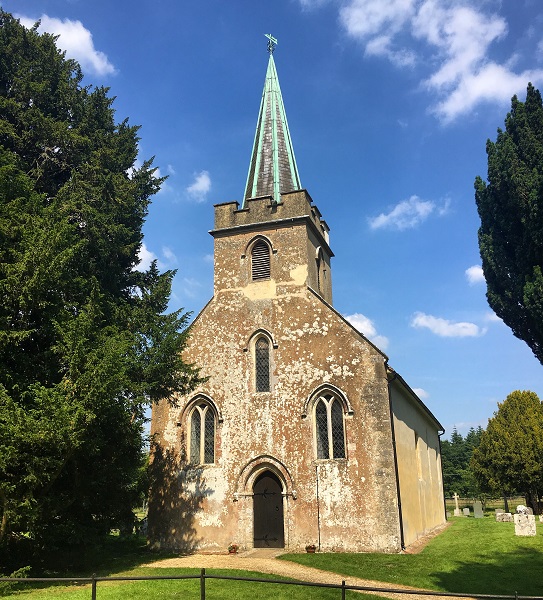
Church was an important part of Jane Austen’s life and her family’s lives. Last time we explored the church at Chawton, which Austen attended during the later years of her life. Today we’ll visit Steventon, the church in which she grew up. Both churches are named after St. Nicholas, both are small country churches of the national Church of England, and both are named after St. Nicholas, patron saint of sailors, children, and others. (He is also called, in a more modern incarnation, Santa Claus.)

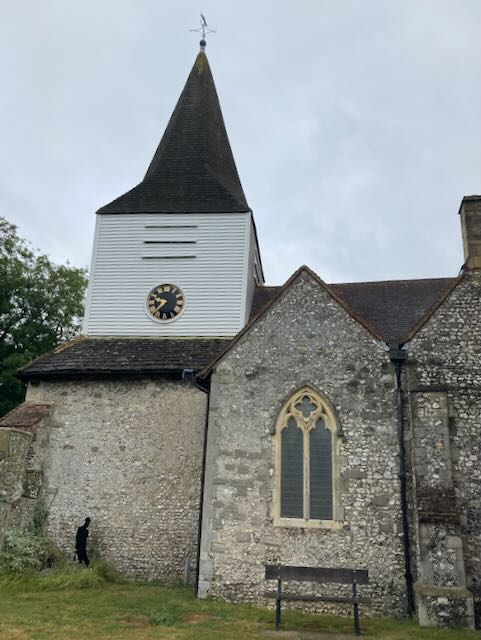
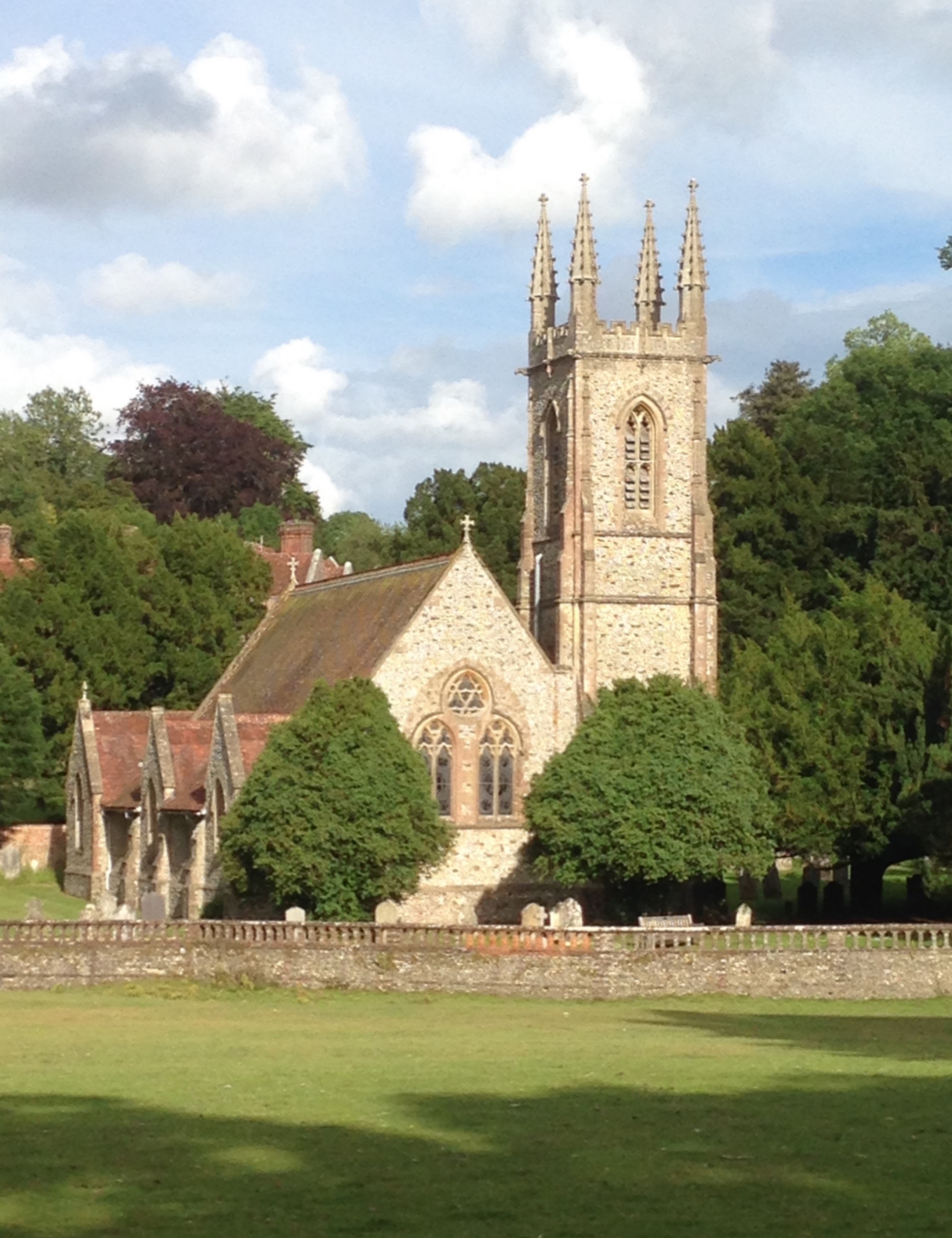
St. Nicholas’ Church at Steventon, where Jane Austen grew up. Her father was the rector. Photo © Brenda S. Cox 2023

The Rectory

Jane grew up in the rectory at Steventon, which no longer exists. Her father was the rector, the clergyman of St. Nicholas’. The rectory, or parsonage, was the house provided for the rector to live in.  George Austen made repairs and additions to the rectory as his family grew, and as he began to teach boarding students to supplement his church income.

When Jane’s father died in 1805, her brother James became rector of Steventon. After he died, her brother Henry served temporarily for three years (as Charles Hayter gets a temporary living at the end of Persuasion). Both lived in the rectory while serving the church.

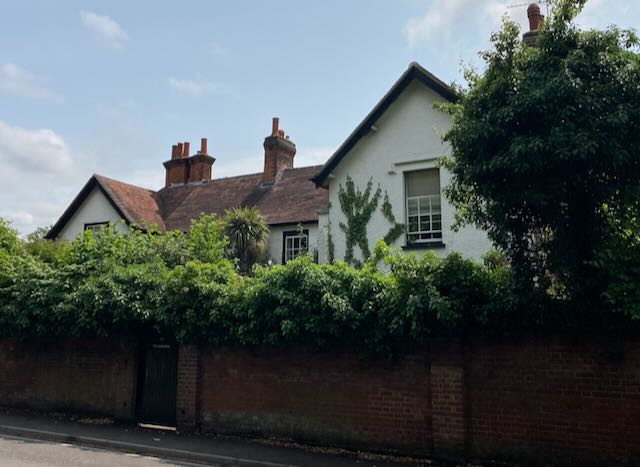
However, that rectory was damp and tended to flood. The Knight family were the patrons of the parish, choosing the rectors for the church (as Colonel Brandon was the patron of his parish, giving a church living to Edward Ferrars). In 1823, Edward Knight’s son William Knight (Jane’s nephew) became rector of Steventon. Edward built a new rectory for his son, opposite the church on higher ground. That building still stands, now a private home called Steventon House (put up for sale in 2023).

Jane Austen’s family home, the old rectory, was demolished in the 1820s. In 2011, excavators found bits and pieces at the site: fragments of pottery and crockery, nails, etc.  An old pump sat on the site for a long time; now you can see part of it inside the church.

Behind a grate in the Steventon church lie various treasures: pieces of the original rectory pump, medieval tiles, and metal pattens worn by ladies like Austen to lift their feet out of the mud. The teacup is from the Steventon Methodist Church, built after Austen’s time. Photo © Brenda S. Cox 2023 (Screen partially funded by JASNA, Ohio North Coast region)

The church itself is still standing and, in form at least, is mostly as Jane Austen knew it. She and her family worshiped there most Sundays for the first twenty-five years of her life. They likely attended church on Sunday afternoons or evenings as well as mornings. Services were several hours long, so Jane spent quite a bit of time at that church.

History of St. Nicholas’ Church, Steventon

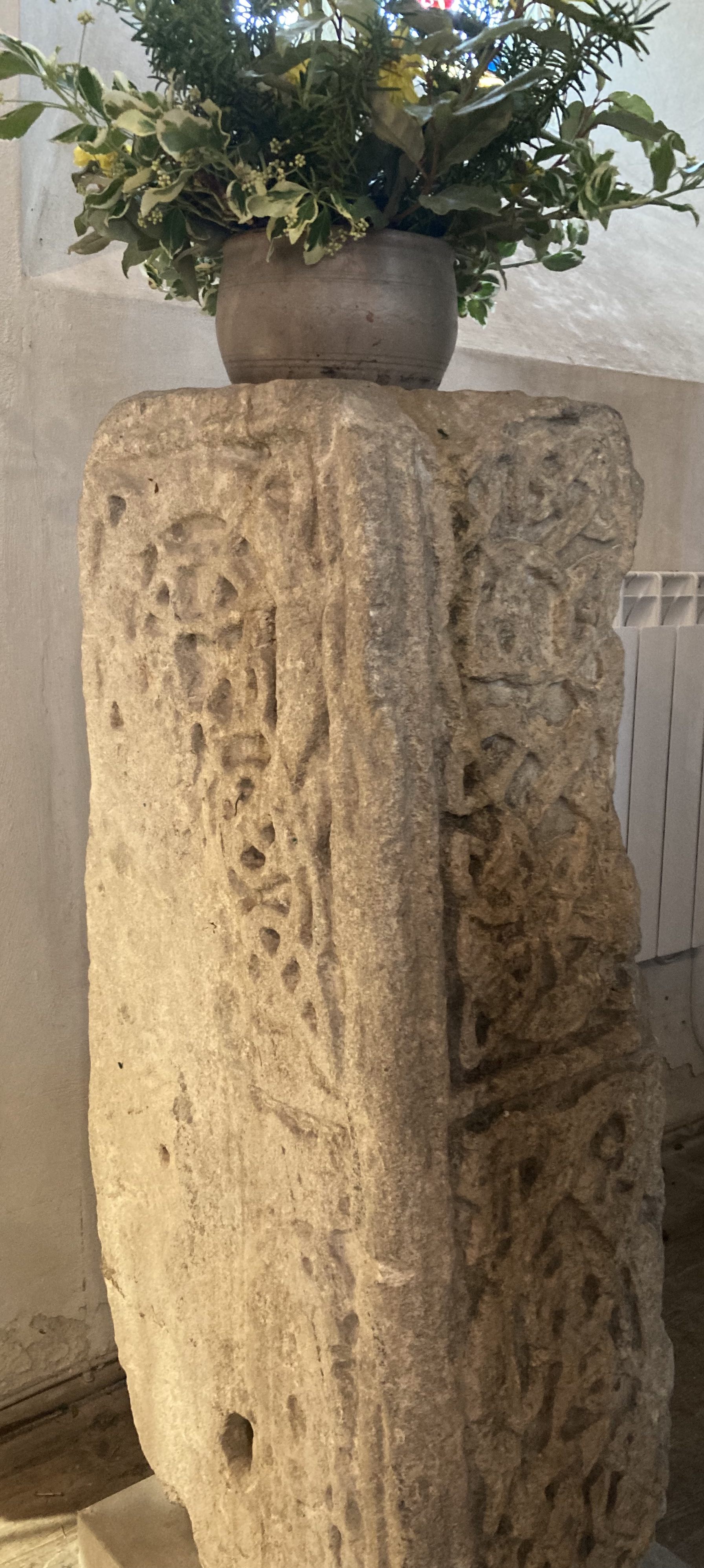
Steventon was apparently a place of Christian worship from a very early date. Part of the shaft of a Saxon Cross, from about the ninth century, was discovered built into the wall of a nearby Tudor manor (now demolished). The cross shaft is displayed in the church.  The cross was likely set up outdoors. Visiting priests would hold services there, before the church was built. Villagers may also have buried their dead near the cross.  Steventon was possibly a stop on the Salisbury to Canterbury pilgrimage route.

Part of an ancient Saxon Cross, around which traveling priests would lead the villagers of Steventon in Christian worship. Photo © Brenda S. Cox 2023

The church building is medieval, built around 1200 A.D. The most obvious change since Jane Austen’s time is the addition of a Victorian steeple (around 1850-1860), a blue and brown structure that looks quite different from the rest.

Jane would have seen the four ancient “scratch dials” or “Mass clocks” on the outside walls of the church. These were sundials with a scratch marking the time when people were to come to worship. She would have also seen the medieval carvings of faces, a man and a woman, on either side of the main door.

Sundial scratched on the church wall (there would need to be a stick in the hole in the middle) to show medieval villagers when to come to church. Photo © Brenda S. Cox 2023
Ancient faces adorn the front of the Steventon church. Photo © Brenda S. Cox 2023

Next to the church is a gigantic yew tree, an estimated 900 years old. It measures at least 25 feet around. Yews were considered sacred in ancient times and also by Christians. They represented regeneration and new life. The church key, 15 inches long and weighing 5 lb., was kept in a hole in this tree during Austen’s time. After the key disappeared, a replacement was made which is kept elsewhere. The church is now always left unlocked for visitors.

Ancient yew tree next to the church, where the key was hidden in earlier times. Photo © Brenda S. Cox 2023
Revd. Canon Michael Kenning, former rector of Steventon, holds the huge key to the church door (a replacement of the ancient key, which disappeared). Photo © Brenda S. Cox 2023

The tower holds three church bells. The oldest was cast in 1470. These bells were restored, through the support of JASNA, in 1995. I got to hear them ringing when the JASNA Summer Tour group visited in July. The bells are rung for church services, weddings, and funerals.

The Church Interior

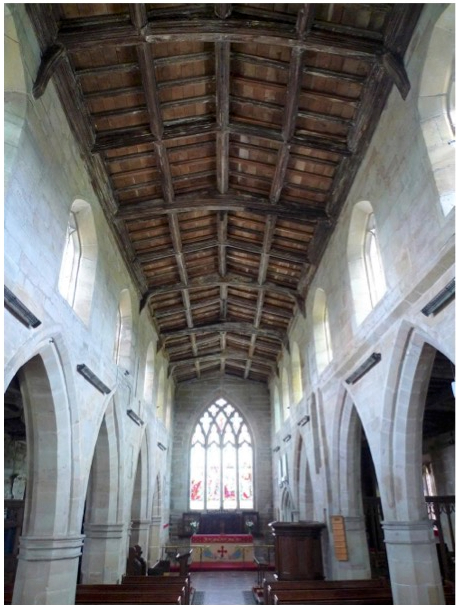
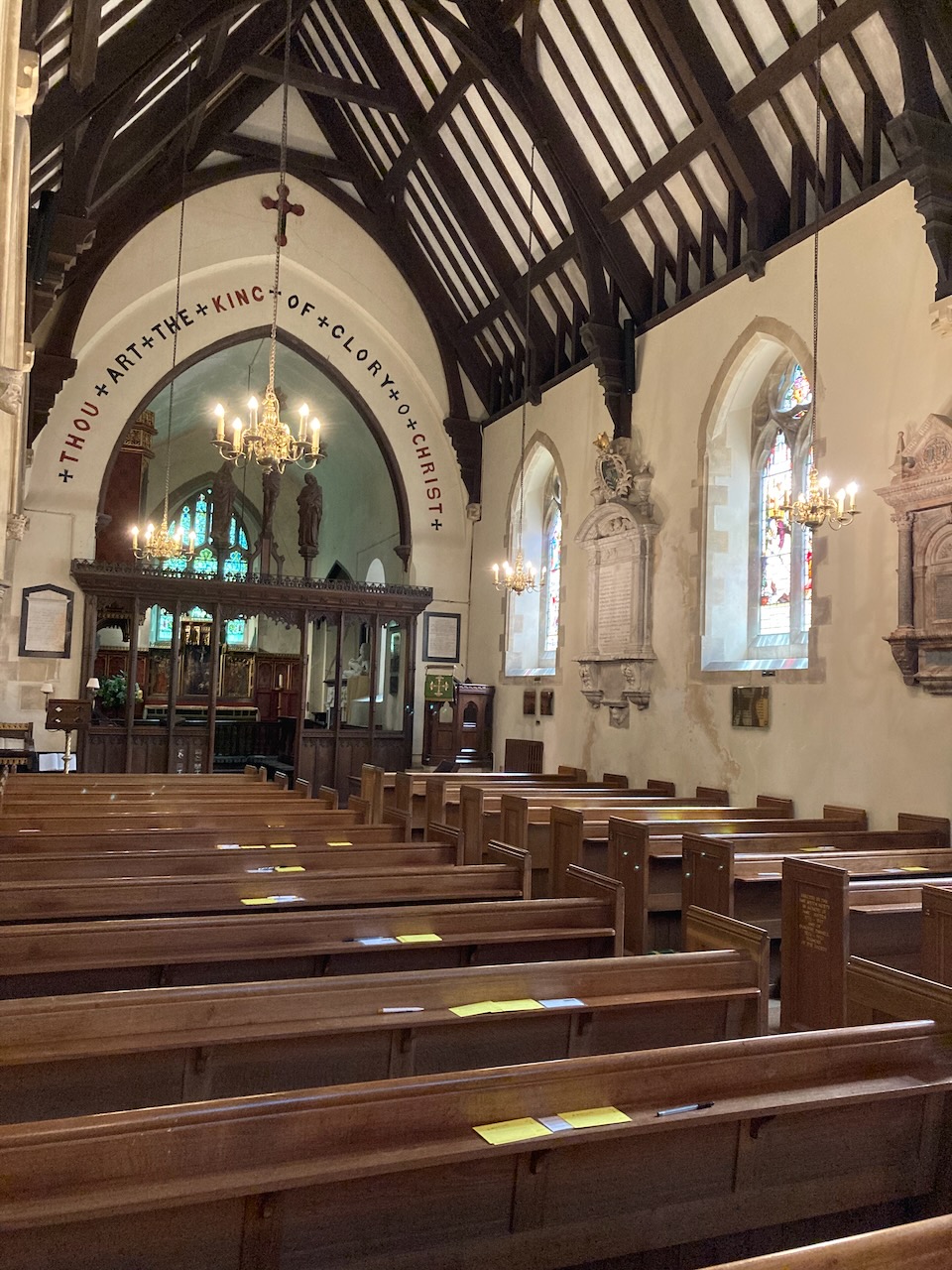
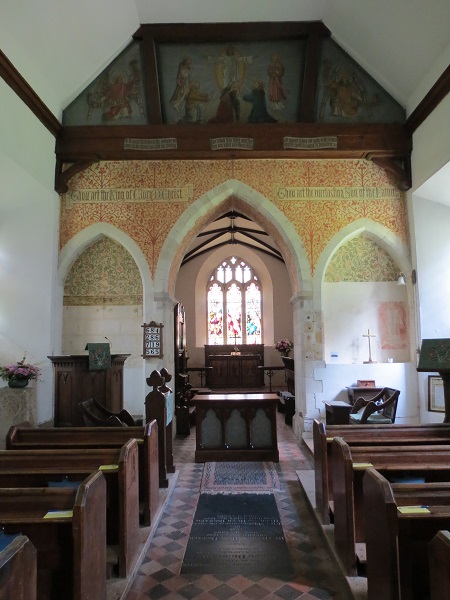
The layout of the church is still much the same as it was in Jane Austen’s time. Three arches separate the nave of the church (where the congregation sits) from the chancel (where the altar is).

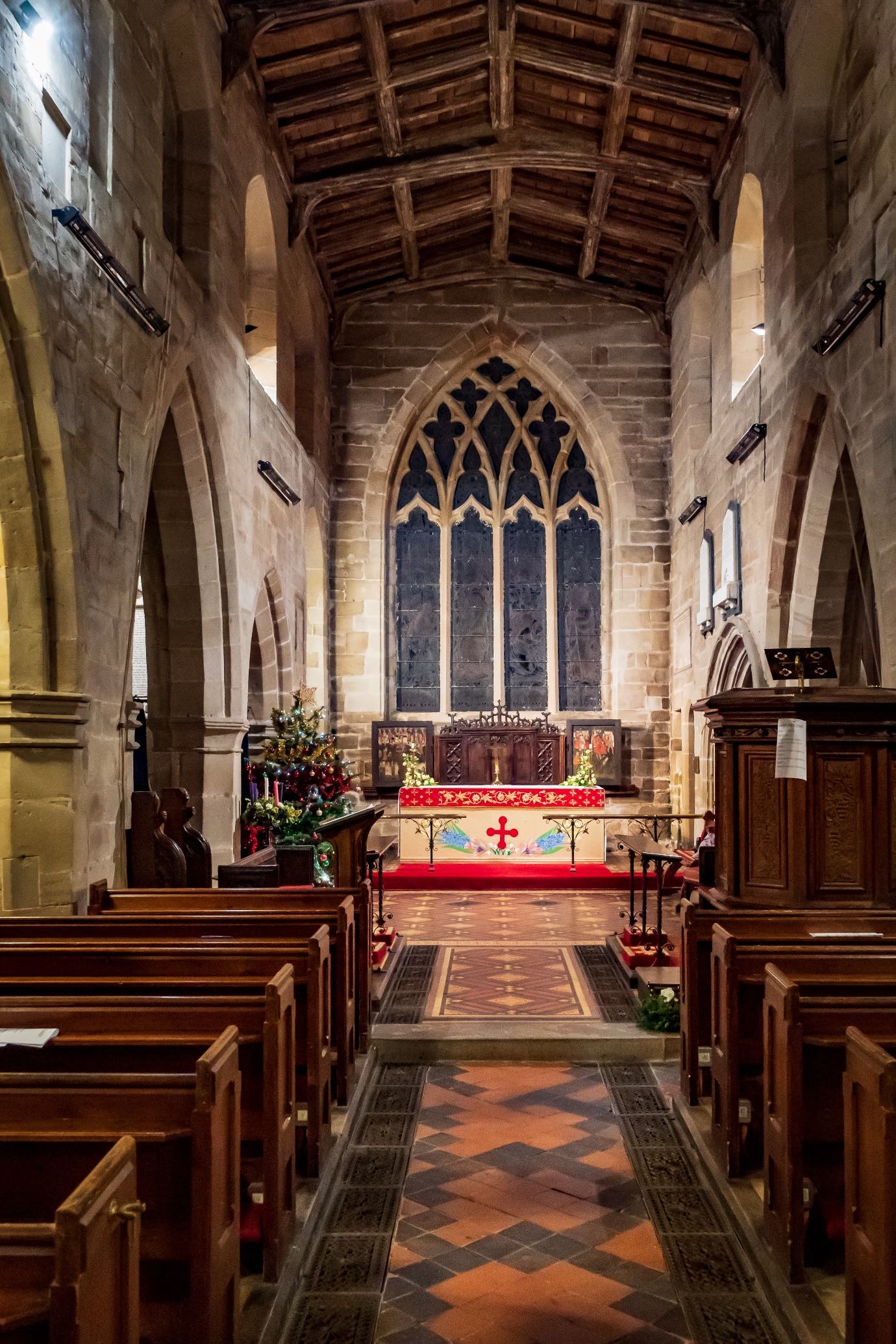
Interior of the church at Steventon. The arches were there in Austen’s time. The stained glass windows, orange and green tilework on the arches, Transfiguration painting above the arches, and pews all date from Victorian times (later in the 19th century). Photo © Brenda S. Cox 2023

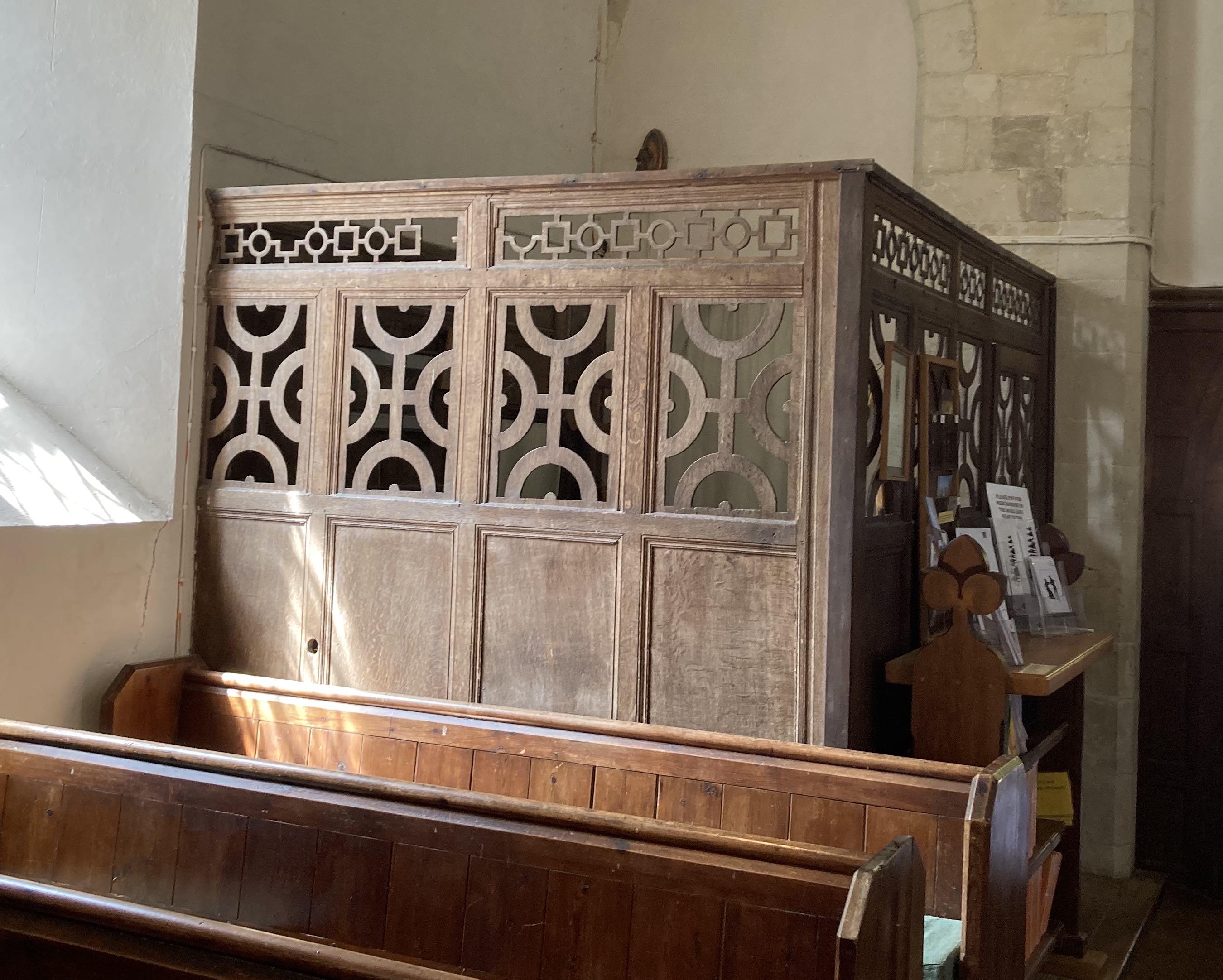
A large box pew, made of oak, was built in the seventeenth century for the lords of the manor. The Digweed family, who rented the manor house from the Knights, used this pew during Austen’s time. It was at the front of the nave, near the pulpit. The box pew is still in the church but has been moved to the back. It is now used as the vestry, the clergyman’s office.

So the Digweed family sat in state, protected from drafts and from curious eyes, at the front. Others, including the Austen family, likely sat on benches. If there weren’t enough benches, servants and the poor would have stood in the aisles and at the back. There was no gallery (balcony) in this church.

Box pew used by the Digweed family, squires of the manor in Austen’s time. It has been moved to the back of the church and is now used as a vestry, office for the clergyman. Photo © Brenda S. Cox 2023
View from inside the box pew. Photo © Brenda S. Cox 2015

Some ancient wall paintings were found during one restoration of the church. These have been left uncovered. They were most likely covered by whitewash during Jane Austen’s time, however.

Medieval wall painting in Steventon church. Probably of a bishop. It would have been covered over during Austen’s time. Photo © Brenda S. Cox, 2023

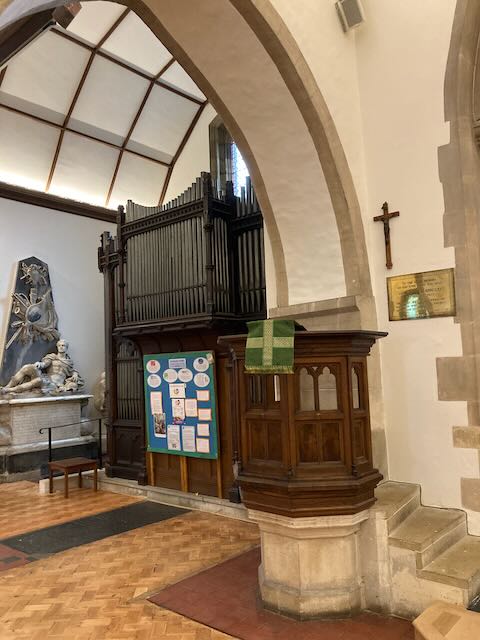
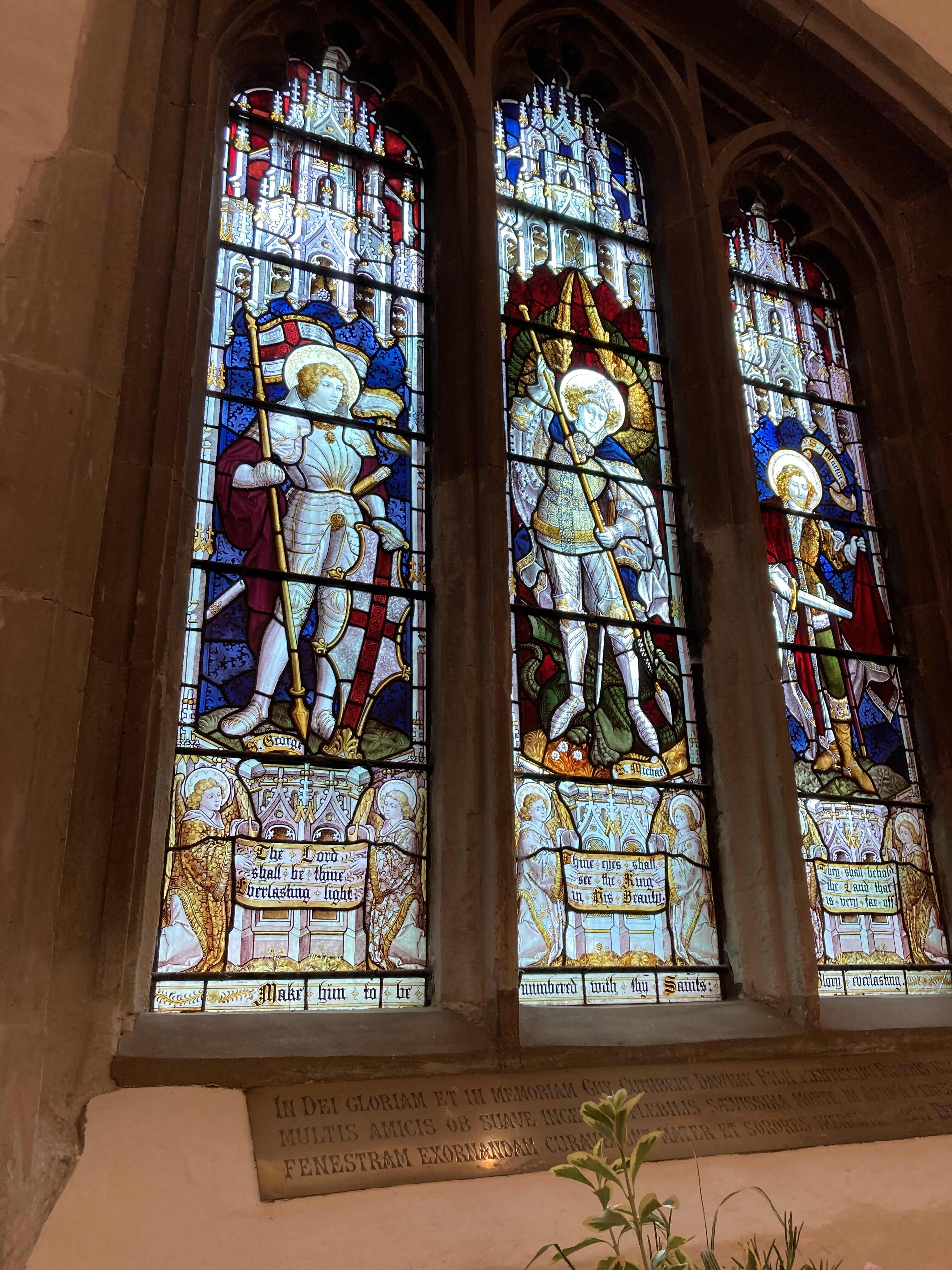
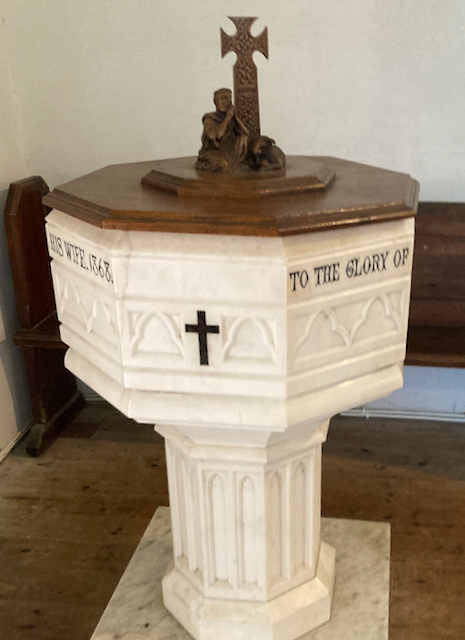
Other lovely decorations in the church are from Victorian times. The stained glass windows, pews, pulpit, baptismal font, choir stalls, and altar are all from the late 1800s, with the organ from the early 1900s.

Victorian baptismal font in St. Nicholas’ Church, Steventon. The modern cover represents a shepherd praying at the old Saxon cross, before the church was built. Photo © Brenda S. Cox, 2023 (Font cover partially funded by JASNA Ohio North Coast region)

Austen Documents

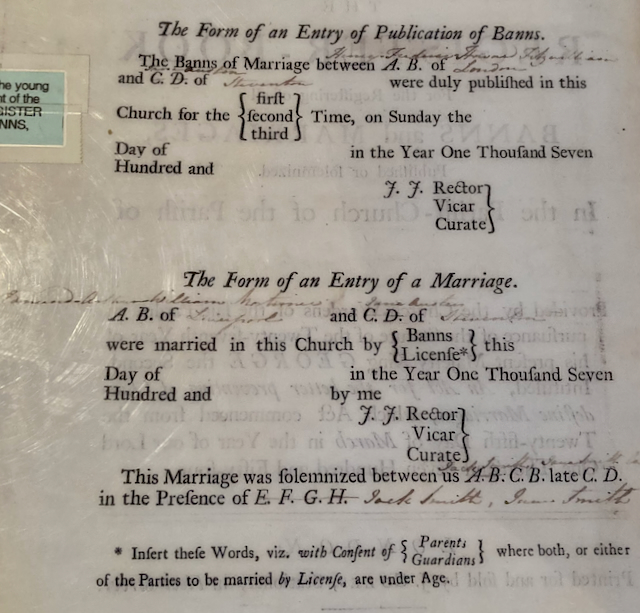
The church has reproductions of several church documents relating to Jane. (The originals are held at the Hampshire County Archives, which unfortunately I did not get a chance to visit.) The parish priest—in this case, Jane’s father, George Austen—kept the parish register for officially recording births, marriages, and deaths. The register included a sample page for marriages, and Jane playfully filled this out with imaginary names for her own future marriage.

In the sample marriage form for the parish register, Jane imagined herself marrying several possible men. Photo © Brenda S. Cox, 2023

Another page of the parish register records Jane’s baptism at home on Dec. 17, 1775, shortly after her birth. She was born in the middle of a very cold winter, so her father christened her at home. She was officially received into the church on April 5, 1776, probably her first excursion.

Parish register record of Jane Austen’s baptism and reception into the church. Photo © Brenda S. Cox, 2023

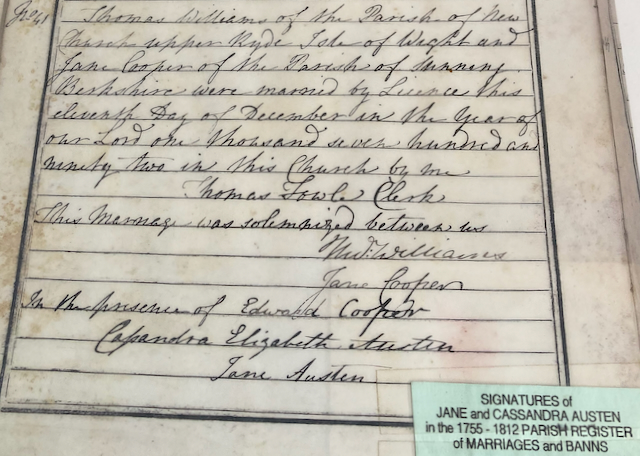
We can also see Jane and Cassandra’s signatures as witnesses to a wedding. Their first cousin Jane Cooper married Thomas Williams. Jane, Cassandra, and Edward Cooper (Jane Cooper’s brother and Jane Austen’s cousin), were the official witnesses.
Signatures of Jane and Cassandra Austen who witnessed the marriage of their cousin Jane Cooper. Photo © Brenda S. Cox 2023

Austen Memorials at Steventon Church

Inside the Steventon church, you can find memorial plaques to Jane’s brother James, James’s first wife Anne, and his second wife Mary. When Anne died in 1795, James was not yet rector of Steventon, so he is listed as vicar of Sherborne St. John.

Memorial in Steventon church to James Austen’s first wife, Anne, 1795. Photo © Brenda S. Cox, 2023

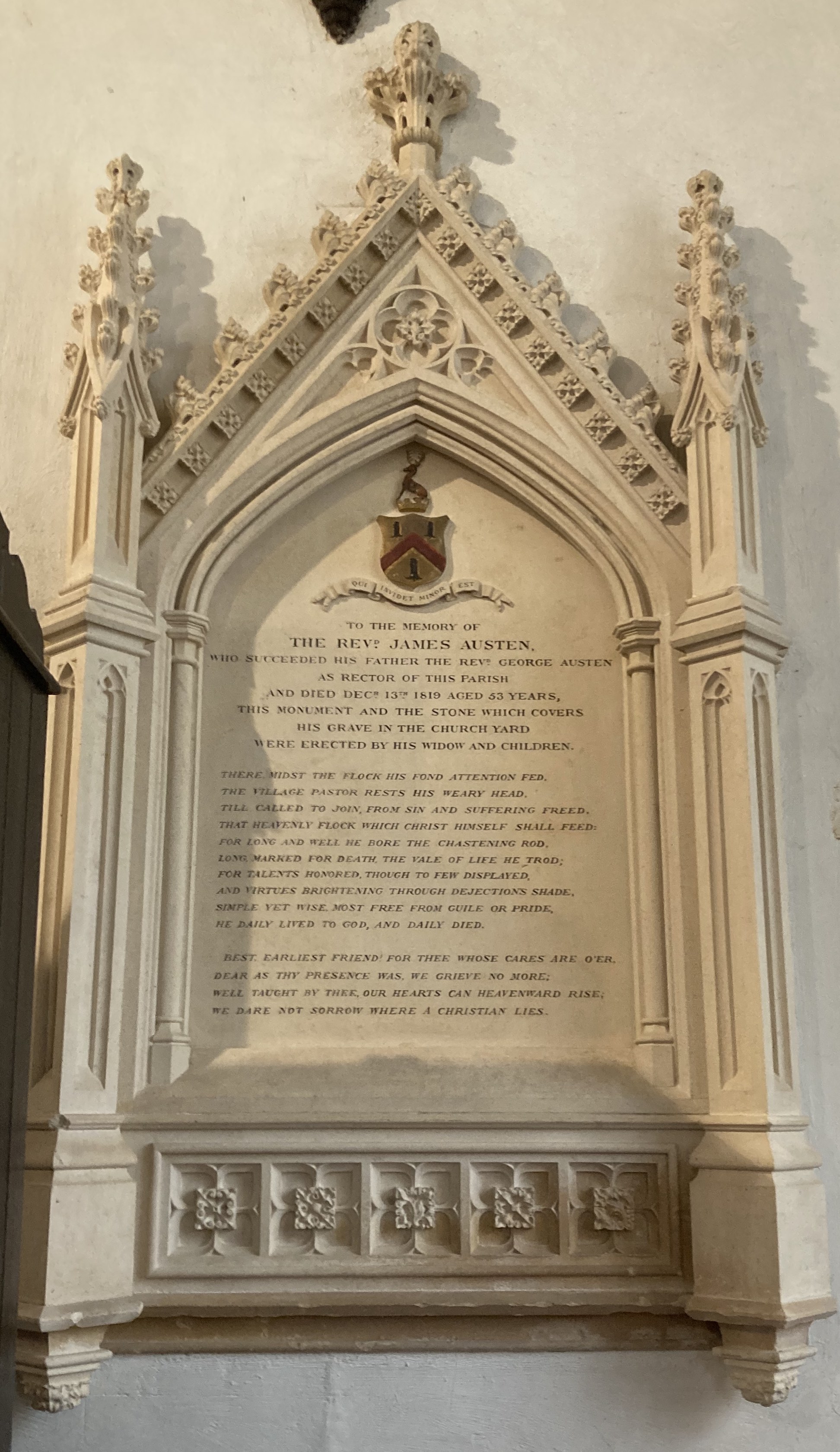
When James died in 1819, the memorial says he “succeeded his father George Austen as rector of this parish.” George, of course, died in Bath and is buried at St. Swithin’s.

Memorial to Jane’s brother James Austen, who followed his father as rector of Steventon. Photo © Brenda S. Cox, 2023

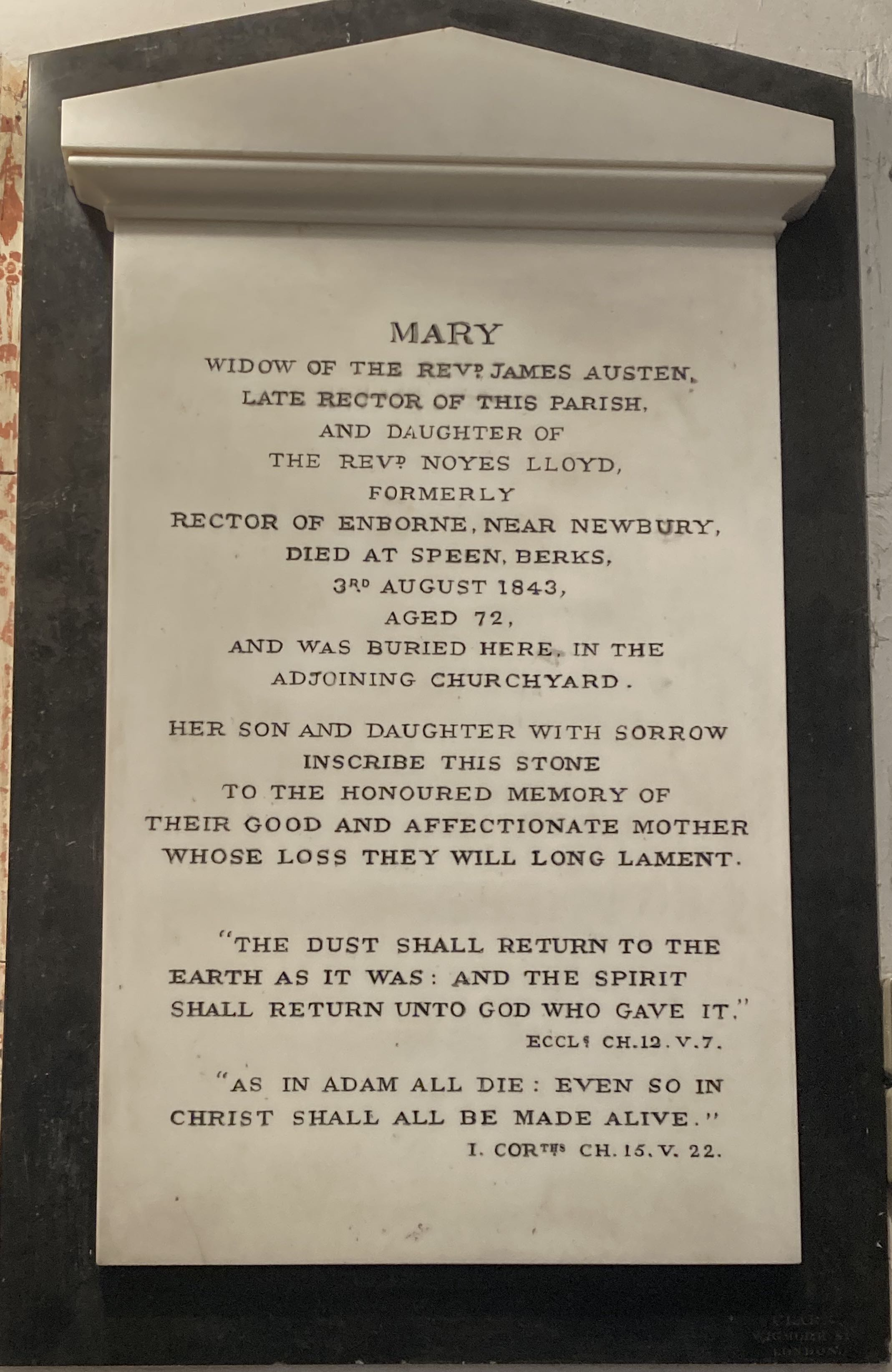
Mary’s memorial says that she died in 1843 at Speens, Berkshire, but was buried in Steventon (about 16 miles away) with her husband. Mary, of course, had left the rectory when her husband died and his brother Henry took over as rector.

Memorial to James Austen’s second wife, Mary, who died in 1843. She was Martha Lloyd’s sister. Photo © Brenda S. Cox, 2023

James and Mary Austen’s grave is in the churchyard.

Grave of James and Mary Austen in Steventon churchyard. Photo © Brenda S. Cox, 2023

Knight and Digweed Memorials at Steventon

The Knight family owned the manor at Steventon from the early 1700s. They rented it to the Digweed family in 1758, and Digweeds lived there until 1877, though the Knights sold the property in 1855. (This was similar to Charles Bingley renting Netherfield and becoming the de facto squire of the parish.) Austen mentions some of the Digweeds in her letters.

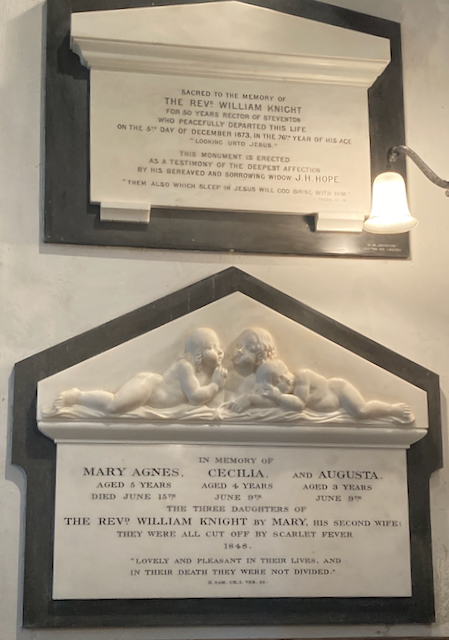
Memorials in the church commemorate Rev. William Knight, “50 years rector of Steventon.” He was Jane’s nephew who became rector after Henry. A sad memorial below his own records the deaths of William’s three daughters, ages 3, 4, and 5 years, who were all “cut off by scarlet fever” in one June week of 1848.

Memorials in St. Nicholas’, Steventon, to Jane’s nephew William Knight, rector of the church for 50 years, and to his three little girls who died tragically of scarlet fever. Photo © Brenda S. Cox, 2023

A ledgerstone on the church floor covers the grave of Hugh and Ruth Digweed, who died while Jane was at living at Steventon, and their daughter who died at age 2 in 1770. Other memorials enshrine later members of the Digweed family.

Some Digweeds, like these, are buried in the church, the most honored place to be buried, presumably since they were the squires of the manor house. Others are buried outside in the churchyard.

This stone on the floor of the Steventon church covers the graves of Hugh and Ruth Digweed, who Jane Austen must have known. Photo © Brenda S. Cox, 2023

Steventon Church Today

Like most small country churches in England, Steventon is now part of a benefice including several churches, served jointly by a few clergy. Steventon belongs to the Overton Benefice, seven parishes all served by one rector, one vicar, and one curate. 

The Steventon parish is still small, rural, and agricultural, as it was in Austen’s time. About 250 people live in the parish. Sunday services are still held at the church twice a month, usually with a dozen or so people in the congregation. One is a Communion service and the other may be matins, evensong, a holiday service, or a Saturday breakfast and talk for the wider community. Much larger crowds, up to 100 or even 200 people, come to events like holiday services, weddings, baptisms, and funerals. The church seats about 75-80 comfortably, so it can be quite crowded!

In Austen’s time, the church would get bitterly cold in the winter. A modern improvement is the addition of heaters under the pews. People in each pew can turn on their own heater, making the church much more comfortable without wasting energy by heating the whole church.

Marilyn Wright, the churchwarden, told me that she loves the peace of the church, and goes in there when she wants to pray and think. She said if her father, who has dementia, ever got lost, they would find him at the church. As I heard over and over in the Austen country churches, the church is still central to community life.

The Revd. Canon Michael Kenning, former rector of Steventon, gave our JASNA tour group a lovely introduction to the church. At the end, he pointed out that there are about 10,000 Church of England churches in the UK, and most do not get any funding from the National Trust, the British government, or the Church of England. Therefore they need outside funding. The Steventon church is currently in need of some major work. Damp has gotten into the walls, causing cracks and other damage. New drainage and other work is needed. After that, interior features of the church will be renovated. 

If you wish to donate to the Steventon church, you can use this link.

JASNA provides support for such special projects at Austen family churches, including this one. If you are a JASNA member, donations to the churches fund for such projects are appreciated. (You can donate when renewing your membership, or sign in to your account and go under the drop-down menu to “Donate to JASNA or English Institutions.”)

For Further Exploration

During Austen’s time, Steventon had a Norman baptismal font. For an idea of what that might have looked like, as well as stories of St. Nicholas, see, The Winchester Type Fonts.

A Guide to St. Nicholas Church Steventon gives more details and pictures of all parts of the church and churchyard (follow links to further pages).

A Drive through Steventon to St Nicholas Church 

More images of the church 

A guide to the Steventon church, Jane Austen’s Steventon by Deirdre LeFaye, and guides to other Austen-related churches are available from Jane Austen Books.

Steventon’s Rectory Garden

Steventon Parsonage 

Rectors and Vicars in Jane Austen

Yews in English Churchyards 

Posts on Other Austen Family Churches

Chawton

Hamstall Ridware

Adlestrop and the Leigh Family

Stoneleigh Abbey Chapel

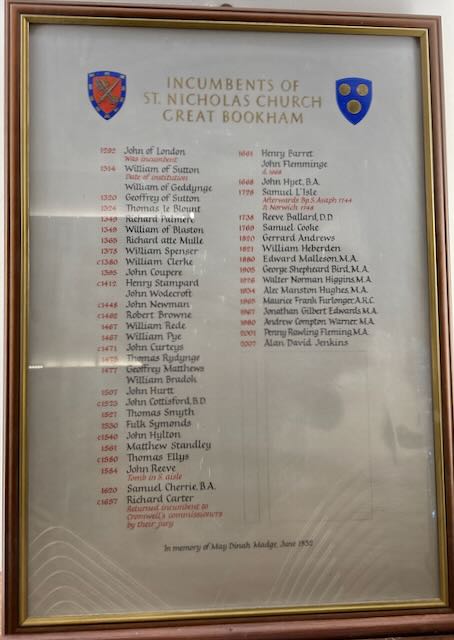
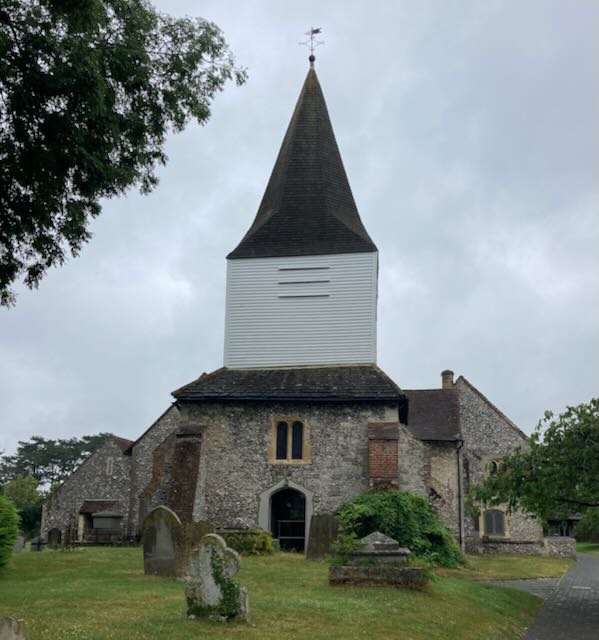
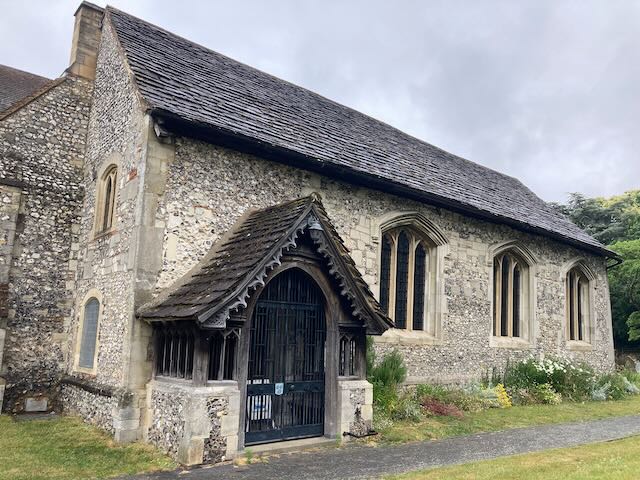
Great Bookham and Austen’s godfather, Rev. Samuel Cooke

Ashe and Jane’s Friend Mrs. Lefroy 

Deane

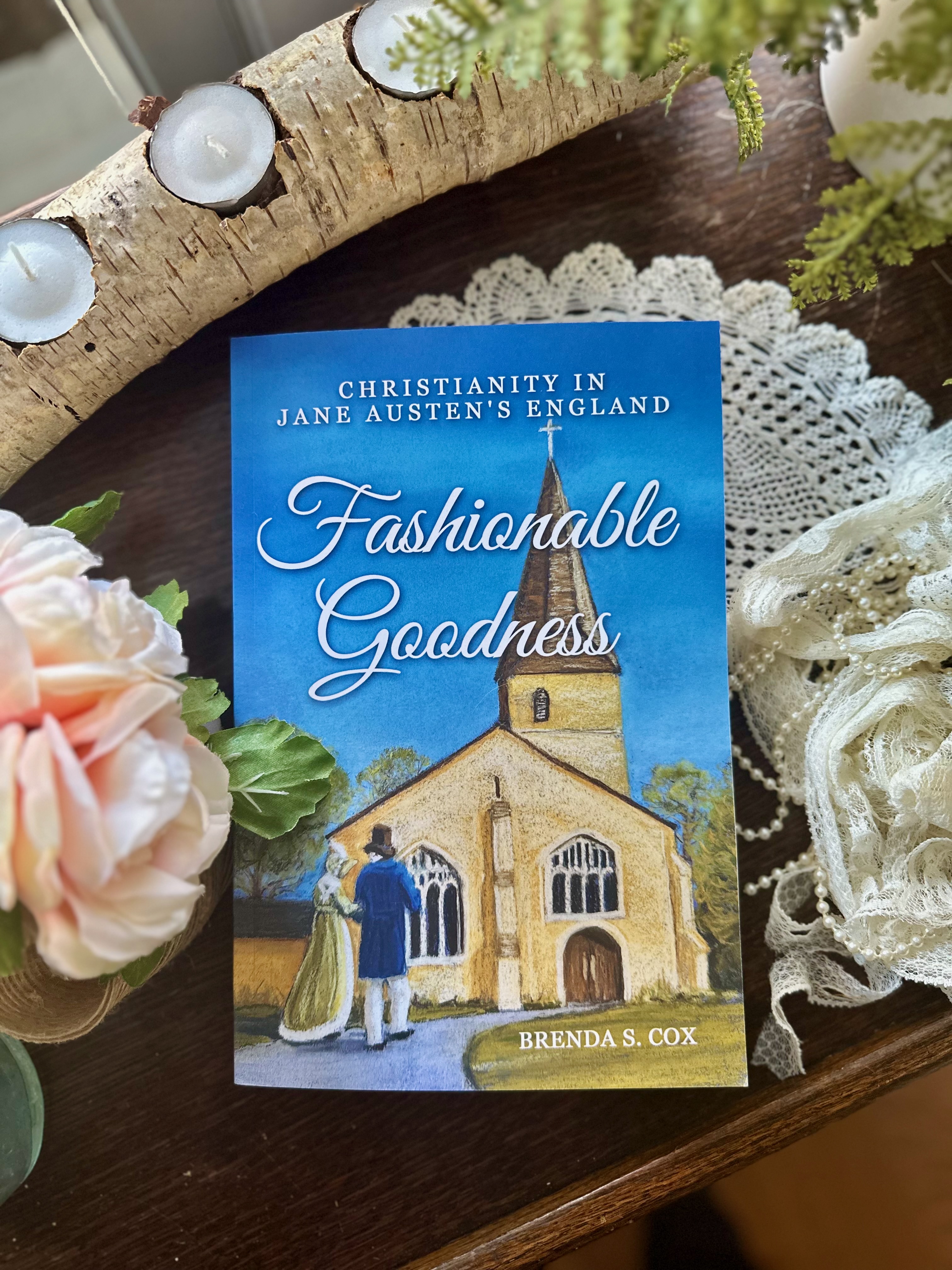
Brenda S. Cox is the author of Fashionable Goodness: Christianity in Jane Austen’s England. She also blogs at Faith, Science, Joy, and Jane Austen.

Read Full Post »

By Brenda S. Cox

“Now we are come from church . . .” (Jane to Cassandra, London, March 5, 1814)

In Jane Austen’s letters and novels, she often mentions church. A quick search of my Complete Works of Jane Austen shows 119 uses of the word “church” plus 31 uses of “chapel.” The church was an important part of Jane’s life.

A number of different churches are associated with Austen and her family, and this past summer in England I had the privilege of visiting many of them. In the coming months, I will share photos with you of some of these special places.

St. Nicholas’s Church, Chawton, where Jane Austen worshiped from 1809 to 1817. You can see the chimneys of Chawton House in the background; Chawton Cottage is a few minutes’ walk away. Photo © Brenda S. Cox, 2023.

Country Churches in Austen’s England

Most of the Austen family churches are small country churches, like the churches the Bennets, Darcys, Tilneys, Dashwoods, Woodhouses, and others would have mostly attended.

Most country churches at that time were simple, whitewashed inside, with perhaps the Ten Commandments hung on the wall somewhere, along with monuments (usually plaques on the walls) commemorating people from the squire’s family or previous rectors. A simple Communion table at the front, with a railing in front of it, would have served as the altar. The part of the church around the altar is called the chancel.

Chancel of the Chawton church. This part of the church escaped the fire in the late 1870s, but was mostly redecorated later. The Communion railing, however, is from the 18th century; Jane Austen would have received Communion at that railing. Photo ©Brenda S. Cox, 2023.
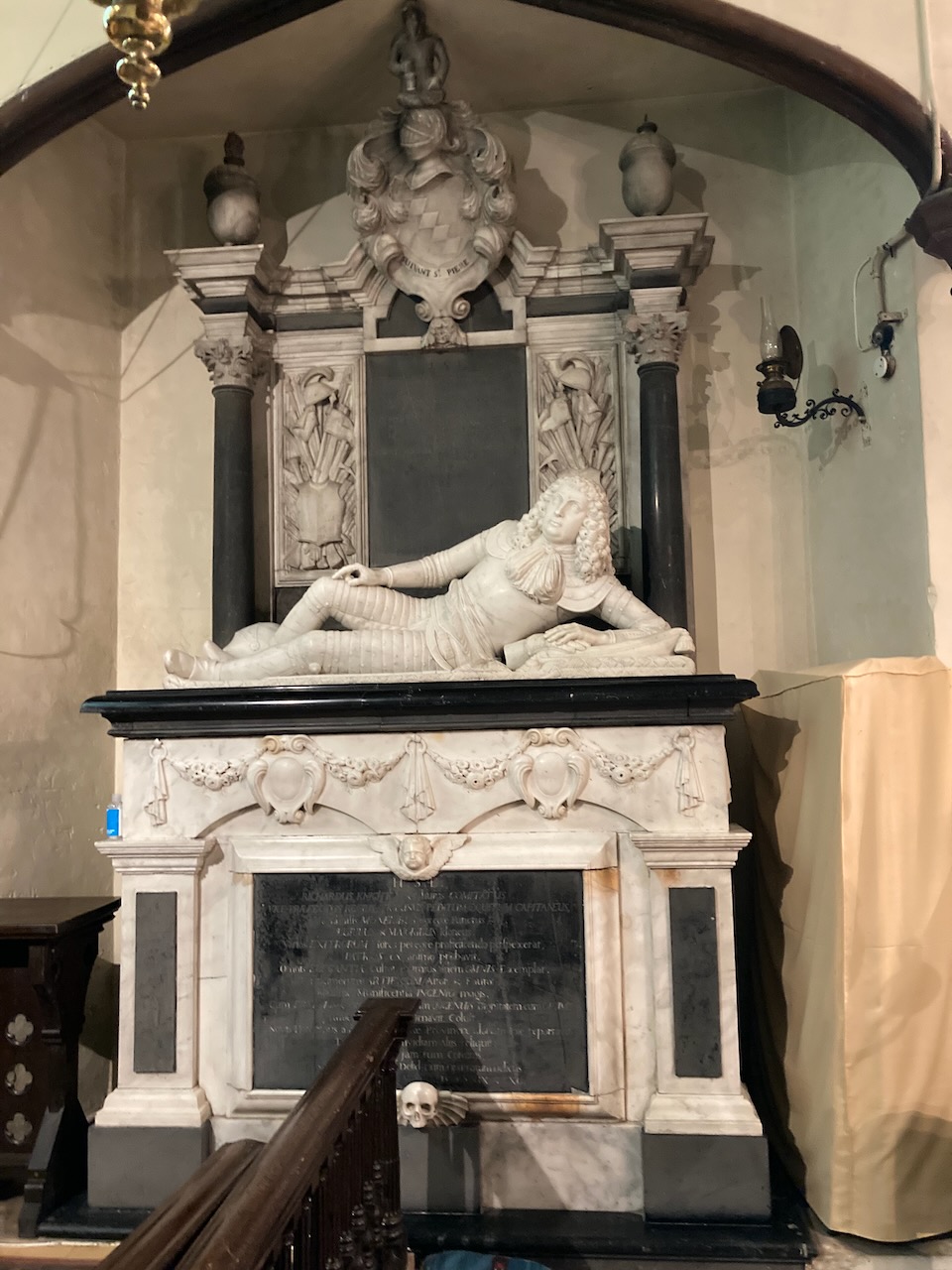
By far the most elaborate memorial in the Chawton Church, this one commemorates Sir Richard Knight, who lived from 1638-1679. Photos above and below © Brenda S. Cox, 2023.
Memorials to Jane’s mother and sister inside the church.

Preaching was an important part of each service, and the pulpit might have been one, two, or three levels high. Many churches had a gallery, a balcony where the choir, called the Singers, would sit, if they had music. From the top level of the pulpit, the clergyman could preach to those in the gallery, as well as see down into the box pews, pews surrounded by walls. These box pews were generally owned by the local gentry, who could listen in privacy and be protected from drafts of cold air. Others sat on benches.

Country families visiting Bath or London would have attended larger churches. I’ve speculated previously about where Jane herself (and Catherine Morland) might have worshiped in Bath.

Country Churches Today

The country churches we visited this summer now have small congregations for regular services; perhaps a dozen or so people on a Sunday morning. However, they occasionally host baptisms, weddings, and funerals, with much larger attendance. Those events also provide income to the churches. These small churches may gather one to two hundred people for holiday services such as Harvest, Christmas, or Easter. They sometimes also host local school events, concerts, and community events.

Interior of Chawton Church. The stained glass windows are all from Victorian times or later. Photo © Brenda S. Cox, 2023.

St. Nicholas’ Church, Chawton, Today

Let’s start with the Chawton church. This is the one Jane Austen fans can most easily visit, since it is next to Chawton House and a short walk from Jane Austen’s House. Jane Austen attended this church from 1809 to 1817, while she and her mother, sister, and friend were living in Chawton Cottage (now Jane Austen’s House, a museum). During that time, she wrote or rewrote all her novels, and four of them were published. (The other two were published shortly after her death.)

The church is named after St. Nicholas, like the church in Steventon where Austen grew up; that’s a little confusing.

This Victorian stained glass window in Chawton Church honors St. Nicholas, patron saint of children and others, to whom the church is dedicated, and St. Swithin, patron saint of Winchester Cathedral where Jane Austen is buried. The window is a memorial to Marianne Knight, daughter of Jane’s brother Edward Knight. Marianne died unmarried in 1896, and the window appears to have been commissioned by her great-nephews and great-nieces (if I am deciphering the Latin correctly).  Photo © Brenda S. Cox, 2023.

Nowadays a small team of clergy usually serve a group of country parishes. The Chawton church is now part of the Northanger Benefice, which includes eight small rural parishes, each with its own church.

While services are offered somewhere in the area every Sunday, most small churches do not have services every week. At the church in Chawton, three Sunday services are held per month.

One is led by a layperson (not an ordained clergyman or clergywoman). In the hour-long lay service I attended during Regency Week, a woman from the congregation led the service, reading from the Book of Common Prayer, while the congregation read the responses. The congregation sang hymns: “Lord of All Hopefulness,” a lovely traditional hymn, as well as “Kum Ba Yah” and “Morning Has Broken,” perhaps chosen because they were familiar and easy to sing. There was no sermon.

The leader read the banns for two couples who plan to get married in the church. I was told that, in order to be married there, a couple had to attend the church at least six times before the wedding, and they needed some connection with the parish or benefice.

The congregation was welcoming and kind to my friend and myself as visitors. We enjoyed the fellowship before and after the service.

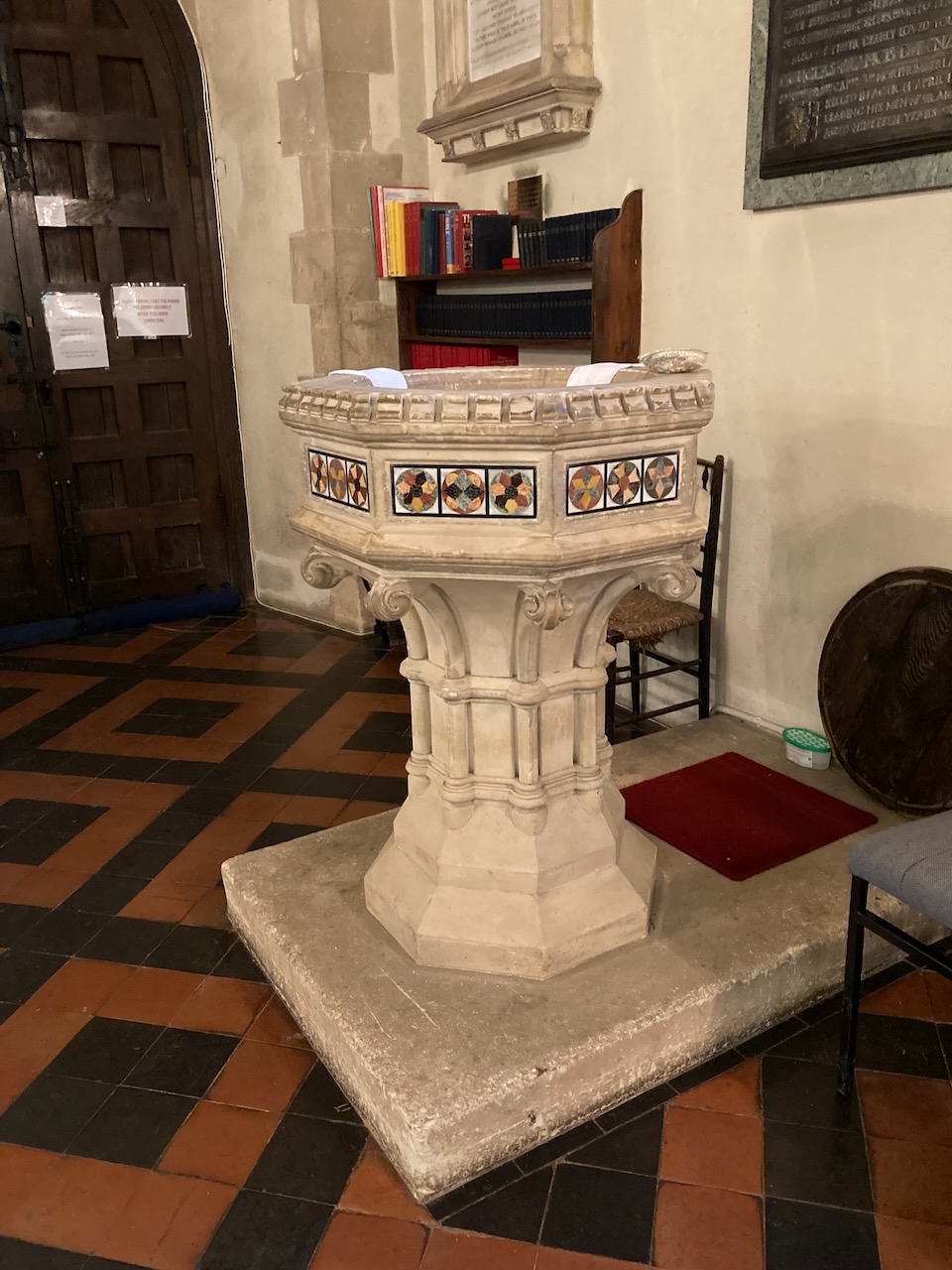
Baptisms (Christenings) are performed at this Victorian font near the door of the Chawton church. Photo © Brenda S. Cox, 2023.

The service I attended the following Sunday included the baptism of a nine-month-old boy. About forty or fifty people attended. (I was told anyone could be baptized in the church, with the payment of a small fee.) The rector in charge of the benefice, Rev. Carrie Walshaw, officiated. (The Church of England has ordained women since 1994.) The baby was dedicated with his parents, two godfathers, and one godmother (a baby girl would have two godmothers and one godfather), and baptized at the Victorian font at the back of the church. A candle was lit and given to the parents as a symbolic remembrance. Rev. Walshaw preached a sermon about baptism and salvation, and we sang hymns with organ music. Rev. Walshaw’s husband was the organist; the organ is an electronic one that sounds like a real pipe organ (to me, at least). It is hidden behind the pipes of the old organ which is now too expensive to maintain.

Victorian organ pipes at Chawton Church. A newer electronic organ is behind the panels. Photo © Brenda S. Cox, 2023.

History of St. Nicholas’ Church, Chawton

There has been a church at Chawton since at leat 1270 AD. The current church building, however, is not the same one Austen worshiped in. A fire in 1871 destroyed most of that church. The chancel (the area around the altar at the front of the church) remains, and most of the memorials were preserved, along with one original pew sitting against the back wall. So those are still as Jane Austen would have seen them, though the chancel has been extensively redecorated.

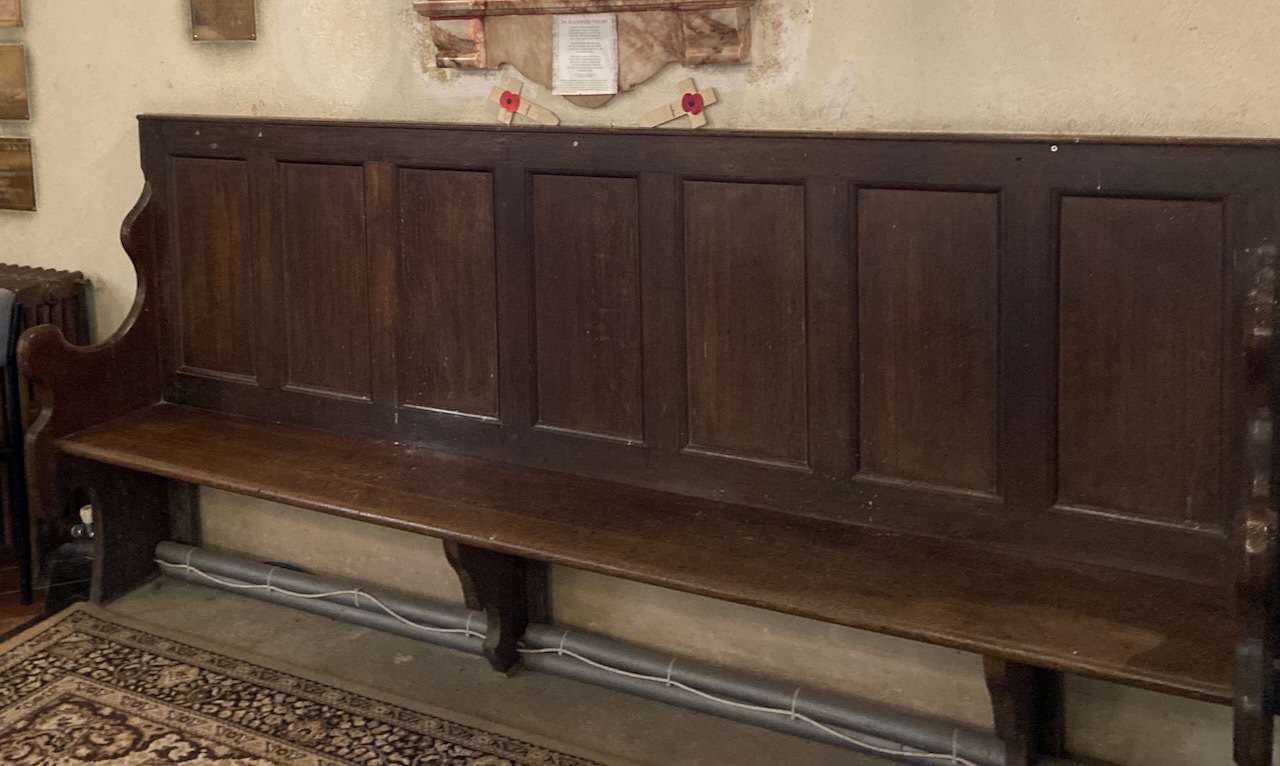
The only original pew, from 1733, to survive the fire; it is now attached to the back wall of the Chawton church. Photo © Brenda S. Cox, 2023.

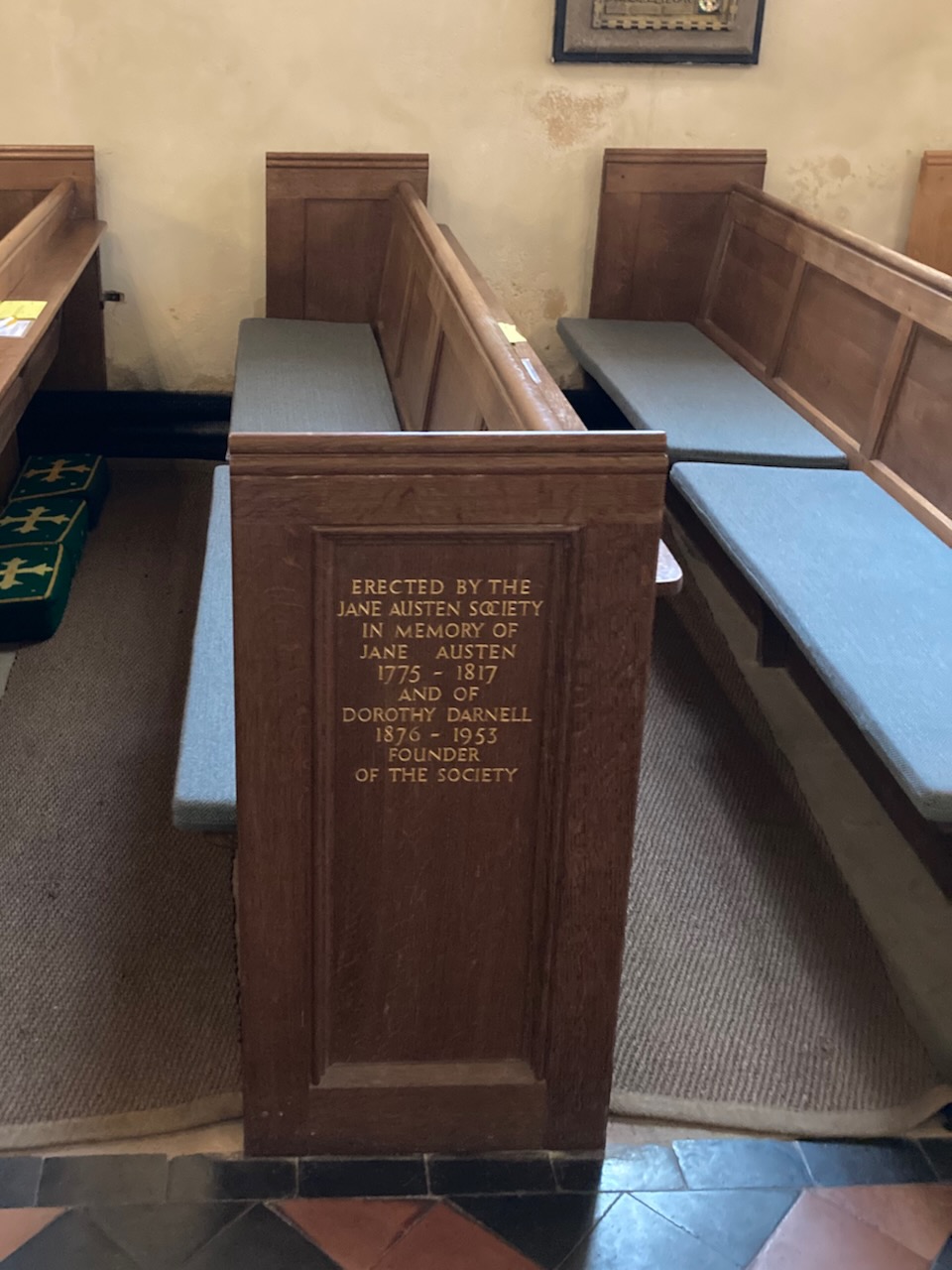
The rest of the church, including the tower, was rebuilt in 1872 and 1873 in a Victorian style. Several of the pews are marked as memorials to various people, including one for Jane Austen, though these pews are all modern.

This modern pew in the Chawton Church is dedicated to Jane Austen and to Dorothy Darnell, founder of the Jane Austen Society. Photo © Brenda S. Cox, 2023.

Clergy

For each parish church in England, someone owns the advowson, the right to appoint the next clergyman. The Knight family (who adopted Jane’s brother Edward) owned the advowson for Chawton from 1578 until 1953. At that point, they gave it to the Bishop of Winchester, when Chawton became part of a benefice with nearby Farringdon.

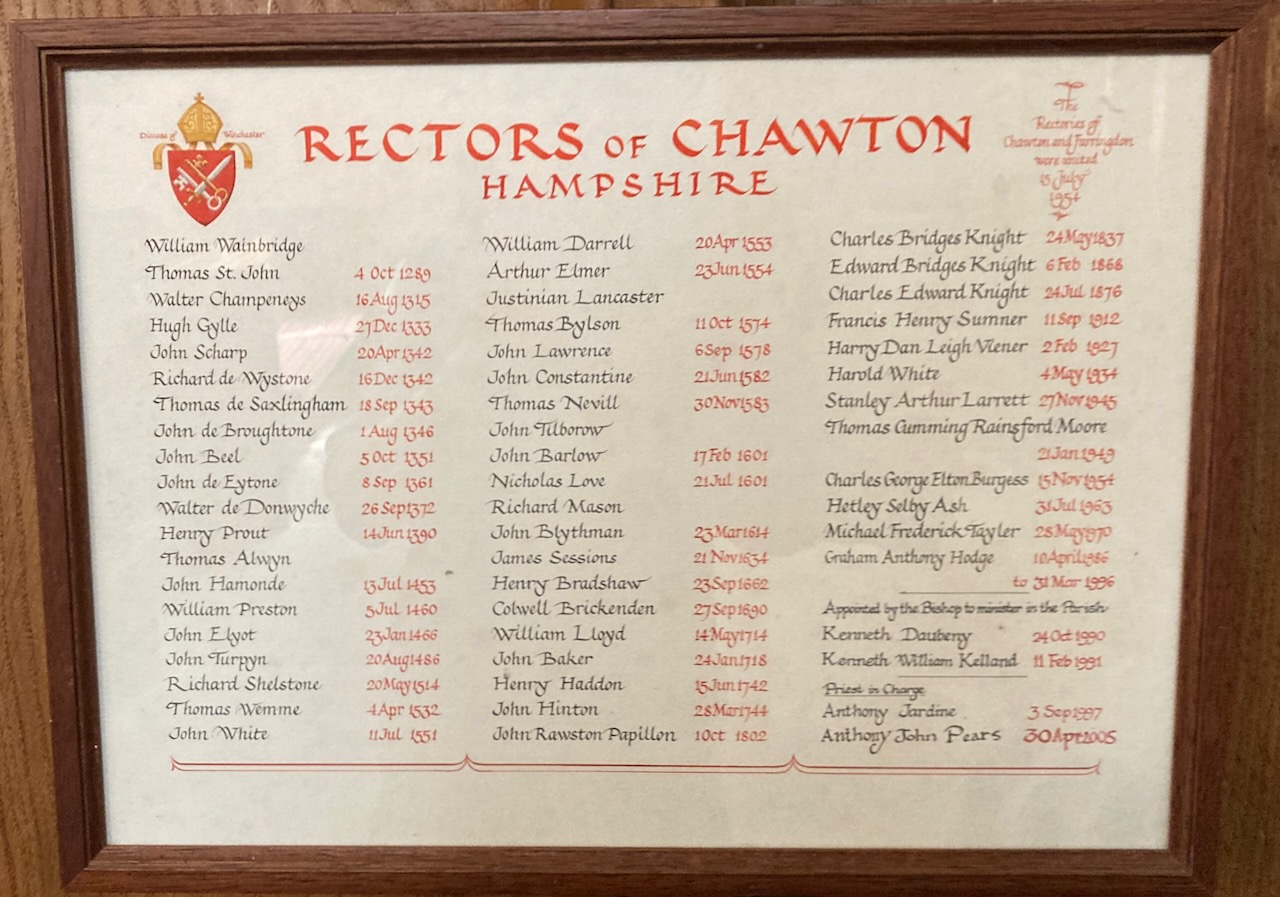
During Austen’s time, the Knights chose Rev. John Papillon as rector of Chawton. In one of her letters, Jane refers to a family joke that she was supposed to marry Rev. Papillon, regardless of how either of them felt about it (Dec. 9, 1808).

This list of Chawton rectors, posted on the wall of the church, includes Rev. Papillon, who was rector while Jane Austen lived there. He is mentioned in her letters. Two of her nephews and a great-nephew follow. Photo © Brenda S. Cox, 2023.

In 1817, Jane’s brother Henry Austen served briefly as curate at Chawton and at St. Lawrence the Martyr’s, parish church of the nearby market town of Alton. In 1837, Edward Knight installed his son, Charles Bridges Knight, as rector of Chawton. The rectory is the white house at the end of the lane leading to the church and Chawton house, just across the street. It is now a private home.

The former rectory of Chawton Church is now a private home, just across the road from the church and Chawton House. Photo © Brenda S. Cox, 2023.

Updating the Church

A guidebook to Chawton Church tells us, “The parish has increased little in population since the 19th century and still only has about 300 adults living in it so that the shortage of money which is the lot of most churches in tiny parishes is likely to continue in this, the 21st century.” The building is a grade 2 listed building in the UK, meaning it is “of special interest, warranting every effort to preserve it.” 

The church therefore has to get permission to make any changes. Recent changes are the addition of two restrooms and a small kitchen in the back of the church. The kitchen is made of oak matching the pews, with a cover to hide the sink. These amenities make the church more appealing as a site for weddings and other community events. Income from such events helps keep the church running. The Chawton church has hosted five weddings this year so far.

The church also has a children’s area toward the back, with toys. This helps keep children occupied, especially during the regular services geared for families.

A children’s area and basic kitchen facilities have been added to the back of the Chawton church. Photo © Brenda S. Cox, 2023.

Ring the Bells

The church has a peal of six bells, which were ringing during the baptism service I attended. Three of them would have been heard by Jane Austen; they are dated 1420, 1621, and 1748. Another original bell was re-cast and re-hung as one of the newer bells. During Austen’s time, the church had a West Gallery, a balcony which may have been used by a choir or musicians, but the rebuilt church has no gallery.

Bell tower of the Chawton church. Photo © Brenda S. Cox, 2023.
Chawton’s current six bells, three of which would have been heard by Austen, were dedicated/re-dedicated in 2009. Photo © Brenda S. Cox, 2023.

Lych Gates and Graveyard

Outside, the church can be approached from two traditional lych gates, one in front, one in the back. The word lych (pronounced litch) is from an Anglo-Saxon word for corpse. The lych gate was the entrance to the church yard, which was a cemetery. When a person died in the parish, their body might be set in the lych gate for a time, until the funeral was held.

The lych gates of the Chawton church date from about 1871. There is a similar one behind the church. Photo © Brenda S. Cox, 2023.

The Chawton churchyard includes many headstones for people buried there, some of which are so ancient they are illegible.

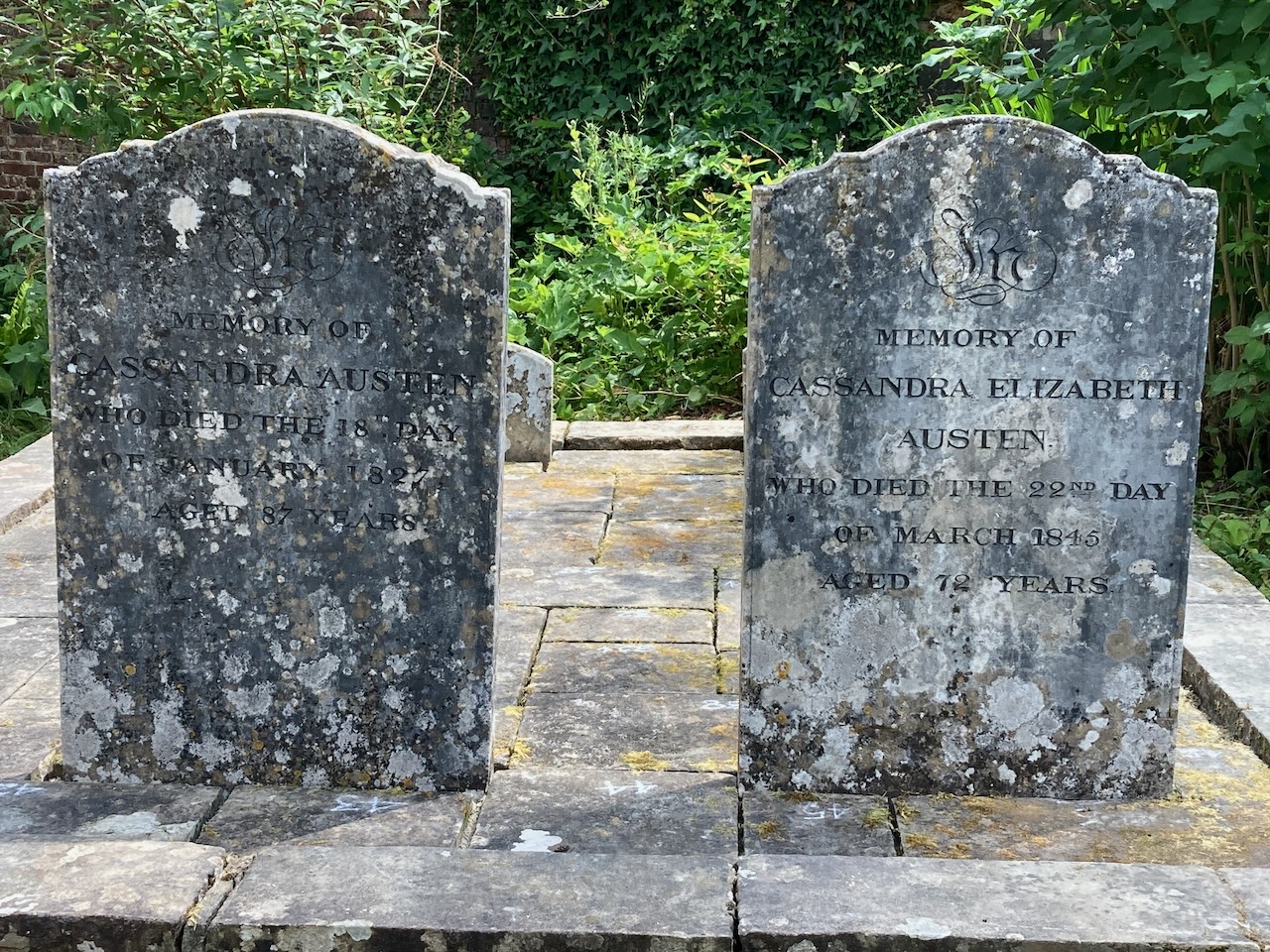
Jane Austen’s mother and sister are buried in the churchyard. Their graves were recently cleared of huge, deep weeds. But the lettering on the stones is still difficult to read.

Jane Austen’s mother and sister, both named Cassandra, are buried in the Chawton churchyard. Photo © Brenda S. Cox, 2023
The gravestones were easier to read in 2013, when I took this photo. Photo © Brenda S. Cox, 2013.

Honoring Jane

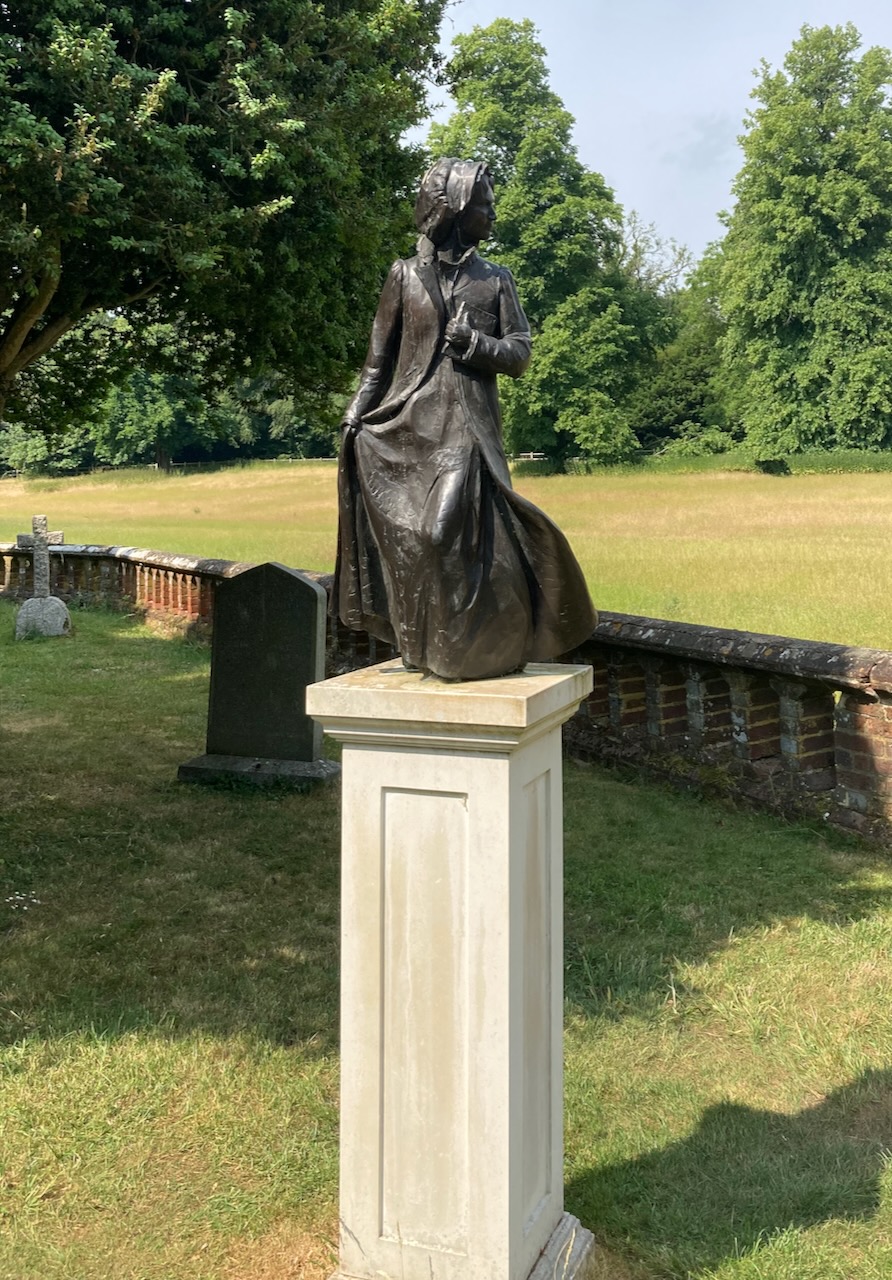
A small statue of Jane Austen now stands in front of the church, erected in 2018. The statue is the maquette, the prototype, for the life-size statue in Basingstoke. It shows Austen walking, carrying a book.

A statue of Jane Austen now greets visitors to the Chawton church. Photo © Brenda S. Cox, 2023.

I hope you can visit the Chawton church and enjoy its peace and beauty.

Resources

Guides to Chawton church and other Austen-related churches are available from Jane Austen Books, or you can buy them at the church if you visit it.

A Walk Through Chawton will give you a wider view of Austen-related places to visit in the area. 

Donations

The Chawton church is always open to visitors like yourself. According to a sign in the church, however, it costs over £75 a day to keep the church operating. If you should wish to make a donation directly to the church, churchwarden Sandra Martin has set up this site, which Rev. Lesley Leon of the Northanger Benefice shared with us: Chawton church donations.

JASNA provides support for special projects in some Austen family churches, including this one. If you are a JASNA member, donations to the churches fund for such projects are appreciated. (You can donate when renewing your membership, or sign in to your account and go under the drop-down menu to “Donate to JASNA or English Institutions.”)

Posts on other Jane Austen Family Churches

Steventon

Hamstall Ridware

Adlestrop and the Leigh Family

Stoneleigh Abbey Chapel

Great Bookham and Austen’s godfather, Rev. Samuel Cooke

Ashe and Jane’s Friend Mrs. Lefroy 

Deane

Brenda S. Cox is the author of Fashionable Goodness: Christianity in Jane Austen’s England. She also blogs at Faith, Science, Joy, and Jane Austen.

Read Full Post »

Our very own Brenda S. Cox has just published her new book Fashionable Goodness: Christianity in Jane Austen’s England. It’s already receiving a wonderful reception, and I know it will continue. For those of us who are always expanding our understanding of Jane Austen’s life, and particularly her personal life and faith, this new book is an essential resource.

When I was writing my book Praying with Jane: 31 Days Through the Prayers of Jane Austen, I read every article and book I could find on the topic of religion and faith as it related to Austen and her family. I scoured every available resource on Austen’s personal faith, her family’s daily and weekly religious habits, and the Anglican church at large. I discovered many wonderful details about her religious life, but as I worked, I always felt as though I was putting together a giant puzzle. And when it came to understanding more fully the implications of her religious beliefs and background in her novels, I felt as though the puzzle was missing many important pieces.

In Fashionable Goodness: Christianity in Jane Austen’s England, Brenda has finally put the puzzle pieces in their rightful places and collected all of the information one might want to know about Jane Austen’s religious life in one handy place. This book covers a broad range of topics that any Jane Austen lover can benefit from knowing, especially for those of us who enjoy looking into the varied layers and greater context of her writing.

Of particular interest is the clever manner in which Brenda has organized the information in this book. Each chapter is easy to find, plus she has included many helpful resources at the end of the book, including handy tables with income information, terminology, ranks within the church, and denominations; several appendices; detailed chapter notes; a hefty bibliography; a glossary of terms; and a topical index. You can read this book cover-to-cover or you can pick and choose the topics that interest you most.

I highly recommend this book for any Austen fan or scholar. Without this book, you can only know part of what makes Jane Austen’s characters and plots so intriguing. Thank you Brenda for creating this invaluable resource!

(See below for giveaway details.)

St. Nicholas Church, Steventon
Photo: Rachel Dodge

About the Book:

“Brenda Cox’s Fashionable Goodness is an indispensable guide to all things religious in Jane Austen’s world. . . . a proper understanding of 18th century Christianity is necessary for a full appreciation of Austen’s works. Cox provides this understanding. . . . This work will appeal to novice readers of Austen as well as scholars and specialists.”

Roger E. Moore, Vanderbilt University, Jane Austen and the Reformation

The Church of England was at the heart of Jane Austen’s world of elegance and upheaval. Fashionable Goodness: Christianity in Jane Austen’s England explores the church’s role in her life and novels, the challenges that church faced, and how it changed the world. In one volume, this book brings together resources from many sources to show the church at a pivotal time in history, when English Christians were freeing enslaved people, empowering the poor and oppressed, and challenging society’s moral values and immoral behavior.

Readers will meet Anglicans, Dissenters, Evangelicals, women leaders, poets, social reformers, hymn writers, country parsons, authors, and more. Lovers of Jane Austen or of church history and the long eighteenth century will enjoy discovering all this and much more:

  • Why could Mr. Collins, a rector, afford to marry a poor woman, while Mr. Elton, a vicar, and Charles Hayter, a curate, could not?
  • Why did Mansfield Park‘s early readers (unlike most today) love Fanny Price?
  • What part did people of color, like Miss Lambe of Sanditon, play in English society?
  • Why did Elizabeth Bennet compliment her kind sister Jane on her “candour”?
  • What shirked religious duties caused Anne Elliot to question the integrity of her cousin William Elliot?
  • Which Austen characters exhibited “true honor,” “false honor,” or “no honor”?
  • How did William Wilberforce, Hannah More, and William Cowper (beloved poet of Marianne Dashwood and Jane Austen) bring “goodness” into fashion?
  • How did the French Revolution challenge England’s complacency and draw the upper classes back to church?
  • How did Christians campaigning to abolish the slave trade pioneer modern methods of working for social causes?
Interior of St. Nicholas Church, Steventon
Photo: Rachel Dodge

About the Author, Brenda S. Cox:

Brenda S. Cox has loved Jane Austen since she came across a copy of Emma as a young adult; she went out and bought a whole set of the novels as soon as she finished it! She has spent years researching the church in Austen’s England, visiting English churches and reading hundreds of books and articles, including many written by Austen’s contemporaries. She speaks at Jane Austen Society of North America meetings (including three AGMs) and writes for Persuasions On-Line (JASNA journal) and the websites Jane Austen’s World and her own Faith, Science, Joy, and Jane Austen.

Buy the Book:

You can purchase Fashionable Goodness: Christianity in Jane Austen’s England here:

Amazon and Jane Austen Books
International: Amazon


Book Giveaway:

To enter for a chance to win a copy of Brenda’s book Fashionable Goodness: Christianity in Jane Austen’s England, please leave a comment below with an answer to this question:

What is one question you’ve always had about Jane Austen’s faith or the role religion plays in her novels?

Giveaway Details: This giveaway is for ONE (1) print copy and ONE (1) ebook (Kindle) edition for readers of this blog. The winners will be drawn by random number generator on November 18, 2022.

Note: This giveaway is limited to addresses in the U.S., U.K., Australia, Canada, Germany, Spain, France, or Italy for a print copy of the book. The author can only send a giveaway ebook (Kindle) to a U.S. address. (However, both the ebook and paperback are available for sale to customers from any of these countries, and some others that have Amazon.)


Blog Tour Schedule


RACHEL DODGE teaches college English classes, gives talks at libraries, teas, and book clubs, and writes for Jane Austen’s World blog. She is the bestselling author of The Little Women DevotionalThe Anne of Green Gables Devotional and Praying with Jane: 31 Days Through the Prayers of Jane Austen. Coming soon: The Secret Garden Devotional! You can visit Rachel online at www.RachelDodge.com.

Read Full Post »

« Newer Posts