Feeds:
Posts
Comments

Archive for the ‘Austenesque novels’ Category

From the desk of Shelley DeWees…The Uprising.

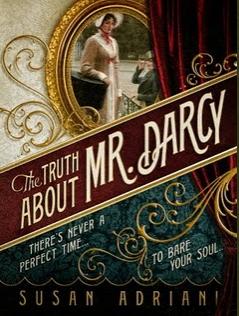
If Elizabeth had not known better, she would have sworn he was deliberately throwing himself in her way, but she did know better. Whenever they were in company together, Darcy was usually cool and aloof, yet he chose to stare at her constantly, and with a level of intensity that had begun to make her uncomfortable. Sure such a handsome, wealthy, intelligent man, who was used to nothing but the very finest in society, could not deign to look upon a woman of her inferior station and circumstances in life unless it was to find fault; and, indeed, she knew he had found fault with her, almost from the very first moment of their acquaintance at the assembly in Meryton some weeks ago.”

A departure from P&P while still calling itself a re-telling, The Truth About Mr. Darcy is a middle-of-the-road revisit to the beloved land of Jane’s Hertfordshire….it’s not stupendous, it’s not terrible. It starts slow. It ends slow. But the middle is a moderately interesting take on Darcy and Elizabeth’s path to matrimony, with all its major ups (money money everywhere) and smallish downs (minor disagreements followed by make-up sex).

The back of the book poses a question to Mr. Darcy. Should he tell the truth about his old nemesis George Wickham in order to protect the good citizens of Meryton from Wickham’s lies and secrets? Well, in a word, yes. He should. And does within the first two chapters, employing a moment of self-truth that would, had it occurred in the original P&P, caused all measure of heartache and sadness to be averted. What to do now? Especially since Elizabeth immediately follows suit in working out her out neurosis with prejudice right away, denying his first proposal but agreeing to a courtship that she reasons (admirably and in a drastic departure from Ms. Austen’s typical character attributes) will help her actually know this guy, this supposed husband/lover/friend/parent/guardian person she’s to spend her life attached to. Thus, the relationship begins, burgeoning passions ensue, then the wedding, and before you know it the book is over.

It’s a lovely story in all actuality, and Adriani tells it well. There seem to be a lot of modern flavors working here, including the aforementioned “let’s get to know that dude over there before agreeing to marriage” thing and the departure from the “let’s not have any sexual contact before the big day” thing. Having always suspected that many people in Regency England were guilty of violations of propriety in the name of love and/or passion, I found that rather refreshing and, frankly, long overdue in Austen spin offs. That Adriani should take a modern view of relationships and graft it onto Darcy and Elizabeth I found impressive and inspiring! Go you, Ms. Adriani! The courtship is honest and communicative, and paves the way for many heartfelt conversations and even more heartfelt turns in the sack (which were all super sexy but got to be little gratuitous by the end).

Spoiler Alert in this paragraph:

The rest of the experience in The Truth About Mr. Darcy was good-ish, not great, not horrific. There was, however, one moment where my hand went to my forehead, accompanied by an outspoken “Oh come ON!” and an exasperated sigh when Mr. Wickham’s nature was explored. Not only is he a debt-ridden scoundrel mired in controversy, he’s a near-rapist, and one sly wink away from a serial killer. Really? I mean, he’s a snotty spoiled dandy, but a rapist? It seemed like the dichotomy of good vs. bad was just a wee bit overused, both with Wickham and with Mr. Collins, whose refused proposal sparks a deluge of conceit and even revenge. In The Truth About Mr. Darcy, it seems as though you’re either a shining paradigm of virtue or the scum on the bottom rung of the ladder of humanity. A little bit of creative character development would’ve been a better choice.

Still, Susan Adriani’s debut novel is not entirely without success. It’s well written and fairly engaging, sexy, and compelling in a conventional sort of way. Those of you gentle readers whose hearts go aflutter at the notion of revisiting P&P won’t be disappointed. If you’re on the fence about these sorts of things, you might be better off skipping this one.

Be aware that this book is for mature readers only.

Read Full Post »

A Review From the desk of Shelley DeWees…of The Uprising.

I am thinking of enlisting. One of my acquaintances happened to recommend his regiment to me this morning, and as I have nothing better to do I believe I will join. It will get me away from London, where my creditors are once again pressing me, and take me into Hertfordshire, a place where I am not known. Then I can begin again, and at the very least, run up some new bills. And at the most…There will be impressionable young women in Meryton, no doubt, and they will all be susceptible to a charming and handsome young man in a red coat.”

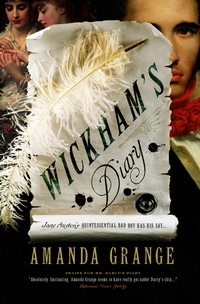
So says that feisty George Wickham, with such a feisty future ahead of him, in the quazi-coming-of-age tale Wickham’s Diary by Amanda Grange. Although you may think this little novella is going to give a sneaky glimpse into the wooing of Lydia Bennet or perhaps a strange view of Wickham’s wicked scheming, alas, it doesn’t. In fact, Wickham’s Diary has next to zero connection the Bennet tale (you know the one I mean) and can be more easily likened to the history of George Wickham and his family.

The introduction on the back of the book explains, “He wasn’t always this cold-hearted.” But…um…well, according to this, he actually was. He grows up, as you, a learned reader, already know, in the shadow of Darcy and his sweet sister Georgiana, as the son of the steward with nearly nothing to his own name. Childhood almost-friendship with Darcy withers away in favor of rabid jealously, and Wickham decides at a young age that the situation just isn’t fair. “Why should I be beneath him?” he asks. “I am just as handsome as he is; I am just as intelligent, even though he works harder at his books; and I am just as amusing; in fact, I dare say I am a great deal more amusing, for Fitzwilliam is so proud and he will not take the trouble to entertain other people. Yet altogether he is no better than me, when he grows up he will inherit Pemberley and I will inherit nothing.” Tough break Georgie, but hey, that’s life. Regency life. Now of course he could take what he’s been given, which is truly not a bad situation, and apply himself toward a worthy, amiable path and a generally secure future. But as we know, he’s the villain and must therefore take the lowest possible road: planning, scheming, and plotting against everyone and everything, never blaming himself when things go awry. He looks around every corner for someone to exploit, usually while still experiencing success with his last victim, pocketing their money and breaking their hearts with no qualms. He’s conniving and rude. He’s spoiled and foolhardy. He is, naturally, a scoundrel.

I’d say that’s pretty cold-hearted behavior.

The reader is briefly shown the world of George Wickham as he works his way up the “Biggest Jerk in the Universe” ladder, tossing people aside who stand in the way of his ultimate goal to marry an heiress and be done with it. Darcy has long taken his own path, only reappearing to pay Wickham the value of the living he’s denounced and then quickly evaporating out of the picture, never to be seen again. Though I enjoyed the interesting and albeit unhealthy relationship Wickham has with his mother, I found myself disappointed that this teeny weeny 12-dollar novel ended without exploring Wickham’s character in any in-depth sense. The reader learns a bit about his motivations for villainy, yes, but nothing much about him as a person. No one commits a crime against humanity without some measure of mental back-and-forth…didn’t he ever have second thoughts? Blank pages abound in the book itself, and the type is shamefully over-sized.

The phrase that comes to mind with Wickham’s Diary is “hastily-written.” It’s a fair read and represents some of the author’s good attributes. But considering the 2 hours you’ll spend with it, you might want to save your 12 dollars.

Read Full Post »

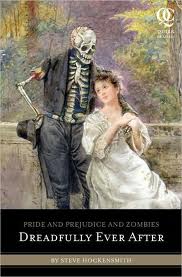
“What? Do I really have to read another Pride and Prejudice and Zombies review by Vic?”, you are asking yourself. Blame it on Quirk books, who recently sent me Dreadfully Ever After, the sequel to P&P&Zombies.

The folks at Quirk Books have been such good sports about the tongue-in-cheek barbs that I have slung in their direction, that I simply could not resist reviewing this latest zombies installment. I have slowly been finessed by their cagey publicists – who keep tossing books, and posters, and zombie paraphenalia my way – and whose understanding of promoting and branding a product in today’s tech savvy world could teach a marketing professor a thing or two.

Dreadfully ever After is Steve Hockensmith’s second foray into Regency England, land of the dead. After Seth Grahame-Smith’s record smashing P&P&Zombies, Hockensmith wrote the prequel, Dawn of the Dreadfuls, explaining how the undead plague invaded England and how those darling Bennet girls were trained to become fierce Shaolin warriors, able to lop off the heads of marauding dreadfuls with an economy of movement that Steven Seagal can only dream about.

After reviewing P&P& Zombies two years ago, I outsourced the Dawn prequel to another reviewer, who has hardly spoken to me since. And so, wishing to keep the few friends I still have, I decided to tackle this book on my own. I kept putting off Dreadfully Ever After, but the review’s deadline was looming. I then drank a bottle of wine or two and began to slowly read the book.

Well, the joke is on me, for as I read it I kept going. Wisely, Hockensmith made no effort to write like Jane Austen. He created a rousing tale using his own words and Jane’s familiar characters in a setting that is both familiar (Regency England) and unfamiliar (filled with zombie slayers and the undead).

Darcy and Elizabeth have been married for four blissful years when he is bitten in the neck by young master Brayles, a freshly made zombie. Unfortunately, Lizzie cannot lop off the affected limb, for that would mean beheading her husband and result in a book that ends after two chapters. Fortunately, Lady Catherine de Bourgh reputedly has access to an antidote that might save her nephew’s life, however she does not possess a cure that might reverse the deadly effects of a zombie bite.

She sends Elizabeth on a dangerous mission to London, saying, “If I told you there was but one path to this salvation—and it was also the path to your utter degradation—would you, I wonder, be able to bend that stiff neck of yours and do what you must?” Without hesitation a stoic Lizzie hands Darcy’s care over to her nemesis and sets off for London with her warrior father and sister, Kitty to look for a physician who holds the cure to the strange plague. Her sister, Mary, is left behind. But she is no namby pamby miss and scurries after them, knowing her skills as a warrior might be of use.

And so the stage is set for a rousing zombie tale. While Darcy exists in a twilight world and experiences unspeakable urges, the troupe in London follows the few leads they’ve been given. The city has been divided into a series of quadrants and is surrounded by fortress walls and watchtowers. Much like airports today, travelers must wait to go through security:

A line of coaches and wagons more than a mile long stretched from the Northern Guard Tower, and it took hours just to be near enough to spot the red-coated soldiers stationed at the gate. The queue was full of merchants and peddlers and performers, all drawn to town by the upcoming recoronation of George III. The king, finally cured of his “nervous exhaution” (otherwise known as “insanity” when it afflicts those of lower rank), was about to reclaim his throne.”

This short passage explains why prepubescent boys and fans of gory mash-ups love the P&P&Zombies series – except for the plague of the undead, lack of electricity and running water, and a smattering of history, Regency England is not so very different from our dangerous world today. And so the plot moves swiftly on, prompting the reader to ask: Will Darcy be saved in time, or will Lizzie, Kitty, Mary, and Mr. Bennet dawdle in London so long that he will turn into a slobbering, mouldering, flesh-eating mess?

Steve Hockensmith’s way with a phrase can be a hoot. On page 158, Kitty declares of Nezu, Lady C de B’s ninja warrior: “He’s like a male Mary!” To which Mr. Bennet retorts, “Mary’s like a male Mary.”

Steve Hockensmith

Parents who worry that these mash-ups will liquify their childrens’ brains  need not worry, for these books, while exposing their offspring to plenty of gore and carnage, provide no untoward exposure to gooey sex scenes or slimy kisses. And so I leave it to you, gentle reader, to decide whether you should subject yourself and your progeny to a zombified England, or gently turn your backs to a series of runaway bestsellers whose ability to generate an impressive stream of revenue would make even Nora Roberts jealous.

Dreadfully Ever After, generously illustrated as all Quirk mash-ups are,  goes on sale today.


Carnage rating: 5 out of 5 severed limbs
Romance rating: 1 out of 5 torn-out hearts
Humor rating: 5 out of 5 brainless zombies

Read Full Post »

Only Mr. Darcy Will Do: An Austenesque book reviewer’s life is so romantic. They get to visit the world of Jane Austen over and over again, absorbing more and more of the sighs and oohs and aahs that come from her settings and characters, and they often times get to do it before anyone else does (“Have you read __________? I’m so totally into it that I stayed up till 3 a.m. just to finish! You know? Have you seen it?” The silent stare your friend gives you will then make it clear…You’ve read it. She has not.). When the doorbell rings, the book reviewer runs down to greet the mailman, her eyes sparkling with curious delight. What did I get this time? Ripping open the box is like Christmas, and it takes everything they’ve got not to plop down on the couch and start, right then and there, dinner be damned.

There is also, unfortunately, a time in a book reviewer’s life that isn’t so rosy. Normally, reading a book you’re not particularly fond of is a matter between you and you (or between you and the person who recommended it to you) but for the book reviewer, it’s different.

That being said, this particular reviewer also has opinions of her own about what constitutes a good book. It is in Austenesque literature that I look for something original, something imaginative, something that hooks me into Regency England with the devotion and fortitude of a forklift. I don’t think I’m alone when I vehemently say…the same old story of Elizabeth and Darcy is not something I want to read: the push-pull of courtship, the misunderstandings between the two of them, their marriage followed by a perfect existence where all is copacetic and no problems arise, ever. Money, parenting, family, health, societal dilemmas simply aren’t there, and are often times not even alluded to. And while I realize that this fantasy is one in which we could all swim in for a certain amount of time, my swimming time is over. What would true Darcy/Elizabeth love look like if they actually had to fight to stay together forever? Would it last? Moving in with someone, married or not, Regency England or not, is tricky (to say the least). What would that experience be like? Societal upheaval back then was surging out of control…does it really leave them completely alone, untouched and unharmed for the rest of eternity?

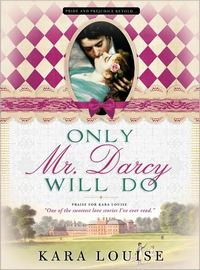
I say this because Only Mr. Darcy Will Do, despite having been written with wondrous care and expertise, pushed me into the deep end of a pool I’m through swimming in. In Kara Louise’s story, Elizabeth finds herself at a crossroads when her father passes away soon after she’s refused Darcy. Unable to support herself, she’s forced to take a job as a governess to make ends meet, and thus loses all hope of every traveling within the Darcy social circle again. But, lo and behold, she ends up seeing him again through a string of well-timed circumstances, and after spending months brooding over whether she should’ve accepted him. Again, the push-pull of courtship proceeds. Again. “How will it end?” is a question you’d never have to ask.

In its current form, Only Mr. Darcy Will Do cannot exist as a stand-alone story while the characters remain so undeveloped, relying so heavily on Jane Austen’s pen. Of course, deviating wildly from the character pattern would not have been allowed for a “retelling” novel, but perhaps it would’ve been more interesting. Huge pieces of potential plot points were skipped over in order to return the reader to the dull Darcy/Elizabeth back-and-forth. Perhaps in this instance, adherence to the original should’ve been secondary to expanding Louise’s idea (which truly had potential).

It’s disappointing, especially when Kara Louise’s prose is so beautifully formed, her style so elegant and charming!  I would love to see her write something else, something less predictable.  She can write like an angel, and for that she’s got a mountain of respect from her readers.  But next time, can we please have something besides the same old story?

The Reviewer: From the desk of Shelley DeWees, of the blog, The Uprising, and reviewer for Jane Austen’s World and Jane Austen Today. This is Shelley’s fifth post for this blog.

More Reviews:

Read Full Post »

Inquiring readers: Not often does news of great import come our way, such as this item unearthed from the depths of Andrew Capes’s crashed computer. His having retrieved it is nothing short of miraculous, for now he can share the rest of Charlotte Collins’ story with the world. If you found this news item as intriguing as I did, please let him know what you think of it in the comment section below! Article copyright (c) Andrew Capes.


Extract from the Hertfordshire Gazette, June 1876

Obituary Notice

Mrs Charlotte Collins of Longbourn Hall


We have been saddened recently to receive

notification of the death at the end of May, at

the advanced age of 92 years, of Mrs Charlotte

Collins, née Lucas, widow of the late Reverend

William Collins, of Longbourn Hall, near

Meryton. Mrs Collins is survived by her only

son, Thomas Collins, his wife Mary (née

Bennet), and her grandson, the Rt Hon. Sir

Timothy Collins PC, all of whom continue to

reside at Longbourn Hall.


Mrs Collins’s funeral at Meryton was attended

by a distinguished gathering of friends and

relations, many of whom had travelled great

distances to be present. Several members of the

extended Lucas family were there, although

Mrs Collins had outlived all her immediate

relations, and there were also representatives

and descendants of the former Bennet family,

with whom the Collinses had maintained

intimate connections for a great many years.

Among the latter were Mrs Elizabeth Darcy,

widow of the late Mr Fitzwilliam Darcy of

Pemberley in Derbyshire, and her niece, Mrs

Jane Lucas, daughter of the late Mr & Mrs

Charles Bingley of Freshfield Park in Yorkshire,

who is also the late Mrs Collins’s sister-in-law.

The occasion was graced with the presence of

Lydia, Lady Wickham, widow of Lieutenant

Colonel Sir George Wickham, Bart., late hero

of the French, American, and Affghan

campaigns. The Dowager Lady Wickham has

recently returned from India to pass her

remaining years with her son, Sir Arthur

Wickham de Bourgh, at his family home,

Rosings Park in Kent.


Charlotte Collins was born in March 1784, the

eldest of five children of Sir William and Lady

Lucas, latterly of Lucas Lodge near Meryton in

Hertfordshire. There she met and married the

Reverend William Collins, a cousin of the

Bennet sisters, in January 1812. The couple lived

at Hunsford in Kent where their son, Thomas

Collins, was born in 1813. In 1823, upon the

death of Mr Frederick Bennet, the Reverend

Mr Collins inherited Longbourn-house, an

estate of which Mrs Collins was destined to

remain mistress for over half a century.

Upon their removal to Longbourn, Mr and Mrs

Collins were pleased to allow Mr Bennet’s

widow and daughter Mary to continue to live in

the house, and to treat it as their home. Mary

had been entrusted under the terms of Mr

Bennet’s will with the care of his extensive library,

and she immediately set about this task

with the greatest diligence, continuing to

pursue improvements to the collection, chiefly

through a series of judicious acquisitions,

almost without interruption from that time

until the present day. Upon that occasion also,

Mr Collins desired that the name of the house

be changed from Longbourn-house to

Longbourn Hall, to reflect the elevated status

with which he expressed the hope that it

would, in the course of time, become

associated.


Regrettably, however, within less than a year of

the Collins family’s installation at Longbourn,

the Reverend Mr Collins sustained a minor

injury whilst engaged in clearing undergrowth

from a small wilderness beside a lawn in his

garden, the resulting wound from which most

unfortunately became infected. The rapid

progress of this infection caused him to

succumb soon afterwards, his resulting death

thus sadly depriving him of anything more than

the briefest period of enjoyment of his newly

acquired estate.


Mrs Bennet also died later that same year, and

Mrs Collins thereafter began to observe in

young Thomas the development of a strongly

studious character, carefully fostered by Miss

Mary Bennet’s solicitude towards him in her

combined role of cousin, mentor and librarian.

There gradually grew between these two

younger members of the household a firm

attachment, which eventually developed

beyond their previous cousinly affection, this

being confirmed by their marriage in 1833 and

the subsequent birth of a son, Timothy, in the

following year.


For above forty years since then, membership

of the Longbourn household underwent no

material alteration, until the recent death of

the elder Mrs Collins. This period has

nonetheless been punctuated by several notable

events associated with the family, perhaps the

most remarkable of which was the famous

Catherine (“Kitty”) Carter trial of 1862. Kitty

Carter was Mrs Mary Collins’s sister, and, in

defiance of social conventions, the elder Mrs

Collins allowed her to stay as a guest at

Longbourn Hall throughout the whole of that

protracted and scandalous affair.


The details of the case are so well known, even

today, that it would be superfluous to recount

them here; suffice it to say that the verdict

eventually obtained vindicated the faith that

both Mrs Collinses had placed in their relation,

who duly acknowledged her debt to them in an

autobiographical memoir, published later that

year, through which her name became known –

some might say, notorious – around the world.


Some nine years previously, a considerable

change had taken place at Longbourn, with the

purchase by the Great Northern Railway of

part of the estate’s farming land, for the

construction of the line through Meryton to

Ware. The substantial sum thereby realised

enabled the elder Mrs Collins to throw out a

new self-contained wing from the earlier house,

with the intention of entertaining friends and

family without interfering with the orderly

conduct of the rest of the household. The

generous nature of her year round hospitality

benefited in its turn from the improvements in

the means of travel provided by the new

railway, such that her visitors were now able to

reach Meryton from places as far afield as

Derbyshire and Yorkshire in a matter of hours,

rather than the days that had previously been

occupied in the completion of such journeys.

Mrs Collins retained few links with the Church

of England after the death of her husband,

although she did maintain friendships with

several of his former parishioners in and around

Hunsford for some time after her removal from

that part of the country. She was amused in her

later years to learn that the Rosings Estate, of

which the Hunsford rectory – where she spent

the first ten years of her married life – formed a

small part, had passed into the hands of the

nephew of her daughter-in-law, when it was

inherited by Sir Arthur Wickham de Bourgh,

Bart, upon the death of his first wife, Anne.

The concern that the elder Mrs Collins felt for

the education and welfare of her grandson, Mr

Timothy Collins, showed her to be

exceptionally solicitous on his behalf, and it

could be said with some certainty that his

successful parliamentary career, up to and

including his position in Mr Gladstone’s recent

administration, in the course of which he was

honoured with a knighthood, was the direct

result of the attention which she paid to his

upbringing. She also instilled in him the

passionate advocacy of many international

causes, foremost among which was that of

Italian unity, finding especial friendship and

fellow-feeling with the great Italian leader

Giuseppe Garibaldi, who was invited to

Longbourn Hall briefly on the occasion of his

visit to London in 1864.


Mrs Collins had always taken a great interest

not only in her own family, but also in those

both of her lifelong friend Mrs Elizabeth

Darcy, and of Mrs Darcy’s sister, the late Mrs

Jane Bingley. It was with great pleasure that she

saw her own younger brother, John Lucas,

marry Mr and Mrs Bingley’s daughter, also Jane,

in 1832, thereby sharing her own extended

family of nephews, nieces and cousins with

those of the former Bennet sisters.


Mrs Collins was widely renowned and loved for

the care she took to include all her extensive

family and friends in her regular invitations to

Longbourn, and for her careful remembrances

of birthdays and anniversaries of even the

youngest members of the family, extending to

the third and fourth generations, always with

thoughtful and appropriate gifts.


Mrs Collins travelled extensively, both in the

United Kingdom and abroad, often, especially

in her latter years, accompanied by her lifelong

friend Mrs Elizabeth Darcy. They completed

their last foreign journey together, to Italy, only

five years ago, at the height of the war in

France, which contributed not a little to the

excitements and discomforts of that journey.

Mrs Collins retained her health and her

faculties, save for gradually failing eyesight, to

the end of her long life, and many will recall the

occasion of her 90th birthday celebrations

which brought people from all over Britain, and

some from further afield, at which she herself

expressed a wish for it to be considered as, in

some measure, a way of bidding farewell to all

her many friends and relations.


The request expressed by Mrs Collins, that her

remains be removed from Meryton and

interred alongside those of her husband in the

churchyard at Hunsford, was complied with

shortly after her funeral, and a small family

gathering attended the interment ceremony as

a final farewell gesture to a well-loved and

notable figure who will be much missed, not

only here in Hertfordshire, but also much

further afield.
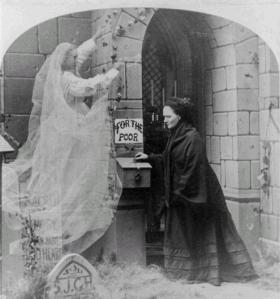
 

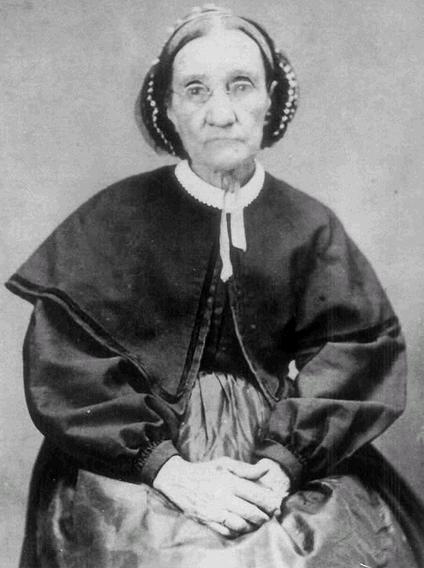
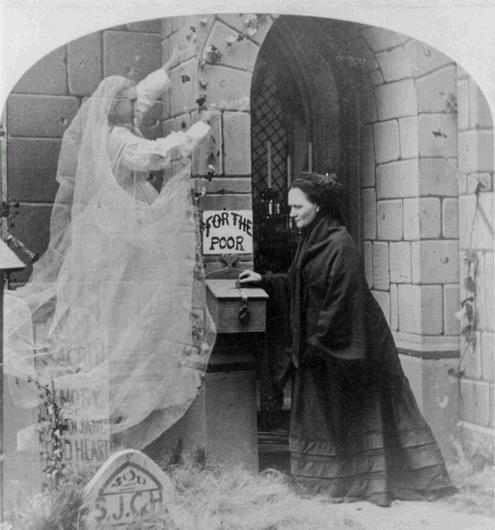
The Widow's Mite, 1876. Image @Morbid Anatomy

—————————————————————————————————
NOTES ON THE OBITUARY OF MRS CHARLOTTE COLLINS
AS SHOWN IN THE HERTFORDSHIRE GAZETTE, JUNE 1876
—————————————————————————————————

This Obituary Notice was discovered in the archives of the (fictional, of course) Hertfordshire Gazette, a long defunct weekly newspaper which circulated (as its title implies) mainly in Herfordshire, during the latter half of the nineteenth century and the first half of the twentieth.

The piece was deliberately written without reference to any of the many continuations of P&P, even those attributed to Jane herself. I felt that a retrospective view from 63 years on would imply a much greater leap of the imagination than a mere ‘continuation’ of the novel would require.

Most of it needs no explanation for those familiar with the novel, though there are some things which might raise a question or two. Some of these are:

What was the ‘Kitty’ Carter trial?
The details are not recorded – but there WAS a notorious murder trial in 1862 – a nurse called Catherine Wilson was tried and found guilty of multiple murders for money; she was the last woman to be publicly hanged in London – some 25,000 people attended her execution. The ‘Kitty’ Carter trial was clearly much more ‘classy’ than that, involving scandal in very high places, and a very different outcome; it probably would not have involved murder. Carter, of course, was one of Wickham’s fellow officers.

Two of the marriages are with much older women. Is this not improbable?
Uncommon, but by no means improbable. It was certainly possible for an older woman to marry a younger man. I think the Mary/Thomas marriage entirely natural; and although the Arthur Wickham/Anne de Bourgh one might be a little more unlikely, Arthur would have inherited his father’s title (which was granted only a short time before his death in action in the First Affghan Campaign of 1837-39) when he was in his mid-20s and Anne was newly independent on the death of Lady Catherine.

What was Sir Timothy Collins’s post in the Gladstone cabinet of 1871-74?
He was Chairman of the Local Government Board, a new post created by Gladstone in 1871. He must have been promoted when he was quite young. In historical fact, the post of President of the Board went to Sir James Stansfeld, but I think Sir Timothy probably edged ahead of him at the time of the vote of no confidence in Stansfeld as Civil Lord of the Admiralty in 1864. Stansfeld, incidentally, was also a great supporter of Garibaldi.

Great Northern Railway – Meryton to Ware
No such line was actually built – the railway at Ware was built in 1843 by the Great Eastern Railway. However, the Great Northern did build a line from Welwyn to Hertford in 1858 which connected with the Ware line. The Great Northern main line would have made access from Yorkshire and Derbyshire to Meryton via Hitchin or Hatfield very much easier than it had previously been from about 1851 onwards.

Respectfully submitted by Andrew Capes. Your comments are most welcome.

Read Full Post »
« Newer Posts - Older Posts »