Feeds:
Posts
Comments

Archive for the ‘Book review’ Category

Book Review by Brenda S. Cox

“I have had ample time to consider the difference between my former, naïve ideas of love and happiness, and the more mature and accurate view of them I now possess. I find that my opinions are quite transformed. How differently I feel about everything now! – about what I want, about what will make me happy.”—Marianne Dashwood in the last chapter of Colonel Brandon in His Own Words

Colonel Brandon is a bit mysterious. He has a tragic past, which we only see in glimpses. Readers sometimes think he is too serious for Marianne, and we don’t see much of their courtship or love story. Movies add some of this in, but not enough, in my opinion.

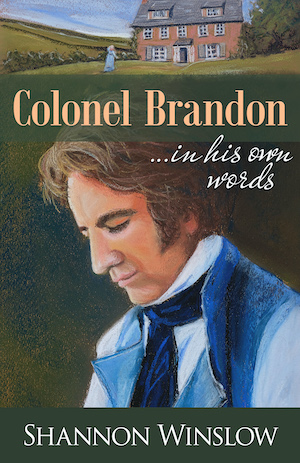
Colonel Brandon in His Own Words, by Shannon Winslow, fills in the blanks about Brandon’s background, his connections with both Eliza’s, and his romance with Marianne.

So, I loved reading Colonel Brandon in His Own Words, by Shannon Winslow, which filled in the blanks and brought Brandon more to life for me. The story is consistent with Sense and Sensibility, but adds new insights to the novel.

Sometimes I hesitate to read a parallel Austen story, thinking I will already know everything in it since I know the novel so well. But this time each page brought something new. Even when familiar incidents were included, from Brandon’s perspective, I sometimes had to go back to S&S and check—was it really like that? And it was.

I asked the author to tell us more about why she wrote this book, and what she loved about writing it. Here’s what she shared with us:

Shannon Winslow’s Thoughts on Colonel Brandon in His Own Words

If you’re unfamiliar with my work, the first thing you should know is that I’m a little different – probably in a lot of ways, but I’m talking about my writing philosophy. It’s different from most other JAFF authors in at least two respects. Let me explain.

First, I love ALL of Jane Austen’s novels. Okay, maybe not equally. Like most people, Pride and Prejudice is my favorite, but they’re ALL worth reading. They’re ALL worthy of our attention. So, early on, I decided I wanted to write at least one novel related to each of Jane Austen’s six. And I’m almost there!

I have Pride and Prejudice covered (The Darcys of Pemberley, Return to Longbourn, The Ladies of Rosings Park, Miss Georgiana Darcy of Pemberley, Fitzwilliam Darcy in His Own Words). I wrote The Persuasion of Miss Jane Austen (probably the book of which I’m proudest!) for her fans who wish she’d enjoyed the romance and happy ending she crafted for all her heroines. I count Leap of Hope as my Mansfield Park book (although there’s a lot of P&P in it too). And I have a campy sequel to Northanger Abbey: Murder at Northanger Abbey. Now with Colonel Brandon in His Own Words for Sense and Sensibility, I only have Emma left to go!

The second major difference between me and most other JAFF (Jane Austen Fan Fiction) authors is that I don’t write “variations” per se. I can’t swear that I never will, but so far the books I’ve written expand on (or supplement) Jane Austen’s stories; they don’t change them. So all my books agree with each other and with canon. It’s just the approach that works best for me. I guess I’m sappy enough to believe that there’s one “true story” for the characters I’ve come to know and love, and that’s the one Jane Austen wrote. Adding on (with sequels, minor character stories, etc.) simply allows us to spend more time in their delightful company.

In other words, filling in the blanks Jane Austen left behind is my bread and butter, and there are a LOT of intriguing blanks when it comes to Colonel Brandon. Sense and Sensibility follows Marianne’s and Elinor’s movements primarily, so they are well covered. But there’s quite a bit of time when the men (Edward and Colonel Brandon) are “off camera,” so to speak, creating interesting blanks in the record. Since I really enjoyed writing the first-person, hero’s point of view in my previous book (Fitzwilliam Darcy in His Own Words), I decided to do the same kind of thing for my S&S novel. But should I go with Edward or Colonel Brandon? Hmm.

No contest. In my opinion, Colonel Brandon is not only the more admirable character, he also has the more interesting backstory to work with. There’s so much we don’t know about him, though, and much of what we do happened long before the scope of the original novel. What were his family relationships like? And his sad history with Eliza, which scarred him for life? These things are briefly mentioned in Sense and Sensibility, but we don’t get any details. We don’t see and experience them for ourselves. What about his military years in India? That sounds like a research rabbit hole waiting to be explored. Lots of story potential!

I was also excited to flesh out Brandon’s romance with Marianne, huge portions of which are only hinted at by Jane Austen. She simply didn’t have the time and space to go into their 2-year courtship in any depth, but I did! I cover the day they met, their slow, gentle courtship, the proposal itself (with a very satisfying twist!), and then a brief glimpse into their married life. Everything is from Brandon’s point of view and in His Own Words.

It was such a joy to spend this past year with Colonel Brandon – quiet hero and consummate gentleman – poking around in his head, discovering more about the man, learning what he believes and how he thinks. I love and respect him all the more now! I hope you are a fan as well, or I trust you will be after reading his full story in Colonel Brandon in His Own Words.

More on the Book and the Author

Here’s the cover copy of the book:

Colonel Brandon is the consummate gentleman: honorable, kind almost to a fault, ever loyal and chivalrous. He’s also silent and grave, though. So, what events in his troubled past left him downcast, and how does he finally find the path to a brighter future? In Sense and Sensibility, Jane Austen gives us glimpses, but not the complete picture.

Now Colonel Brandon tells us his full story in His Own Words. He relates the truth about his early family life and his dear Eliza – his devotion to her and the devastating way she was lost to him forever. He shares with us a poignant tale from his military days in India – about a woman named Rashmi and how she likewise left a permanent mark on his soul. And of course Marianne. What did Brandon think and feel when he first saw her? How did his hopes for her subsequently rise, plummet, and then eventually climb upwards again. After Willoughby’s desertion, what finally caused Marianne to see Colonel Brandon in a different light?

This is not a variation but a supplement to the original story, chronicled in Brandon’s point of view. It’s a behind-the-scenes look at the things Jane Austen didn’t tell us about a true hero – the very best of men.

Shannon Winslow, whose goal is to fill in the blanks Austen left behind.

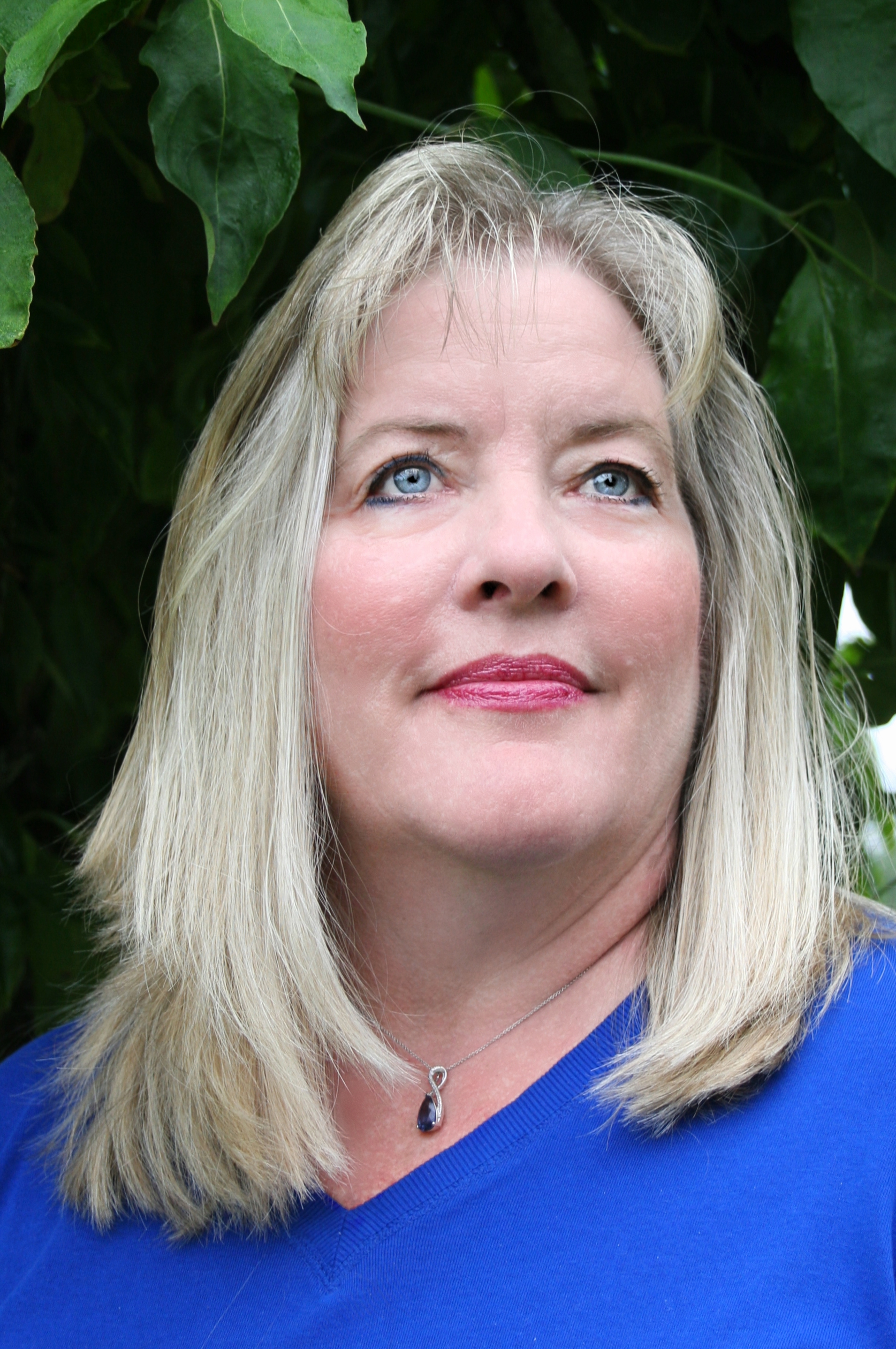
Shannon Winslow says an ordinary trip to Costco fifteen years ago changed her life when she picked up a copy of the ’95 miniseries of Pride and Prejudice. She’s been hopelessly hooked on all things Jane Austen ever since, her obsession ultimately inspiring her to write her own stories a la Austen. To date, she has authored eleven novels and a Jane Austen Devotional, with no end to her creative output in sight. Her two sons now grown, Shannon lives with her husband in the log home they built in the countryside south of Seattle, where she writes and paints in her studio facing Mr. Rainier. Visit her at her website and follow her on Facebook.

From Brenda again:

I highly recommend Colonel Brandon in His Own Words, especially to read in this year of focusing on Sense and Sensibility. I think it will add to your appreciation of S&S. I hope you will enjoy it as much as I did!

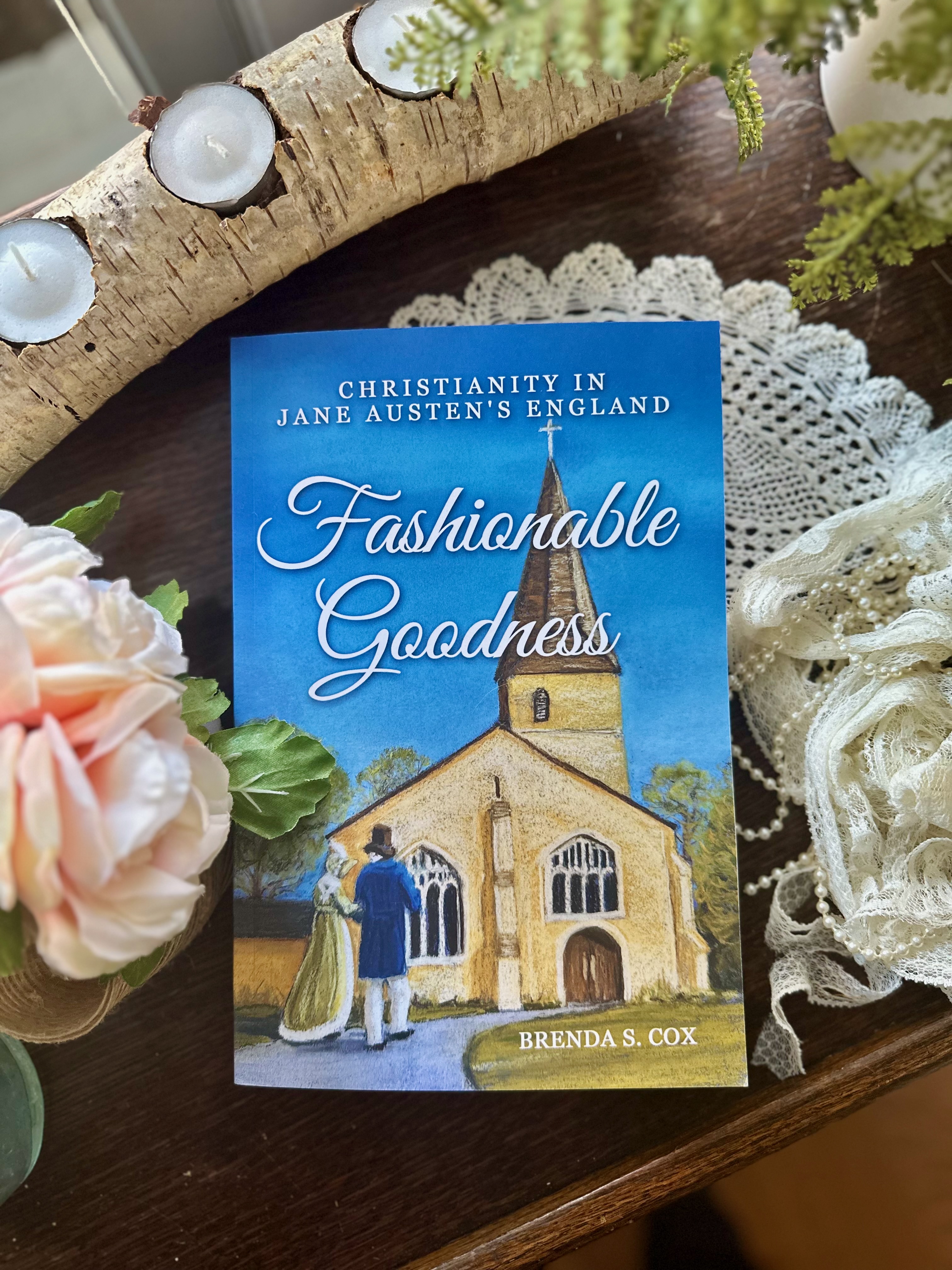
Brenda S. Cox writes on Faith, Science, Joy, and Jane Austen. Her book Fashionable Goodness: Christianity in Jane Austen’s England will be out this fall, Lord willing. If you’re interested in faith aspects of the book, see this review. And for Austen news, follow her on Facebook.

Read Full Post »

Book Review by Brenda S. Cox

“You cannot imagine—it is not in Human Nature to imagine what a nice walk we have round the Orchard.”—Jane Austen to Cassandra, May 31, 1811

“One likes to get out into a shrubbery in fine weather.”—Lady Bertram, Mansfield Park

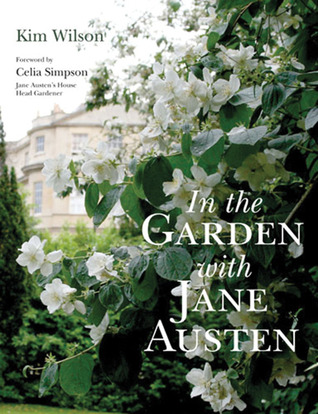
In the Garden With Jane Austen, by Kim Wilson, a delightful view of English gardens

Jane Austen’s letters and novels are full of references to gardens of one sort or another. The theme of JASNA’s AGM in Victoria, Canada this year is Sense and Sensibility in the City of Gardens. Following this garden theme, this summer might be a great time to read Kim Wilson’s book, In the Garden with Jane Austen.

The lovely photos throughout the book alone are worth the price. We get to see lovely estates and their grounds and gardens as well as many flowers, clearly labeled.

Kim Wilson, author of In the Garden with Jane Austen, as well as Tea with Jane Austen and At Home with Jane Austen.

Interview with Kim Wilson

I asked the author, Kim Wilson, to share some of her thoughts with us.

What gave you the idea to write this book?

As I read Jane Austen’s novels, I couldn’t help noticing that the characters we love appreciate nature and the outdoors and the characters we love to hate do not. The characters of Mansfield Park are perfect examples of this. Fanny Price loves nature to the depths of her soul and is inspired by nature poetry, as Jane Austen herself was. Mary Crawford, on the other hand, is carelessly indifferent to the beauties of nature, which should be enough to warn us about her dubious moral views. And there are so many references to landscape and gardens in the novels and in Austen’s letters that it made me curious about the gardens she might have encountered that could have inspired her writing. What, for example, was so special about a Regency shrubbery? Austen’s heroines often fling themselves into the shrubbery whenever they get the least bit emotional, and I knew I had to find out why. The next thing you know I was mapping out a tour of the gardens belonging to the Austen family and their friends. It’s always wonderful to have the excuse to see more of Jane Austen’s world!

What do you hope readers will take away from the book?

I hope my research gives my readers a better appreciation of Jane Austen’s emotional connection to gardens and the possible inspirations for the outdoor scenes in her works.

What were the hardest and best parts of researching this book?

The saddest thing about researching the book was visiting the sites where the gardens no longer exist, such as the Austen family’s garden at Steventon Parsonage, or Jane Austen’s brother Henry’s garden in Hans Place in London that she had called “quite a Love.” But of course touring the existing sites, such as the beautiful gardens at Jane Austen’s House Museum and at her brother Edward’s Chawton House (both in Chawton, Hampshire) completely made up for it. To sit in the same gardens where Jane Austen herself sat “and look upon verdure, is the most perfect refreshment.”

A Variety of Gardens

The first chapter explores Cottage Gardens, focusing, of course, on Chawton Cottage where Austen lived. We also learn about laborers’ cottage gardens, which provided much-needed food, and farm and parsonage gardens, like those of Robert Martin and Mr. Collins. The opposite end of the scale was the cottage ornée of the rich, with much fancier gardens. Such “cottages” are mentioned in Sanditon and Sense and Sensibility. The outbuildings found in a country garden get a mention as well, ranging from the brewhouse to the privy.

Next come “Mansion and Manor House Gardens,” the gardens of great estates like Pemberley. Godmersham, Chawton House, and Chatsworth are good examples. Wilson describes how estates like Sotherton (Mansfield Park) were being “improved” by Repton and others to match current fashions in landscaping. Such estates offered pleasure grounds, flower gardens, shrubberies, and wildernesses. Wilson also explores the fads for temples, Gothic seats, grottoes, and hermitages, as well as conservatories and hothouses.

“City Gardens” provided refreshment in the midst of town. Jane hoped for a house with a garden in Bath. The Georgian Garden in Bath, which I have visited, recreates a lovely city garden of Austen’s era. London is apparently full of hidden “garden squares,” which are thrown open to the public one weekend a year (June 10 and 11, 2023, I just looked it up!). The chapter also explores the role of the job gardener, who was paid by the job, though he sometime stole valuable plants. Again we find out where the privy might be hidden in the garden. Flowers also had a role as party decorations and hat trim, as Austen mentions.

“Public Gardens and Parks” explores gardens like London’s Kensington Gardens and Bath’s Sydney Gardens, across the street from a house where Jane’s family lived. We also see views of Box Hill and Netley Abbey and learn about tours of the picturesque, epitomized by The Tour of Dr. Syntax.

The final chapter provides details on “Re-Creating Jane Austen’s Garden,” including some of Jane’s favorite flowers.

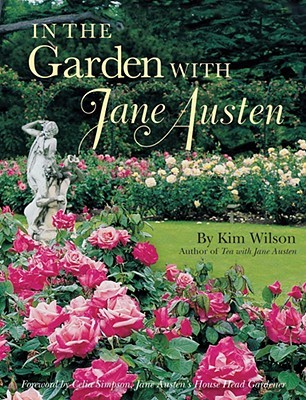
The paperback version of In the Garden with Jane Austen, with a nice sturdy cover.

I see this book as a treasure trove for:

  • Jane Austen fans, of course. In each chapter, Wilson gives us connections with Austen and her novels and letters. For example, we find out that when General Tilney of Northanger Abbey said his pinery “had yielded only one hundred” pineapples, he was boasting of his wealth, since pineapples were very expensive, selling for a guinea apiece or more. (Wilson says this is equivalent to about $100 or £50 each today.)
  • History buffs who will learn things like why people hired hermits to live in their gardens, why shrubberies had gravel paths, and what crimes dishonest gardeners committed. Fun historical recipes are included for things like “Bee’s Wax Lip-Salve” and “Pot-Pourri.”
  • Writers of Regency fiction and Jane Austen Fan Fiction who want to include gardens in their stories. The book will give them lists of appropriate flowers with some pictures, and information about the gardens and their designs. (She doesn’t tell you when different flowers bloom in England, though, so you’ll have to look that up elsewhere.)
  • Gardeners who want to create their own Jane Austen-style garden, or who just enjoy reading about different types of gardens and plants. Wilson gives ideas for recreating a cottage garden, flower border, villa or small mansion house garden, herb garden, great estate garden, and town or city garden. She includes lists of flowers and herbs from real English gardens including those at Chawton Cottage and nearby Gilbert White’s House, along with diagrams of how those gardens are laid out. She even tells you how to find seeds for authentic “heirloom” plants.
  • Tourists (including armchair tourists) who want to visit Austen-style gardens in England. I count 25 gardens Wilson recommends visiting. For each, she shows a lovely picture and gives contact information. She tells readers what to see and what tours are available. (Be sure to check websites for current information, of course.) She includes obvious places, like Chawton Cottage and Stoneleigh Abbey, and unfamiliar ones I’d love to see, like Houghton Lodge and The Royal Crescent Hotel. The end of the book also lists “Gardens Featured in Jane Austen Film Adaptations.” So you can explore those as well, either in person, if you have enough time and money, or online.
  • Any lovers of beautiful gardens and flowers will enjoy the book, as it’s a delight to peruse!

Kim Wilson just informed me that In the Garden with Jane Austen is currently out of print, though you can still find copies at Jane Austen Books, online, or possibly through your library. She plans to work on a new edition next spring, traveling to England for new photos and information. So if you want to wait 18 months to a year, you can get the new edition, if you prefer.

Enjoy the refreshment of In the Garden with Jane Austen.

More about Kim Wilson

Kim Wilson is a writer, speaker, tea lover, gardening enthusiast, food historian, and a life member of the Jane Austen Society of North America. She is the award-winning author of At Home with Jane Austen, Tea with Jane Austen, and In the Garden with Jane Austen. A popular speaker, Kim gives entertaining talks to audiences nationwide. She has been a featured lecturer for the Royal Oak Foundation (the American partner of the National Trust of England, Wales and Northern Ireland) and Road Scholar, and was the keynote speaker for the 2020 Chawton House Virtual Garden Festival. She is currently writing Entertaining Mr. Darcy, and Celebrating Jane Austen’s Birthday for the series Celebrating the Year with Jane Austen with coauthor Jo Ann Staples.

Her other books:

Tea with Jane Austen

“In this delightful book Kim Wilson shares the secrets of tea drinking in Regency England, including a whole batch of recipes to help recreate some memorable occasions. . . . Kim Wilson has assembled a collection of anecdotes, quotations, verses and recipes, charmingly illustrated with largely contemporary engravings and line drawings, to provide an exhaustive and uplifting history of England’s favourite brew.” Jane Austen’s Regency World Magazine

At Home with Jane Austen

“Wilson once again leads the reader through a specific aspect of Austen’s life– in this case, the physical spaces which she lived in or visited. . . . Quotes from Austen’s letters convey the day-to-day experience of living in these places, and examples from her work demonstrate how often these experiences found their way into the novels. . . . even casual fans should enjoy following in the beloved author’s footsteps.”Publishers Weekly

Brenda S. Cox blogs on Faith, Science, Joy, and Jane Austen. She is working on a book entitled Fashionable Goodness: Christianity in Jane Austen’s England, which should be available this fall.

Read Full Post »

One bookshop. Fifty-one rules. Three women who break them all.

Natalie Jenner, the internationally bestselling author of The Jane Austen Society, has gifted us with her newest book, Bloomsbury Girls, just in time for summer! It’s a compelling and heartwarming story of a century-old bookstore and three women determined to find their way in a fast-changing world.

Book Description:

Bloomsbury Books is an old-fashioned new and rare book store that has persisted and resisted change for a hundred years, run by men and guided by the general manager’s unbreakable fifty-one rules. But in 1950, the world is changing, especially the world of books and publishing, and at Bloomsbury Books, the girls in the shop have plans:

Vivien Lowry: Single since her aristocratic fiance was killed in action during World War II, the brilliant and stylish Vivien has a long list of grievances–most of them well justified and the biggest of which is Alec McDonough, the Head of Fiction.

Grace Perkins: Married with two sons, she’s been working to support the family following her husband’s breakdown in the aftermath of the war. Torn between duty to her family and dreams of her own.

Evie Stone: In the first class of female students from Cambridge permitted to earn a degree, Evie was denied an academic position in favor of her less accomplished male rival. Now she’s working at Bloomsbury Books while she plans to remake her own future.

As they interact with various literary figures of the time–Daphne Du Maurier, Ellen Doubleday, Sonia Blair (widow of George Orwell), Samuel Beckett, Peggy Guggenheim, and others–these three women with their complex web of relationships, goals and dreams are all working to plot out a future that is richer and more rewarding than anything society will allow.

Purchase the Book HERE

My Review

Bloomsbury Girls is the perfect read for those of us who love a story that’s set in a bookstore and is filled with books and bookish people. As I began to read, it first reminded me of 84, Charing Cross Road by Helene Hanff, a slim volume that is forever memorable for most of us who have read it and/or seen the film. I enjoy books where the setting (the house, the shop, the city) is so special and memorable that it becomes like another character in the reader’s mind. In Jenner’s novel, Bloomsbury Books itself is a very much alive and poignant character–and one I enjoyed immensely.

Beyond the setting and the great bibliophile feels the book provides, Jenner has done an exquisite job of weaving together a beautiful cast of characters and their individual stories. There is depth and complexity to each character, each couple, each department head, each story arc.

Finally, the storylines surrounding the three lead female characters are delightfully drawn. I found myself intrigued by each one, enjoying their individual stories as well as the bigger plot at hand. When they begin to work together and their stories begin to tie together and intertwine, it’s intriguing and delightful. The things they accomplish when they link arms is truly inspiring.

Overall, this is a fun, summery read filled with all the good things I love most. I hope you’ll stop in and visit Bloomsbury Books. Though it may seem like an ordinary British bookstore at first glance, there is so much more going on behind the scenes than meets the eye.

Audiobook

If you have a long car trip ahead, or if you prefer to listen to your books while you work, the audio version of this book promises to be incredible. Acclaimed actor and narrator Juliet Stevenson, CBE, narrated the audiobook for Bloomsbury Girls, with a performance that has been called “vocal virtuosity.”

Stevenson is best known for her roles in Emma, Truly, Madly, Deeply, Bend it Like Beckham, Mona Lisa Smile, Being Julia, and Infamous. She is also the BAFTA-nominated and Olivier Award-winning star of many Royal Shakespeare Company and National Theatre productions. Regarded as one of the finest audiobook narrators working today, Stevenson’s other recent narrations include Julian Fellowes’ Belgravia and the collected works of Jane Austen and Daphne du Maurier.

Listen to the beginning of the audiobook here:

Stream Bloomsbury Girls by Natalie Jenner, audiobook introduction from MacmillanAudio | Listen online for free on SoundCloud

About the Author

NATALIE JENNER is the author of the instant international bestseller The Jane Austen Society and Bloomsbury Girls. A Goodreads Choice Award runner-up for historical fiction and finalist for best debut novel, The Jane Austen Society was a USA Today and #1 national bestseller, and has been sold for translation in twenty countries. Born in England and raised in Canada, Natalie has been a corporate lawyer, career coach and, most recently, an independent bookstore owner in Oakville, Ontario, where she lives with her family and two rescue dogs. Visit her website to learn more.


RACHEL DODGE teaches college English classes, gives talks at libraries, teas, and book clubs, and writes for Jane Austen’s World blog. She is the bestselling author of The Little Women Devotional, The Anne of Green Gables Devotional and Praying with Jane: 31 Days Through the Prayers of Jane Austen. You can visit Rachel online at www.RachelDodge.com.
Read Full Post »

Book's coverStrictly speaking the oficial Regency lasted from 1811 to 1820, but the author, Ian Mortimer, takes the reader on a journey to Great Britain – England, Wales and Scotland – from 1789 to 1830, a time period that is in line with most other historians, literary critics and antiques experts.

This book achieves something unique – a historian’s perspective written in a style of writing that is exciting to read. I did indeed feel like a time traveller as I was taken through the British countryside, Brighton, London, and Manchester. Mortimer touches all aspects of British life – from the vitality of the era, expansion of cities, and the explosion of scientific advances, trade, transportation, and the island’s population. Mortimer describes both the good and the bad effects of the industrial revolution, and the results of enclosures in England on farmers with small farms and of the Highland clearances on Scottish crofters.

The era’s glittering lifestyle is not neglected and the author takes advantage of the journals and accounts of contemporary eyewitnesses. This is Karl Moritz’z impression of the rotunda in Ranelagh Gardens, Chelsea (1810):

“On my entry I mixed with this crowd, and what with the constant changing of the faces around me (most of them strikingly beautiful), the illuminations, the majesty and splendour of the place, and the ever-present strains of music, I felt for a moment as a child would on first looking into a fairy-tale.”

Above: Two images included in the book. Hover cursor over them for details.

Mortimer contrasts this memory with the description of a winter in London some twenty years later. Coal fires in London so polluted the air that soot floated without falling, and the fog and smoke darkened the skies even at noon.

As the rich built grand houses or renovated outdated mansions, and hired Capability Brown or Humphrey Repton to transform their grounds, many poor people suffered, for few resources or improvements were provided for them. Liverpool’s houses for migrant workers were designed in such a way as to provide no comfort or cleanliness. Two privies might serve two or three hundred people. The overcrowding was so severe that the population density was estimated at 777 per acre. So many other topics are covered: science, medicine and health; pleasure gardens and entertainments; occupations; food and drink; clothing; etc.

Time traveAfter reading this book, I had a comprehensive overview of the Regency era and recommend it to anyone interested in this period. Amazon Kindle edition (See cover to the right) offers a sample of the book’s Introduction, and Chapters 1 & 2 in full.

About the Author:

Ian-MortimerDr Ian Mortimer has been described by The Times newspaper as ‘the most remarkable medieval historian of our time’. He is best known as the author of The Time Traveller’s Guides: to Medieval England (2008); to Elizabethan England (2012); to Restoration Britain (2017); and to Regency Britain (2020). He is a Fellow of the Royal Historical Society and a Fellow of the Society of Antiquaries, and has published research in academic journals touching on every century from the twelfth to the twentieth. For more information, see http://www.ianmortimer.com

Read Full Post »

A guest post by Katherine Cowley

Katherine-Cowley-225x300

The Author

Readers and scholars have generally seen the reaction to snow in Emma as an overreaction, both ridiculous and absurd. Yet a look at the snowfalls in England in January and February of 1814 puts the snow in Emma—which was published in December of 1815—in context. Readers of the time would have seen the fears of snow as justified, or, at the very least, understandable.

A pivotal scene in Emma occurs at a Christmas Eve dinner at the Westons’ home. The dinner brings together a number of important characters—Emma, her father Mr. Woodhouse, the Westons, Mr. Knightley, Mr. Elton (who Emma believes is in love with her friend Harriet), and Isabella and John Knightley (Emma’s sister and brother-in-law). Yet the perfect holiday meal does not occur—the falling snow causes a panic (especially for Mr. Woodhouse), and everyone leaves early, hurrying home before more snow can arrive. This places Emma in the uncomfortable position of being alone in a carriage with Mr. Elton, which leads to one of literature’s most famous drunk proposals.

The General Consensus: Absurd Reactions to Snow

Modern readers and film viewers love to laugh at the absurd reactions to snow in Emma. We know with absolute certainty that it does not snow very much in England and that the reactions of the characters are overblown.

Take, for example, a sampling of quotes on the scene from past issues of Persuasions: The Jane Austen Journal. Louise Flavin calls Mr. Woodhouse an “over-cautious valetudinarian worrying over a half-inch snowfall.” Sara Wingard writes of the “false alarms raised.” Juliet McMaster describes how Mr. Woodhouse “becomes almost catatonic.” Jan Fergus features the scene in an article titled “Male Whiners in Austen’s Novels.”

In Nora Bartlett’s book, Jane Austen: Reflections of a Reader, she includes a chapter titled “Emma in the Snow.” She writes:

I have always treasured the snowfall in Chapter 15 of Emma, which endangers no one’s safety, despite Mr. Woodhouse’s fears, but threatens everyone’s equanimity: at the news that snow has fallen while the party from Hartfield is having an unwonted evening out at Randalls, “everybody had something to say”—most of it absurd.

Not Just Mr. Woodhouse

Mr. Woodhouse is often seen as a hypochondriac, and the portrait of him which Austen paints throughout the novel invites us to question his sense and find him amusing. When he learns of the snow, we read that he is “silent from consternation.” When he does speak, he says, “What is to be done, my dear Emma?—what is to be done?” Yet he is not the only character who reacts to the snow as if it is a serious matter.

Many readers have pointed out that the most sensible people during the evening are Emma and Mr. Knightley. Yet earlier in the day, Emma herself anticipates that snow could be a problem:

It is so cold, so very cold—and looks and feels so very much like snow, that if it were to any other place or with any other party, I should really try not to go out to-day—and dissuade my father from venturing; but as he has made up his mind, and does not seem to feel the cold himself, I do not like to interfere, as I know it would be so great a disappointment to Mr. and Mrs. Weston.”

During the snow scene, Mr. Knightley behaves rationally—he steps away from the house and checks on the road, discovering that there is only a half inch of snow. He also converses with the coachmen, who “both agreed with him in there being nothing to apprehend.” Taking this effort indicates his desire to help Mr. Woodhouse feel comfortable—but it also indicates that he considers it worth checking on the quantity of snow.

Mr. Weston, on the other hand, begins joking about wanting everyone to be trapped in his house:

[He] wished the road might be impassable, that he might be able to keep them all at Randalls; and with the utmost good-will was sure that accommodation might be found for every body, calling on his wife to agree with him, that with a little contrivance, every body might be lodged, which she hardly knew how to do, from the consciousness of there being but two spare rooms in the house.

Meanwhile, Mr. John Knightley speaks of what he perceives as the worst harm that could come to them:

I dare say we shall get home very well. Another hour or two’s snow can hardly make the road impassable; and we are two carriages; if one is blown over in the bleak part of the common field there will be the other at hand. I dare say we shall be all safe at Hartfield before midnight.”

It is little wonder that Norah Bartlett concludes that “‘everybody had something to say’—most of it absurd.” There is a beautiful absurdity to the scene, a lovely snapshot of humanity as we see individuals react very differently to a single threat.

Yet while Austen may be intentionally creating a situation meant to be read as absurd, the threat of snow would have felt real to readers of Emma in 1815.

The Snows of Early 1814

The novel Emma was published in December of 1815. Contemporary readers would have recent memories of frightening winters due to the intense snow falls across England during January and February of 1814.

Let’s take, as an example, the reports of snow on January 24th, 1814. In The Times, which was published in London, there was an article titled the “State of the Roads.”

1-Dover Roads

Transcription: State of the Roads. On the Dover road, the snow is 10 and 12 feet deep on the other side of Gravesend, where between 300 and 400 men are employed to clear a passage through it.

Clearly, it is no small matter for the road from London to Dover to be covered with 10 to 12 feet of snow, if more than 300 men were hired to shovel it. Yet it was not just the area southeast of London that was covered by snow. In Exeter—in southwest England—there was 4 to 6 feet of snow. Carriages heading from Bath to Marlborough became stuck in the snow. In Worcester and Gloucester it was reported that “it was as easy to get through a wall as pass the drifts of snow.” Mail coaches from Liverpool and Manchester made it to London, but they “risked their lives” in the process. Huge amounts of snow were also reported in Glasgow and Edinburgh, Scotland. 

The article continues:

4-Never since the establishment

Transcription: Never since the establishment of mail coaches has correspondence met with such general interruption as at present. Internal communication must, of course, remain at a stand till the roads are in some degree cleared; for besides the drifts by which they are rendered impassable, the whole face of the country presenting one uniform sheet of snow, no trace of road is discoverable, and travellers have had to make their path at the risk of being every moment overwhelmed. Waggons, carts, coaches, and vehicles of all descriptions are left in the midst of the storm. The drivers finding they could proceed no further, have taken the horses to the first convenient place, and are waiting until a passage is cut, to enable them to proceed with safety.

We can hardly blame Mr. John Knightley for his speculations about losing a carriage in the snow, when so many travelers in 1814 were forced to abandon their carriages.

On January 25, 1814, The St. James’s Chronicle discussed the potential sewage problems that could overwhelm (or flood) London, should the snow melt quickly. The paper also reported that in the village of Dunchurch, “drifts have exceeded the height of 24 feet.”

This was not snow to laugh at—for weeks the snow built up, making travel near impossible. In London, the Guildhall issued announcements not to shovel the snow from roofs onto the roads, because of the trouble it was causing. The snow did begin to melt, but then it became even colder, so cold in fact that the Thames River froze over in London, and the last London Frost Fair was held on its frozen waters. Printing presses were pulled onto the ice, meat was roasted on fires on the surface of the river, and tents were erected with various attractions. The ice was thick enough that an elephant—yes, an elephant—walked across the river, from one side of the Thames to the other.

Frost_Fair_of_1814_by_Luke_Clenell

The Fair on the Thames, Feb. 1814, by Luke Clenell (art in public domain). (To read more about the frost fair, see the following sources at the bottom of this post: Andrews; de Castella; Frost Fairs; Frostiana; and Knowles.)

The snows in 1814 were not just inconvenient: they were dangerous and sometimes even deadly. 

During the Regency period, it was difficult to stay dry and warm. Two previous posts on Jane Austen’s World address the efforts people took to keep warm in the Regency: part 1 and part 2.

In another article in The St. James’s Chronicle from January 25, 1814, several snow-related injuries were described. First we read that a middle-aged man slipped and fractured his knee, and then we read:

A young Lady of Kentish-town, whose name is Eustace, by passing from thence on Friday to London, by the public foot-path behind the Veterinary College, got completely immersed in a deep ravine by the side of the path which she was attempting to cross. After struggling for some time, she became quite exhausted, and must have fallen a victim to her unfortunate situation, had not two Gentlemen, who witnessed her distress, although at a considerable distance, ventured to her assistance, and relieved her from her perilous situation.”

With vivid prose, the article paints the precarious situation for Eustace—she almost fell “a victim to her unfortunate situation,” or, in other words, she almost froze to death.

While the middle-aged man and Eustace recovered from their mishaps, others were not so fortunate. 

This article, from the 19 January 1814 edition of The Times, reprinted information about deaths in Exeter and Shrewsbury on the 15th of January:

Transcription: Several accidents have occurred, some of which were fatal; on Wednesday a soldier was found dead on Haldon…and yesterday three of the Renfrew Militia were dug out near the same spot, and their bodies conveyed to Chudleigh…. Last week, several of the West Middlesex Militia, who had volunteered for foreign service, were frozen to death on their march from Nottingham. The unfortunate men had been drinking till they were intoxicated, and, lying by the road side, slept—never to wake again!

A week later, on the 26th of January, The Times reported on three more people who died in the snow.

3-Guard of the Glocester - The Times January 26

Transcription: The Guard of the Glocester mail reports, that three persons now lie dead at Burford; one a post-boy, who was dug out of the snow yesterday morning; a farmer, who was frozen to death on horseback; and another person, who died in consequence of the inclemency of the weather.

Reports of deaths caused by snow, ice, and cold were printed regularly in newspapers across the country throughout January and February of 1814. 

Readers of Emma would have read of death after death in the snow. Some of the readers might have become trapped in carriages in the snow, or forced to lodge with an acquaintance during the storm. If they had not personally suffered from the weather, they would have known people who had suffered. Would these readers really have blamed Mr. Woodhouse for asking “What is to be done, my dear Emma?—what is to be done?”

We do not have any letters from Jane Austen written in January or February of 1814, so we cannot directly access her thoughts on these snowfalls, yet we do know that she began writing Emma in January of 1814. She would have been well aware of the public memory that would develop around these snowfalls, and she uses the snow to not only influence the plot of Emma, but to create larger symbolism.

The scholar Elizabeth Toohey makes the argument that Mr. Knightley’s proposal to Emma is superior to Mr. Elton’s, in part because of the snow and all it symbolizes:

“Mr. Elton’s proposal takes place in a closed carriage in a snowfall at night with all the associations of coldness, darkness, and enclosure, in contrast to Mr. Knightley’s proposal, which occurs in the garden in the warmth of a late summer evening.”

Much of the beauty of Mr. Knightley’s proposal derives from its contrast with Mr. Elton’s proposal on a snowy night.

The characters of Emma lived in an age without snow plows, snow tires, or central heating, when large snowfalls were not just an inconvenience. Snow regularly caused disruption, injury, and death.

During their journey to the Westons, as the first snowflakes begin to fall, John Knightley declares:

“The folly of not allowing people to be comfortable at home—and the folly of people’s not staying comfortably at home when they can! If we were obliged to go out such an evening as this, by any call of duty or business, what a hardship we should deem it;—and here are we, probably with rather thinner clothing than usual, setting forward voluntarily, without excuse, in defiance of the voice of nature, which tells man, in every thing given to his view or his feelings, to stay at home himself, and keep all under shelter that he can.”

John Knightley’s view of snow has a certain soundness to it. Wouldn’t it behoove us all to take what shelter we can during difficult times?

As we read the snow scene in Emma, let us do so with a realization that while Austen may be painting an absurd portrait, the views of these characters are not, in and of themselves, absurd. For 1815 readers, a fear of snow and ice would be justifiable, or at the very least, understandable.

_________________________________________________________________

About the author

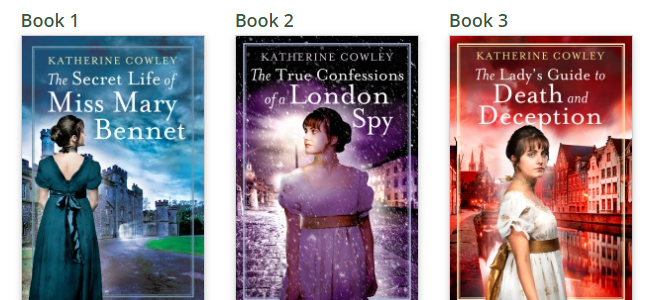
Katherine Cowley is the author of the Mary Bennet spy novel, The True Confessions of a London Spy, which features Mary Bennet of Pride and Prejudice in London during January and February of 1814. In addition to surviving epic amounts of snow and attending the last Ice Fair ever held on the Thames, Mary experiences her first London Season and investigates the murder of a messenger for Parliament.

Note from Vic, Jane Austen’s World: In 2021, we reviewed Katherine Cowley’s first mystery in the Mary Bennet series, The Secret Life of Mary Bennet. Attached to it is an interview with the author.

Accessing Regency Newspapers

If you would like to explore Regency newspapers, you can purchase an affordable monthly subscription to the British Newspaper Archive. They have digitized hundreds of newspapers from across the United Kingdom. While to my knowledge individual subscriptions to The Times Digital Archive are not available, many libraries and university libraries have subscriptions that allow you to browse and search the archives of The Times.

References and Further Reading

Andrews, Willam. Famous Frosts and Frost Fairs in Great Britain, George Redway, 1887. Accessed through Project Gutenberg, https://www.gutenberg.org/files/55375/55375-h/55375-h.htm, 1 Jan 2022.

Bartlett, Nora. Jane Austen: Reflections of a Reader, edited by Jane Stabler, Open Book Publishers, 2021.

de Castella, Tom. “Frost fair: When an elephant walked on the frozen River Thames.” BBC News Magazine, 28 Jan. 2014, https://www.bbc.com/news/magazine-25862141. Accessed 31 Jan. 2022.

Fergus, Jan. “Male Whiners in Austen’s Novels.” Persuasions: The Jane Austen Journal, vol. 18, 1996, pp. 98-108.

Flavin, Louise. “Free Indirect Discourse and the Clever Heroine of Emma.” Persuasions: The Jane Austen Journal, vol. 13, 1991, pp. 50-57.

“Frost Fairs: Where Thames Smooth Waters Glide. Frost Fairs on the River Thames.” Thames.me.uk, https://thames.me.uk/index.htm. Accessed 31 January 2022.

Frostiana: or a History of The River Thames, In a Frozen State, G. Davis, 1814.  

“Keeping Warm in the Regency Era, Part One.” Jane Austen’s World, 21 Jan. 2009, https://janeaustensworld.com/2009/01/21/keeping-warm-in-the-regency-era-part-one/. Accessed 31 Jan. 2022.

“Keeping Warm in the Regency Era, Part Two.” Jane Austen’s World, 3 Feb. 2009, https://janeaustensworld.com/2009/02/03/ways-to-keep-warm-n-the-regency-era-part-2/. Accessed 31 Jan. 2022.

Knowles, Rachel. “The Frost Fair of 1814.” Regency History, 3 Jan. 2021, https://www.regencyhistory.net/2020/05/the-frost-fair-of-1814.html. Accessed 31 Jan. 2022.

McMaster, Juliet. “The Secret Languages of Emma.” Persuasions: The Jane Austen Journal, vol. 13, 1991, pp. 119-131.

Mullan, John. “How Jane Austen’s Emma changed the face of fiction.” The Guardian, https://www.theguardian.com/books/2015/dec/05/jane-austen-emma-changed-face-fiction. Accessed 31 January 2022.

The St. James’s Chronicle (London, England), Tuesday, Jan. 25, 1814; pp. 1-4; Issue 8757. Accessed through The British Newspaper Archive 28 Jul. 2020.

The Times (London, England), Monday, Jan. 19, 1814; pp. 1-4; Issue 9122. Accessed through The Times Digital Archive 31 Jan. 2022.

The Times (London, England), Monday, Jan. 24, 1814; pp. 1-4; Issue 9126. Accessed through The Times Digital Archive 27 Jul. 2020.

The Times (London, England), Monday, Jan. 26, 1814; pp. 1-4; Issue 9128. Accessed through The Times Digital Archive 31 Jan. 2022.

Wingard, Sara. “Folks That Go a Pleasuring.” Persuasions: The Jane Austen Journal, vol. 14, 1992, pp. 122-131.

Read Full Post »

« Newer Posts - Older Posts »