This Jane Austen blog brings Jane Austen, her novels, and the Regency Period alive through food, dress, social customs, and other 19th C. historical details related to this topic.
Then, this YouTube video features both Chawton Cottage and Chawton House, and will take you on a walk past the beautifully preserved houses that Jane and Cassandra must have seen during their walks through the village.
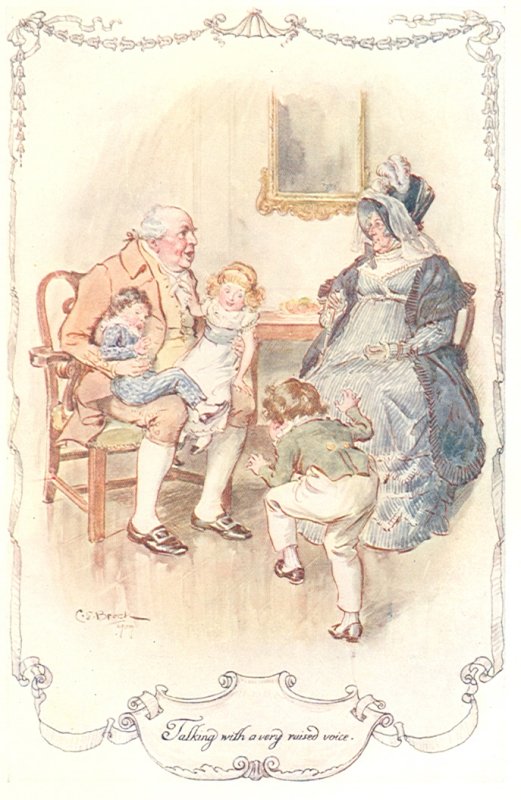
“Immediately surrounding Mrs. Musgrove were the little Harvilles, whom she was sedulously guarding from the tyranny of the two children from the Cottage, expressly arrived to amuse them. On one side was a table, occupied by some chattering girls, cutting up silk and gold paper; and on the other were tressels and trays, bending under the weight of brawn and cold pies, where riotous boys were holding high revel; the whole completed by a roaring Christmas fire, which seemed determined to be heard, in spite of all the noise of the others. . . .
Mrs. Musgrove . . . observ[ed] with a happy glance round the room, that after all she had gone through, nothing was so likely to do her good as a little quiet cheerfulness at home. . . .
” ‘I hope I shall remember, in future,’ said Lady Russell, as soon as they were reseated in the carriage, ‘not to call at Uppercross in the Christmas holidays.’ Every body has their taste in noises as well as in other matters . . .”—Persuasion, Vol. 2, chapter 2
The Musgrove family at Christmas
Jane Austen gives us only brief glimpses of Christmas in her world. Here Mrs. Musgrove and Lady Russell think very differently about what makes a pleasant Christmas. The Musgrove family are enjoying crafts, food, a Christmas fire, and children having fun and making noise.
Family and Friends
At Christmas, people gathered with friends and family, as we still do today. In Northanger Abbey, Catherine’s brother James met Isabella Thorpe when he went to spend the Christmas holidays with Isabella’s brother. In Pride and Prejudice, Elizabeth invites the Gardiners to join her and Darcy at Pemberley for Christmas. In Sense and Sensibility, Charlotte Palmer asks the Dashwood sisters to join her at Cleveland for Christmas.
In Emma, Emma’s sister and her husband come to visit for the holidays with their children. They are busy with friends during the mornings, and Mr. Weston insists that they dine with him one eventful evening.
Mr. Elton, at least, enjoys the occasion, saying:
“This is quite the season indeed for friendly meetings. At Christmas every body invites their friends about them, and people think little of even the worst weather. I was snowed up at a friend’s house once for a week. Nothing could be pleasanter. I went for only one night, and could not get away till that very day se’nnight.”—Emma, chapter 13
Mr. Elton drinks too much and proposes to Emma, who rejects him. She is therefore very glad on Christmas day to see
“a very great deal of snow on the ground. . . .The weather was most favourable for her; though Christmas Day, she could not go to church.”—Emma, chapter 16
The clear implication, though, is that Emma would naturally have gone to church on Christmas day. Churches generally had a good turn-out on Christmas. Communion was generally offered that day (one of only three or four times a year when country churches would offer Communion, also called the Lord’s Supper). Henry Crawford in Mansfield Park assumes that Edmund Bertram will only need to preach on the major holidays when many people attended church:
“A sermon at Christmas and Easter, I suppose, will be the sum total of sacrifice.”— Mansfield Park, chapter 23
Edmund, of course, plans to live in his parish and lead services and preach there every Sunday, not just on holidays.
For each church holiday, the Book of Common Prayer, handbook of the Church of England, prescribed specific prayers and Bible readings that would be the same every year. The “collect” prayer from the 1790 Book of Common Prayer for “the Nativity of our Lord, or the birth day of CHRIST, commonly called Christmas-day” is:
“Almighty God, who hast given us thy only begotten Son to take our nature upon him, and as at this time to be born of a pure Virgin; grant that we being regenerate, and made thy children by adoption and grace, may daily be renewed by thy Holy Spirit, through the same our Lord Jesus Christ, who liveth and reigneth with thee and the same Spirit, ever one God, world without end. Amen.”
Bible readings for the day were from the first chapter of the book of Hebrews and the first chapter of the book of John, both about the coming of Christ.
In a recent talk by Rachel and Andrew Knowles on “A Regency Christmas,” they pointed out that Christmas day, and the whole Christmas season, was a popular time for weddings in the churches. So perhaps that was Austen’s little joke, having Mr. Elton propose right before Christmas! Babies were also christened on that day, and Christmas was a time for ordaining new clergymen. Edmund Bertram goes to Peterborough for ordination during Christmas week. When he delays his return, Mary Crawford thinks he may be staying for “Christmas gaieties.”
Christmas Gaieties
Miss Bingley uses the same term when she writes to Jane Bennet:
“I sincerely hope your Christmas in Hertfordshire may abound in the gaieties which that season generally brings, and that your beaux will be so numerous as to prevent your feeling the loss of the three of whom we shall deprive you.”—Pride and Prejudice, chapter 21
What did those gaieties involve?
Customs that were consistent across the country were gathering with family and friends, eating a special meal, and giving gifts and money to the poor. Austen mentions a few additional traditions.
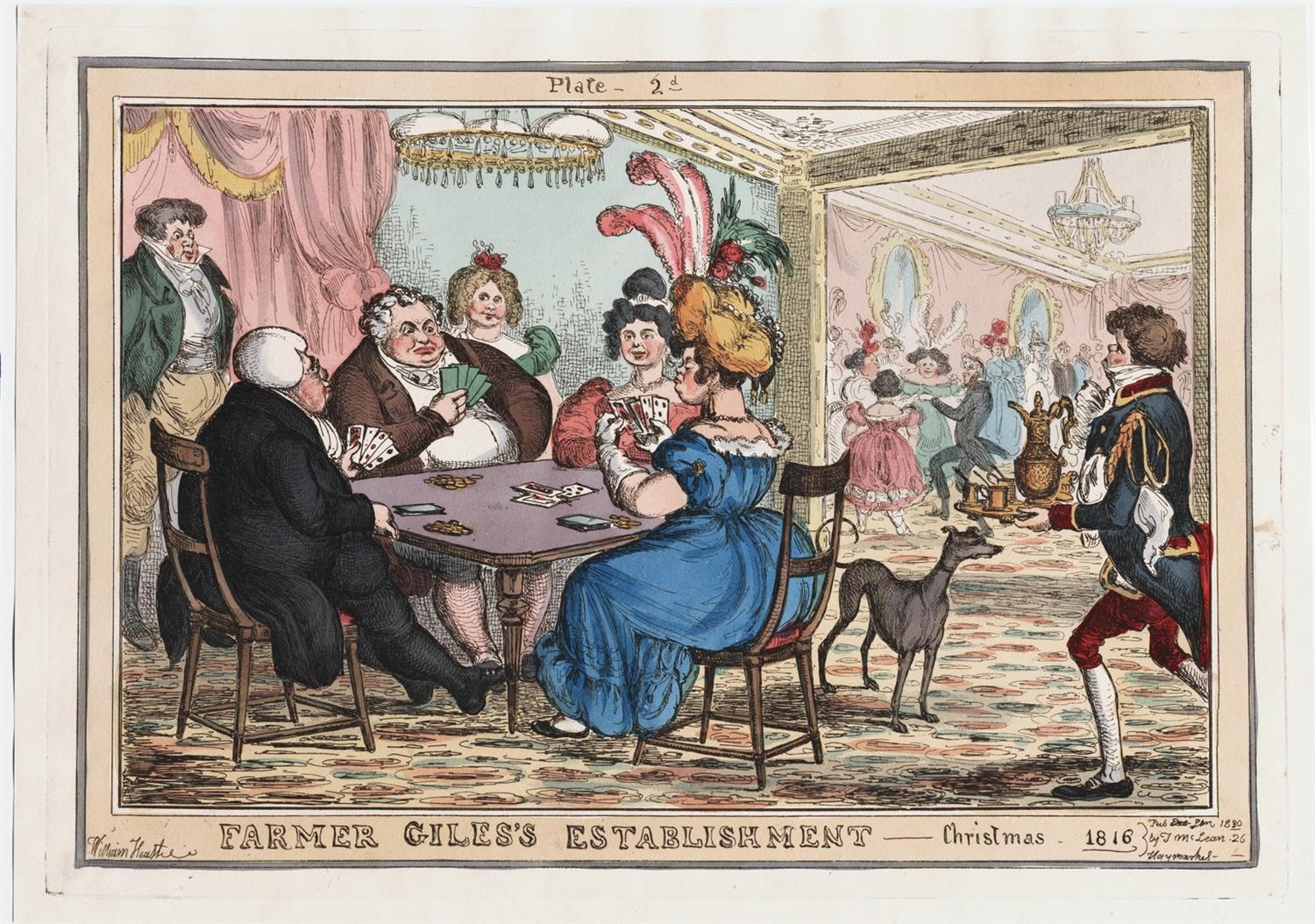
Regency Christmas celebrations usually involved a special meal with family and friends. Farmer Giles’s Establishment, Christmas day, 1800, by William Heath, 1830. Courtesy of The Lewis Walpole Library, Yale University
Gifts
Christmas was a time for charity, for giving gifts to the poor and to those in service occupations, like the local butcher. These gifts of money were called “Christmas boxes.” According to the Knowles’s research, newspapers even published lists of what certain wealthy people were giving to the poor at Christmas.
In families, it appears that gifts were given mainly to children. I found only one mention in Austen:
“On the following Monday, Mrs. Bennet had the pleasure of receiving her brother and his wife, who came as usual to spend the Christmas at Longbourn. . . . The first part of Mrs. Gardiner’s business on her arrival was to distribute her presents and describe the newest fashions. . . . The Gardiners stayed a week at Longbourn; and what with the Phillipses, the Lucases, and the officers, there was not a day without its engagement. Mrs. Bennet had so carefully provided for the entertainment of her brother and sister, that they did not once sit down to a family dinner.”—Pride and Prejudice, chapter 25
It’s not clear if Mrs. Gardiner brought gifts for everyone because it was Christmas, or if she was just bringing gifts because she was coming from London to the country on a visit.
Games
Many played games at Christmastime. Jane Austen wrote in a letter to Cassandra from Portsmouth, on Jan. 17, 1809 about a change in the fashions for Christmas games:
“I have just received some verses in an unknown hand, and am desired to forward them to my nephew Edward at Godmersham:
Alas! poor Brag, thou boastful game! What now avails thine empty name?
Where now thy more distinguished fame? My day is o’er, and thine the same,
For thou, like me, art thrown aside At Godmersham, this Christmas tide;
And now across the table wide Each game save brag or spec. is tried.
Such is the mild ejaculation Of tender-hearted speculation.”
Card games and dancing were popular Christmas activities. Farmer Giles’s Establishment Christmas 1816 by William Heath, 1830. Courtesy of The Lewis Walpole Library, Yale University
Dancing
Austen’s characters dance at Christmastime. Sir Thomas Bertram holds a ball for Fanny Price during the Christmas holidays. Sir John Middleton hosts a Christmas dance, followed by a hunt the next morning:
“‘He [Willoughby] is as good a sort of fellow, I believe, as ever lived,’ repeated Sir John. ‘I remember last Christmas at a little hop at the park, he danced from eight o’clock till four, without once sitting down.’
“‘Did he indeed?’ cried Marianne with sparkling eyes, ‘and with elegance, with spirit?’
“‘Yes; and he was up again at eight to ride to covert.’”—Sense and Sensibility, chapter 9
Other Christmas Traditions
According to the Knowles, Christmas customs were different between city and country, and between various areas of the country. In some areas old customs like the Yule log and decorating with greenery were dying out, in other areas they were still going strong.
Whatever traditions your family keeps during this holiday season, may you experience much joy and deep peace.
If you want to find out more about specific Christmas customs in Austen’s England, check out any of these posts:
“If I,” said Mr. Collins, “were so fortunate as to be able to sing, I should have great pleasure, I am sure, in obliging the company with an air; for I consider music as a very innocent diversion, and perfectly compatible with the profession of a clergyman.”–Pride and Prejudice
“In the evening we had the Psalms and Lessons, and a sermon at home”–Jane Austen, Letters, Oct. 24-25, 1808 [“Lessons” were the Bible readings for the day, from the Book of Common Prayer, which also prescribed the Psalms to read or sing for that day.]
When I asked some Facebook friends what gave them joy, the most popular response was “Singing!” There’s nothing like singing to raise your spirits. Even “singing the blues” can be cathartic, getting sadness out and making room for joy. (Of course, in Sense and Sensibility, Marianne Dashwood uses music and singing to increase her sadness, rather than relieve it.)
Early Carols
For centuries people have sung Christmas carols to express their joy at Christmastime. I’ve come across three books of Christmas carols published in the years following Austen’s death (1822, 1833, 1861; details in sources below). Almost all the carols in them were known and sung during Austen’s lifetime. Many are secular, about the holly and ivy used to decorate homes for Christmas or the boar’s head that began ancient Christmas feasts. Some are specifically for wassailing. Wassailing was similar to modern caroling, but wassailers carried with them a large bowl of “wassail,” a mixture of apple cider, spices, sugar, and alcoholic beverages. Wassailers sang to each house they visited, wished them prosperity, and drank to their health; the hosts might give them money, Christmas food, or drinks.
Joy is mentioned repeatedly in these songs. A fourteenth century carol, “The Seven Joys,” describes seven joys that Mary experienced; the last one is “To see her own Son Jesus To wear the crown of heaven.” An early seventeenth-century carol begins, “So now is come our joyful’st [most joyful] feast; Let every man be jolly.”
Many tell the Christmas story, or parts of it. Some also tell the story of Adam and Eve, their creation and their fall into sin. Others include the death and resurrection of Christ. Some older carols narrate legends. In “The Cherry-Tree Carol” a cherry tree bows down to Mary, proving her innocence to the doubting Joseph.
Early carols we still sing include “God Rest Ye Merry Gentlemen,” “The First Noel” (which in some versions was sung “Oh well” rather than “Noel”!), and “I Saw Three Ships Come Sailing In.”
Carols at Home and Charity for Carolers
Would Jane Austen and her family have heard and sung Christmas carols? Many were available as published broadsheets (single pages) or known orally. Since the Austen family loved music and singing, it’s quite possible that they sang carols at home during Christmas celebrations. Jane mentions Christmas gatherings in her novels and letters, and singing was probably part of those celebrations.
Would she have heard carolers going door to door? Also likely. Two country parsons of the time, one in eastern England and the other in the West, kept journals that have survived. Since Austen’s father was also a country parson, her family’s experiences may have been similar to theirs.
Parson James Woodforde of Norfolk mentions, on Christmas Eve of 1764, that the church’s Singers came to him and sang “a Christmas Carol and an Anthem”; he gives them “cyder as usual” and a gift of money. They also sang to him in 1768 and 1769; it seems to have been a regular practice. In 1781 (when Austen would have been six years old), Woodforde gave money to “Spragg’s lame son for a Christmas carol.” Peter Parley, in his 1838 description of Christmas customs, says groups of ragged children went from door to door singing for alms. Giving money to carolers was part of Woodforde’s extensive Christmas charities; he gave money to more than fifty poor people every St. Thomas’ Day (Dec. 21), and fed Christmas dinner to a number of “poor old men” every Christmas Day.
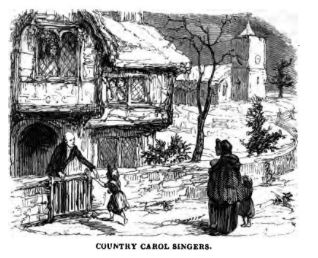
Poor Children Caroling for Alms, p. 142 in Tales About Christmas, by Peter Parley, 1838
Some years later, Parson William Holland of Somerset also gave charity at Christmastime, including dinners for the Sunday School children (poor children learning reading and religion at the church each Sunday). In 1800 Holland says the poor came “AChristmassing,” which he translates as begging. It seems likely their house to house visits included singing carols. His church Singers came and serenaded his family at the parsonage every Christmas morning, sometimes as early as 5 AM (in 1799) or even 3 AM (in 1809)! Parley calls groups of church musicians, who wandered about playing and singing during the night on Christmas Eve, “the waits.” He says the custom came from earlier times when groups of watchmen wandered the streets at night.
Austen’s family also probably heard and entertained Christmas singers, and gave alms to them and other poor people at Christmas.
“While Shepherds Watched Their Flocks”
In 1792 and 1793, Woodforde says the church Singers sang a Christmas Anthem during the service. In other years he also mentions singing in Christmas services. What would have been sung in Austen’s country churches at Christmas? Most likely, the carol, “While Shepherds Watched Their Flocks by Night.”
In the 1700s in Anglican worship, most congregations only sang Psalms from the Bible, not hymns. In fact, in many small churches there was no singing at all; the Psalms were just read. However, some had groups of “Singers,” like those in Woodforde and Holland’s churches, sometimes with musical instruments. (Holland’s congregation took up money to buy their Singers instruments.) The congregation might sing along with the Singers, but more often just listened.
The Singers generally sang from Tate and Brady’s New Version of the Psalms of David, which was a book of “metrical Psalms.” These are Psalms rewritten in a regular poetic form so they could be sung with standard tunes. In 1700, a Supplement was added which included a few hymns. The only Christmas hymn was “While Shepherds Watched Their Flocks by Night,” which is paraphrased from Luke 2:8-14. It was the only officially approved Christmas carol for churches in the eighteenth century. The words were as we sing them today. It could be sung to any tune in “common meter” (churches had books of tunes with certain meters, patterns of syllables, stress, and rhyme). But it likely was commonly sung to the tune still used in Britain today. (The tune popularly used in the U.S. now is from 1821.)
“Joy to the World”
Anglican country churches in the 1700s were mainly singing Psalms. However, the Dissenters (those outside the Church of England) and the Methodists wrote and sang many hymns during this time, including some Christmas favorites. Isaac Watts, a Dissenter, is considered the Father of English Hymnody. He believed that singing Psalms was not enough, because the Psalms did not express the New Testament experience and the gospel of Christ, or the congregation’s thoughts and feelings as Christians. He rewrote many of the Psalms to express those ideas.
“Joy to the World,” published by Watts in The Psalms of David Imitated in the Language of the New Testament in 1719, was a rewrite of Psalm 98, but it also includes phrases from other Bible verses. Psalm 98:4 (King James Version) says, “Make a joyful noise unto the Lord, all the earth: make a loud noise, and rejoice, and sing praise.” Watts wrote this as “Joy to the World.” Psalm 98:9 says the Lord is coming to judge the earth, which Watts adapted to “The Lord is come; let earth receive her king!” The line “Heaven and nature sing” is from Psalm 96:11, “Let the heavens rejoice, and let the earth be glad.” The third verse of the carol says, “No more let Sins and Sorrows grow, Nor Thorns infest the Ground: He comes to make his Blessings flow Far as the Curse is found.” This is adapted from Genesis 3:17-18, in which God tells Adam that the ground is cursed because of his sin, so Adam will eat from it in sorrow, and it will bring forth thorns and thistles.
As Watts’ songs had been spreading for some years, the Austens may well have sung this one in their home, if not at church. The tune we sing today had not yet been created; it was adapted from Handel in the 1830s.
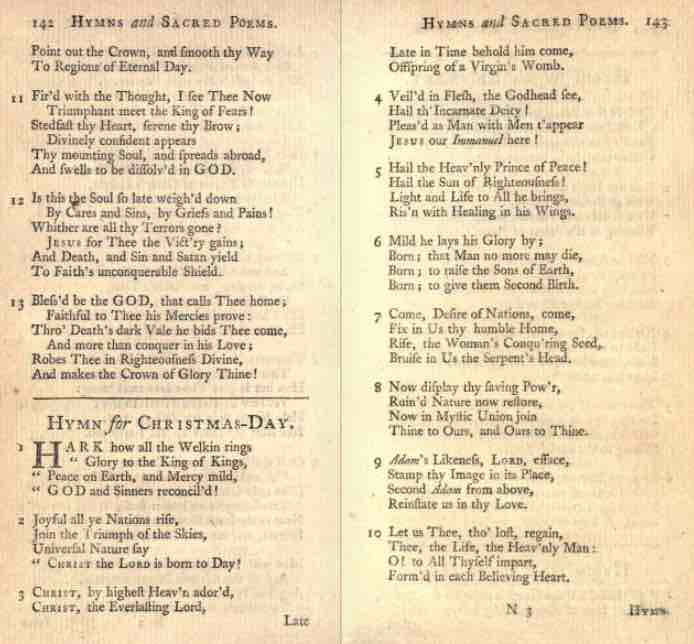
Charles Wesley’s 1739 “Hark how all the Welkin rings” became “Hark the Herald Angels Sing” when George Whitefield modified it in 1753.
“Hark the Herald Angels Sing”
“Hark the Herald Angels Sing” is a Methodist hymn that might also have been sung by the Austens, at home or possibly at church. The Methodists attempted to revive the Church of England, but eventually, on John Wesley’s death, separated and became Dissenters. However Charles Wesley, John’s brother, who wrote thousands of hymns, was strongly committed to the Church of England. His “Hymn for Christmas-Day” was published in Hymns and Sacred Poems in 1739.
It began, “Hark how all the welkin rings!” “Welkin” was an archaic word for the heavens. George Whitefield, another famous Methodist preacher, changed this line and other parts of the song in a collection of hymns he published in 1753. It became “Hark the Herald Angels Sing.” The music we sing it to now was added in the mid-1800s. At that time, Wesley’s four-line stanzas were combined to make our eight-line verses and the chorus was added.
All of these Christmas carols express joy:
“Glad tidings of great joy I bring To you and all mankind.” (“While Shepherds Watched Their Flocks”)
“Joy to the world! The Lord is come. Let earth receive her king!” (“Joy to the World”)
“Joyful all ye nations rise; Join the triumph of the skies!” (“Hark the Herald Angels Sing”)
Wishing you all much joy, whatever holidays you celebrate!
What is your favorite Christmas carol, or other song, that brings you joy?
“I have this moment received £5 from kind, beautiful Edward. Fanny has a similar Gift.”—Jane Austen, Letters, Sept. 15-16, 1813
Gifts are a way of showing how much we love and appreciate the special people in our lives. Of course, our tradition of giving gifts at Christmastime goes back to the story of the “wise men from the East” who brought gifts of gold, frankincense, and myrrh to the baby Jesus. Most of us can’t afford to give such precious gifts today, but we can give gifts that fit the interests, joys, and passions of our friends and relations.
Austen mentions gifts multiple times. She, of course, received a gift of a topaz cross and gold chain from her seafaring brother Charles. In Mansfield Park, Fanny Price’s brother William similarly gives his sister “a very pretty amber cross,” a perfect gift for a woman of deep faith. Her cousin Edmund then gives her another gift suited to her style and personality, “a plain gold chain, perfectly simple and neat.” Fanny responds, “This is the only ornament I have ever had a desire to possess. It will exactly suit my cross. They must and shall be worn together.”
Mary Crawford’s gift, an underhanded way of giving Fanny a gift from Henry, does not fit Fanny’s cross. Symbolically, Austen shows, through these gifts, that soon-to-be-clergyman Edmund is the right husband for Fanny, not immoral Henry Crawford.
Whether for Christmas, a birthday, or another holiday or occasion, it’s easy to find gifts for anyone in your life who loves Jane Austen. Or who you think might love Jane Austen, given the chance. (Or perhaps you want a gift for yourself since, as Vic pointed out to me, you might receive a gift card!) Consider what other interests the person has, and choose something specifically for her or him! I’ll just list a few favorites in each category, and give you links to search for more options.
Let’s shop!
Where To Buy Jane Austen-related Gifts
In the US, you might start by searching Jane Austen Books for whatever type of gift you want.
They all have wonderful gifts, and will also ship internationally (though it’s a little too late to do that for this Christmas, probably!). Due to UK postal strikes, anything shipped from the UK may be delayed this month.
Of course, you can also find many, many Jane Austen items on Amazon and Etsy.
Books and Movies
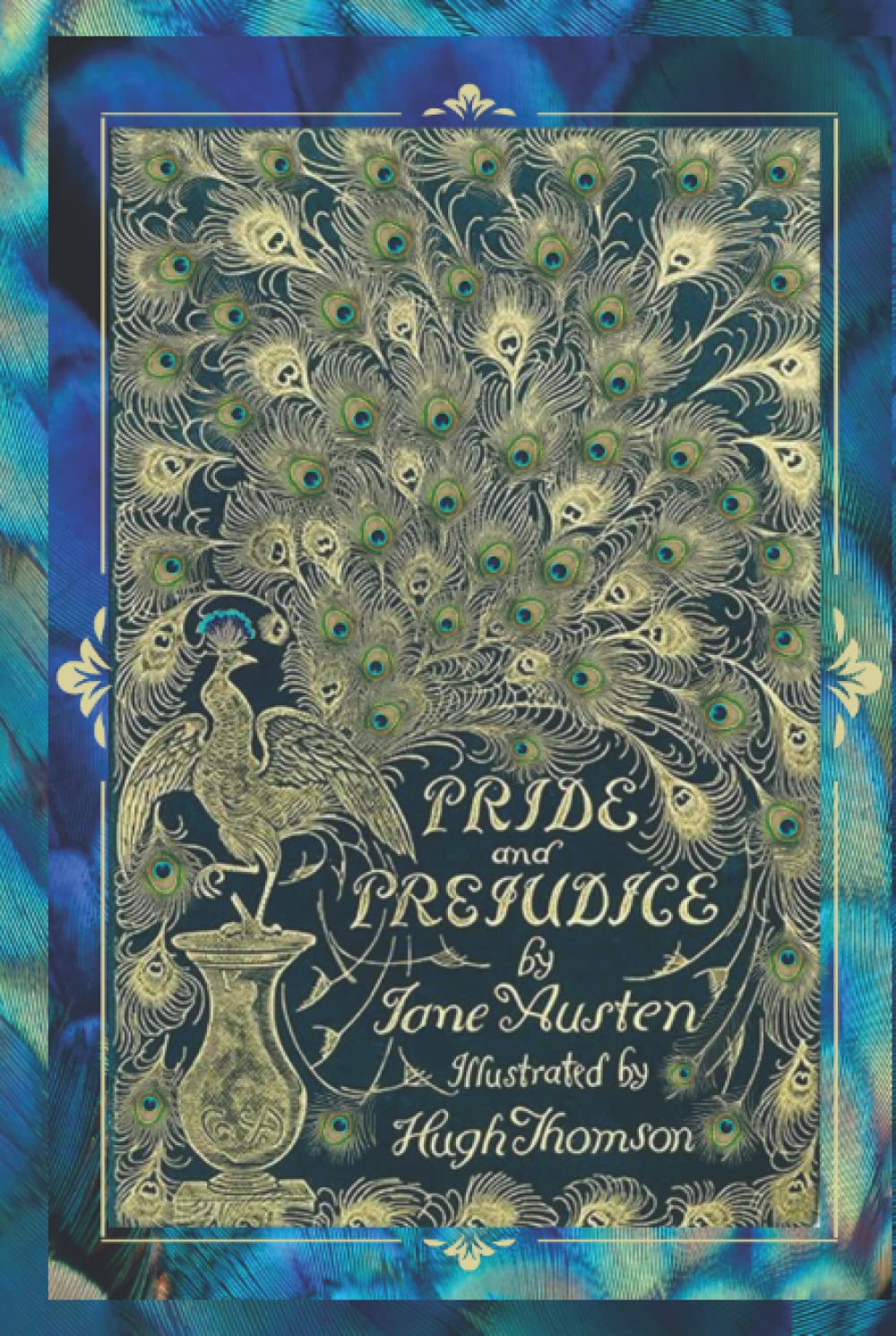
Let’s start with the obvious. Perhaps the person already has all of Austen’s novels, which are freely available in digital formats. But they might like a quality copy of their favorite, with a beautiful cover and illustrations. My favorite is the “Peacock” Pride and Prejudice, with Hugh Thomson’s delightful illustrations. Your local bookstore may have other beautiful versions.
I love my “Peacock” Pride and Prejudice, with Hugh Thomson’s hilarious illustrations! A great gift.
Or, they might enjoy a well annotated version, giving lots of new insights. The Cambridge editions like this one are a great scholarly resource. Copies of the Juvenilia, the Letters, or the Later Manuscripts might also be welcomed by series Austen enthusiasts.
DVDs of Austen adaptations might be a good gift, if you’re sure they don’t already have the one you’re giving.
There are so many books about Austen and her novels that I won’t even try to list them. However, Jane Austen Books lists them by subject, with 42 topics to choose from, each including an impressive list of books!
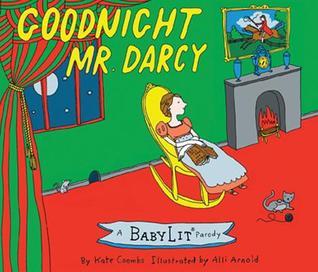
You can find versions of Jane Austen for all ages, including this board book parody, Goodnight Mr. Darcy!
Children
Are you looking for gifts for children? You can find lovely books introducing Jane Austen to teens, children, even babies! Here are a few of my favorites:
Goodnight, Mr. Darcy, also from BabyLit, is a “parody board book,” based on Goodnight, Moon and Pride and Prejudice. I think it’s delightful, though I’m not sure toddlers would understand it! So maybe for an Austen-loving mom who has small children.
Cozy Classics board books Pride and Prejudice and Emma tell the stories for very young readers, in only twelve words, with felt figures. (They do other classics, too, if you think the child would prefer, perhaps, Huckleberry Finn or Moby Dick.)
For ages 8-12, Gil Tavner’s series of adaptations is fun. Northanger Abbey, for example, is a delight.
For more reluctant older readers, including boys, this graphic version of Pride and Prejudice is beautifully illustrated and sticks fairly close to the novel. Search on Amazon for other Pride and Prejudice graphic novels. (There’s even one of Pride and Prejudice with Zombies, which wouldn’t appeal to me, but some might love it!)
For teenage girls, you can easily find new or used copies of Austen’s novels. Northanger Abbey is a good one to start with, since the heroine is a teenager figuring out her place in the world.
Austen-themed puzzles, find-it books, paper dolls, craft books, sewing books, and coloring books are other great choices; see below and read my post on Jane Austen Gifts for Children and Teens for man options.
Puzzles
Does the person you want to give a gift to love puzzles?
I’m looking forward to doing this 1000 piece puzzle with Austen quotes (I usually prefer 500 piece puzzles, but this looks like so much fun!). My friend owns it and she and her daughters work it repeatedly. Or you might try this 1000 piece puzzle with Austen book covers. Or this one with Austen scenes and characters to find. Or others; search Amazon or Etsy for Jane Austen puzzles.
In this puzzle, you can find Jane Austen and characters from all of her novels!
Games
My granddaughters (ages 10 and 14) and I keep playing Marrying Mr. Darcy, a fun card game for girls and ladies. You choose which female character you want to be (ranging from Lydia Bennet to Georgiana Darcy), then take cards that give you points for things like character, wit, and cunning. Cards might also take you to parties or on elopements. At the end you see which suitors you have qualified for (ranging from Mr. Wickham to Mr. Darcy), then roll to see who proposes to you and decide who to accept! Add up your character points and marriage points to see who wins.
I’m sure you know that coloring is not just for kids. It’s a relaxing pastime for adults as well. I have several Jane Austen coloring books, and sometimes I color them while listening to music, and sometimes my grandchildren color them while I read to them (from Jane Austen, of course!).
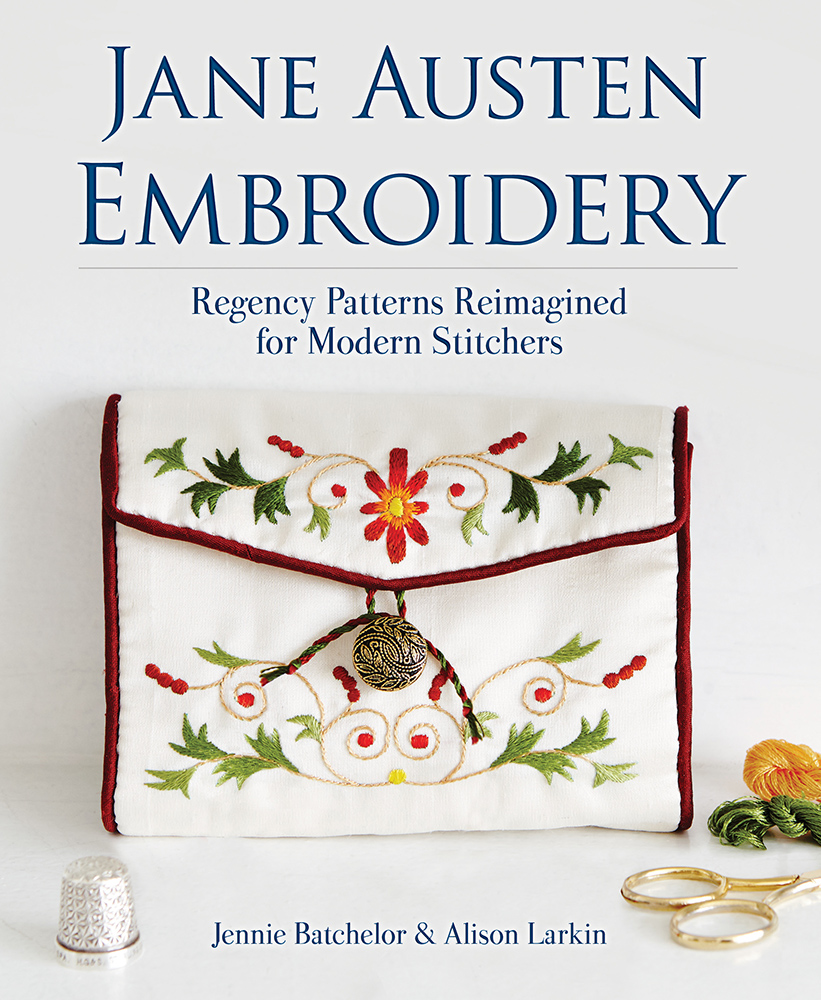
I have a Pride and Prejudice needle minder, a magnet that holds my needle to my sewing project when I’m not sewing. I love it! Etsy offers a variety of them. This book stack is a cute one.
This site gives sources and ideas for inexpensive ways to dress in Regency costumes. Recommended items could be valued gifts for the Janeite who likes to dress up for festivals and meetings.
Jane Austen t-shirts and sweatshirts are fun for everyday wear. You can even get Austen socks and scarves. (I have a pair of these socks, but when I wear them under pants or a Regency dress, who sees them??)
Jewelry
The Jane Austen Centre in Bath carries a lovely line of Austen-themed jewelry, if you’re looking for something classy.
For more books related to faith and Austen, or for books related to science and Austen, see the post on my blog.
Praying with Jane is a book of devotionals based on Jane Austen’s own prayers.
Fiction
Many Janeites love Austen variations, and a subscription to Kindle Unlimited would be a good way to give them the opportunity to read many. Here are a very few of my personal favorites:
Variations with faith and science themes: See reviews on my blog. One of many good ones, with both faith and science, is Robin Helm’s Yours By Design series, with an added fantasy element; Austen’s Darcy is switched with a modern-day Darcy, with surprising results.
Journals
Journals and Notebooks can be good gifts for those who like to write. I’ve used a Jane Austen Daybook year after year, writing down things I’m thankful for every night, since it has a space for each date.
Calendars
Every year JASNA Wisconsin creates a Jane Austen calendar with lovely pictures (this year’s are from C. E. Brock’s Pride and Prejudice illustrations). Each date gives one or more events from Austen’s life, letters, or novels. I love these!
By now your wish list is probably a mile long! Mine, too. But rejoice in what you have. Think about your Austen-loving friends’ interests and joys, and give gifts they’ll love, to show your love for them!
What is your favorite Jane Austen gift that you have received or given?
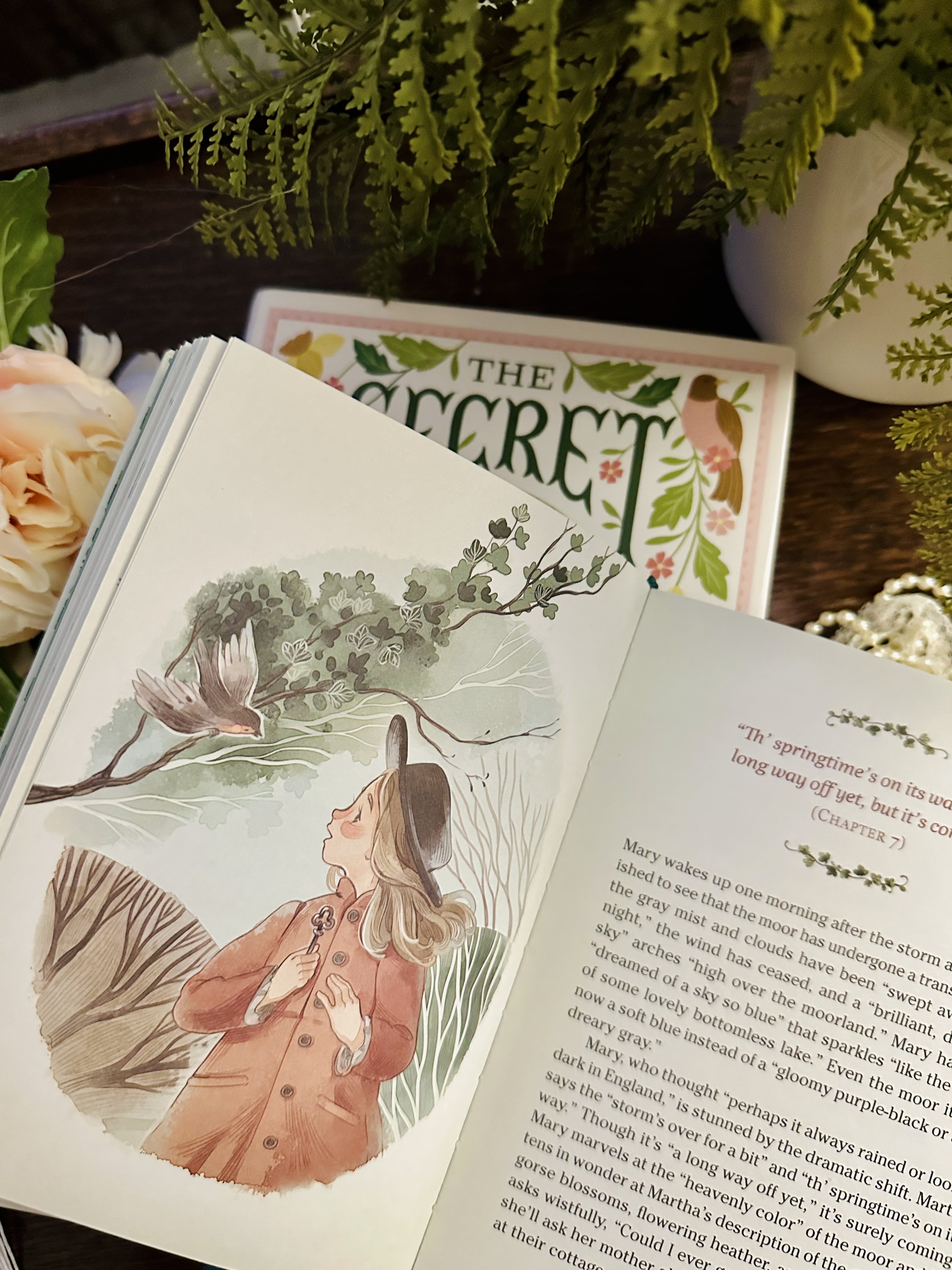
When I hosted a read-along of The Secret Garden by Frances Hodgson Burnett earlier this fall, we spent time discussing the wonderful personality, character, and symbolism of the robin “who showed the way” to the secret garden. After hearing many intriguing tales that members of the group had heard about robins at Christmas time, I decided to read more for myself. I especially wanted to know why the robin features so often on British Christmas cards, tins, and decorations – especially those that have a more vintage feel.
And, of course, I wanted to know if Robin Redbreast was part of the Christmas season during Jane Austen’s lifetime or if that came about later. What I found was fascinating!
Robins as Symbols of Good Will
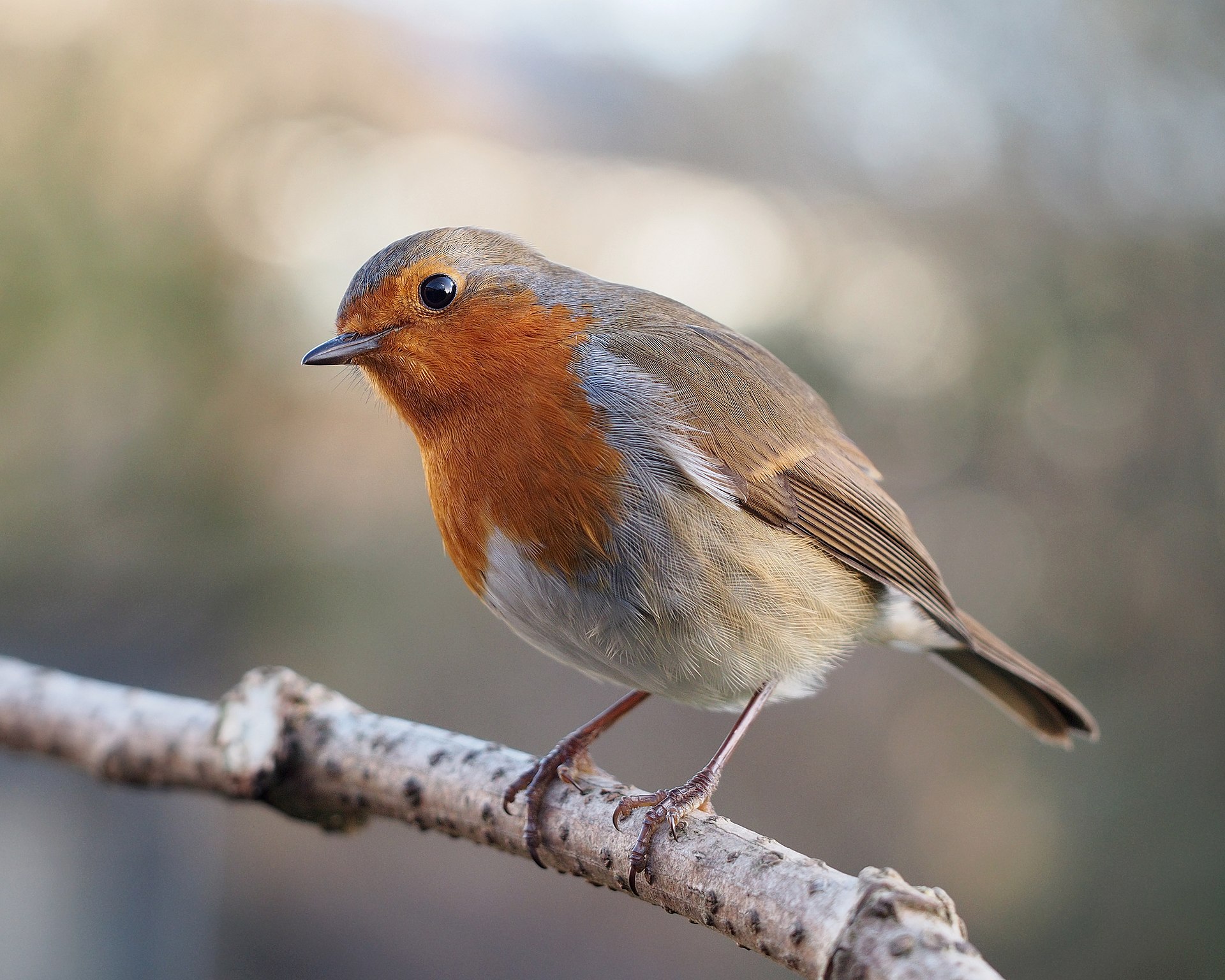
If you’ve ever seen a robin, you’ll notice that the friendly brown bird’s breast is more of an orange color than a reddish hue. Apparently, the color orange didn’t originally have a name in the UK. Thus, according to tradition, the robin was named for its “red” breast and it stuck.
Robins in art and literature are always associated with good will and friendliness. They are known to be the gardener’s friend. They are intelligent, happy birds who almost seem as though they are communicating. Robins also symbolize spring, good fortune, new beginnings, and rebirth.
Robins are so generally known as happy, cheerful birds that many field guides even say that the robin’s call sounds like this: “Cheer up! Cheerily! Cheer up! Cheerily!”
Wikipedia Commons, European Robin.
Robins as Guides in Literature
Robins feature throughout British folklore, stories, and classic literature. They are usually bright, friendly, happy, cheerful birds. They are often depicted as clever and intelligent birds.
The robin features in The Secret Garden as Mary Lennox’s first friend in England and the one who shows the way to the door of the mysterious garden and to the key to the locked door:
“You showed me where the key was yesterday,” Mary said. “You ought to show me the door today; but I don’t believe you know!”
The robin flew from his swinging spray of ivy on to the top of the wall and he opened his beak and sang a loud, lovely trill, merely to show off. Nothing in the world is quite as adorably lovely as a robin when he shows off—and they are nearly always doing it.
One of the nice little gusts of wind rushed down the walk, and it was a stronger one than the rest. It was strong enough to wave the branches of the trees, and it was more than strong enough to sway the trailing sprays of untrimmed ivy hanging from the wall. Mary had stepped close to the robin, and suddenly the gust of wind swung aside some loose ivy trails, and more suddenly still she jumped toward it and caught it in her hand. This she did because she had seen something under it—a round knob which had been covered by the leaves hanging over it. It was the knob of a door.
In C.S. Lewis’ Chronicles of Narnia, a robin is a guide once again, helping the Pevensies find their way:
They were all still, wondering what to do next, when Lucy said, “Look! There’s a robin, with such a red breast. It’s the first bird I’ve seen here. I say!—I wonder can birds talk in Narnia? It almost looks as if it wanted to say something to us.” Then she turned to the Robin and said, “Please, can you tell us where Tumnus the Faun has been taken to?” As she said this she took a step towards the bird. It at once hopped away but only as far as to the next tree. There it perched and looked at them very hard as if it understood all they had been saying. Almost without noticing that they had done so, the four children went a step or two nearer to it. At this the Robin flew away again to the next tree and once more looked at them very hard. (You couldn’t have found a robin with a redder chest or a brighter eye.)
“Do you know,” said Lucy, “I really believe he means us to follow him.”
“I’ve an idea he does,” said Susan, “what do you think, Peter?”
“Well, we might as well try it,” answered Peter.
The Robin appeared to understand the matter thoroughly. It kept going from tree to tree, always a few yards ahead of them but always so near that they could easily follow it. In this way it led them on . . .
The Lion, the Witch, and the Wardrobe
In fact, robins are so well known as symbols of goodness, when Edmund asks Peter, “How do we know which side that bird is on? Why shouldn’t it be leading us into a trap?” Peter replies, “That’s a nasty idea. Still—a robin you know. They’re good birds in all the stories I’ve ever read. I’m sure a robin wouldn’t be on the wrong side.“
Robins and December
Robins in the UK (European Robins) don’t migrate; they stay in England year-round. They are territorial birds and they do not often leave their homes or nesting areas. It’s common to see them out and about during the winter because that is when they begin to look for mates. This is another reason robins have become synonymous with December and winter time.
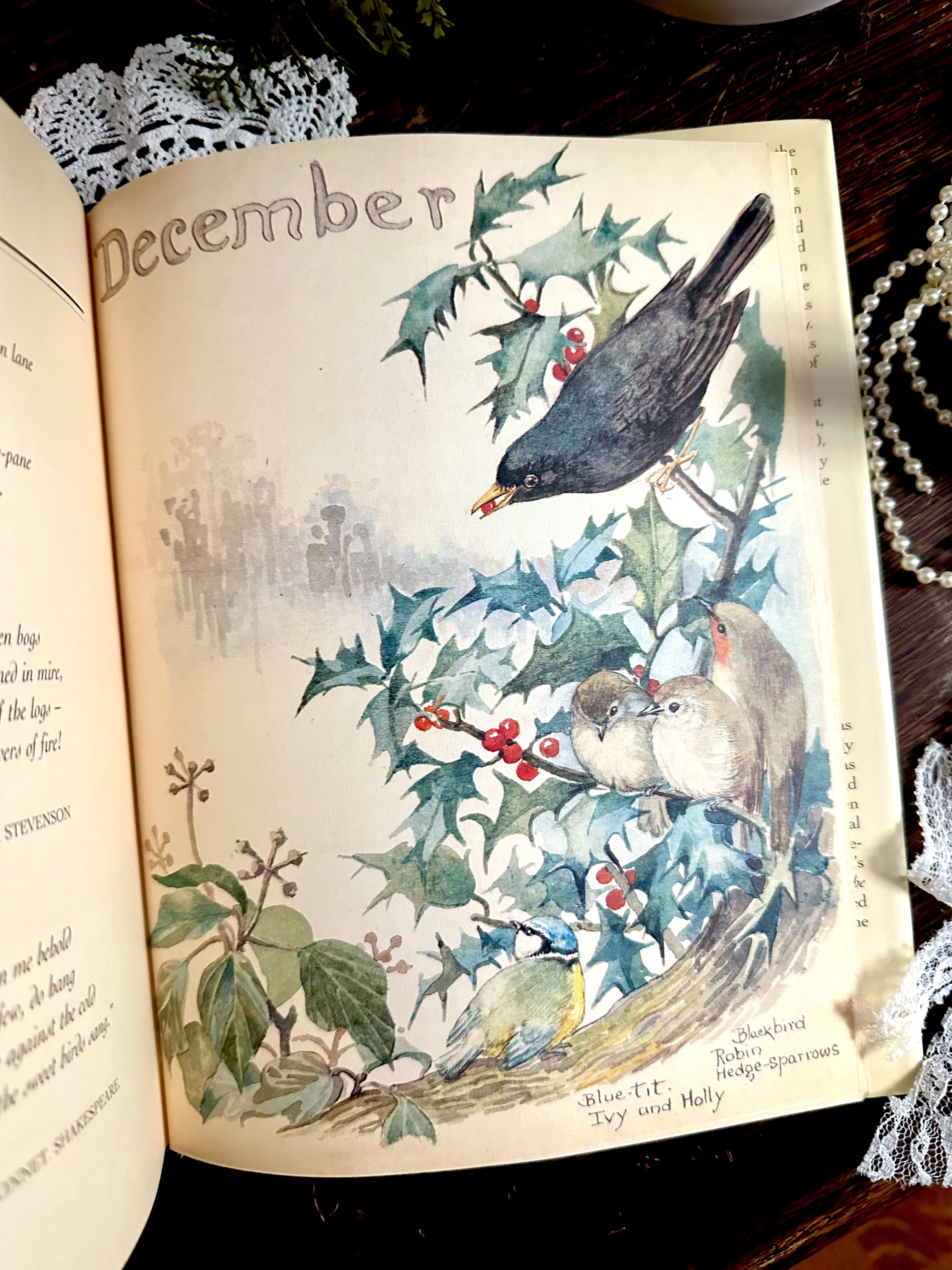
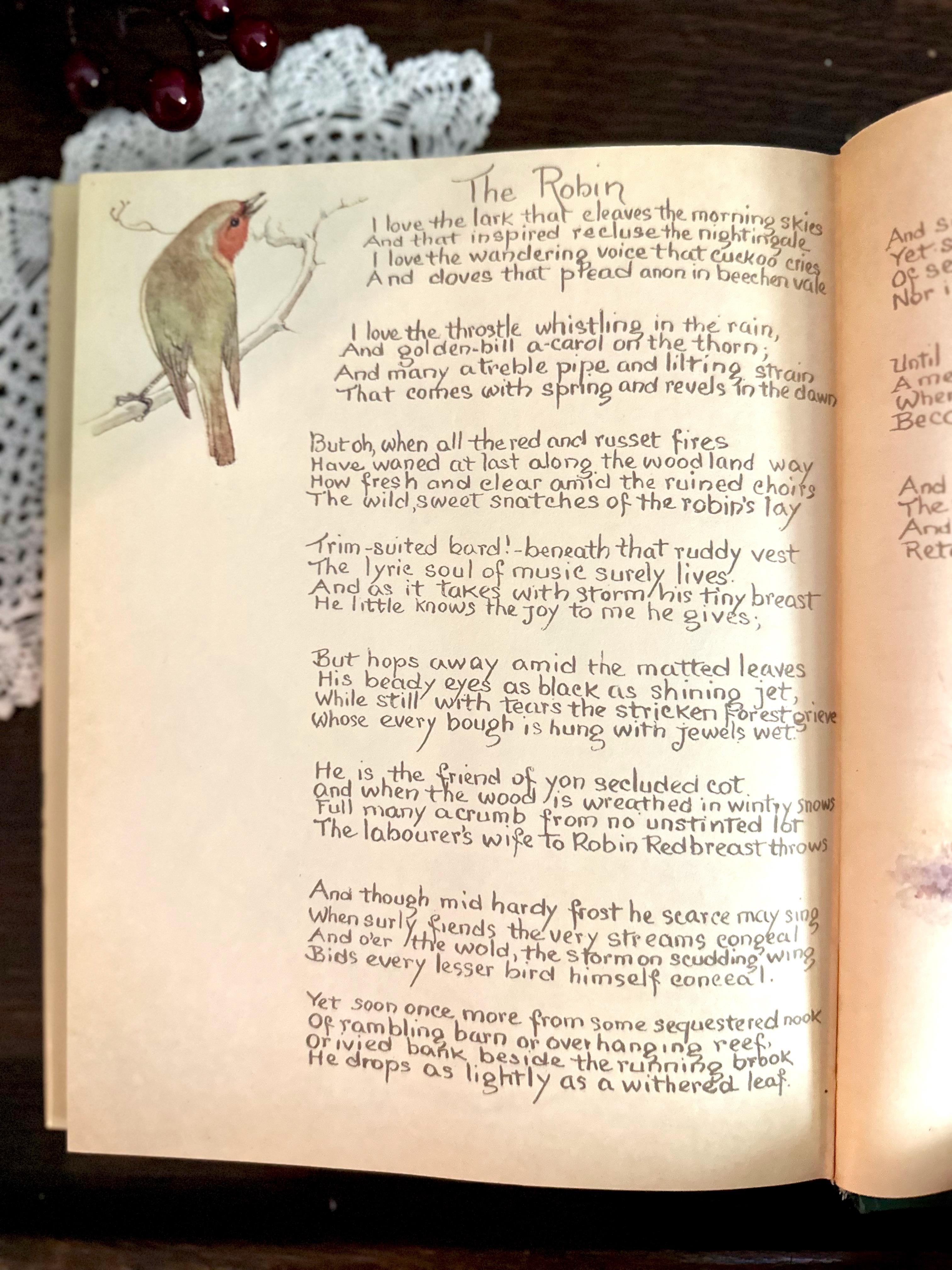
In The Nature Notes of an Edwardian Lady (1905) by Edith Holden, a journal of watercolor paintings of flowers, plants, birds and butterflies, along with poems and anecdotes, the author has a section devoted to each month of the year. For December, she includes this watercolor of several birds, including a robin. She also includes a poem about robins.
Robins and Christianity
Several old English fables and folk tales link the robin to Christianity. There are many versions of the tales told, but there are two that are quite popular. The first one explains that the robin used to be a plain, brown bird with no red breast, but it went to sing to Jesus when he was dying on the cross. The blood from Jesus’ wounds are said to have stained the bird’s breast, thereby giving it a red breast.
In another tale, the robin was present at the birth of Jesus. It was a cold night in Bethlehem, and the story goes that a brown bird came near and fanned the flames of a small fire to help keep the baby Jesus warm. His breast was scorched by the flames and turned red thereafter.
There are other similar old fables and tales that link robins with Christmas in the Christian tradition. Perhaps you’ve heard one. (If so, please share it in the comments.) There have been many stories told and written since that feature the robin or other friendly birds at Christmas.
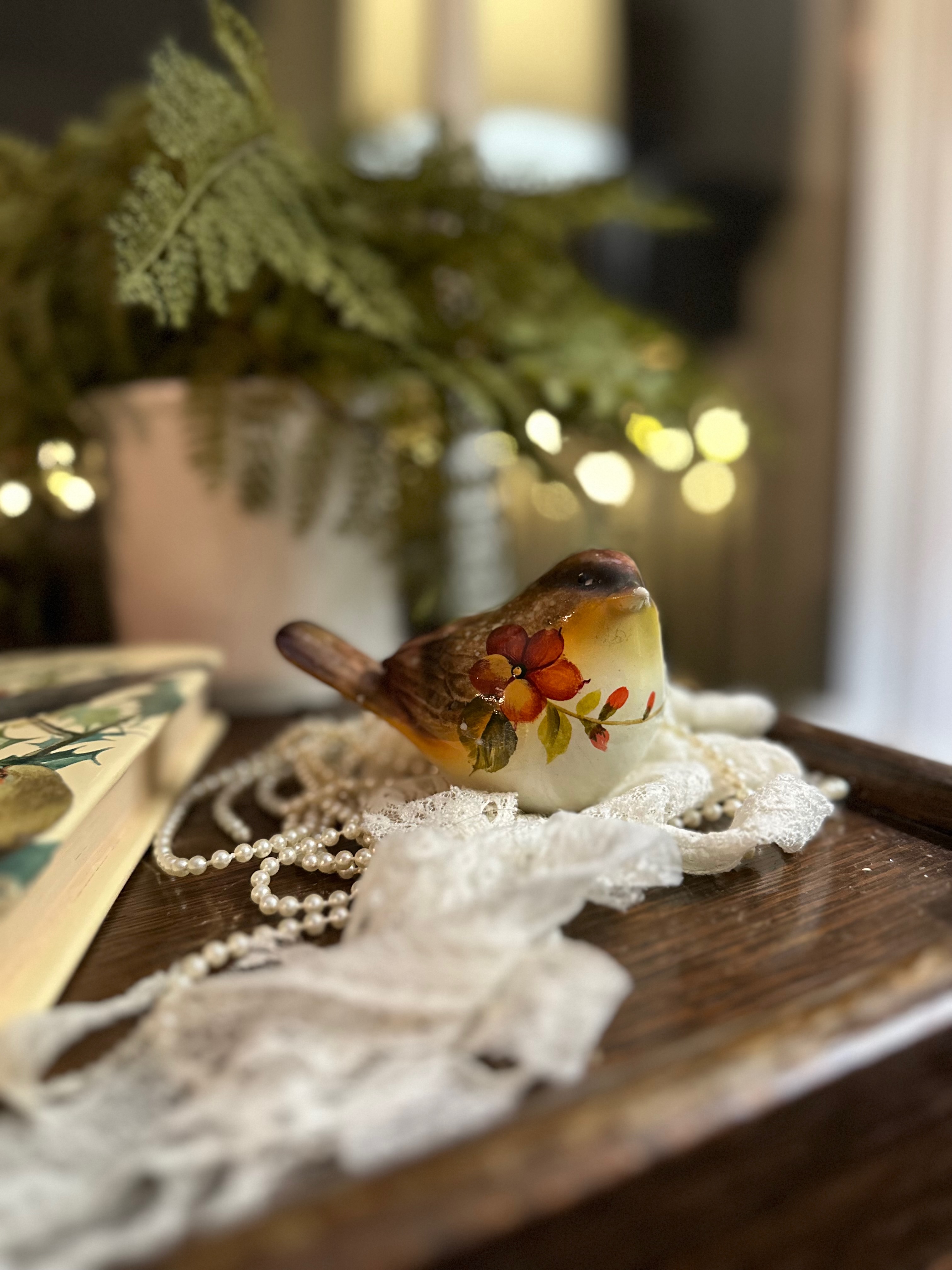
Photo by Rachel Dodge, 2022
Robins and Victorian Christmas Cards
If you’ve seen Christmas cards and decorations featuring a robin redbreast, it most likely came about during the Victorian era.
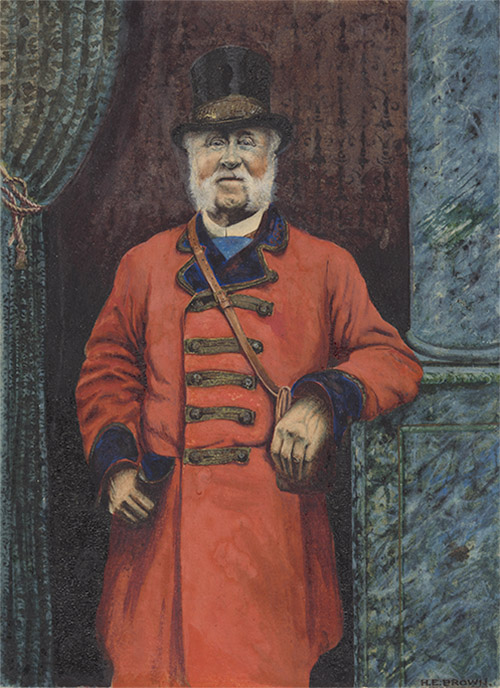
During the mid-1800s in England, Christmas cards became popular. People even began to send Christmas greetings by post. At the time, Victorian postmen wore red coats. Tradition has it that these “red breasted robins” went from house to house and from street to street, delivering season’s greetings and well-wishes.
Moses James Nobbs: (Last of the Mail Coach Guards), Watercolour by H E Brown. C 1890. Courtesy of The Postal Museum.
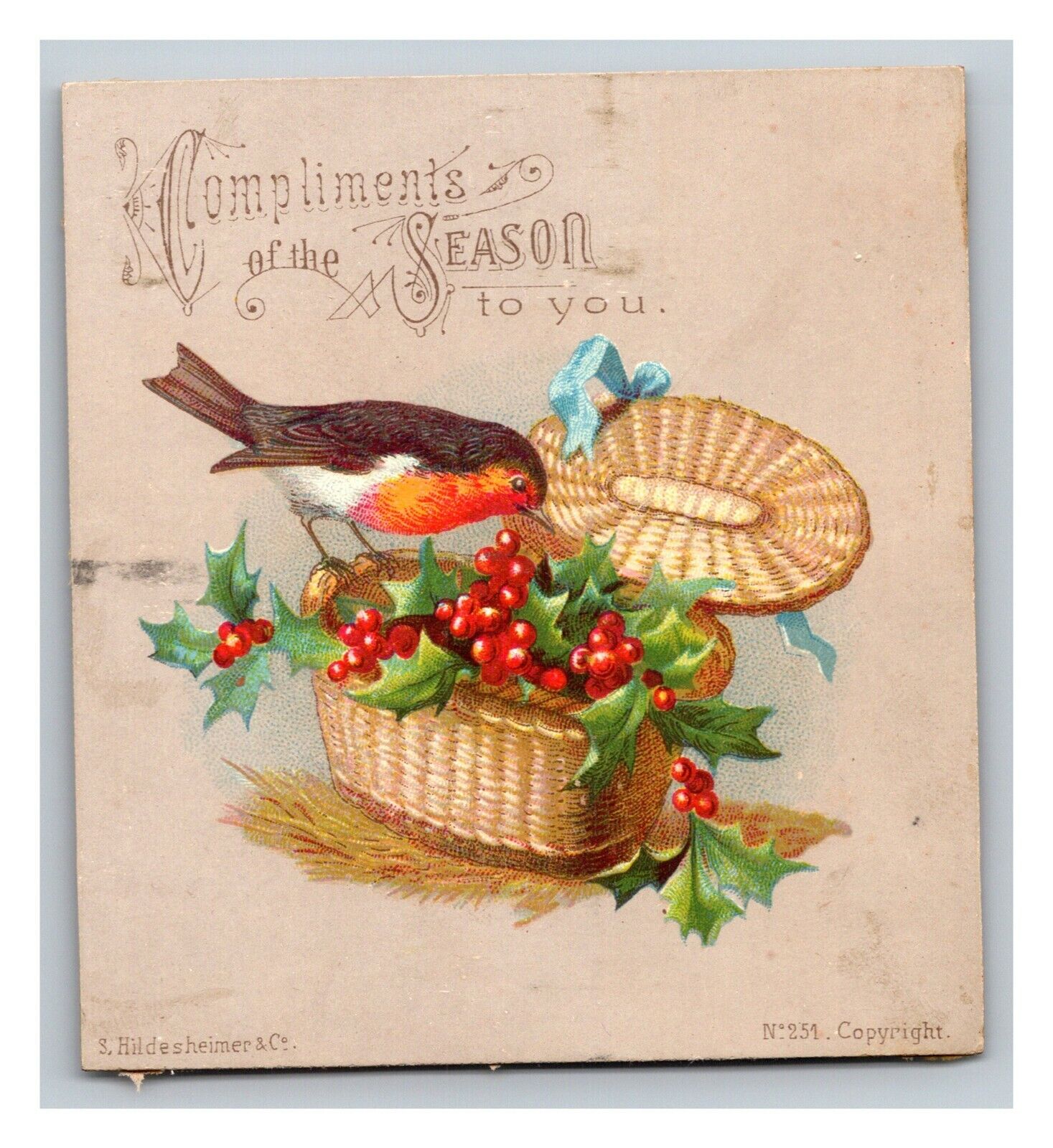
Ever since the days of these red-breasted mail carriers, robins have been featured on Christmas cards. Many vintage Christmas cards from that era even have drawings of a robin with a letter in its mouth. Robins delivering the mail – even sometimes dressed as mail carriers – has been part of traditional Christmas culture ever since!
Victorian Christmas Card, Ebay.
Robins and Jane Austen
Would Jane Austen have sent Christmas cards or been familiar with the robin red-breast at Christmas time? No, she would not. She definitely would not have sent cards at Christmas. However, she may have been familiar with some of the old tales about the robin. And of course, I’m sure she met many robins on her rambles through the country lanes of Hampshire.
Yet again, the Victorians introduced another beloved Christian tradition and symbol that we’ve all come to enjoy and recognize.
If you’re feeling blue this Christmas or winter, try some bird-watching. It’s such fun and you just might hear a friendly, “Cheer up! Cheerily! Cheer up! Cheerily!”
Fashionable Goodness: Christianity in Jane Austen's England is now available! By JAW contributor Brenda S. Cox. See Review. Available from Amazon and Jane Austen Books.
Available through December 31st, 2025. Click on image for details, and share this poster with other teachers and students!
The Obituary of Charlotte Collins by Andrew Capes
Click on image to read the story.
Comments
“My idea of good company…is the company of clever, well-informed people, who have a great deal of conversation.” – Jane Austen, Persuasion
Gentle readers: Please feel free to post your comments and continue the conversation! Due to SPAM, we will no longer accept comments on posts after 30 days of publication. In some instances, links will be removed from comments as well.
Administrators and Contributors
Vic Sanborn, founder of this blog, is supported by a team of talented and knowledgeable writers about Jane Austen and the Regency era. They are:
Tony Grant, who now contributes his photos from London and England
Click on their names to enter their own blogs.
In addition, we thank the many experts and authors who frequently contribute their posts and opinions, and who continue to do so freely or at our request.
Click here to enter the page. Topics include Regency fashion, historic foods, Jane Austen societies, British sites, related topics. Click on image.
May we suggest?
Hello, my name is Vic and I live in Maryland, USA. I have adored Jane Austen almost all of my life. I am a proud lifetime member of the Jane Austen Society of North America. This blog is a personal blog written and edited by me and my team. We do not accept any form of cash advertising, sponsorship, or paid topic insertions. However, we do accept and keep books and CDs to review.
If you would like to share a new site, or point out an error, please email us. (Yes, we are fallible. We'll own up to our mistakes and will make the corrections with a polite smile on our faces.) Write us at
Thank you for visiting this blog. Your comments and suggestions are most welcome.
Project Gutenberg: eBook of Stage-coach and Mail in Days of Yore, Volume 2 (of 2), by Charles G. Harper
STAGE-COACH AND MAIL IN DAYS OF YORE: A PICTURESQUE HISTORY
OF THE COACHING AGE, VOL. II, By CHARLES G. HARPER. 1903. Click on this link.










 Jane Austen's World