Feeds:
Posts
Comments

Archive for the ‘Churches of the Austen family’ Category

By Brenda S. Cox

“Edward & I settled that you went to St. Paul’s Covent Garden, on Sunday.”—Jane Austen, letter to Cassandra from Godmersham Park, Oct. 26, 1813

Covent Garden

We’ve been visiting London churches mentioned in Austen’s novels. Now let’s go to one mentioned in her letters. In the fall of 1813, Jane was staying with her brother Edward and his family at Godmersham Park. Cassandra was visiting their brother Henry at 10 Henrietta Street, Covent Garden, London. He lived in a flat above his bank. (For locations Henry lived in London, see Jane Austen’s Visits to London.) Covent Garden was known for its fruit and vegetable market, as well as, unfortunately, its prostitutes.
Jane Austen’s London offered two official theatres, at Drury Lane and Covent Garden. Both were in the church parish served by St. Paul’s Covent Garden, and Austen saw plays at both. She was planning to see a play at the Covent Garden theatre when she visited Henry a month earlier:

“Fanny and the two little girls are gone to take places for to-night at Covent Garden; “Clandestine Marriage” and “Midas.” The latter will be a fine show for L. and M.” (Lizzie and Marianne)—Sept. 15, 1813 (Fanny was the eldest daughter of Jane’s brother Edward Austen Knight; her mother had died five years earlier. Lizzie and Marianne were Fanny’s younger sisters. Edward was with them but staying at a nearby hotel.)

Jane and Edward assumed Cassandra would go to church at St. Paul’s Covent Garden, since it was Henry’s parish church. Jane probably attended that church herself when any of her visits to Henrietta Street lasted over a Sunday. She and her family regularly attended church on Sundays, wherever they were.

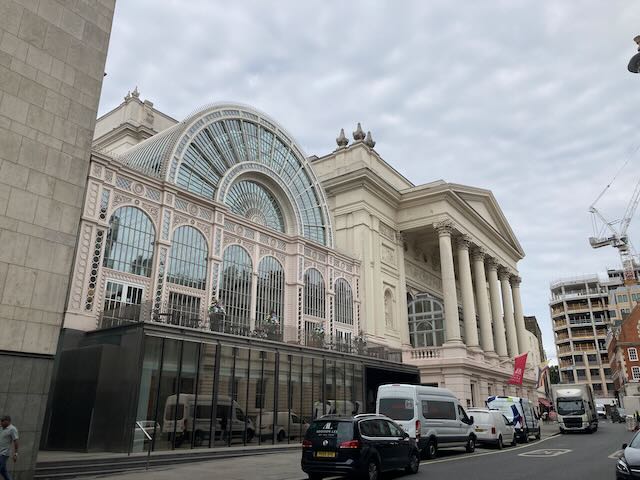
The old Covent Garden Theatre building is at the center of the modern Royal Opera House.

The Actors’ Church

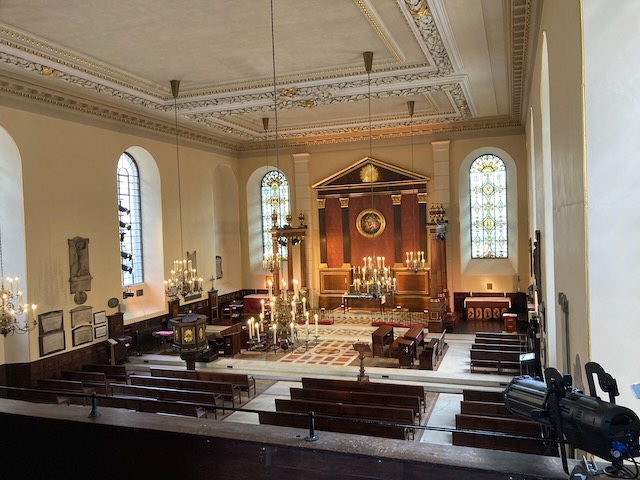
The Covent Garden area today offers more than twenty theatres. St. Paul’s, called “The Actors’ Church,” hosts concerts and plays in the church and in its walled garden. They have an in-house professional theatre company, Iris Theatre. The church’s summer schedule for this year includes Sense and Sensibility and Pride and Prejudice, along with several Shakespeare productions and children’s shows. To accommodate such events, the church replaced deteriorating Victorian pews with custom-made movable and stackable pews.

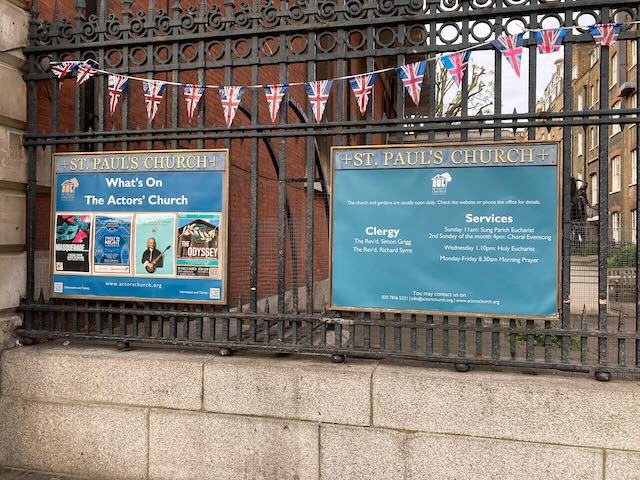
Signs announce upcoming shows and services at St. Paul’s Covent Garden, the Actors’ Church.

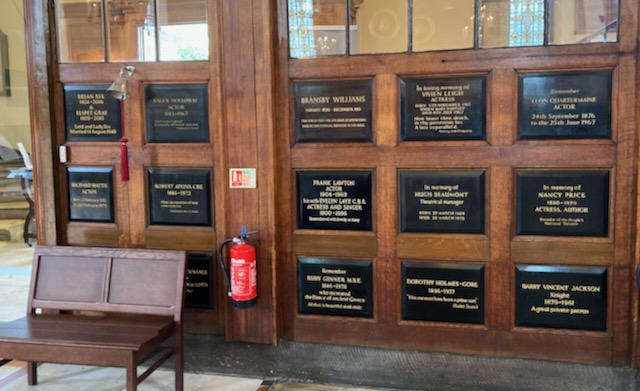
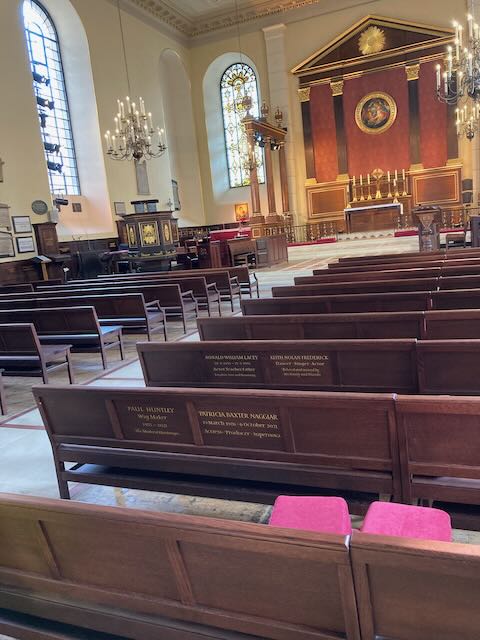
The inside of the church commemorates famous entertainers wherever you look. Hundreds of plaques adorn the walls of the church, the backs of the pews, and the garden benches and walls.

Wall plaques at St. Paul’s Covent Garden. Vivien Leigh’s is in the top right center.

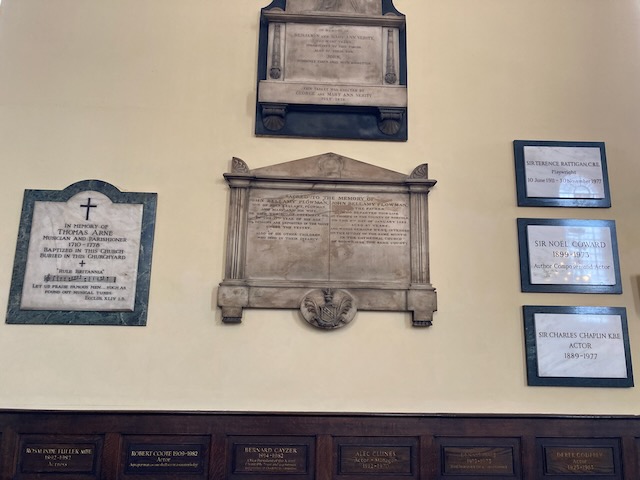
Some plaques are memorials to the church’s leaders and parishioners, as you would see in other English churches. But most remind visitors of famous people such as Vivien Leigh (star of Gone with the Wind), Boris Karloff (who played Frankenstein’s monster), Thomas Arne (who wrote “Rule, Britannia” around 1740), Sir Charles Chaplin (Charlie Chaplin), and others.

A variety of memorials line the walls of St. Paul’s Covent Garden. The central memorial is to John Bellamy Plowman, his son who died in 1811 at age 17, his son’s wife, and six children who died in infancy. The monument above it is from 1879. The grey and white plaque to the left is to Thomas Arne, “musician and parishioner,” 1710-1778, who wrote the anthem “Rule Britannia.” To the right are three twentieth century plaques, honoring playwright Sir Terence Rattigan; author, composer, and actor Sir Noel Coward; and actor Sir Charles Chaplin. A line of more modern brown plaques is below.

Besides actors and actresses, plaques commemorate dancers, singers, directors, theatre managers, patrons, choreographers, drama teachers, playwrights, and even a “critic, journalist, wit.” One woman is listed as “Actress, Producer, Supernova.” The church charges hefty fees to install these plaques (around £3000 for a plaque on the wall). These fees have kept the church solvent.

Memorials on the backs of pews at St. Paul’s Covent Garden

History

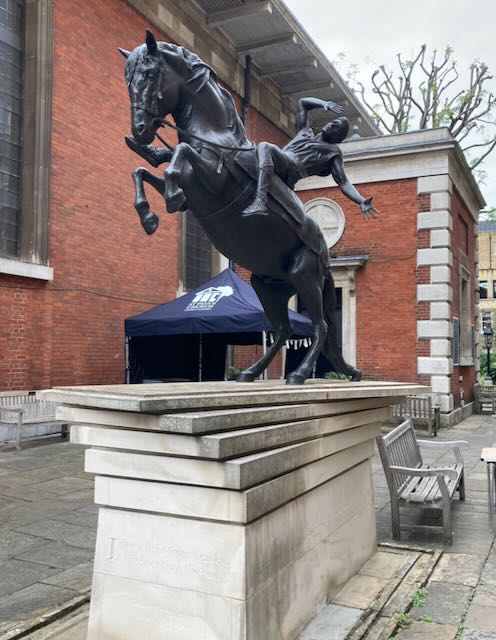
The church was designed by Inigo Jones and consecrated to St. Paul in 1638.

Covent Garden churchyard statue of St. Paul seeing a vision on the road to Damascus.

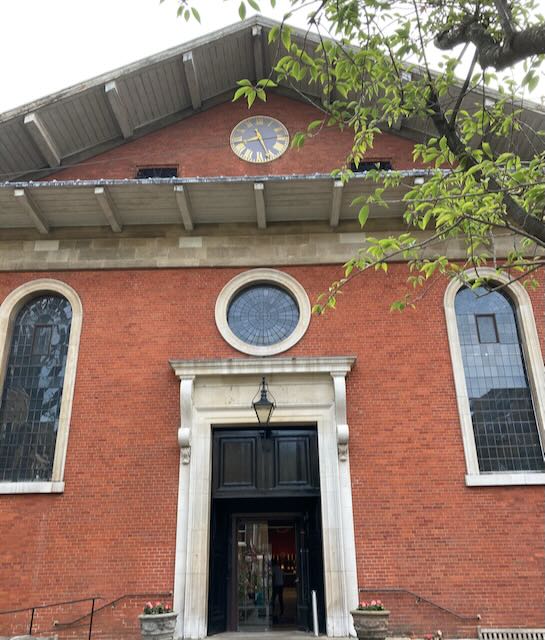
Jones designed it with a great East Door into the main piazza of Covent Garden. However, that would have put the altar at the west end of the church, which went against Christian tradition. At the last moment, the Bishop of London decreed that the altar had to be in the east end of the church, so the East Door doesn’t open. Entry is through the churchyard, from the sides of the building.

Front of St. Paul’s Covent Garden, with the false door in the center.

Various famous people are buried in the churchyard, including the painter JMW Turner and the first victim of the Great Plague of London, who died in 1665. In the 1850s, Parliament stopped all burials in central London churches. At that time, the headstones were removed and the gardens laid out as they are today.

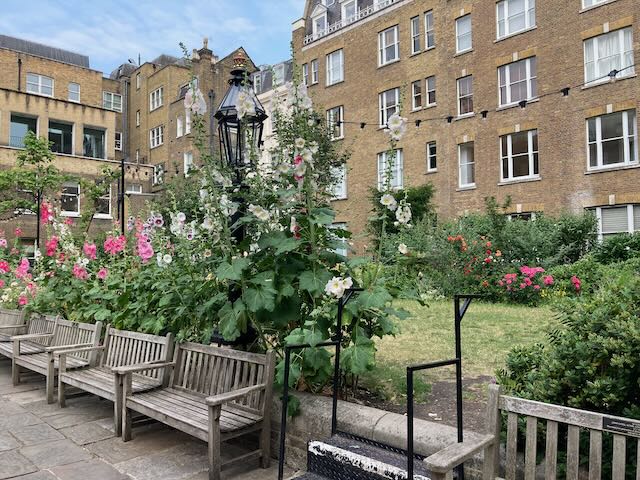
Lovely garden in the churchyard of St. Paul’s Covent Garden

A fire destroyed much of the church in 1795, but it was rebuilt so that today it is much as Austen would have seen it.

Entrance from the churchyard of St. Paul’s Covent Garden.

Rectors

When Jane Austen was there, Edward Embry was the rector, from 1810-1817. She might have heard him preach, but she does not mention him in her letters. His portrait is in the National Gallery.

The rector who kindly showed us around when we visited was Rev. Simon Grigg, who has been rector since 2006. His bio says “When not in church you will usually find him in a bar, a theatre or the gym.” The assistant rector, Rev. Richard Syms, is a professional actor and theatre manager as well as a priest.

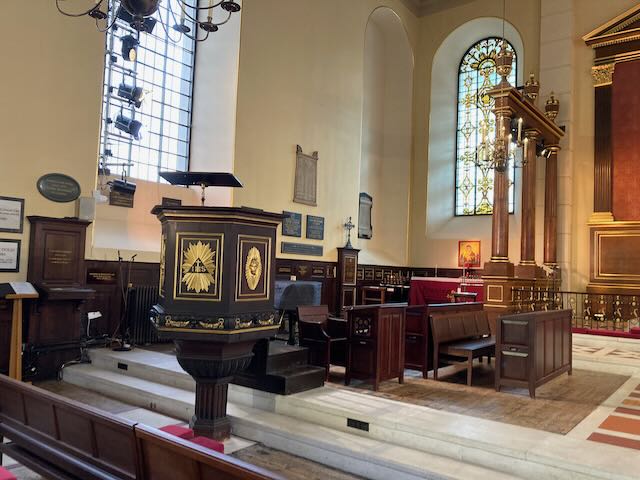
The pulpit of St. Paul’s Covent Garden was designed by Grinling Gibbons (1648-1721) or his students.

Worship

The church offers communion services on Sundays and Wednesdays, and brief Morning Prayer services Tuesday through Friday. Their choir sings Choral Evensong once a month. Rev. Grigg told us that attendance on Sundays is about 50 people, plus those who attend online. The church seats 200.

Chancel of St. Paul’s Covent Garden. Note the camera on the right.

They have larger services for Easter and for midnight mass on Christmas Eve. Of course they also host weddings, baptisms, and funerals. According to their website, “St Paul’s is well known because of its memorial services for members of the theatrical and entertainment community, but we also offer them for the local community.”

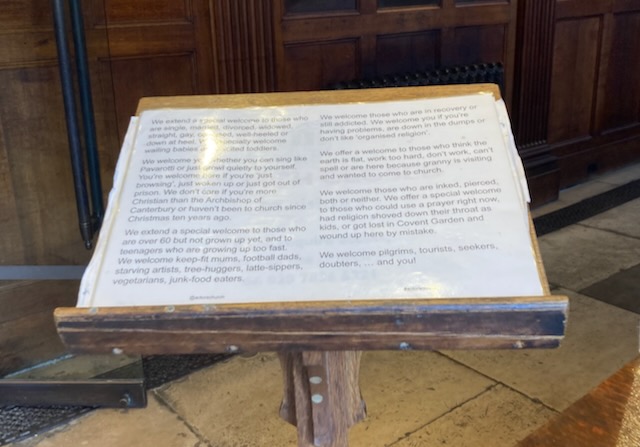
Welcome sign to St. Paul’s Covent Garden; text is below.

Inclusion

The church seeks to be inclusive, according to their website and this entry sign:

“We extend a special welcome to those who are single, married, divorced, widowed, straight, gay, confused, well-heeled or down at heel. We especially welcome wailing babies and excited toddlers.

We welcome you whether you can sing like Pavarotti or just growl quietly to yourself. You’re welcome here if you’re ‘just browsing’, just woken up or just got out of prison. We don’t care if you’re more Christian than the Archbishop of Canterbury or haven’t been to church since Christmas ten years ago.

We extend a special welcome to those who are over 60 but not grown up yet, and to teenagers who are growing up too fast. We welcome keep-fit mums, football dads, starving artists, tree-huggers, latte-sippers, vegetarians, junk-food eaters.

We welcome those who are in recovery or still addicted. We welcome you if you are having problems, are down in the dumps, or don’t like ‘organized religion’.

We offer a welcome to those who think the earth is flat, work too hard, don’t work, can’t spell or are here because granny is visiting and wanted to come to church.

We welcome those who are inked, pierced, both or neither. We offer a special welcome to those who could use a prayer right now, had religion shoved down their throats as kids, or got lost in Covent Garden and wound up here by mistake.

We welcome pilgrims, tourists, seekers, doubters, . . . and you!”

No doubt Jane Austen and her family would have felt welcome in the church, especially with their love of the theatre.

All photos in this post ©Brenda S. Cox, 2025

More Information about St. Paul’s Covent Garden

Physical dedications 

Self-Guided Tour, explaining parts of the church and giving prayers 

Visitor Information and schedule of events 

History of the church 

Churches Mentioned by Name in Jane Austen’s Novels

Garrison Chapel

St. Swithin’s, Walcot and other churches in Northanger Abbey

St. George’s, Hanover Square

London Churches in Austen’s Novels

Austen Family Churches

Steventon

Chawton

Deane

Hamstall Ridware and Austen’s First Cousin, Edward Cooper

Adlestrop and the Leigh Family

Stoneleigh Abbey Chapel and Mansfield Park

Great Bookham and Austen’s Godfather, Rev. Samuel Cooke

Ashe and the Lefroy Family


Brenda S. Cox is the author of Fashionable Goodness: Christianity in Jane Austen’s England. She also blogs at Faith, Science, Joy, and Jane Austen.

Read Full Post »

By Brenda S. Cox

“. . . perhaps you would not mind passing through London, and seeing the inside of St. George’s, Hanover Square. Only keep your cousin Edmund from me at such a time: I should not like to be tempted.”—Mary Crawford, Mansfield Park, chapter 43

Mansfield Park includes much more discussion of the church than any other Austen novel. Not surprisingly, it also names more real churches than the other novels do.

In an earlier post we explored the Garrison Chapel, where Fanny Price and her family worship in Portsmouth. Henry Crawford attends with them on his visit. Perhaps this symbolizes his attempts to reform himself and become worthy of Fanny; attempts that ultimately fail.

Remains of the Garrison Chapel in Portsmouth where the Prices and Henry Crawford worshiped.

Henry’s sister Mary names another real church in a letter to Fanny. She wants Fanny to let her and Henry take Fanny back to Mansfield from Portsmouth, where Fanny has been staying with her family. Fanny is unhappy and unhealthy, but will not commit the impropriety of going back to Mansfield Park before her uncle sends for her. Mary wants to take Fanny to see Henry’s estate and then pass through London on the way to Mansfield.

She suggests visiting St. George’s, Hanover Square. This was a popular church for weddings among the upper classes of London. Mary hopes Fanny will marry Henry there. At the same time, Mary says it might tempt her to marry Edmund. She doesn’t want to marry a clergyman, or a second son who will not inherit an estate, but she is attracted to Edmund.

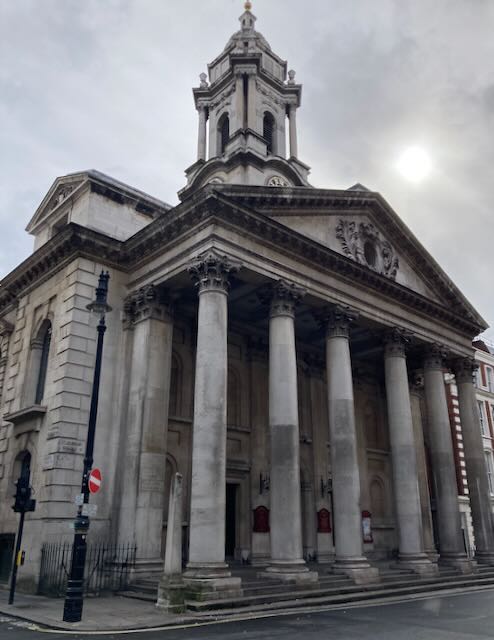
St. George’s Hanover Square exterior. According to the church website, “The classical front with six great Corinthian columns supporting a pediment represented a new trend in English Church design.”

St. George’s, Hanover Square Today

During a recent visit to London, I had the privilege of worshiping at St. George’s, Hanover Square on a Sunday morning. The service was a Sung Eucharist, a Communion service in traditional language, with beautiful singing from the choir and impressive organ music. During the service, the congregation renewed their baptismal vows.

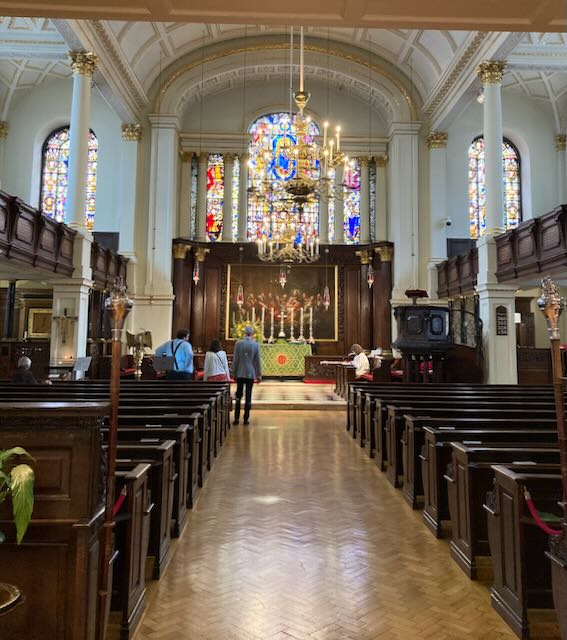
St. George’s Hanover Square interior. The painting of the Last Supper over the altar, and the surrounding carvings, were installed in 1724. The seven silver hanging lights in the church represent the seven lamps of fire burning before God’s throne, according to the book of Revelation in the Bible.

The church also offers brief midday services from the Book of Common Prayer on weekdays and several other Communion services during the week. Weekday “Morning Calm” services are held during termtime, as “a short period of reflection, contemplation, and relaxation before the challenges of the day begin.”

Nowadays the area around Hanover Square is mostly offices and businesses. I was told that most people in the current congregation live farther away, since few people live close to the church now.

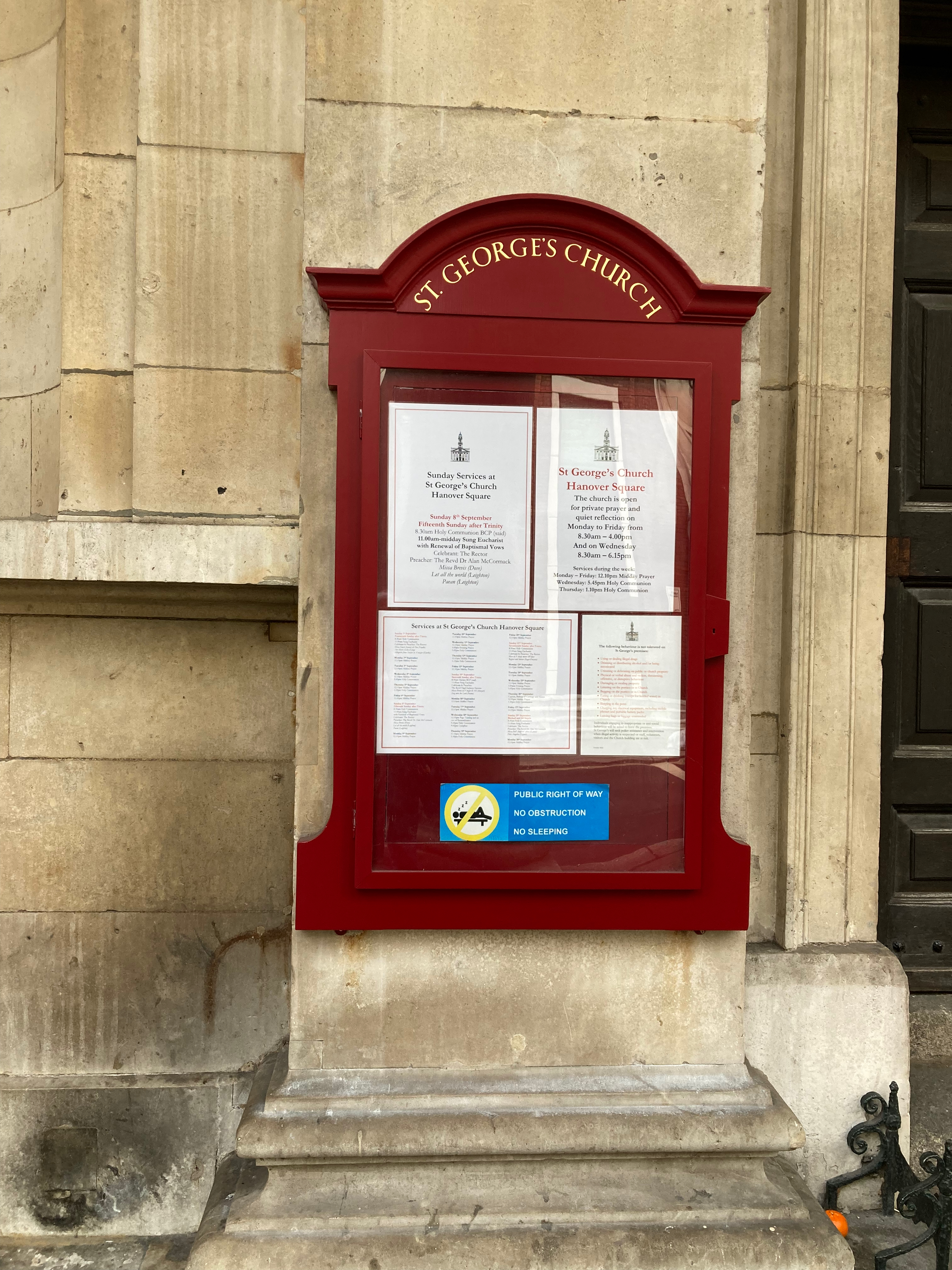
The signboard for St. George’s Hanover Square lists services, extensive opening hours, and rules such as no drugs in the church and no sleeping on pews.

Wealthy Mayfair

Hanover Square is in Mayfair. In Austen’s England, many wealthy people had large houses in Mayfair or surrounding areas. In Sense and Sensibility, the Palmers live in Hanover Square, while the Middletons, Mrs. Ferrars, and Willoughby live nearby in Mayfair. Mrs. Jennings and John and Fanny Dashwood live in Marylebone, an area just north of Mayfair. It developed when Mayfair could no longer accommodate all those who wanted fashionable, elegant housing. (Source: The Annotated Sense and Sensibility, David Shapard.)

St. George’s is the parish church of Mayfair, where the wealthy worshiped. In 1711, Parliament had passed an Act for the building of fifty new churches in and around London. The wealthy of Mayfair petitioned for a church, which was completed in 1725. The patron saint of the church is St. George, a Christian martyr of the third century who is also the patron saint of England.

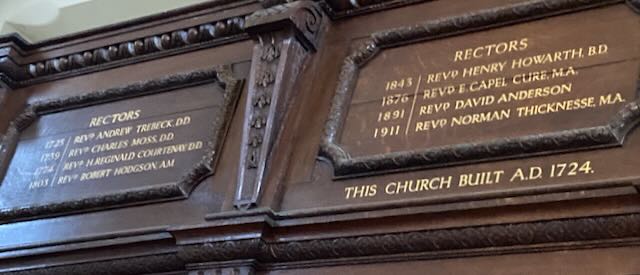
Rectors of St. George’s Hanover Square during Austen’s time and thereafter. Some held other influential church positions as well.

The parish was large, with a vestry of 101 vestrymen. These included 7 dukes, 14 earls, 7 barons, and 26 other titled people. A vestry, led by the church’s rector and churchwardens, decides matters relating to the church and the secular parish. (Mr. Knightley, Mr. Weston, Mr. Cole, and Mr. Cox are apparently on the vestry for their parish, as they are “busy over parish business” in Emma.) The St. George’s, Hanover Square vestry dealt with local issues including street lighting, refuse disposal, nightwatchmen, and a workhouse for the poor.

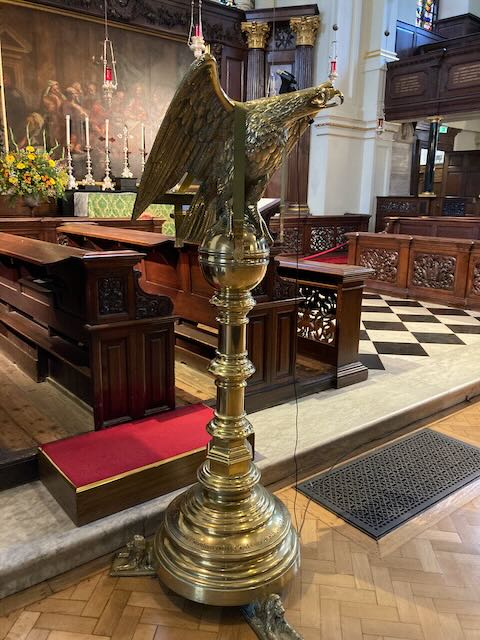
St. George’s Hanover Square eagle lectern. Many churches of Austen’s time had lecterns similar to this, where the Bible was read to the congregation. (The eagle symbolized the Word of God because supposedly it could fly directly into the sun without closing its eyes, so it was like the Bible, leading people to God with eyes open. Eagles’ wings also symbolized carrying the gospel to the ends of the earth.)
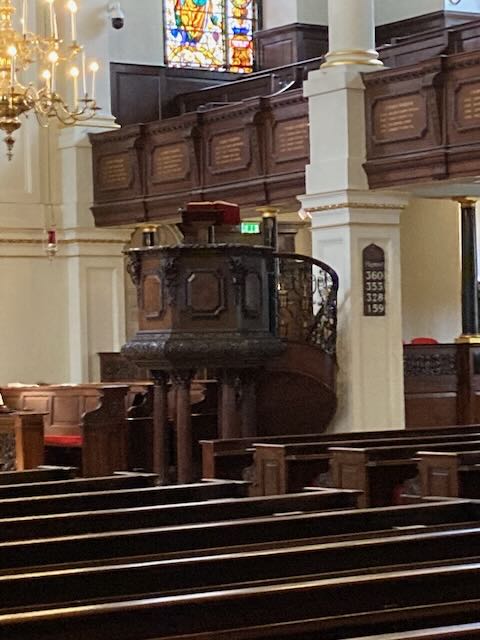
Pulpit of St. George’s, Hanover Square

Rich and Poor

While the wealthy owned mansions in the area, most spent only the winter in London, passing the rest of the year on their country estates. The back alleys behind the mansions teemed with poverty and misery year-round. In the early 1800s, the Evangelical movement began to awaken the church to the needs of the poor. St. George’s established a parish school for poor children in 1804, supported by public subscriptions. Later in the century, the church initiated and supported extensive projects to help the working classes of the area.

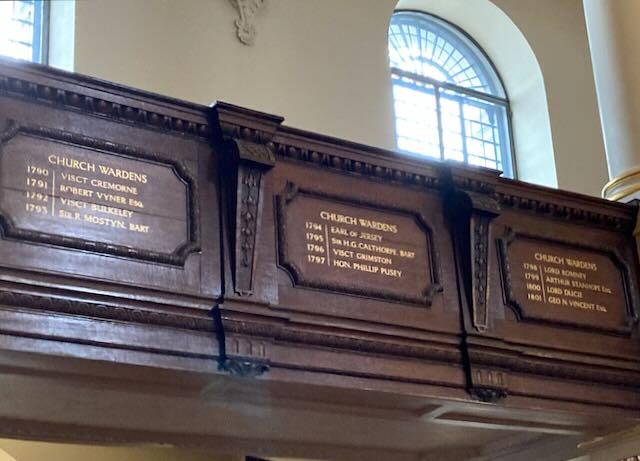
But the wealthy ran the church in Austen’s time. Around the gallery (balcony) are listed the churchwardens, year by year. Anglican churches generally have two elected churchwardens, responsible for financial accounts, movable property of the church, keeping order, and other administrative responsibilities. The churchwardens listed on St. George’s galleries for the 1700s and early 1800s sound impressive: Viscounts, Earls, Lords, Sirs, Honorables, and Esquires.

St. George’s Hanover Square balcony listing early churchwardens. Many were titled men.

Music

The composer George Friderick Handel lived about a four minute walk from the church. He helped choose the organ and organist for the new church. He had a pew there and worshiped at St. George’s until he died. He wrote the Messiah in his house nearby on Brook Street, which is now a museum.

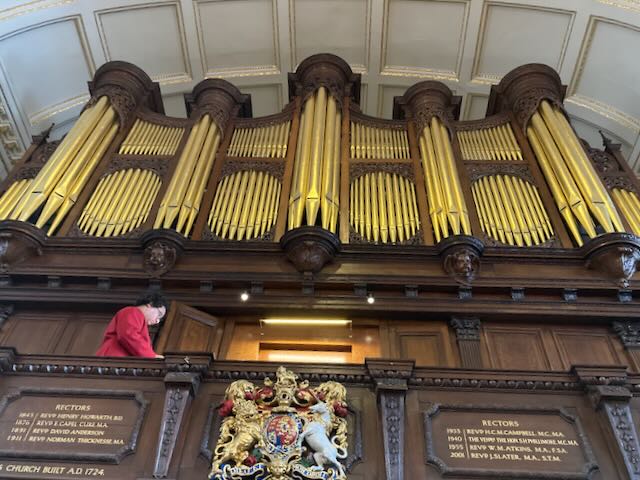
St. George’s Hanover Square organ pipes; a new organ was installed in 1972. The original organ had 1514 pipes and three manuals (keyboards for the hands). It cost £500 in 1725.

Weddings

Since it was at the heart of the wealthy district, St. George’s, Hanover Square was the popular place for weddings of the wealthy and influential. In 1816, the church hosted 1,063 weddings! Famous people including Percy Bysshe Shelley, Benjamin Disraeli, George Eliot (Mary Lewes), and Theodore Roosevelt were married at St. George’s. Mary Crawford was likely staying near there with her wealthy London friends, and she may have attended church there. So it was the first place she thought of for her own and her brother’s weddings. It is still a popular venue for weddings, though not as much so as in Austen’s time.

On Thursday, we’ll look at the other two real churches mentioned in Mansfield Park, the two most famous churches in England. Do you know which ones they are? We’ll also consider which London church Lydia and Wickham married in!

All images above ©Brenda S. Cox, 2025.

Churches mentioned by name in Jane Austen’s novels and letters

Garrison Chapel

St. Swithin’s, Walcot and other churches in Northanger Abbey

London Churches in Austen’s Novels

St. George’s, Hanover Square

St. Paul’s, Covent Garden: Actors’ Church

Austen Family Churches

Steventon

Chawton

Deane

Hamstall Ridware and Austen’s First Cousin, Edward Cooper

Adlestrop and the Leigh Family

Stoneleigh Abbey Chapel and Mansfield Park

Great Bookham and Austen’s Godfather, Rev. Samuel Cooke

Ashe and the Lefroy Family

Read Full Post »

by Brenda S. Cox

“Hot! He [John Thorpe’s horse] had not turned a hair till we came to Walcot Church; but look at his forehand; look at his loins; only see how he moves; that horse cannot go less than ten miles an hour: tie his legs and he will get on.”–John Thorpe, Northanger Abbey, chapter 7

“Walcot Church” in Bath is one of several real churches that Jane Austen mentions in her novels. This particular church is closely connected to Jane Austen’s family. Austen made several visits to Bath and lived there for some years, so she knew Bath and its churches and chapels well.

As we’re celebrating Jane Austen’s life this year, we remember that church was an important part of her life. We’ve already looked at some of the churches she attended: St. Nicholas’ at Steventon, where she went as a child, St. Nicholas’ at Chawton, which she attended during the years she was writing most of her novels, and others (see links at the end of those posts).

St. Swithin’s Walcot in Bath. Completed in 1790, externally it is still much as it was when Jane Austen saw it.

“Walcot Church”

Walcot Church is the parish church of Walcot, right on the London Road coming into Bath. So it would have marked Thorpe’s arrival at the town. Wealthy and influential people worshipped there during the nineteenth century, so this may also be an indirect boast, as Thorpe tries to connect himself with a prestigious place.

A parish church can be called by the name of the parish or by the name of its patron saint. The patron saint of this church is St. Swithin, so the church is St. Swithin’s Walcot. St. Swithin (also spelled Swithun) was an Anglo-Saxon bishop. The patron saint of Winchester Cathedral, where Jane Austen is buried, is also St. Swithin.

Many “monuments”–the plaques on the walls–commemorate wealthy and influential people who have worshipped at St. Swithin’s Walcot through the years. In Northanger Abbey, Catherine contemplates a similar monument to General Tilney’s wife at the fictional Northanger parish church.

St. Swithin

St. Swithin was associated with various miracles. He came to be connected mostly with the weather. July 15 is St. Swithin’s Day (each saint has a day associated with him or her in the church calendar, usually the day of their death). According to tradition, if it rains on St. Swithun’s day, it will rain for the next forty days, but if it’s clear that day, it will be clear for forty days.

Just before she died, Jane Austen wrote a humorous poem in which St. Swithin threatens Winchester race-goers with rain because they have forgotten him.

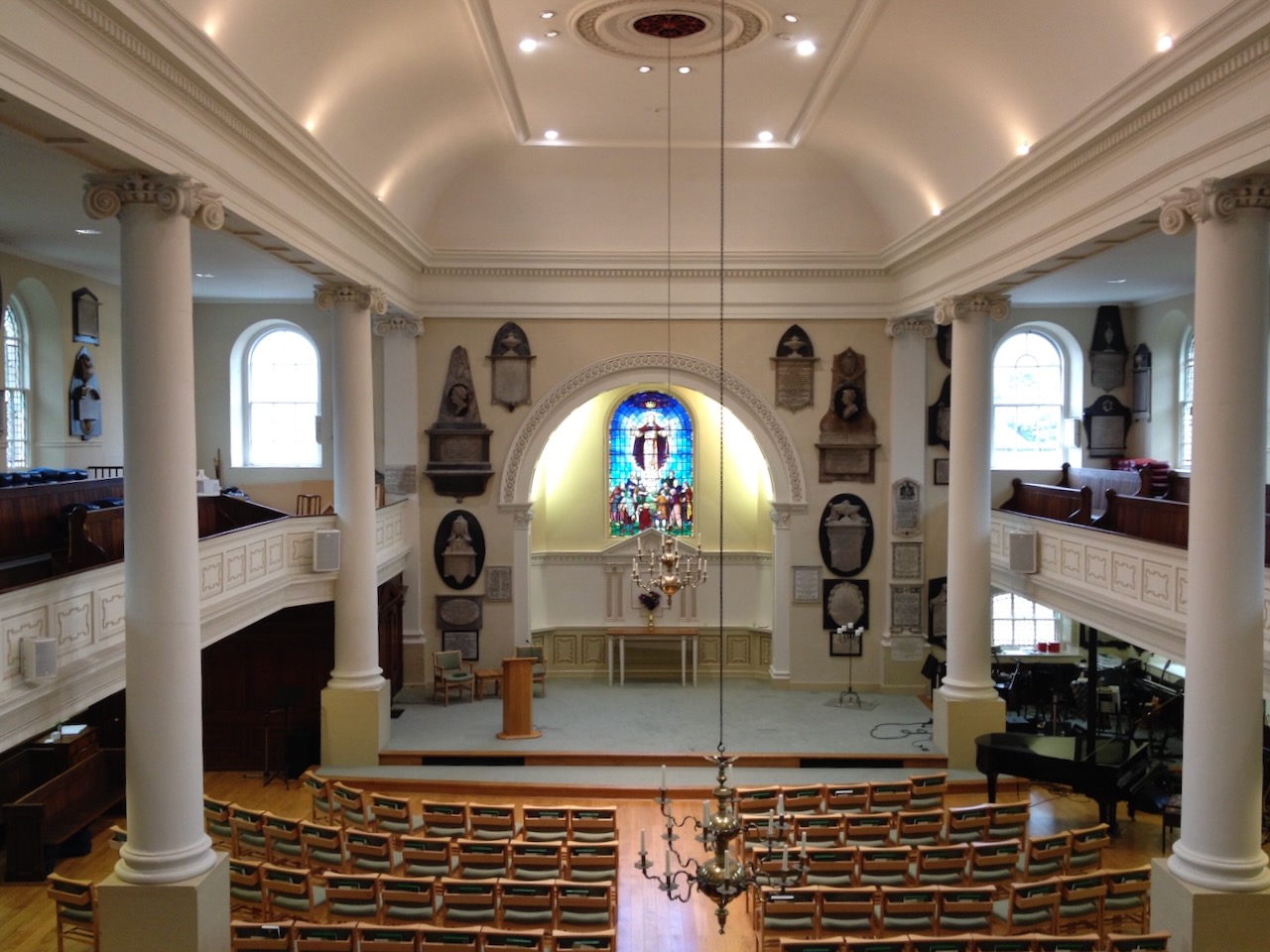
Interior of St. Swithin’s Walcot Church today. The stained glass window was first added in 1841 and replaced in 1958 after it was shattered in World War II. It portrays Christ ascending into heaven, surrounded by his disciples. Modern seating on the main floor, rather than pews, allows the church to host a variety of events.

Austen’s Parents’ Wedding

How was the Austen family connected with St. Swithin’s?

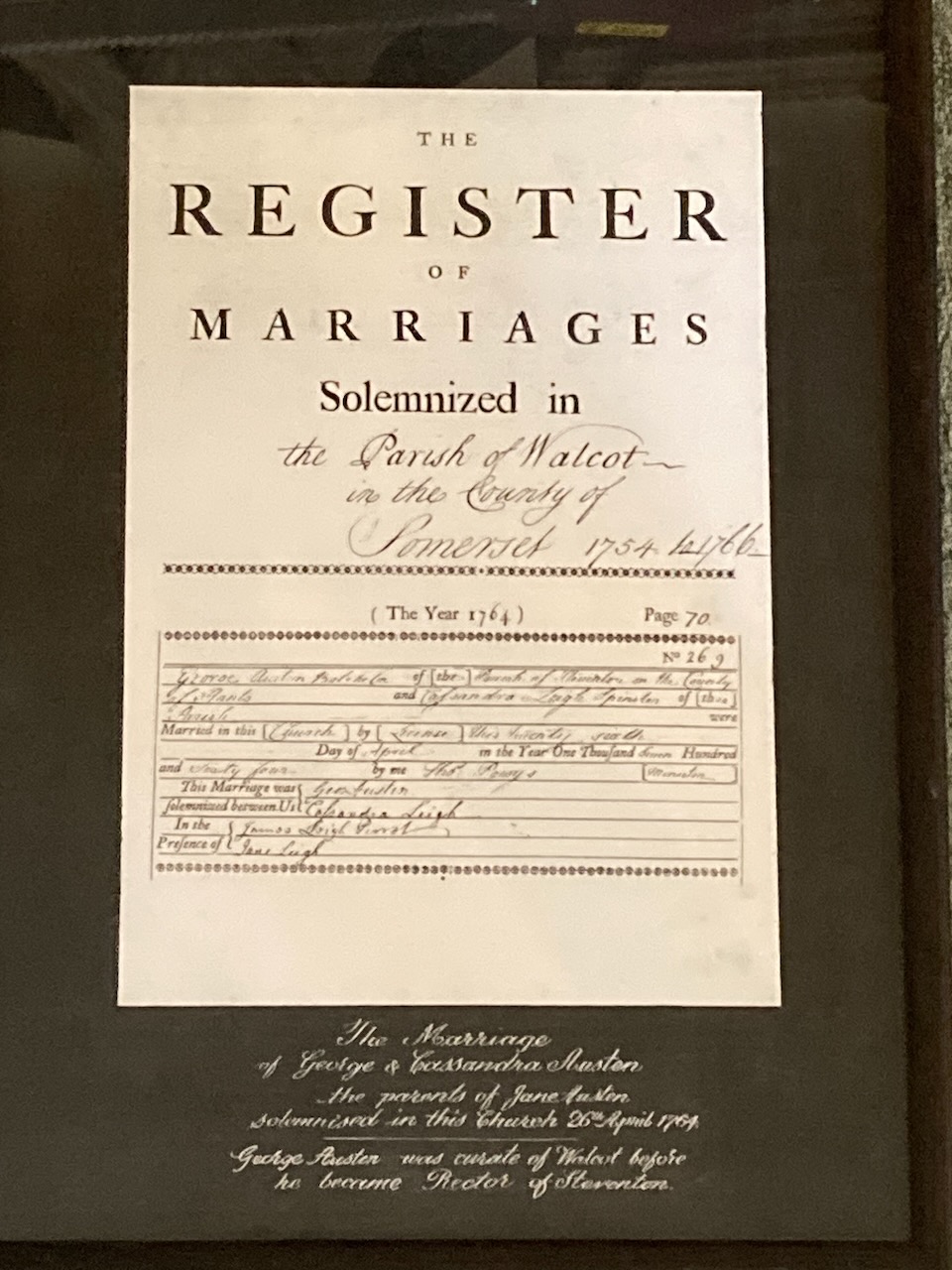
Jane’s father, George Austen, studied at Oxford University. He eventually became an assistant chaplain, then a proctor (in charge of student discipline), called “the Handsome Proctor.” At some point he met Cassandra Leigh, niece of the Master of Balliol College at Oxford. Cassandra was the daughter of a clergyman. Her father eventually retired and moved with his family to Bath. After he died, Cassandra Leigh agreed to marry George Austen, and they were married on April 2, 1764, at St. Swithin’s Church. The register states that Cassandra was living in Walcot parish, while George was in the parish of Steventon in Hampshire. Cassandra’s mother came to the wedding, and her brother, James Leigh-Perrot, and her sister, Jane Leigh, signed as witnesses. George was 32 and Cassandra was 24. They were married by license, presumably a common license, not by banns

By then George Austen had been ordained and gained the living of Steventon, through his relatives. The young couple went straight to Hampshire, where they rented the parsonage at Deane while the Steventon parsonage was prepared. Of course, Jane Austen was born in 1775 in that Steventon parsonage.

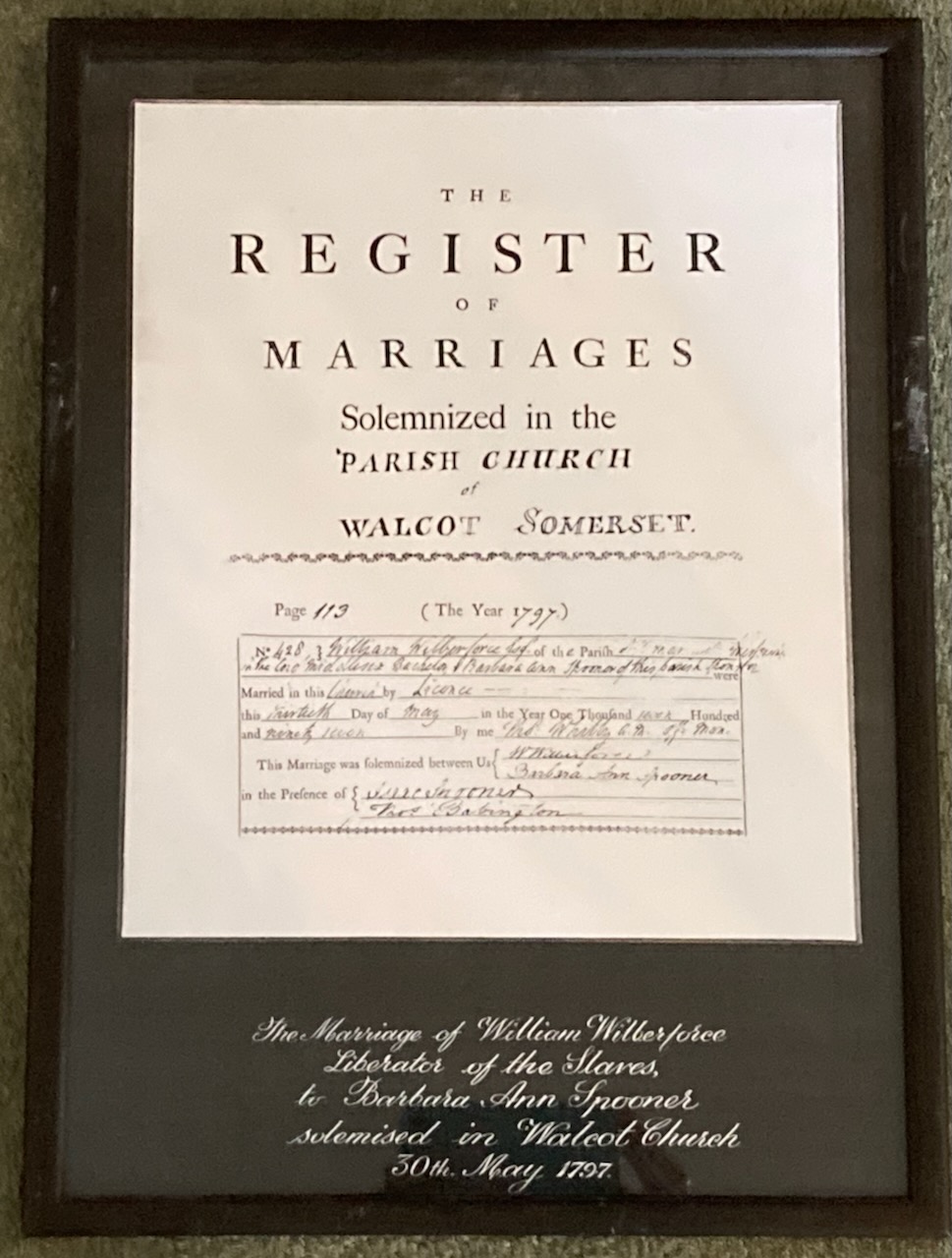
Copy of the entry in the marriage register for George and Cassandra Austen, married at St. Swithin’s Walcot on April 26, 1764.
Another famous wedding at St. Swithin’s Walcot: William and Barbara Wilberforce were married there on May 30, 1797, after a six-week whirlwind courtship in Bath. Wilberforce led the fight against the trade in enslaved people and slavery.

George Austen’s Death

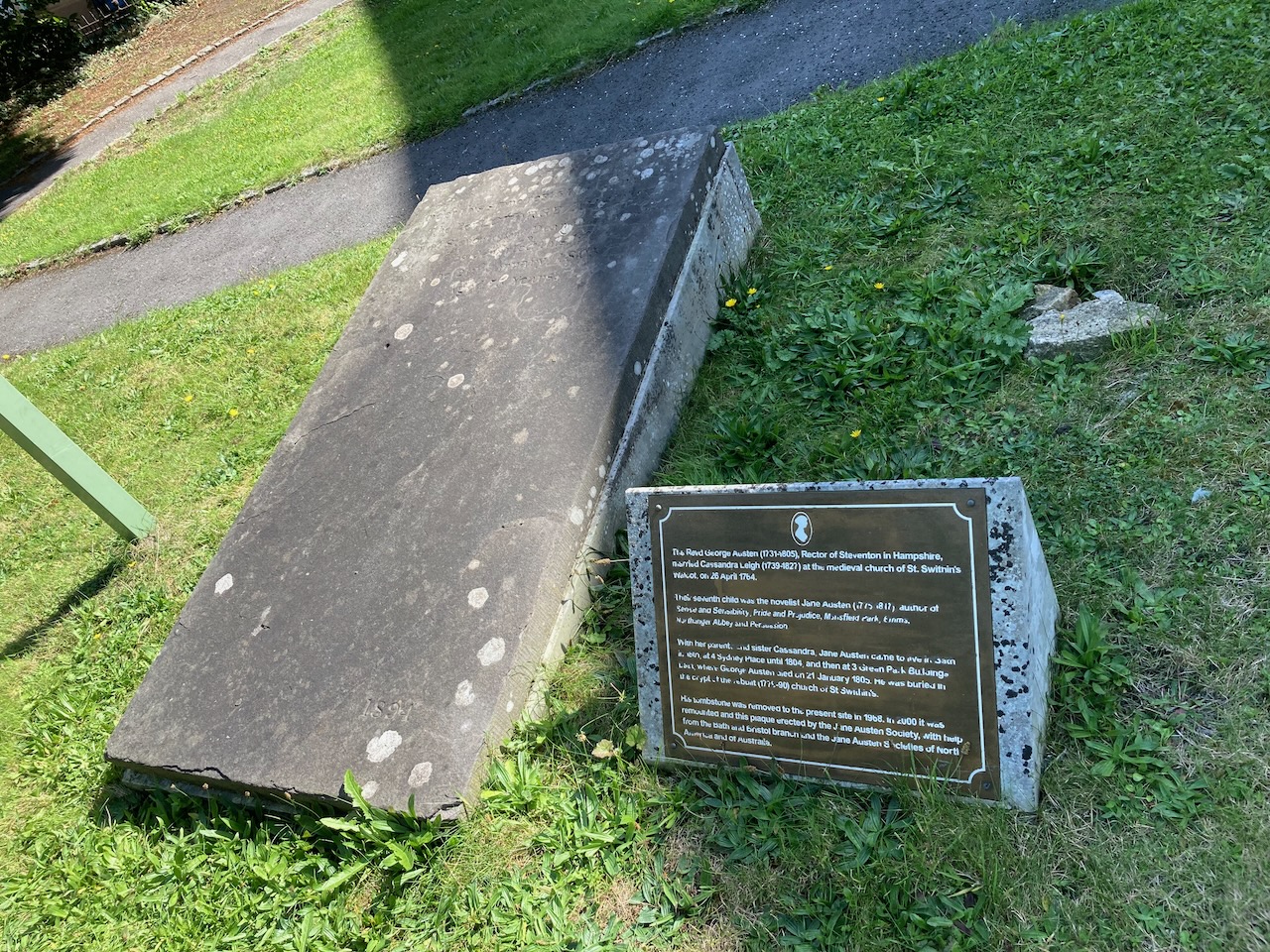
In 1801, George Austen left his Steventon parish to his son’s care and moved to Bath with his wife and two daughters, as his wife’s father had done much earlier. In 1805, George Austen died there. He was buried at St. Swithin’s, where you can still see his grave. Jane Austen wrote to her brother Frank, on Jan. 21 and 22, 1805:

“Our dear Father has closed his virtuous & happy life, in a death almost as free from suffering as his Children could have wished. . . . We have lost an Excellent Father. . . .The funeral is to be on Saturday, at Walcot Church. . . . [his body] preserves the sweet, benevolent smile which always distinguished him.” 

Jane did not have a suitor waiting in the wings (as her father had been waiting for her mother in a similar situation). She and her mother and sisters had to depend on her brothers for financial help after her father died.

George Austen’s grave at St. Swithin’s Walcot. He died Jan. 21, 1805. The inscription on the gravestone is worn and hard to read. It identifies him as the rector of Steventon and Deane, who died age 75 (meaning, in his 75th year). The newer brown plaque, added in 2000, adds information about his daughter Jane Austen and her residence in Bath.
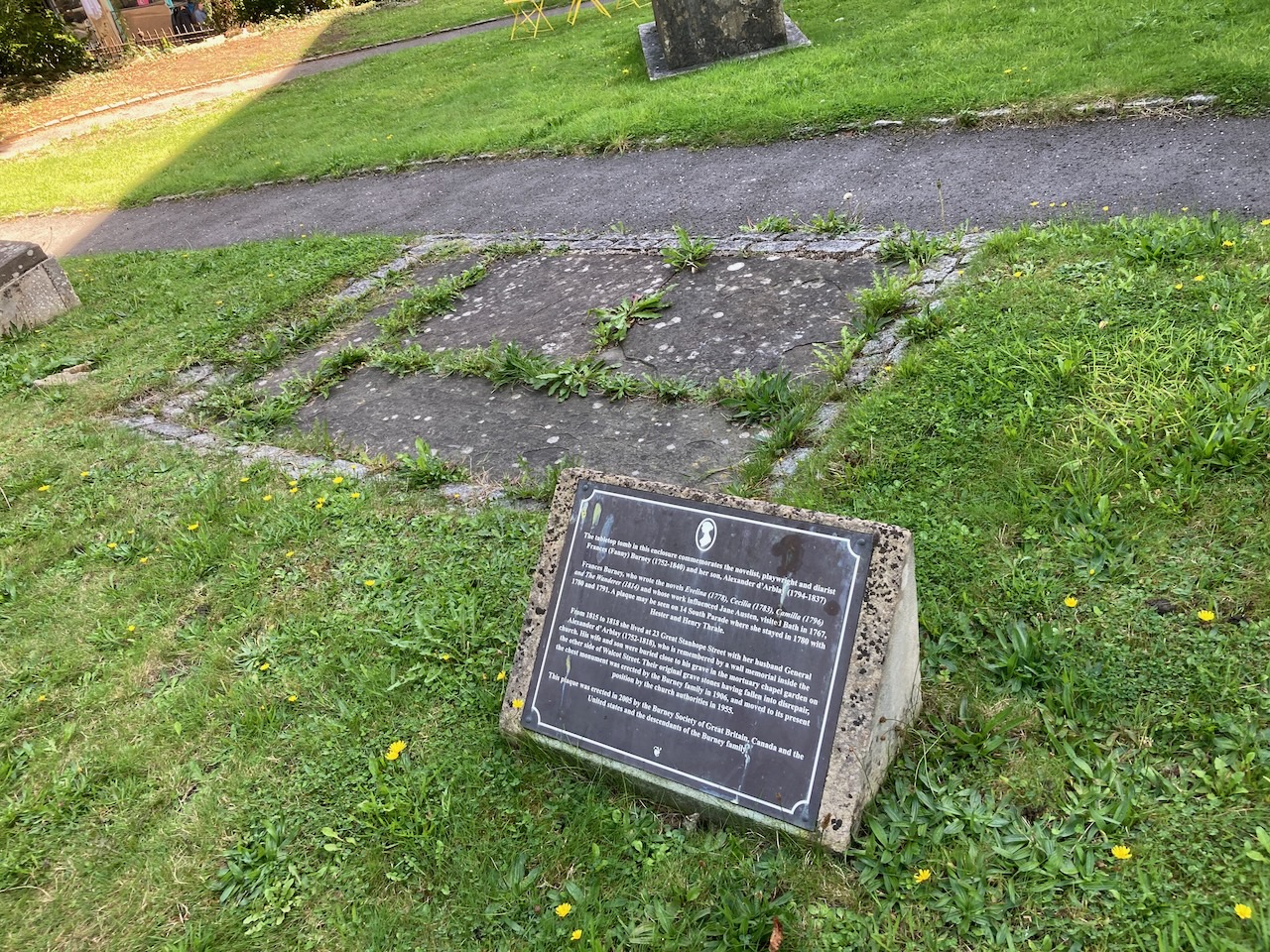
The author Fanny Burney, Jane Austen’s contemporary, is buried and commemorated nearby.

Did Austen ever attend church at St. Swithin’s? I’ve written another post exploring where she may have gone to church and chapel in Bath. It’s likely that she went to St. Swithin’s when she was visiting her aunt and uncle Leigh-Perrot who lived on the Paragon in Bath. That’s the edge of Walcot parish. The church is a steep walk uphill from their home. Later on, when Jane lived in Bath, she more likely went to chapels closer to her family’s various lodgings.

St. Swithin’s is a busy, thriving church today, with many activities going on. Some events of the Jane Austen Festival last fall took place there. The Charles Simeon Trust, started in 1836 by Evangelical clergyman Charles Simeon, is a patron of St. Swithin’s, as well as of Bath Abbey.

Other Churches Mentioned in Northanger Abbey

Northanger Abbey refers to four other real churches or chapels, more obliquely.

Thorpe says he bought his gig from a “Christchurch man.” He is referring to one of the colleges at Oxford University. Oxford and Cambridge are made up of semiautonomous colleges, and a student’s studies were mostly at his own college. Christ Church is a college at Oxford, and its college chapel is also Christ Church Cathedral for the diocese of Oxford. Thorpe shows a cavalier attitude toward “Christchurch” as well as toward everything else.

(A cathedral is the seat of a bishop, who leads a diocese made up of a number of parishes. A parish is a geographical area which was generally served by one main church, like the parishes that Edward Ferrars and Mr. Collins serve.)

Catherine and Isabella expect to worship together in a chapel in Bath; Austen doesn’t tell us which one. It may have been the Octagon Chapel, which would have been convenient to both of them.

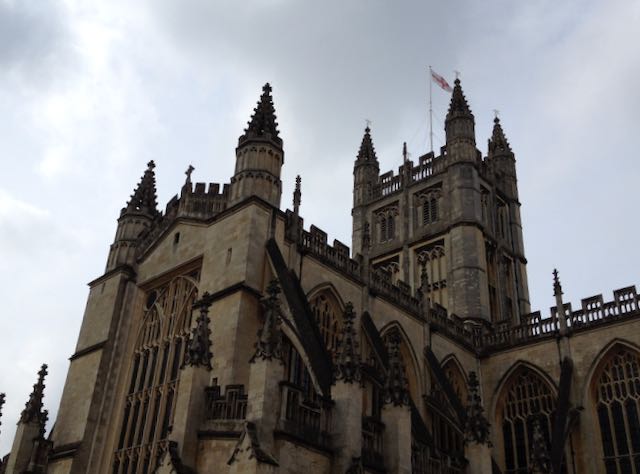
Northanger Abbey also indirectly refers to Bath Abbey. Twice the “church-yard” in the center of Bath comes up. The two young men Catherine and Isabella are following go “towards the church-yard,” and later Catherine trips “lightly through the church-yard” to go make her apologies to the Tilneys. This would be the church-yard of Bath Abbey, in the center of Bath. Roger E. Moore, in Jane Austen and the Reformation, argues that Austen purposely did not name the abbey, which was historically the spiritual center of the town. She may have wanted to critique the fact that Bath in her time was a place of pursuing shallow entertainment rather than deeper spirituality.

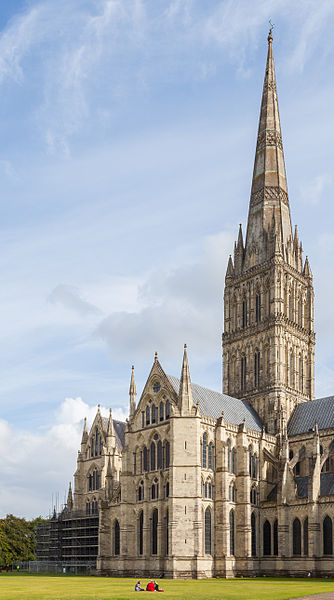
Near the end of the novel, Catherine is headed home. She looks out for the “well-known spire” of Salisbury. This is ancient Salisbury Cathedral, which has the tallest cathedral spire in England. Her father’s parish is in Salisbury diocese.

While Jane Austen invents country parishes for her characters, she also connects them with spiritual places in the real world.

Bath Abbey towers above the city of Bath. It is not mentioned by name in Northanger Abbey, though its church-yard is mentioned.

All images above ©Brenda S. Cox, 2025

Austen includes real-life churches in her novels, such as Salisbury Cathedral, with the highest spire in England. This is Catherine Morland’s landmark as she heads home.
Photo by Diego Delso, CC-BY-SA license.

Real Churches in Austen’s Novels and Letters

Garrison Chapel

St. Swithin’s, Walcot and other churches in Northanger Abbey

St. George’s, Hanover Square

London Churches

St. Paul’s, Covent Garden: Actors’ Church

Austen Family Churches

Steventon

Chawton

Deane

Hamstall Ridware and Austen’s First Cousin, Edward Cooper

Adlestrop and the Leigh Family

Stoneleigh Abbey Chapel and Mansfield Park

Great Bookham and Austen’s Godfather, Rev. Samuel Cooke

Ashe and the Lefroy Family

Read Full Post »

By Brenda S. Cox

“The Prices were just setting off for church the next day when Mr. Crawford appeared again. He came, not to stop, but to join them; he was asked to go with them to the Garrison chapel, which was exactly what he had intended, and they all walked thither together.”—Mansfield Park, chapter 42

The Garrison Chapel in Portsmouth, where the Price family and Henry Crawford worshiped.

Real Churches in Austen’s Novels

The Garrison Chapel (now called the Garrison Church) is one of a handful of specific, real churches Jane Austen mentions in her novels. 

  • In Northanger Abbey, John Thorpe passes “Walcot Church,” St. Swithin’s on the edge of Bath. We hear about the “church-yard” in Bath, adjacent to Bath Abbey, though the Abbey is not named. Catherine Morland looks for the “well-known spire” of Salisbury Cathedral on her way home. (See “Churches, Chapels, Abbeys, and Cathedrals in Northanger Abbey”.)
  • In Pride and Prejudice, Wickham and Lydia get married at St. Clement’s in London, possibly St. Clement Danes in London’s city of Westminster, or St. Clement Eastcheap, near London Bridge. By the way, it’s not clear which of those is the St. Clement’s of the old nursery rhyme about London church bells, which begins “Oranges and lemons, say the bells of St. Clement’s.” 
  • In Mansfield Park, Mary Crawford mentions St. George’s, Hanover Square (in Mayfair, London) as a place for weddings. Dr. Grant seeks a promotion to Westminster Abbey or St. Paul’s Cathedral (he gains a prebendal stall at Westminster). And the Prices attend church at the “Garrison Chapel” in Portsmouth.

All these churches can still be visited, though the Garrison Church is partly in ruins. (Have I missed any churches named in Austen’s novels? Let me know in the comments if you have noticed others!)

The Royal Garrison Church, now run by English Heritage, can be visited on certain days, April through October. Admission is free.

The Garrison Chapel in Portsmouth

What was the Garrison Chapel? It was called a chapel, not a church, at that time, since “church” meant the Church of England main church of a parish. There were several types of chapels. This one was an institutional chapel, connected to a certain place or group of people. It was the chapel for military troops serving in Portsmouth. Since Fanny Price’s father was a “lieutenant of marines,” this was the logical place for her family to worship.

Mansfield Park tells us, “In chapel they were obliged to divide, but Mr. Crawford took care not to be divided from the female branch.” Roger E. Moore, in Jane Austen and the Reformation, explains, “officers and sailors sit separately from civilians” (124). Presumably Fanny’s father joined his friends, his “brother loungers,” in one section, while his family, with Henry Crawford, sat in a different section.

Nave of the Garrison Church, originally a hospital, meaning a place of hospitality for the needy. Beds lined the sides. The roof was destroyed by bombing in World War II.

Origins

The Garrison Church building dates all the way back to 1212 A. D., over 800 years ago. The Bishop of Winchester founded it as a “hospital” called the “Domus Dei,” or “House of God.” It was not a place for medical care, but a place of hospitality. The poor, the ill, and people on pilgrimage could come there and find rest. Beds lined what later became the nave of the church.

Mass was said regularly in a chapel at the east end of the building. Residents would either attend services or listen from their beds if they could not stand. A priest was in charge, aided by twelve poor men or women. They helped look after visitors in exchange for bread, ale, and a place to stay.

According to Moore, the main hall was “surrounded by a complex of auxiliary buildings, including a master’s house and hall, kitchen, bakehouse, stable, and lodgings for the brothers and sisters who staffed it” (124-5). Income from nearby houses and land supported the work, just as medieval monasteries were supported by nearby properties.

Moore says that the mention of this place in Mansfield Park is significant. The “Domus Dei” (which later became the Garrison Chapel) gladly welcomed anyone who appeared there asking for entrance, regardless of social status. It is contrasted with Mansfield Park, where Mrs. Norris does not “gladly” welcome poor Fanny to the parsonage where she and her husband live. Even the Bertrams give Fanny only a small attic room, without even a fire for warmth. Moore also points out that when Fanny sees Henry in Portsmouth, she is impressed that he has been acting as a “friend to the poor and oppressed,” just as the brothers and sisters at the Domus Dei had done for many.

The author (Brenda Cox) at the entrance to the Garrison Church today. All visitors are welcome (at specified times), as in medieval times.

The hospital closed in 1540 when King Henry VIII suppressed the monasteries and other religious houses, including most such hospitals. Valuables were stripped from it, and the buildings were used to store munitions. Queen Elizabeth I expanded the fortifications at Portsmouth, made the large dormitory into a chapel for the garrison, and the rest of the buildings became the home of the garrison’s governor.

©Brenda S. Cox, 2024
Eagle lectern in the Garrison Church, from 1801, commemorates Queen Victoria. Eagles were often used for church lecterns, which held Bibles or the Book of Common Prayer. Eagles were believed to be able to look at the sun, just as Christians look directly into God’s Word. It is also the bird believed to fly closest to heaven, symbolizing carrying God’s Word around the world.
(Source: a guidebook in the church)

In 1826, the Governor’s house next to the chapel was demolished. Forty years later, restoration work began on the church (now called a church rather than a chapel), balancing “the original medieval appearance with Victorian needs and preferences,” according to a sign at the site. A new altar, pulpit, and stalls were added.

Garrison Church chancel today; furnishings are Victorian and later.

Garrison Church Today

The church was bombed in 1941, destroying much of the roof of the nave (the large hall that used to be the hospital). However, the smaller worship area, the chancel, survived and continued to be used. See this site for more about the church’s history. 

Stained glass windows with Bible themes above the altar of the Garrison Church, added in 1957.
Garrison Church stained glass windows, added in 1967, depicting its history. The founder is on the left. Bombing of the church is depicted in the center. The right panel shows St. Nicholas, patron saint of the church. St. Nicholas is the patron saint of sailors, merchants, and travelers, appropriate for this port city. Vice-Admiral Lord Nelson’s coat of arms and his ship HMS Victory are above and below St. Nicholas.
The choir stalls include memorials to soldiers killed in the Crimean War, and this one to Lord Nelson.

Apparently the church is still in use for occasional services for the military. It is open to the public on certain days and times, for free; check the website before going. 

In Portsmouth Harbor you can also visit HMS Victory, Lord Nelson’s ship, which is undergoing a thorough restoration. The cruise we took of the harbor was lovely. On the same day, my friends and I also visited Netley Abbey. Nearby Southampton has a few sites related to Austen. However, we were not allowed to enter the Dolphin Hotel, where she danced. You can only see it from the street.

There’s so much history and meaning in Jane Austen’s mildest references. I’m thankful for the many people who have preserved and kept alive the places that were important to Austen and to her characters, including the Garrison Chapel.

All photos ©Brenda S. Cox, 2024. Please ask permission before using.

Sources

Roger E. Moore, Jane Austen and the Reformation

Excellent signs and booklet at the church

Garrison Church website

Real Churches in Austen’s Novels and Letters

Garrison Chapel

St. Swithin’s, Walcot and other churches in Northanger Abbey

St. George’s, Hanover Square

London Churches

St. Paul’s, Covent Garden: Actors’ Church

Austen Family Churches

Steventon

Chawton

Deane

Hamstall Ridware and Austen’s First Cousin, Edward Cooper

Adlestrop and the Leigh Family

Stoneleigh Abbey Chapel and Mansfield Park

Great Bookham and Austen’s Godfather, Rev. Samuel Cooke

Ashe and the Lefroy Family

Read Full Post »

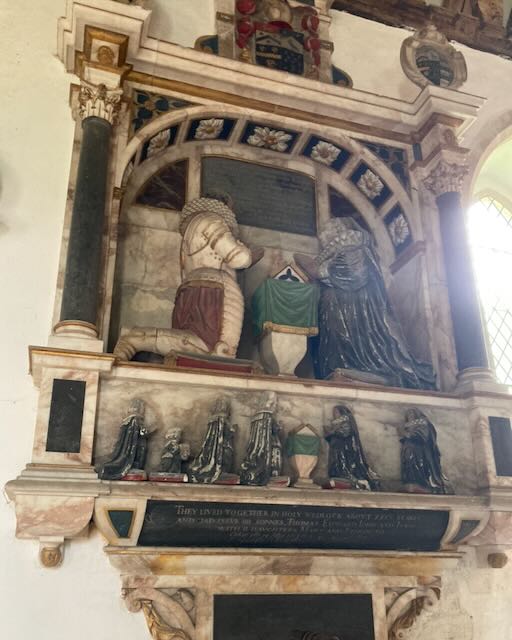
From her birth in 1775 until her family moved to Bath in 1801, Jane Austen spent most of her time in a small triangle of villages: Steventon, Ashe, and Deane. Her father was rector of both Steventon and Deane, leading services and preaching at both parish churches, and serving the people of both communities.

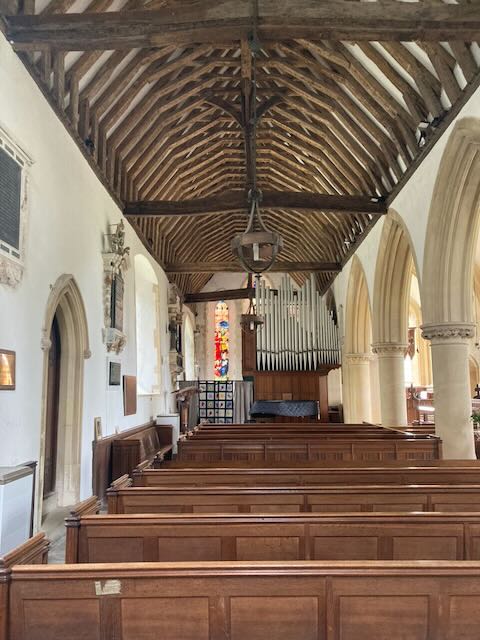
Nave and chancel of Holy Trinity Church at Deane.
The damp Deane parsonage where the Austens lived is long gone; it was replaced by a new building in 1855. One of the churchwardens says, “There was a rectory in the paddock opposite the path leading to the church, which burnt down. I believe the wall [old section in this photo] protected this rectory.”

Deane Parsonage and Living

George and Cassandra Austen lived in the Deane parsonage until 1768 when the Steventon parsonage was ready. Their first three children, James, George, and Edward, were born there. Mrs. Austen’s widowed mother, Jane Leigh, also lived with them at Deane, though she died shortly after the move to Steventon.

The Steventon living was worth only about £100 a year, including about three acres of glebe farmland. So Mr. Knight also let George Austen farm the 200-acre Cheesedown Farm for more income. Still, the Austens found the income too low to support their rapidly growing family. George’s great-uncle Francis of Sevenoaks in Kent bought the options on two nearby livings, Ashe and Deane, for George’s benefit.

The rector of Deane died before the rector of Ashe, so George Austen took the living for the parish of Deane, and Francis sold the other option to another relative, who later installed the Lefroys at Ashe. In 1773, Mr. Austen became rector of Deane, another small parish of “about two dozen families of farm labourers . . . worth £110” per year (Le Faye, 25). He also began taking in boys as students, to further supplement his income.

The Deane parsonage now belonged to George Austen, as part of the living. From 1786-1788, Madam Lefroy’s younger brother, Egerton Brydges, rented it from him and lived there. In 1789, George advertised the parsonage for rent, as “a neat brick dwelling-house with four living-rooms and four bedrooms, as well as all the necessary store rooms and servants’ quarter, plus a large garden, coach-house and stabling for six horses” (Le Faye, 68), making it sound more desirable than it had been. The next tenants were a clergyman’s widow, Mrs. Lloyd, and her daughters Martha and Mary. (Good Bible names for sisters; see John 11.) Martha and Mary soon became close friends of Jane and her sister Cassandra. Eventually both Lloyd sisters married into the Austen family.

In 1792, Jane’s eldest brother James and his wife Anne took over Deane parsonage, spending £200 to refurnish it, more than they could actually afford. James became his father’s curate at Deane, also serving two other small parishes. Their daughter Anna (Jane Anna Elizabeth Austen) was born in the Deane parsonage in 1793, with the help of her grandmother. “Mrs. Austen rose from her bed in the middle of the night, and walked by the light of a lantern a mile and a half of muddy country lane to attend her [daughter-in-law], and to usher into the world a new grandchild” (Le Faye, 84).

James’s wife Anne died in 1795, and Mary Lloyd returned to Deane parsonage as James’s second wife in 1797. In 1801, James and his family moved to the Steventon parsonage when George Austen retired to Bath. James served as curate of Steventon until his father died in 1805, when James became rector of Steventon.

Holy Trinity Church at Deane was completely rebuilt, 1818-1820, in the pointed Gothic style. Much of the church was built of Coade stone, an artificial stone invented and produced by a woman, Eleanor Coade (1733-1821). She developed an amazing material that could be made to look like either wood or marble, resisted weathering, and could be molded into mass-produced items ranging from tiny ornaments to the pinnacles of this church. Thousands of intact examples of Coade stone can still be seen across England and abroad today.

Jane Austen’s Connections with Deane

Jane Austen mentions Deane in 27 of her existing letters. She also includes it in one of her juvenile pieces, “Memoirs of Mr. Clifford.” Mr. Clifford’s “first Day’s Journey carried him only to Dean Gate where he remained a few Days and found himself much benefited by the change of Air.” She is referring to the Deane Gate Inn, where men of the Austen family would catch the stagecoach. It is now a restaurant, the Palm Brasserie.

Jane often visited the parsonage at Deane, first when the Lloyds were living there, then when her brother and his family were there. Dampness and flooding were still an issue. On Oct. 27, 1798, she wrote:

“There has been a great deal of rain here for this last fortnight, much more than in Kent, and indeed we found the roads all the way from Staines most disgracefully dirty. Steventon lane has its full share of it, and I don’t know when I shall be able to get to Deane.”

In November and December she again talks about visits to her sister-in-law Mary at Deane, who gave birth to James Edward (who became Jane Austen’s first biographer) on Nov. 17:

I went to Deane with my father two days ago to see Mary, who is still plagued with the rheumatism, which she would be very glad to get rid of, and still more glad to get rid of her child, of whom she is heartily tired. Her nurse is come and has no particular charm either of person or manner; but as all the Hurstbourne world pronounce her to be the best nurse that ever was, Mary expects her attachment to increase. . . . Sunday. — I have just received a note from James to say that Mary was brought to bed last night, at eleven o’clock, of a fine little boy, and that everything is going on very well. My mother had desired to know nothing of it before it should be all over, and we were clever enough to prevent her having any suspicion of it”—Nov. 17-18, 1798

Jane continued to visit Mary every few days, reporting on her health. She even visited when ice covered the ground: 

“I enjoyed the hard black Frosts of last week very much, & one day while they lasted walked to Deane by myself.–I do not know that I ever did such a thing in my life before. . . . Mary went to Church on Sunday, & had the weather been smiling, we would have seen her here before this time”—Dec. 18, 1798.  This may have been when Mary was “churched,” a ceremony celebrating the safety of a mother after childbirth.

The main families of Deane, Steventon, and Ashe all visited each other and went to balls together. Jane danced at the Harwoods’ ball, in Deane, on Jan. 8, 1796. She often mentions John Harwood in her letters; for example:

“This morning has been made very gay to us, by visits from our two lively Neighbours, Mr. Holder and Mr. John Harwood.”—Dec. 18, 1798

Deane church memorial to John Harwood (1770-1846), a member of the Harwood family of Deane, friends of the Austens. Harwood was rector of nearby Sherbourne St. John, where James Austen was vicar from 1791 to 1819. (The parish had both a vicar and a rector until 1844; the rector got more of the tithes.) Jane Austen mentions John Harwood in her letters in the context of visits, balls, and other events.
The Harwoods owned Deane House, now The Old Manor House. It can still be seen from the Deane church. Jane Austen danced there.

All Saints Church at Deane, Then and Now

In July, 1818, the Norman-era church at Deane was “in so Dangerous a state of Ruin as to be unsafe for the congregation.” So the patron, Wither Bramston of Oakley Hall, got approval from the Bishop of Winchester to rebuild it at his own cost, about £8000. It was consecrated two years later.

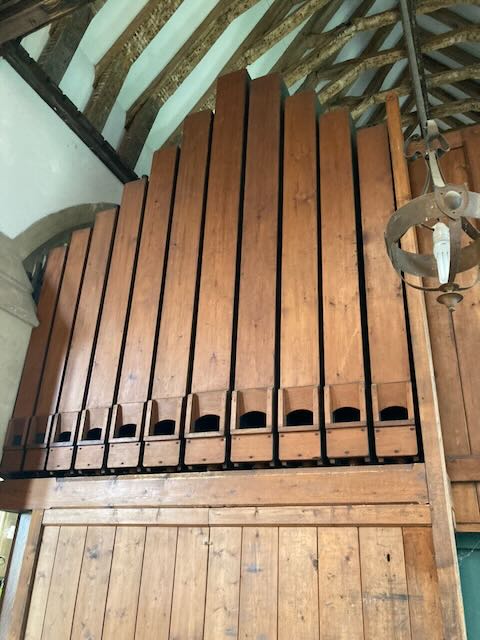
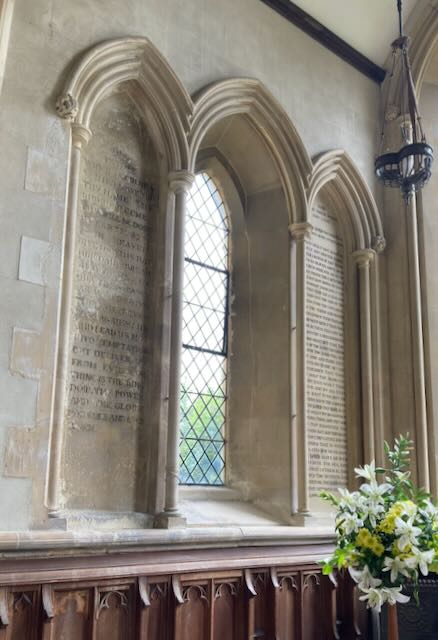
All Saints at Deane is considered “one of the most complete and successful” 19th century Gothic churches (Tanner). It is also renowned for its eight bells, which are rung regularly, and an 1820 Gothic chancel screen. The church today is a grade II listed building, but is not the same as the medieval church building where George and James Austen ministered. Some monuments from their time are on the walls of the current church, however.

An entrance to the Deane church marks its rebuilding in 1818.
Memorial in Latin to Wither Bramston, died 1832, and his wife. As patron of the Deane living, he rebuilt the Deane church in 1818-1820 (as recorded in the top section of the memorial), at his own expense.

The church could seat 146 people in 1851. On Census Sunday, 94 parishioners attended in the morning and 124 in the evening. Leading up to World War I, the rector offered daily Communion in the church, and in 1917, he reported twenty people in the choir for Evensong. However, the population dropped, and in 2011, Deane included only an estimated 55 inhabitants, with an average age of over 60.

Now there are about 25 houses in the village, and about 8-10 people attend Sunday morning services twice a month. For a larger service, like the Christmas carol service, they may have about 40 attendees. Weddings are held there occasionally, and special services like pet blessings. All Saints is part of the United Benefice of North Waltham, Steventon, Ashe, and Deane.

Our guide to the church, Sue Hebeler, said she loves this church since it is her local church and her husband is buried there. She appreciates the traditional, old-fashioned services. If you’re in the vicinity, you may also enjoy a visit to this lovely, peaceful church.

This embroidered tapestry blesses the church, which was called St. Mary’s before it was rebuilt over 200 years ago. The picture may be more like the church’s earlier form. It reads, “Peace be within this sacred place; And joy a constant guest; With holy gifts and heavenly grace; Be her attendants blest.”

All images in this post ©Brenda S. Cox, 2024.

Brenda S. Cox is the author of Fashionable Goodness: Christianity in Jane Austen’s England. She also blogs at Faith, Science, Joy, and Jane Austen.


Posts on Other Austen Family Churches

Steventon

Chawton

Hamstall Ridware and Austen’s First Cousin, Edward Cooper

Adlestrop and the Leigh Family

Stoneleigh Abbey Chapel and Mansfield Park

Great Bookham and Austen’s Godfather, Rev. Samuel Cooke

Ashe and the Lefroy Family


Sources and Further Reference

Deirdre Le Faye, Jane Austen : A Family Record. Much of Le Faye’s information about Deane is also online at Deane

Terry Townsend, Jane Austen’s Hampshire, has a helpful chapter on Deane.

Richard Tanner, Ashe & Deane, explores the area.

Trailblazing Women of the Georgian Era by Mike Rendell includes a fascinating chapter on Eleanor Coade—manufacturer of artificial stone.

Read Full Post »

Older Posts »