Feeds:
Posts
Comments

Archive for the ‘Georgette Heyer’ Category

I spent a lazy Sunday catching up on the many posts I am unable to read during the week. Imagine my delight when I landed on Madame Guillotine’s blog and read her impressions about her visit to the Fashion Museum in Bath.  With increasing excitement, I viewed her close up images of several of the most beautiful 18th and early 19th century gowns imaginable. Melanie graciously allowed me to showcase her posts. (I concentrated on the early 19th century examples.) Do rush over and view all her photos. They are simply amazing.

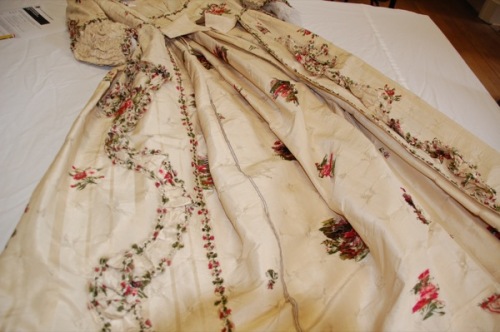
I have just got home after an amazing couple of hours spent studying some of the eighteenth century dresses in the vast collections (I think they said they have 80,000 pieces in their archives) of the Fashion Museum in Bath.

English, silk, 1770-73.

It was amazing seeing the hook and eye arrangements that they used to do up the bodices, the neat seam work and even the staining beneath the armpits which serves as a reminder that these are the real deal and not just mere costumes!

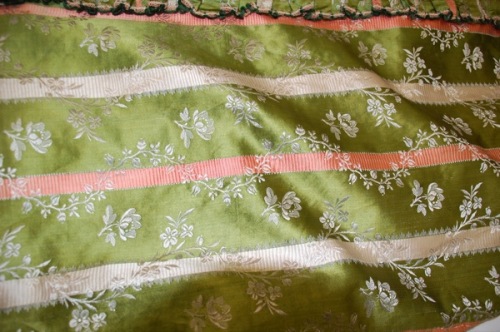
French, sacque gown, 1760-63. Image @Madame Guillotine

They were really keen on combinations of pink and green during the eighteenth century – a colour combination that seems to have vanished from fashion, alas.

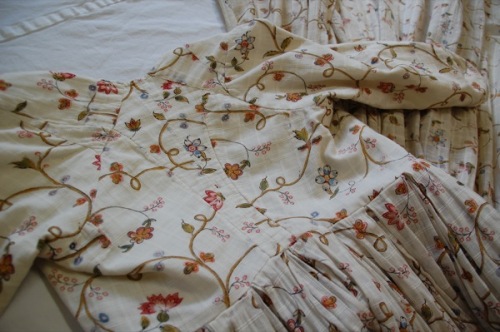
A floral printed muslin from 1793-97. Image @Madame Guillotine

[This dress] is really is lovely – very floaty and romantic with a pretty floral print. You can really imagine Marianne Dashwood in this one!

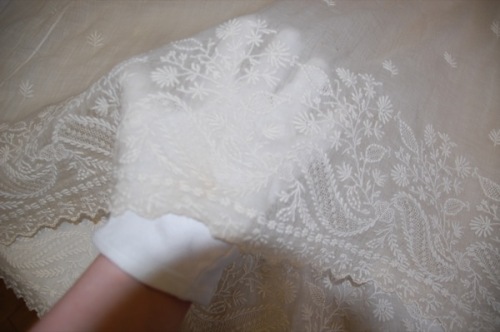
Muslin dress, 1813-20. Image @Madame Guillotine

This dress was so beautiful but really worryingly see through! You forget this about muslin when you see them in period dramas…

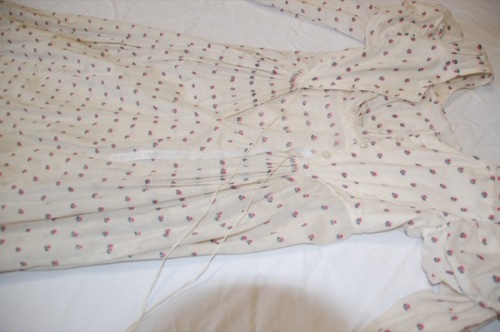
Patterned muslin dress, 1815-20. Image @Madame Guillotine

This is the sort of thing that a Heyer heroine would have worn.

These images are just a foretaste of the many photos that Melanie took at the Fashion Museum. To read both her posts, click on the two links below:

Read Full Post »


Inquiring readers: Austenprose has been featuring Georgette Heyer all this month. Today is her 108th birthday! Laurel Ann has graciously interviewed me about one of my favorite authors. My interview on her blog begins with this question:

Some critics write Georgette Heyer off as merely a romance novelist. Others praise her for her historical accuracy, witty dialogue and engaging plots. Looking back on her fifty plus novels, why do you think she is [still] so popular years after [her] first publication?

When she was a current bestselling author, Georgette Heyer’s Regency romances stood out from the pack. Her humorous but well-researched writing rose above a sea of earnestly written historical romances. In those days, Daphne du Maurier, Jean Plaidy (Victoria Holt), Mary Stewart, and Mills and Boon (Harlequin) authors reigned supreme. While these best-selling authors were popular, none came close to combining humor, history, and romance in Georgette’s inimitable way. Today, GH’s breezy style doesn’t stand out quite as vividly, because there are many other romance writers (Susan Elizabeth Phillips, Susan Andersen, Sandra Hill, Jane Ann Krentz) who publish funny and sassy romances, but back in the dark ages when I went to college, Georgette had the humorous romance field to herself.

Click here to read the rest of the interview on Austenprose.

In addition to the interview, I am featuring two of my reviews of GH novels:  Lady of Quality and Friday’s Child. As a special treat for Georgette’s birthday, I am also including a link to one of her short stories: A Proposal to Cecily

Lady of Quality:

Miss Annis Wychwood, at twenty-nine, has long been on the shelf, but this bothers her not at all. She is rich and still beautiful and she enjoys living independently in Bath, except for the tiresome female cousin, who her very proper brother insists must live with her.

When Annis offers sanctuary to the very young runaway heiress Miss Lucilla Carleton, no one at all thinks this is a good idea. With the exception of Miss Carleton’s overbearing guardian, Mr. Oliver Carleton, whose reputation as the rudest man in London precedes him. Outrageous as he is, the charming Annis ends up finding him absolutely irresistible. – Sourcebooks blurb

I discovered Georgette Heyer just after I graduated from college. Having run out of new Jane Austen novels to read, I began to search for other regency stories set in similar settings. One day at the library, I stumbled across Charity Girl and Arabella, and my love affair with all things Georgette began.

In those days I was barely older than the youngest of Heyer’s heroines, and could identify closely with The Grand Sophy. I reveled in Georgette’s world filled with bored aristocratic gentlemen who, usually as they traveled by coach or horse to a country inn or walked the streets in London in the middle of the night, stumbled across an innocent and disarming chit who needed rescuing. This plot device was a popular one with the author. Another one of Georgette’s plots was that of the “older” beautiful, rich, and independent spinster (almost on the shelf, but not quite) who is determined to live her life as she likes it and skirt convention when she can. Because she has independent means, she rules her roost and will brook no interference from any man. Invariably, these strong willed women meet their match in an even richer, stronger-willed man, usually a Duke or Earl, but not always as in a Lady of Quality.
Read the rest of the review at this link

Friday’s Child:
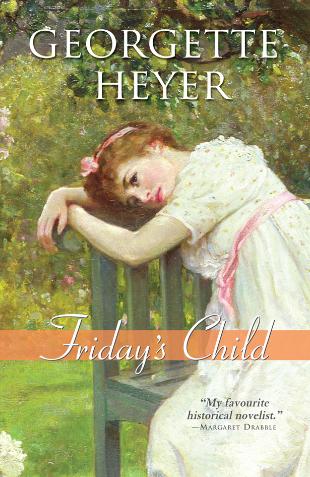
fridays-child-sourceHeadstrong, spoiled and impetuous, Lord Sheringham wants to be married. Not because he is in love, but because he wants control of his fortune, his father having left it so that he would be either 25 or married before he could rid himself of his trustees. He has some difficulties with debts, certainly, but the main reason he wishes to have that trust drawn up is that one of his trustees is plundering his estate.

The book opens with his proposal to the Incomparable, Isabella Milborne, a lifelong neighbor and friend. She refuses him because they don’t love each other, and he, furious at her level-headed thwarting of his plans, vows to marry the next lady he sees. This would be Hero Wantage, another lifelong neighborhood friend, just out of the schoolroom and unschooled in any of the ways of Society. Hero, who has adored her friend Sherry for years, is an orphan who has been under the care of her cousin, who never intended to provide a Season for her ward, but rather to prepare her for marriage to the local curate, or for life as a governess. At just seventeen and full of fun, Hero is not ready for either quelling prospect.

So the two decide that they will get married. Lord Sheringham’s cousins Gil and Ferdy and his friend George, Lord Wrotham, all of whom seem to travel in a pack, among them arrange for the marriage by special license. The young Lord and Lady Sheringham set up house, and Sherry and his friends seek to establish young Lady Sherry in London society, where they have been cutting a pretty wild and dashing swath. What follows is a madcap romp, as Hero falls in and out of scrapes as fast as she can. All through innocence, or from following her husband’s sayings. She is bright, educated, and has a mind of her own, and when she takes umbrage at her husband’s scolding her for something, she will say, “but you said…” To his credit, he hears his words and begins to reconsider his own way of life.

Read the rest of the review at this link

A Proposal to Cecily:

Flapper Louise_BrooksCicely hurled a cushion across the room. “Thats how I feel!” she said, & glared at her first cousin once removed, Richard Spalding.

“Good lord”, he remarked, with a proper amount of sympathy in his lazy voice.

“And you sit there – idling about in my room – laughing at me! I quite hate you, Richard!

“Oh, I say!” he expostulated, “I wasn’t laughing – honour bright!”

Cicely looked scornful. “I’m absolutely sick of it all. Dead sick of it.” Cecily nodded so vigorously that her brown, bobbed curls seemed to jump. “I never want to go to another dance as long as I live.”

“That’s bad,” said Spalding respectfully. “What’s brought on this sense of repletion?”

“Everything. I’ve been trotted round till I want to scream! I feel like doing something desperate!”

At that Spalding dragged himself upright and threw away his half-smoked cigarette.

“Oh, splendid, Cis! I hoped that if I waited long enough you’d melt. When shall it be? Be a sport, now, and -”

Cicely covered her ears with her hands.

“No, no, no! I don’t want to do anything as desperate as that!”

Richard sank back again.

“Thought it was too good to be true”. He pulled a leather diary from his waistcoat pocket and proceeded, gloomily, to make an entry.

“What’s that?” asked Cicely.

“Diary.”

“But what are you writing?”

“‘Friday. Proposed to Cicely. Refused.'”

In spite of herself Cicely giggled.

“Dicky, you are idiotic! When will you give it up?”

“When we’re married.”

“We’re not going to be!” Cicely’s chin went up defiantly.

Read the rest of the short story at this link


Reviews of Georgette Heyer’s novels on this site:

Read Full Post »
Along with Austenprose, this blog is celebrating Georgette Heyer’s 108th birthday on August 16th. Look for Laurel Ann’s interview with me on her blog that day! Her questions were quite challenging.

The recent reviews featured on Laurel Ann’s blog echo some of the reviews that have been published in recent years on this blog. For your enjoyment and in celebration of the Austenprose event, we are reviving some of our favorite Georgette Heyer reviews.

Read more Georgette Heyer reviews by a wide variety of bloggers on Austenprose.

Read Full Post »

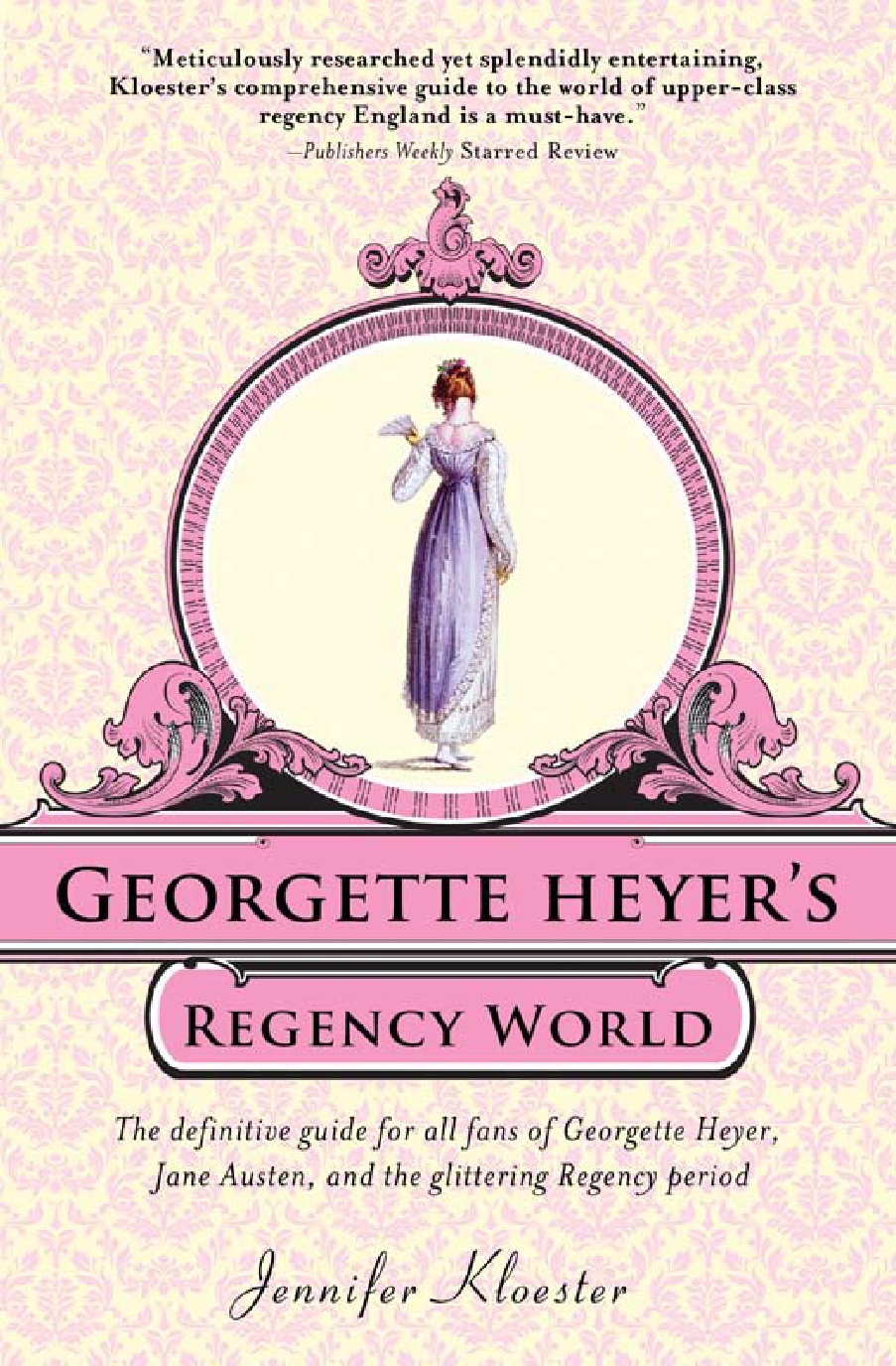
Georgette Heyer’s Regency World by Jennifer Kloester is available August 1.

This extremely interesting compendium of insights and knowledge came my way by One Who Knows how much a fan of Georgette Heyer and Jane Austen I am. Neatly organized into chapters by topic, Kloester provides basic information on the life upper class men and women lived in the Regency Era. Using the historical knowledge she accrued while writing her dissertation on Georgette Heyer, she provides the background on what the Regency was. In Chapter 14, she writes brief, pithy biographical sketches of the Royal family, as well as other real people who appear throughout the Heyer Regency books: Edward Hughes “Golden Ball” Hughes, Sally Jersey, Lady Castlereagh, George Bryan (Beau) Brummell, and noted authors of the day. Her sketches of the Royals are most helpful, for this was an era filled with Royal siblings, offspring and mistresses.

I also enjoyed the chapters on fashion and shopping; the sketches of the various outfits will be most helpful to those readers who do not have a strong foundation in the history of fashion. While men’s fashions began their evolution into the suits of today, women during the Regency enjoyed a rare period of less constriction and heavy underpinnings. Definitions and sketches of pelisses, morning and promenade dresses give good clues to what the characters wear.

Throughout the book, Kloester clarifies definitions by referring to some of Heyer’s Regency novels. So we are reminded that Abigail Wendover first appears to us in Black Sheep dressed in the latest thing in carriage dresses, and that Freddy Standen’s perfectly cut coat and satin knee breeches were identified as just the thing for an appearance at Almack’s. That fine institution of the Marriage Mart is also explained and clarified with references to Cotillion, The Grand Sophy, Friday’s Child, Regency Buck, and Frederica. These references give a nice context to a somewhat dry discussion, and keep the reader engaged in the book.

It is a helpful source of information for the fan of Heyer, for her books are set strongly within the period; Heyer was a meticulous researcher and avid historian. While she defines terms contextually, readers may need a little more information than Heyer provides. Kloester gives it in good doses, enlivened by references to books they may have read, or will be likely to read soon.

It is not, however, the definitive guide for all fans of Austen and Heyer it purports to be. Jane Austen does not set her books in the Beau Monde, or ton, as does Heyer, and her references to clothing, furnishings, and travel are sparse. She is writing in the period, not of the period, and is more interested in the people and their actions than the stuff of their lives. The book does not cite references beyond the mentions in the Heyer books, although Kloester does include an extensive list of resources for someone who wishes to pursue Regency research in Appendix 5. It is not a scholarly work, but an informative one. Her Heyer citations are helpful, if one has read the particular book, and only informative of where to find such an object or how the neck cloth is tied, if not. That being said, the book is filled with tasty little nuggets of information. I enjoyed her brief insights and explanations on the wide-ranging topics.

Reviewed by Lady Anne

Inquiring Readers: Lady Anne is my special friend. I have read Georgette Heyer since I turned 22, and I have read all of her books at least once. But Lady Anne has read Georgette Heyer novels every night for at least 30 years. She knows the plots and dialogs inside and out; and can name every character of all her favorite Georgette Heyer books, including the mysteries and histories. She graciously agreed to review Jennifer Kloester’s book while I tended to a family emergency.

Jane Austen’s World reviews of Georgette Heyer’s novels

For the month of August, join Austenprose‘s celebration of Georgette Heyer!

Read Full Post »

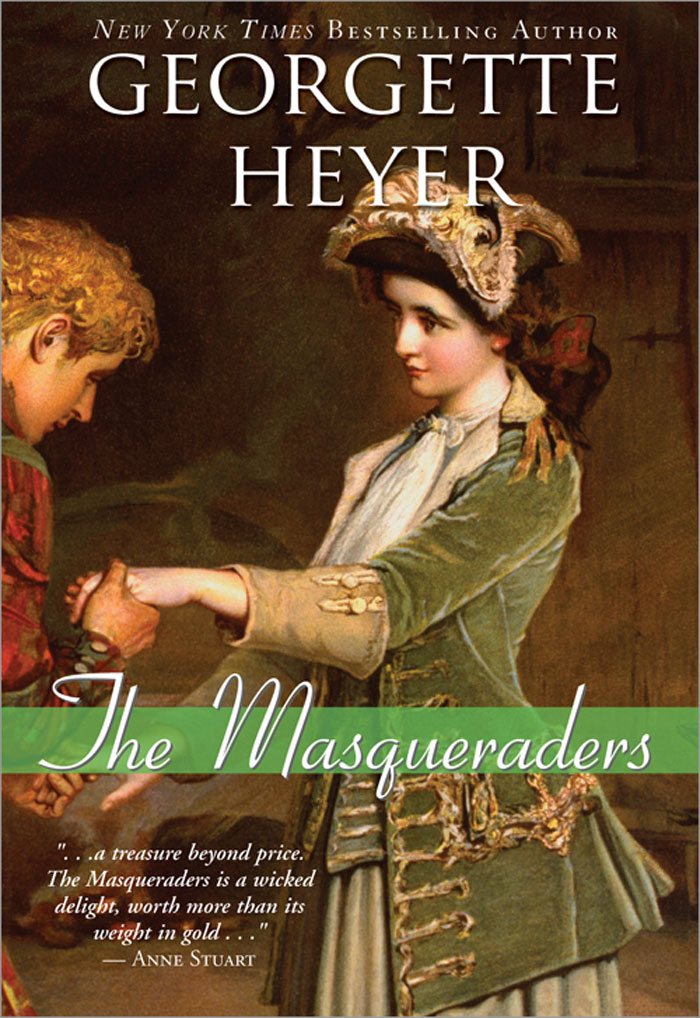
Inquiring readers: I have no doubt you shall enjoy this review of Georgette Heyer’s The Masqueraders by my good friend, Lady Anne, an expert when it comes to the subject of this author. Lady Anne has read Georgette Heyer’s novels for most of her years upon this earth. Smart, sassy, fabulous, well tressed and well dressed, she has read every GH book backwards and forwards. There is not one tiny detail of Georgette’s novels that escapes Lady Anne’s attention or opinion. As to her review of The Masqueraders– please enjoy. For first-time readers: Spoiler alert.

Such a daring escape…

Their infamous adventurer father has taught Prudence Tremaine and her brother Robin to be masters of disguise. Ending up on the wrong side of the Jacobite rebellion, brother and sister flee to London, Prudence pretending to be a dashing young buck, and Robin a lovely young lady…

Although we know her as the queen of the Regency Romance, in fact, many of Georgette Heyer’s books take place a half-century or so earlier in Georgian times, with its gorgeous clothes, stylized social occasions, and convoluted intrigues. The Masqueraders could be set in no other time; it requires both the artifice and the intrigue to work.

We first meet the brother and sister, Robin and Prudence, in their elaborately contrived costumes; Robin disguised as the elegant and enchanting Kate Merriot, and Prudence, appearing as Kate’s equally elegant, if somewhat more retiring, brother Peter. They are on their way to London, to settle with a family friend and await the arrival of their father. The reason for the disguise is simple: Robin and his father backed the Stuarts in the 1745 uprising, and there is a price on each of their heads. But the reason they are indulging in this amazing masquerade of switched genders is due to their father, who has led them a precarious and wildly improper upbringing through most of the major cities of Europe. The old gentleman, as their not entirely dutiful children refer to him, married their mother, a farmer’s daughter, against his family’s wishes and left England without a backwards glance. But there is more mystery here, and the return to England in this fantastical make-believe plays into it.

In the opening chapter, the brother and sister meet an enchanting young lady who had wished for some excitement in her life ,but turned to the wrong person. Kate and Peter rescue her, and shortly after that delightful bit of playacting and sabotage, Sir Anthony Fanshawe, a close friend of Miss Letitia’s father, appears. Letitia becomes great friends with the lovely Kate, who in his real person is on his way to falling in love with the young lady. Sir Anthony also takes a shine to the attractive young man, who is so surprisingly worldly and well traveled, if slightly too smooth of cheek. We watch these circuitous wooings with delight; the young lady is all unaware, but what of Sir Anthony? He is a large man in his mid-30s, said by many to be sleepy, if not altogether dull, and slow to quarrel. But, large as he is, there is more to Tony Fanshawe than meets the eye. For several chapters, we wonder as Heyer walks a careful line; Sir Anthony is clearly interested in the young man, but before we start feeling any discomfort or seeing homoerotic overtones, we become aware that Fanshawe is not so sleepy, and he has ascertained the truth, not only behind Prudence’s masquerade, but also Robin’s, and perhaps as well, the mystery of the old gentleman. He asks if they had thought of what could have happened to Prudence had her identity been discovered by someone not in love with her. Such an occurrence had not been anticipated, and they wonder what had given her away:

“I should find it hard to tell you…some little things and the affection for her I discovered with myself. I wondered when I saw her tip wine down her arm at my card party, I confess.

My lord frowned, “Do you mean my daughter was clumsy?”

“By no means, sir. But I was watching her closer than she knew.”

As the two romances work towards their happy conclusion, the larger story of the old gentleman, who he is really, and the place that he and his children will take in England plays out brilliantly. As is always the case in a Heyer historical novel, the times and the place are carefully laid out. The political fallout, the harsh measures taken against the Jacobites, and the dangers of living in London at that time all play their part in the plot, adding some weight, if not gravitas, to this fine caper. And too, there is great opportunity to enjoy several of Heyer’s delightful young gentlemen and their conversations among themselves. In fact, the stylized society that was so much of the mid-18th Century is what makes this plot work. Only in the elegant velvets and laces, the swordsticks and elaborate hairdos, long full petticoats, boots and full-skirted coats with fine gilt lacings could the brother and sister pull off their amazing disguises and the incredibly intricate plot unwind.

“I contrive,” said the old gentleman, and indeed he does. So too does his creator, in this charming tale of adventurers. The Masqueraders is a delightful romp from beginning to end, with one of the most romantic interludes, a ride in the moonlight, ever penned by this delightful and dependable author.

Other Georgette Heyer Book Reviews on this Site:

Gentle readers: Until Amazon.com stops strong arming publishers like McMillan about the pricing of their ebooks, I will not link to their site for book orders. Rather, I will link straight to the publisher’s site until the bullying tactics are resolved.

Read Full Post »

« Newer Posts - Older Posts »