Feeds:
Posts
Comments

Archive for the ‘Georgian London’ Category

Sadler’s Wells Aquatic Theatre, 1813. copyright The V&A Museum. Click on image to view details.

Sadler’s Wells was a performing arts area located in Clerkenwell in the outskirts of London. Named after Richard Sadler, who opened a musick house there in the late 17th century, the region boasted well water thought to have medicinal qualities.

Sadler was prompted to claim that drinking the water from the wells would be effective against “dropsy, jaundice, scurvy, green sickness and other distempers to which females are liable – ulcers, fits of the mother, virgin’s fever and hypochondriacal distemper.” -Wikipedia

Six theatres have stood at this site since Sadler built his first theatre. A second theatre,  Sadler’s Wells, was constructed in 1765, which attracted summer theatre goers (the Theatre Royal offered performances only in the fall and winter.)

Interior of the theatre in 1810. One can see the water-filled tank on the stage.

In the early 19th century, Sadler’s Wells began to offer aquatic spectacles. The construction of a large tank (90x24x3 ft)  in 1804 by Charles Dibdin covered the entire area of the stage. It was flooded with water that was pumped from the nearby New River at the cost of 30 pounds per annum. This renovation allowed for the theatre to be used for naval melodramas, a popular theme, one imagines, in the days of the Napoleonic Wars and tales of Admiral Nelson’s heroism. The Siege of Gilbraltar, an ambitious spectacle, deployed 117 model ships created by the Woolwich Dockyard shipwrights and riggers, who used a scale of one inch to a foot in exact imitation of the slightest details, including the rigging. Children were cast as drowning Spanish sailors, and could be seen struggling in the waves.

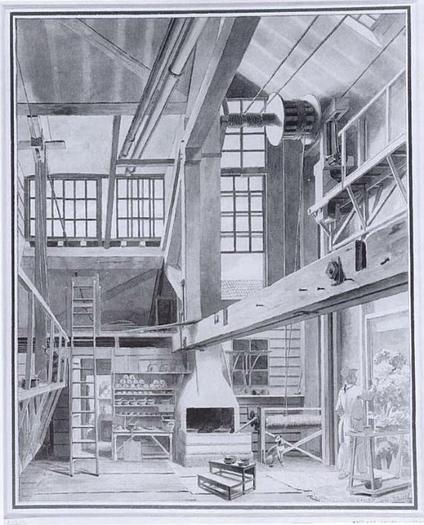
Scenic artist at work, 1790. Image @British Museum

A beautiful drop scene that filled up all the area of the proscenium showed the English fleet drawn up in battle against France and Spain. The enormous painting was used to entertain the audience during a delay while preparations were made behind stage. In order to alleviate 20 minutes of boredom between scenes, the stage slowly rose to nearly the roof of the theatre in full view. A second water tank was built on the theatre’s roof to simulate waterfalls. (With the lack of temperature control in the 19th century and windows in the main area, one can imagine that the theatre’s interior developed a powerful moldy smell in the heat of summer!)

Audience watching a play at Drury Lane, Rowlandson, 1785

The behavior of the theatre goers at Sadler’s Wells left much to be desired. As early as 1711 it was observed that members of the audience were publicly drunk, and their behavior boorish and loutish. Karl Philipp Moritz, a German traveler in England in 1782, described in his travel diary the audience in a typical British play house. Not only was the crowd rowdy between scenes and before the performance (making a “noise and uproar”), but there was a constant pelting of orange peels, for oranges were “tolerably cheap”.

Besides this perpetual pelting from the gallery, which renders and English play-house so uncomfortable, there is no end to their calling out and knocking with their sticks till the curtain is drawn up…I sometimes heard, too, the people in the lower or middle gallery quarrelling with those of the upper one. Behind me, in the pit, sat a young fop, who, in order to display his costly stone buckles with the utmost brilliancy, continually put his foot on my bench, and even sometimes upon my coat. – Karl Philipp Moritz

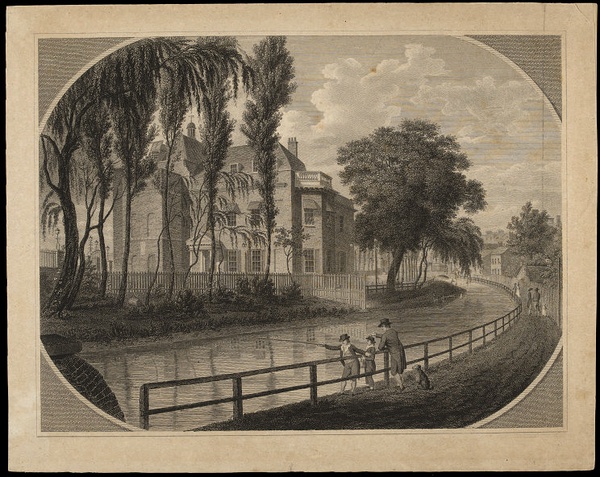
Another view of the theatre. Fishing seems to have been a popular pasttime as well.

If the Sadler’s Wells theatre audience had a particularly rowdy reputation compared to theatres in central London, one can only imagine how truly awful the experience was. The theatre slowly lost its lustre during the first half of the 19th century, for it was located in the rural outskirts of London. Without street lights and an organized police force, travel at night was dangerous, and patrons of the theatre were provided escorts as they traveled back to central London.

 Pinero’s play Trelawny of the ‘Wells’ (1898), portrays Sadler’s Wells as outmoded by the new fashion for realism. The theatre declined until, by 1875, plans to turn it into a bath house were proposed and, for a while, the new craze of roller skating was catered to, as the theatre was converted into a roller-skating rink and later a prize fight arena. The theatre was condemned as a dangerous structure in 1878. – Wikipedia

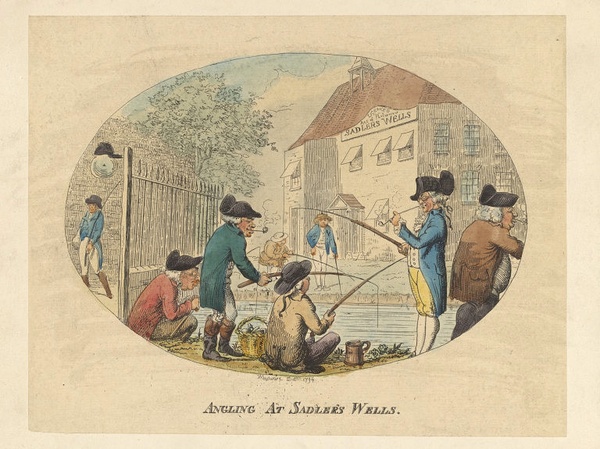
Anglers at Sadler’s Wells.

Read Full Post »

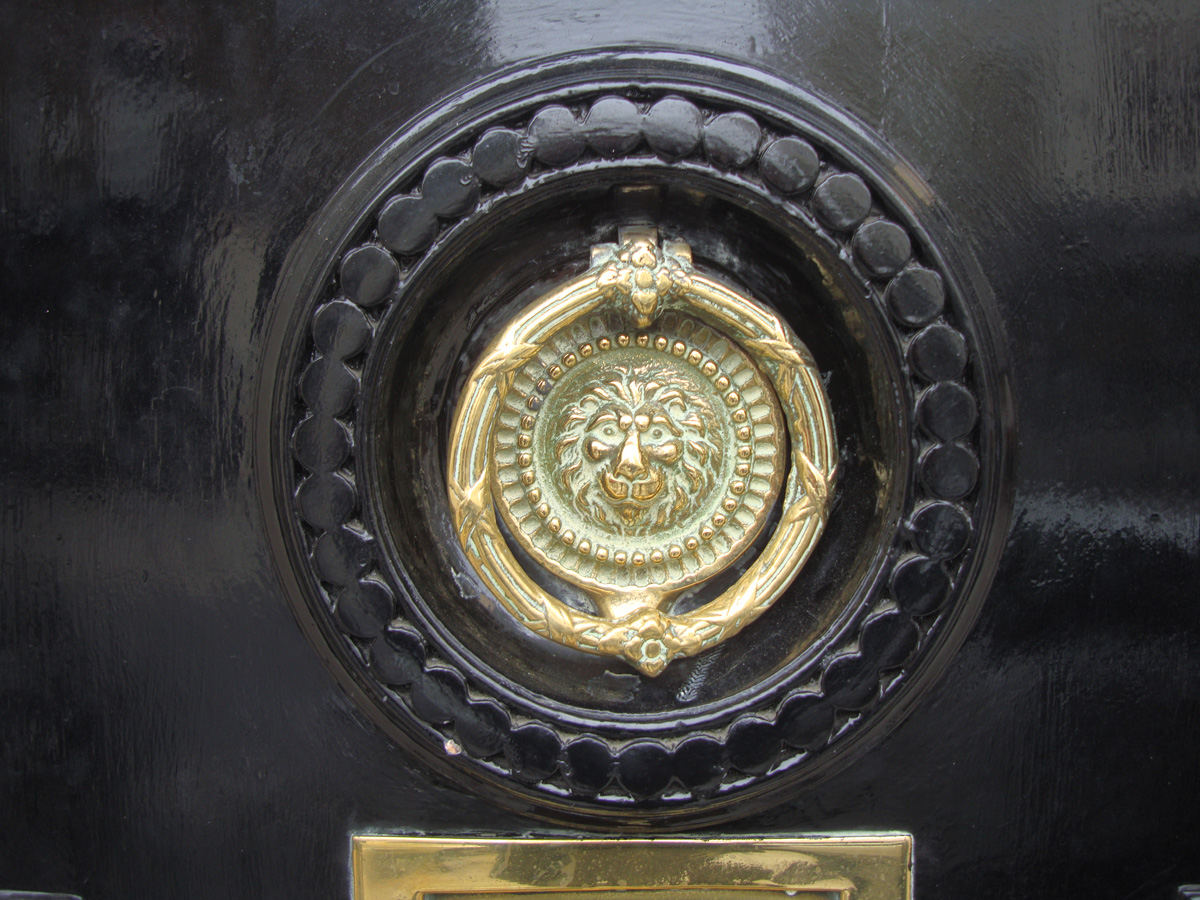
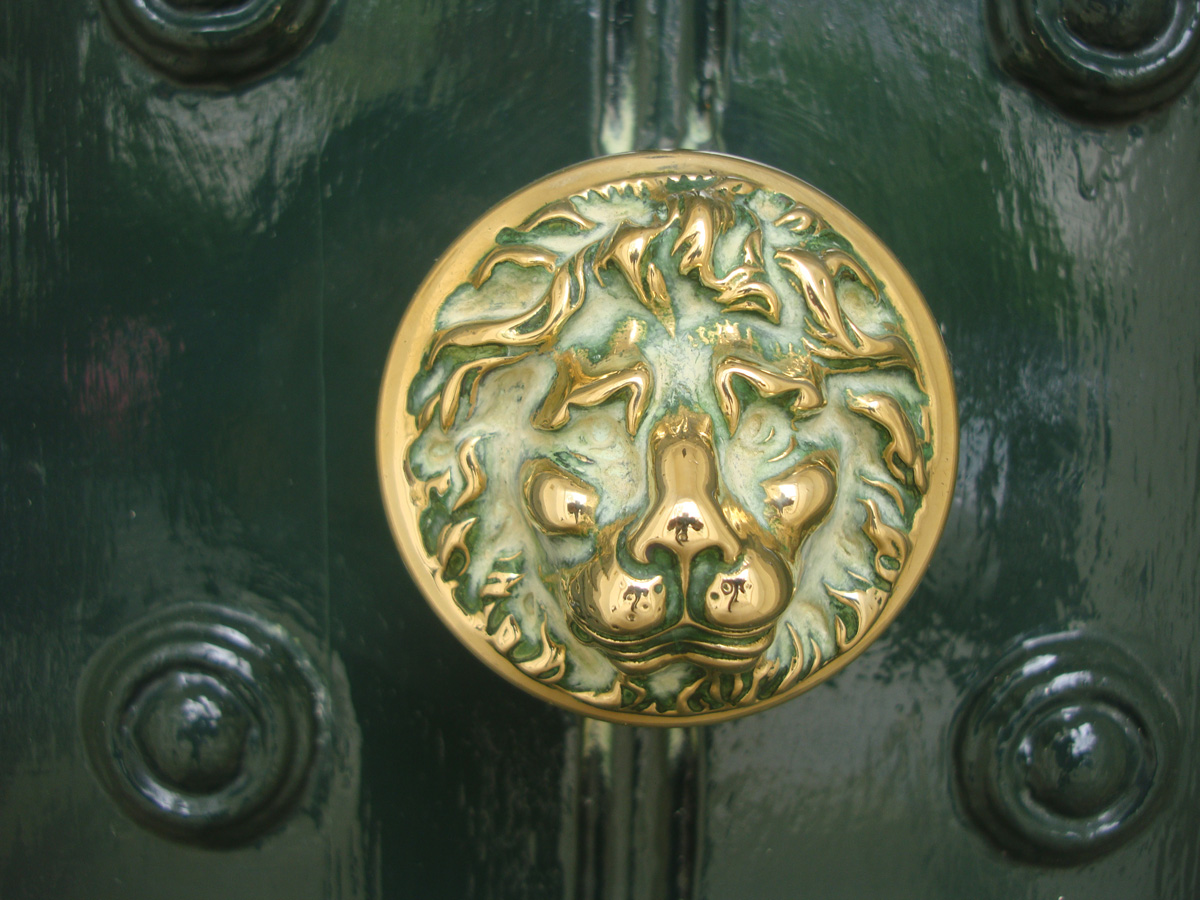
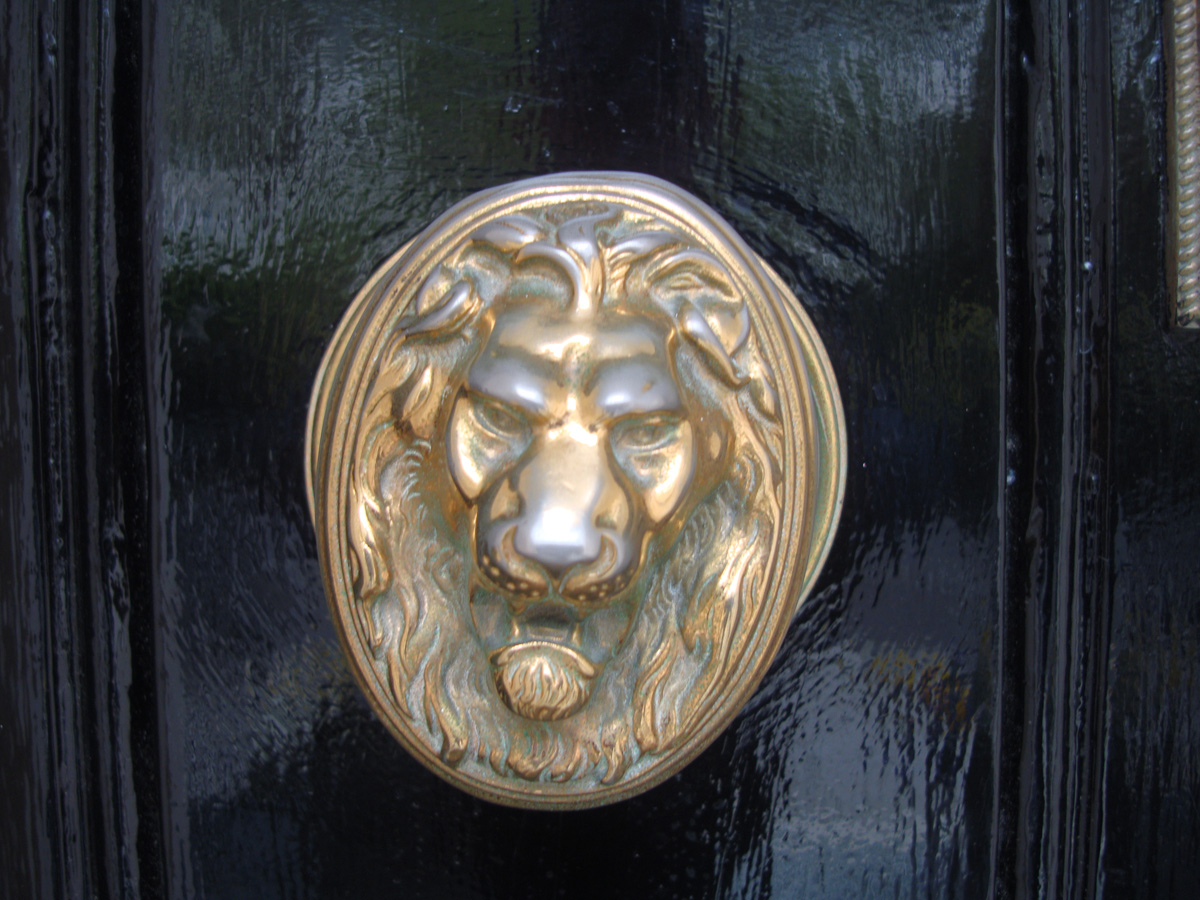
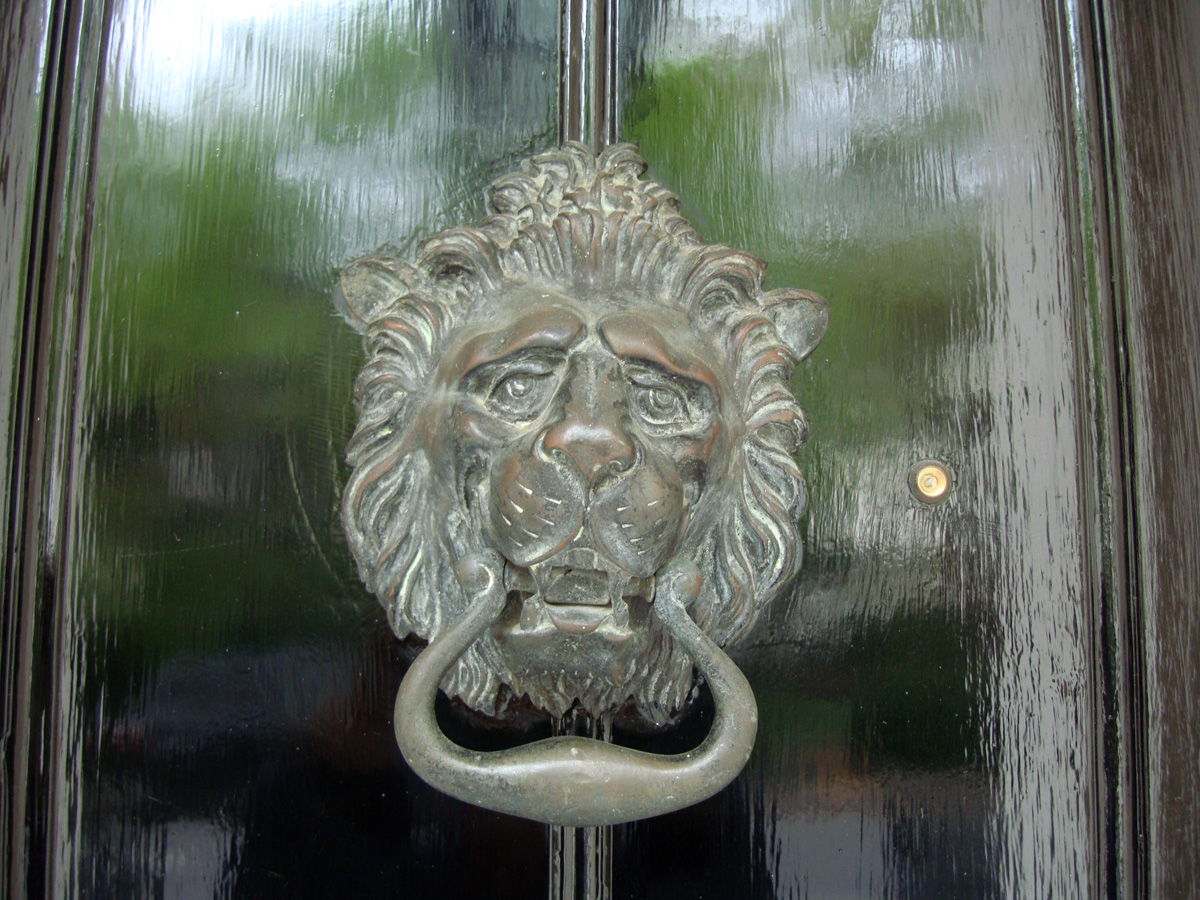
Inquiring readers, guest blogger Tony Grant is a marvelous photographer, as you might have discovered from the images that accompany his posts. A week or so ago he wrote a post about door knockers. He provided only two original images: the rest came from the web. Last weekend he rectified the situation, saying:

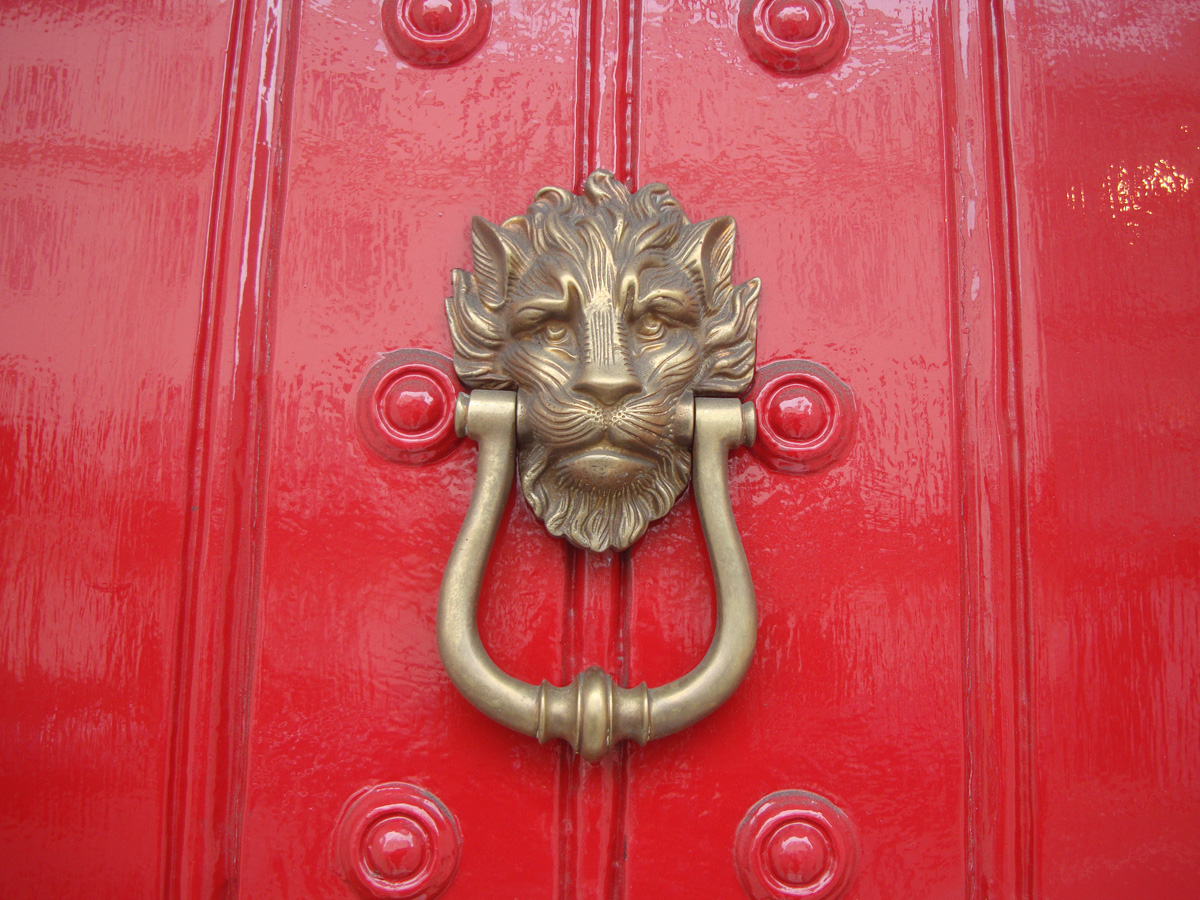
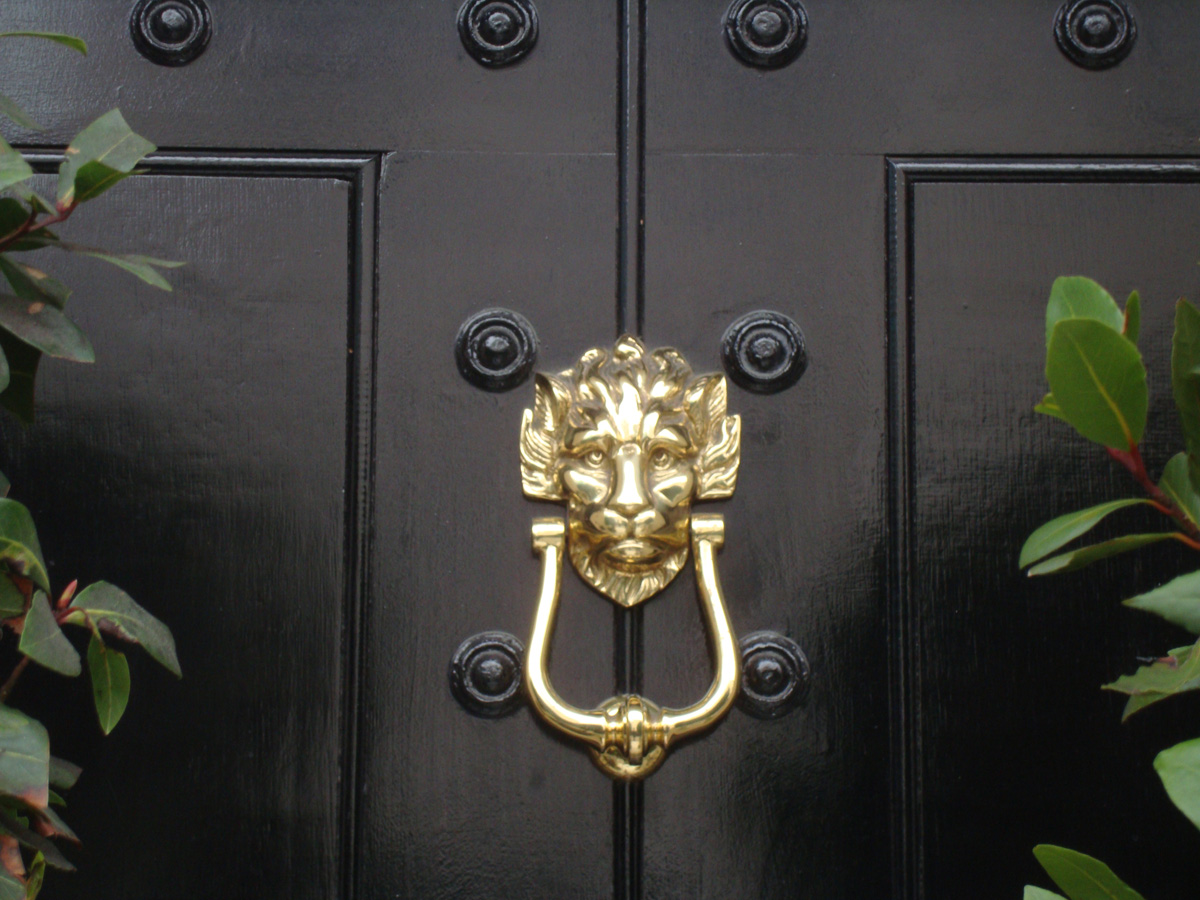
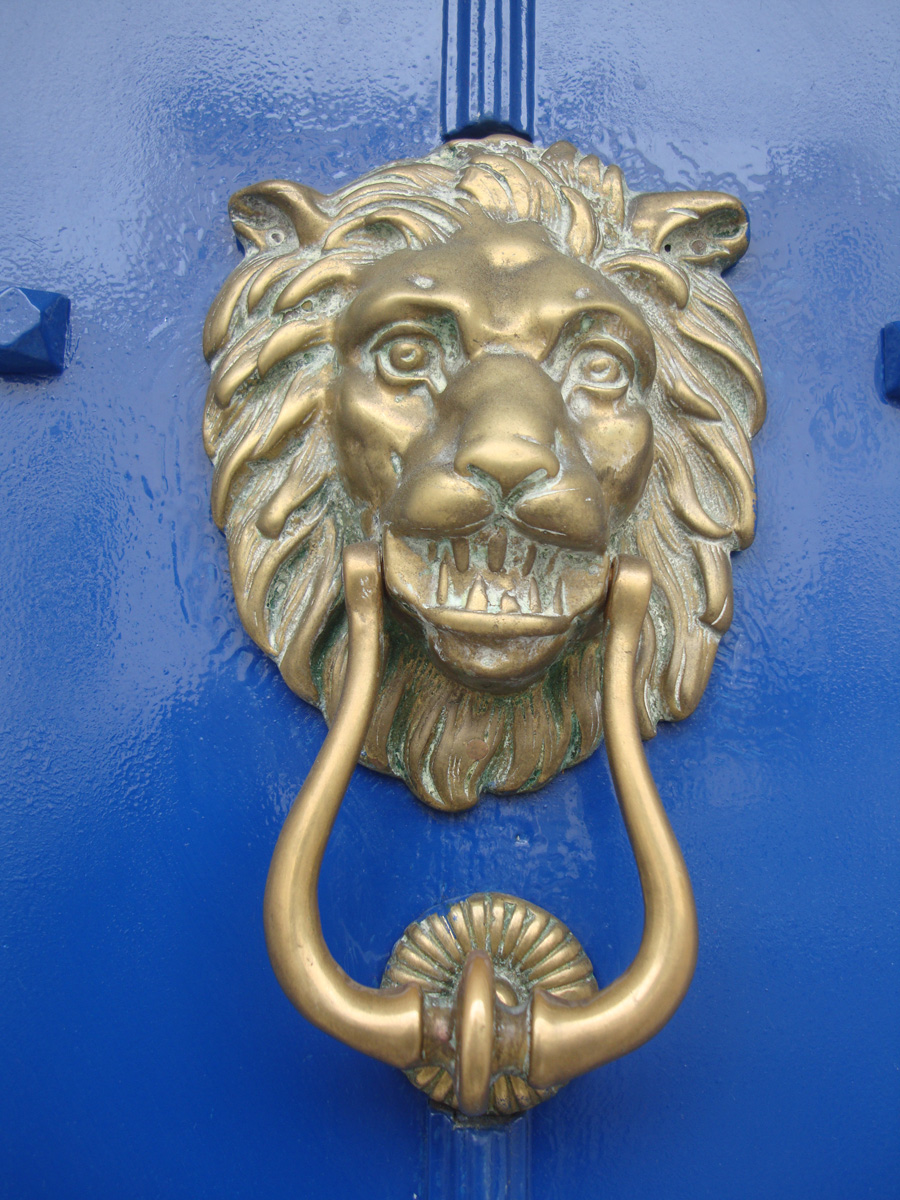
I drove into London to meet my daughter off the Cardiff coach at Victoria Coach Station today. I think I did an article on Belgravia once connected with the upstairs Downstairs series. Victoria is in Belgravia.To cut this story short, I had time to have a walk around Belgravia and along Eaton Square. The doors to those houses have a superfluity of Lion head door knockers.
What I have discovered taking these photographs is that  each lion head has it’s  own personality. They are all different which means they were all made individually, each from their own unique mould.

What struck me in viewing those photos is how beautifully painted the doors are. Tony is right – the lions all have their own personalities! Enjoy. Click on each image to view the larger photo.

Read Full Post »

Gentle Readers, Frequent contributor Tony Grant has supplied us with yet another treat: a post about door knockers. After you have read it, you will want to hop on over to his blog, London Calling, in which he describes his trip to Venice. 

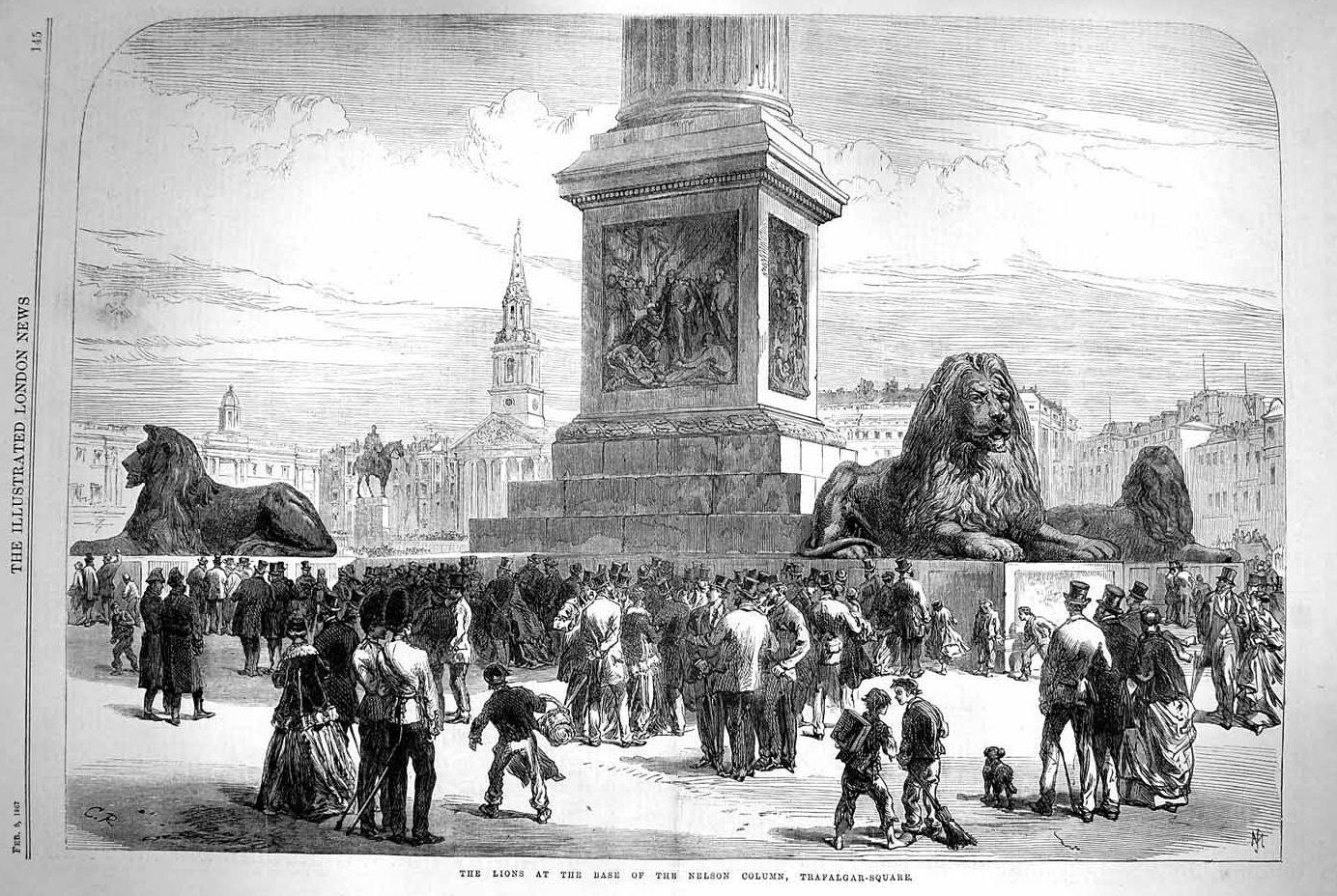
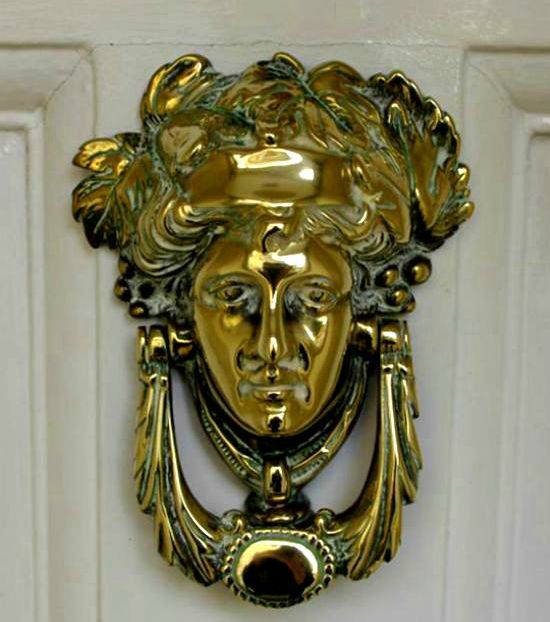
The quintessential door knocker in Georgian architecture is the brass lion head with a large brass ring gripped in its mouth. It has been used as a symbol of Great Britain for centuries. Trafalgar Square has four enormous bronze lions positioned on great granite plinths at the four corners of the base of Nelson’s Column. They are made from the melted down bronze from canons captured from French ships at The Battle of Trafalgar.

Lions at the base of Nelson's Column, Trafalgar Square. Image @The Illustrated London News

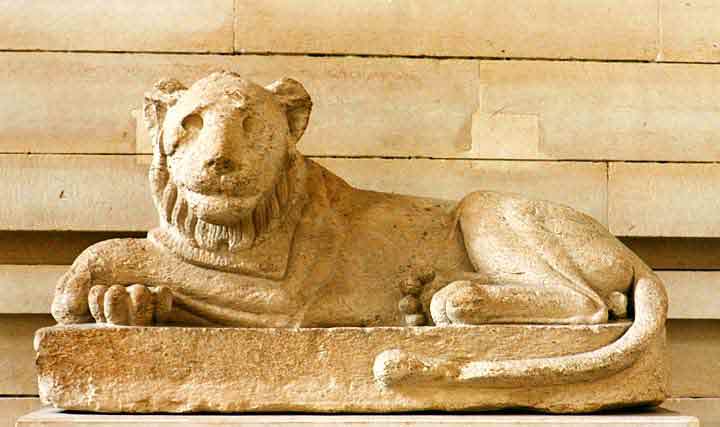
All coats of arms relating to the monarchy have lions as a prominent feature of their design, usually rampant. Lions have been used symbolically since the Paleolithic period.

Egyptian lion sculpture carved out of limestone, Louvre

The Egyptians carved sphinxes, half man, half lion. They symbolise power and strength, courage and fortitude.

Heraldic lion

You can go to any part of London and you will come across Victorian or Georgian housing still with their original door furniture. Very often the door furniture will include a brass lion head door knocker. This could be a sign of Victorian and Georgian confidence. A sign for people of the greatest and largest empire the world has ever known. For the visitor it is their first contact with the house and a way of communicating their arrival by lifting the knocker and rapping it smartly against its back plate. The back plate to a lion head knocker is the lion’s head.

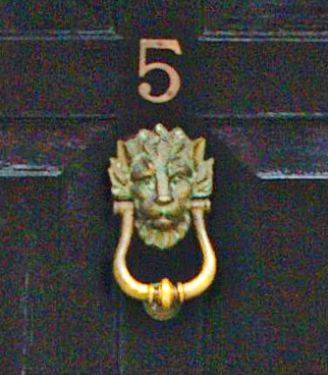
Lion door knocker. Image @Tony Grant

Knocking on a door does two things. First it makes the visitor take hold of the house. The hand grips the knocker. It is a like a handshake; a very English form of greeting. Secondly, through the sound of the knock it communicates to the occupants that somebody is visiting. The way the door is knocked can express other things too like haste, frustration, timidity or confidence.

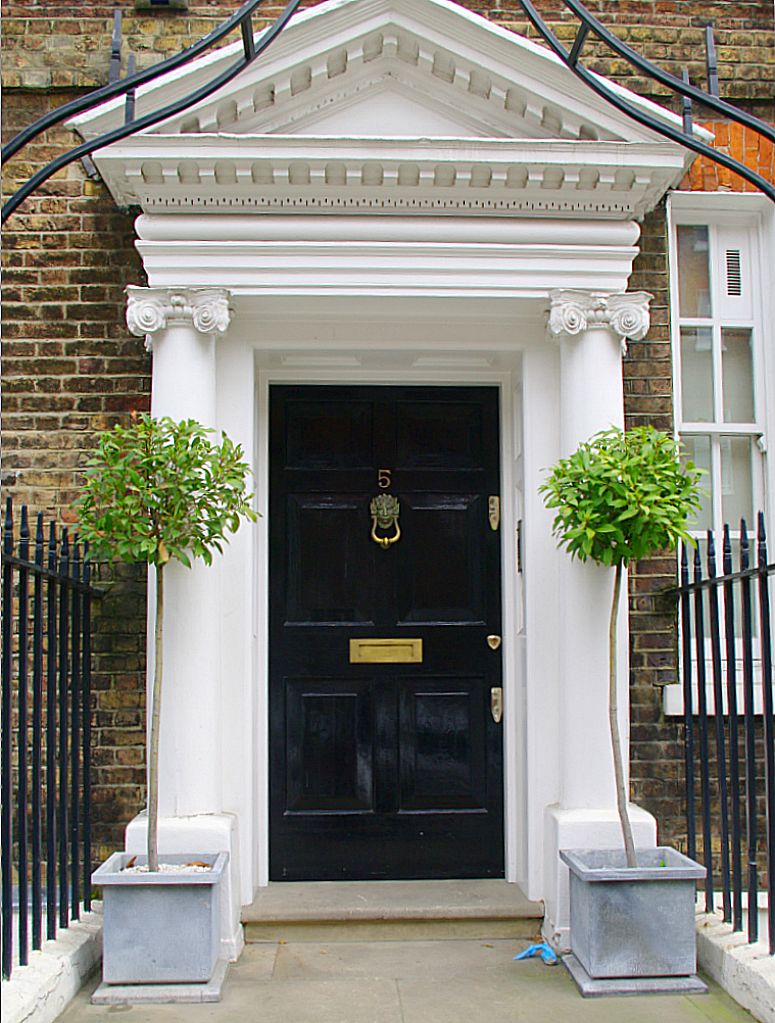
Front door with lion knocker. Image @Tony Grant

The fact that many Georgian houses have door knockers that are the originals means that we today in the 21st century, who are still using these door knockers to gain entrance, have a palpable, physical connection to people from past generations and from all classes of a past society.

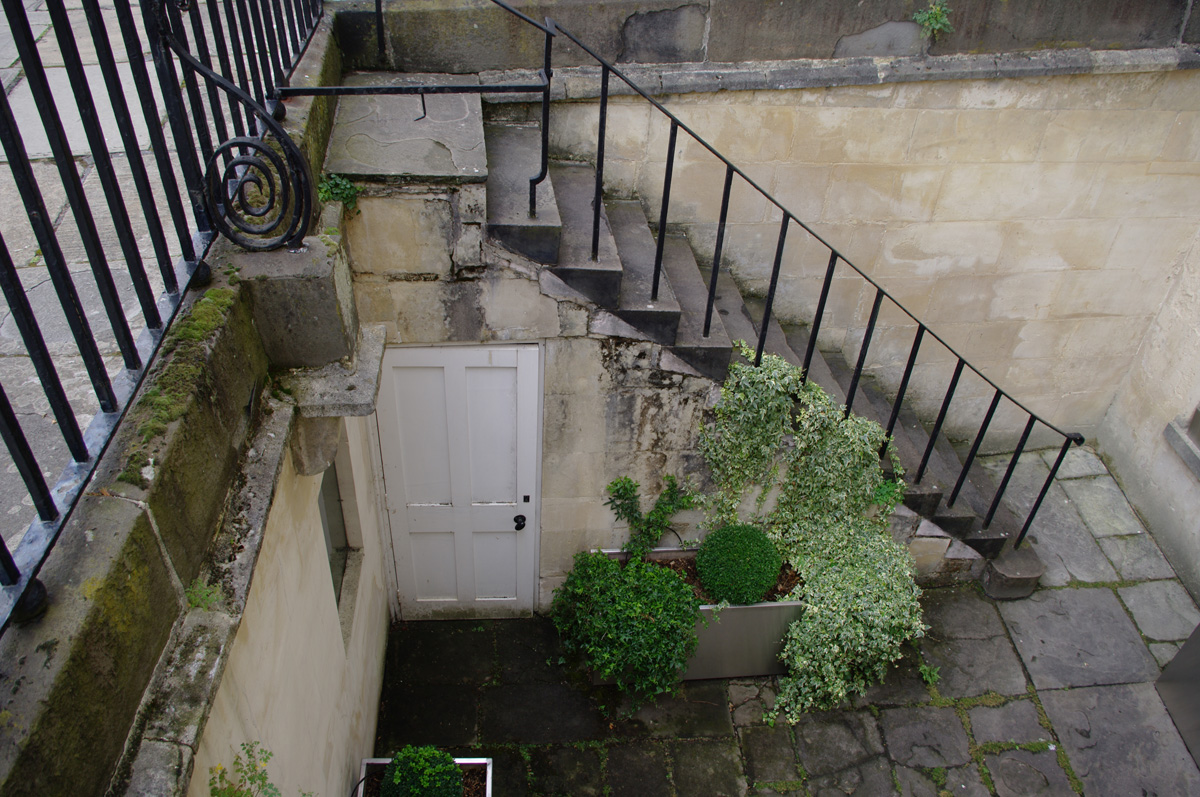
Downstairs to the servant's quarters, Bath. Image @Tony Grant

The servants belonging to the Georgian household would not have used the doorknocker of their own house. They would have slipped down the flight of stone steps near the front gate, to the servant’s quarters in the basement. However a footman or servant sent with a message or communication from another household would have used the front door knocker. The owners of the house would have knocked to alert their footman to open the door to them and their friends would have knocked to gain entrance too.

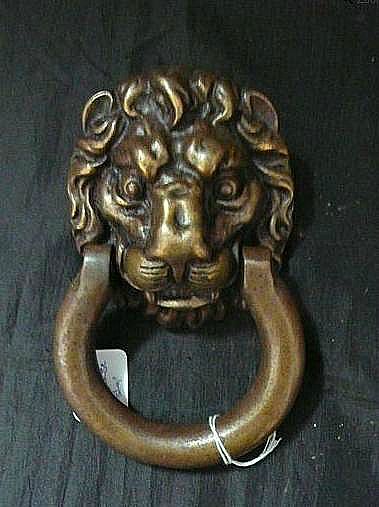
Door knocker made of brass. Image @Ruby Lane

A lot of door knockers are made from brass. Some are iron. Brass is a very special metal. It has a golden lustre when polished and expresses wealth, a friendly glow and a welcoming feel. Iron on the other hand can be aggressive and harsh. Iron against iron can cause a spark. It can rust and have unfriendly qualities. Brass on the other hand is benign. It is a malleable metal and has acoustic properties. In fact the brass door knocker on a Georgian front door can almost be regarded as a percussion instrument. The solid wooden door is the drum skin and the entrance hall behind it is the chamber within which the sound resonates and vibrates.

J. L. Settle door knocker at Portsmouth

Brass is used for many purposes, including bullet cases, artillery shell casings, horse accoutrements, locks, bearings, gears, musical instruments, horns and bells. It does not create a spark. It is low friction.

Brass is an alloy, which almost makes it a magical thing. It is an alloy of copper and zinc. The proportions can vary between the two metals to create different qualities in the brass. It is a substitutional alloy. This means that when the copper and zinc are melted together they replace some of each other’s atoms with their own atoms. Brass has been made since Roman times. You can imagine in the middle ages or earlier and perhaps even up to Georgian times people regarded blacksmiths and workers of metals almost as magicians being able to smelt ores and extract pure metals from their furnaces to make the most magical things. Brass is a difficult alloy to make, even more so than other alloys. Copper can be smelted easily but zinc cannot be smelted from it’s ore. Brass has to be created through what is called a cementation process. This is when smelted copper is mixed with the unsmelted zinc ore. This means that many impurities are included and the slag that is created has to be carefully separated during the alloy creating process. Zinc comes from rocks called hemimorphite and smithsonite. Lead is something that is also added to some brass alloys to create a different quality. However, sometimes, the lead leaches from the finished brass. Imagine that rubbing onto some unsuspecting visitors hands. Particles of lead unseen on the hands and transferred to the mouth and the digestive system.


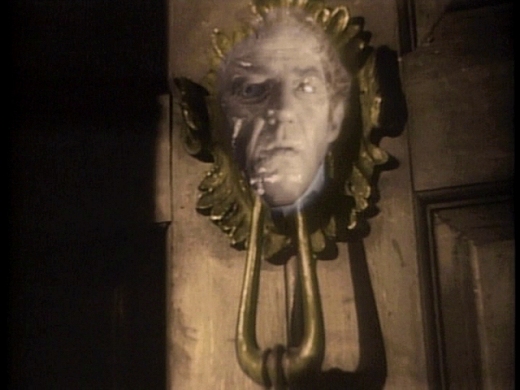
That thought lends new credence to the famous scene in Charles Dickens a Christmas Carol when Scrooge returns home on a cold misty winters night,

Now, it is a fact, that there was nothing at all particular about the knocker on the door, except that it was very large.  It is also a fact, that Scrooge had seen it, night and morning, during his whole residence in that place; also that Scrooge had as little of what is called fancy about him as any man in the city of London, even including — which is a bold word — the corporation, aldermen, and livery.  Let it also be borne in mind that Scrooge had not bestowed one thought on Marley, since his last mention of his seven years’ dead partner that afternoon.  And then let any man explain to me, if he can, how it happened that Scrooge, having his key in the lock of the door, saw in the knocker, without its undergoing any intermediate process of change — not a knocker, but Marley’s face.

Marley’s face.  It was not in impenetrable shadow as the other objects in the yard were, but had a dismal light about it, like a bad lobster in a dark cellar.  It was not angry or ferocious, but looked at Scrooge as Marley used to look: with ghostly spectacles turned up on its ghostly forehead.  The hair was curiously stirred, as if by breath or hot air; and, though the eyes were wide open, they were perfectly motionless.  That, and its livid colour, made it horrible; but its horror seemed to be in spite of the face and beyond its control, rather than a part or its own expression.

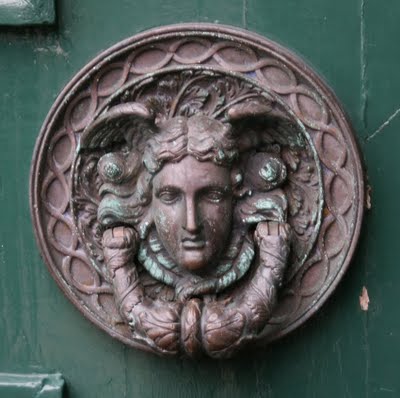
Another form of door knocker - that of a Roman god wearing a laurel wreath, Bath. Image@Tony Grant

As Scrooge looked fixedly at this phenomenon, it was a knocker again.

To say that he was not startled, or that his blood was not conscious of a terrible sensation to which it had been a stranger from infancy, would be untrue.  But he put his hand upon the key he had relinquished, turned it sturdily, walked in, and lighted his candle.”

Was it lead poisoning that was rotting Scrooges brain or just tiredness, misery, the cold and mist and darkness playing tricks with his imagination and senses?

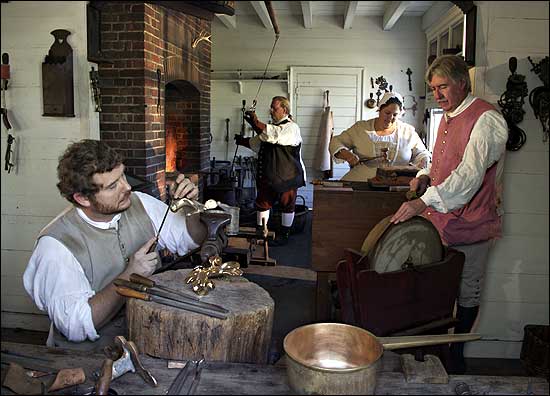
Filing a door knocker. Image @History.org Foundation Journal

To make a lion head door knocker a few technical and difficult processes have to be carried out. A mould has to be made. A carver carves a lion head pattern out of wood. A mould maker uses a box filled with a mixture of sand and clay to make a fire-proof  mould. The wooden pattern is pressed into the sand and clay composite and a lion head knocker mould is thus created. The molten alloy of copper and zinc that creates the brass is then poured into the mould and left to cool and solidify. When cold the brass knocker can be extracted and filed and sanded down to get rid of any rough surfaces. In this process, craftsmen, metal workers geologists and miners would form a trail of work and economy. Finally the finished  door knocker would have been sold to a carpenter making a door to then be sold to a builder who would fix the door in the house he made for a new purchaser.

Door knocker at the Brighton dome at the Brighton Pavilion, early 19th c.

More on the topic:

Read Full Post »

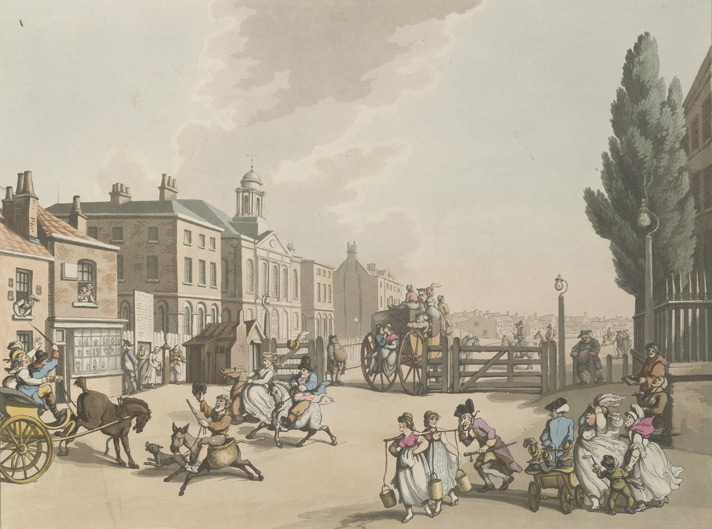
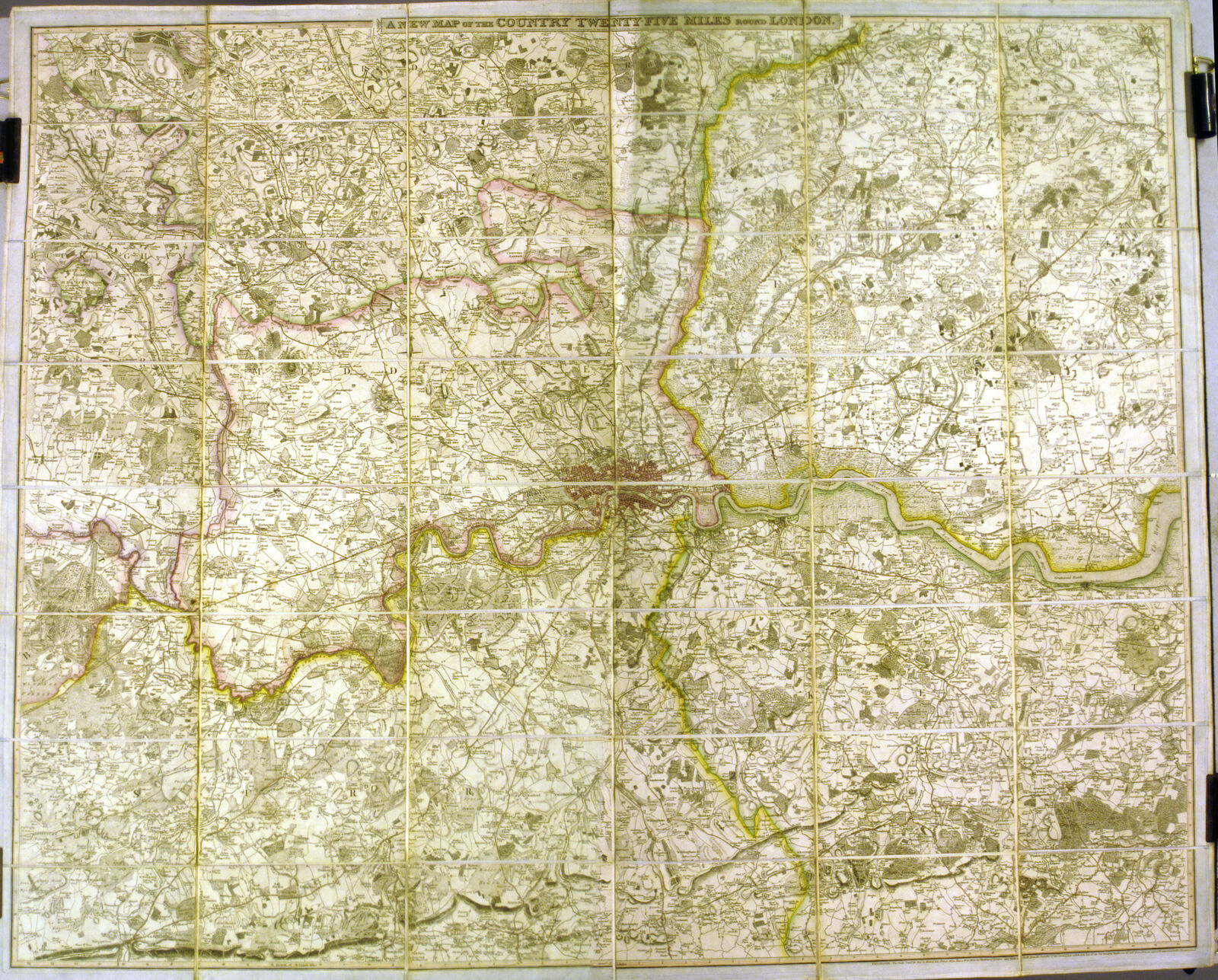
Inquiring readers, I had read about the closeness of rural areas near London during Jane Austen’s day. This image of Tottenham Court Road from the 1812 edition of Ackermann’s Repository shows the countryside beyond the toll gate. One imagines that Jane Austen was accustomed to such vistas when she visited her brother Henry in London. One moment she would be traveling through the countryside, the next moment she would be entering a teeming metropolis (Click here to see map):

In the first years of the eighteenth century, pastures and open meadows began by Bloomsbury Square and Queens Square; the buildings of Lincoln’s Inn, Leicester Square and Covent Garden were surrounded by fields, while acres of pasture and meadow still survived in the northern and eastern suburbs outside the walls. Wigmore Row and Henrietta Street led directly into fields, while Brick Lane stopped abruptly in meadows.“World’s End” beside Stepney Green was a thoroughly rural spot, while Hyde Park was essentially part of the open countryside pressing upon the western areas of the city. Camden Town was well-known for its “rural lanes, hedgeside roads and lovely fields”where Londoners sought “quietude and fresh air.” – Extract from “LONDON The Biography”, by Peter Ackroyd. Published by Vintage, 2001


The contemporary description of this view of St.James Chapel is telling:

The edifice selected for the subject of our view in the metropolis, for the present number, is the chapel of ease, situated near the turnpike in Tottenham-court-road, belonging to the church of St. James, Piccadilly. It was erected after a design of the celebrated architect, Mr. James Wyatt.

The contiguous parsonage-house on one side, and a school on the other, together with the plantations in the area between the front railing and the buildings, give great additional consequence to the appearance of the whole…

The vicinity of this chapel has recently witnessed one of those transformations of fields into houses, produced in every direction around the metropolis as if by the effect of enchantment. A prodigious street has just sprung up on the left-hand side, in continuation of Tottenham-court-road; and thus London has proceeded another good stage in its progress to Kentish Town. – St. James Chapel, Tottenham Court Road, 1812, Ackermann’s Repository

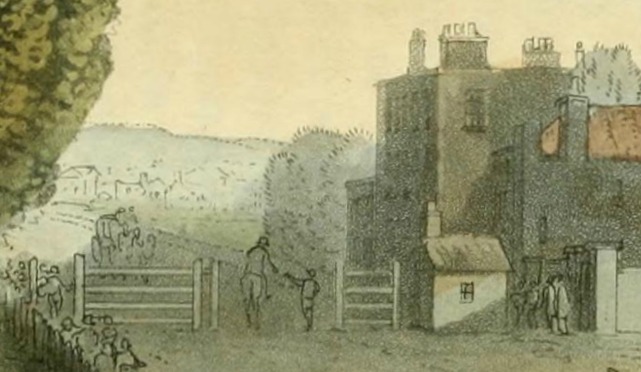
Detail of the turnpike. The toll keeper is collecting money from a man on horseback. Notice the small toll house, and the rural scene beyond.

The great age of toll gates and turnpikes was the 18th Century. In the latter part of the previous century, turnpikes were established and run by trusts. They could only be set up through Acts of Parliament, the first of which was passed in 1663. The idea was that the trusts would take over responsibility from parishes to maintain major trunk roads. They would collect the tolls, manage the finances and fulfil their obligation to use those funds to maintain the roads – Toll gates and turnpikes, London Historian’s Blog

Entrance, Tottenham Court turnpike by Rowlandson. Image @ Europeana

Rowlandson’s image shows another view of the turnpike. Pedestrians continued without hindrance via the side openings (except for the obese man, who seems to be stuck), but people on horseback and vehicles slowed to pay a toll in the gated center. Note Rowlandson’s detail of an old lecherous man ogling the two milk maids.

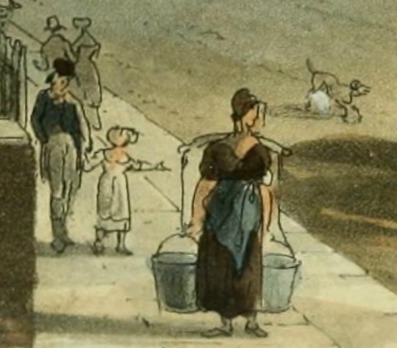
One milkmaid recorded her daily route and the results are astonishing: 19 miles.  Milkmaids are famous for their pretty skin, and this was largely because many of them had acquired immunity to smallpox through milking duties.  As milk delivery was a daily occurrence, many milkmaids ran slates for their customers, proving they were to some extent both literate and numerate, and also hard enough to call in a debt. – The Cries of Georgian London

Milk maids provided fresh drinks to customers. This one has just passed through the toll gate and has a long day's walk and work ahead of her.

“The cry of ‘Milk’ or the rattle of the milk-pail, will never cease to be heard in our streets. There can be no reservoirs of milk, no pipes through which it flows into the houses. The more extensive the great capital becomes, the more active must be the individual exertion to carry about this article of food. The old cry was ‘Any milk here !’ and it was sometimes mingled with the sound of ‘Fresh cheese and cream;’ and it then passed into ‘Milk, maids below;’ and it was then shortened into ‘Milk below;’ and was finally corrupted into ‘Mio’ which some wag interpreted into mieau—demi-eau—half water.”  – Buying Bread and Milk in 18th and 19th Century London, Susannah Ives

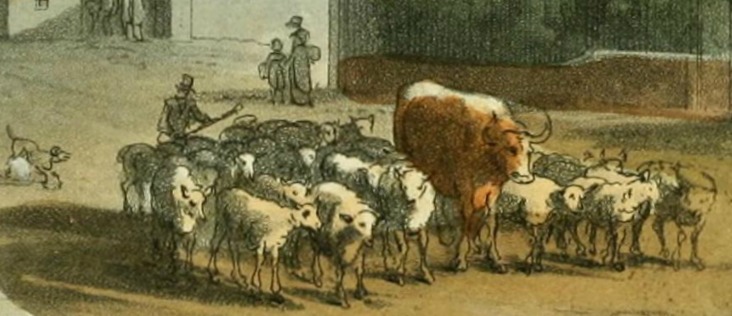
Detail of cattle being driven to market. One imagine that the streets were filled with dung and the smells of the animals, most of whom must have been frightened of the big city's sights and sounds.

This detail of sheep and an oxen being driven through the streets to market was a common sight. The people in this great metropolis had to be fed. In just a few hours these hapless animals will find themselves in the noisy, tumultuous, and bewildering environment of Smithfield Market, for instance. Without refrigeration, their meat would be sold, consumed or prepared within hours of their slaughter.

Cattle were driven through the streets until the mid 19th century. In an article for Household Words in March 1851 Dickens, with characteristic sarcasm, describes the environmental impact of having live cattle markets and slaughterhouses in the city:

“In half a quarter of a mile`s length of Whitechapel, at one time, there shall be six hundred newly slaughtered oxen hanging up, and seven hundred sheep but, the more the merrier proof of prosperity. Hard by Snow Hill and Warwick Lane, you shall see the little children, inured to sights of brutality from their birth, trotting along the alleys, mingled with troops of horribly busy pigs, up to their ankles in blood but it makes the young rascals hardy.” – Dickens’ London

Read Full Post »

Image recently added to @Wikimedia Commons

Prostitutes were regarded with mixed feelings in the 18th century. An awareness of the vulnerability of women who had few economic options for making their way in the world owed much to the sentimental view taken of prostitutes. Ladies of pleasure were generally born into poverty and had little education or work skills. The sentimental prostitute narrative, which was common at the time, rarely condemned these women. These narratives, whether in print or on canvas, tell the story of a prostitute’s career and sexual fall, and generally end their tales in two ways: happily, through her marriage or finding acceptable employment, or tragically with her death.

The Progress of a Woman of Pleasure was drawn by Richard Newton, a young artist who died at 21 in 1798, two years after making this illustration. The “Progress” formula, which Newton used for a variety of prints, is a familiar one to those who have viewed William Hogarth’s The Rake’s Progress, Marriage a la Mode, Industry and Idleness and A Harlot’s Progress. Progress series demonstrate in a progression of satirical paintings and prints how lives were transformed by temptation, bad luck and poor choices.

A closer look at Progress of a Woman of Pleasure reveals Newton’s sentimental take of the prostitute theme, as well as details about the life of an 18th Century lady of  ill repute. For many 18th century prostitutes, their occupation was transitional, meant to economically tide them over a particularly bad hump in their lives. Many eventually married or found another occupation.
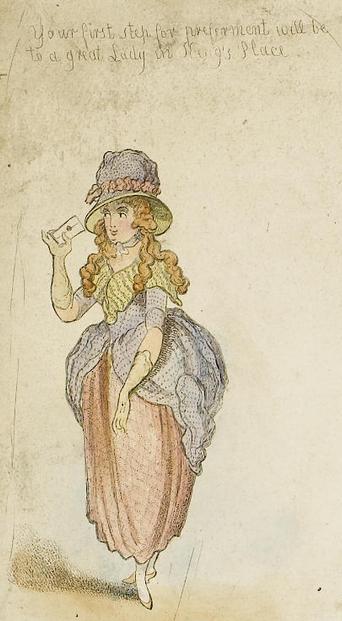
Your first step for preferment will be to a great lady in King's Place.

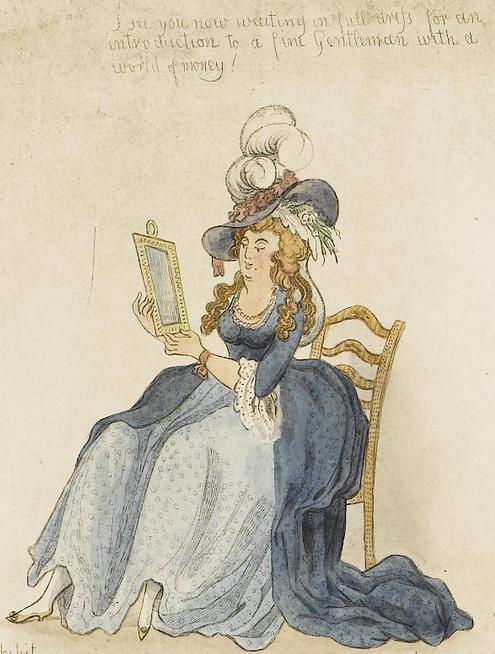
“A great lady in King’s Place” refers to Charlotte Hayes, who ran a high-class brothel in King’s-Place off Pall Mall. Gentlemen of the upper classes frequented this brothel located in london’s tony west end. With the use of the term ‘preferment’,  Newton makes it obvious that this woman has set her sights high. Her clothes are rather simple and plain as compared to the second scene below.

We see you now waiting in full dress for an introduction to a fine gentleman with a world of money!

London was a notorious hot bed for prostitutes. Fully one in five women in London (50,000) worked as ladies of the night. Many of them worked alone, plying their trade on the streets, in their own rooms, or in brothels. One foreign traveler was amazed at the variety of ways a man could have a woman:

…dressed, bound up, hitched up, tight-laced, loose, painted, done up or raw, scented, in silk or wool, with or without sugar. – Daily Life in 18th Century England, Kirsten Olsen, p. 49

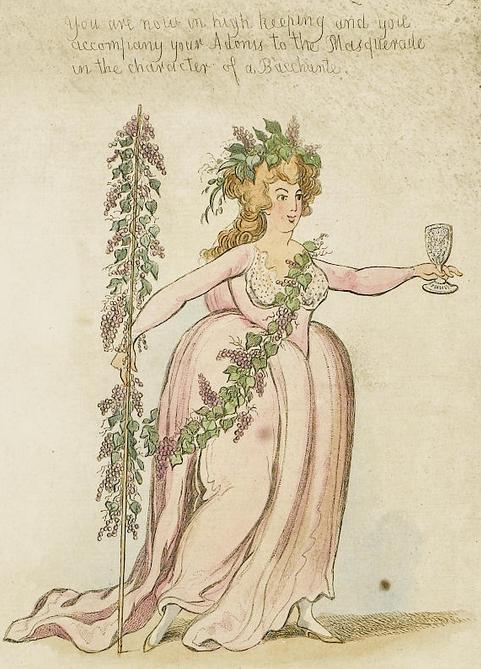
You are now in high keeping and you accompany your Adonis to the Masquerade in the character of a Bacchante.

Masquerades were wildly popular in 18th century London. Hidden behind masks and disguised in costumes, people from varying social classes freely intermingled at these events, where licentious behavior was common. Prostitutes attended these events in order to attract customers, or, as in this instance, were brought there by their benefactors.
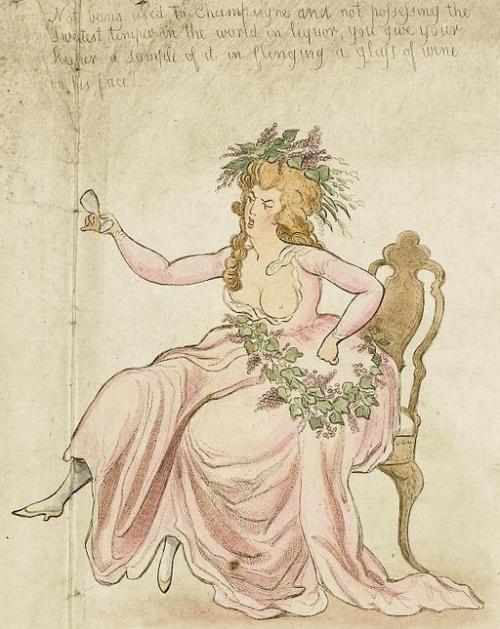
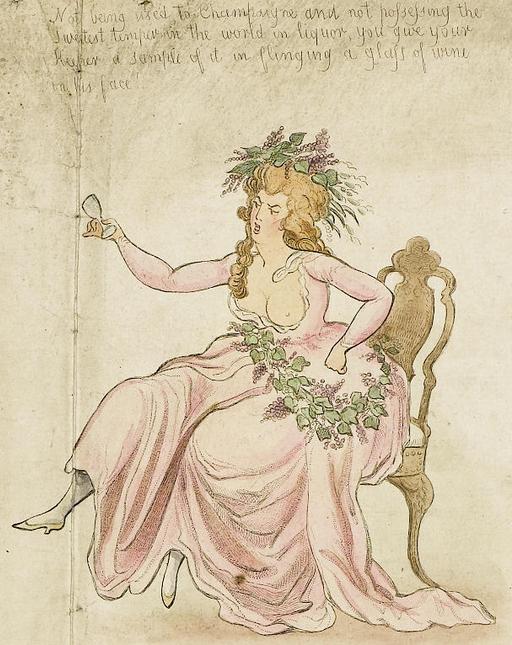
Not being used to champagne and not possessing the sweetest temper in the world in liquor, you give your keeper a sample of it by flinging a glass of wine to his face.

As this courtesan finds out the hard way, she is with her companion for only as long as she is useful to him. In this instance, her outrageous behavior causes him to cast her off.  The aim of the successful prostitute/mistress/courtesan was to find a benefactor from the highest echelons of society and to make a long-lasting arrangement that created a financially fruitful association for her. For the number of women who rose in the ranks of serving as mistress to important men, there was an equal number that had no place to go but down. The idea was to extend your association for as long as possible and retire in comfort.

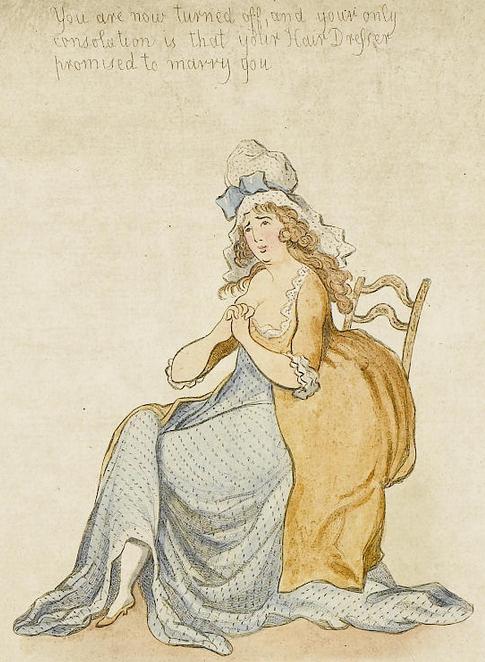
You are now turned off and your only consolation is that your hair dresser promised to marry you.

Newton’s prostitute must have been a pretty woman indeed if the hair dresser was willing to marry her. The attitude towards prostitutes in the 18th century was more forgiving that it would be in the 19th century, and a former courtesan could still attain a certain level of social acceptance. At this stage, Newton could have ended his sentimental “Progress” with a happy ending and shown our heroine as being reformed and leading a happy life. Note how simple and plain her dress is compared to the previous three drawings.

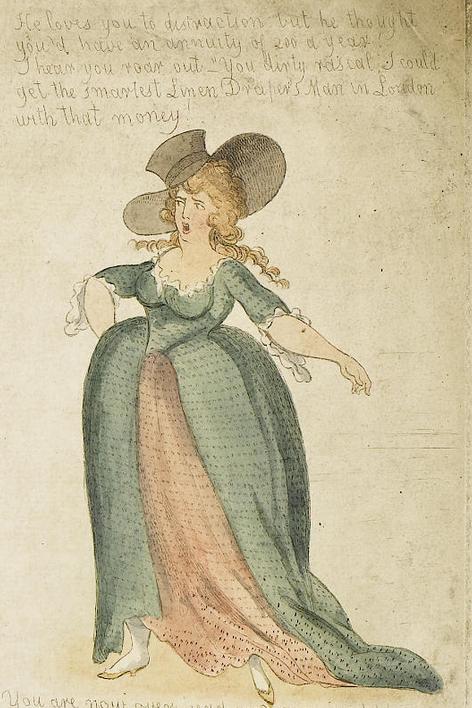
He loves you to distraction but he thought you'd have an annuity of 200 a year! I hear you roar out -- "You dirty rascal! I could get the smartest linen draper's man in London with that money."

Newton’s prostitute was not only a bit dim, but her huge ego stood in the way of her success. Two hundred a year was a huge sum of money for that day and age. A single gentleman in London could live very comfortably on that sum, although it would not allow him to keep a horse in Town. Nevertheless, such an amount would have been considered staggering for a prostitute and her working class husband. Newton’s contemporary audience would have understood this. Note how much more social caché a draper’s man had over a mere hair dresser! (Well, at least for a woman of her station. A lady wouldn’t have bothered to tell the difference, I’m sure.)

Our prostitute’s  pride ruins any chance of happiness she might have found as a respectable married woman. This up and down course of events is not unusual. Many prostitutes in their (generally) short careers went from rags to riches and back to rags and riches again. The cycle, in Newton’s instance, is ever downward.
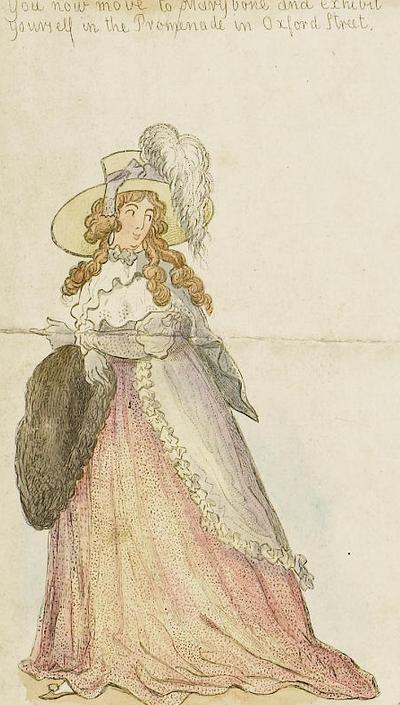
You move to Marybone and exhibit yourself in the Promenade in Oxford Street.

Marylebone was once a Georgian estate in London that was developed into housing tracts. By 1792-99, Richard Horwood’s map showed that the area from Oxford Street to the Marylebone Road was covered with houses. (The Heart of Marylebone.) Prostitutes were scattered throughout London, including the “Marybone” area (as many as 30,000 in Marylebone alone by one count):

They tended to gather in areas with looser police control; when the police became stricter in the City of London in the eighteenth century, the prostitutes gravitated toward the west and east ends of the city; when police control loosened in the early nineteenth century, they returned to the City. Prostitutes also tended to congregate in areas with cheap lodging houses and lots of men. St. Giles and St. James, home to many cheap boardinghouses, were popular with prostitutes in Westminster; the Docks, where many sailors disembarked, was popular on the east side of the city. – Prostitutes in 18th-Century London

It is interesting to note that William Holland, the artist’s publisher, had his shop on 50 Oxford Street.
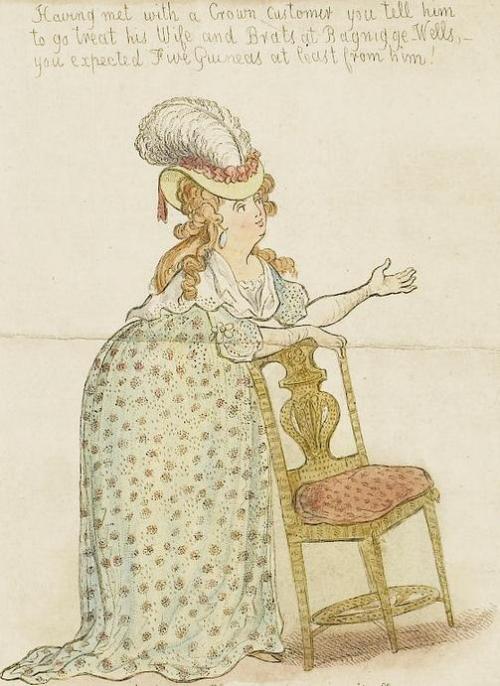
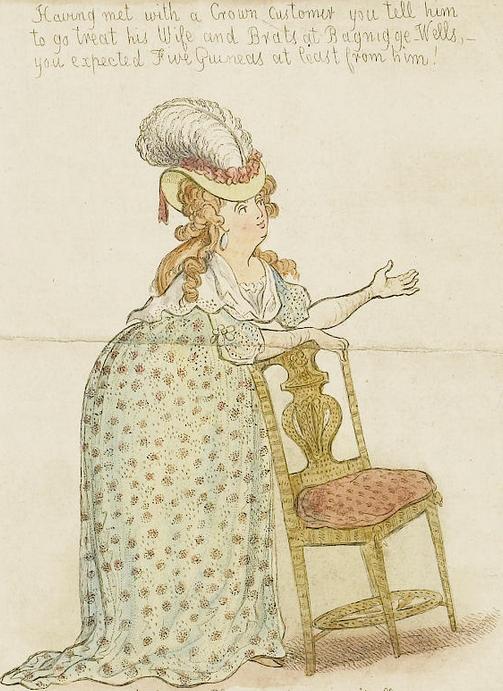
Having met with a Crown Customer, you tell him to go treat his Wife and Brats at Bagnigge Wells, you expected Five Guineas at least from him.

Bagnigge Wells no longer exists. It was a spa for the “middling sort”, located on the River Fleet near St. Pancras. The River Fleet is now one of London’s underground rivers. The guinea’s value was more than a pound. The coin itself was valuable, for it was made of gold and the value of a 5 guinea piece fluctuated during the 18th century. A crown was a silver coin worth five shillings, considerably less than a five guinea piece.
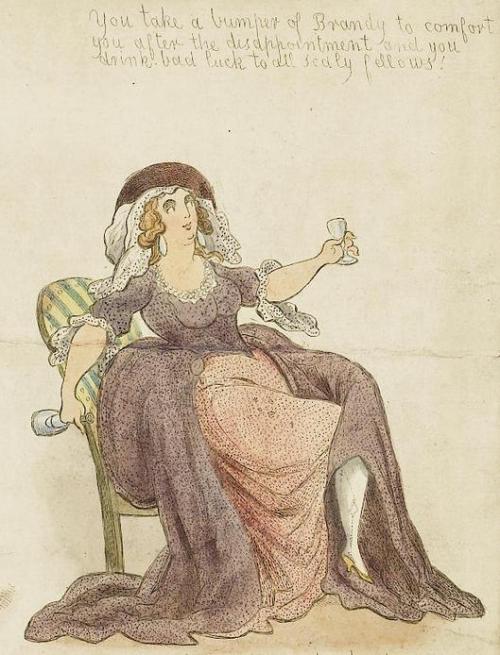
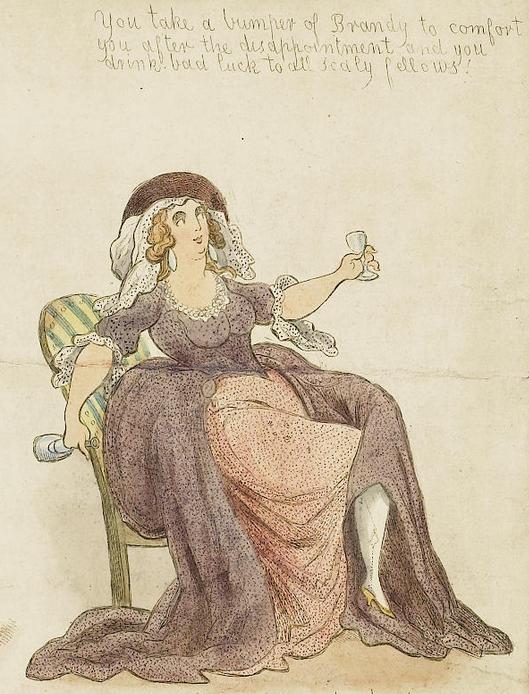
You take a bumper of Brandy to comfort you after the disappointment and you drink bad luck to all scaly fellows.

We already know that our prostitute does not take to drink well. She now turns to brandy. A bumper of brandy is no small amount, as you can see from the bottle in her hand. The Book of Scottish Anecdotes contains this little tale:

While Burns was at Moffat once with Clark the composer, the poet called for a bumper of brandy. “Oh, not a bumper,” said the musician. “I prefer two small glasses.”

“Two glasses?” cried Burns; “Why, you are like the lass in Kyle, who said she would rather be kissed twice bare-headed than once with her bonnet on.” – p81.

Scaly fellows were the lowest of the low. Also note the clocks (embroidery) on the prostitute’s stockings, which were quite fashionable in her day.

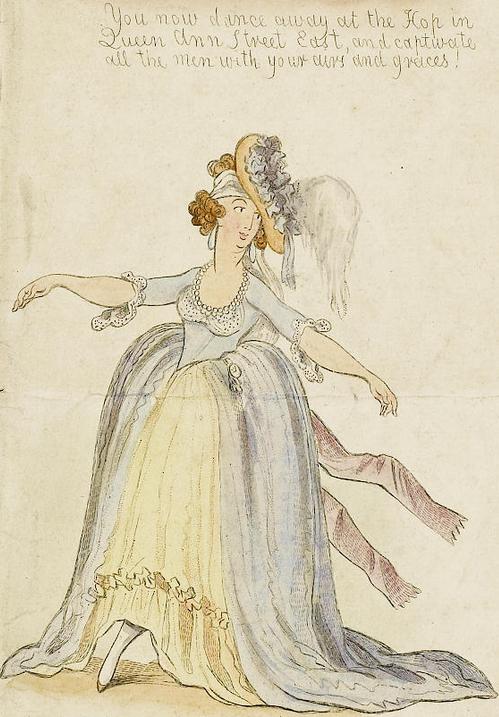
Harris’s List of Covent Garden Ladies contained a description of Miss Devonshire on Queen Anne Street. At this point, our lady of pleasure has gravitated towards a tavern on a street near Marlebone .

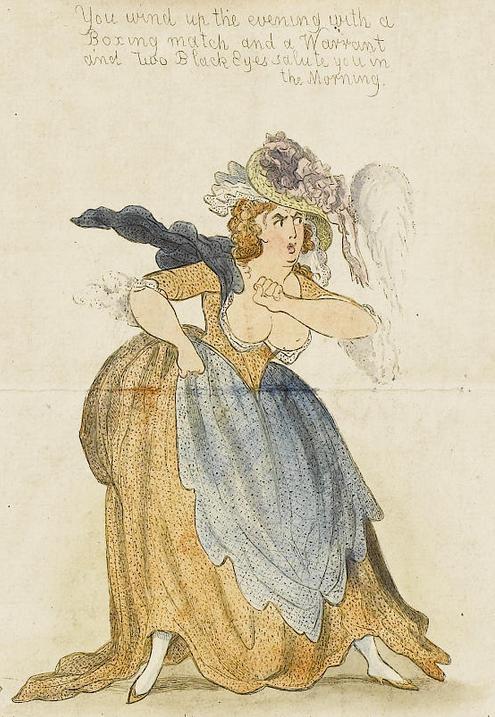
You wind up the evening with a boxing match and a Warrant and two Black Eyes salute you in the Morning.

Due to her inability to hold her temper, our lady’s downhill slide is guaranteed. Richard Newton was known for his drawings of bare-breasted ladies. It could not have been hard to tug a woman’s chemise down over her bosom in those days.
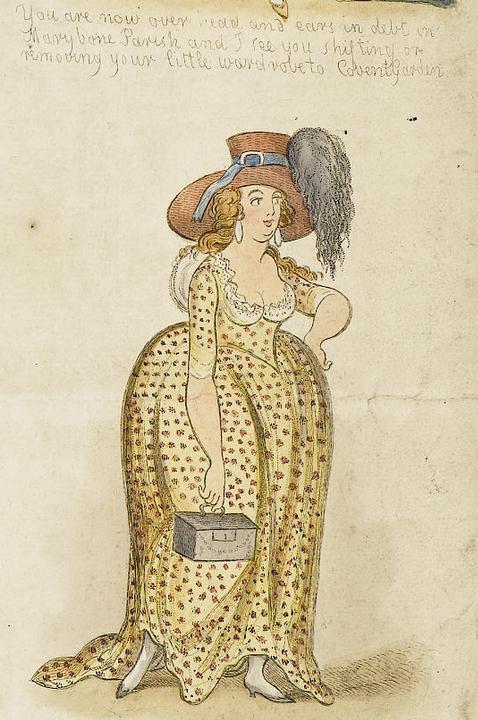
You are now over head and ears in debt in Marybone Parish and I see you shifting and removing your little wardrobe to Covent Garden.

Our lady of pleasure has moved from the West End to Covent Garden.

By the middle of the 18th century Covent Garden was full of seedy lodging houses and an astonishing number of Turkish baths, many of which were brothels.

Sir John Fielding, the magistrate, called Covent Garden ‘the great square of Venus’. He said, ‘One would imagine that all the prostitutes in the kingdom had picked upon the rendezvous’. – Prostitution in Maritime London

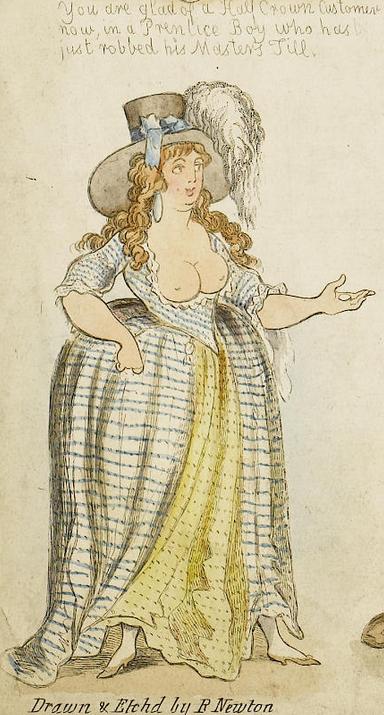
You are glad of a half-crown customer now, in a Prentice Boy who has just robbed his master's till.

And so our prostitute has fallen further. She is attracting customers of a lower sort, such as an apprentice who has taken to thievery to afford her wares. It is obvious that she no longer holds herself out for the highest bidder.

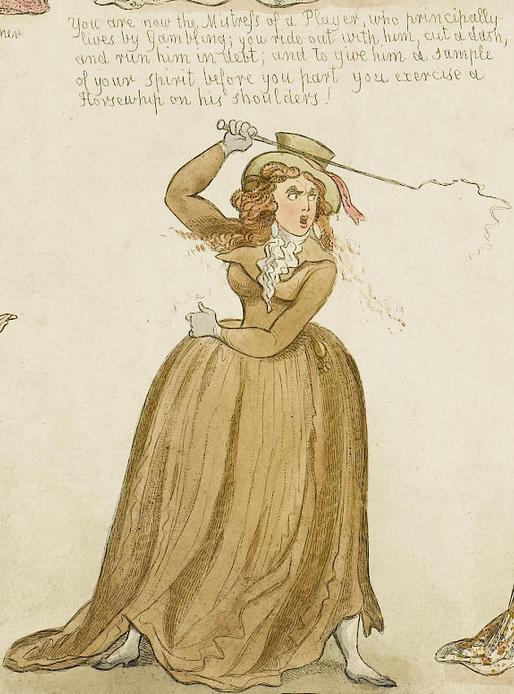
You are now the mistress of a Player, who principally lives by Gambling; you ride out with him, cut a dash, and run him in debt; and to give him a sample of your spirit before you part you exercise a Horsewhip on his shoulders.

Our lady of pleasure is on a slight uptick again, having become the mistress to a gambler. Riding outfits, made by tailors, were quite expensive. To cut a dash was to make a fine figure and to look quite smart. One assumes that the gambler took his mistress horse back riding in London’s Hyde Park, which meant that he kept her in fancy digs until his luck ran out. Once again, our lady of the night shows poor judgment and gives him a physical memory of her temper, flogging him with her riding whip.

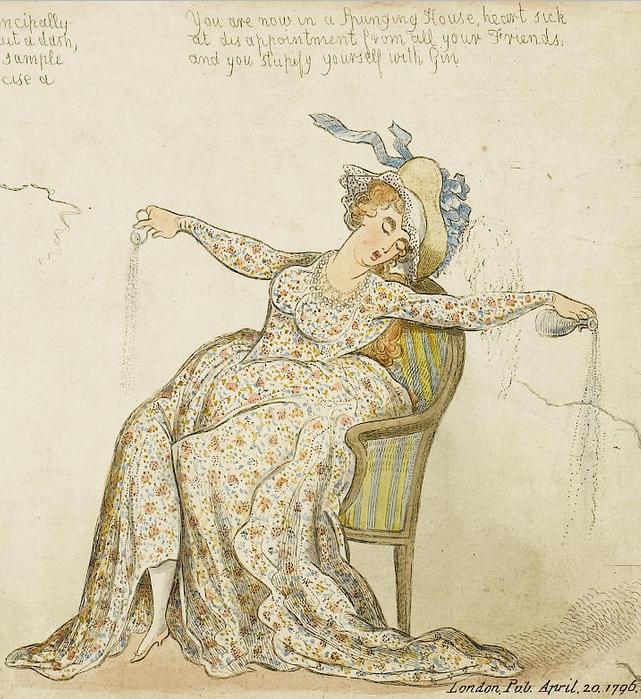
You are now in a Sponging House, heart sick at disappointment from all your Friends, and you stupefy yourself with Gin.

One can only imagine that this prostitute is reaping what she sowed, and that she made quite a few enemies when her luck ran high. Now that she is in debt herself, she has no one to turn to.

The normal process was for the debtor to be arrested by a bailiff or sheriff’s officer, and then taken to what was called a sponging-house, usually the officer’s own house. There, the debtor would be persuaded that they should pay their debts, otherwise, they faced a court appearance, and a debtors’ prison. – The Real Little Dorrit

Gin was also known as blue ruin. Before 1734 it was the drink of choice for poor people.

Along with promiscuous and adulterous behavior, gin became associated with prostitution, an issue that ranked high on the agenda of moral reformers. The association between gin and prostitution came about because gin-shops were public places that brought prostitute and customer together. It is important to note however that gin-shops were simply places where ordinary people gathered in a city where there were few other social spaces. As such, gin-shops were perhaps unfairly associated with prostitution in the sense that prostitution occurs where people happen to frequently gather. – The Gin Craze
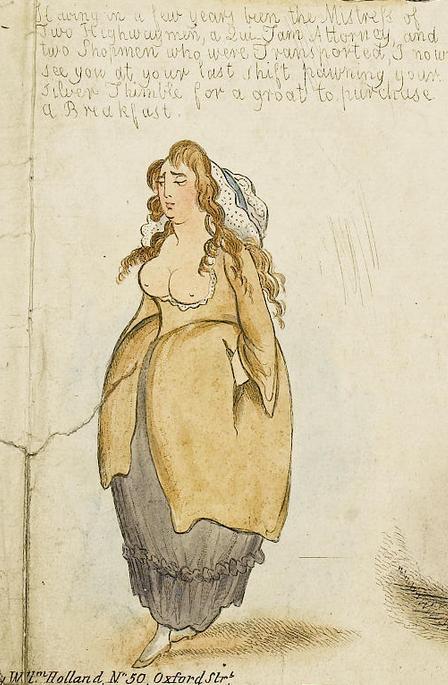
Having in two years been the mistress of a Two Highwaymen, a Qui Tam Attorney, Two Shopmen who were Transported, I now see you at your last shift, pawning your silver thimble for a groat to purchase your breakfast.

Our whore is so down on her luck, she’ll take any man as a customer, even criminals. Her two shopmen have been transported, to Australia no doubt.  She’s most likely working in back alleys and near the ports of London. Her jewelry is gone and her clothes are old-fashioned rags. Selling her thimble, an important item for sewing, for food means that she has no resources left.  I know little about ‘qui tam’ attorneys except to say that their practice had fallen into disrepute in England by the 19th century.

A groat was worth only four pence in the 1700s.

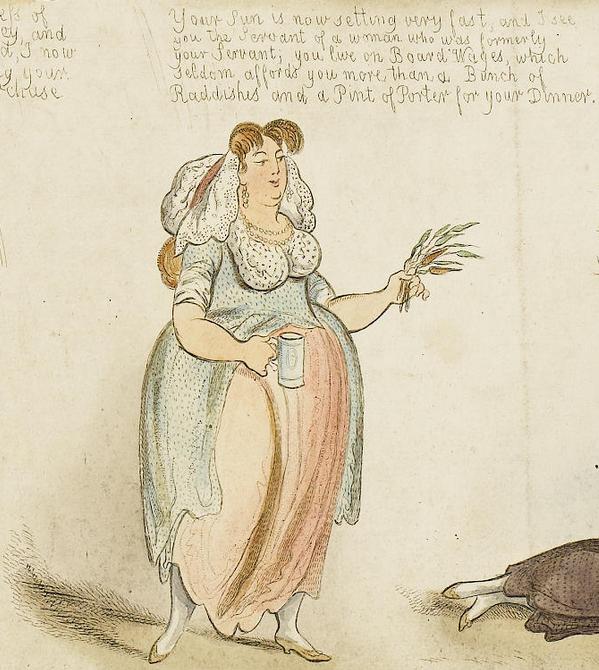
Your sun is now setting very fast, and I see you the servant of a woman who was formerly your Servant, you live on Board Wages, which seldom affords you more than a Bunch of Radishes and a Pint of Porter for your dinner.

Board wages mean that our prostitute worked very hard to earn enough money for her room, but had barely enough left over for food. Porter during this time was a strong dark beer. It was a good thing that she could afford alcohol, for I imagine that the wells in her neighborhood were contaminated with fecal matter. Water was a dangerous substance in the poorer sections of London. This prostitute’s narrative provides a cautionary tale for viewers. Her actions caused her downfall; her inability to hold her temper or her drink led to her ruin.

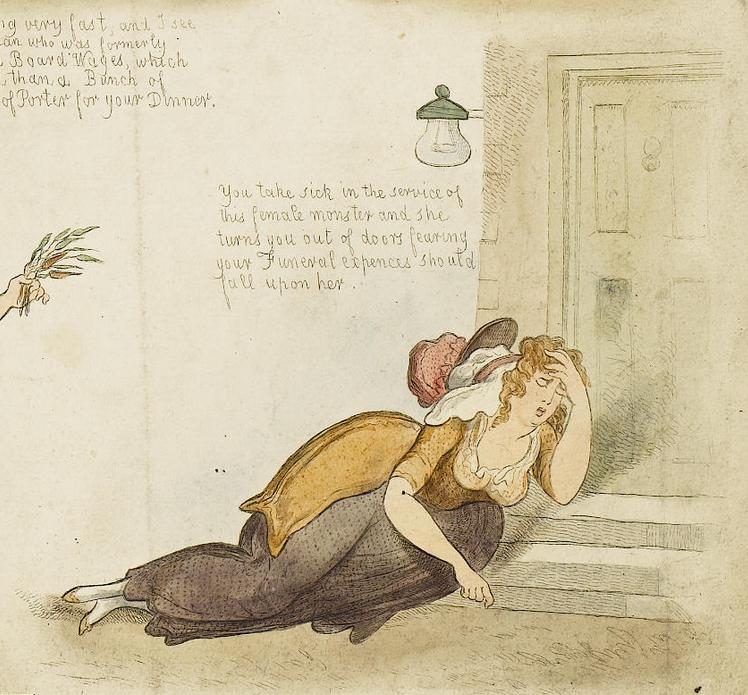
Our “heroine” falls sick and dies outdoors, to be buried in a potter’s field. Nothing could have been said more clearly about this unfortunate woman’s social worthlessness than her degrading end: No one, not even her former servant, now mistress, is willing to put up a single pence for her funeral.
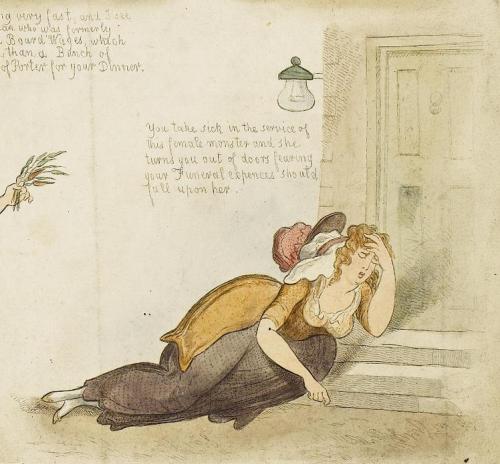
You take sick in the service of this female monster and she turns you out of doors fearing your Funeral expenses should fall upon her.

More on the topic:

Read Full Post »
« Newer Posts - Older Posts »