Feeds:
Posts
Comments

Archive for the ‘jane austen’ Category

A Dance with Jane Austen: How a Novelist and her Characters went to the Ball, Susannah Fullterton

“Ah”, I said, when I saw Susannah Fullerton’s book in my mail box. “Here’s just the book I need.” Some of the biggest gaps in my Austen reference library concern dance and music. Whenever I wanted to find out more about the social customs of balls and dancing, how ladies and gentleman conducted themselves, the food served at supper balls, the etiquette of a gentleman’s introduction to a lady before he could dance with her, precisely when the waltz became acceptable not only among the racy upper crust but with villagers in the hinterlands as well, and the difference between private balls and public balls, I had to consult a variety of books. This was time-consuming, and a bit frustrating, for there were variations in details that each source offered.

And now Susannah Fullerton has come to my rescue! Readers who have visited the Jane Austen Society of Australia (an excellent site) know that Ms. Fullerton is its president, and that she has written a previous book, Jane Austen and Crime. A Dance With Jane Austen is a compact illustrated book crammed with information, but written in a relaxed and accessible style. Topics include: Learning to dance, Dressing for the dance, Getting to and from a ball, Assembly balls, Private balls, Etiquette of the ballroom, Men in the ballroom, Dancing and music, ‘They sat down to supper’, Conversation and courtship, The shade of a departed ball, and Dance in Jane Austen films.

Ms. Fullerton culls information from Austen’s letters, novels, and historic texts, such as The Complete System of English Country Dancing, by Mr. Wilson, a dancing master of some renown and decided opinions. She also describes how Beau Nash, the influential master of ceremonies and taste maker in Bath, laid down a set of rules for Society to follow. Nash single-handedly changed a small, sleepy city into THE playground for the smart set with his dictums and innovations, which lasted well beyond his death.
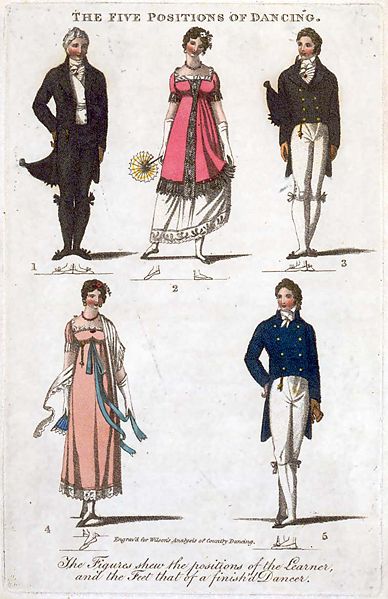
The Five Positions of Dancing, Wilson, 1811

Jane Austen was no stranger to Bath’s public assemblies, or to dancing in private settings. She loved to dance and rarely said no when a man approached her for a set. Jane danced as often as she could, wryly observing to her sister when she was in her thirties and when partners became scarcer: “You will not expect to hear that I was asked to dance, but I was.”

Getting to a ball might be problematic for those who had no means to keep horses or carriages. It made little sense to walk miles in fancy garb over dirt roads to a social event, and so arrangements needed to be made for those who were going to a dance to piggy-back with individuals who were willing to take them. This meant arriving and leaving a dance on someone else’s schedule. Catherine Morland did not walk to the Assembly Rooms, but took a sedan chair, for private carriages were seldom used within Bath proper. Her journey from “Great Pulteney Street to the Upper Rooms would have cost her between one shilling and six pence and two shillings (one way) – an expensive luxury at the time.”
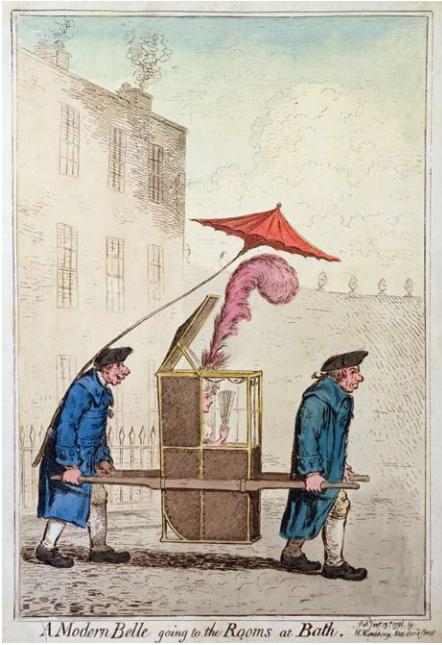
A Modern Belle Going to the Rooms at Bath, Gillray caricature

The dancing ritual was one of courtship, and Jane Austen took full advantage of a ball to set the stage for character development. In each novel she takes a different approach. Lizzie and Darcy tense relationship began at the Meryton Assembly Ball, a situation that was not helped at the private ball at the Lucas’s house nor at the Netherfield Ball, where Lizzie’s family behaved abominably. The dances in Mansfield Park serve to show how selfish the characters are, and to point out Fanny’s isolation from the neighbors. Dancing masters taught children to dance properly, and they received further practice at children’s balls, but Fanny had few opportunities for practice, and she felt tense when she was prominently displayed at her birthday ball. Jane Austen masterfully used the dances in Emma to show how Emma never quite loses sight of Mr. Knightley even as she dances with Frank Churchill, and one gets a good sense of the frustration Catherine Morland feels at not being able to dance at her very first ball in Bath, for there was no one to introduce her and Mrs. Allen properly, or the utter irritation she feels when John Thorpe ruins her well-laid plans to dance with Mr. Tilney at a later assembly ball. Austen also uses balls to demonstrate how outrageous Marianne Dashwood’s behavior is towards Willoughby, breaking many rules of etiquette and decorum.
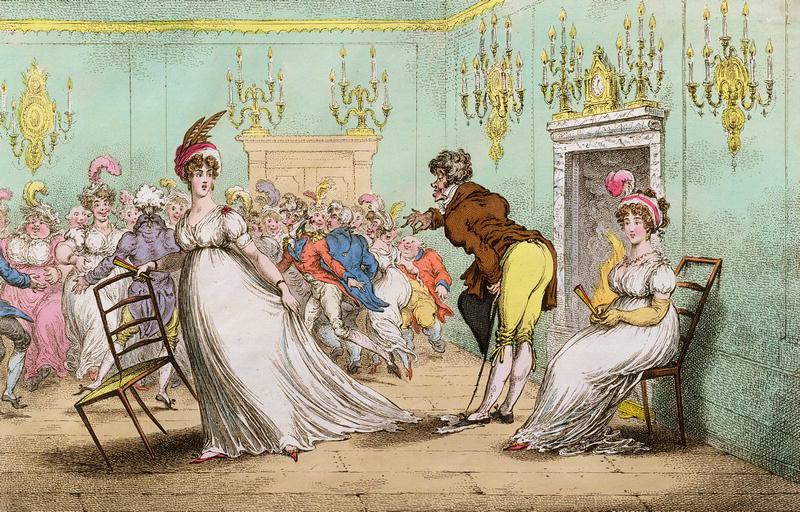
A Broad Hint of Not Meaning to Dance, James Gillray, published by Hannah Humphreys

Ms. Fullerton sets aside a few pages to discuss dances in films. These elaborately staged scenes are highly popular with film buffs. The costumes are beautiful, as is the music, and the settings are often quite lavish. But be aware that most of the dances and music are often inaccurate and chosen for cinematic effect. (As an aside, I was glad to note that Susannah’s take on Pride and Prejudice 1940 was similar to mine.)

Susannah Fullerton

Insights such as these make this book a sheer pleasure to read. A Dance with Jane Austen will be a valuable addition on the book shelves of any Regency author, Janeite, and history buff. As Susannah Fullterton says about her book:

Dances in the Regency era were almost the only opportunity young men and women had to be on their own without a chaperone right next to them, and dancing provided the exciting chance of physical touch. ..Dances were long – one often spent 30 minutes with the same partner – so there was plenty of opportunity for flirtation, amorous glances, and pressing of hands. After the dance was over, there was all the pleasure of gossip about everything that had happened.”

A Dance with Jane Austen will be available in October. Readers who are lucky enough to go to the Jane Austen Society Annual General Meeting in New York in a few weeks will have the opportunity to meet Ms. Fullerton! I give this book 5 out of 5 Regency tea cups.

Preorder the book at this Amazon.com link or at Frances Lincoln Publishers
Hardcover: 144 pages
Publisher: Frances Lincoln (October 16, 2012)
Language: English
ISBN-10: 0711232458
ISBN-13: 978-0711232457

Please note: The blue links are mine; other links are supplied by WordPress. I do not make money from my blog. I do, however, receive books from publishers to review.
Read Full Post »

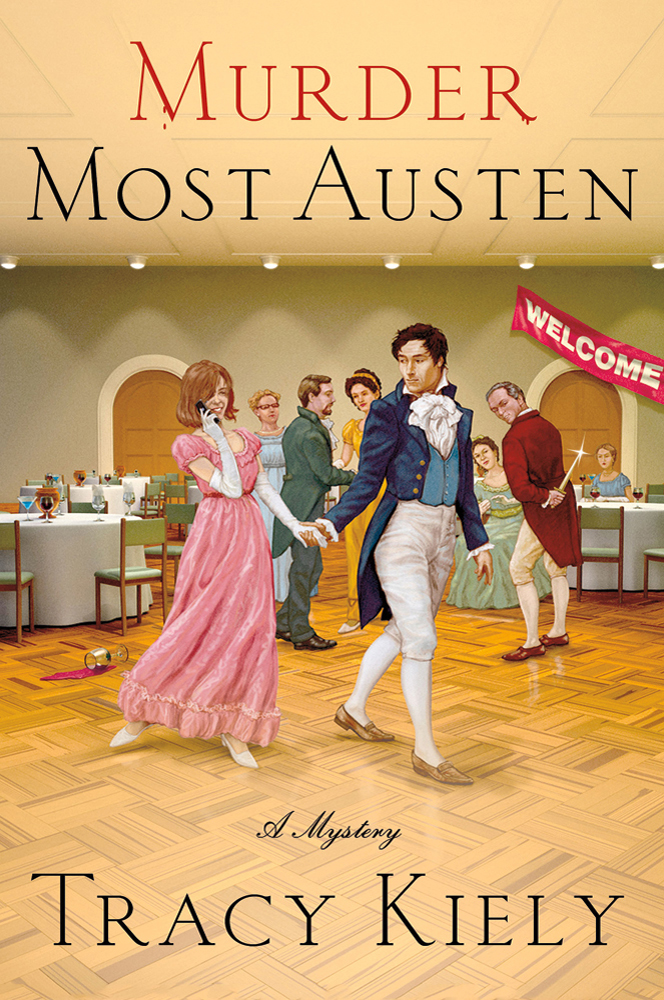
Gentle readers, My dear friend Lady Anne has reviewed Tracy Kiely’s latest mystery, Murder Most Austen. As always, you will enjoy her take on a new book. I make my politest curtsy to her and thank her kindly for her services and for her elegant writing style. (Please note: the blue links are mine; other links are WordPress Ads I do not make money from this blog, but I do receive books from publishers for review.)

Murder Most Austen is the fourth book in Tracy Kiely’s series featuring Elizabeth Parker, a twenty-something Janeite who channels Kiely’s love and knowledge of Jane Austen’s books.  Elizabeth and her Aunt Winnie, who was featured in the first of the series, often converse by trading quotes from Jane’s books.  Readers with a good knowledge of Jane’s output will enjoy this indulgence in Austenology.

In this outing, Aunt Winnie, a former financier turned innkeeper, treats Elizabeth to a trip to England for the annual Jane Austen Festival in Bath.  Elizabeth, who had been underemployed as a fact checker for a weekly newspaper, has quit her demeaning job, is considering and reconsidering moving in with her boyfriend Peter, and seems to have matured some from the preceding books.  While on the plane to Heathrow, she and Aunt Winnie, who is an outspoken and flamboyant contrast to her niece, meet two other travelers bound for the Festival, Richard Baines, a professor with some perverted views on Austen and his newest graduate student protégé, Lindsay.  The odious Baines has taken the slenderest details of what he considers evidence and what most Austen readers call satire, and decided that Jane is anti-clerical, a non-believer, and further, that she was sexually profligate, early Communist and died from syphilis.  Needless to say, most of the Janeites who hear him expound are upset, none more so that Aunt Winnie’s old friend Cora, one of those tiresome women who cannot leave an argument alone.  So when Baines is found stabbed outside the ballroom where one of the Festival balls is taking place, Cora, who had argued too loudly and drunk too much, is the prime suspect in his death.  Thus  Elizabeth, along with Aunt Winnie, try to discover who really killed the arrogant Baines.   There is no shortage of suspects:  the ex-wife, son and daughter-in-law of Baines have strong motives, as do his current wife, his assistant, and that adoring graduate student.

Kiely is an engaging writer, who draws the reader in quickly, and keeps her pace brisk.  She has a good ear for dialogue, which serves her well in establishing her characters and keeping her readers’ interest.  Unfortunately, she is not as strong in setting her scenes.  While she minutely describes the lobby and hotel room at Claridge’s, the iconic hotel in London, she has Aunt Winnie make reservations for high tea for the afternoon.  Mistake!  High tea, which sounds more elegant than tea, is not.  It usually consists of baked beans on toast, perhaps an egg and fish paste sandwiches; it is a working class or nursery supper.  Tea involves crumpets, scones, clotted cream, strawberries and other delights.  That is presumably what the ladies had at Claridge’s, but we don’t get to join them.

               Elizabeth and Winnie take a quick tourist turn through London and then proceed to Bath, but we do not get a good view of either place, which is disappointing to those of us who enjoy local color in our mysteries, or who have been there and look forward to experiencing those places through the characters’ eyes.   This story could have equally well taken place at any of the regional Jane Austen celebrations in the U.S.,  for all the good Kiely made of being in Bath and London.      

Mysteries turn on details; when well-done, they provide a clear picture of the lives of the characters: where they live, where they eat, what they do.  These must be accurate and consistent.  In Murder Most Austen, everyone uses cell phones throughout the book; in fact, the plot turns on the use of phones, and the cover illustration features a character in period dress talking on her cell.  But as everyone who has traveled knows, American cell phones do not work abroad.  The tourist needs to purchase a new phone and also get the appropriate sim card to hook into the networks in Europe.  World-traveler Winnie would know this; Elizabeth would find it out.  While they were out seeing the usual sights, they should have taken care of that necessary detail.  Kiely could simply have included a little conversation among the cell phone users about getting their international phones.   She does do a good job on the arrogant professor who tries to turn Jane 180 degrees from her usual perception by his mischaracterized “evidence.”  It’s a nice poke at those academic furors that can rage for years, but it would have been another good skewer at him to associate him with an outlandishly named University.  His unnamed school is another missing detail.

There is a certain amount of piling-on with the bad guys in Murder Most Austen, but Elizabeth solves the mystery with some good insight, and acquits herself nicely in a bit of swordplay as well.  It is nice to see that she is not as flustered and unsure of herself as she appeared in previous books in the series; a smart and capable woman makes a good detective and is fun to continue to read.  Readers who enjoyed Elizabeth’s earlier successes at crime-solving will like this one as well.  Someone not previously acquainted with Elizabeth and her problem-solving skills – she does have an excellent memory for tiny details – will enjoy getting to know her.

  • Hardcover: 304 pages
  • Publisher: Minotaur Books (September 4, 2012)
  • Language: English
  • ISBN-10: 1250007429
  • ISBN-13: 978-1250007421

Order Murder Most Austen at Amazon or at MacMillan. (Vic adds her extreme disappointment at the cost of the Kindle edition. $12.00 is a steep price, when so many other Kindle books are listed for around $7-8. )

My blog’s reviews of all of Tracy’s murder mysteries: Click here

Read Full Post »

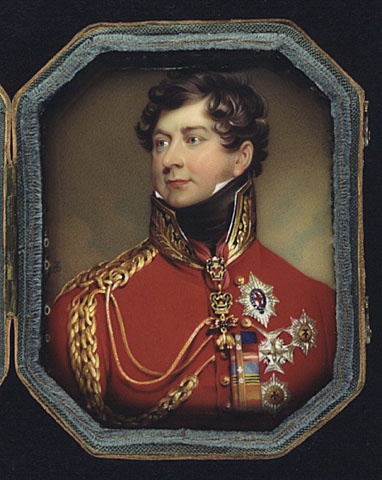
The period between 1811 and 1820 is known in British history as the Regency. In 1811 King George III was deemed unfit to rule and his son, the Prince Regent, ruled in his place. On his father’s death in 1820, the Prince was crowned King George IV. Coincidentally, Jane Austen’s novels were published between 1811 and 1818 and her writing has come to define how we imagine life was lived in the Regency era.

Miniature of the Prince Regent, Courtesy of the library archives of Canada

Yet so successful has Jane Austen been in implanting images in her readers’ minds that there is a danger that we begin to accept fiction as fact, to confuse the lives of her heroines with her own life, to interpret the lives of the few as being the lives of the many. And in that process there is also the risk that we lose sight of her skill and imagination as a writer. She was without doubt a keen observer, but the settings and people she describes, come as much from her imagination as from what she saw or experienced.

Company at play, the Comforts of Bath, Thomas Rowlandson

Jane chose to set two of her novels (Northanger Abbey and Persuasion) in Bath. She lived in the city between 1801 and 1806 and it’s still possible to retrace her footsteps, to see some of what she saw. The pattern of roads is largely unchanged in the older part of the city. Many of the places she would have frequented are still there; The Royal Crescent, The Circus, Queen Square, Milsom Street, Pulteney Bridge, the Upper Assembly Rooms, the Pump Rooms, the Guildhall, and Sydney Gardens, to name but a few.

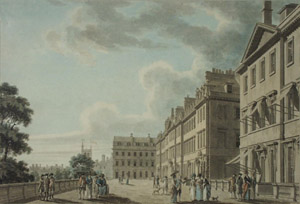
South Parade, Bath, Thomas malton, 1775 (the year of Jane Austen’s birth).

It is easy to imagine these places as she depicts them in her novels, yet it is almost impossible to separate fact from fiction. For example, in “Northanger Abbey” we read;

They arrived in Bath. Catherine was all eager delight; – her eyes were here, there, everywhere, as they approached its fine and striking environs, and afterwards drove through those streets which conducted them to the hotel. She was come to be happy, and she felt happy already.”

Yet Jane also records on moving to Bath, her own “first impression” of the city, in a letter to her sister, Cassandra, on May 5th 1801;

The first view of Bath in fine weather does not answer my expectations; I think I see more distinctly through rain. The sun was got behind everything, and the appearance of the place from the top of Kingsdown was all vapour, shadow, smoke, and confusion.”

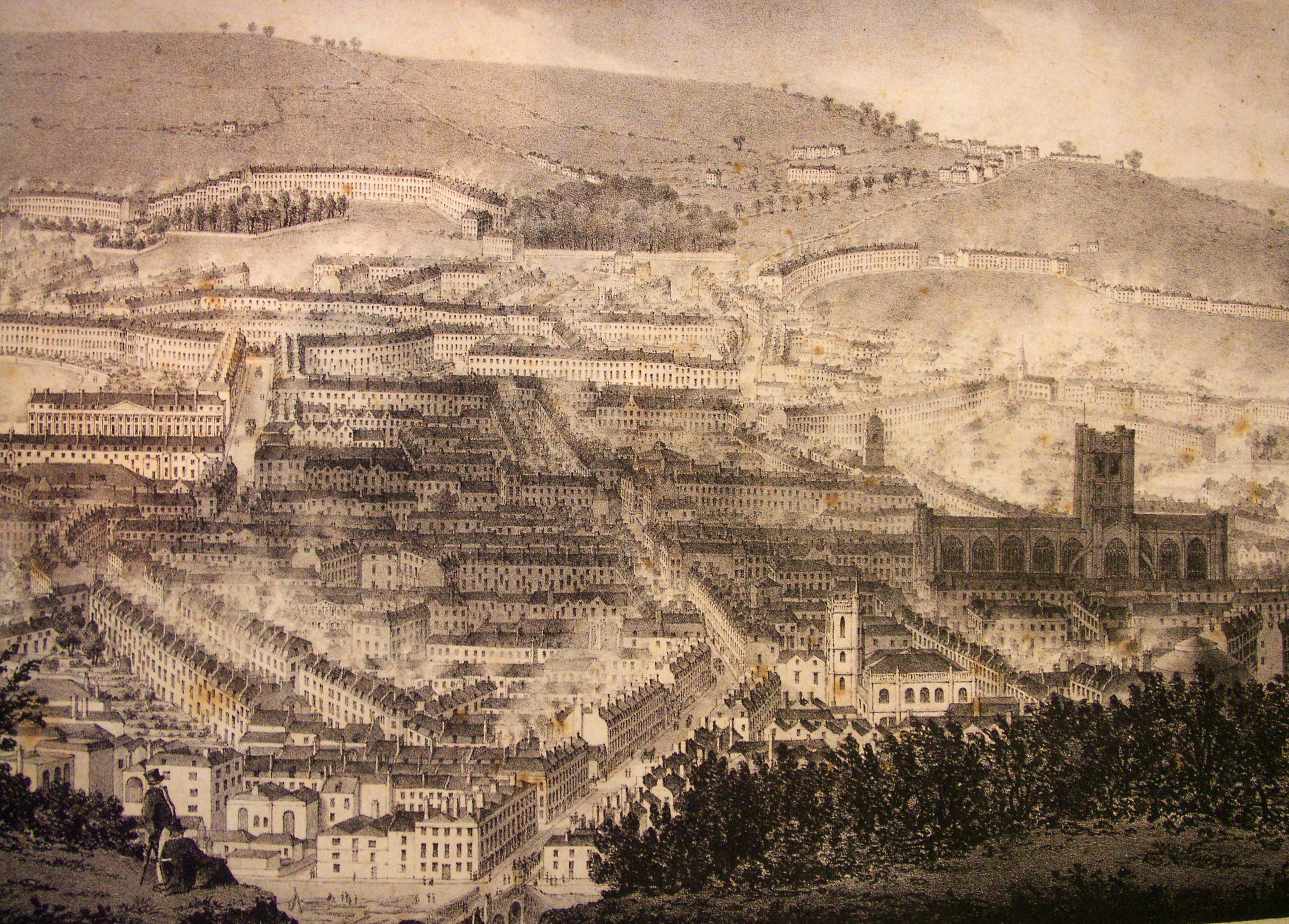
Panoramic view of Bath from Beechen Cliff, 1824

Again in “Northanger Abbey” she describes a formal ball held in the Upper Assembly Rooms;

The season was full, the room crowded, and the two ladies squeezed in as well as they could. As for Mr Allen, he repaired directly to the card-room, and left them to enjoy a mob by themselves. With more care for the safety of her new gown than for the comfort of her protégé, Mrs Allen made her way through the throng of men by the door, as swiftly as the necessary caution would allow; Catherine, however, kept close at her side, and linked her arm too firmly within her friend’s to be torn asunder by any common effort of a struggling assembly.”

Fancy Ball at the Upper Rooms, Bath, Thomas Rowlandson

Yet her own experience was somewhat different, as she reports in letter to her sister on May 12th 1801;

By nine o’clock my uncle, aunt, and I entered the rooms, and linked Miss Winstone on to us. Before tea it was rather a dull affair; but then the before tea did not last long, for there was only one dance, danced by four couple. Think of four couple, surrounded by about an hundred people, dancing in the Upper Rooms at Bath.

After tea we cheered up; the breaking up of private parties sent some scores more to the ball, and though it was shockingly and inhumanly thin for this place, there were people enough, I suppose, to have made five or six very pretty Basingstoke assemblies.”

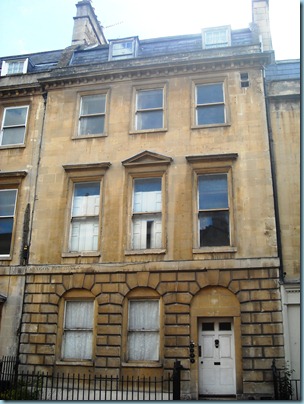
They say you should write about what you know and Jane Austen certainly knew about people, but was her life really comparable to those of her heroines? She attended dinner parties, suppers, formal balls and had some insight into high-society. Yet that society was very stratified with rigid conventions and social etiquette. Those rules defined who was on a level with whom, and Jane was certainly not part of its upper echelons. She was part of that “society” but in truth she was fairly low down in the “pecking order.” Her Uncle and Aunt were wealthy and lived in the Paragon. They might have provided her with opportunities to glimpse their way of life, but they do not seem to have been over-generous to Jane or her family.

Number 1, Paragon, where the Leigh-Perrots lived. Image @Austenised

When Jane’s family moved to Bath they leased a house at 4, Sydney Place. It was a fine house in a good area, near the popular Sydney Gardens, but it was not a prestigious address in comparison with other parts of the city. And when the lease ended they moved to a house in Green Park Buildings. This was an area the family had dismissed when they first moved to the city and it’s easy to see why from Jane’s description;

Our views on G. P. (Green Park) Buildings seem all at an end; the observation of the damps still remaining in the offices of an house which has been only vacated a week, with reports of discontented families and putrid fevers, has given the coup de grace. We have now nothing in view. When you arrive, we will at least have the pleasure of examining some of these putrefying houses again; they are so very desirable in size and situation, that there is some satisfaction in spending ten minutes within them.”

Before leaving Bath the family also lived for a while in 25, Gay Street. (The Jane Austen Centre is nearby at 40 Gay Street). It was a “good address” but by then, after the death of Jane’s father, they were reduced to “taking rooms” as boarders rather than occupying a house as tenants. By then the family were largely dependent on the charity of relatives.

Old Houses. Westgate Street , Bath, Thomas Elliot Rosenberg, 1820. Image @Victoria Art Gallery, Bath

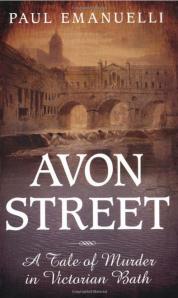
It’s obvious too that Jane was well aware of the plight of the genteel poor. In “Persuasion” Sir Walter Elliot refers to Westgate Buildings as, “Everything that revolts other people, low company, paltry rooms, foul air, disgusting associations.” Westgate Buildings was by no means the worst of streets but it was situated on the border of the Avon Street slum area. My own novel “Avon Street” has an opening scene in Westgate Buildings and explores the darker aspects of the City.

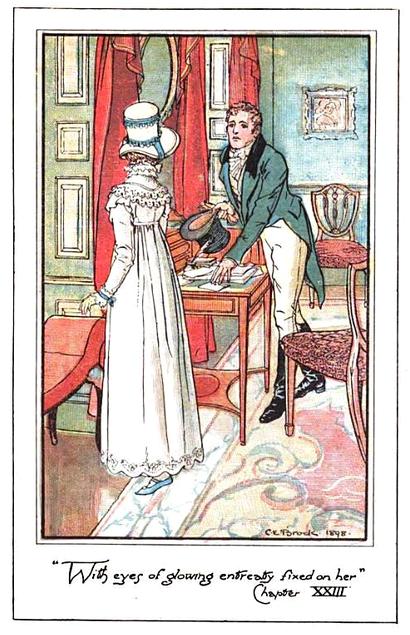
Brock illustration of Captain Wentworth entreating Anne Elliot to read his letter, Persuasion.

Opinion is divided on whether or not Jane Austen actually liked Bath, but she certainly knew how to use it as a setting. Jane Austen created an image of Regency life which still survives today. That is a testament to her imagination and skill as a writer. She chose to depict a way of life in her novels that did not always reflect her own everyday experience. Indeed it was not representative of the lives of most, yet it pleased her readers then and still pleases them today.

Inquiring readers: Paul Emanuelli, author of Avon Street (click here to view the book and order it), has contributed a post for this blog before about the City of Bath as a Character and Law & Order and Jane Austen’s Aunt, and Food – To Die For: Food Preparation in the Georgian EraHe has graciously sent in an article about crime and an incident involving Jane Austen’s aunt, Mrs James Leigh-Perrot. Paul writes about Bath in his own blog, unpublishedwriterblog. It is well worth a visit!

  • Paperback: 320 pages
  • Publisher: The History Press (March 28, 2012)
  • Language: English
  • ISBN-10: 0752465546
  • ISBN-13: 978-0752465548

Read Full Post »

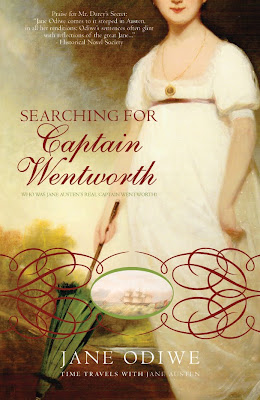
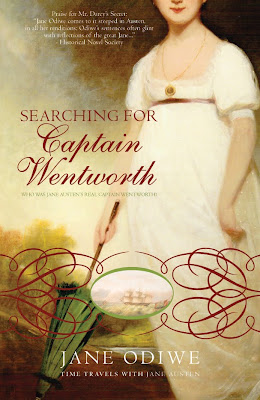
You’ve supported Jane Austen’s World since 2006, now it’s time to give back. Inquiring readers, I have enjoyed your comments and been most humbled by your visits. On the day that the 5 millionth reader visits my blog, I am giving a gift certificate of a Kindle mobi file from Amazon.com U.S. of Jane Odiwe’s Searching for Captain Wentworth. Who will it be?

Note: Contest Closed! Congratulations, Ruth!! Just leave a comment as to why you think that Persuasion is the best of Jane Austen’s novels. Or not. I am not picky. I just want your opinion. Click here to read my review of this time travel book.

The random generator drawing will be held on the day that my counter shows the magic number of 5 mill. (Estimate 1-2 weeks.)

Thank you, thank you for your interest and support. I intend to answer each comment, but will not include my replies in the drawing!

(Sadly, my offer only applies to U.S. readers. I do apologize to my foreign readers. Once again you are left out of the loop.)

Note: the green links lead to WordPress ads. The blue links are mine. I do not make money from my blog.

Read Full Post »

Searching for Captain Wentworth, by Jane Odiwe.

Time travel has always presented a logical difficulty for authors: How to make such a romantic notion seem plausible? I have a way of dealing with time travel stories – suspend disbelief and enjoy the ride. Jane Odiwe’s new book speaks directly to one of my fantasies – to meet Jane Austen and to get to know her as a friend. Oh, if that were only possible!

I’ll admit that I have a fondness for Ms. Odiwe’s books. In this new endeavor she has outdone herself. After finishing Searching for Captain Wentworth I felt as if I had taken a trip to Bath and Lyme Regis, met Jane Austen, and been treated to a wonderful romance.

Not everything about the book is perfect. While the love affair between Charles and Sophia had me engrossed, the one twixt Josh and Sophie left me somewhat cold. The ending seemed rushed, and although loose ends were tied, much of the details didn’t make sense, as with all time travel stories. But logic is not the point of a time travel book: it is fantasy and wish-fulfillment.

This book has fantasy aplenty, backed up by history and Ms. Odiwe’s intimate knowledge of Jane Austen’s life and the environs of Bath. I had the privilege of visiting Bath and staying in a hotel near Sydney Gardens just off Great Pulteney Street, and the book kept conjuring up memories that I thought I had forgotten. Vividly described is the arduous but ultimately rewarding climb up Beechen Cliff. Ms. Odiwe uses this walk as a marvelous plot device while taking us on a guided tour of that famous J.A. landmark. She takes her characters to Lyme Regis as well, and has a knack for writing an original story while admirably following Persuasion’s plot.

I could write a longer review, but I don’t want to reveal too much of the plot. Well done, Ms. Odiwe. This is one of the few review books that I read from start to finish. I give Searching for Captain Wentworth five out of five regency tea cups with this caution: If you are not a fan of romance novels, Austen sequels, or time travel tales, then you will wonder at my gushes.

This book can be purchased as an eBook as well as in the traditional format.

Jane Odiwe’s blog

Paperback: 320 pages
Publisher: Paintbox Publishing (September 7, 2012)
Language: English
ISBN-10: 095457222X
ISBN-13: 978-0954572228

Note: Green links are WordPress ads. The blue links are mine. I make no money from this blog.

Read Full Post »

« Newer Posts - Older Posts »